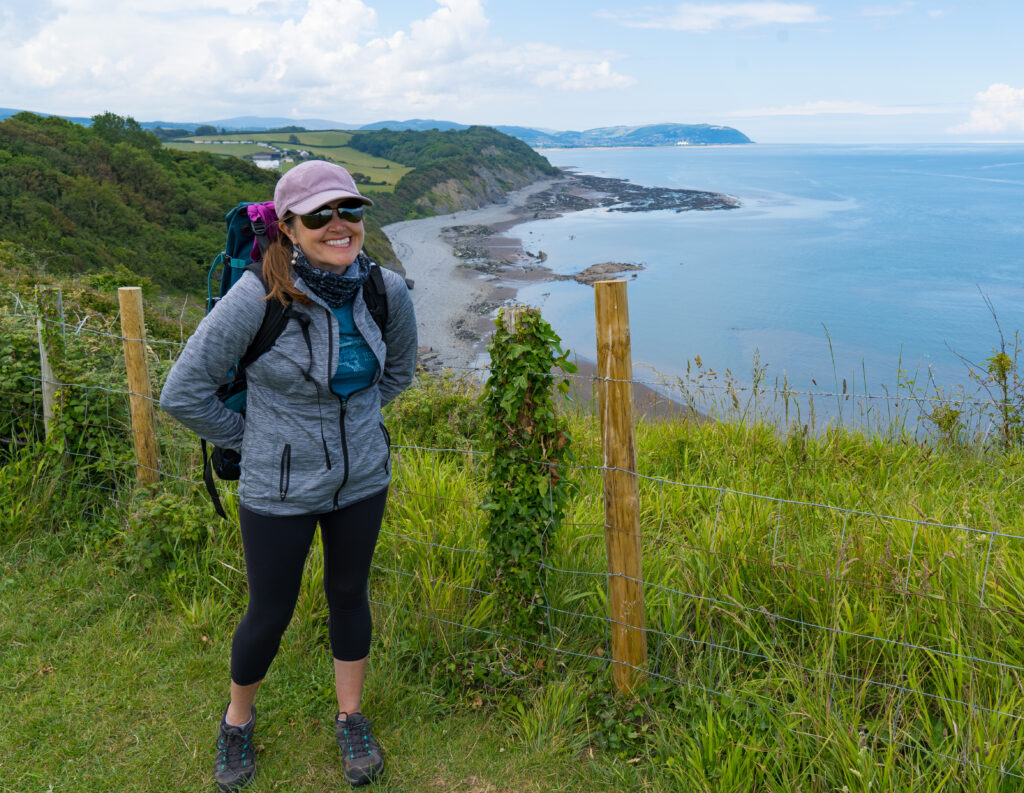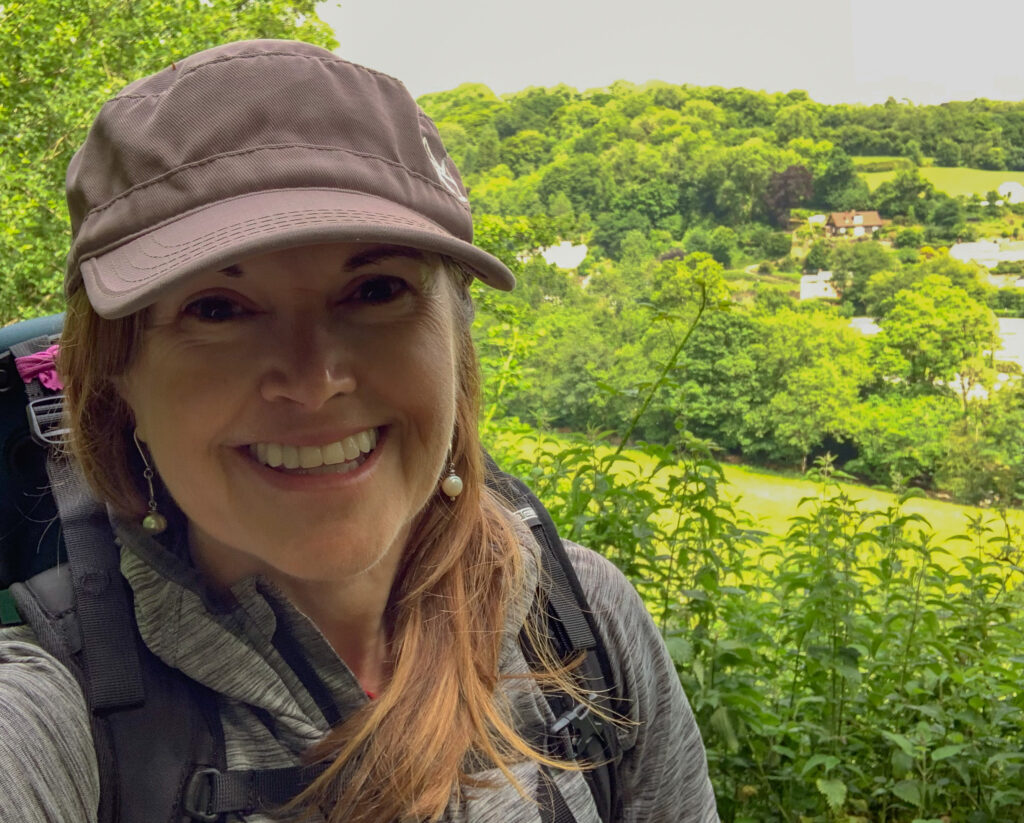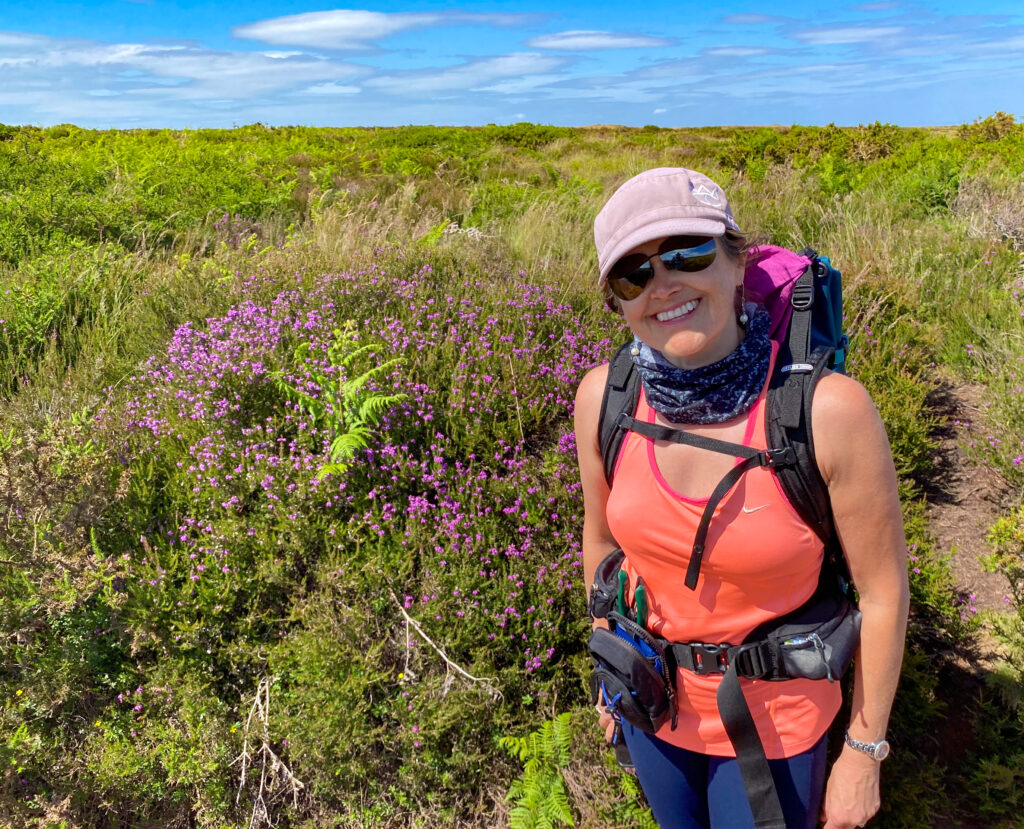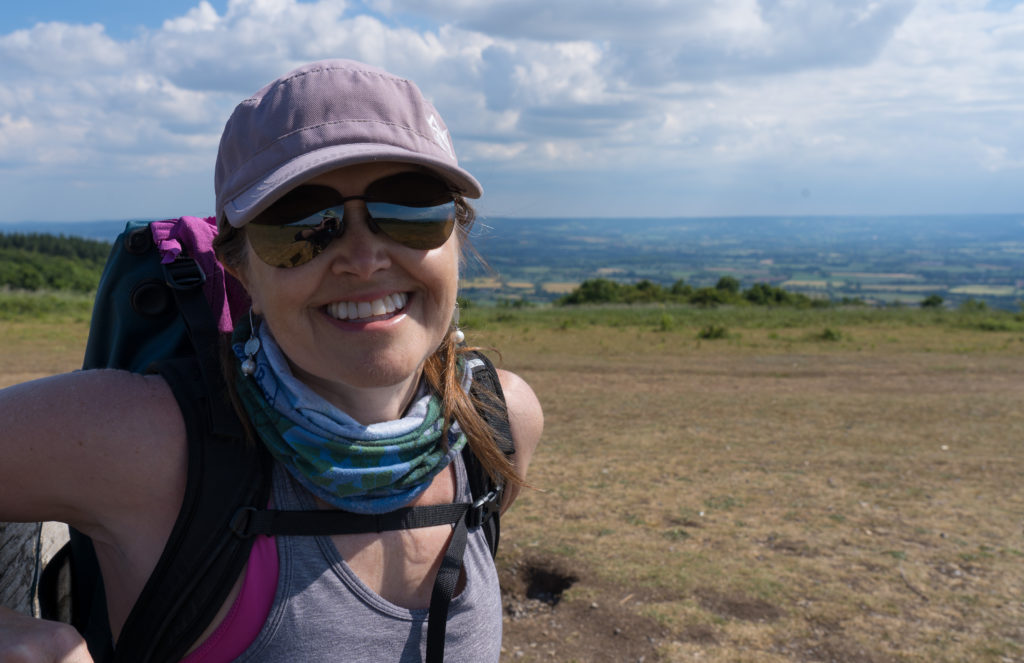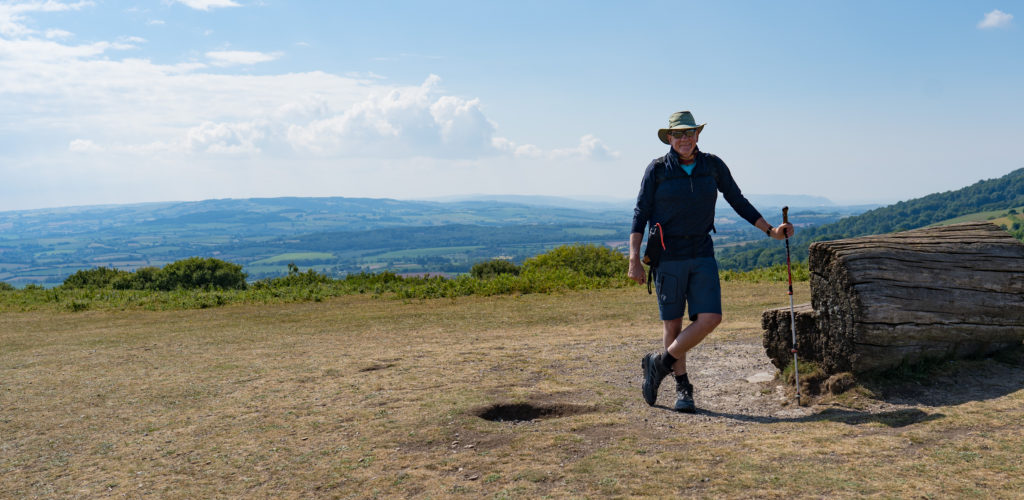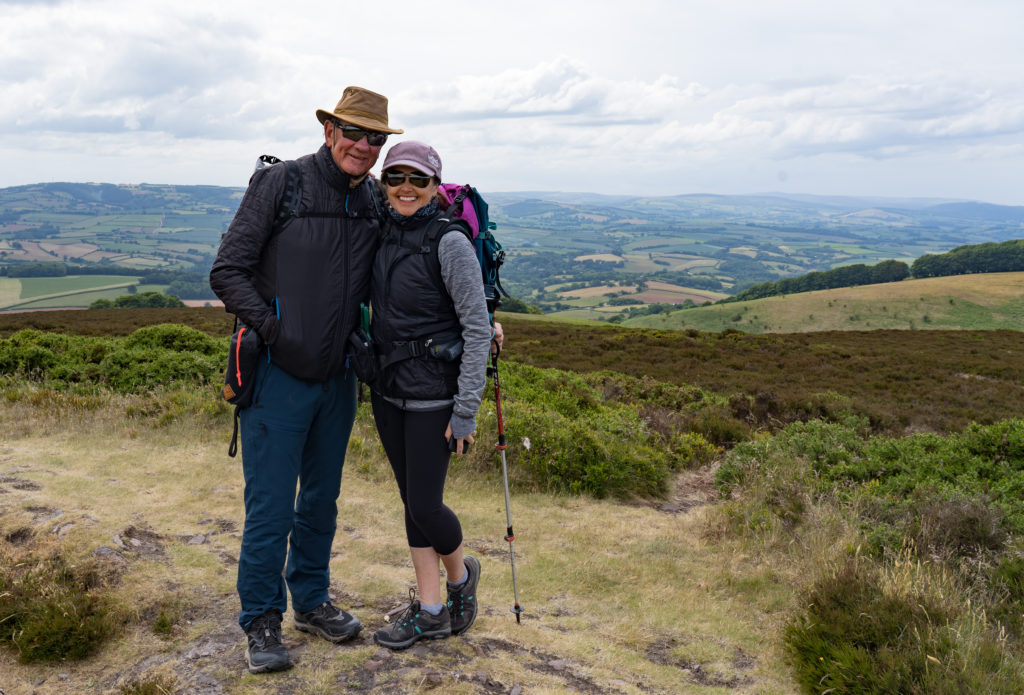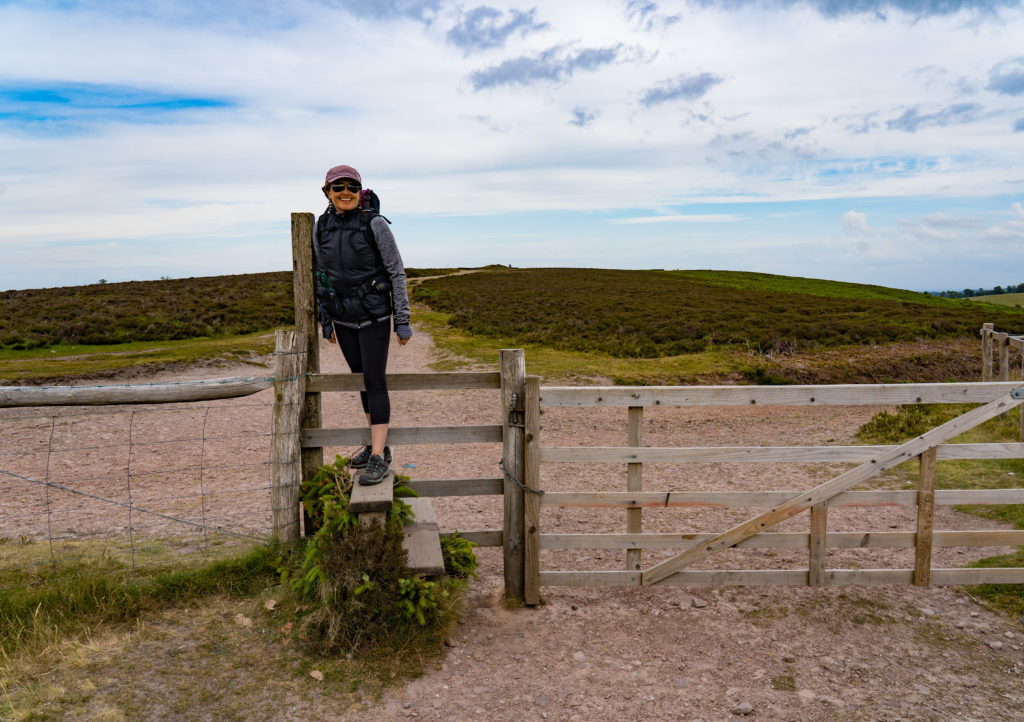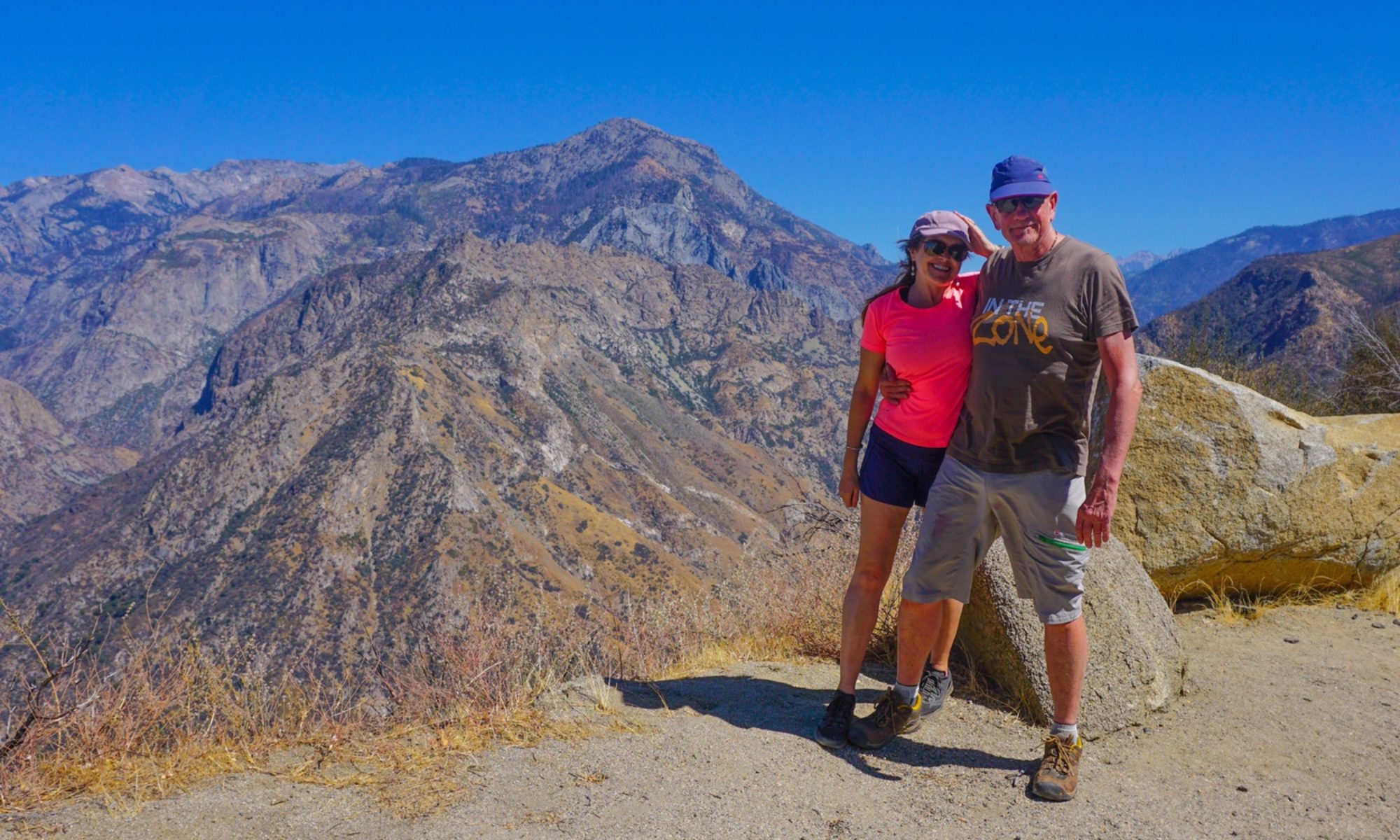
Catherine loves painting and photography as well as the great outdoors. Cycling, kayaking, pack-rafting and hiking are favourite activities as well as scuba diving when the location permits. A self confessed geek, she’s the reason details are included in our stories!
Our fabulous 66km ride out to Okehampton and back left us curious to tour more of this stunning area, in particular to explore Dartmoor National Park. It is the largest area of open space in the south of England, and has been shaped by centuries of human activity.
First though, we got some unexpected news. I had emailed an old work colleague from Australia, who, I recalled in the depths of my memories, had moved to Devon from Sydney several years ago. We weren’t sure where in Devon she was living, but given we are here until the end of the month, we thought it might be possible for us to pay her a visit and learn more about her new life on this side of the world. Her response was just as surprised as ours – she had moved to none other than Tavistock!
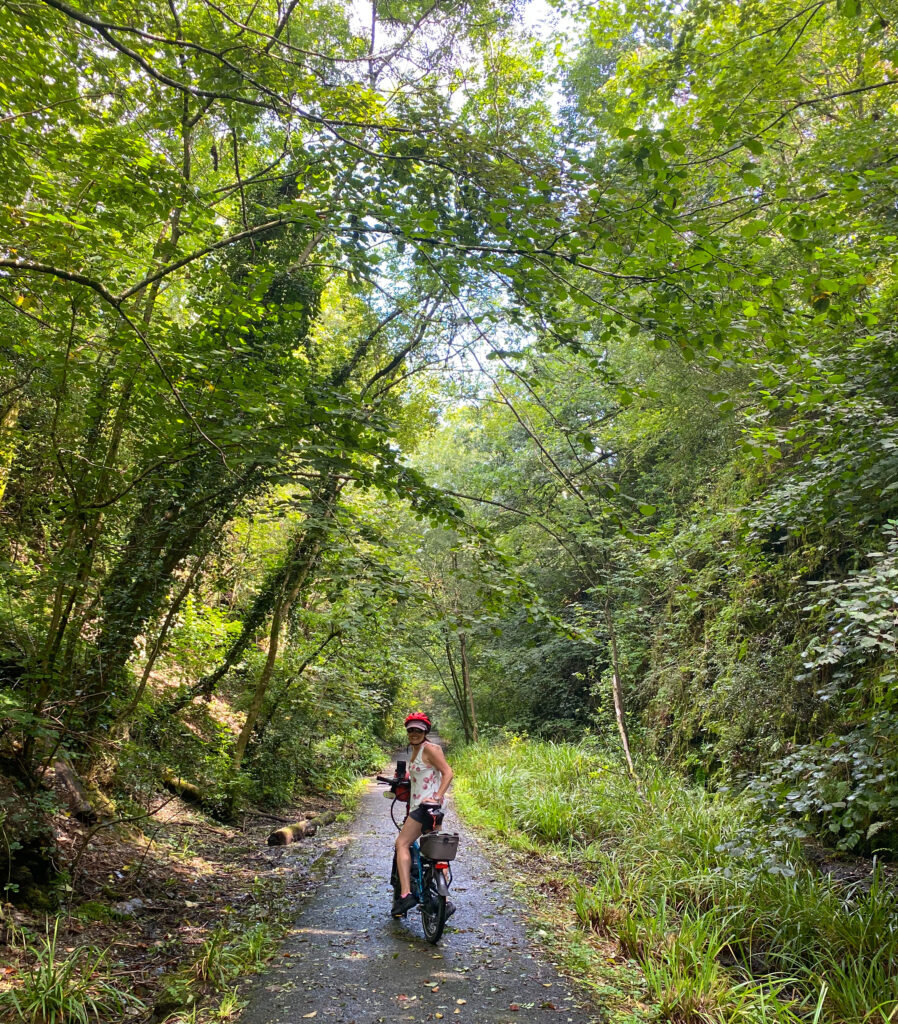
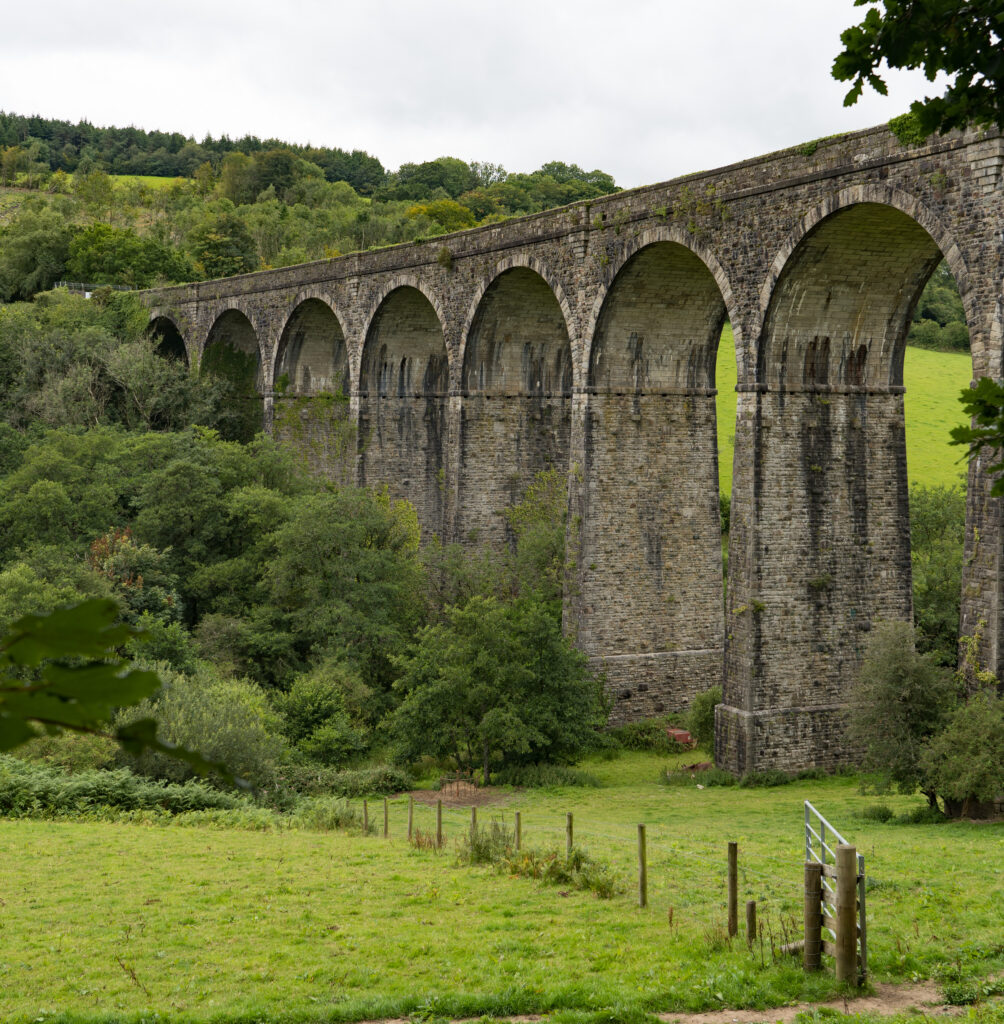
We jumped on our bikes and cycled over to her house via the Tavistock Viaduct. The viaduct is pretty much all that remains from the old railway which ran through here and closed in the 1960s – now turned into a short 2km walking and cycleway through a cool leafy reserve and offering fabulous views over the town.
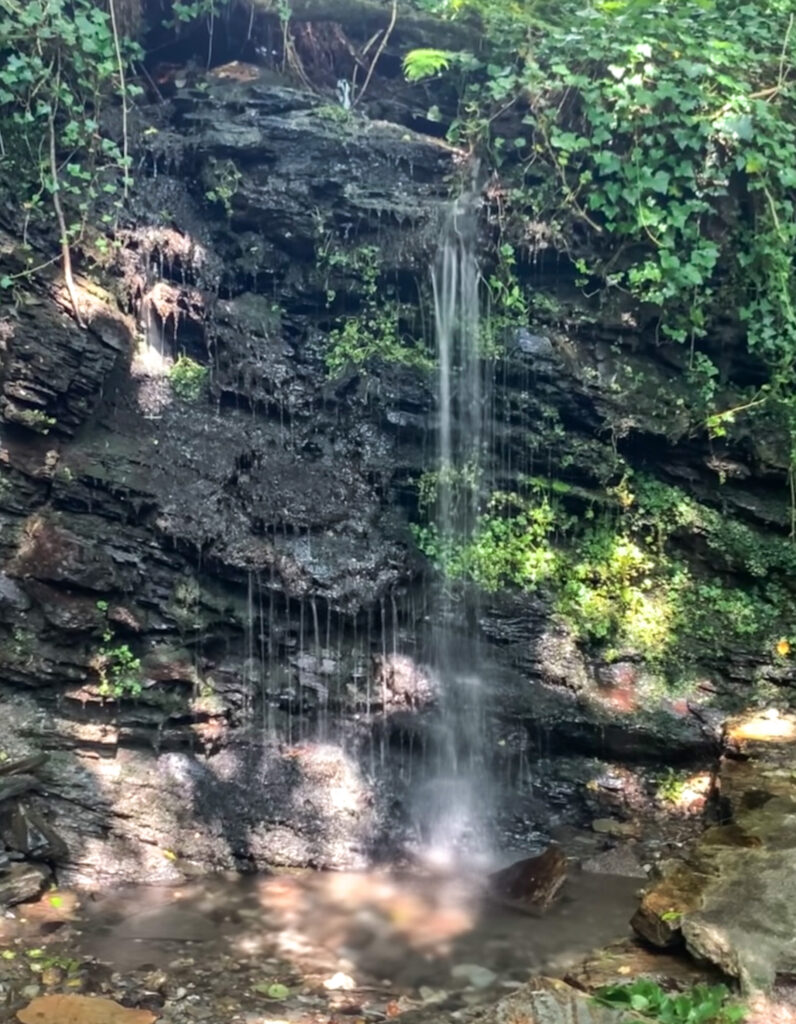
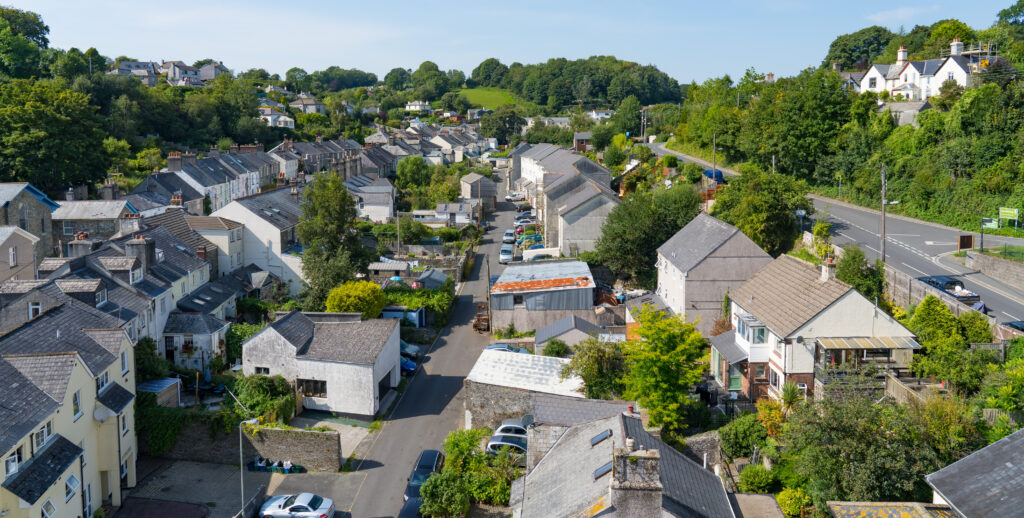
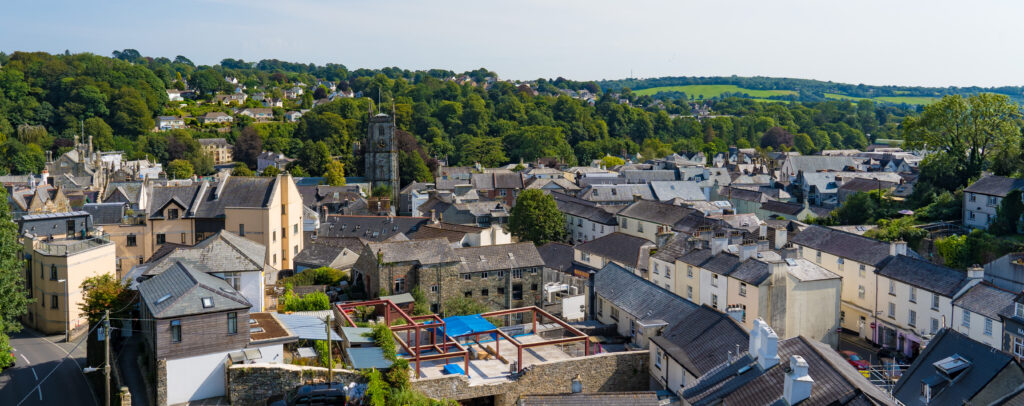
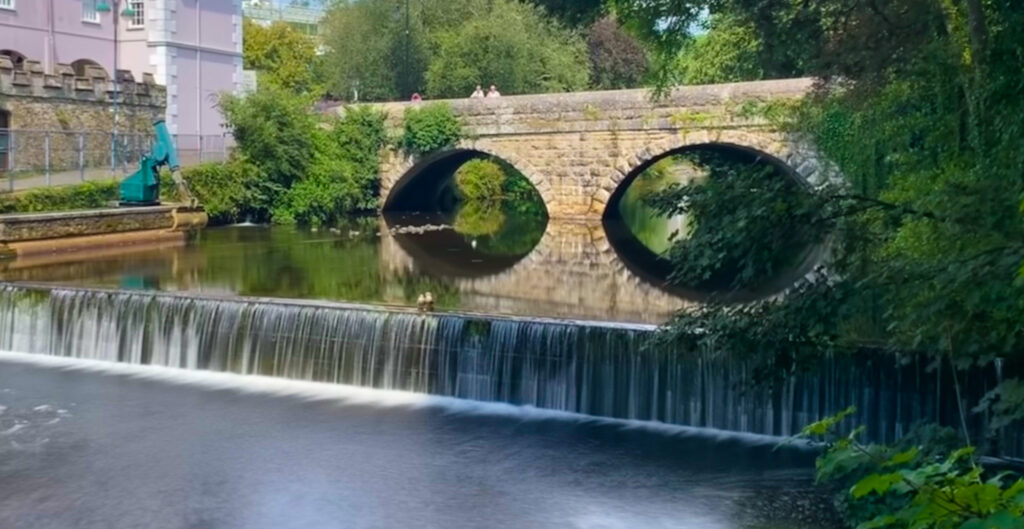
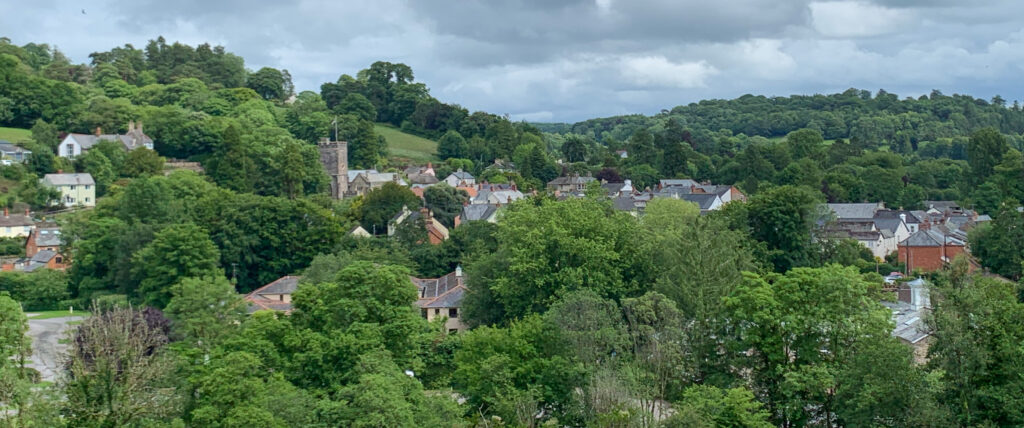
Lovely and cool in the reserve, with its waterfalls and stream running alongide the pathRefreshing waterfalls on the 2km long Viaduct Walk (and cycleway) in TavistockThe characteristic white and grey slate of the houses in TavistockLooking over town, with the tall tower of Tavistock Parish Church in the centreThe River Tavy goes through the middle of town, and alongside The Meadows (Tavistock Park)
We joined Mary for cold drinks in the garden and proceeded to ask her lots of questions. It was a lovely afternoon and helped us understand more about the decisions behind a big and brave move back around the world after more than 20 years living in Australia.
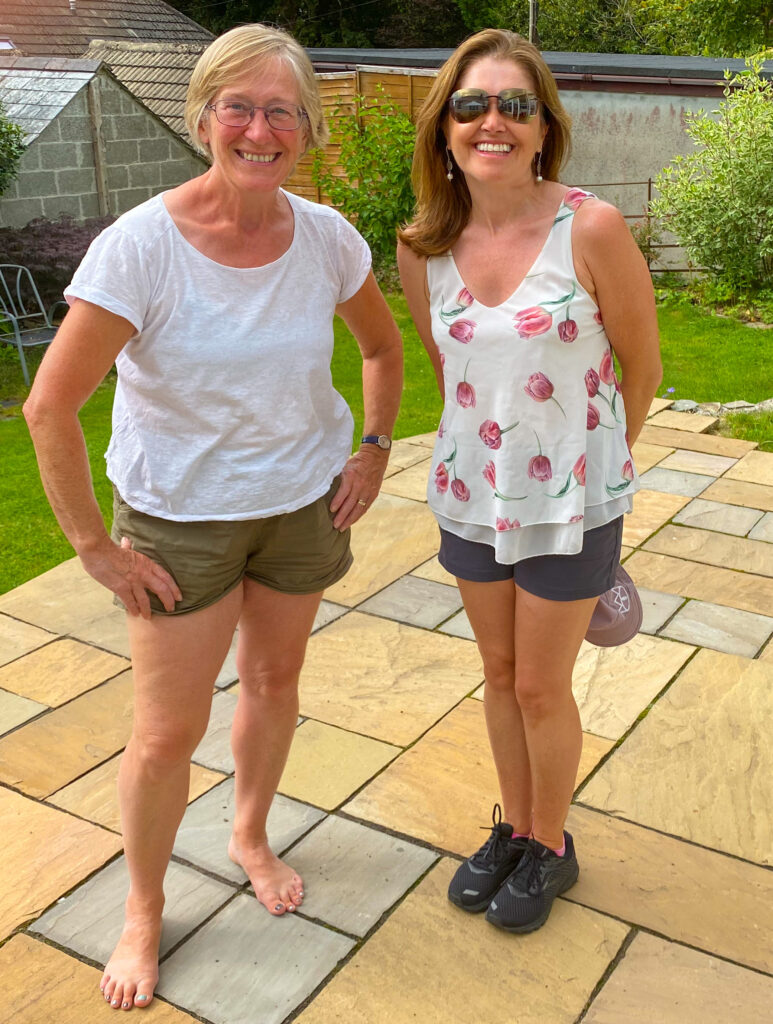
Old friends in new places – Mary and Catherine used to work together in research – Mary is now a yoga teacher
Thunder storms rumbled around us but we remained dry, with the rain fortunately holding off until we were back holed up in Truffy.
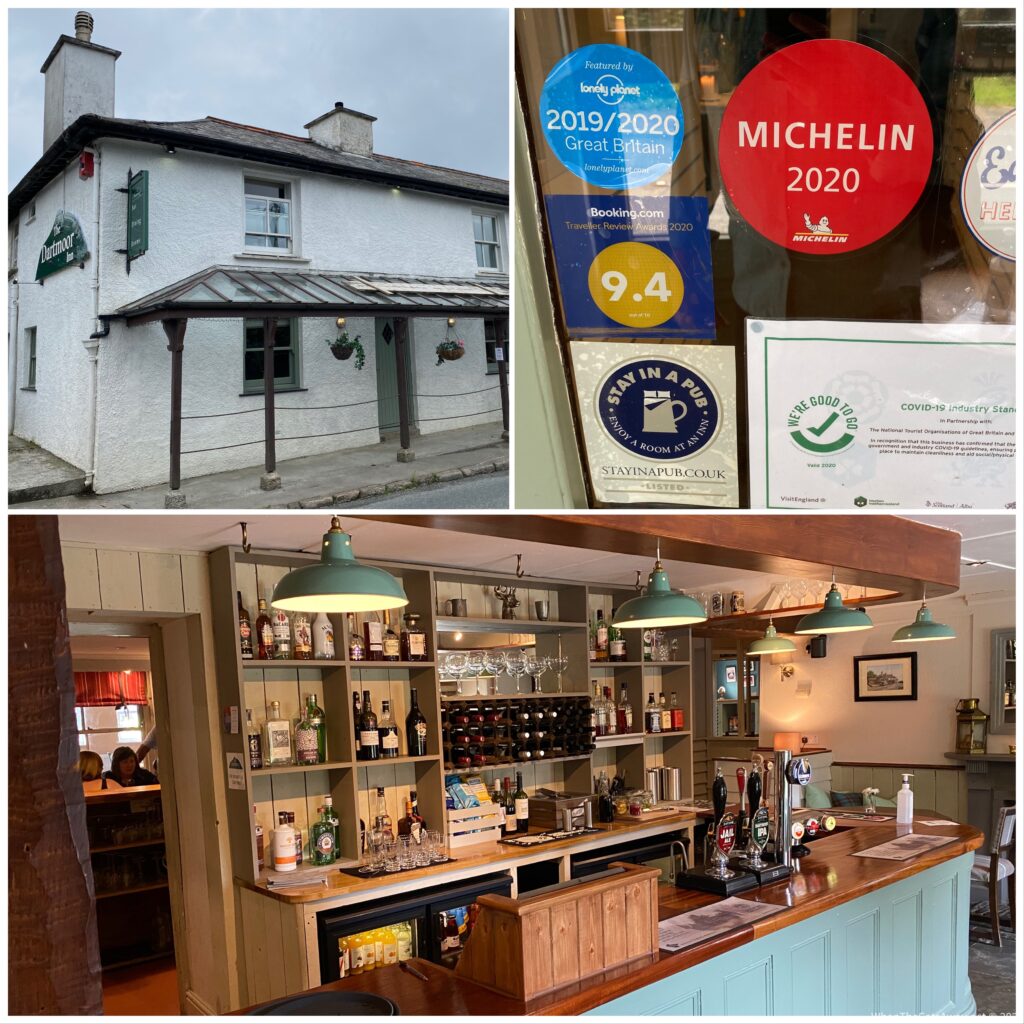
Mary had given us some advice on where to start a walk, and despite continuing wet weather forecast, we were keen to get out on the moors. We drove a short way out of Tavistock and parked up behind a pub, The Dartmoor Inn. We decided to book in for lunch after our walk.
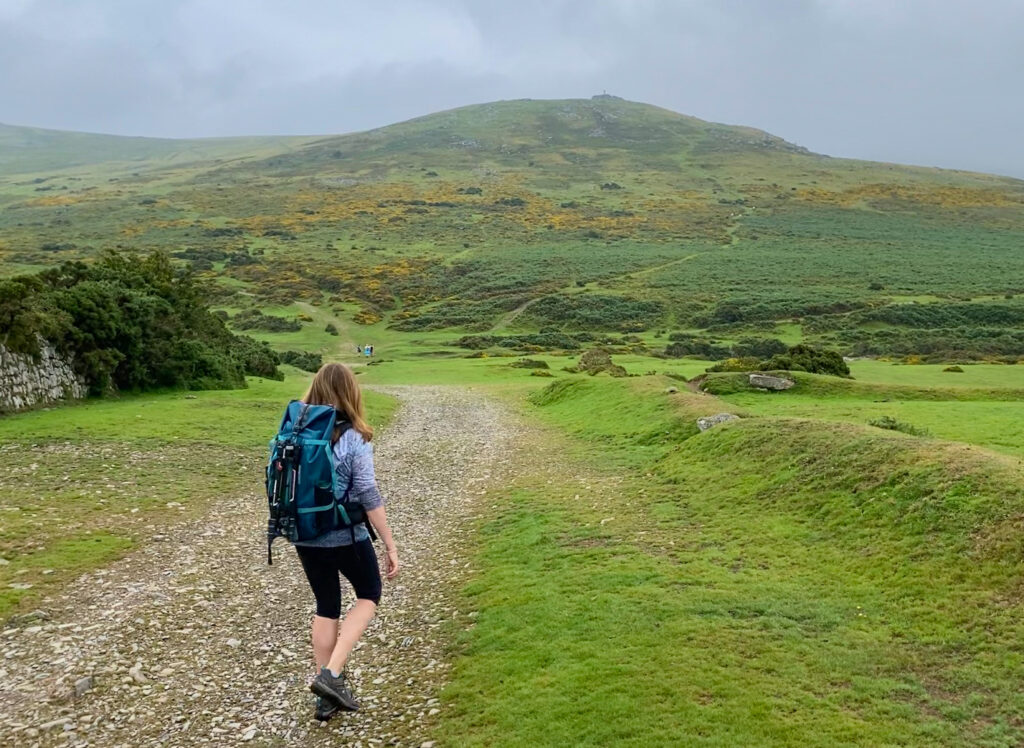
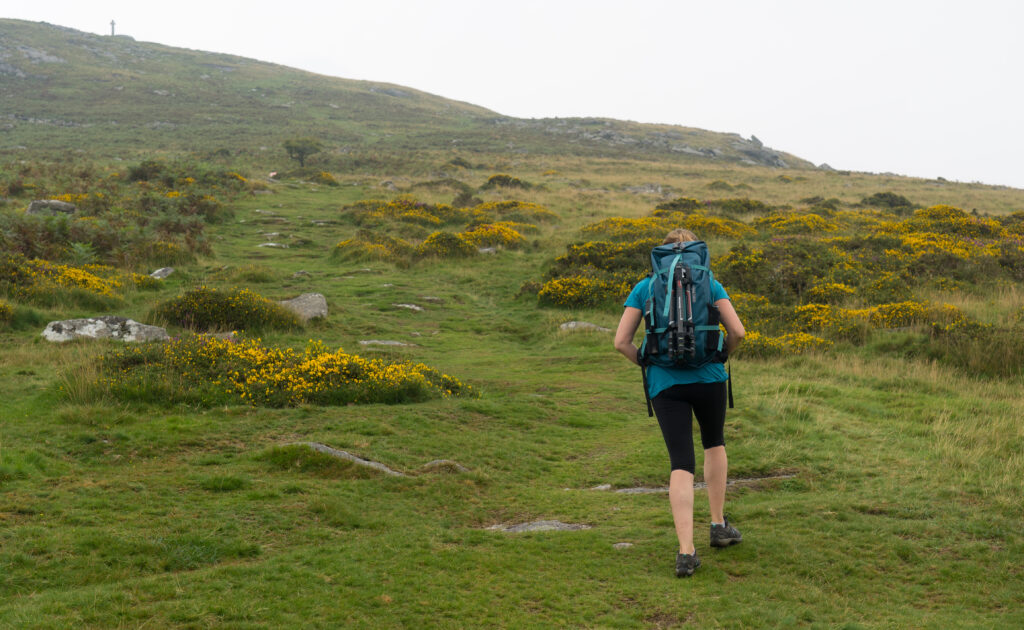
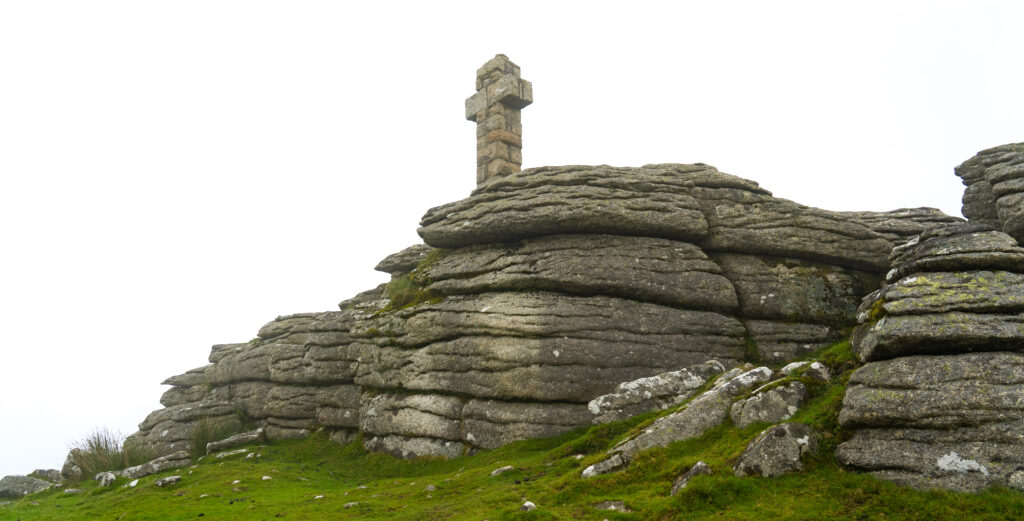
First though, we had to work up that appetite. A lane beside the pub led us directly onto Dartmoor, a completely different scenery to the bright green fields and farmland we have been used to. We decided to take a walk up to Widgery’s Cross up on Brat tor. This was erected in 1887 to celebrate Queen Victoria’s Jubilee, and is the tallest of all the crosses on Dartmoor, made from slabs of granite. A tor is the name given to peaks topped with rock, most frequently granite. Dartmoor National Park has more than 160 tors.
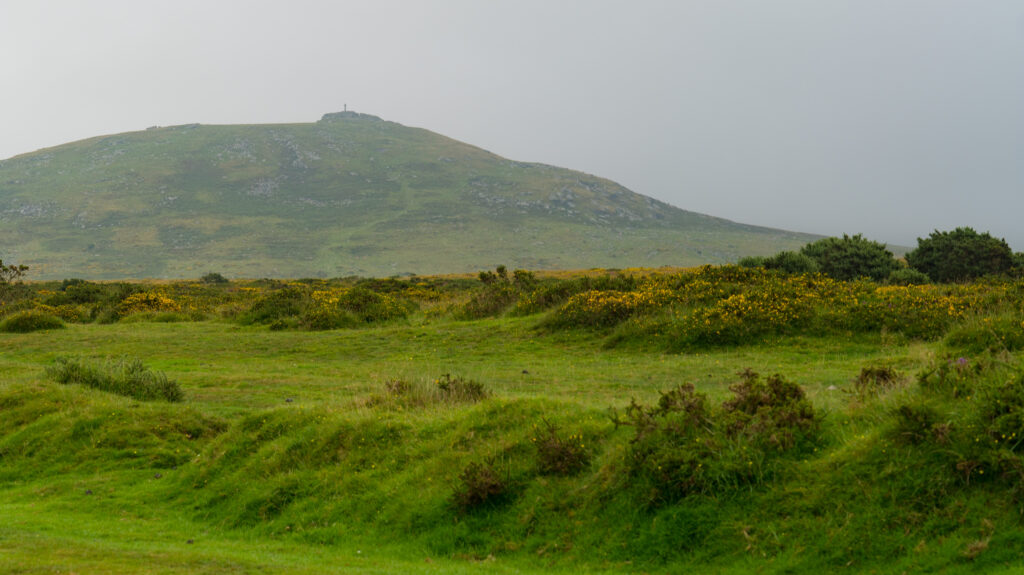
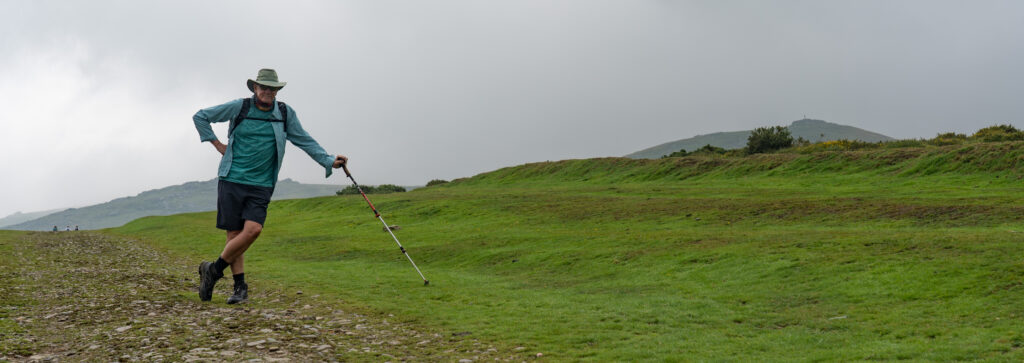
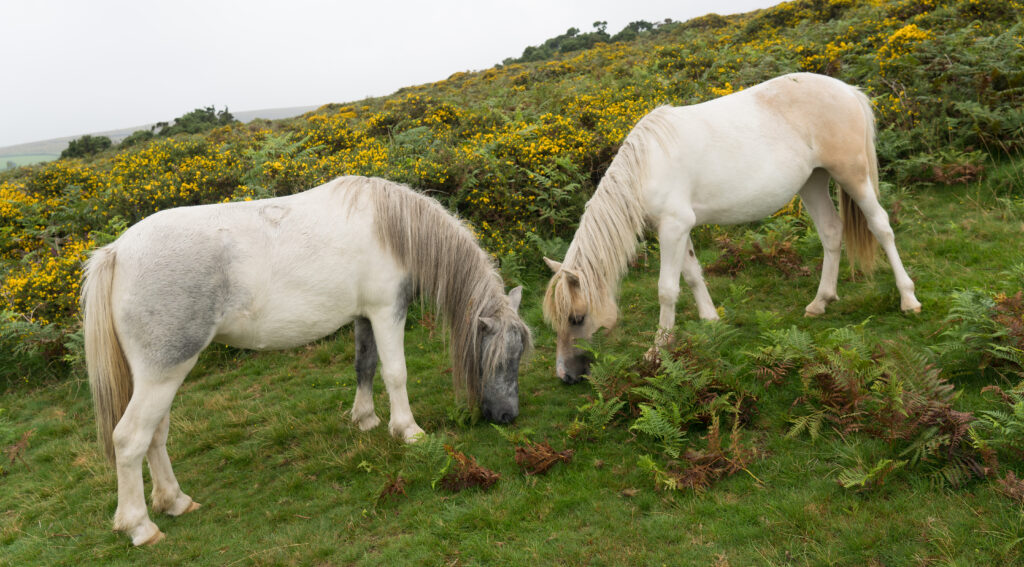
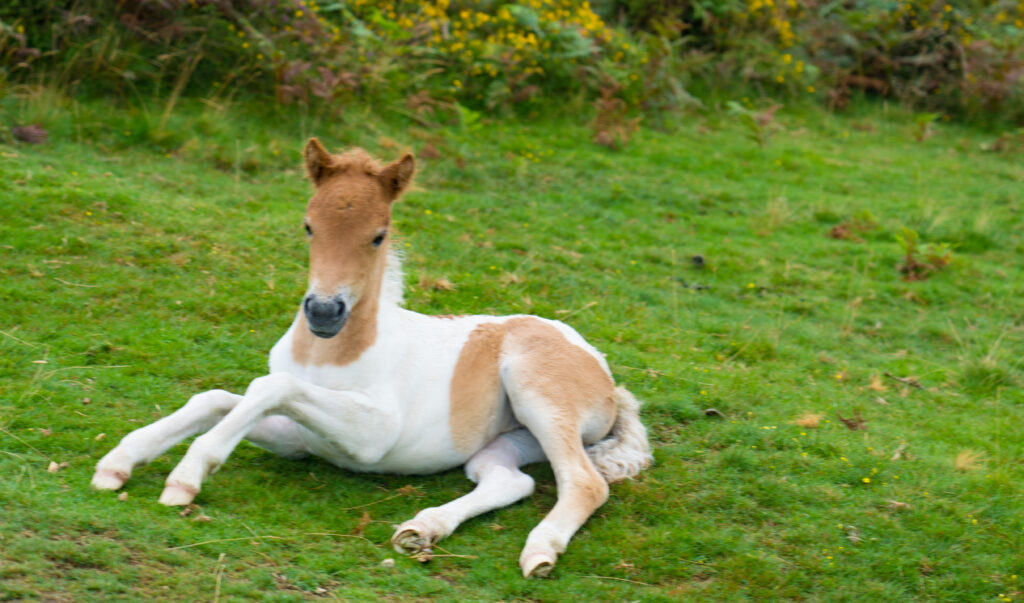
Look carefully in the distance you can just about see the cross on top of Brat torHeading off to conquer our first torEnjoying our first taster of the moorsHill ponies are one of the many hardy types of horse found on Dartmoor – this pair were clearly used to seeing people walking pastA very young Hill Pony foal is clearly not used to people yet…we chuckle at his tail which is more like a dog’s than a horse’s at this young ageGiving the calf muscles a workout on this steep uphill climb
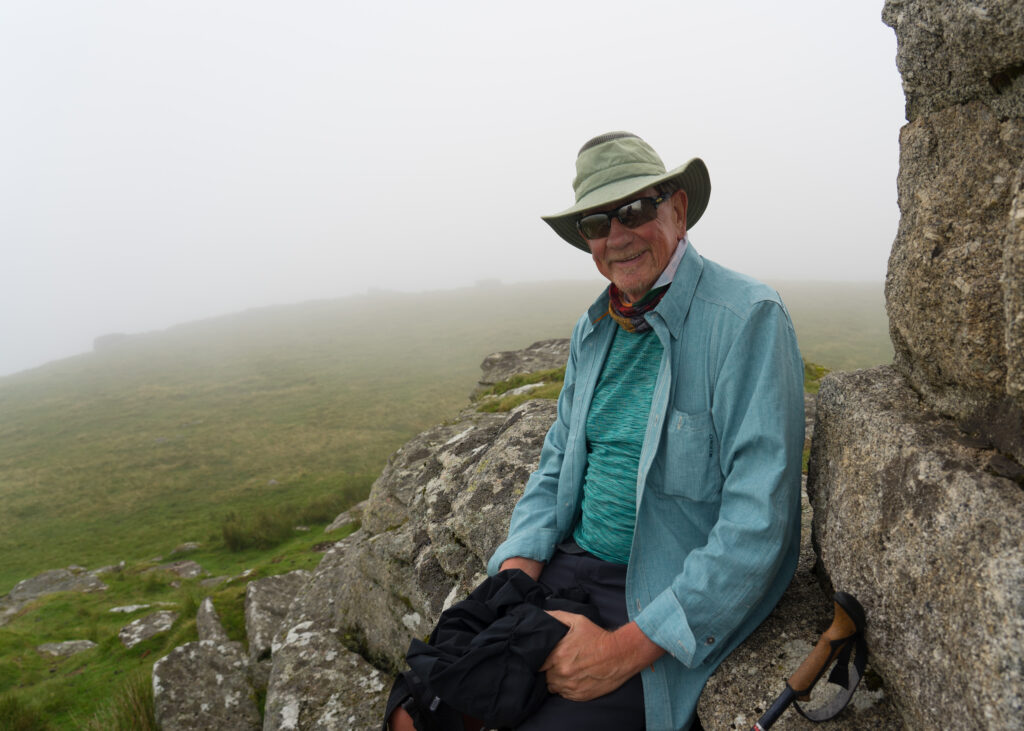
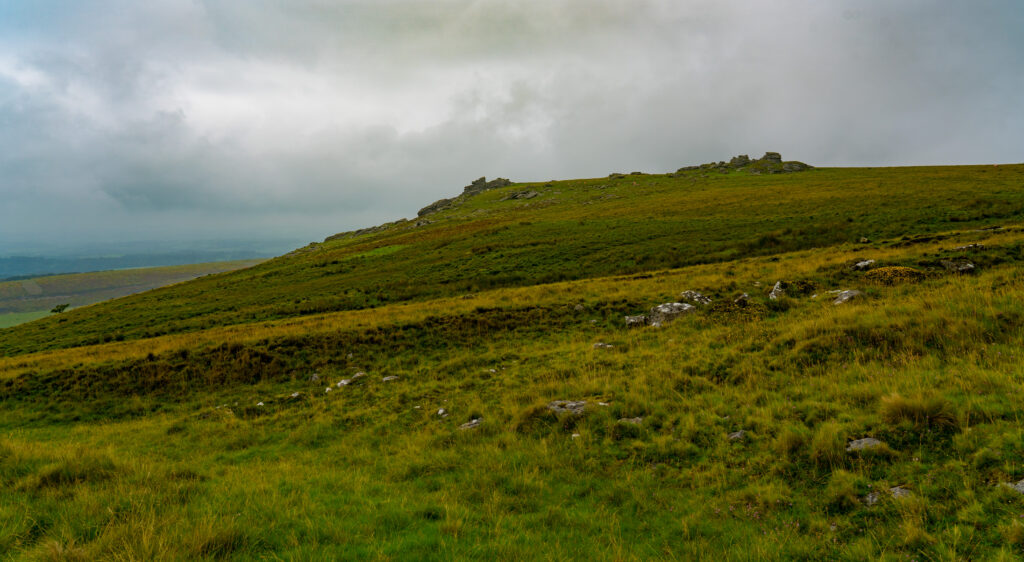
As we climbed up the hill, the ‘Devon sunshine’ descended around us, with swirling cloud obscuring the views and settling thick around us. We clambered up the rocky tor, and sat at the base of the cross enjoying a cup of tea.
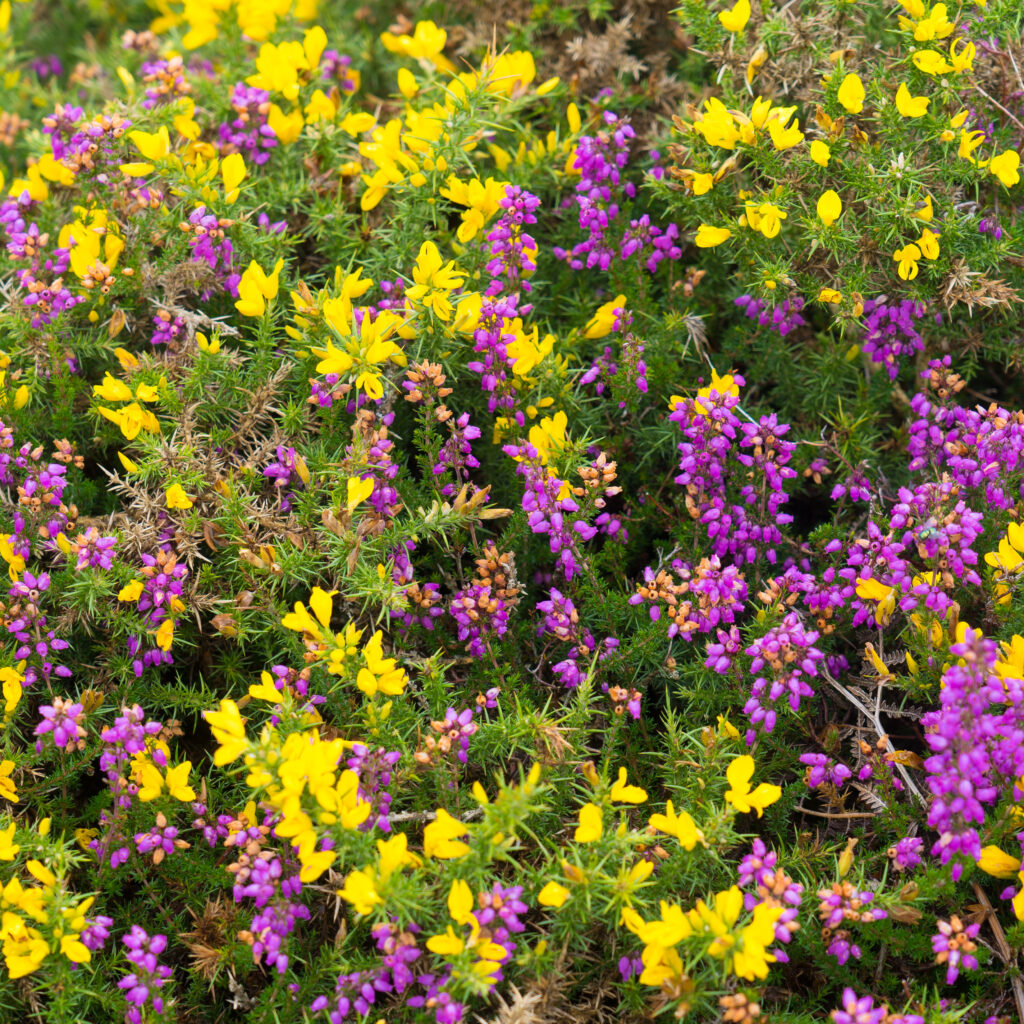
Widgery’s CrossWhere’s our view?A break in the cloud gives us a glimpse of another tor across the wayThe vibrant shades of yellow and magenta in the gorse and heather
At just over 5.5km (Strava link), this was not a long walk, but a great taster of what’s potentially on offer for us on Dartmoor. We are certainly hungry to see more in the future.
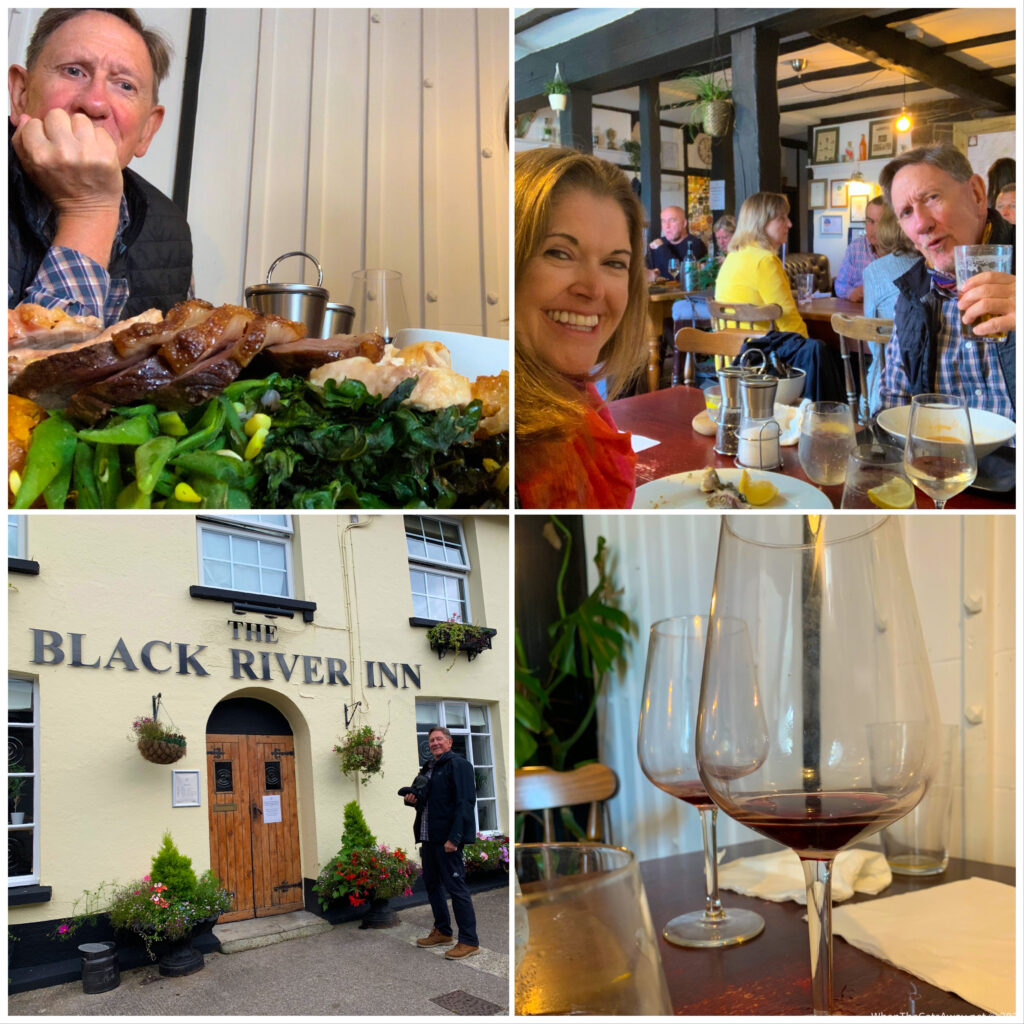
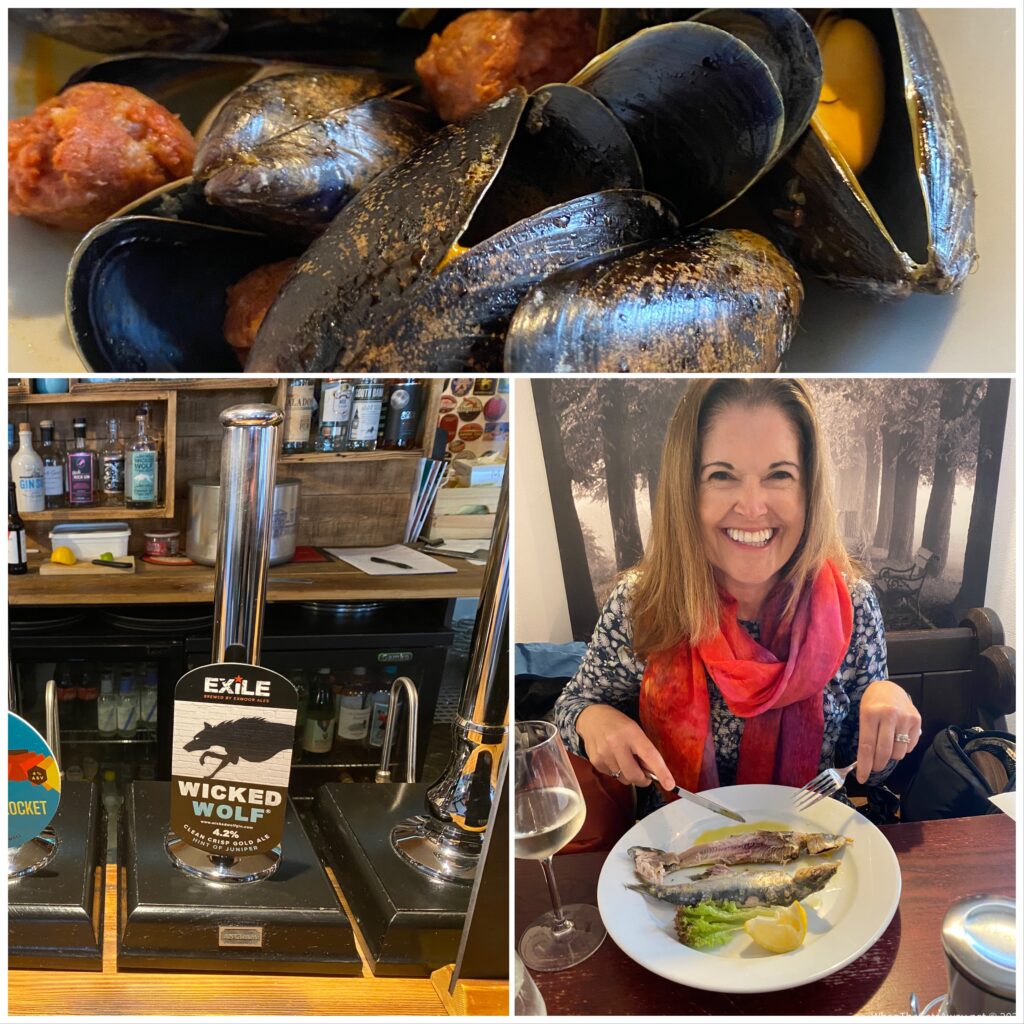
Our lunch at the Dartmoor Inn was a wonderful surprise. The new owners have only been there 12 months, but in that time spent several thousand pounds renovating the interior and bringing the menu up to date. We opted for two entrees each – crab salad and scallops for myself and a roasted tomato soup for Mark, followed by scallops as well. Absolutely delicious and accompanied by some fabulous wine options – just one glass for myself and half a beer for Mr A.
Head chef and co-owner Jay Barker-Jones popped out to chat as we finished our meal – explaining his food philosophy and dreams for the pub. We wished them every success – the food quality is definitely in line with Jay’s training in Michelin starred restaurants around the UK. We would say this meal has been the most outstanding of our visit to the UK so far.
Bonus fact for travelling folks like us – they welcome motorhomes to come and park up for the night, as long as they’re dining there that evening. If you’re travelling this way, I would definitely take up that offer and enjoy more than just one glass of wine!
Leaving our campsite in Dorset, it was just a hop skip and a jump into Devon, the adjoining county. Our next destination was a campground near Tavistock in Devon, just north of Plymouth.
We first became aware of The Old Rectory, Camping and Caravan Park when we were desperately looking for a place to live, just before Easter. The nephew of Declan (the campground owner), knows someone we know, as he contacted us via Facebook and suggested we park up here. As it turned out we were able to find and rent Honeysuckle Cottage in West Bagborough instead, and the rest is history.
Still, we had taken note of this location, surrounded by interesting hikes and cycleways, and nestled a short way from the tors and moors of Dartmoor, and had decided to book in for two weeks. What a great decision!
The weather has been variable since we arrived, with temperatures similar to winter in Australia (daytimes at 16-18 degrees) with a good dose of rain and drizzle ranging to a hot and humid late 20s the past couple of days.
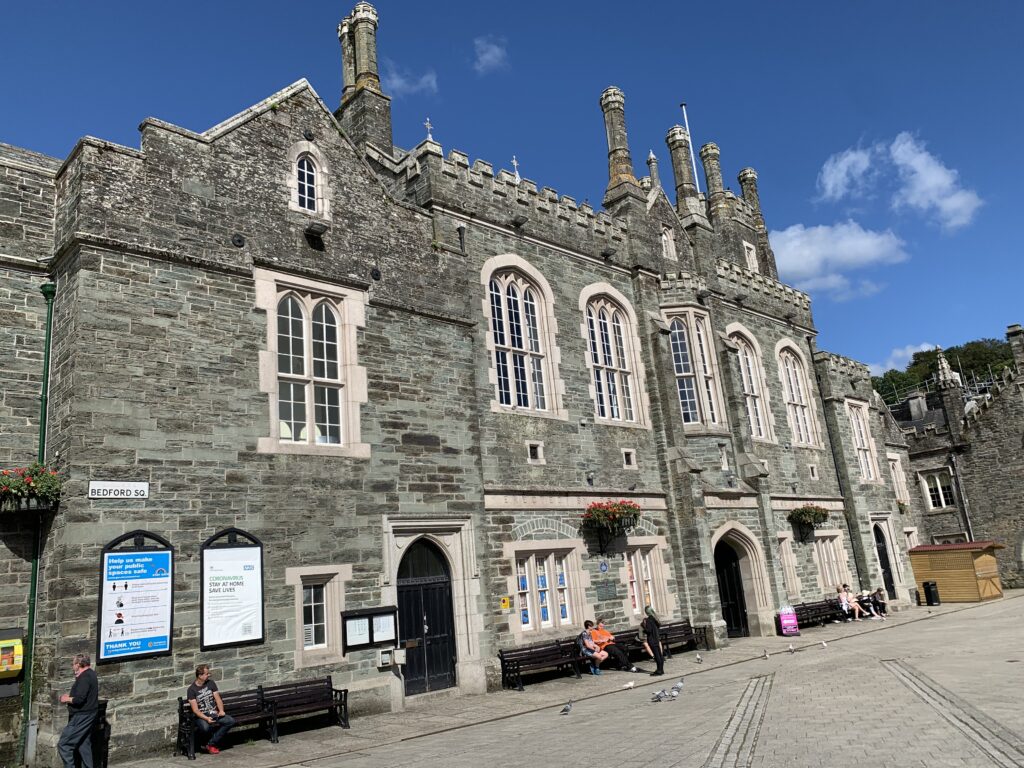
Our first impression of Tavistock was of a grand, good looking town, with its central square centred around its Pannier Markets. These were purpose built in the 1850s by the 7th Duke of Bedford using money made from the local copper and asbestos mining operations. The river was re-routed to allow for this building and the square (Bedford Square). There are still markets held here every Wednesday, Thursday and Friday.
The Tavistock Town Hall on Bedford Square
The sunshine of our first day was not set to last, so on Tuesday morning we decided we would cycle into town and have a good look around. Our campsite, The Old Rectory is just out of town, but we managed to ride in with only a short distance travelled on roads.
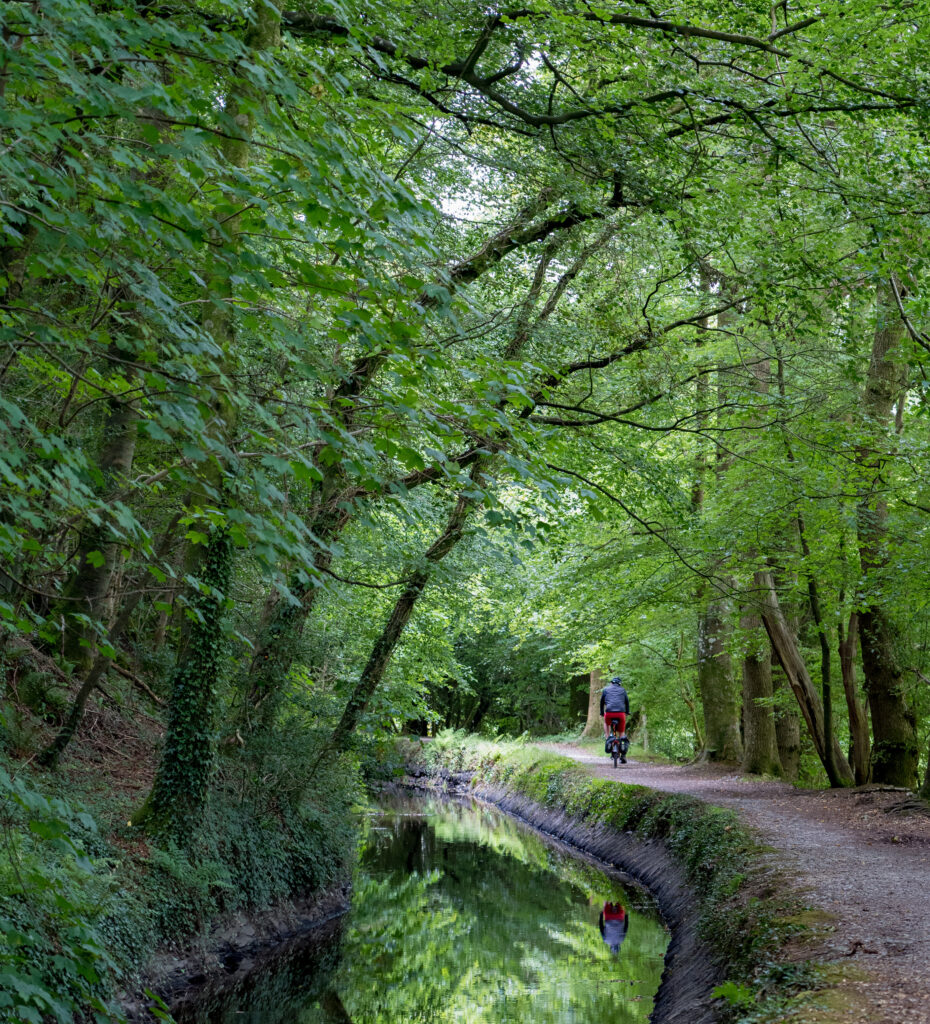
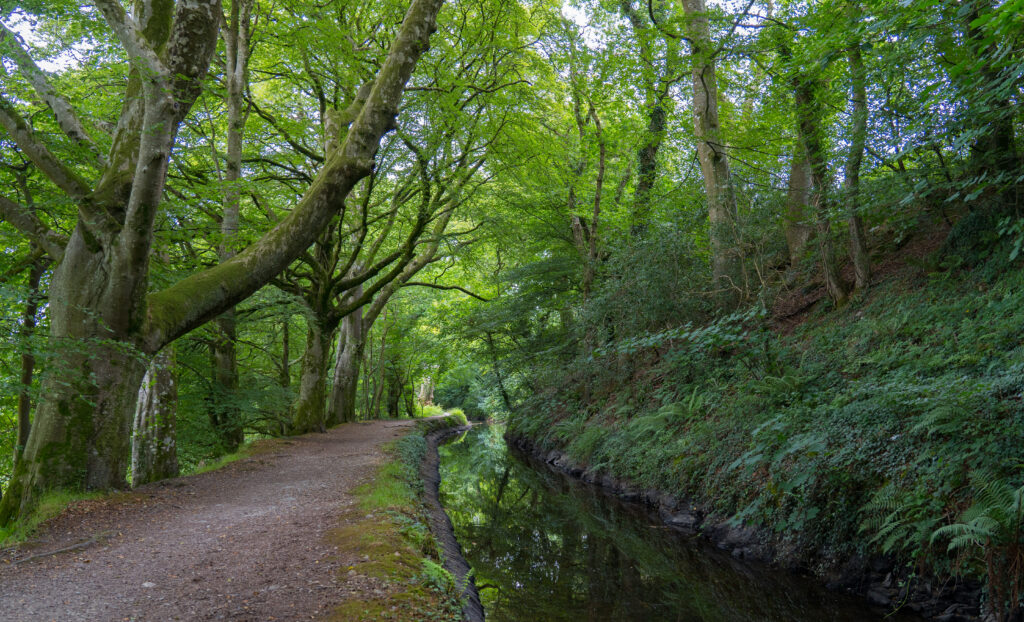
Diverting down a narrow farm track, we soon arrived at the Tavistock Canal. This picturesque area is now primarily a footpath (bikes tolerated with care), but has an interesting history dating back to 1817. It links to the River Tamar and Morwellham Quay, and was used to transport goods for shipping. These days it’s home primarily to waterfowl, but the excellent craft involved in building this watercourse is still holding strong.
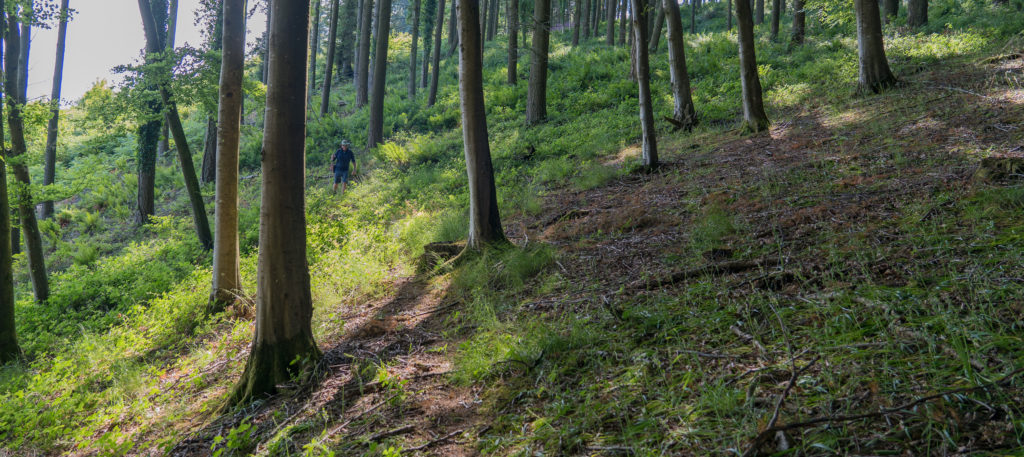
Mr A riding along the Tamworth CanalOn this moist morning the dark trunks of the beech trees stand out like sculpturesThe path takes you beneath the Shillamill Viaduct – opened in 1890 to carry trains across the valley..
We had a good explore around town on our bikes, the rain holding off enough for us to enjoy a picnic of Cornish Pasties (a vegan one for me – one of the benefits of this latest food trend is dairy-free goodies!) and a hot chocolate.
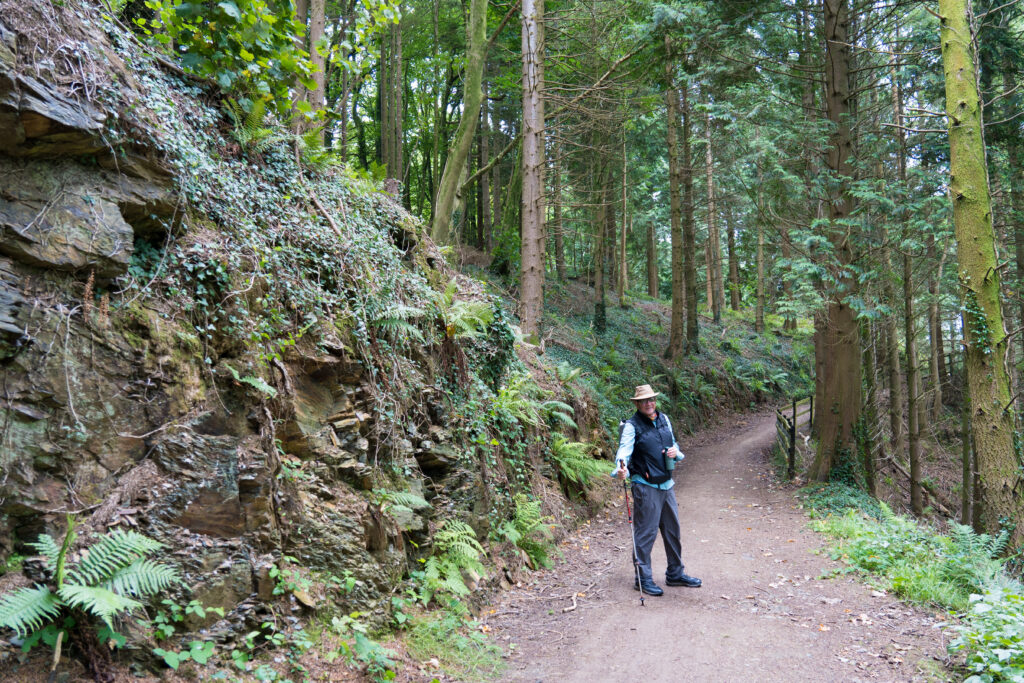
Wednesday dawned grey, but the rain continued to hold off, so we donned our walking boots and decided to hike to see the aforementioned Morwellham Quay (Strava link). Our campground is located in the hamlet of Gulworthy, on the edge of a huge network of mountain biking and hiking tracks known as the Tamar Trails. The trail network is open for all to use, with maps around detailing which are for walkers only versus shared with bikes.
Mark heading off along a track which was once a railway carrying copper to the port
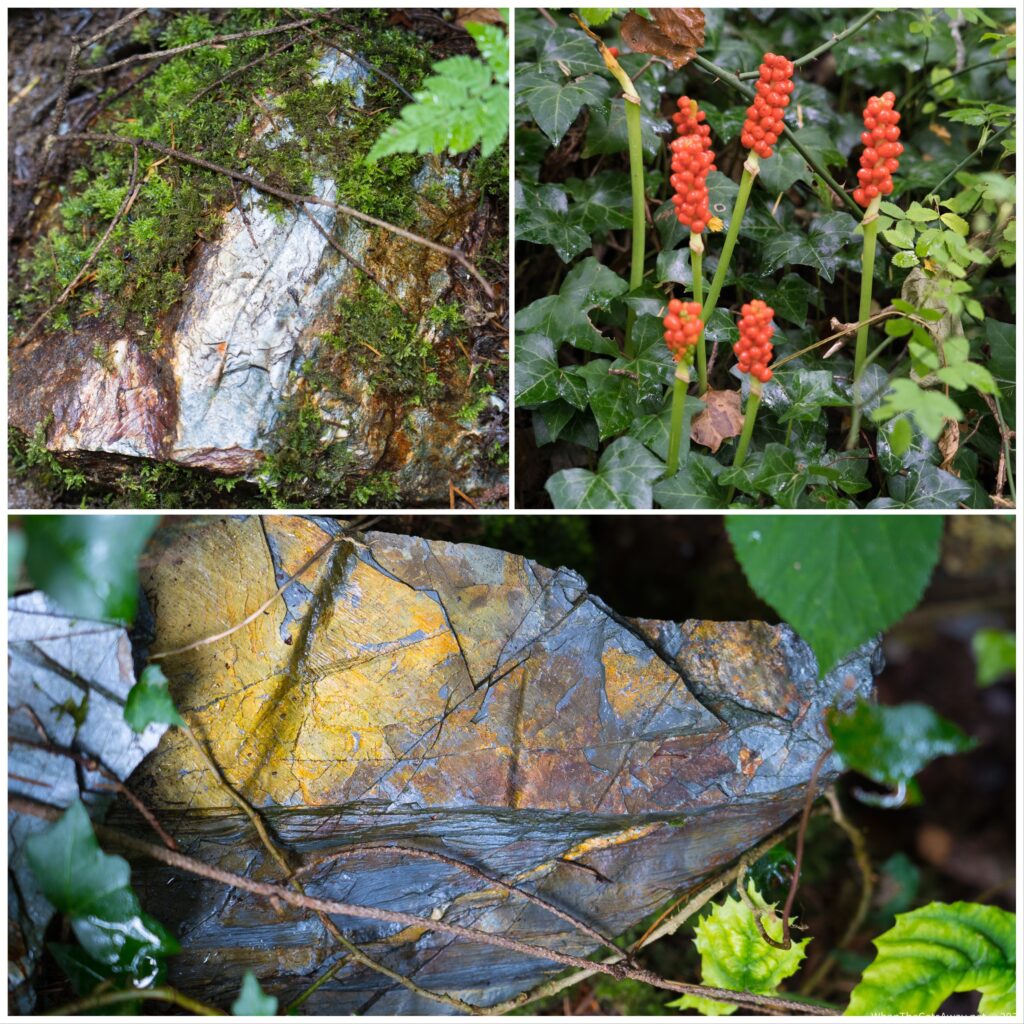
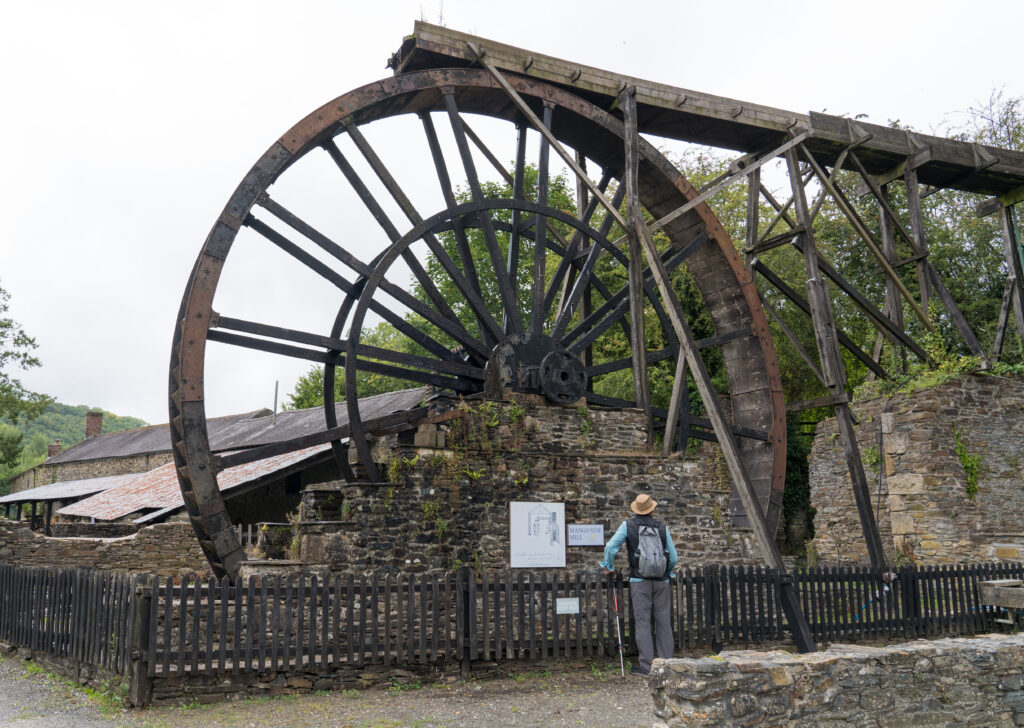
This whole area is part of the Cornish and West Devon Mining Landscape World Heritage Site – protected along with the likes of the Taj Mahal and the Great Barrier Reef in Australia. The Tamar Valley was home to numerous successful copper mines in the 19th and 20th centuries.
You can see the line of raw copper in this stone near one of the old minesRestored old mining buildings
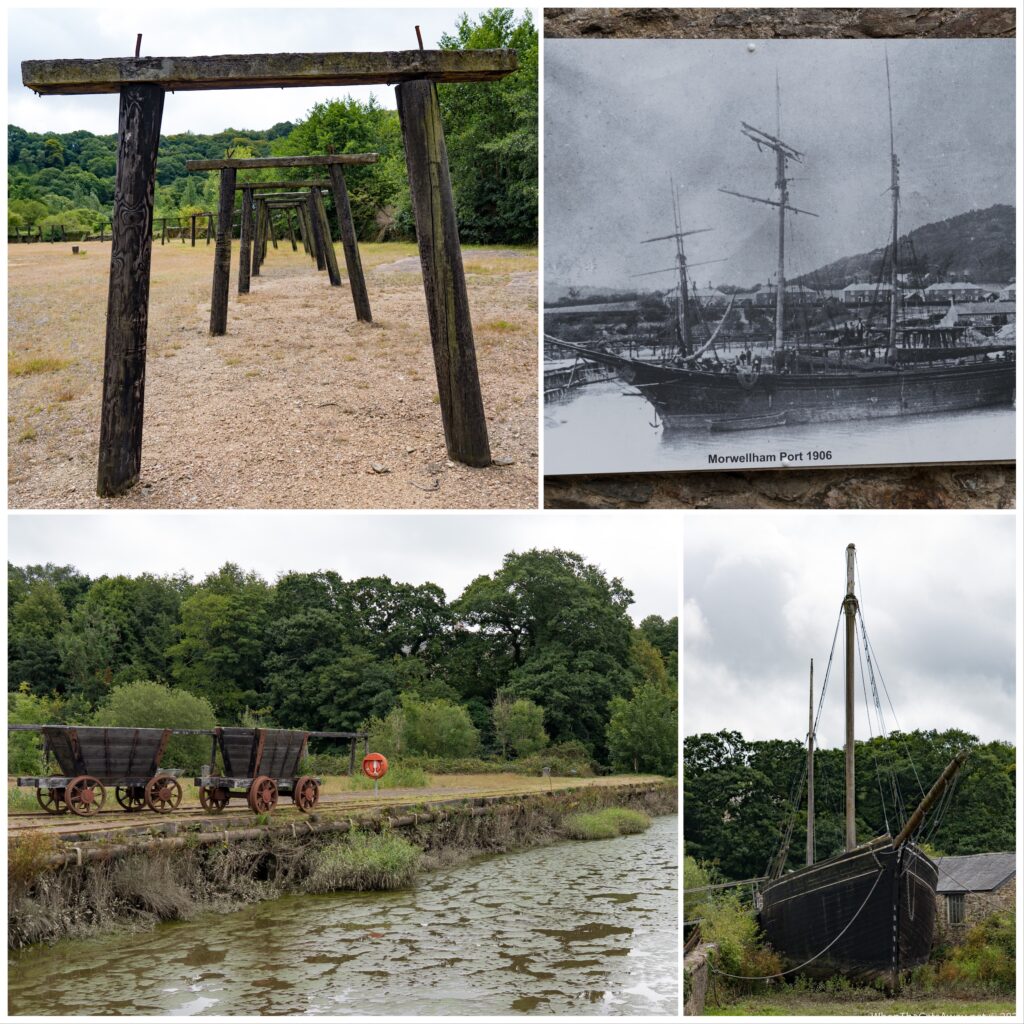
We made it down to Morwellham Quay, the site of what used to be a busy bustling port – shipping copper to Swansea to be smelted, and receiving other goods such as coal from Wales. Today it’s a museum, with carefully restored mining artefacts and (when there is no Covid), theatre and exhibits depicting life for the mine workers and their families.
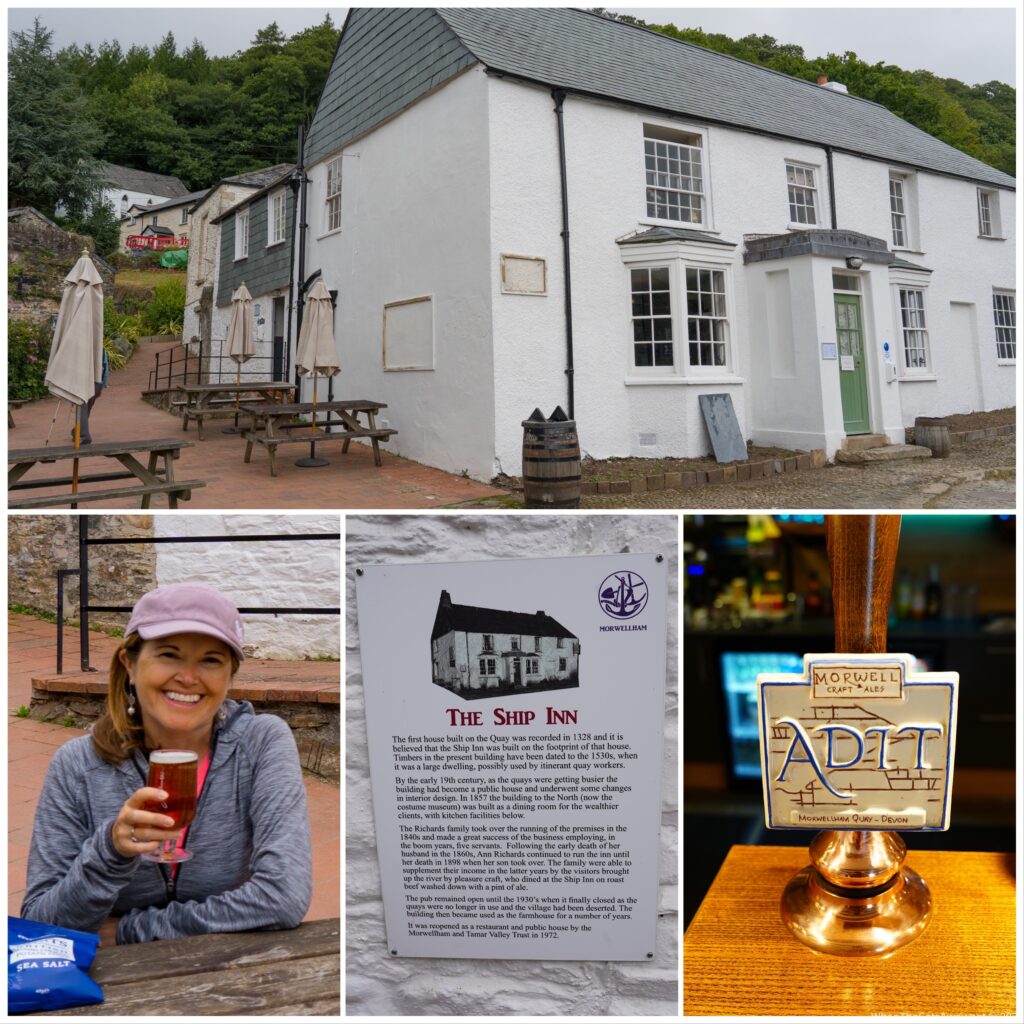
Mark had read that the pub, The Ship Inn, had just reopened its doors to the public, and spotting empty benches and an open door, checked to see whether they were serving yet. It was 11.30am, but yes indeed, two half pints of a locally brewed beer were soon drawn and we enjoyed those sitting outside on the cobbled streets.
A half pint of the very tasty Morwell Quay Ale enjoyed
It was very quiet on this afternoon, just a few people camping in the nearby field, and none of the usual attractions open. We explored what we could around the quay, all very interesting and somewhat hard to imagine with the river not looking deep enough to cater to much more than small pleasure boats, much less the huge ships required to transport goods.
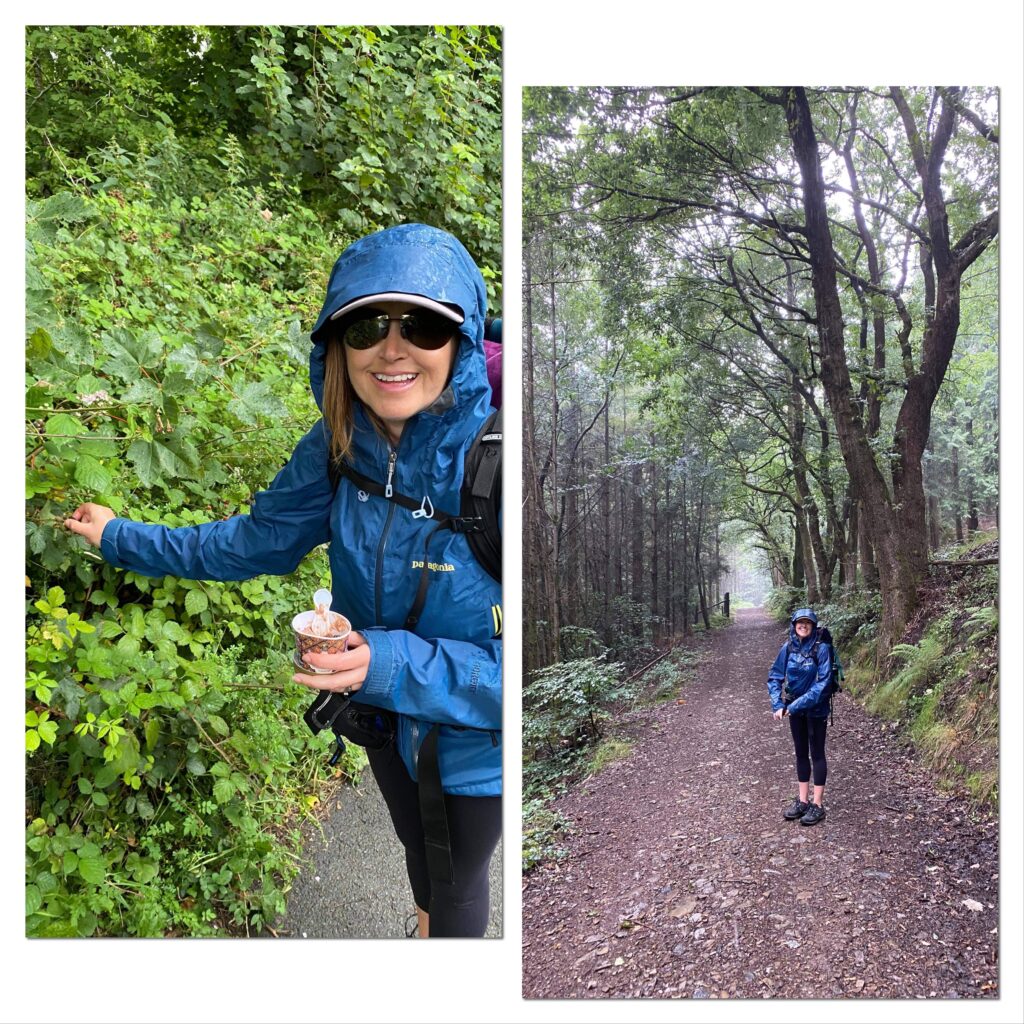
Exploring more restored mining memorabilia On this sleepy afternoon it is hard to imagine the busy port this once wasThe rain kicked in on our return walk, but I still managed to pick some fresh blackberries to go with my dairy-free ice cream!
The following day was wet and drizzly, our location high up on the edge of Dartmoor meaning we were surrounded by cloud and fog. We caught a bus into Tavistock to have a look around the Pannier Markets and shops. It’s such a shame the experience has been tainted by this virus. Masks have to be adorned, the market stalls have been halved to allow for social distancing, and people are somewhat on edge. I think the whole experience of not being able to see peoples’ faces has tainted perceptions. A visage hidden behind a mask can look threatening and unfriendly and sadly that is how we were treated in a few of the stores. We didn’t spend long in town, stopping only for lunch in a cafe and returning to Truffy earlier than anticipated.
Friday morning we woke early for us (before 7am!) as fine weather was promised and we had an exciting day planned.
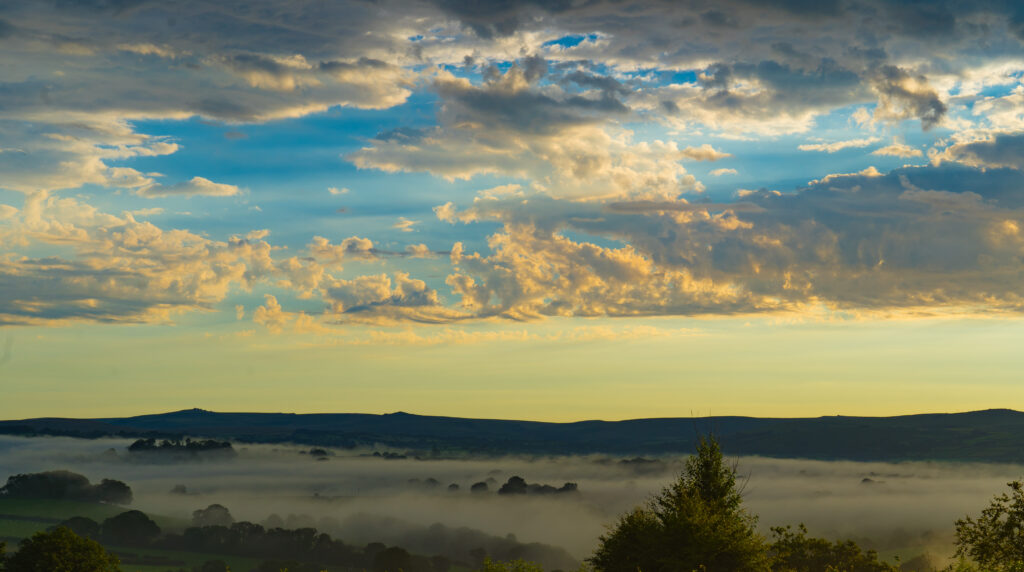
Our view up on the hill at sunrise, looking down at the misty valley below
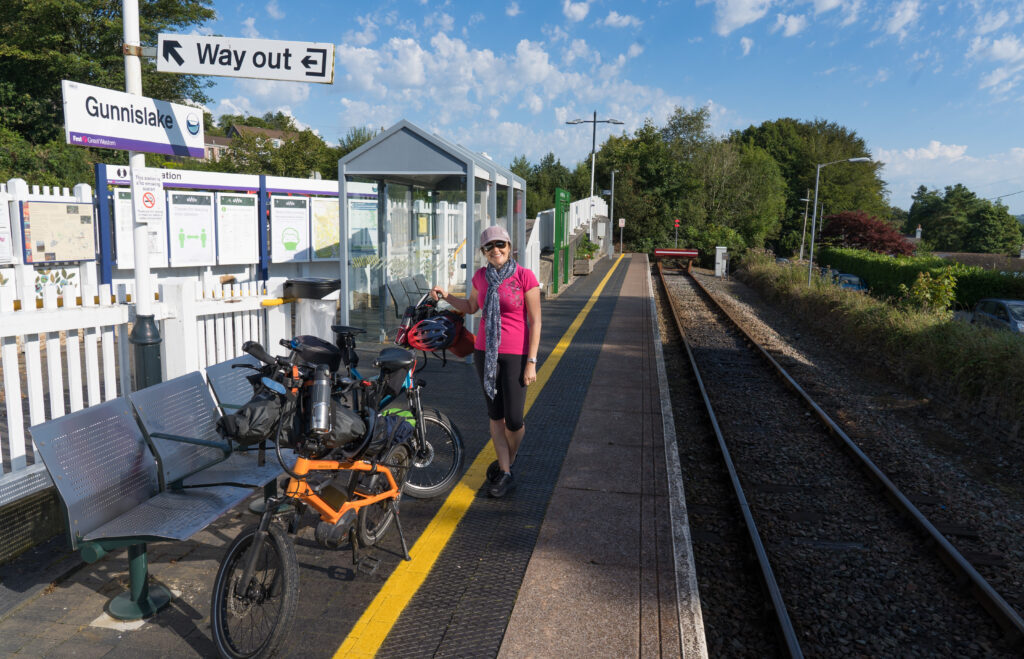
We cycled to the next village of Gunnislake and caught the train from there into Plymouth.
Gunnislake is the end of the line
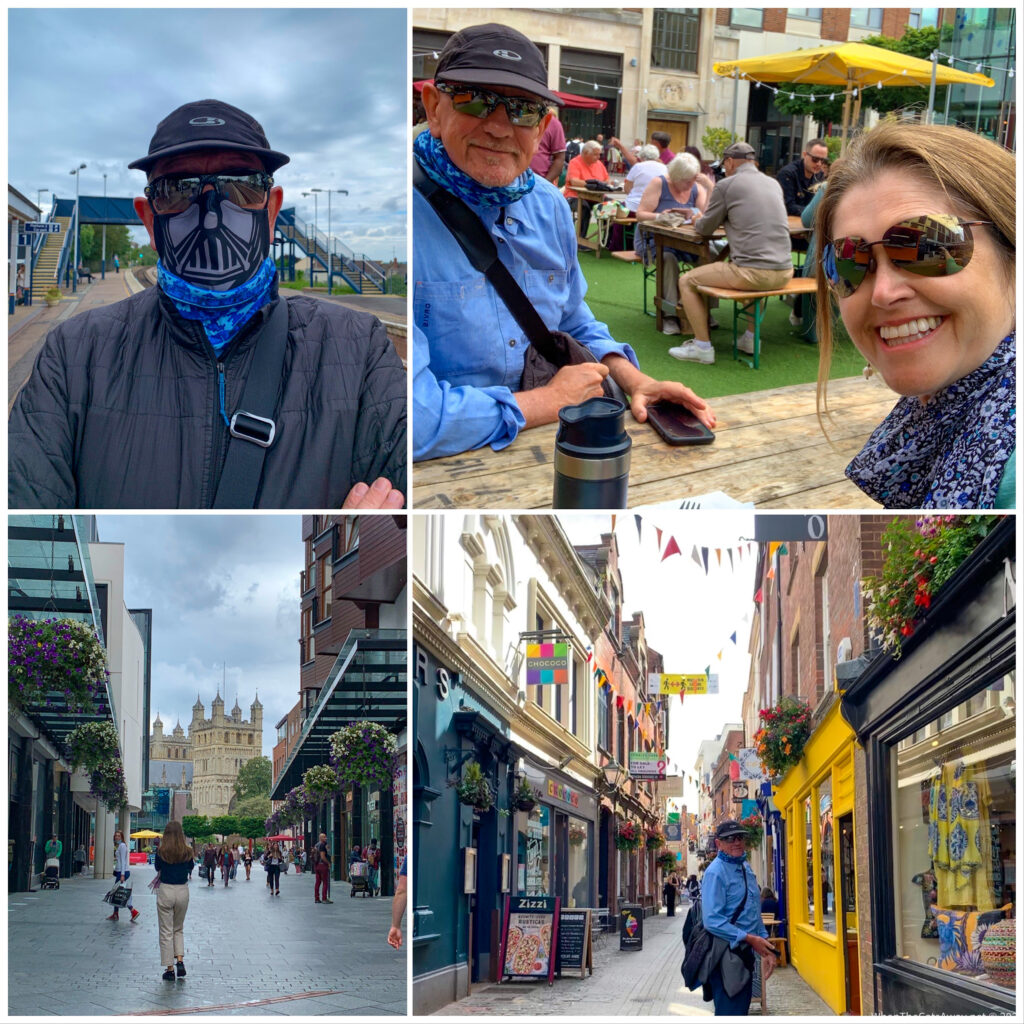
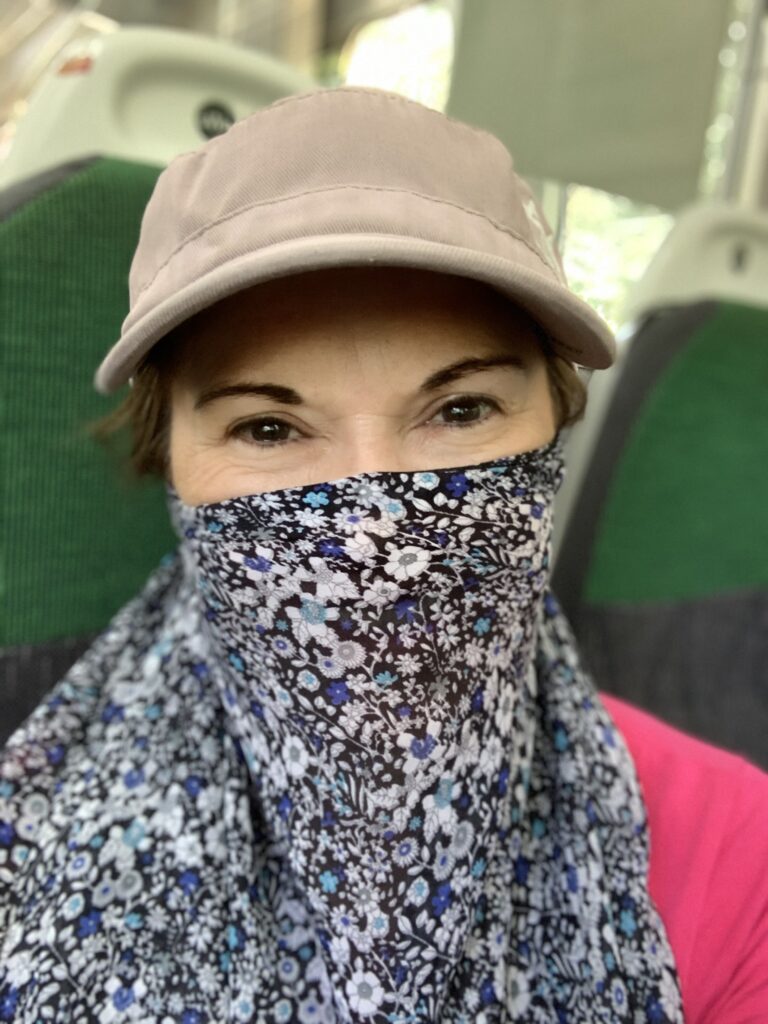
Face coverings are required on trains, and I didn’t much fancy wearing a hot mask for the best part of an hour. I experimented with my scarf, which worked quite nicely.
Still covered, but much airier than a tight fitting mask
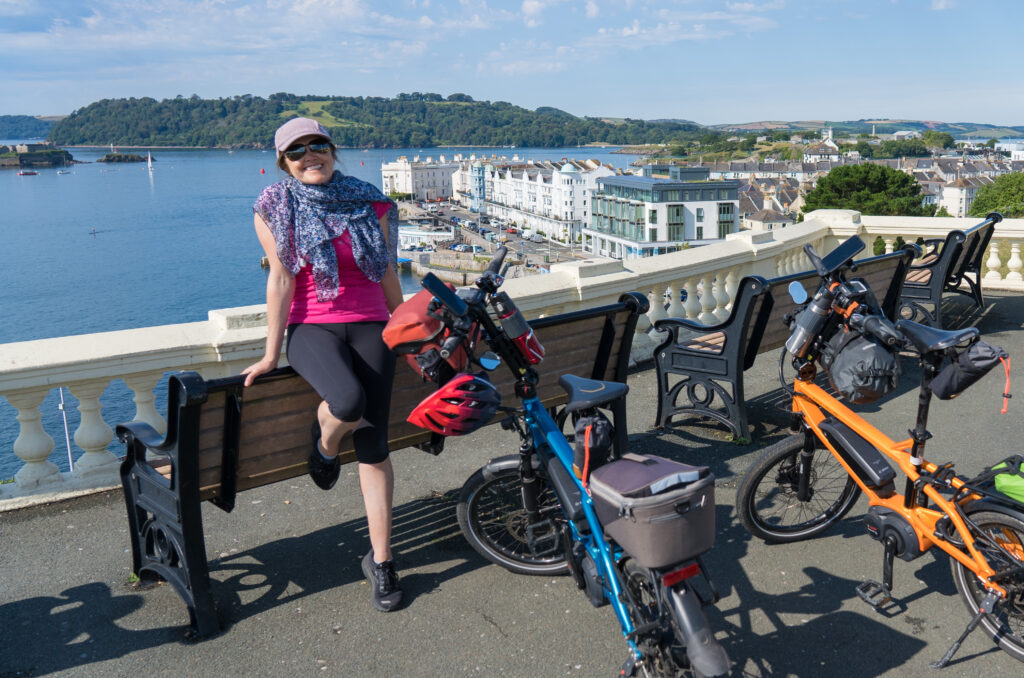
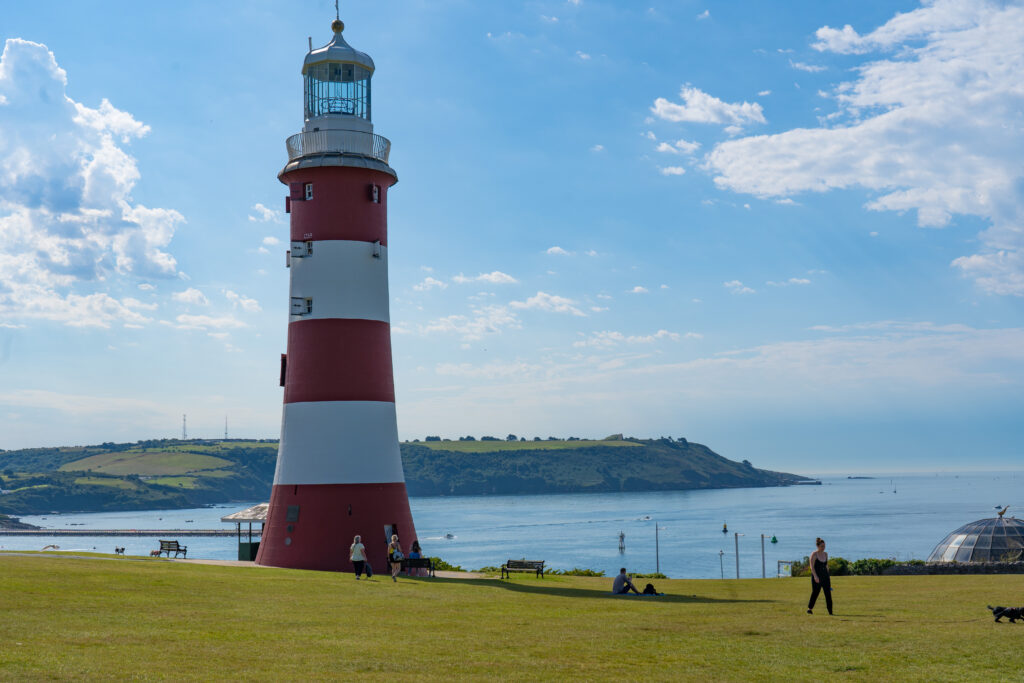
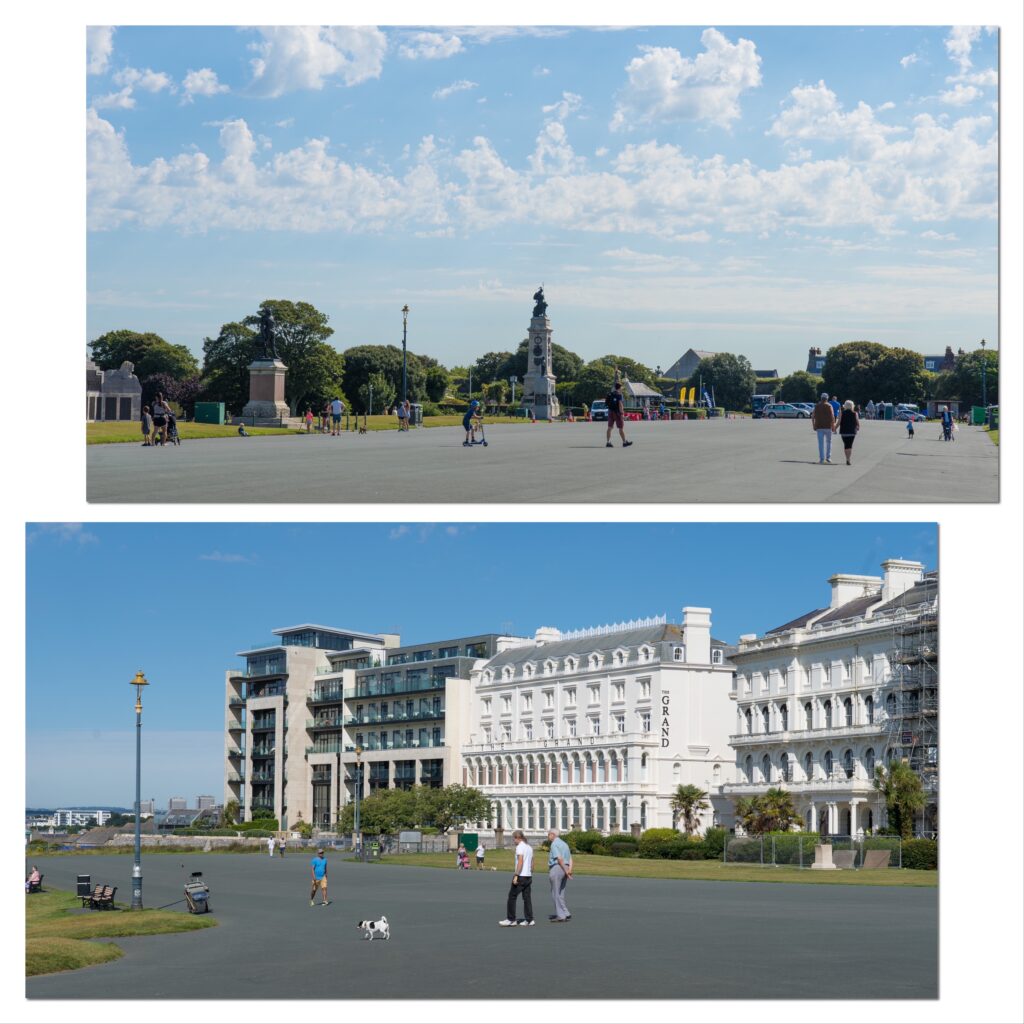
Neither of us can remember ever visiting Plymouth before and were both impressed on arrival. It was a short cycle from the train station down to the front, adorned with magnificent hotels with incredible views.
A sparkling Friday morningBeautiful scenes from Hoe ParkHoe Park and hotels with commanding views
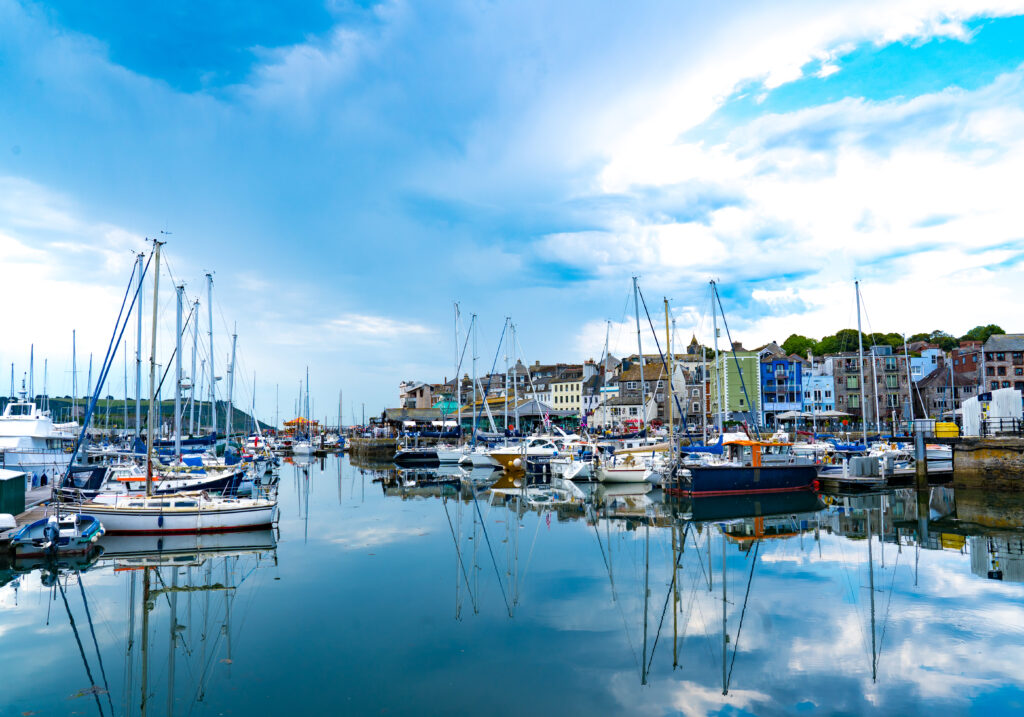
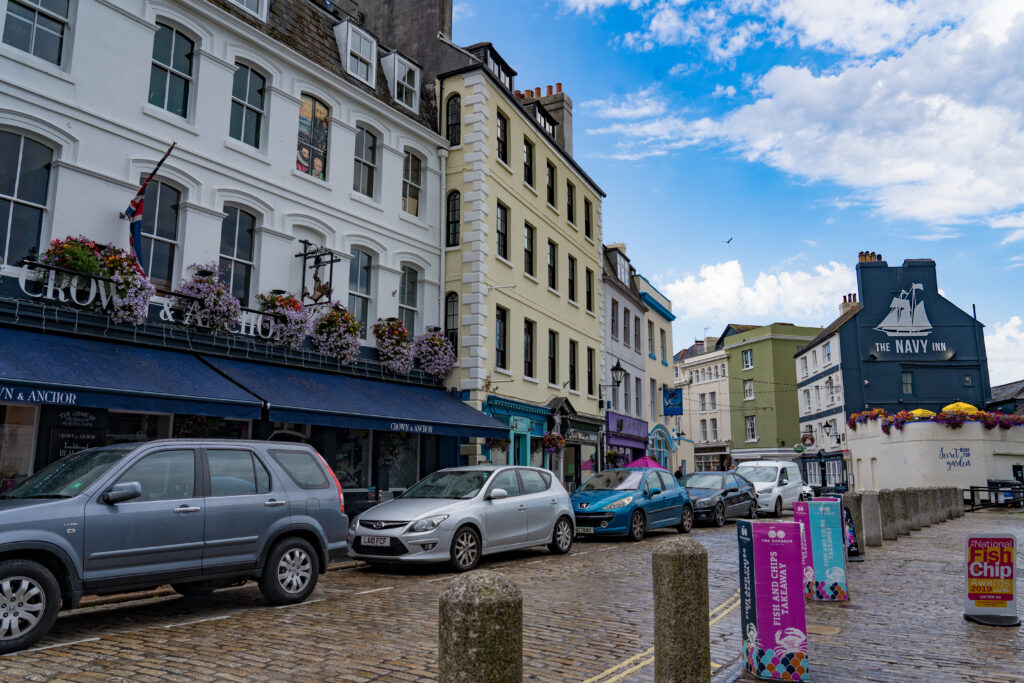
We explored around the Barbican area, a buzzing harbourside suburb
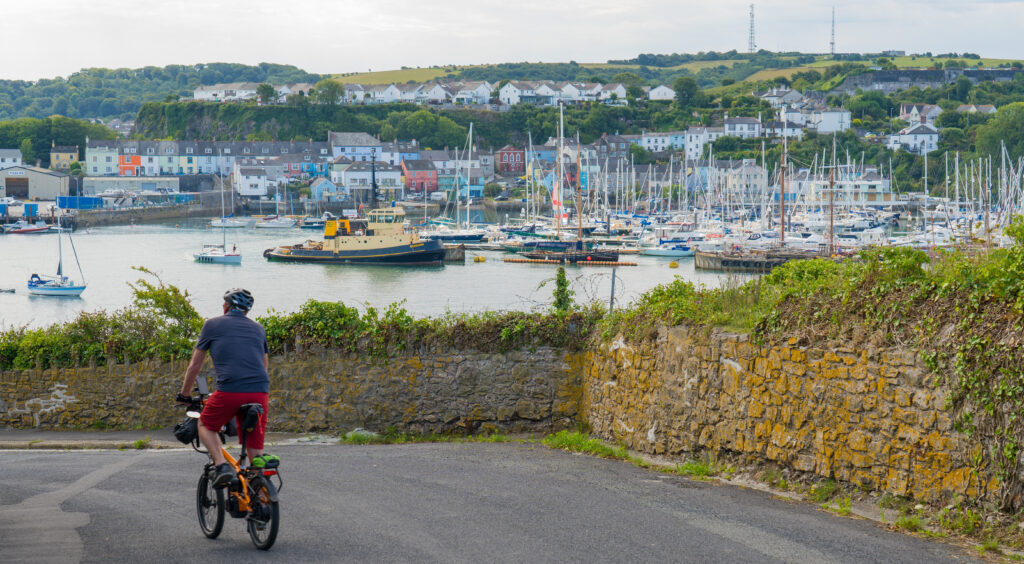
Perfect reflections in the marina – an approaching thunder storm making for dramatic coloursThe cobbled streets and cafes of Plymouth’s Barbican areaLooking out towards Clovelly Bay – a ferry goes across to here
We had an explore around the foreshore, enjoying the authenticity of the port buildings and fish markets, not simply providing sights for tourists. When the storm hit, we ducked into a pub to find lunch.
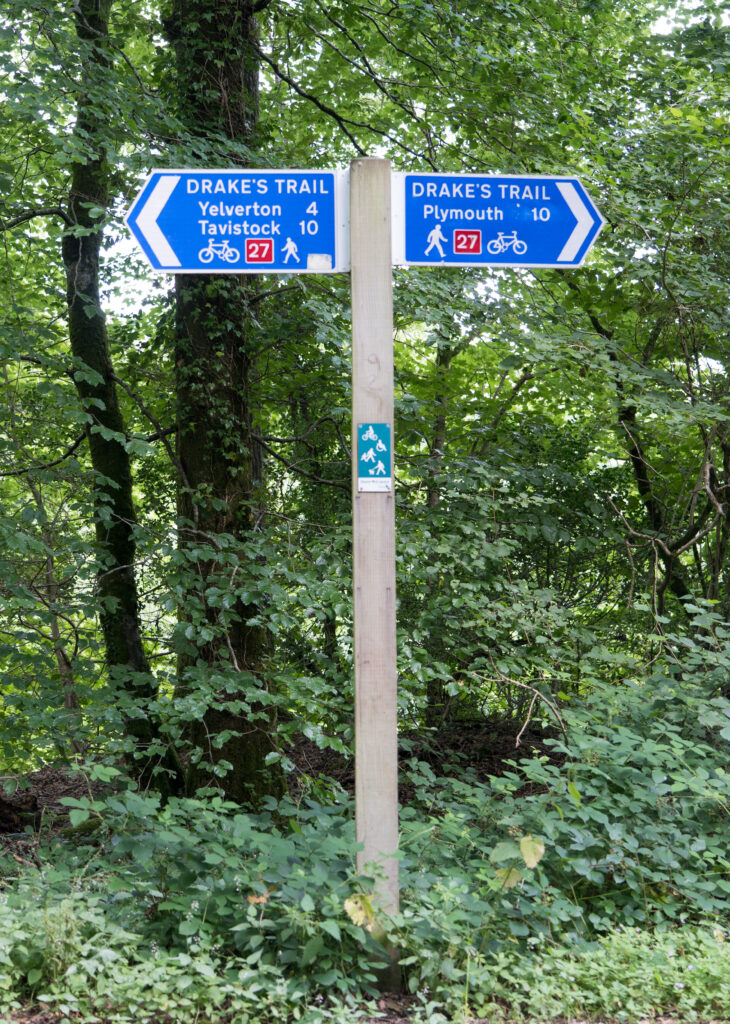
Sated, we set off on our way back to Tavistock. We rode along National Cycle Route 27, following a section known as Drake‘s Trail, named after Sir Frances Drake, the famous Elizabethan seafarer. The track is a 33km (21 mile) route which winds through riverside fauna, forest and through part of Dartmoor National Park.
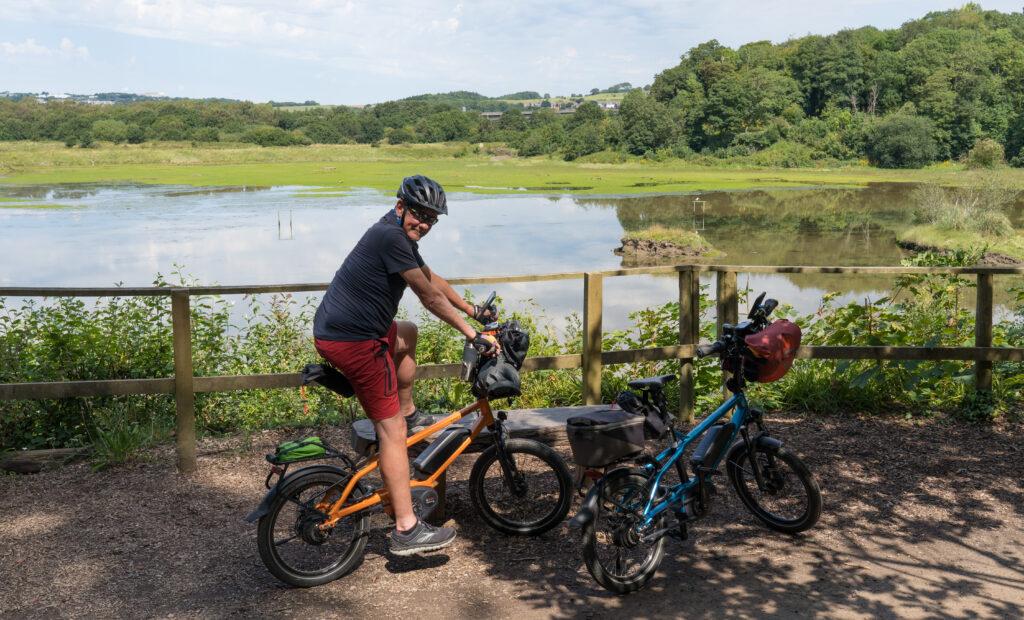
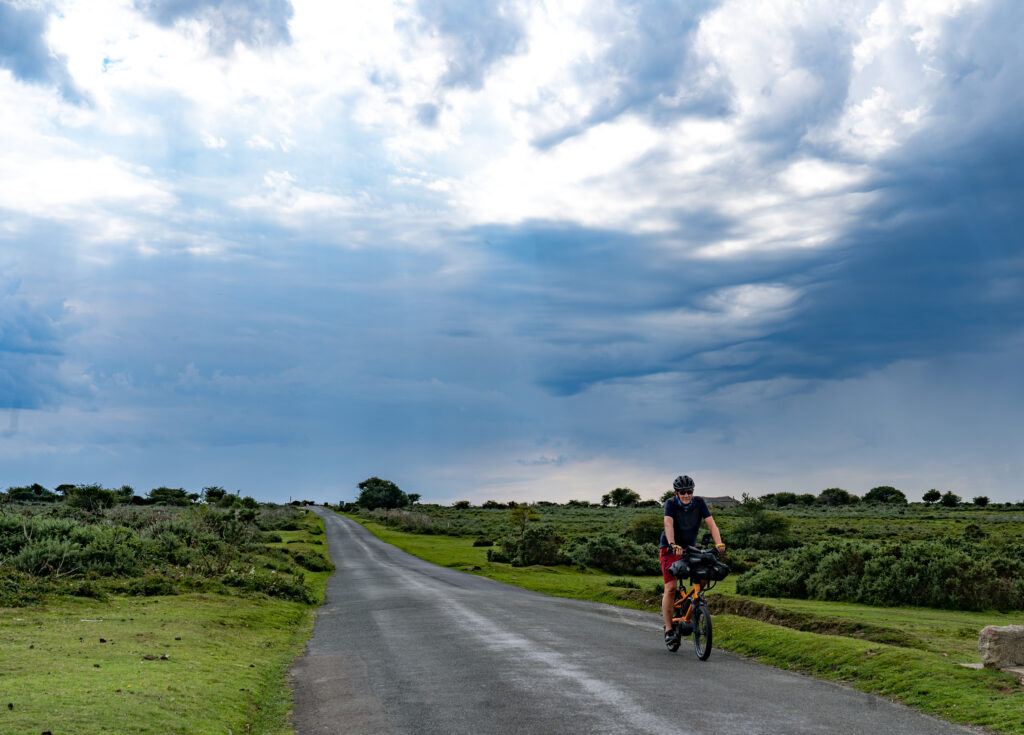
Mark cycling along the River Plym estuary, home to many birdsThe half way markerMore threatening skies as we ride across the edge of Dartmoor
It was a great day out, and we left Plymouth keen to visit again. It is such an interesting city – with islands, forts, and a lot of history to explore. It’s on our list for a longer trip in the future.
A hot day dawned on Saturday so we had a chilled out day. Next month I have been invited to present at an online conference (for the Patient Centred Outcomes Research Institute – PCORI) about conducting research via the rare disease support group I run, so worked on my biography and presentation, while we caught up with the washing before the next rain arrives.
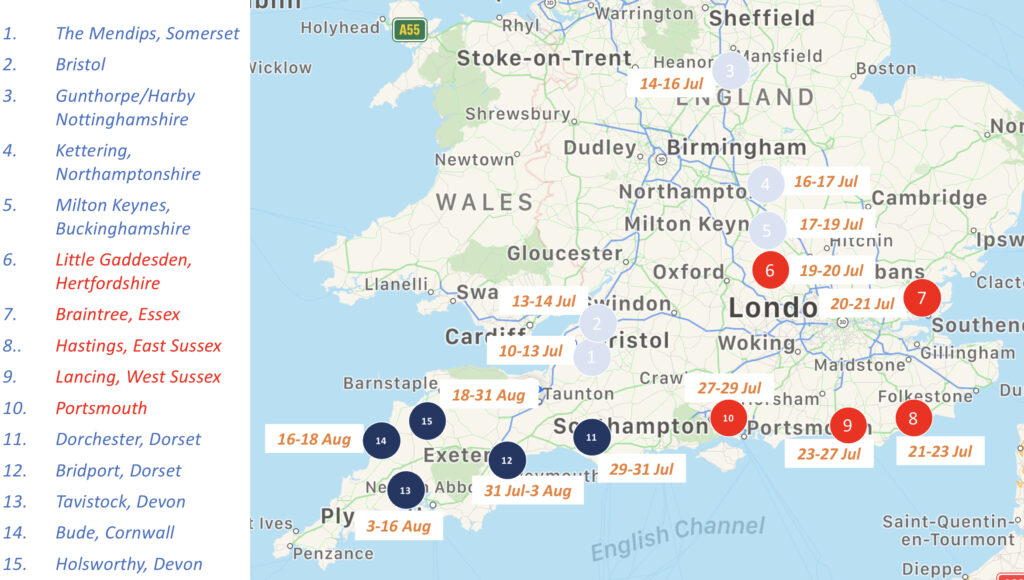
Location: Little Gaddesden, Hertfordshire, Braintree, Essex, St Leonards-on-sea, and Rye Harbour, East Sussex, Lancing, West Sussex, Portsmouth, Hampshire
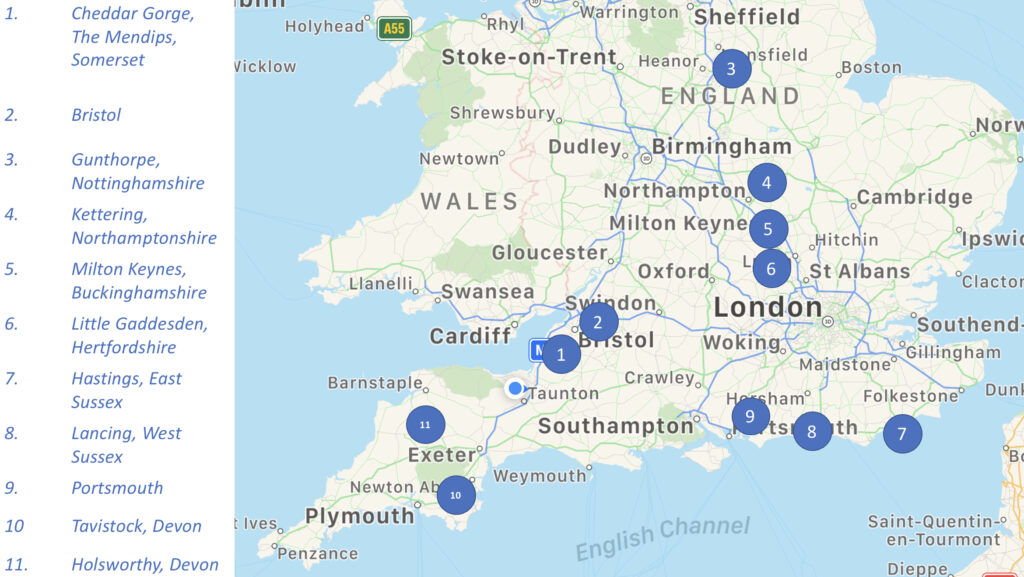
A whirlwind of emotion accompanies our travels as we finally have in person visits with family around the country. Following a busy three days in Milton Keynes with Mark’s daughters and grandchildren, we continued our journeys around England, gradually travelling south over a ten day period.
A busy 10 days travelling between 5 locations
Sunday night was spent with my cousin Karen and her family in Little Gaddesden where we were treated to a magnificent roast dinner and delicious wine, as always very generous with their time and company, with many laughs enjoyed.
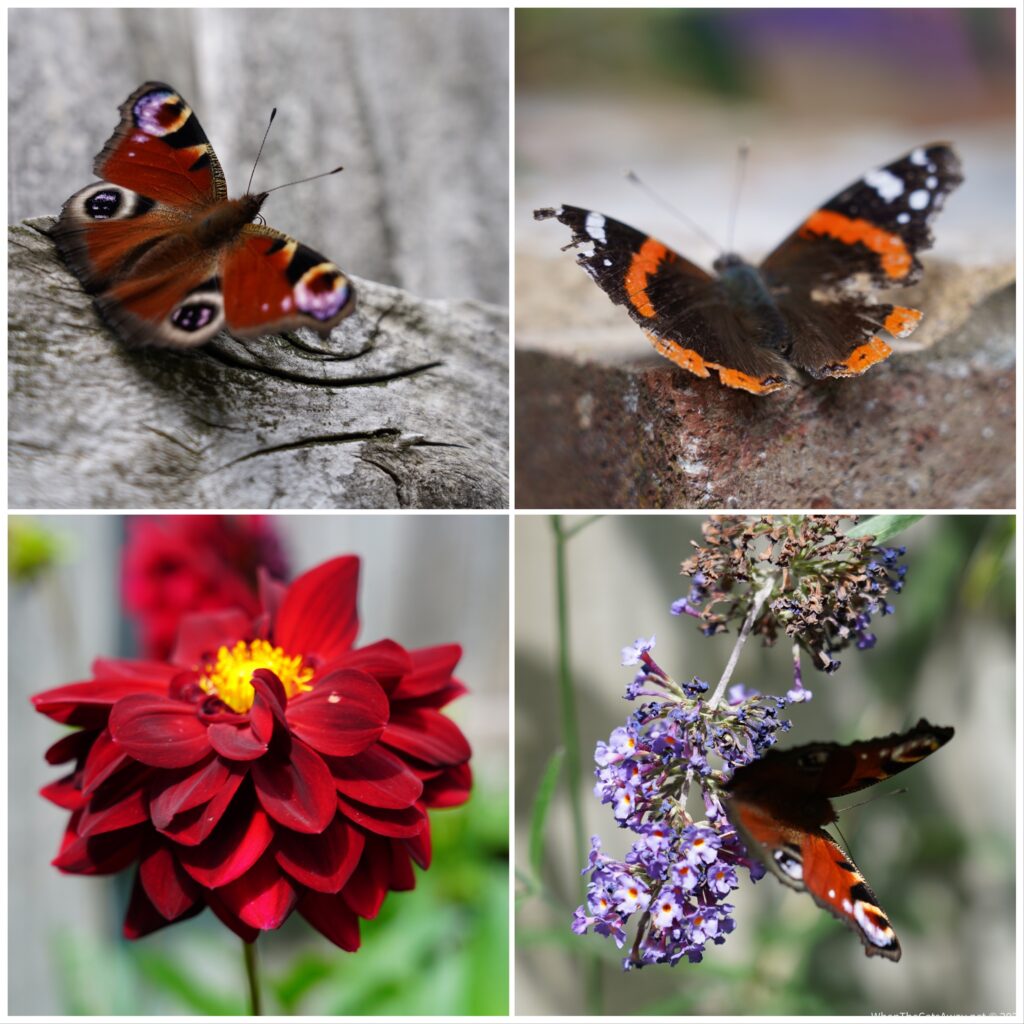
Feeling very short with my cousin Karen’s daughter Ella shooting up over the last year, now towering over us both!Butterflies and flowers in. Karen and Iain’s garden
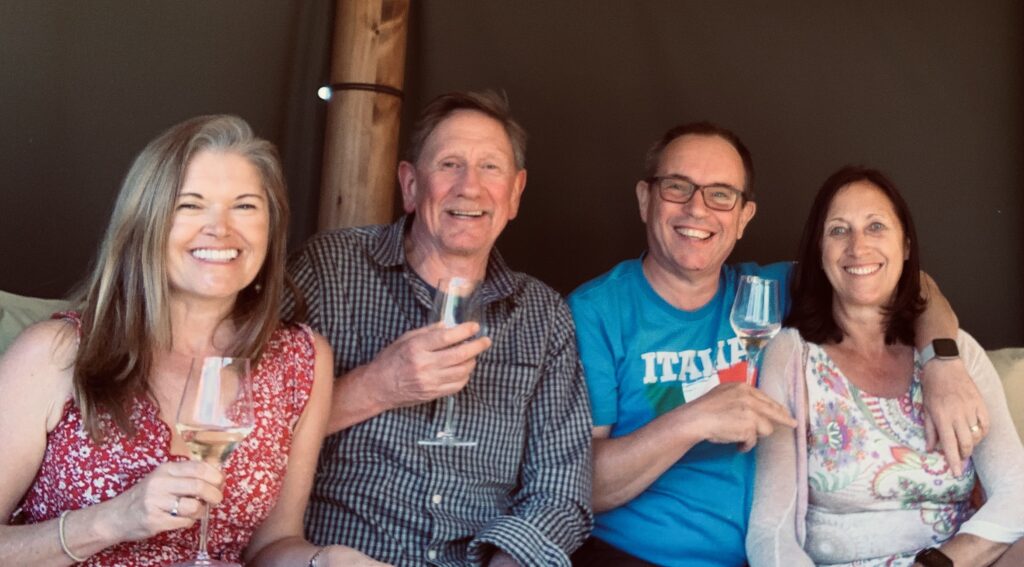
It was just a flying visit, and by lunchtime the following day we were back on the road, driving to Essex and our friends Mel and Barny.
Laugher and stories in the summerhouse at the end of Mel and Barny’s garden
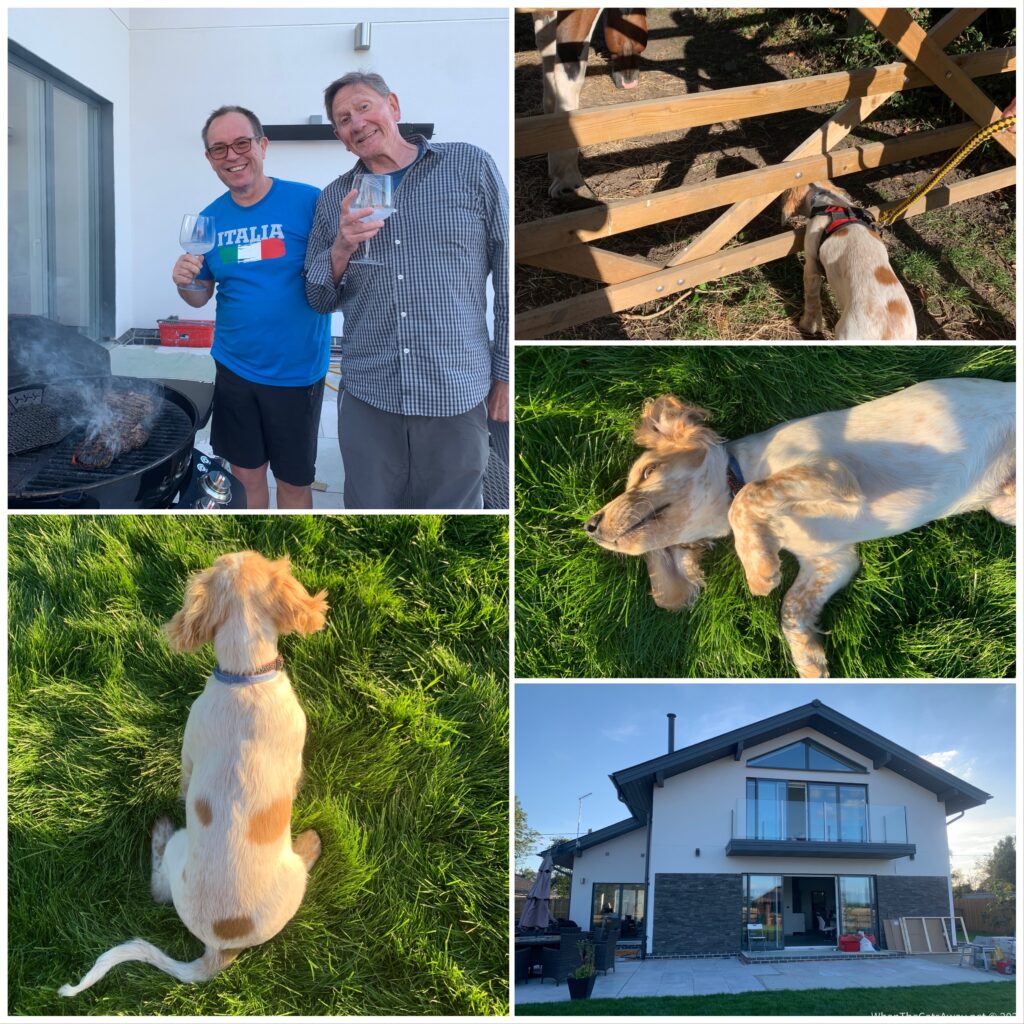
We were privileged to be the first guests in their nearly finished new home set in picturesque countryside, plenty of bird life and a rail trail at the end of the road. Their young working cocker puppy, Bertie kept us all on our toes with his endless energy and demand for tummy tickles and despite having spent the weekend moving in, Mel and Barny somehow found the energy to whip up a delicious salad and BBQ steak dinner. A great evening was spent with them and was over all too soon.
Barny mastering the BBQ, helped by Mr A’s observation of course…young Bertie meeting the local horse,
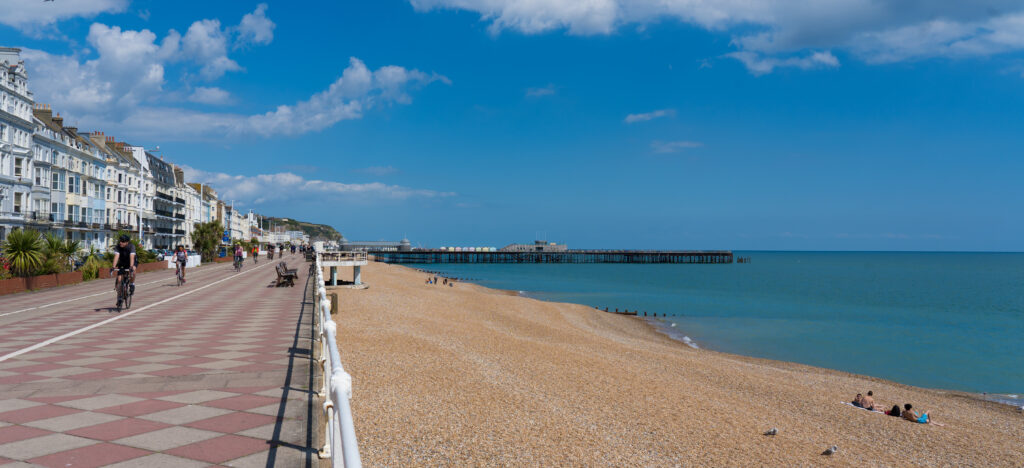
After leaving Essex, our next stop was Sussex, off to see my mum for a couple of nights. The weather continued to be absolutely glorious, the sun shining and showing off Hastings’ sea front in its best light, the sea like a mill pond lapping on the pebble beaches.
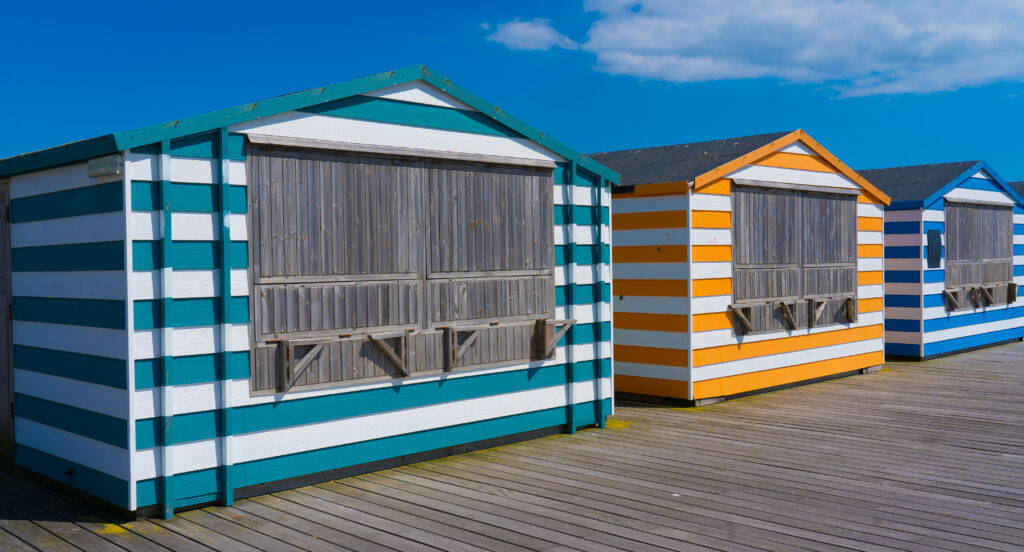
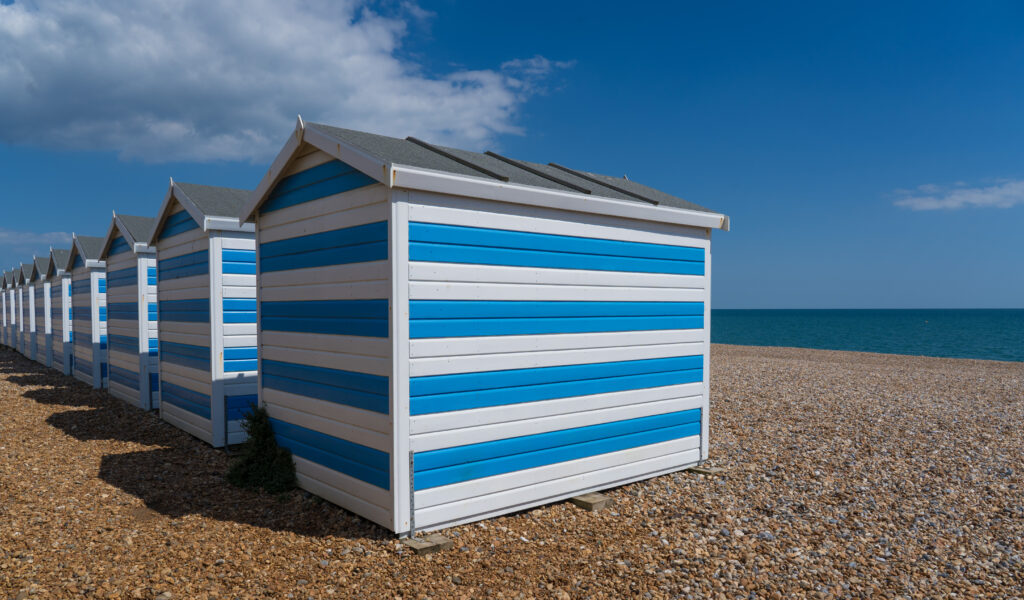
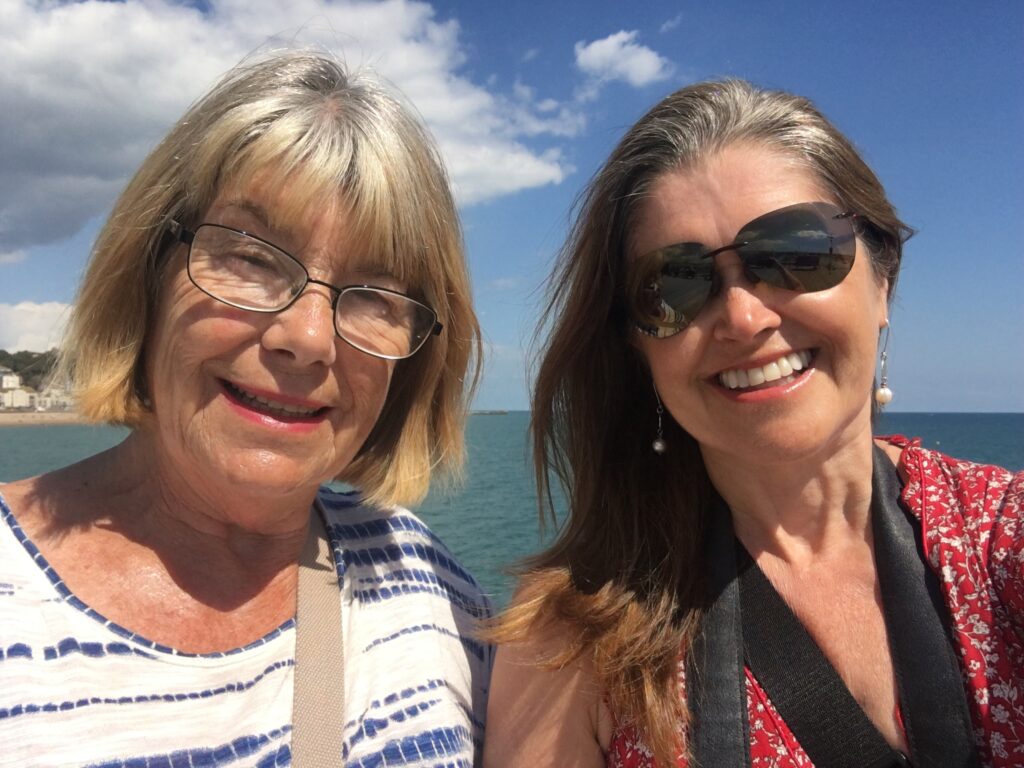
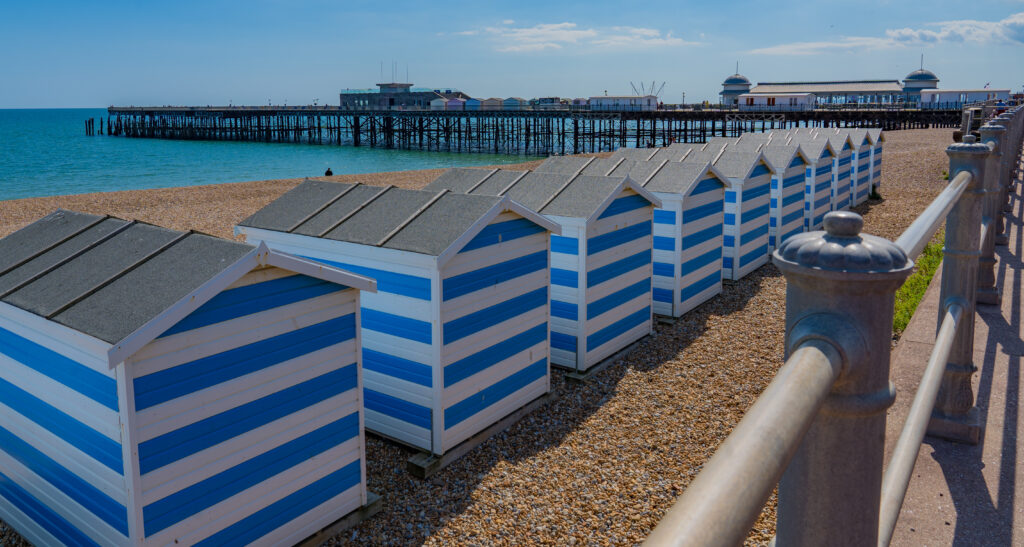
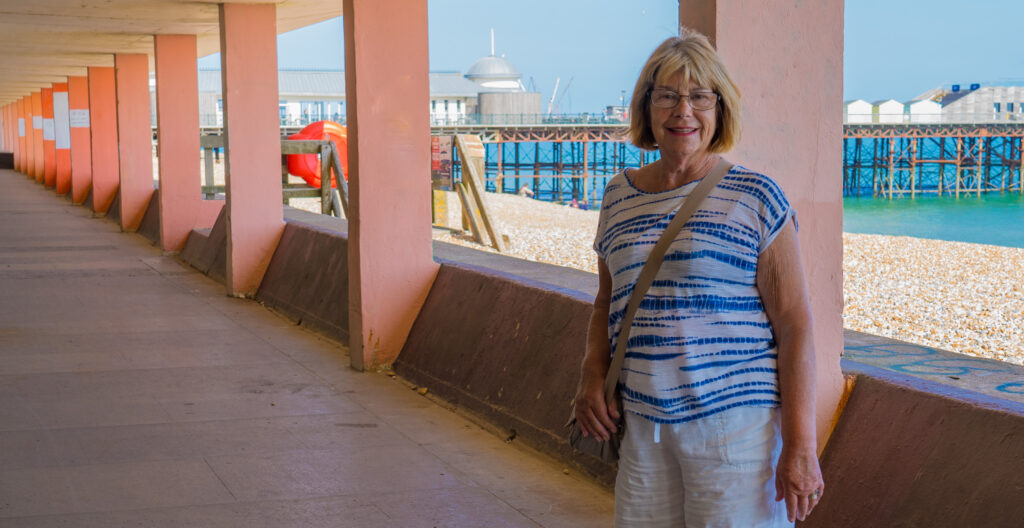
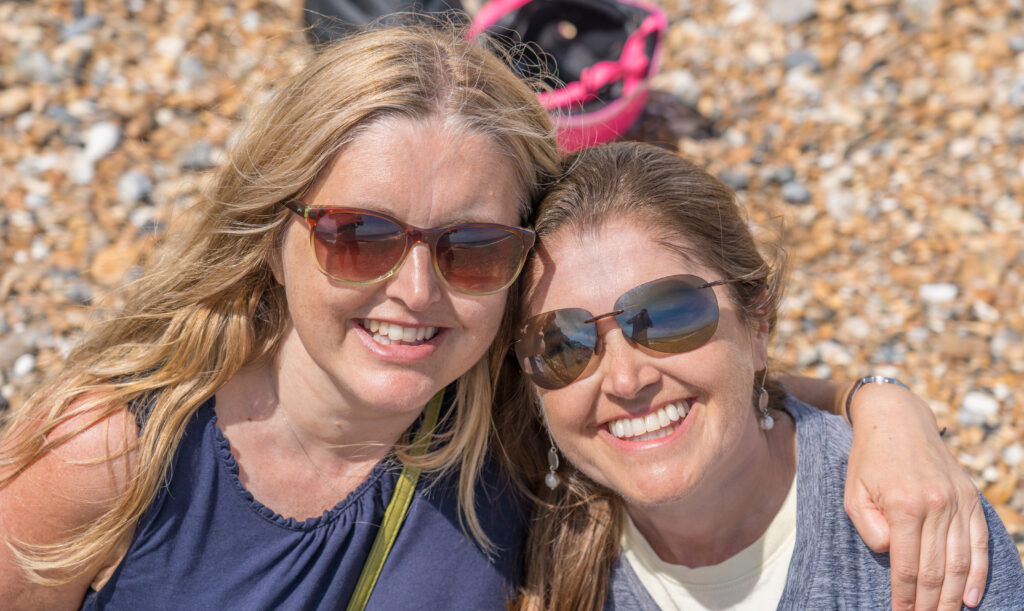
Mum and I strolled along the seafront to Hastings Old TownBrightly coloured huts on the pier, not yet open for businessChanging huts on the beach picking out the colours from the skyMother and daughter – I still have my ‘lockdown hair’!Hastings PierStrolling back along the 1930s Bottle Alley
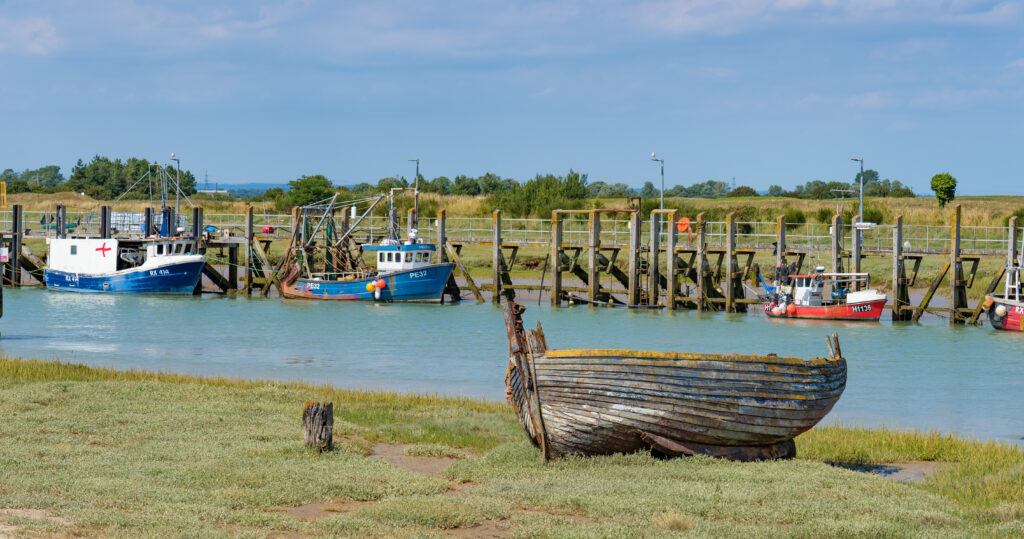
The following day Mr A decided to take himself off on an ebike ride adventure, while I joined mum and her husband Barry on a trip to nearby Rye Harbour. Rye Harbour is a little peaceful village situated near the mouth of the River Rother, a short drive from Hastings. Seals are often seen fishing in the estuary here, and there are numerous working fishing boats that moor alongside the jetties.
On the other side of the river is popular sandy beach, Camber Sands, which on this warm, summer’s day was packed with visitors, despite the ongoing Covid-19 distancing restrictions. In contrast, our walk around the nature reserve was politely distanced and peaceful.
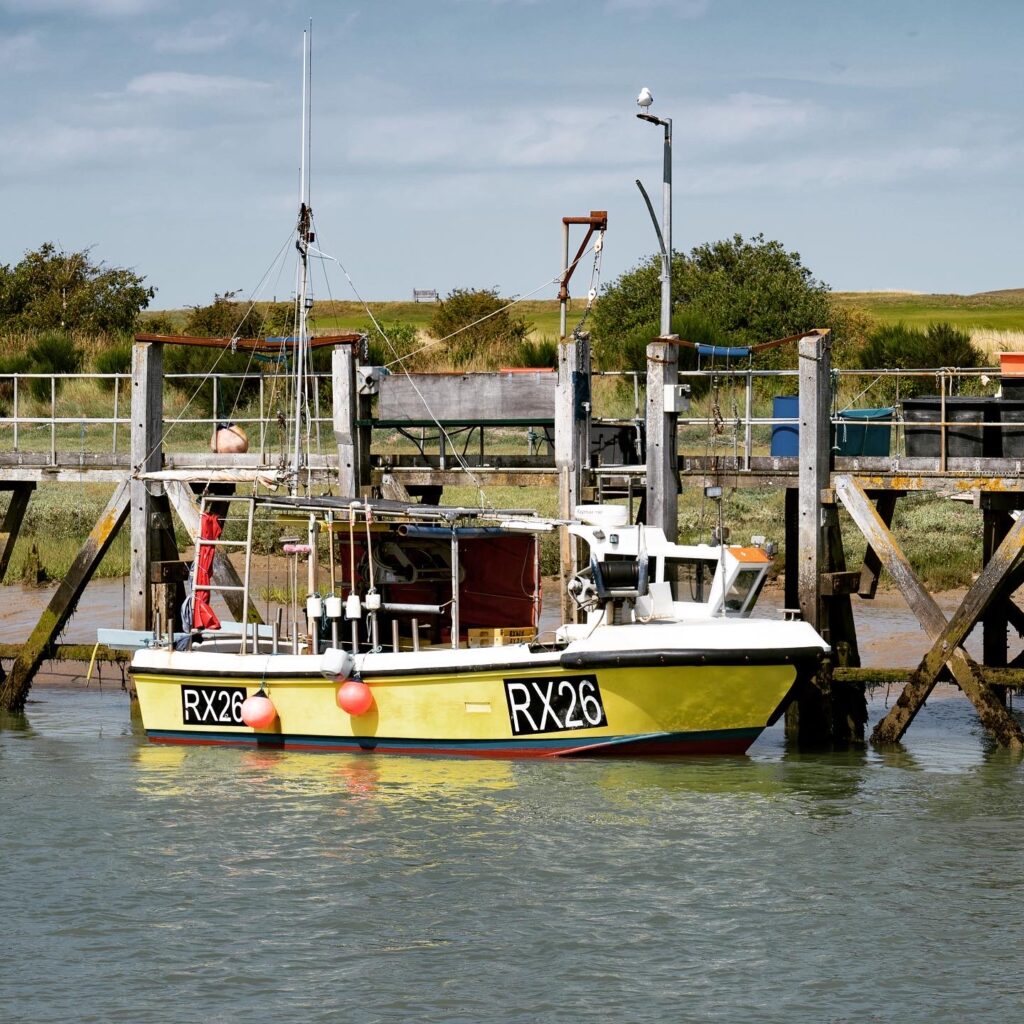
Fishing boats in the River Rother estuary at Rye HarbourAll boats registered in Rye start with the letters RXLook carefully at Camber Sands and you will spot the crowds along the beach
Our walk took us along paths winding around the salt marsh, a site of special scientific interest providing habitat for a wide variety of birds and insects, many quite rare.
Mum and Barry take a few moments for a water break
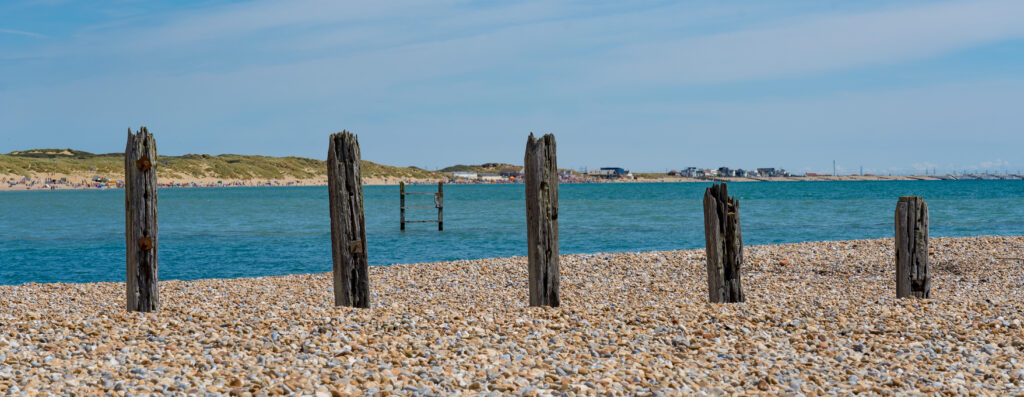
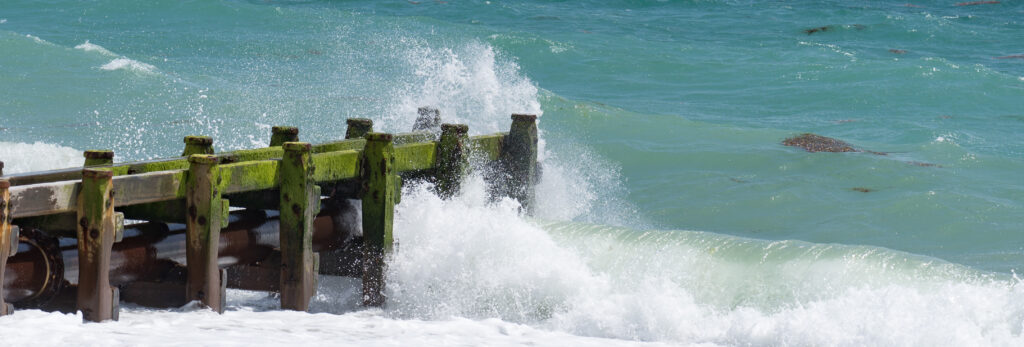
The walk followed the coast, the pebble and shingle beaches lined with old weathered wooden groynes, designed to help protect the land and marshes behind the beaches from erosion from the sea.
Mother – daughter timeA very level walk around the wetlands
It was a lovely afternoon out, clocking 8km (Strava link) and plenty of fresh air. That evening, Mum treated us to a delicious Indian meal at Flavours of India in Hastings. It‘s our second visit there and the food has been consistently excellent.
Our Hastings visit was capped off by a delicious Indian meal
We farewelled mum the following morning, and drove to Brighton. It was a very exciting day for me – finally I was going to the hairdressers! I spent a warm afternoon wearing a mask and disposable plastic cape – not the usual luxury experience, but such a relief to get a good cut after all this time.
With somewhat shorter and neater hair, I called in to see my sister Helen briefly, before catching a train along the coast to the village of Lancing where Mr A had parked Truffy at a campground.
The following morning, Mr A and I jumped on our bikes and went for an explore. Lancing is a coastal village just 20 minutes on the train from Brighton. It has a cycleway which follows the coast for some miles which is easily accessible from the campsite.
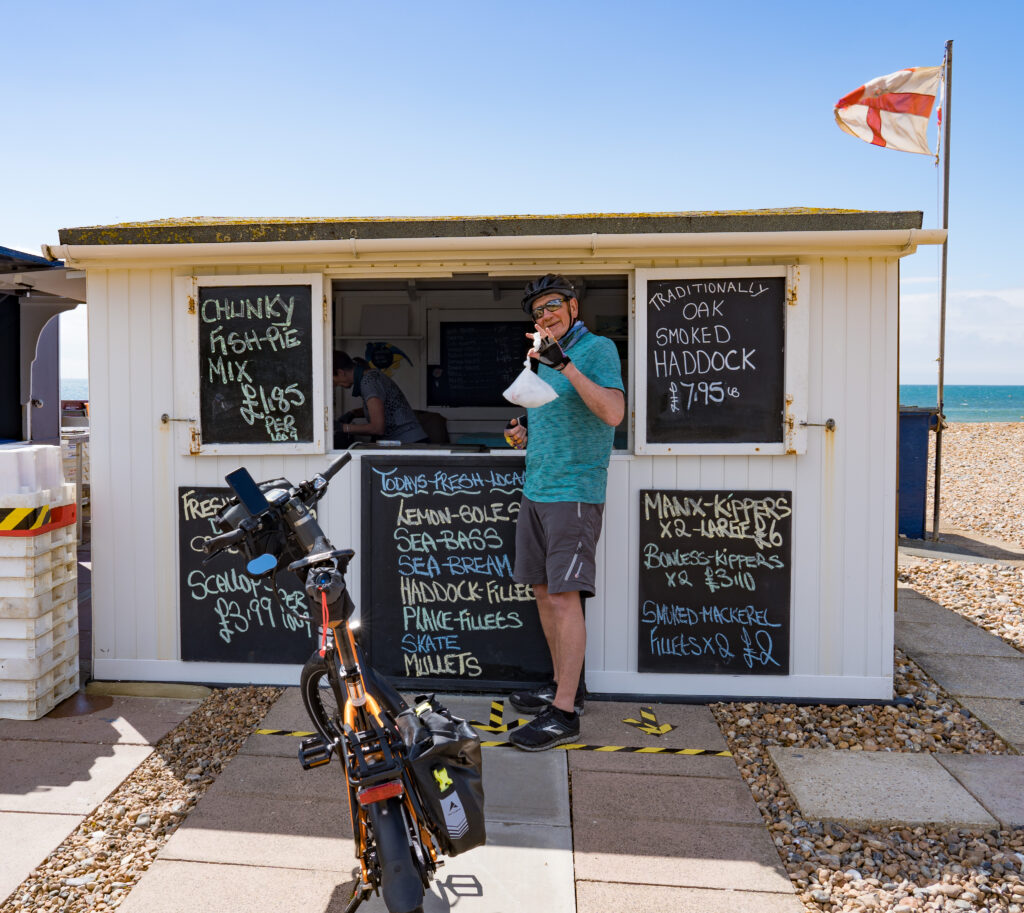
A local fishing boat sits at the top of the shingle beachFresh local scallops purchased for lunch
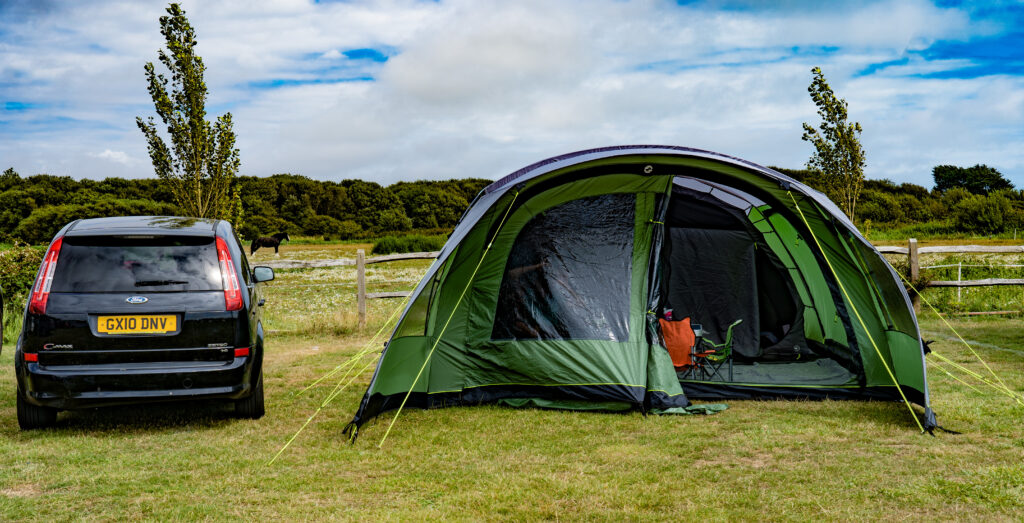
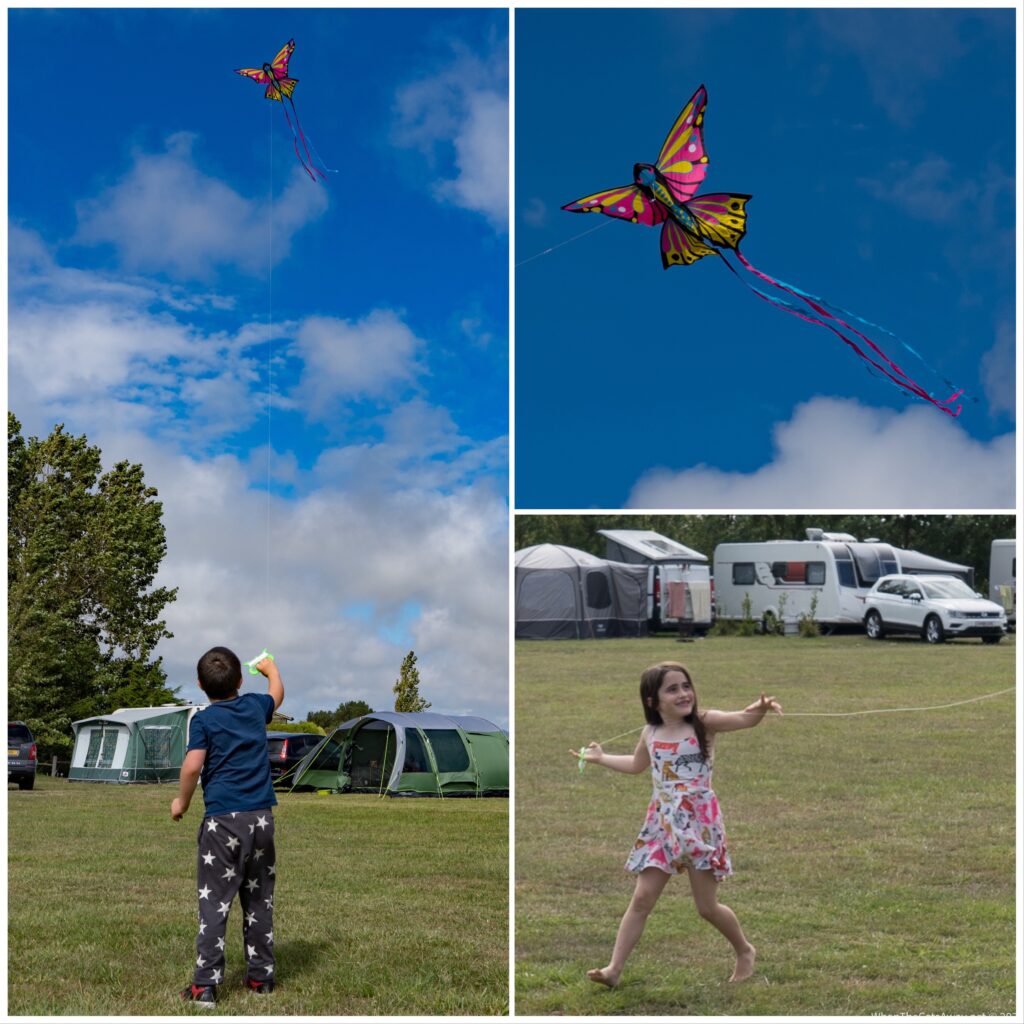
We returned back to camp in time for my sister Helen to arrive with a car full of camping gear and children. Niece and nephew Isabel and Elliot soon found the playpark while Helen, Mark and I were joined by another camper to erect her tent in the increasingly strong winds. Perfect kite flying weather!
The tent is up!Isabel having adventures on the playparkElliot having funMr A suggesting the wine should be openedElliot and Isabel find a good use for the strong winds
The following day was somewhat of a wash out with the strong winds continuing but now accompanied by driving rain. Helen’s fiancé Stuart came to join us for lunch, after which they decided to abandon camping and go home for the rest of the afternoon and evening, leaving us to shelter in Truffy and watch Netflix!
The sun returned on Sunday morning and our fair-weather campers returned to take down their tent and join us for breakfast. They made up for wimping out of Saturday night‘s camping by providing the most delicious bacon from their local butcher, contributing to a brilliant full English breakfast.
Four empty plates thank you very much
After our brunch feast we felt the need for some exercise and so rode out to the nearby Widewater Lagoon, a nature reserve along Lancing seafront that attracts a variety of bird life, including osprey on occasion. It used to be part of the estuary of the River Adur many centuries ago. It has been artificially maintained with a shingle bank separating it from the sea, and a pipeline designed to replenish the water from the English Channel during the summertime.
The strong winds continued, much to the delight of the many wind and kite surfers along the coast. It was hard work cycling into the wind, especially for the children – Isabel struggling along on her scooter and Elliot by bike. We ducked off down to a beach to shelter and hunt for shells and sea-glass with the children. Helen treated us all to ice creams before we farewelled one another and returned to our respective homes for a break from the wind.
Kite surfers all the way along the coast towards WorthingI teach Isabel to hunt for sea-glass amongst the shingleIsabel finds a surprise finger painting on the sea defencesElliotWild seas todayAppreciating sister time after being apart for so long
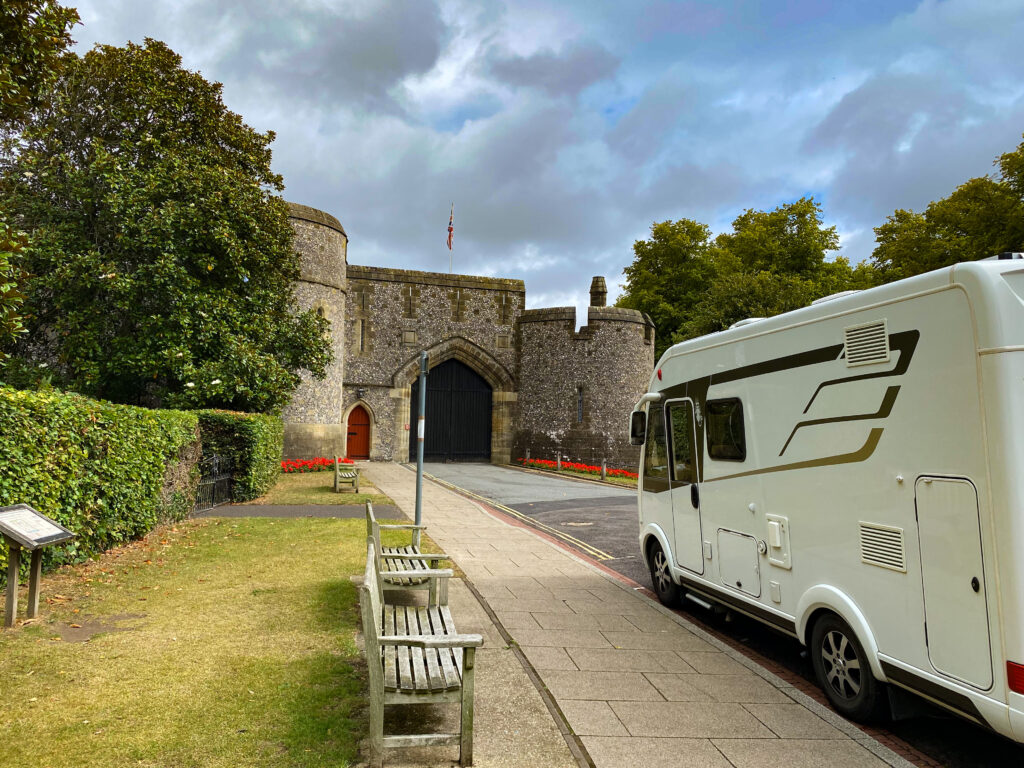
Leaving Lancing on Monday morning, Mark and I made a stop in the village of Arundel to pick up some goodies for a BBQ and have a brief look around. Truffy enjoyed his regal parking location outside the castle.
Truffy outside Arundel Castle
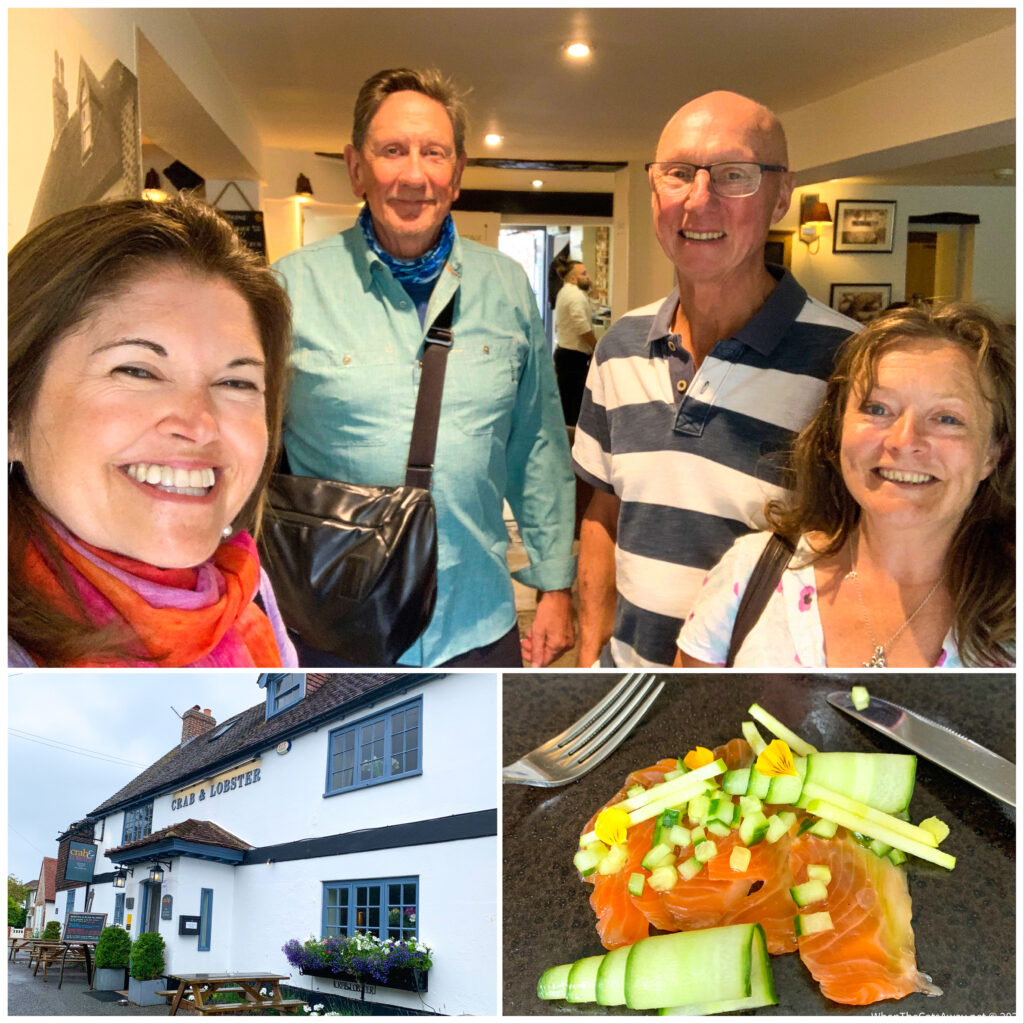
From Arundel, we drove to see our friends Nick and Laura at their home just outside Chichester. For a short time back in March we thought we might be living in their house during lockdown, but they ended up managing to fly back from Australia and of course we found our cottage in West Bagborough. They booked a lovely country restaurant for lunch, the Crab and Lobster, and we enjoyed sharing lockdown stories over a delicious seafood feast.
It was a short hop from there to our next location, the Churchillion Pub in Portsmouth which allows motorhome stopovers as long as you stop in for a drink and/or dinner.
We were collected by my brother-in-law John, who whisked us a short way to their house for a glass of wine and a catch up. It was the first time meeting our new niece, Iris, who was born just before Christmas. Mark introduced nephews Edward and William to his ‘Robot Tag’ game which is guaranteed to reduce little boys to shrieks and giggles as they attempt to escape the tickle monster.
Our night behind the pub was not as peaceful as we had hoped, with two incidents of car alarms going off and seemingly a motorcycle race roaring past us for several hours. We decided to move to the street outside my sister Elle and John’s’s house the following night.
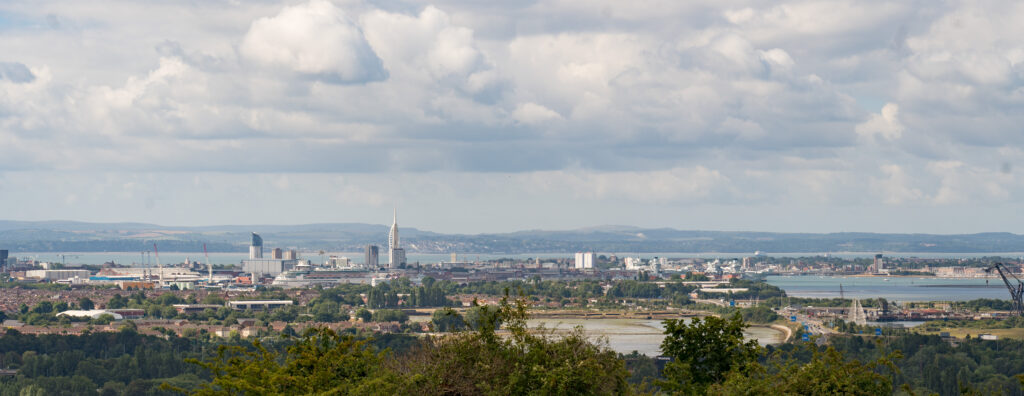
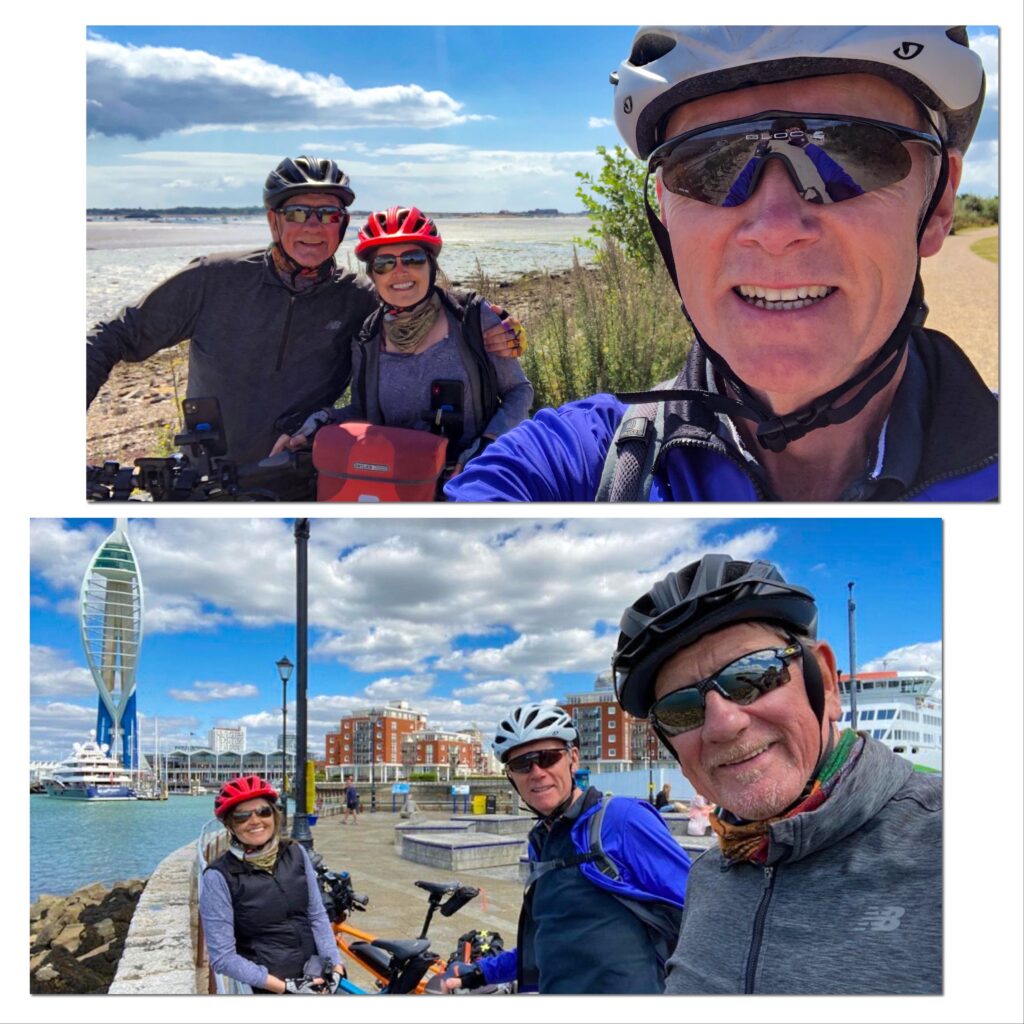
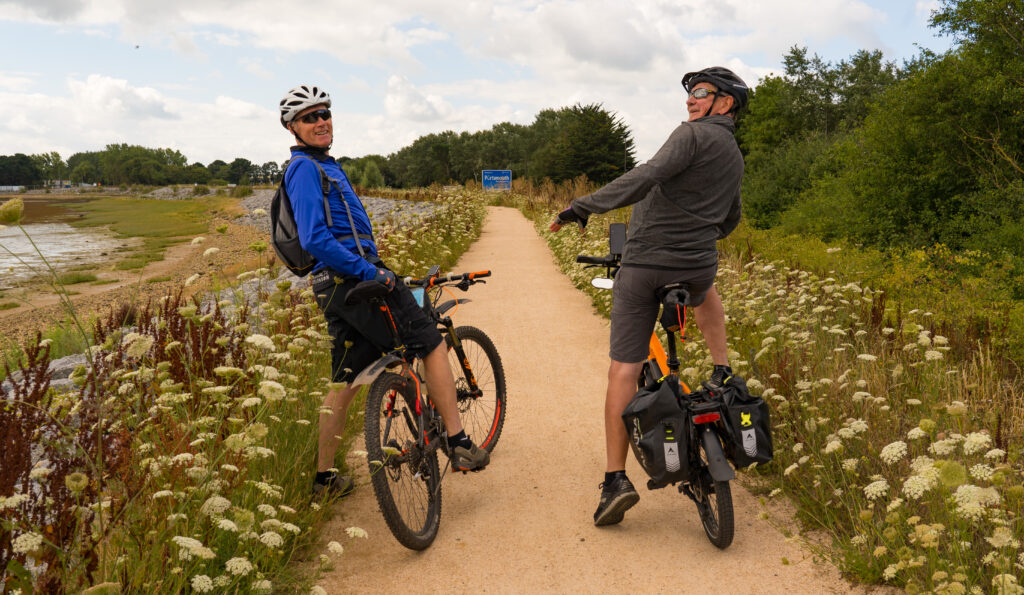
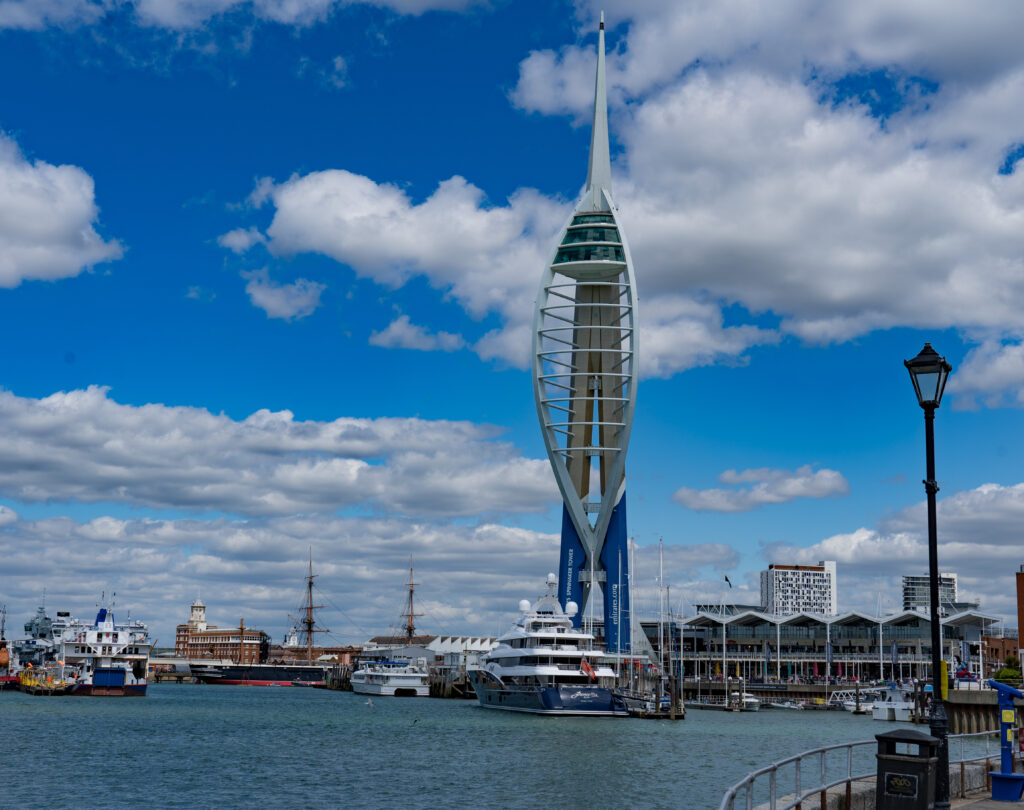
Before that, however, more adventures were ahead. One of Mark’s old school friends, Andrew, lives just a stones throw away, and drove over with his mountain bike so we could ride around the coast of Portsmouth together (Strava link).
We had arrived in cloud, so Tuesday morning’s sunshine was welcomed and revealed this view of Portsmouth from outside the pubAn ever changing route around PortsmouthA peaceful flowery path separates us from the roadOld matesThe Spinnaker
We had a great day out, picnicking in some rose gardens, and finishing up back at the pub mid afternoon. Farewelling Andrew, we drove down and parked up by Elle and John’s house.
Baby Iris is in good form, loving to have a giggle with her daddyOne of their gorgeous cats, Vivienne, is happy to find a lap to chill out onAnother sister photoNephews Edward and William will sleep well after their fun and games in the gardenIrisMuch laughter throughout the evening
We had a fun evening with them, a delicious BBQ and flowing gin and wine.
The past few weeks have provided exactly what we have been missing – the simple things, breaking bread with friends and family, laughing until you cry and your sides hurt. They say you cannot choose your family, but fortunately we have been blessed with family (and friends we consider as family) who are likeminded and enjoy a laugh as much as us – the perfect tonic!
Location: West Bagborough, East Quantoxhead, Mendip Hills, Somerset, UK
It was hard not to feel a little sad and apprehensive at our impending departure from West Bagborough, and the weather didn’t help either, with its chilly breeze and drizzly rain. With a little sunshine forecast for Monday afternoon we forced ourselves out of the house and down to East Quantoxhead for a walk.
We just love the scenery down there, and we had the whole area to ourselves. The wind was rather chilly, but when the sun came out and you were in a briefly sheltered spot you could have imagined it was summer!
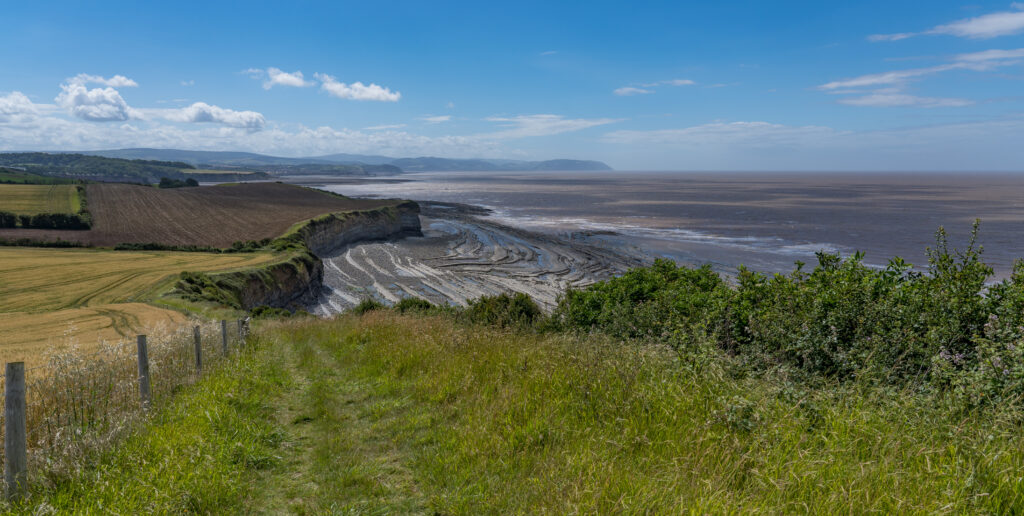
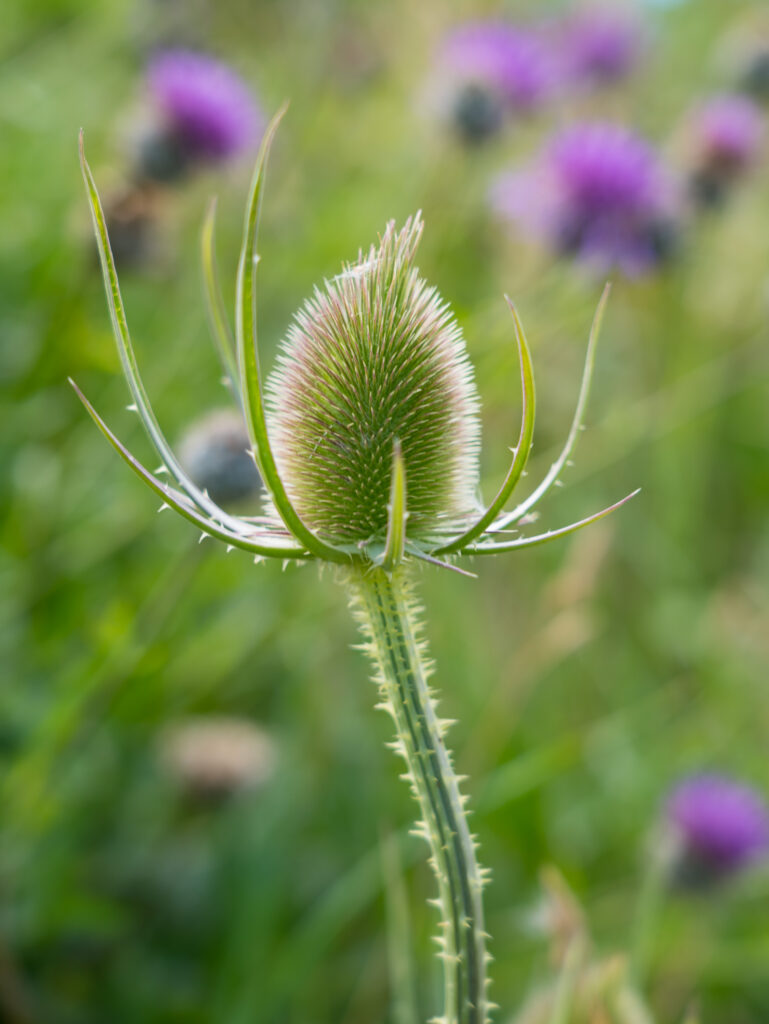
Bridgewater Bay looking wild and windsweptCommon Teasel (Dipsacus fullonum)Teasels with a viewOne very empty beach – all ours!
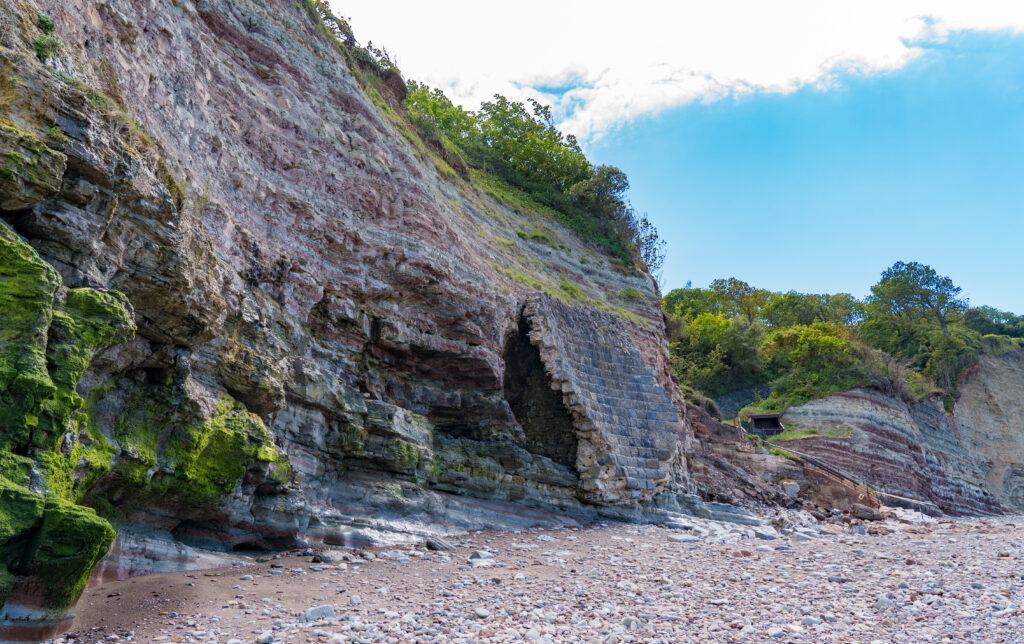
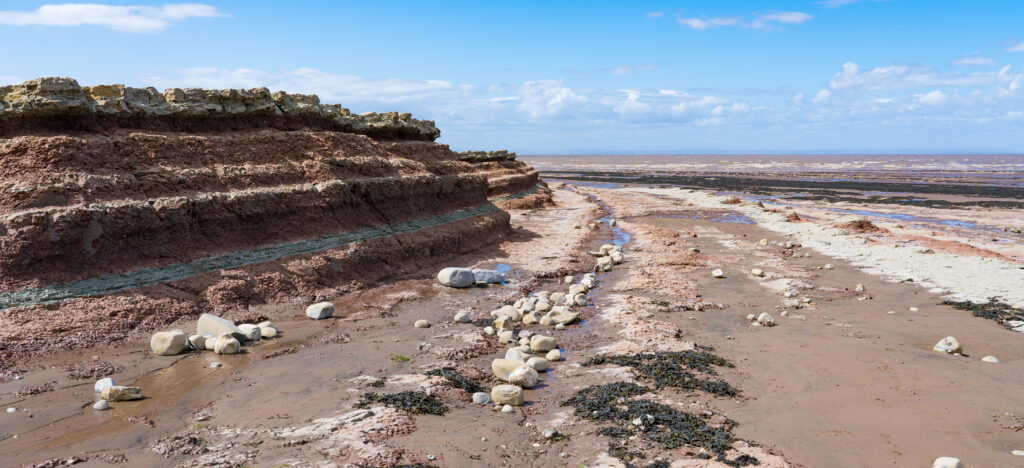
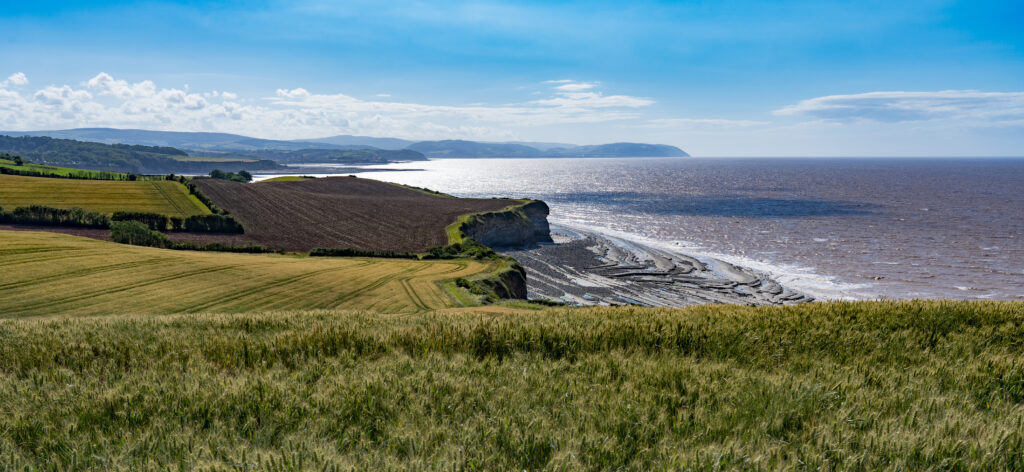
The beaches here might not have the squeaky fine white sands of Australian shores, but they are far more interesting. The tide goes out a long way here, revealing fossil filled rock pools, petrified forests, attracting herons and other fish-loving birds. The pink and mauve striped sedimentary rocks look like magnificent sculptures.
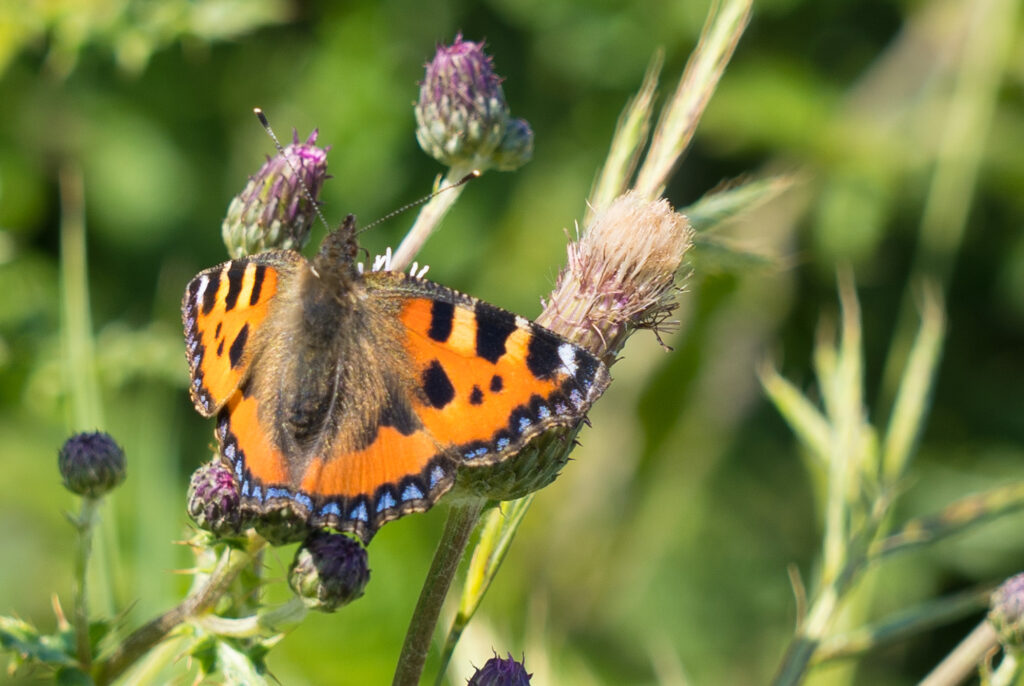
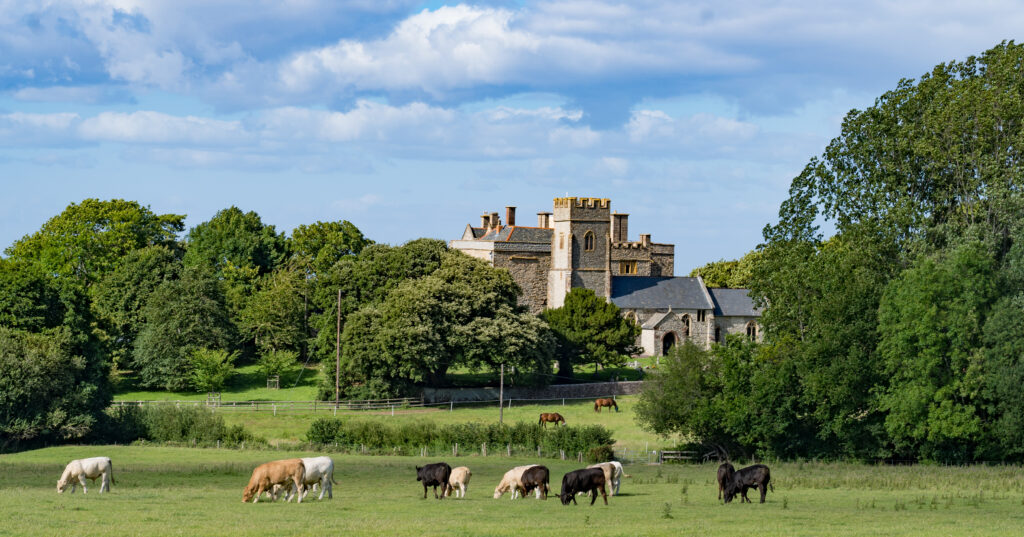
Mr A climbs up to see the St Audries Bay waterfallThe waterfall is little more than a trickle just nowSigns of times past in an old wall slowly being taken by the seaRemnants of times when goods were transported by waterOur path – so much more we have yet to seeNobody else here! We could hardly believe itLiterally can see the layers that make up this land here, raw and exposedA perfect newly hatched tortoiseshell butterfly dries its wings in the breezeOur final lingering glance at this stretch of coastline for a whileThe 14th century church sits alongside medieval barns and the Court House – a grand mansion built nearly 800 years ago. The village is steeped in history
Our week was then largely spent making preparations to head on the road – getting Truffy packed up (it is amazing how everything somehow fits back in to him!), and returning the cottage to its former state, ready for the next holidaymakers to arrive.
We had some farewell drinks and fish and chips with our friends down at Quantock Camping, their site now bustling with visitors enjoying the luxury of personal toilet blocks, and also were invited for some wine and nibbles with our landlady, Jennifer.
Suddenly Friday morning was upon us, and we packed off our final bits and pieces, and hit the road.
Our first stop was the village of Cheddar in Cheddar Gorge. This is located in the southern Mendip Hills, and riddled with limestone caves. In the early 1900s a complete human skeleton was found in one of the caves here which was carbon dated as being about 9,000 years old.
This is also, of course, the location which first made Cheddar cheese – with documented evidence of its particular recipe going back to the 12th century. Apparently the caves in the gorge are the perfect temperature and humidity for maturing the cheese.
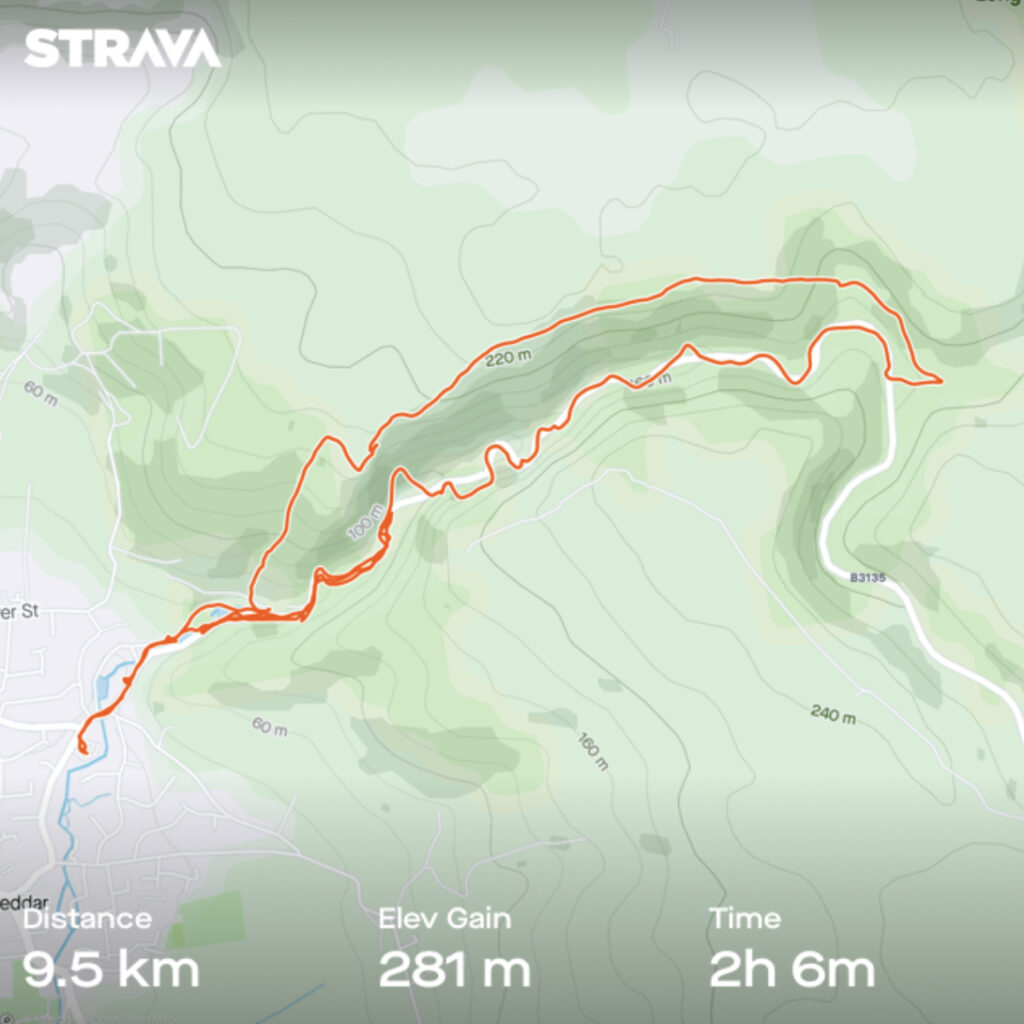
On our visit however, the caves and the museums showing the evidence of first humans were closed due to Covid-19, so we donned our hiking boots and took to the hills instead (Strava link).
Our circuit walk around the Cheddar Gorge valley
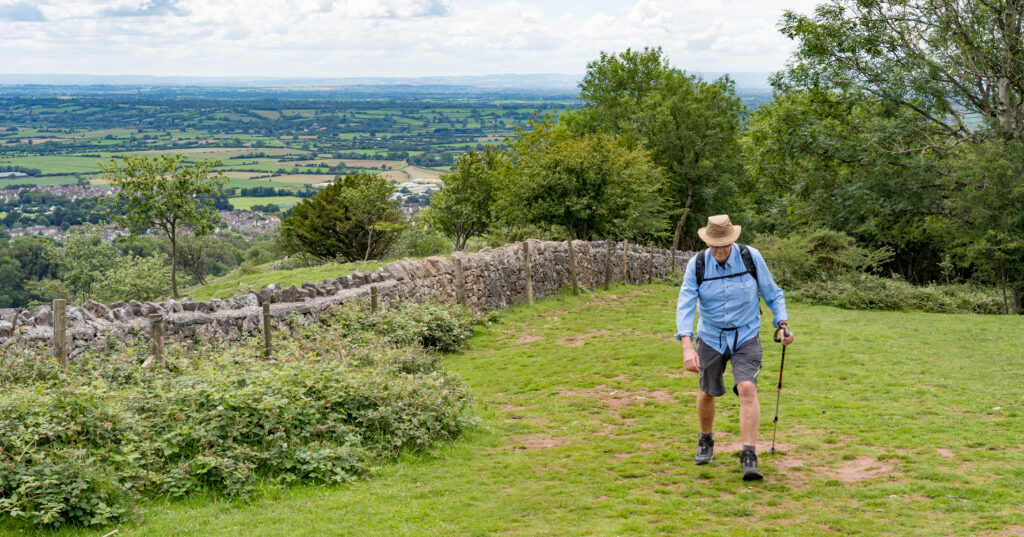
The climb up from the valley floor was rather steep, but once up on top we were rewarded with magnificent views, easily able to see the Quantock Hills and all the way down to Minehead.
A steep hike up to the gorge walls rewards us with some impressive viewsSitting on the edge of the gorgeThe steep walls and caves are popular with climbers
We climbed along the top of the cliffs, enjoying the fabulous views and fresh air. Up on the cliff walls, delicately picking their way along the greenery, are a number of Soay Sheep. They are brown in colour (and rarely, patched with ginger!) and live here accepted as a feral flock. The sheep are native to islands off the coast of Scotland, and were released here in the early 90s, these days appreciated as lawn mowers, keeping the undergrowth in control.
Originally we intended to make a circuit around the other side of the gorge, but the primary access point, Jacob’s Ladder, was closed for repairs. Instead we wound our way back to the village down the road.
We later drove back up through here in Truffy – steep gradients and blind bends made for a lovely driveA magnificent stone amphitheatre
Back in the village, a few of the local shops had recently opened to visitors – most importantly, the Cheddar Gorge Cheese Company. They still mature some of their cheddars in the caves, and Mr A could not resist a tasting.
Some of the very mature cheeses were quite stinkyA couple of unique purchases made – this is not your usual supermarket cheddar
Our destination for the night was the village of Priddy. Unlike the massive distances we are used to travelling in Australia, this is just 54km (33.5 miles) from our former cottage in West Bagborough – practically a day trip! We settled ourselves in for a peaceful night.
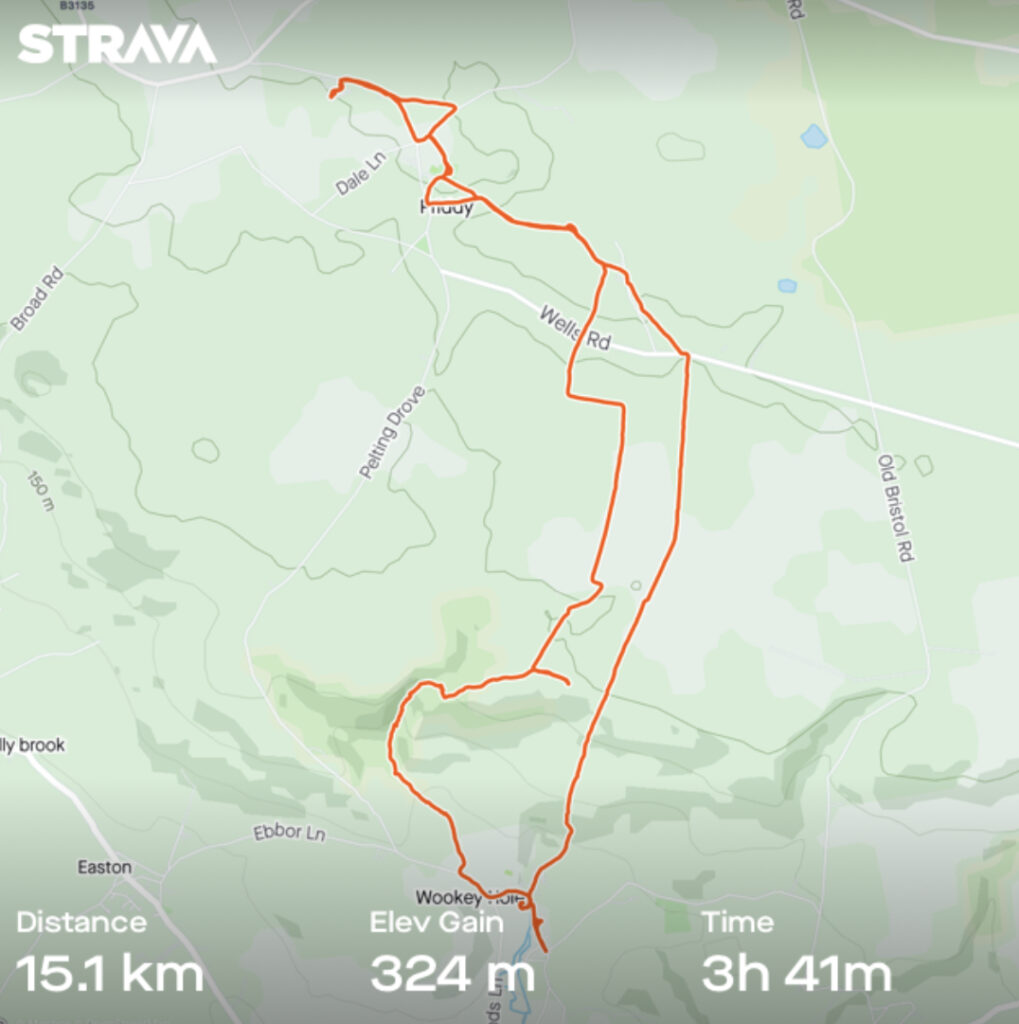
Saturday morning saw us pulling back on our walking boots and following a trail I had plotted on a new app I am using, Komoot. It’s a free app that allows you to plan and follow walking trails – I marked a 15km (9.5 miles) circuit (Strava link) from our camp to the village of Wookey Hole and back via Ebbor Gorge.
Our fabulous walk had us avoiding busy roads and was 90% across footpaths
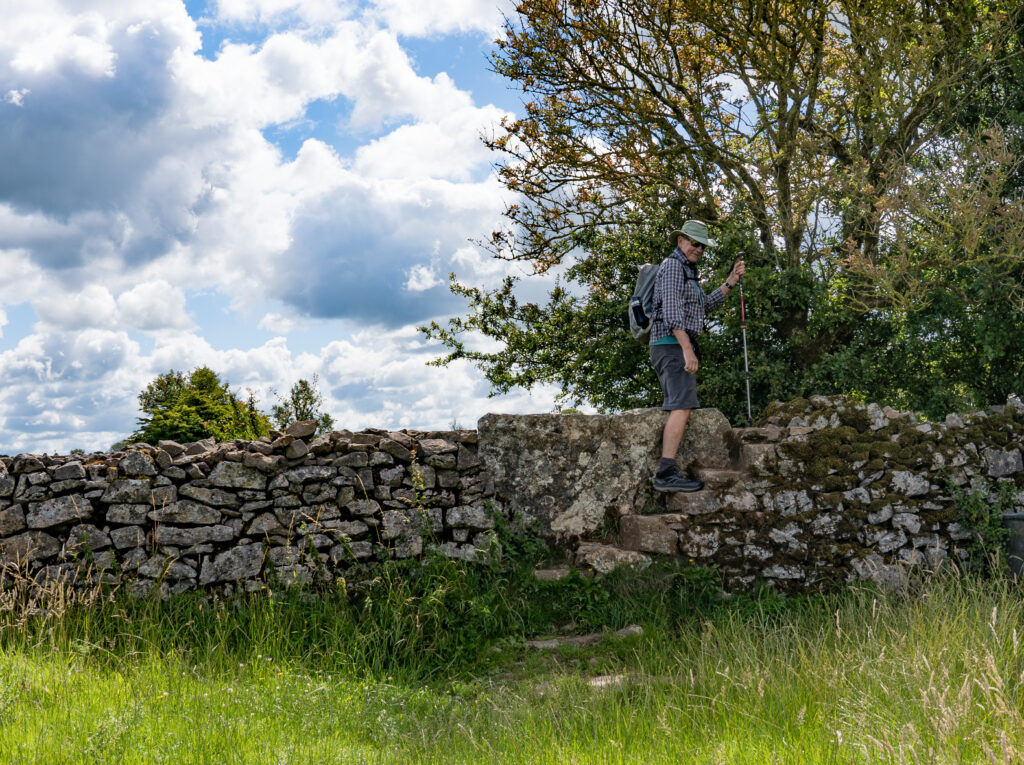
In contrast to our Quantock Hills walks, the fields here were lined with stone walls, often with steps leading us up and over. The stone slabs were frequently shining from centuries of hands and feet.
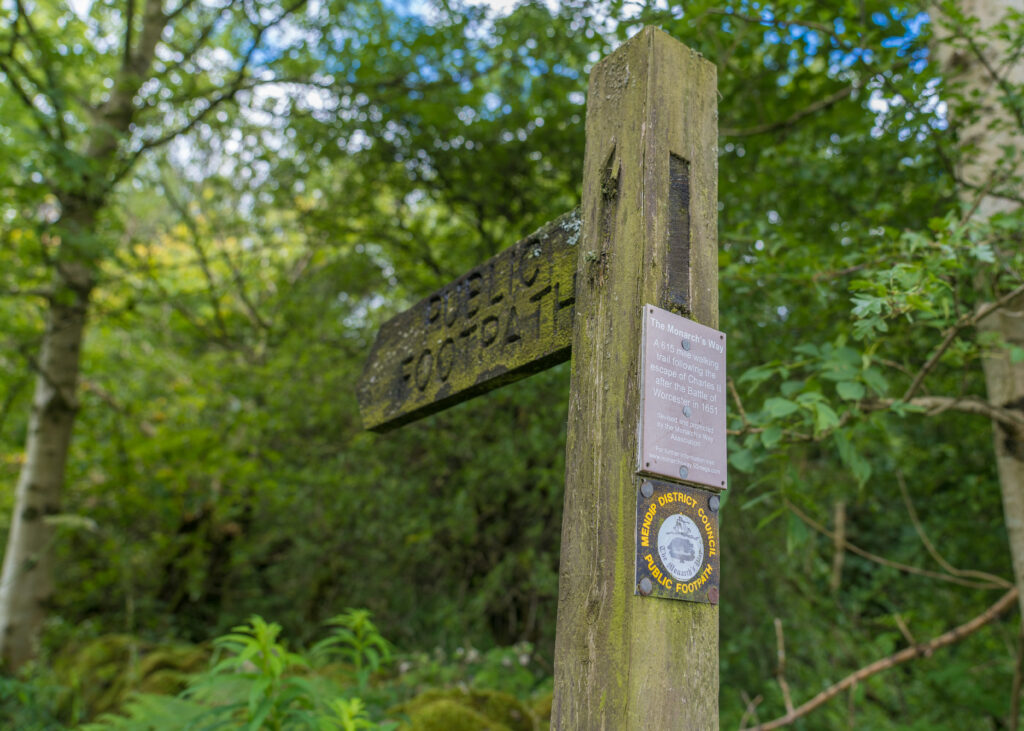
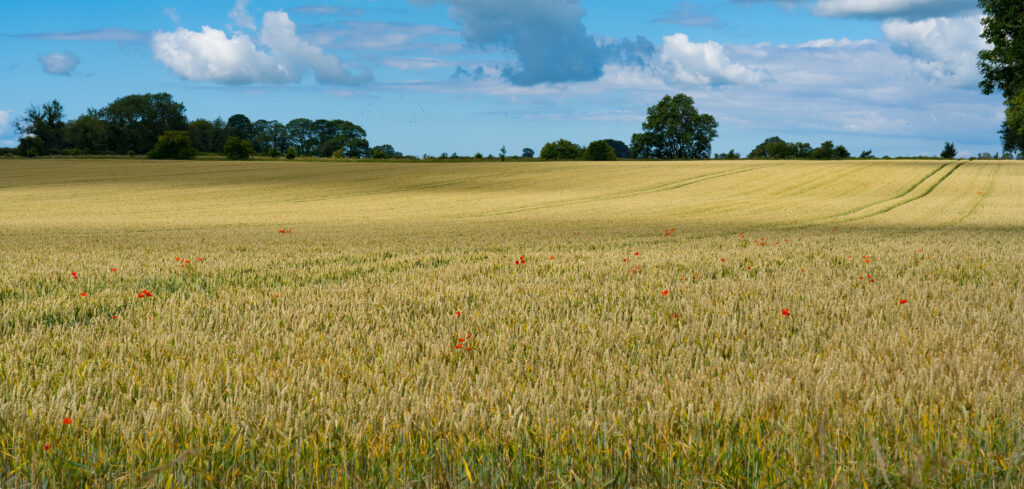
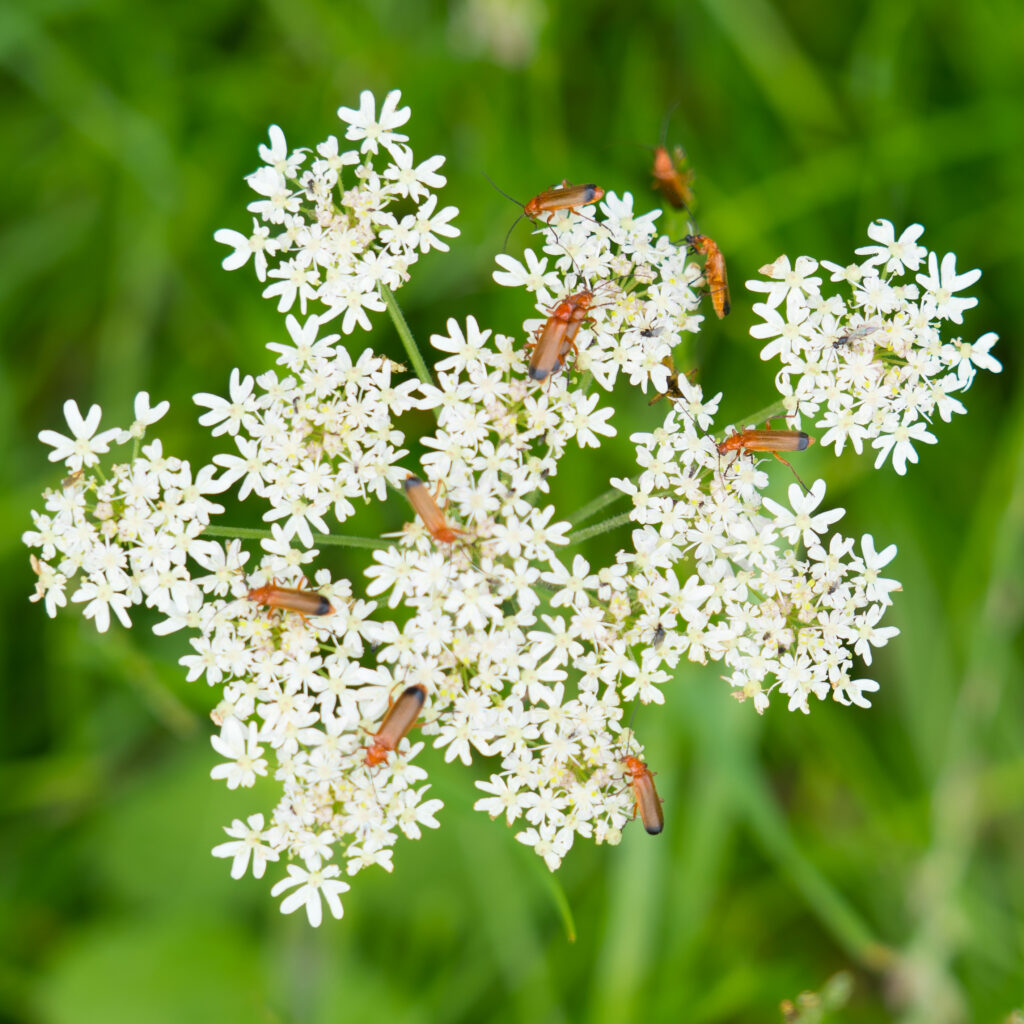
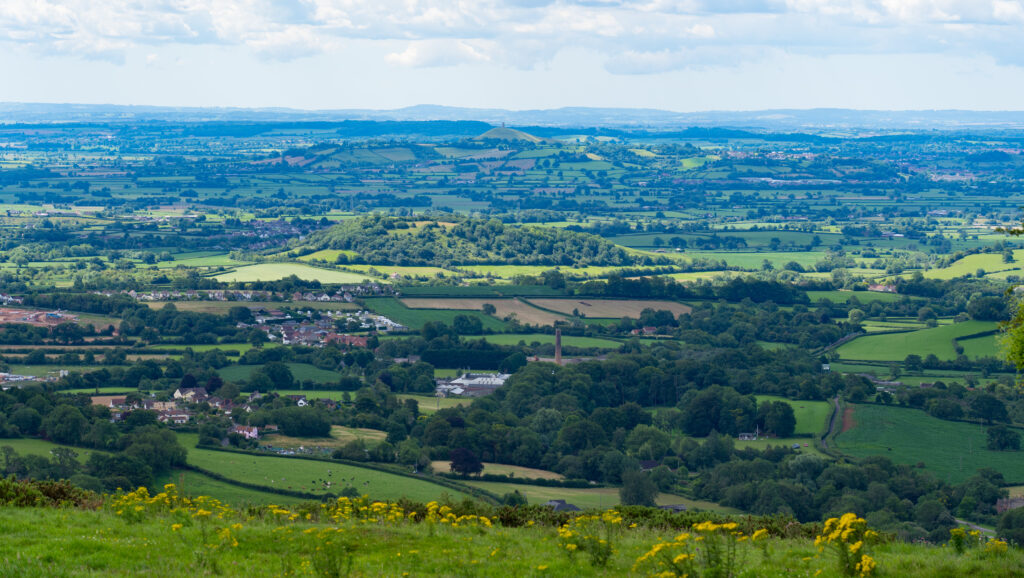
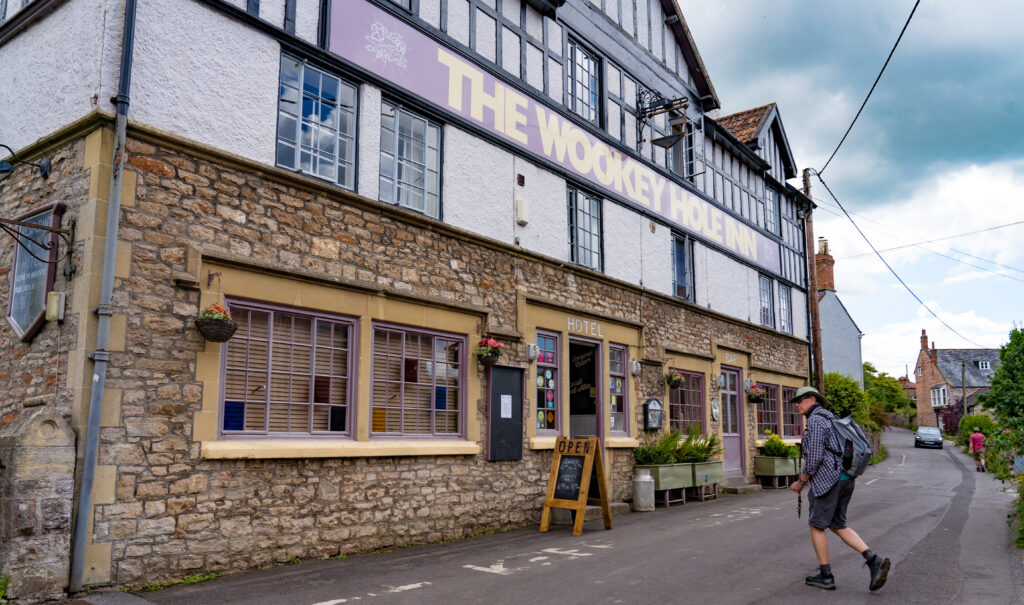
Mr A climbs up the stone steps We utilised many walkways including a pub tour – this one was the Monarchs Way which follows the escape route of Charles II after the battle of Worcester in 1651. It goes for 615 miles (just under 1000km) and is the longest inland footpath route in EnglandGleaming fields of corn dotted with red poppies – we’ve still not seen a field of poppies like the ones in Italy last year (Umbria – see post here)These are soldier beetles – as children we used to call these maters as they’re constantly copulating! It made me laugh to see an article referring to the same in The Times (headline: Nature: how the hogweed bonking beetle made a name for itself)More incredible views – the hill in the centre is Glastonbury Tor, which we visited a few weeks agoHeading down into Wookey Hole
Crossing fields with wonderful views we eventually began heading downhill into the village of Wookey Hole. The village centres around the Wookey Hole Caves, in which tools have been found dating back to the Palaeolithic times – around 45,000 years ago. As a child, I visited this area as part of a school trip – my memories limited to the Witch of Wookey Hole – a stalagmite that looks vaguely like a human who has been turned to stone.
Despite the caves being open, the thought of being trapped with crowds of people underground was not too appealing, so we headed to the local pub in search of lunch.
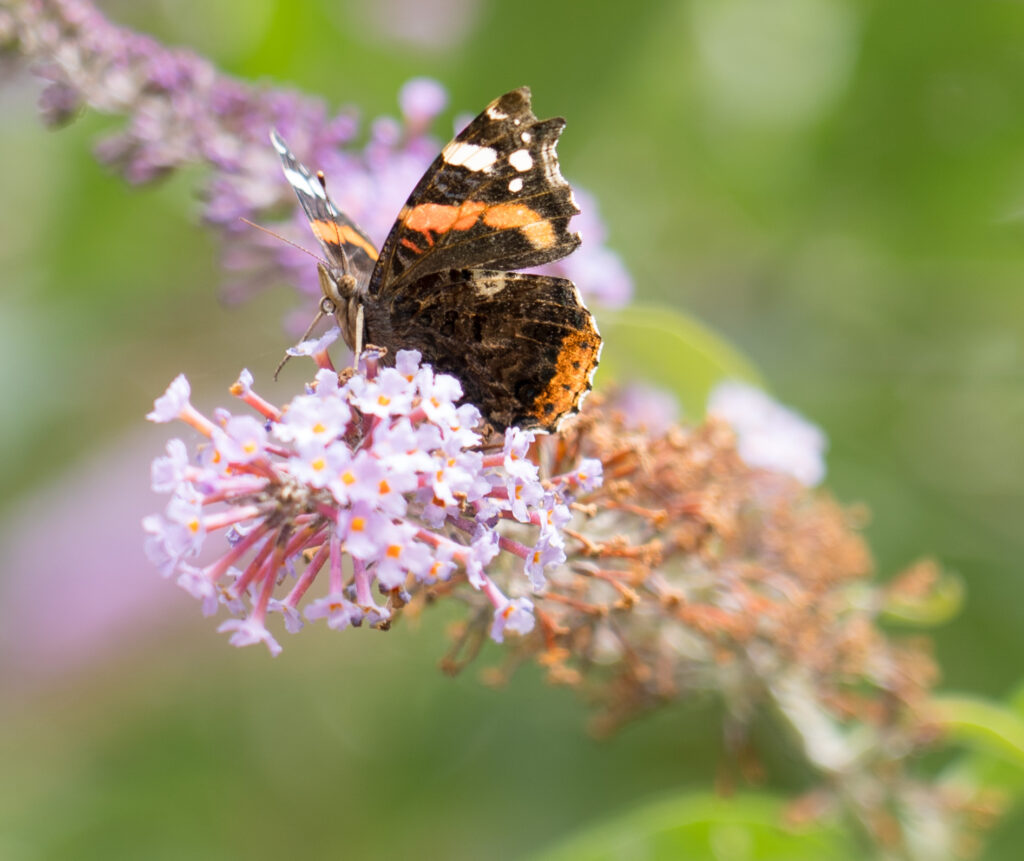
Mr A speeding up as he spots that lunch has just started at the pubA red admiral butterfly savouring the last buddleia flowers in the pub garden
After half a pint and a sandwich in the pub garden we had to muster up the energy to head back to camp, knowing there would be a steep uphill. Our route took us to Ebbor Gorge Nature Reserve.
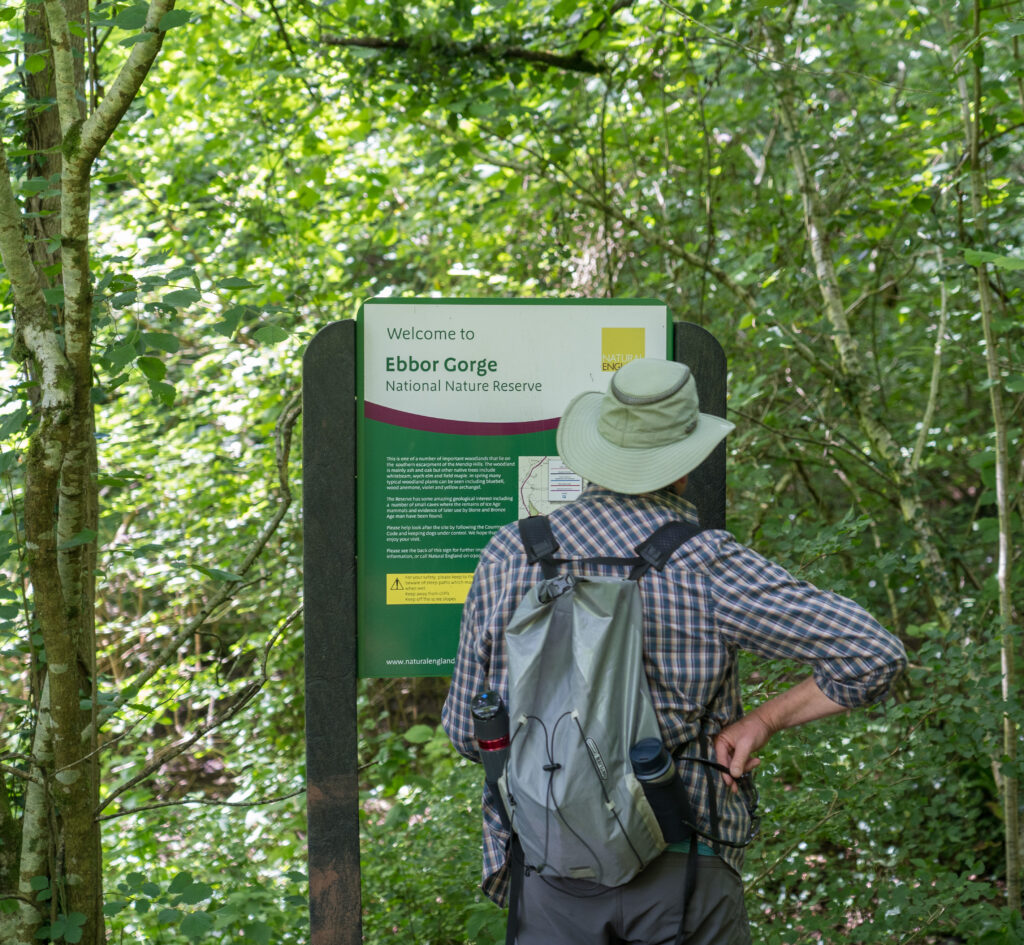
Mr A reads about the neolithic history within this gorge
The limestone gorge is very lush, with moss covered walls dripping with water. Like Cheddar Gorge, this is also popular with climbers and we passed a few as we hiked up.
Interesting colours where different mosses and lichens growPicking our way up through the gorgeA cluster of mushrooms growing on a rock
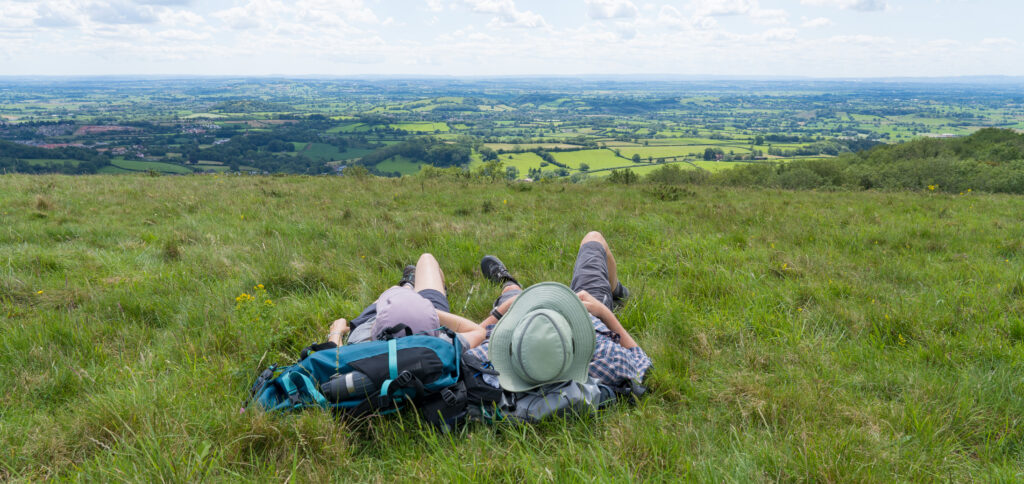
Upon reaching the top we found ourselves a quiet patch of field for a well deserved rest and drink of water.
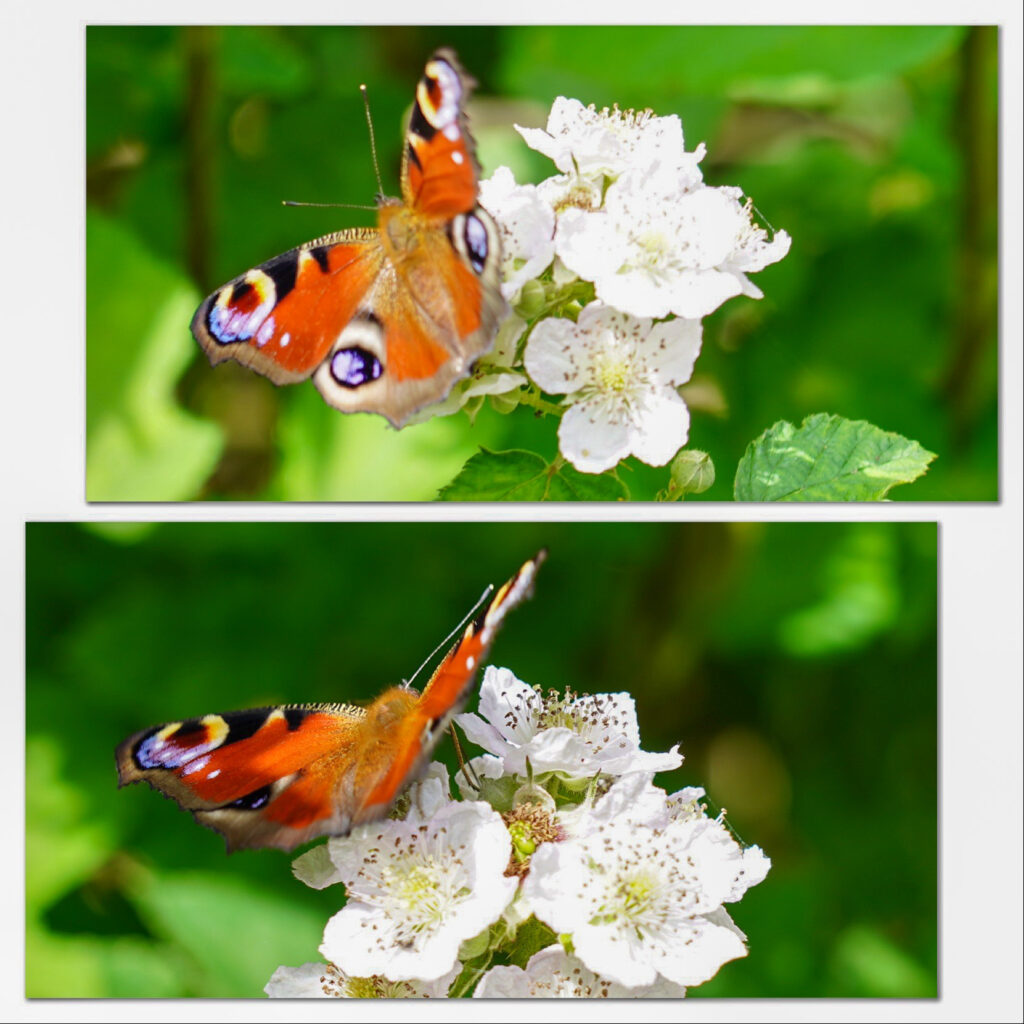
Chilling out and enjoying another great viewA peacock butterfly on blackberry flowers
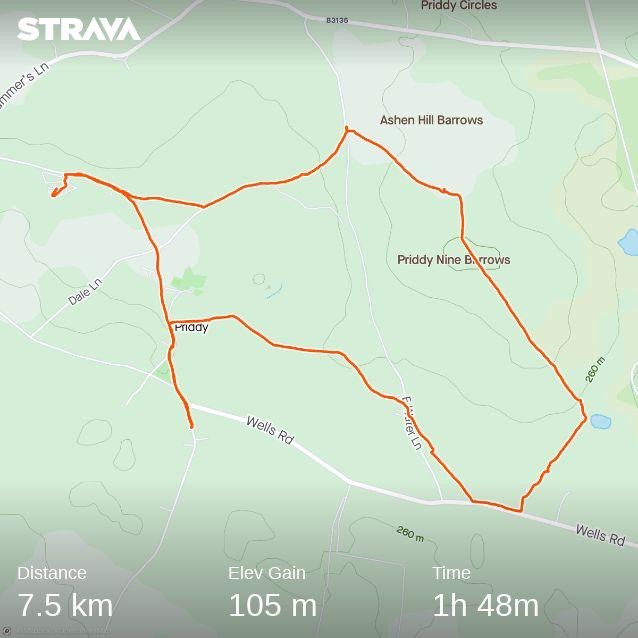
After two days hiking with rather steep climbs, we decided to do a somewhat tamer walk on Sunday (Strava link).
The diversion to the pub wasn’t quite on our circuit, but worth the effort!
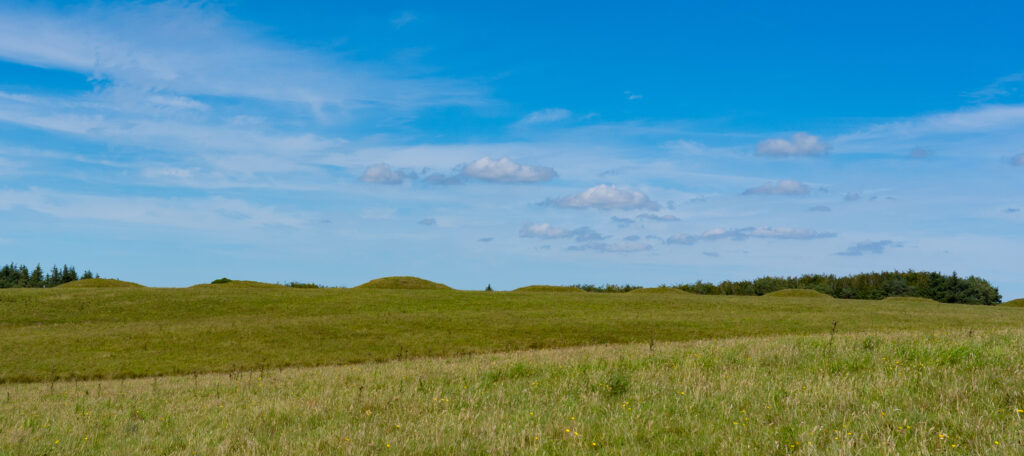
Like the Quantock Hills, the Mendip Hills were a hotbed of activity back during the Bronze Age (and way before). Not far from our campsite are a series of Bronze Age burial mounds, known as barrows. These were created between 2200 and 1100 BCE, and originally were to be found all over the UK. Many were destroyed as towns built up, but a few survived.
The Priddy Nine Barrows are now protected, set in farmland. Having been here for between 3 and 4,000 years, it is not surprising to read they have been raided in the past, with a reverend during the 1800s making notes about his finds, which included amber and blue beads, cups, an arrowhead or spear and of course bones.
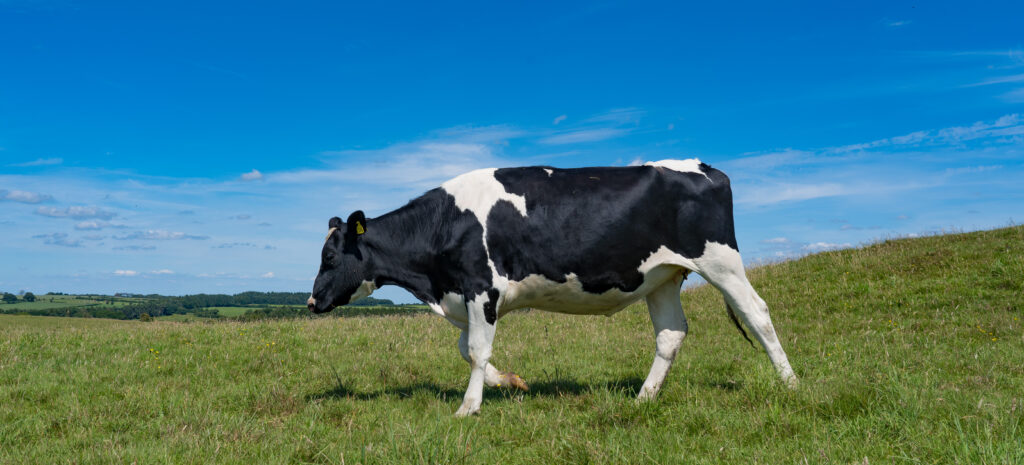
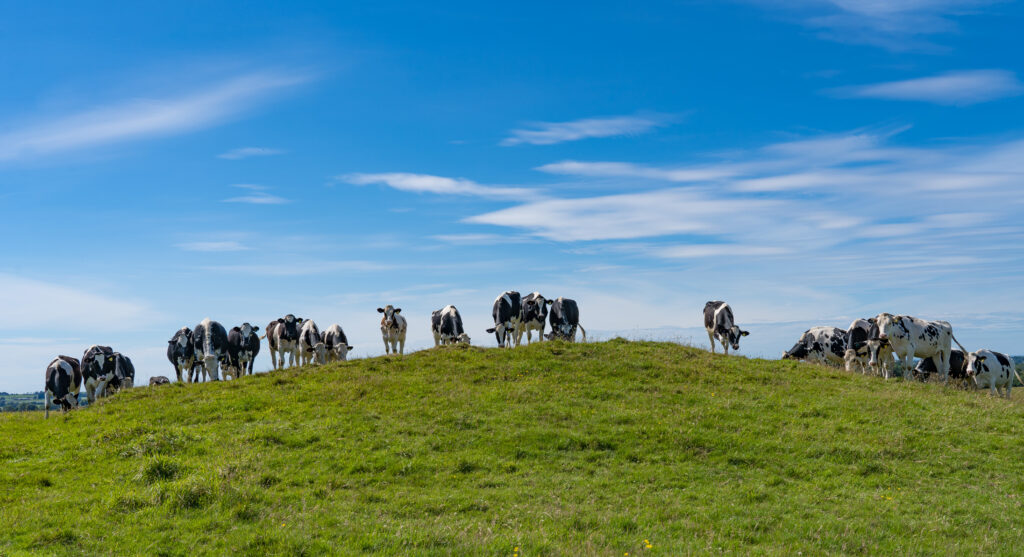
The mounds are not hard to spot in the fieldThe locals are custodians now…There’s a great view from the top of the moundsThe cows like to climb up for a view as wellA herd of cows on two of the barrows
We continued our walk passing more barrows, the warm afternoon sun just perfect. Its the kind of weather where you could walk forever.
Foxgloves still flowering alongside the fieldsOur path took us through what looks like marshland, but no water to be found – most drains through the limestone into underground streams
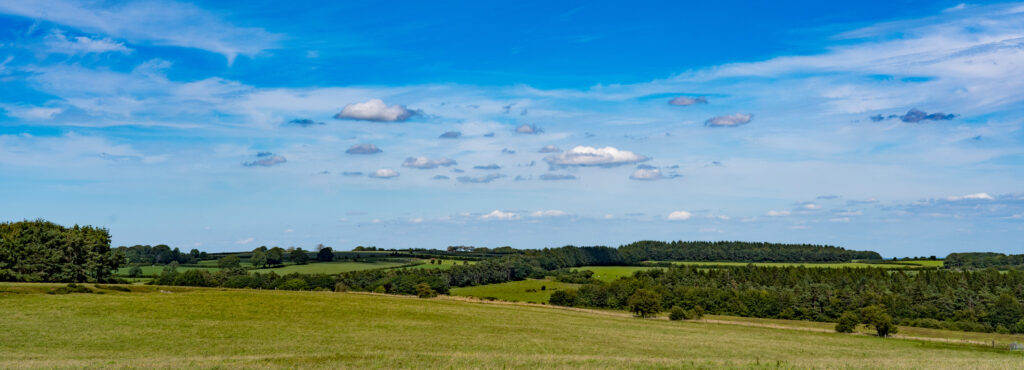
We wound our way over styles and walls, making our way back towards the main village of Priddy. The landscape is quite interesting here, often looking like it has been carved out by a raging river or moist marshland, but without the liquid which shaped it – changes likely caused by sinkholes and underground streams.
This whole area has an incredible history, The Romans were active here with evidence of diggings for lead. Being on top of limestone, there are also many caves, with maps showing a whole 16km network winding under the village.
Another wall conquered!
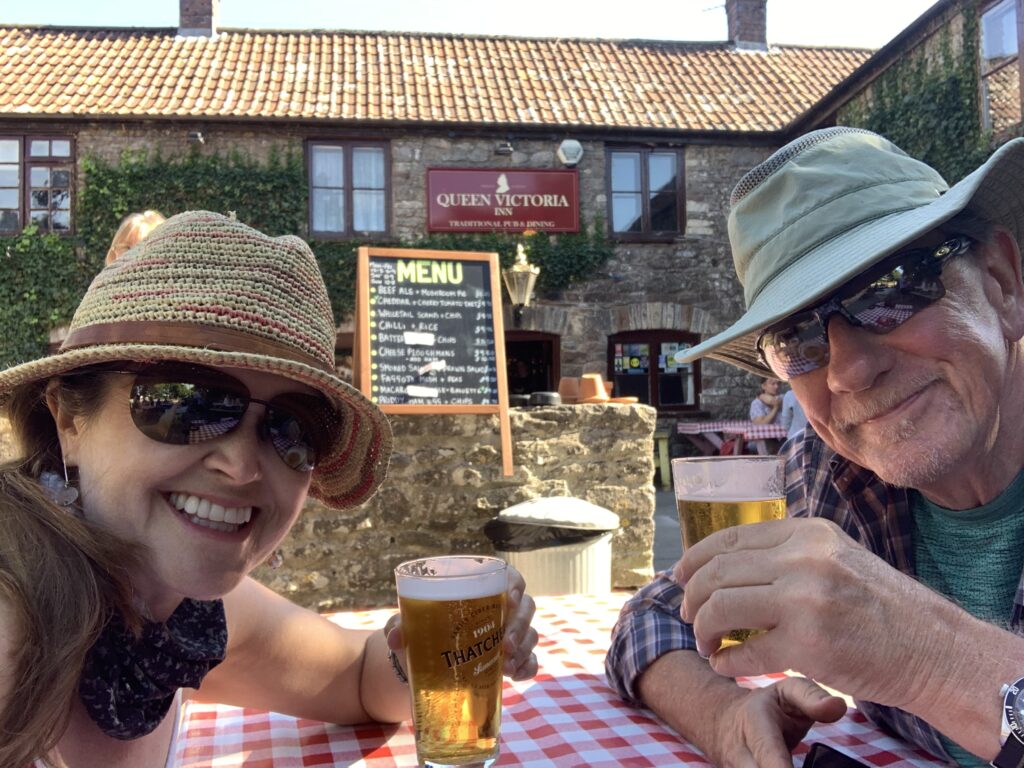
Given the pubs are now open, we found ourselves wandering through the village to our local – the Queen Victoria. They had rigged up fencing to ensure people only enter through one location, where we had to use alcohol hand gel and share a name and phone number before proceeding. Once in, we were allocated a red-tableclothed bench to sit at and our orders were taken. Half a cider each and a packet of ready salted crisps were then delivered to a blue-tableclothed table, and we had to collect them ourselves. Payment was by contactless card at arms distance. All very Covid-safe, but not quite the pub experience of old!
Cheers!
We stuck to the one drink before wandering back to camp for the evening.
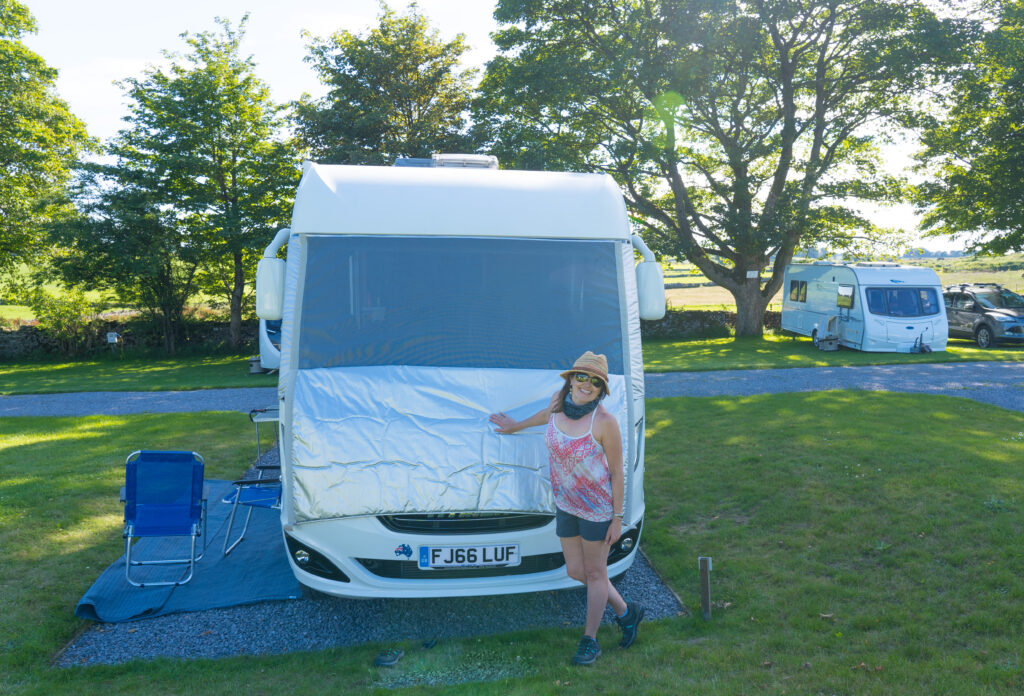
Truffy in his natural habitat – doing well
It has been a brilliant commencement to our travels, which we began with great trepidation. So far we have found that people are mostly being sensible about distancing and staying healthy. We have quite a few people and places to visit in the coming days and weeks and now feel a little less nervous about our upcoming adventures.
Location: Watchet, West Bagborough, Dulverton, Somerset & Putsborough, Devon, UK
June continued its mixed weather with two days of solid rain. forecast. We took advantage of the final dry day for a little while and drove down to Watchet to walk some of the coast walk, intending to go to a town intriguingly called Blue Anchor.
It was an overcast day so there were few people about, and we saw nobody on the walk, which followed the cliff top with lovely views.
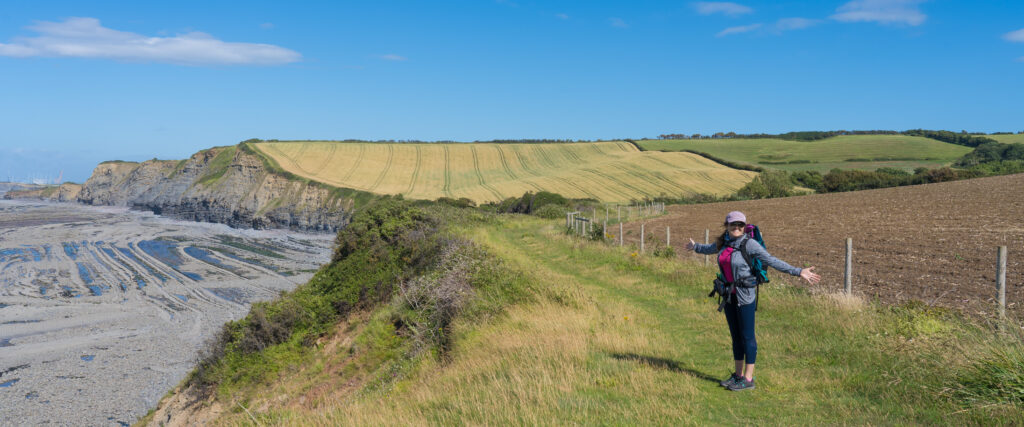
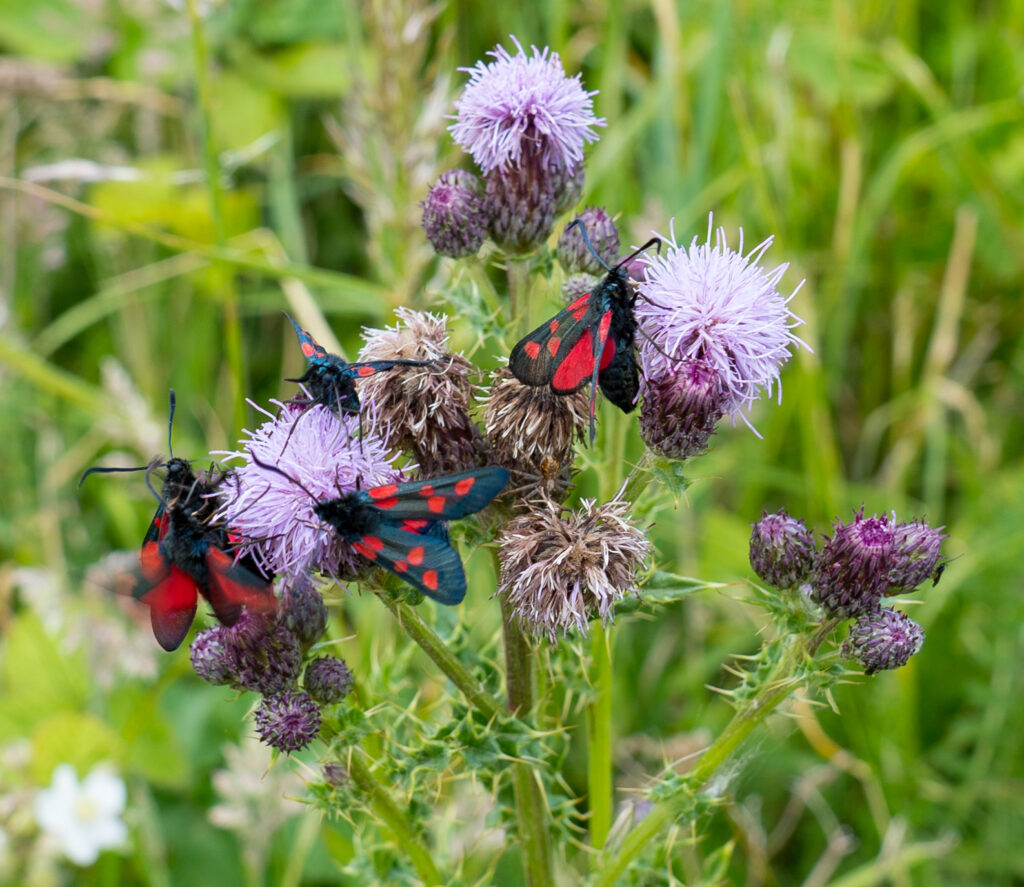
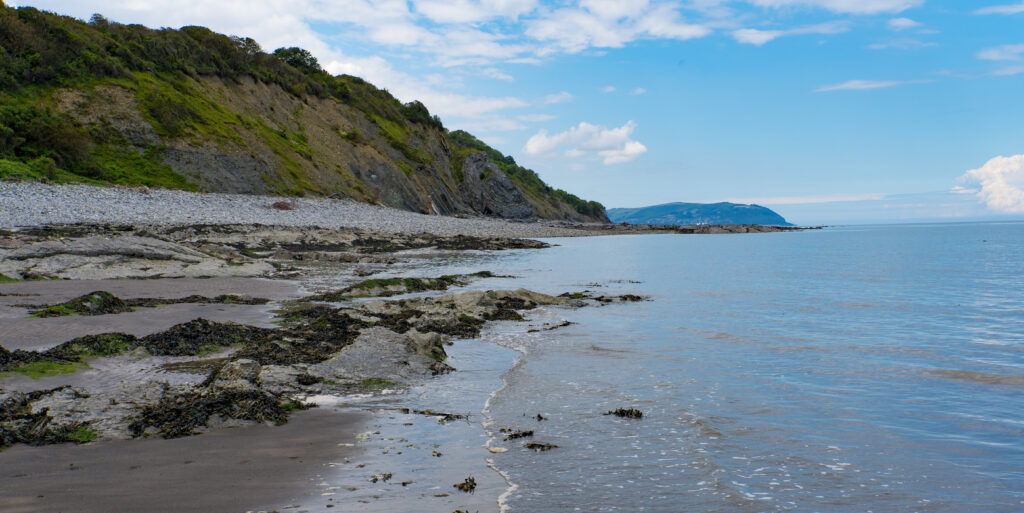
Looking along the coast towards MineheadThe former site of Daws CastleCinnabar moths covering the thistles in the meadowWarren Bay – another fossil filled beach
We walked as far as we could along the coast before reaching a coastguard barrier – not far beyond this the cliff had collapsed into the sea, apparently happening in early March. The diversion inland didn’t really appeal with the impending storms, so we made it a short walk and returned to Watchet – just 6.5km. Blue Anchor remains a mystery for now!
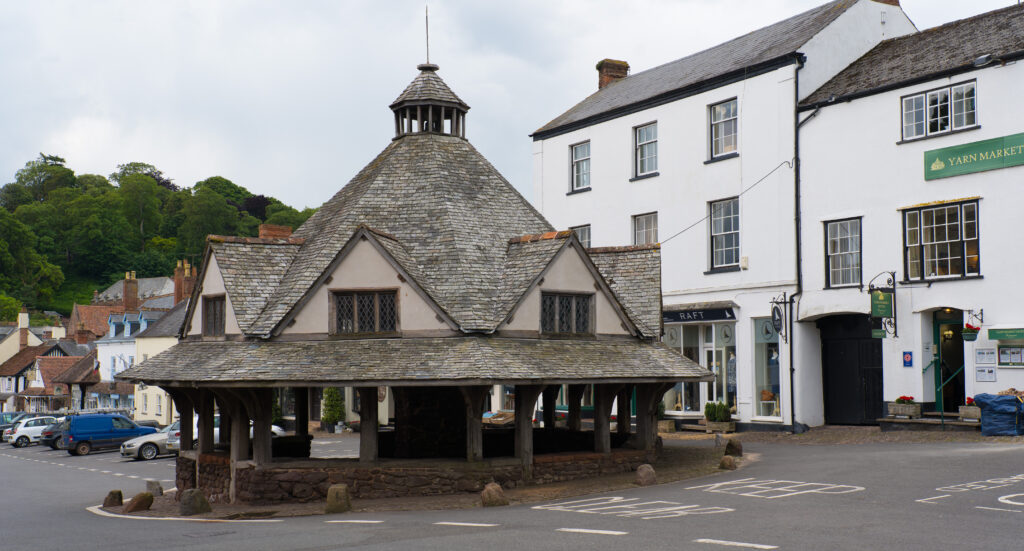
With extra time up our sleeves, we decide to drive over to Dunster again, to have a better look at the town. Mr A was also hoping the Rohan outdoor gear shop was open, now that clothes stores had been given permission to serve customers again, but unfortunately this store remained closed.
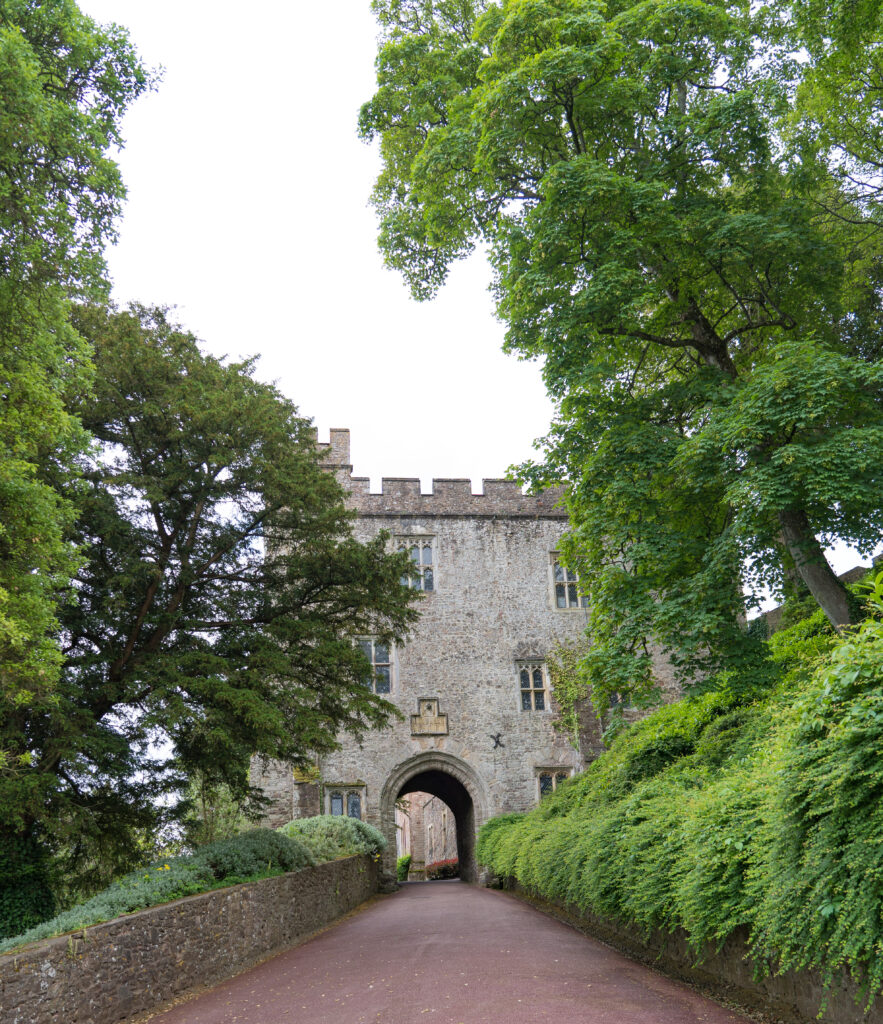
The old yarn marketThe closest we could get to Dunster Castle with the building and grounds closed to visitorsBuilt predominantly in the 15th century, the Priory Church of St George also has 12th and 13th century work within it
Tuesday’s downpour arrived as scheduled. Fortunately I was busy helping with a medical research project which took up a lot of my time, and Mr A delved deeper into investigating his family tree, unearthing new names and histories on his mother’s side.
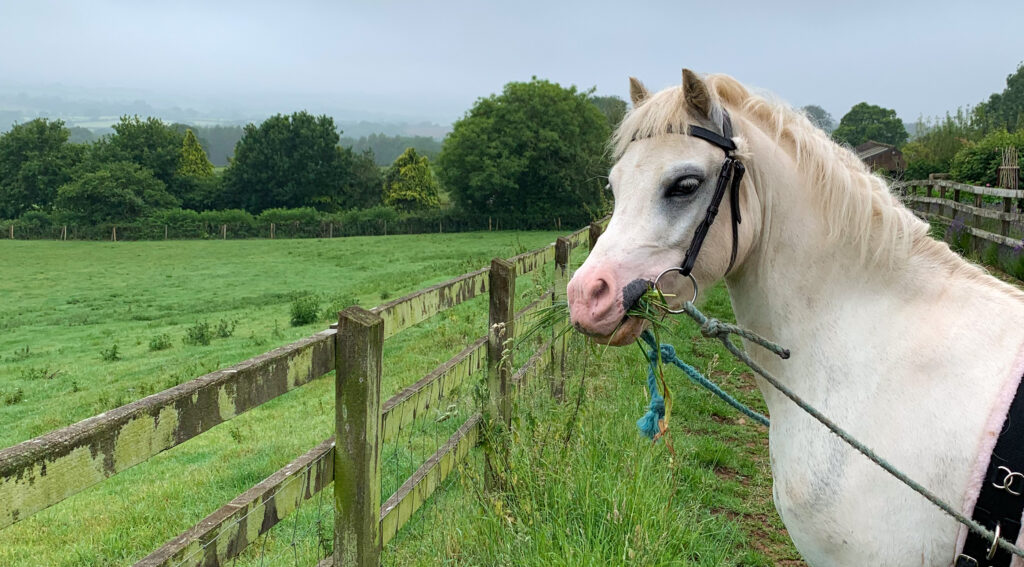
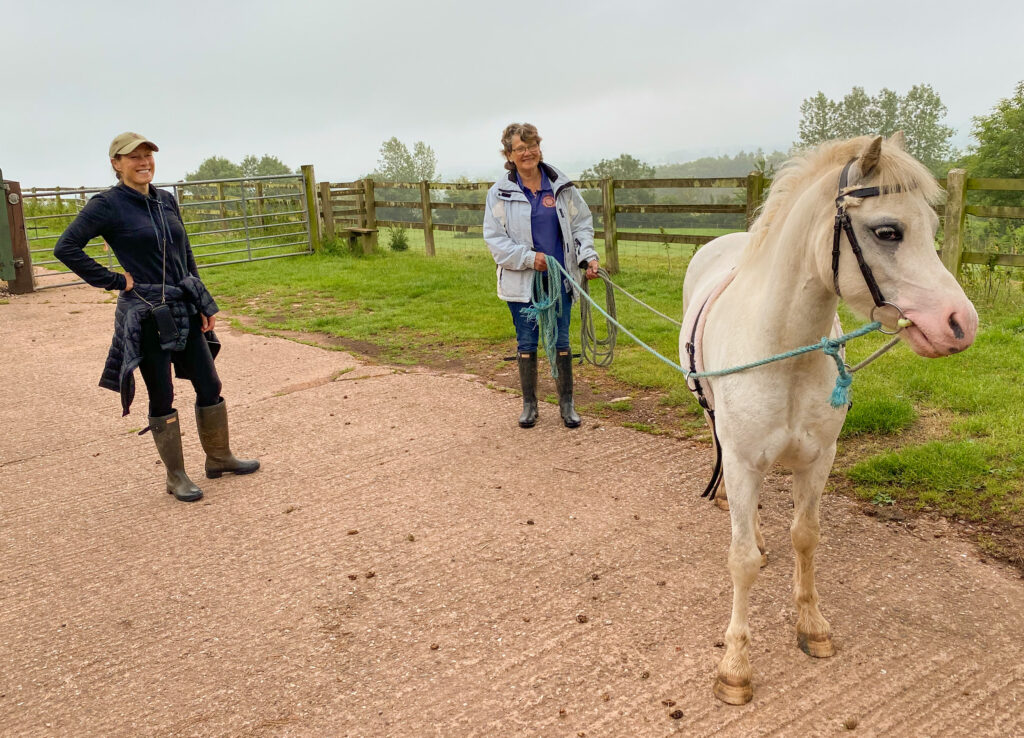
During a break in the wet weather we had an impromptu visit from two of the friends we have made here, Karen and Jane Ayre who run the caravan park down the road. During lockdown they have been training a young pony, Vinnie, which will eventually be sold to a family for a young child to learn to ride. He’s quite small and very gentle, and even Mr A (who has a fear of horses) was brave enough to give him a stroke.
Vinne hasn’t yet learned that eating with a bit in one’s mouth just is not done!Karen and Jane on their pony training walk
After a couple of days of enforced rest we were itching to get out and about again. So on Friday decided to jump in Truffy and head back over to Exmoor and the small town of Dulverton.
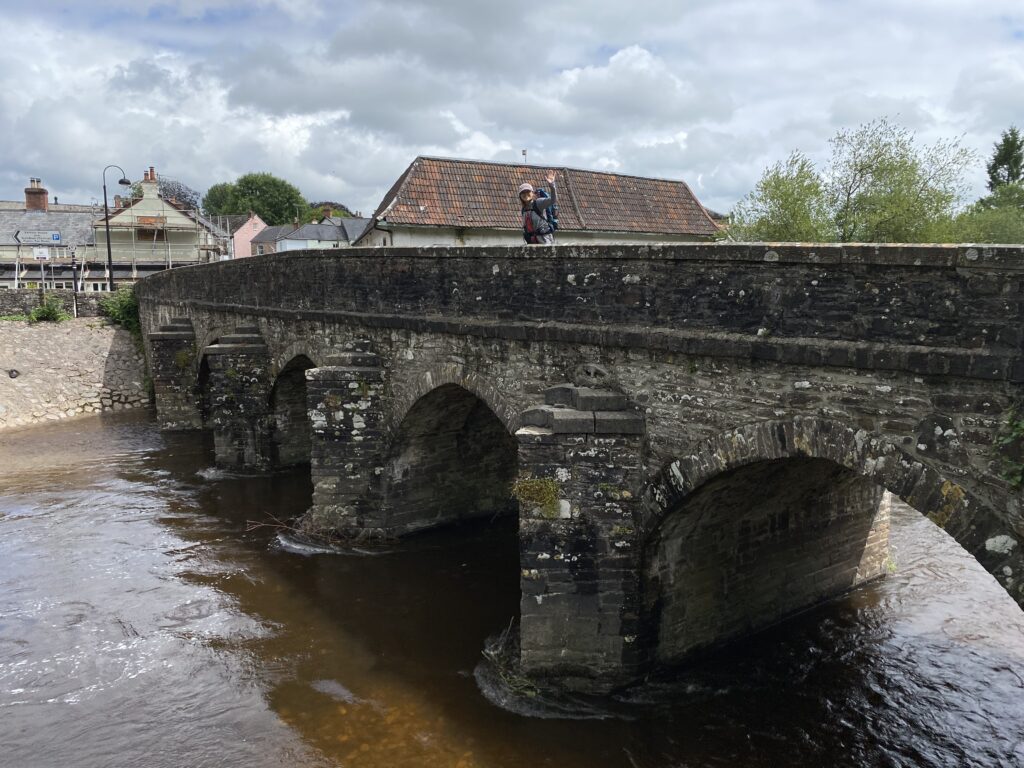
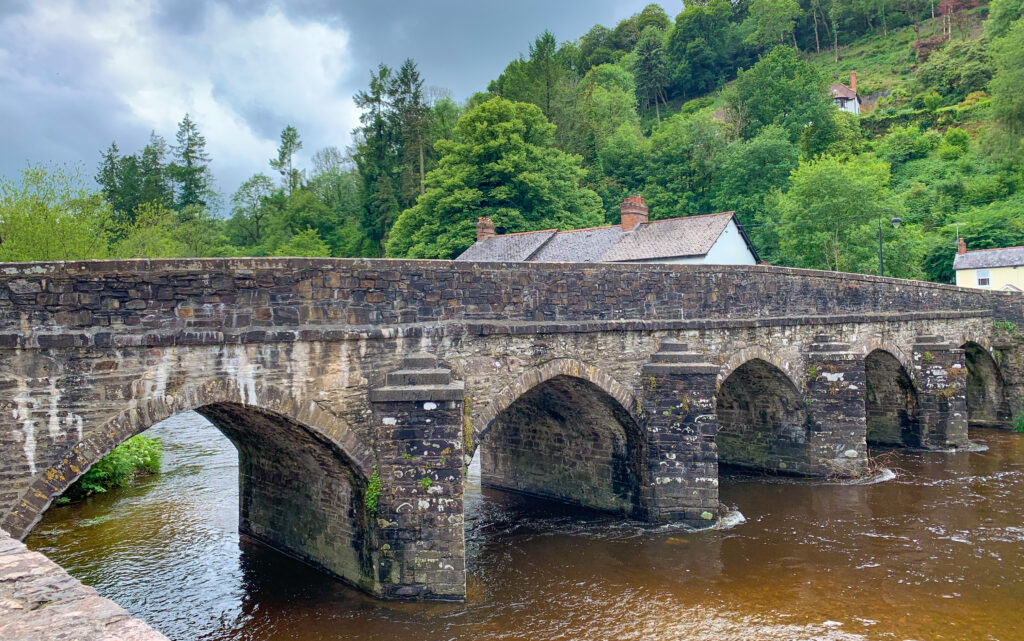
Mr A navigated the narrow lanes brilliantly, barely flinching as we squeezed between old stone houses and parked cars as we found our way to a parking spot beside the eighteenth century Marsh Bridge on the outskirts of town.
We set off on a circuit walk (Strava link), following the River Barle into town.
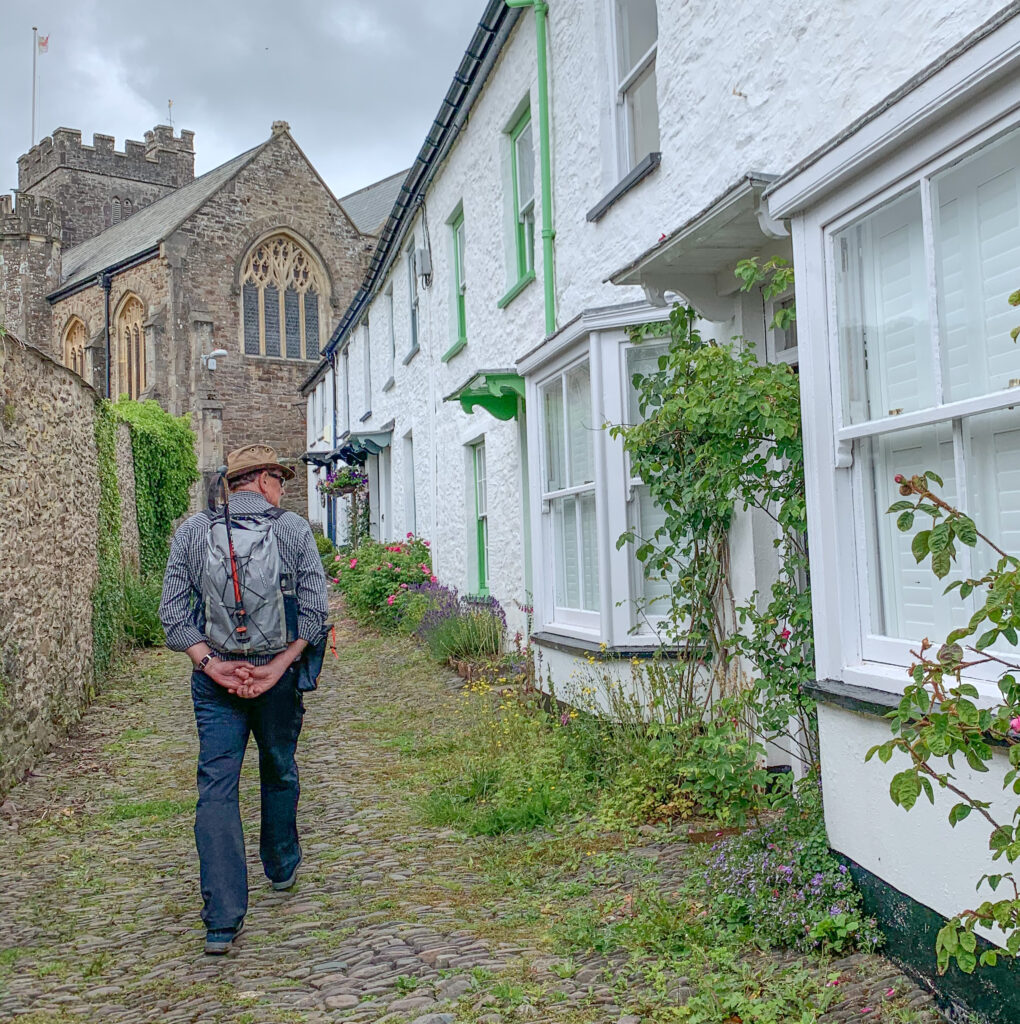
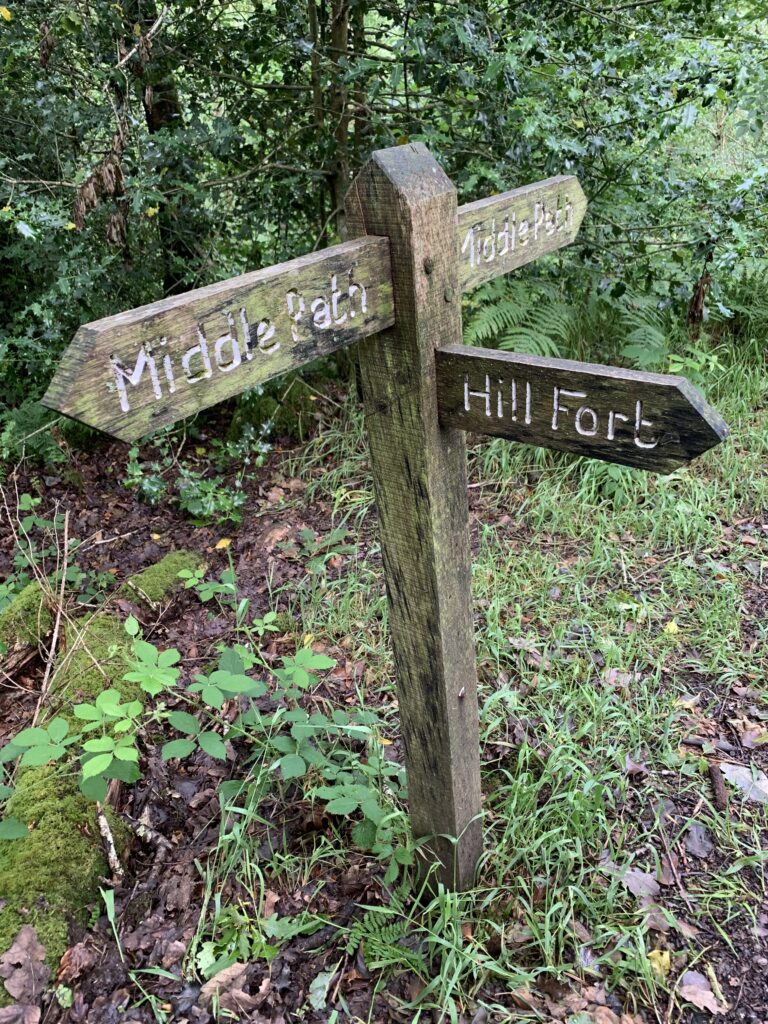
A nice big parking spot for Truffy alongside the riverFollowing the River Barle – it’s quite swollen and fast moving after all the rainThe greens are extra vivid after a good wateringMrs ALooking down at Dulverton from the footpathCrossing over the 18th century bridge into townLittle cobbled streets need a little weedingAnother view of the oldest medieval bridge on ExmoorWe take a different path on our return route, and spot a sign directing us to a hill fortWe wound our way up the hill through the woodsNot much left to see here now, but this was the fort, otherwise known as Oldberry Castle back in the Iron Age (around 3,000 years ago)
The showers dissipated totally by the weekend, allowing us to get out for a muddy walk locally on Saturday. Again, the colours seemed all the more vibrant for being freshly watered.
Amazing skies at the back of West Bagborough
We were just walking up through the village on our way home, when we noticed a couple of our neighbours having socially-isolated drinks on their front lawn. We were invited over to join them, and soon our plans for making curry and relaxing with Netflix were out the window.
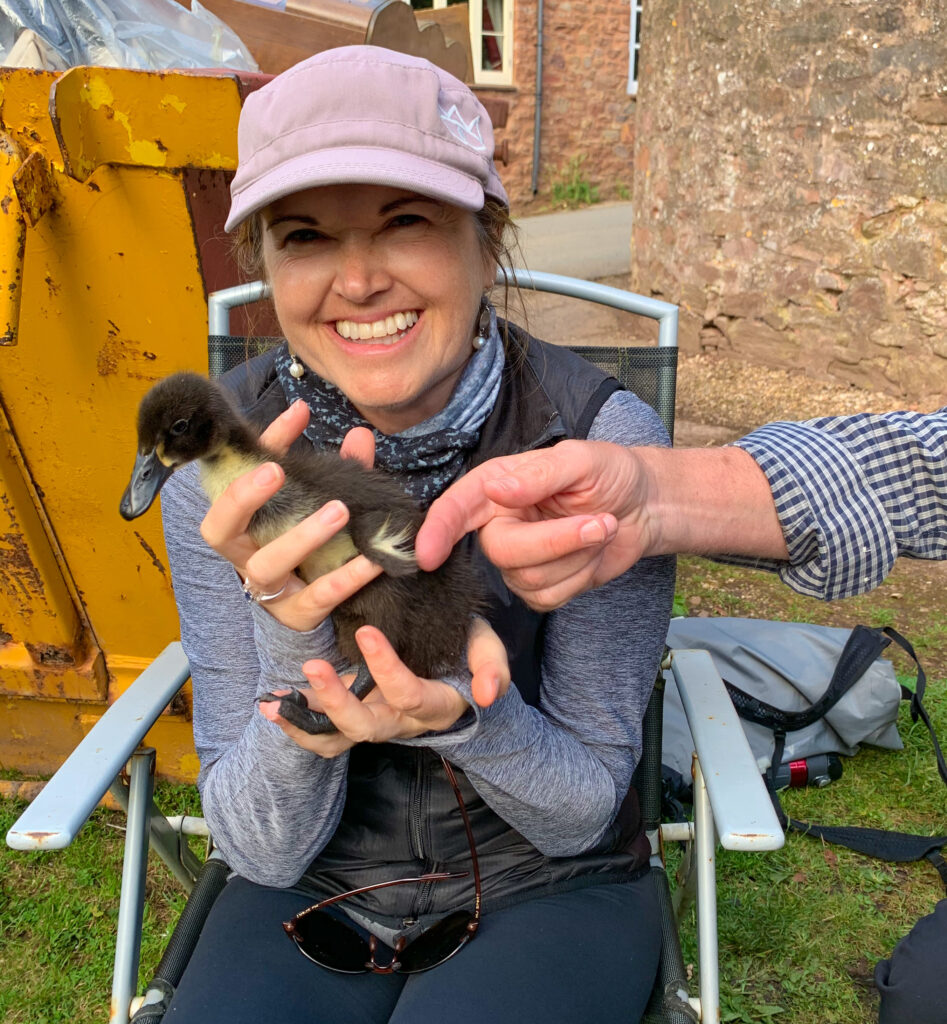
Neighbours Ian and Caroline keep ducks, and I get some cuddle time with a little duckling
My cousin Ian and his family, Caroline, Emilia and Leo, drove down from Almondsbury for the afternoon on Sunday. We were so excited to see them – not only the first family we’ve seen since mid March, but the first time I have seen them in six years! I am sure we all looked older, but especially this children – I have not met Leo before, and Emilia was a baby in a high chair last time!
Thankfully the rain held off so we enjoyed Father’s Day cake and tea in the courtyard before a short stroll around the village and surrounds.
Emilia and Leo are well versed in posing for photos it seemsGreat chance to catch up and share storiesEmilia decides the water is a little too fresh…they both change into wetsuits and have fun in the poolAll too soon it is time to say goodbye with plans afoot for another catch up soon…
It was a fun afternoon, but as we waved them farewell, we took note to ensure we don’t have sore heads next time we encounter excited children!
On Monday we took our bikes exploring around some of the local villages and lanes – there are some incredible buildings around here. One of them, multi-million pound Denzel House has just been sold to a London-based electronics importer apparently – as we rode past ogling, we saw several people working on improvements to the grounds.
The overall ride was lovely, and we took in the whitewashed village of Stogumber which sounds to me like something you’d chop up and serve in salad. Apparently the name is derived from Stoke (meaning dairy farm in old English) and the surname Gunner (presumably the owner of the dairy?).
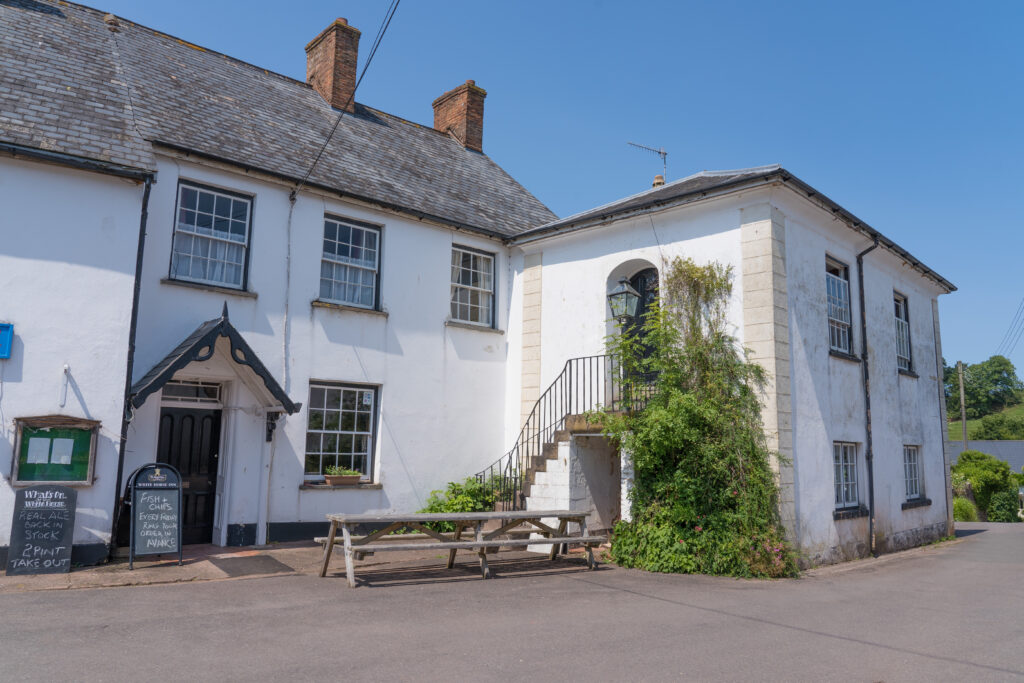
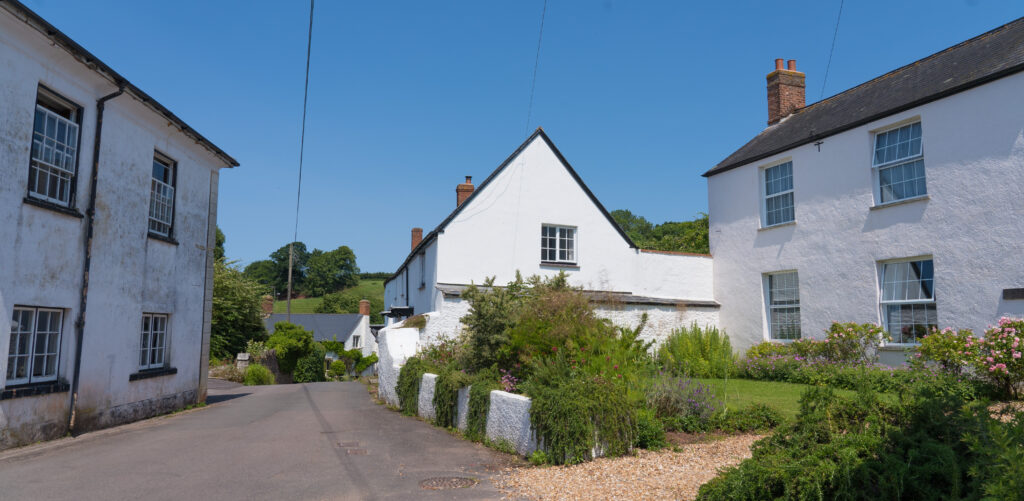
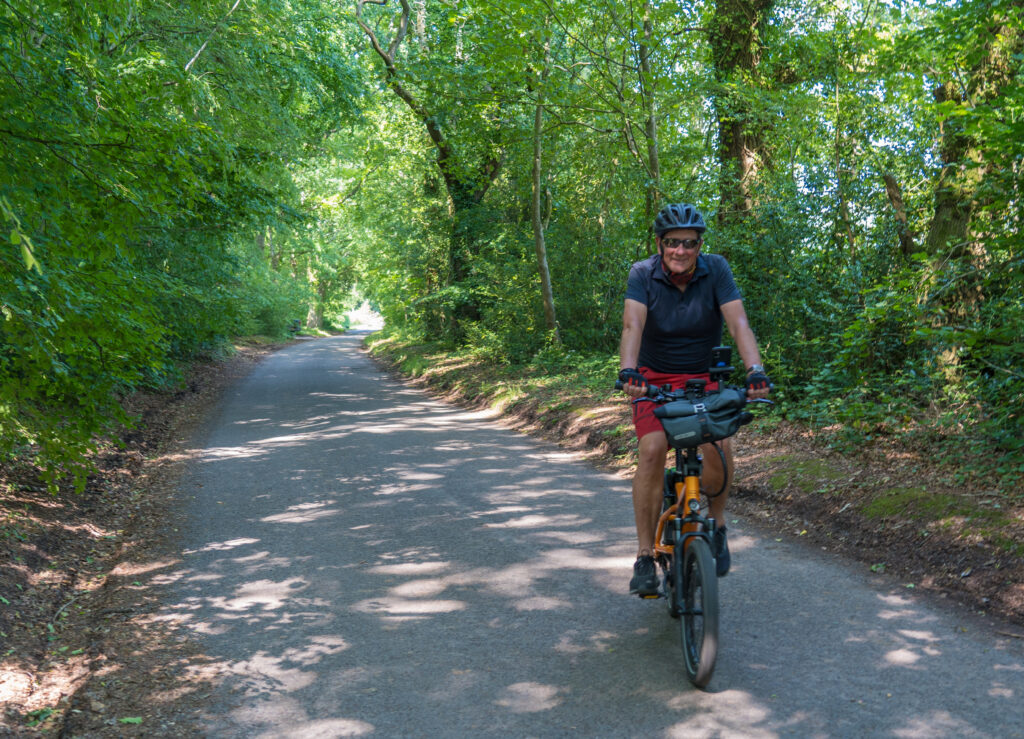
The local pub is doing fish and chips and a two pint take-outThe white cottages look brilliant against the blue skiesLove riding down these green tunnels
It was while we were our riding that we heard the welcome news from Boris announcing that from 4 July campsites could open (as well as pubs, hairdressers, other holiday accomodation and so on – as long as they are ‘Covid-secure’). I say welcome, but it comes with mixed feelings. The opening up means returning to the stress of finding a place to stay, potentially mingling with other people, and leaving our new friends in this haven within the Quantock Hills. I for one have a little bit of nervousness about what the coming weeks will bring.
So this week the chaos began, the mad dash to try and find campsites with space for us in locations we would be interested in visiting. I would liken it to trying to find tickets to see The Rolling Stones, with everyone selling out almost immediately and if you’re lucky you get the last two on offer. Although unlike getting tickets to one band, we have to go through it again and again booking up the coming few weeks.
We gave ourselves a break on Tuesday afternoon to head back to the western Quantocks, and parked Truffy up by Crowcombe Gate, taking our second walk in this area.
The heath and bracken looked healthy and lush after the rain, and most of the soil well drained. We admired the views we have seen from many angles over the past three months, never tiring of that magical feeling this area brings.
Can you spot Truffy? Outstanding in his field…Such a stunning area – we will miss these walksThe heather is starting to bloom, looking spectacularFew trees dot the area, and those that do could tell many talesLoving this regionStill the odd puddle around
Wednesday promised to be a hot day, with temperatures climbing up in to the early 30s. We decided that cycling would be the coolest activity (other than swimming in our pool, and who wants to spend the day doing that?!), so we found a cycleway by the coast so we might enjoy some sea breezes and perhaps a dip in the water.
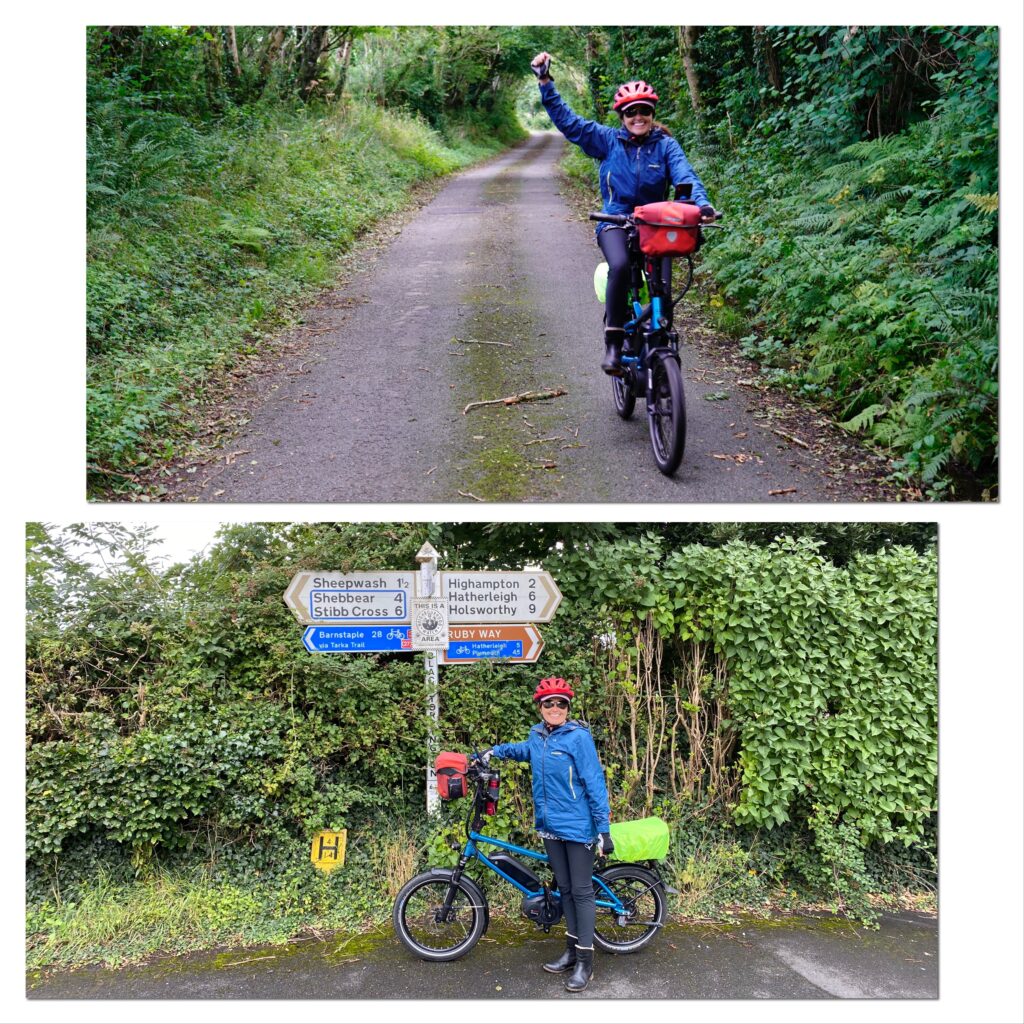
We drove to Barnstaple in Devon and parked up. Our intention was to ride the Tarka Trail in the other direction, towards Woolacombe. Off we set on off-road cycle lanes, which soon turned into country lanes (Strava link).
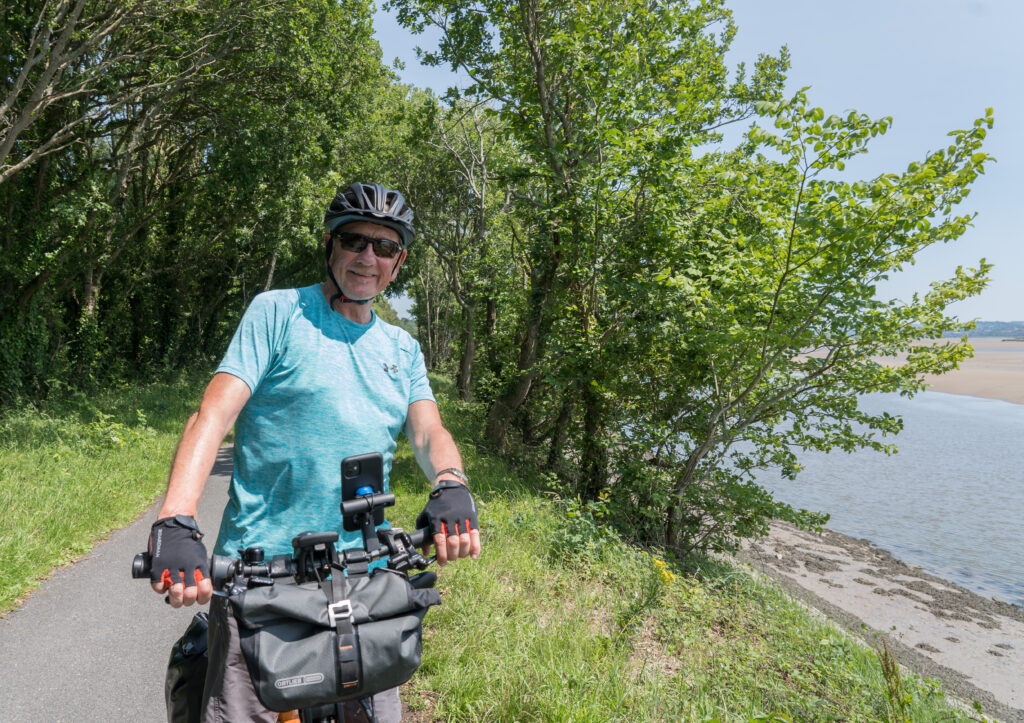
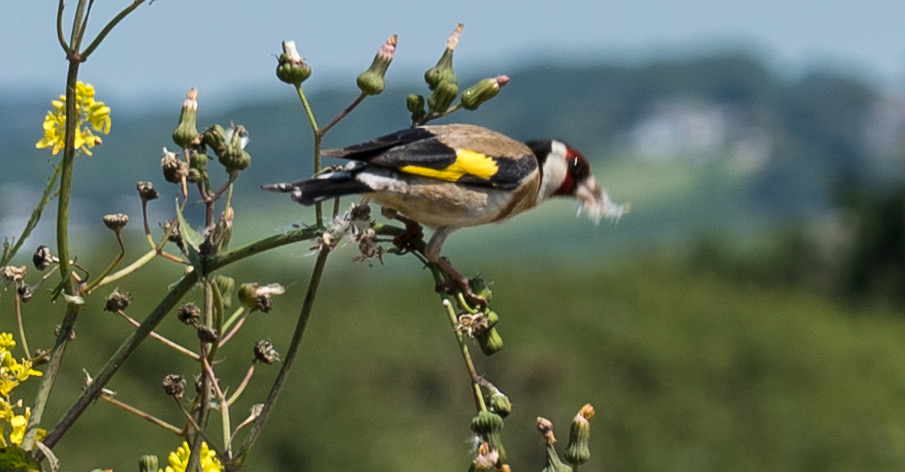
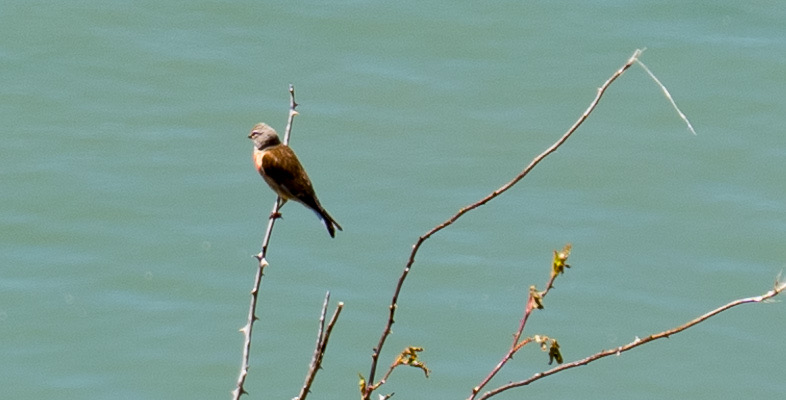
Mark cycles alongside the River TawA gold finch collects feathers to line a nest
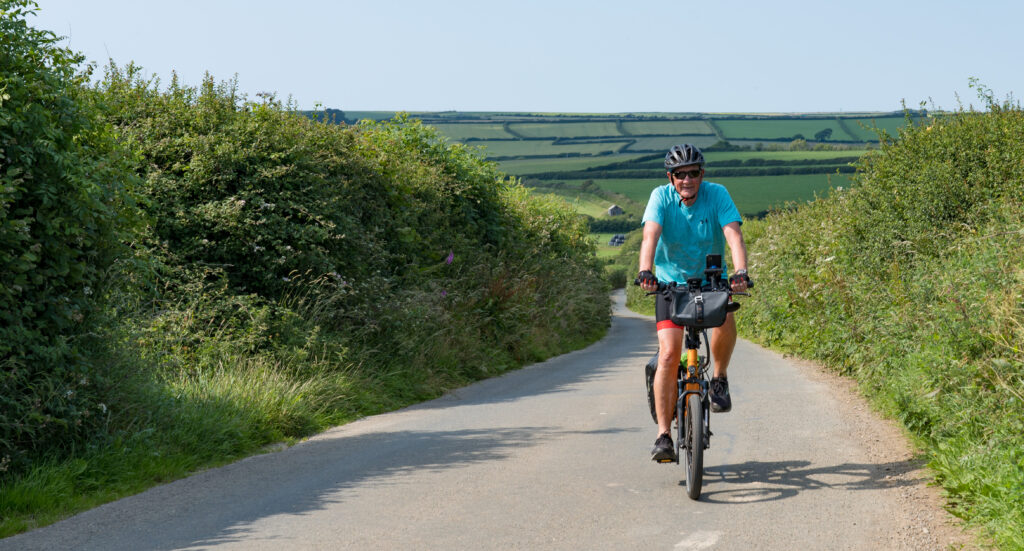
The path’s signage was a bit misleading, and soon we had to ask for directions from a couple of other cyclists. We soon realised that the Tarka Trail was no longer following old rail tracks, but now had become the Sustrans route 27 cycleway, which shared narrow country lanes with cars. We found ourselves pulling off regularly to let vehicles past, but people were friendly and grateful, not aggressive towards us.
As always, we were pleased for our electric motors, with some decent gradient hills along our ride, especially in the heat.
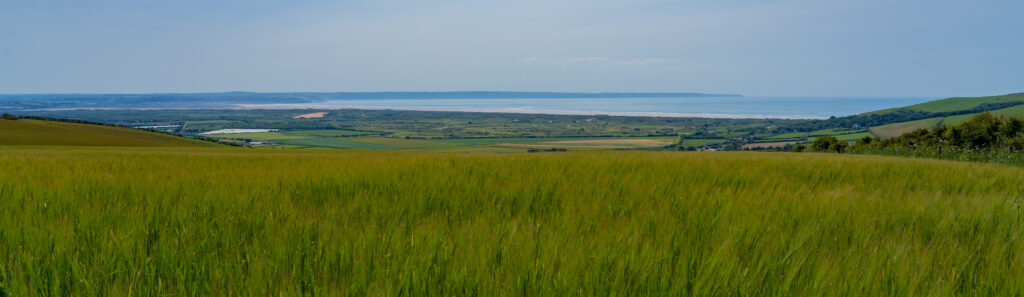
Looking down over to Croyde Beach
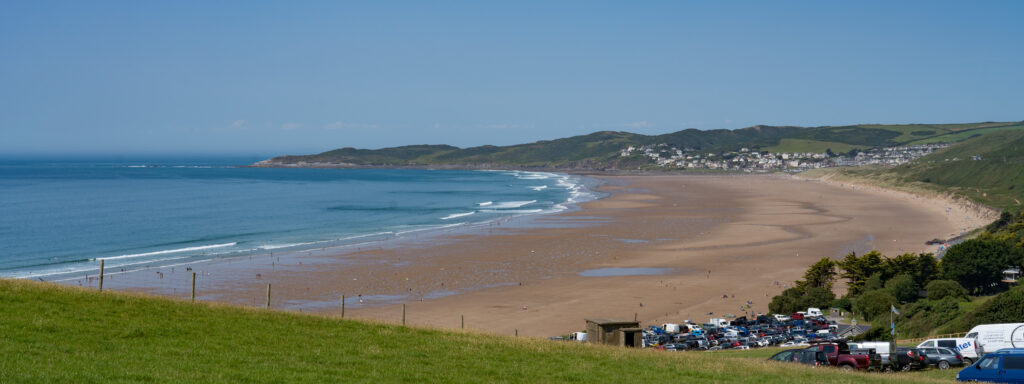
Our destination for the day was Putsborough, the quieter and less commercialised end of Woolacombe Beach. The coast walk comes along here, and by the looks of it would be spectacular and ever so quiet.
The car park and sole café was doing good business, but once you were on the beach people were well spread apart with plenty of social distancing (quite unlike the newspaper headlines for that day!).
Our first view of Putsborough and Woolacombe beaches
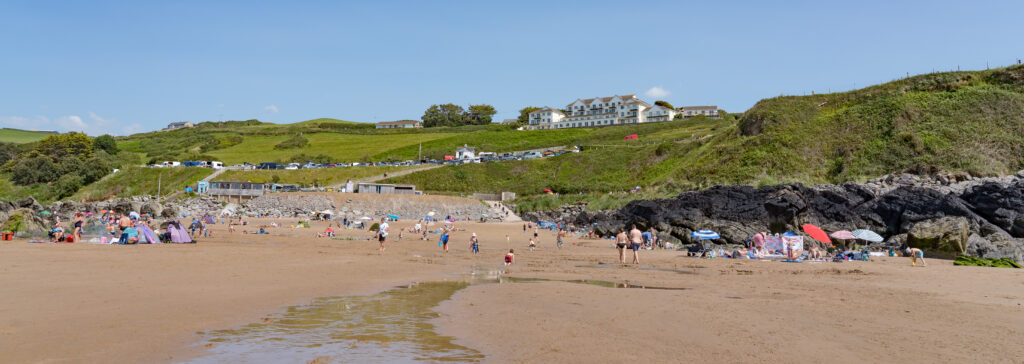
I left Mr A on a bench with the bikes and went for a stroll across the sands and a paddle in the water. It is a perfect beach for children with warm rock pools and soft sand of the ideal consistency for sandcastles. The water wasn’t that cold considering we are in the UK (though I didn’t go in for a swim – the water is between 15-19°C!).
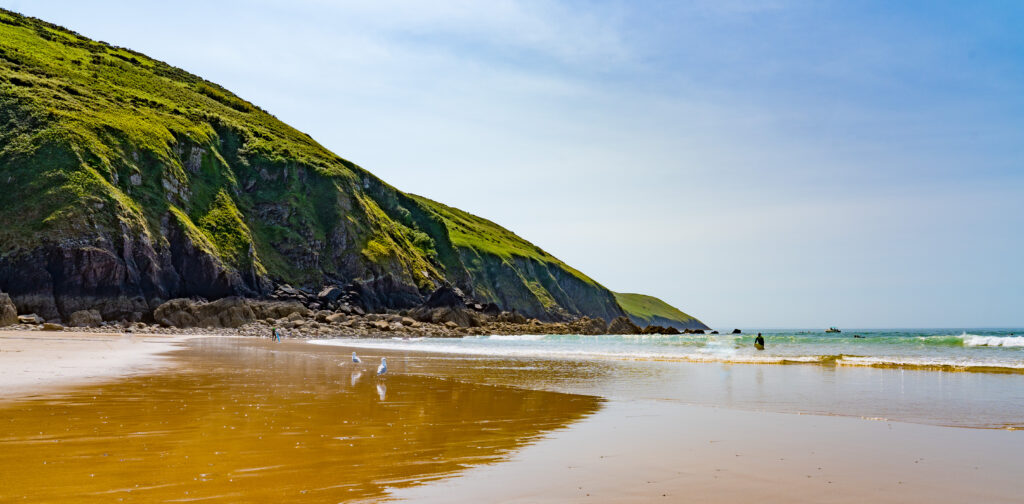
Pickwell Manor up on the hill behind the beach has commanding views The green cliffs reach down to the sand
The ride back to Barnstaple was equally lovely, with plenty of water drunk.
Mr A cruises up a hillFields of corn on our cycle homeBack on the riverside trail
Fish and chips from our favourite chippy in Taunton (Sea Bass Fish and Chips) were our reward for our efforts, enjoyed in Truffy at the side of the road. Perfect!
And so on Thursday we decided to make a concerted effort to get all of our bookings locked in for the next few weeks. Priority had to be seeing family, as it seems crazy we haven’t even seen Mark’s daughters and the grandchildren since October last year.
After a lot of phone calls, messages and waiting for websites to work, we have confirmed the following locations which will take us up to September. Phew!
Let us know if you want to meet up at any of these locations!
We know this has missed out a few people, but we don’t leave the UK until early November, so hopefully will have an opportunity after the summer craziness!
Location: West Bagborough, Porlock and Chard, Somerset, UK
Having provided us with the sunniest May on record, June has decided to become changeable, more along the lines of what might be expected at this time of year. The second of June, however, was very warm, with temperatures heading up into the high 20s in this part of the world.
We decided to travel back to Porlock, and hike some of the South West Coast Track towards Minehead. All up we walked 9.5km (Strava link).
As we set off we could see the wisps of cloud racing across the sky, signalling a change in the weather patterns. There was just a gentle breeze down below as we tracked our way through the village and wound our way along the marshland towards the next village of Bossington.
Bossington is a sweet old village, part of the Holnicote Estate which was leased to the National Trust in 1907 for 500 years, with the aim of preserving this part of Exmoor for the people.
Picturesque village of BossingtonLovely quiet lanes lined with stone houses. In peace time there is a licensed restaurant and cafe here. All closed at the moment.Stunning climbing roses with an incredible scent decorate the outside of old cottages
Continuing through the village we crossed the babbling River Horner and climbed up onto Bossington Hill, following a path that wound around the cliffs.
Nice shady respite from the warm sun beside the river Climbing up on to the headland – a great view over the bay, looking out towards Porlock Weir and beyond
We picnicked at Hurlstone Point, outside the ruins of what used to be a coastguard lookout station in the early 1900s. We mused how it would make a great pop-up bar – though the combination of alcohol and the steep cliffs here might not be so good.
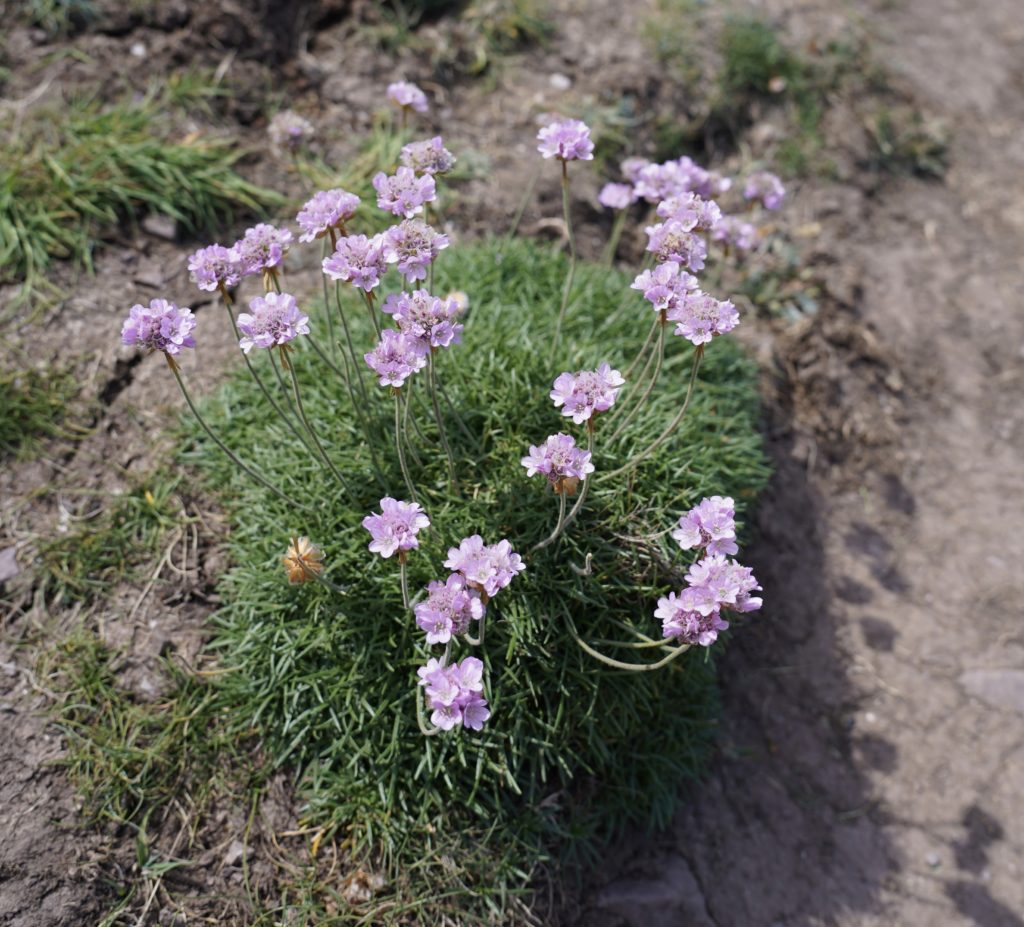
The sometimes murky waters of the Bristol Channel look blue on this clear morningBeautiful splashes of colour with Sea Pinks growing on the cliff side – these pretty flowers don’t balk at poor soil, salty air or a good lashing from the wind!
We started to pick our way along the cliff edge walk, which originally was set up in the 1800s for coast guards to walk along between lighthouses, keeping them maintained and checking for smugglers. Fishermen also used this clifftop route to look for shoals of fish, before rushing down to their boats to try and catch them.
A caution at the start of the walk warns of dangers. Searching the local gazette tells of several sad endings for walkers who mis-step on this trail.Strolling off towards MineheadMark with his vertigo bravely tackles a particularly steep part of the trailPretty Sea Campion nestles at the base of the rocks in the cliff
We climbed up most of Bossington Hill, before finding a resting place to enjoy the sound of birds and insects and enjoy the view stretching out before us, before looping back to Porlock.
A pied flycatcher?A (common) Sand Martin?Wonderful resting point
Wandering through Bossington on our way back, we spotted a local house selling bottles of organic apple juice for £3. Finding we only had a ten pound note, we started to walk away, only to get chatting to another couple of walkers who had decided to buy a bottle. The next thing we knew, they were buying us a bottle of apple juice! Yet another random act of kindness in our lives – how lovely.
Heading back to Porlock along the warm hedge lined footpaths
Later on in the week we decided to make use of the changed Covid-19 lockdown rules, which now allow us to mingle with other people outside, while maintaining social distance. We caught up with a couple from Australia, Beverley and Andrew, who had also been over here in the UK for the duration of the lockdown.
We picked the town of Chard in the Blackdown Hills Area of Natural Beauty on the Somerset-Devon border. It was half way between where each of us were staying. The weather was forecast to be showery, but other than a few drops of rain on our drive over, it turned out just fine, and we were soon stripping off the layers.
Andrew, Bev and Mark near the start of our strollUndulating hills and lovely viewsBev and Mark pick their way along the top of a fieldMark walks alongside a field of young barleyNearly back in Chard
It was a good taster of the area, with about 10.5km walked (Strava link) and so nice to talk to people other than each other! Bev and Andrew are about to tackle the journey back to Australia and endure a two week quarantine in a hotel room, so we’ll be interested to hear how that goes.
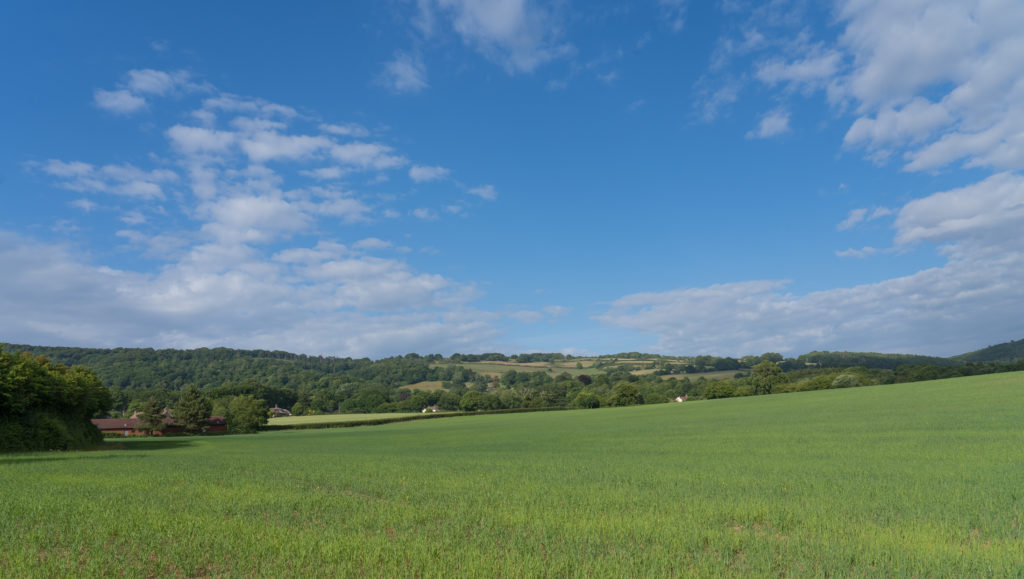
The weekend was warmer than expected also, and allowed us a chance to go walking around the local lanes. The scenery continues to change with new flowers emerging and crops growing.
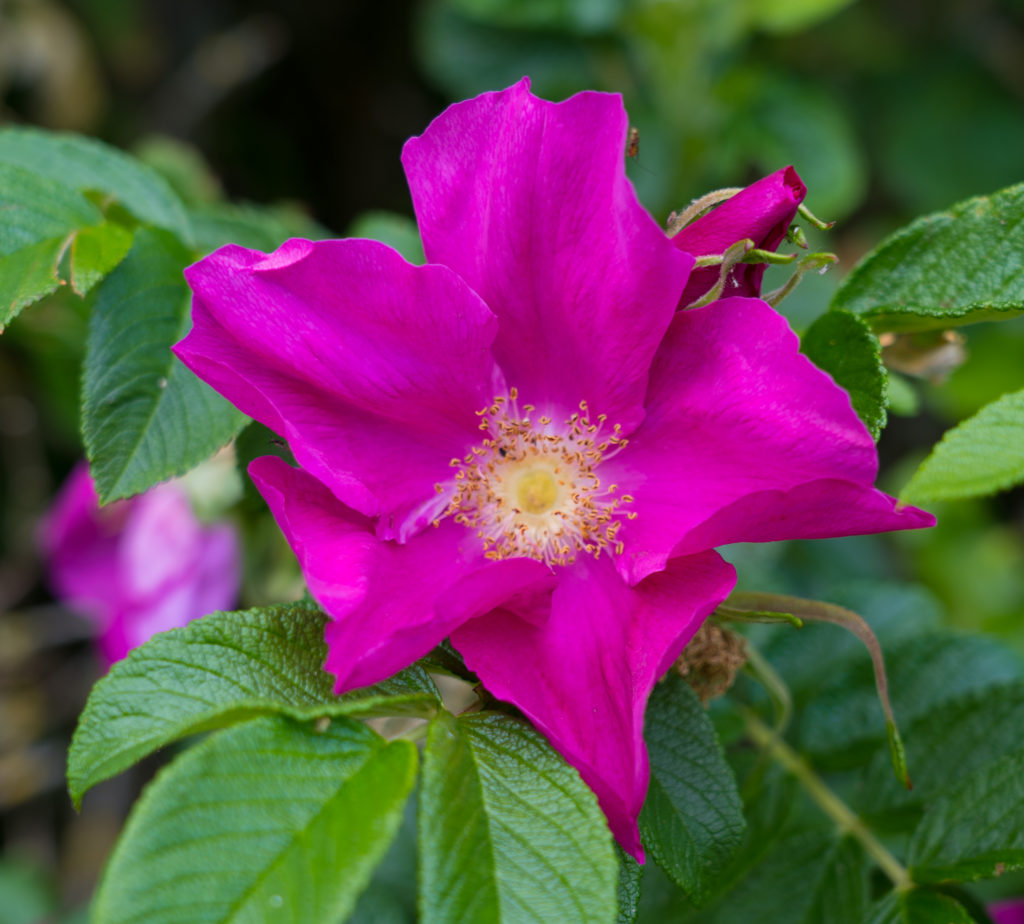
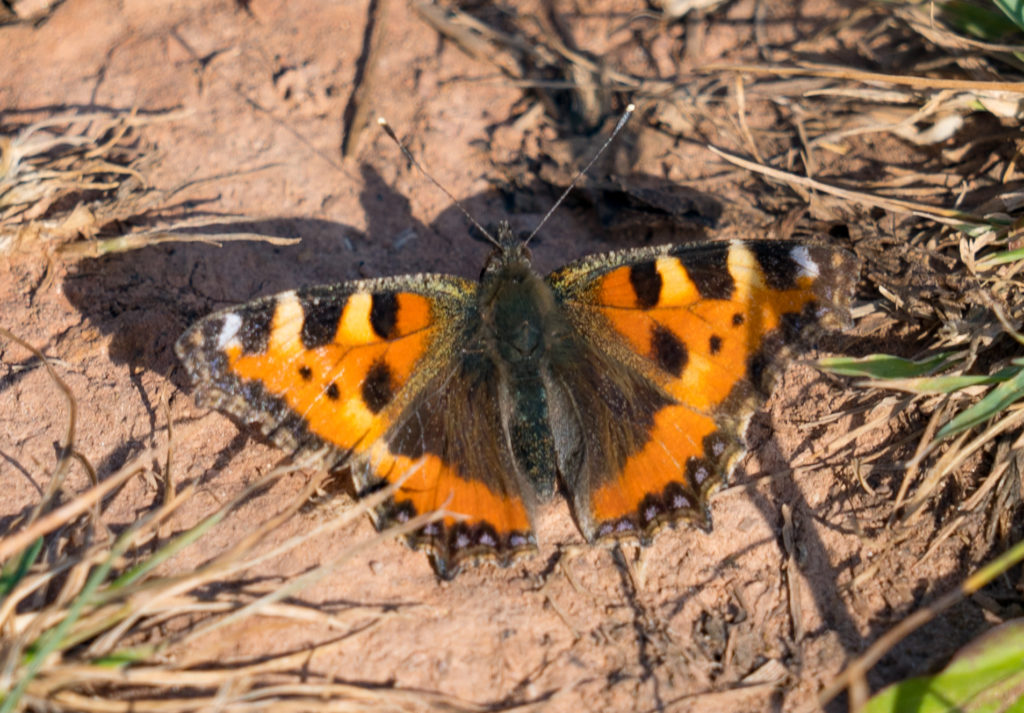
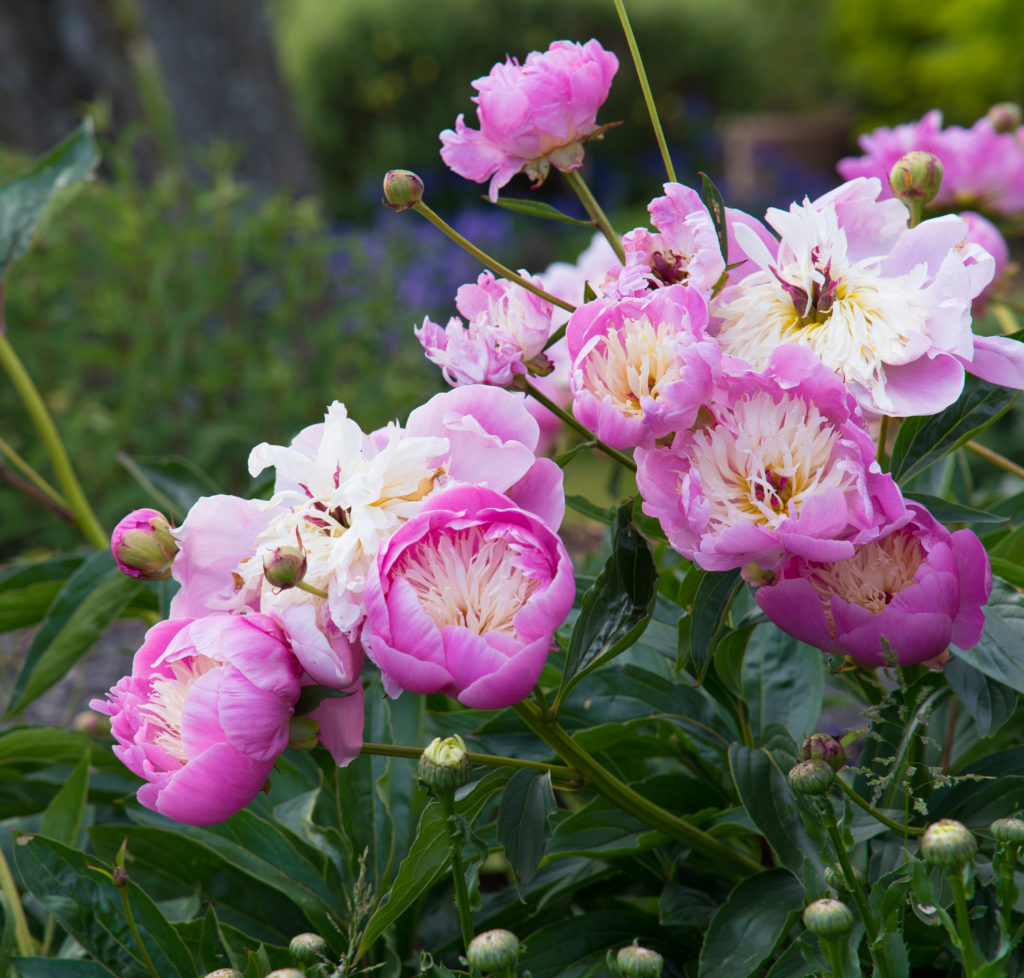
A wild rose adding a splash of bright colour to the hedgerowsBare fields turn to greenA newly hatched Little Tortoiseshell butterfly dries its wings on the warm dry mud on the footpathBeautiful peonies in the garden here at our rental cottage
As we approach mid-summer here, we are able to enjoy long evenings. Late Monday afternoon we took off on quite a decent hike (Strava link), walking just under 13km, finishing around 7pm. It was a perfect time to go out, with the gloomy morning’s cloud lifting to a spectacular evening.
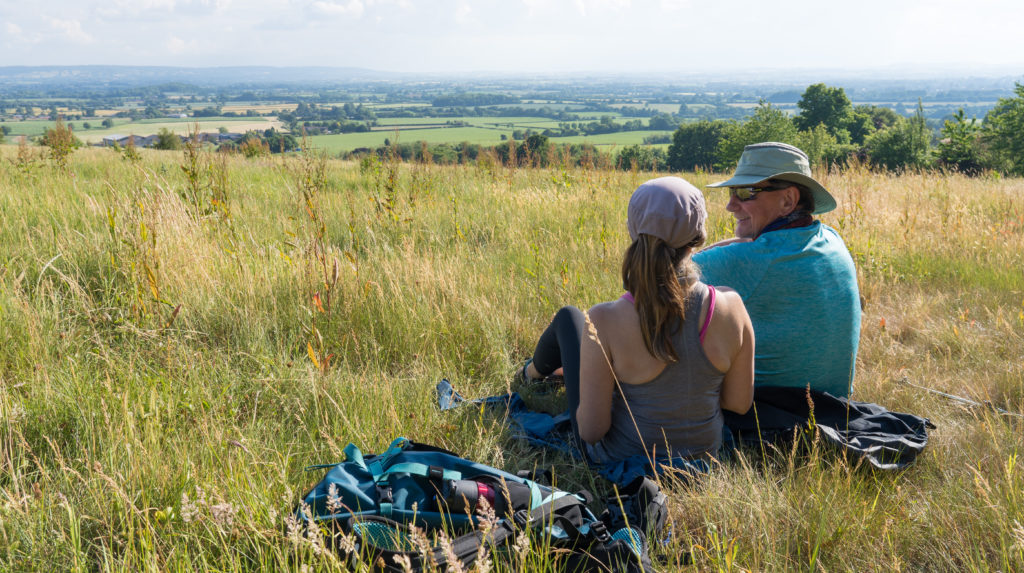
Our walk started with a decent amount of uphill, taking us to our favourite spot of Cothelstone Hill, where we enjoyed a herbal tea and admired the views.
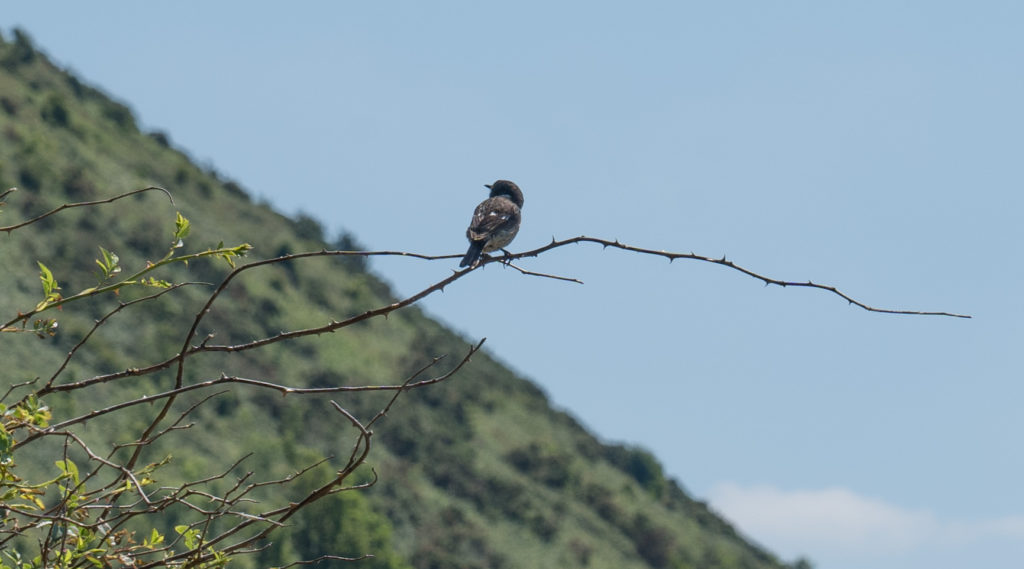
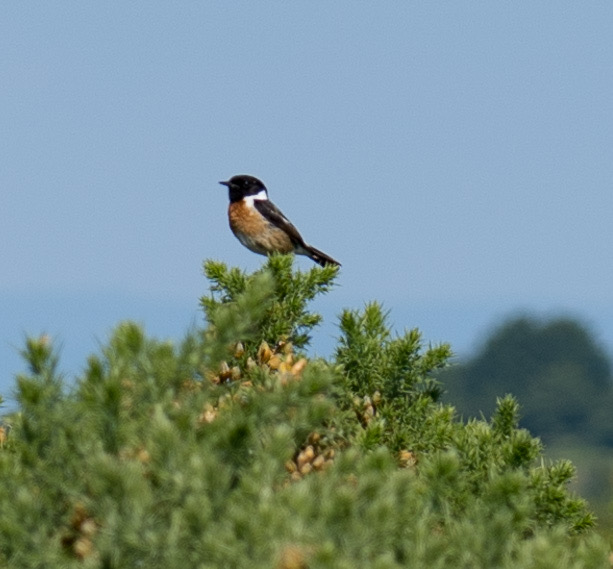
I wonder how many people call this ‘their’ seat on the hill?A common stone chat perches on top of the gorse
We explored new pathways, winding through the woodland and startling a red deer which bounded off away from us. The path disappeared and we had to do a little bush-bashing through the undergrowth to find a marked path.
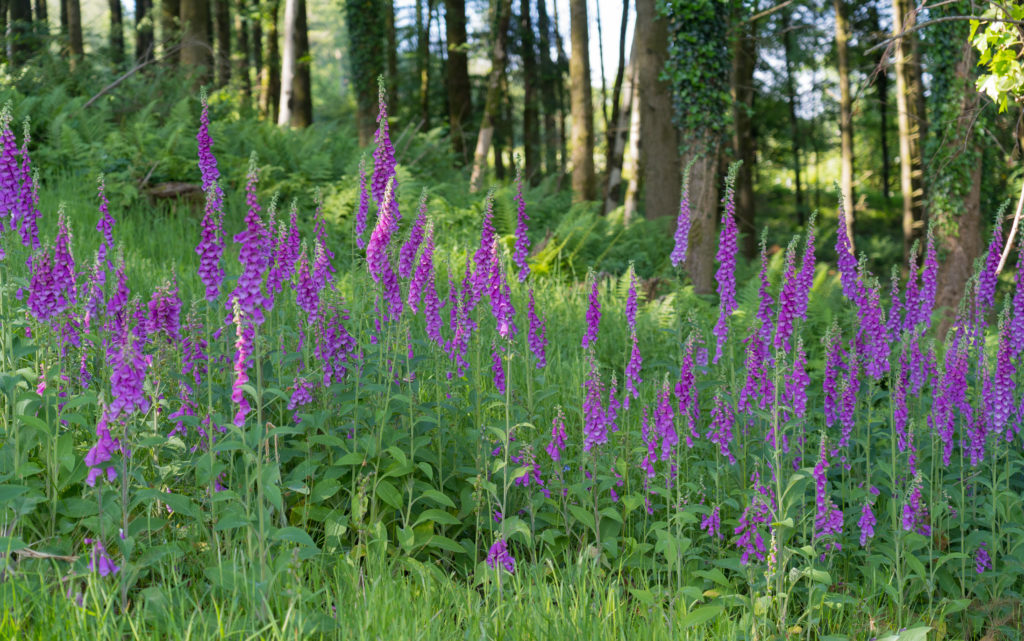
It took us into a plantation through towering trees and we picked our way along what looked like badger or fox paths through the ferns and foxgloves.
Lovely crop of foxglovesMr A picks his way through the plantation
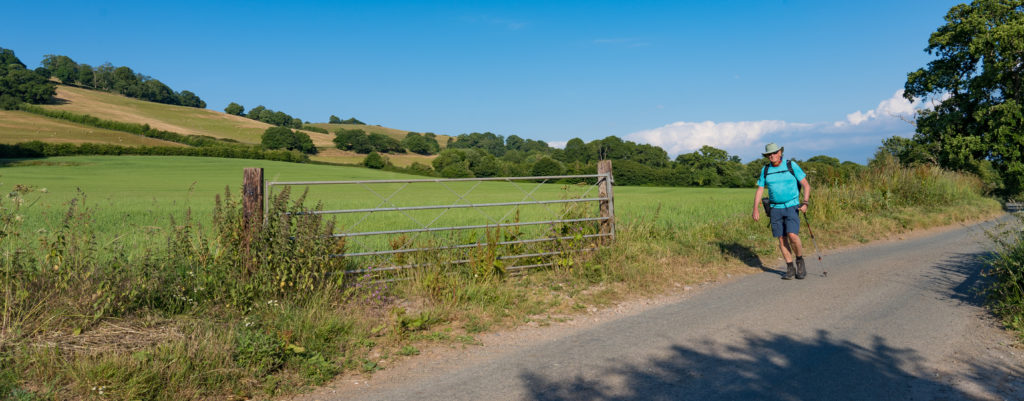
It wasn’t too far though, and we were soon back on track, climbing up through peaceful lanes offering us rewarding glimpses across the countryside.
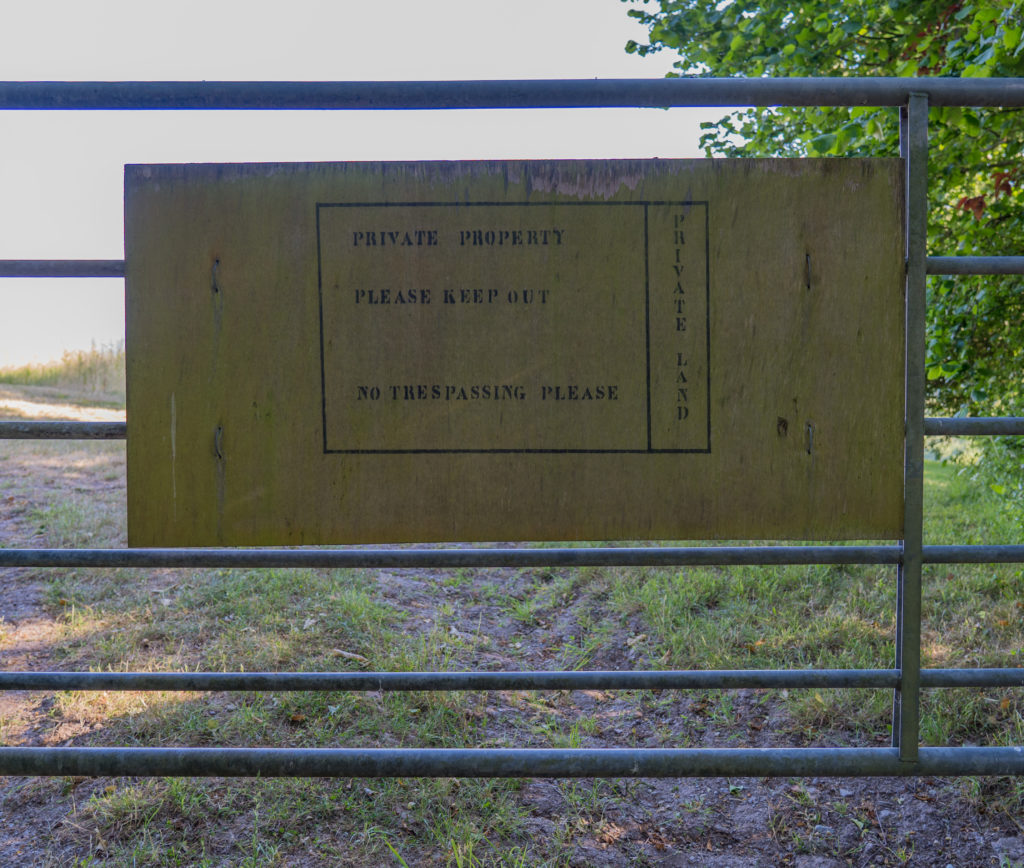
Quiet lanes leading to lovely viewsMr A admires the viewAlmost could be a paintingA short break for an appleHow many pleases can you get in a polite ‘no trespassing’ notice?Evening shadows create lovely coloursThe final stroll home
The dry weather hung around for another day, so on Tuesday we jumped into Truffy and drove up to Crowcombe Gate, which to date has been the extreme of our walks in the Quantocks.
We took off in a westerly direction, marvelling at the different scenery, wrapped up warm against the brisk fresh wind blowing off the Bristol Channel. Fewer trees dot the scenery here, the low heathers and bracken making up the main undergrowth.
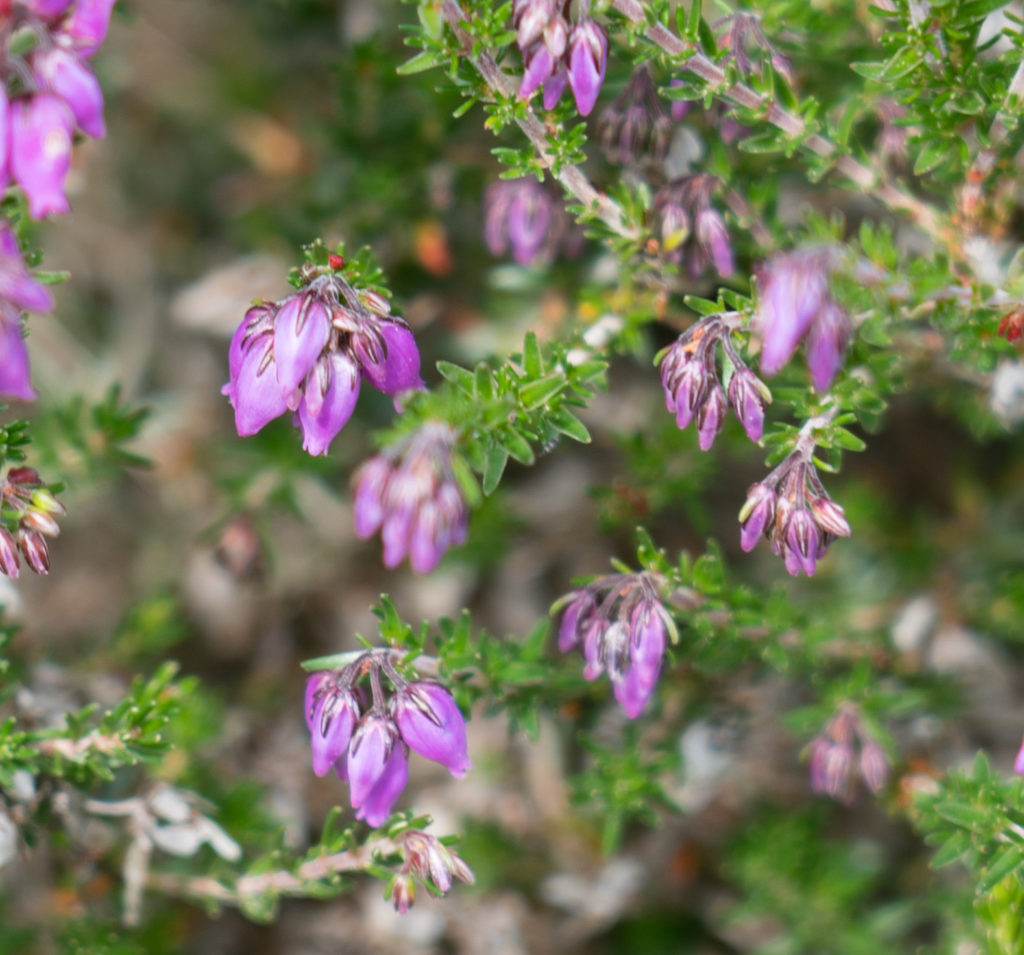
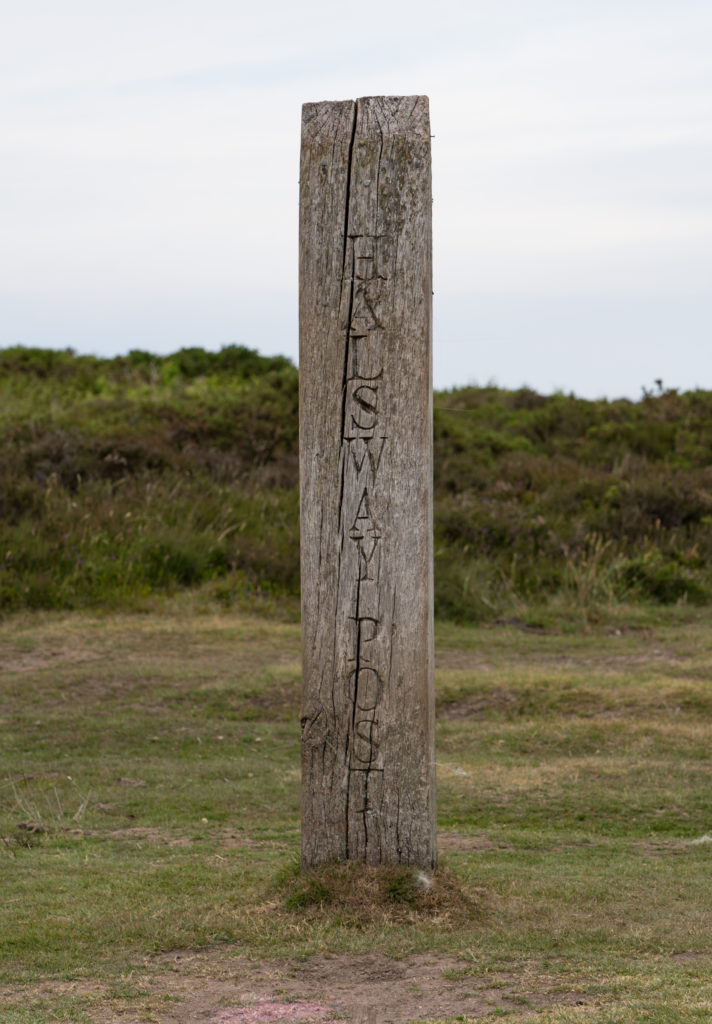
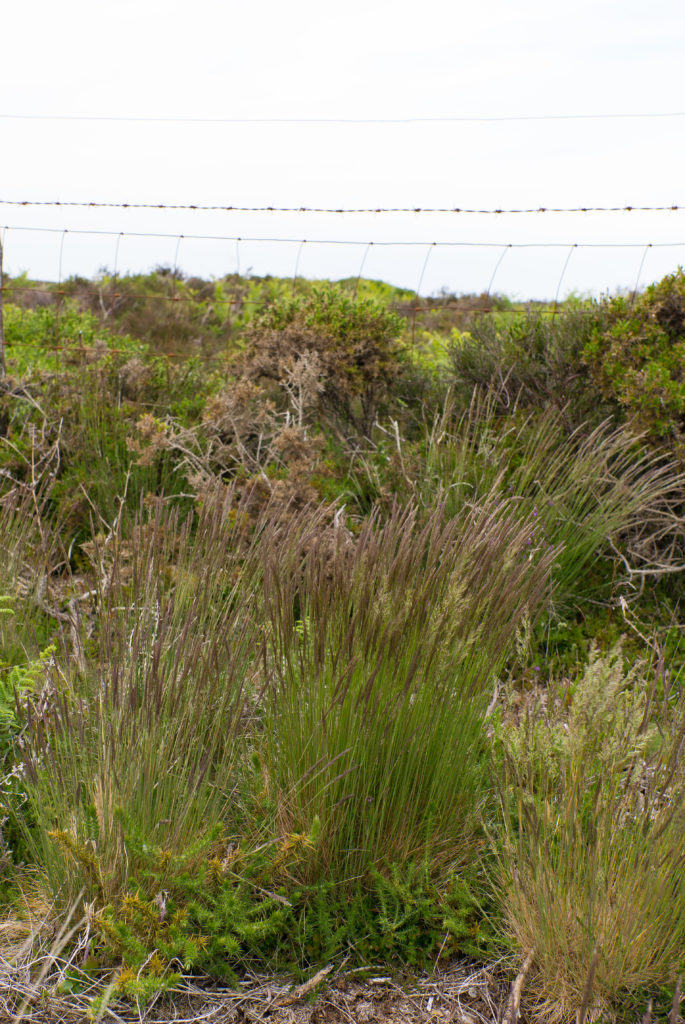
We ignore a path heading east, despite the tempting blue skiesA new vantage point from which to look across the Bristol ChannelAnother bronze-age barrow, long ago raided, and more recently used as a beaconMarvelling at the difference in temperature one day makes!The subtle purple haze of heather is starting to emerge across the moorlands Our local Chinook helicopter does another low fly-past for usThe Halsway Post sits on common land above Halsway Manor. This land was sold to the ‘Friends of Quantock’ by the council for the nominal price of £1, thereby keeping the land available to the people of Somerset and allowing local farmers to graze their livestock hereBeautiful coloured grasses you could almost believe were planted by a landscape gardenerHeading back to Truffy over out final style
It was lovely to get a first taster of another part of the hills. From here we could walk down to the coast quite easily…it’s the getting home bit we would need to work out. One day perhaps…
We finished our walk with ice creams from a van in the car park – locally produced Jersey cow milk ice cream with a flake for Mr A…and a chocolate-vegan ice cream for me. How civilised!
Footnote: Sadly our little rescued baby rabbit (kit), Bags Bunny did not make it past her fourth day. We shed a few tears and buried her in the garden here.
Location: West Bagborough, Quantock Hills , Taunton and Walchet, Somerset, UK
With the government now encouraging people to drive as far as they like to enjoy outdoor activities, the Quantock Hills are starting to get busier, especially at the weekends. And by busier, I mean we actually see other people when we are out walking, but they are still quite a way away and easy to avoid!
It’s amazing still to us that we continue to discover new to us paths that wind through new areas, the scenery constantly changing as the leaves on the trees mature and new blooms burst through the undergrowth.
Saturday’s stroll through the hills took us up the usual 20 minute straight up walk to the top of the hills, and looped back around, taking us past the usual two tantalising yet closed pubs (Strava link). Still no glimmers of hope on the pub front for the UK unfortunately, all remaining firmly closed for now, despite calls for pub gardens to be opened up.
Mr A admires the wonderful view on top of the hillsEnjoying the tunnels of green that have developed as the beech tree canopies have grown upA break to enjoy our herbal tea and an apple with the viewLoving the patchwork of colours in front of us as we hike down the hillsGrassy footpaths at the bottom, so civilised!Ribwort Plantain. In confirming the name of this flowering plant I learnt all sorts of interesting facts….
The above plantain plant is apparently listed as vulnerable – I remember seeing many in my childhood, but less so these days. I’ve learnt this plant is an antihistamine, antifungal, antioxidant, analgesic and a mild antibiotic! It is the best treatment for nettle stings, unlike dock leaves which are apparently a placebo…worth knowing for our next walk. As the trousers come off and shorts are worn, nettle stings are becoming all the more likely. Apparently the leaves from the plantain can make tea that works as cough medicine too. What a handy plant!
Tuesday: Mark had done a bit of reading about a cycleway which runs alongside the Taunton Canal, so worked out a 48km circuit through the hills, down to the canal, and back again via Taunton.
It was a great afternoon out, helped of course by the glorious weather again. The sunshine just keeps on coming – with the odd overnight rain shower just to make sure the landscape remains green.
Mr A by one of the many bridgesWe stopped for a break here and saw a barn owl fly past and proceed to go hunting in the fieldsLovely shades of green Barn owl hunting ground – we saw a few field mice on our rideMr A continues on his way
You might be able to spot one of the many World War II pillboxes that line this canal ahead of Mr A in the photo above. Many of them sit abandoned, but some have now found new uses as bat roosts. There are many signs of WWII as we cycle along, including demolition chambers (now filled in) underneath bridges.
Interesting scenery
It was a fabulous ride, and gave us a good workout (yes, in spite of having batteries on our bikes!).
Wednesday afternoon we thought we would just do a short walk to get some fresh air…it turned out to be 11km (7 miles)! The ever changing scenery is addictive – we know we won’t be here forever, so just want to enjoy it while we can.
A vibrant red horse chestnut treeOxeye daisies – blooming early in the meadows around hereRosa Canina – the Dog Rose, a hedgerow climber native to the UKGrassy meadows with a beautiful backdrop
Thursday we decided to jump in Truffy and see somewhere new. We drove a short way north-west to the town of Watchet on the coast.
The red pin marks the spot where Watchet sits
Watchet is a sweet little coastal town with a friendly and authentic feel. Its history goes back to the Iron Age, with a port then being settled by the Saxons. It was attacked by Vikings in the 10th century, and there are many tales of smugglers and battles to be read about. It’s a town of great traditions, with a lantern festival held each September. A group known as the ‘True Men of Watchet’ has met at the local pub on an annual basis since being founded in 1643, apparently representing the town court and responsible for law and order in the area…positions have names such as Ale Taster (Mr A wouldn’t mind this job) and Portreeve (like a ‘mayor of the people’). Fascinating! We couldn’t help but wonder how one might get membership to such a group, and what pomp and ceremony would accompany their meetings…
And again, everywhere we go seems to have a link back to Hastings. Apparently in 1067 after King Harold was slain, Harold’s mother Eleanor fled to Watchet, where she caught a boat out to Flat Holm Island in the Bristol Channel. After a few months there she caught a boat over to France and settled in Saint Omer.
The tide is out today, revealing a mud bottomed harbour
The tides go out a long way here, with a range of 6 metres.
Still plenty of working vessels here
When there isn’t a pandemic, Watchet holds a weekly market down by the harbour, and an annual music festival.
The Pebbles Tavern looked like an interesting establishment – apparently dedicated to selling microbrewery ciders and ales, it has several awards and regular live music nights. We looked on wondering what it might be like…of course it is closed just now.
The Pebbles Tavern looks like a great spot for a post walk drinkLooking along the coast towards MineheadAnother pebbly beach on a blue-sky dayYes, there is even a rock swimming pool here! We weren’t game…Looking over the boatyard, harbour and town from the headland
We spotted a signpost directing us to Fossil Beach, and took ourselves off for an explore. Despite the sunshine, there was a fresh breeze blowing, so we hoped to find somewhere sheltered to eat our lunch.
Beach to the left, railway to the rightThe pathway joins on to the south-west coast path we walked from MineheadHeading down to Fossil Beach
Fossil Beach was nice and sheltered from the wind, and full of interesting scenery. Much of the beach here is mudstone, ie fossilised river bed. Apparently the rocks found in the craters on Mars are most similar to those found here at Watchet, suggesting that there was water on the planet at some point.
Striped sediments make a grand entrance to a caveSome of the mudstone on the beachMr & Mrs A on real mudFossilised riverbedStripes of colour across the beach
It doesn’t take long to find fossils on the beach, and even an old piece of wall that has been smoothed and shaped over many years in the water. We left everything there for future visitors to enjoy.
Our halfway point of our walk was the train station at Doniford Halt, surrounded by fields and no town. No trains are running here due to the lockdown, and a couple of volunteers weeding told us the plan is not to open up the trains until next year.
Nobody here to water the planter boxes, and the tracks are starting to grow plantsCommon Mallow – another edible plant
We had a lovely afternoon out exploring, and are certain to come back and have another look along this interesting coastline.
After such an active week, the past two days we have given ourselves a break to recharge the batteries.
Can the world really take this opportunity for a once in a generation change for the better? Will more people begin to travel by electric car or instead work from home, and those with shorter distances to work jump on a bike (or e-bike) or walk instead? Can this cleaner air and quieter environment we’re enjoying be more permanent?
It seems the UK hopes so. Breathing in air pollution, particularly from diesel engines (nitrogen dioxides) and micro particles (PM2.5 – from brake pads being applied and wear and tear of tyres), is responsible for contributing to an estimated 9,500 deaths per year. The worst affected areas are unsurprisingly around London and the south-east of England, and the cleanest in the north of Scotland.
UK ambient air quality: NO2 and PM2.5 annual mean concentration Source: Defra, 2019. Background mapping for local authorities.
Since the lockdown began, some areas of the UK have already seen a 70% increase in cycle journeys. Mark and I have certainly been enjoying our 5km (3mile) each way ride to our local shops. And we have mentioned time and time again over our period here how much we are enjoying this clean air.
Selfishly, as people who enjoy being more in touch with the world the way cycling allows, we wholeheartedly support this approach. We would also relish the clean air that comes with more electric vehicles and bikes on the road.
The announcement of a £2 billion package to encourage cycling and walking – including pop up bike lanes, cycle and bus only streets, requirements for councils to create safer streets is also welcomed. If only we saw something like this in Sydney. Our friends there already have mentioned noticing an increase in air pollution, and the lockdown there is not yet fully lifted. I for one have often been deterred from cycling in Sydney because of the lack of safety on the roads. It’s so encouraging seeing the humble bike being one of the answers to getting the country moving again here.
Electric vehicles should help with reducing pollution too. The top two cars sold in the UK last month were both electric, with plans for increased numbers of charging points to support this in the future. I know that Mark and I would definitely go electric with our next vehicle, with Mr A already getting excited about the Tesla Model Y SUV. In contrast, the two best sellers in Australia were big Toyota gas guzzlers, with distance often blamed for the slow adoption of electric.
Less traffic means less noise of course, which for us, is one of the most stressful elements of city life. I read an article the other day which revealed the impact of city noise on birdsong with our feathered friends in city locations found to be singing at higher pitch to be heard over traffic (when compared to their country cousins). They also have been heard to sing faster and shorter songs.
A blue tit chasing lunch on one of our walks around the lanes
With the lockdown still firmly in place, we have continued with our regular walks around the neighbourhood, traffic slightly increasing as people choose to travel further afield for walks, but still not too bad.
We’re still enjoying the sights, sounds and smells of the country as the season progresses, waking up in the morning to birdsong and the little cries of lambs.
This season‘s lambs becoming brave and cheeky as they get older. This pair lives about 50 metres from our cottage at the moment.The new crops are just starting to pop up through the rich soilSome of the many gates and entrance ways we pass through on our walksDead Nettle – the tips of these plants (just the leaves) can be boiled up and apparently taste a bit like spinach. The plants have evolved to look like Stinging Nettles to evade predators.The most perfect lawn ever, at the back of the Old Rectory in West Bagborough. We admire this every time we pass.Red Campion (silène dioica) will be around for a few months, adding a welcome splash of colour to the hedgerowsI’ve seen these oak apples on oak trees most of my life, and only now realise they are the result of a gall wasp laying eggs into a developing bud. The larvae live safely inside here before hatching out when the ‘apple’ becomes dry and hard.Délicate pink cow parsley makes a change from the usual white. These flower until late June so we have a couple of months to enjoy these wildflowers. Vetch – or ‘Poor man’s peas’ – these were among the first crops farmed by neolithic people
We did a fabulous e-bike ride in the last week as well, not long in distance (only 30km/18.6 miles) but very steep – and yes, before you say it, you do have to work hard even with a motor on your bike! (Strava link here)
Looping north through a couple of villages, we climbed up over the Quantock Hills, closer to the coast than we have ever been. Here, the heather and grass covered tops are fairly free from trees, but with the usual Exmoor Ponies and horse trekkers about.
Apparently I got an award on Strava (the app I am using to track hikes and rides) for being the 4th fastest e-bike rider up the Crowcombe Hill segment – if only I knew, I would not have stopped halfway up to take my coat off! Must try it again, and faster!A sandwich and cup of tea at the top
The trees reemerged beside the road as we reaped the reward of a wonderful long downhill towards the village of Over Stowey.
Nether Stowey Castle was next lived in by the lord of the Manor of Stowey, who then abandoned it in the mid 1400s. Much of the stone from the original buildings was used to build what is now a grand manor house in the village, Stowey Court, the lord’s new home.
Not much remains of the castle other than a grass covered mound and ditch, but you can see the wonderful views they would have enjoyed.
Looking across the countryside from where the wooden stake wall would have beenCan see the mound (to the left) and the ditch where the courtyard would have been.
Friday 8 May was VE (Victory in Europe) day, when Germany’s forces surrendered unconditionally to the allied forces, marking the end of World War II. This time last year we were in Reims in France, watching a rather sombre ceremony in the pouring rain.
This year was different all together. No marches, or ceremonies of remembrance, but still the bunting decorated the village and there were some socially distanced celebrations.
Pretty bunting down the streetYou can’t be unhappy with bunting this pretty
As we enter our eighth week here, the lockdown looks to continue for some weeks (or months?) more. The good news for us is that there are now slightly lifted restrictions which will allow us to drive to get out and about for our outdoor exercise. It looks like we might be able to see a little more of the immediate region while we are here after all.
Now about to enter our sixth week in one location (albeit in two houses), this will become the longest time we have stopped in one place since April 2017. We’re quite settled now in our little cottage, continuing with our daily pilates, stretch classes and occasional walks.
We had an exciting delivery on Monday. Mr A had ordered a Cadac Safari Chef Barbecue – a perfect size for Truffy, and also ideal for tabletop cooking outside our little Somerset cottage. There have been some tasty meals cooked on here already, including bacon and eggs, real English pork sausages and fish tacos.
Chef Mark and his new toy
We achieved our longest hike yet (16km/10 miles) across the Quantock hills, taking us across new pathways and through picturesque tiny villages.
The very welcome top of the hill as we hike up Stout LaneThe next range of wildflowers are fit to burst – the bright magenta of rhododendrons flashes through the greeneryUp on top of Wills Neck – look how crowded it is?!The yellow gorse flowers are so vivid you have to shield your eyesHeading off through the Great Wood
We hiked across the hills munching on a packed lunch on the way, before proceeding down through the Great Wood. We didn’t see any other people for literally hours.
The ever-present buzzards are constantly being swooped at by plucky crowsYes, the beech trees really are this bright and greenDon’t get fooled by the grey colour – this is a female orange-tip butterflyDélicate colours of Dames RocketOur turn around pointA carpet of wild garlic in the woodland – some of our local village residents have been using this to make a pesto – I would love to try that out!
We wound our way back up the other side of the Quantock Hills from an area called Plainsfield, back into the Great Wood, aiming for a GPS marker Mark had plotted, the location for an Iron Age (about 800BCE) earthworks. Known as Plainsfield Camp it is suspected this was an animal enclosure, or perhaps a fort.
Grass covered banks surround a clearing (now covered in gorse flowers) in a rectangular shape.
Mr A feeling the magic of footsteps long past as he walks around the top of the banks
After a few moments enjoying the serene location and contemplating the people here more than two thousand years ago, we continued our journey home.
Wandering paths thinking about the many people who have passed this way before usA short rest in an oak tree on the way home, reliving my childhood spent up trees!Dusk comes late at this time of year – this is home at around 9pm, looking westAnd looking south towards our nearest village, Bishop’s Lydeard
We’re managing to only go to the supermarket once very two weeks, and Wednesday was time for our outing. Supermarket shopping not only means restocking on basic supplies, but also picking up special treats and goodies. Compared with Australian supermarkets, UK ones are packed full of dairy-free and vegan, so quite exciting for me!
Having spent a day munching on all the new exciting food, we had to go out for another big walk to try burning off some of those calories.
Our winding trail – about 8 miles
Heading up the hill from our cottage, our first stop was the bluebell woods, as they are still looking stunning. In a week or so’s time they will be past their best and all but a distant memory until next year.
The sides of the lanes look like flowerbeds!Bluebells are still impressiveMr A chilling out and enjoying the ambience of the woodlandA little Great Tit flies down to check out the visitors
We continued past Cothelstone Hill (while a firm favourite location, we have visited often) and followed woodland trails and bridleways along the road towards Fyne Court, a National Trust nature reserve. We trekked along paths which wound through ancient woodland up towards Broomfield Hill.
This tree has likely been around since the Middle Ages
Broomfield Hill has been common land for hundreds of years – meaning it didn’t belong to a single person, but rather a community or collective for the purpose of grazing. Today it is managed by the National Trust, which keeps some rather lovely Highland Cattle on it to maintain the grassland.
The ‘hayland coos’ feeling the warm spring day somewhatWe are not the only ones who need to see a hairdresser in the near future! I should have brought my kitchen scissors!Up on top of the hill, enjoying the lovely spring weatherMore lovely wildflowers and wild strawberries brighten our walk homeFinding another pathway across a newly ploughed fieldViews that just take our breath away
We ended our week with some more sedate strolls around the village, just loving the community we’re finding here. Chatting to neighbours over the garden wall about travelling and cultural differences, understanding more about peoples’ backgrounds and what brought them here. We’re finding that not all the residents have lived here long term, which probably contributes to a greater level of acceptance when it comes to the likes of us turning up out of the blue.
Mr A strolls across a field where we tried not to laugh as a startled sheep lost its footing and rolled sideways down the hill…I still have a chuckle at my memory of the sight! 🐑
Apparently this Covid-19 lockdown has really brought the community together, with people volunteering to help others with shopping and pickups, neighbours sharing seedlings and plants outside their homes, and engendering togetherness in the face of adversity.
Mark and I can certainly feel this as we stroll down the lanes, saying hello to others who are out and about too. Having joined the village WhatsApp group, we feel quite connected with all the issues of the day and have a sense of belonging that has been missing while we have lived as nomads these past three years.
All our walking and pilates has us feeling fitter than we have felt in a long time (we have walked just under 184km / 114 miles during the five weeks we have been locked down in Somerset) and we are feeling much more in tune with our bodies and the environment.
I hate to say it, but perhaps a little bit of good is coming from this virus after all?
Have to finish on a picture of these silly alpacas 🦙 because they always make us smile…