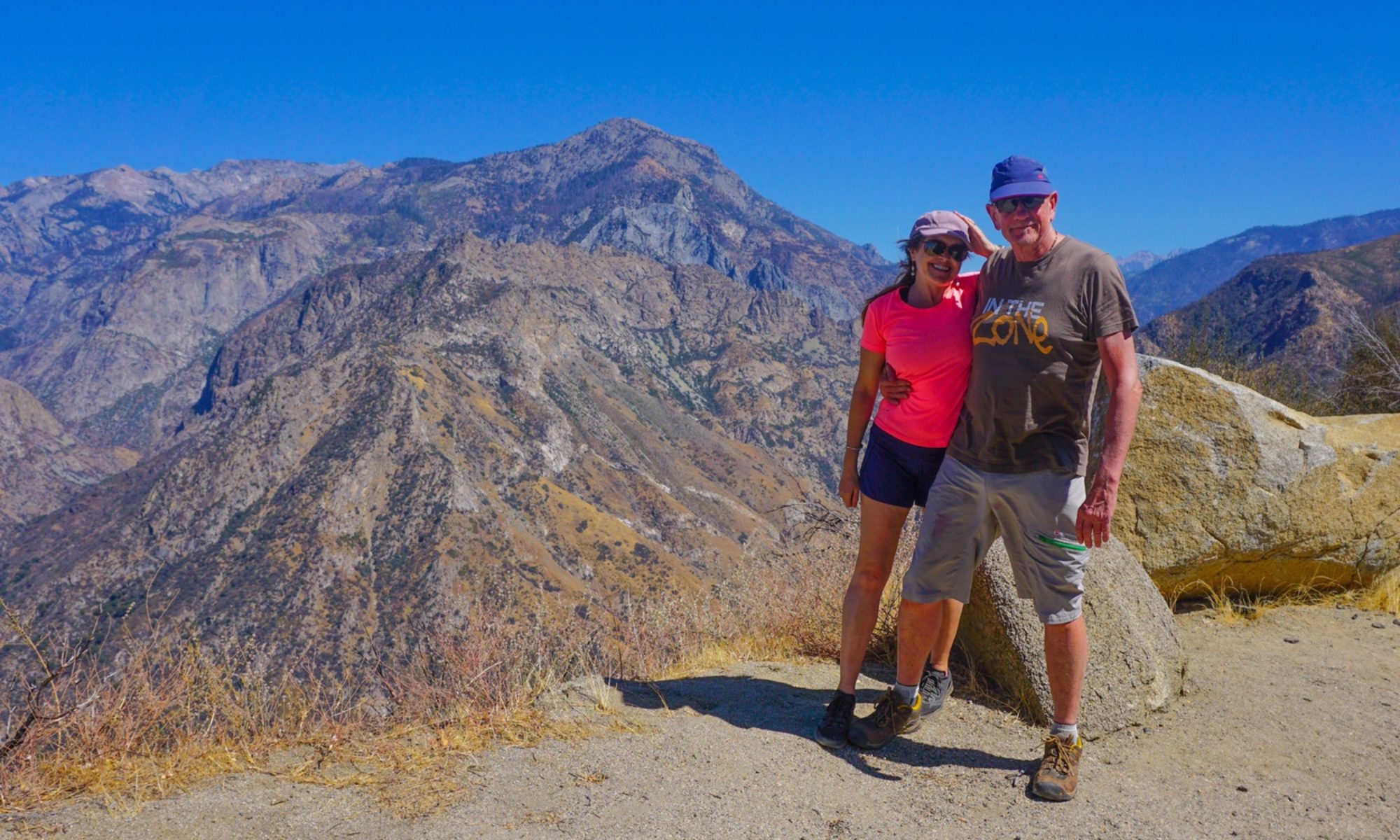
Author: Mrs A
Location: Chicago
Wednesday: Alaskan Airlines whisked us across the county on an uneventful four hour flight that left and arrived on time. We then made our way into central Chicago via the train, dragging our luggage a few blocks across town to our hotel as the sun began to go down.
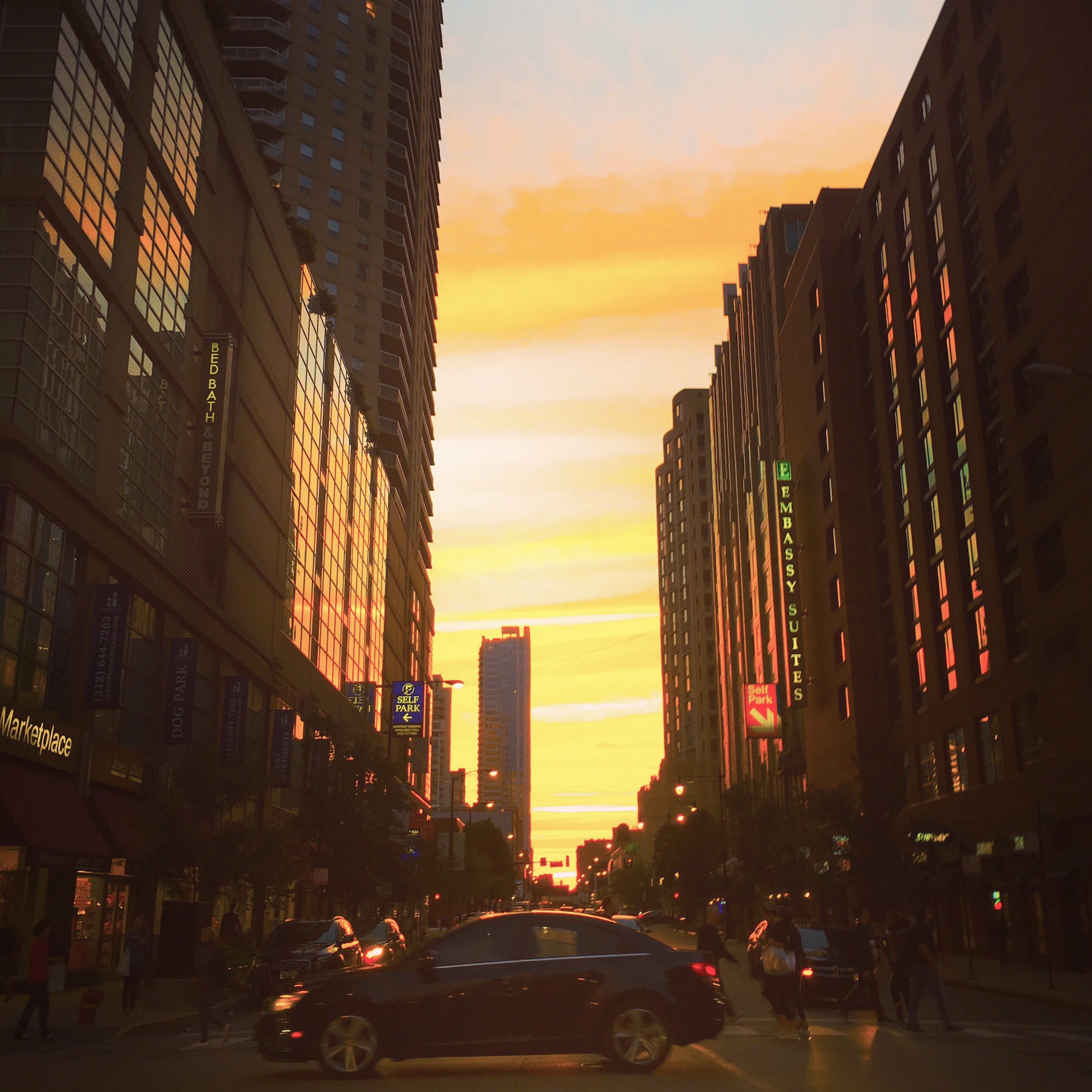 As we have found on the whole trip, the Australian dollar is really against us, and we’re paying a lot of money for not that much. Our hotel (The Freehand) is centrally located, but the rooms are tiny, with a queen bed squished up against the wall so Mr A has to clamber over me to go to the bathroom!
Size asides, it is in a location from which we can walk everywhere, and was just a couple of blocks from a bistro where we met another of my subglottic stenosis group members for dinner, Anita. It was great to hear about Chicago life from a local’s perspective, enjoyed over a glass or two of Chardonnay.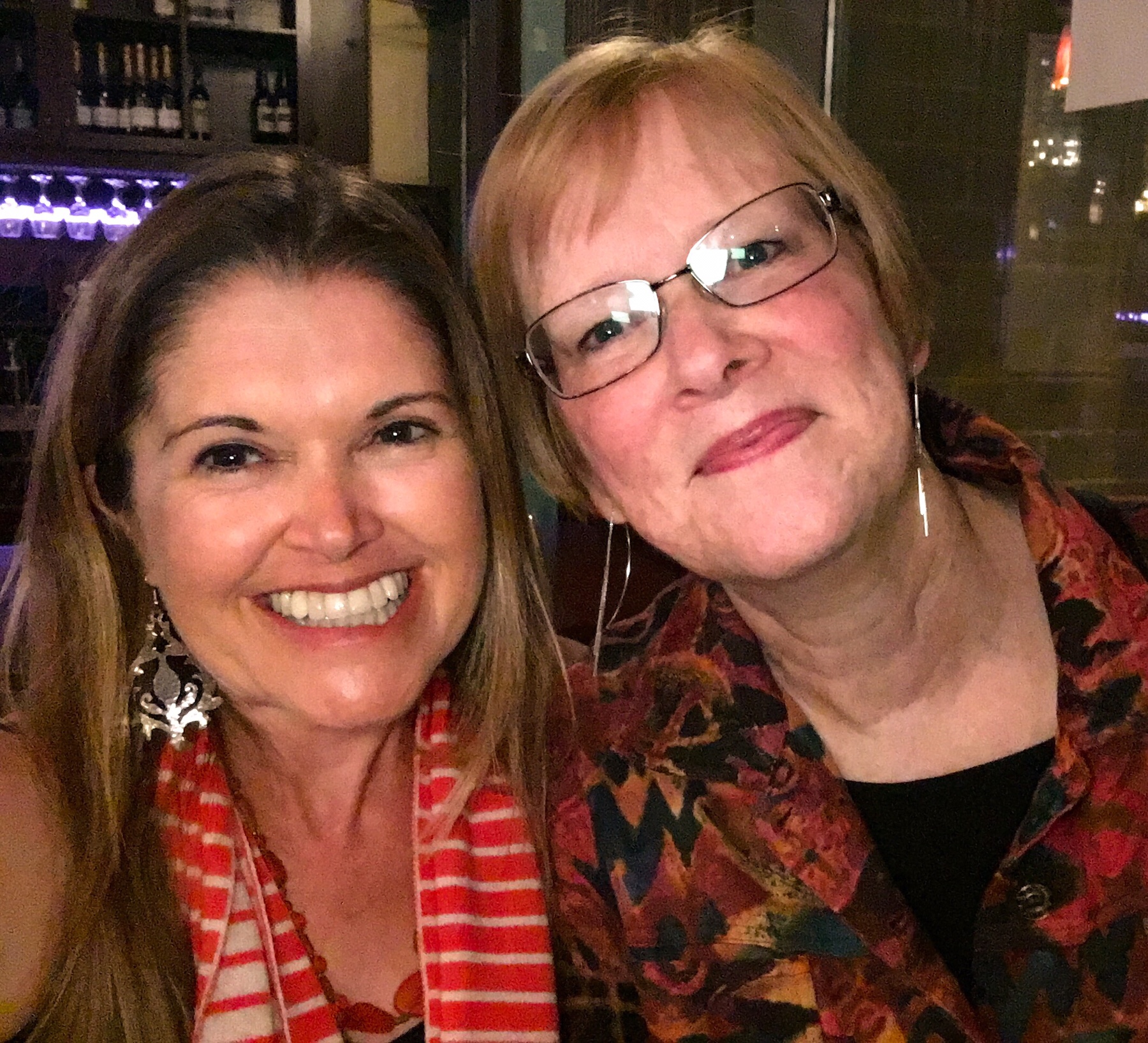 Thursday: It was a fairly early start – I’m suffering from insomnia due to some medicine I’m currently taking, so had been awake since 3.30am! We strolled Chicago’s streets, looking for a café that might serve us a cup of tea. Everything was closed!
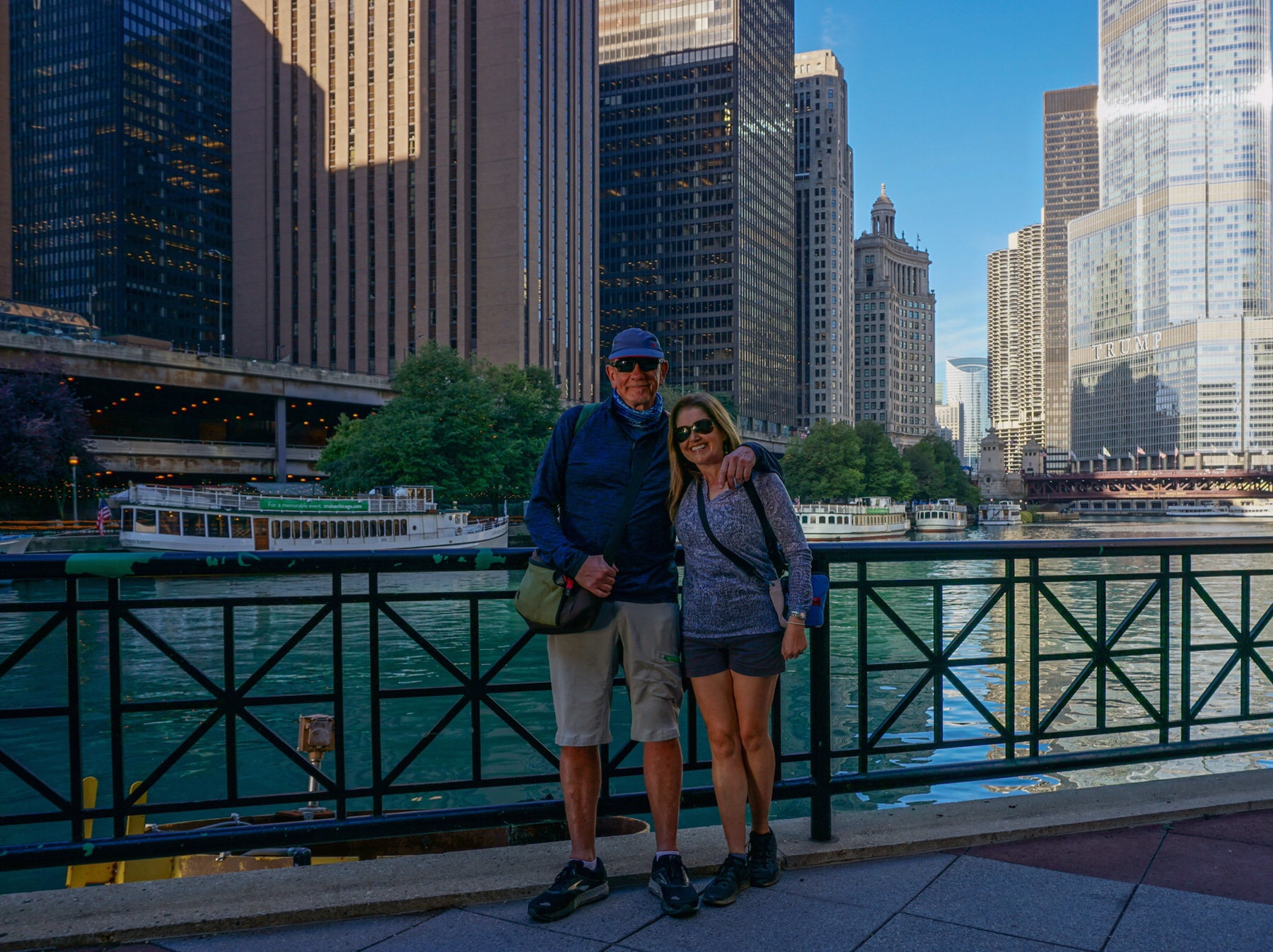 We wound our way along the Chicago River which passes right through the centre of the city, leading out to Lake Michigan. The city was positively sparkling in the morning sunlight, whispy clouds streaking through the blue sky.
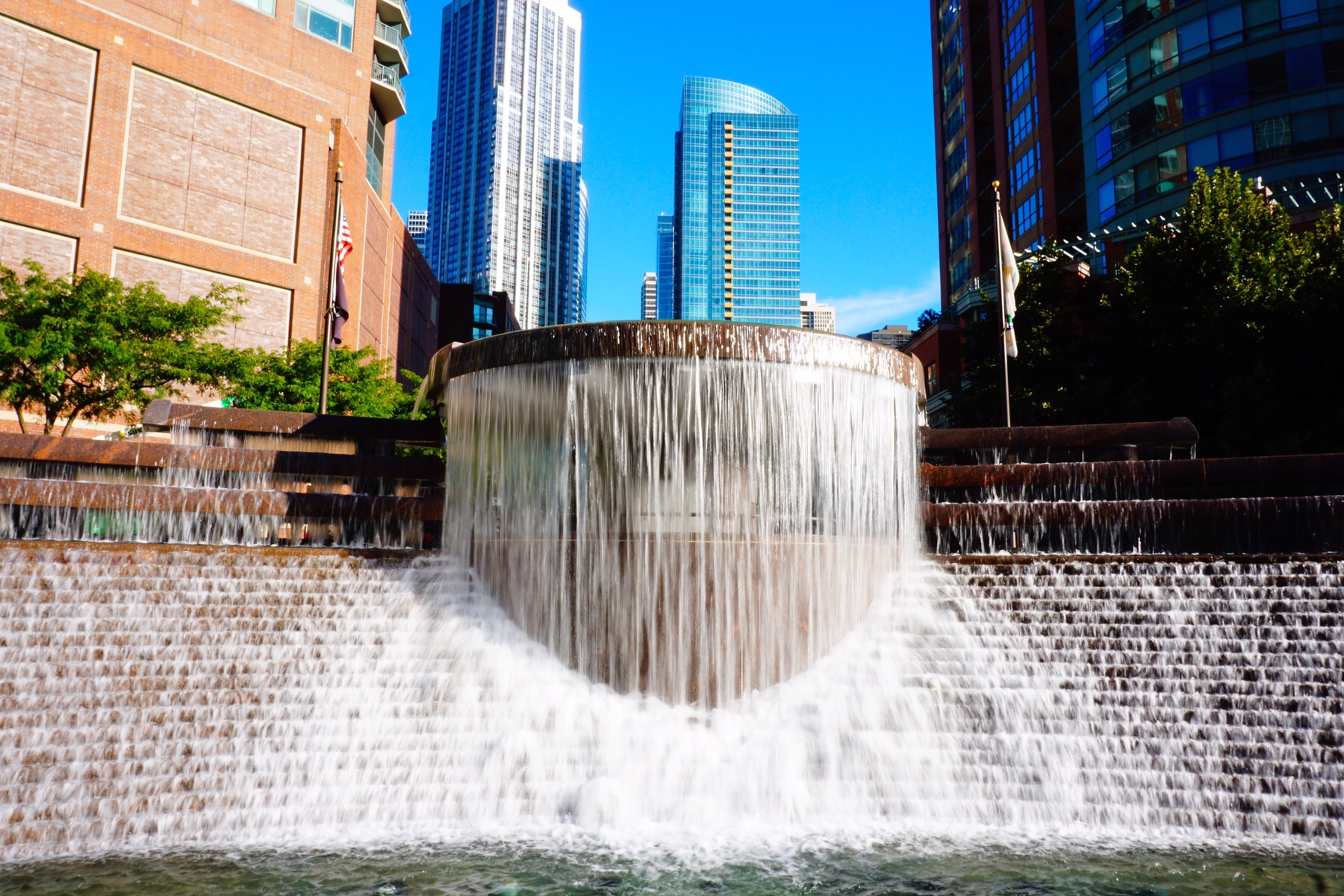 The Navy Pier sits on the shore of the lake, an entertainment and conference facility with a large Ferris wheel at its central point. Again, everything was quiet and closed. It felt quite eerie strolling along the immaculately clean pathways, past perfectly manicured landscaping and flowers with hardly another soul around. The lake looks like an endless sea from here, stretching out as far as the eye can see.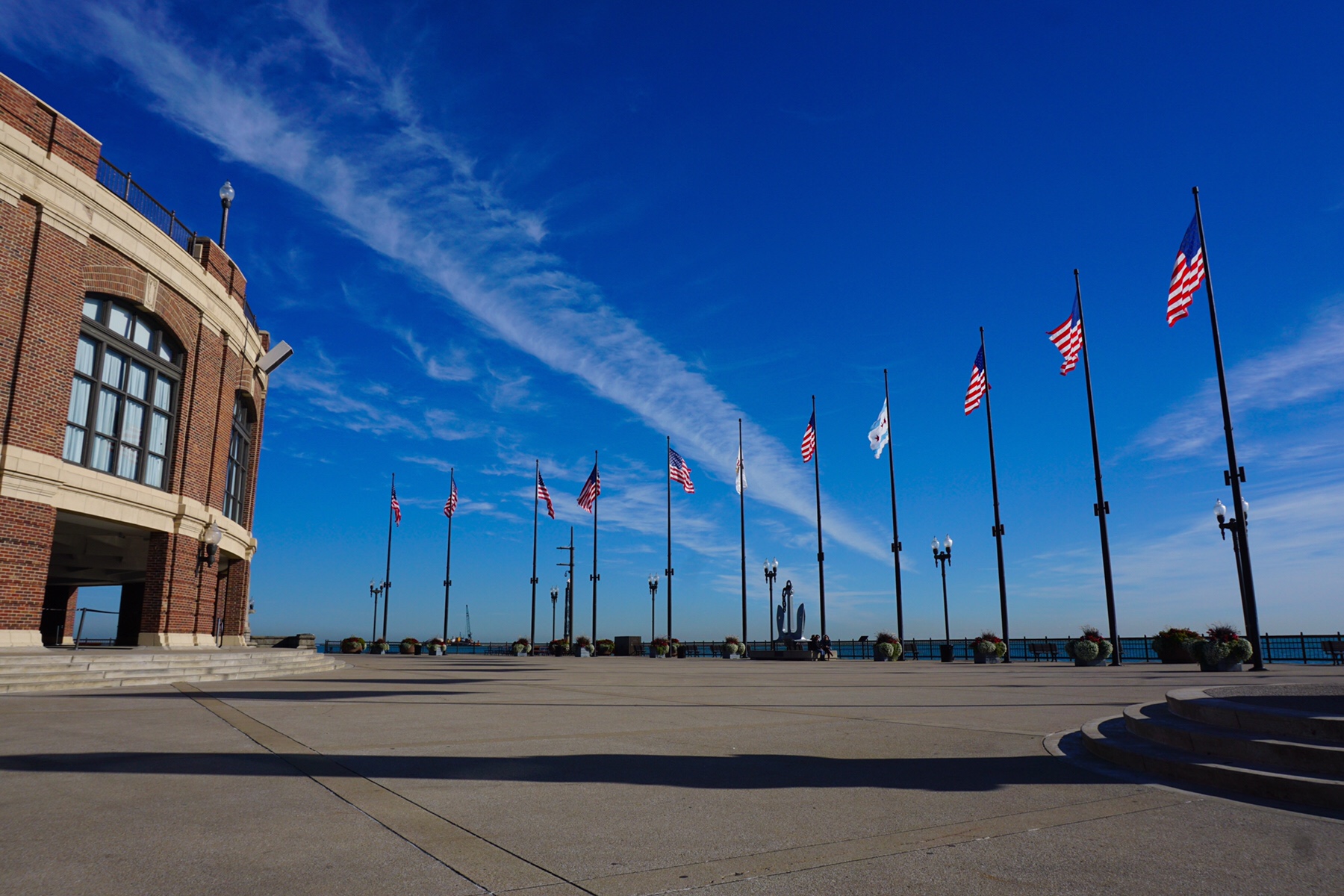
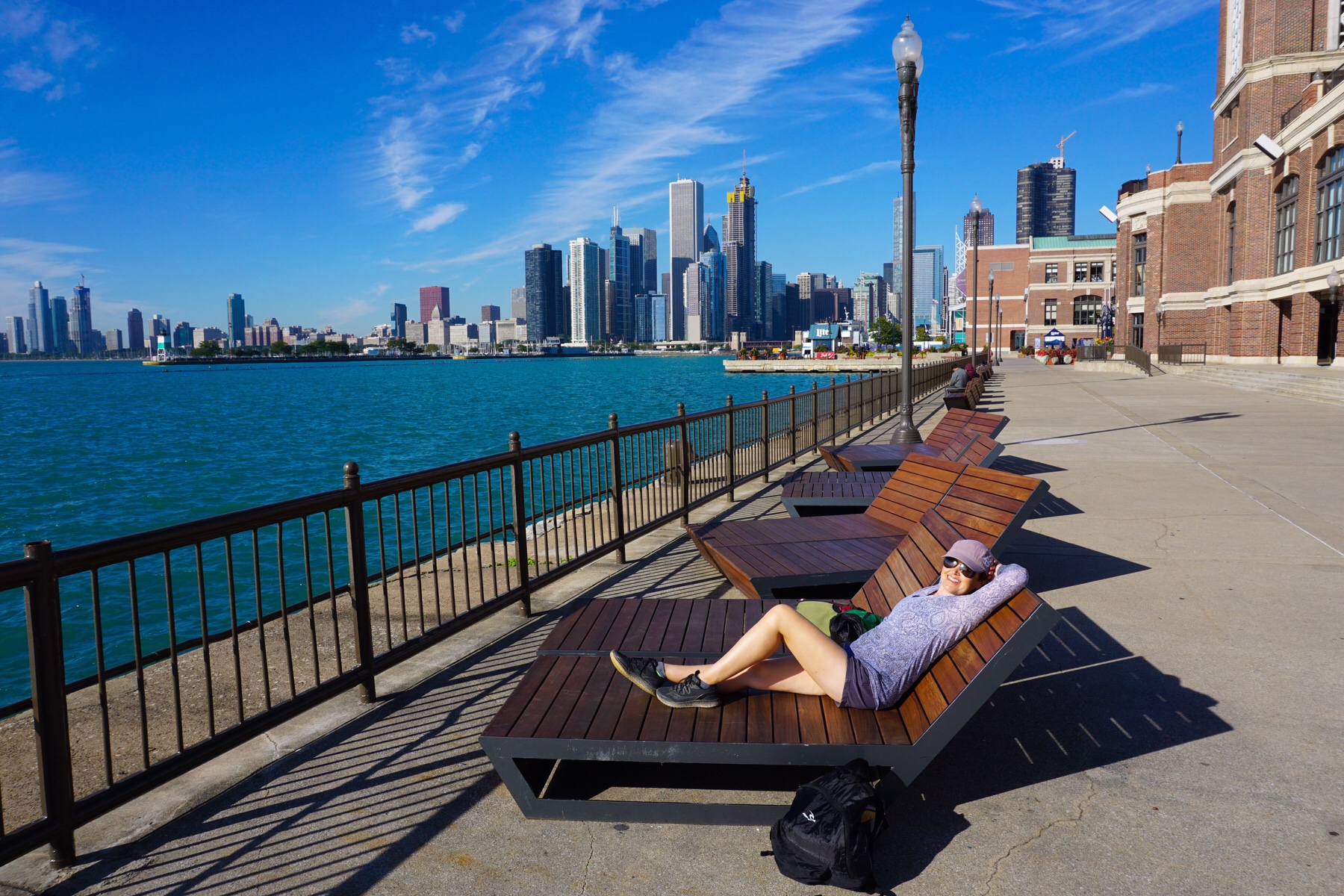
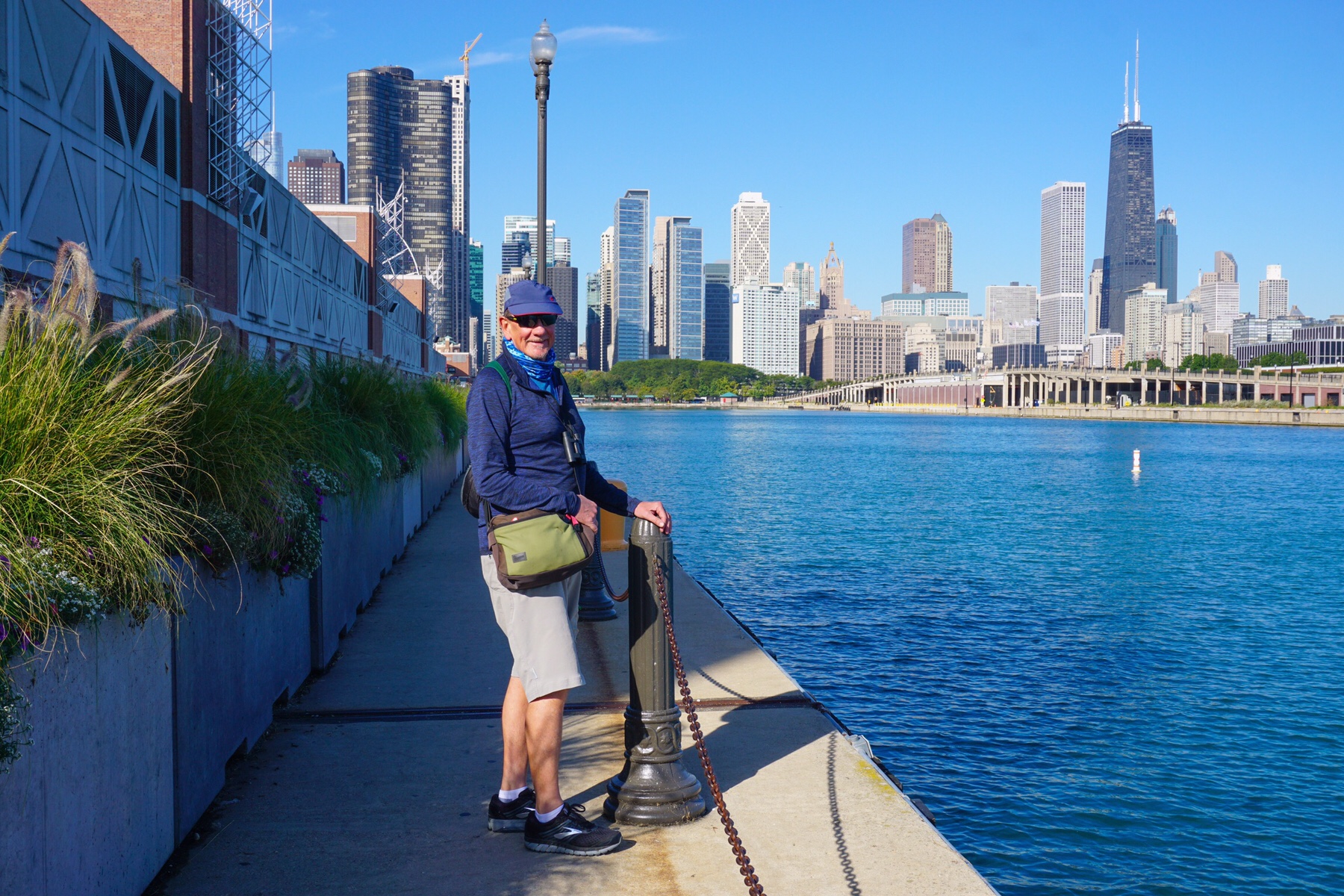
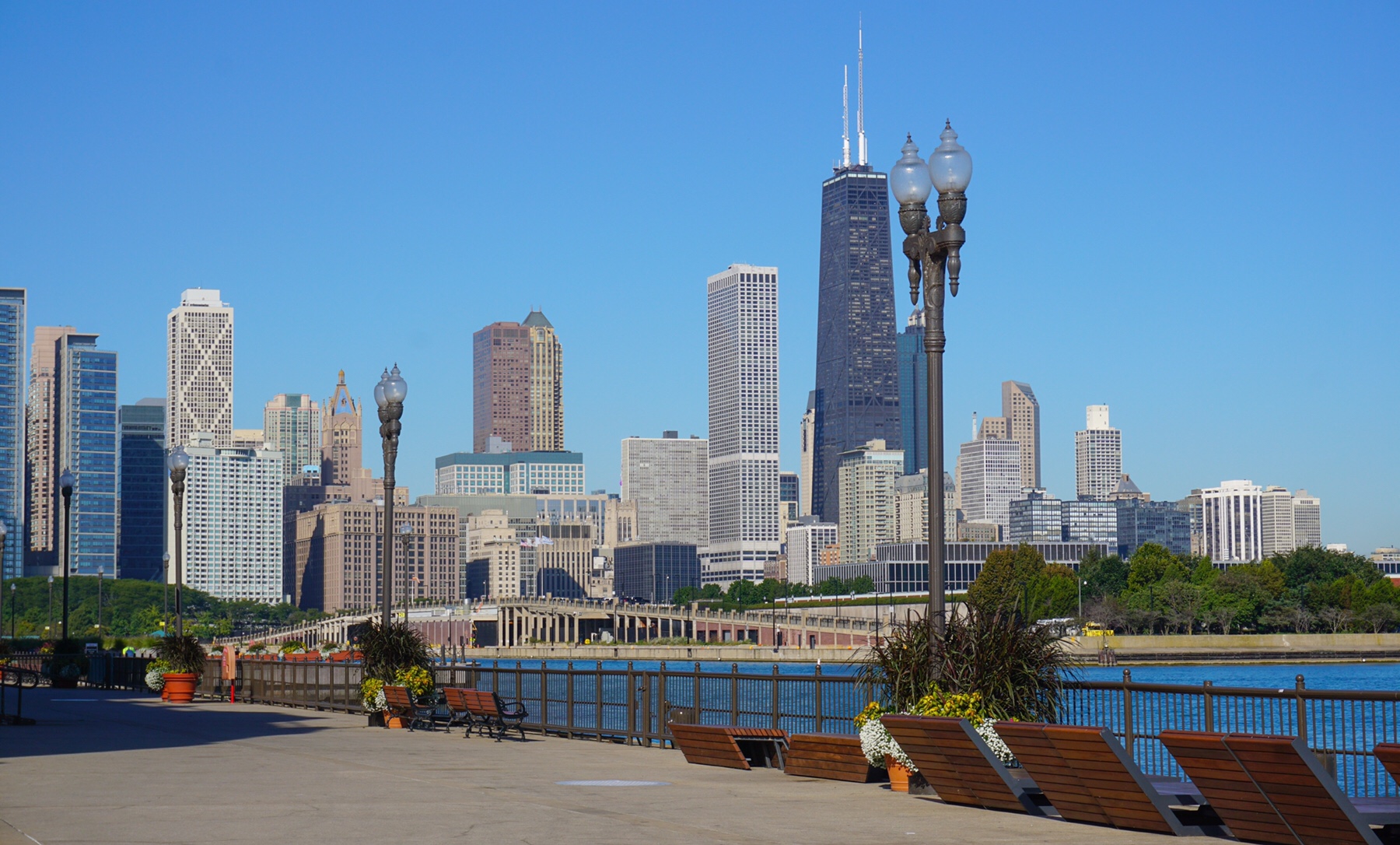 The city is surrounded by parks and gardens, softening the hard angles of the buildings. Chicago is a good looking city architecturally, every building complimenting its surroundings and neighbours perfectly. Looking back from the serenity of the lake it was hard to imagine the hustle and bustle, the honking horns, the sirens and engine sounds echoing through the skyscrapers.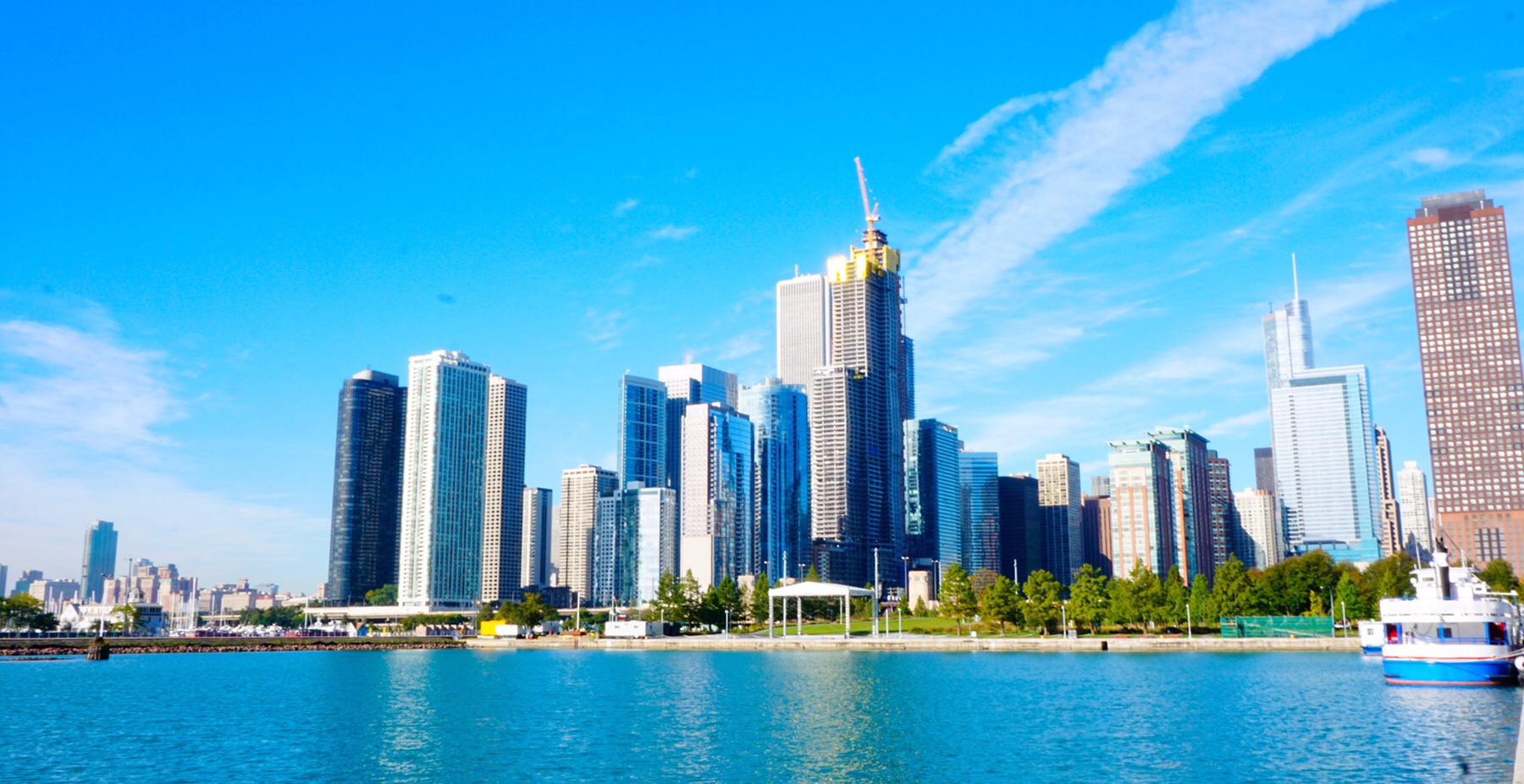
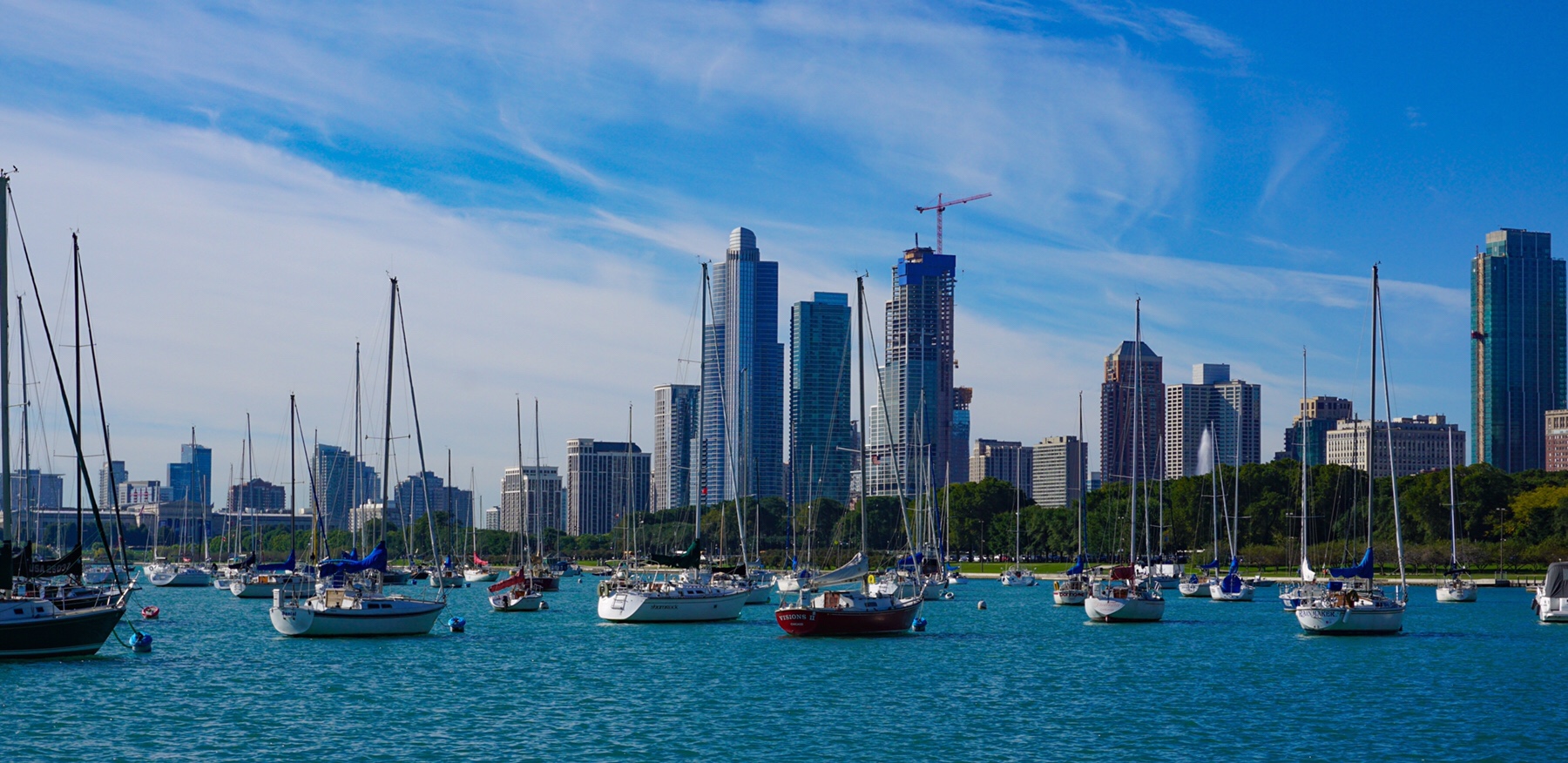 We eventually found our cup of tea, and continued our exploration to the Millennium Park and the art installations there.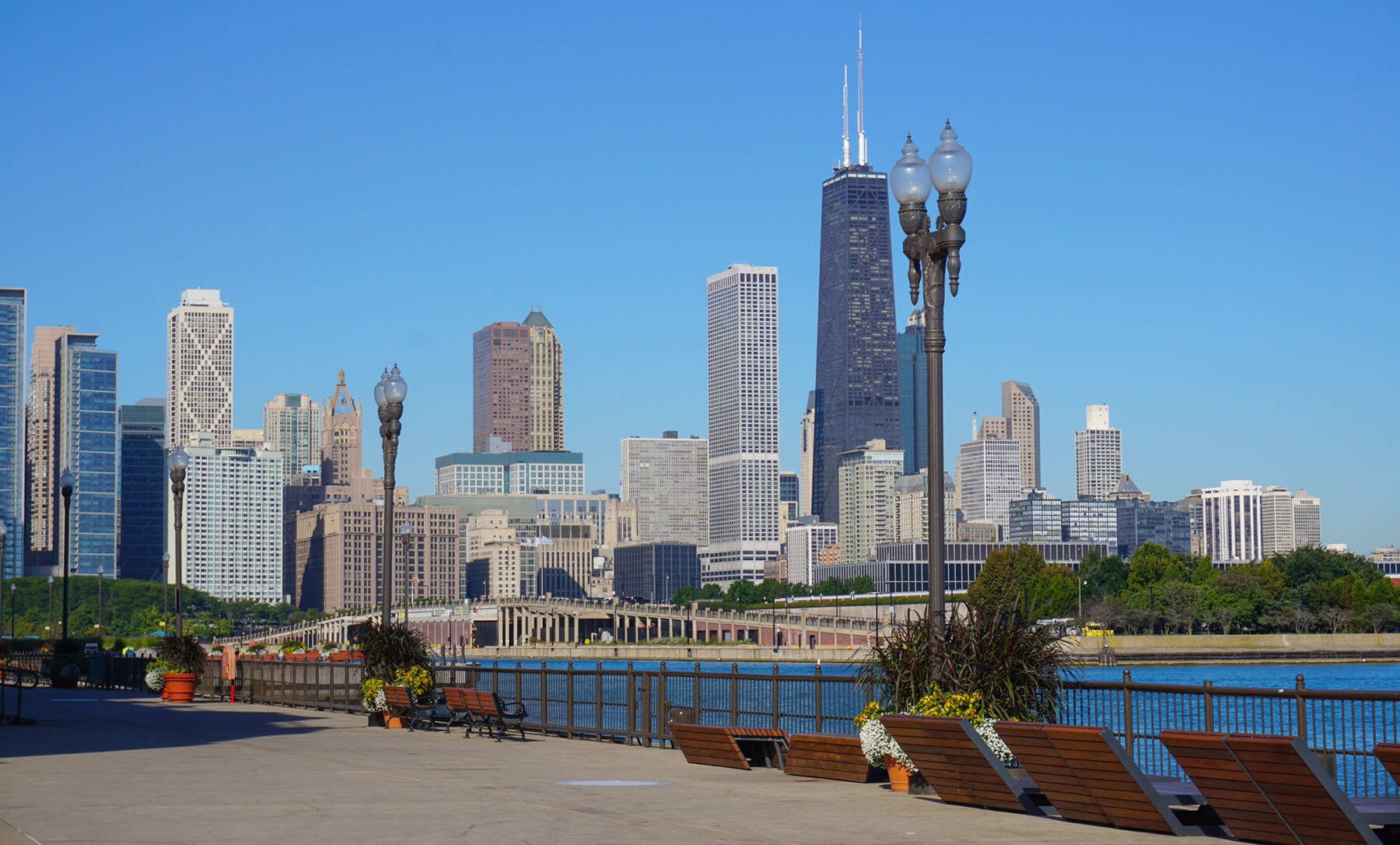
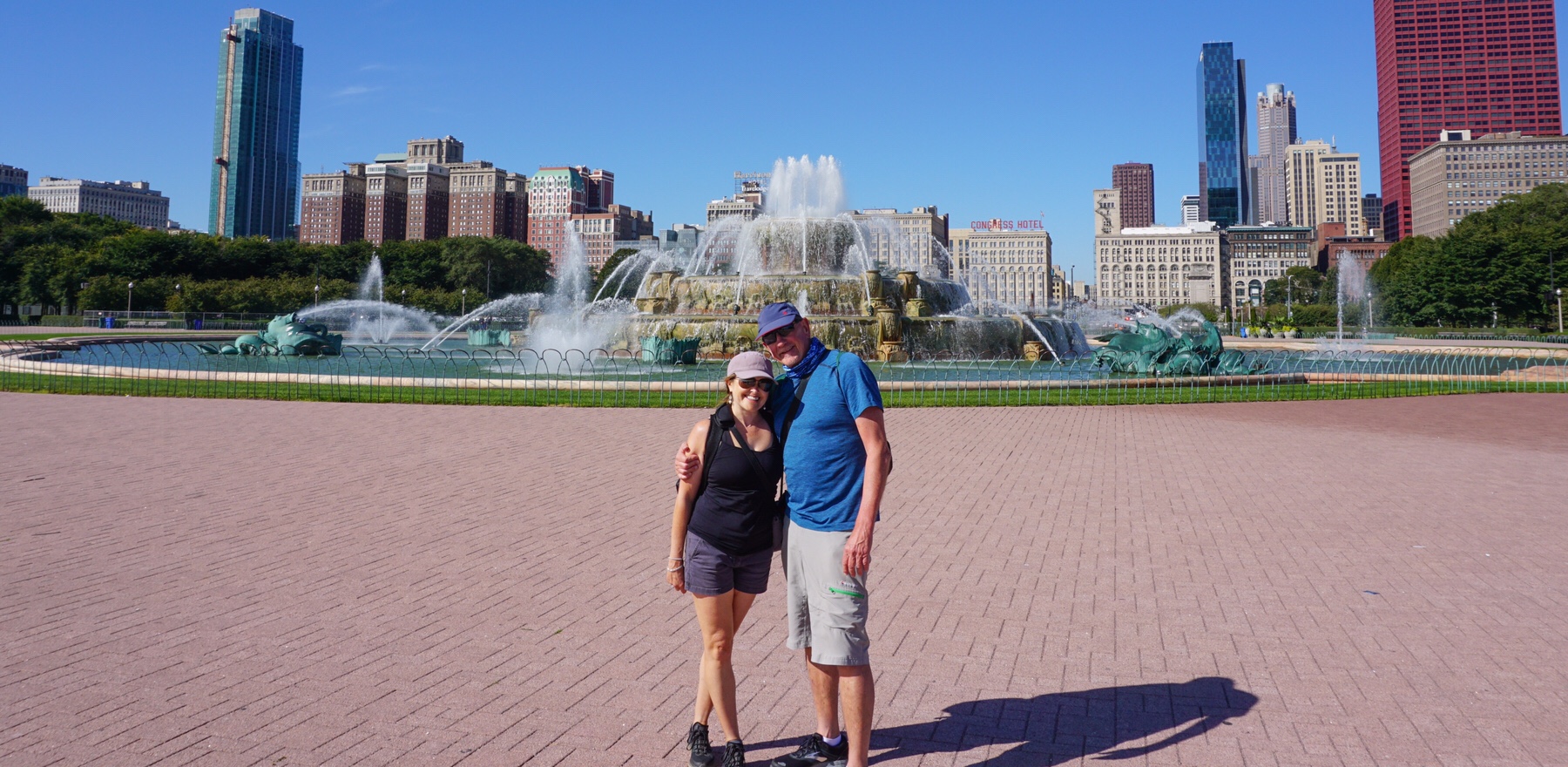
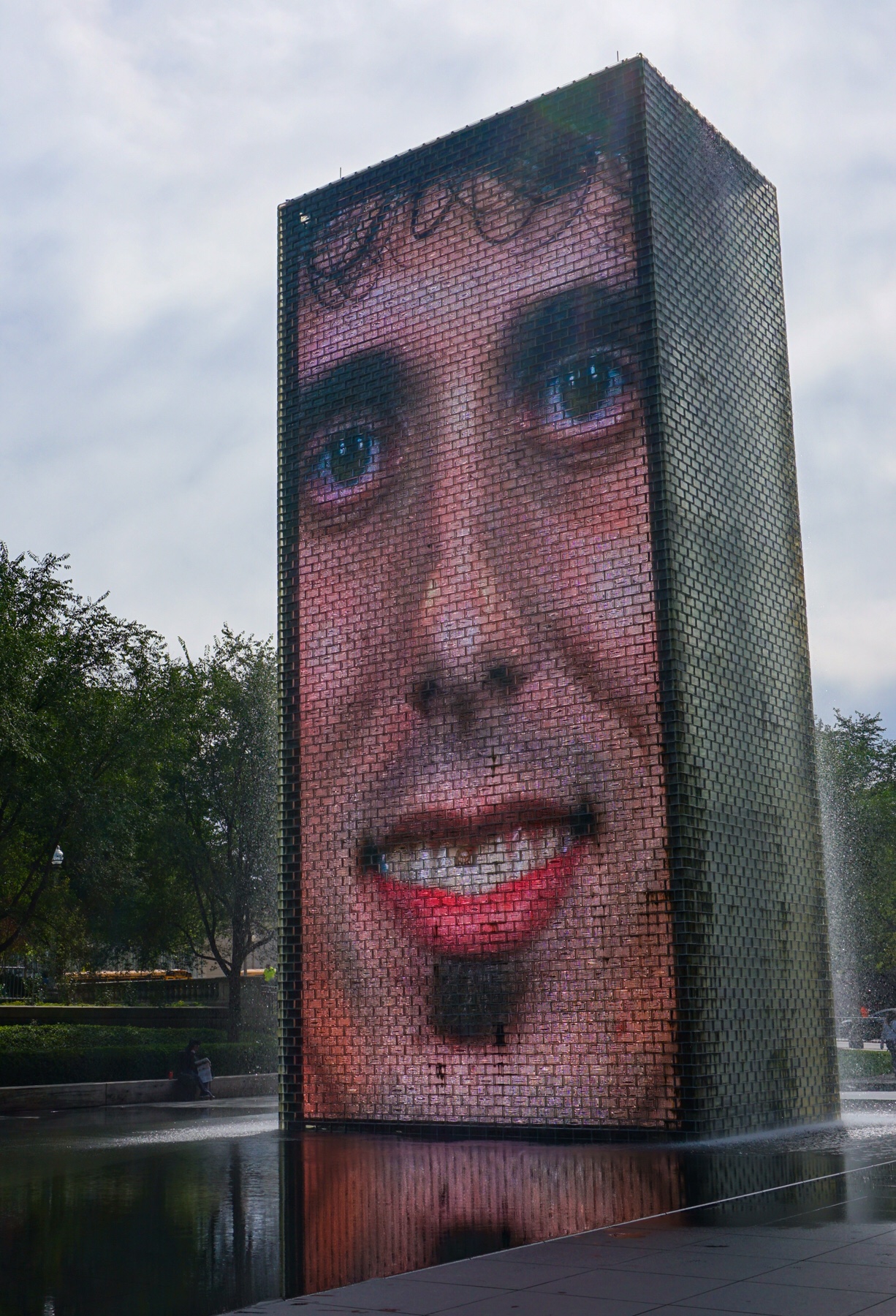
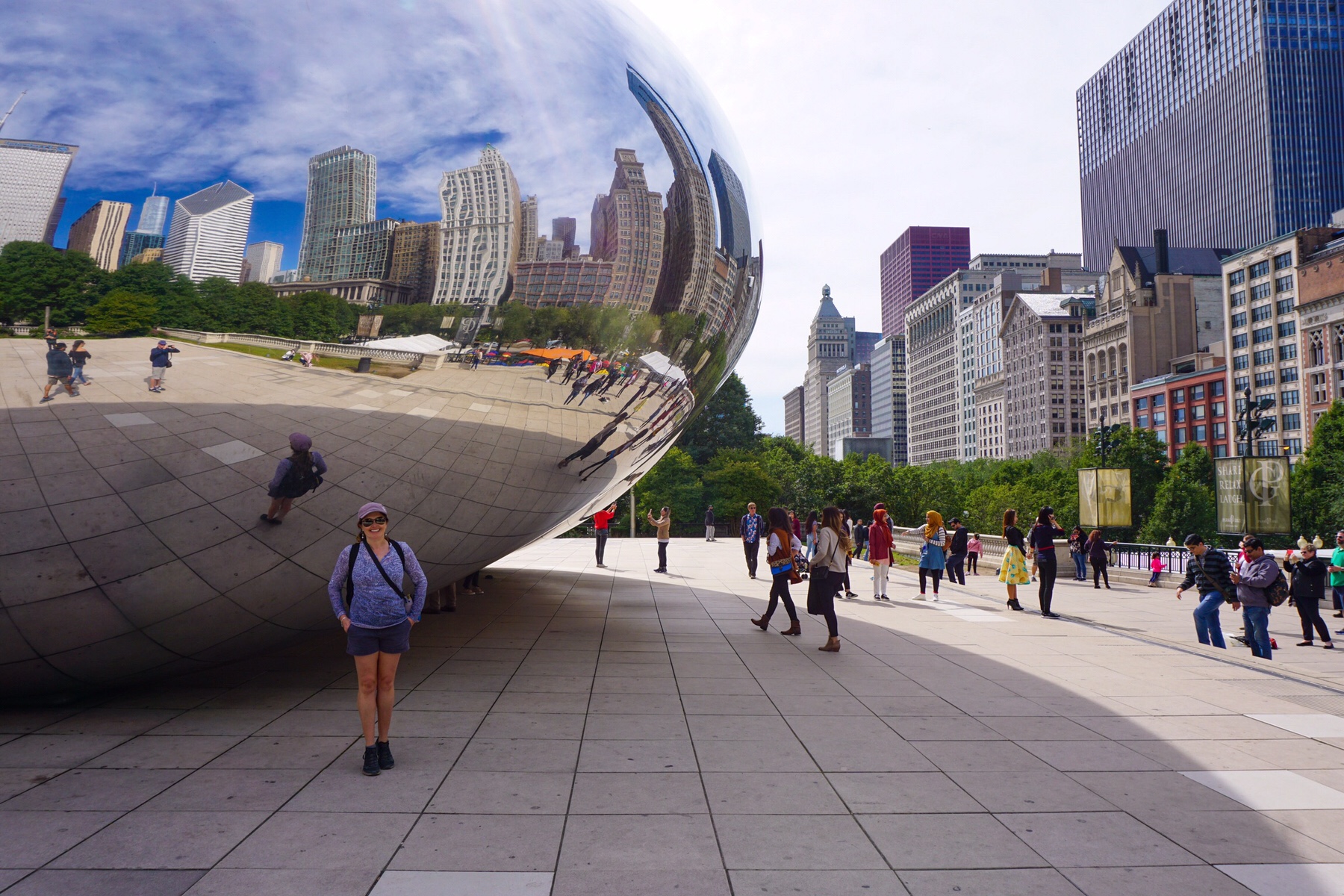 We did a little shopping during the afternoon, mostly window shopping once we had done our exchange rate calculations and realised it would be cheaper to source products from Australia.
After clocking up just over 15km (9.5 miles) of walking we allowed ourselves an hour’s break before getting ready to head to Buddy Guy’s Legends Blues Club. This has been one of Mark’s dreams for many years as a long time Buddy Guy fan.
We caught the subway across town, and in the club met Jack, cousin and nephew of our surrogate family in Australia. He must have been about 8 or 9 years old when I last saw him in the flesh – thank goodness for the internet allowing us to recognise one another this time! 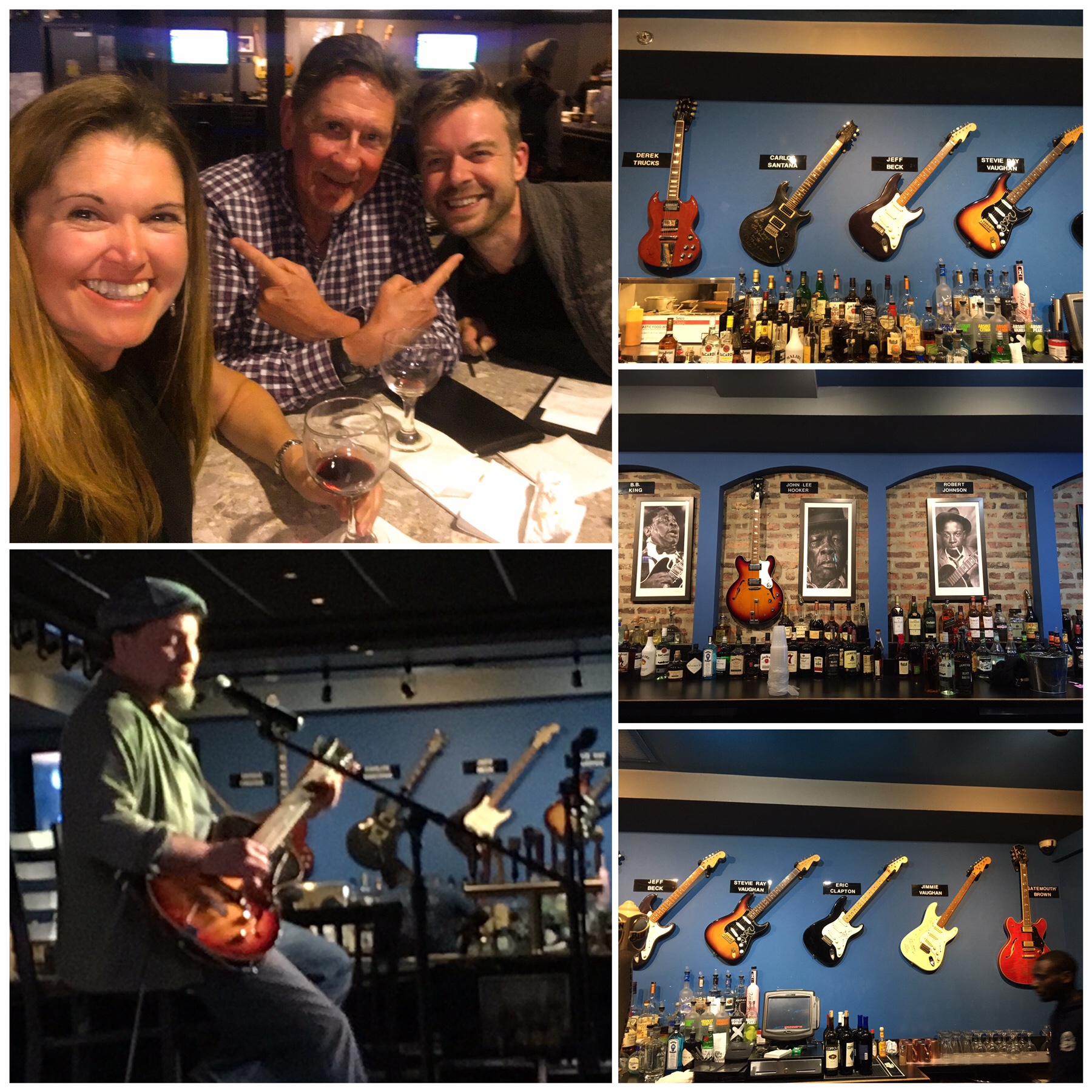 We had a lovely meal with him, and then Mr A and I stayed on to enjoy the show – Laura Rain and the Cesars. Spotting a lady sat alone on the table behind us, Mark invited her to join us. She turned out to be the very lovely Angel, fiancée of the drummer. The star attraction, Laura Rain popped out to say hello as well.
 It was an entertaining show, fantastic blues guitar, incredible singing and of course great drumming! Before we knew it it was 1am and we were stumbling outside to find a taxi back to the hotel. What a fabulous night and finale to our visit to Chicago.
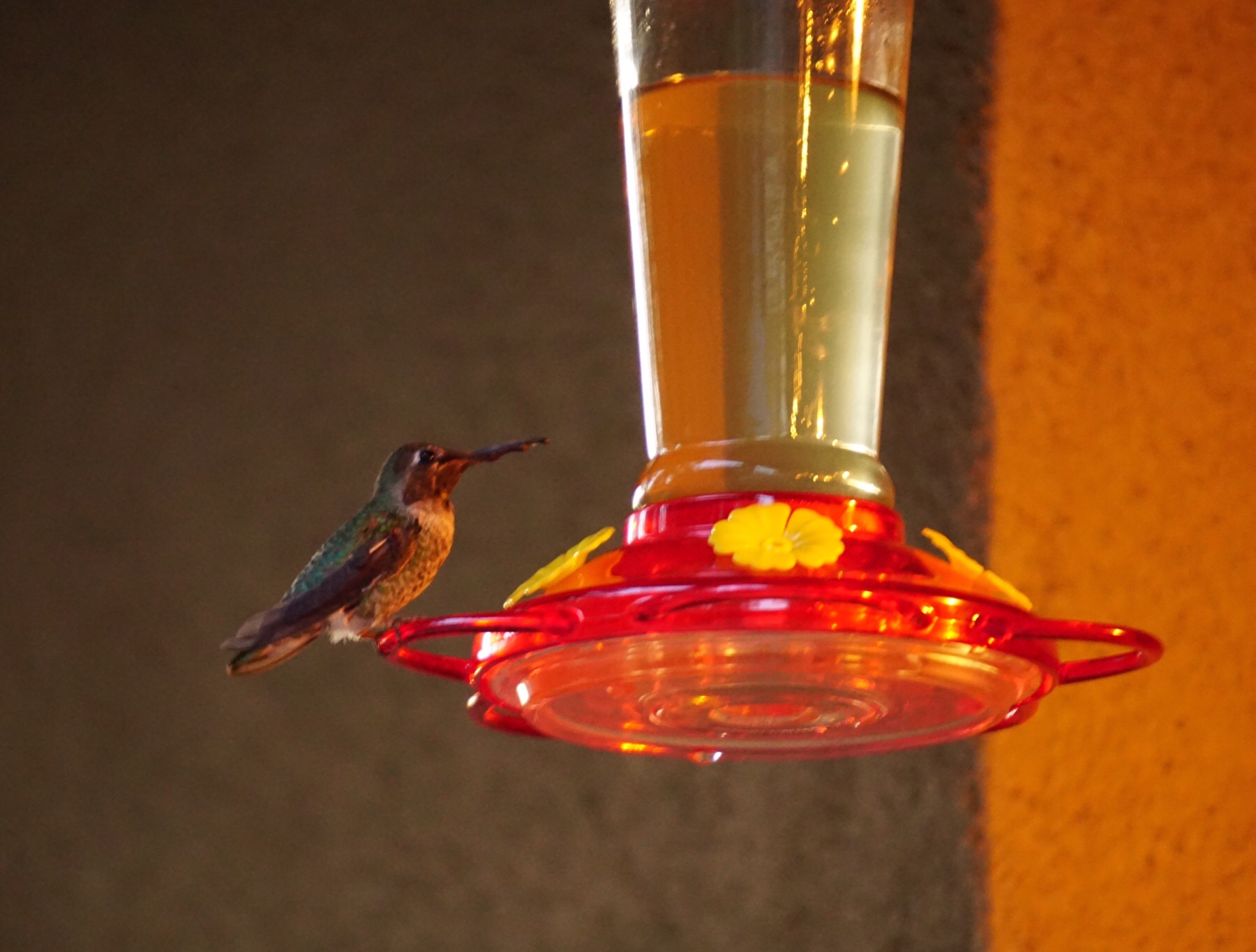
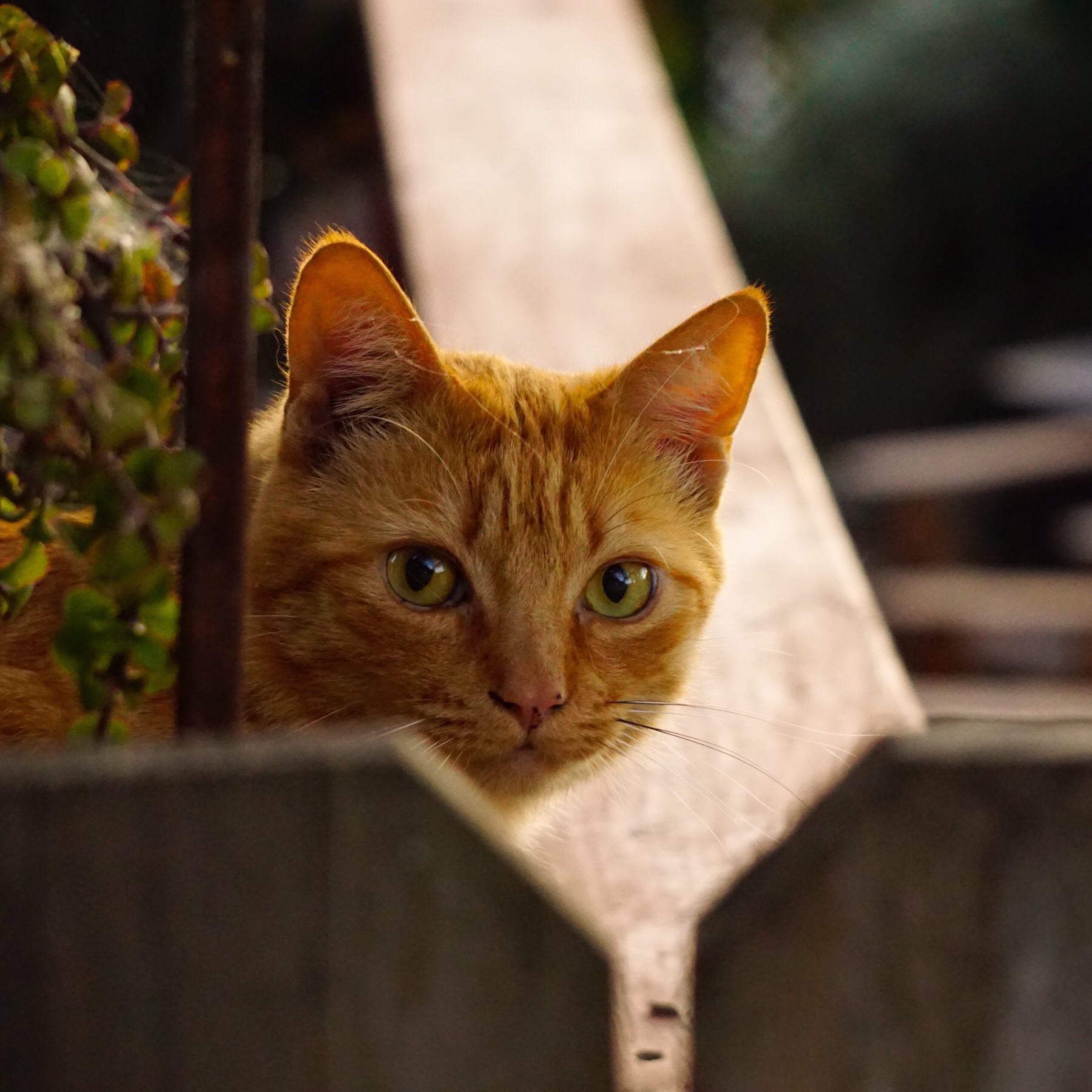
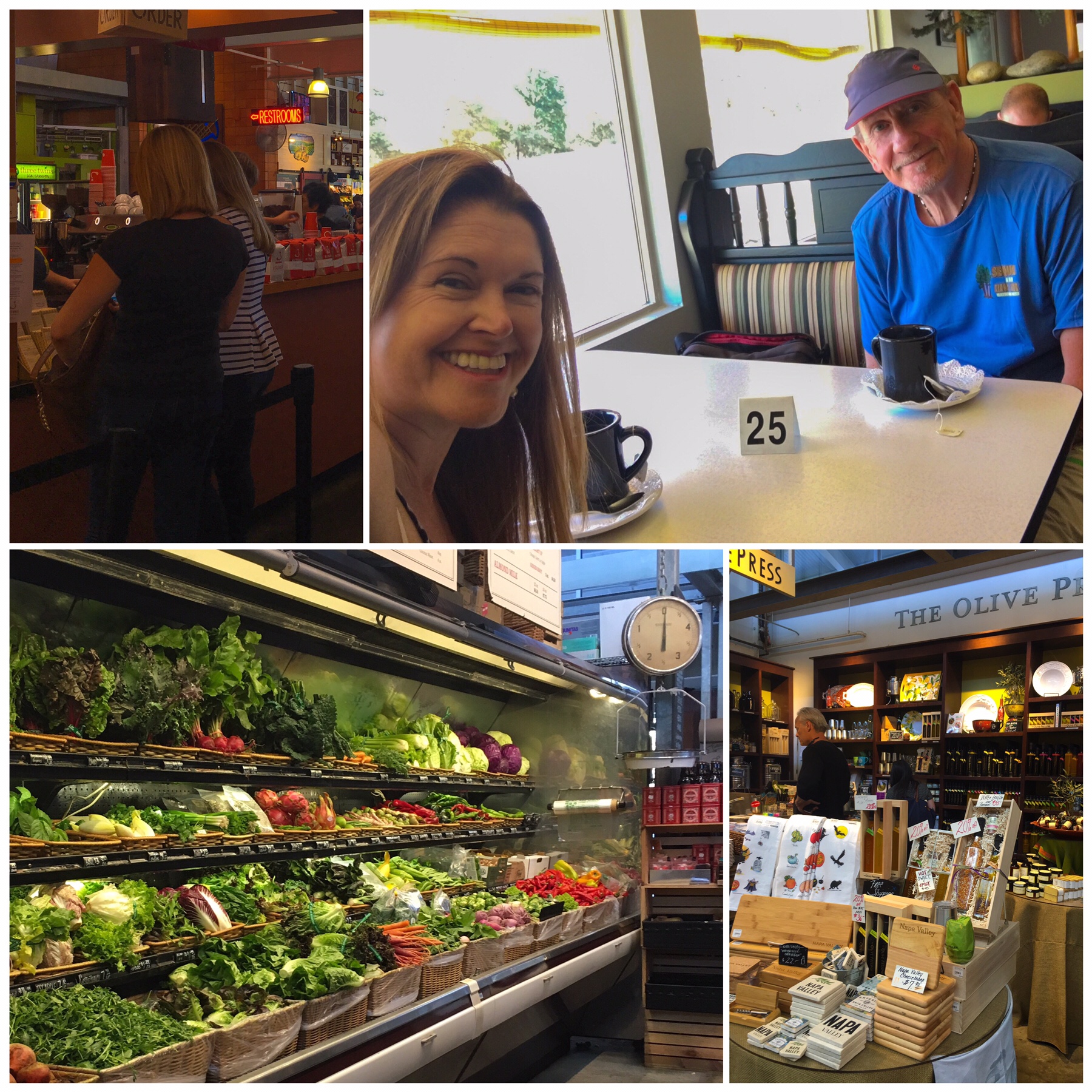 We spent an afternoon catching up with Susan, becoming acquainted with one of their cats, Olly and checking out their hummingbirds on their patio.
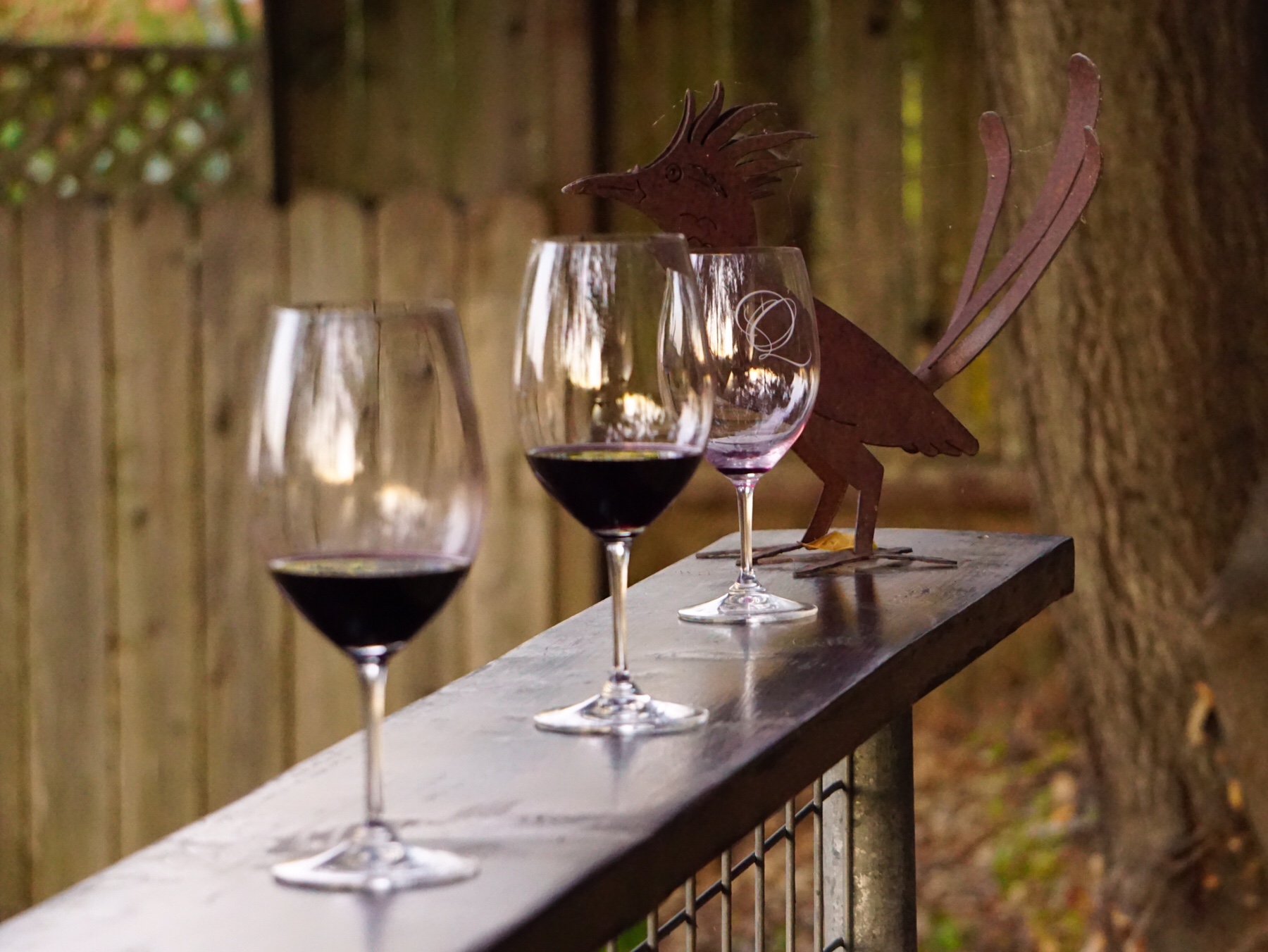
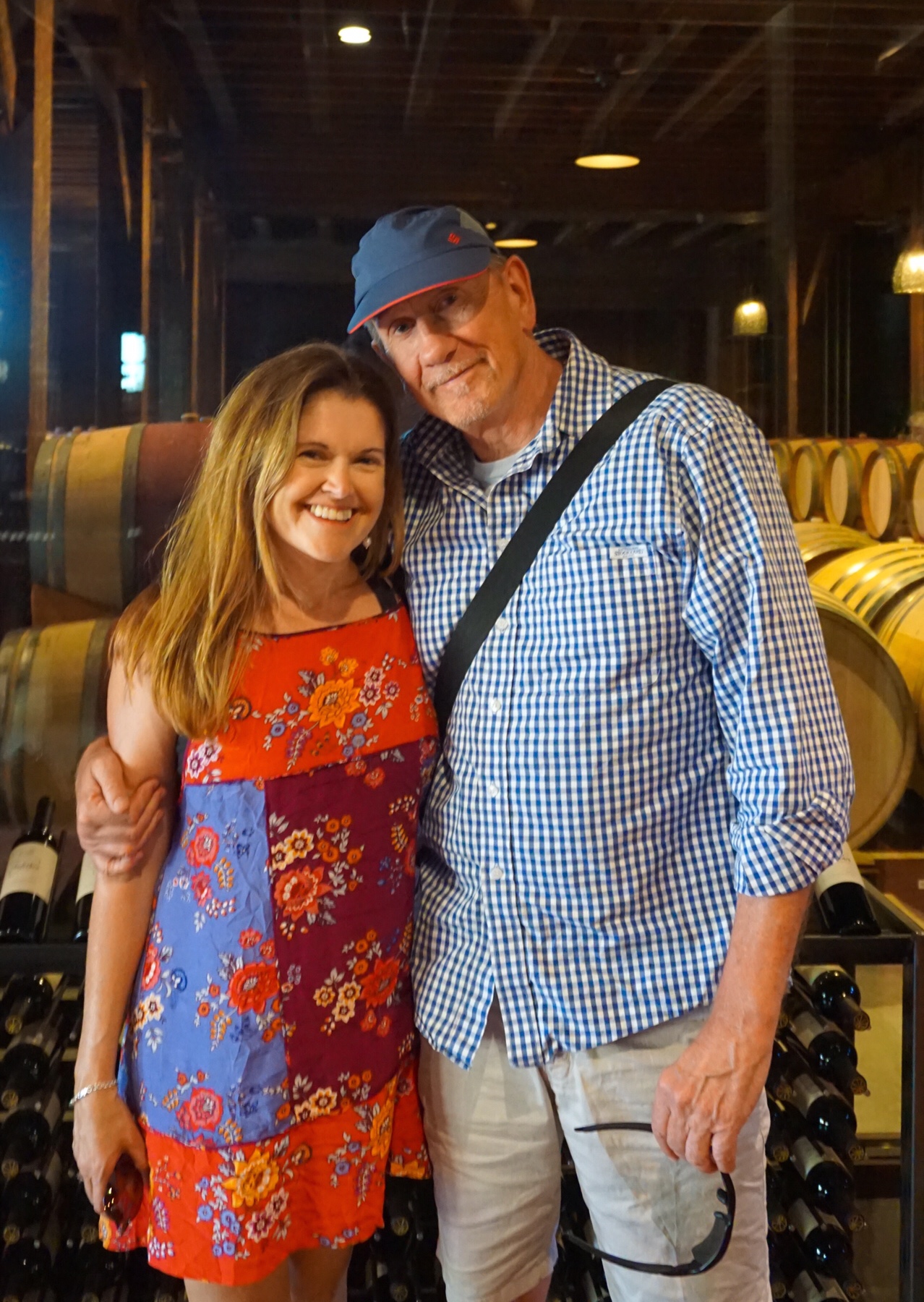
 Joe soon arrived home from work, and we caught up over some delicious drops of wine from Quintessa, the winery Joe works at. At about $150 a bottle, this was out of our budget, but very tasty.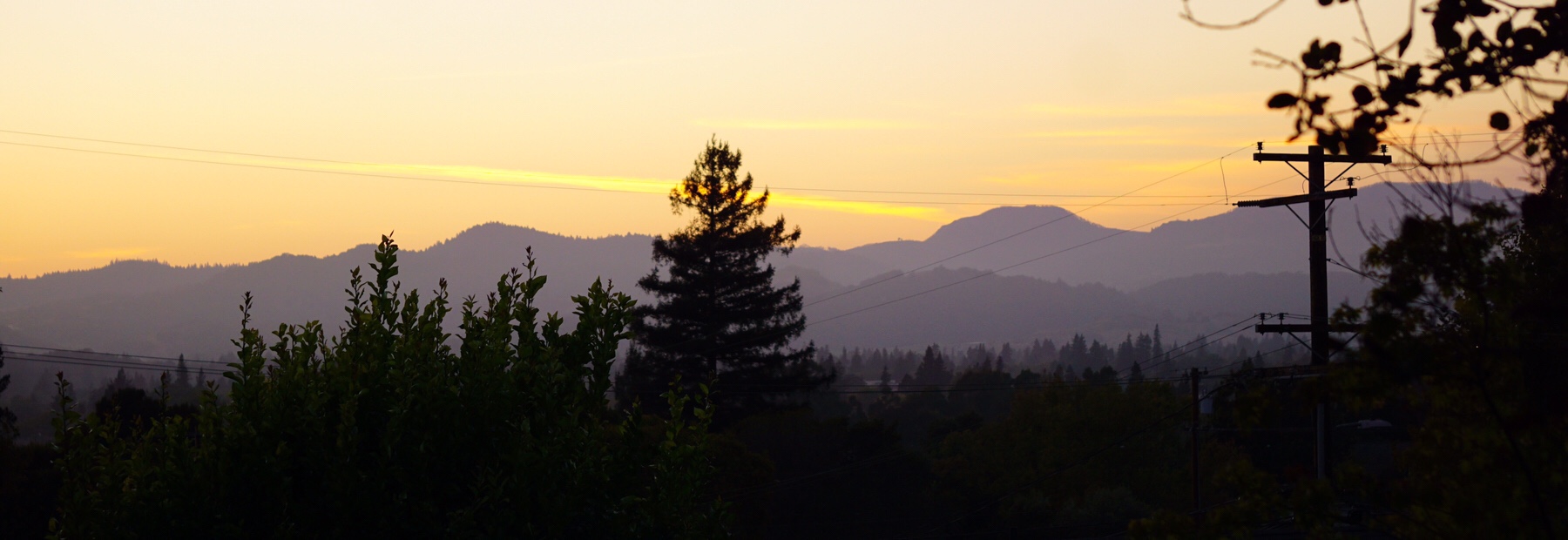
 Dinner was a California speciality, a tri-tipped steak, seared in a pan then baked in the oven. It was spectacular, served with potatoes, fresh salad and tomatoes and basil from their garden. The cheeky neighbourhood cat, Diego, joined in hoping to steal some snacks.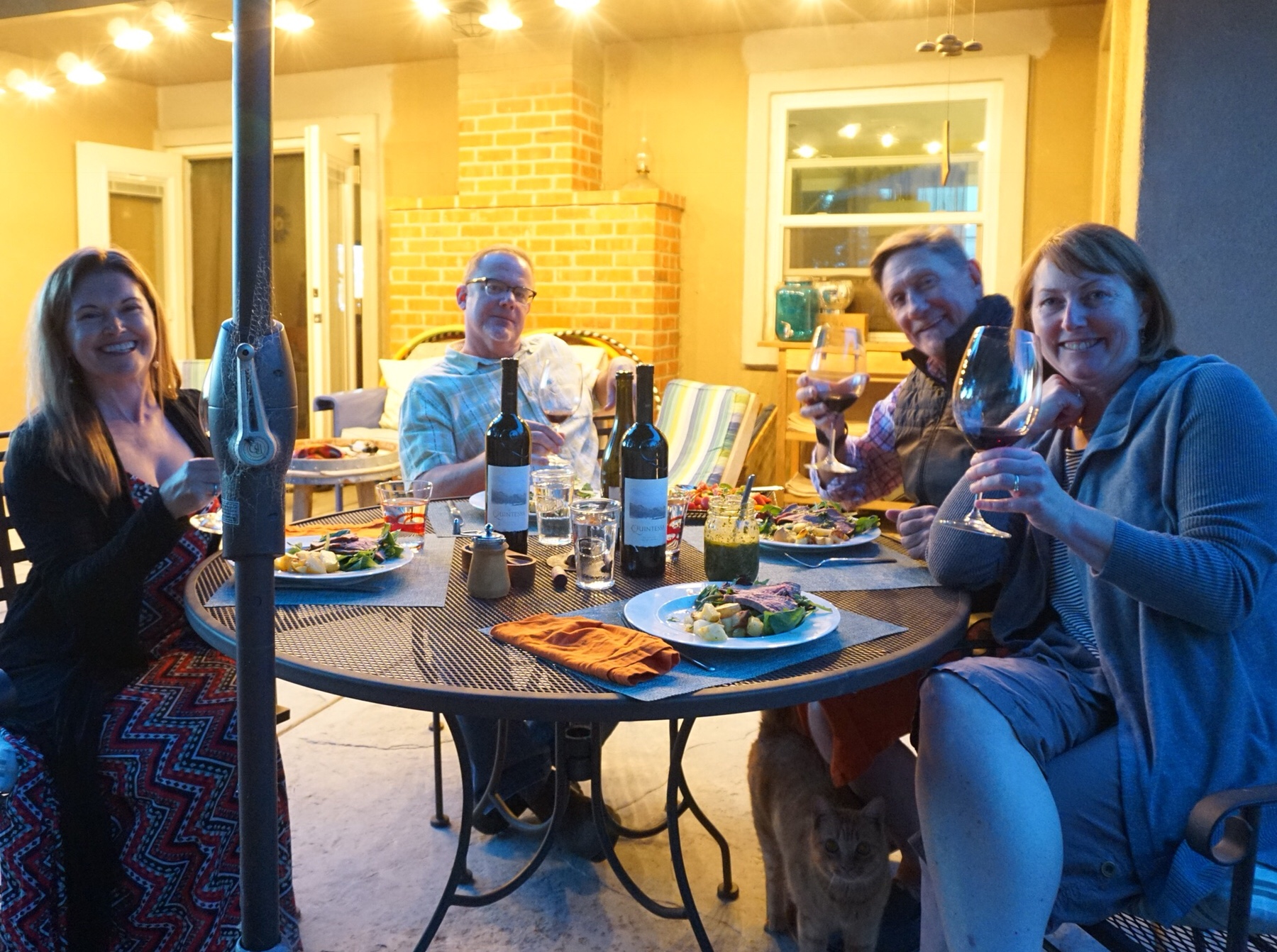
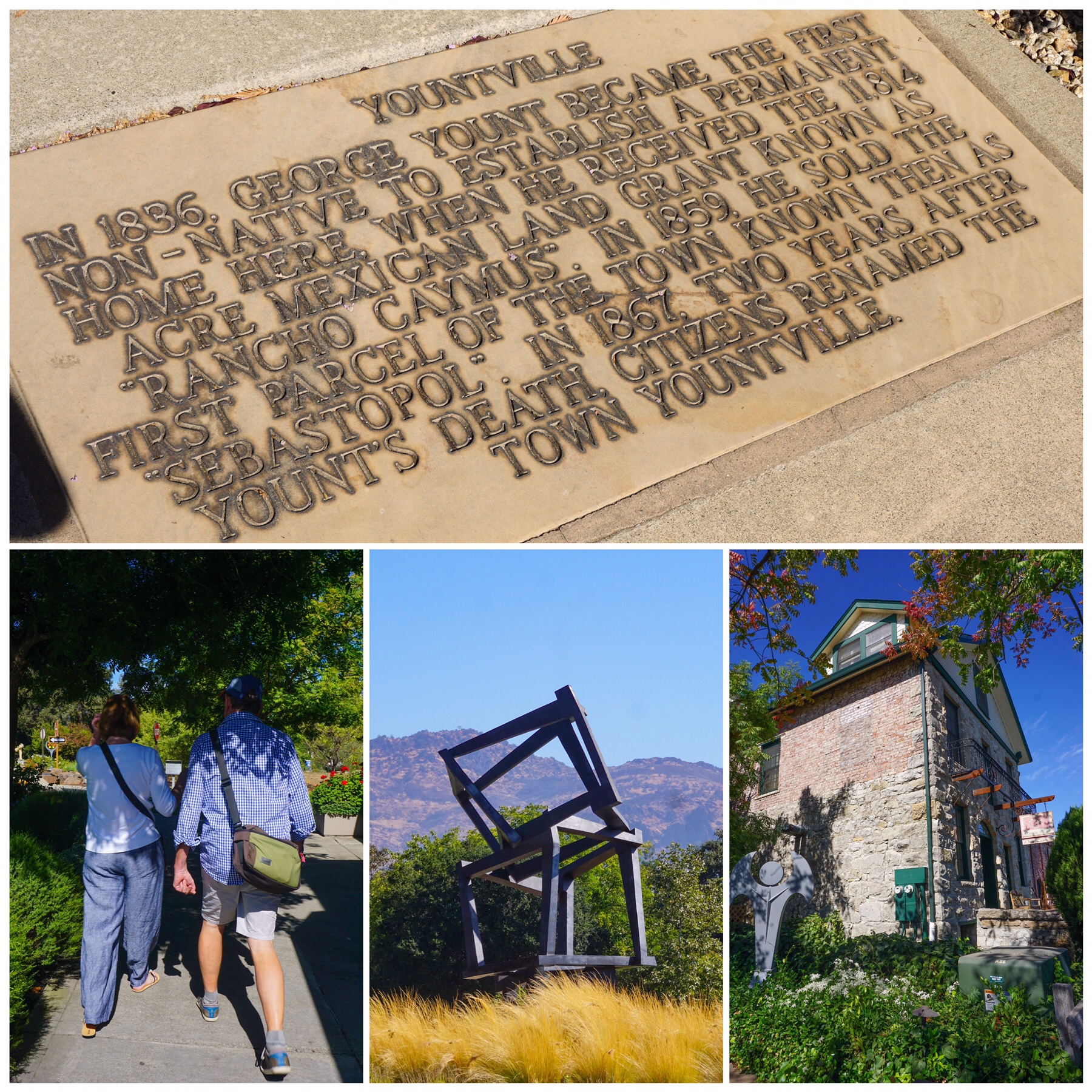 Yountville has characteristics more akin to a French village in burgundy, with stone buildings, tree lined streets and market gardens growing produce to cook in nearby restaurants.
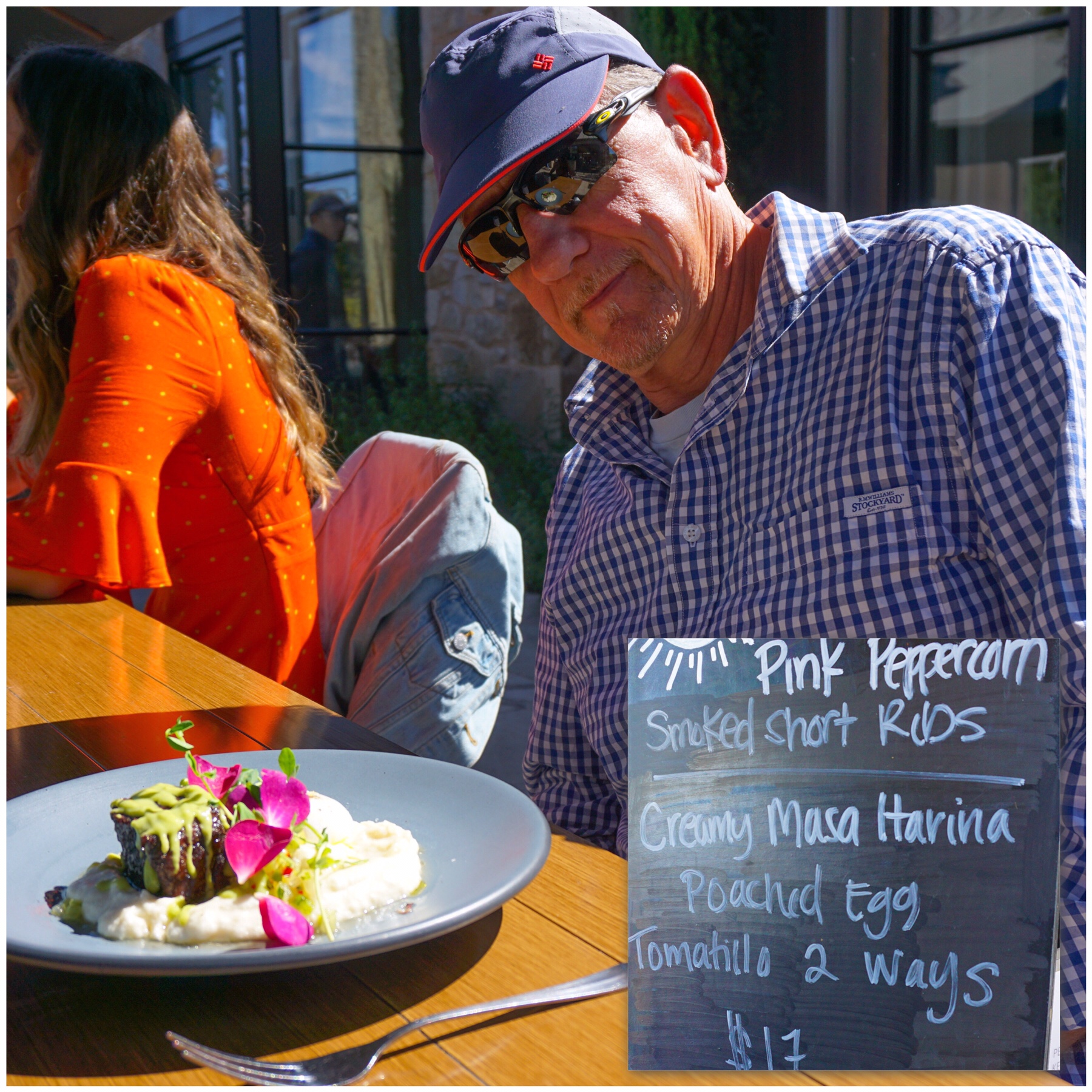 Mark chose the special once we had reached our lunch location, despite not really understanding what he was ordering. When asking about ‘Masa Harina’ we were told ‘it’s a bit like grits’ – which made absolutely no sense at all. Mr A says it was like a savoury tapioca. He gave it five stars!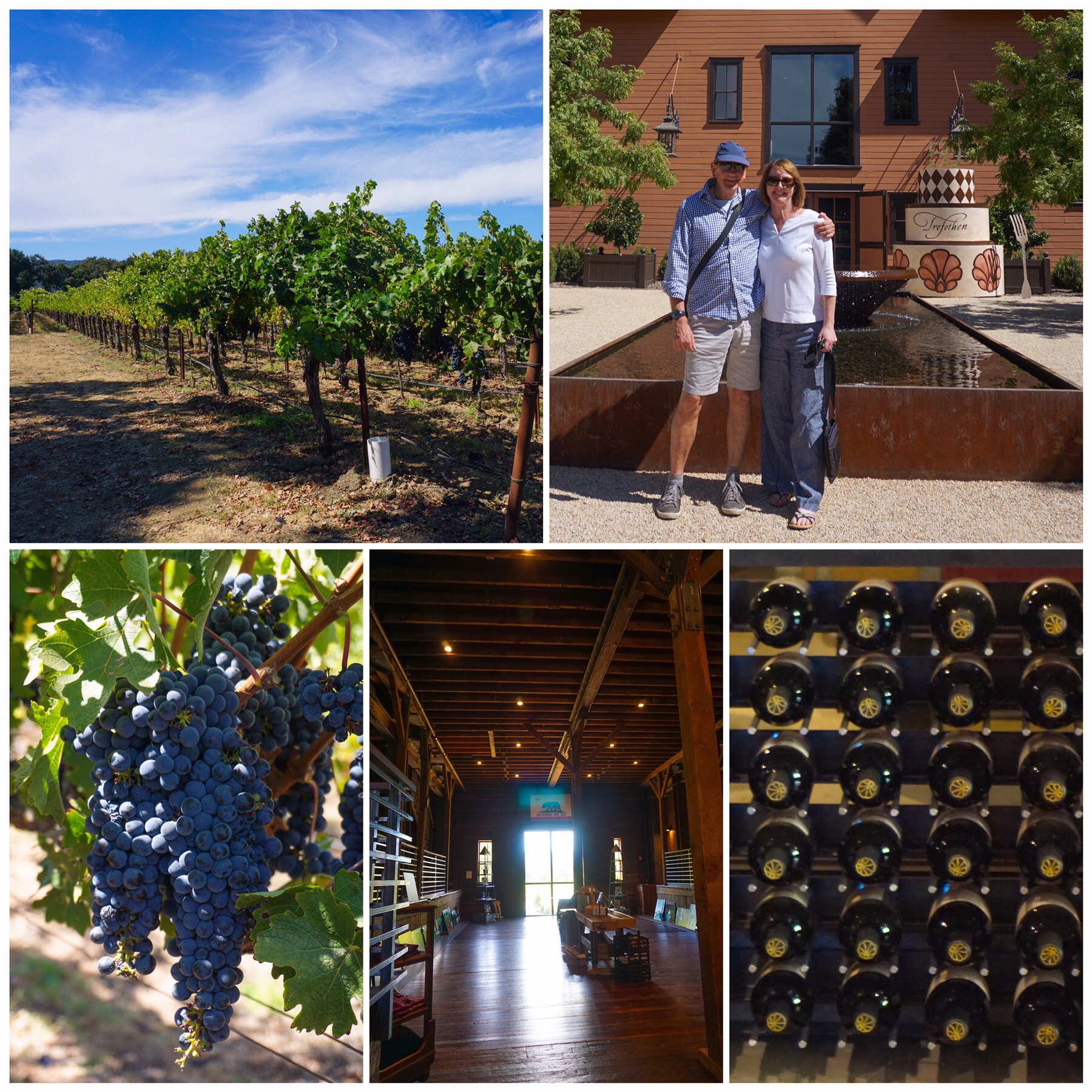
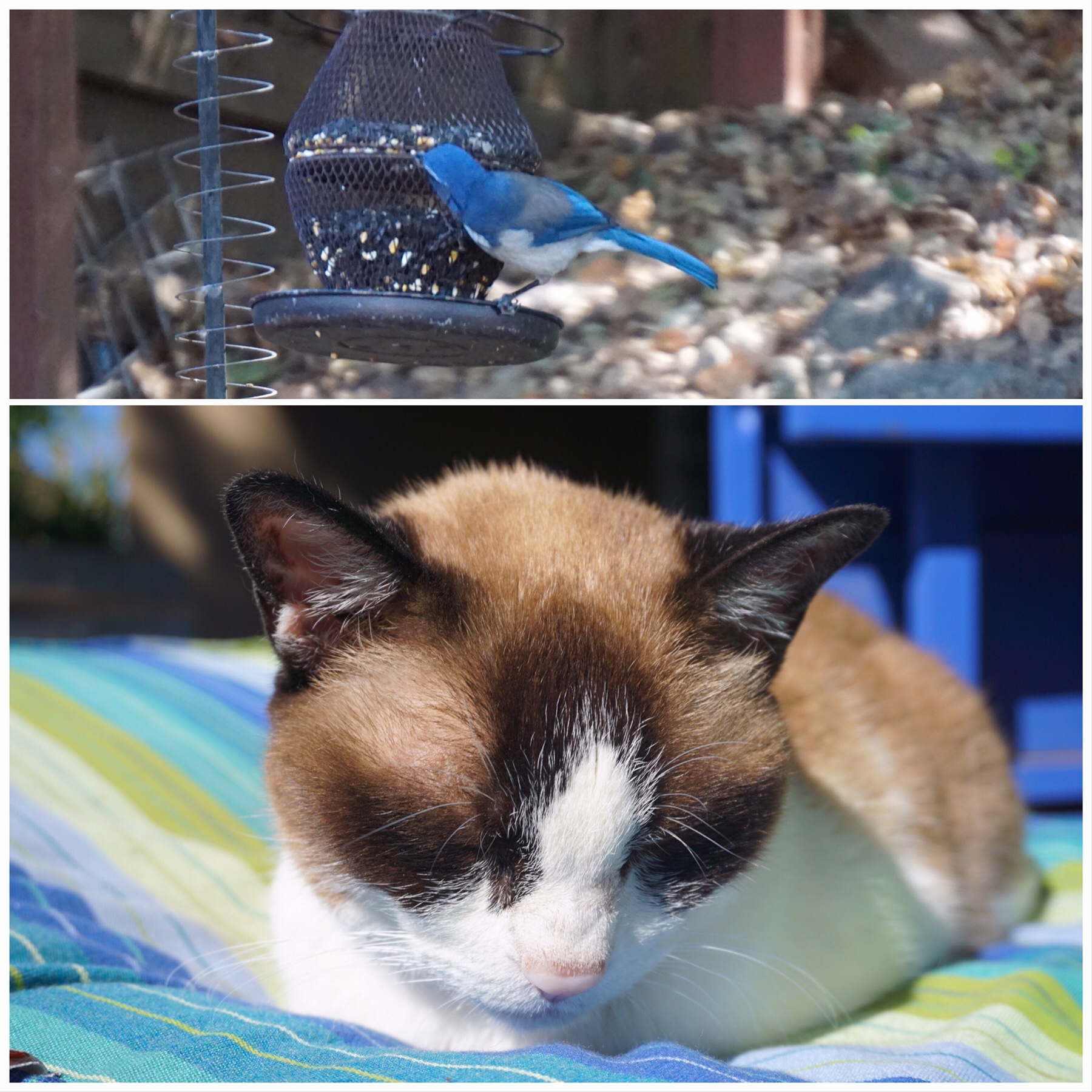
 It seems crazy to be in Napa and not going wine tasting, but someone (Mr A) needed an afternoon nap, so we returned home for just that. I chilled out in the garden with one of Susan and Joe’s cats, Olly, watching out for local birdlife.
 Joe soon returned from work, and we all got ready for a night out.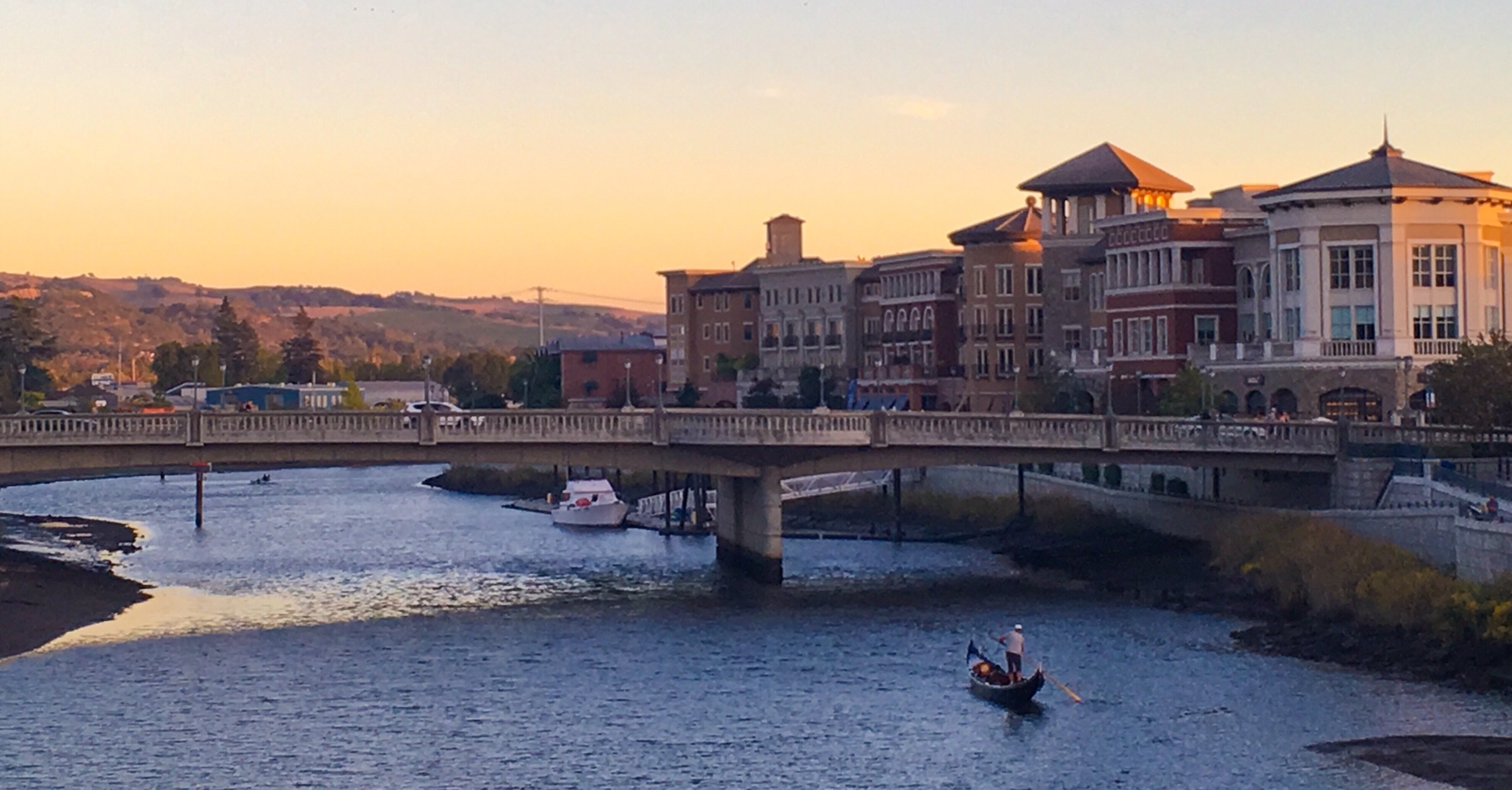
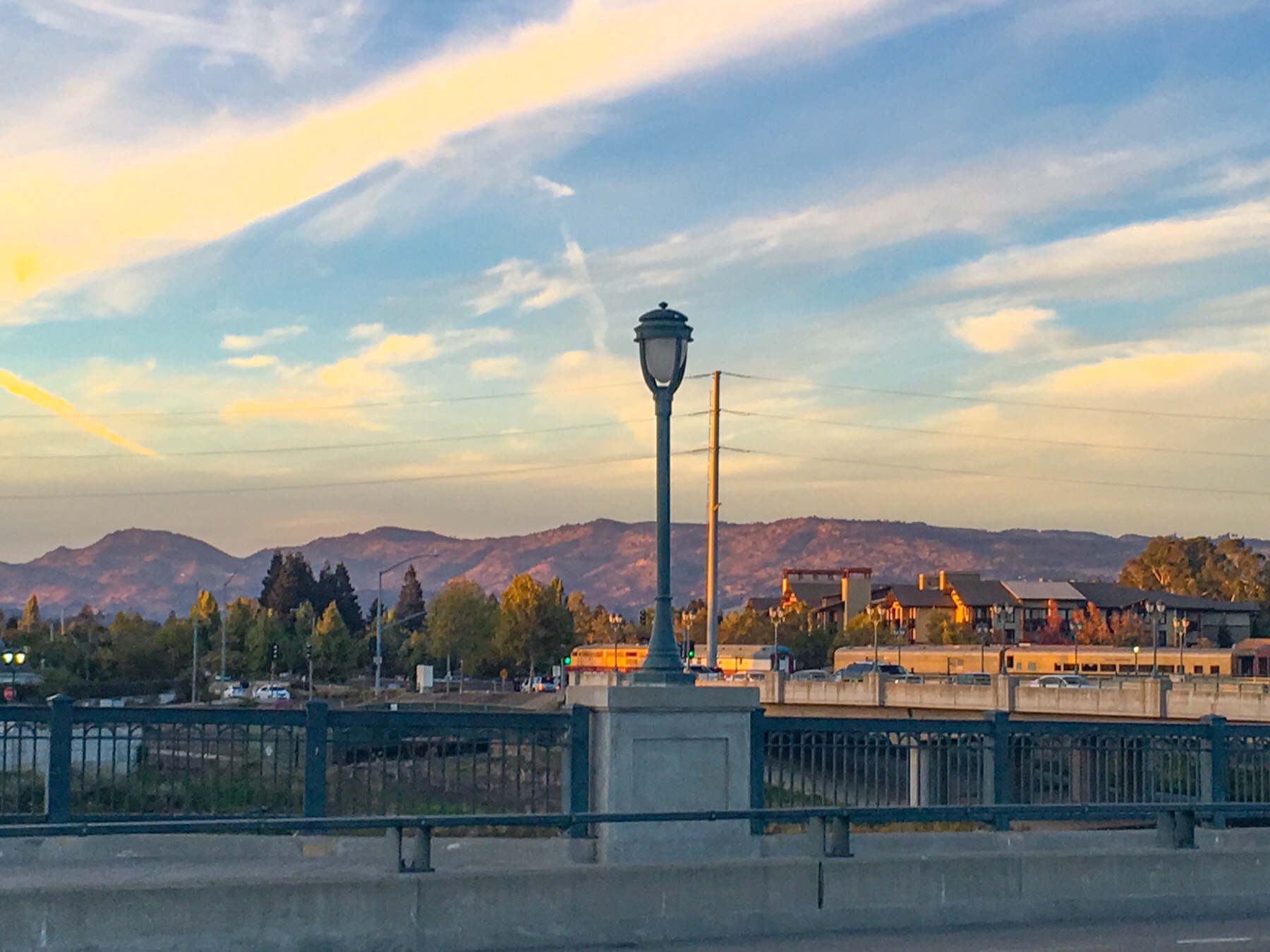
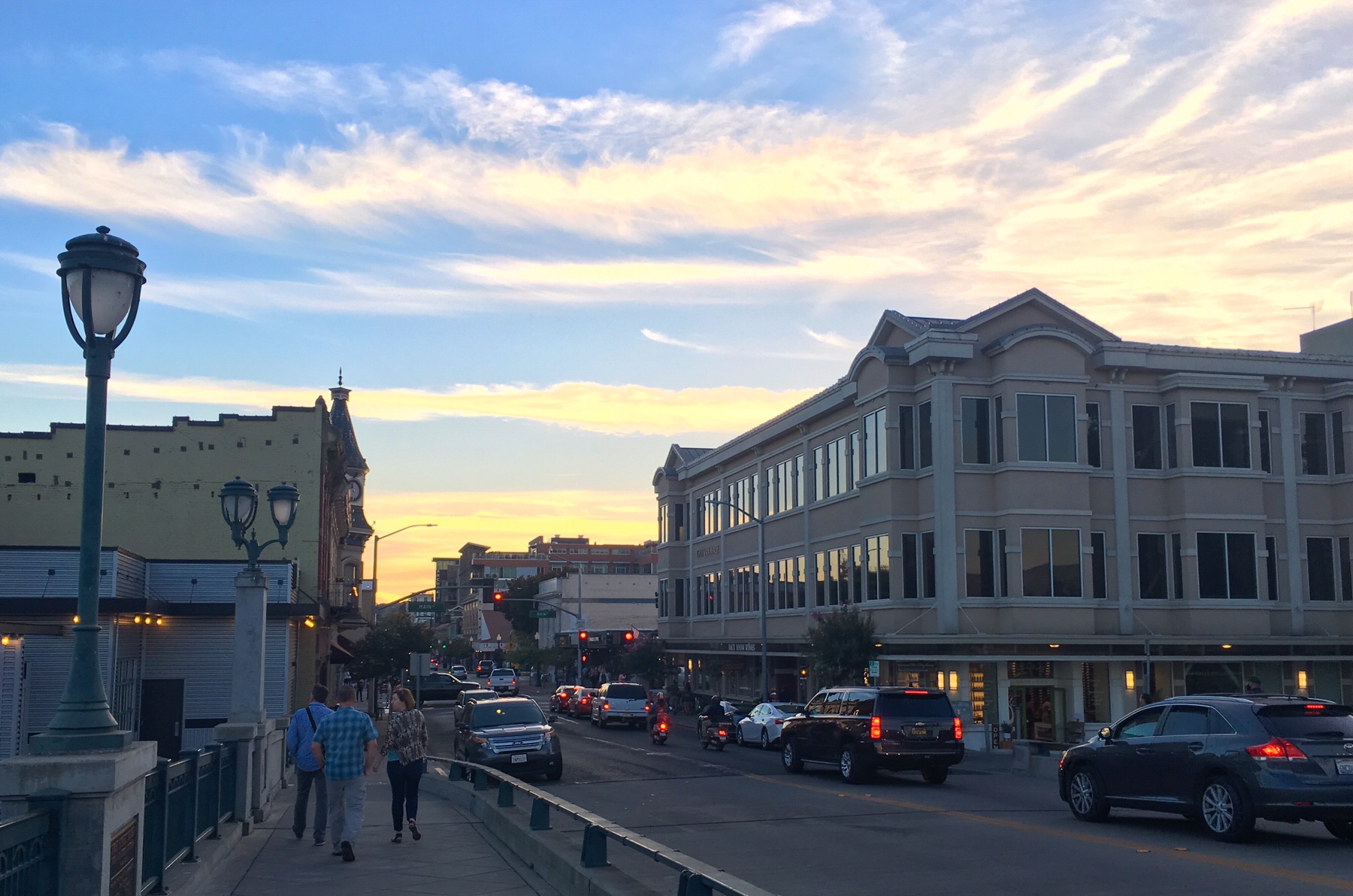 Walking through Napa town, you could have been mistaken for thinking we were somewhere in northern Italy, with the sun setting over the hills and the gondola paddling up the Napa River. It has a lovely feel, with nice boutiques and a buzzing atmosphere.
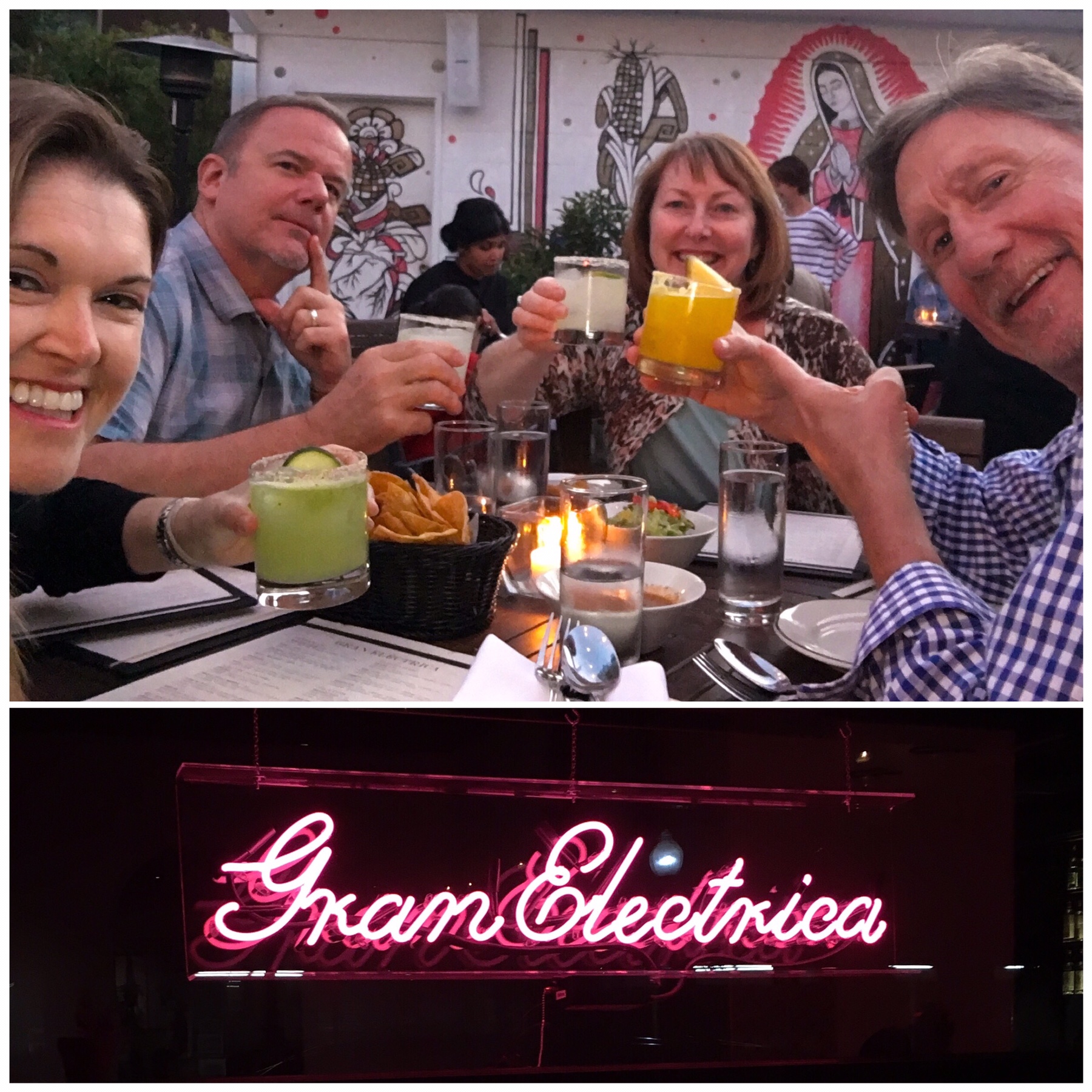 But we don’t mind one bit – this visit has all been about visiting Susan and Joe, and the great company and laughter we enjoyed with them has all been worth it. This is one area we’d be keen to come back to again.
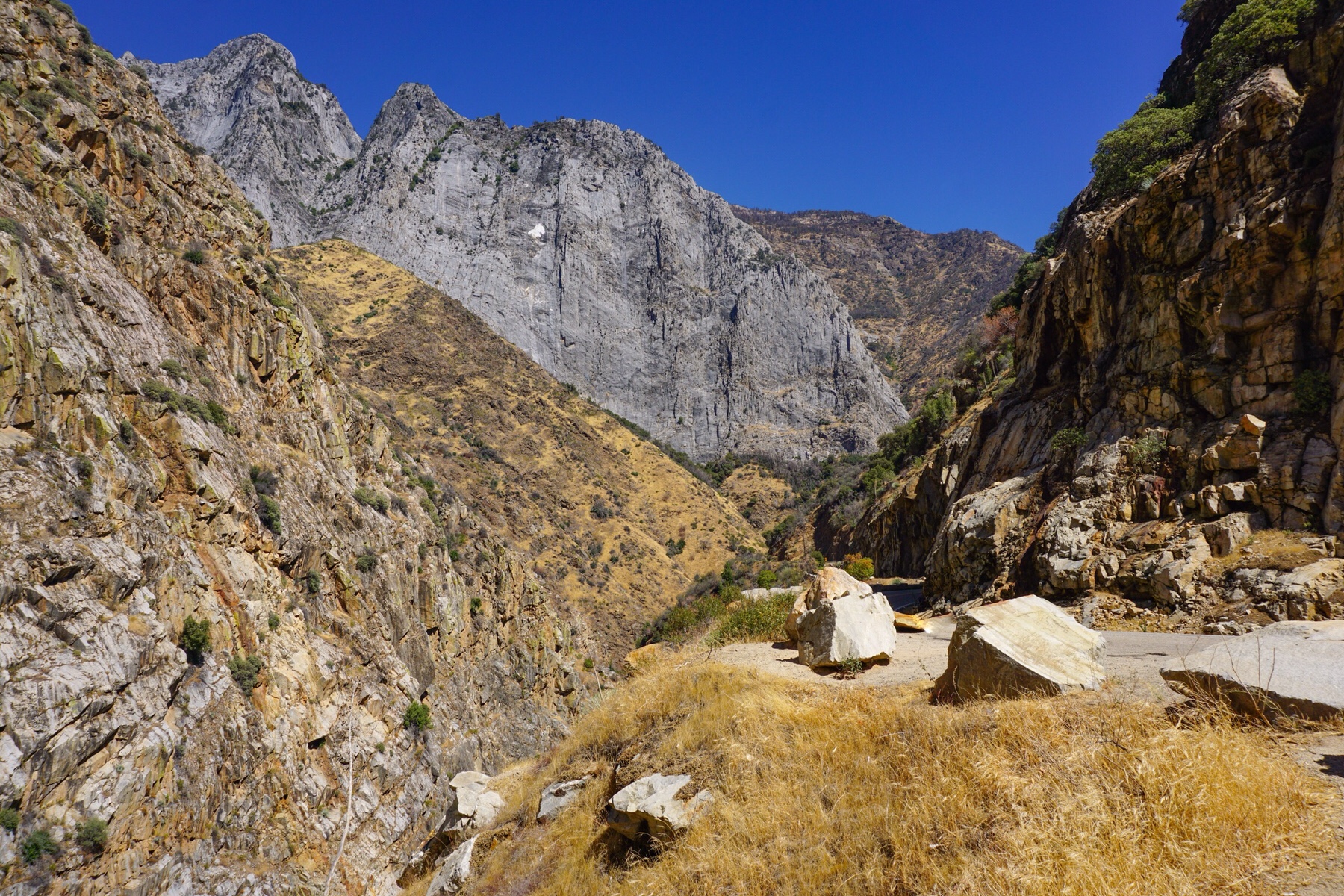
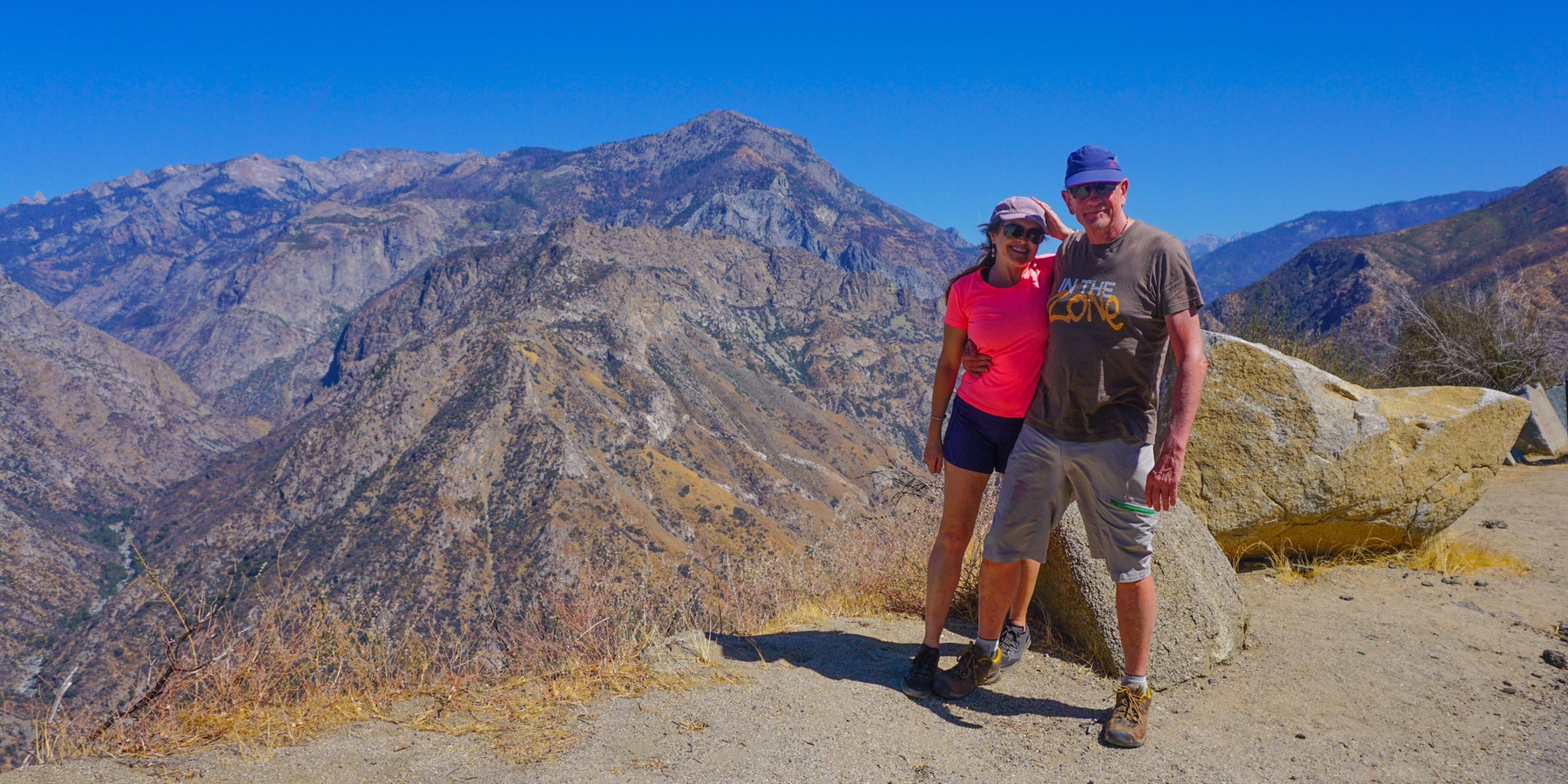
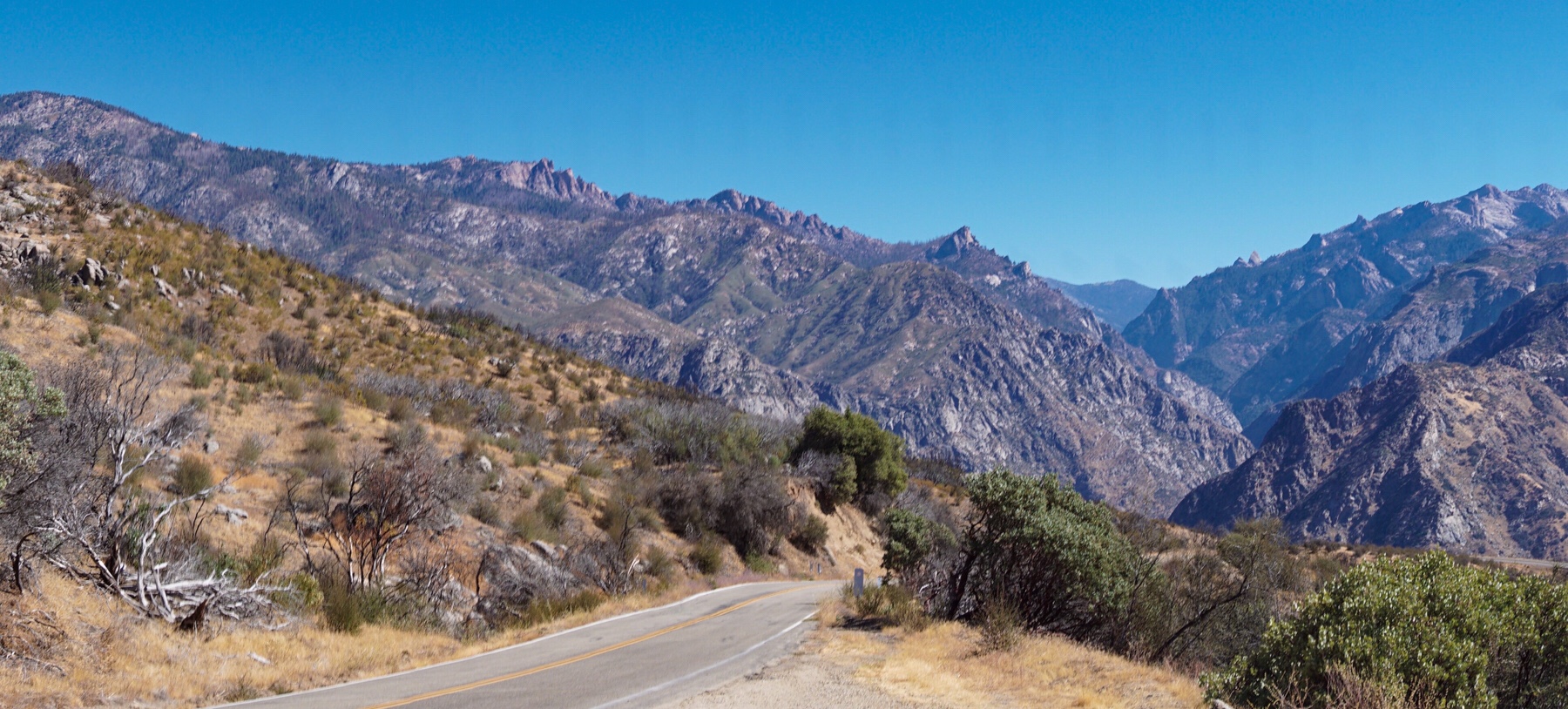 Our first glimpses left us again spellbound, as we left behind the tall sequoia trees and climbed into mountainous country. Kings Canyon has been described as a ‘close competitor to Yosemite’ – and being our destination for the next couple of days, we are almost beside ourselves with anticipation of what might be ahead!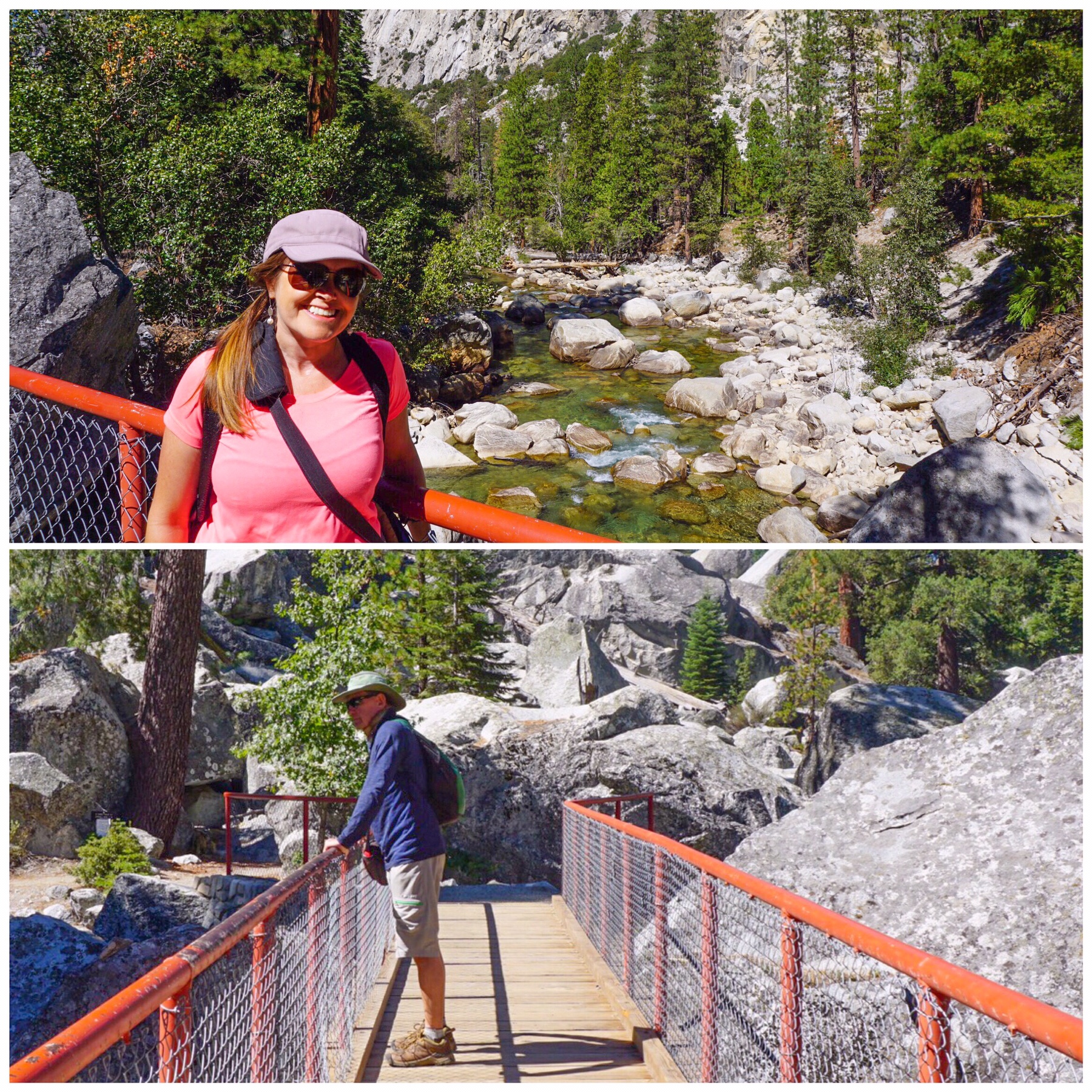
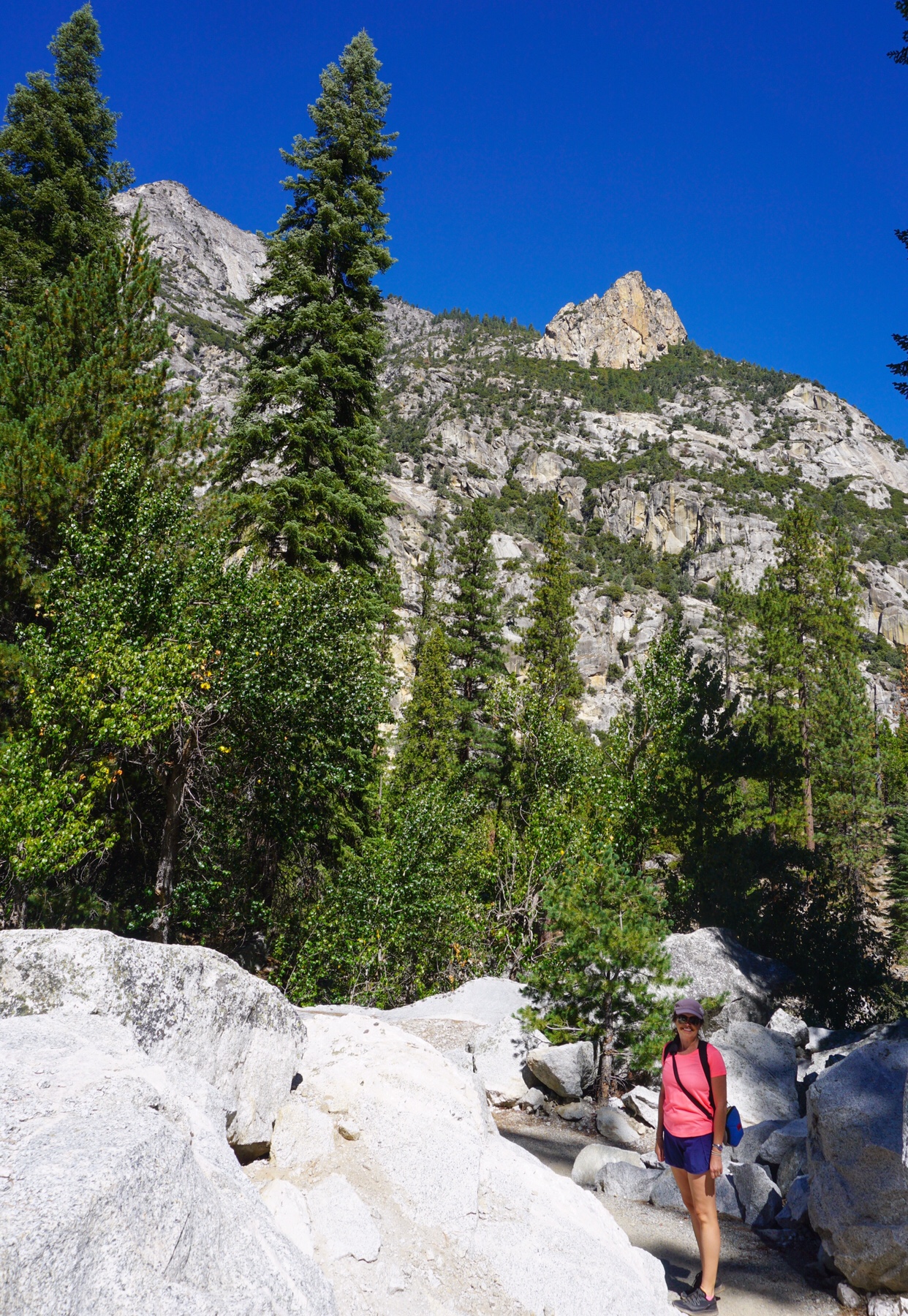 We followed the Kings River for a couple of kilometres before we were stopped by a couple of National Parks officials about to detonate some fallen rocks. In interest of our health and making it safely beyond today, we retraced our steps to the car and drove on.
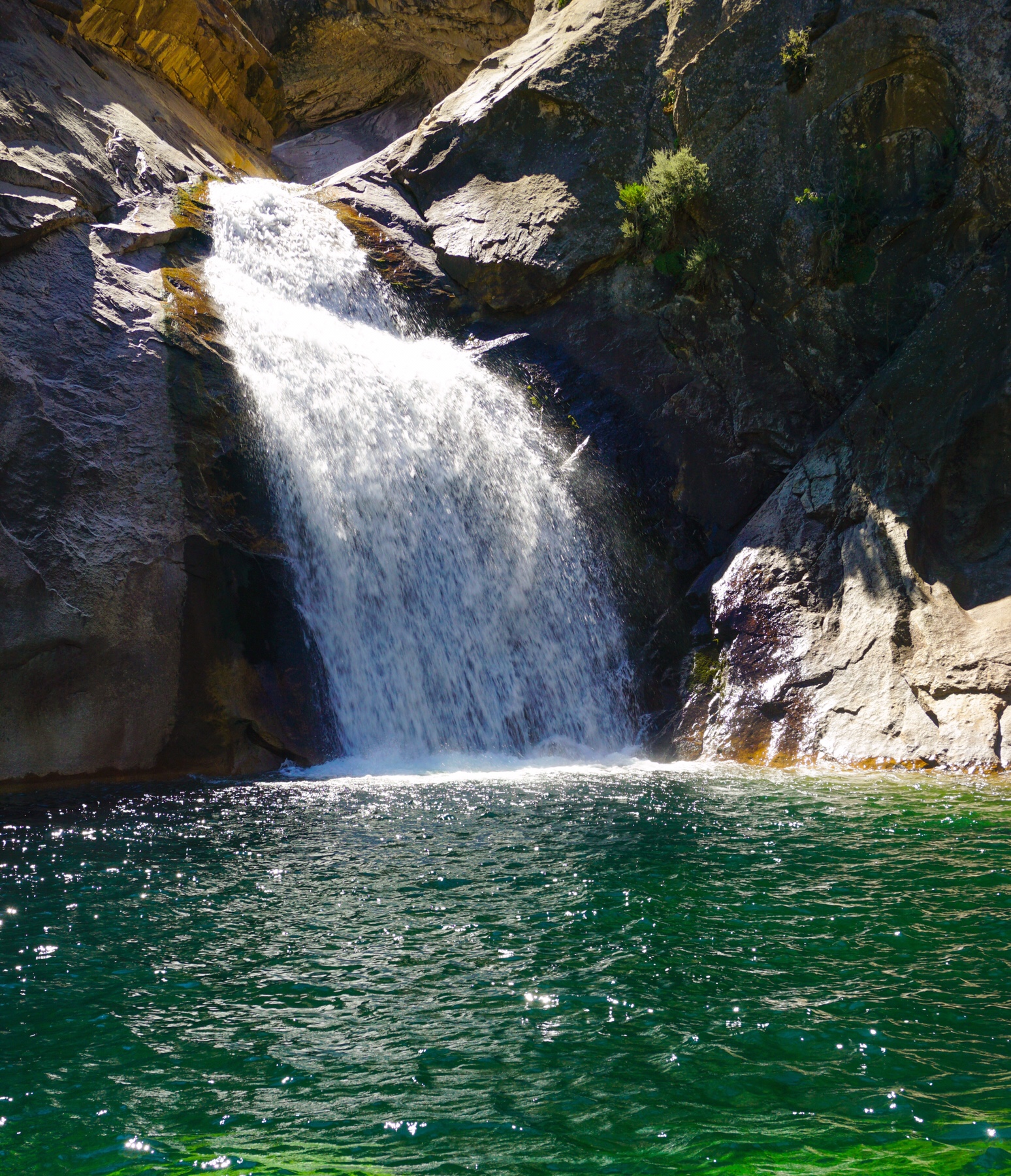 Not much further along the road was Grizzly Falls, plunging deep down into the valley.
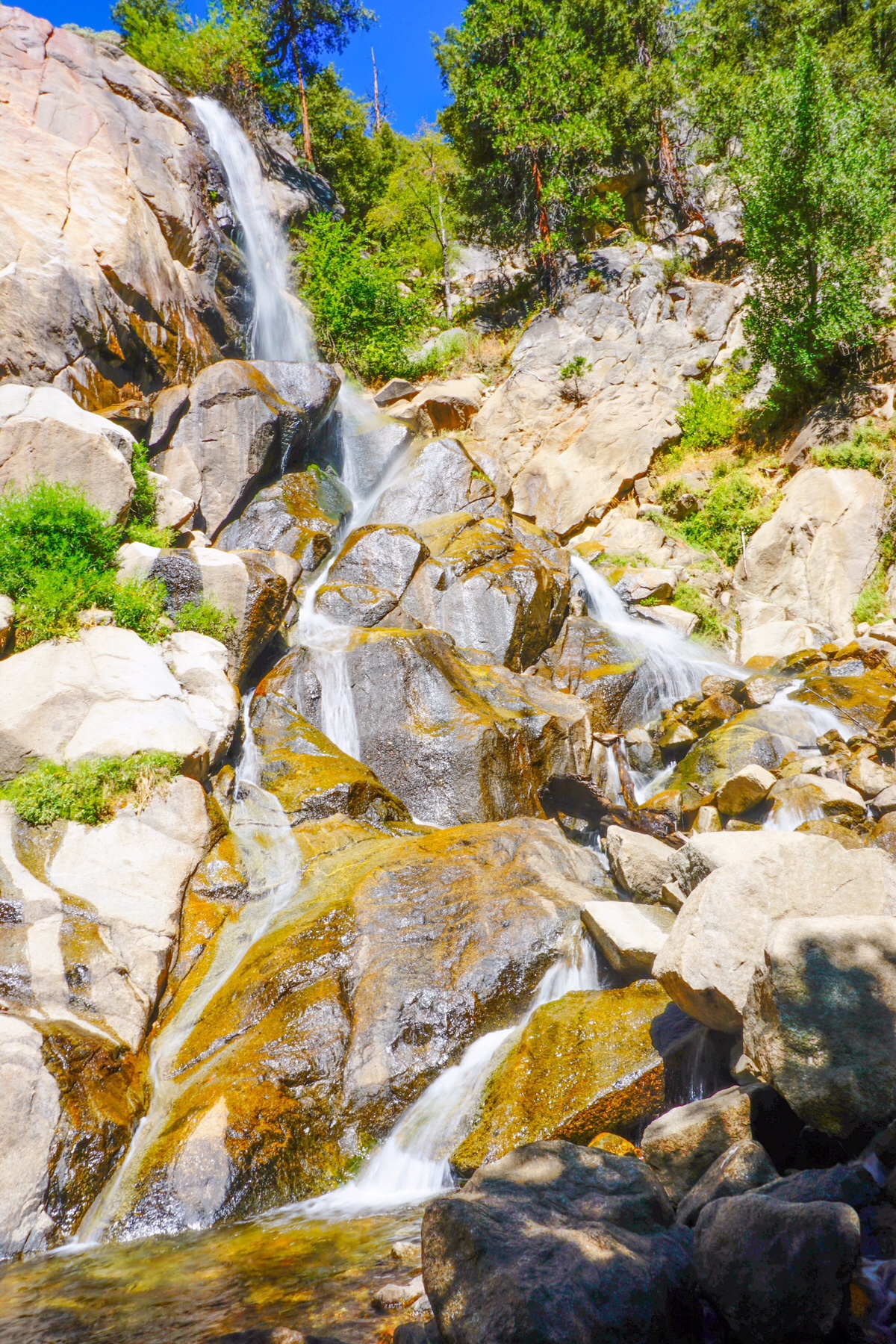 Despite the name, there are no Grizzly bears in these parts, only black bears. We have seen many warning signs about them but they are one furry critter we are yet to spot. Our eyes are regularly peeled and camera at the ready.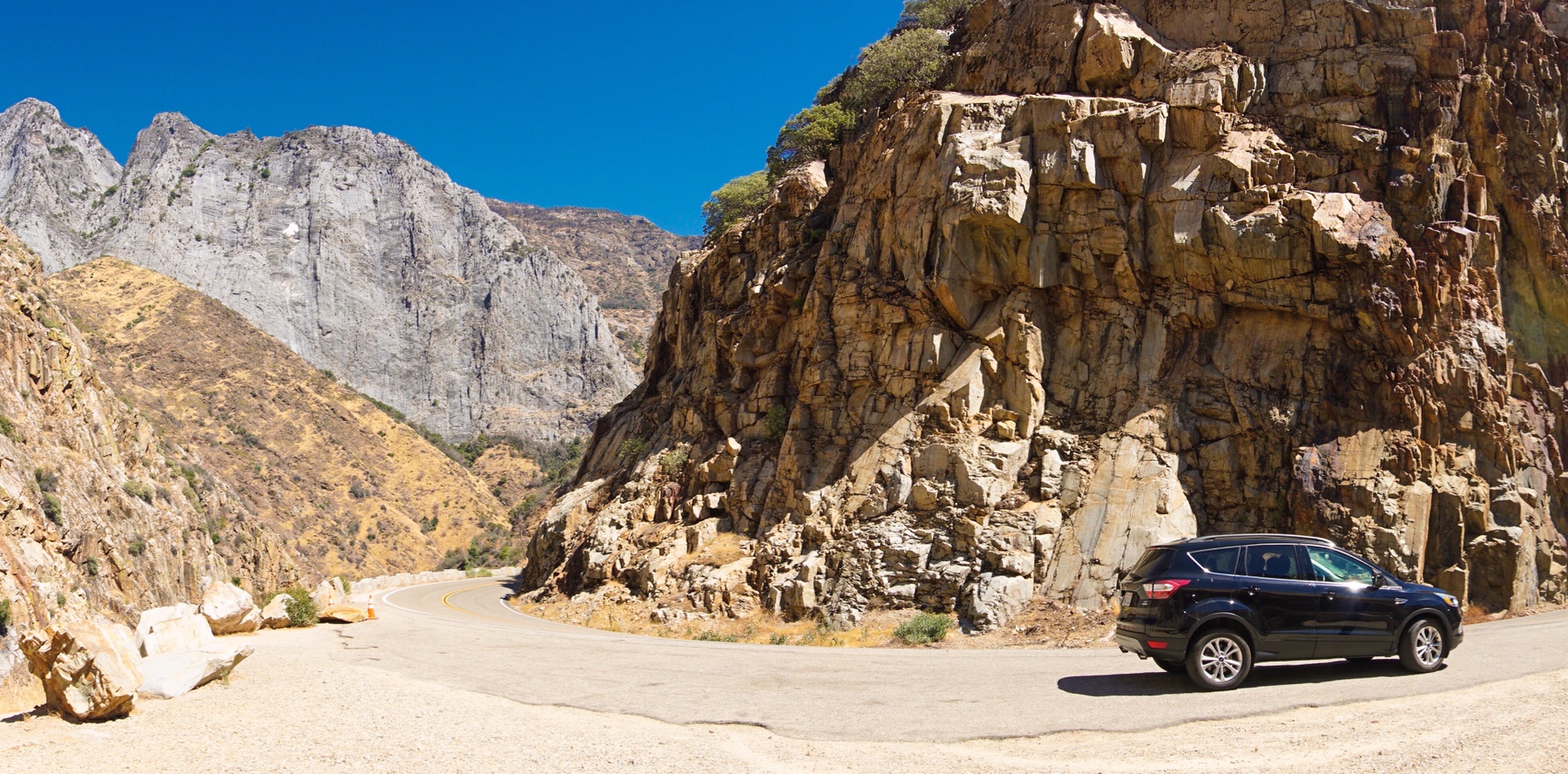
 Back in Sequoia National Park, it was hard to miss out yet more giant trees, helping us feel miniature in their presence.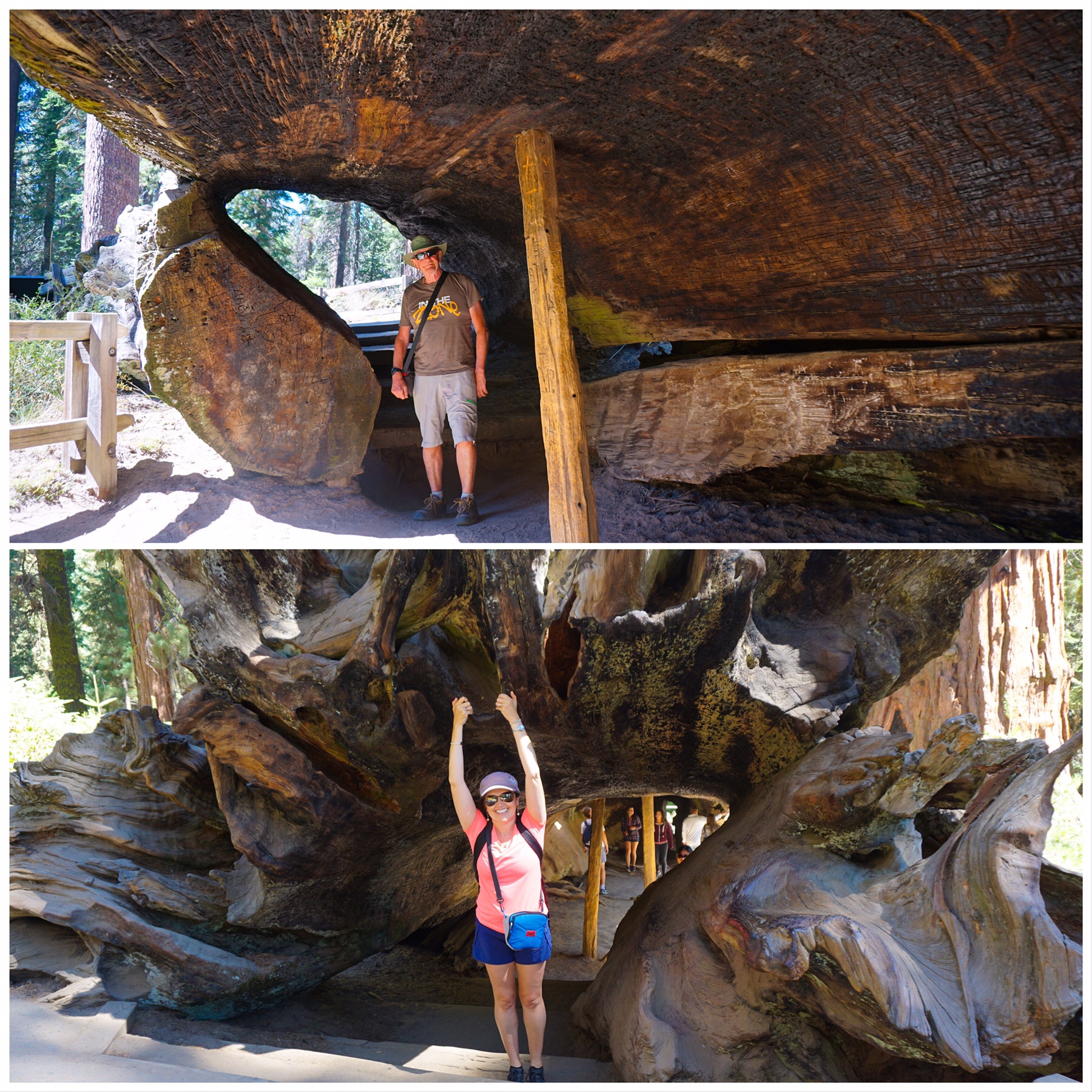
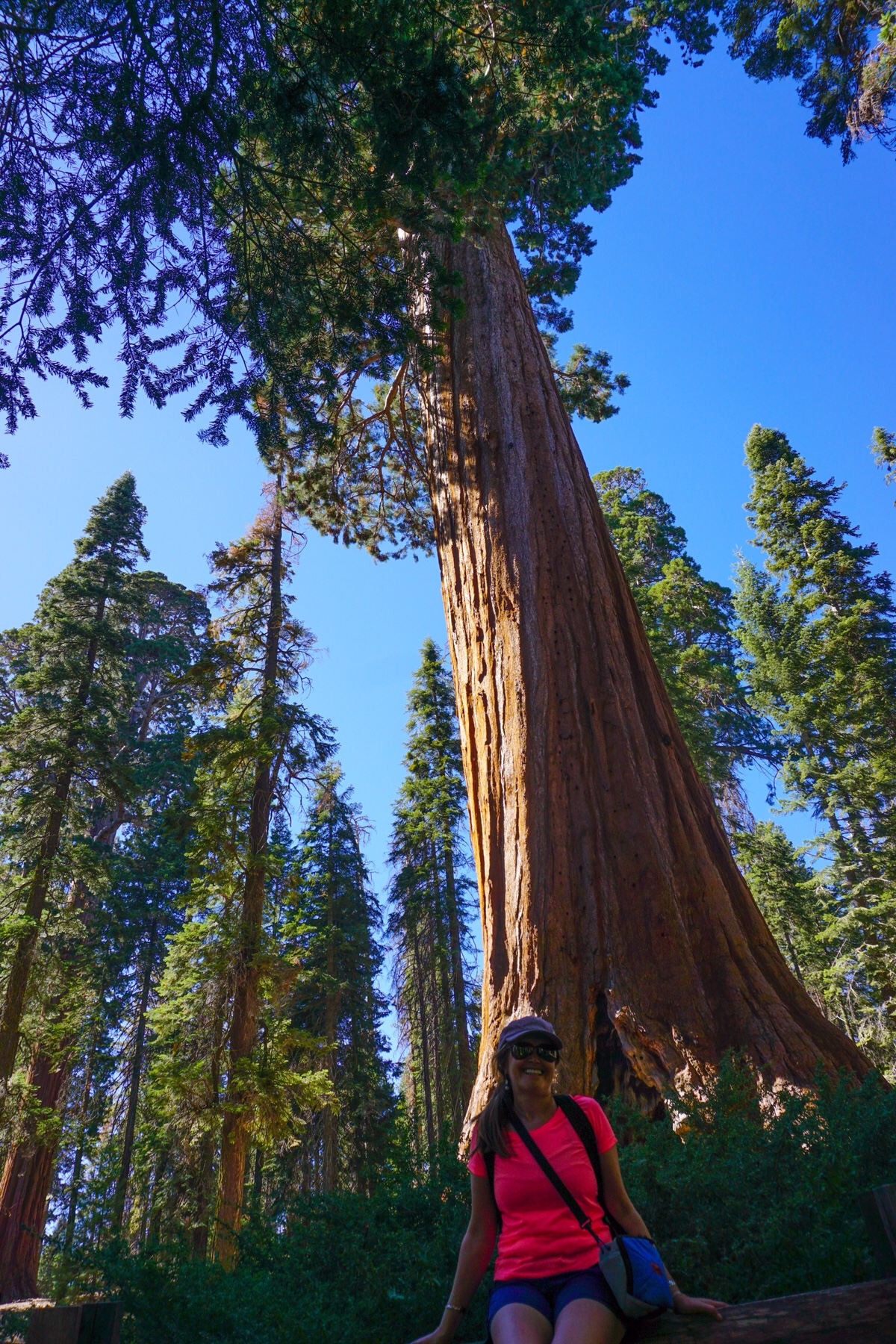
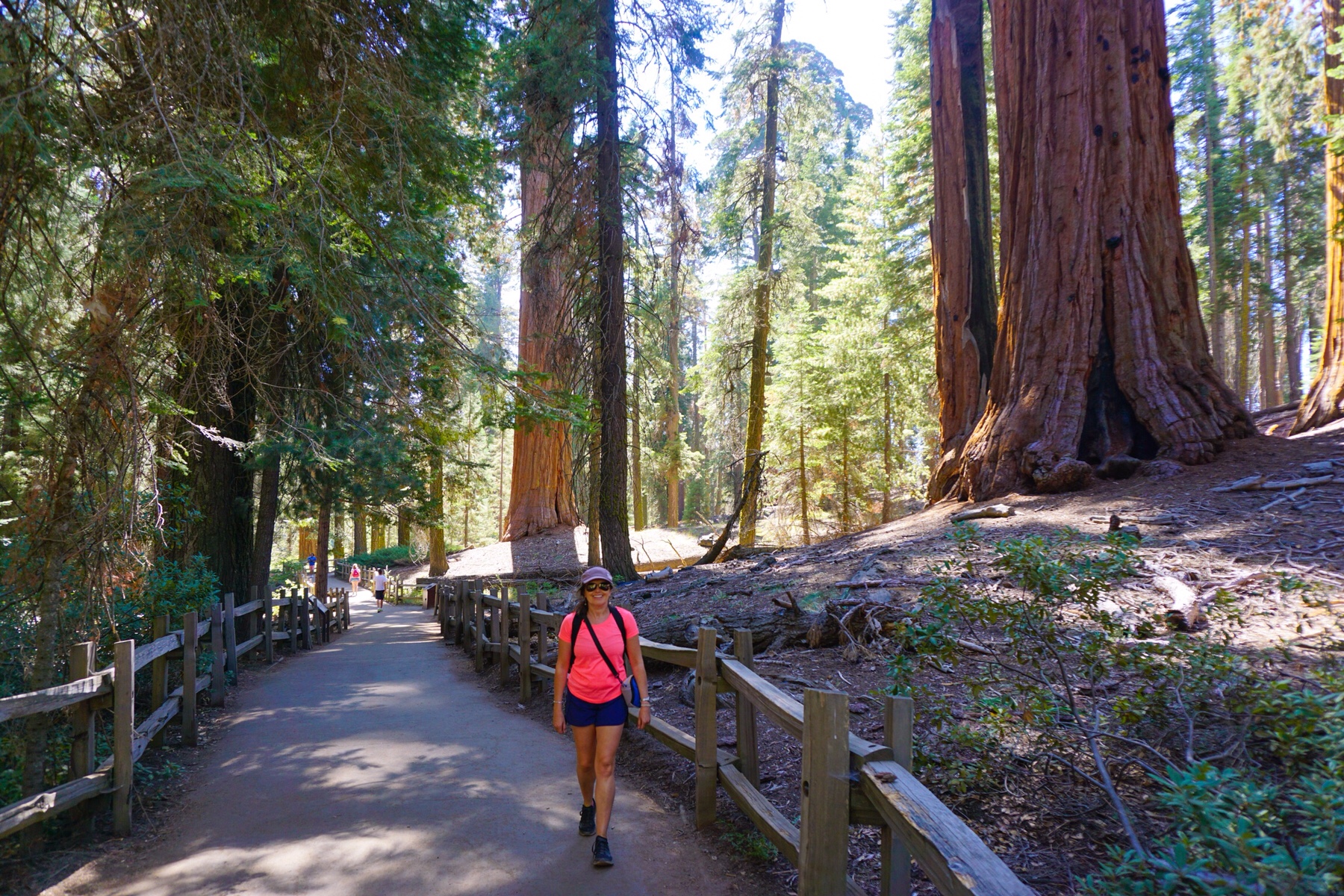 It is so hard to capture just how huge these trees are and the feeling you get walking here…you’ll just have to come and see for yourself!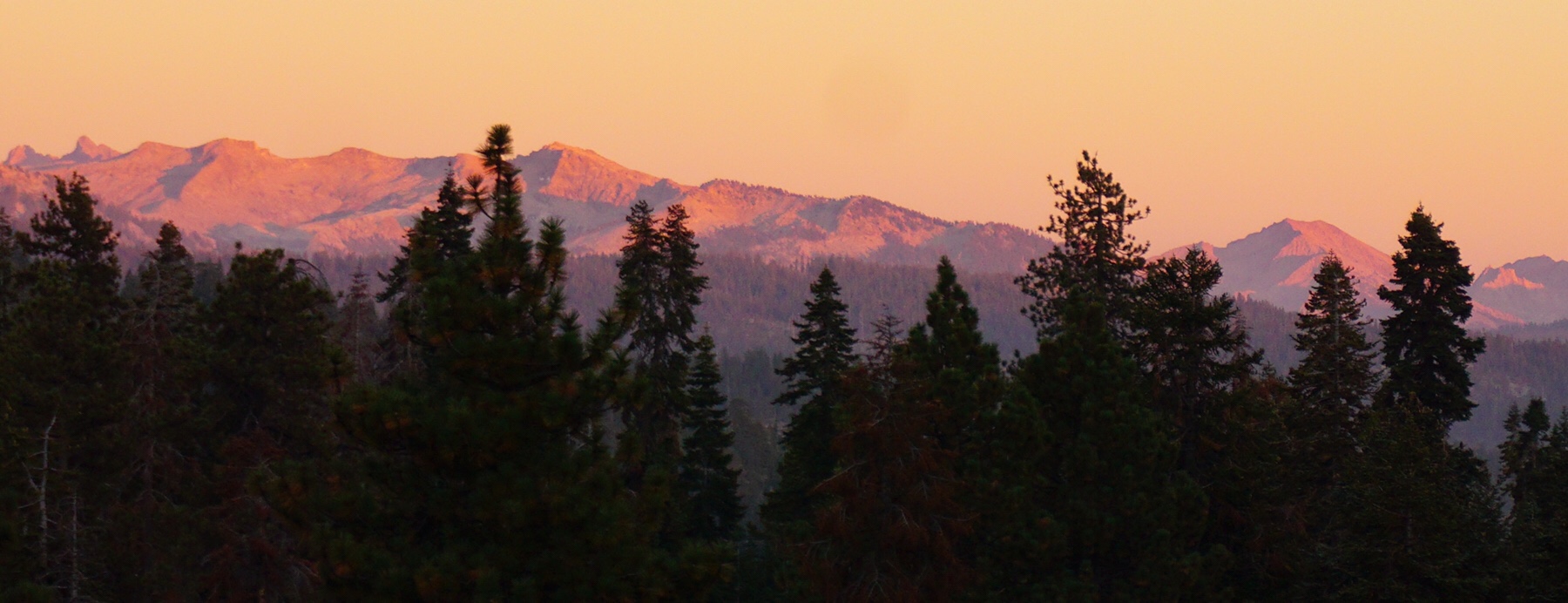
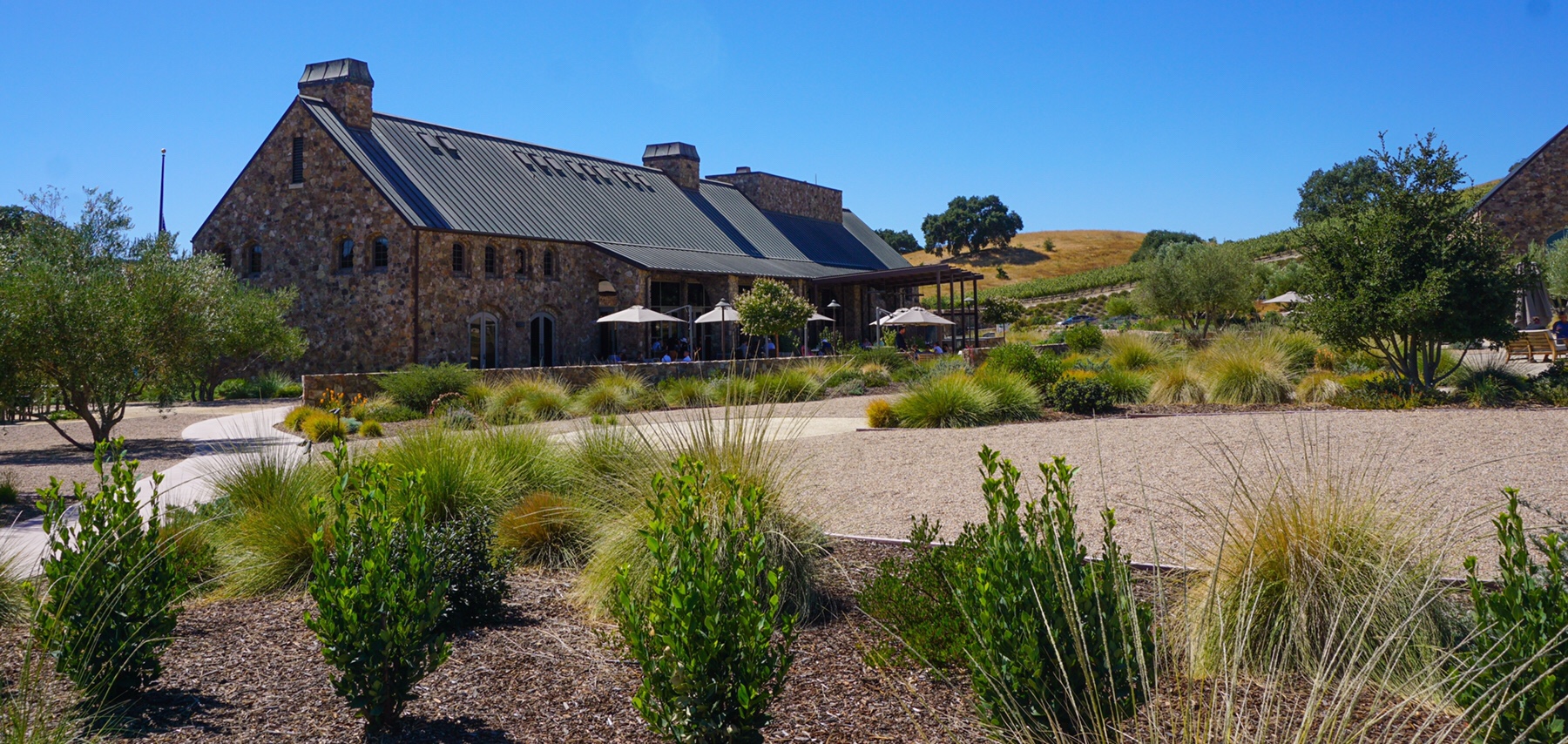
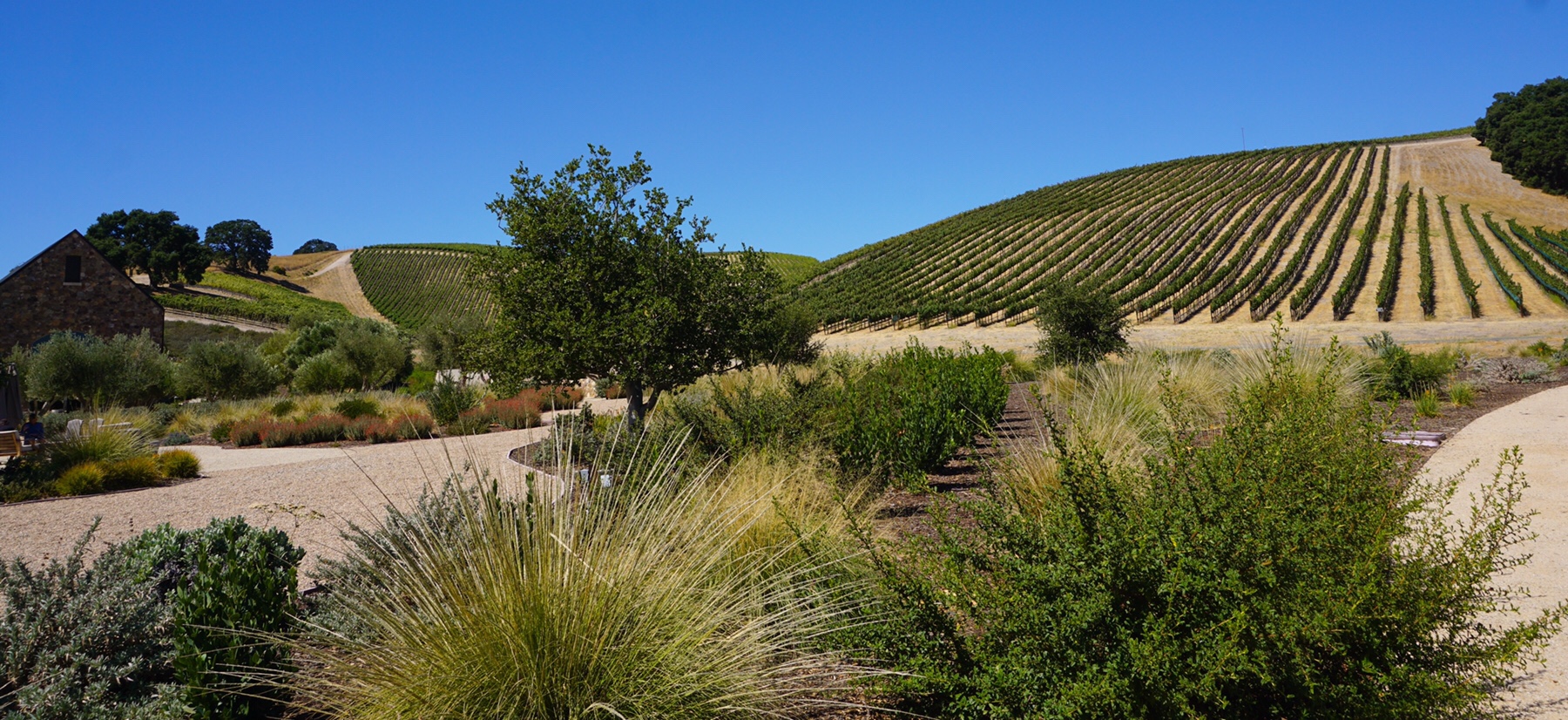 Set in beautifully landscaped grounds and housed in a modern stone building, lunch was served outside on a courtyard. The estate grows much of its own produce as well as all the wine served, with a philosophy of sourcing local and in season produce.
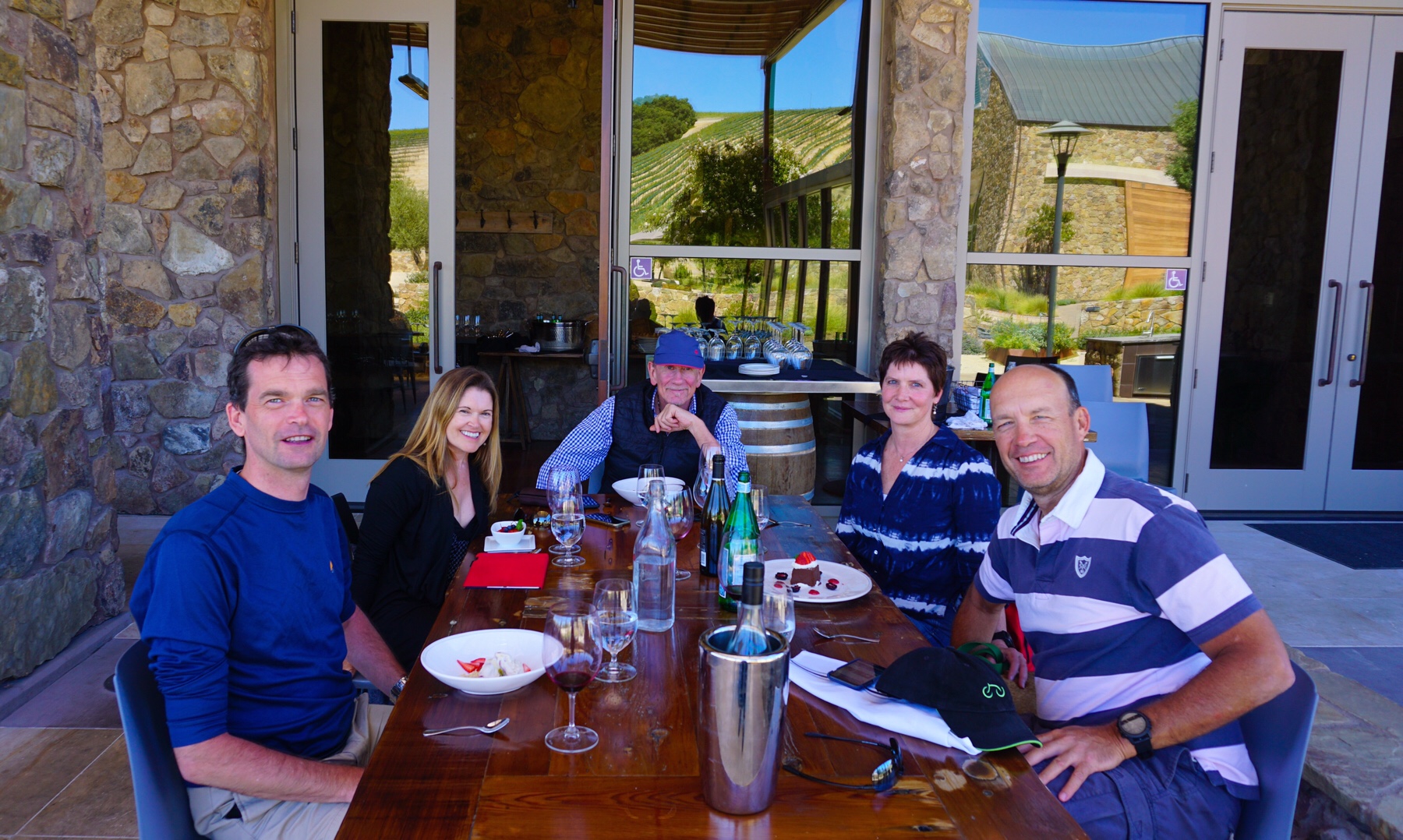 Lunch was delicious – every ingredient carefully chosen and perfectly prepared. Incredible wine also accompanied our food…the perfect ingredients for a long lazy afternoon.
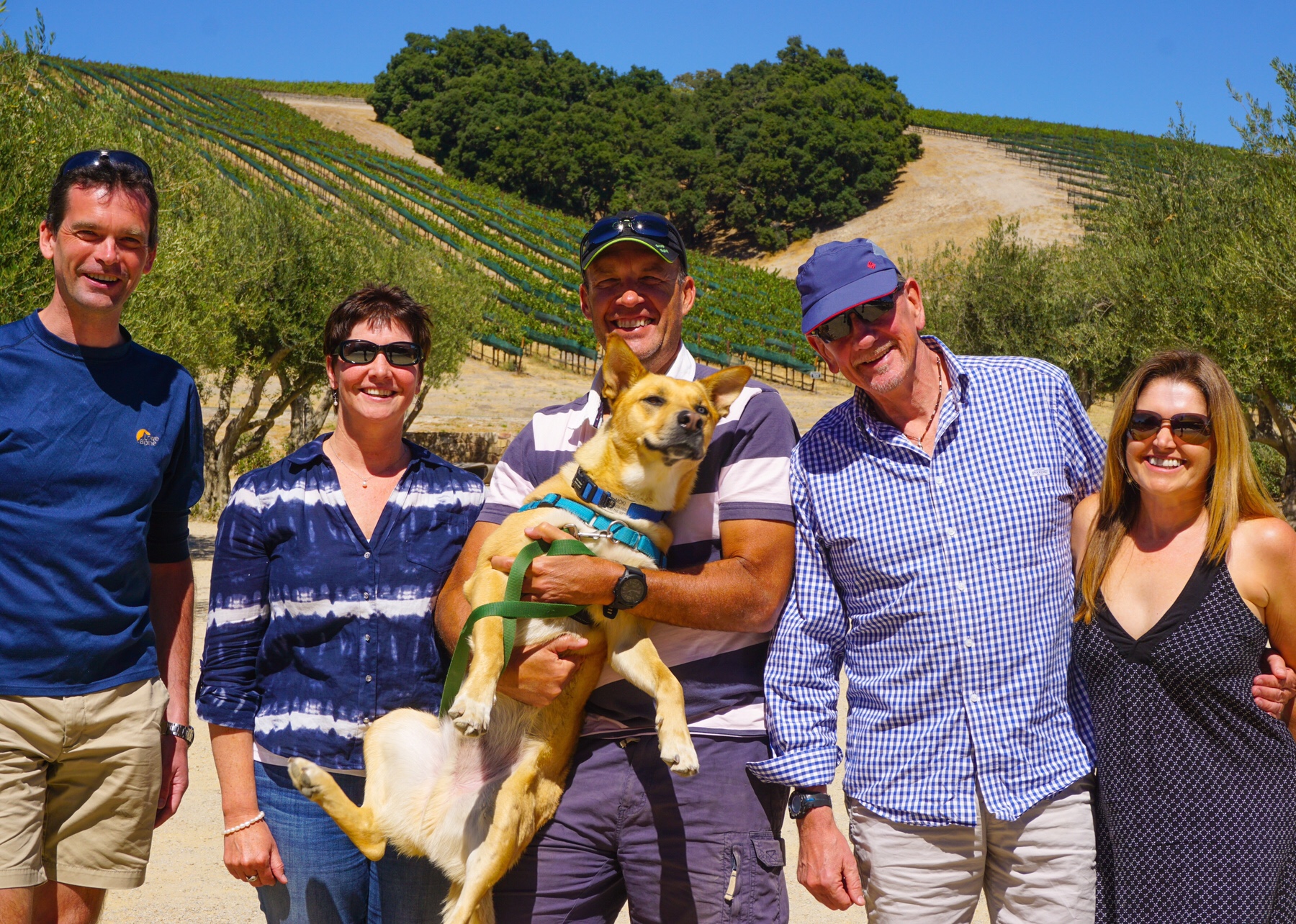 However, Mr A and I were heading off, aiming for our next destination inland. Dave, SJ, Tim and Moki accompanied us into Paso Robles to the supermarket, where we farewelled our friends and headed off.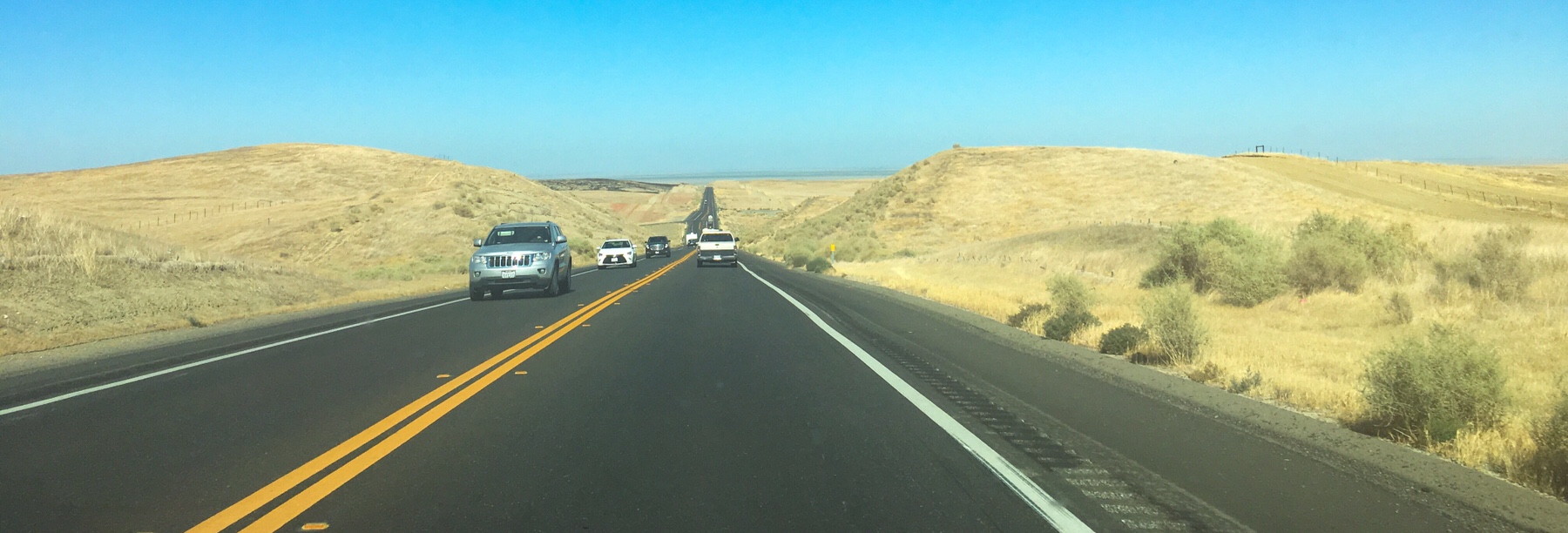
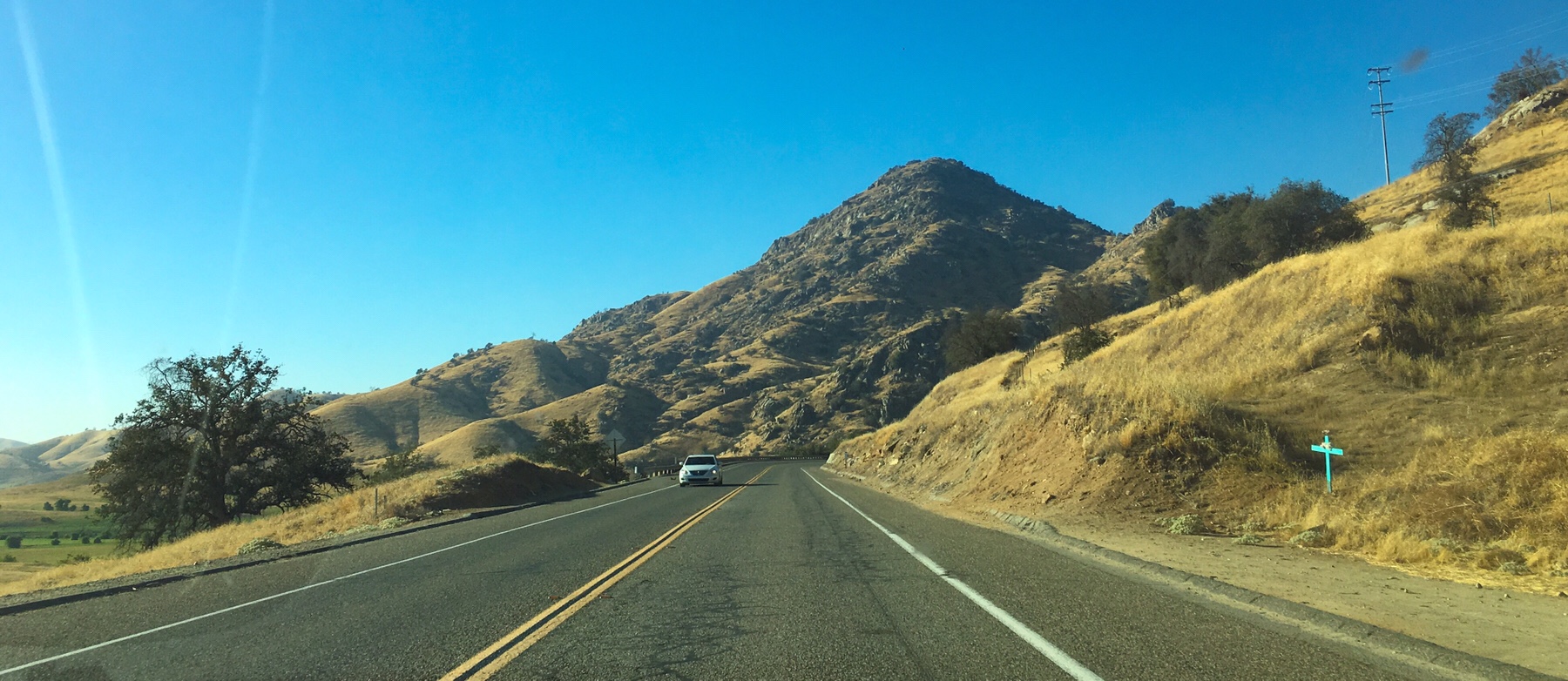 We drove through ever changing scenery to Three Rivers, a little settlement in the foothills of Sequoia National Park.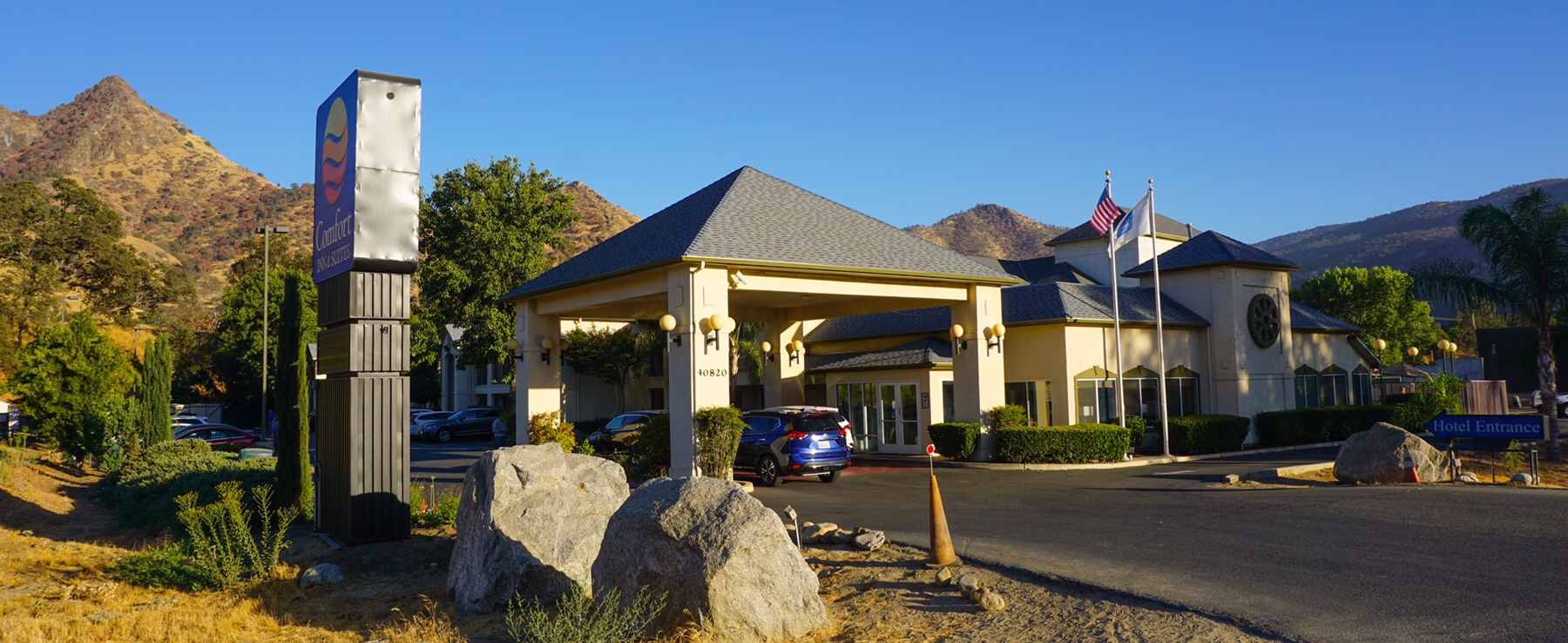
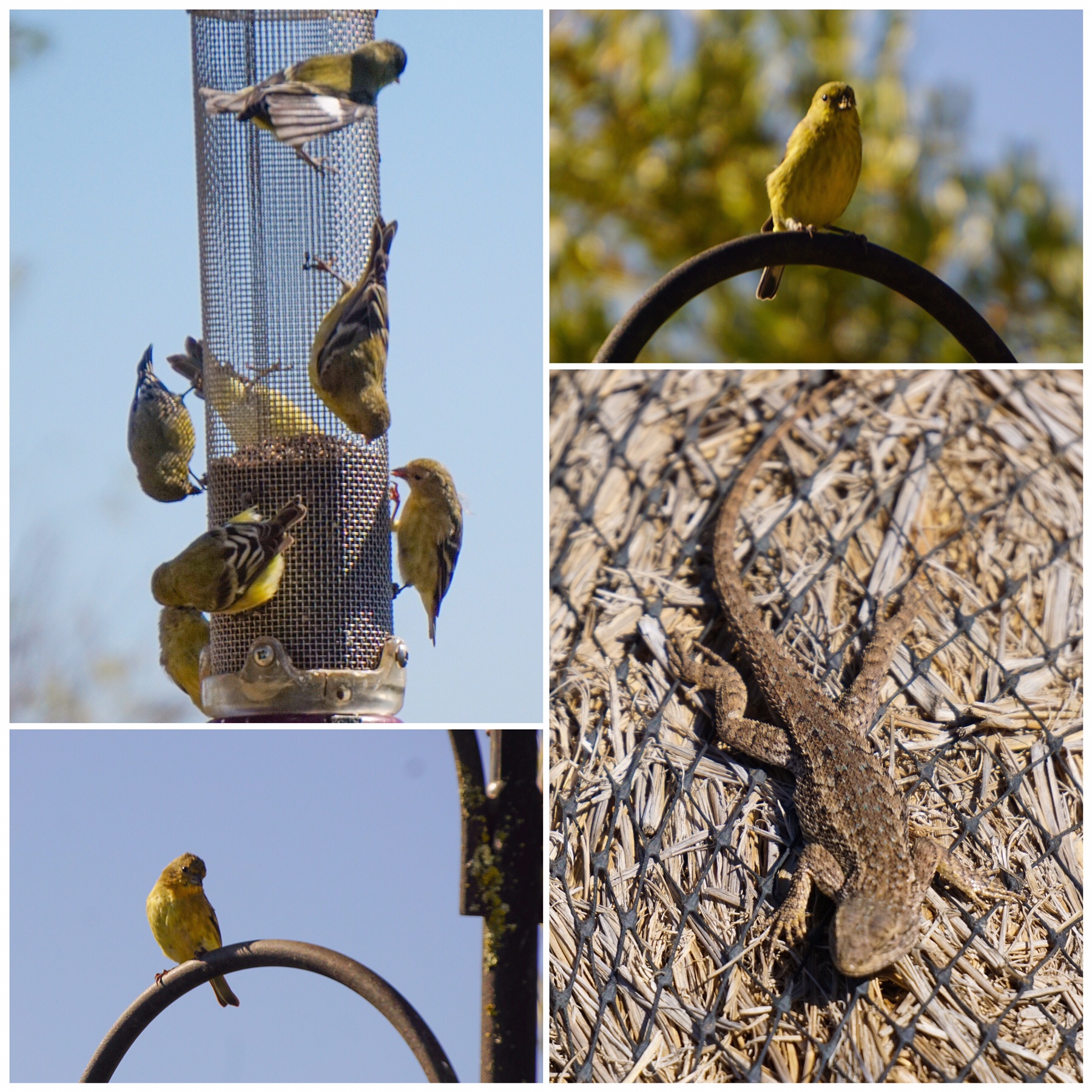
 Back at the house, SJ had put some food out for the birds, and feathered friends flocked to their feast. The house is surrounded by nectar producing flowers, many we recognise from Australia, such as the kangaroo paw. This was a real favourite of the tiny sapphire green birds.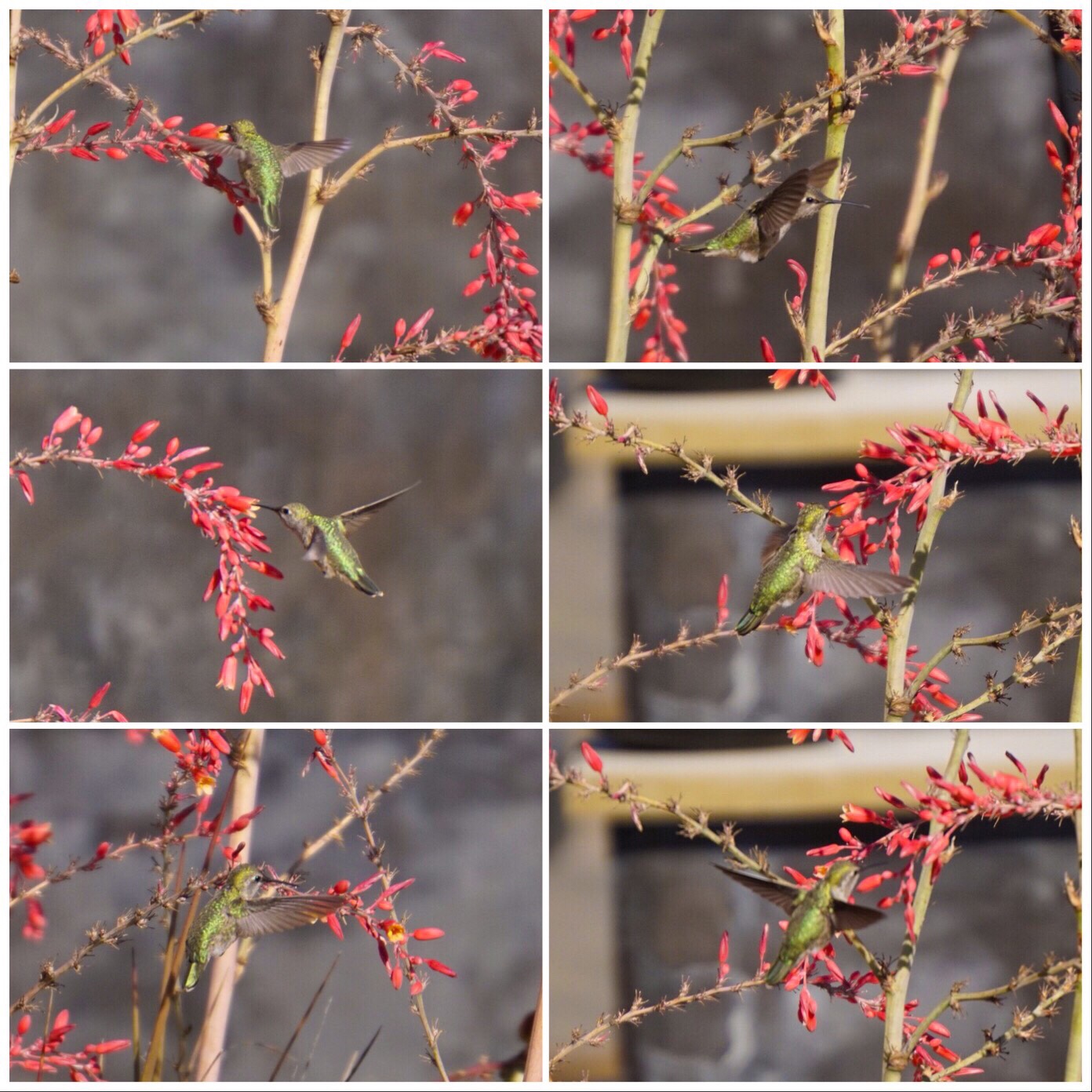
 Before long, Tim and Dave had returned from their 80km cycle (!) and were feeling ravenous for lunch, so we piled into a couple of cars and headed 30 minutes towards the coast to the fishing town of Morro Bay.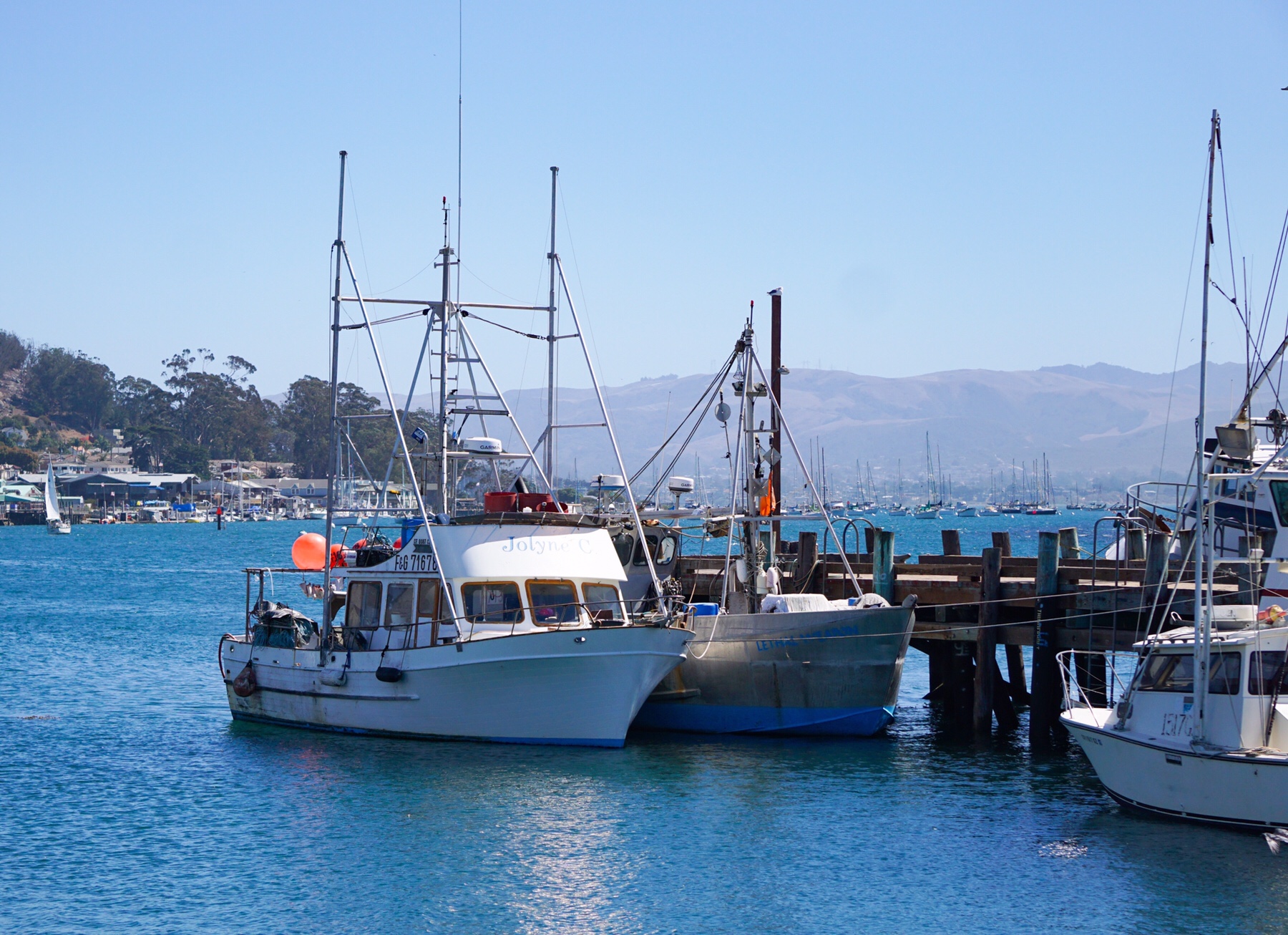
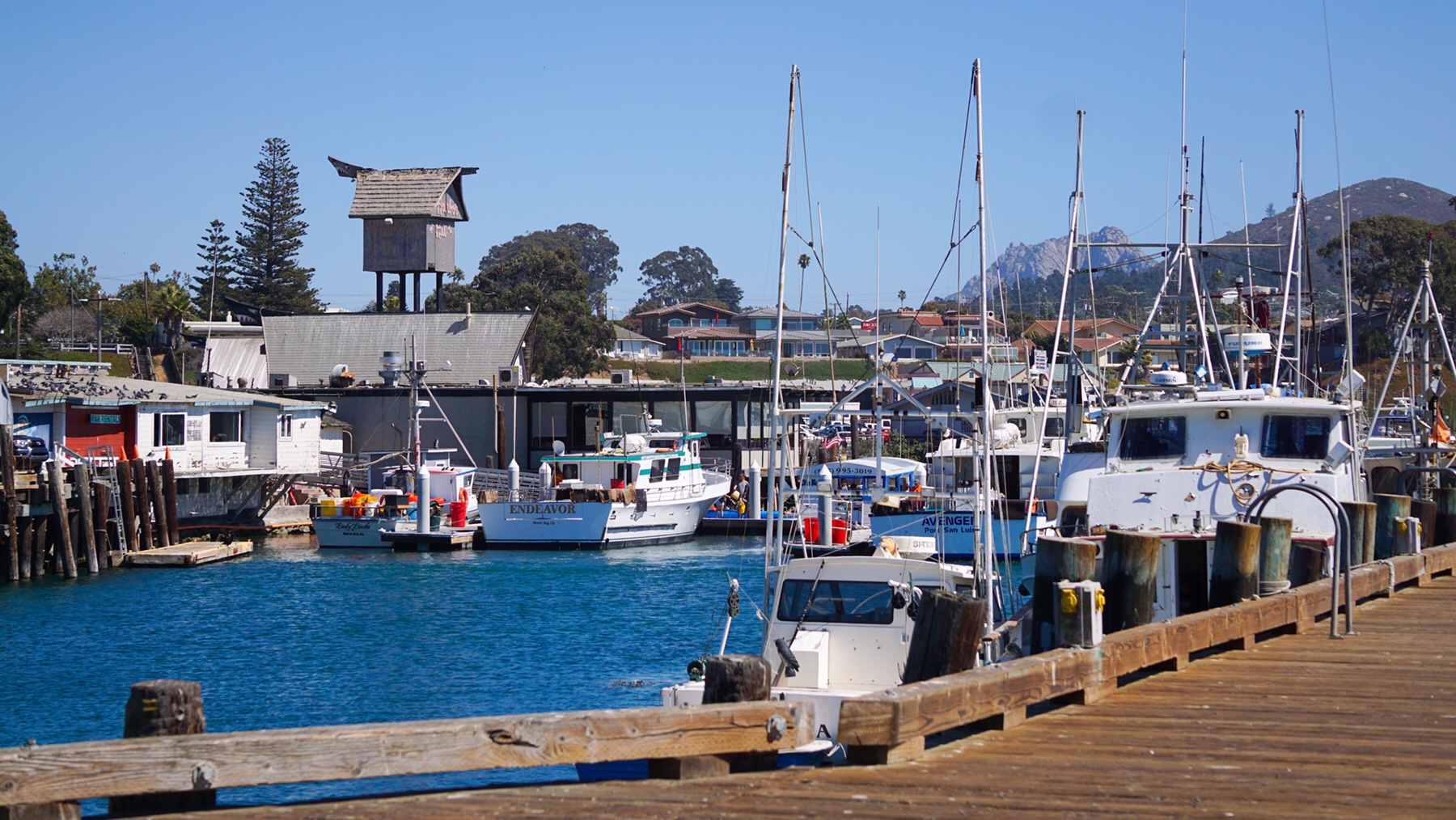 Morro Bay is known for the huge volcanic rock which sits at the entrance of the bay, and the very active sea otter population, attracted to the fish in the bay as well as the discarded scraps.
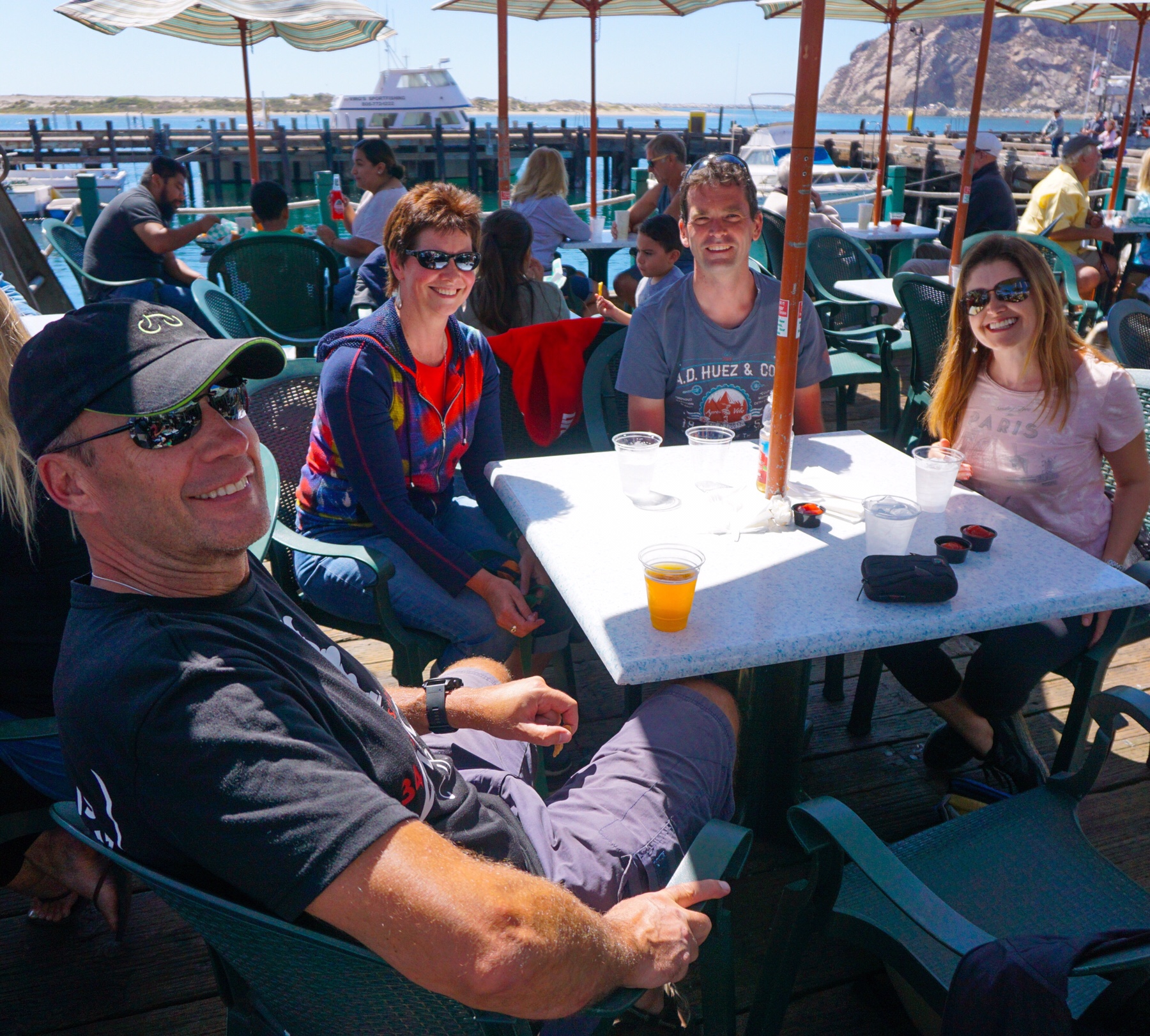 After food we wandered along the waterfront looking for sea otters. They were not hard to spot, great little fishers, swimming on their backs to better eat their catch, often chased by herring gulls keen to steal an easy meal.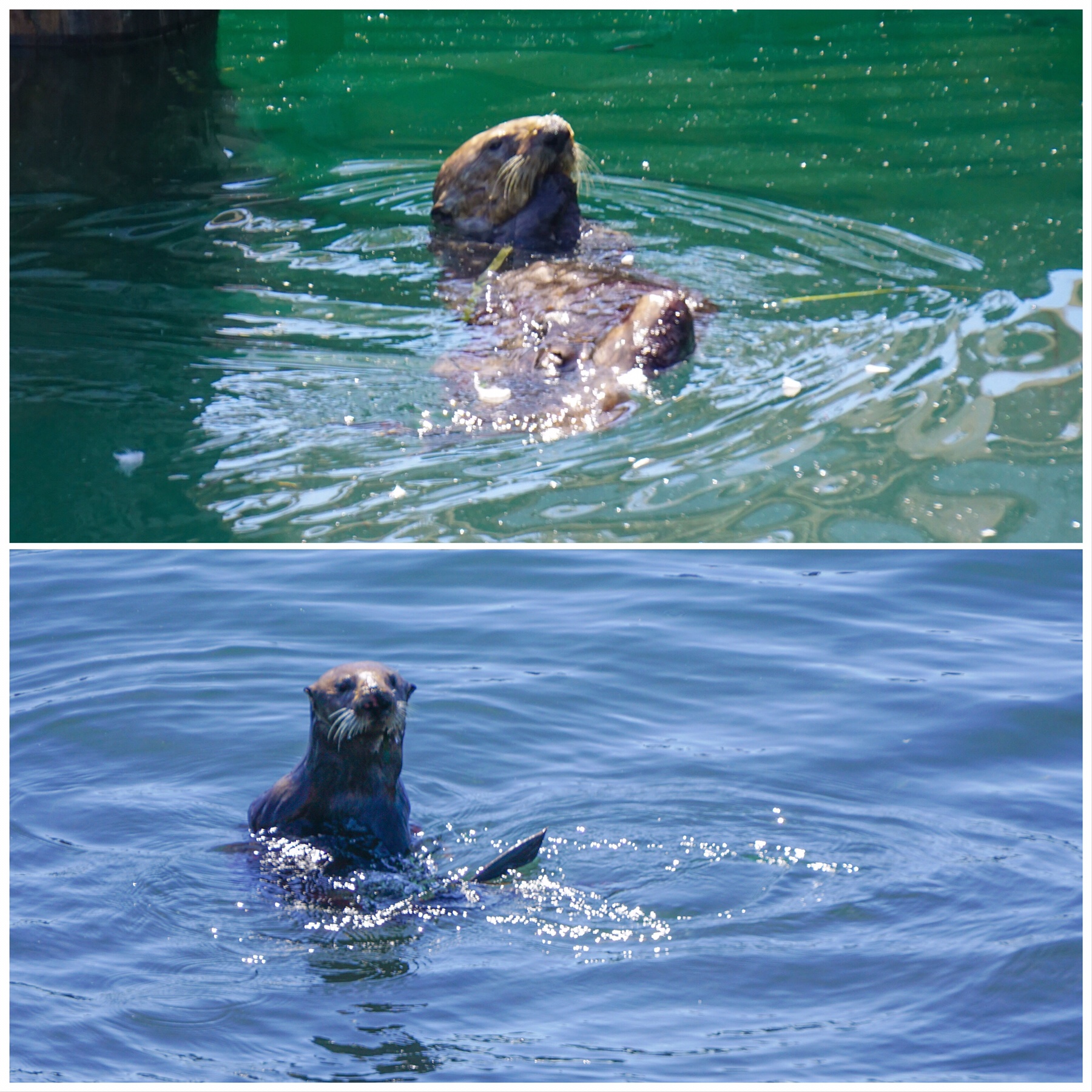
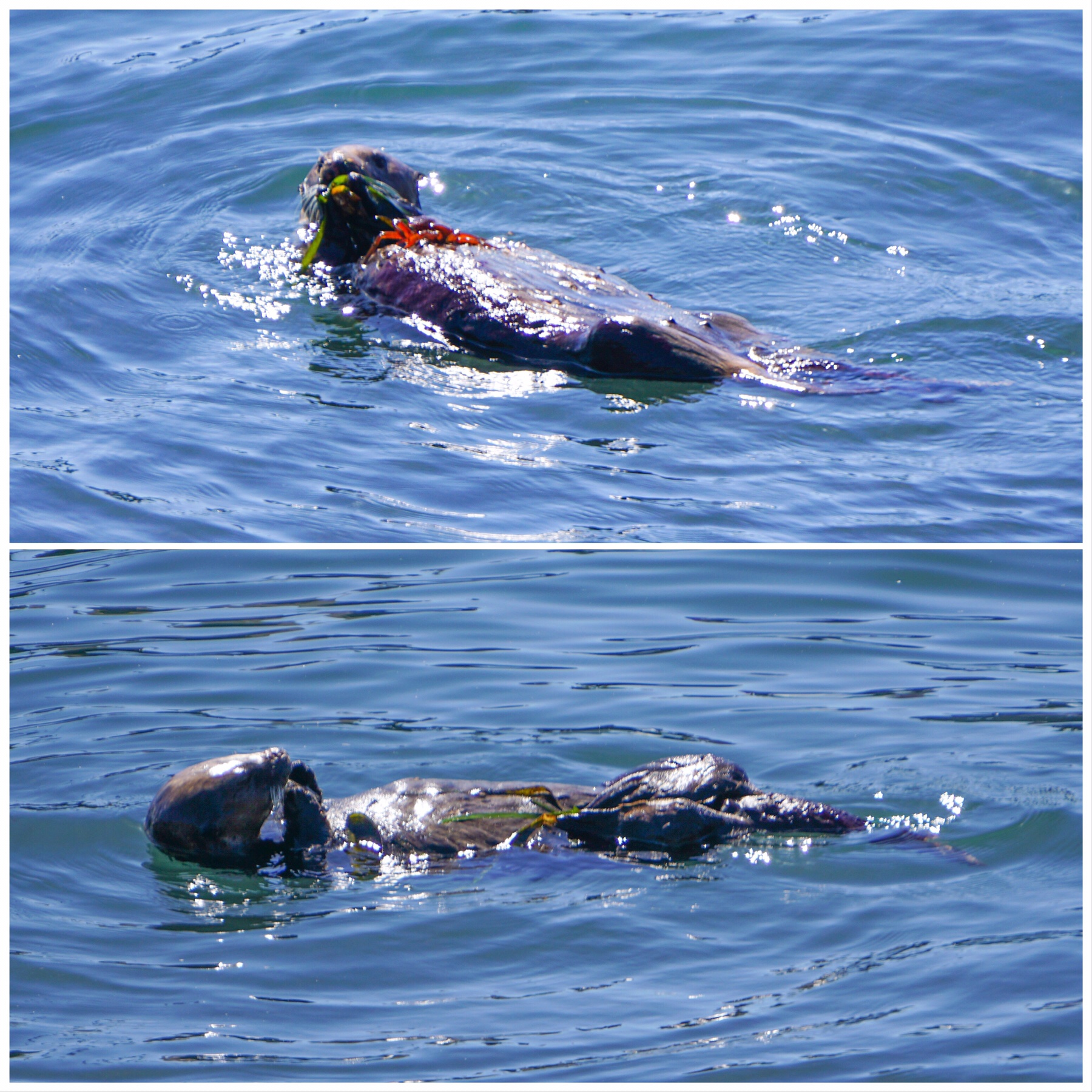
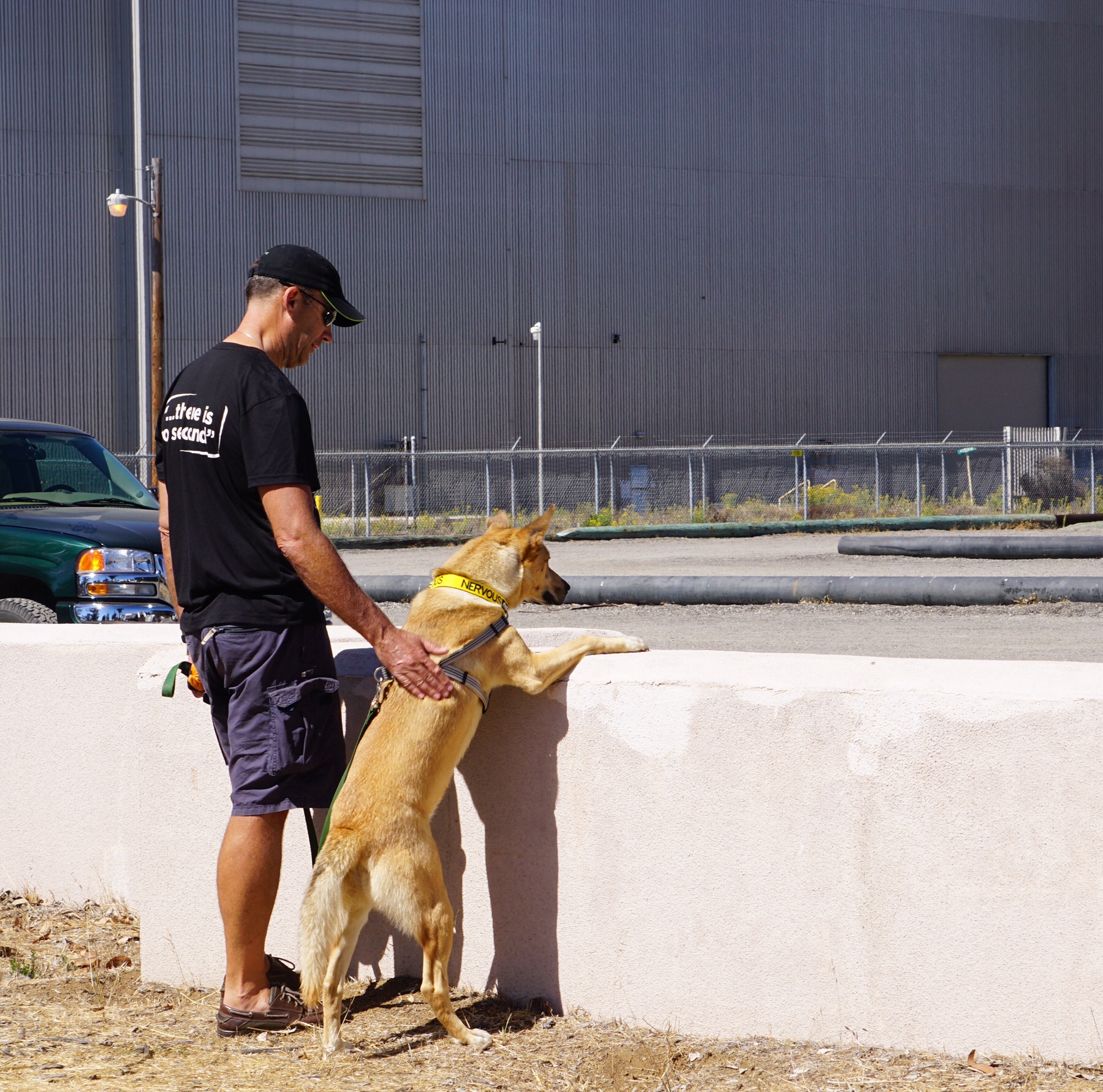 Wine tasting was next on the agenda, so we headed inland, stopping off at a couple of fabulous lookouts en route.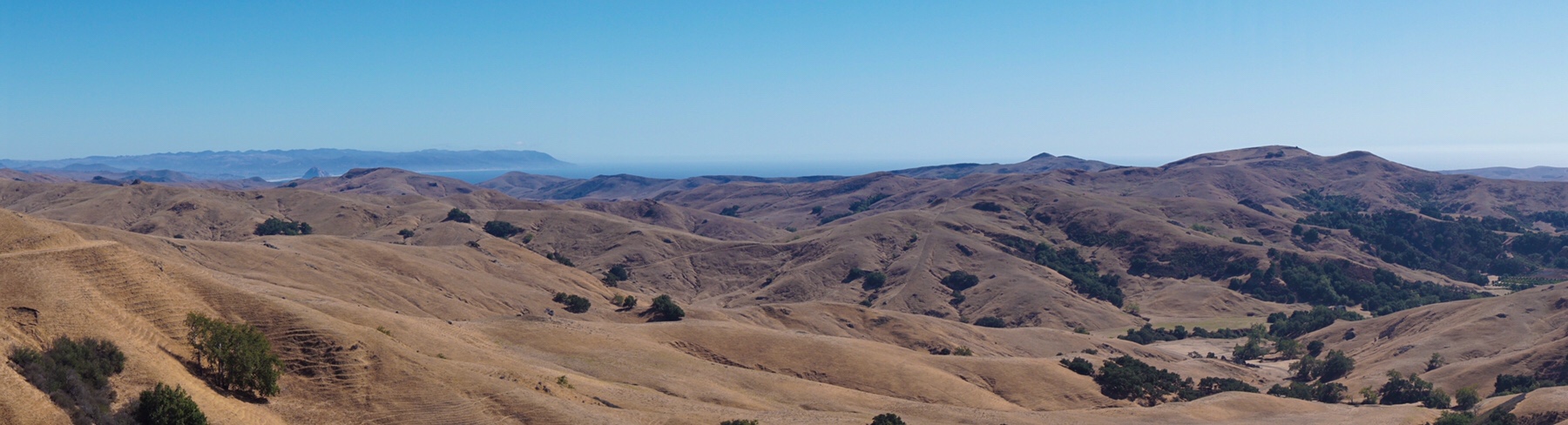
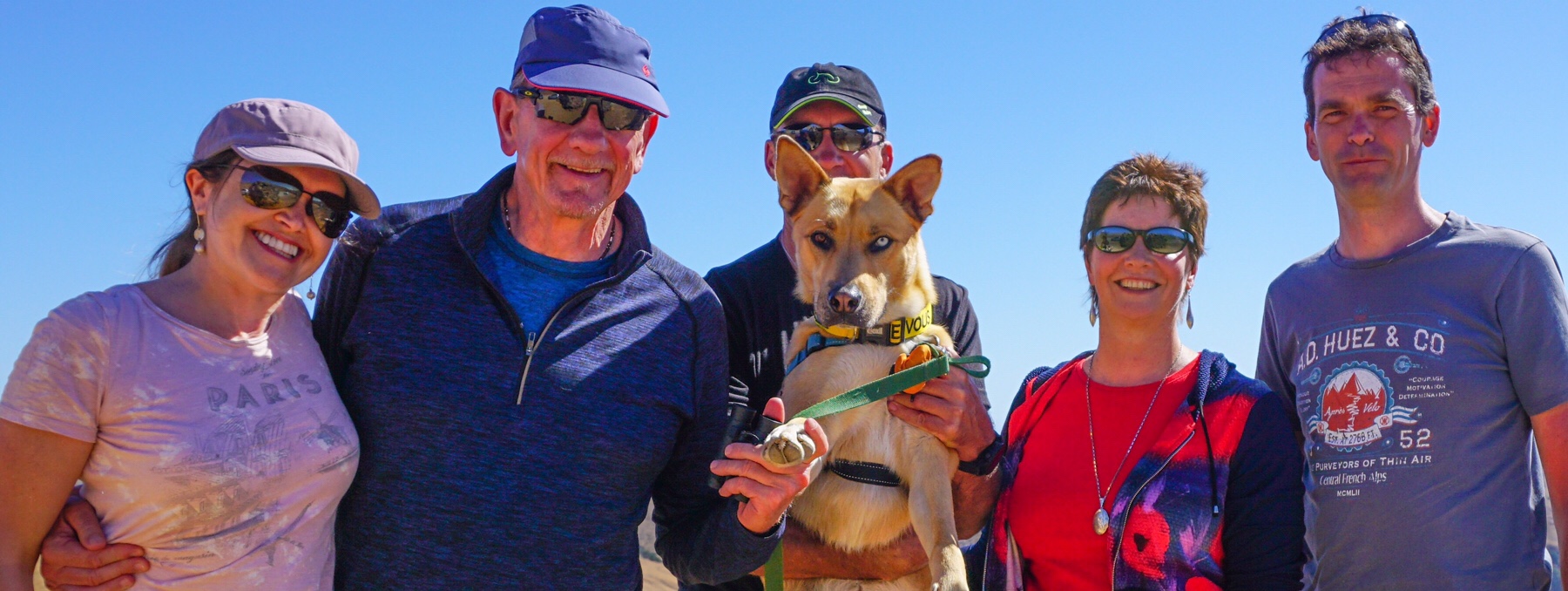
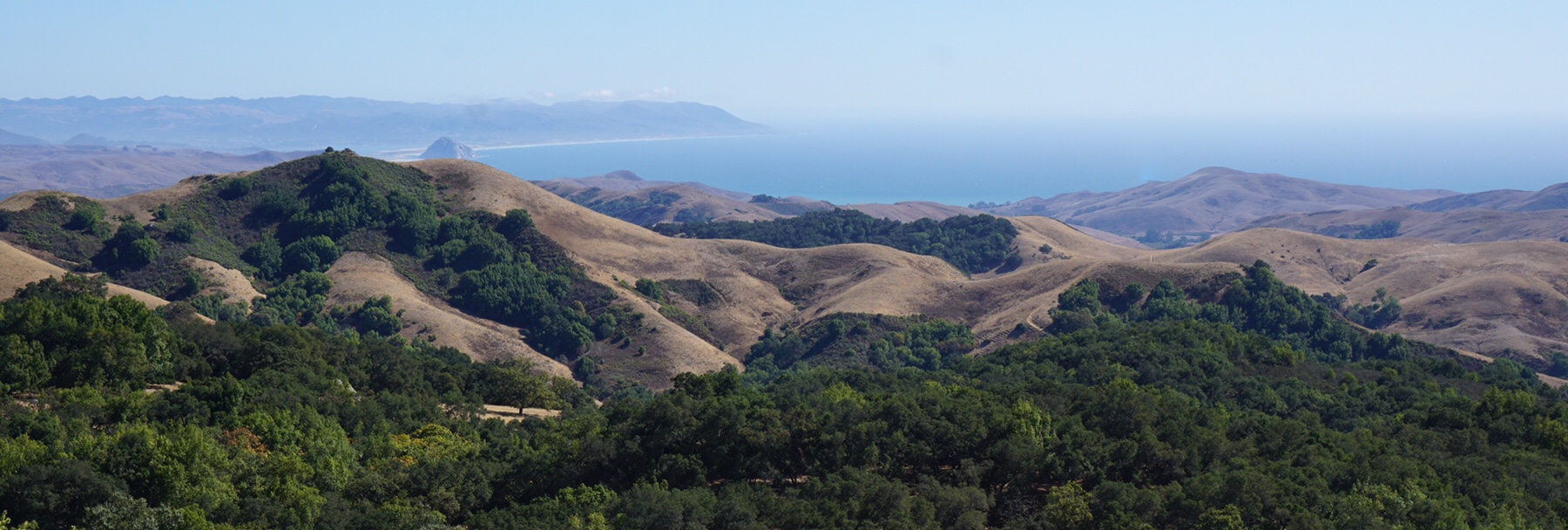 We drove to Opolo Wineries, where Moki was allowed to join us in the seating area while we tried some local tipples. Tim and I were the only ones keen for a taste, heading into the busy tasting room to try our drops.
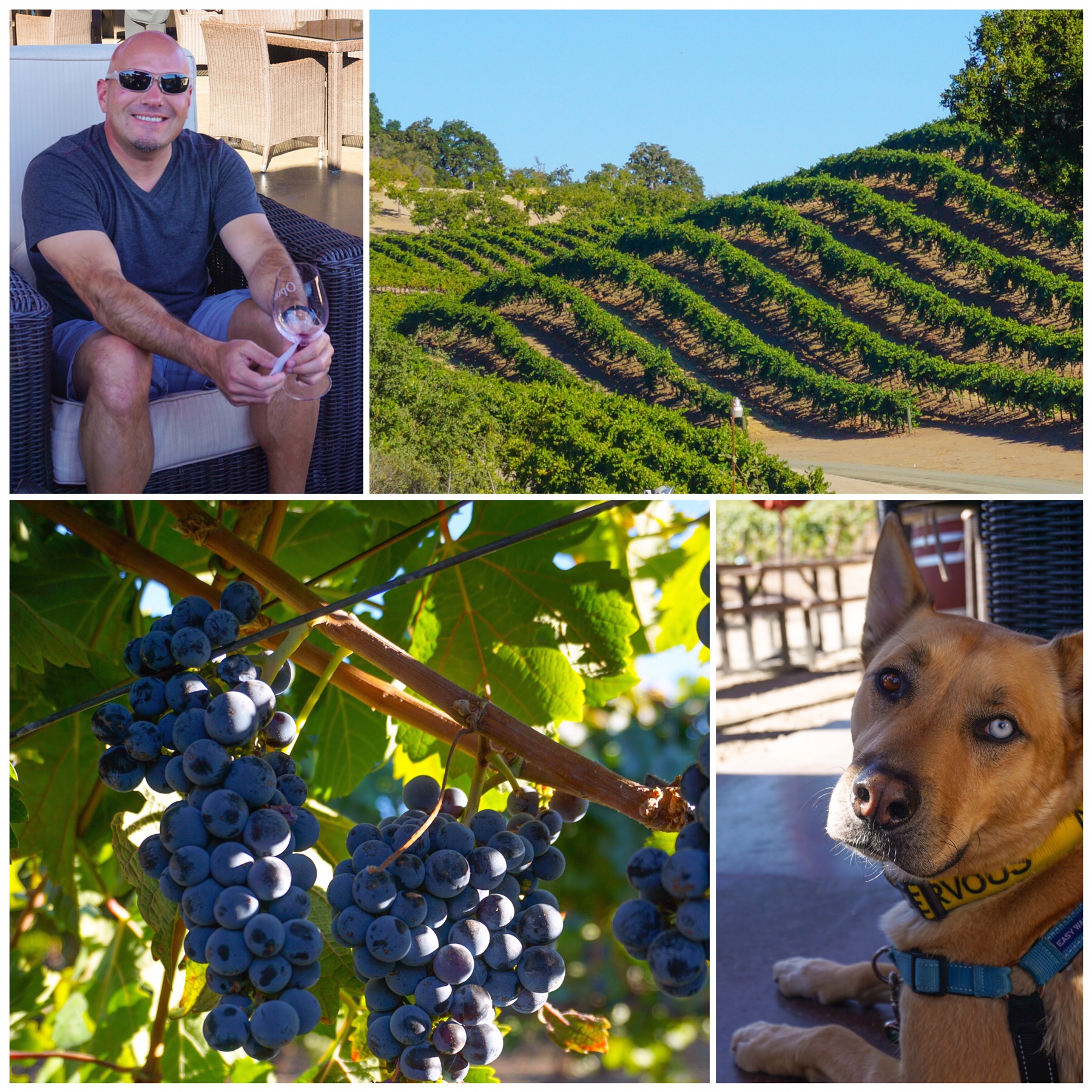 We finished off our day with some take-out from a local restaurant in Atascadero and trying a local brew. Another fine day in California!
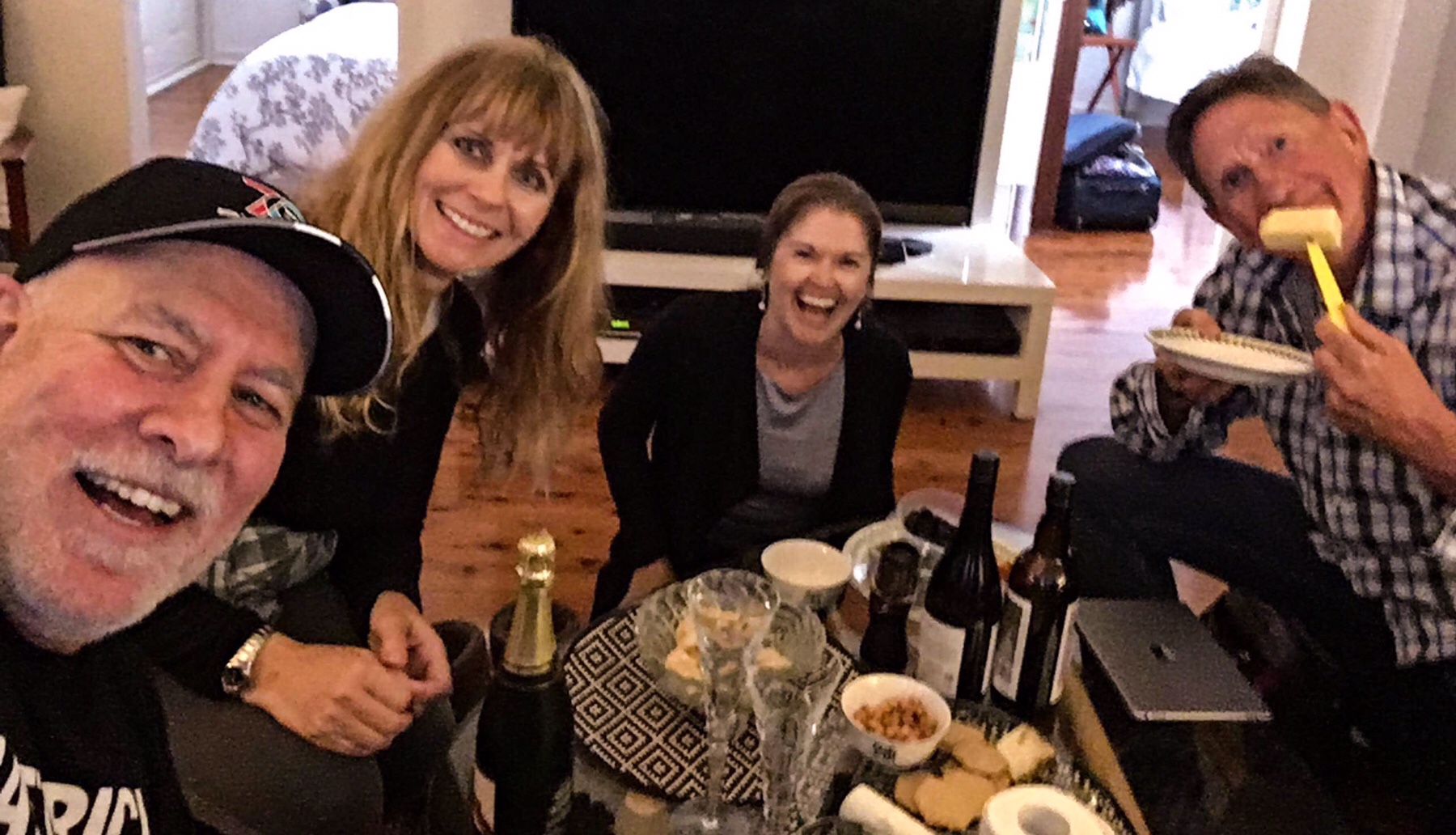 Tea progressed into champagne, and the four of us then went out for a delicious local curry – Mark and Chris careful not to overdo the cheese and nibbles before we went!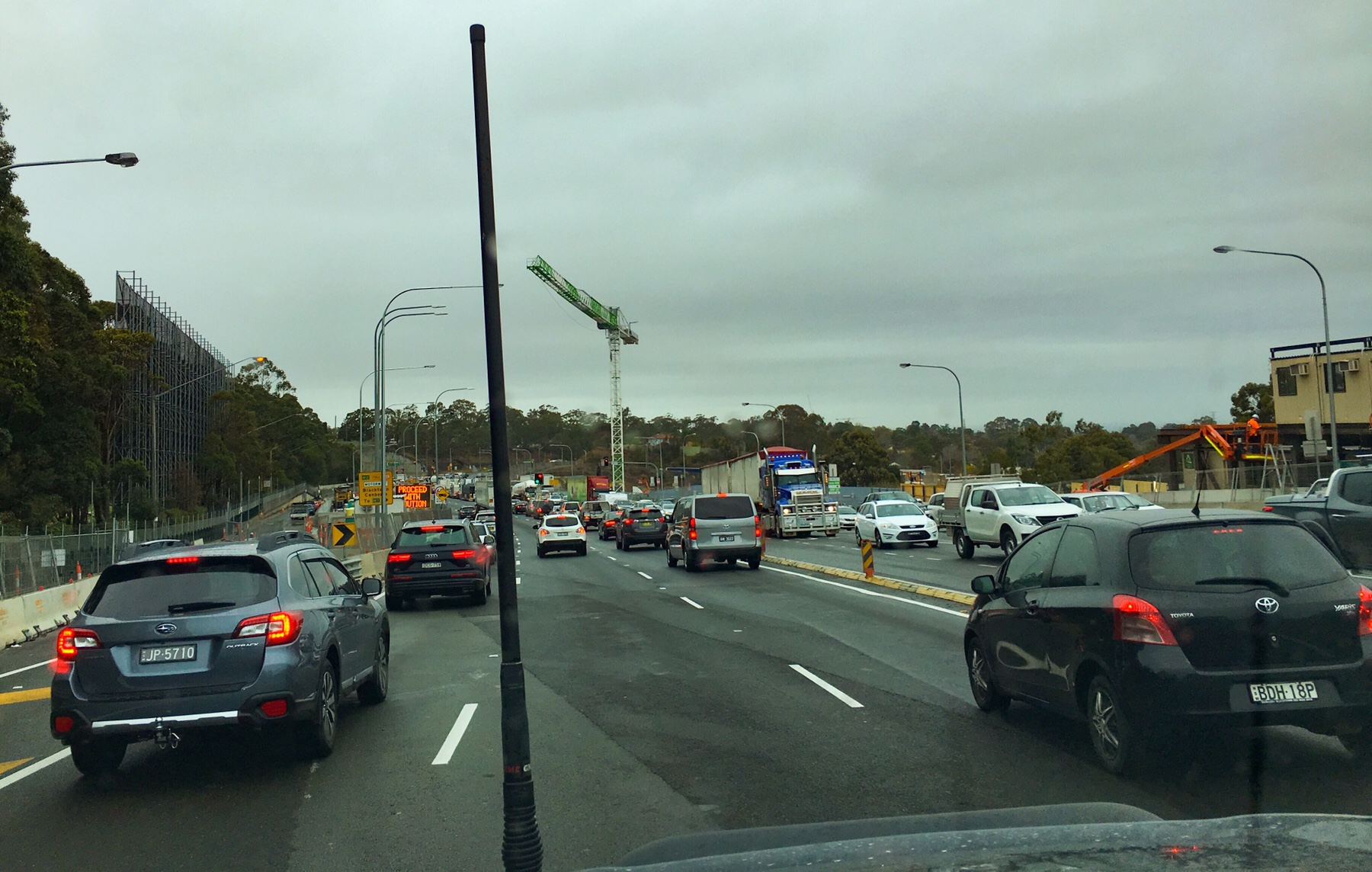
 Mark drove excellently despite the stressful conditions, and before long we were emptying the last of our freezer bits and pieces and heading to our friends’ apartment in Matraville, not far from Botany Bay for a delicious roast lamb dinner and a well deserved glass of red wine.
 Monday and Tuesday were earmarked for the all essential medical check ups, with good news for Mr A’s eye pressures, less good news for my airway (but a new procedure to try in October), and some steroid injections into my foot to allow some comfortable hiking in the USA.
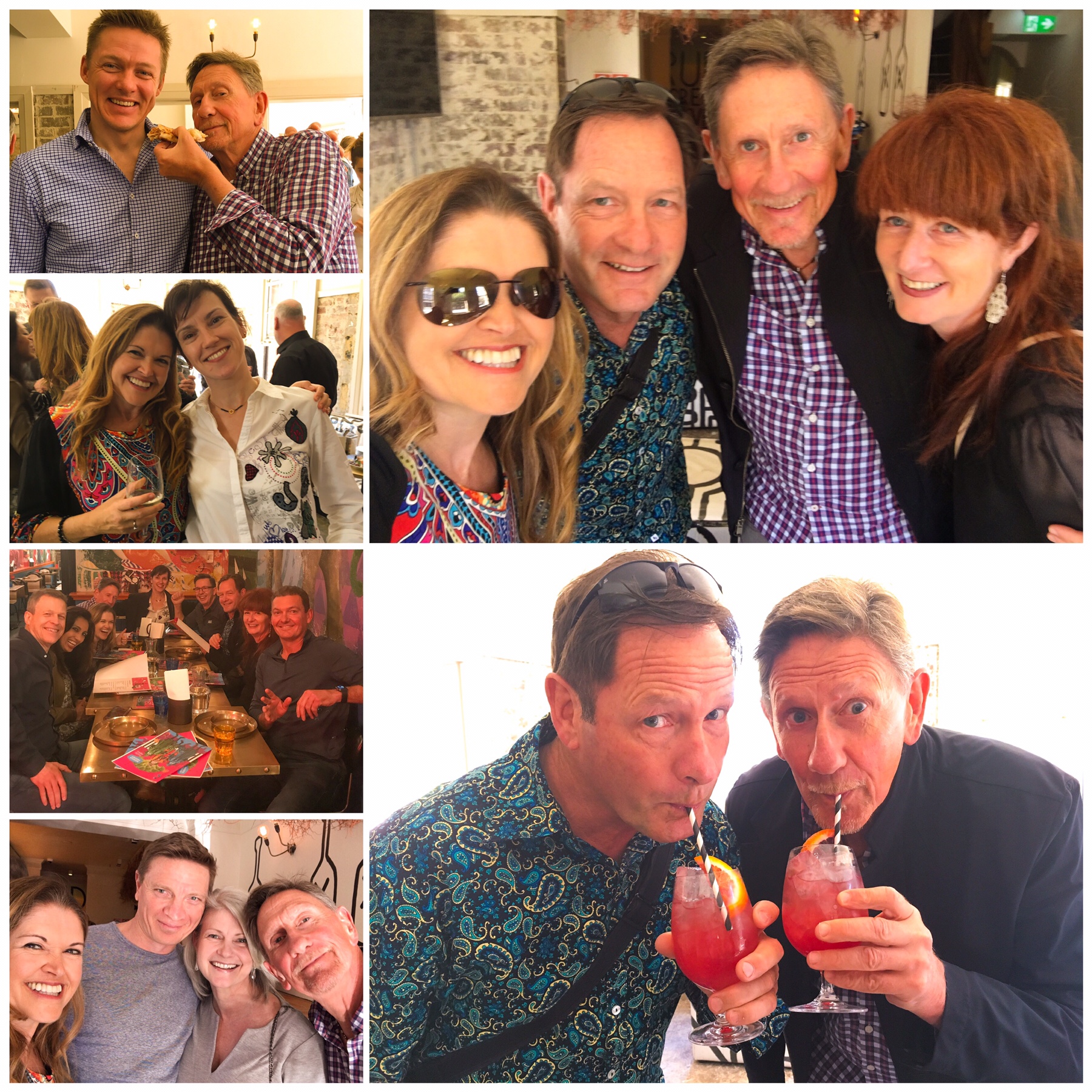
 Mr A took the opportunity to catch up with a bunch of old work colleagues for lunch while I had a hair cut. Lovely.
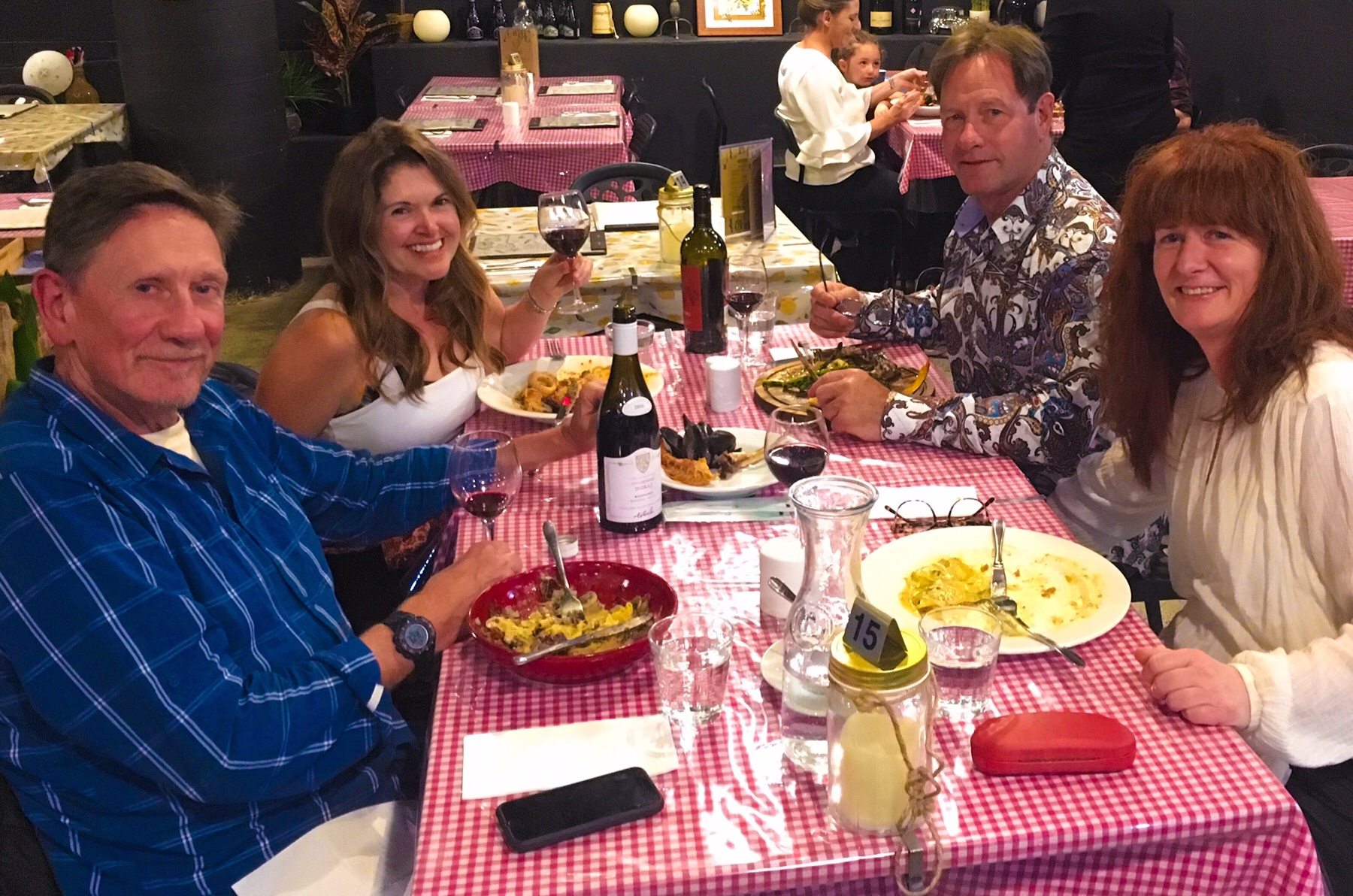
 We finished off our day joining Jenny and David for dinner at a local Italian restaurant. Fabulous food and company as always.
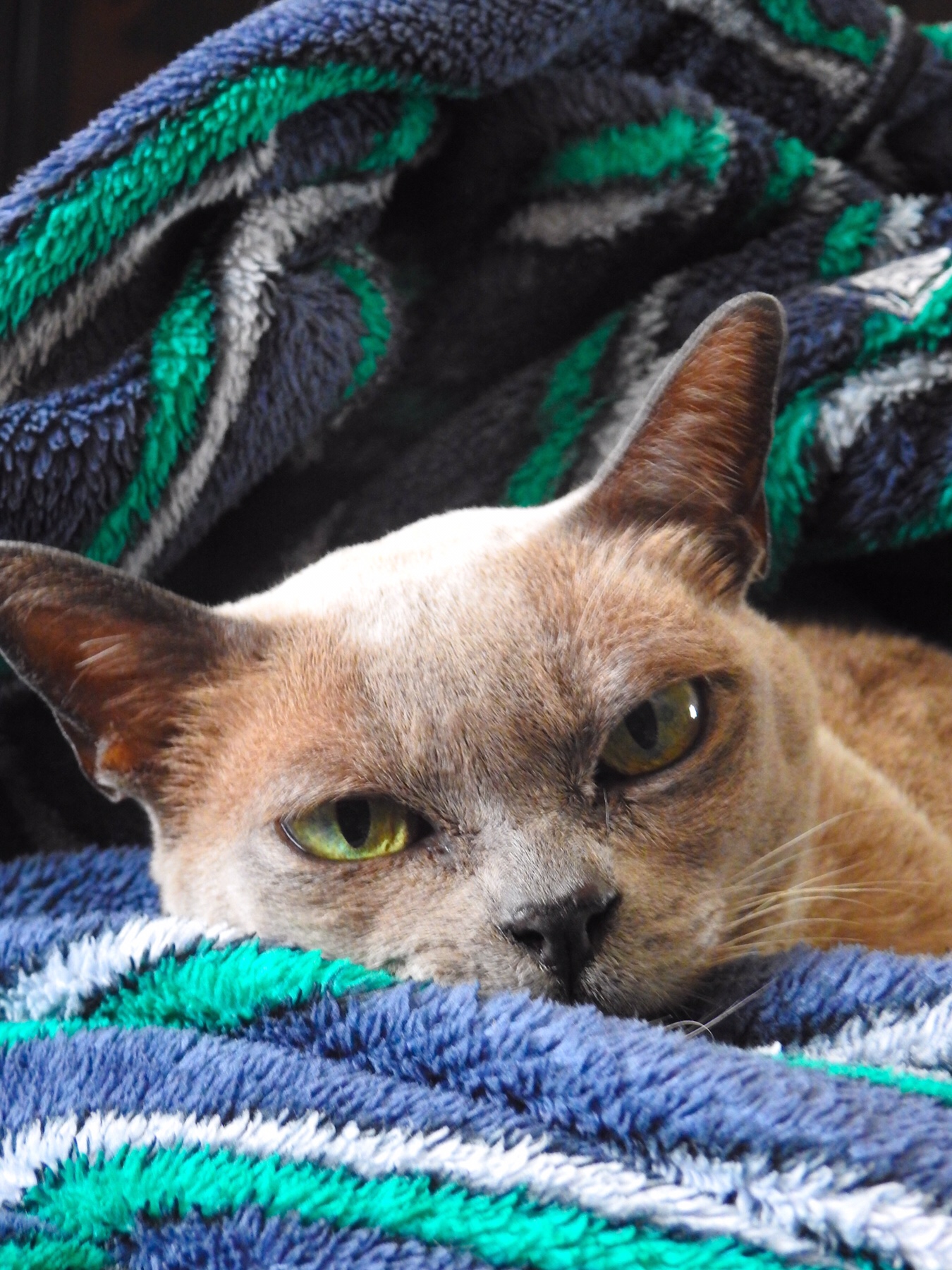
 While we are away, Miss Tassie will be staying here at her luxury pad in Matraville for the next month. She’s settled in nicely, already solar mapping out the apartment. Apparently the new chairs on the balcony suit her, while she is also finding the colour scheme elsewhere works with her glossy blue coat. She’s in good hands here.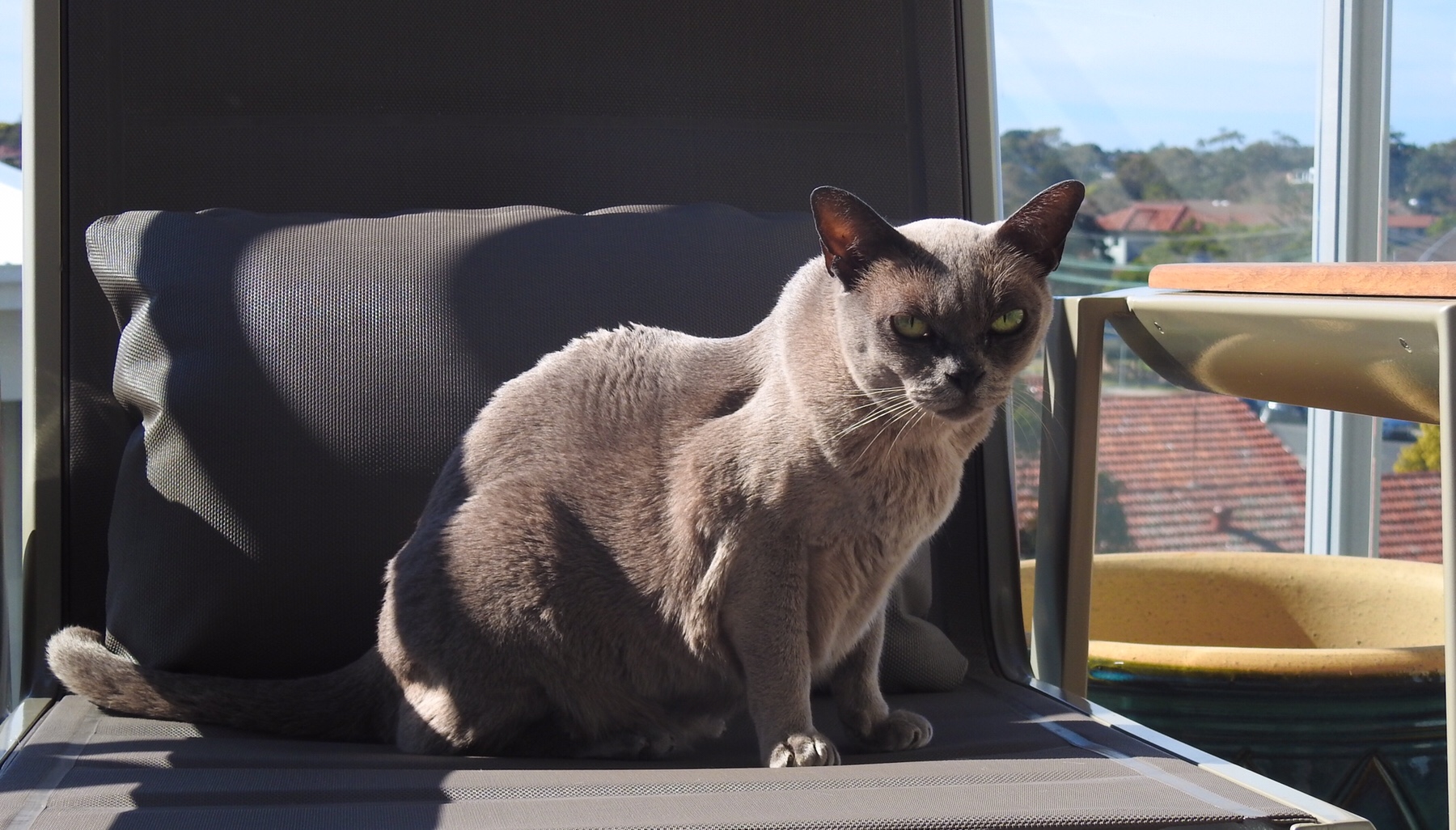
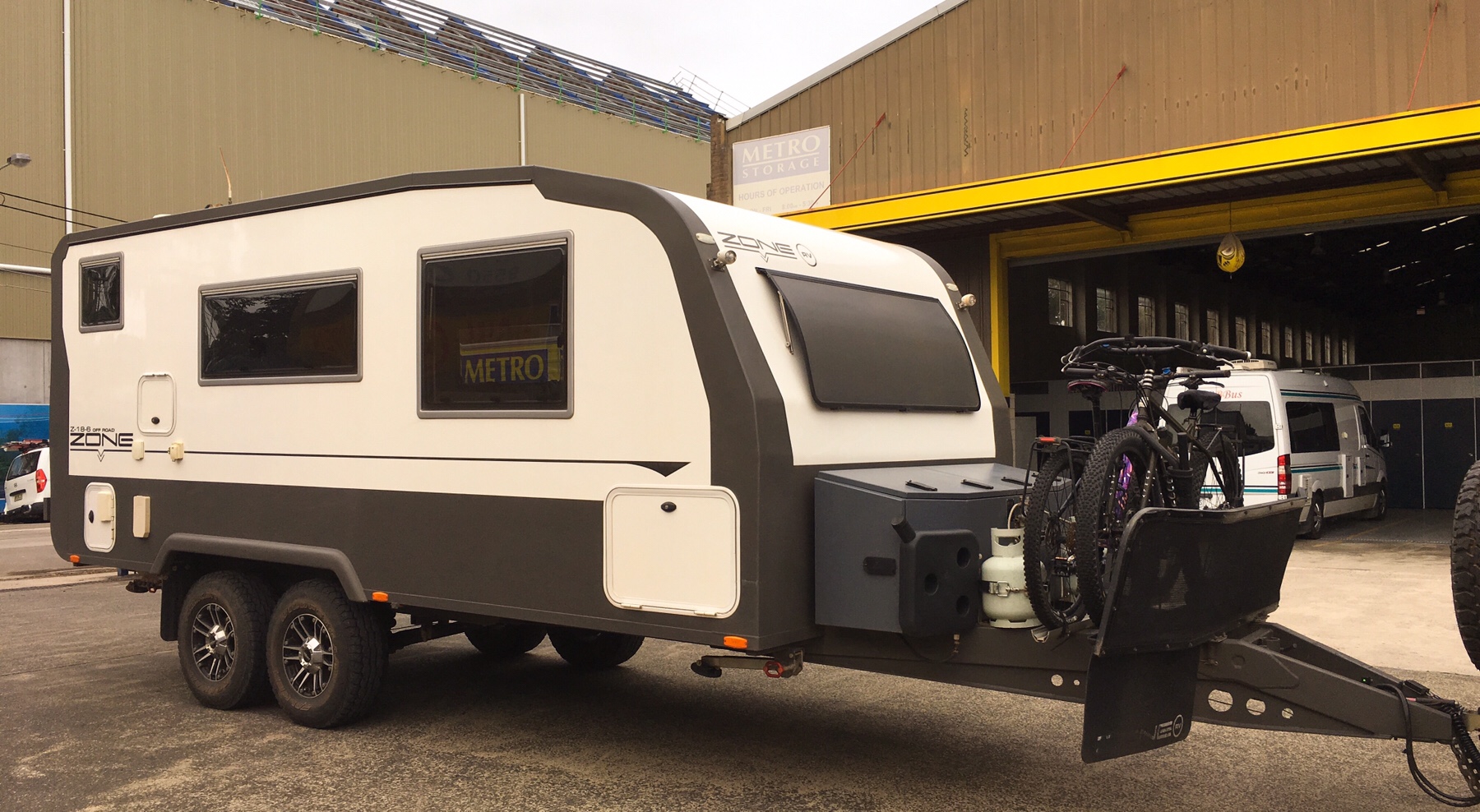
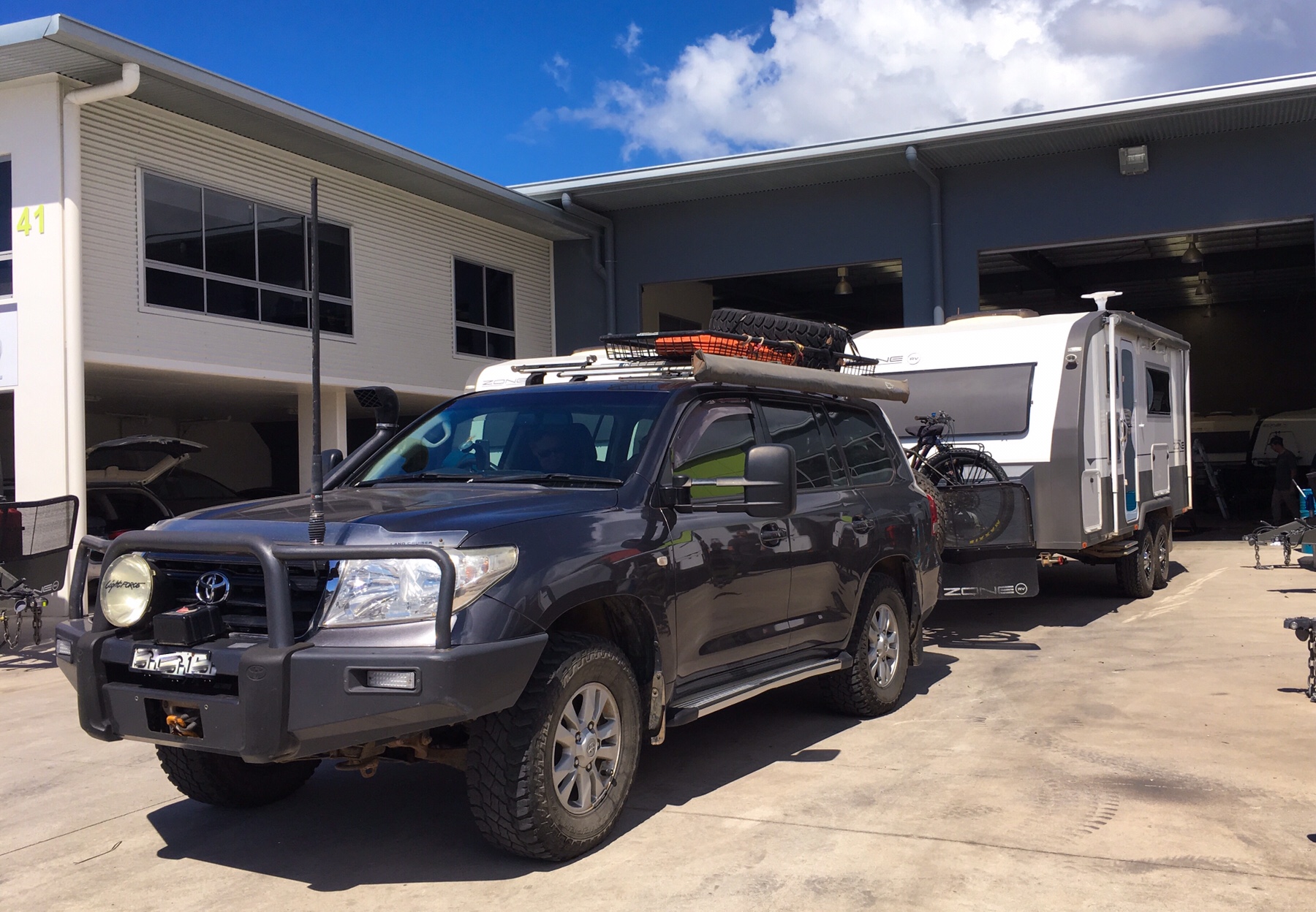 We had a brief whirlwind of time to transfer our cases and food back into the caravan, dig out the smart clothes and get changed, before the four of us drove into Brisbane for the evening.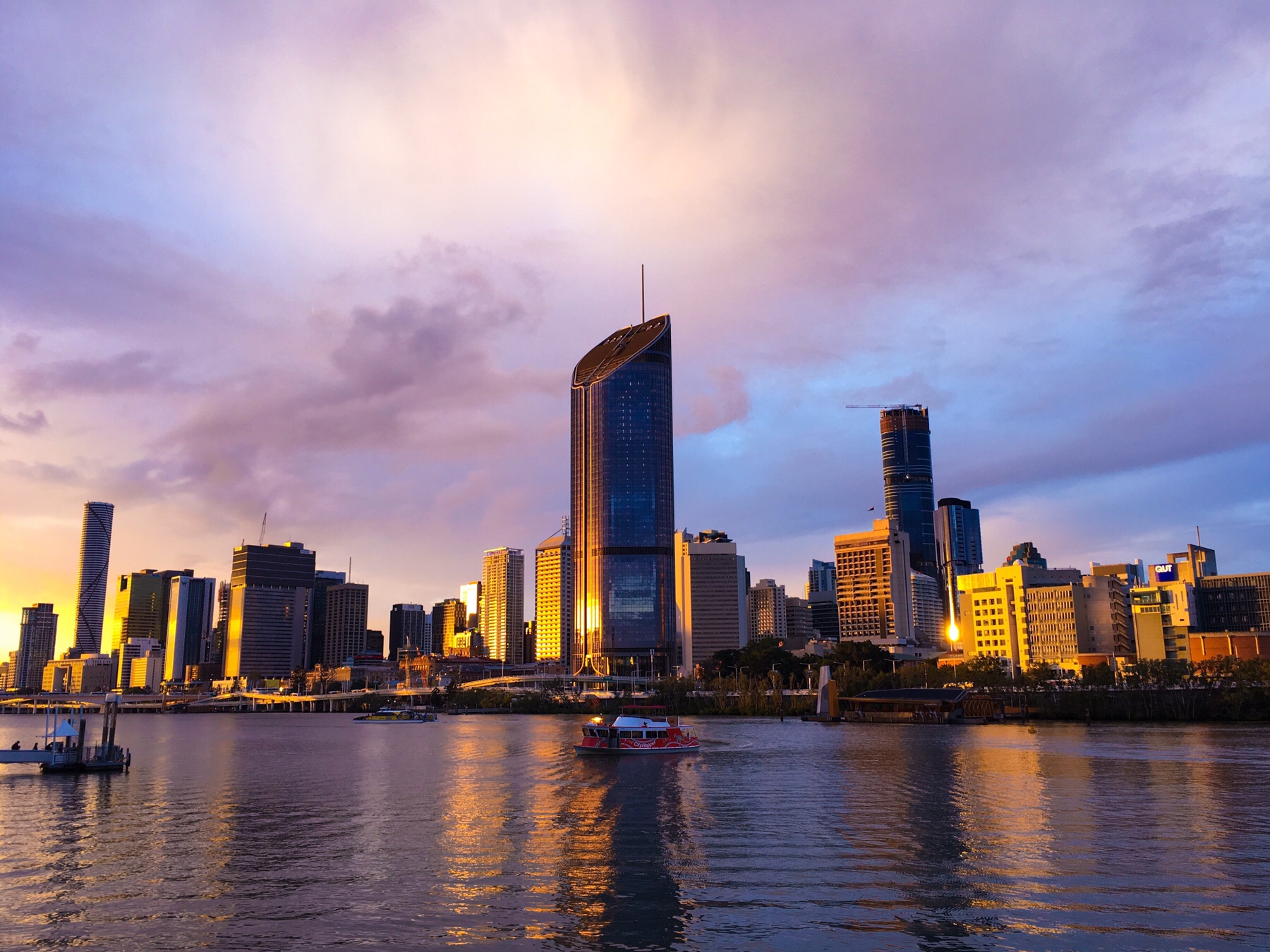
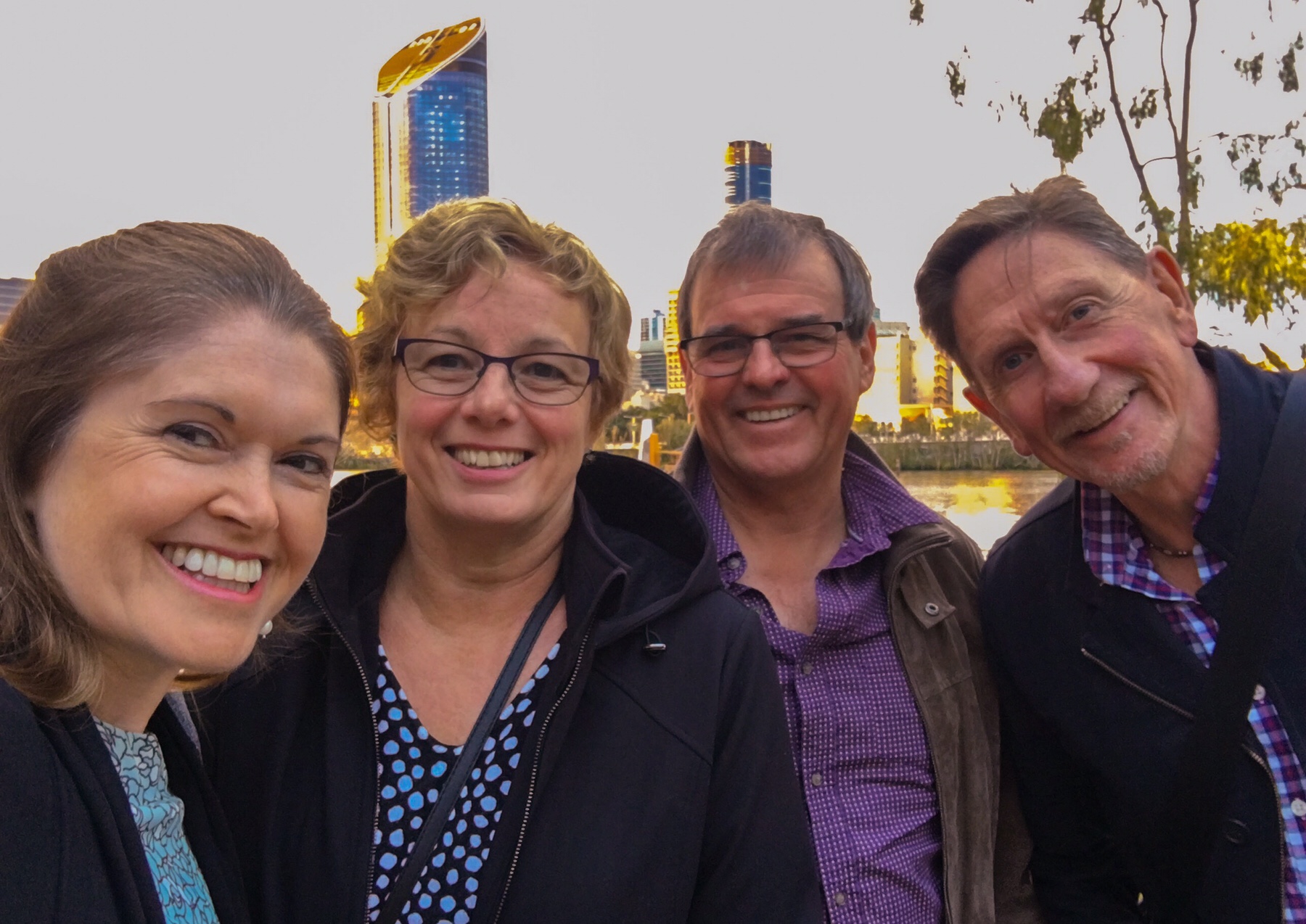 After this, we parted ways, Phil and Libby ending up at a pub helping celebrate a nephew’s birthday, while Mr A and I joined three lovely ladies for dinner in a French restaurant beside the water.
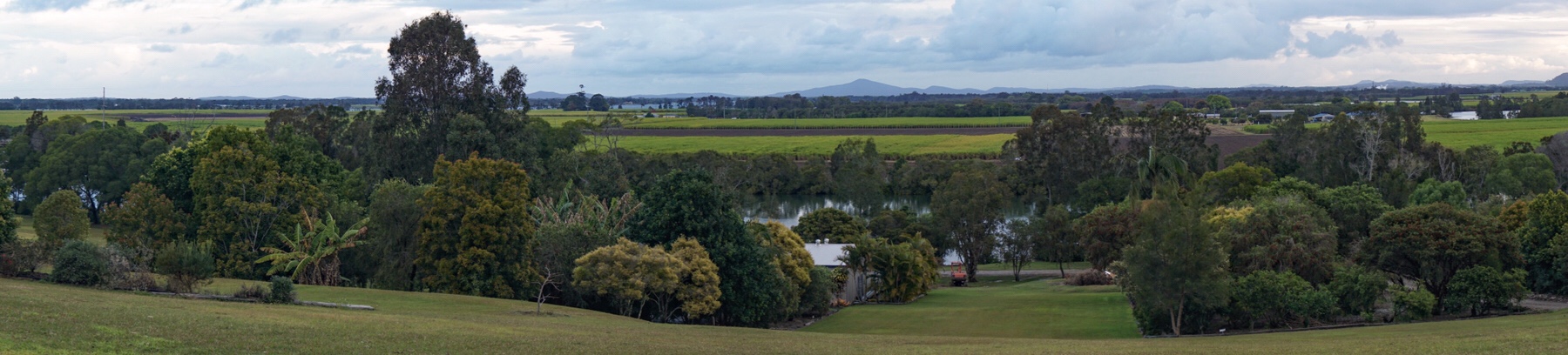 We have probably driven past this area a dozen times without any awareness of what’s here, but it’s a lovely rural settlement sat on the banks of the Clarence River close to the estuary. There are over 100 islands in the wide river here, the nearest to us being Goodwood Island.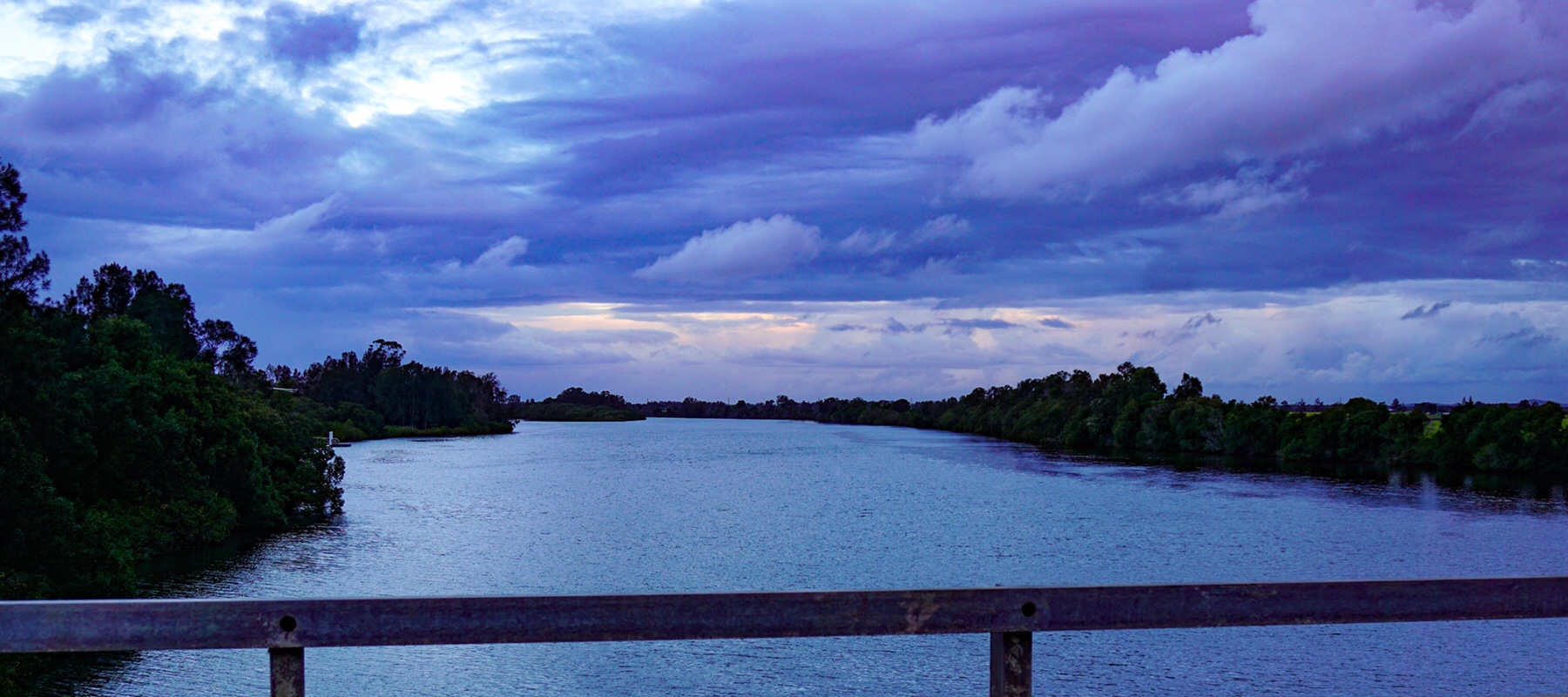
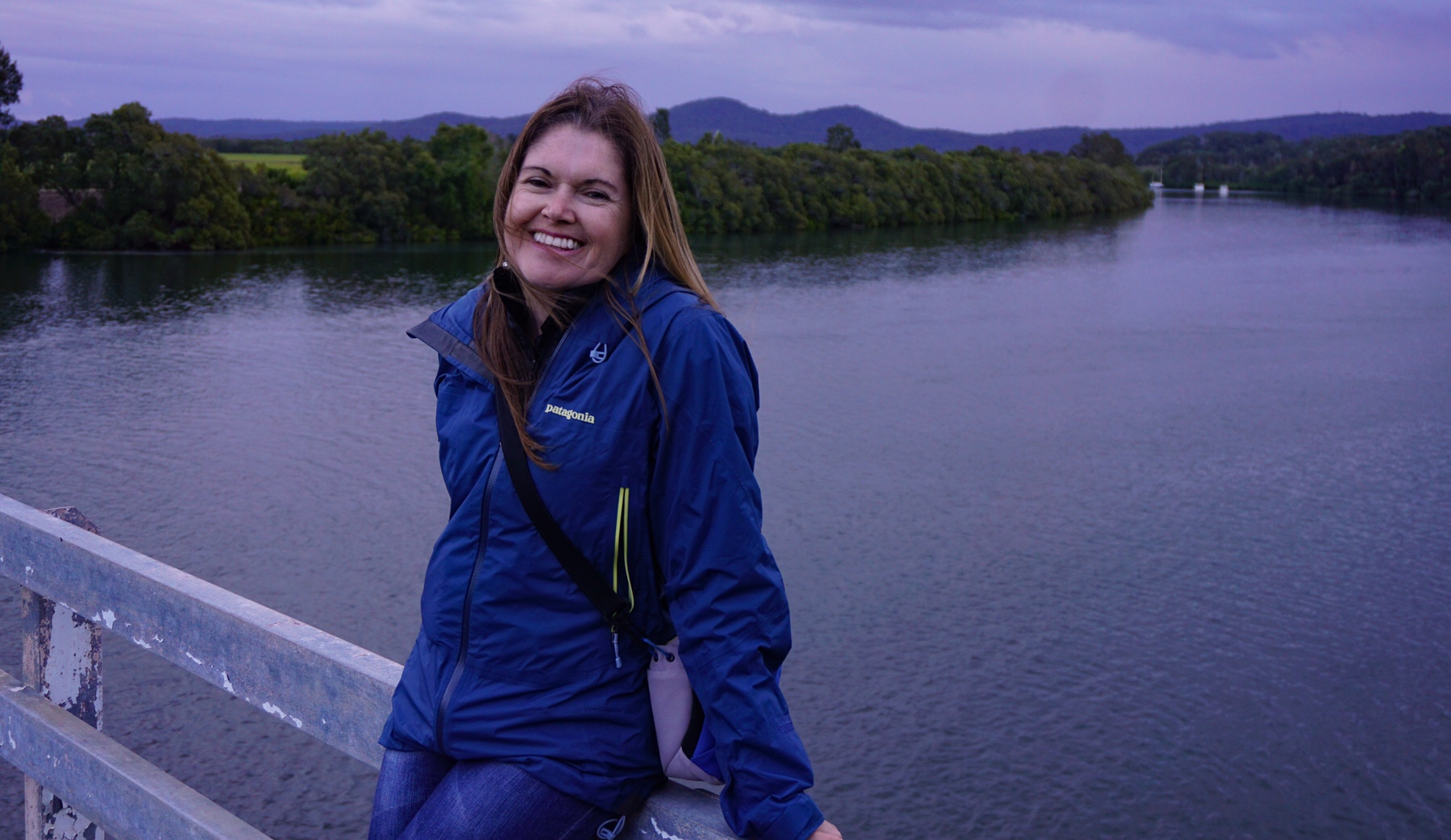 The sun was starting to set so we only went a couple of kilometres, crossing over the bridge to Goodwood Island and checking out the wet sugar cane fields before returning for the evening.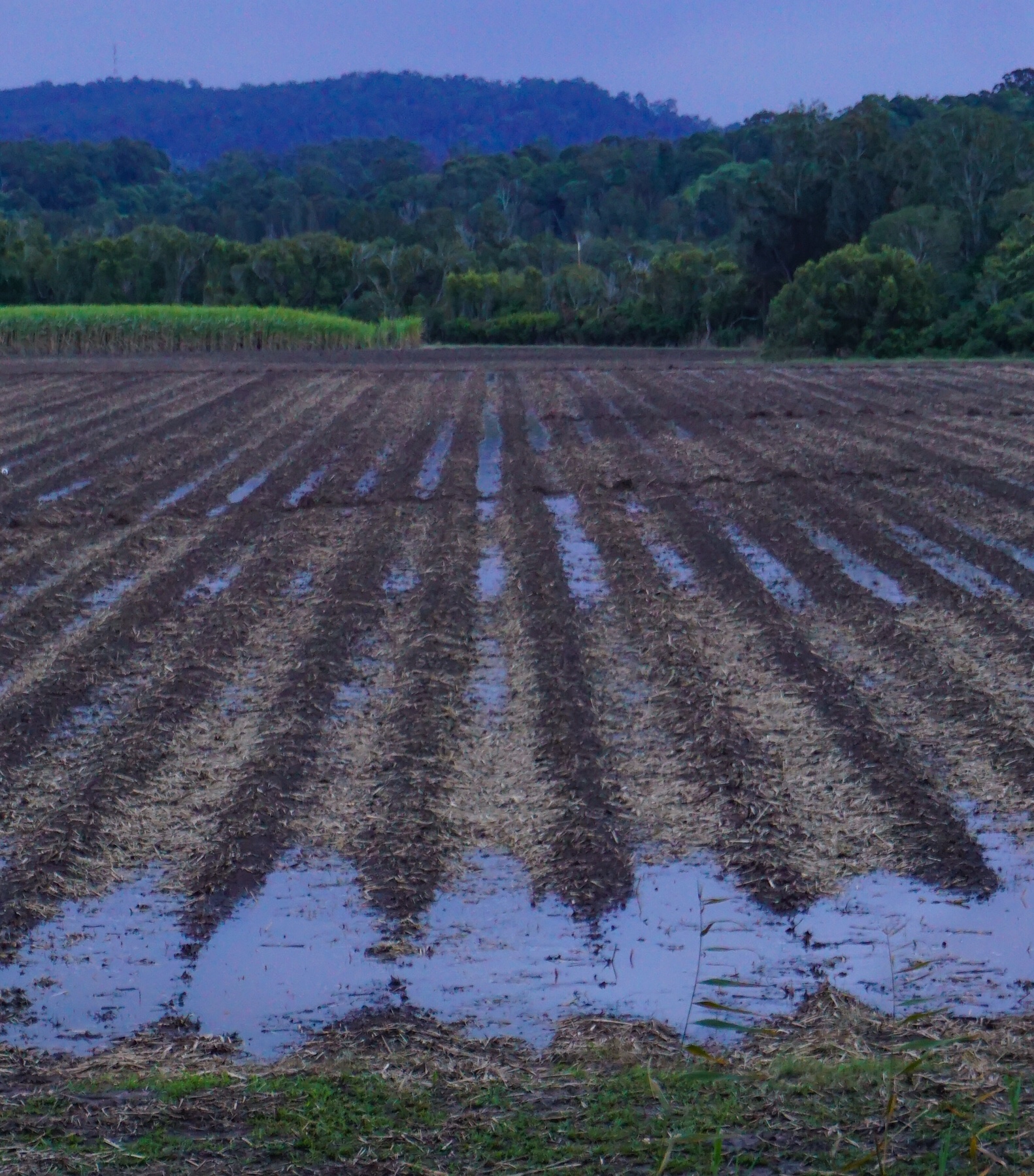
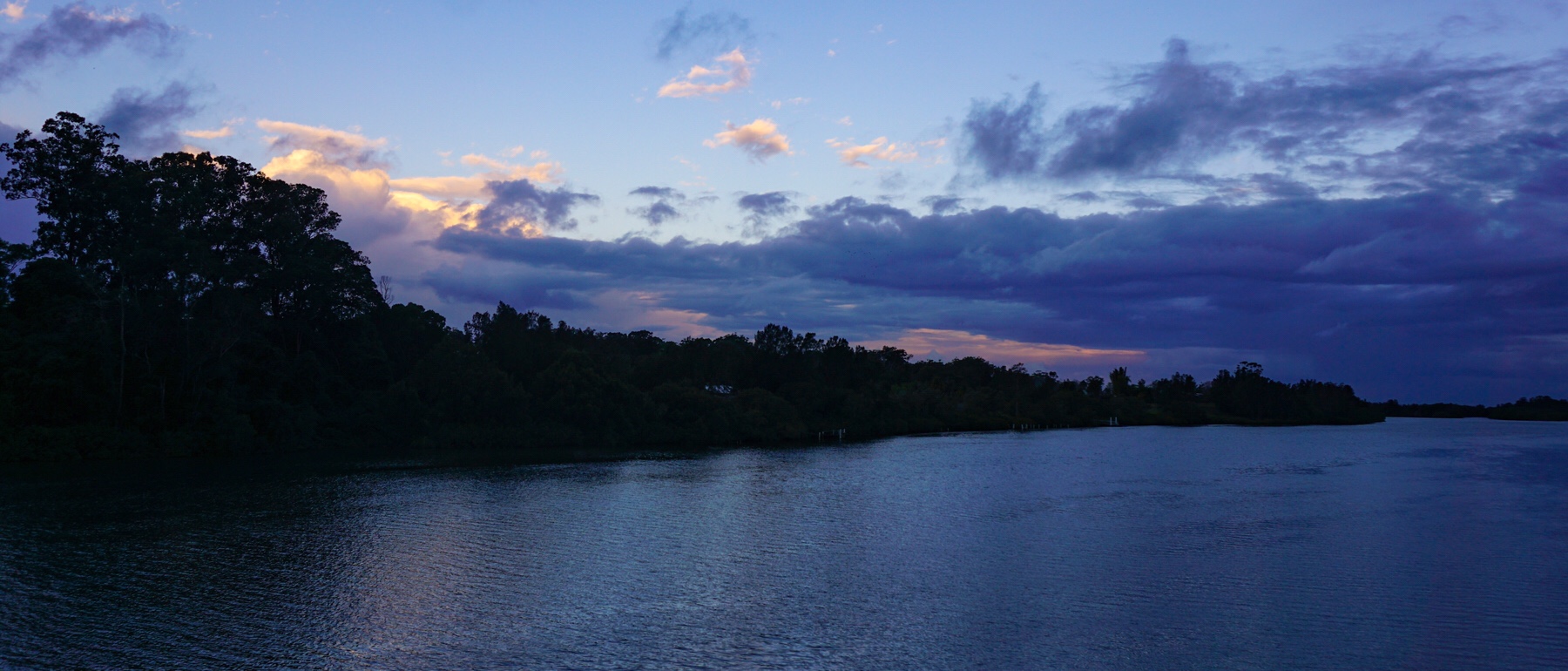 More rain and thunder entertained us, a novelty after the dry and drought of the inland areas. Sadly, it seems the rain is sticking to the coast, not helping out the farmers this time.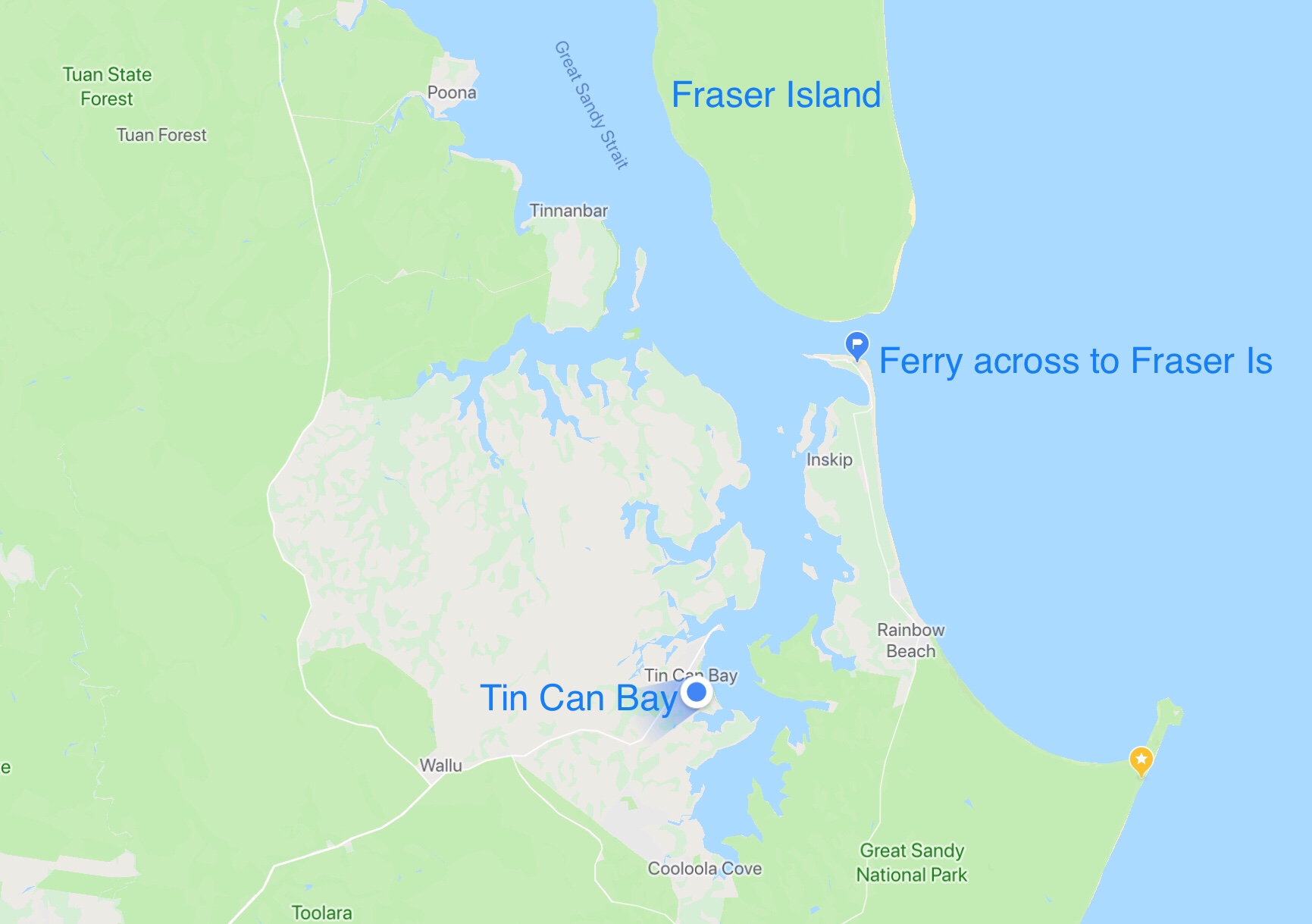
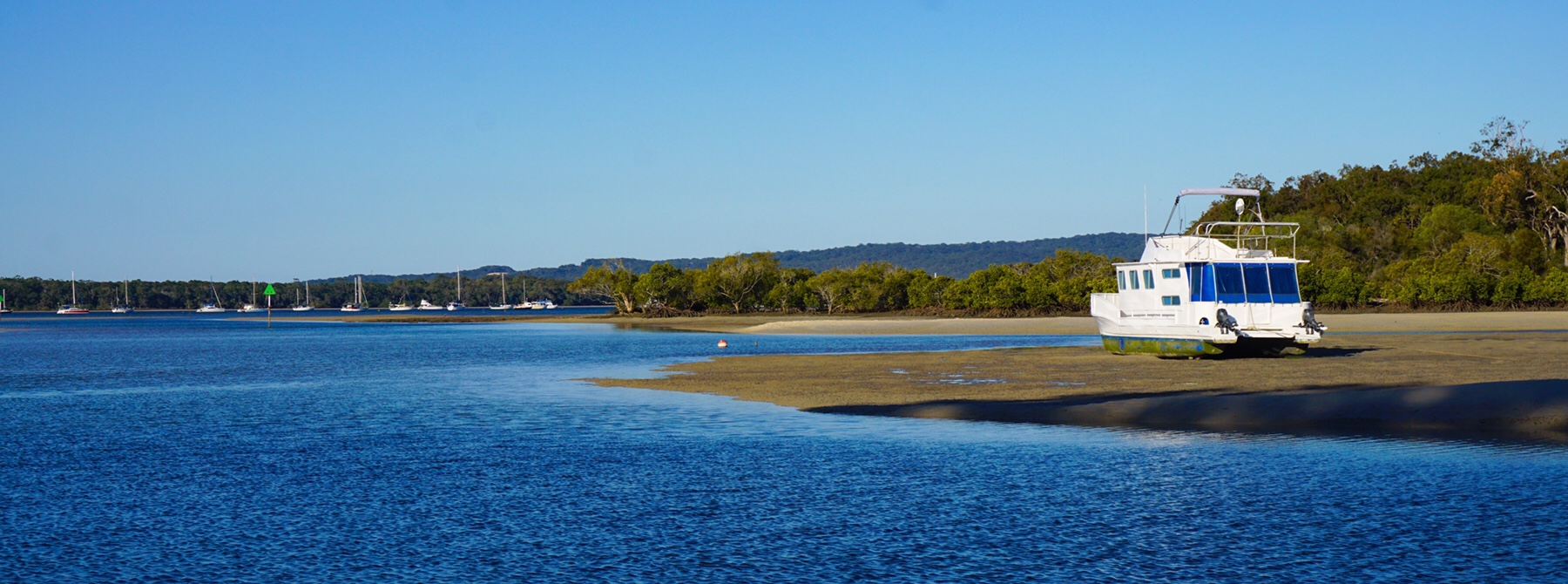
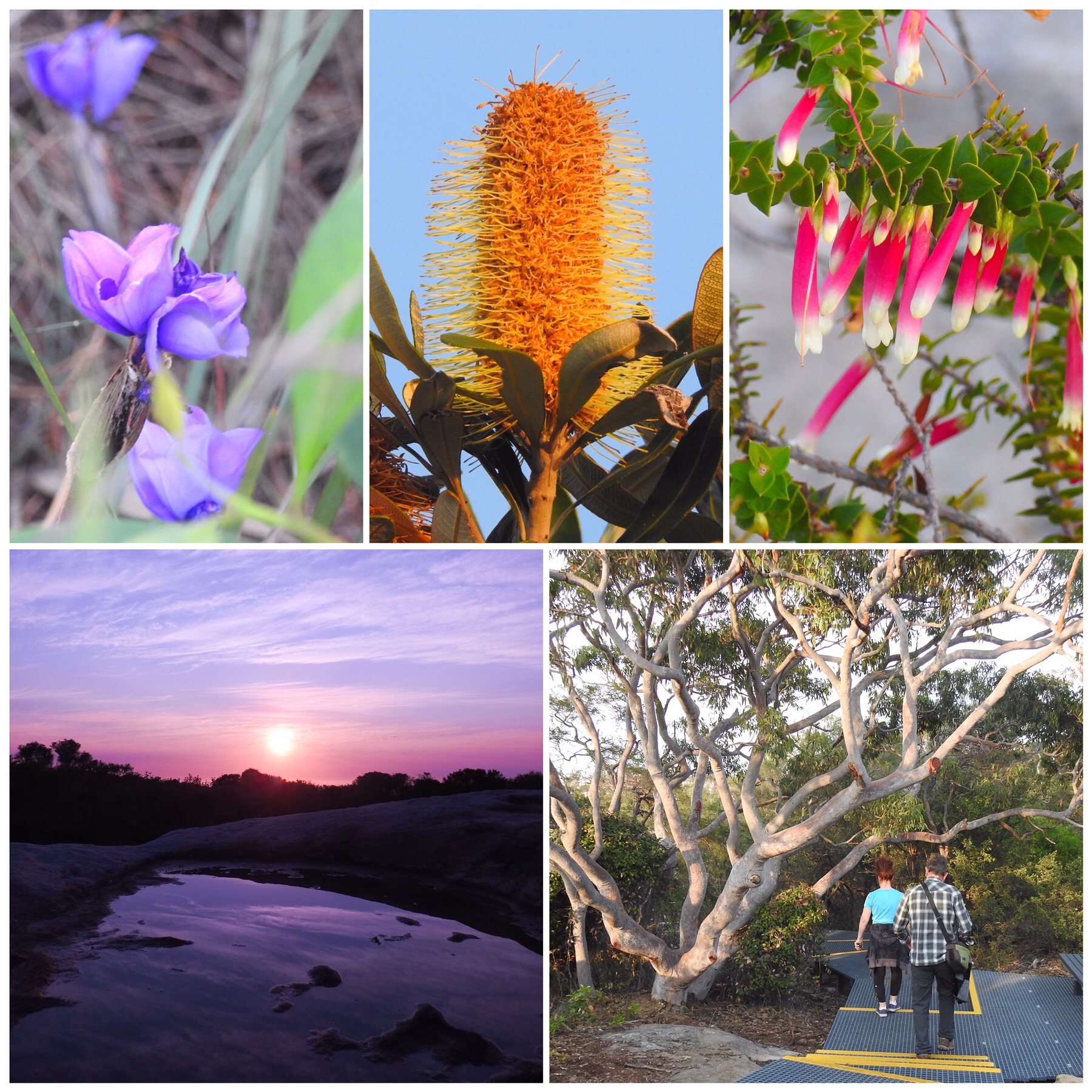
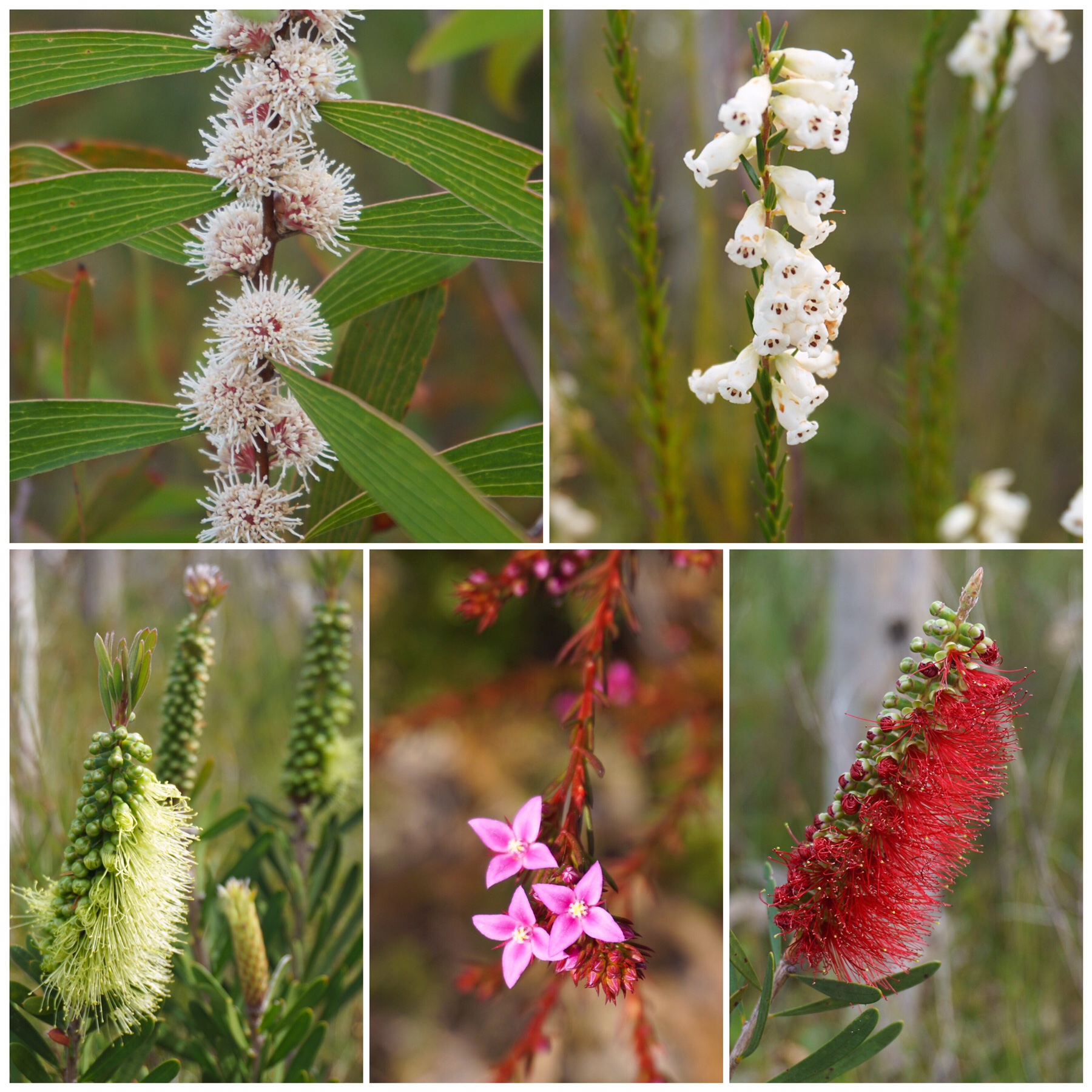
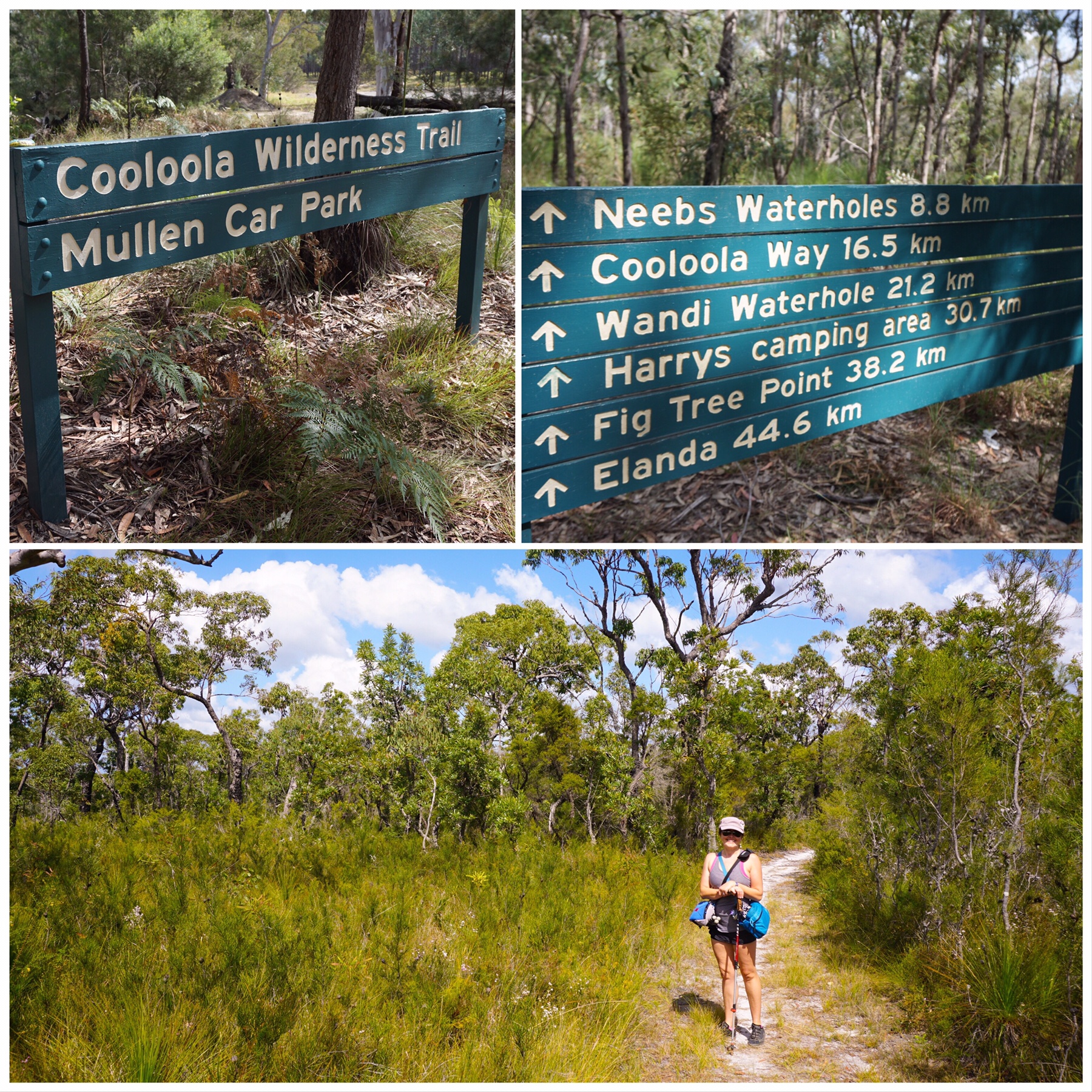 And what a beautiful walk it is. We are days away from the offical start of spring here (1st September) but the wildflowers were out in abundance.
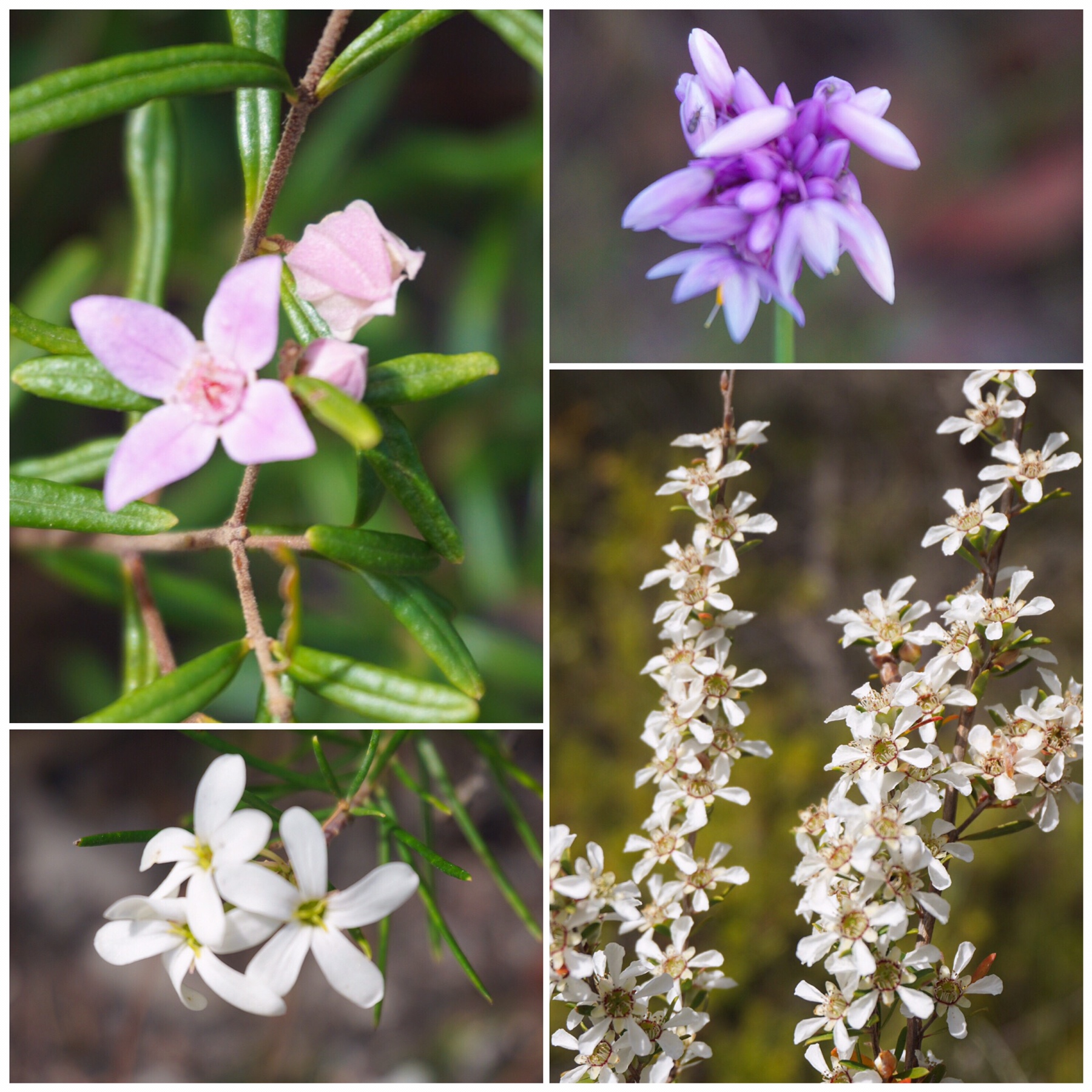 Several varieties of boronia, teatree, bottlebrush, peas, heath, eucalypts and more brightened our pathway, accompanied by the rhythmic hum of insects feeding on the nectar. It really was good for the soul and reminded us how much we love bush walking at this time of year.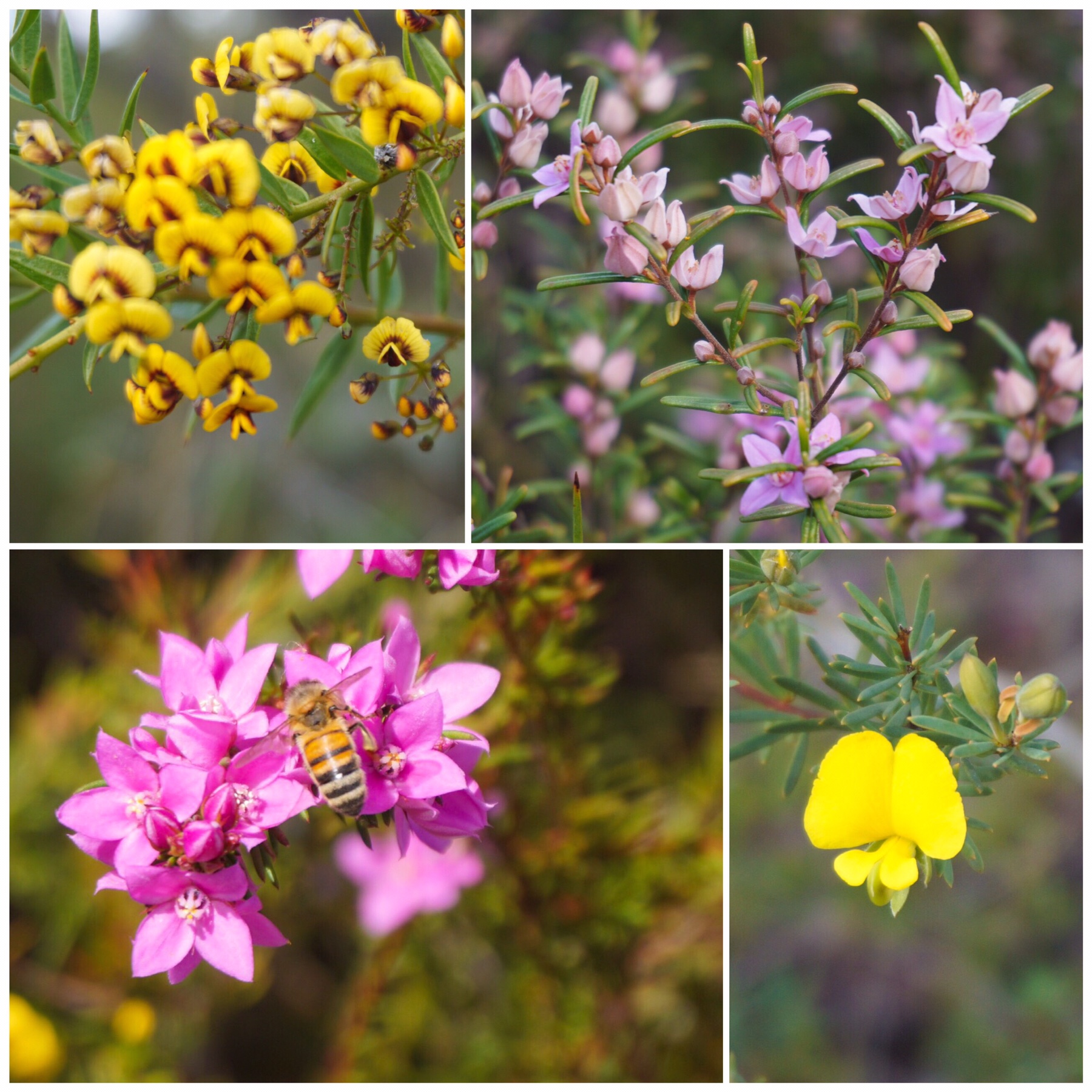
 The pathway was well marked and predominantly white sand or grass, very easy walking with a couple of water crossings along the way. The landscape was quite open with good views to the east, across to the Great Sandy National Park.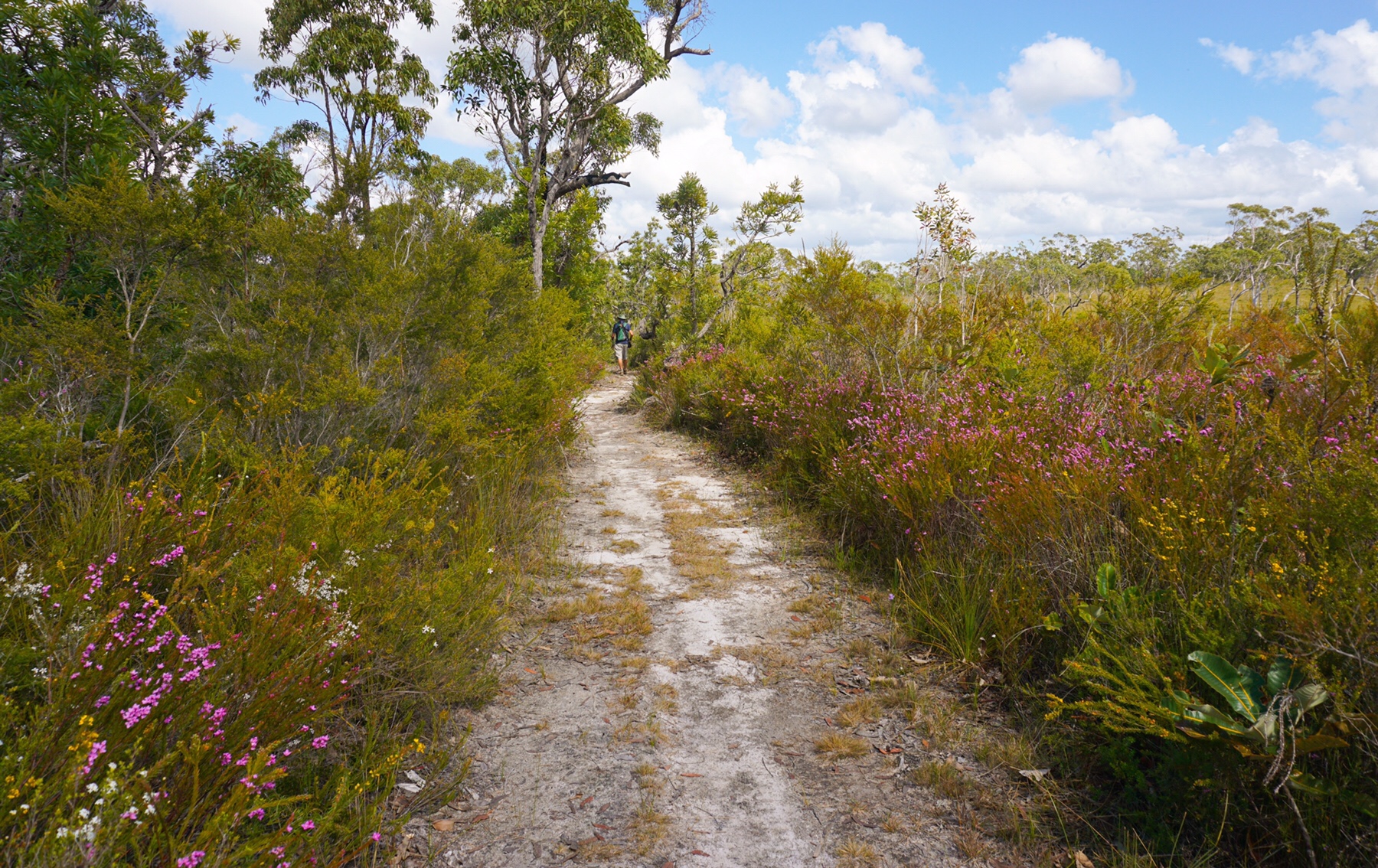
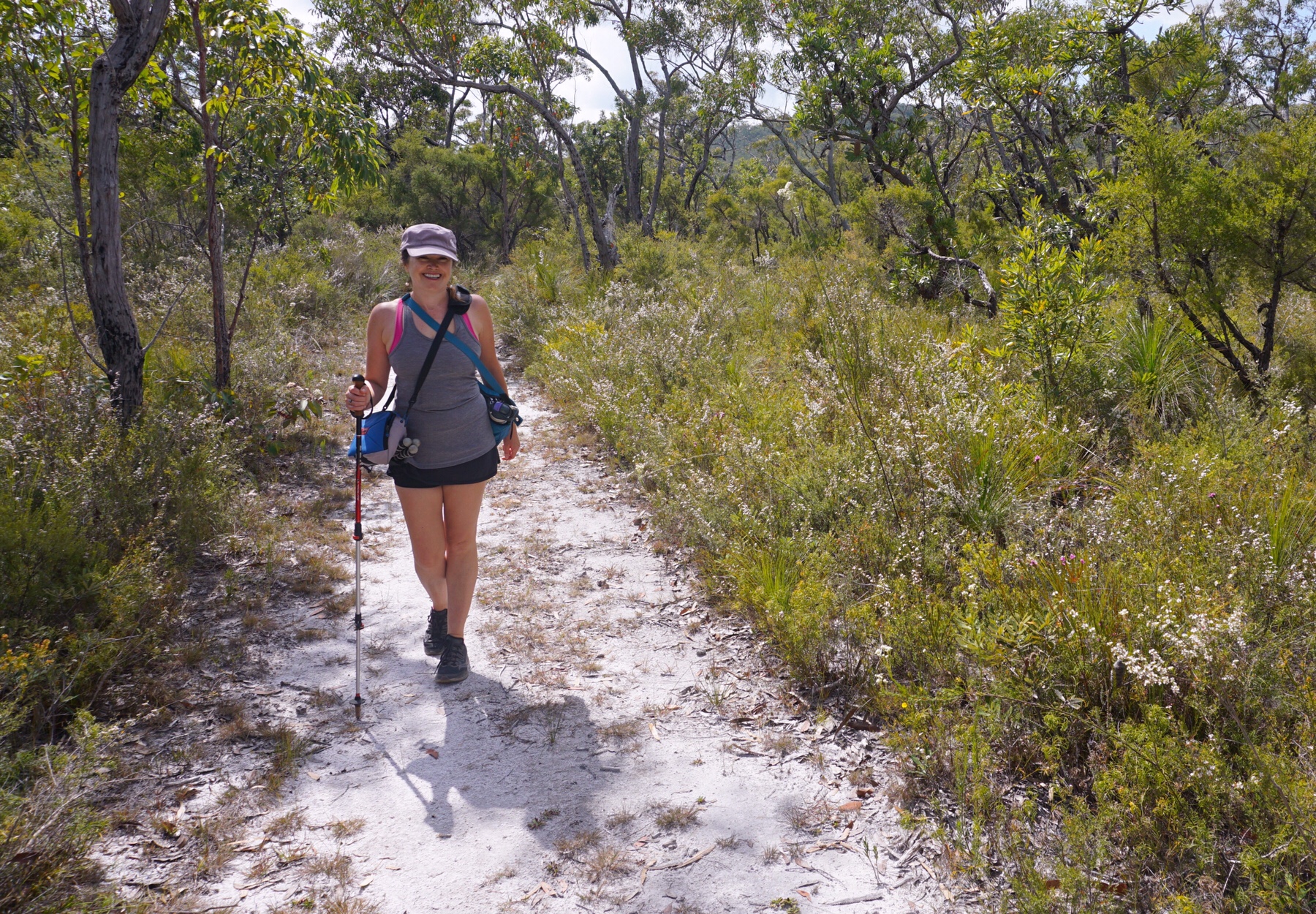
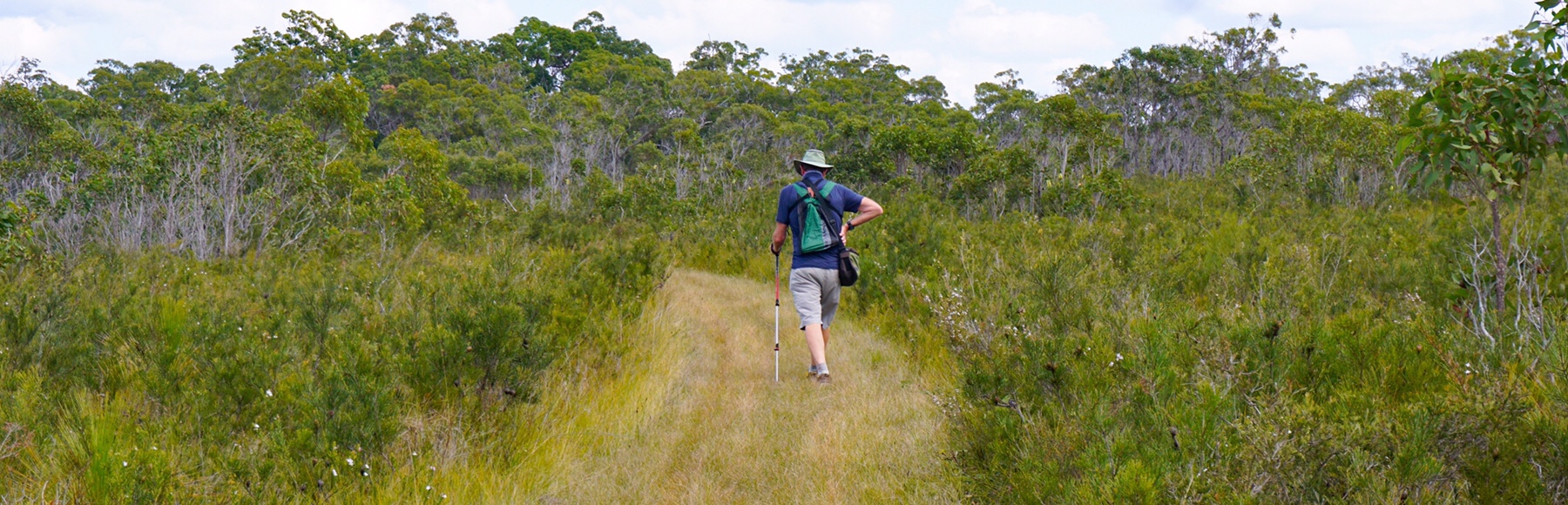
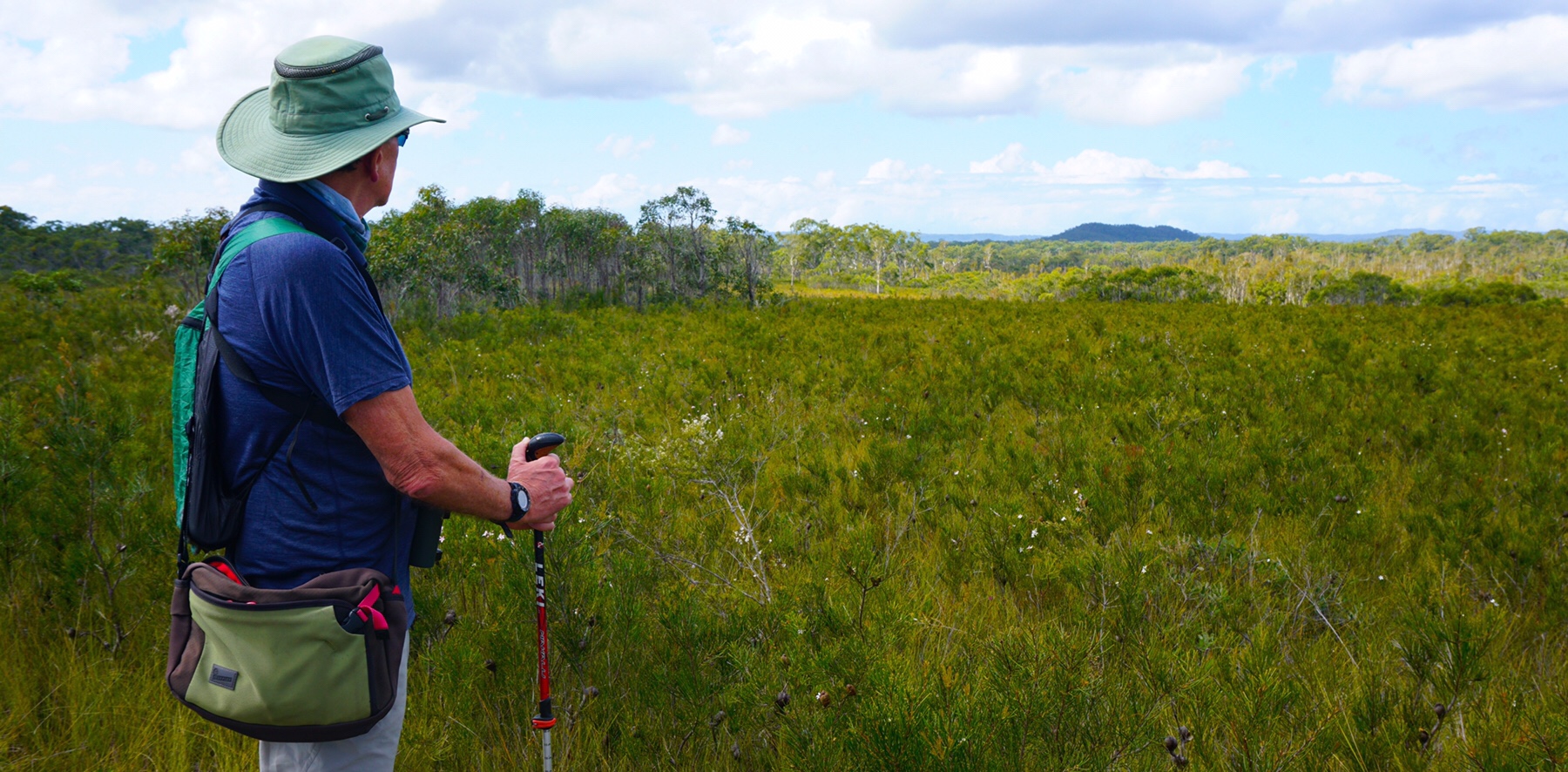
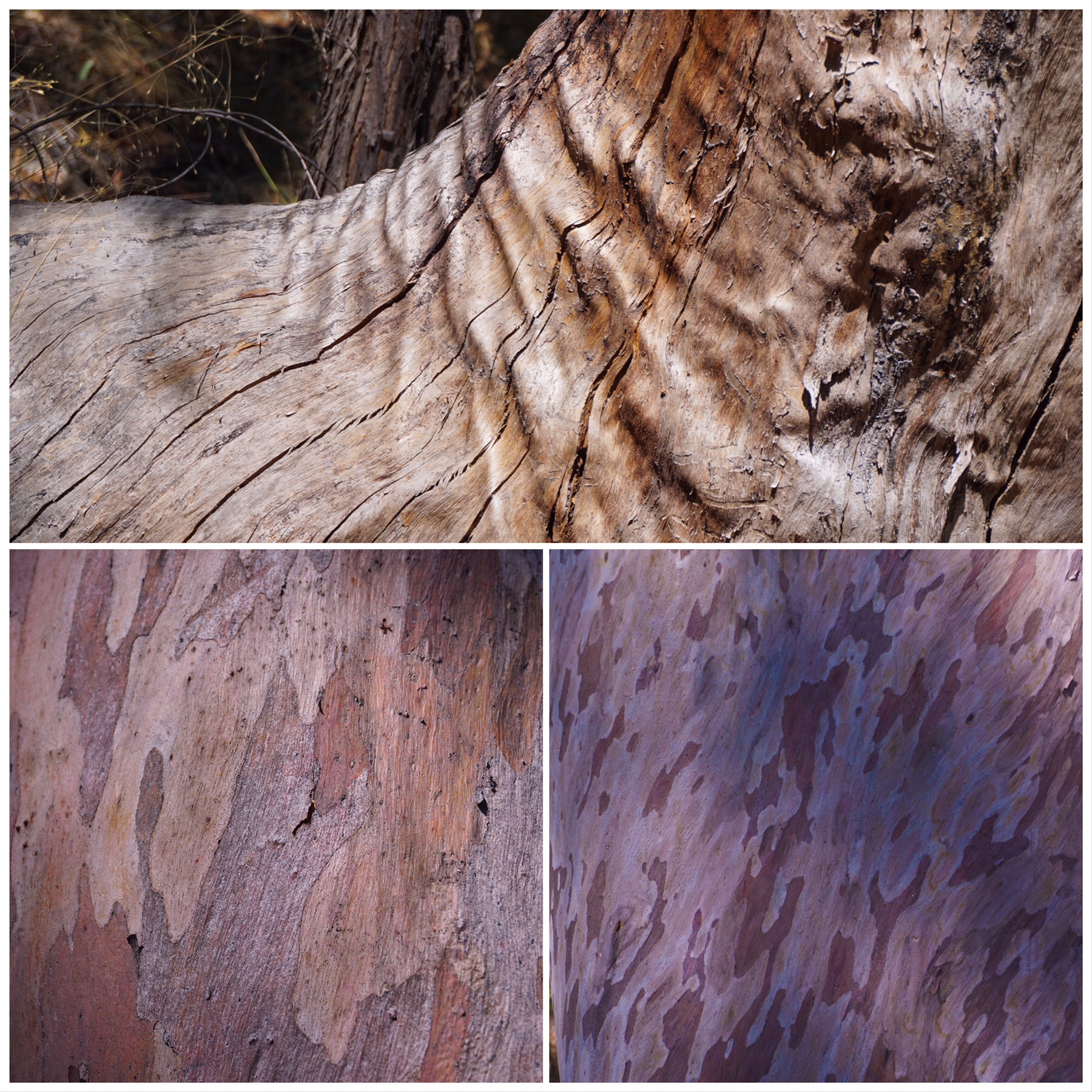
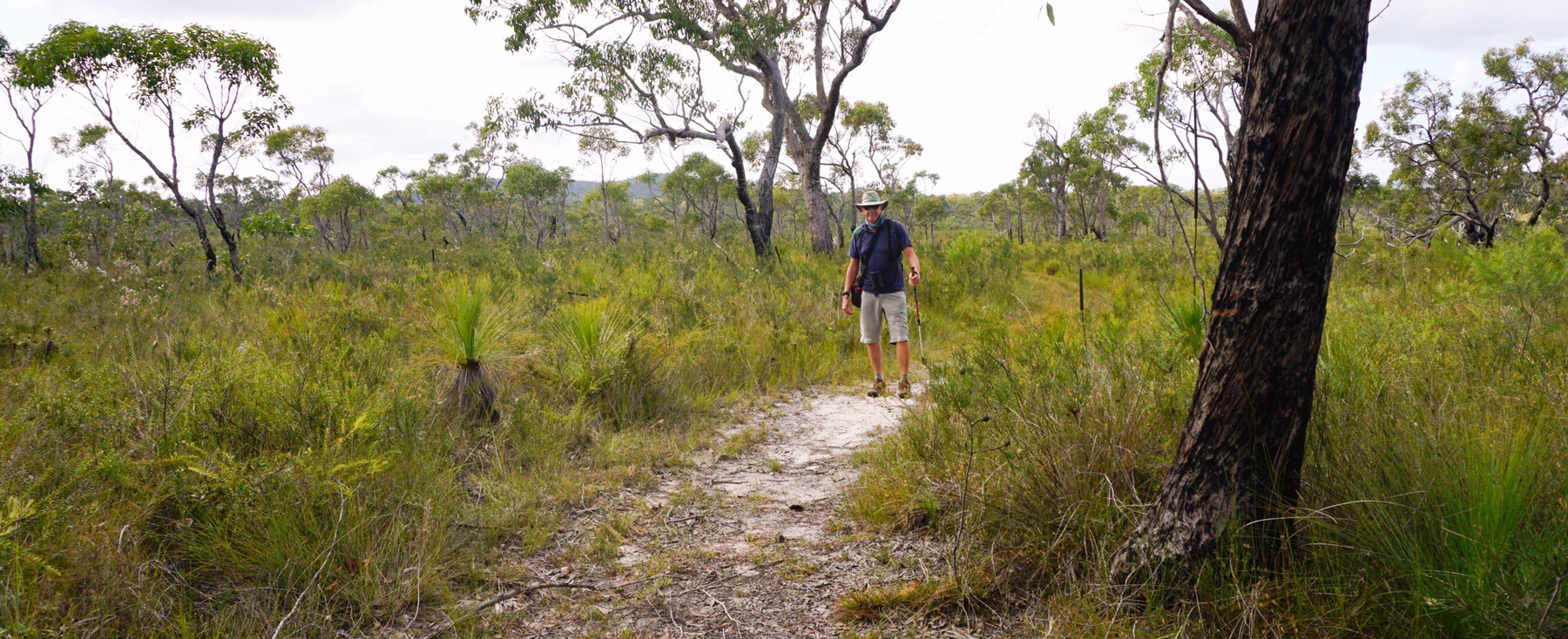 Even the trunks of the gum trees were beautiful!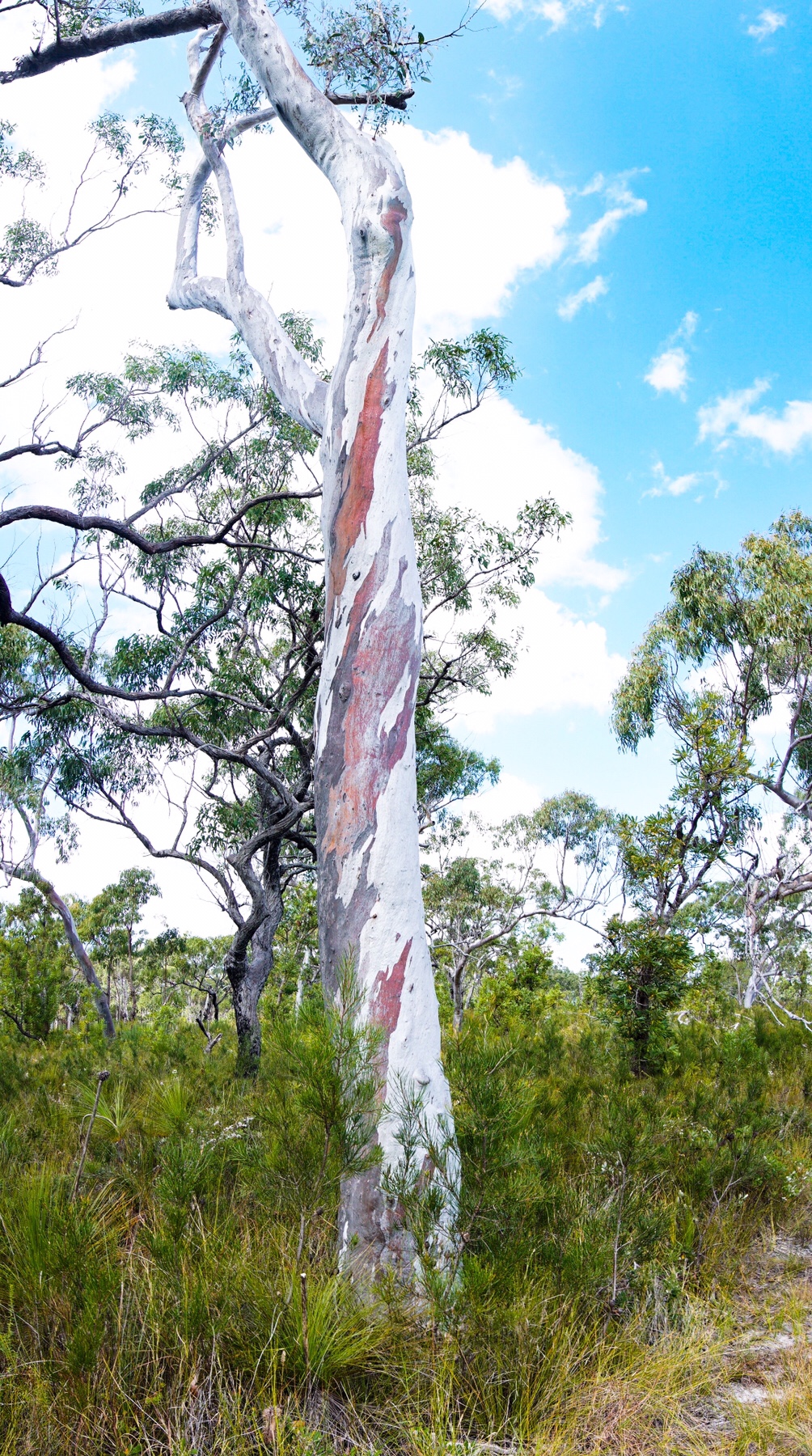
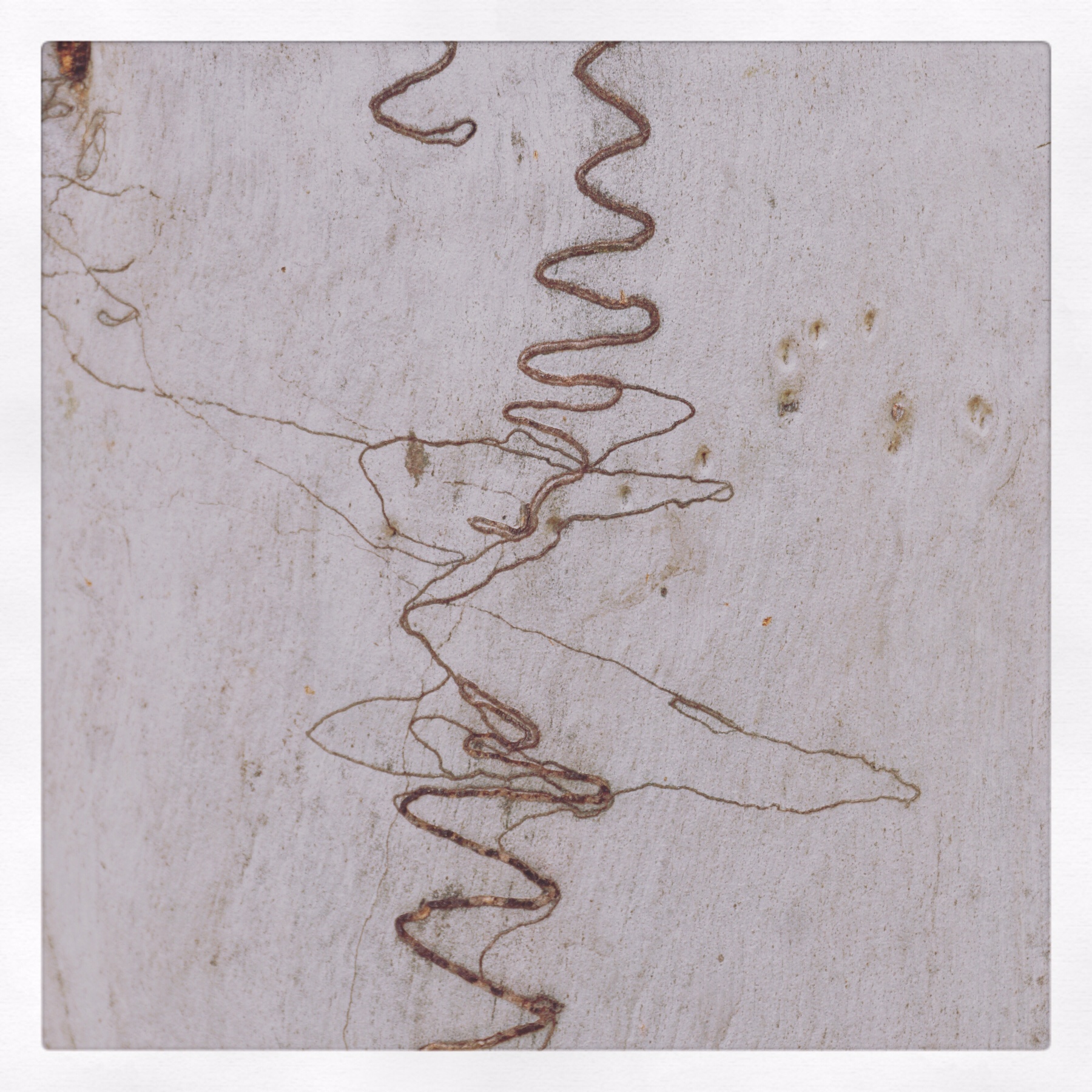 We stopped walking after around 5km when we saw the path dropping steeply downhill, remembering we had to turn around at some point and return via the same route.
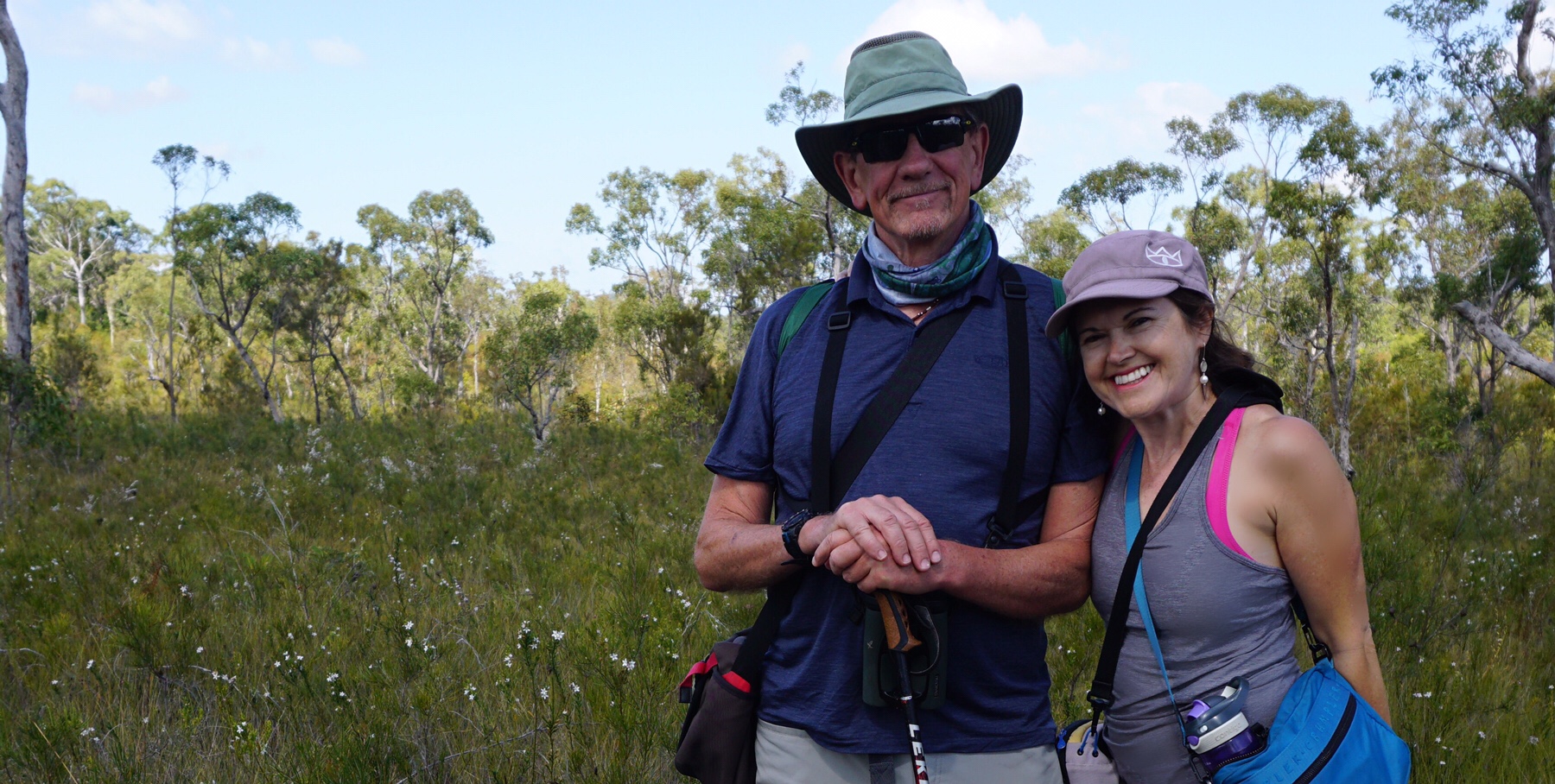 We definitely recommend getting out and enjoying the Australian bush at this time of year.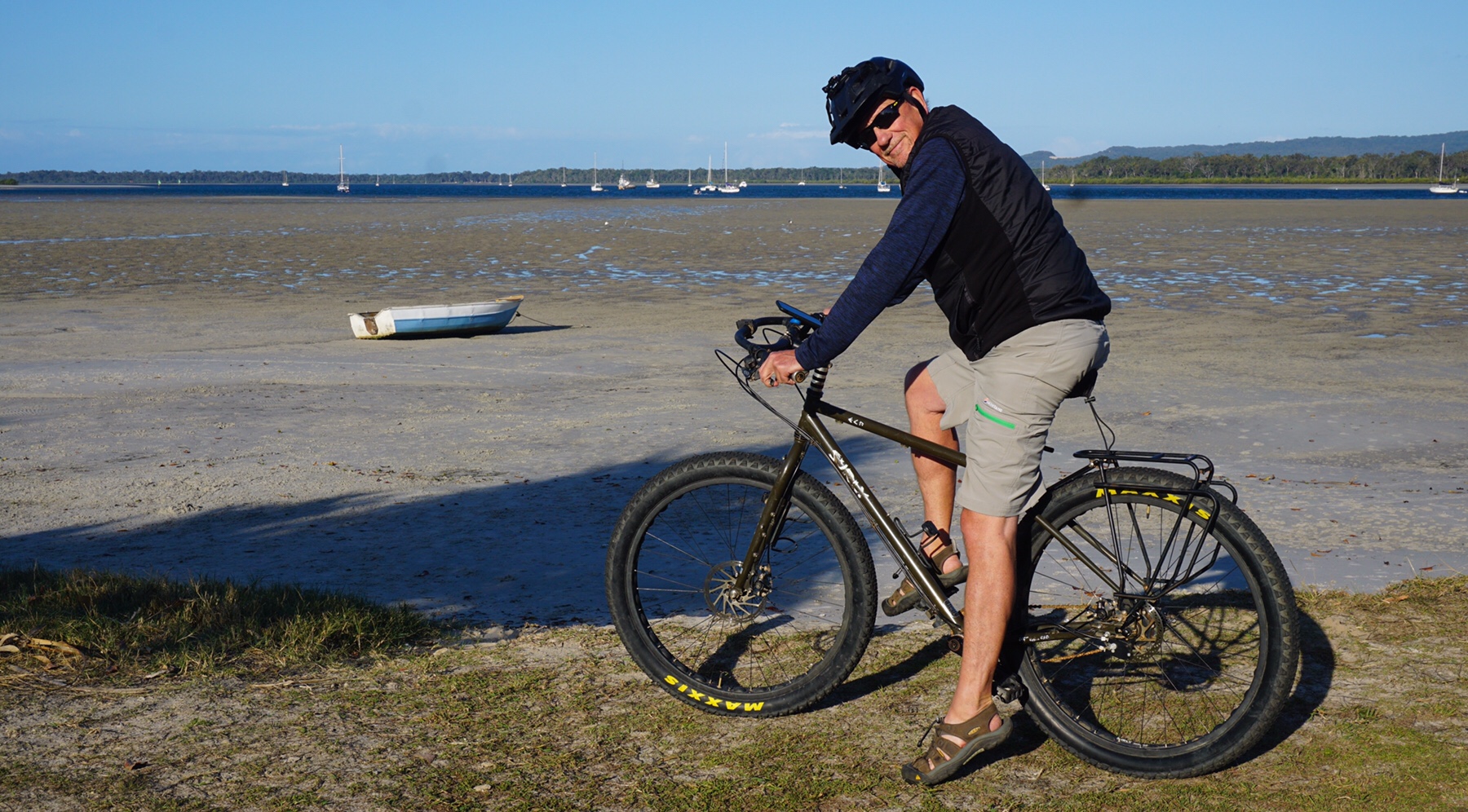
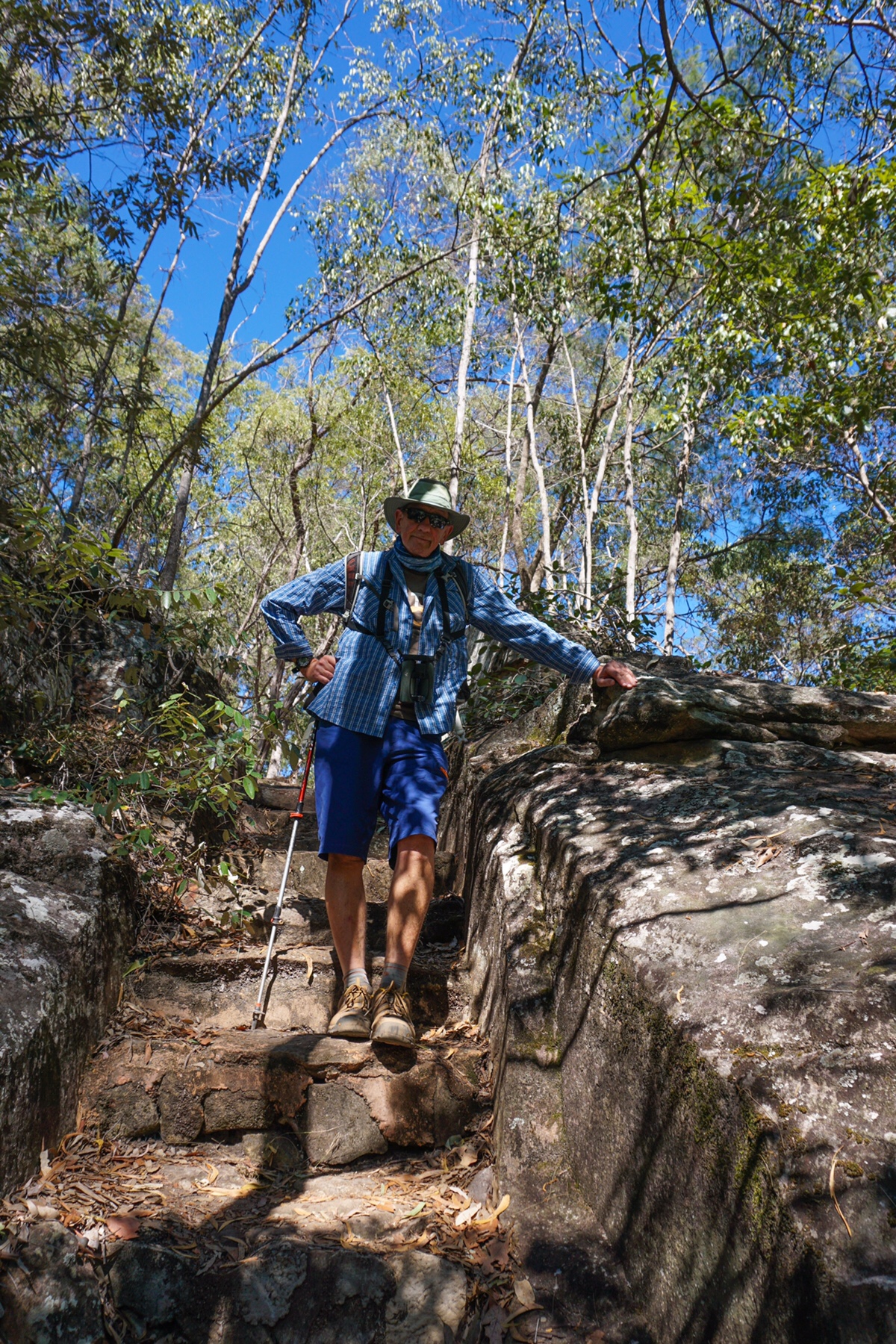
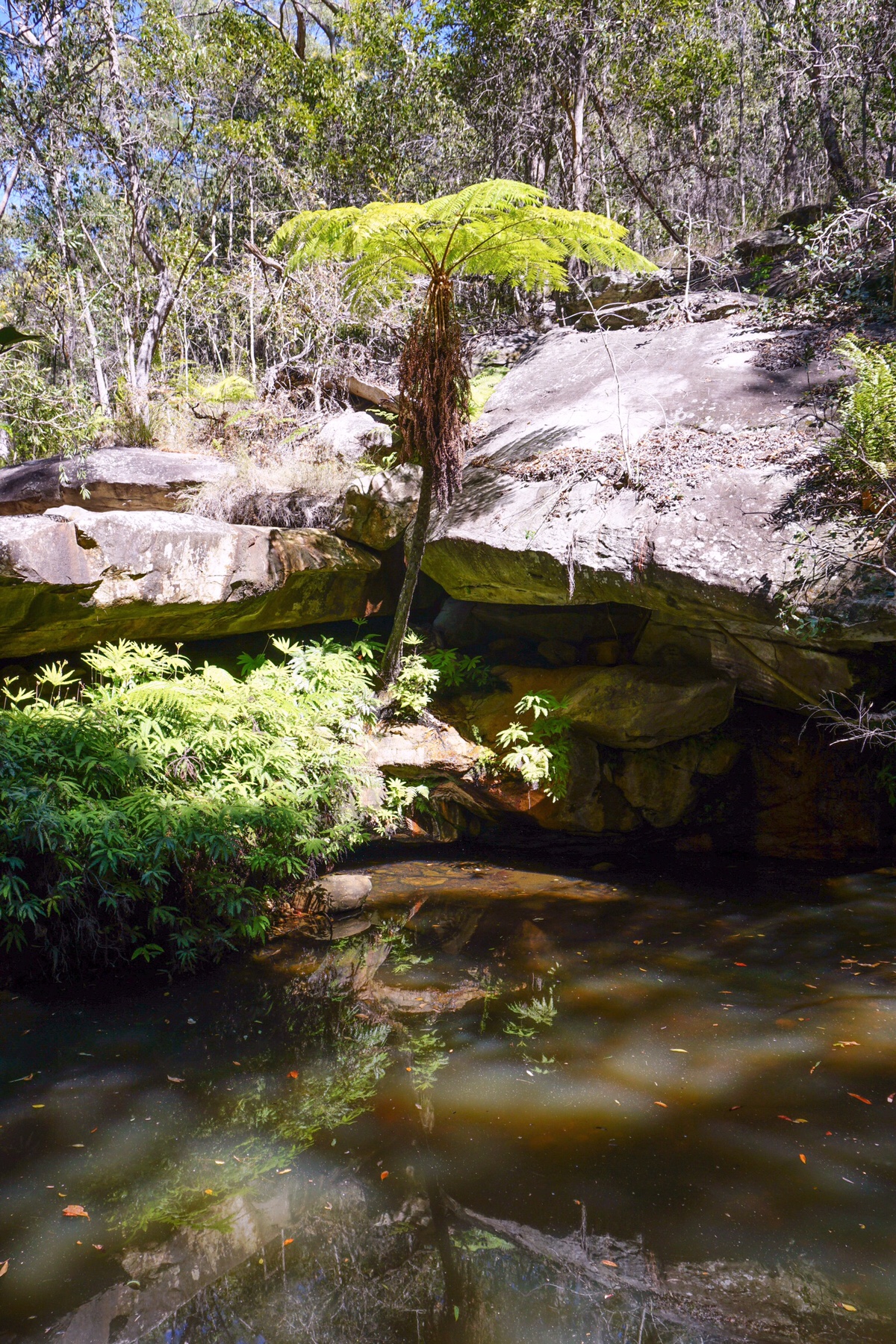
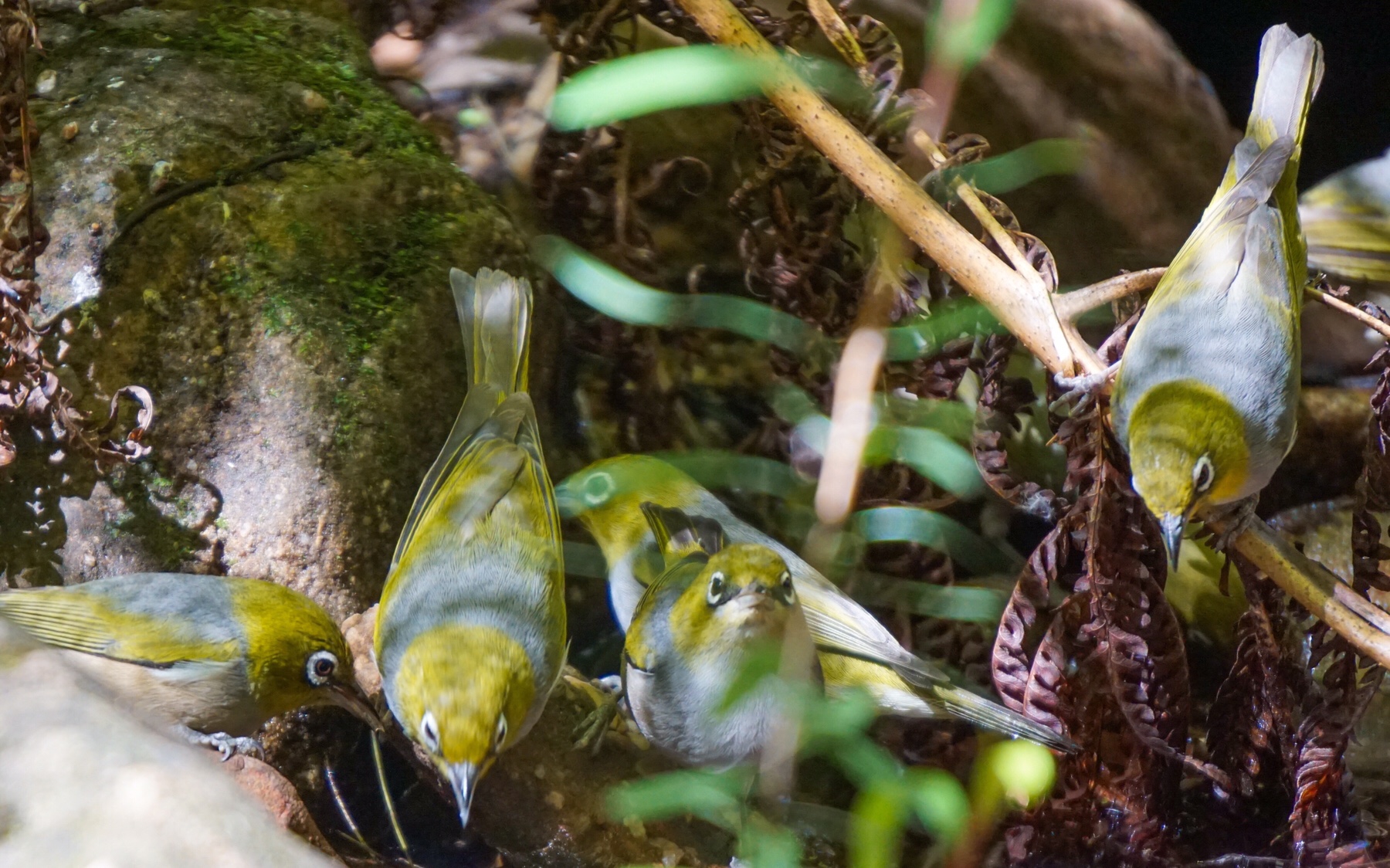
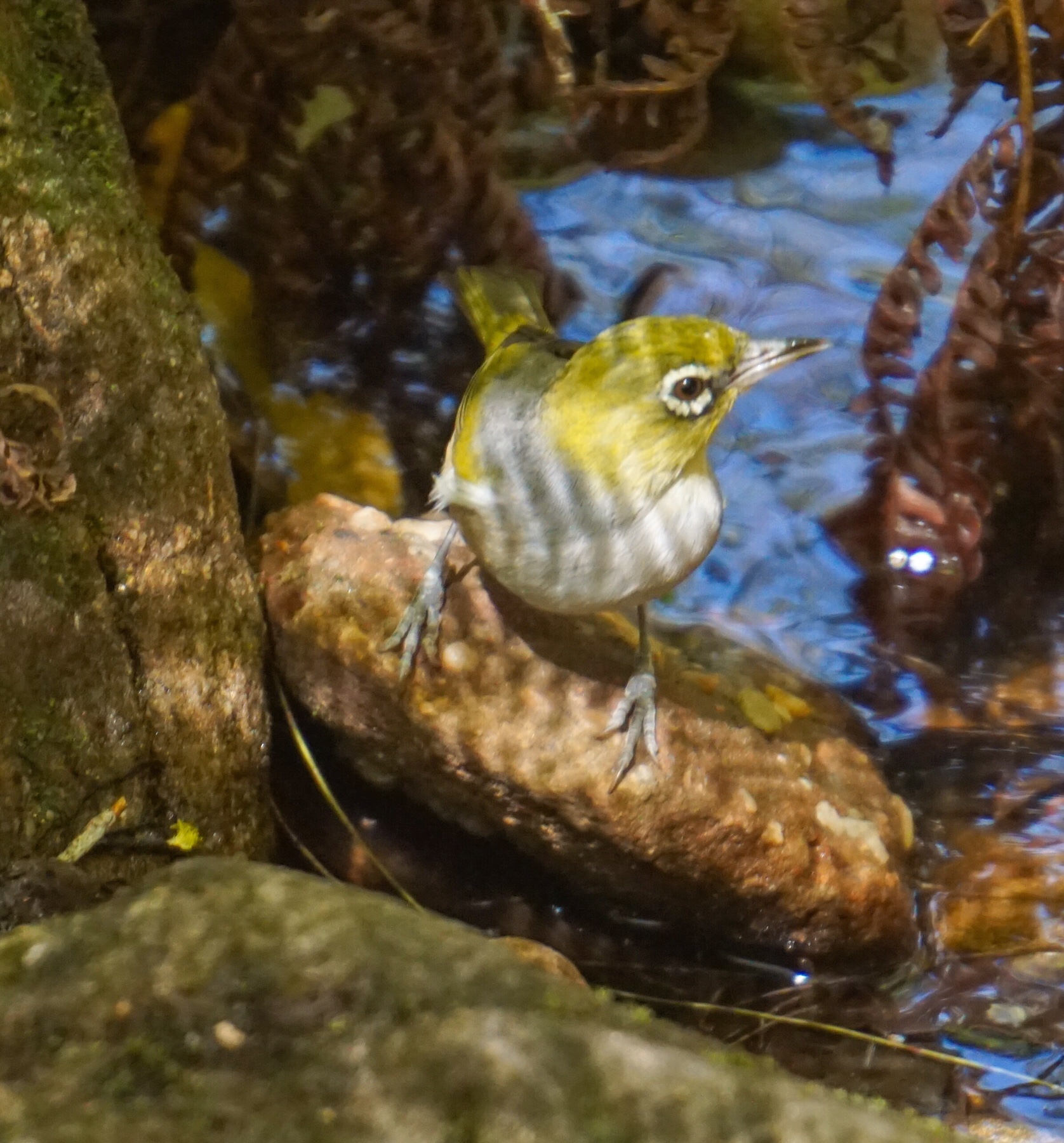
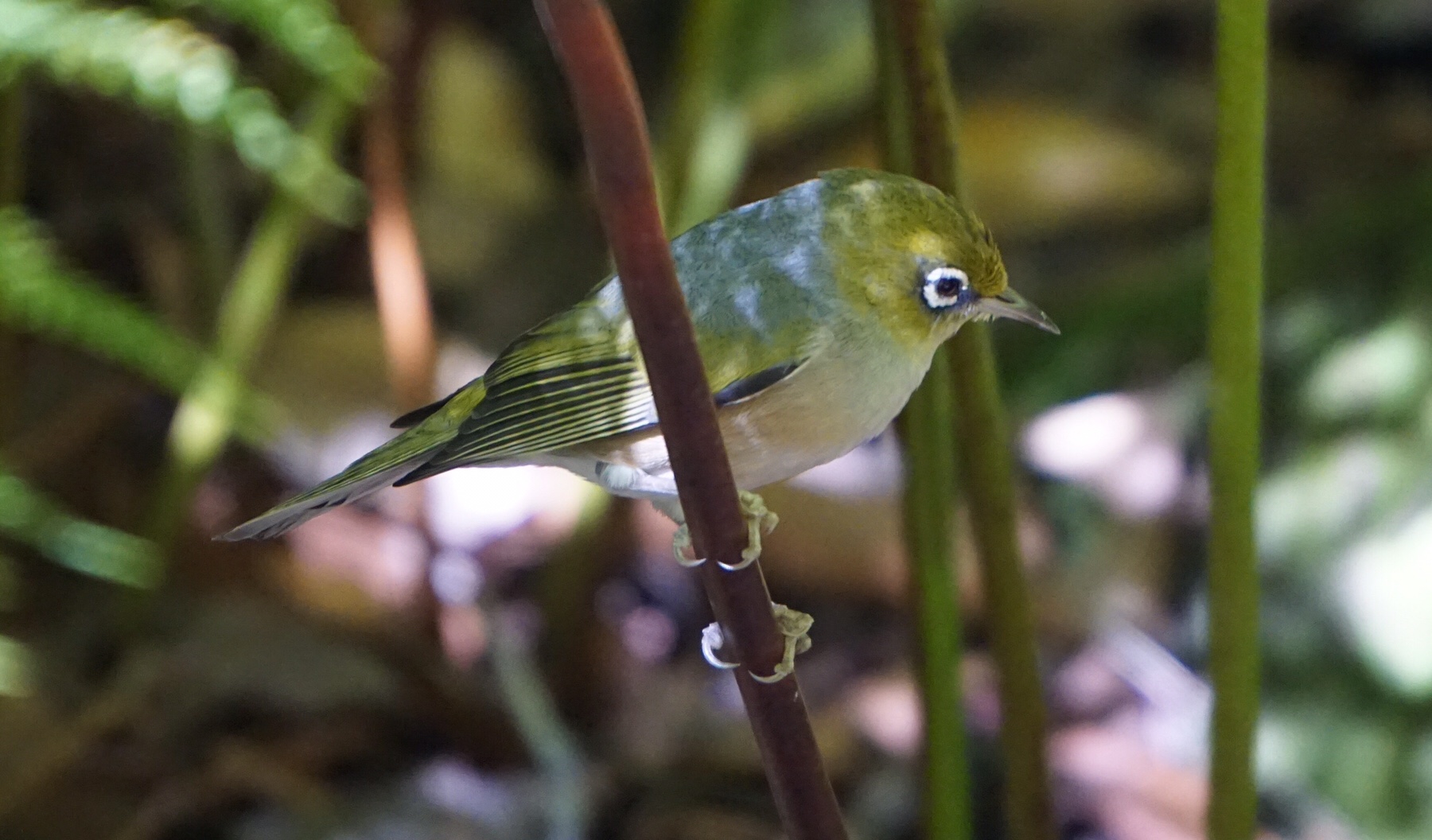
 Queensland is very dry currently, not having had rain in this area for a couple of months. This is very evident in the sheer numbers of birds flocking to this little water source, particularly grey fantails and flocks of silvereyes, so gorgeous.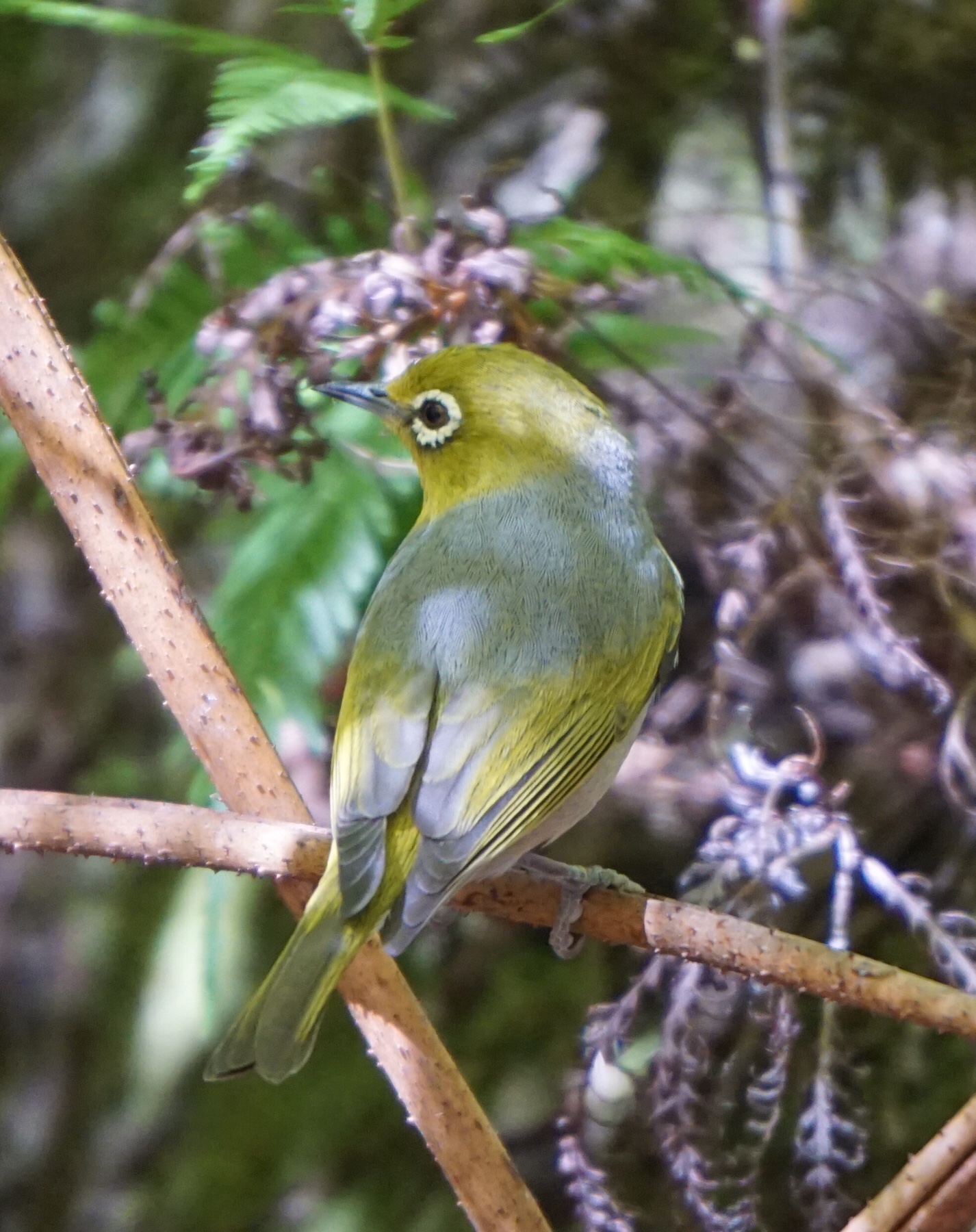
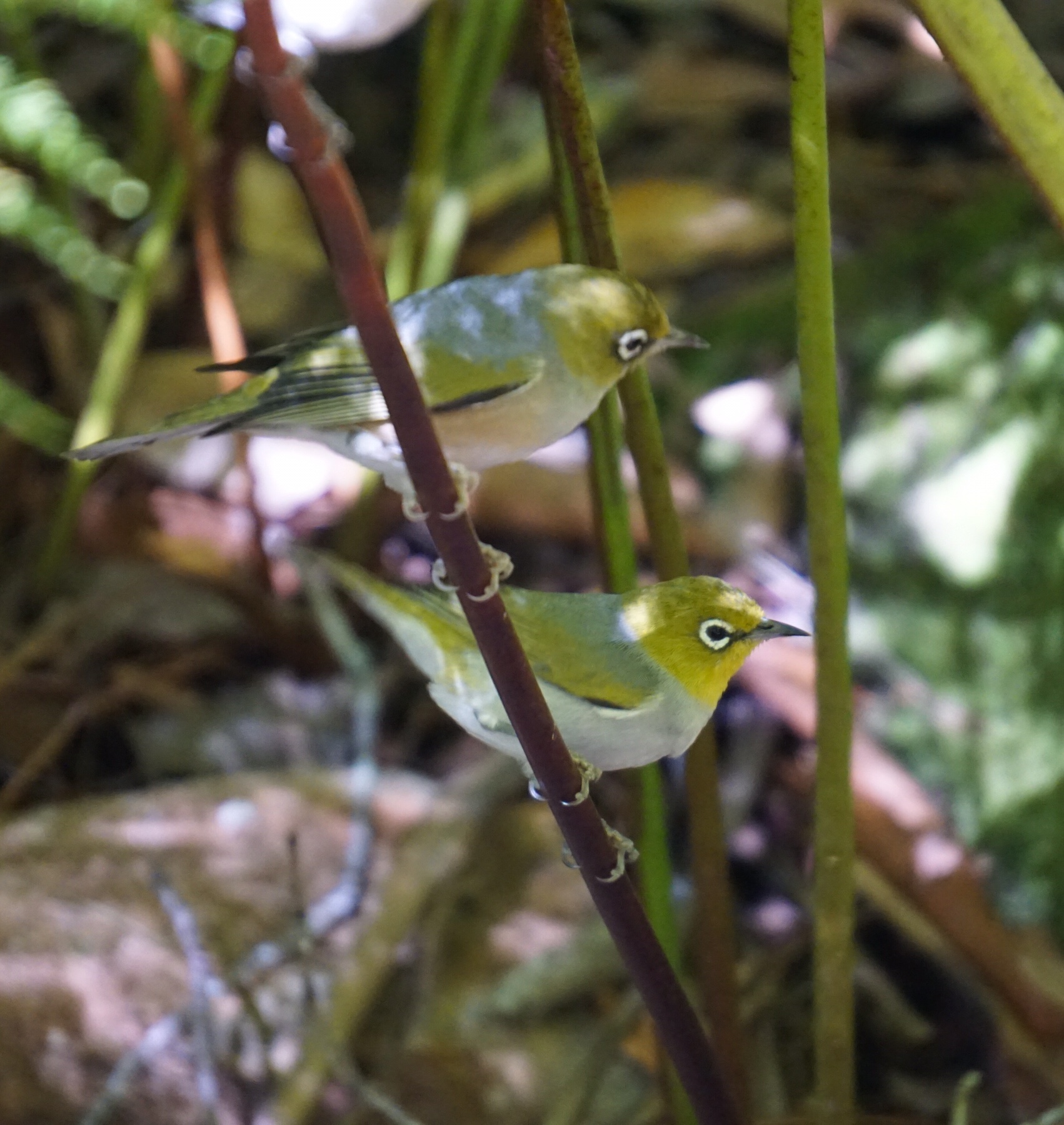
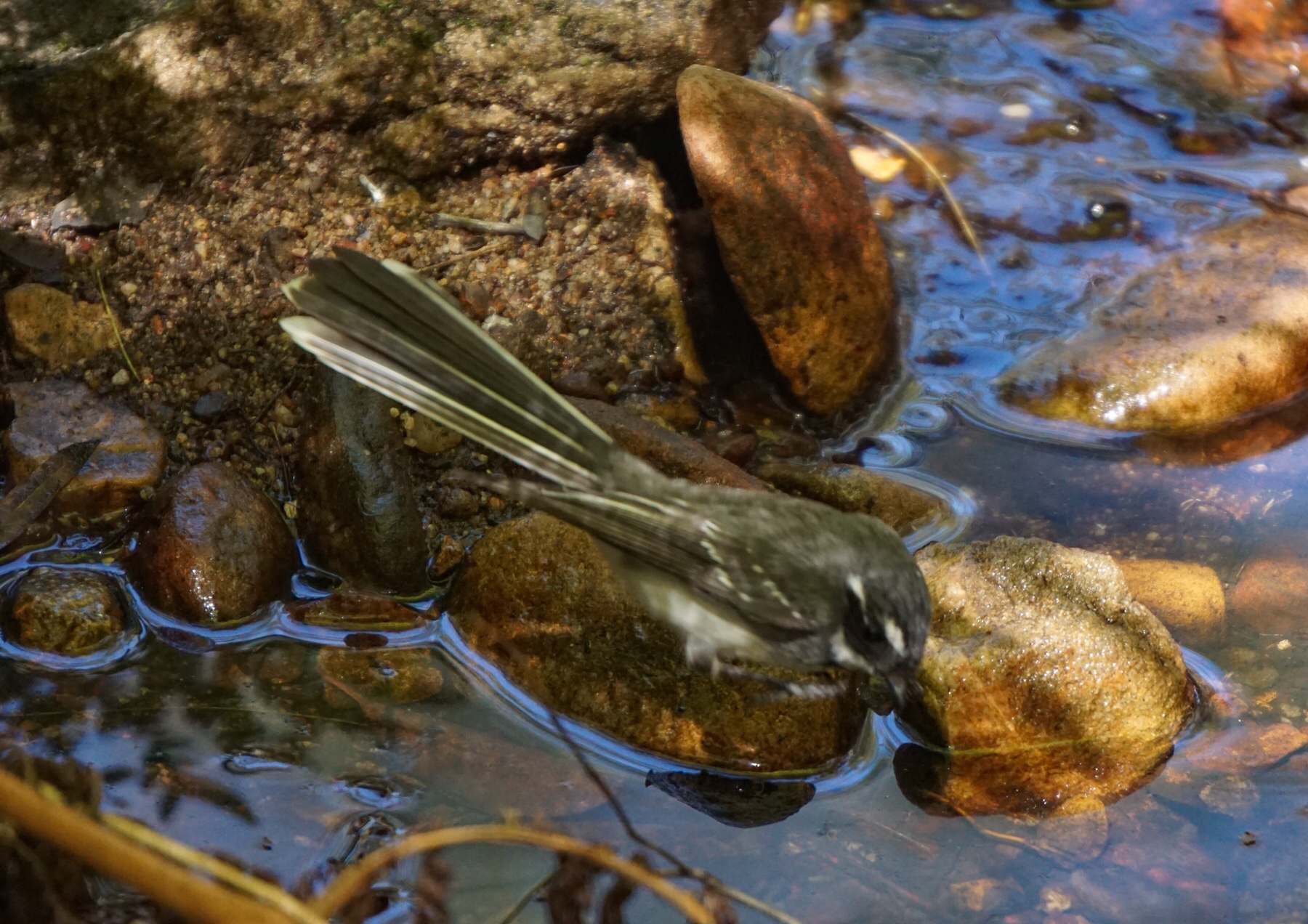
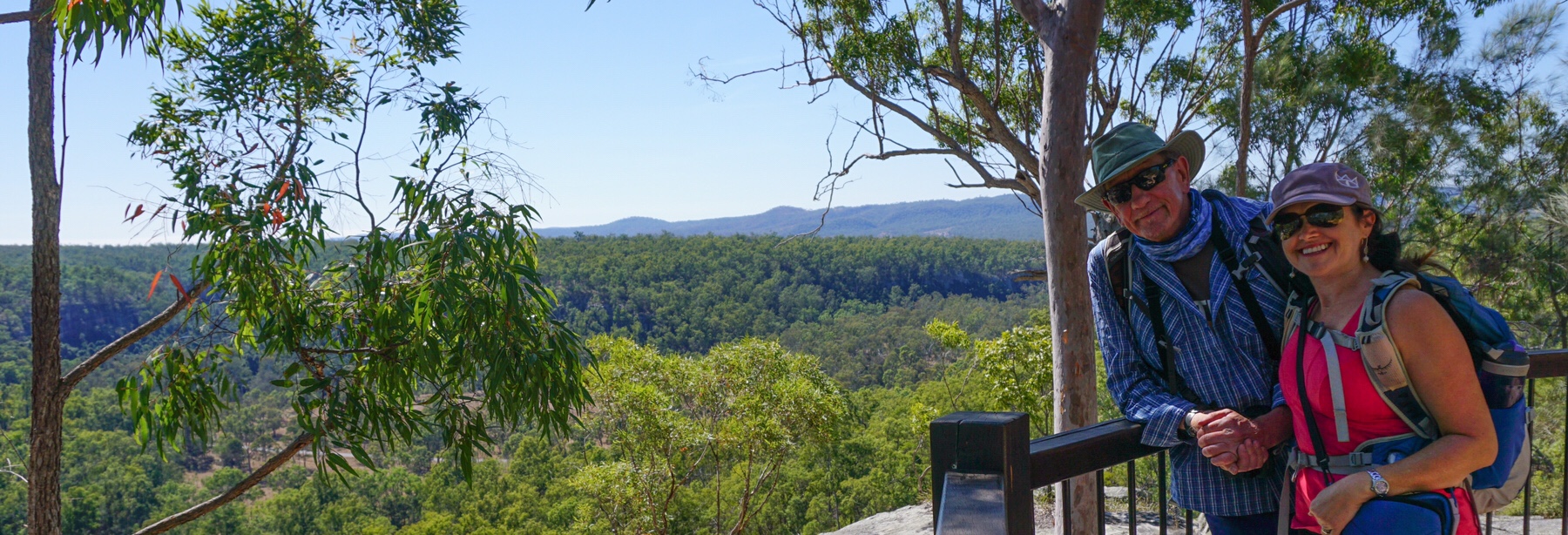
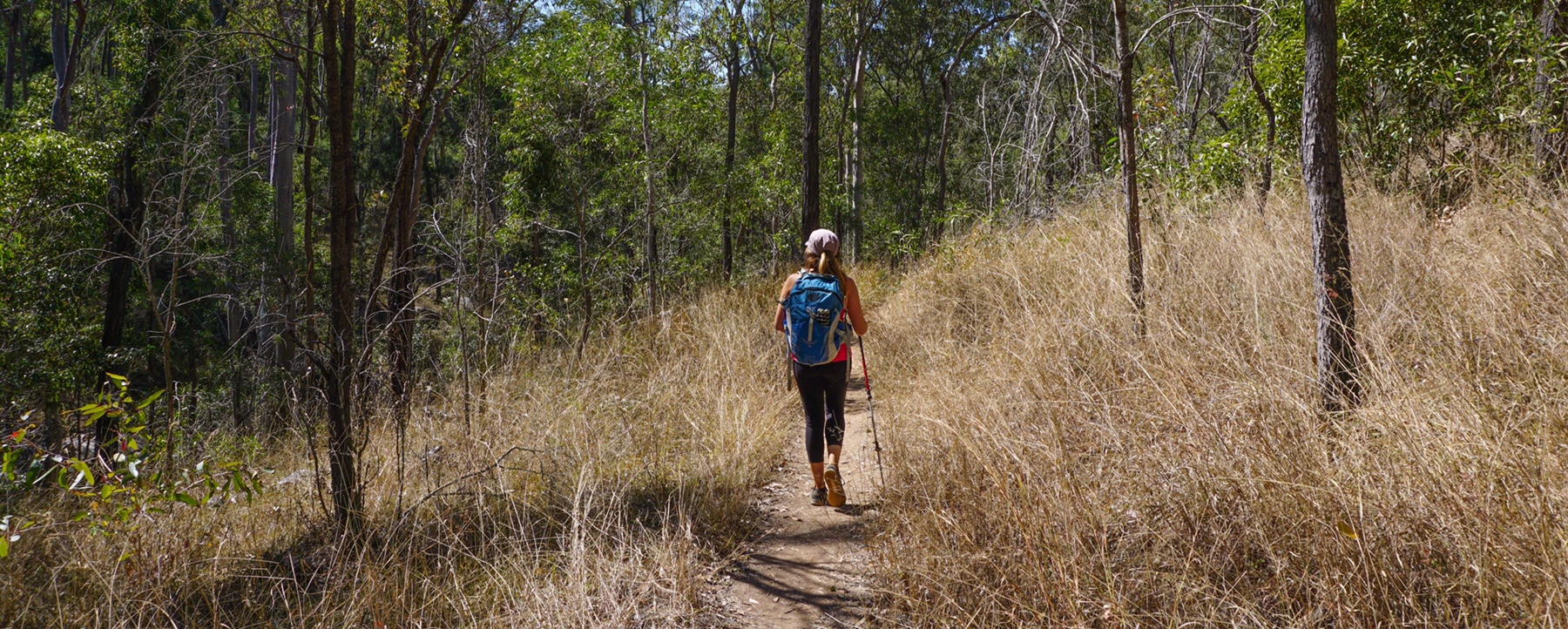
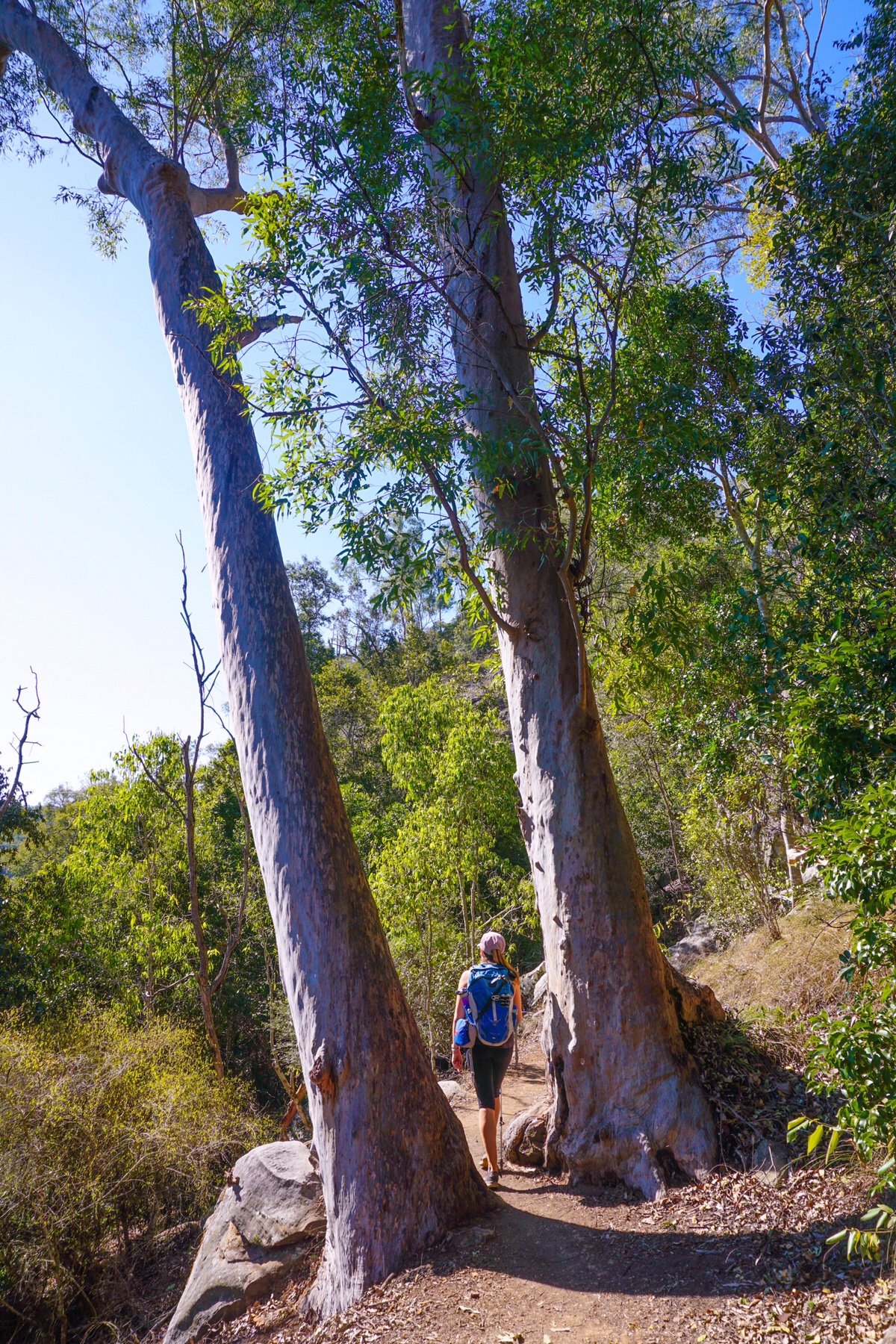
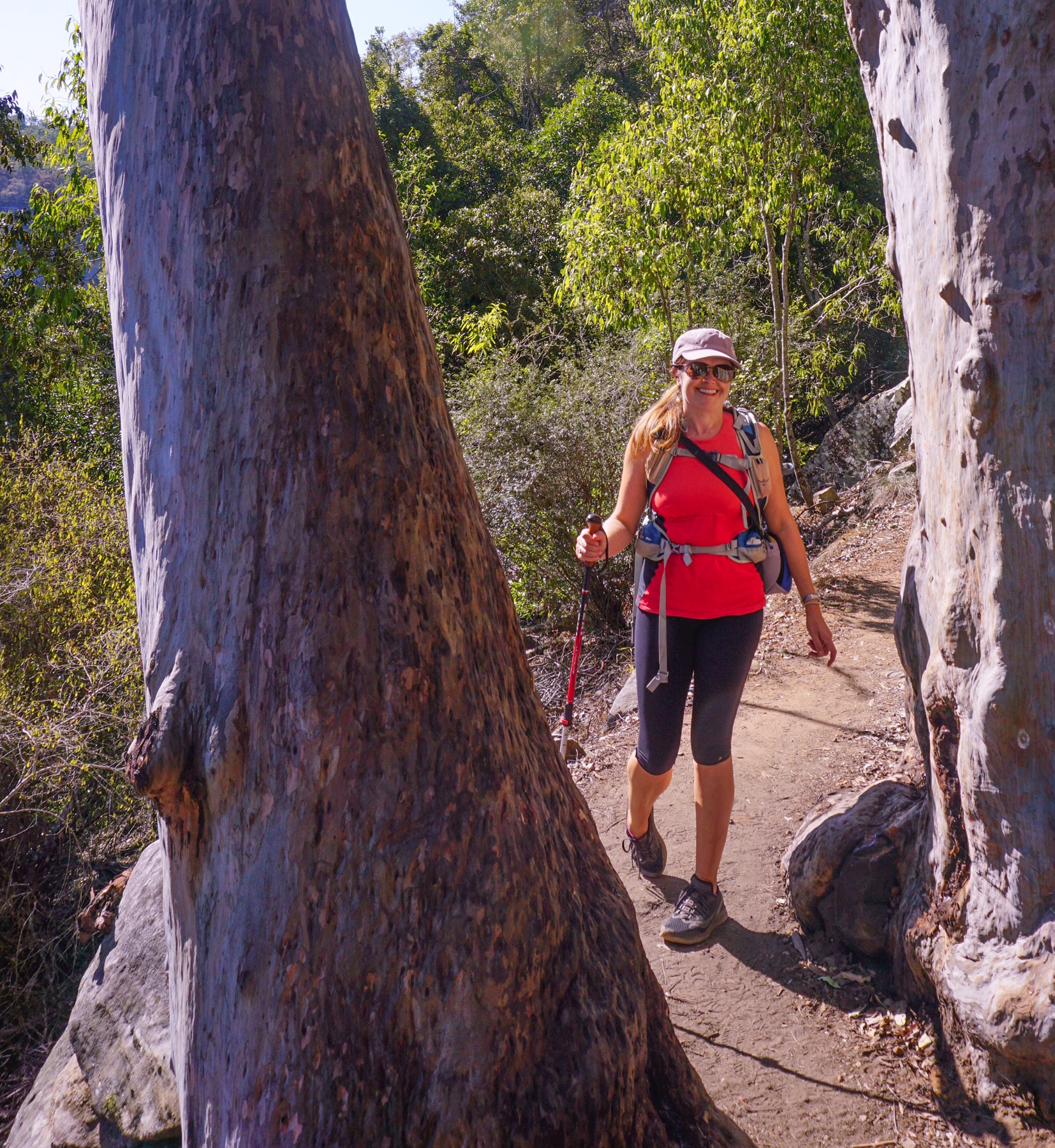
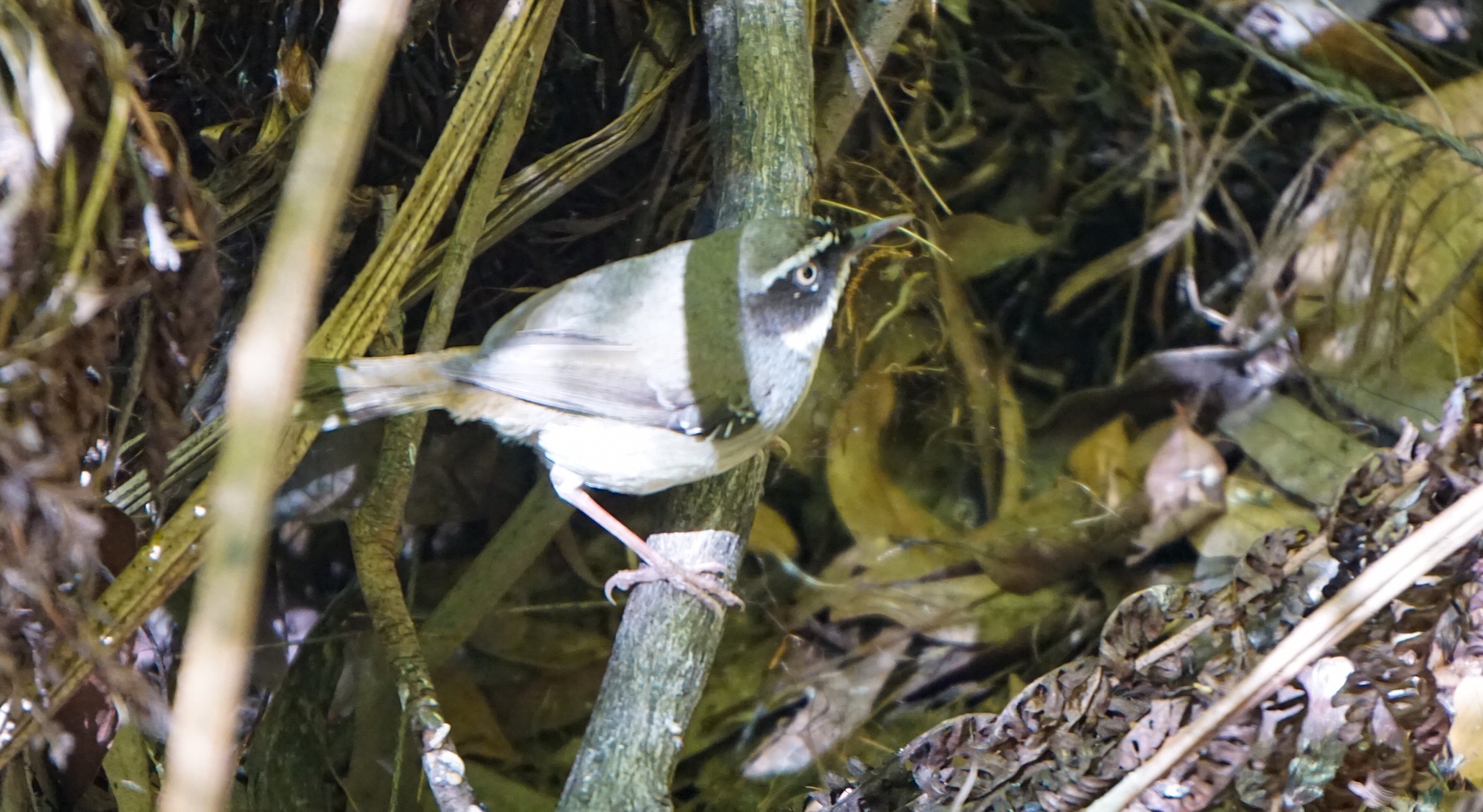 Six kilometres later we were back at camp for a relax. This is one of the nicest places we have parked our mobile apartment in a long while, surrounded by tall gum trees, dappled sunlight and high sandstone walls providing a picturesque backdrop. As we sat outside with a cup of tea a couple we had seen on our walk strolled past, the American man inviting Mark to join him on a cycle up to the dam later on in the afternoon. Mark accepted his invitation, and jumped on his bike for a ride.I meanwhile finished baking an orange and almond cake, and left that to cool while I went off on another 6km walk.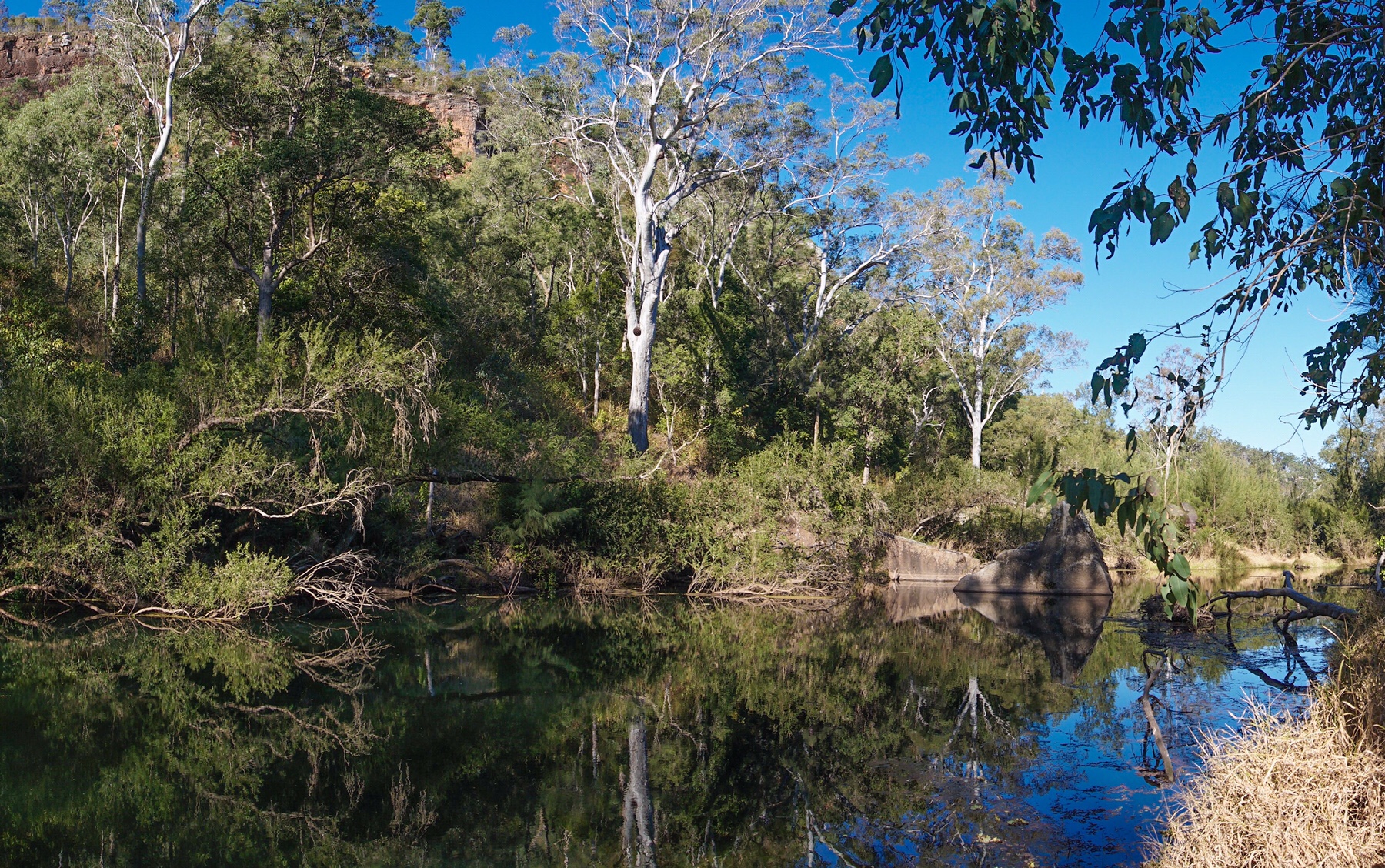
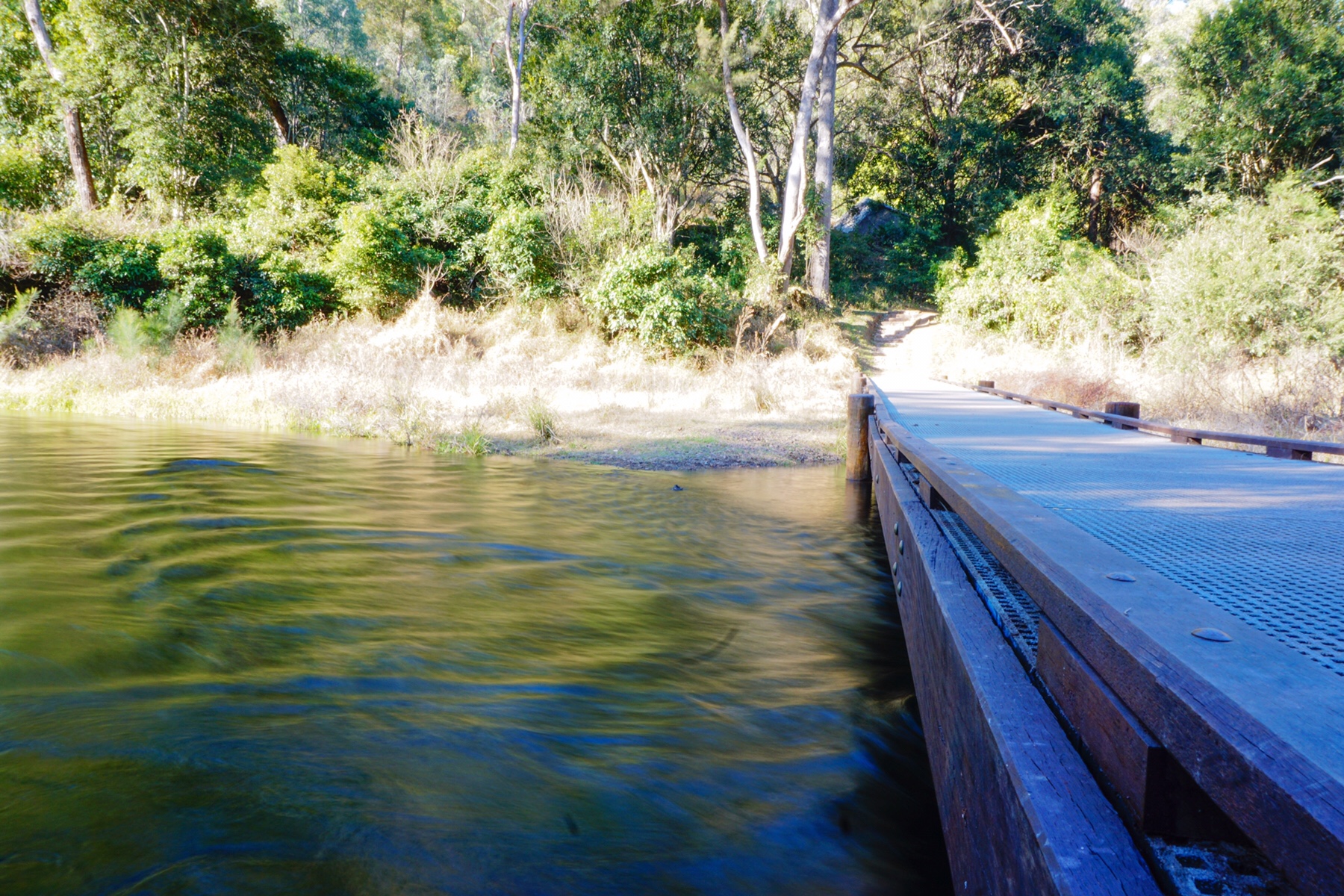
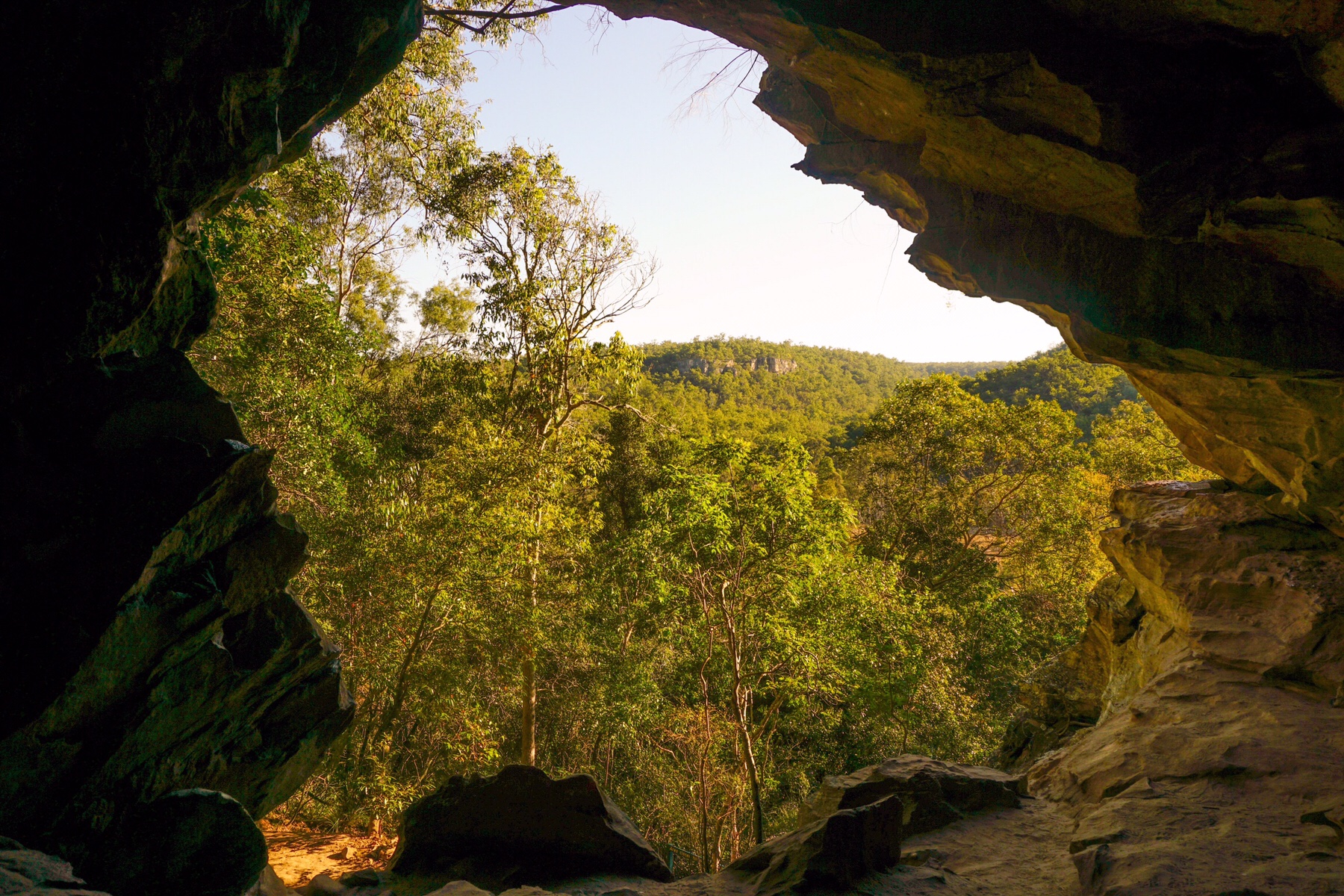
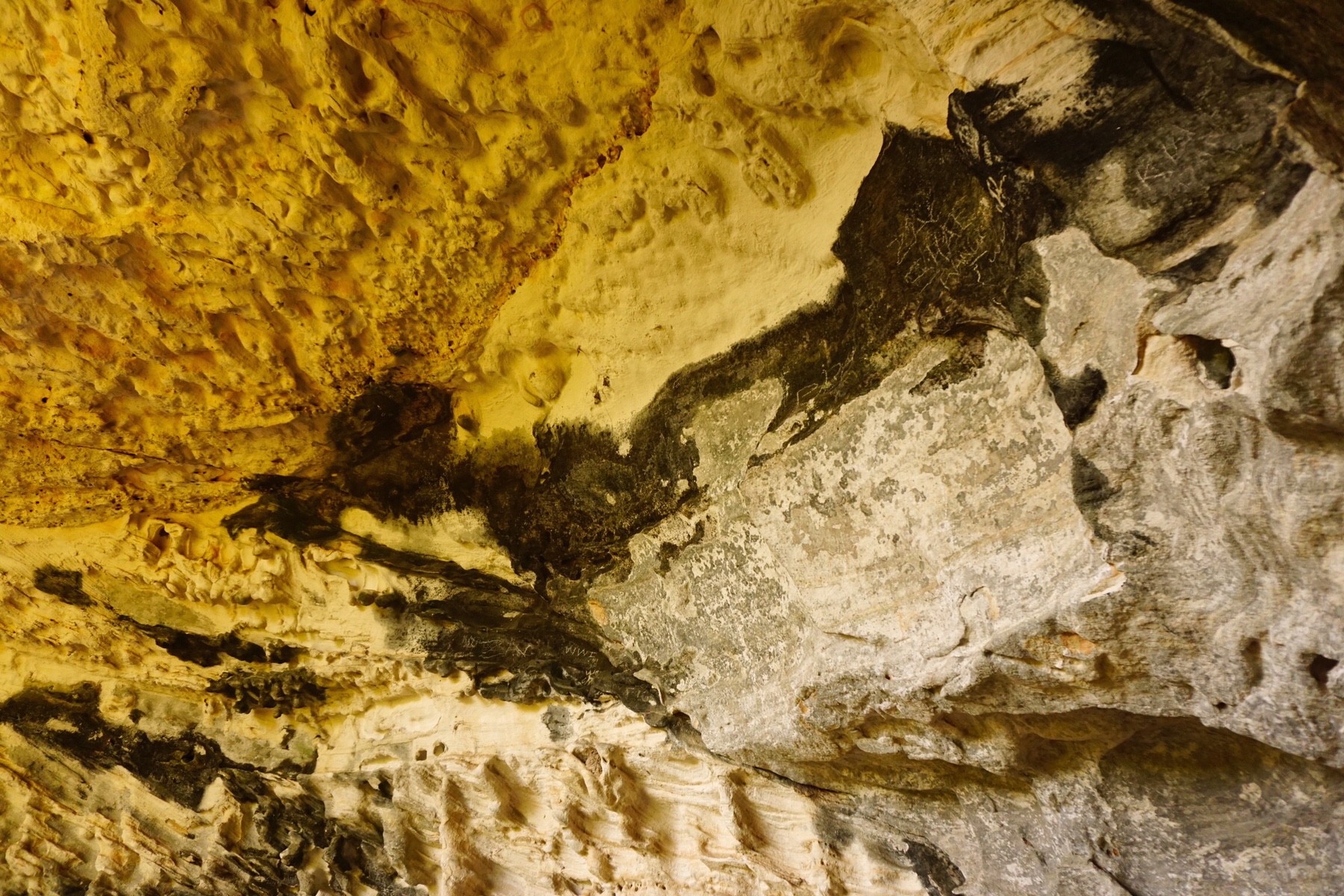
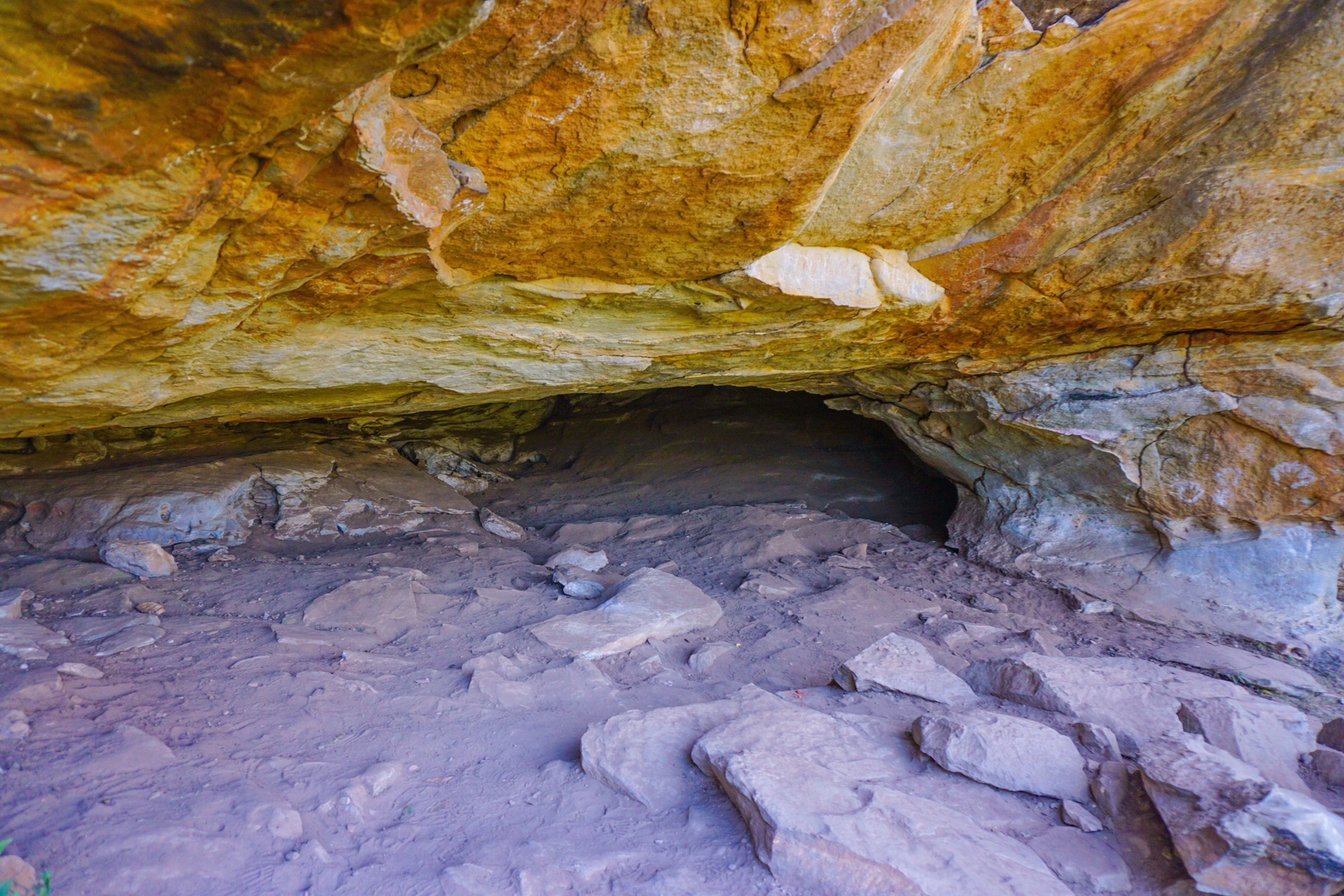
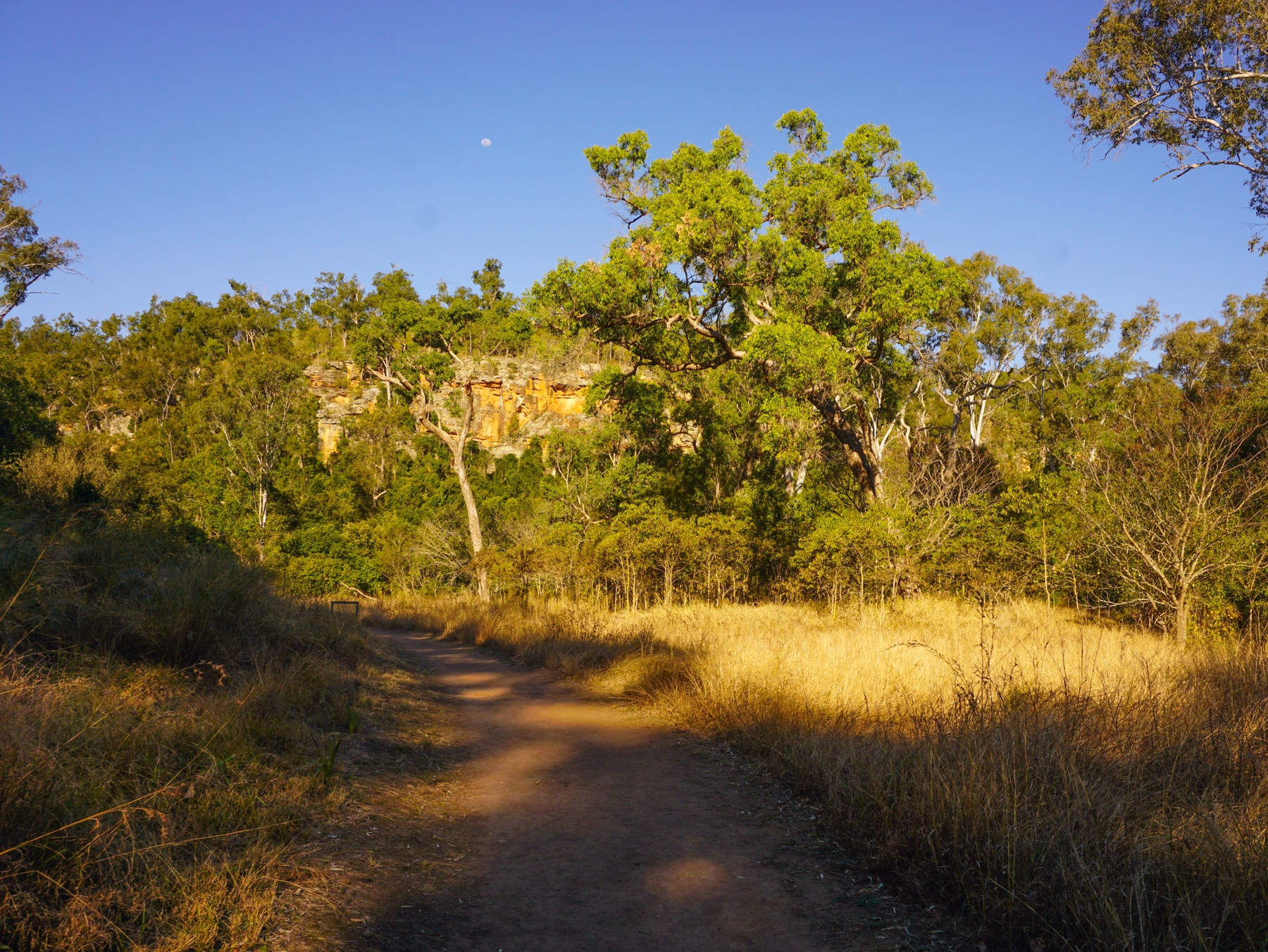 From there, I walked up to Dragon Cave, so named for the black ‘mural’ of a dragon up on the wall in there…with a little imagination. Generally I just enjoyed the clean fresh air, the sound of the birds and just being outdoors in the warm light of the late afternoon.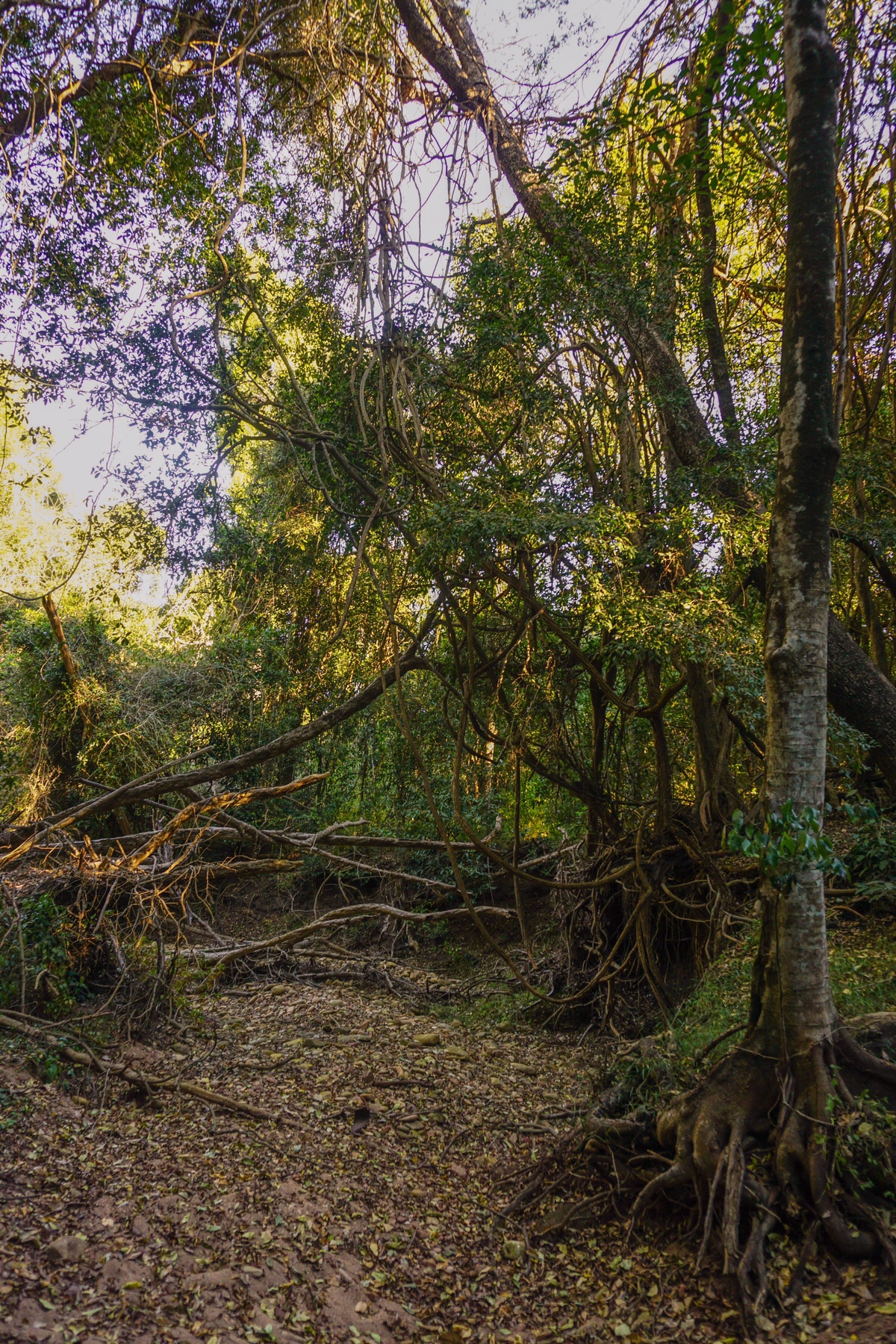
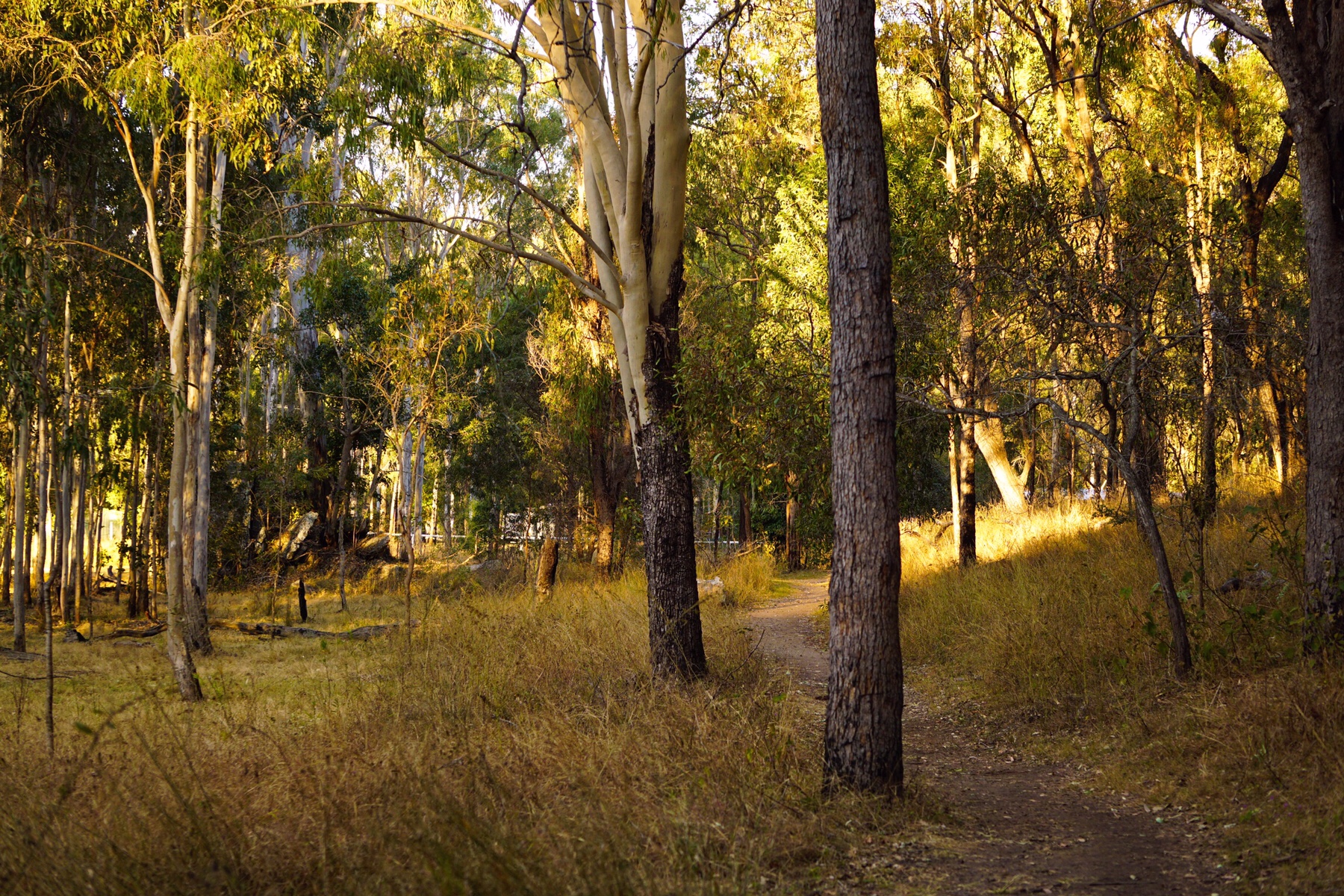 I reached camp just as the sun was setting, and Mr A was already sipping a glass of French red wine with his cycling partner and some other neighbours. It turns out the cyclist, Ben, works with mutual friends in Sydney. What a small world!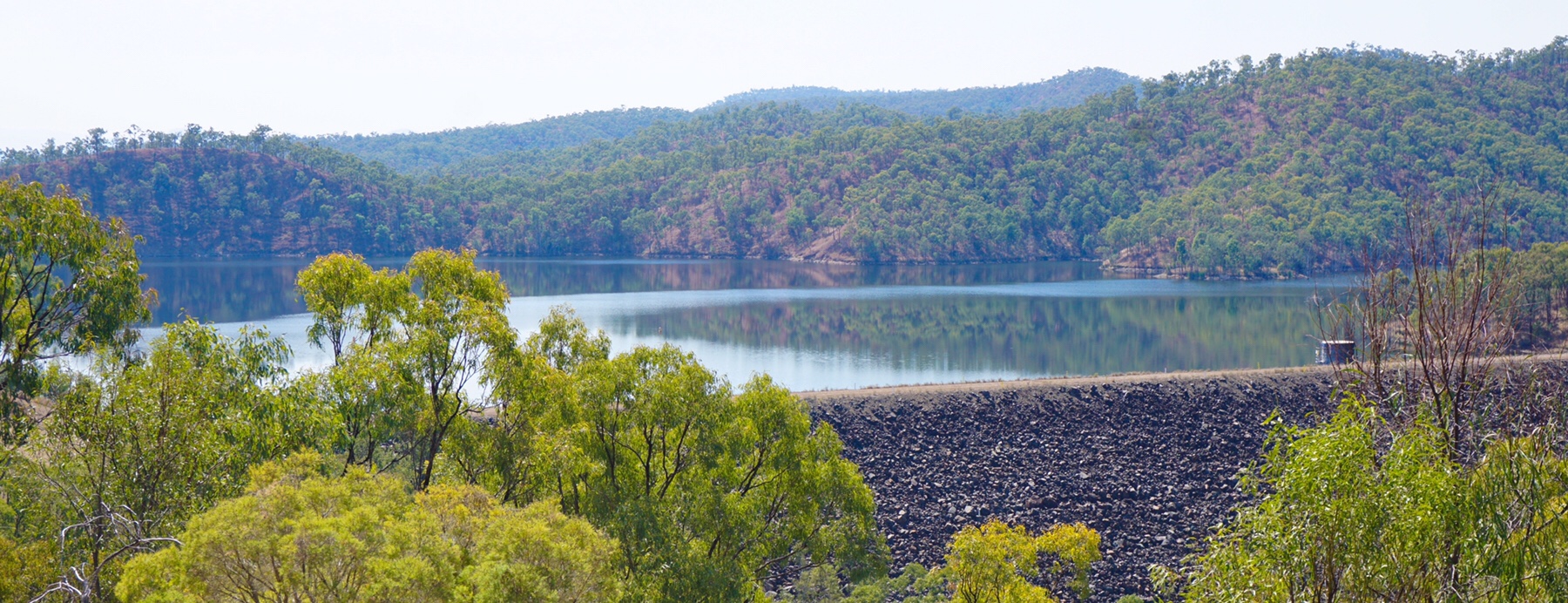
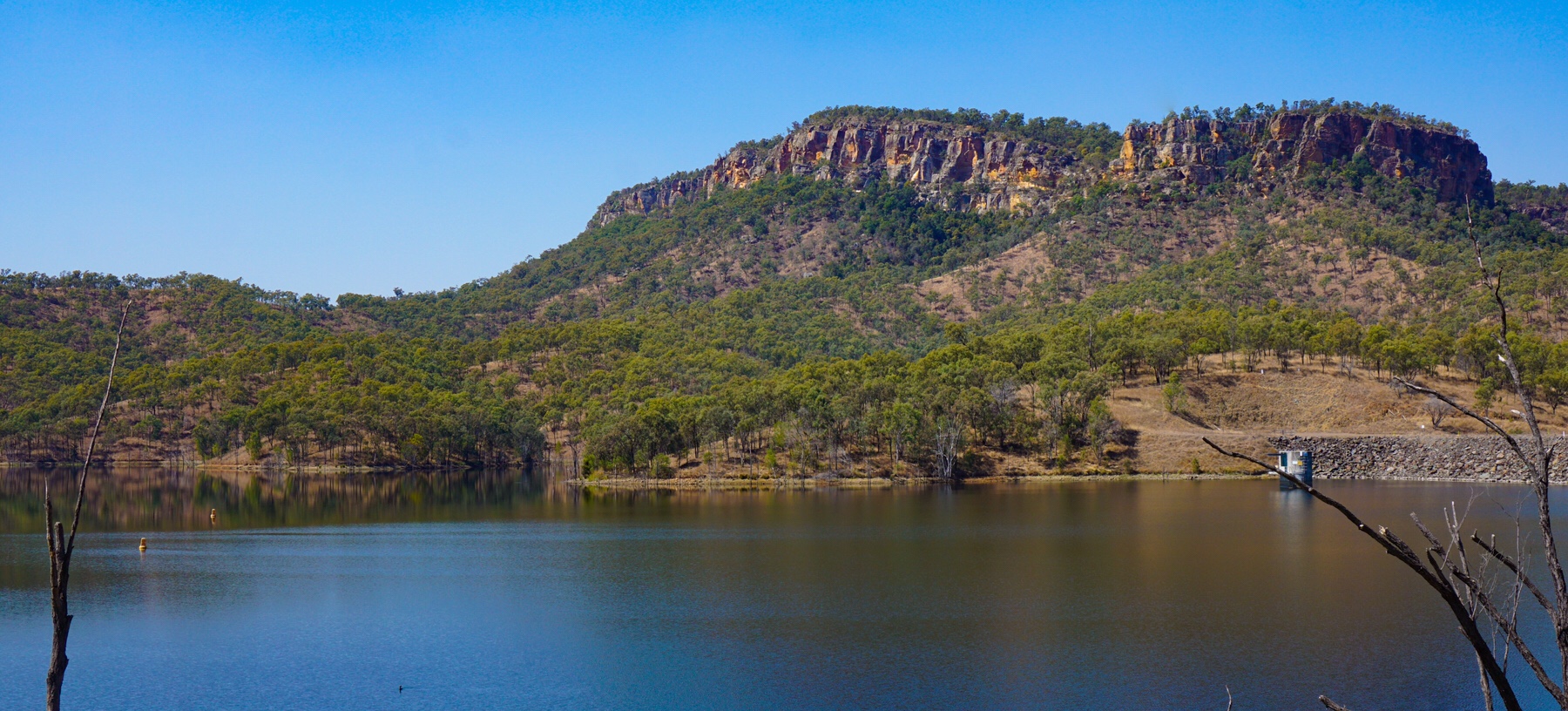
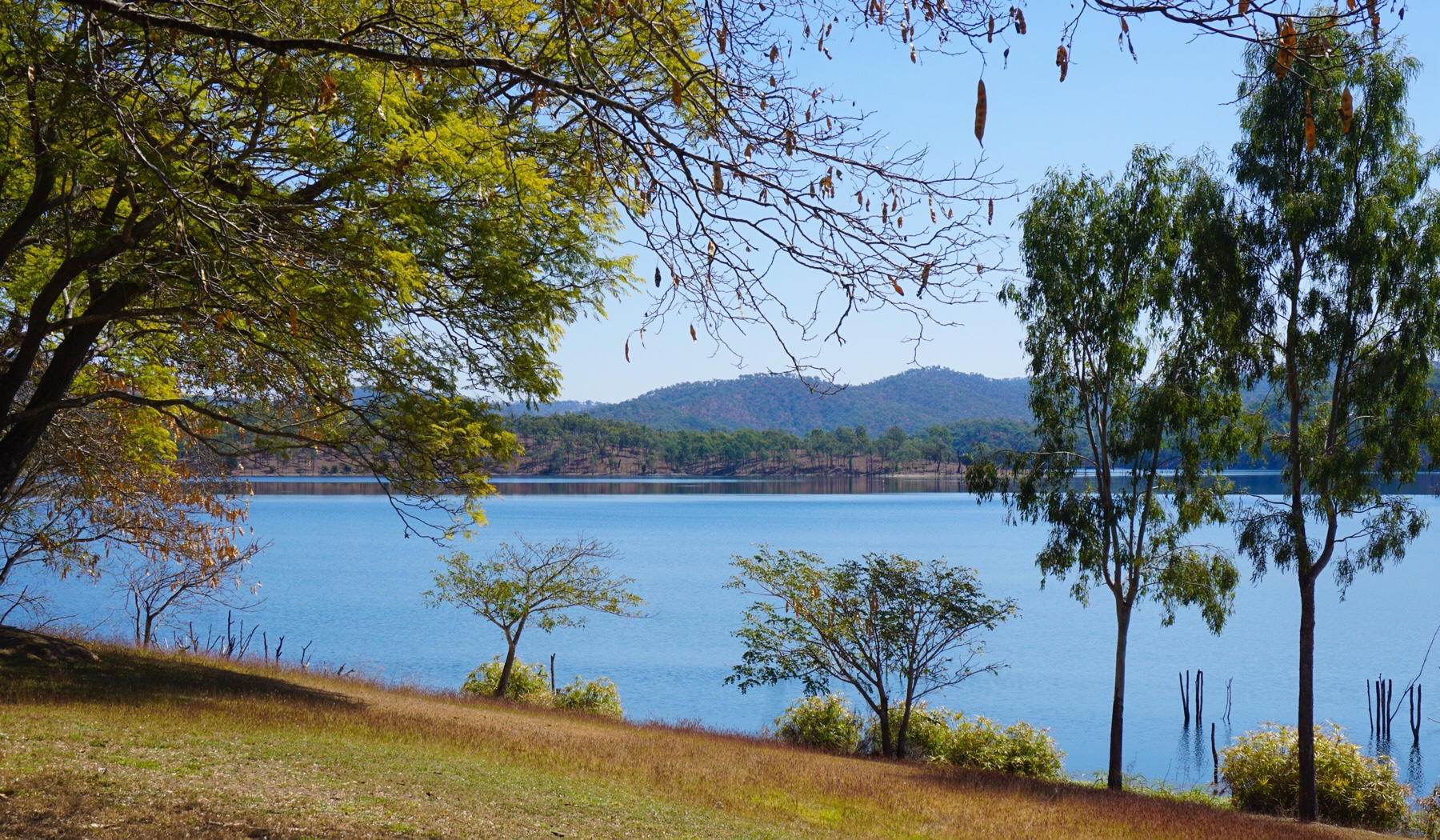 Cania Gorge had a gold rush in the 1870s, and the remnants were visible on a short walk. There was little gold here, with 183.5 tons of rock yielding only around 4.3kg of gold – a lot of work for little reward under gruelling conditions. Today felt pretty warm at about 25 degrees centigrade in the middle of winter. We had a wander around, then headed off to do another, longer walk.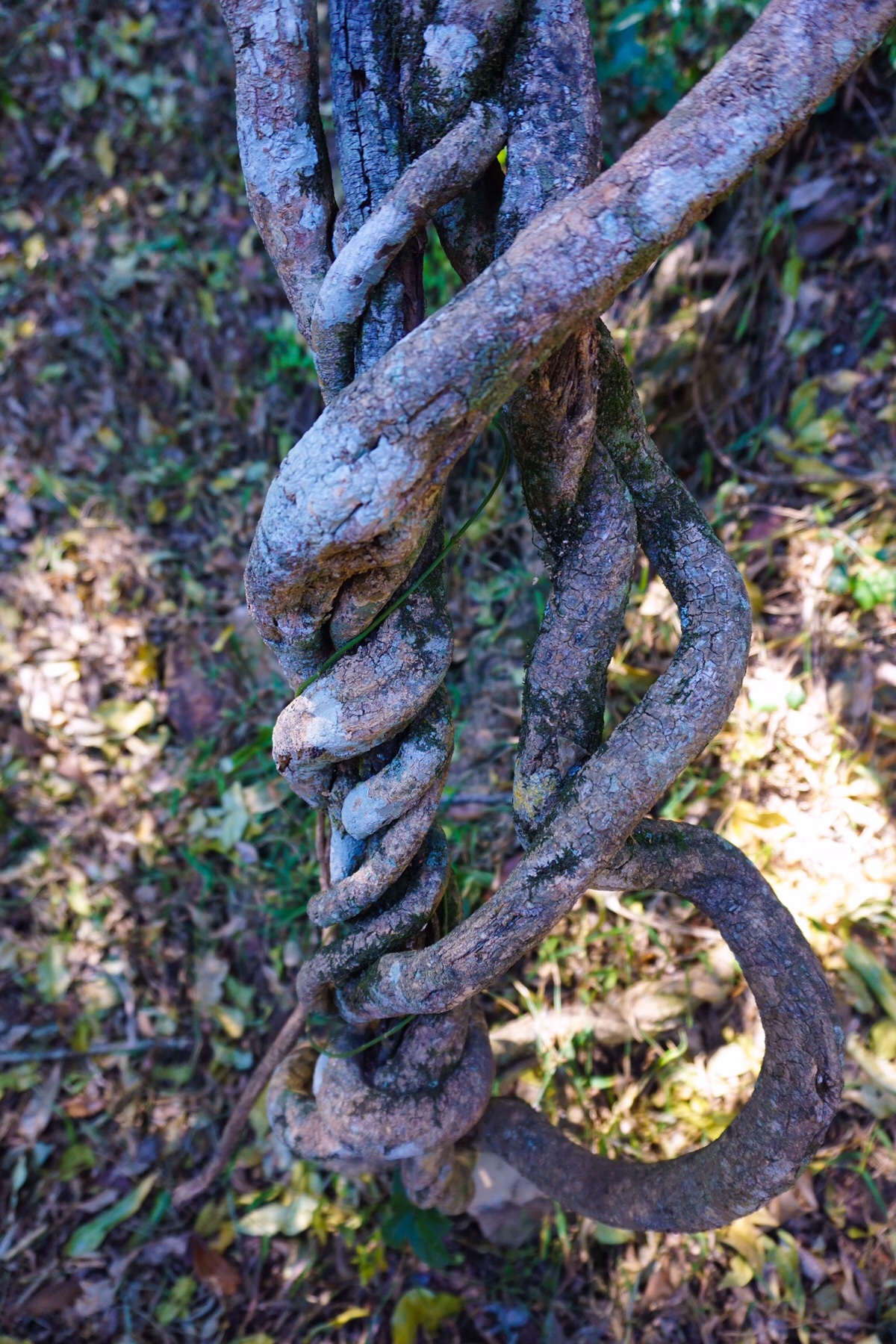
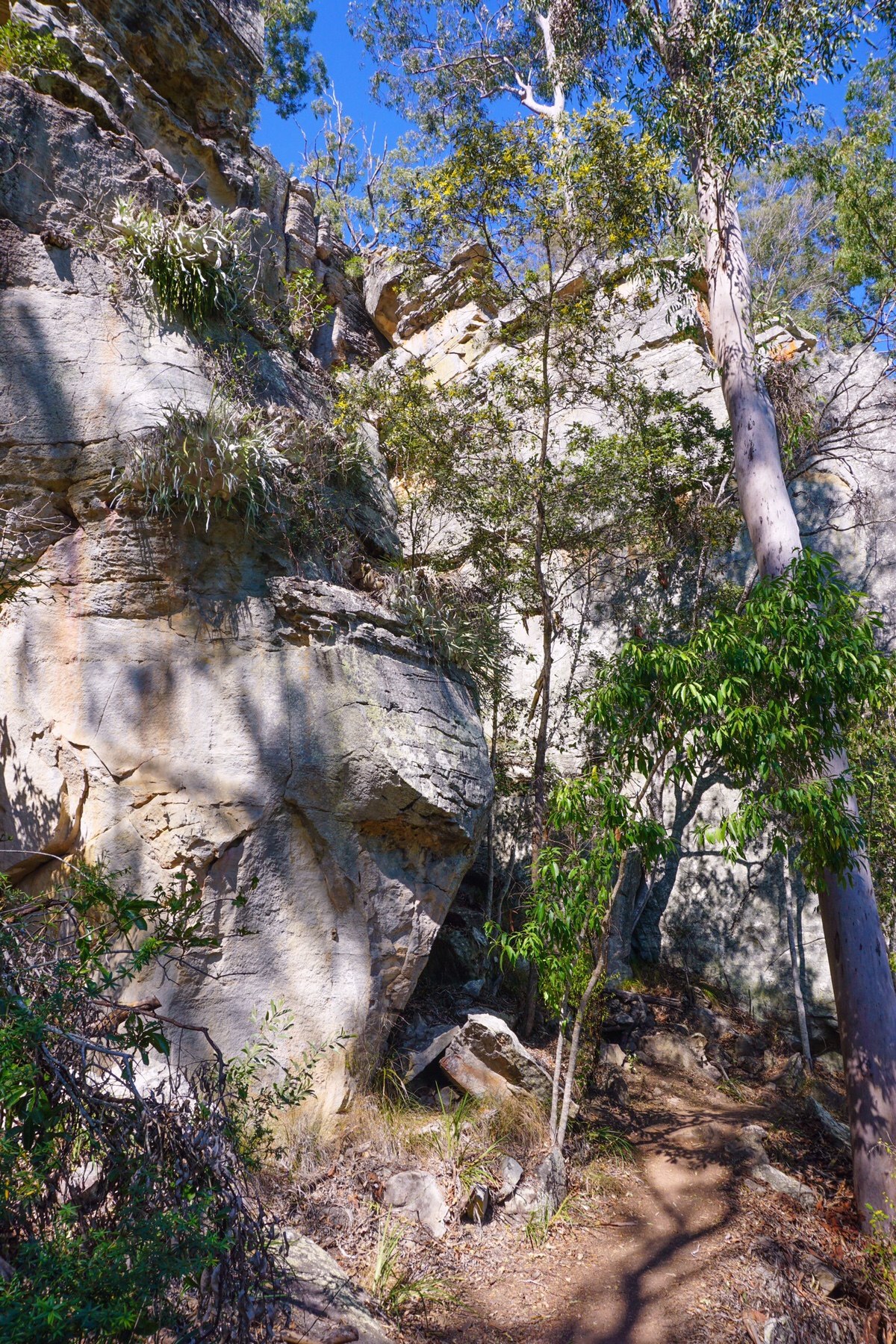
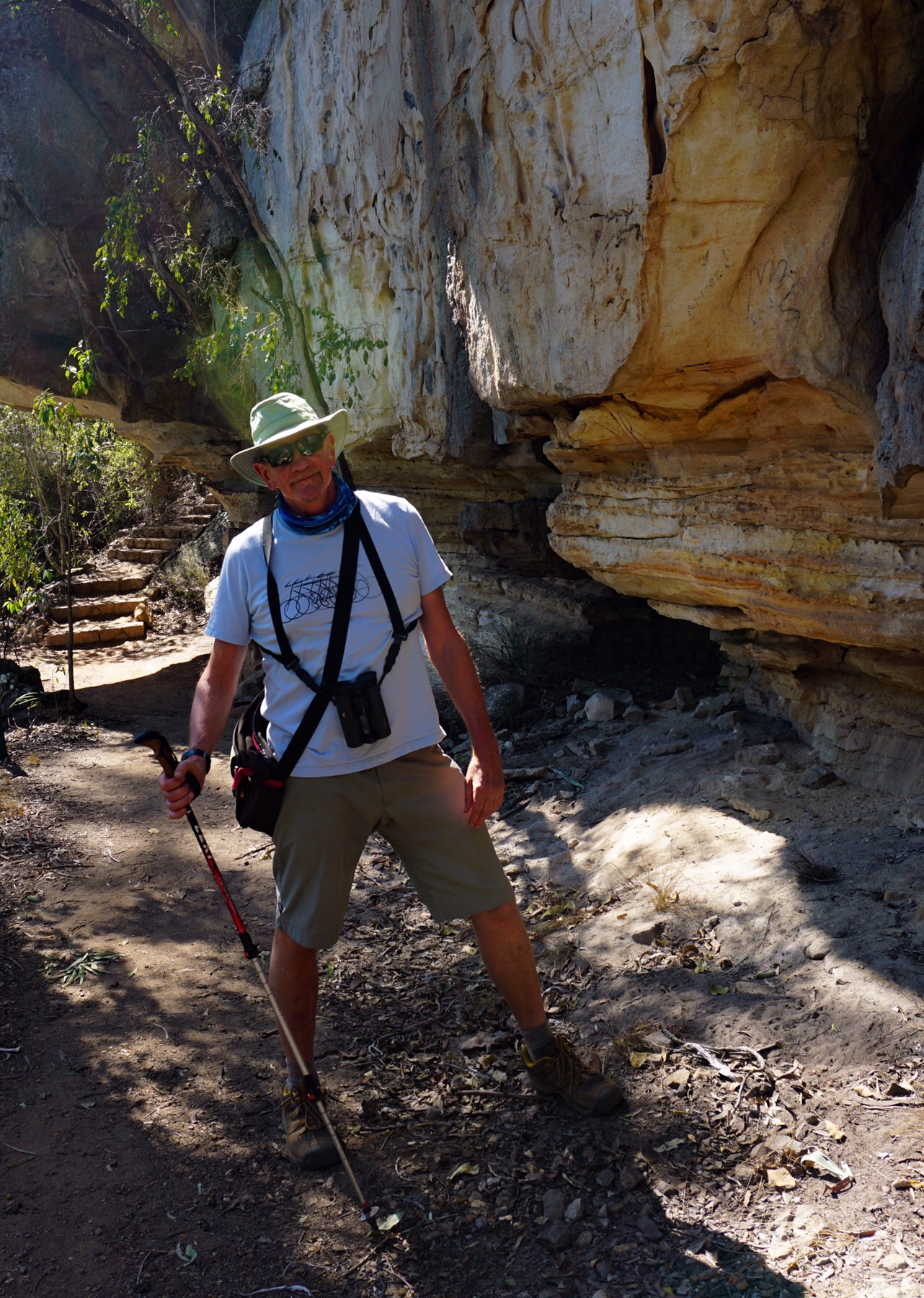
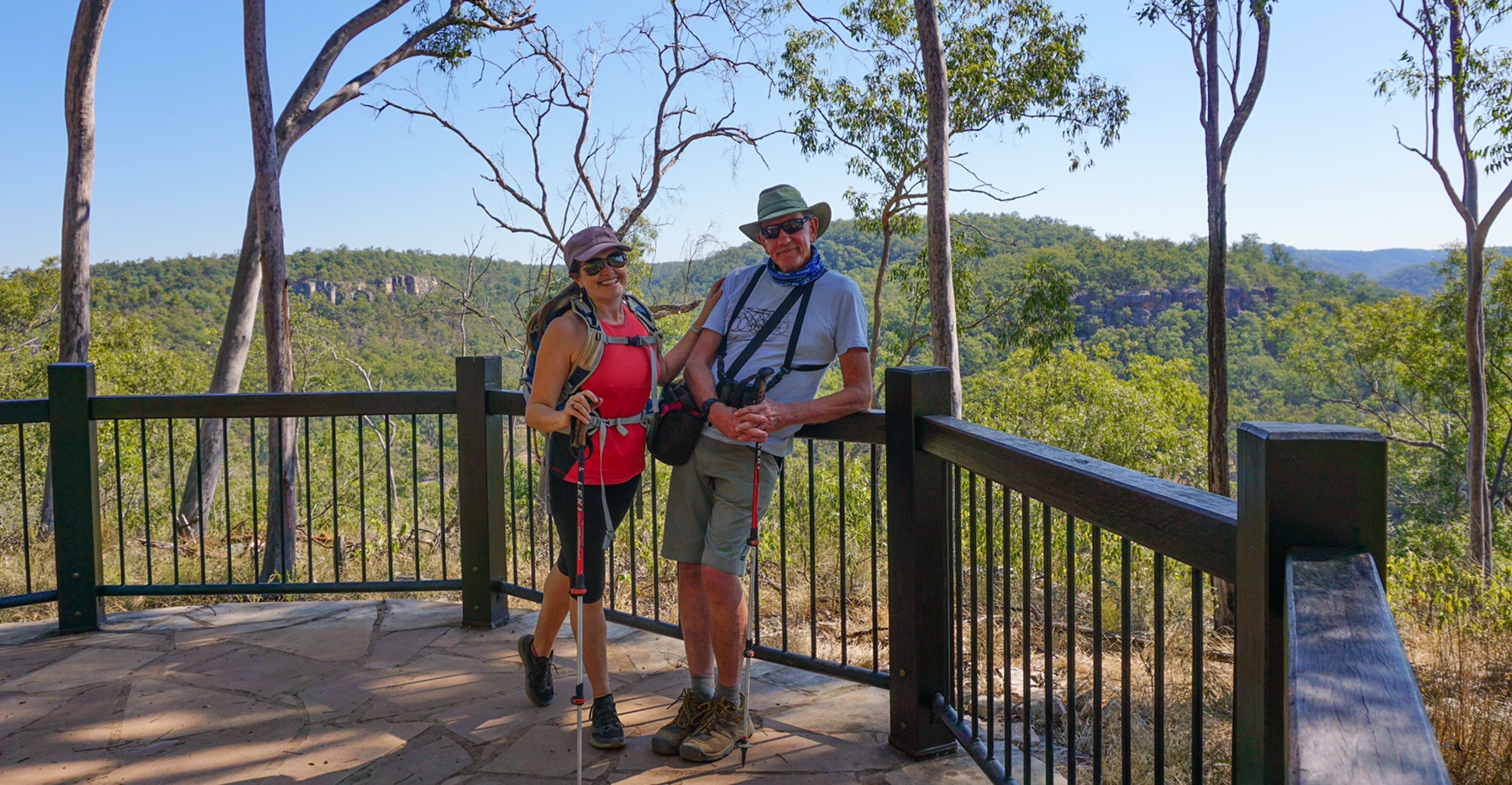
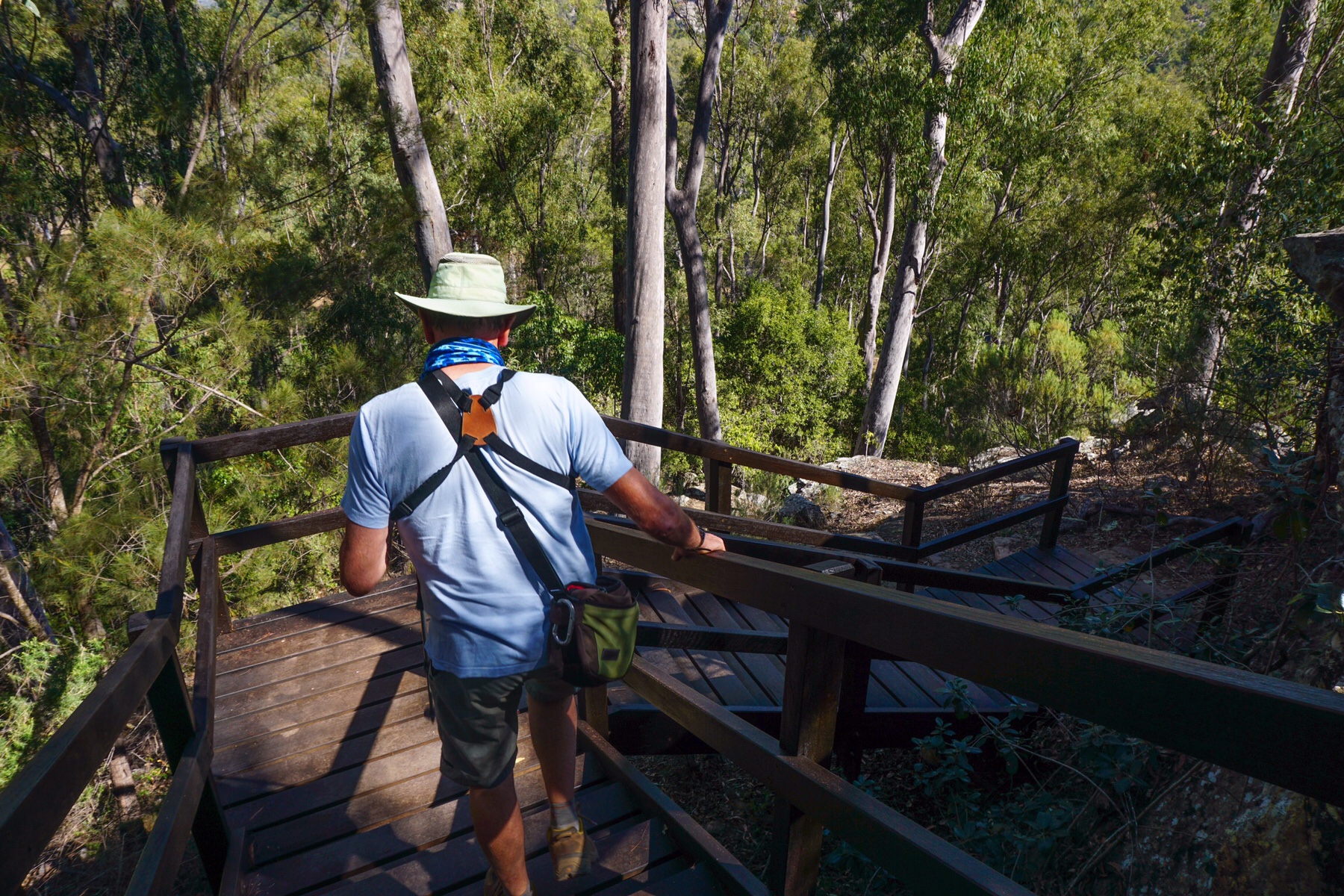
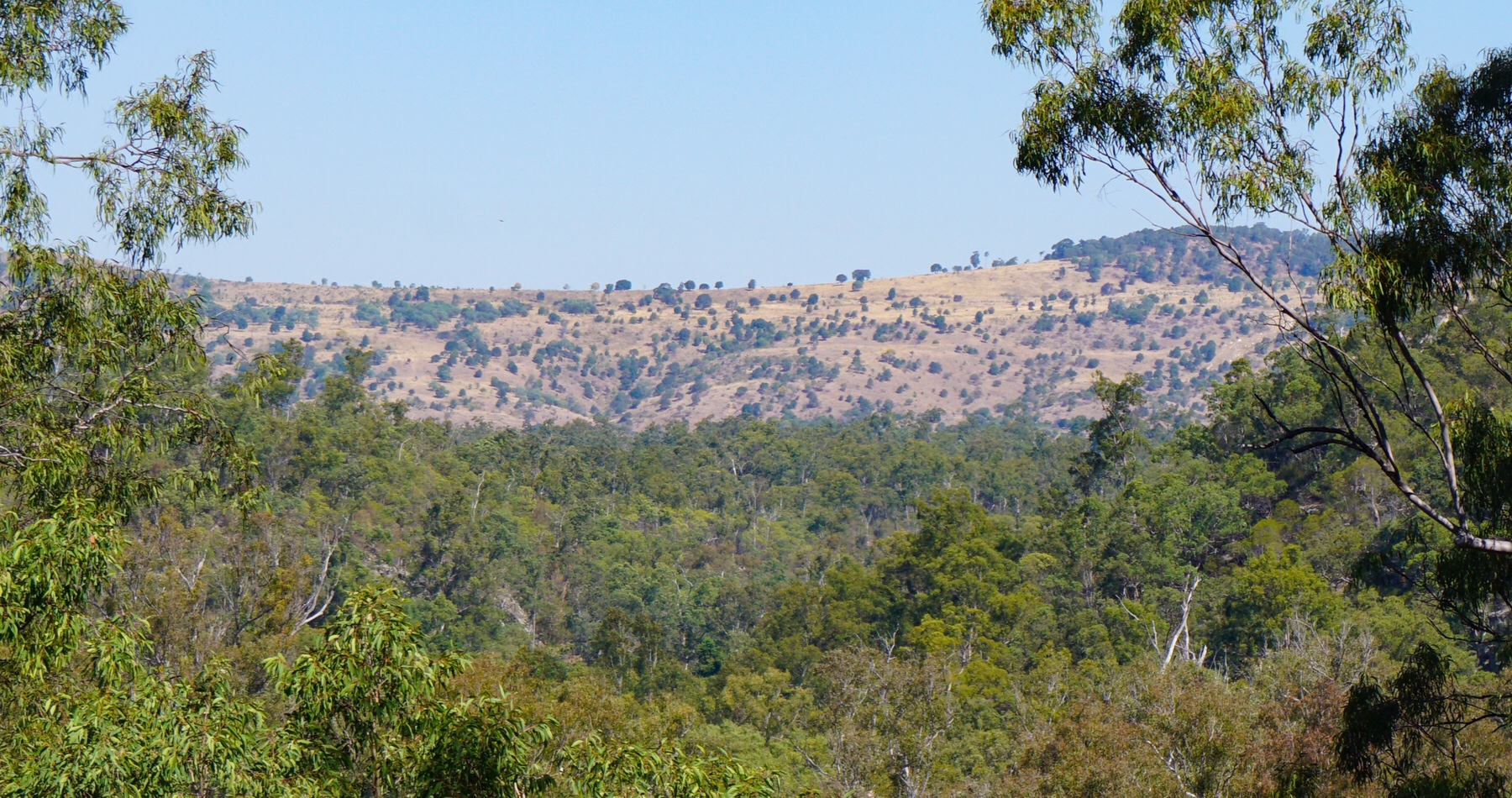 We hiked up to a lookout giving us a fabulous view across this little National Park, before returning to camp.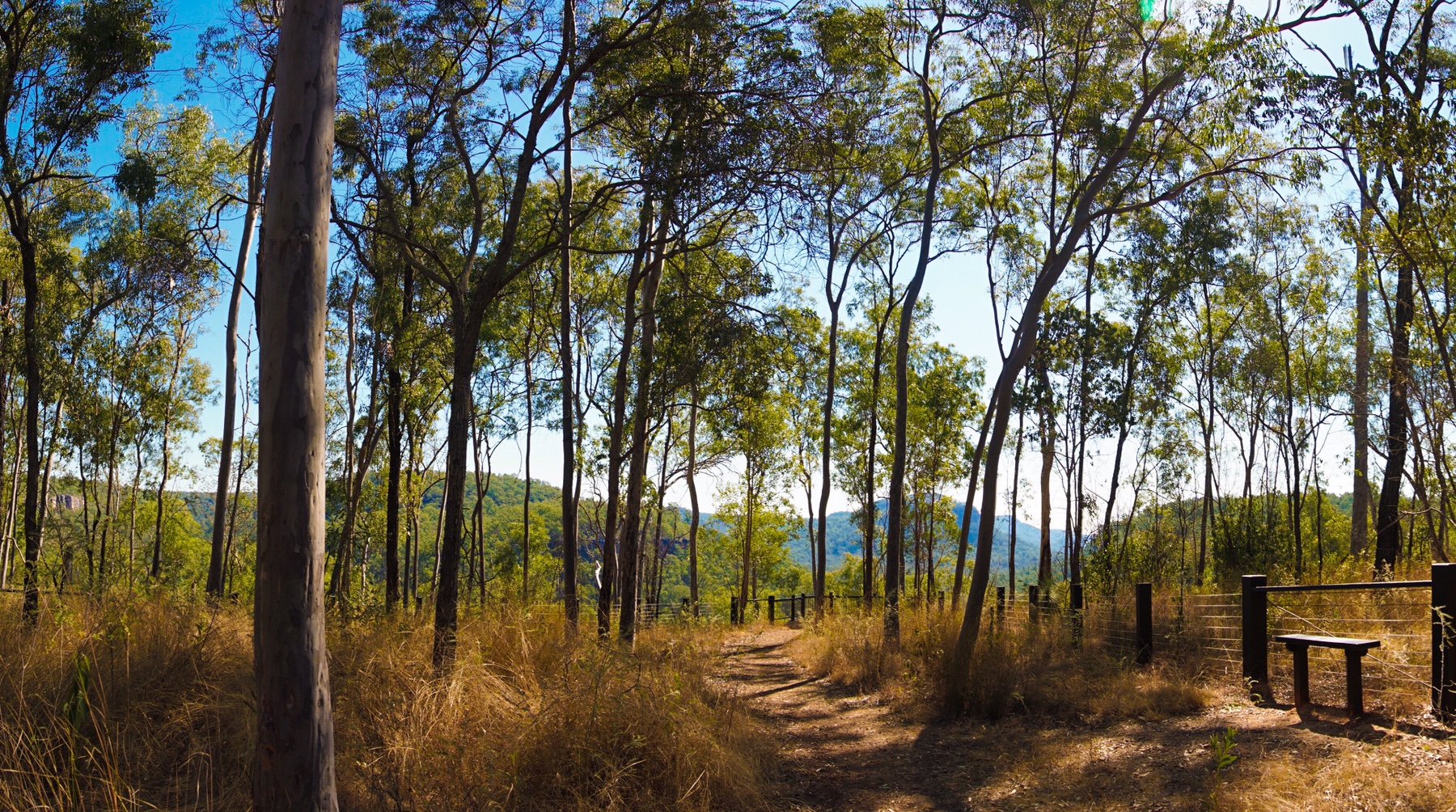
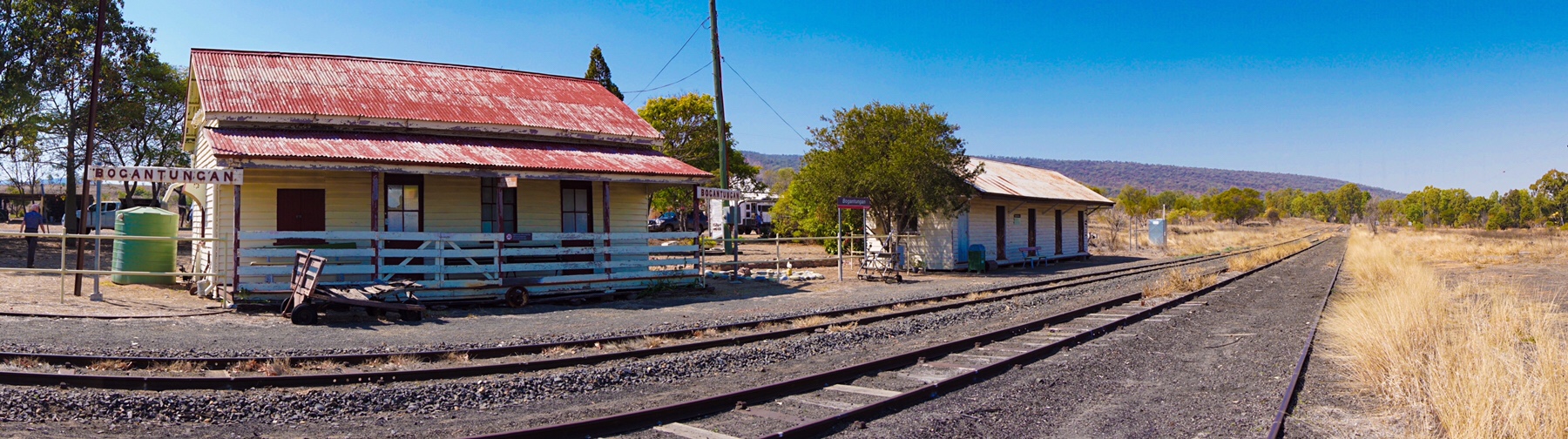 Before long we were seeing signs for Rubyvale and Sapphire, and finally our destination for the evening in Emerald. Yes, you guessed it, we are in the gemfields, but not having a go at fossicking this time. That would involve attention to detail and patience, not Mr A’s strengths!
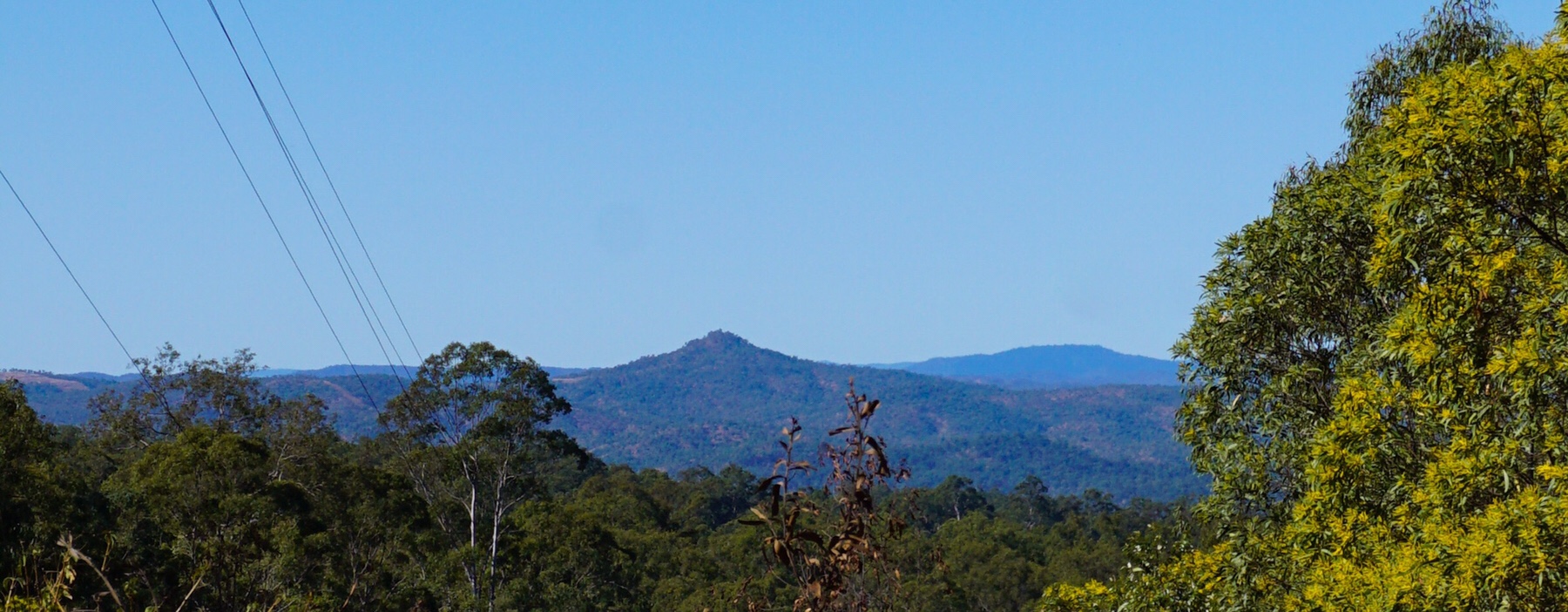 Looking at the map, it would be easy to miss little Cania Gorge. It sits about 150km from the coast inland from Gladstone, and like Carnarvon National Park has deep sandstone gorges and apparently a healthy population of platypus. We had been recommended this location by two separate friends who are or have been in the past local to this area, so thought it would be crazy to miss it.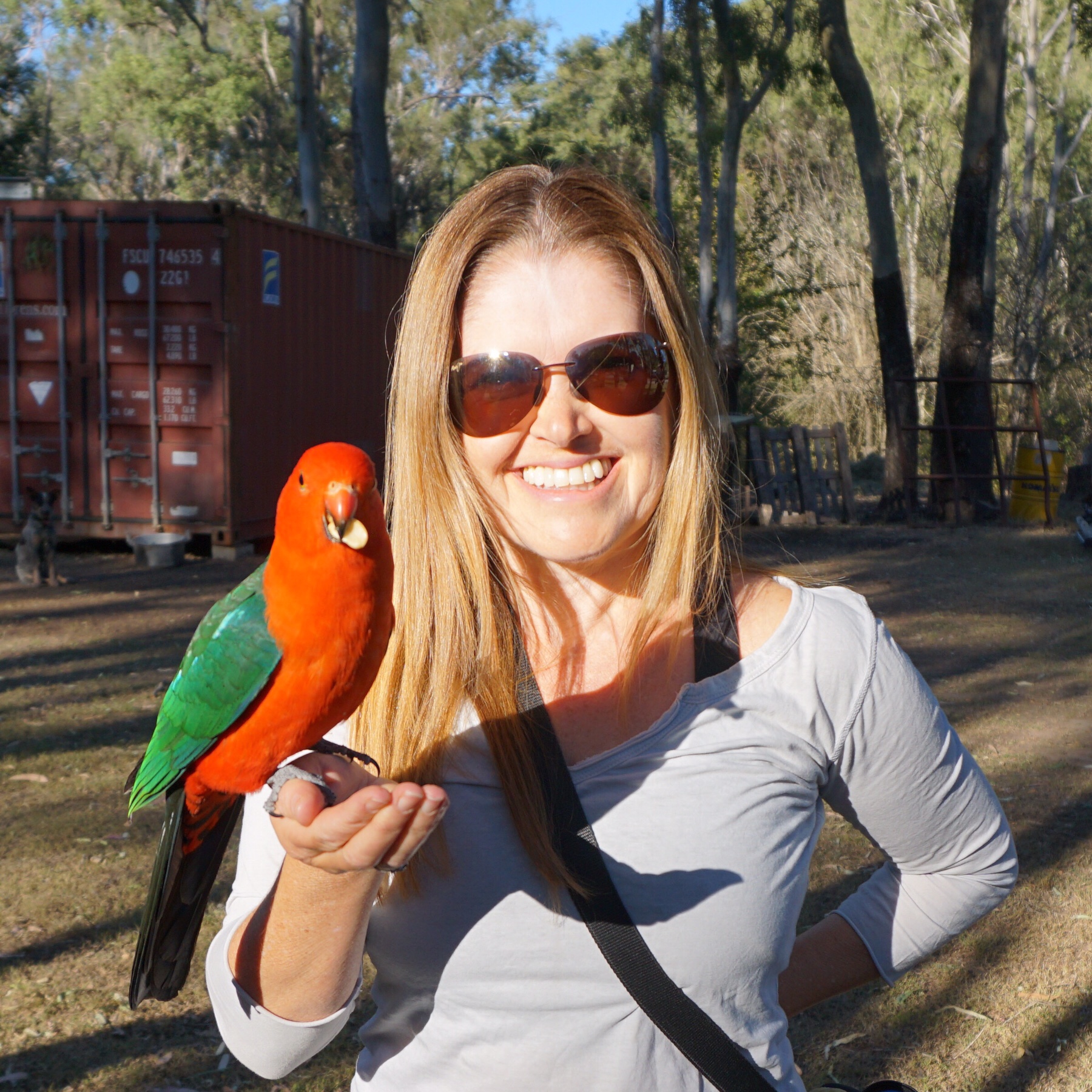
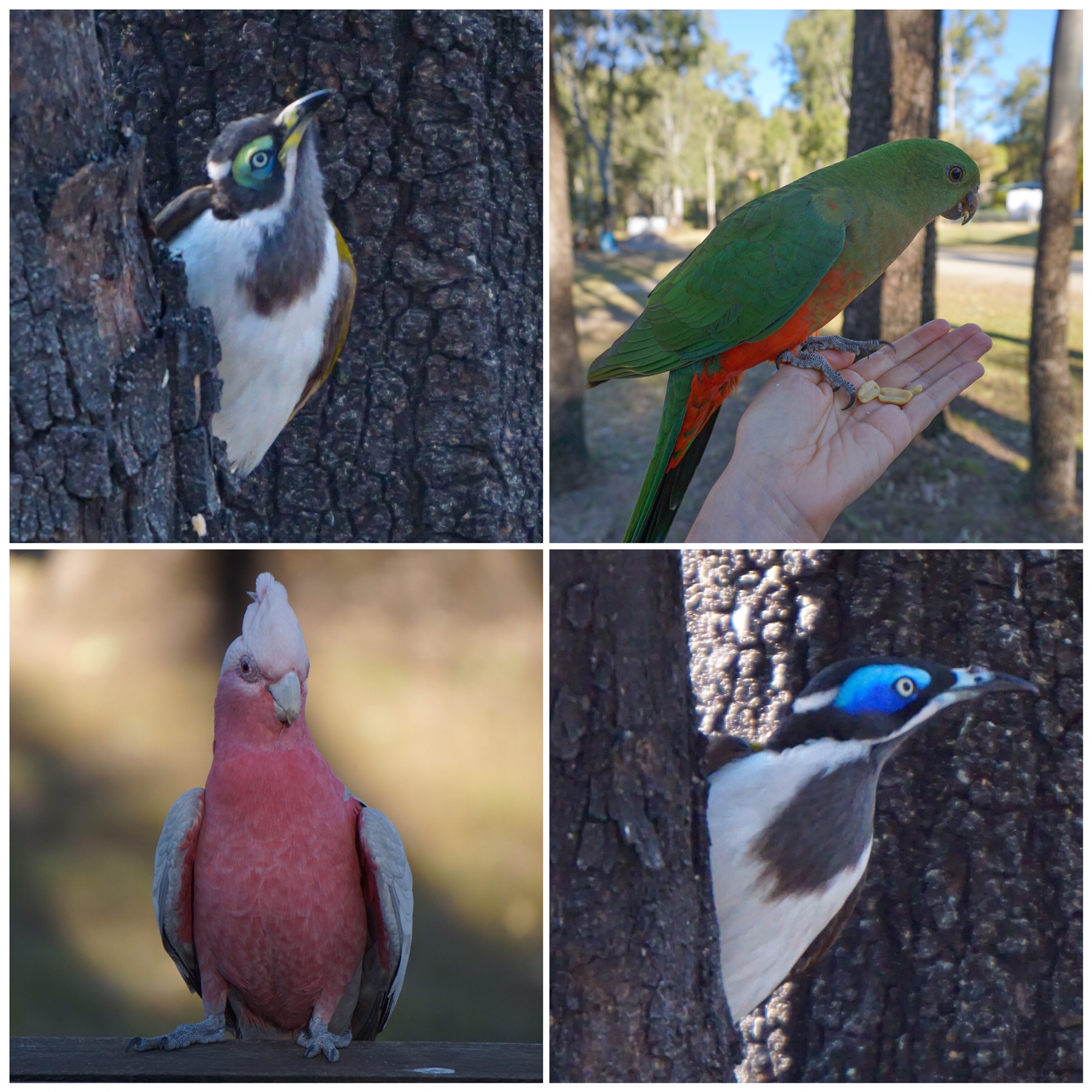
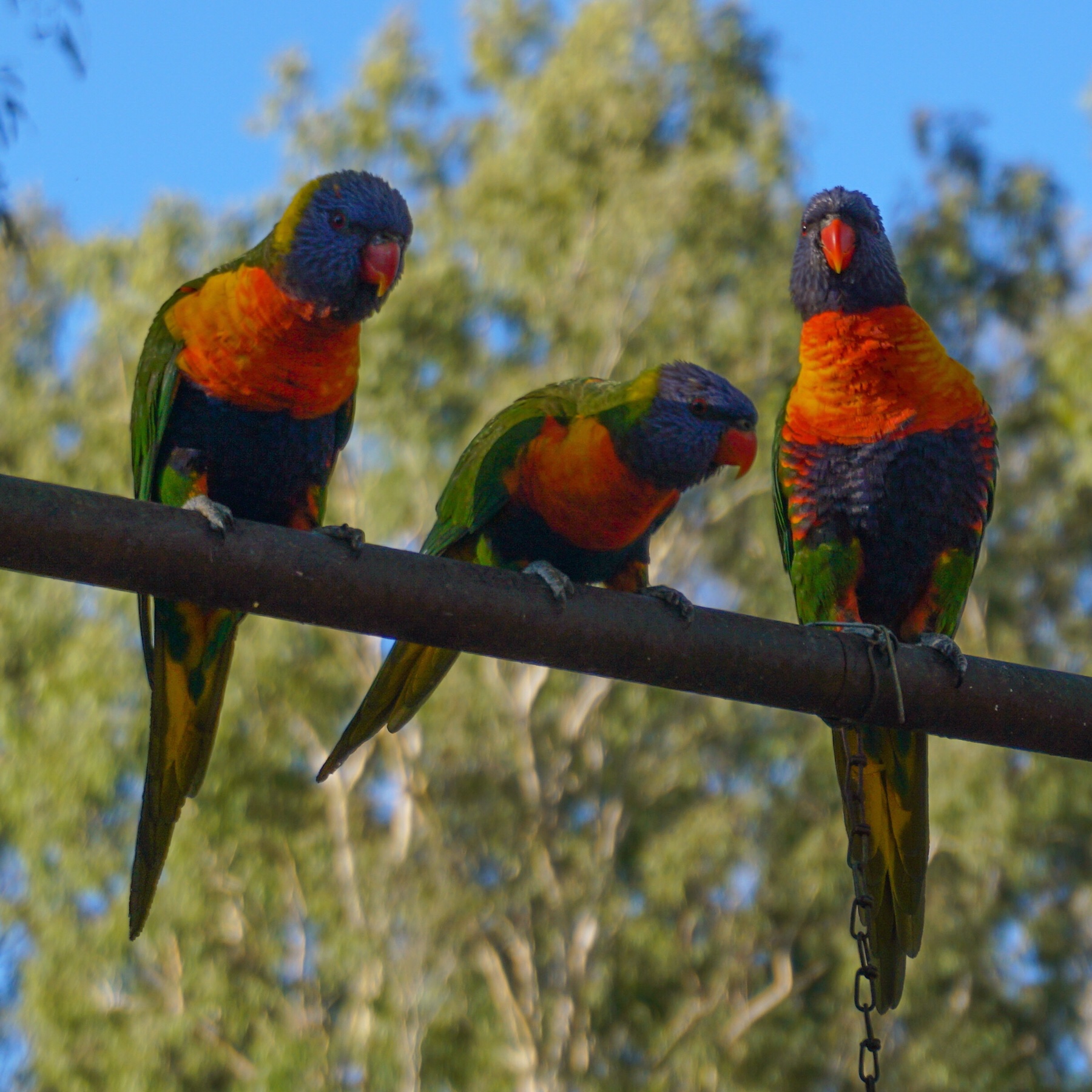
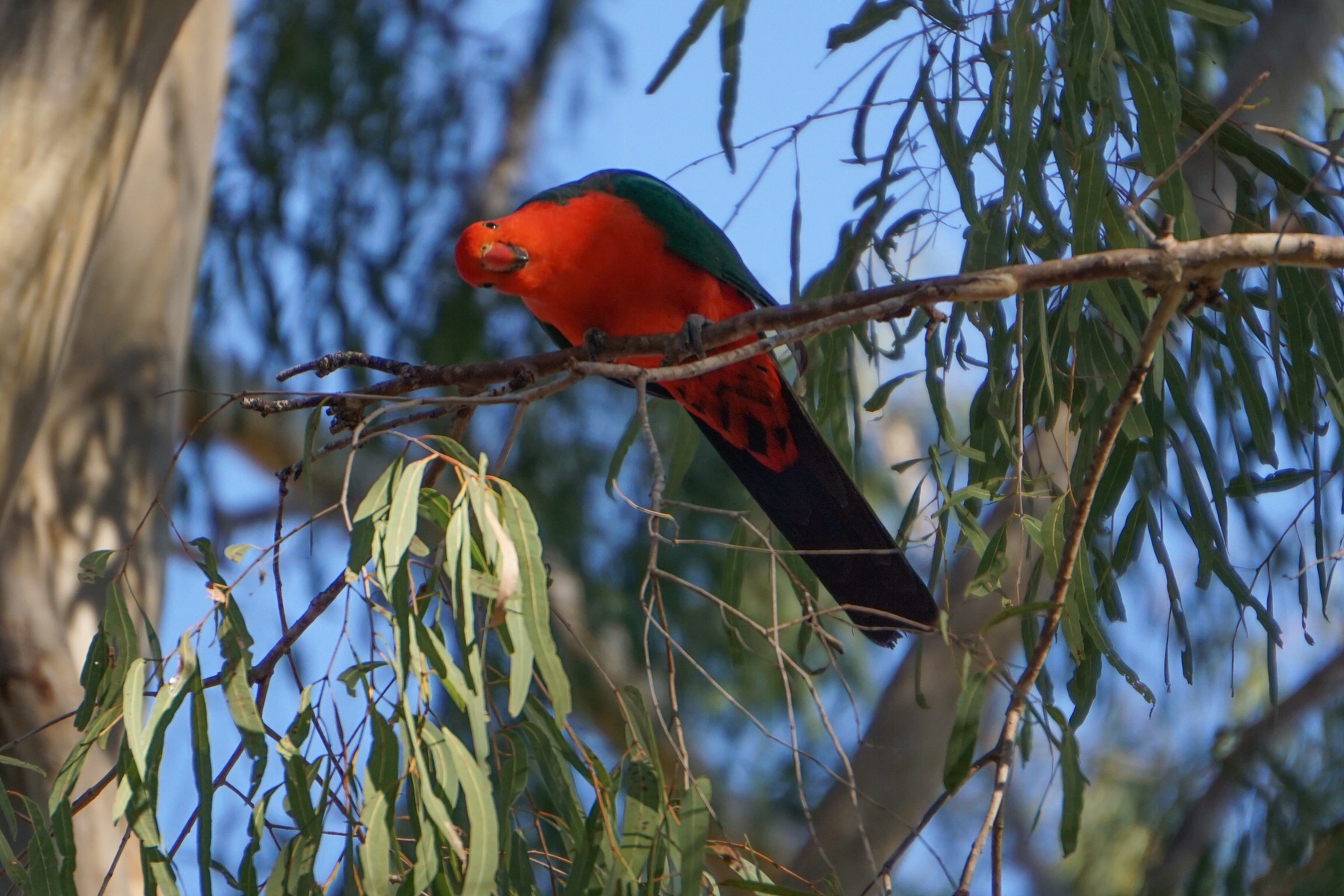
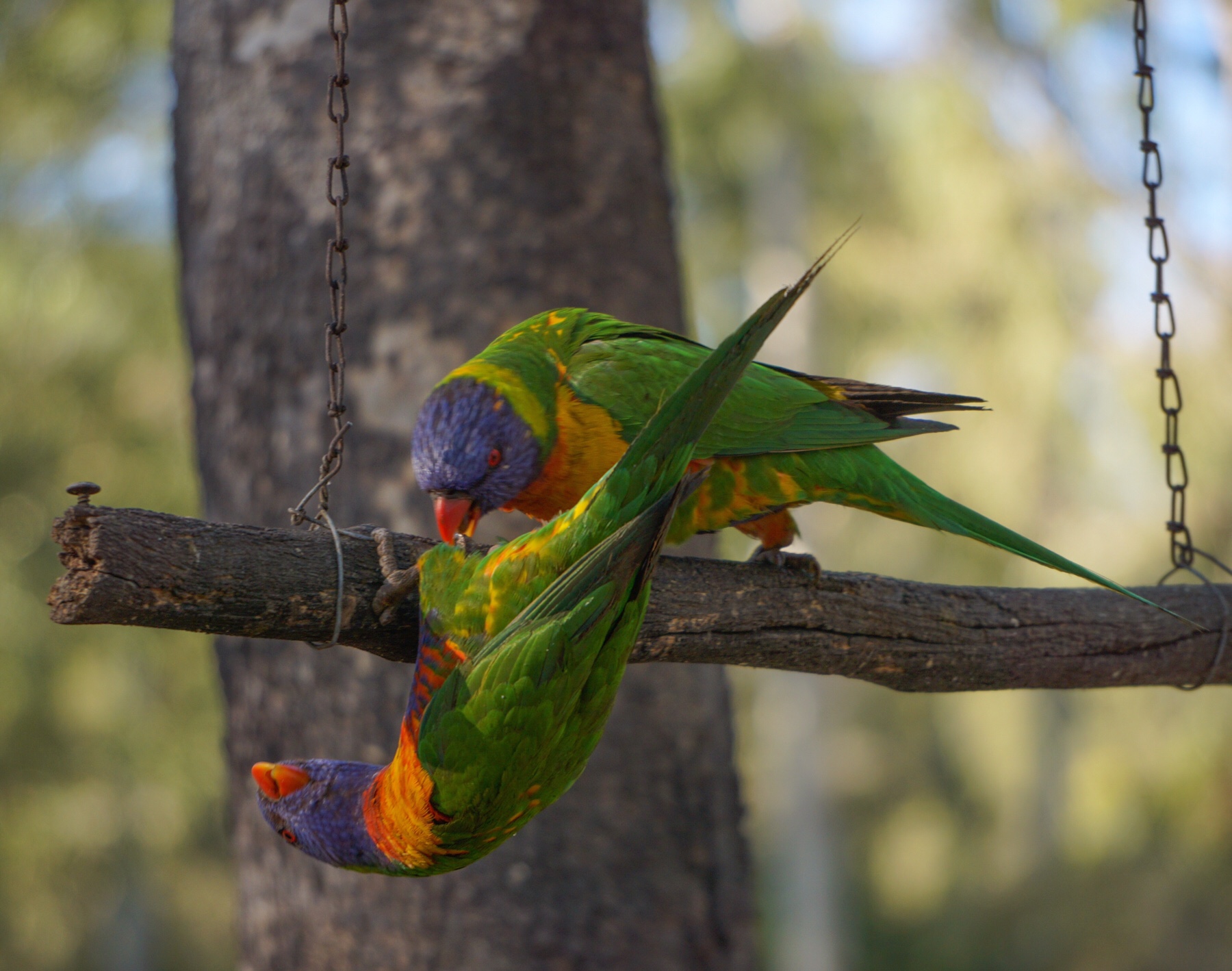 A short cycle along the road allowed us to learn more about the multitude of wild creatures living here, many rare and endangered, and the evidence of 19,000 years of Aboriginal habitation in the gorge. Incredible. Already it feels like a very special place.