Author: Mrs A
Monday – location: Emerald, Queensland
We left Barcaldine and continued our journey east along the Capricorn Highway, and with it the landscape began to change. The flat treeless plains gave way to hills and forestry and we began to climb into the Great Dividing Range.
We stopped for a break at the bizarrely named Bogantuncan, once home to about 28 pubs, but now just a smattering of old houses and a historical train station. It was a nice spot to stretch our legs before we continued on.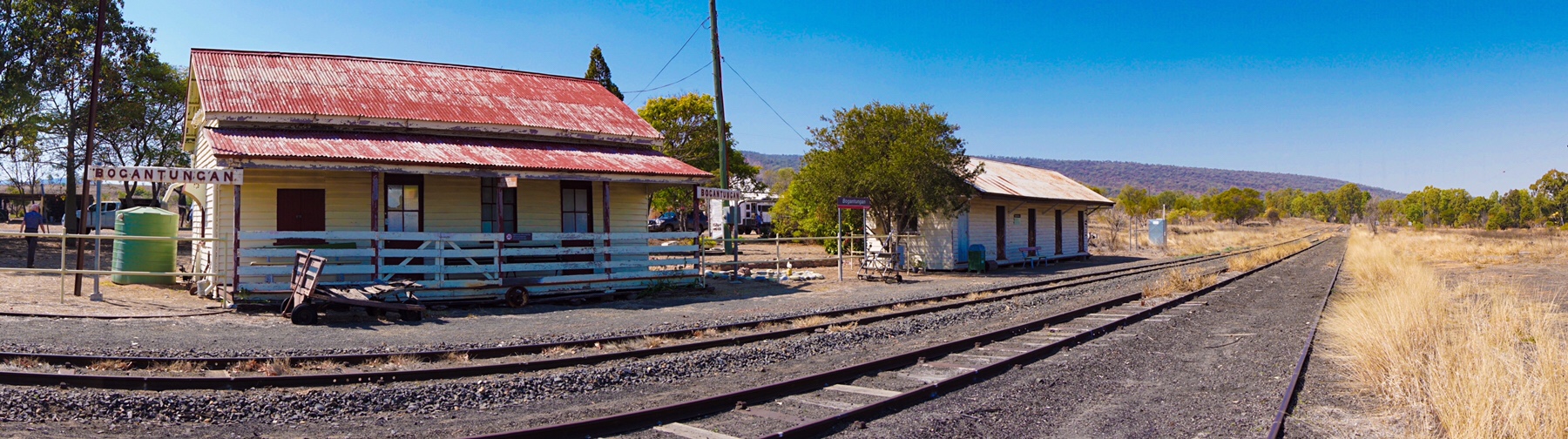 Before long we were seeing signs for Rubyvale and Sapphire, and finally our destination for the evening in Emerald. Yes, you guessed it, we are in the gemfields, but not having a go at fossicking this time. That would involve attention to detail and patience, not Mr A’s strengths!
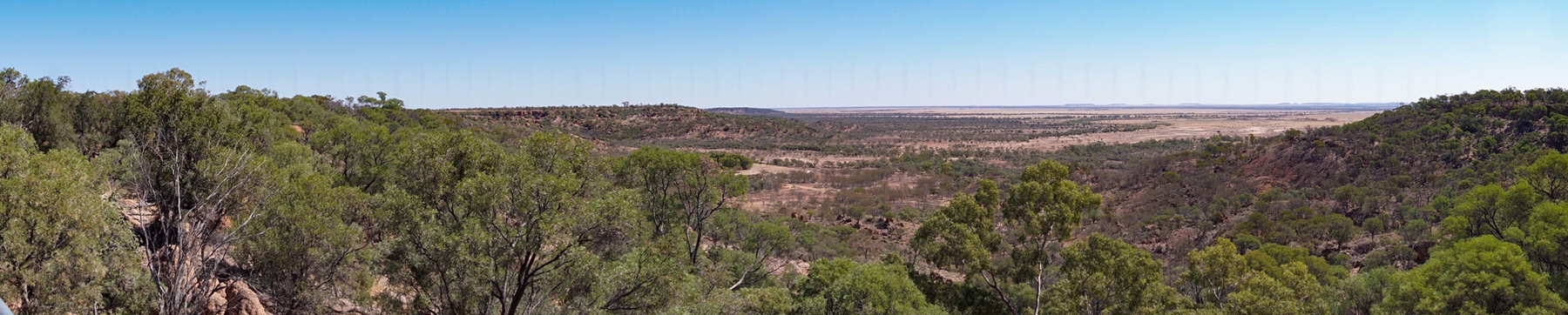
This area was formed around 70 million years ago, with around 80 extinct volcanic peaks around the region.
We set up camp in a big field, nice and peaceful if nothing else going for it – we paid $15 for the privilege – worth it compared to the packed free-camp on the edge of town we spotted – metres from the main highway with road-trains thundering past and with a bridge overhead carrying freight trains…no thank you!
Tuesday – location: from Emerald to Cania Gorge, Queensland
It was a very cold start to the day, with temperatures around zero first thing, and by the time we pulled away around 7.30am had reached the dizzying heights of 3 degrees. We had a long drive today so wanted to get a good start.
After an hour or so of driving we stopped in the town of Blackwater for some groceries and fuel, and then continued towards Biloela and down to the tiny Cania Gorge National Park.
The landscape continued to change as we drove, becoming the rich agricultural lands of Channel Country and then to a winding road through forested national park and state forest.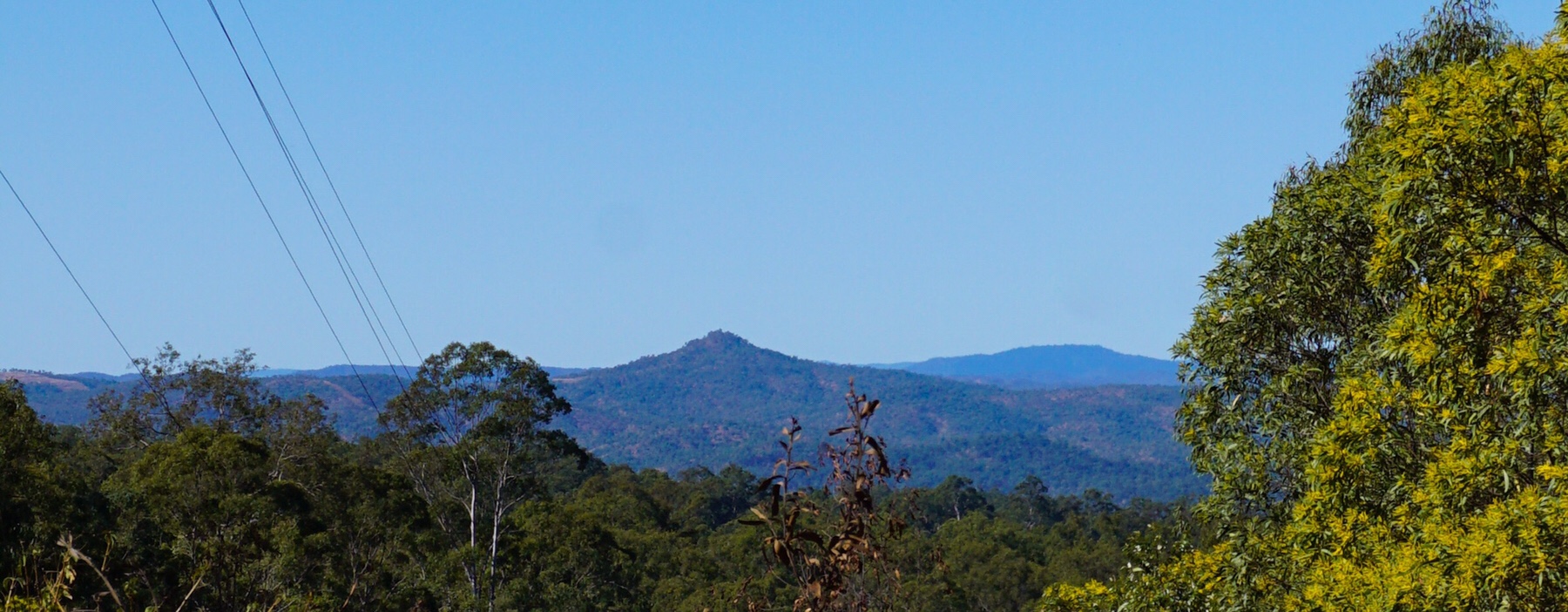 Looking at the map, it would be easy to miss little Cania Gorge. It sits about 150km from the coast inland from Gladstone, and like Carnarvon National Park has deep sandstone gorges and apparently a healthy population of platypus. We had been recommended this location by two separate friends who are or have been in the past local to this area, so thought it would be crazy to miss it.
Pulling into the bushland caravan park, we are as close to the National Park and its multitude of walks as possible – they start literally metres from our front door. It’s so lovely to be in a bushland setting again, particularly at this time of year. The acacia flowers are blooming yellow, providing a spectacular display as well as a beautiful perfume wherever you go – we’re looking forward to doing some walks in the next couple of days.
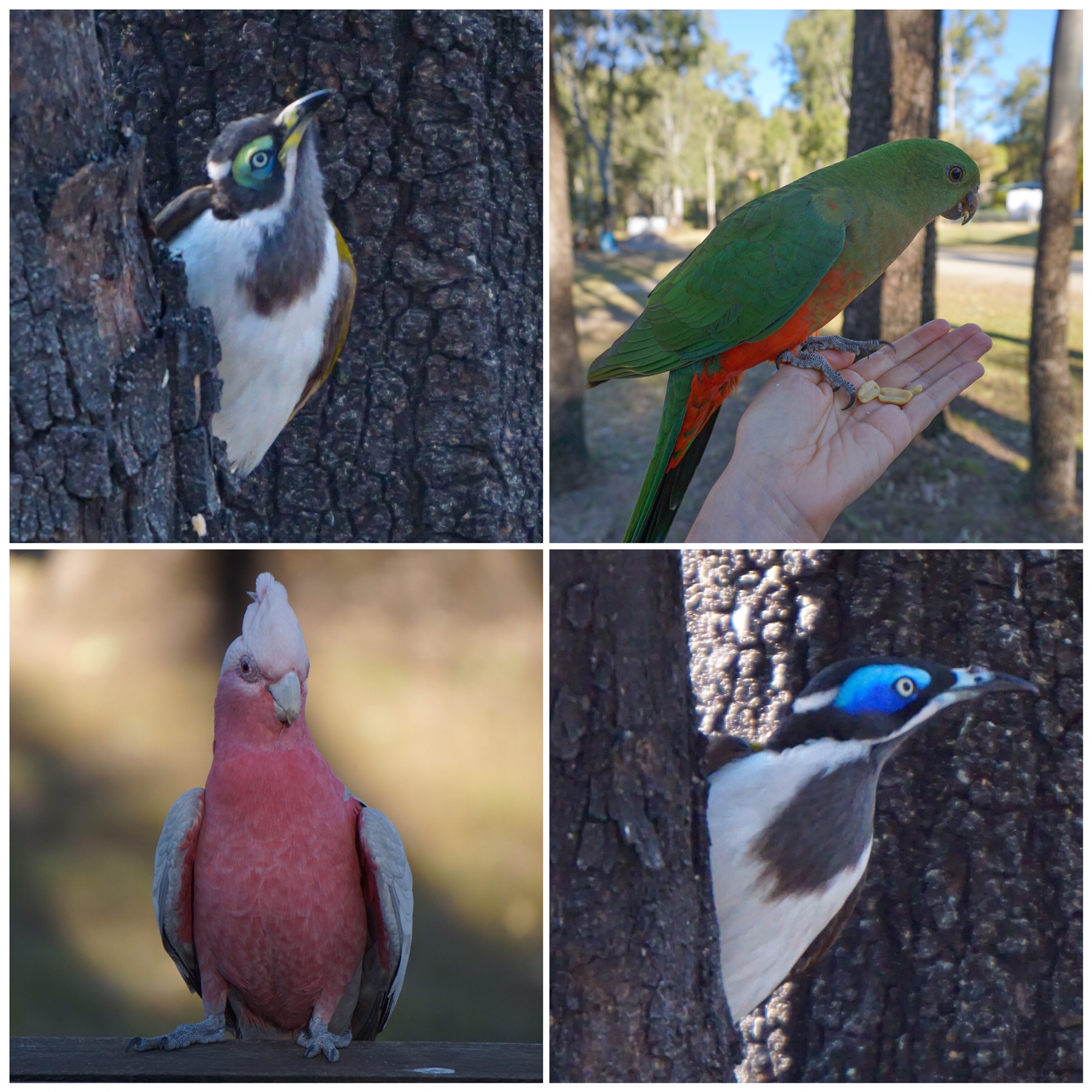
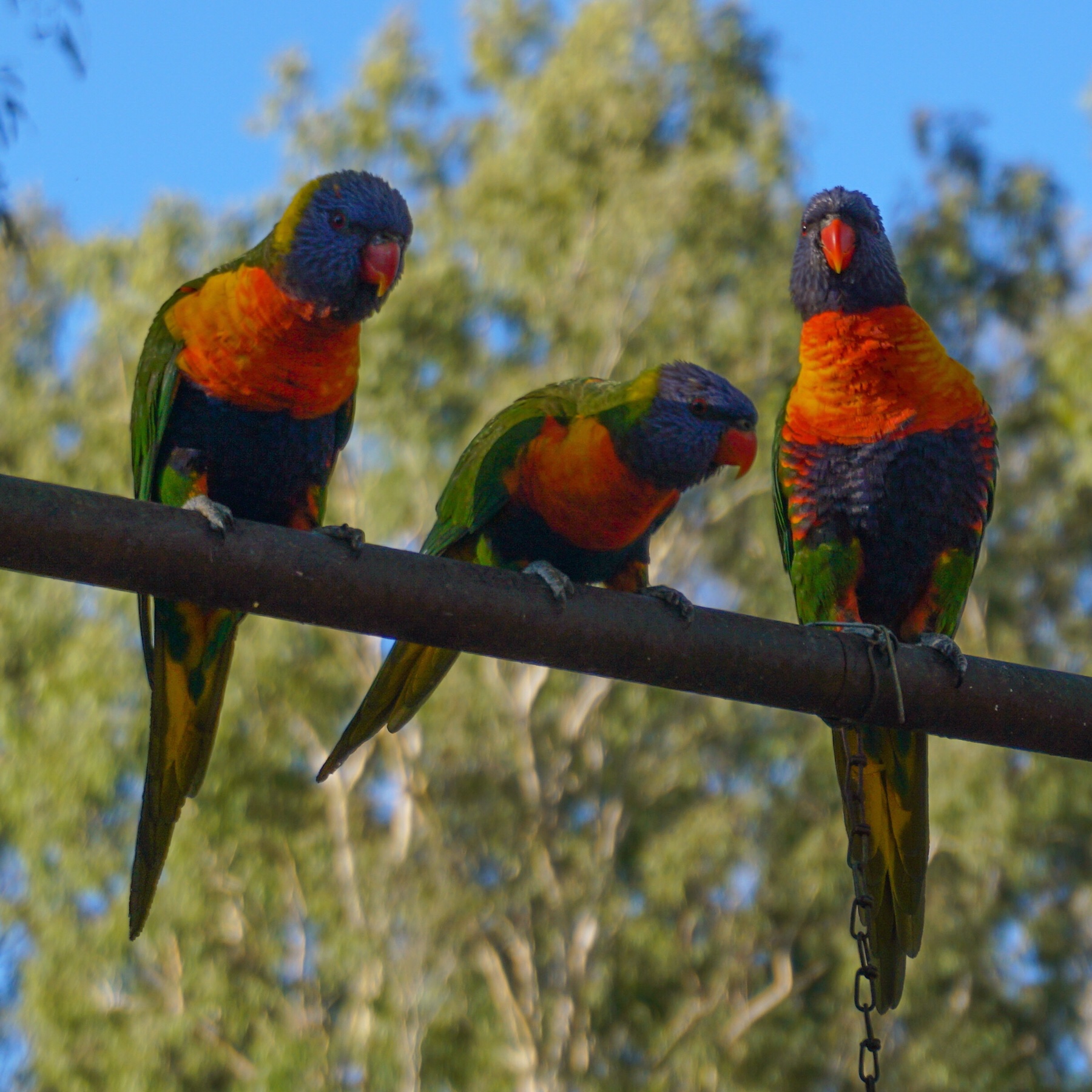
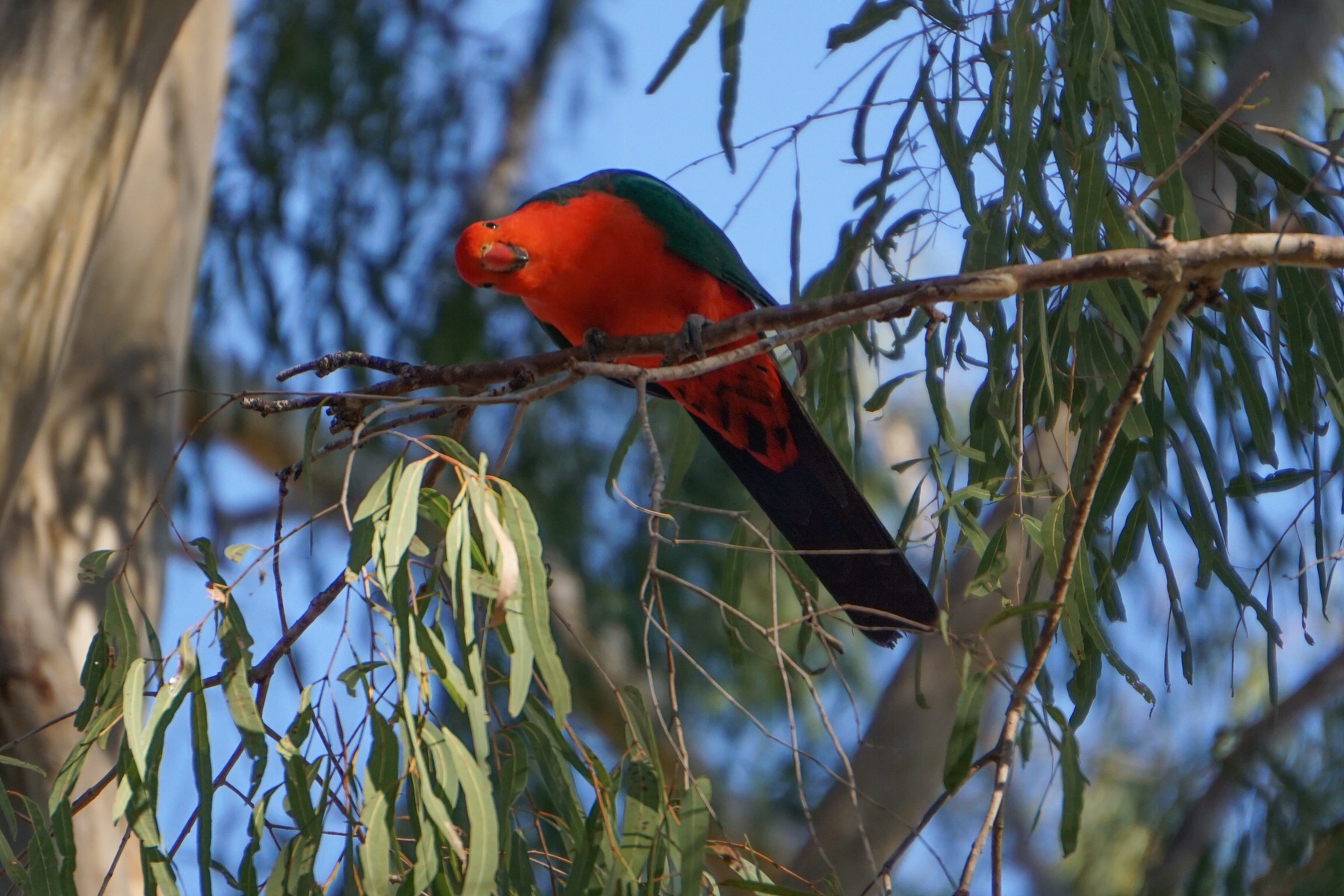
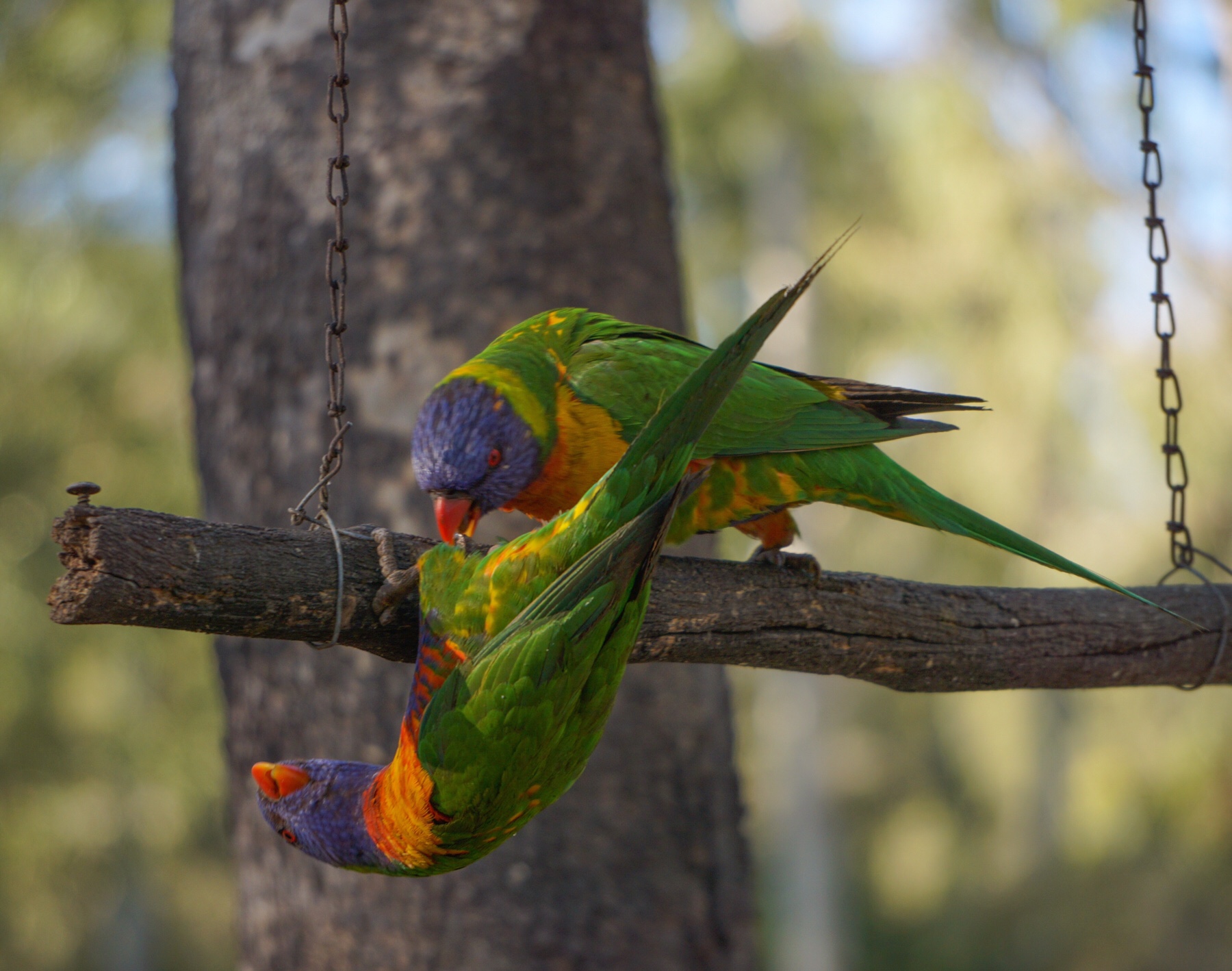
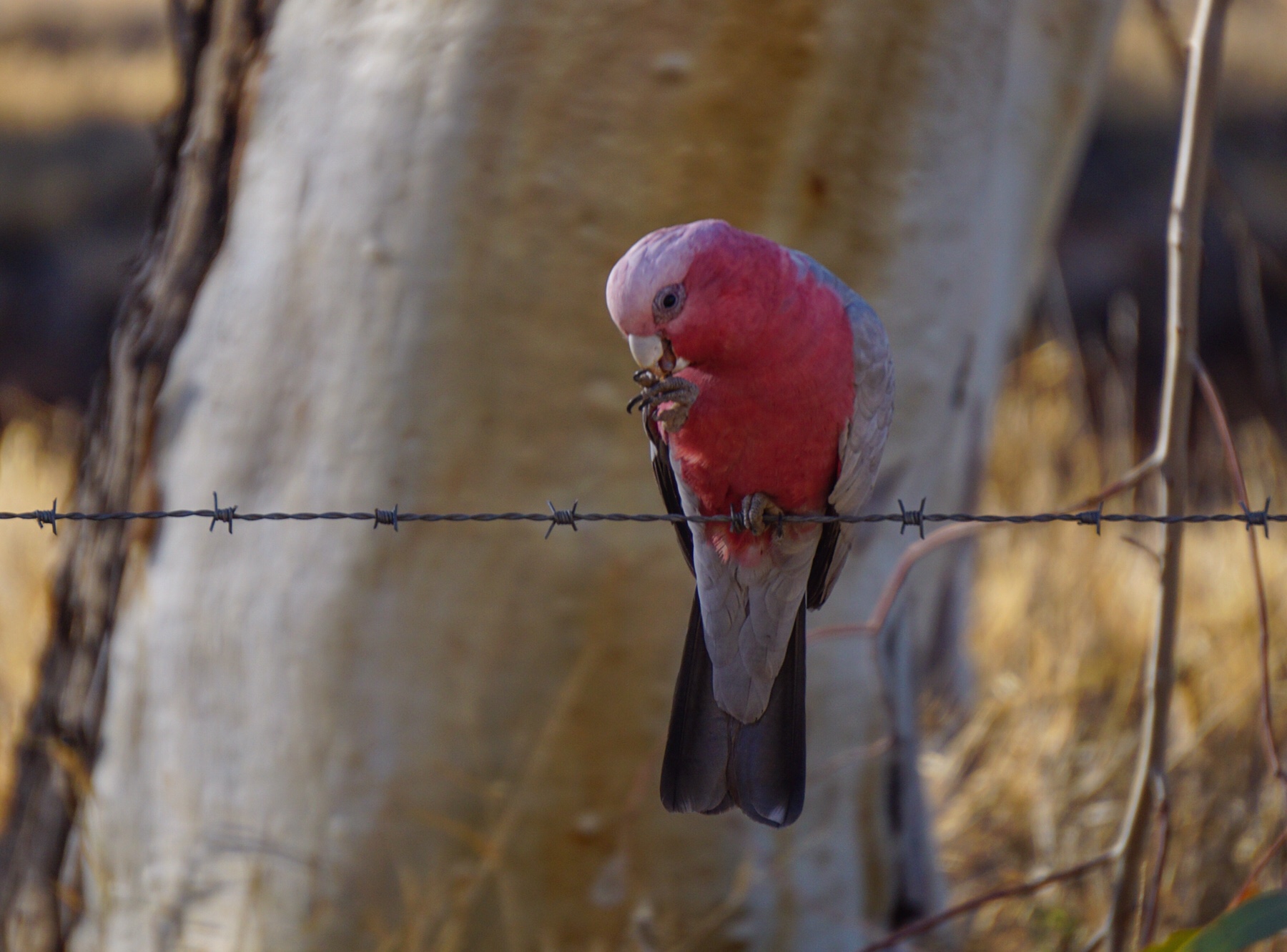
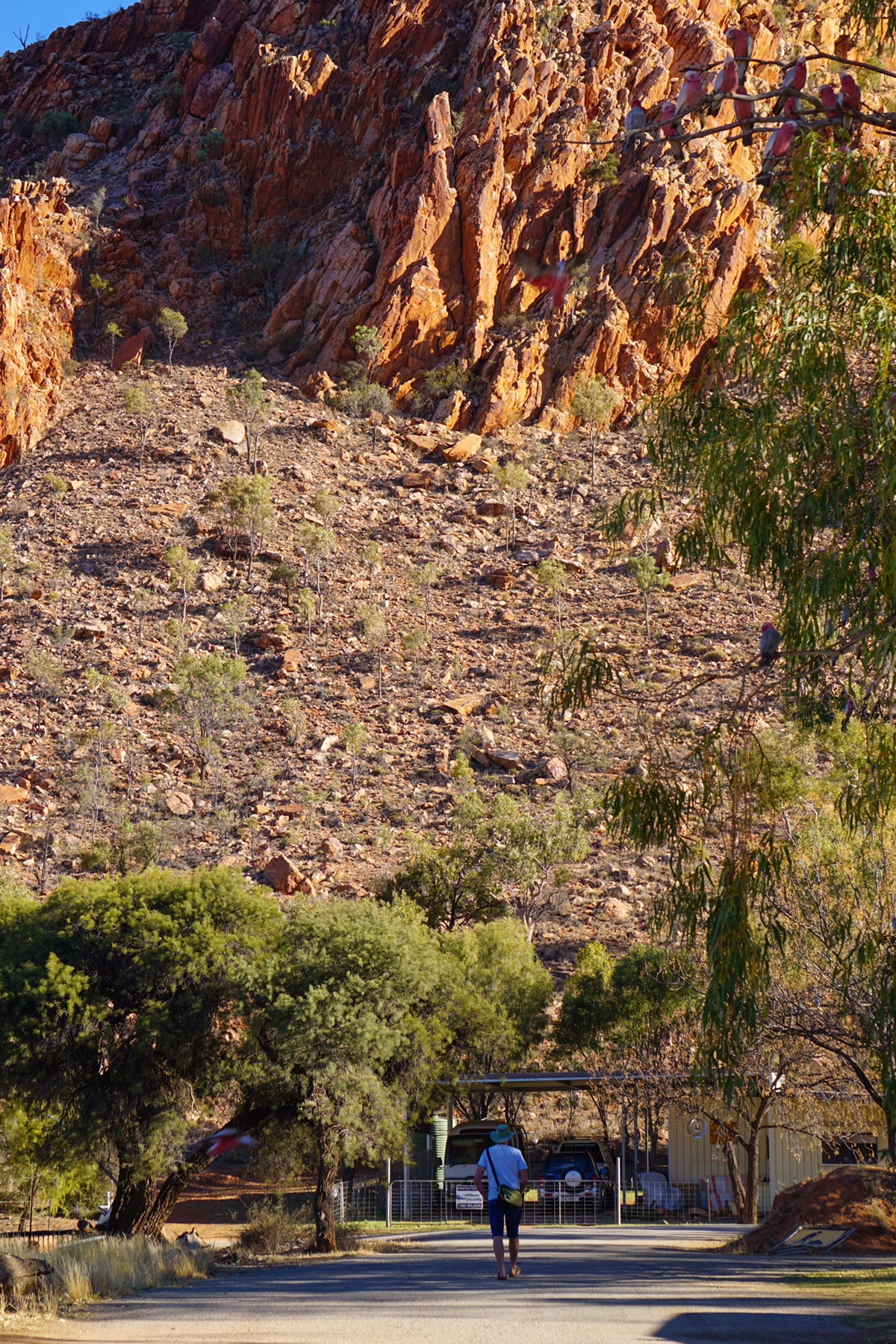
The campground is home to many birds, and 4pm sees the owners putting out lorikeet food, seeds and peanuts to attract them to the visitors. We popped along for a look, spotting rainbow lorikeets, pink cockatoos, king parrots, Australian magpies, kookaburras, crows, blue-faced honeyeaters and more.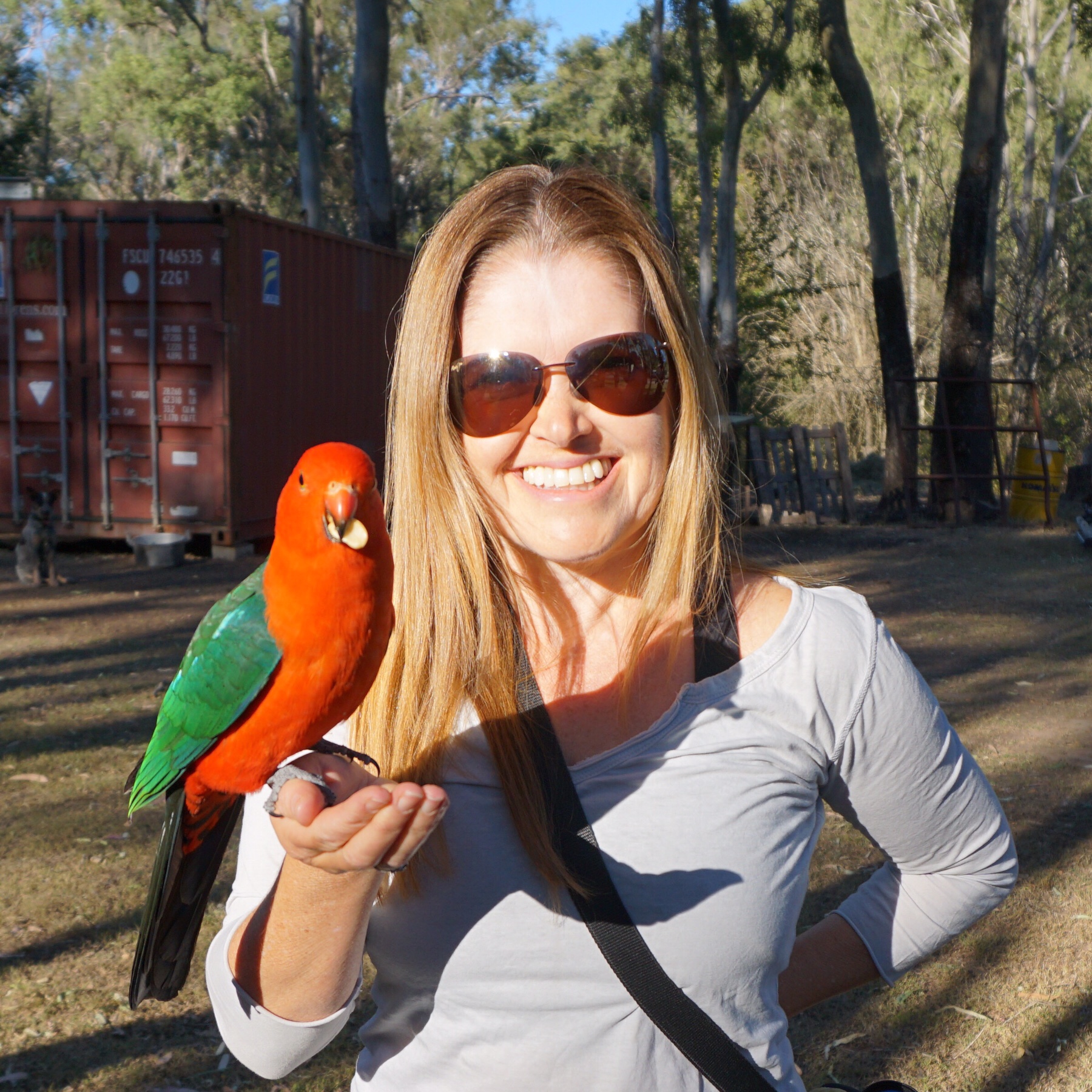
 A short cycle along the road allowed us to learn more about the multitude of wild creatures living here, many rare and endangered, and the evidence of 19,000 years of Aboriginal habitation in the gorge. Incredible. Already it feels like a very special place.
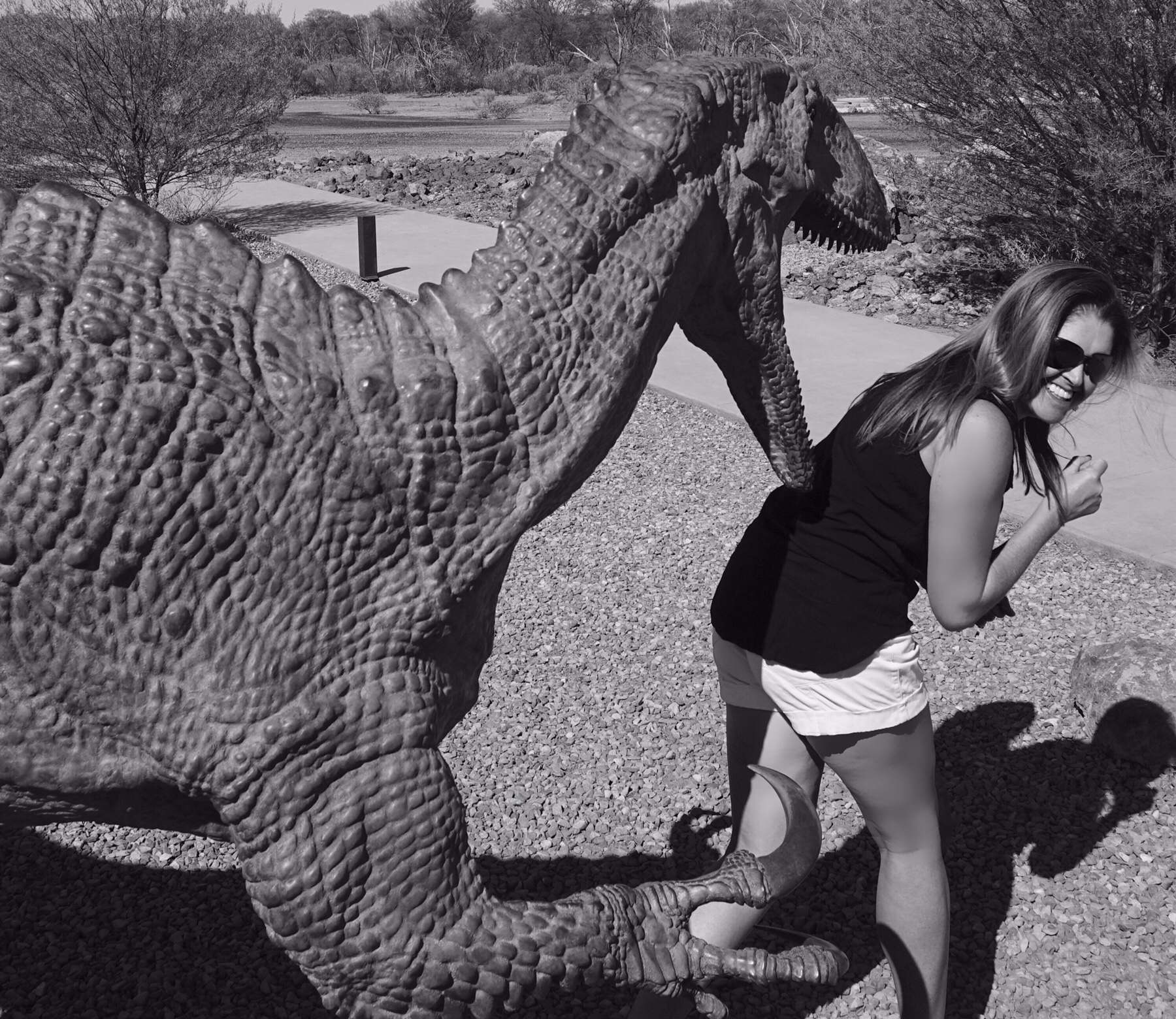
 One of us (me) is more enthusiastic about this type of thing than the other, so we compromised and did a short visit, encompassing a trip to the working laboratory to see technicians working on the fossils, and some of the smaller fossils found, and then to the theatre to see a film about where many of the fossils were found, and the two most complete dinosaur skeletons in their collection. We missed out a longer trip which visited a collection of bronze models of how the dinosaurs may have looked, down on the flood plain.
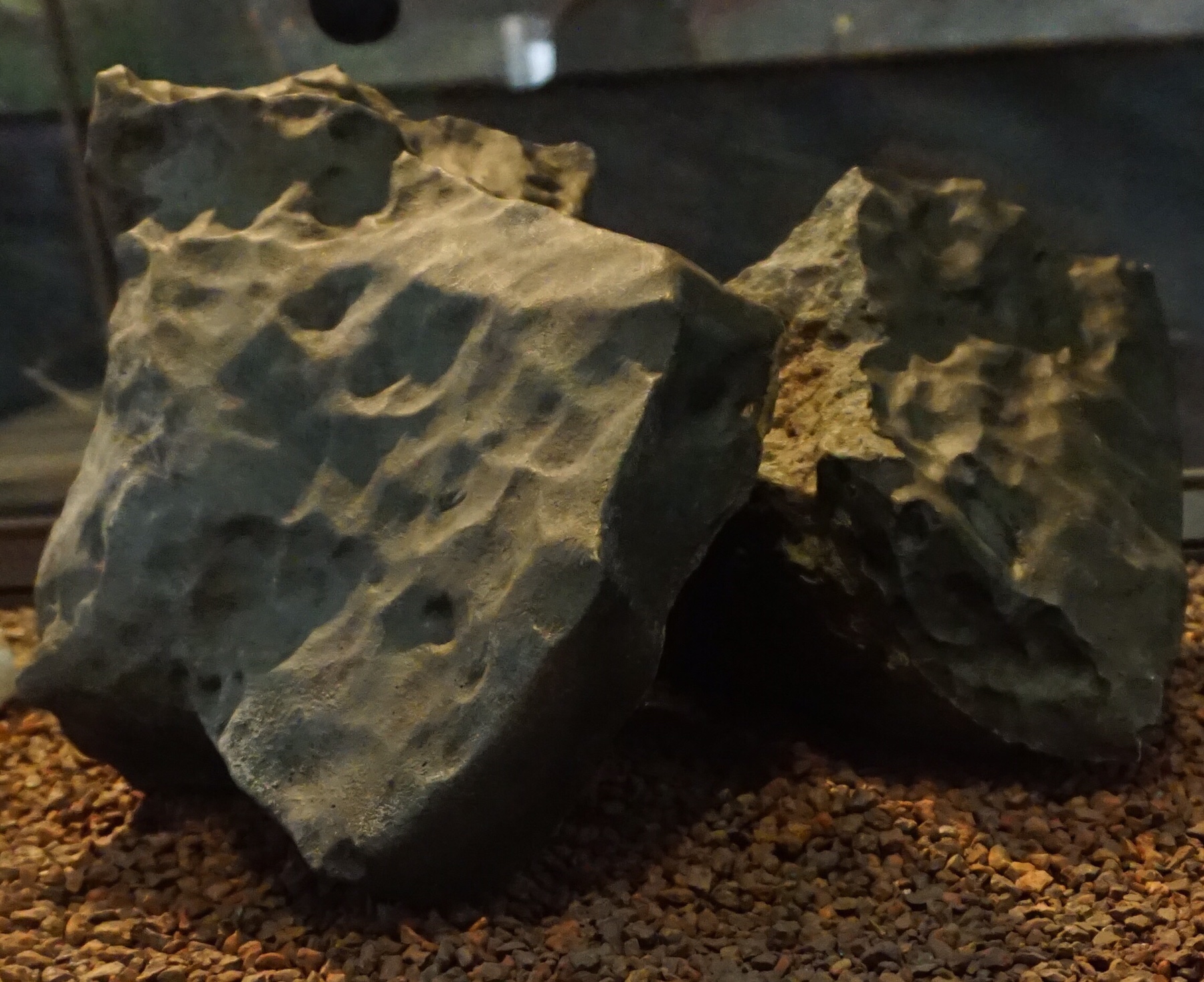
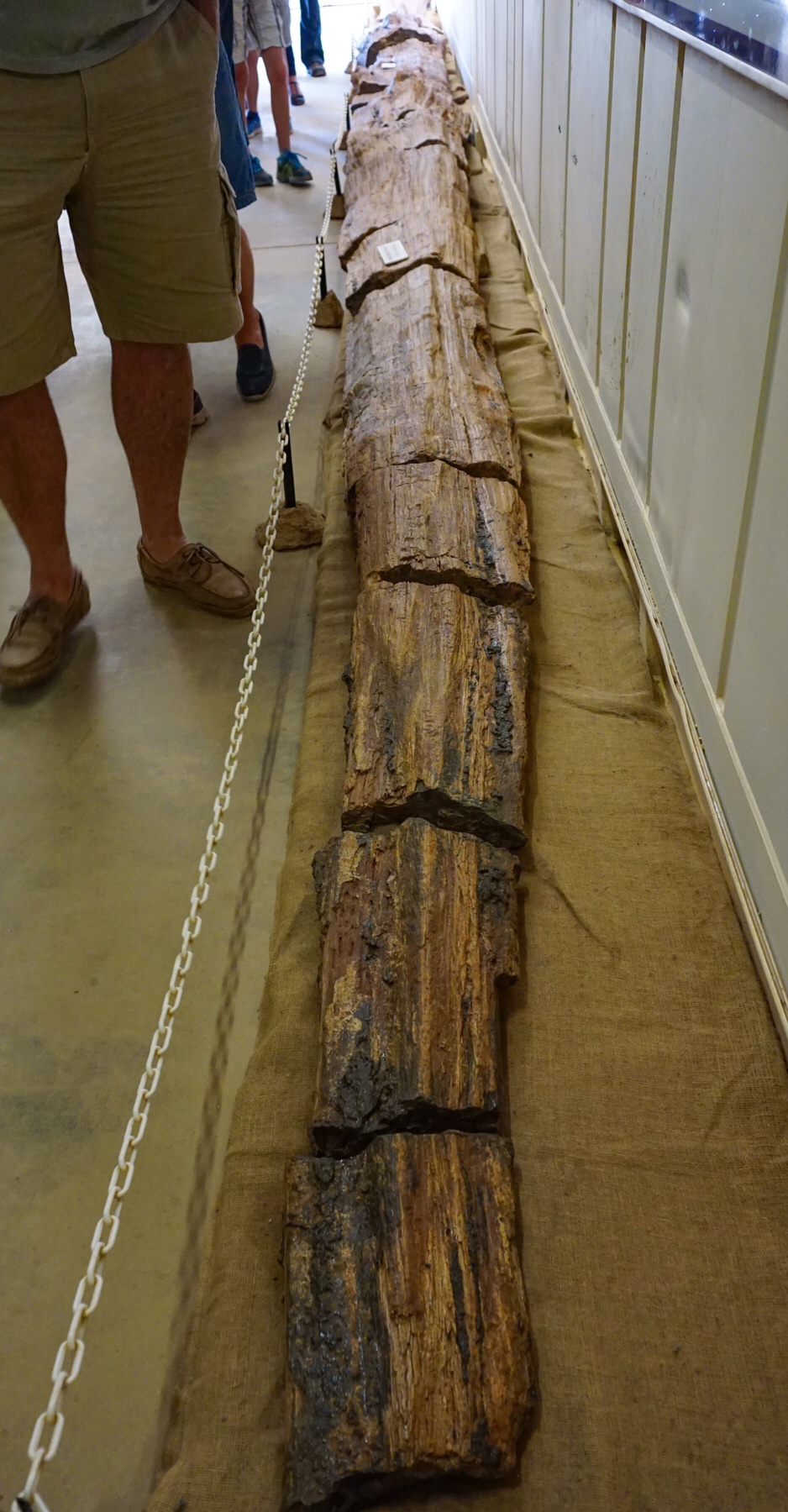 Although it was dated at 150 million years old, it was hard not to believe it was just a sawn up log lying there!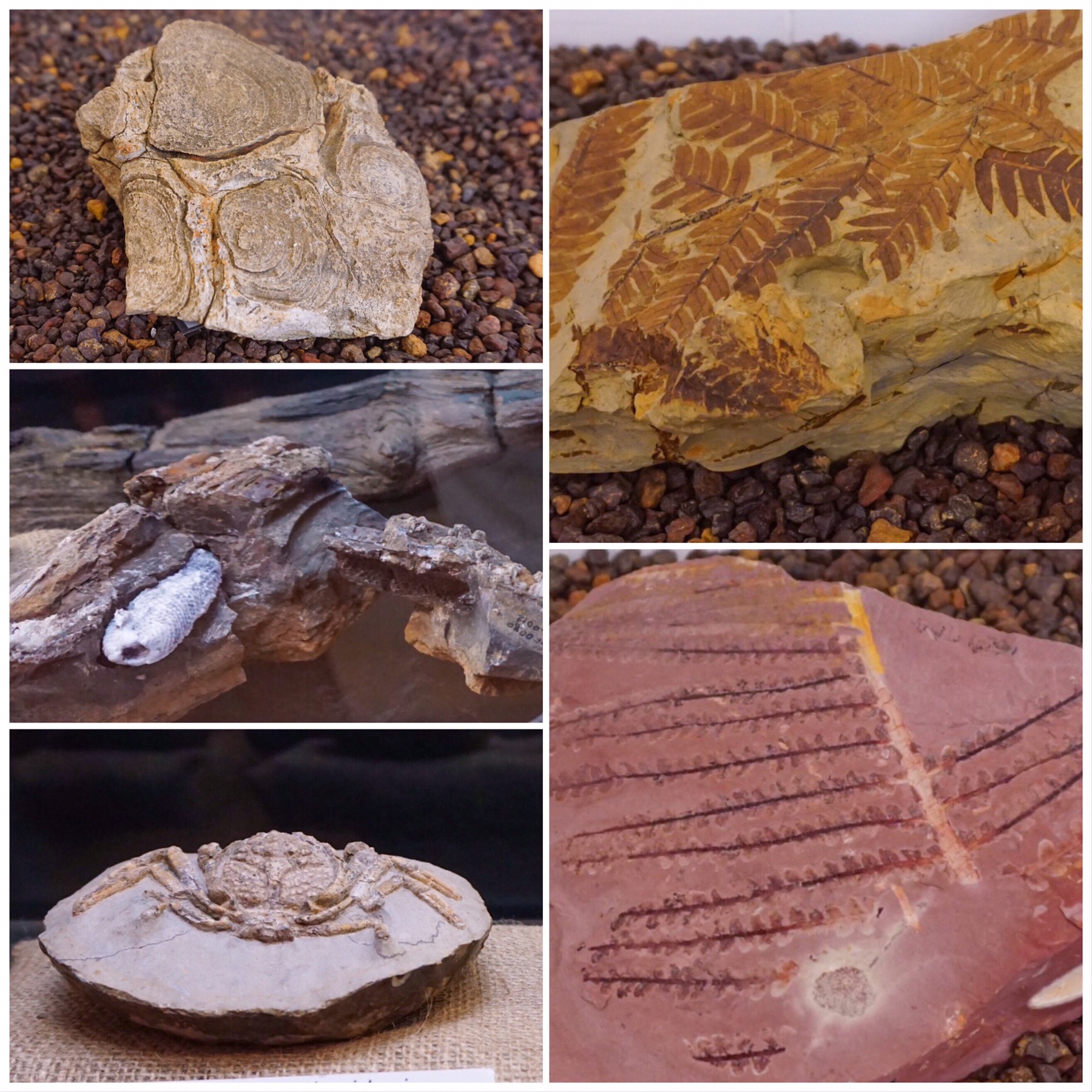
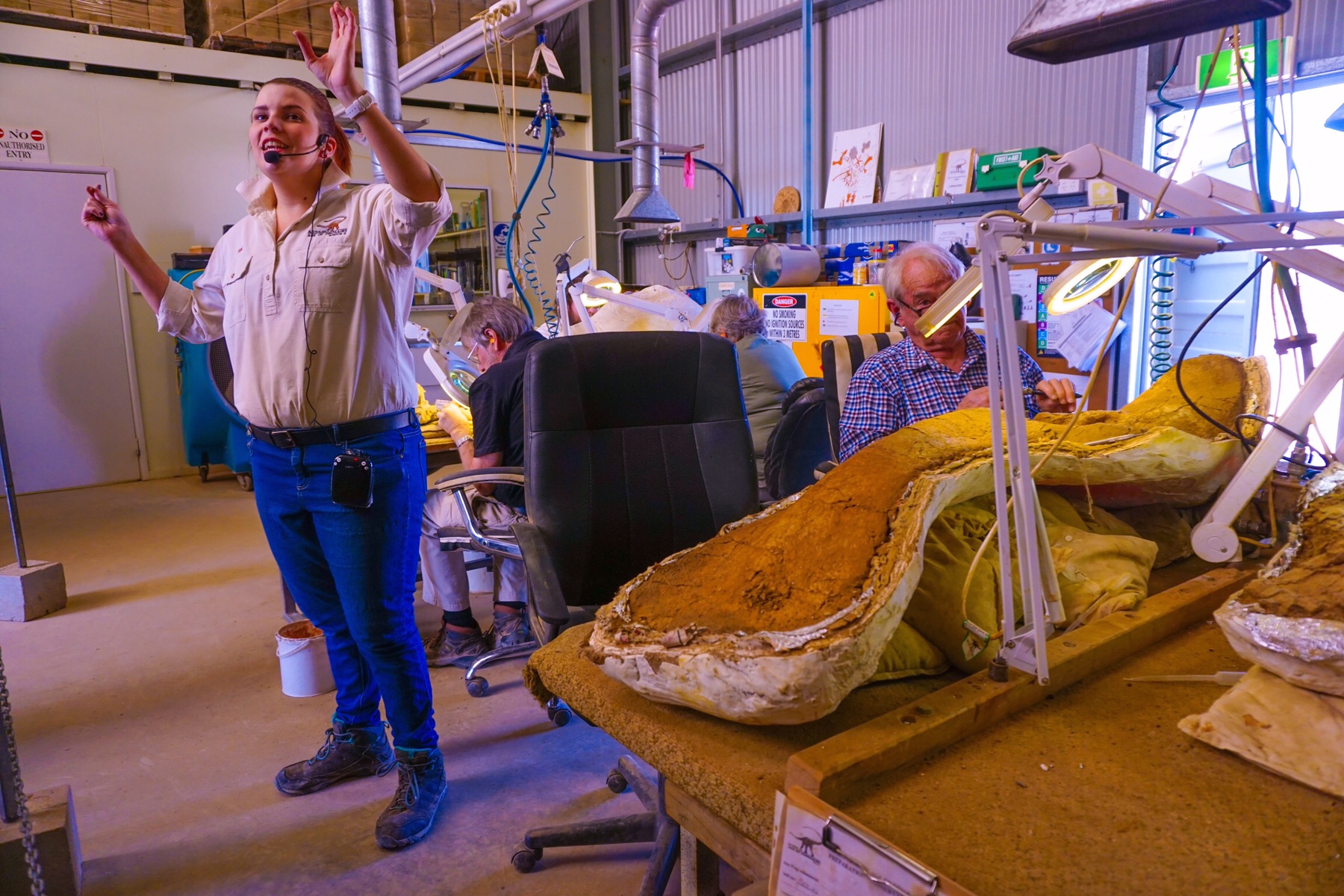
 We watched the painstaking patient work of the technicians removing the soil from the fossils. It takes literally years to reveal a fossil, and there is a 10 year backlog of work in the laboratory. You can volunteer to be a part of the team – there is a training course and exam, and once you are approved you can come along and join in whenever you would like. Patience and attention to detail an absolute must.
 The final part of our tour took us to the theatre where we were shown the fossils recovered from a single site, revealing two completely different species of dinosaur – a carnivore and a herbivore.
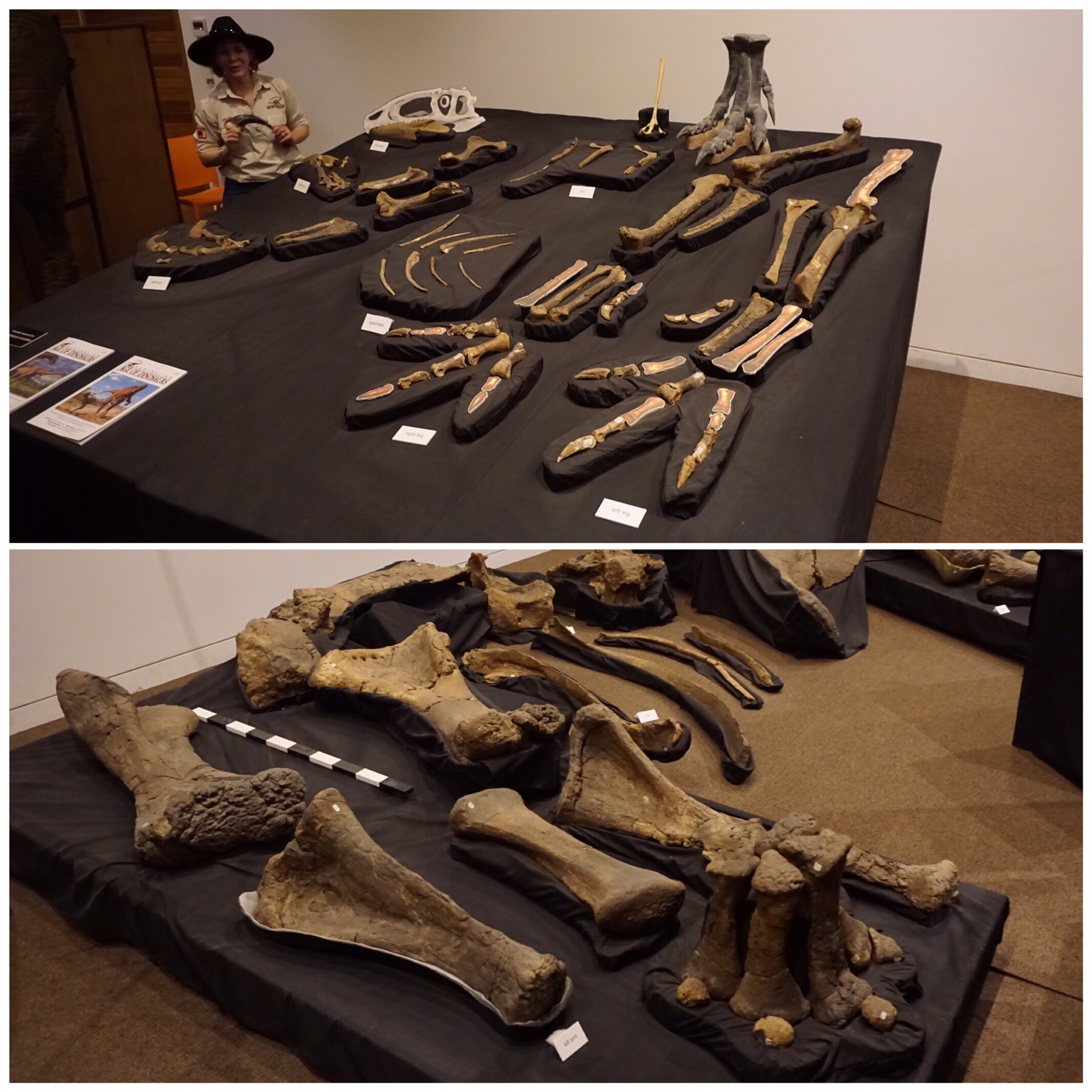 Still it was interesting (for me) and so great there are people with such incredible passion in the world to ensure such things are pursued.
 We spent the remainder of the afternoon doing some trip planning, gave a tour of our Zone to some potential future Zoners, and finished off our day back at the local pub for a fine feed.
 The occasional roadkill of kangaroos, wild boars and cattle brought back plenty of raptors, with the giant wedge-tailed eagles always the last to leave their meal as we drove by. Flocks of button quail, green budgerigars and tiny firetails and zebra finches accompanied us for a few seconds at a time, before swiftly changing direction and disappearing off over the plain.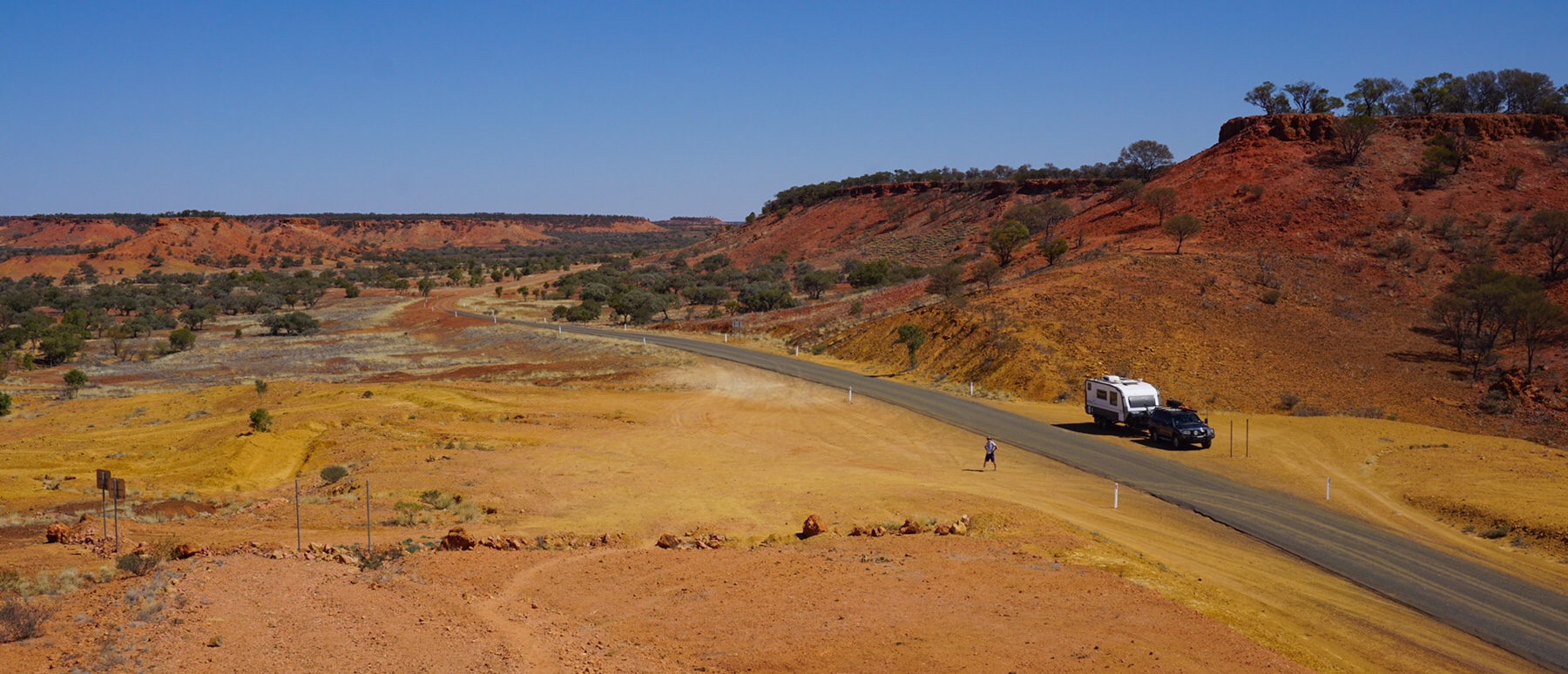
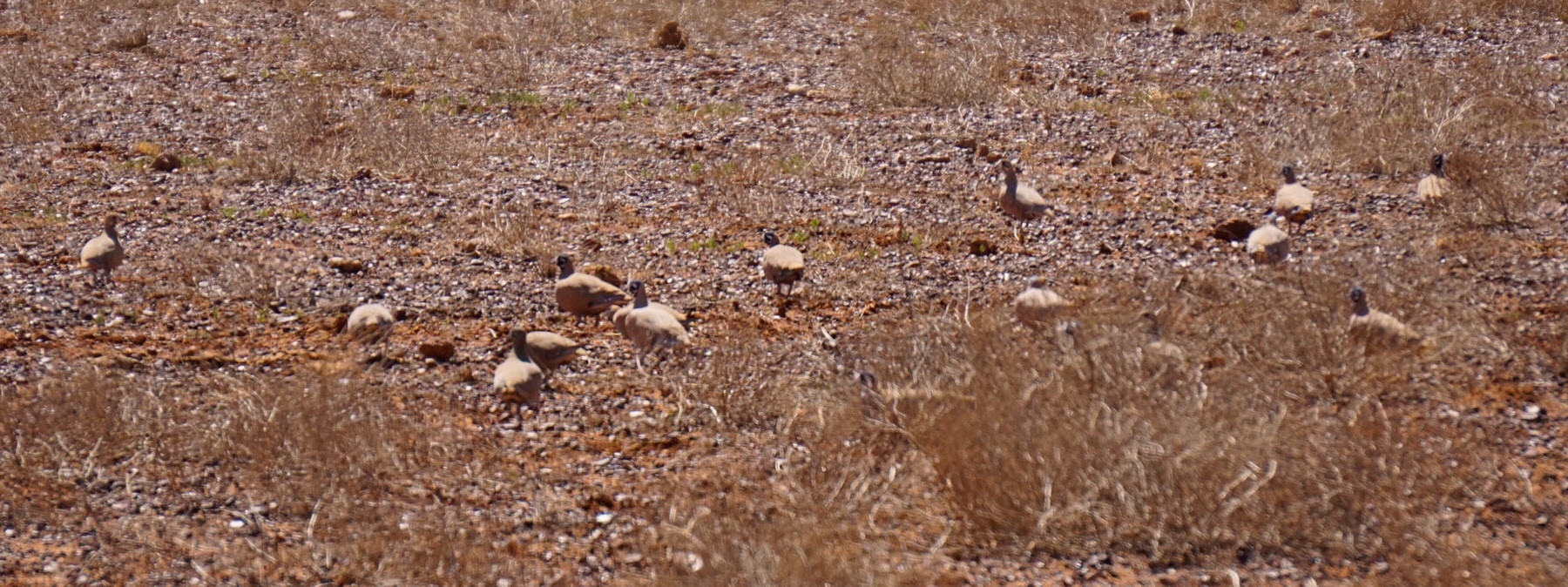 By 1pm we had reached the Middleton Hotel. Back in its heyday it was a major stopping point on the Cobb & Co route between Boulia and Winton, where tired horses were exchanged for fresh horses, with accomodation provided. Apparently the settlement of Middleton was once home to 26 permanent residents, but now it is just the rather surly and unfriendly publicans. We decided against stopping for lunch there after an unwelcoming response to our greeting.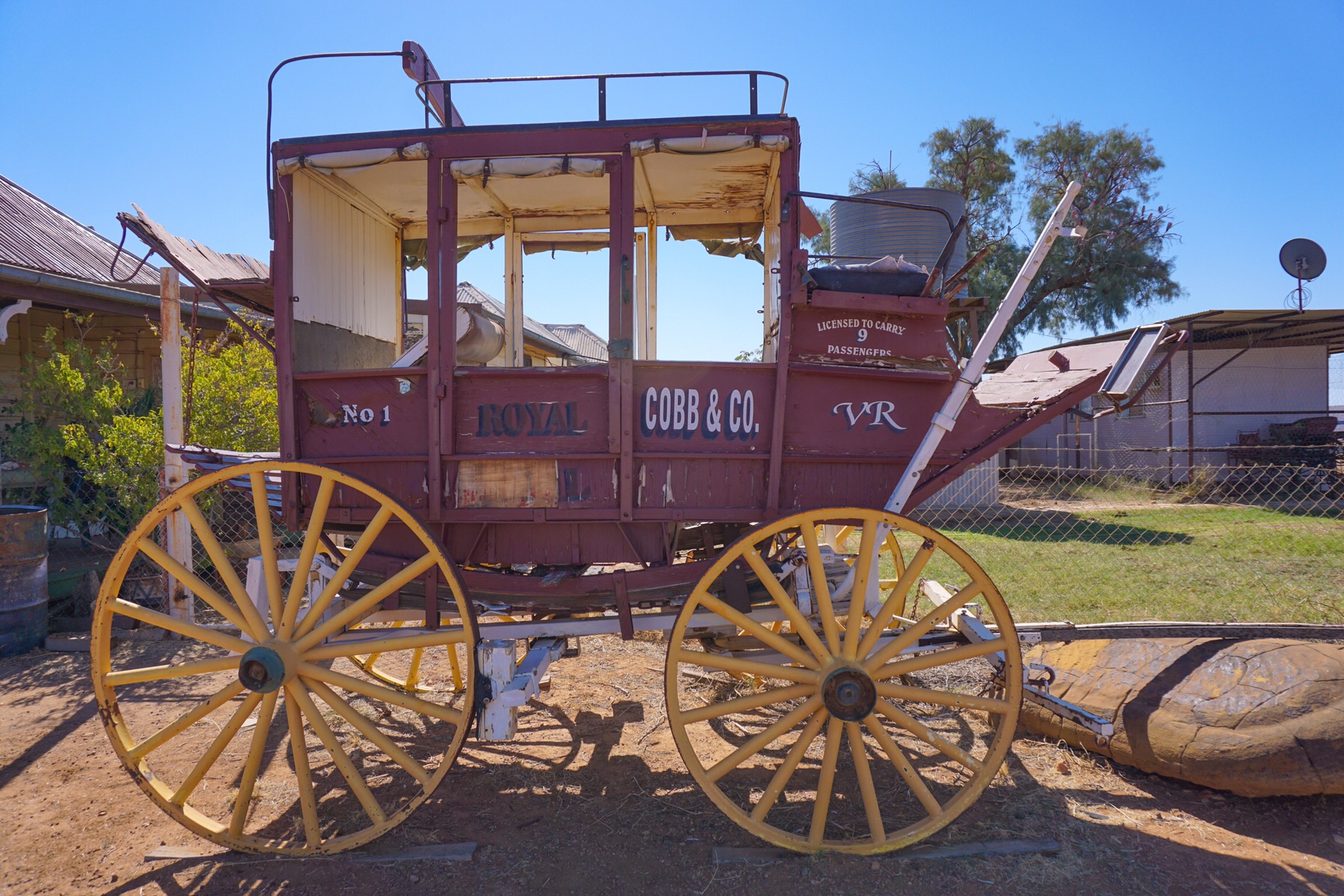
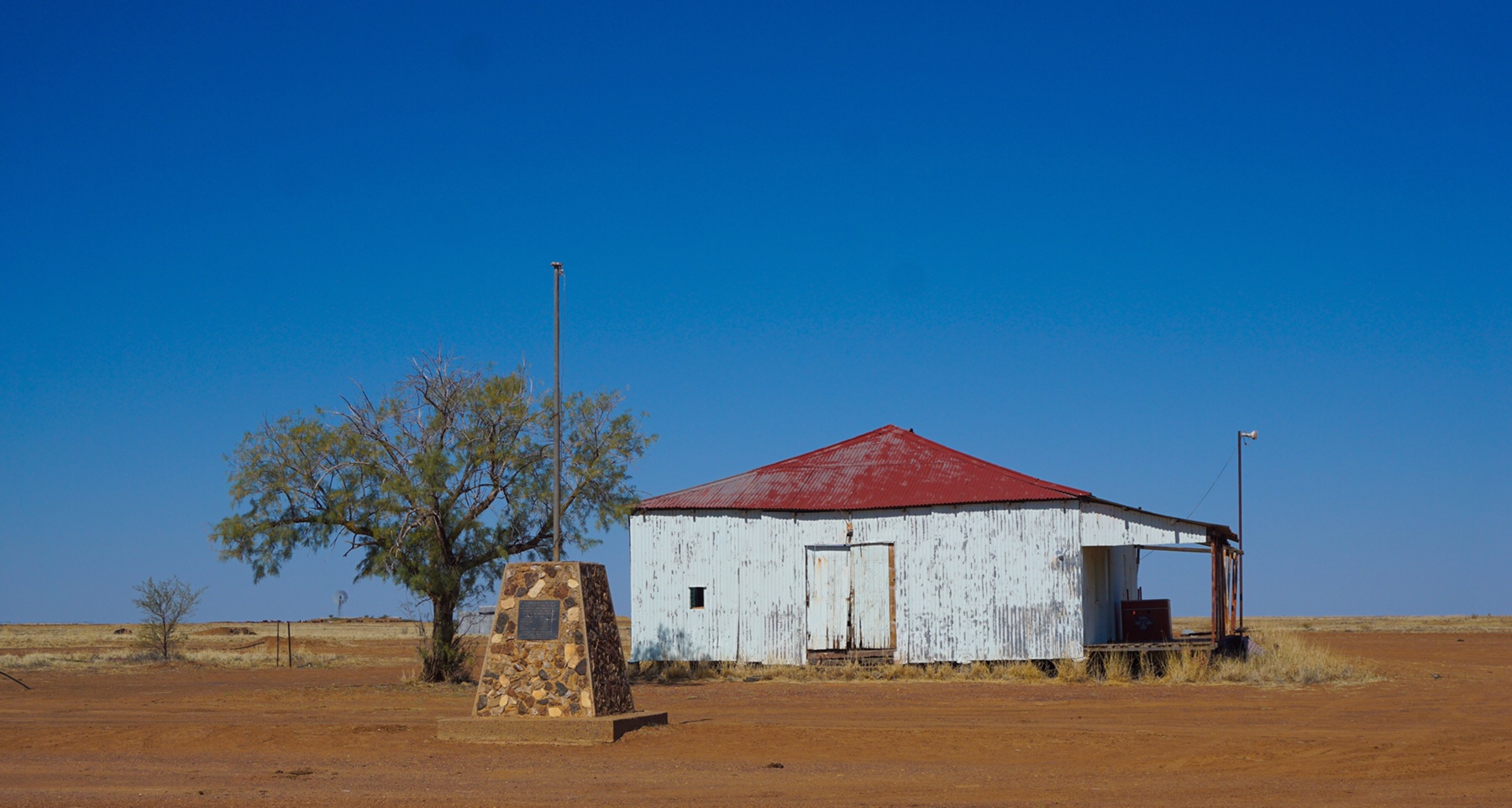 We continued our journey, reaching Winton shortly after 5pm. We decided to set up camp at the Tattershall Hotel, and fortunately had booked ahead last night. As we reached the pub bar, a couple ahead of us took the final free spot on the campground.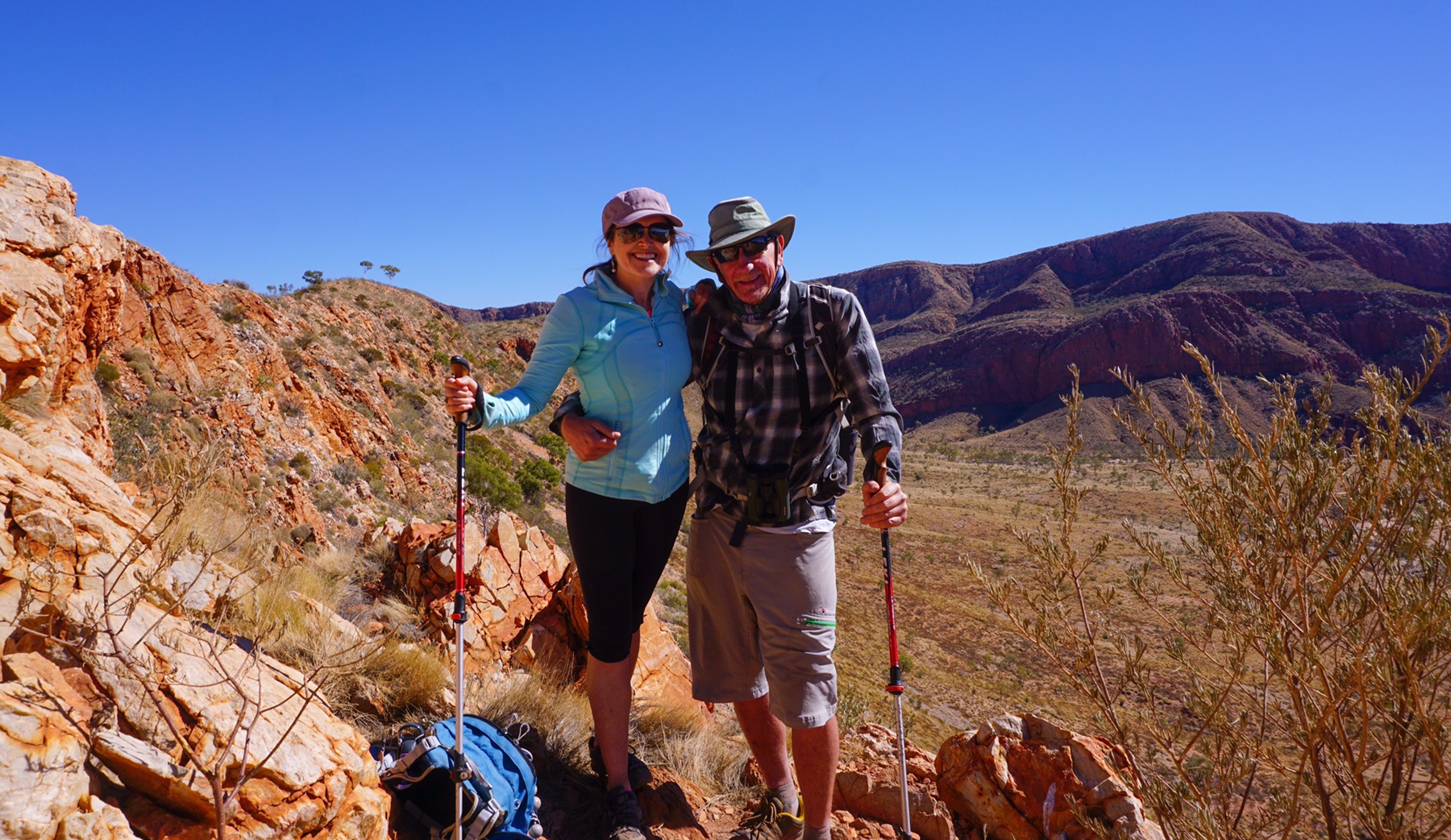
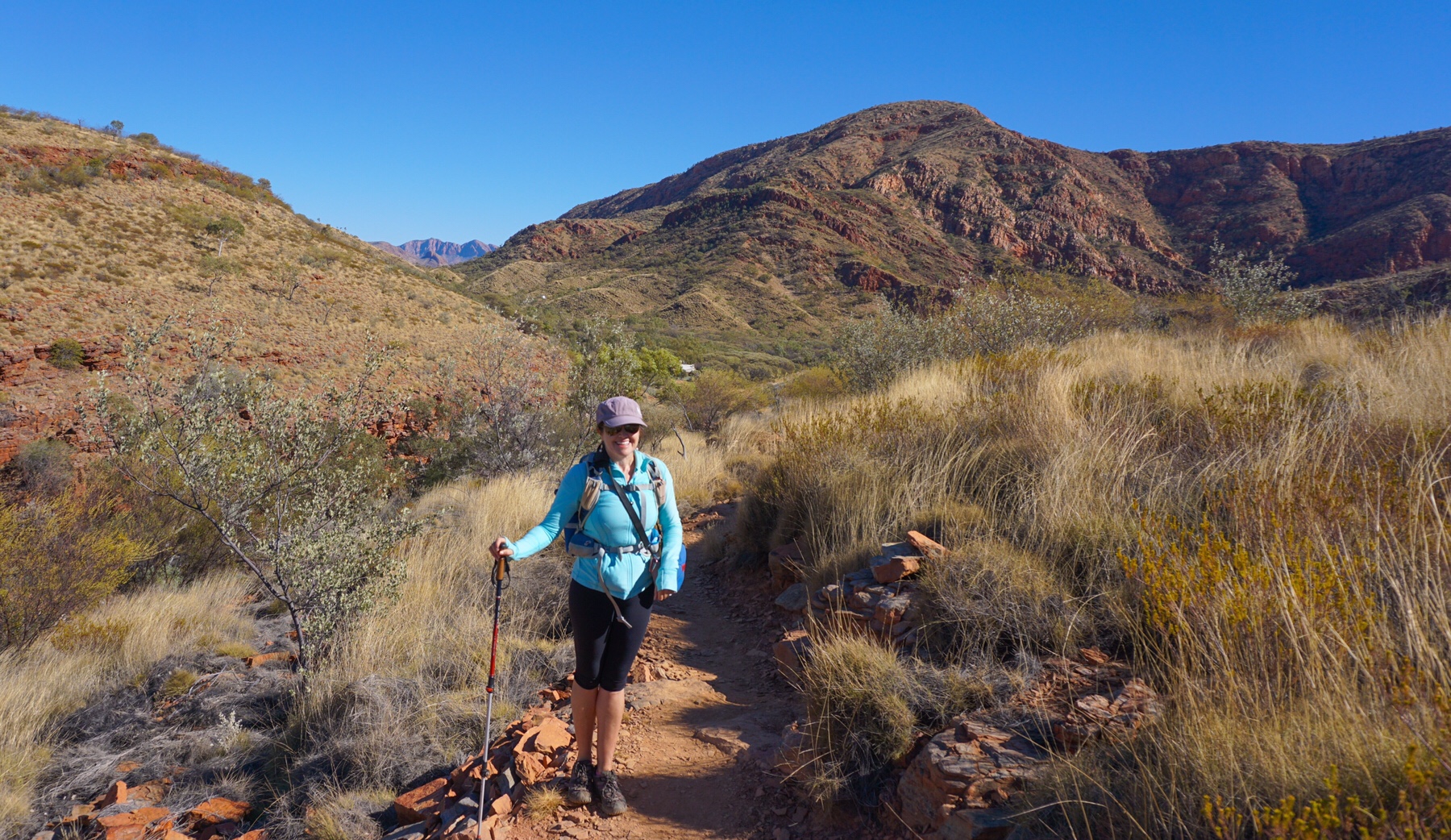
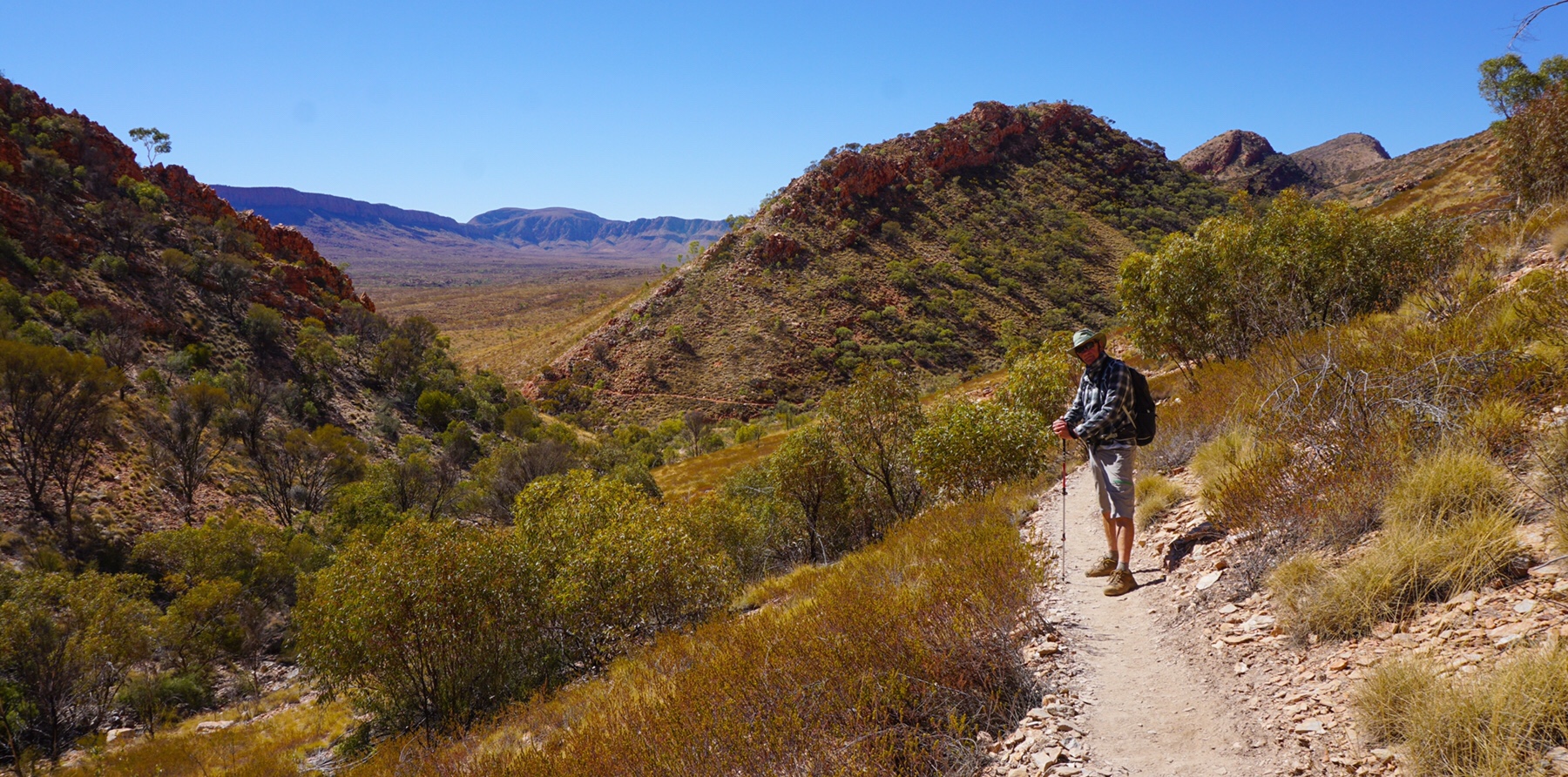 The circuit takes you firstly high up onto the walls of the Pound for spectacular views, before dropping down and winding its way across to a dry river bed, where you rock hop back to the beginning via some permanent water holes – like gold dust in this arid landscape.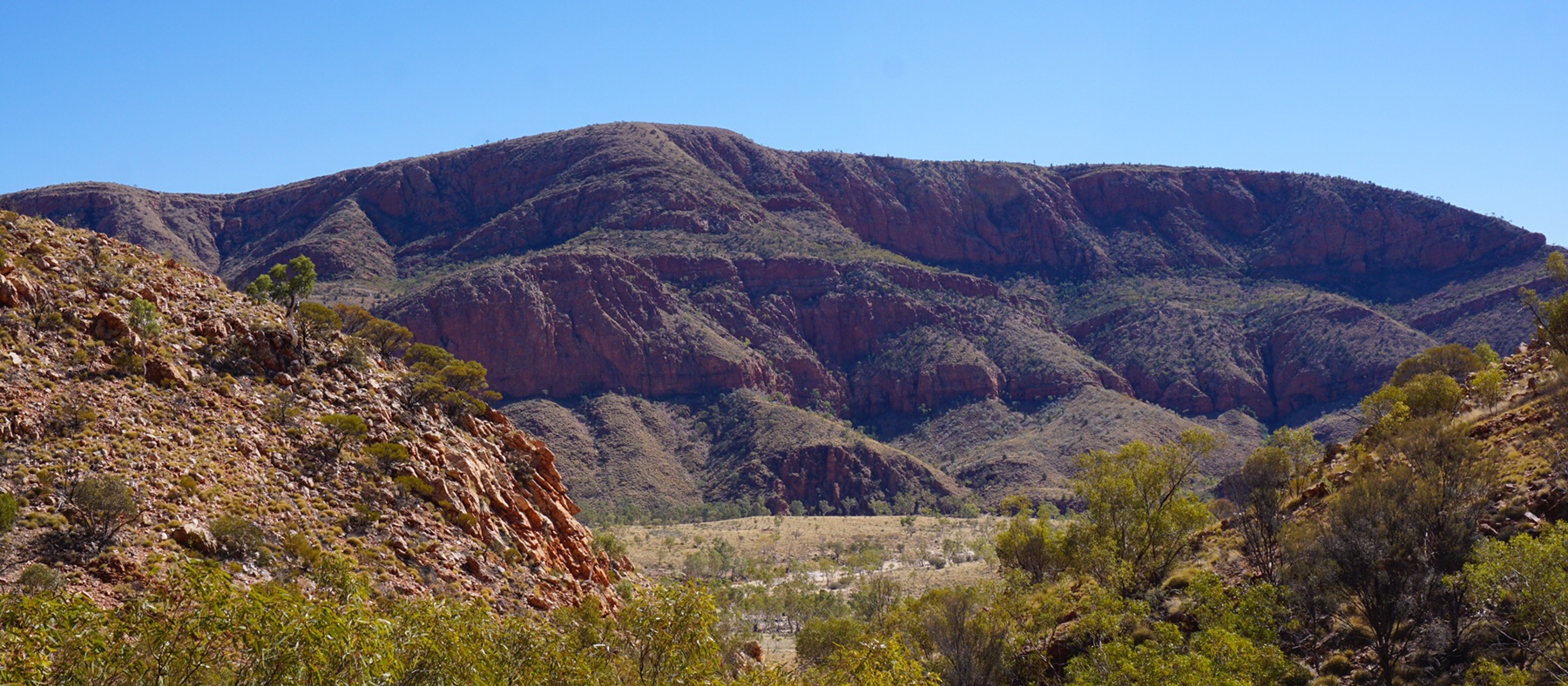
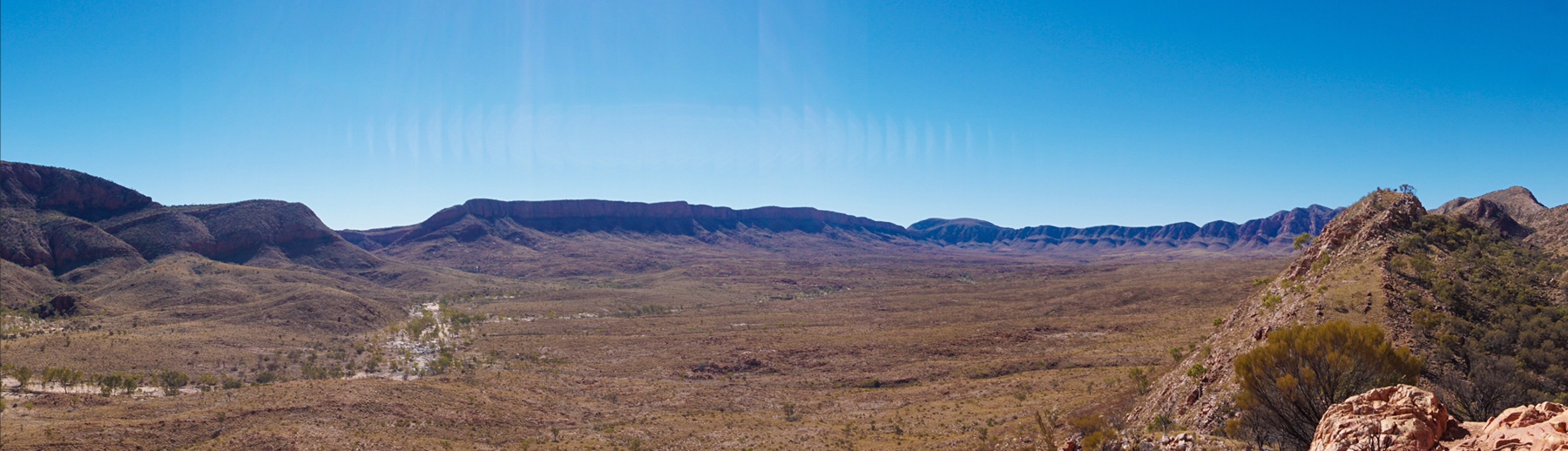 The colours are so vivid in this incredible air, not polluted by traffic or smoke.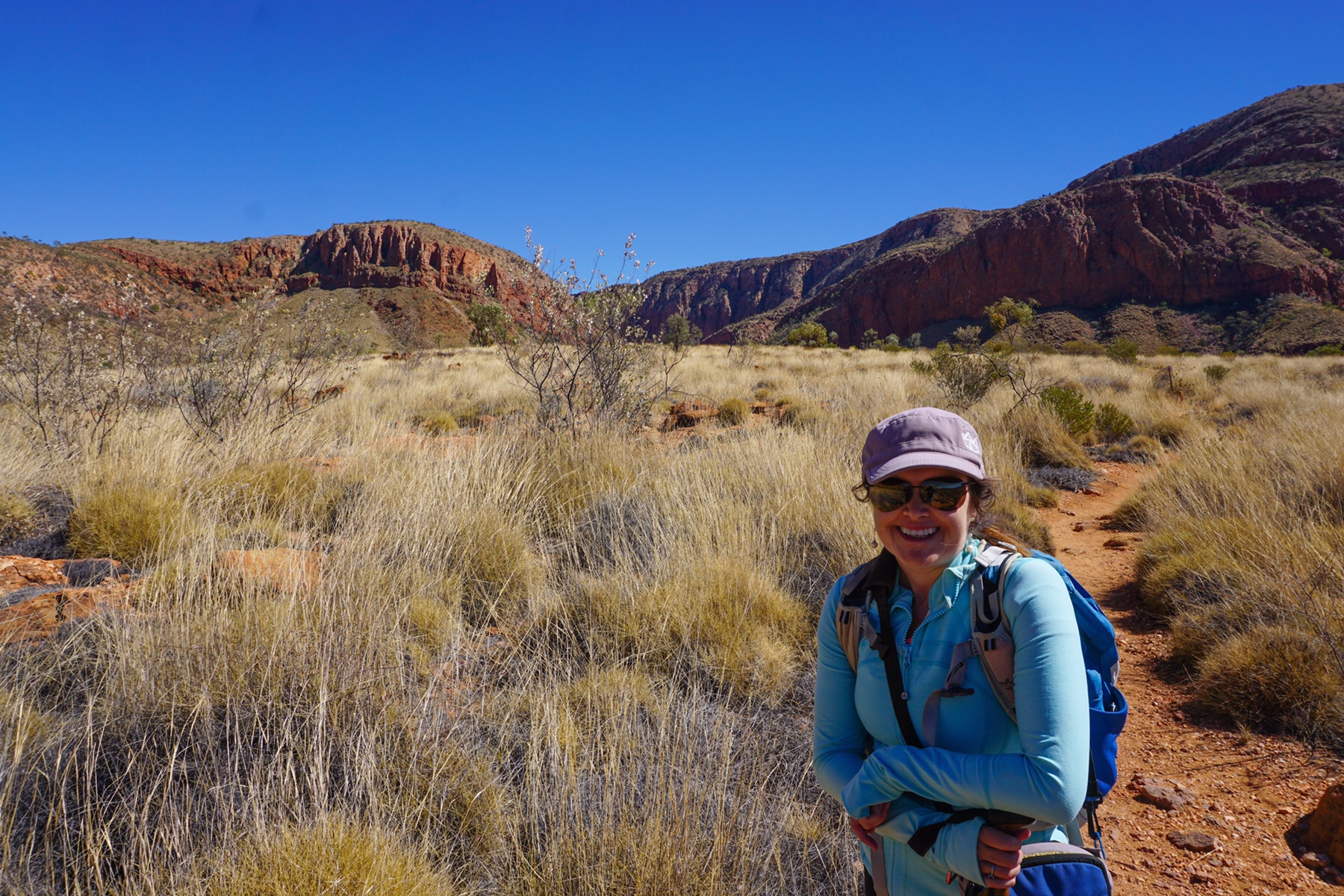
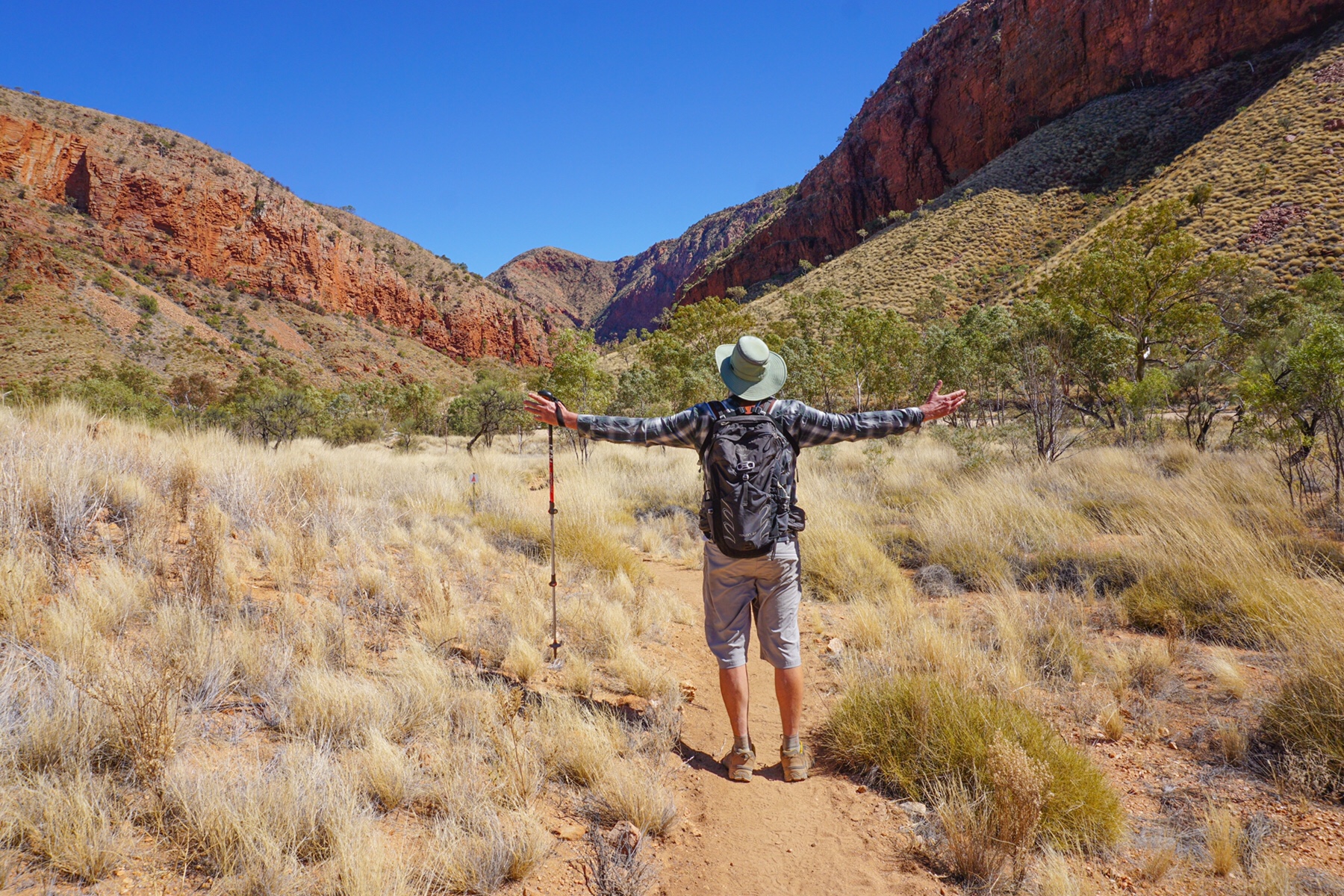 As the walls begin to close in on you for the last couple of kilometres you begin to appreciate the beauty of the rocks, not just the ochres, reds and salmons, but also yellows, mauves, purples and much much more. As the sunlight hits the walls above you it reflects into the shadows, creating more colour still – an absolute feast for the eyes. Even Mark’s limited visual palette was amazed.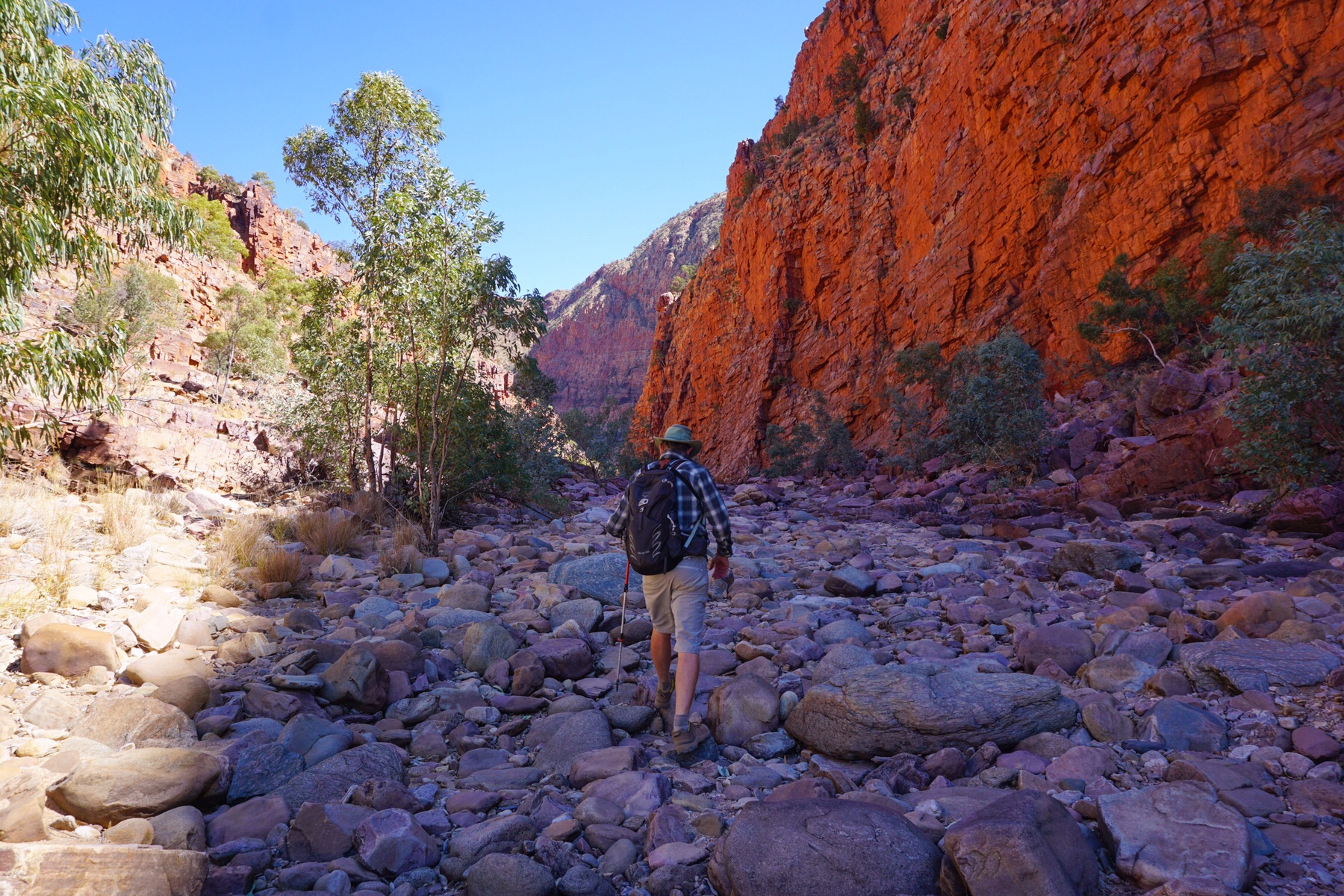
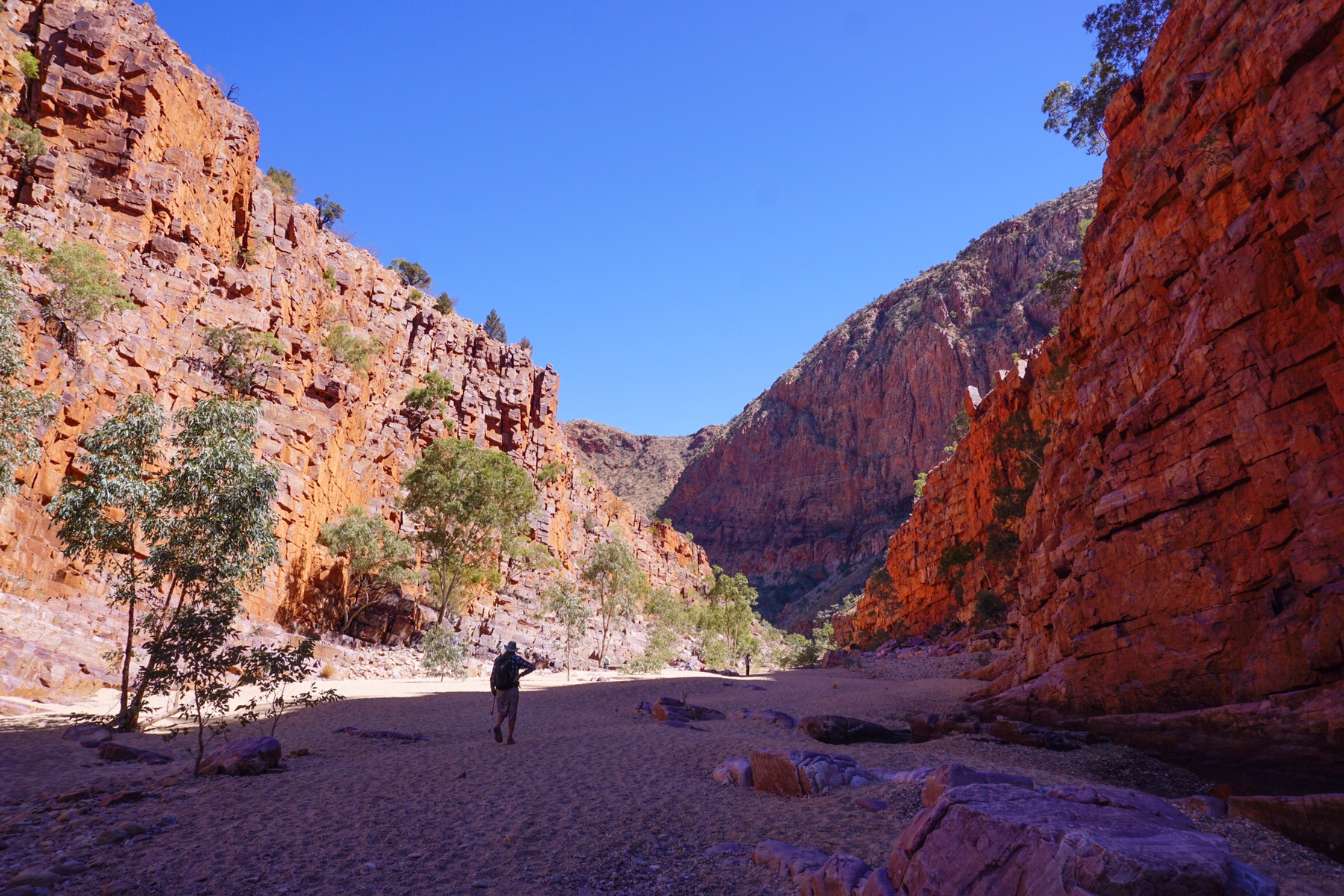 We finished by walking past the waterholes – we recall that last time we were here we had seen some endangered yellow footed rock wallabies drinking here, but this time it was a little too busy for these shy creatures.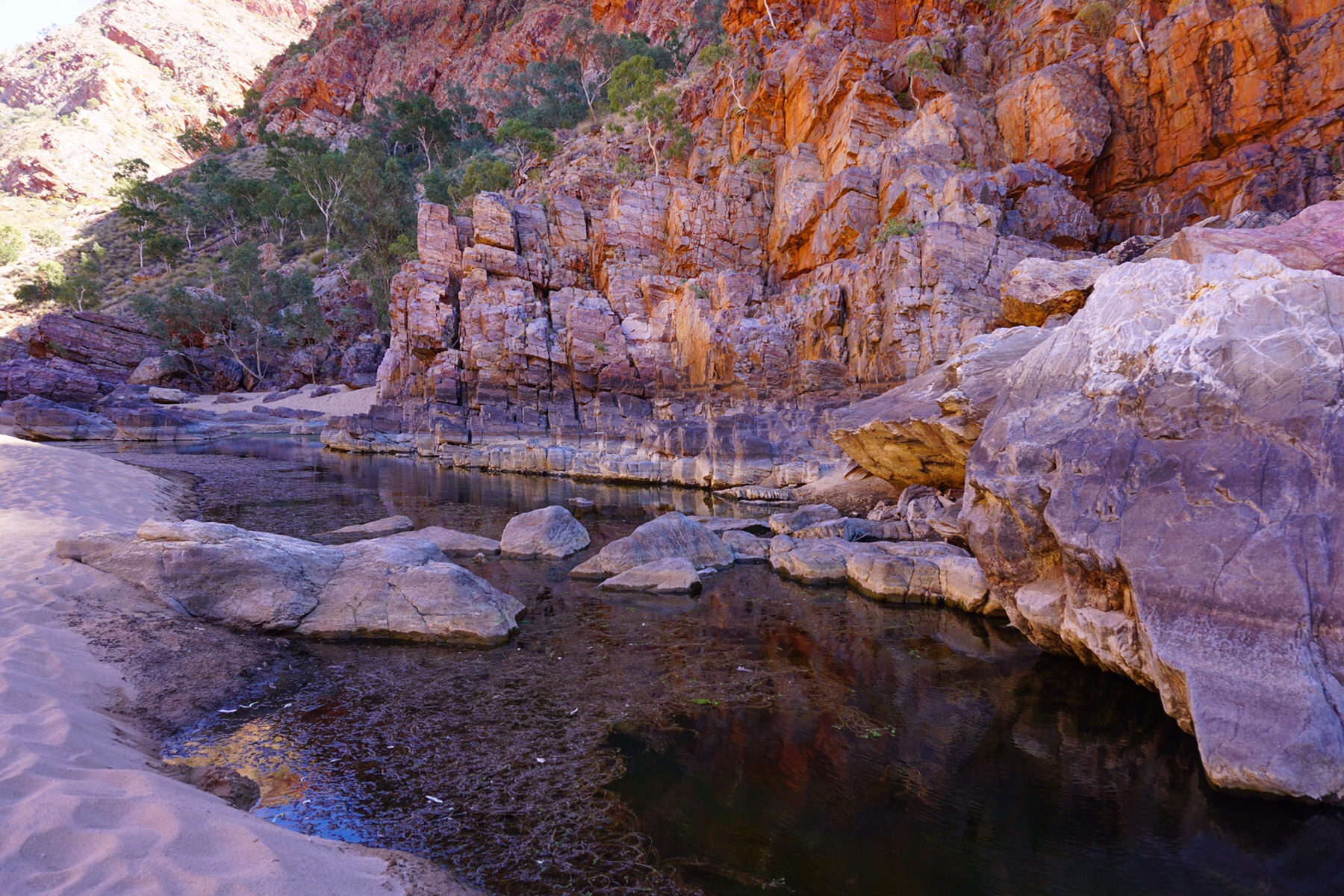
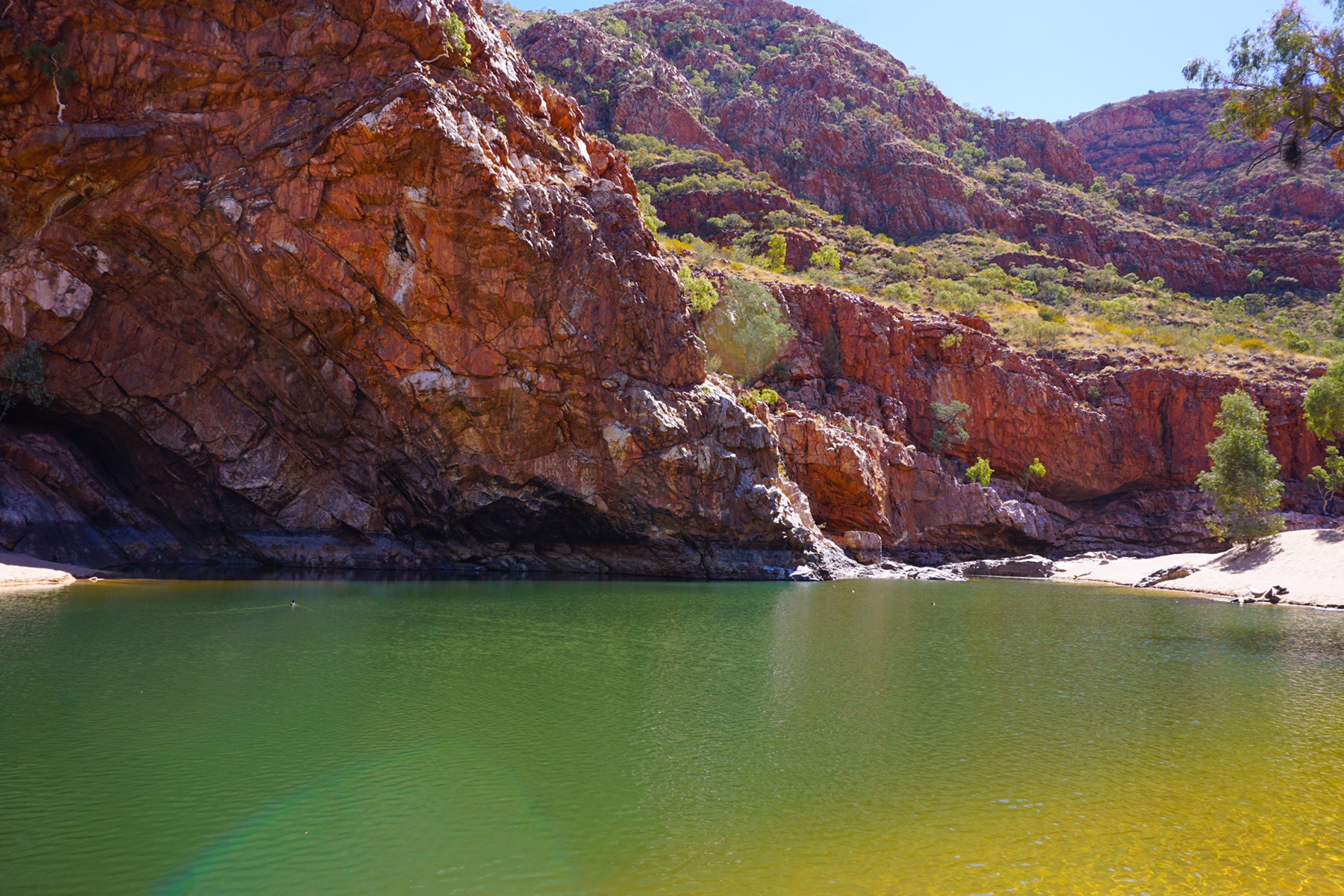
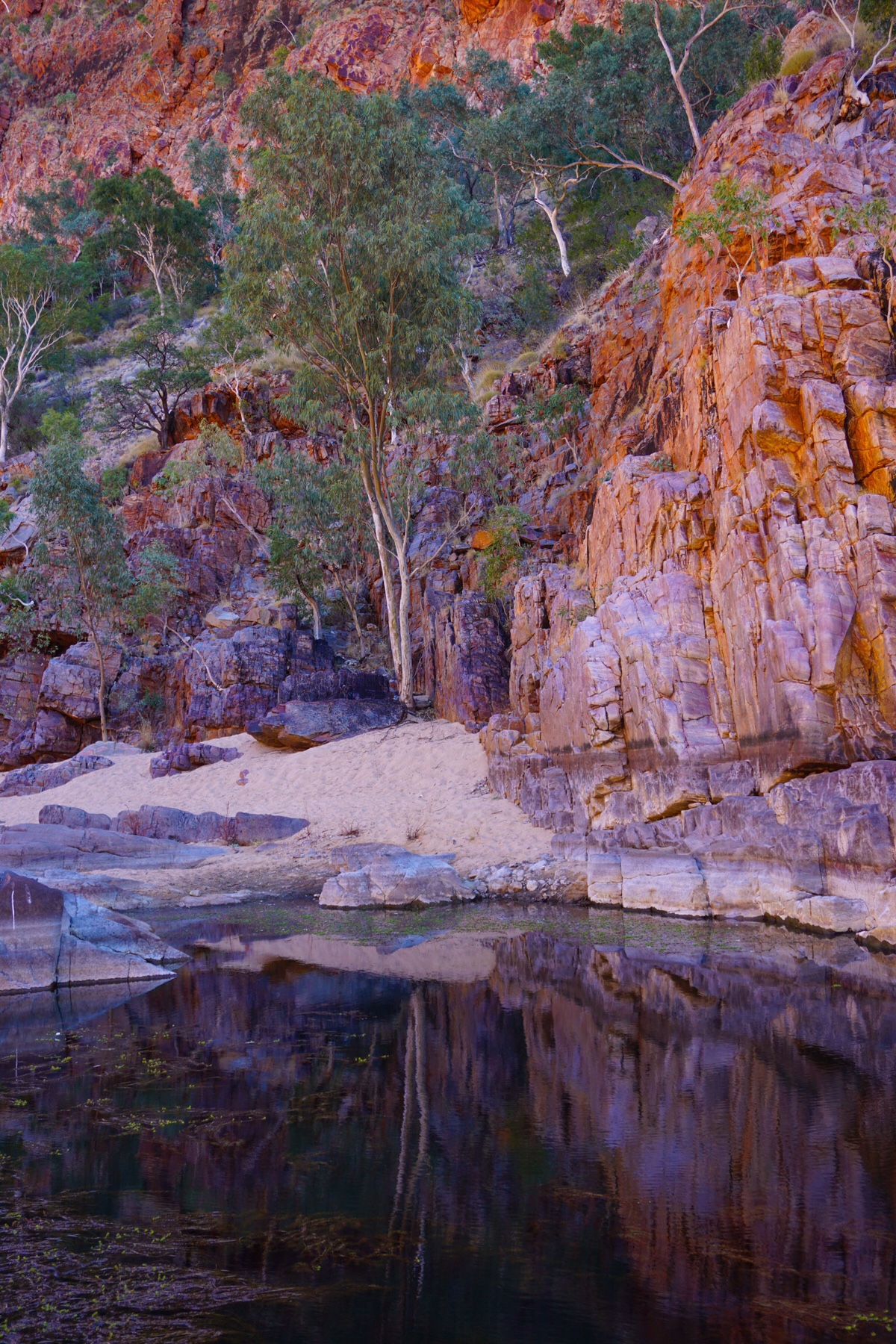 The final green waterhole is apparently suitable for swimming – though any thoughts of diving into its icy depths were far from our minds as we walked past. It is home to ducks, white faced herons and darters, so definitely supports some aquatic life.
 We concluded our 9km hike with a burger from the cafe on site – well deserved we thought!
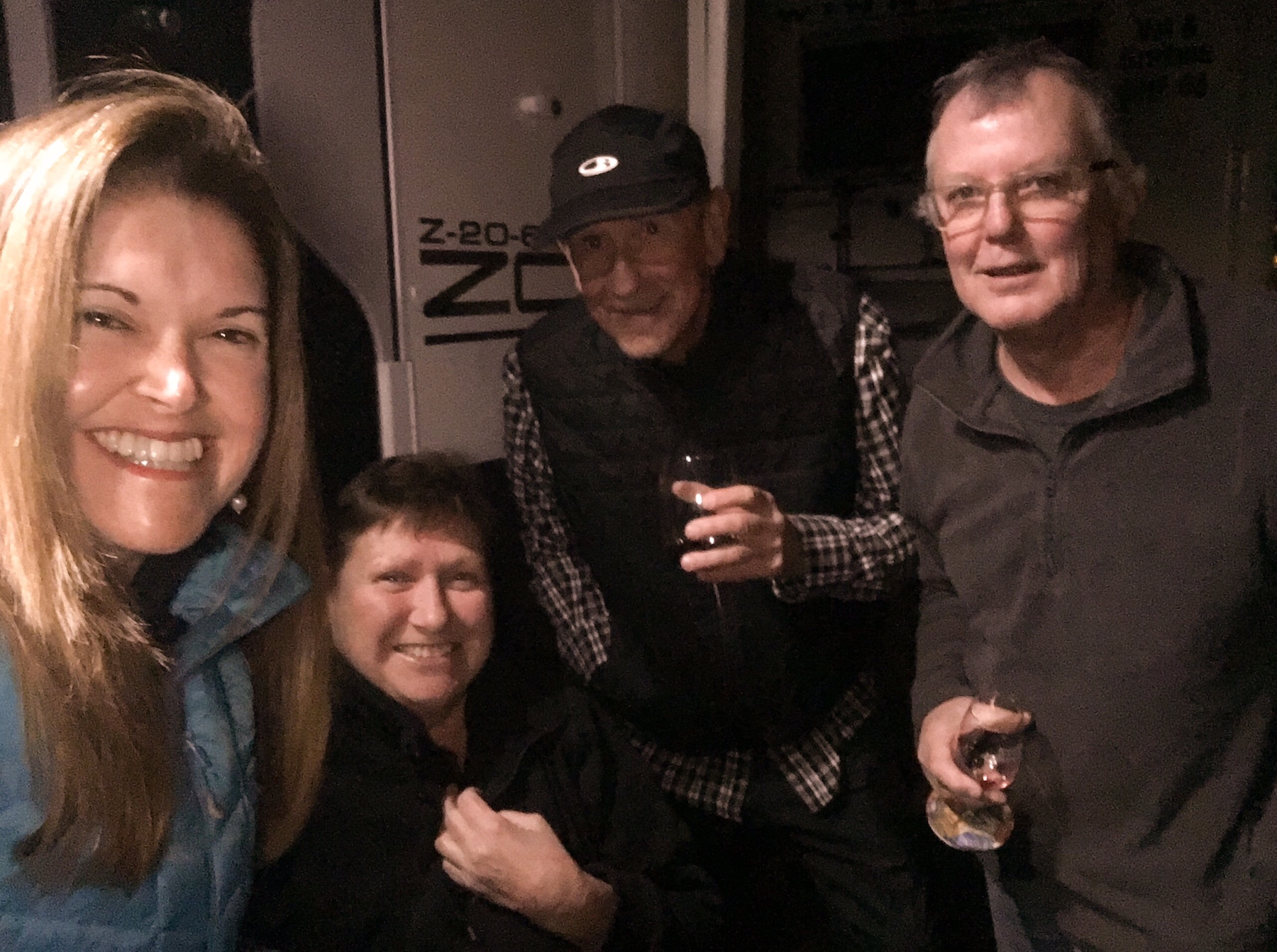 True to our experiences to date, yet more lovely Zoners.
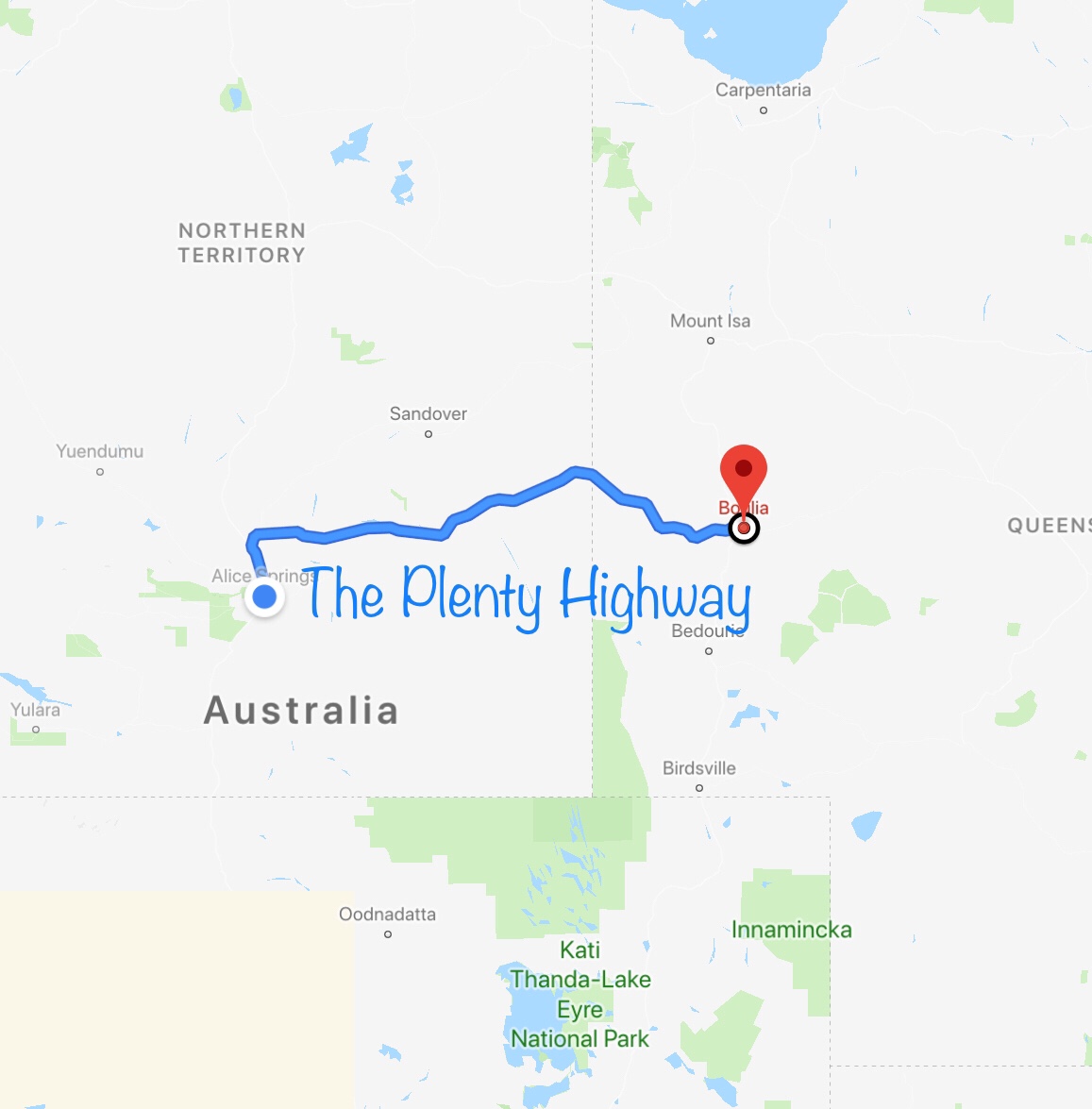 Hopefully we will be back on line by Friday to update you how it went!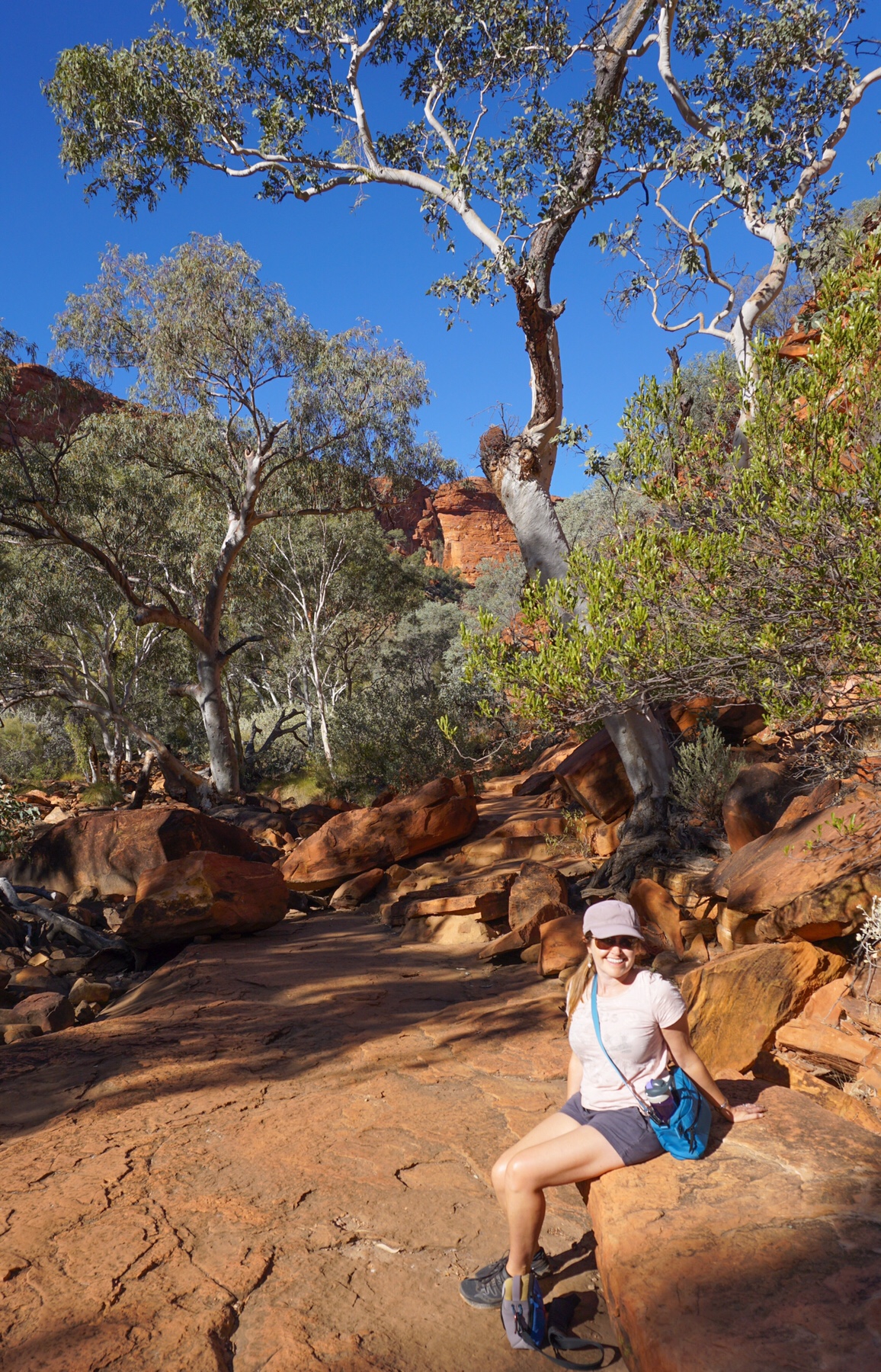
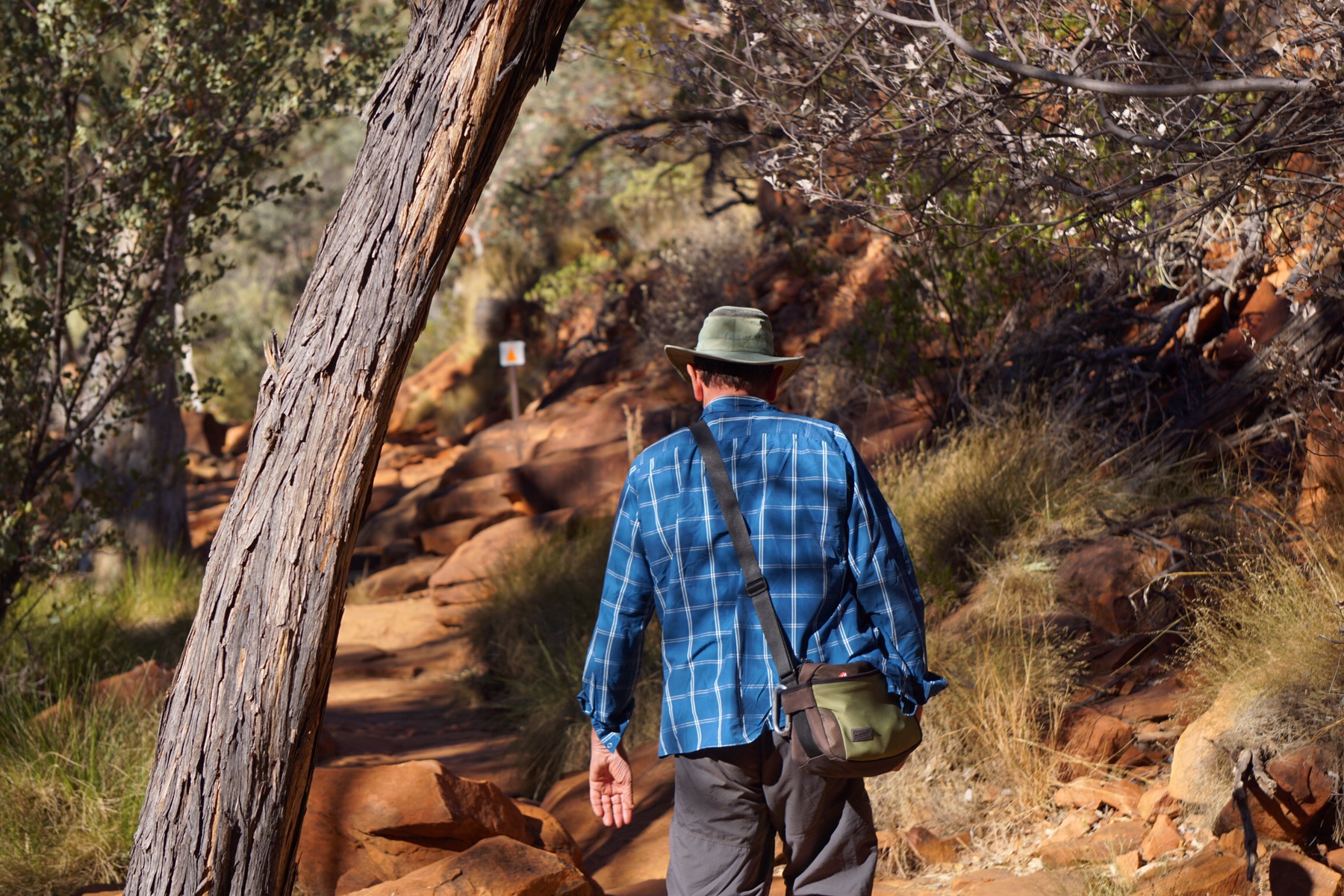
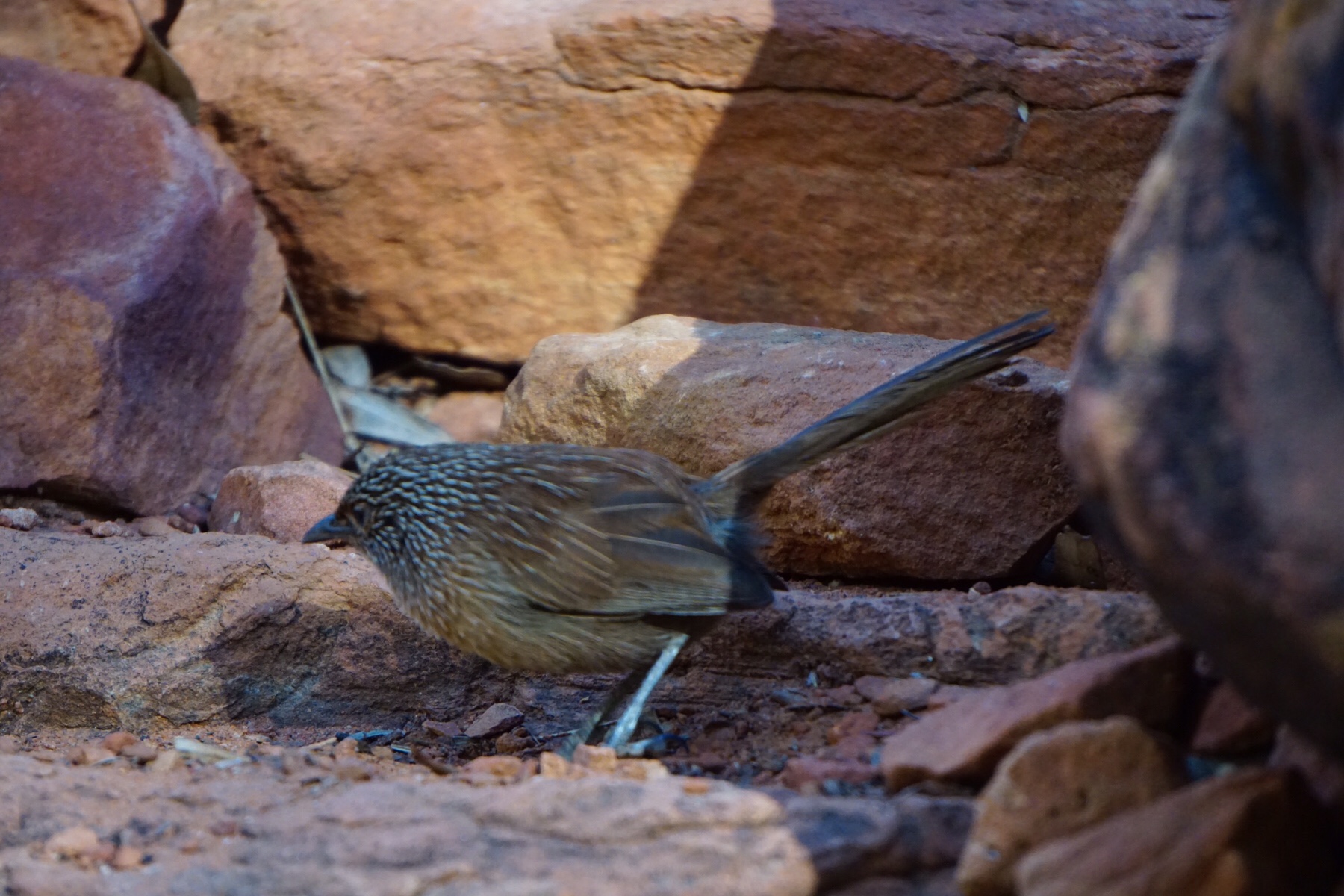
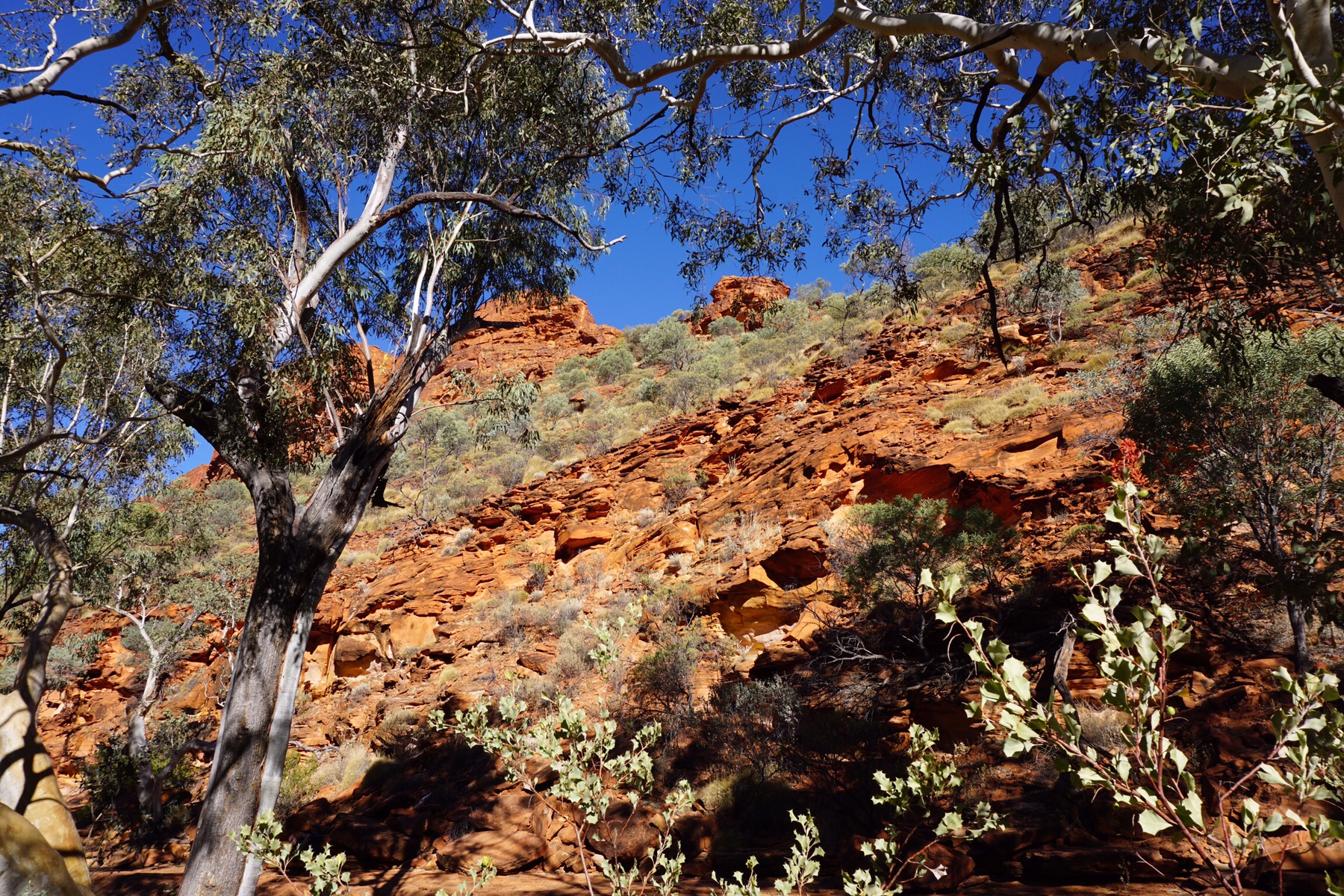 We opted for a short and peaceful walk along the dry King’s Creek, an informative track with several birds accompanying us, particularly this ever-so-cute Dusky Grasswren a perky little desert dweller that didn’t seem to mind hopping around the rocks near us.
 The national park is home to more than 600 species of plant, 10% of which are extremely rare and date back to the dinosaurs. This area has the highest diversity of fauna in any of Australia’s arid zones.
 The resort has a pub and restaurant so we decided to give it a try for dinner. Unlike so many places we have come across on this trip, this actually had a decent choice of beverages – including Fat Yak and our local Manly, Sydney tipple, Four Pines beer.
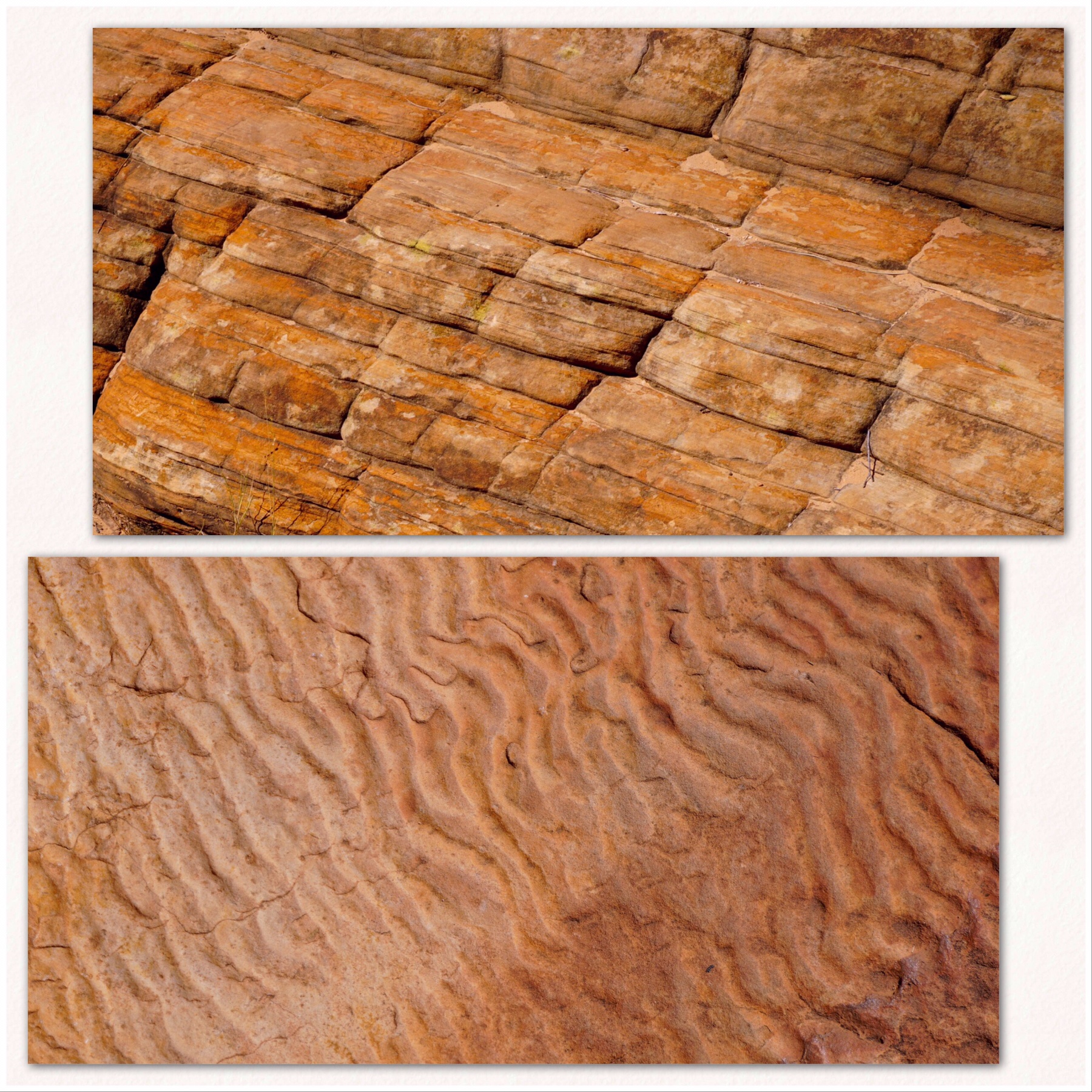
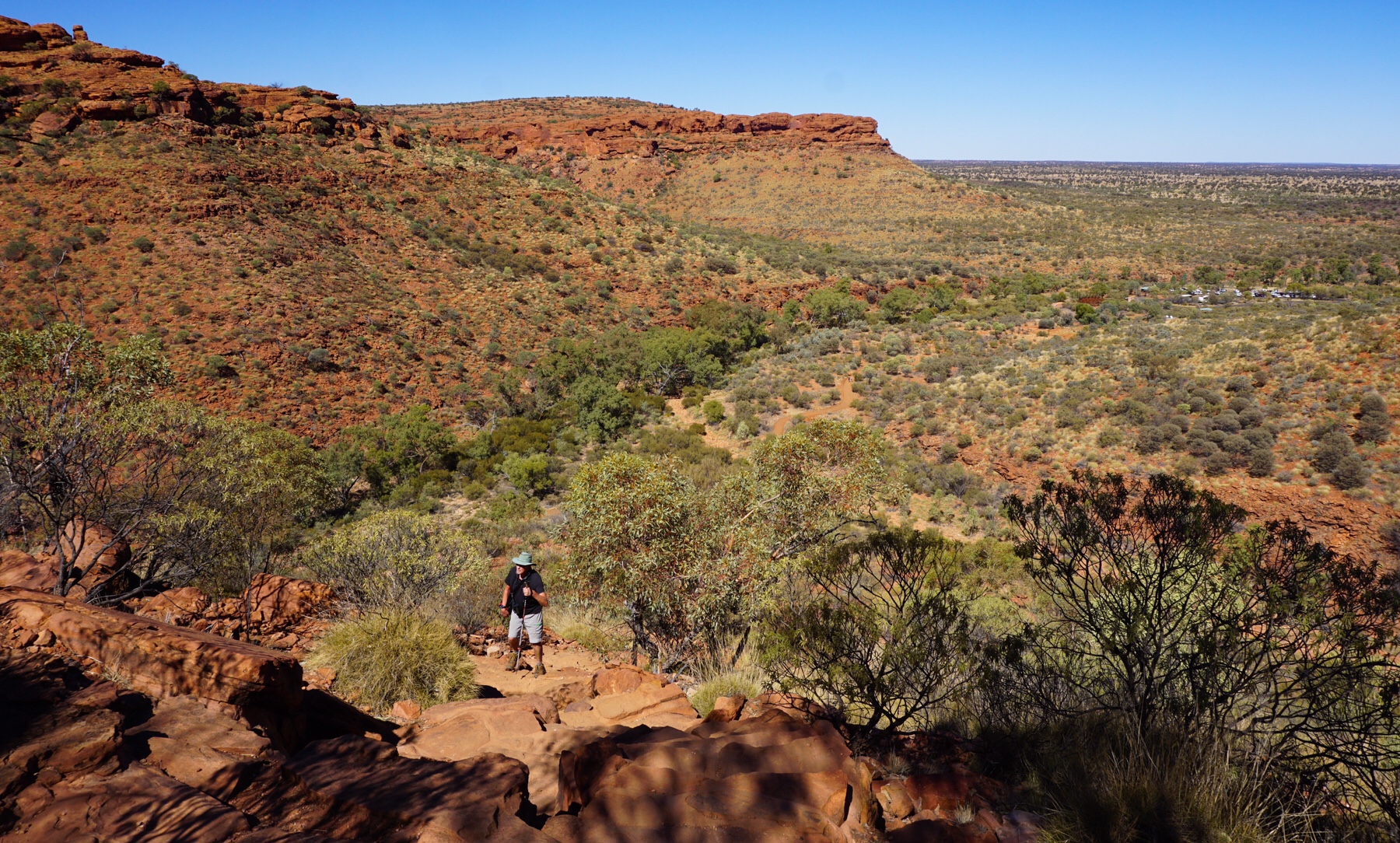 Once you’re up the top of the walls it all gets a lot friendlier, with a lot of red rock hopping over the ancient fossilised sand dunes and sea bed. There is plenty of evidence of the area’s distant past, with fossilised ripples in the rock (they call it ripple-rock, of course) and evidence of the layers of silica in the rock from the drifting sand dunes.
 The landscape is unlike anything else, the beehive like structures stretching out into the horizon. I found it interesting to learn that the rock here is all actually bright white sandstone – the red comes from a fungi which grows on the rock and through a chemical reaction allows the red sands from the surrounding arid area to stick to it, hence creating the bright red colour which practically glows in the sunlight.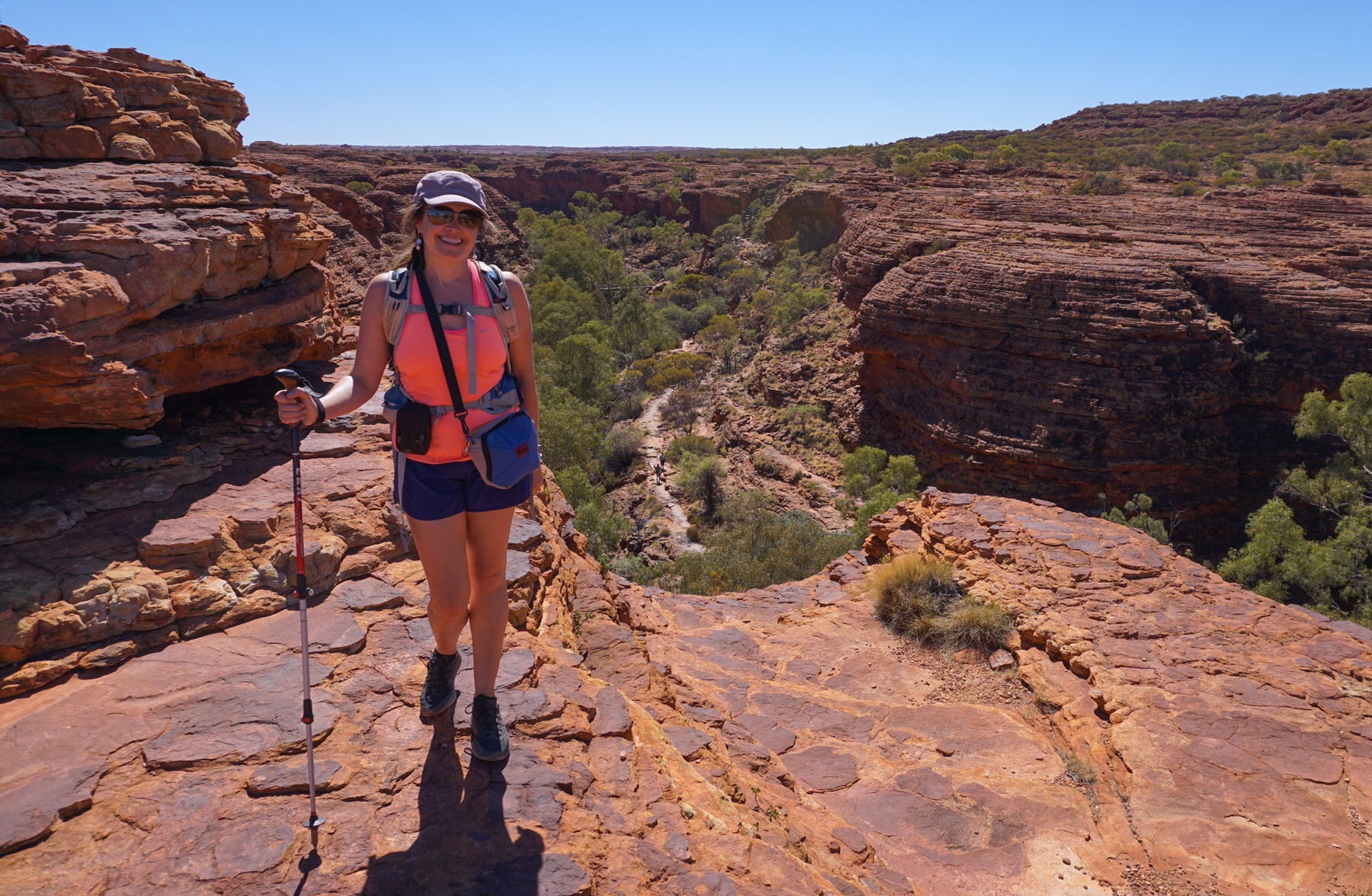
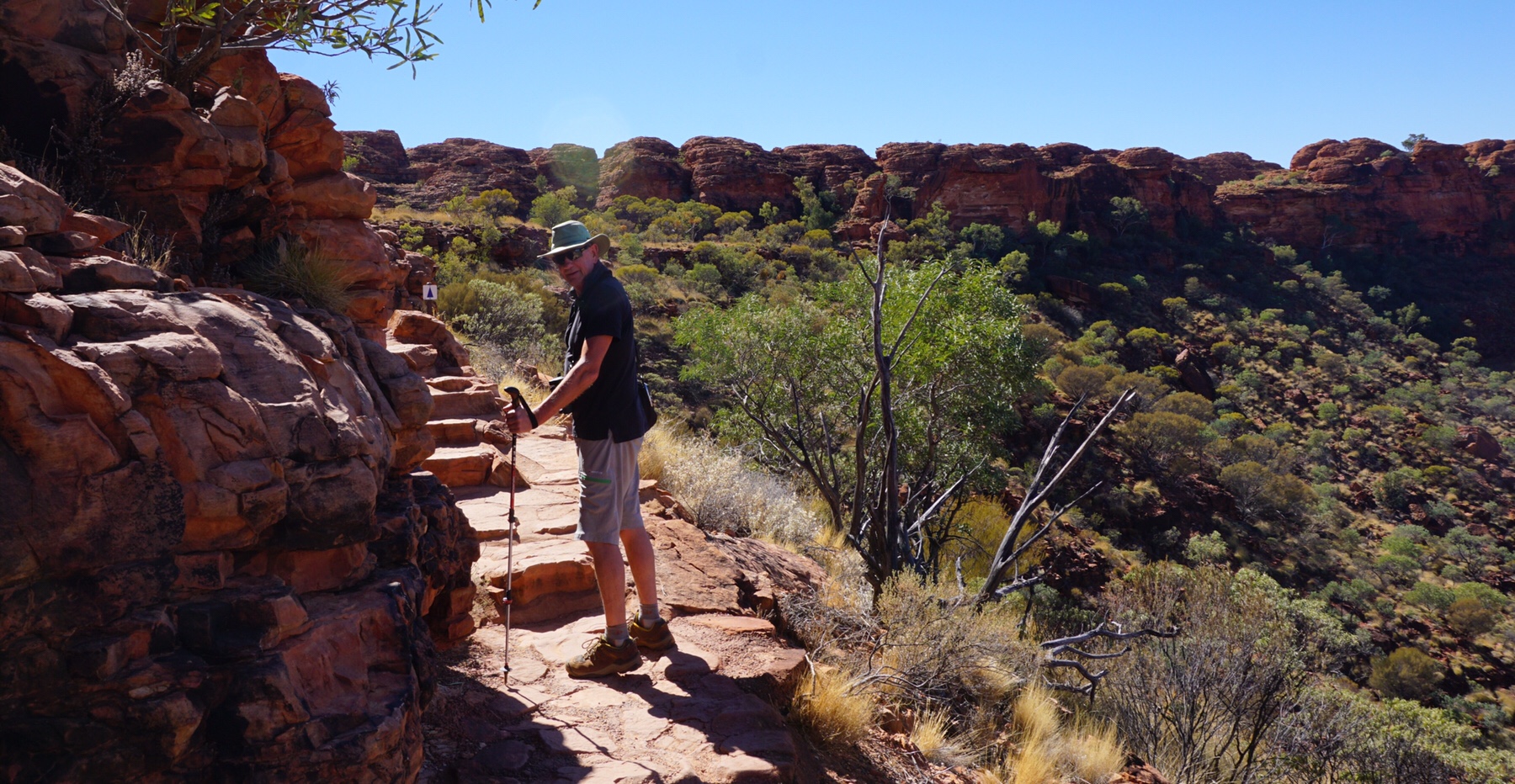
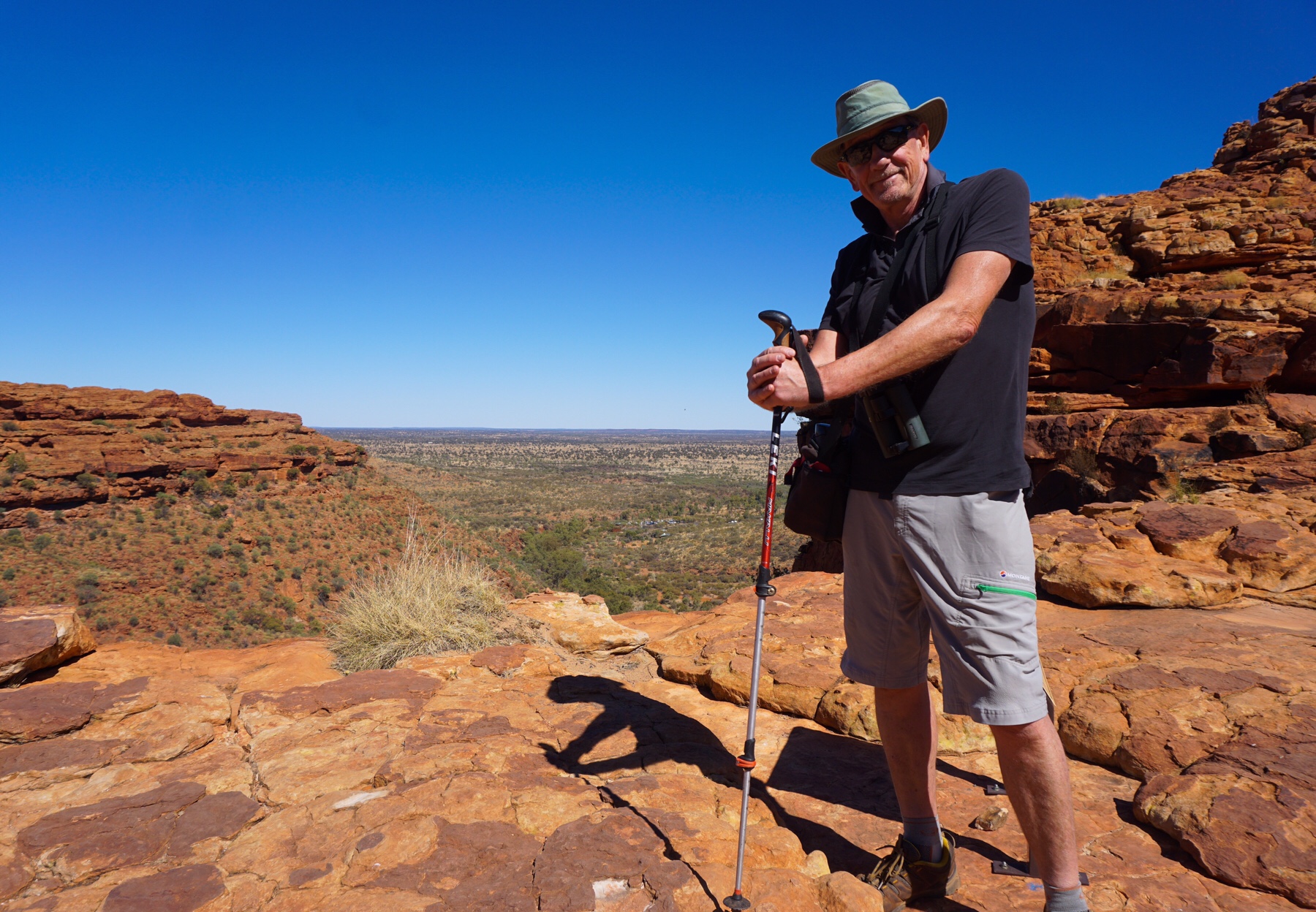
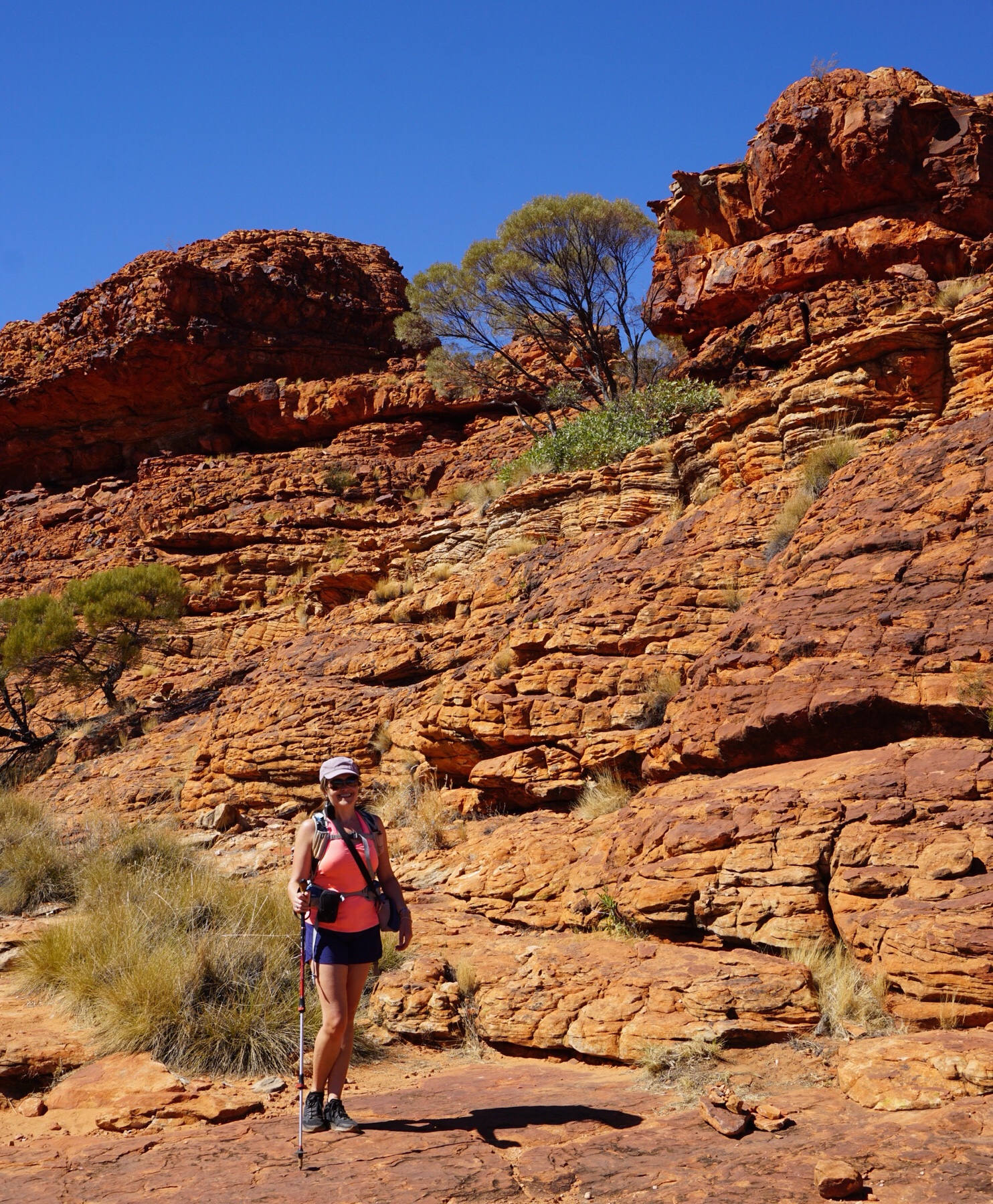 While not busy, we were certainly not alone on this walk, several other hikers following on the same trajectory – mostly French, a few Chinese and Australians.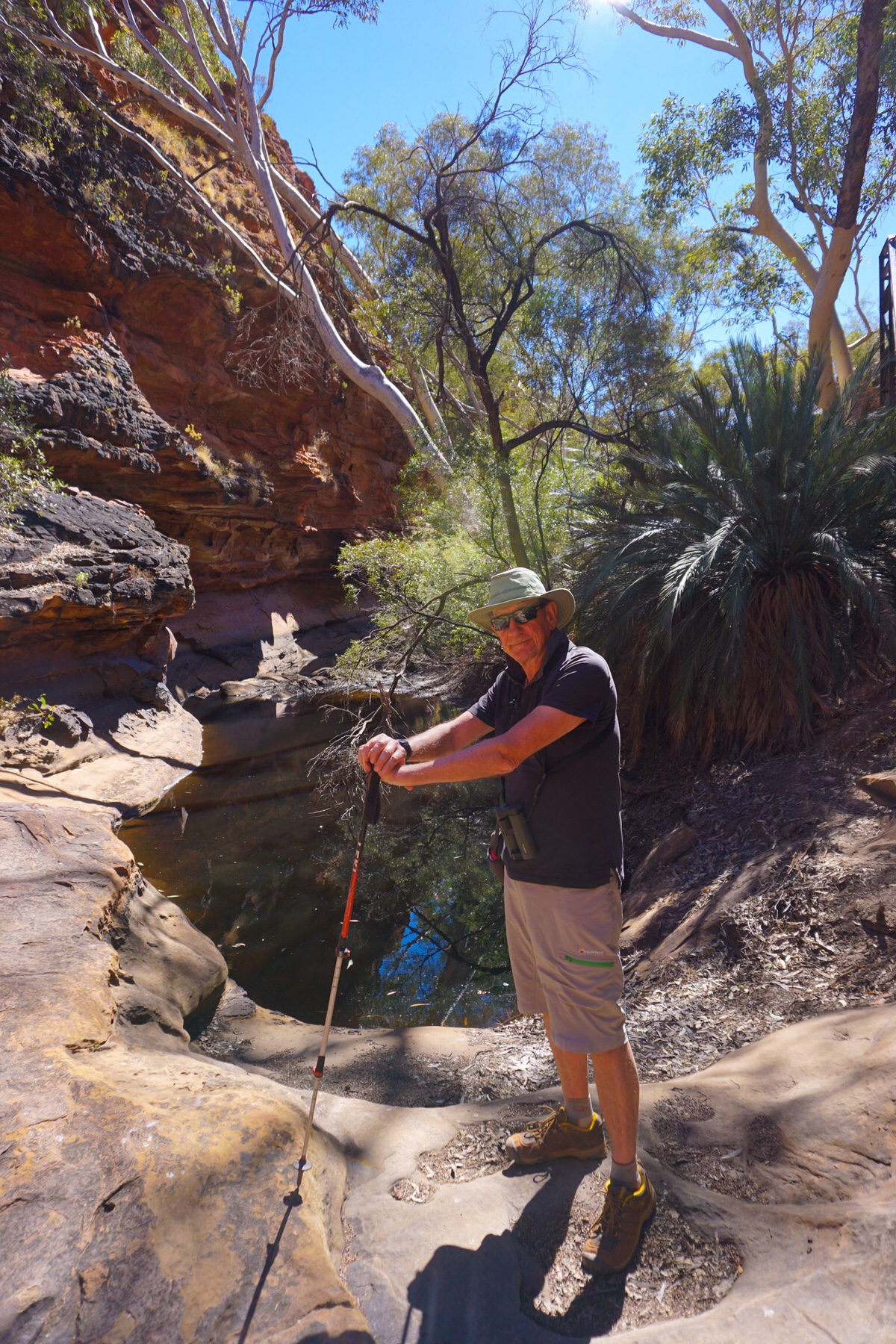
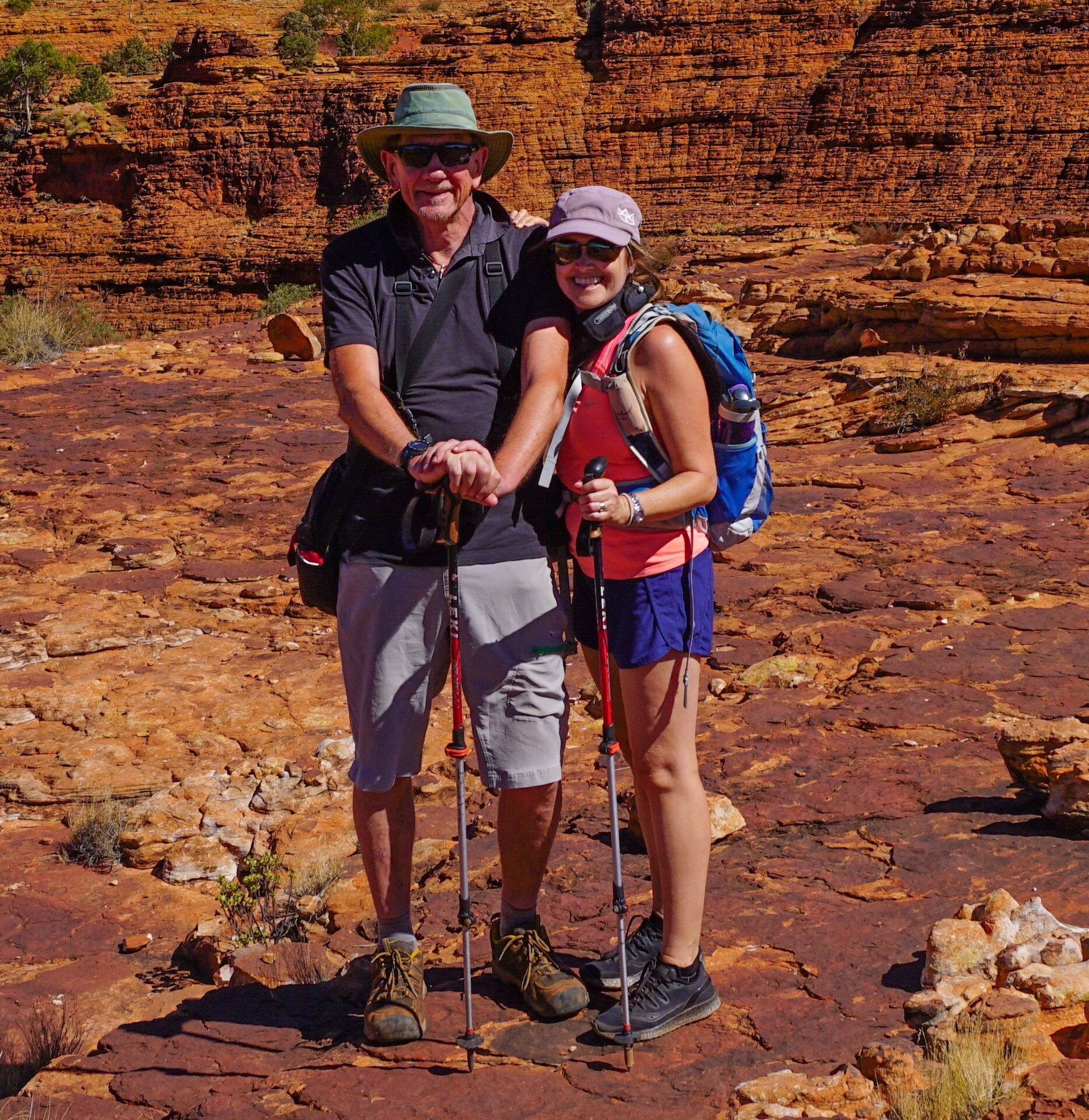
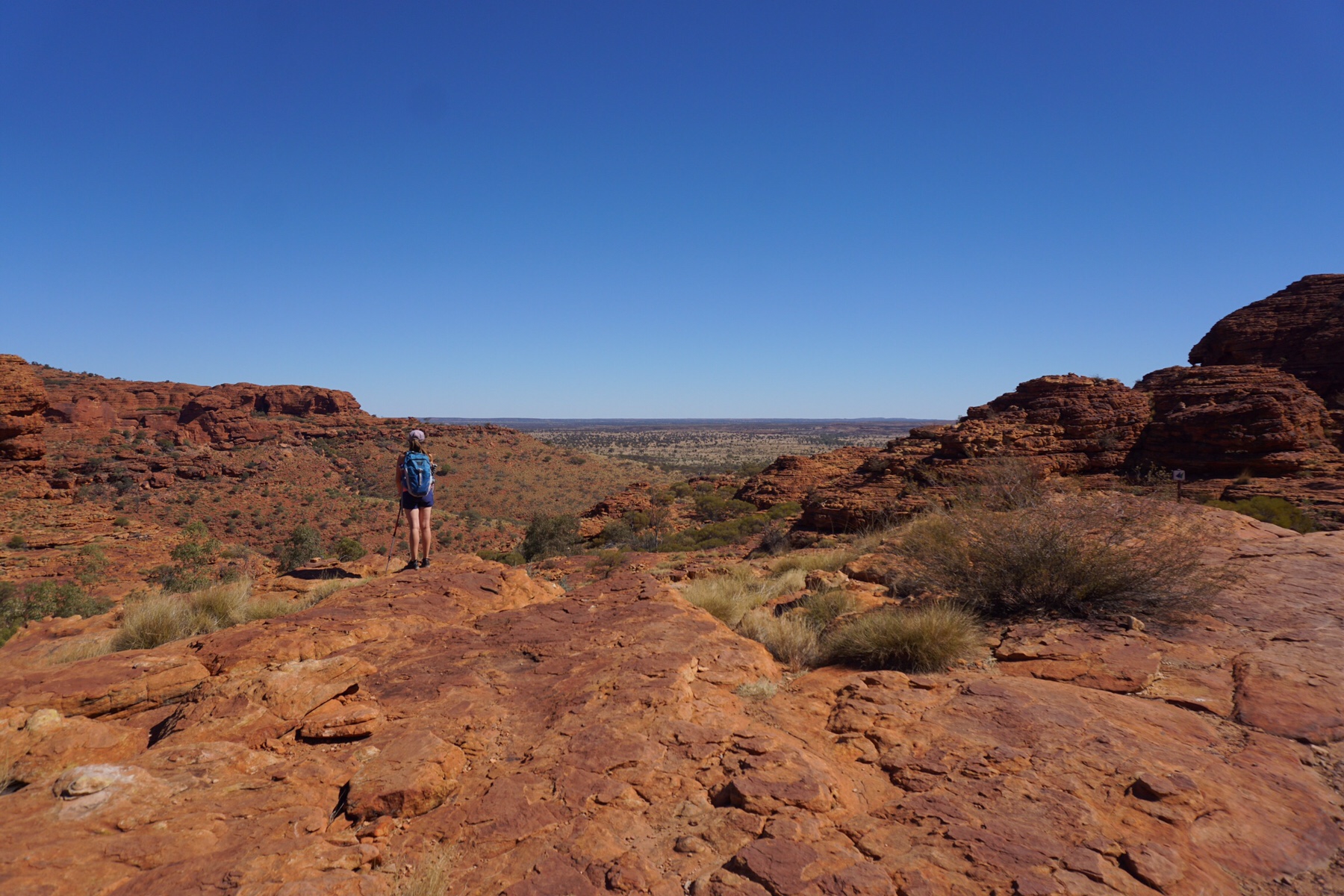 After completing the circuit we returned for a relaxed afternoon, Miss Tassie rolling in the red sand and needing a lot of brushing (which she loves!). I suspect the two events might be linked. Are we being manipulated by a Burmese cat?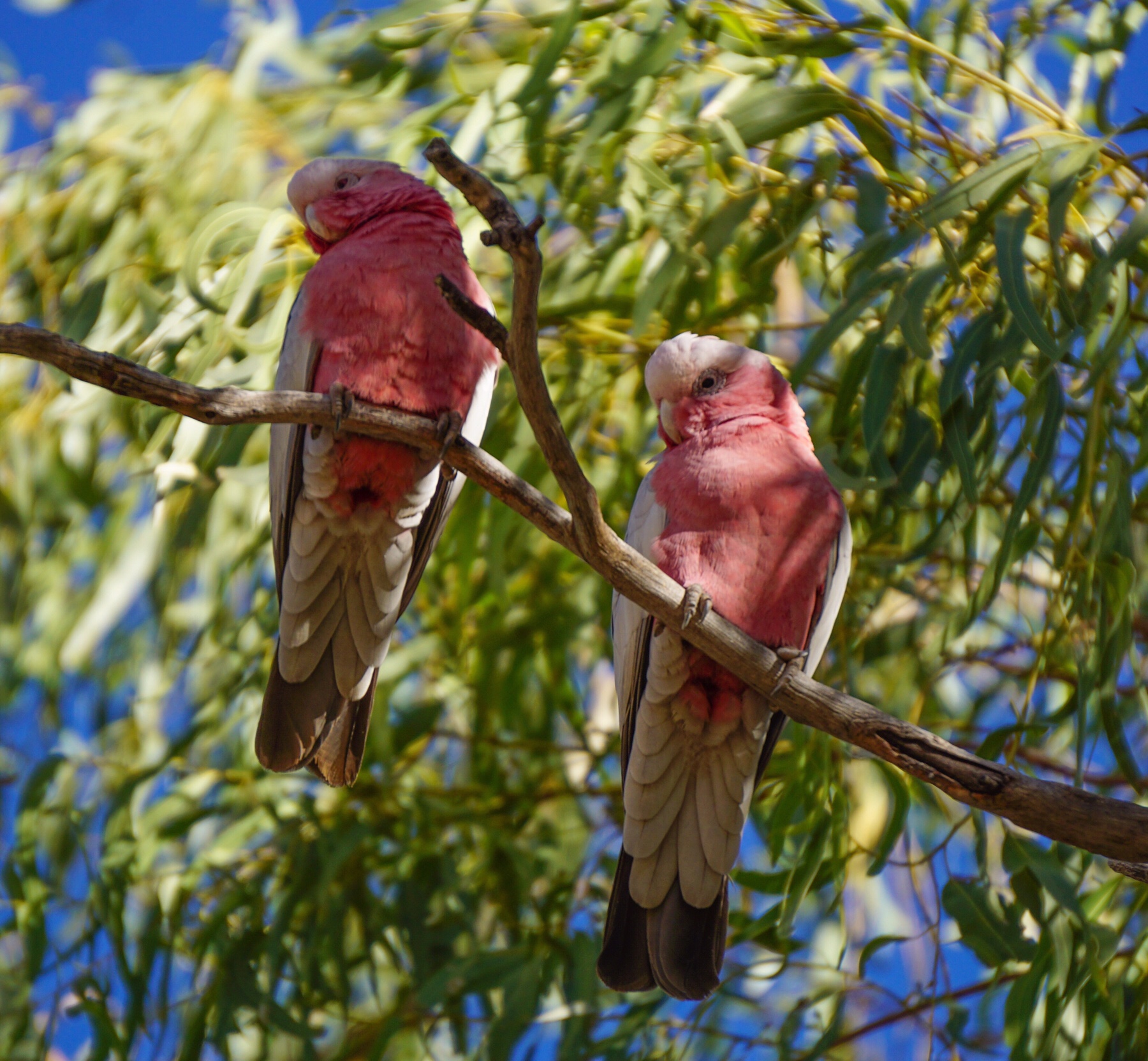
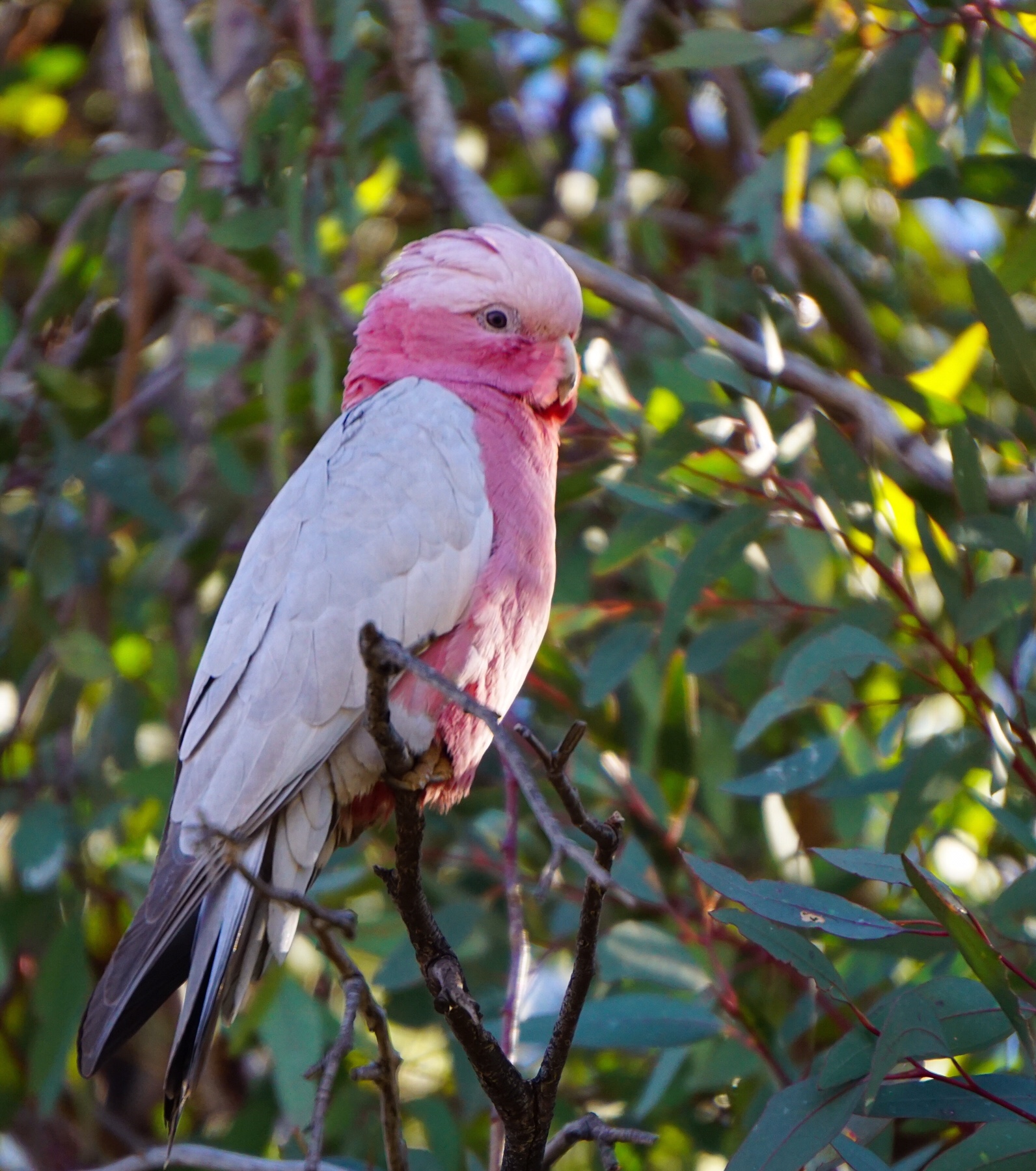
 We had a nice stroll around admiring the scenery and enjoying the feeling of being upright!
 Sunday – location: Petermann
 It was blissfully peaceful on Monday afternoon, in stark comparison to Friday afternoon when I had cycled over to find it absolutely full – later finding out Friday was a public holiday in Darwin, which explains the crowds.
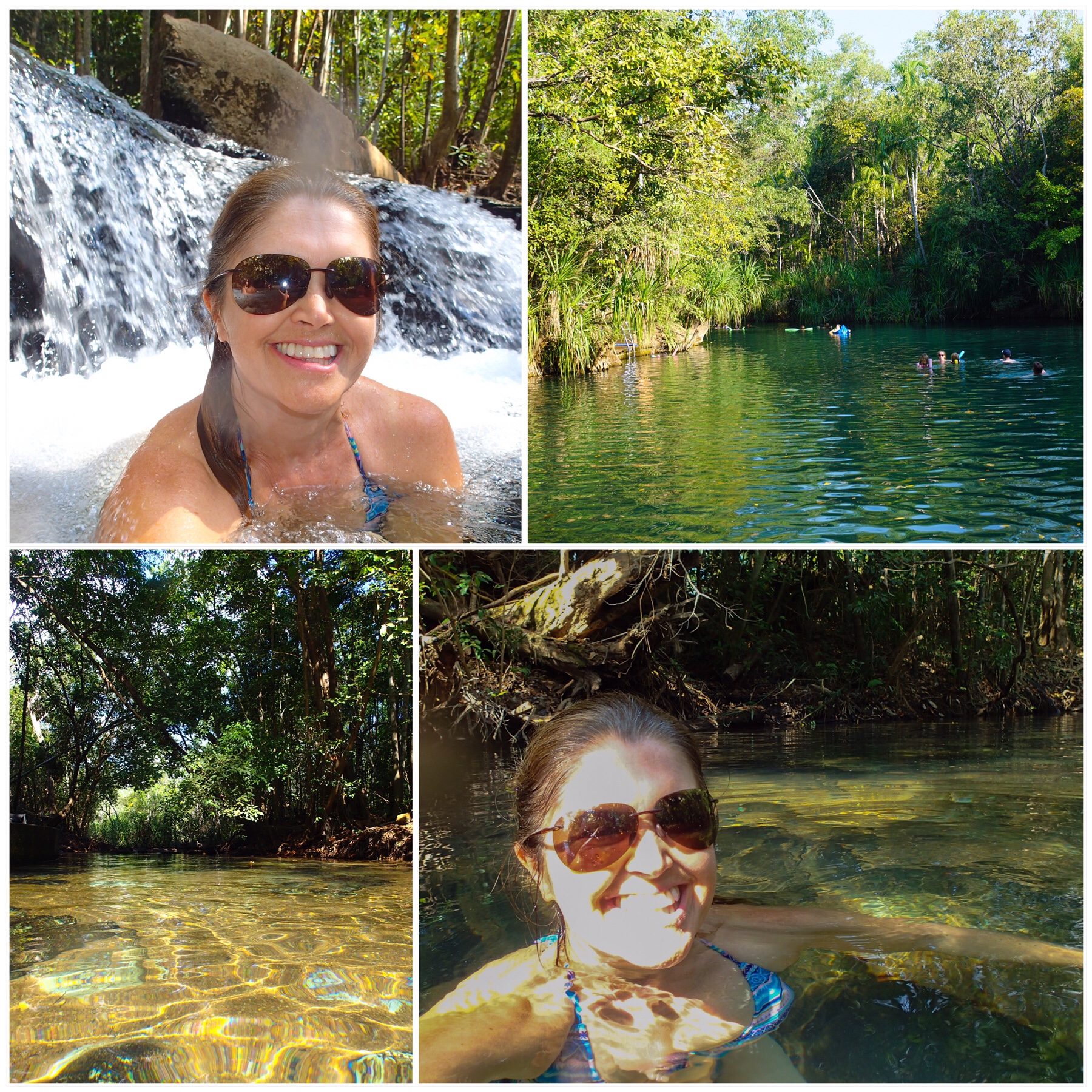 Berry Springs consists of a series of pools, starting at the waterfall, fed by crystal clear springs. I enjoyed a nice shoulder massage as the water crashed over the rocks, before swimming along the creek to the main pool and lower pool. The pools are quite large and deep, ideal for swimming, kept topped up by a weir. Apparently below the weir is crocodile country, so I stayed clear from there!
 The water is a beautiful temperature.
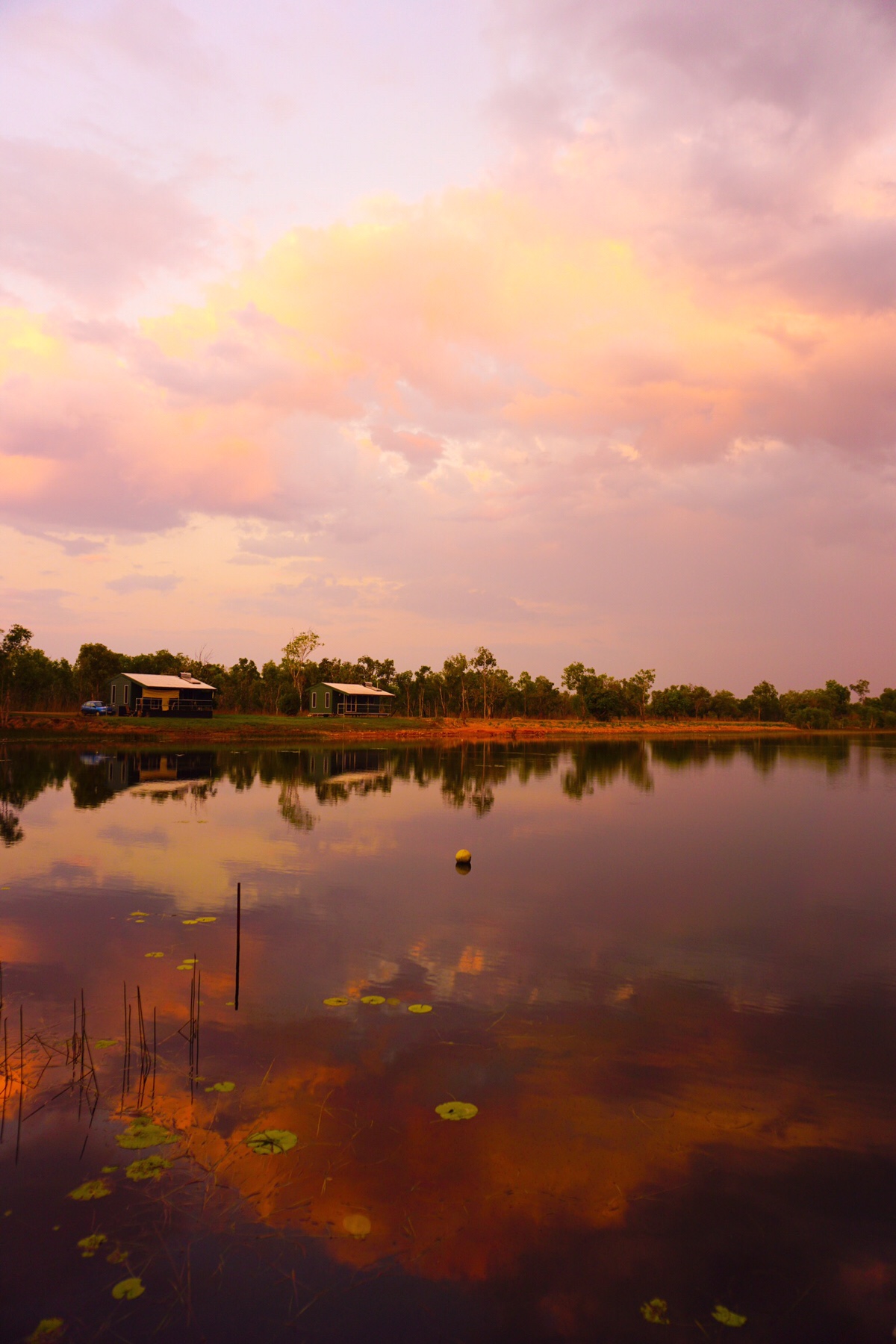
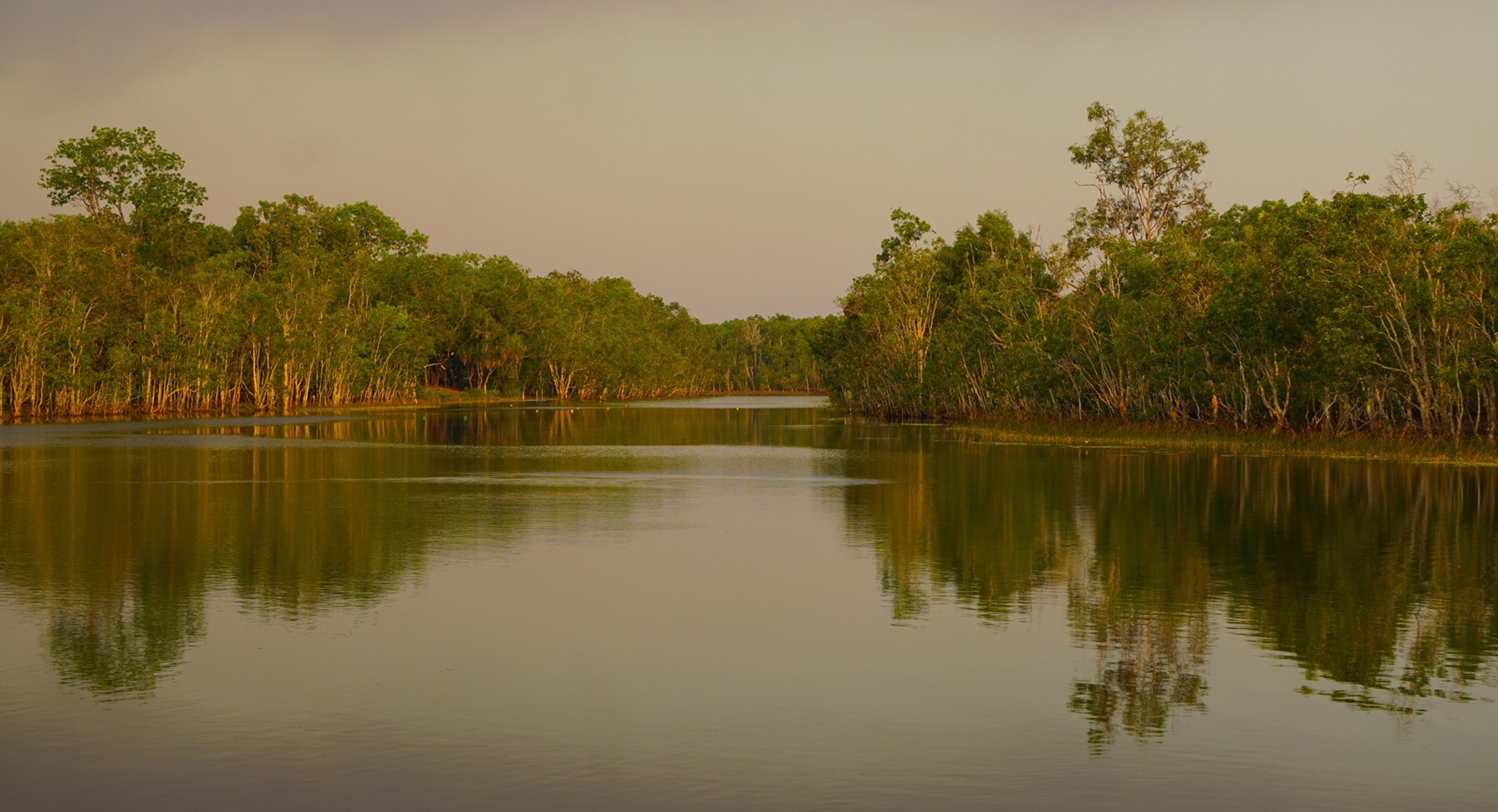
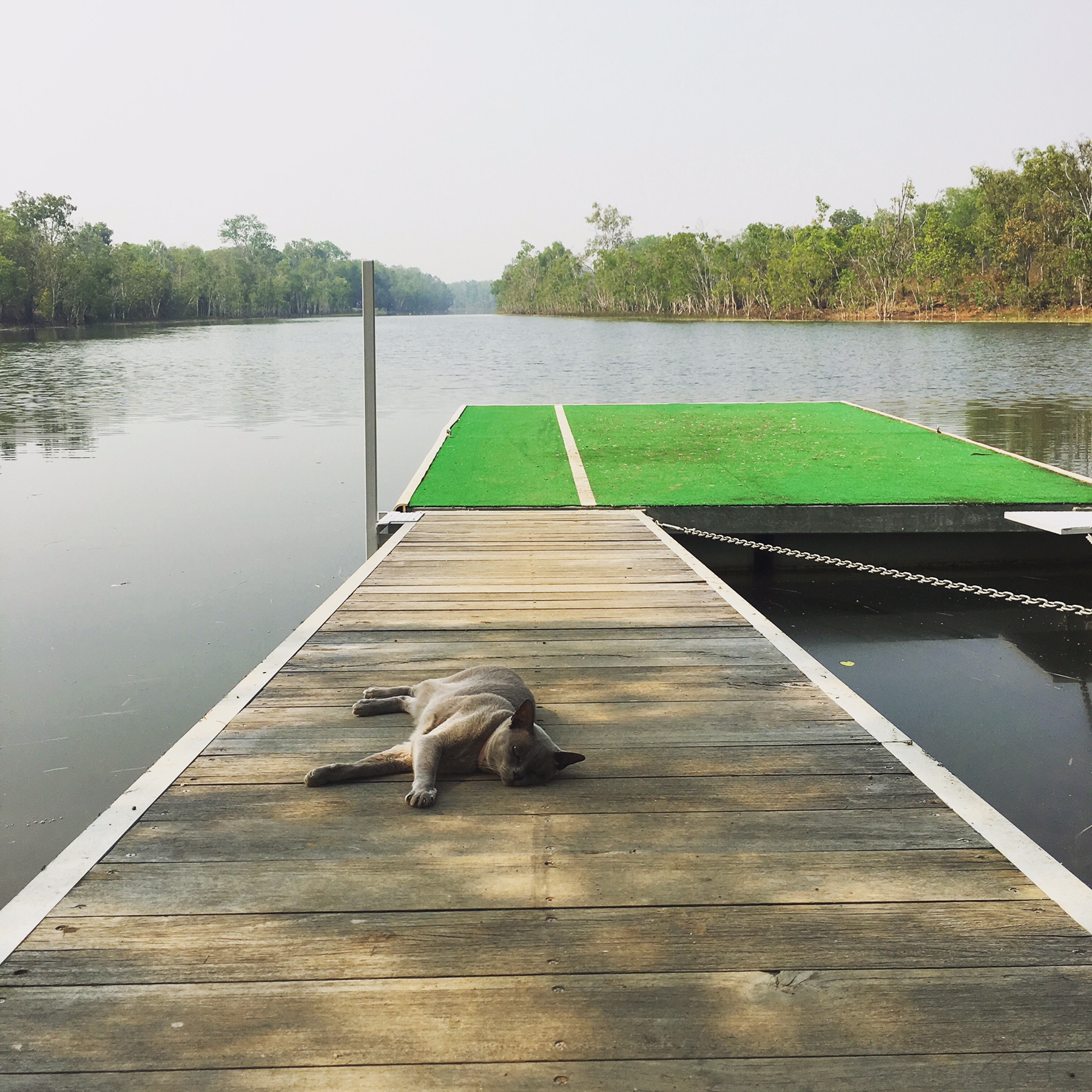
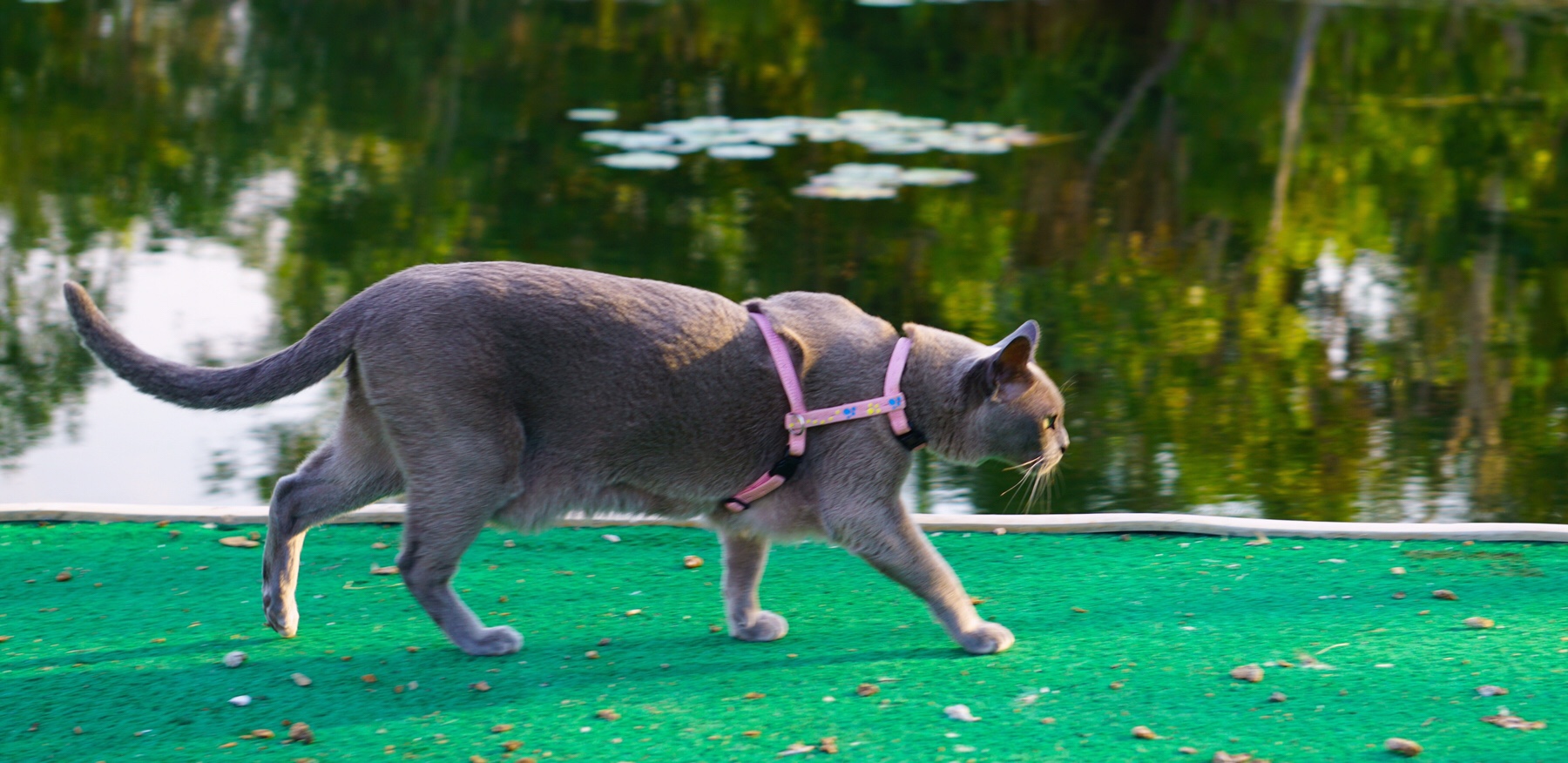 Miss Tassie particularly enjoys the pontoon over the water – firstly because there are no canines around, but secondly I think it reminds her of our swimming pool at home. She usually likes to lie beside that, and has similar feelings about our local lake. I accompanied her each evening for our private sunset viewing.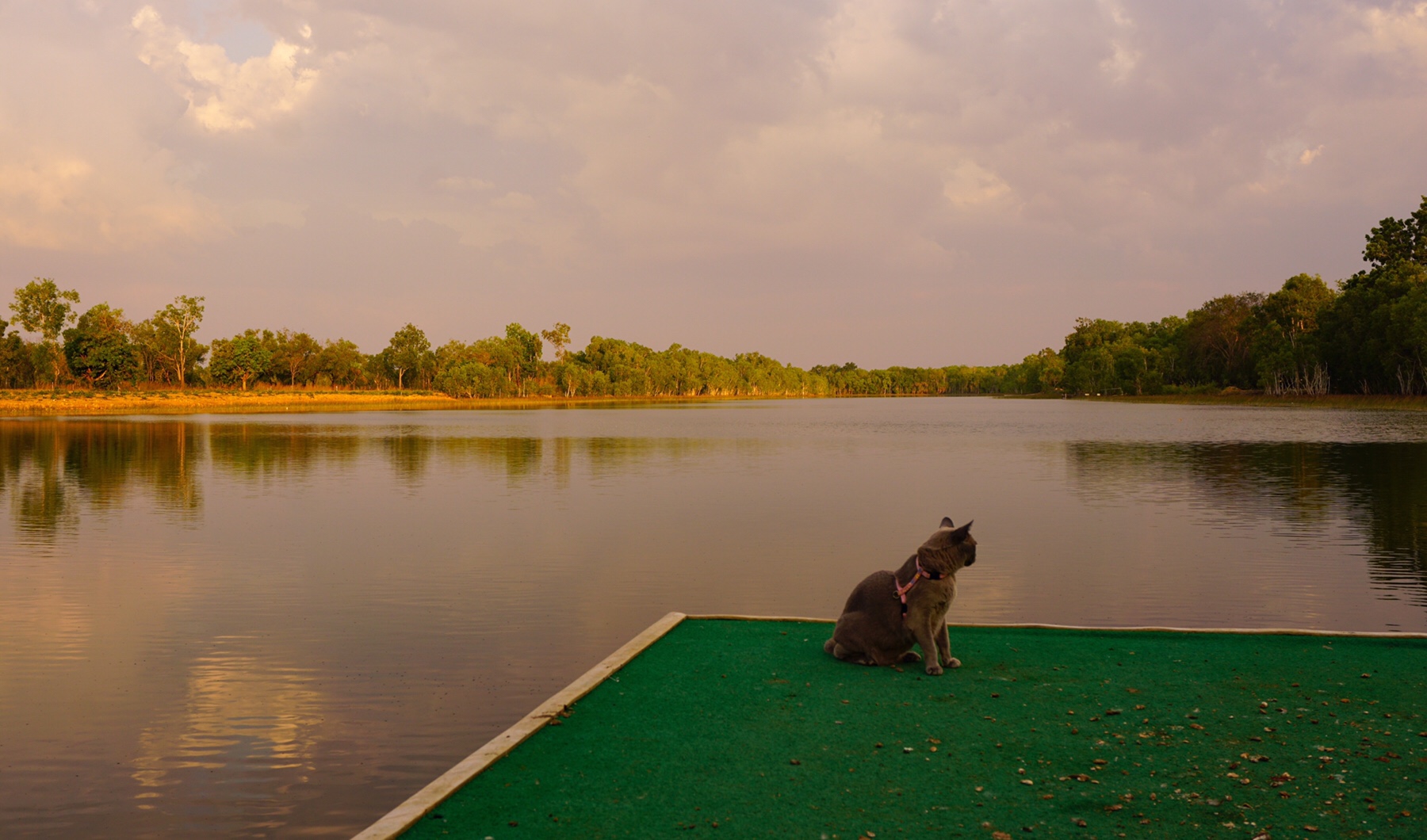
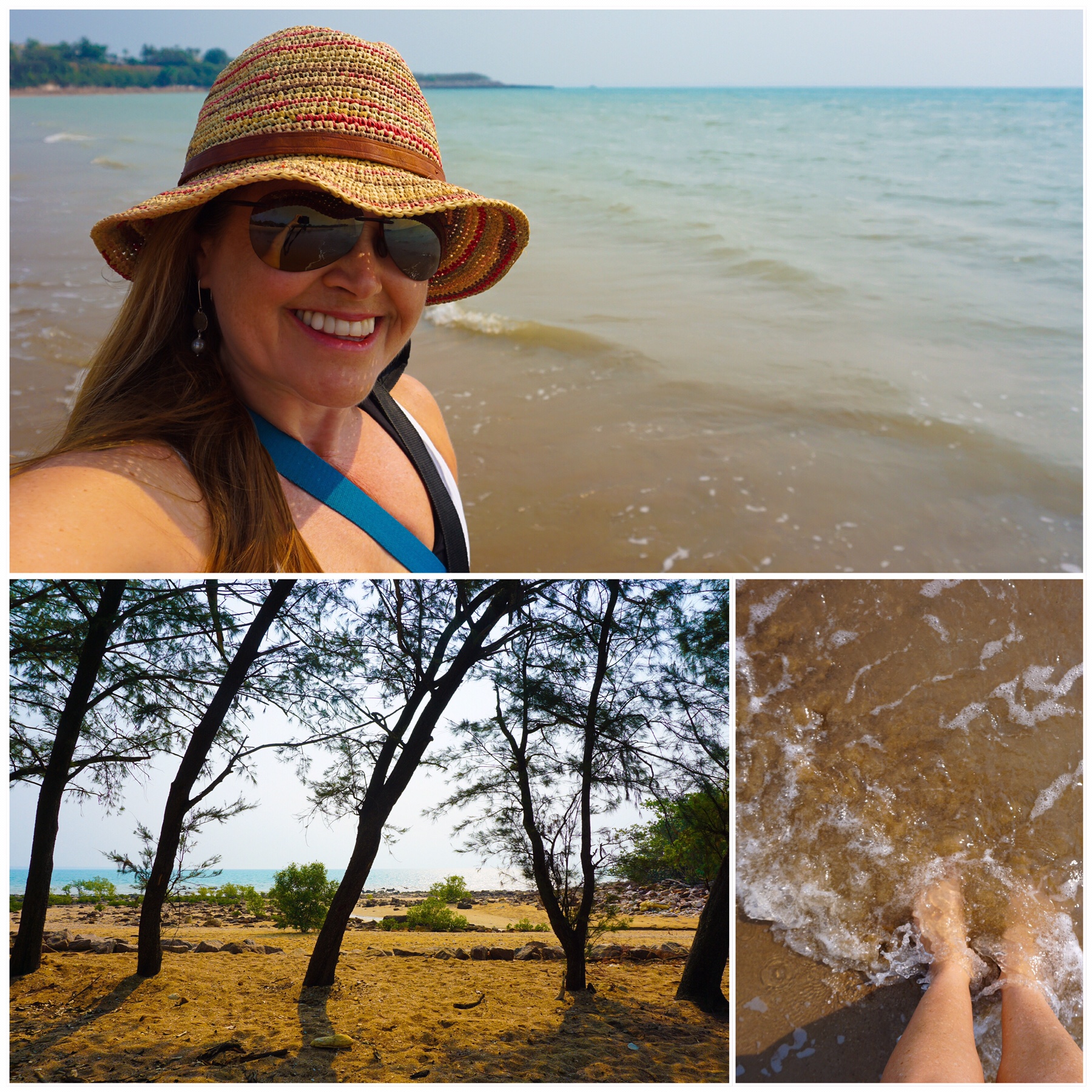
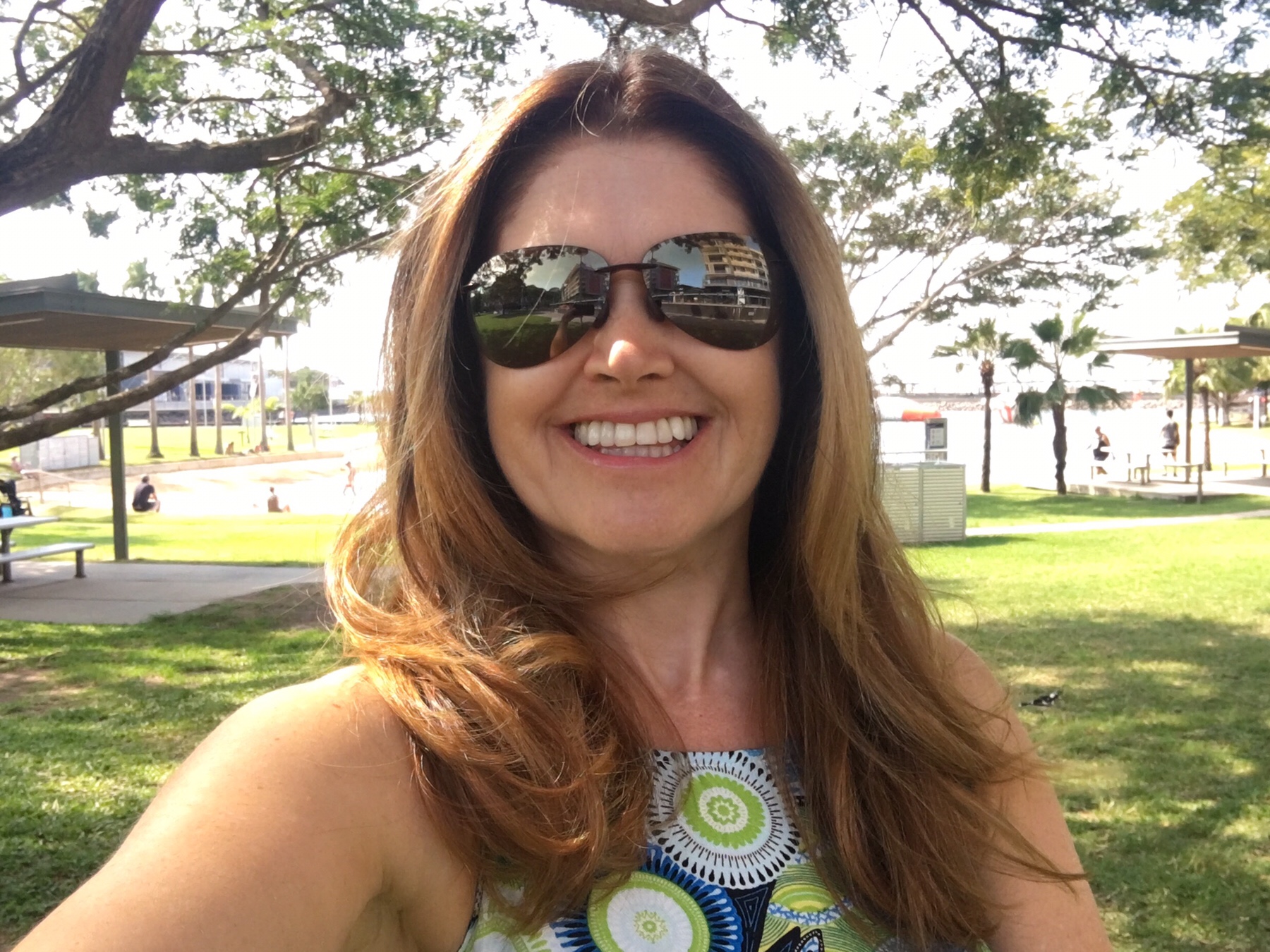 I had a brief moment of blow-dried glamour down by the Darwin waterfront, before the humidity made any semblance of bounce drop and the breeze blew the last bits out. Why do hairdressers never believe me when I say their bouncy blow dry is unlikely to make it back to the car, let alone beyond the next 20 minutes?
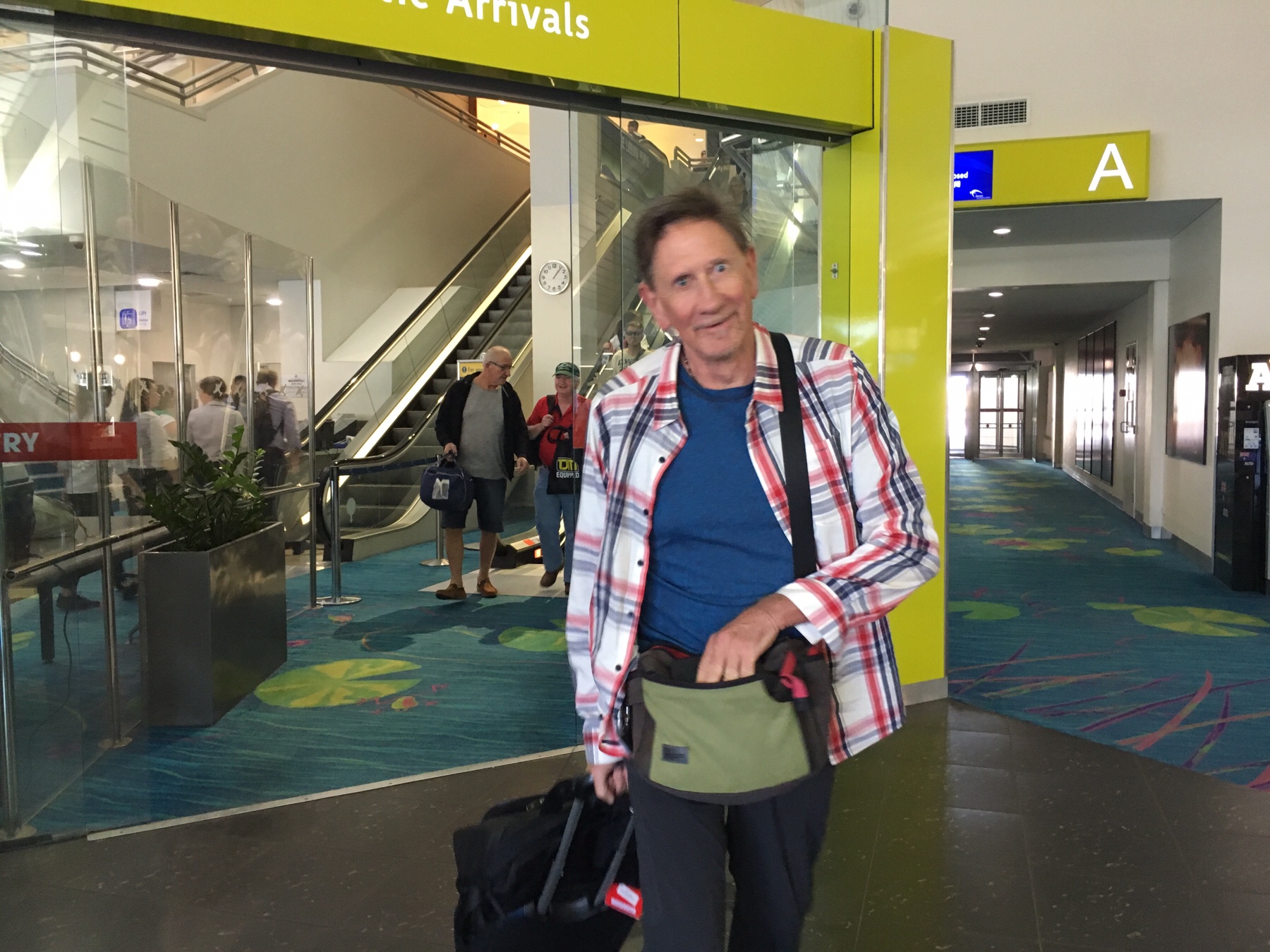 Mark arrived safe and sound after his long journey – a little frazzled having left his friends’ house in the UK 40 hours ago, and having travelled by three trains and three planes to finally reach this spot. Still, all flights had left and arrived to schedule so no complaints. All went as well as could be expected on his trip, and he really appreciates all the messages of condolence he has received.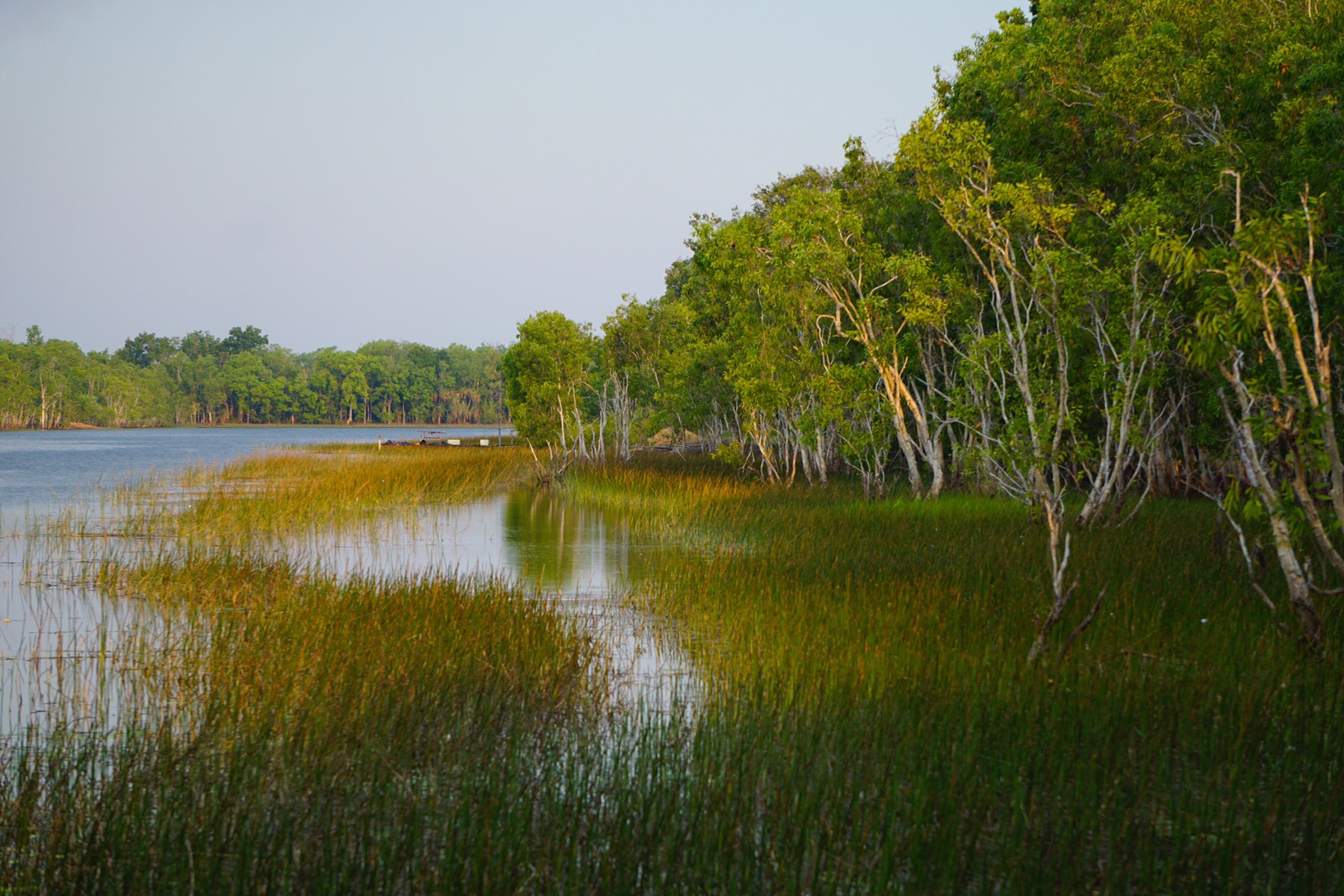
 Checking in for 10 days, I believe we have one of the best sites in the park. Nice and shady, grassy with no neighbours for about 15 metres.
 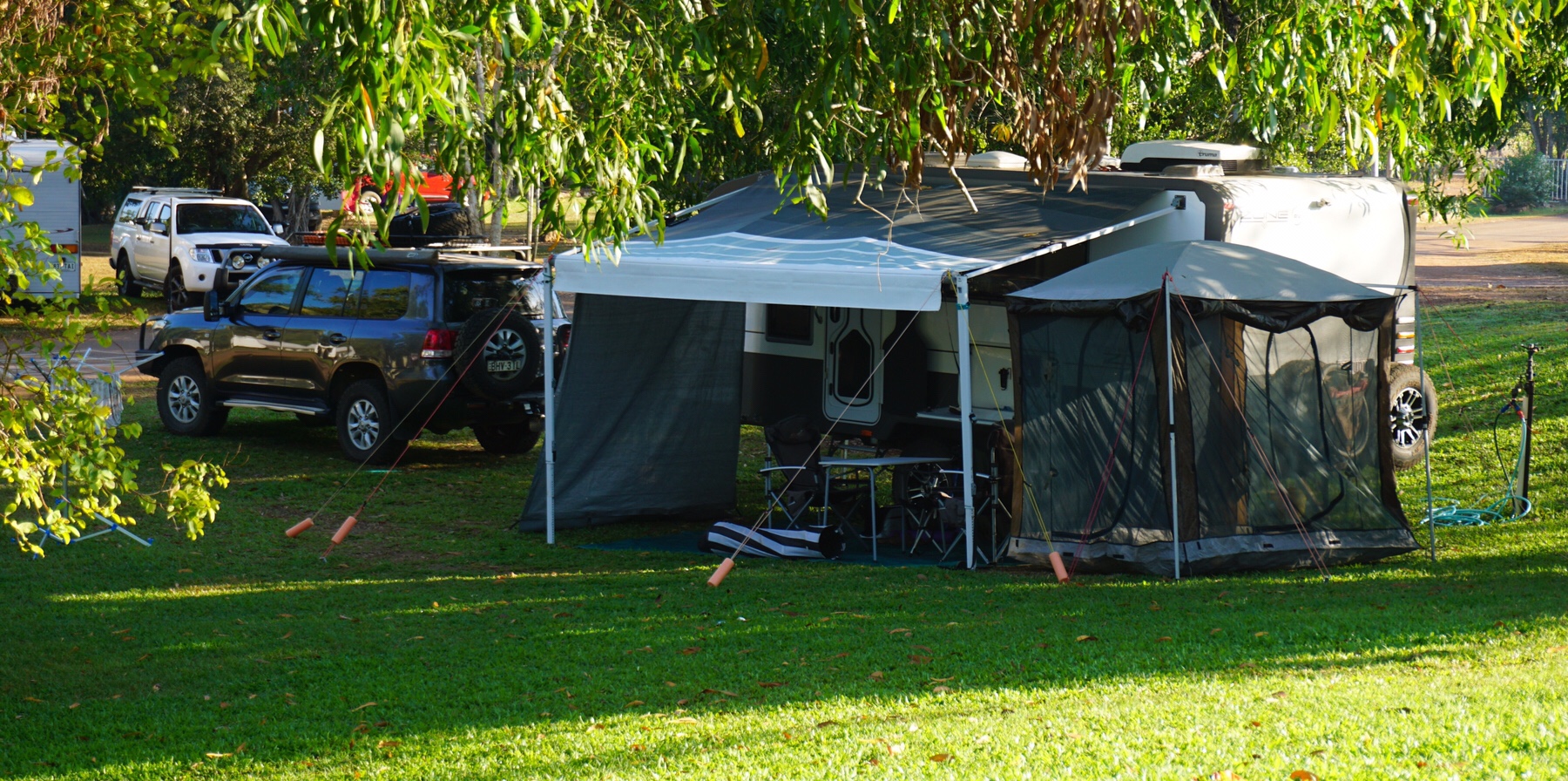 Better still, we had barely set up when the campground managers came over with three boxes of wine – our Vinomofo and Ross Hill deliveries have made it safely. Sadly the Tscharke wine delivery made it in a leaking crumpled mess to the Berry Springs Post Office with just enough time for the courier to photograph it and then take it away again. Will we ever get to try this wine? Third time lucky we hope…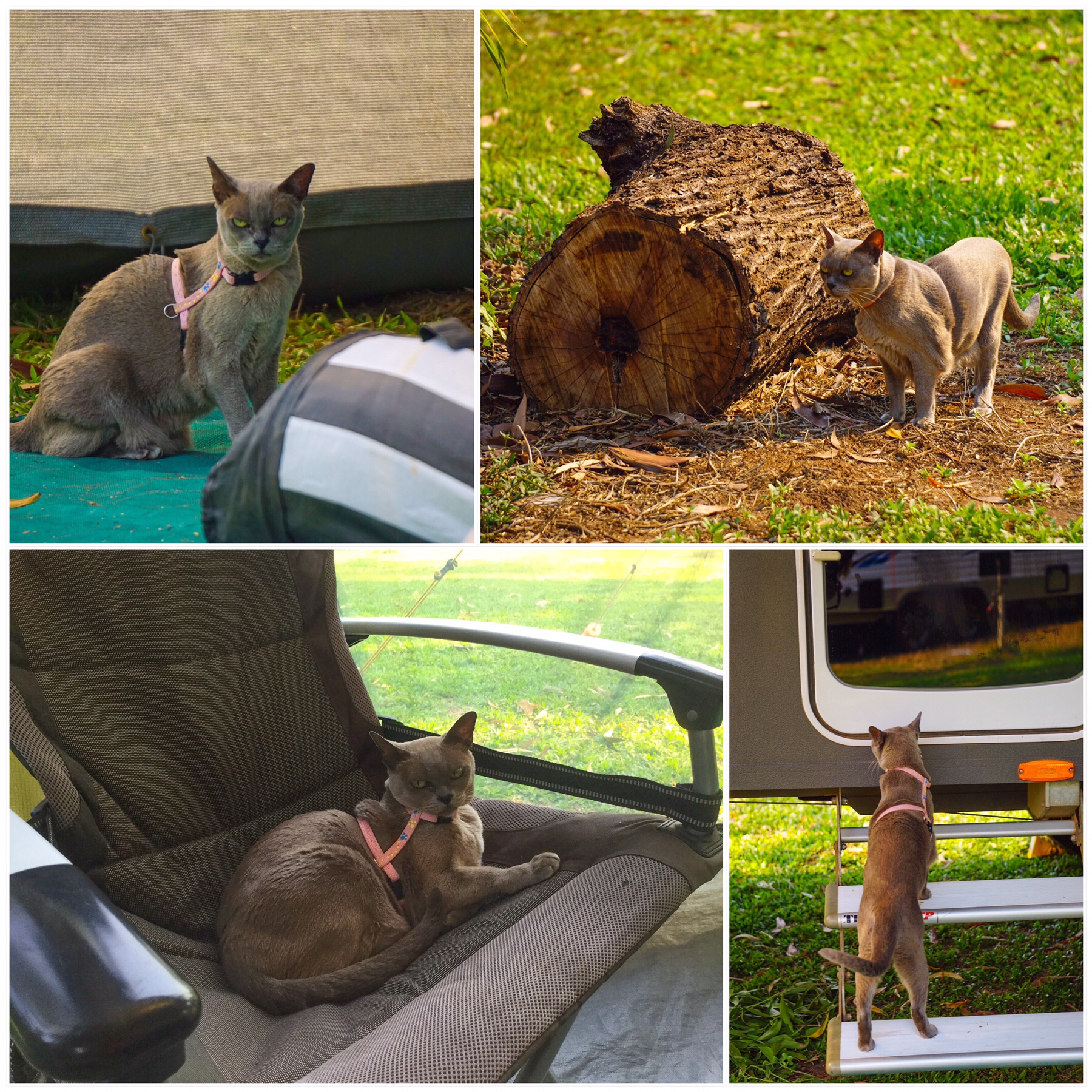
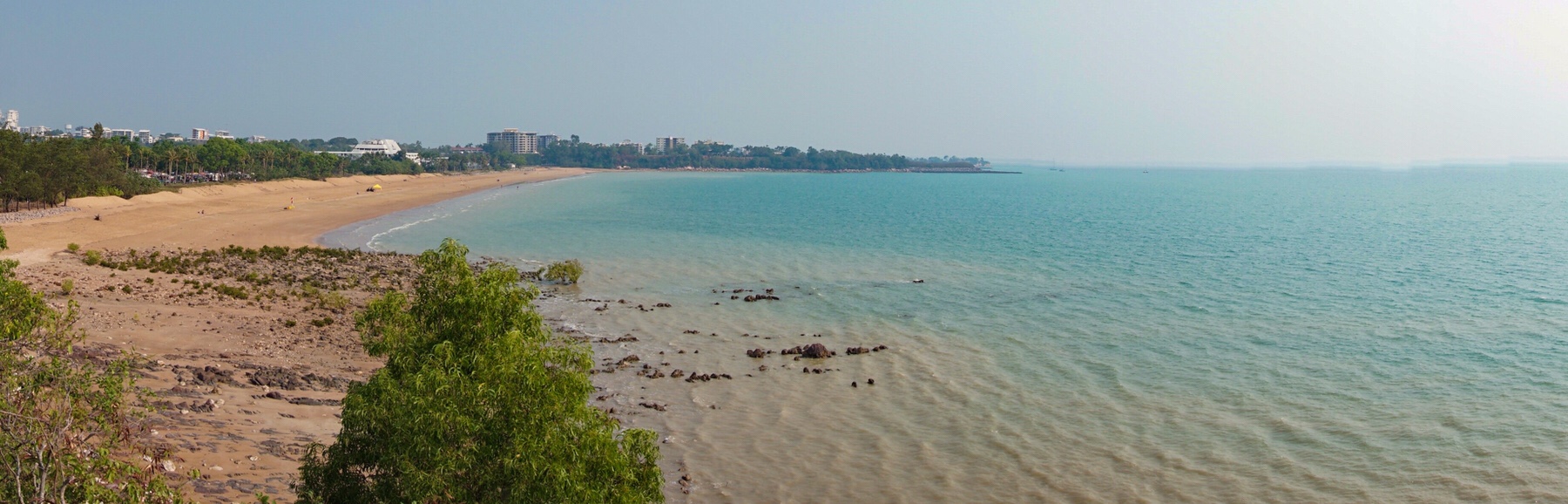
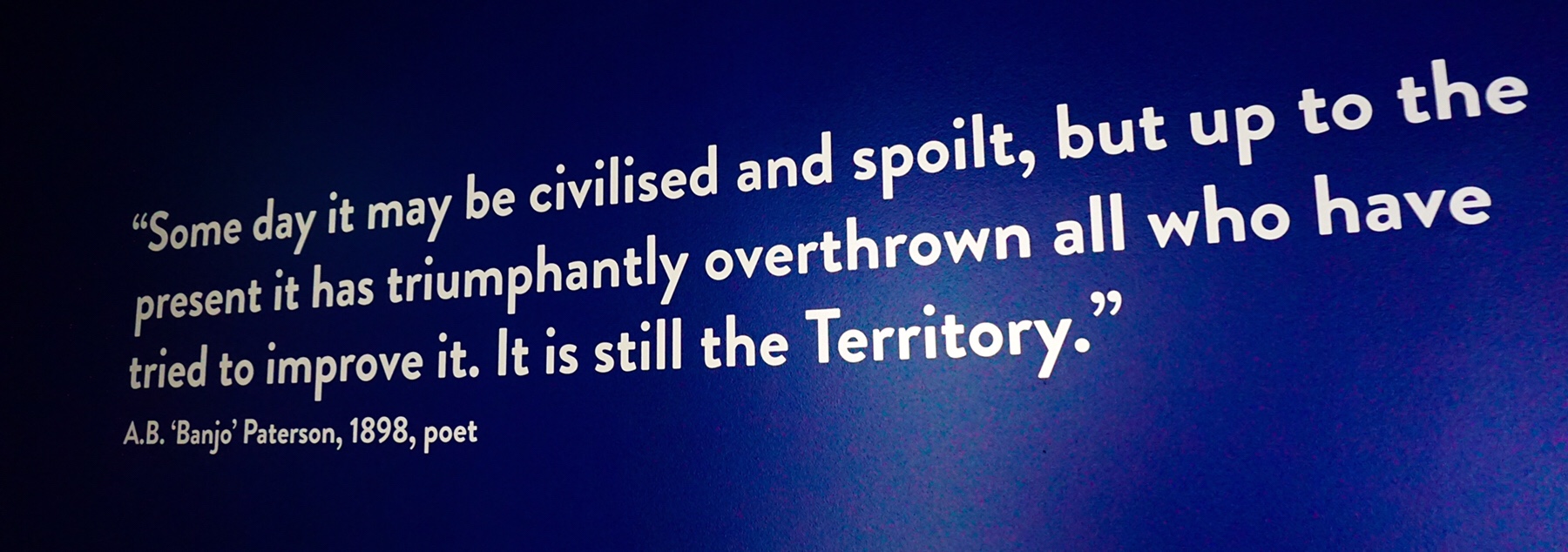 In the late 1800s and early 1900s, the Northern Territory was quite a tough and unruly place to live. The climate is challenging to say the least, and settlers trying to grow crops were also stymied by poor soils, high temperatures and rainfall followed by drought. Aboriginal people largely carried on their usual life, with some being employed by pastoralists and hotel operators, and as stockmen, hunters and laborers.
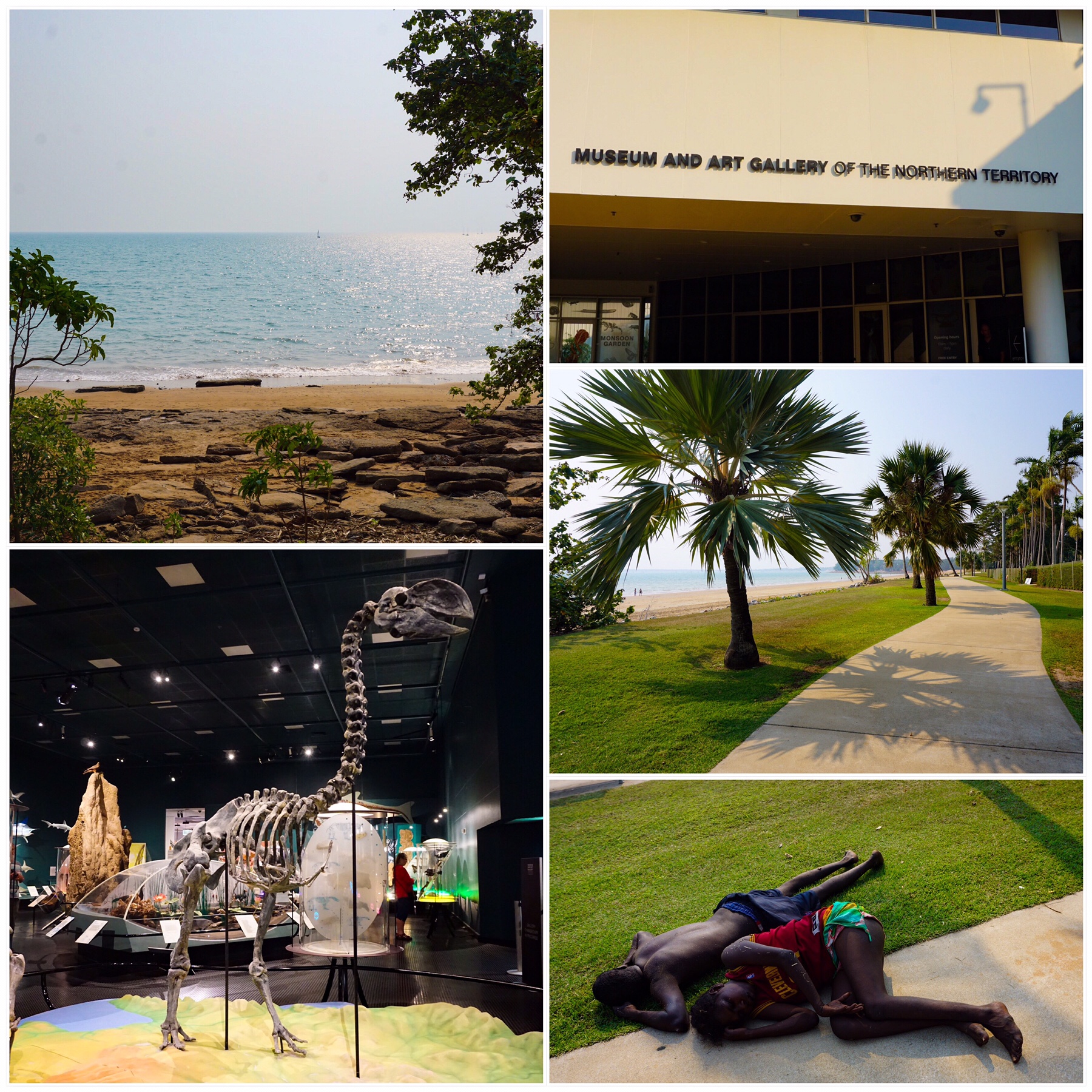 As you leave the museum and see young Aboriginal people sprawled drunk over the pavement, you see that it is now sadly alcohol addiction and a lack of sense of belonging which is killing them.
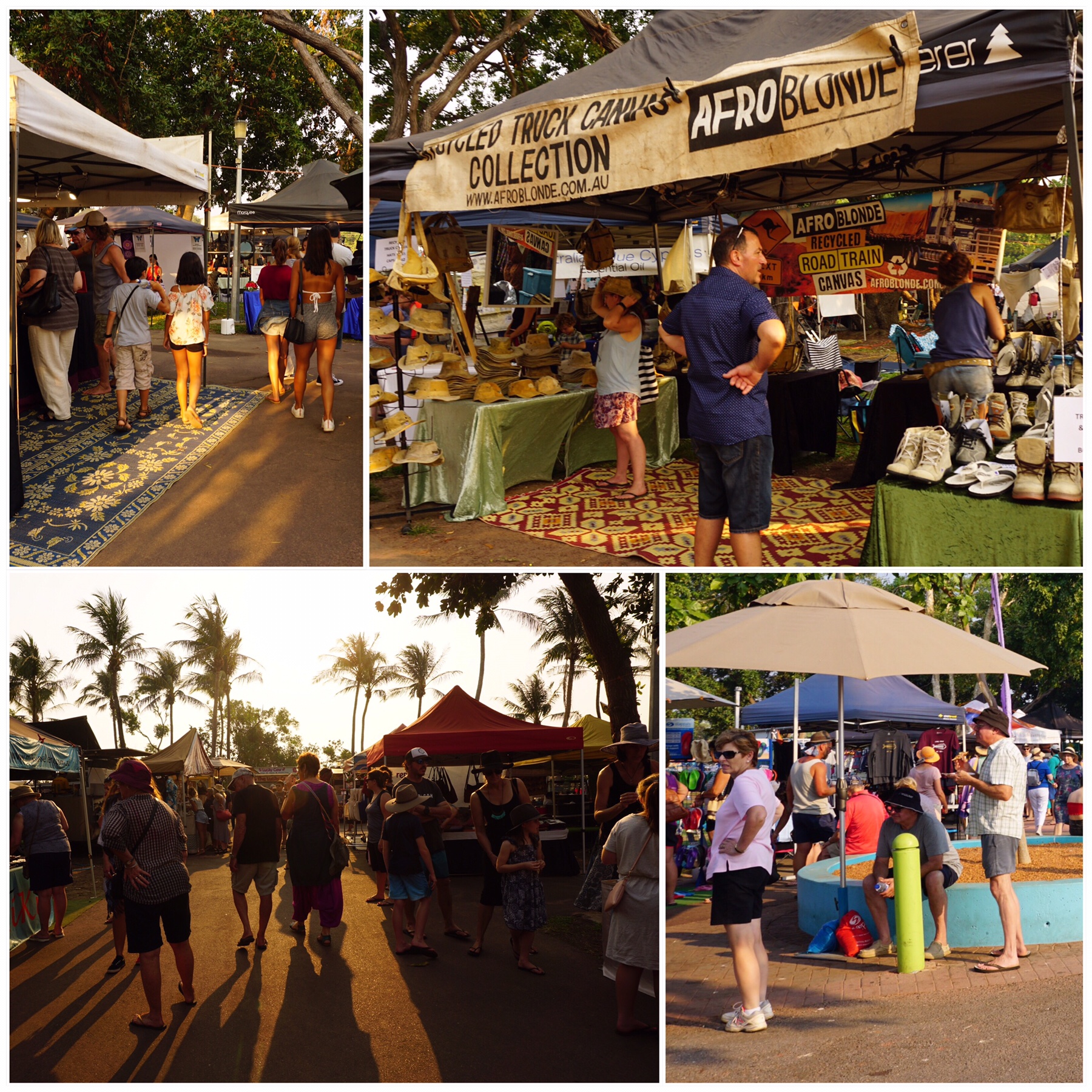 I had an early dinner and purchased a raw gluten-free, dairy-free cake (Mark’s worst nightmare!) as a treat for dessert before returning to Berry Springs for the evening.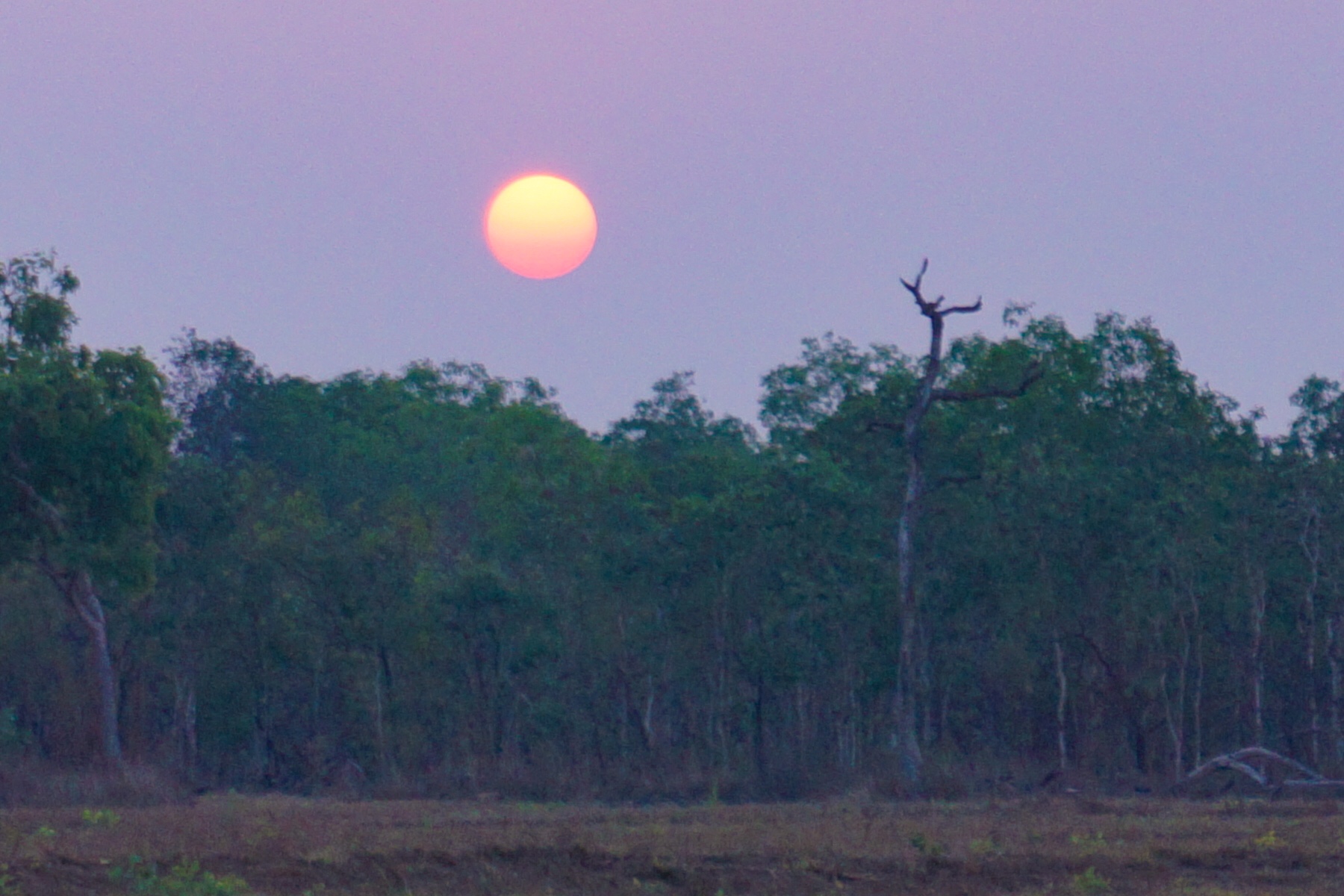
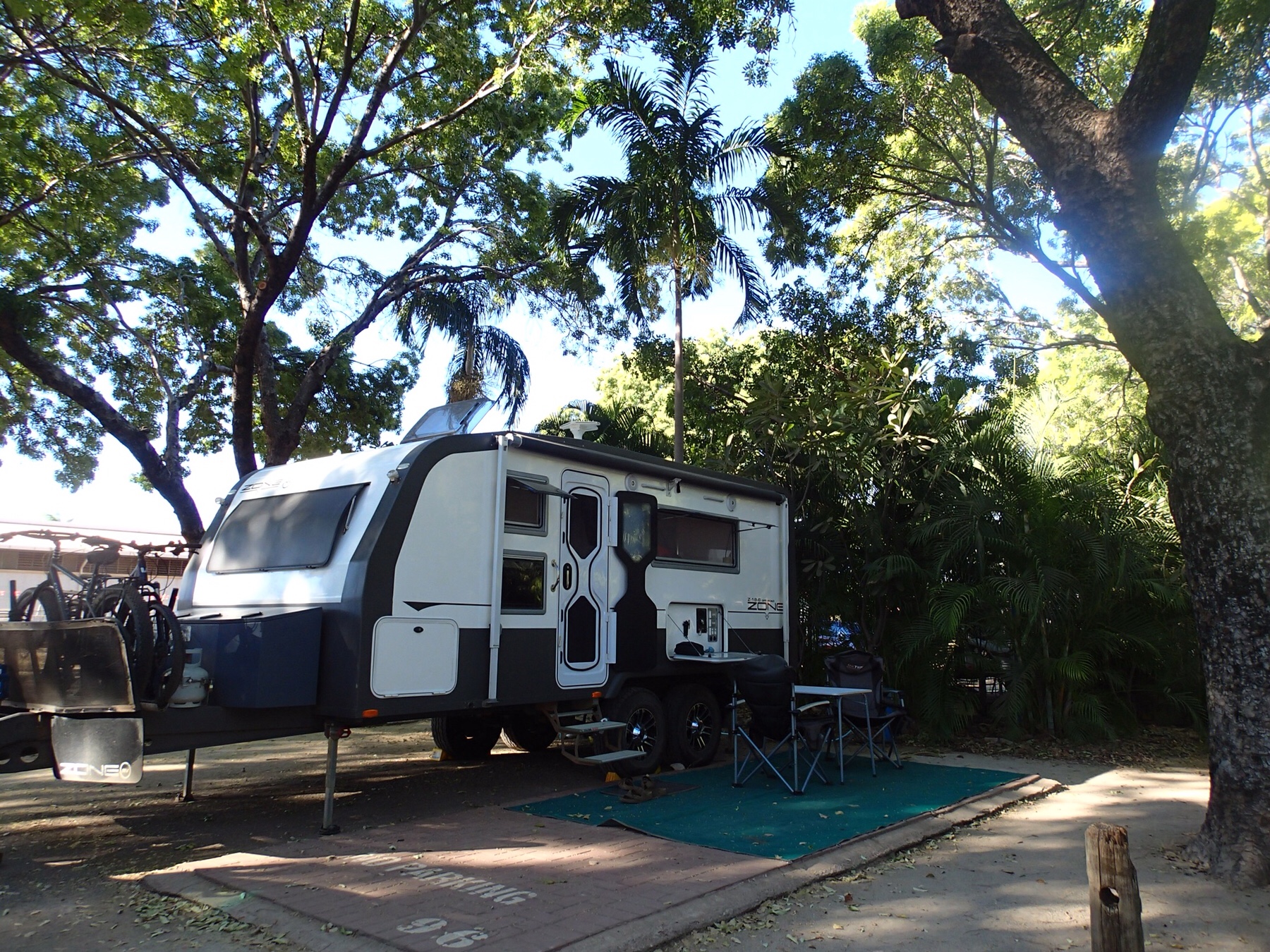 We set up under the shade of some of the tallest trees we have seen in a month, demonstrating just how much more water falls in these parts.
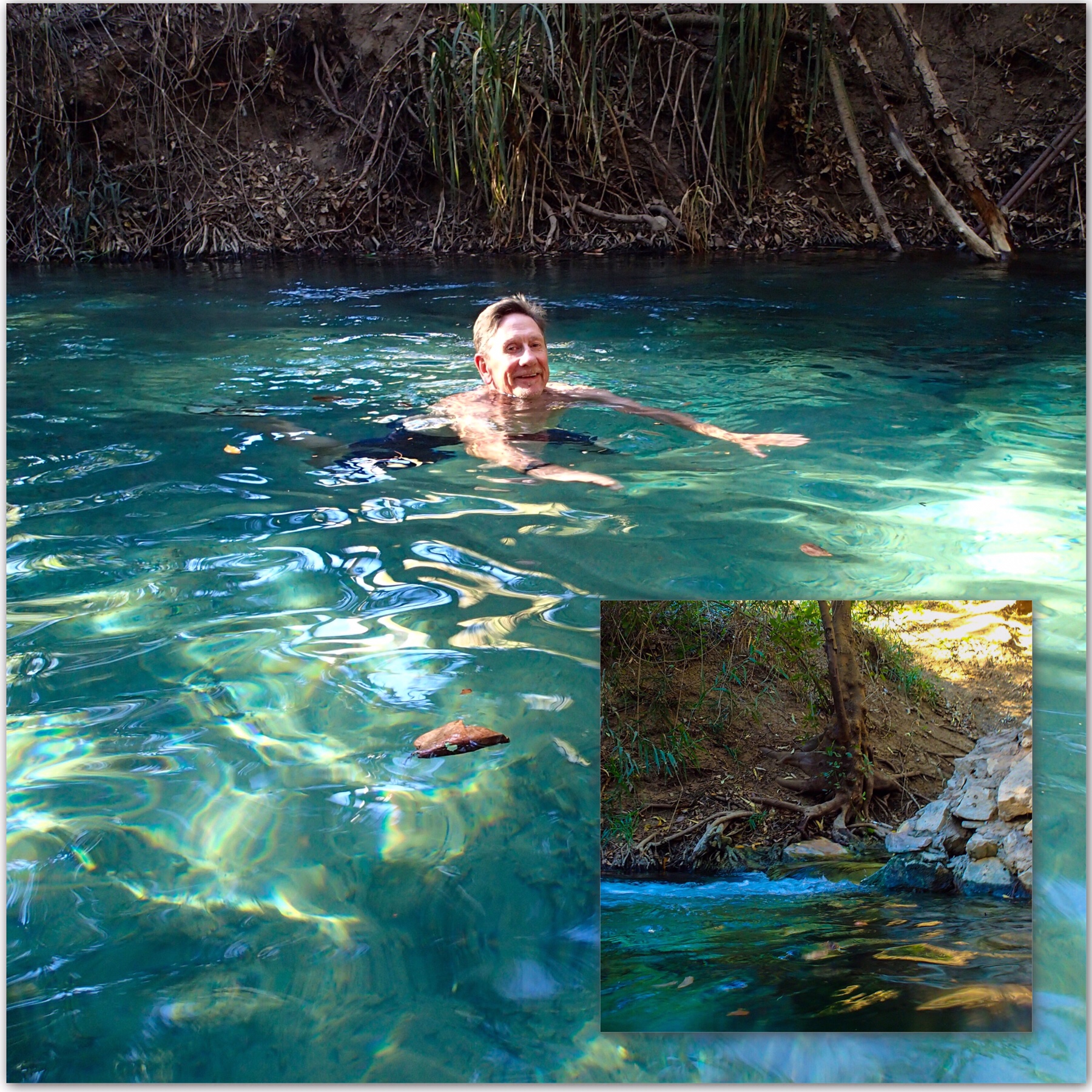 It was a small deep pool, but you could swim quite a bit due to the continuous strong current – a bit like a 33 degree centigrade swimming treadmill!
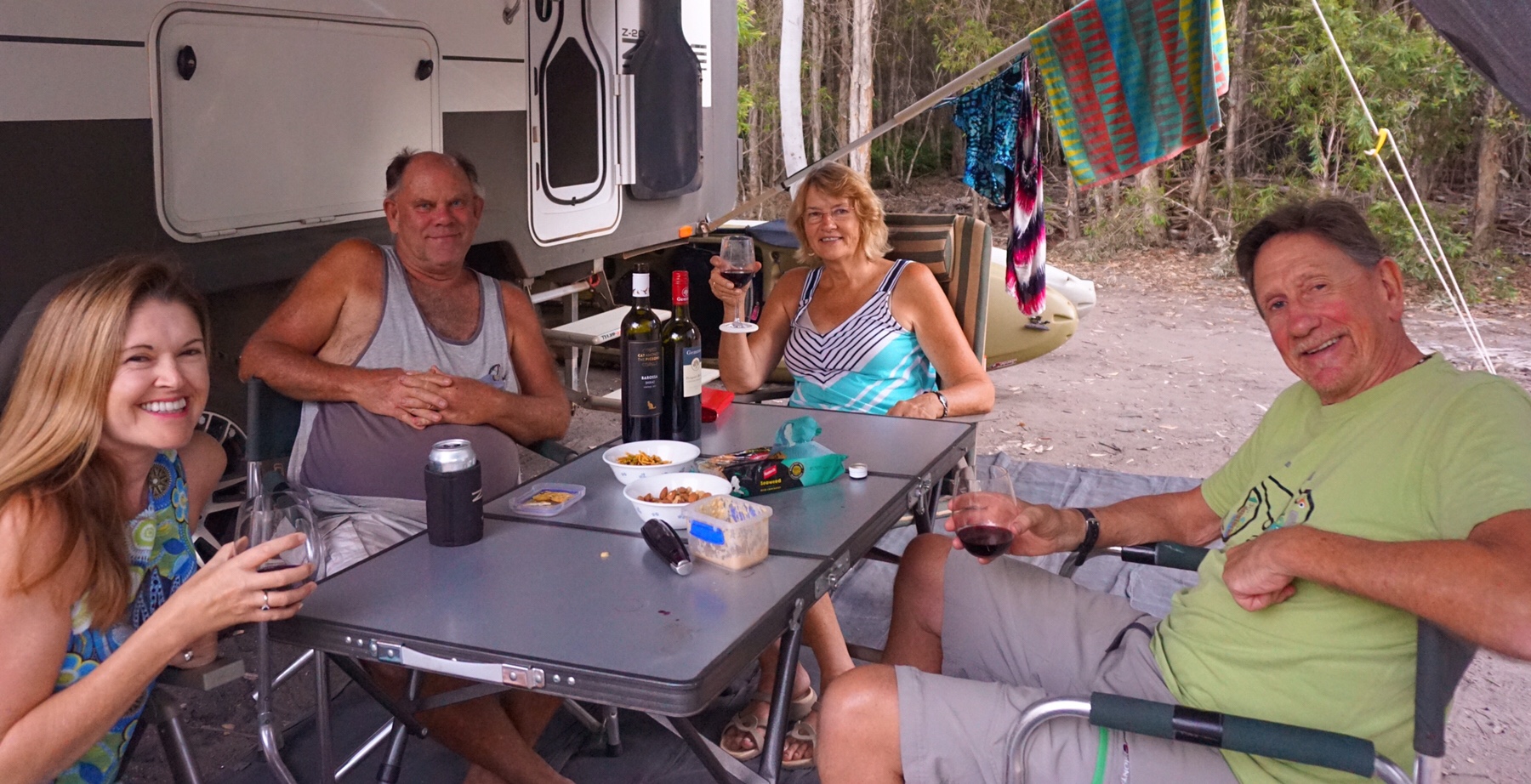
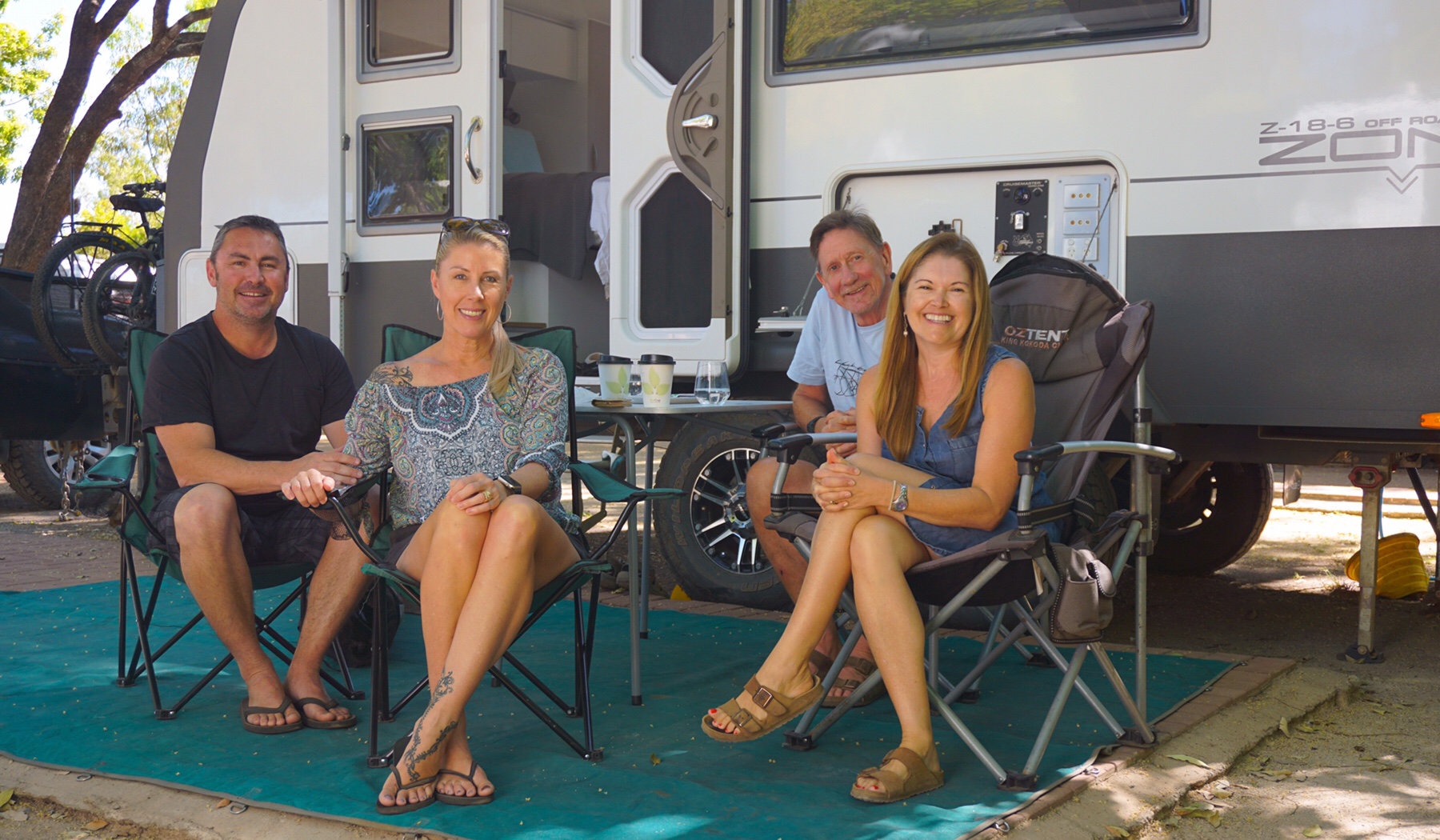 Before we knew it, three hours had passed, many stories and experiences shared and laughs had. Hopefully we will meet again on the road some day.
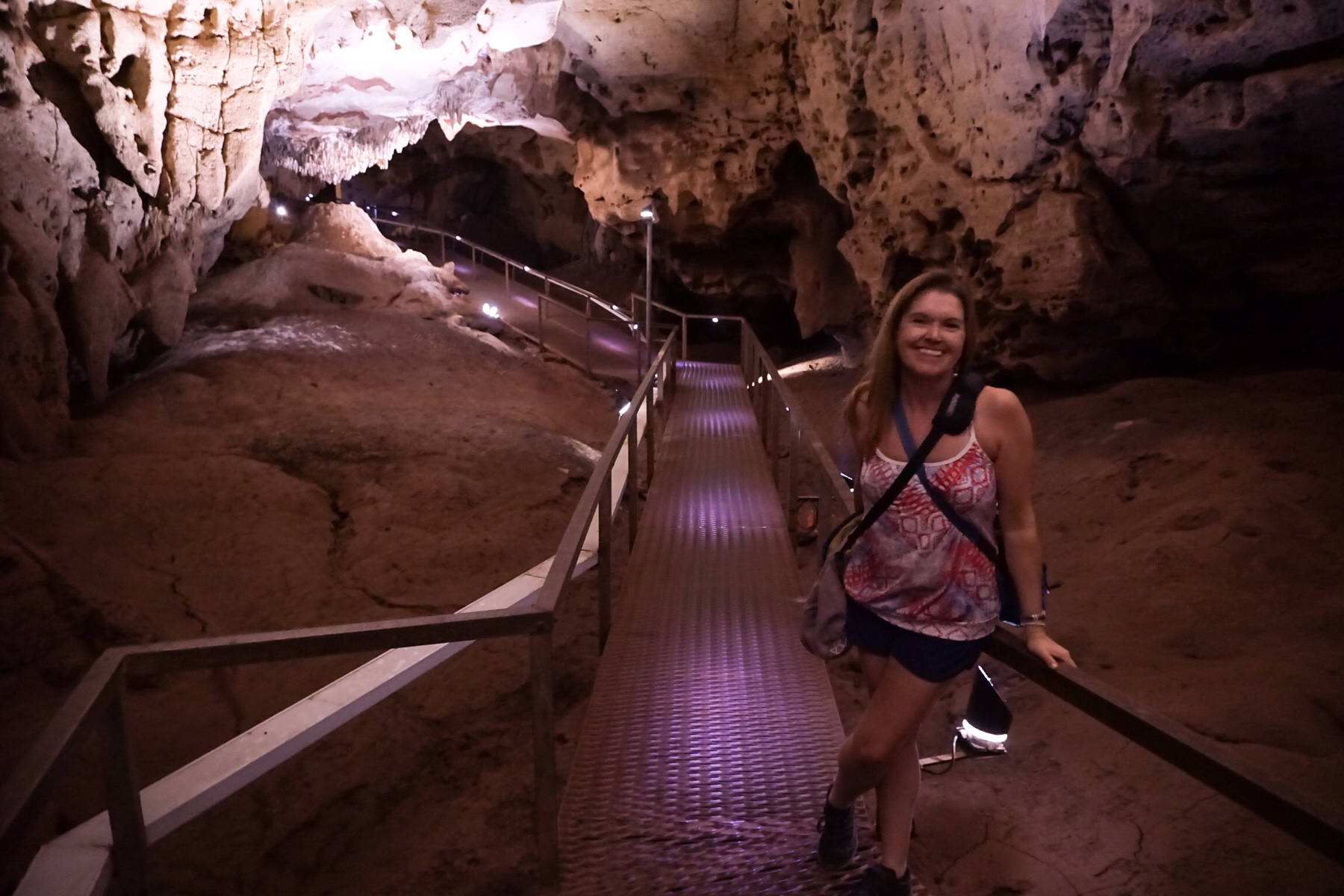 The caves have also been poorly cared for – in the early 1900s they were used for wild parties, and during World War II soldiers used the stalactites for target practice. With this preamble Mr A and I wondered what on earth we were here to see!
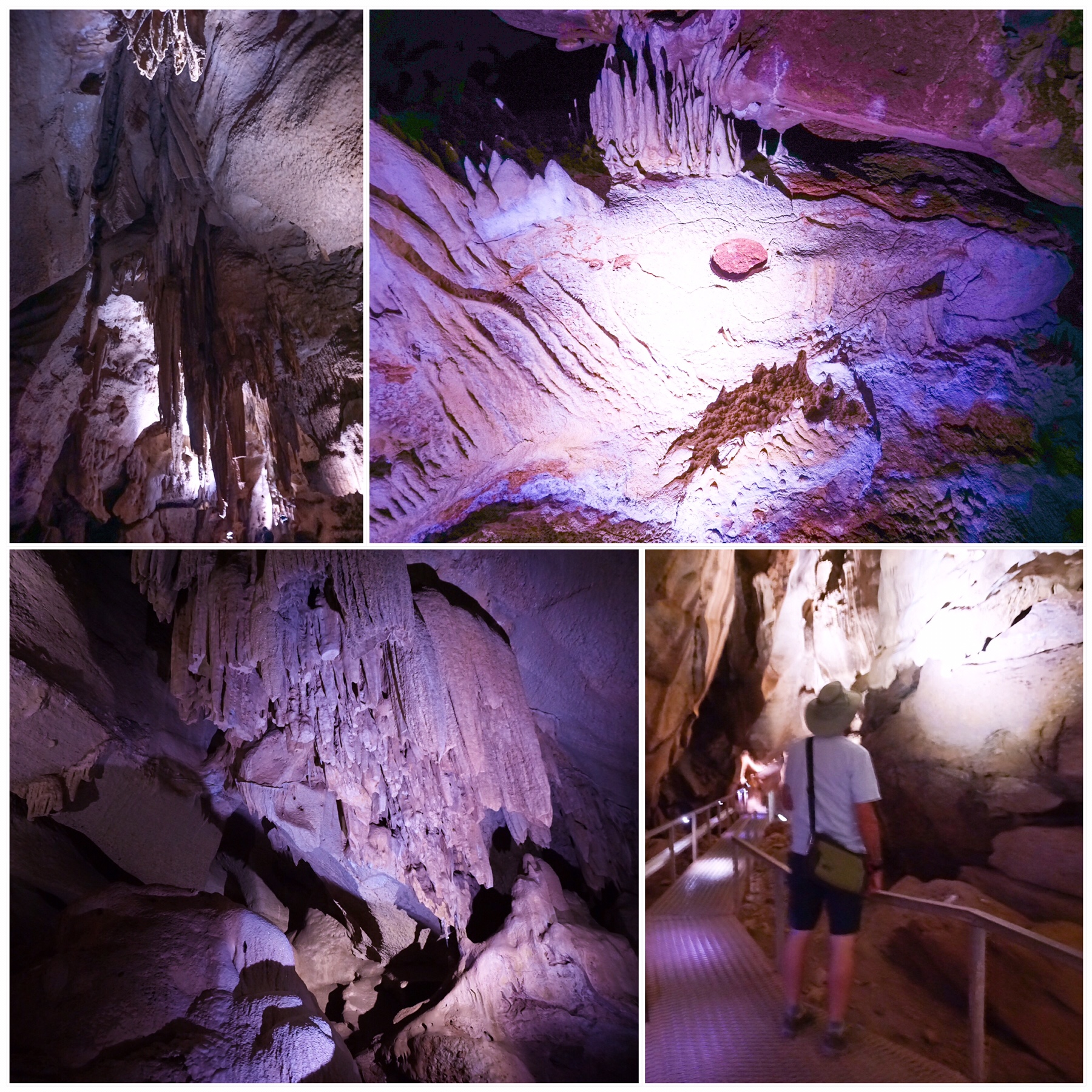 It was interesting to hear that the caves flood every wet season, and the water drains out through underground streams – ending up at the springs we swam in yesterday – funny how everything is linked!
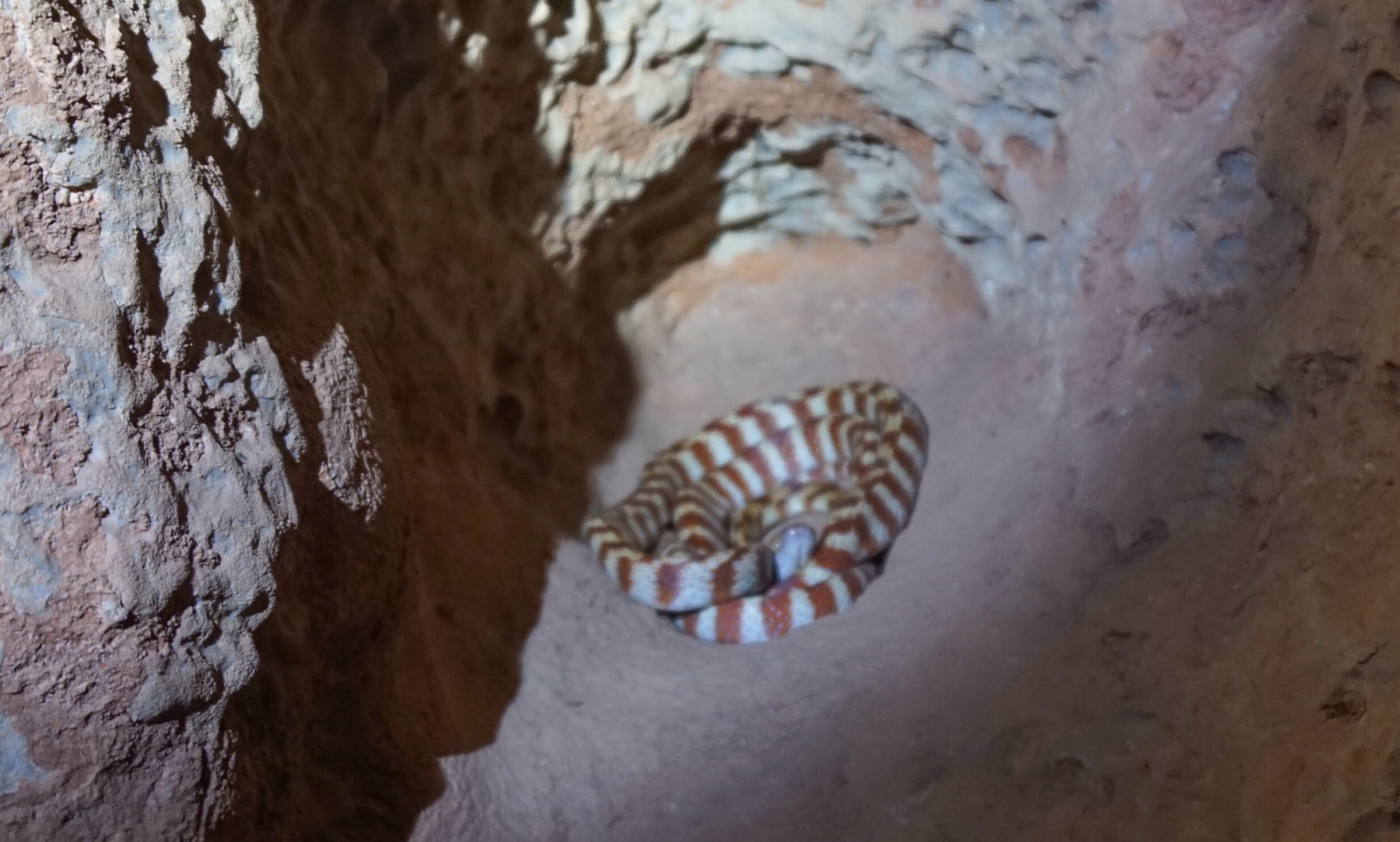 We finished our stay in Katherine with a night out at the local Chinese restaurant. There are in fact three Chinese restaurants in Katherine, but Regent Court Chinese is the one to visit. Fortunately we booked, as it was very busy, and great food.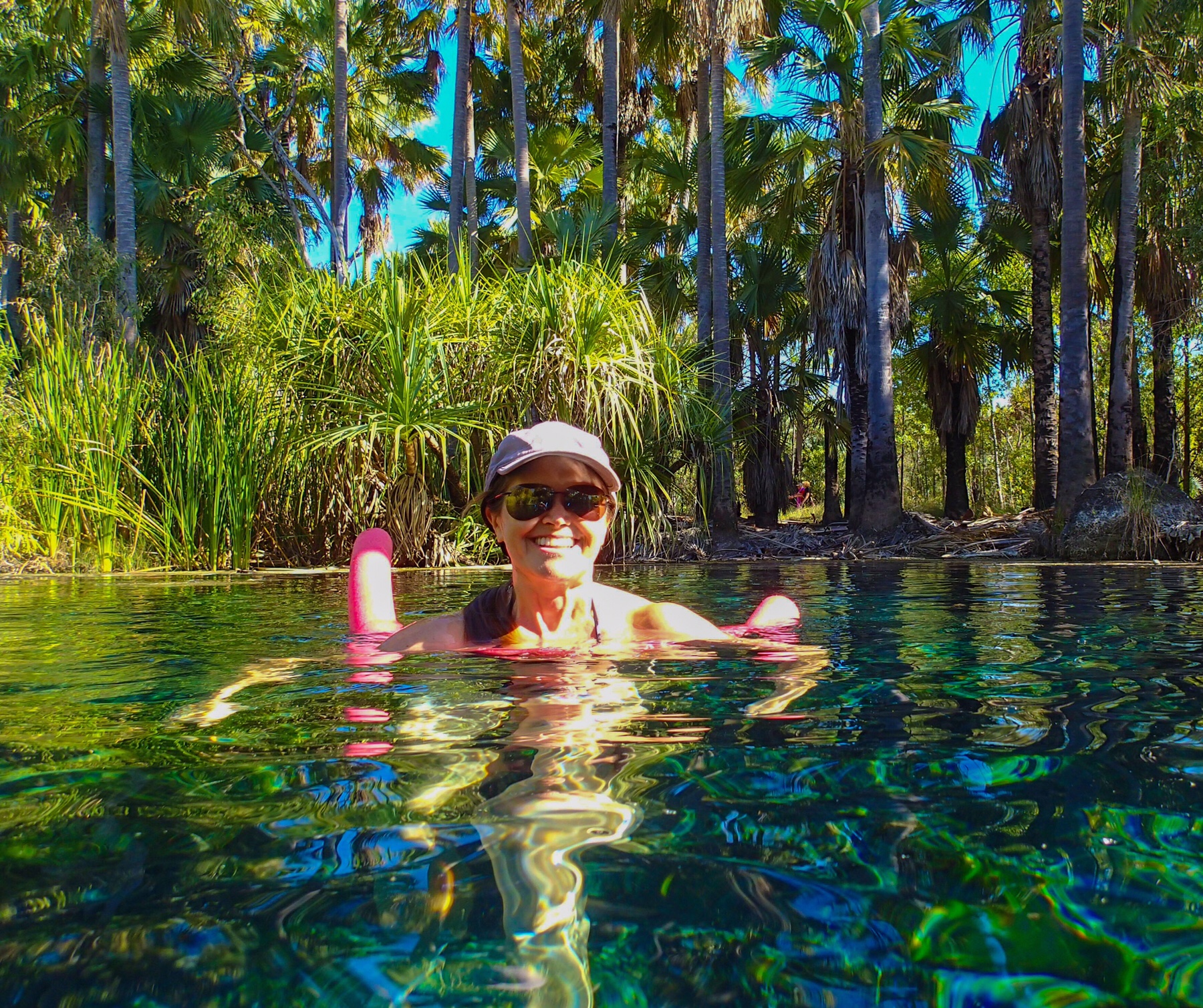
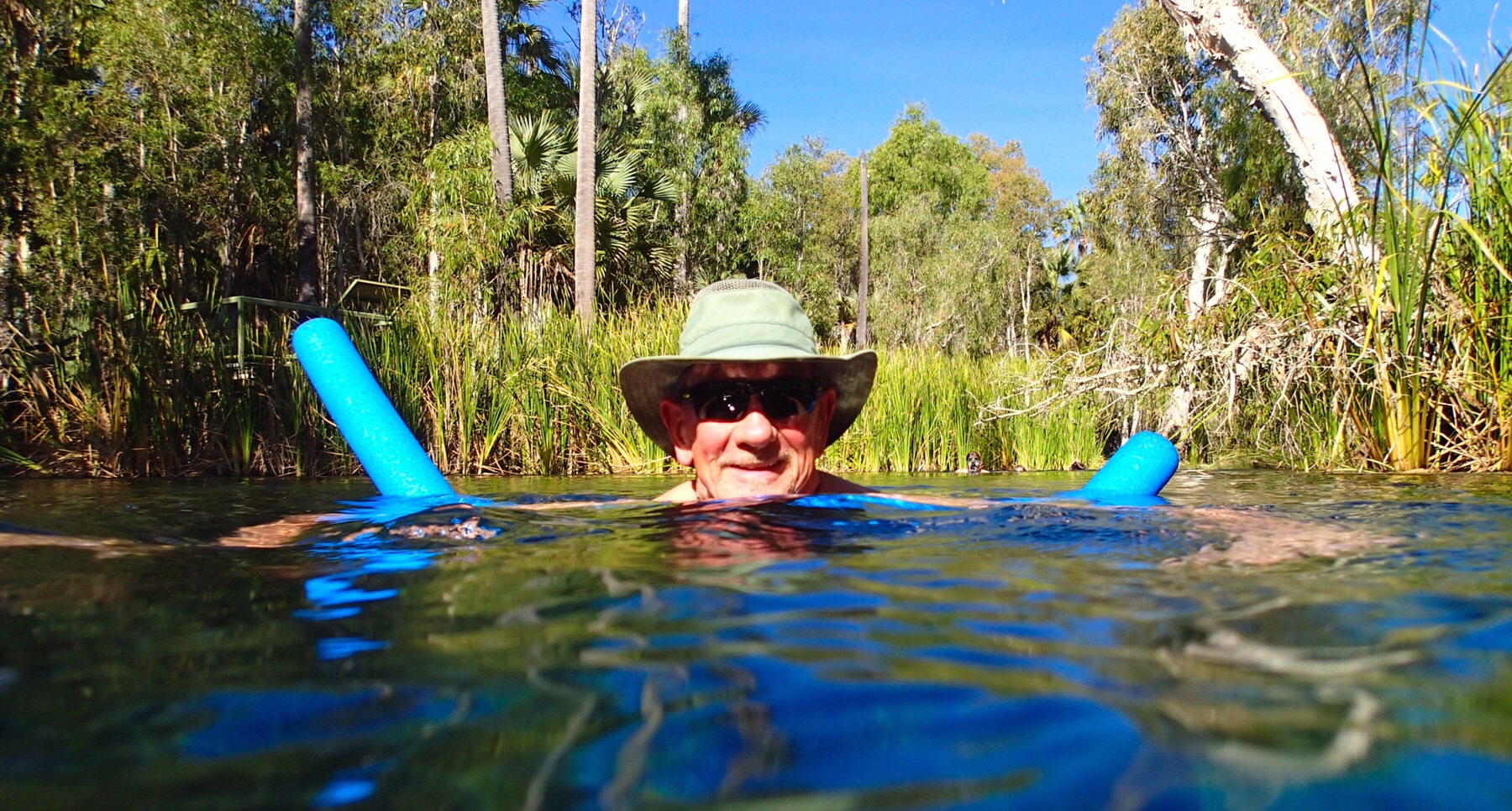 After all the heat and dust of the past few days, this was just what the doctor ordered. We swam up the warm river about 20 metres and were soon away from the crowds and had a lagoon all to ourselves. Just bliss. This has to be a stop over if you’re heading this way.
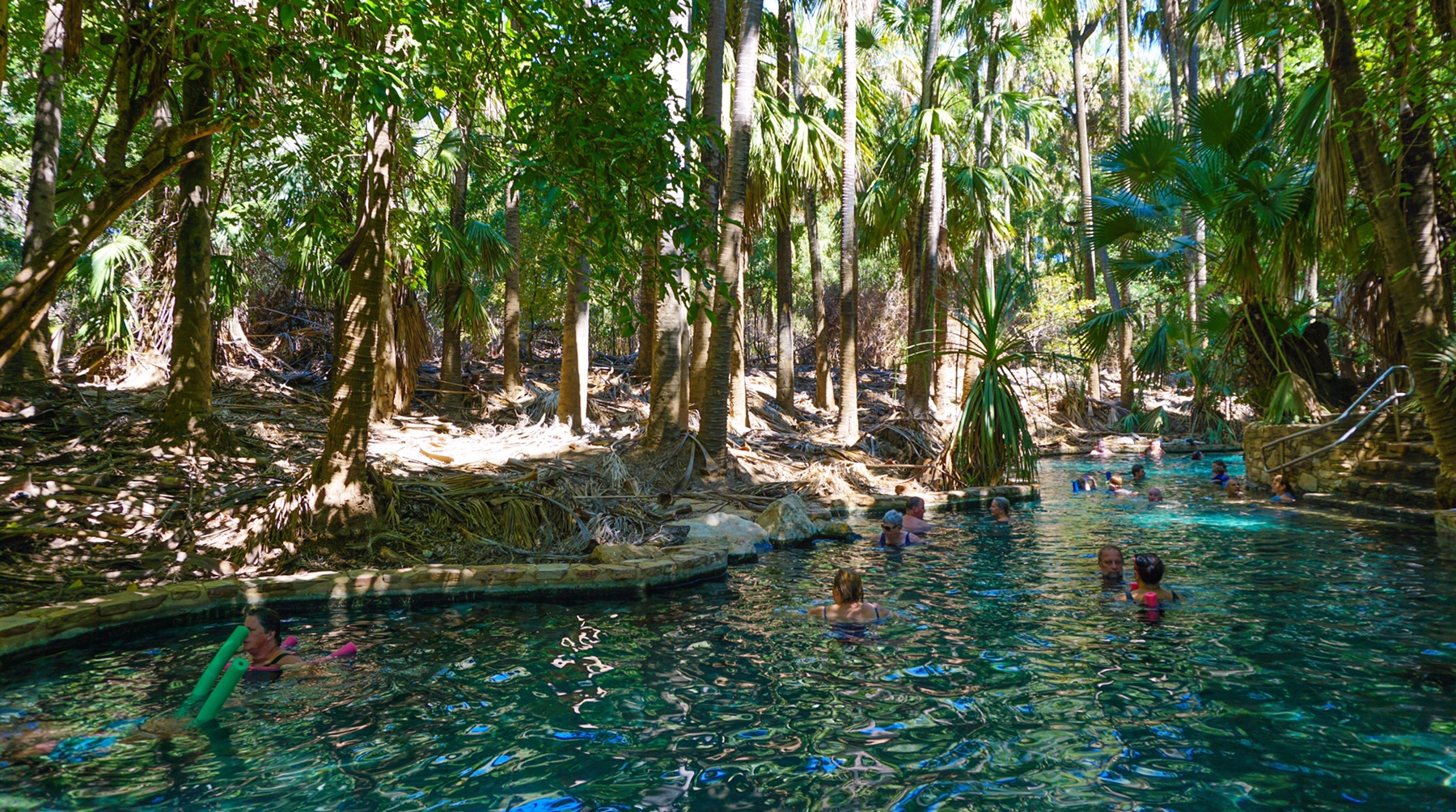 We did a short walk along the river before returning to Bitter Springs for a dip in the serenity.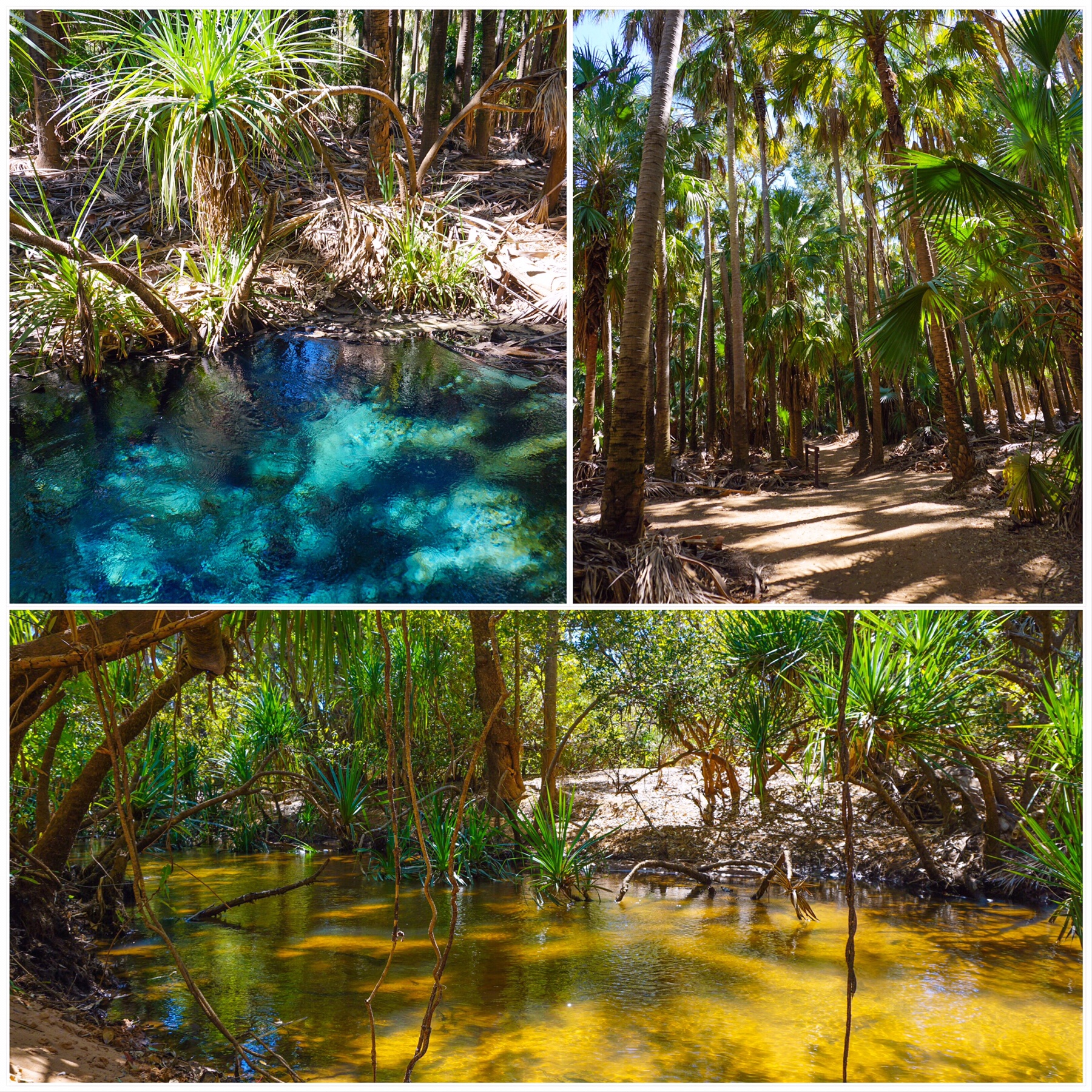
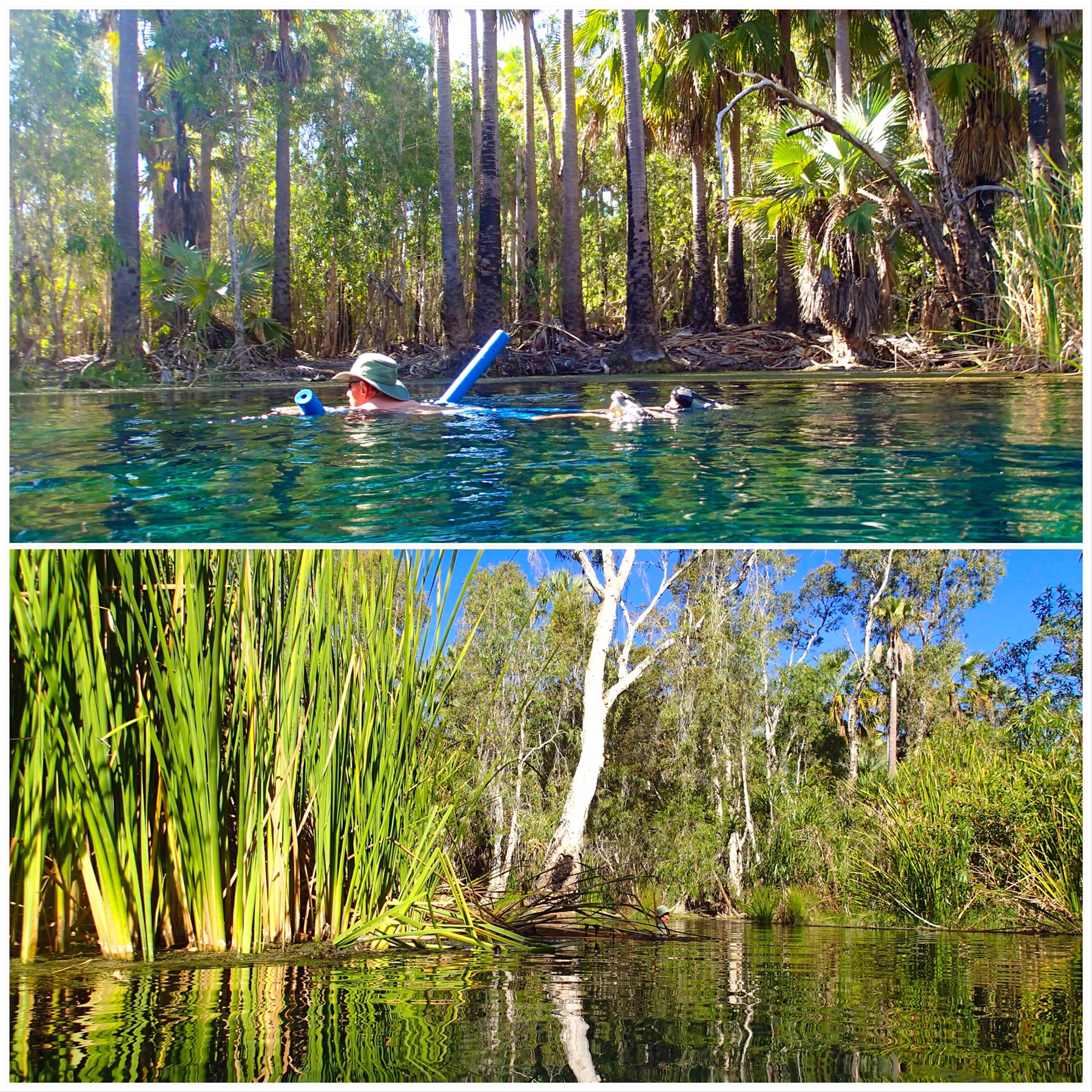 Top tips for visiting Bitter Springs (Stay at Bitter Springs Caravan and Camping):