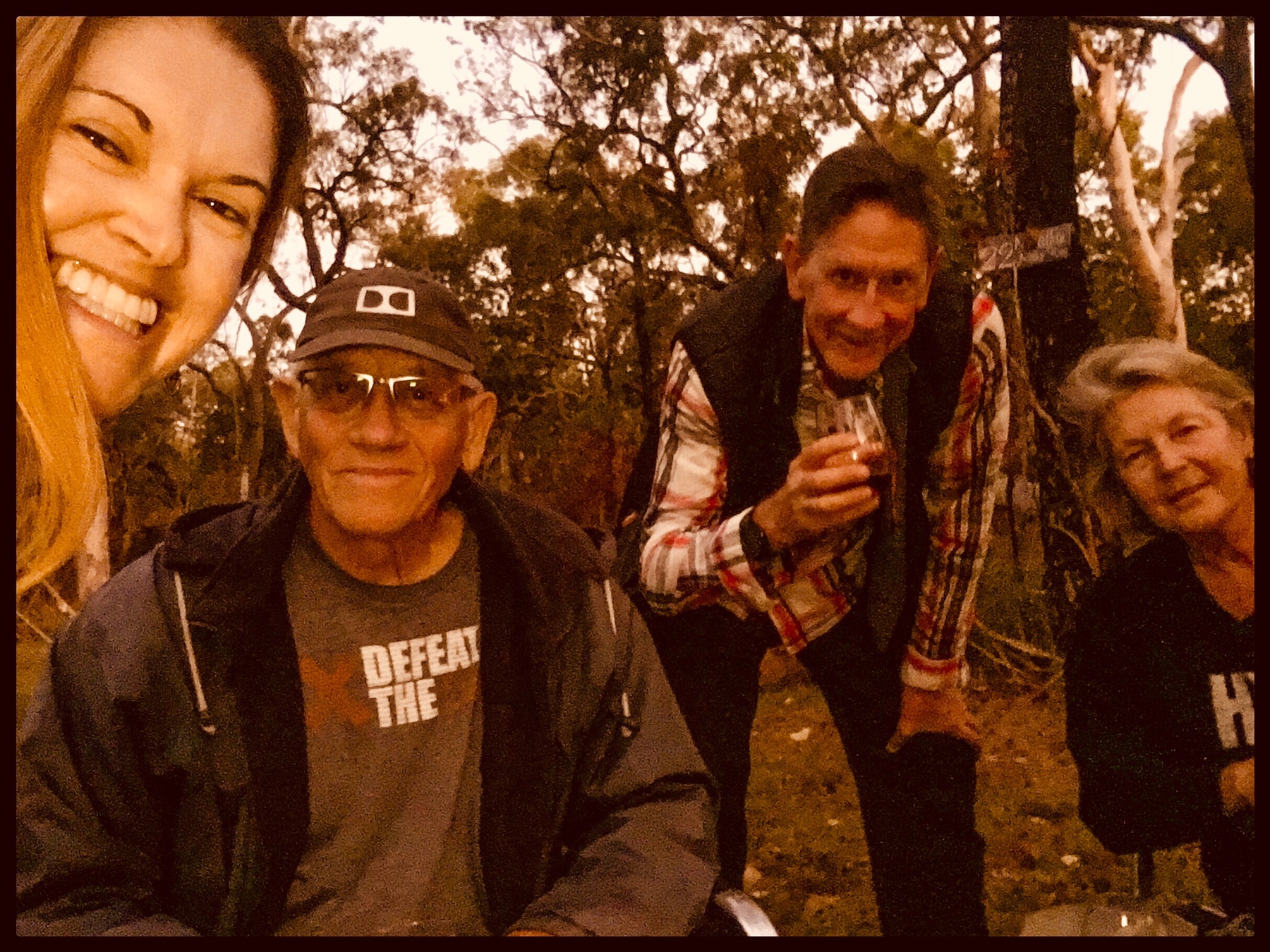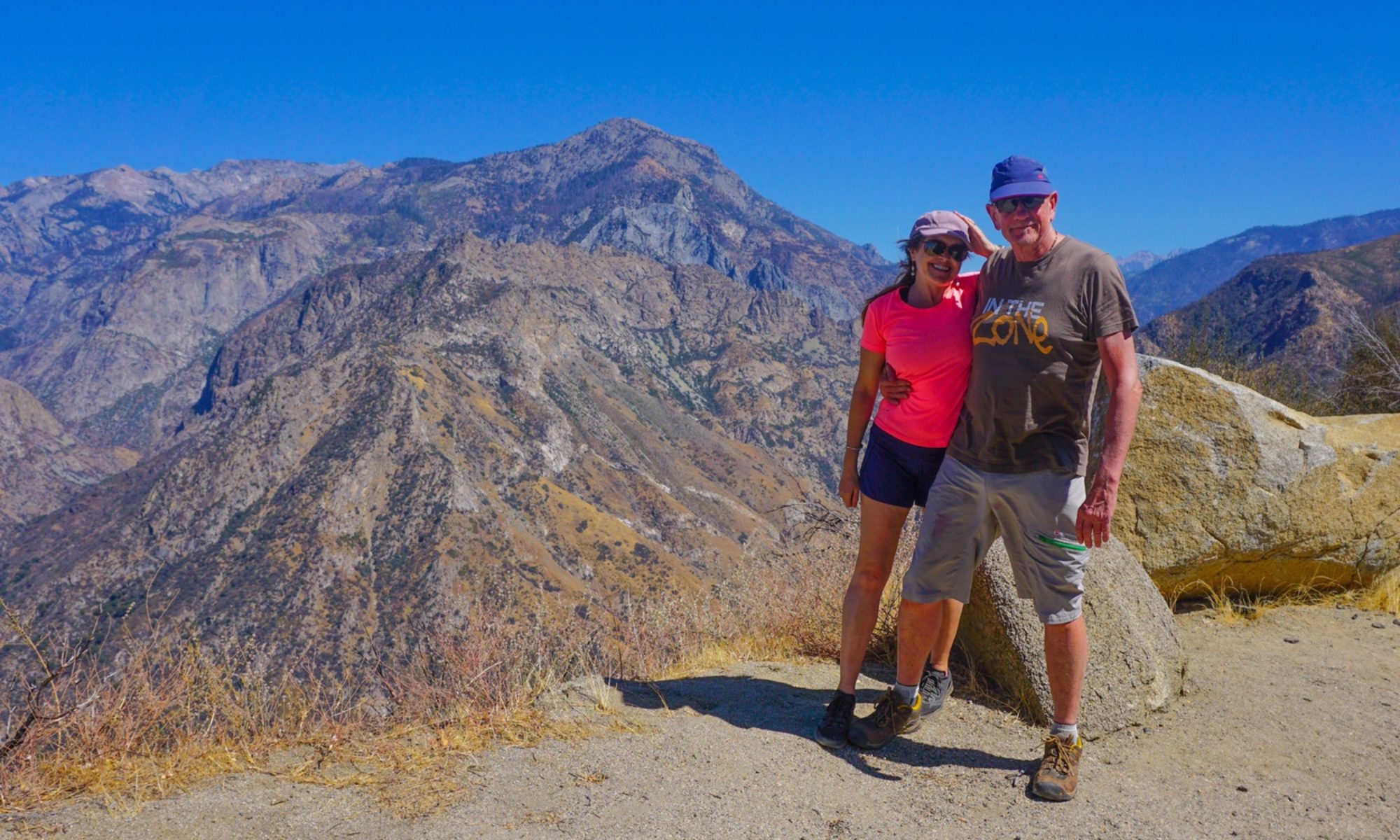
Author: Mrs A
Thursday – location: Cobbold Gorge
It was a morning of frenzied phone calls, with Mark hiking up and down to the reception to get a bar of phone signal to call family and friends in the UK as well as chase up the replacement parts for the caravan.
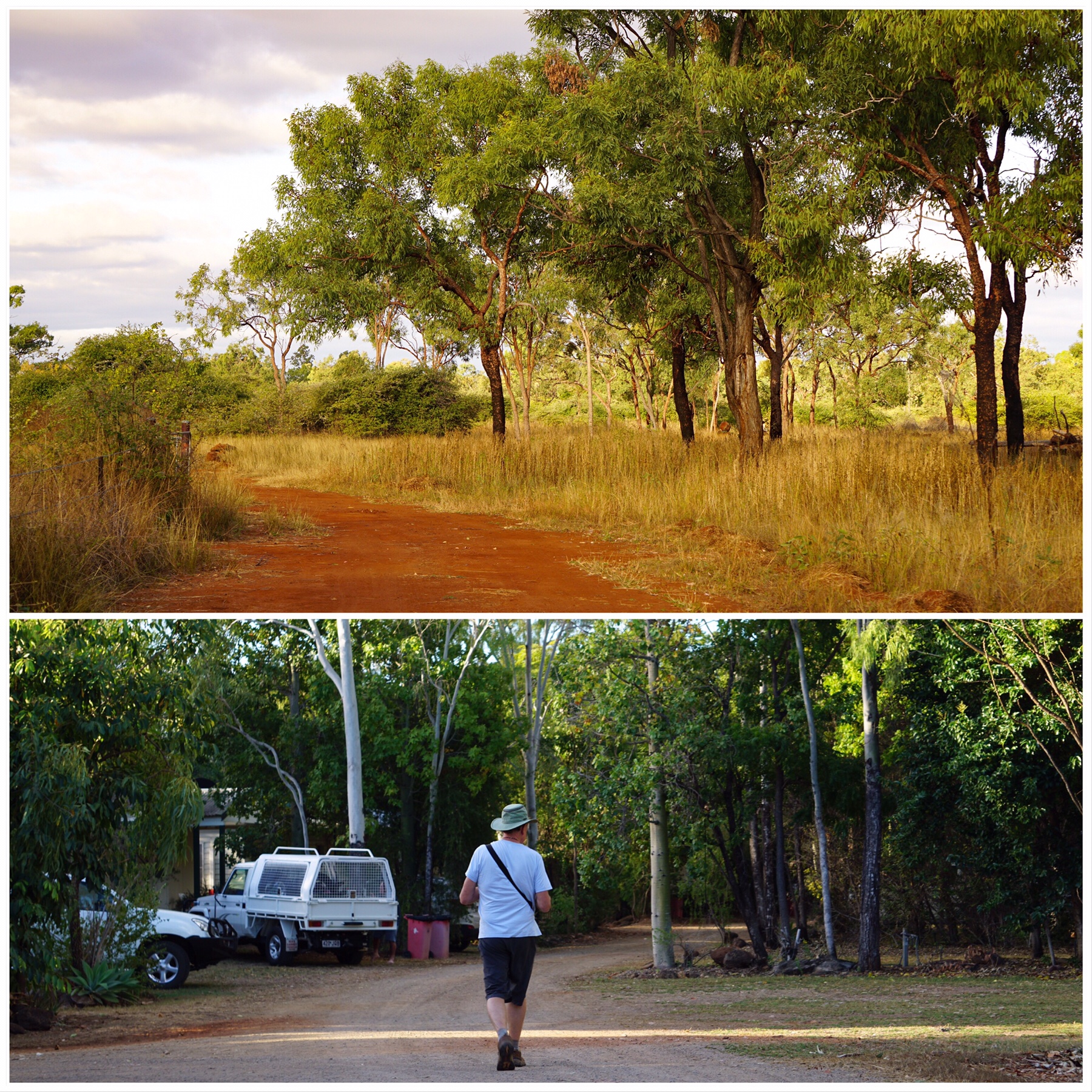
By early afternoon we were in need of a break and went for a stroll around the property. It’s all very beautiful in that raw, dry outback way – the yellow dried grasses and the dusty creek beds, with only the green leaves on the melaleuca trees giving away any clues to the water deep beneath.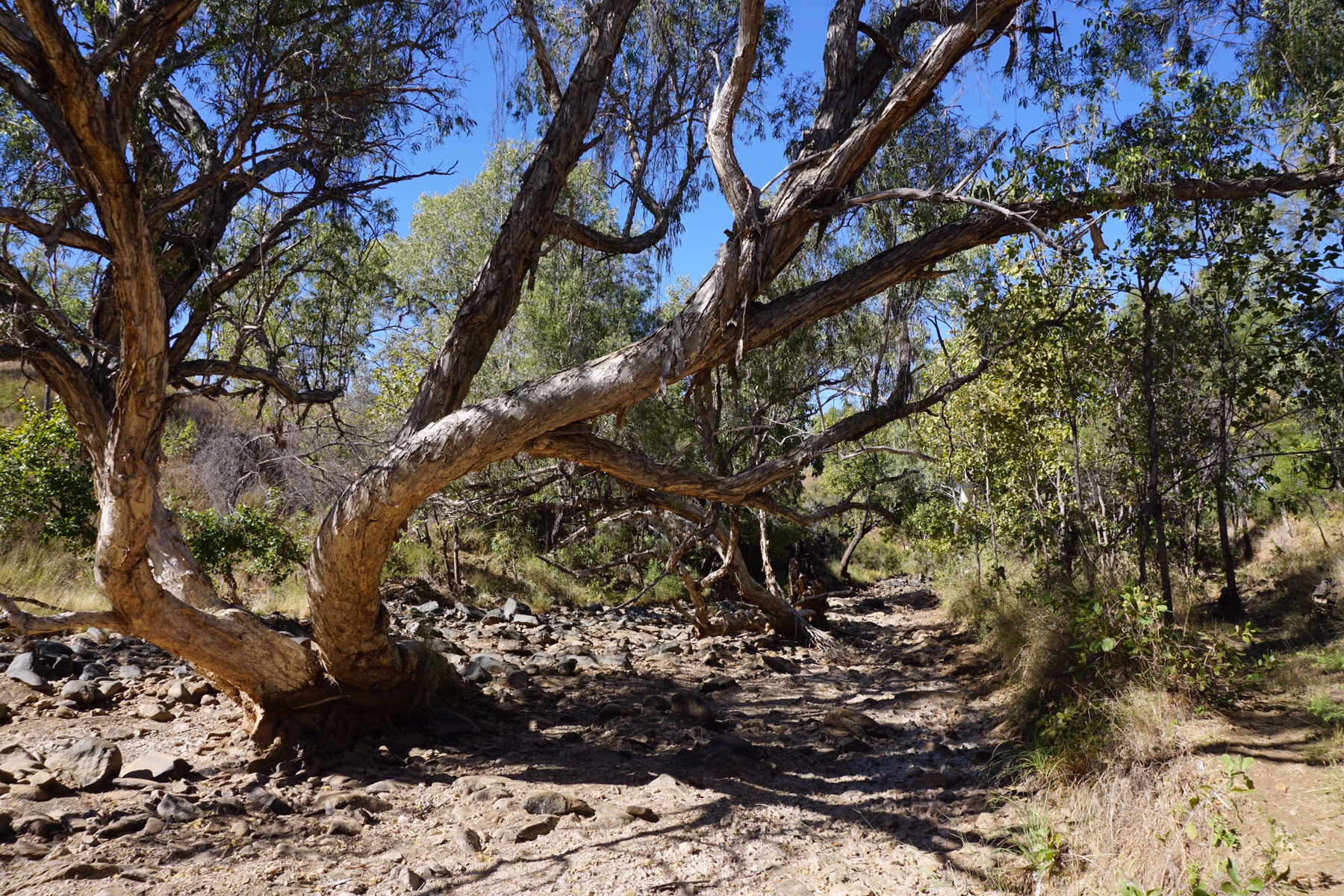 As the day drew to a close we chatted to our neighbours, a lovely family from Broome. They very kindly gave us a strap to help tie up our suspension to counteract the impact of lack of shocks. Mick (the tour guide from yesterday’s gorge trip) came down and used his mechanic’s experience to ensure we were sufficiently strapped to the right spots to enable us to limp out tomorrow.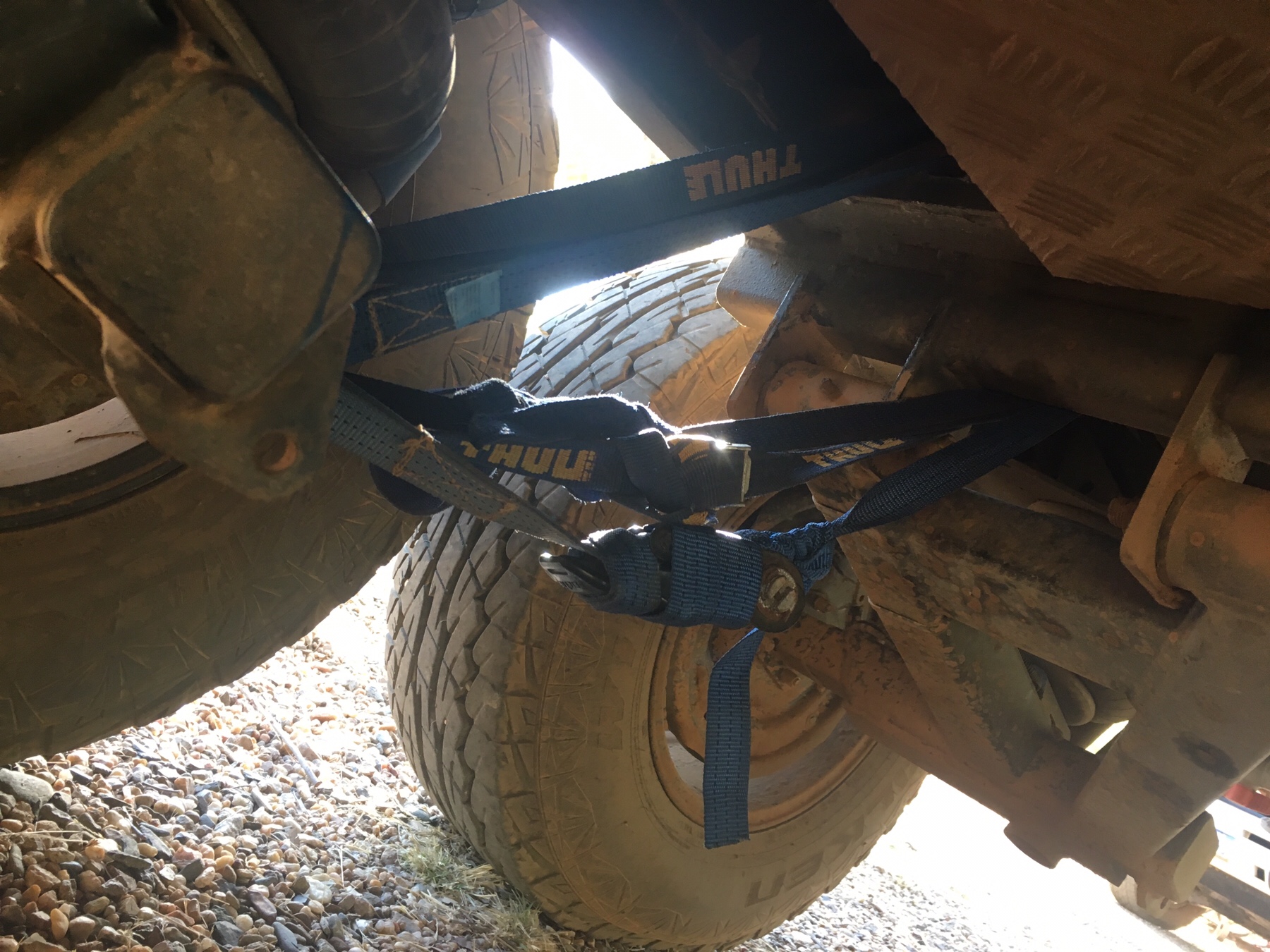
Friday – Location: Cobbold Gorge to Georgetown
It was only a 90km drive, but travelling at an average of 30km/hr and walking pace through any dry creek crossings it was very slow going. We arrived at Georgetown’s Ampol Roadhouse shortly after midday, established that no parts had been delivered, and then drove anxiously to Bushy’s mechanic shop. There we found (with some relief) the shocks had been delivered but disappointingly, no brackets.
Several phone calls later we discovered that although the package got delivered to Cairns in good time to get on board the truck to Georgetown, for some reason it failed to make it. The next truck doesn’t leave until Monday morning, arriving some time late that evening (we hope!).
We resigned ourselves to abandoning our plans and staying in town for the next four days, booked Bushy to do our repairs early on Tuesday morning, and checked into the Goldfields Van Park.
Georgetown is a small town (village?) originally settled in 1869 following the discovery of gold nearby. There are currently around 270 residents here, though at any one time we have only seen a maximum of about 10. The streets are wide and empty. Prior to the arrival of Europeans the area was home to the Agwamin Aboriginal people.
After several important calls to the UK, Mark and I jumped on our bikes for an explore. We found the golf club, the cemetery (with graves dating back to 1877, deaths from influenza amongst others) and the large winding dry river. Back into the town centre we found the local butcher and purchased some bacon and sausages.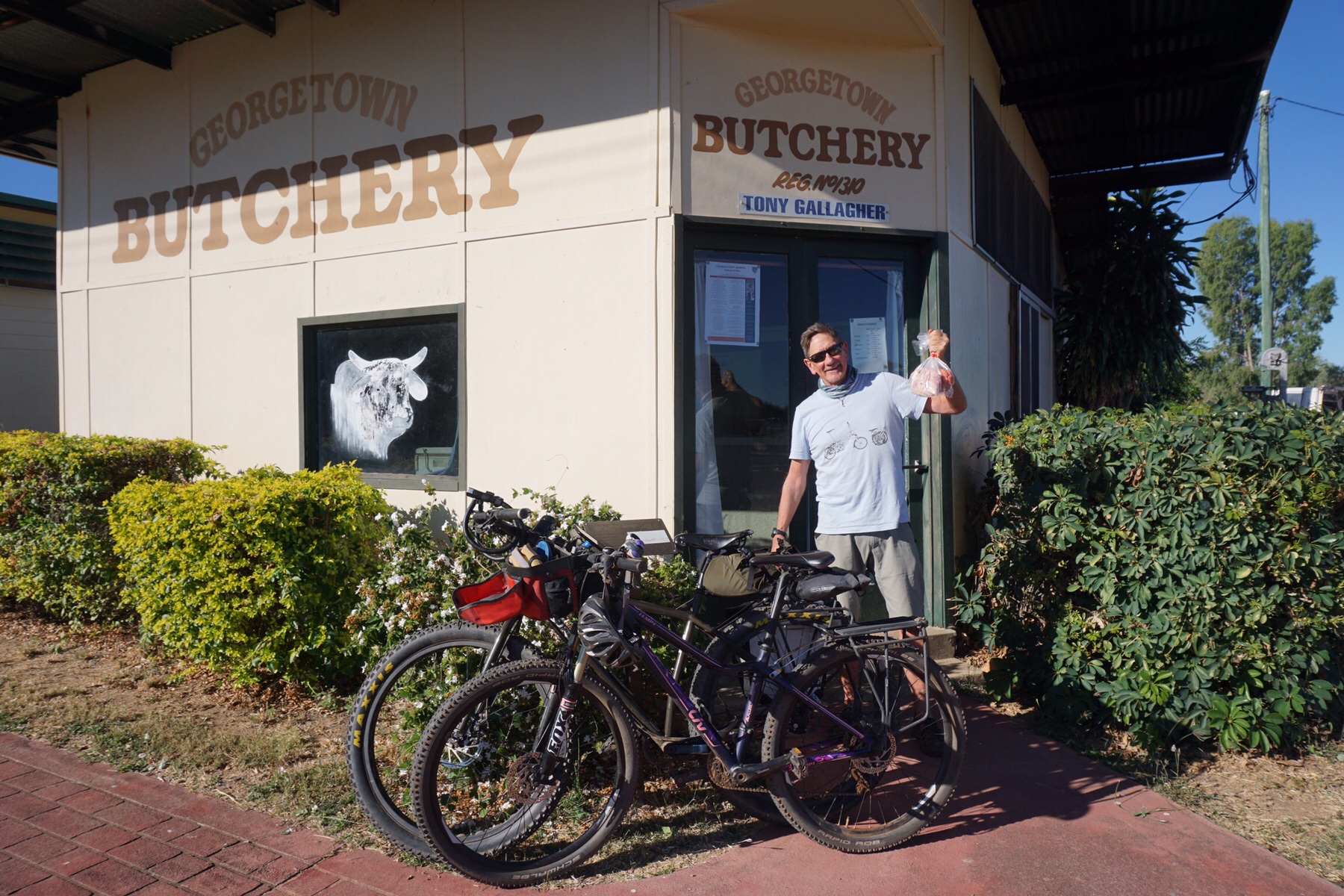 From there we called into the local pub The ‘Wenaru’ Hotel…as in “‘When are you’ going to finish building it?” Apparently.
The beverage choice was fairly limited, with no cool climate reds or crisp refreshing whites that took my fancy, so we opted for as safe a choice as possible under the circumstances. Of course the barmaid was Irish.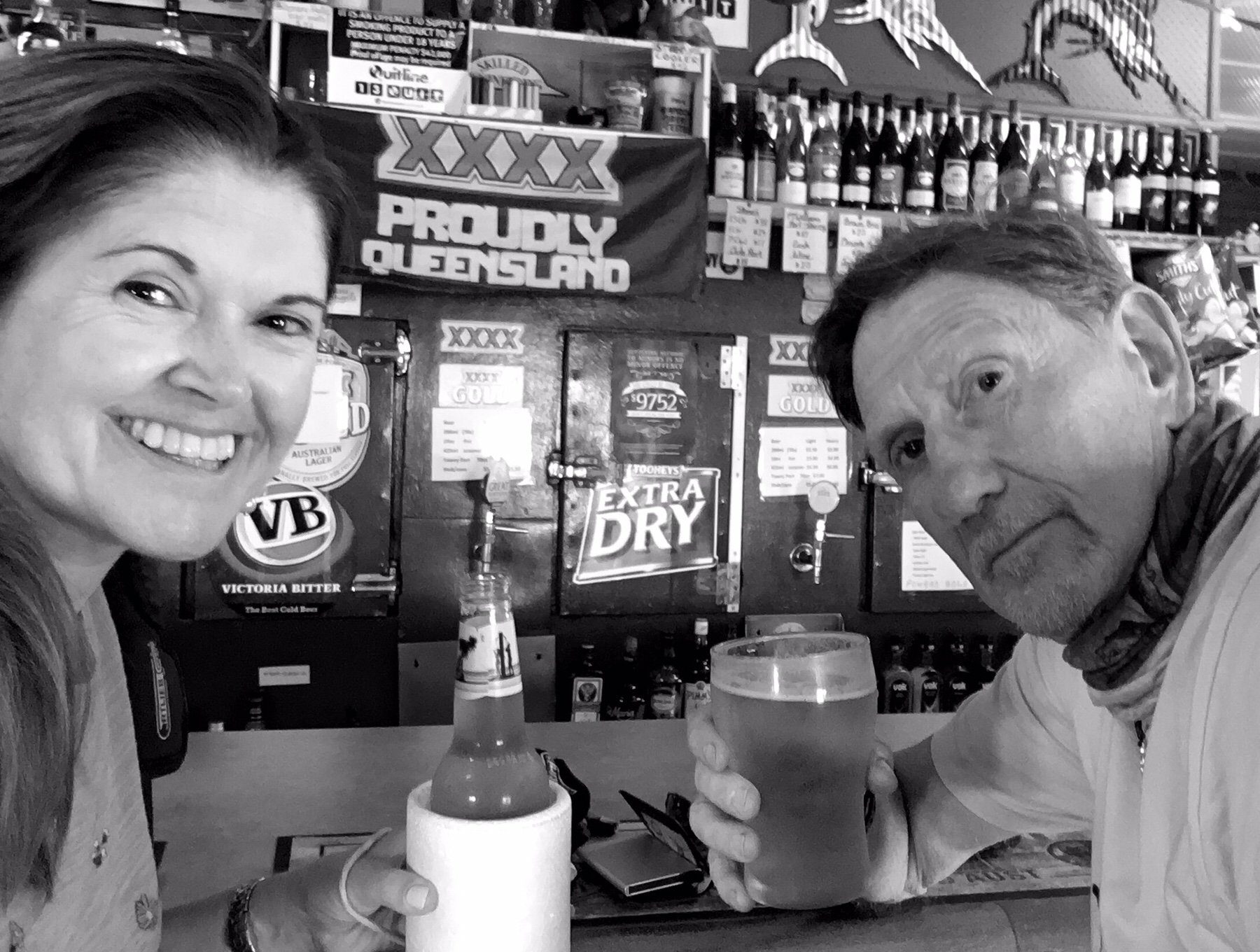 The 30 degree day cooled to a 13 degree night and we slept well.
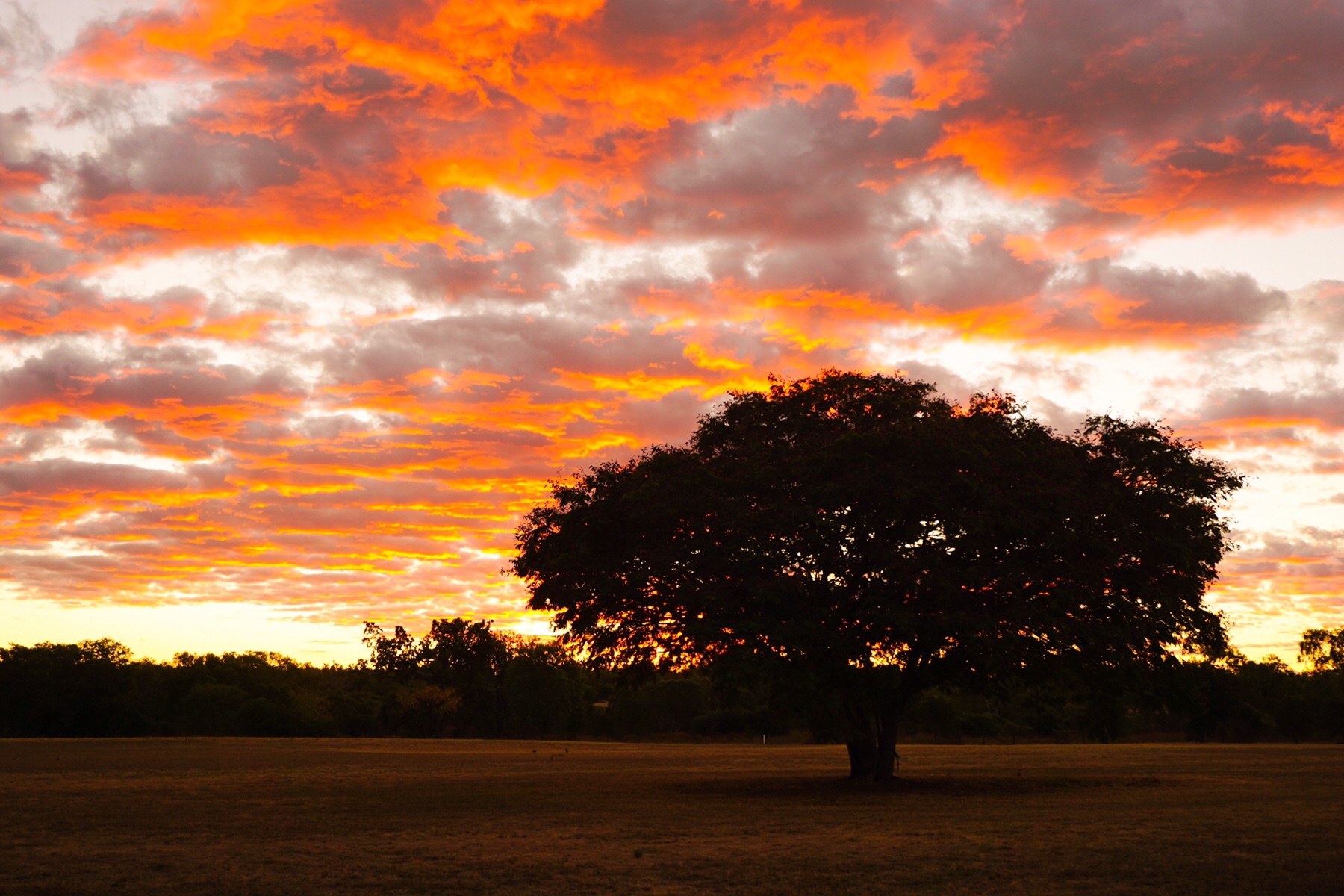
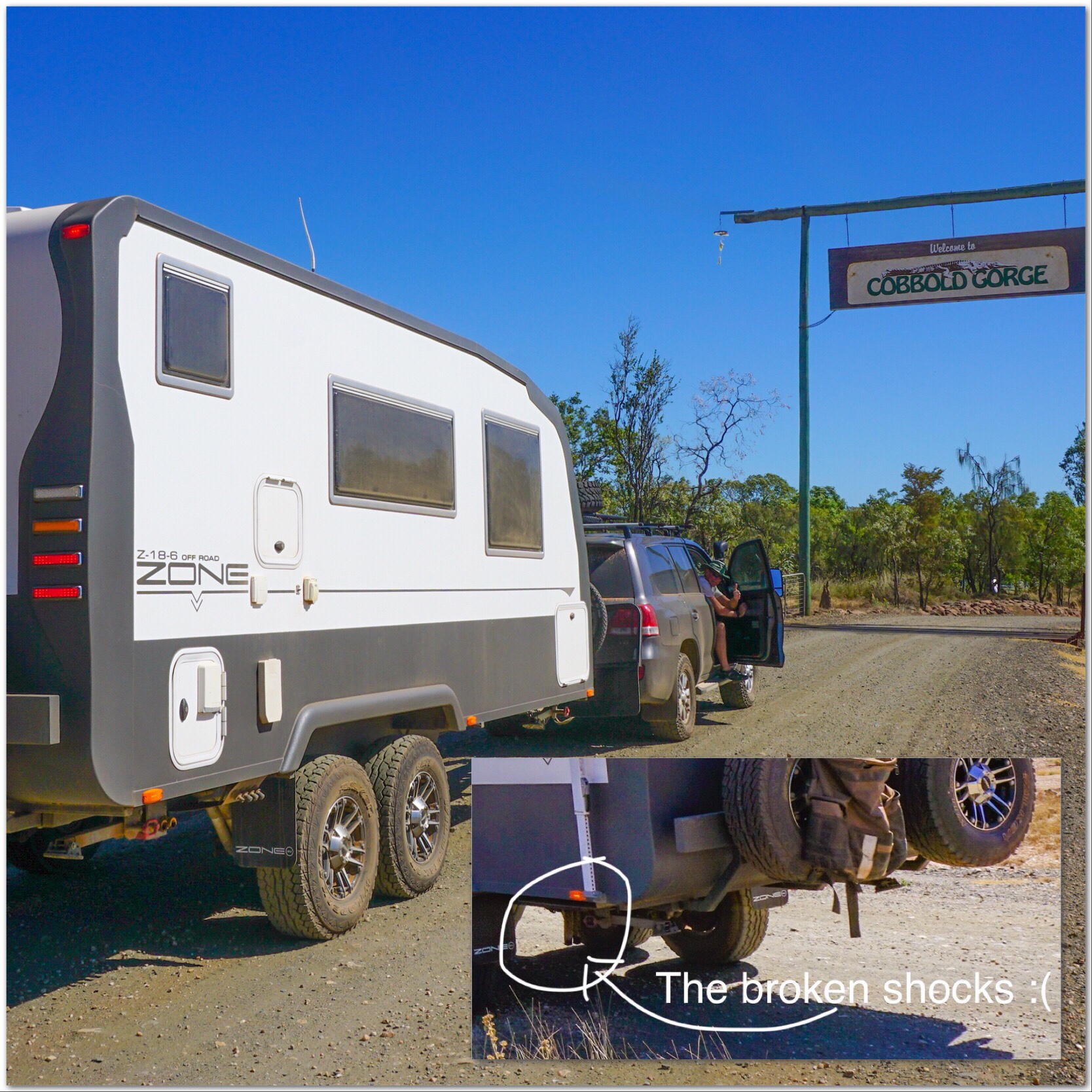 I then spent a very stressful afternoon trying to figure out with Zone and their suspension supplier (both who were super helpful) what had gone wrong and how we would get it fixed in this remote location.
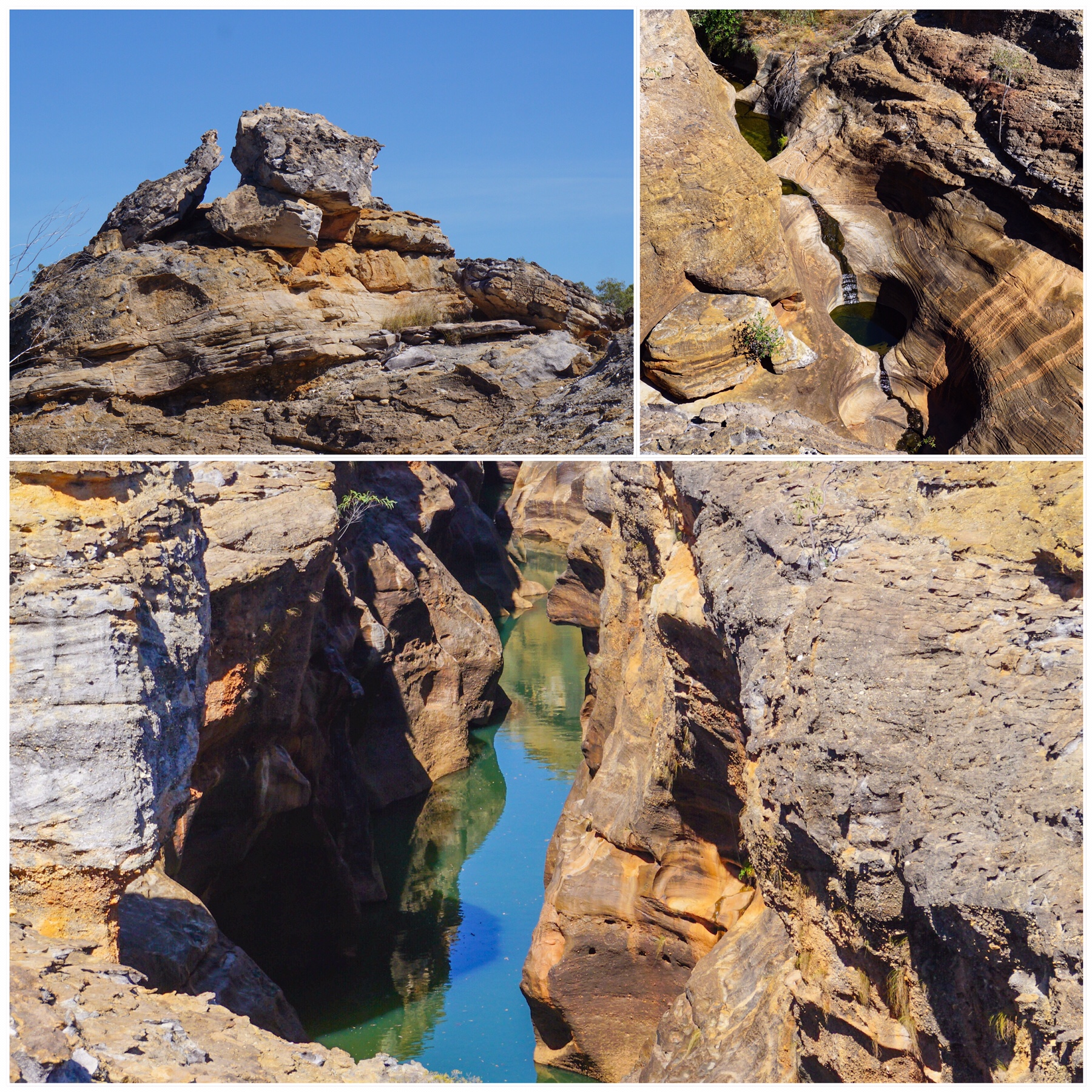
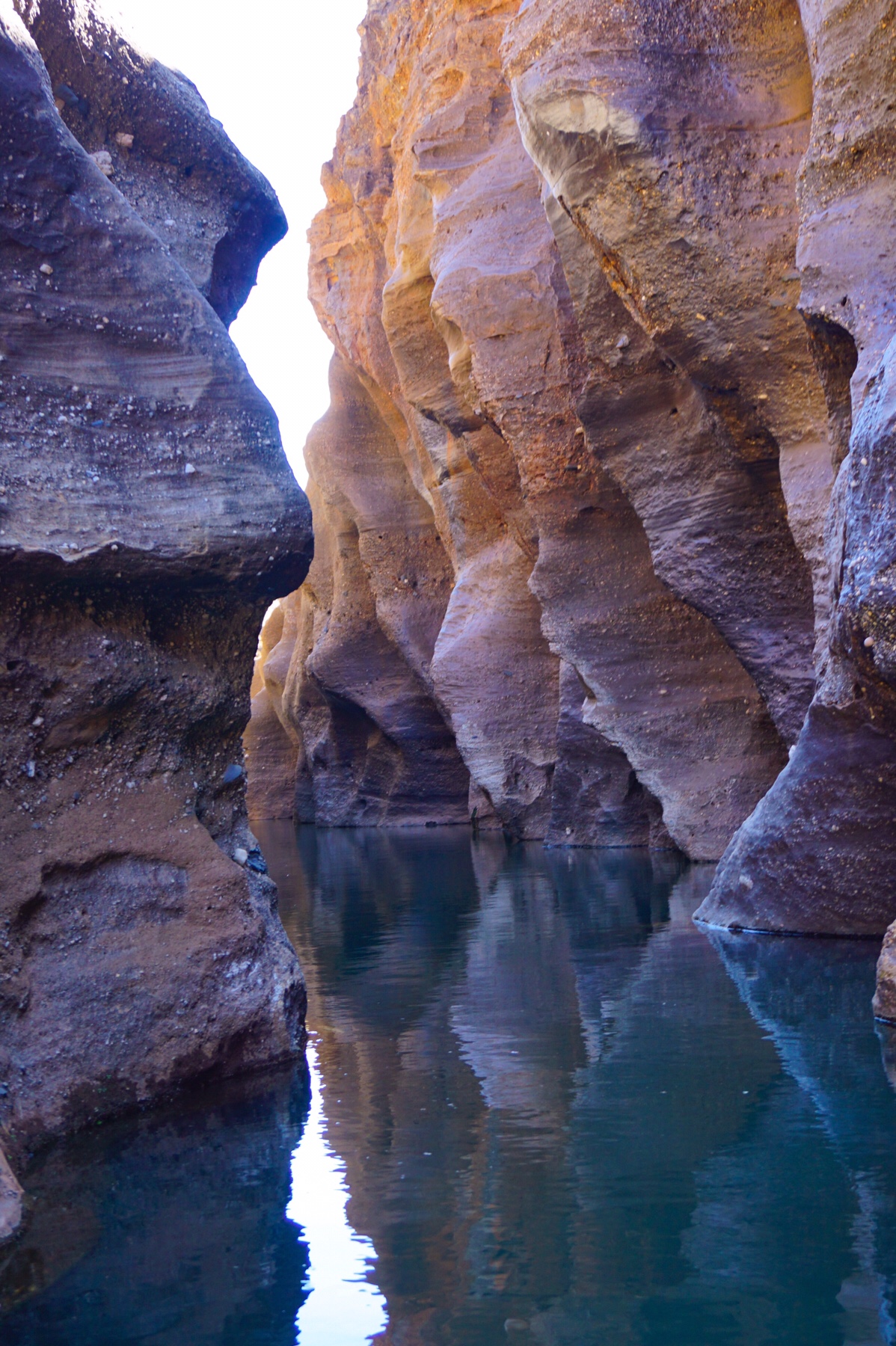
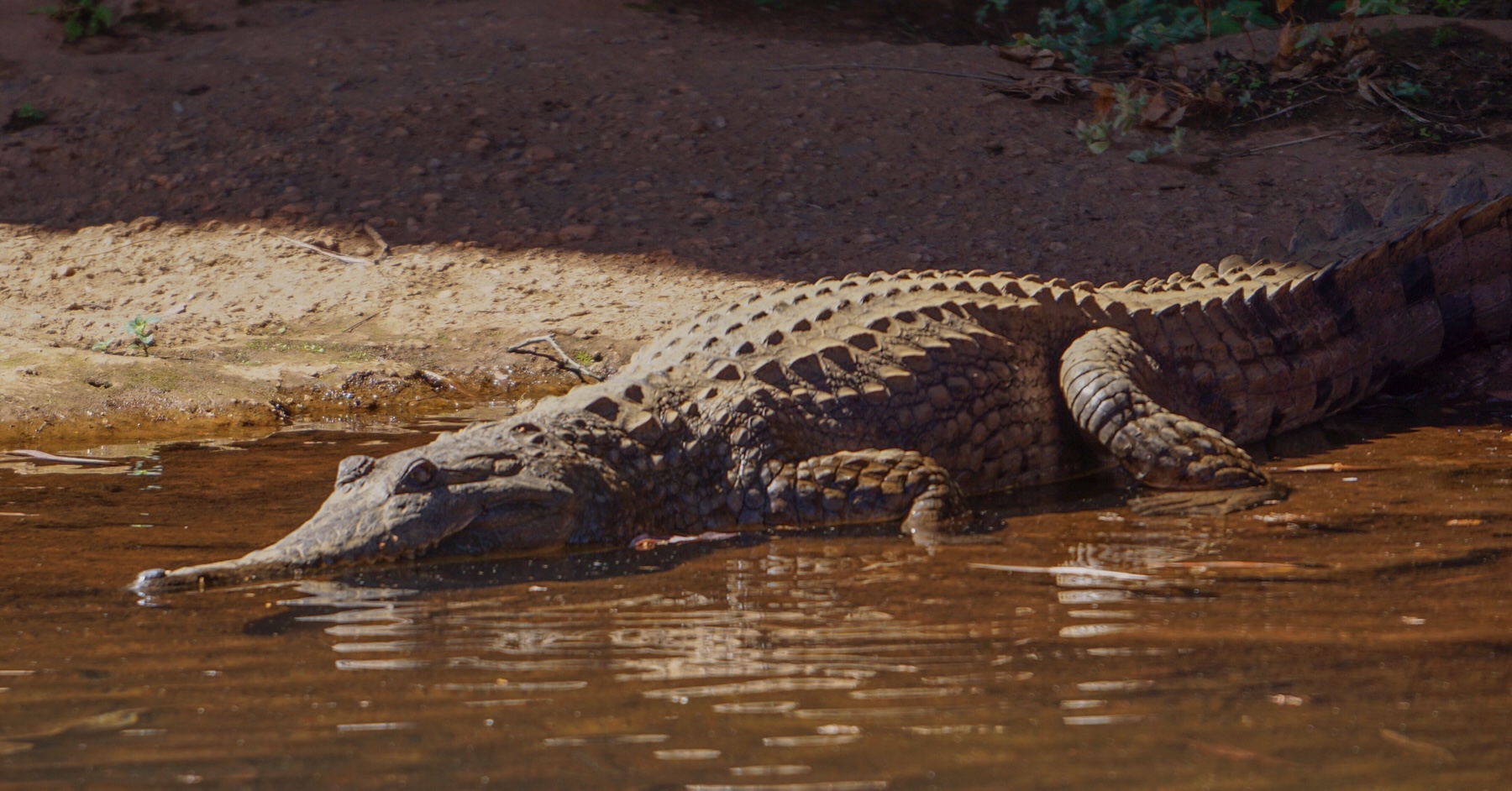
 We climbed up high on the walls of the gorge and admired the views from above, imaginations going wild with the shapes of the rocks. Can you spot the crocodile?
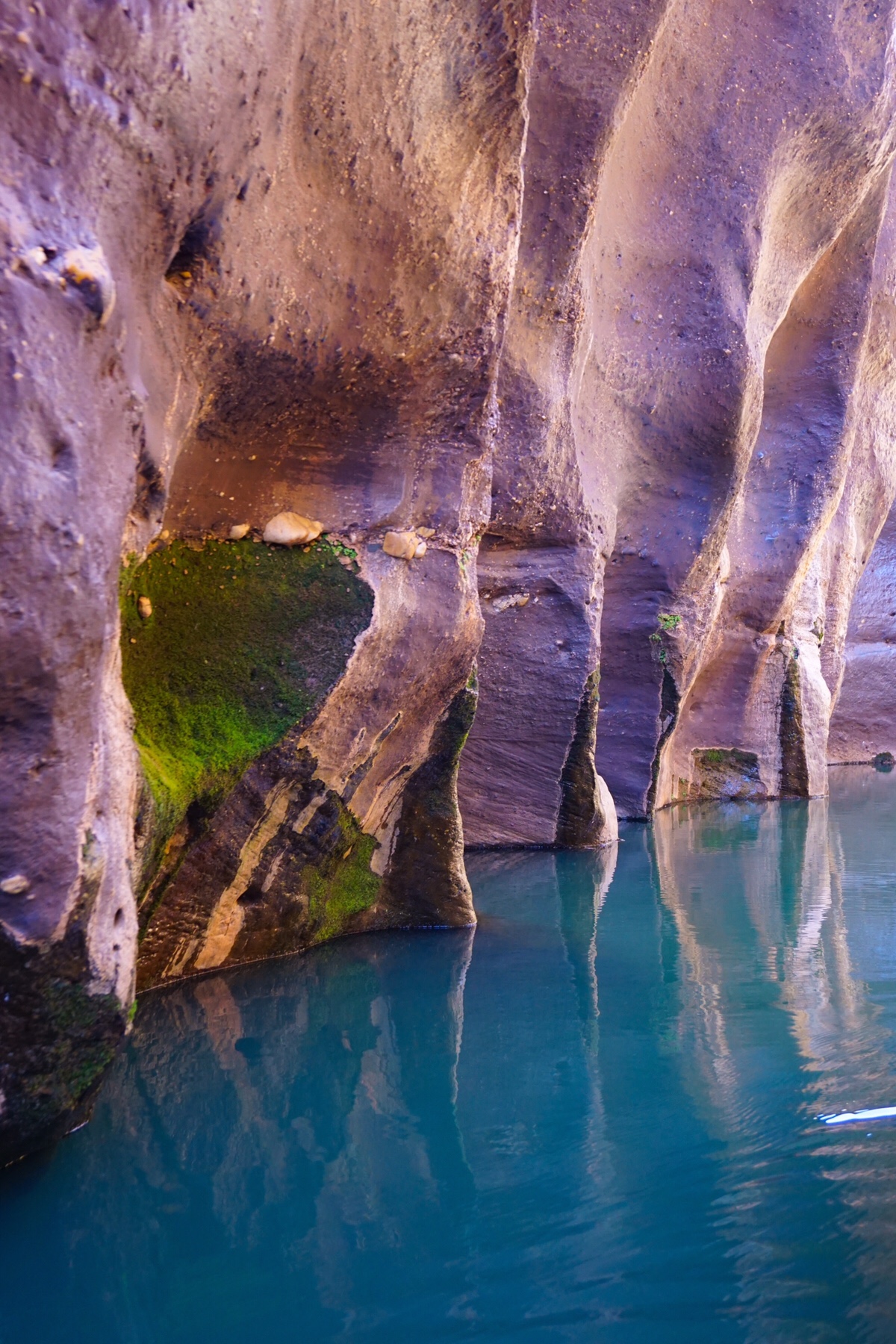
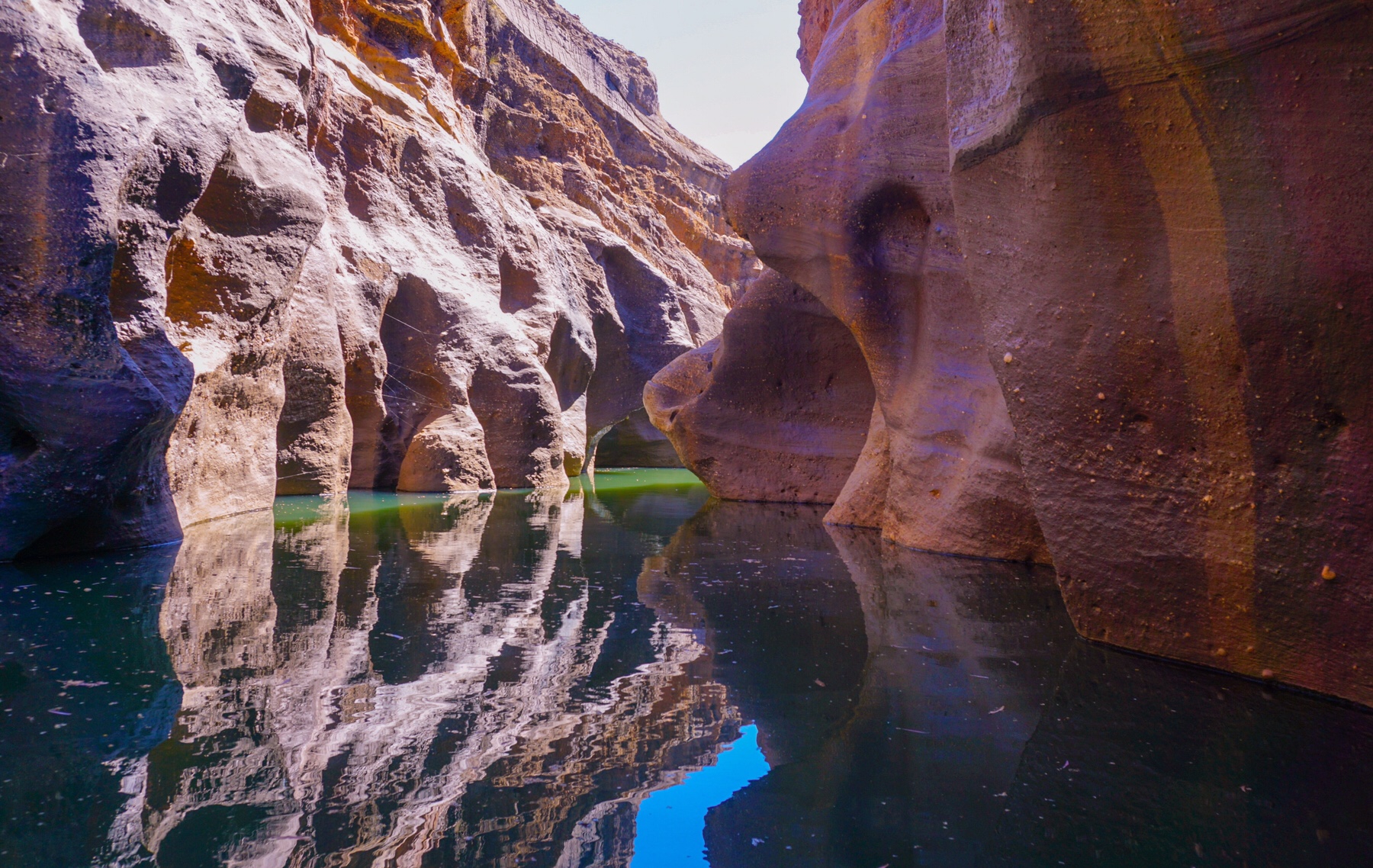
 We then climbed into the boats and set off along the gorge. Mick explained about the geology that had formed this narrow gorge, with the layers of sandstone washed down through the inland sea being cracked open, and we were in one of those cracks. If you are a geologist please excuse me, but that was my drift.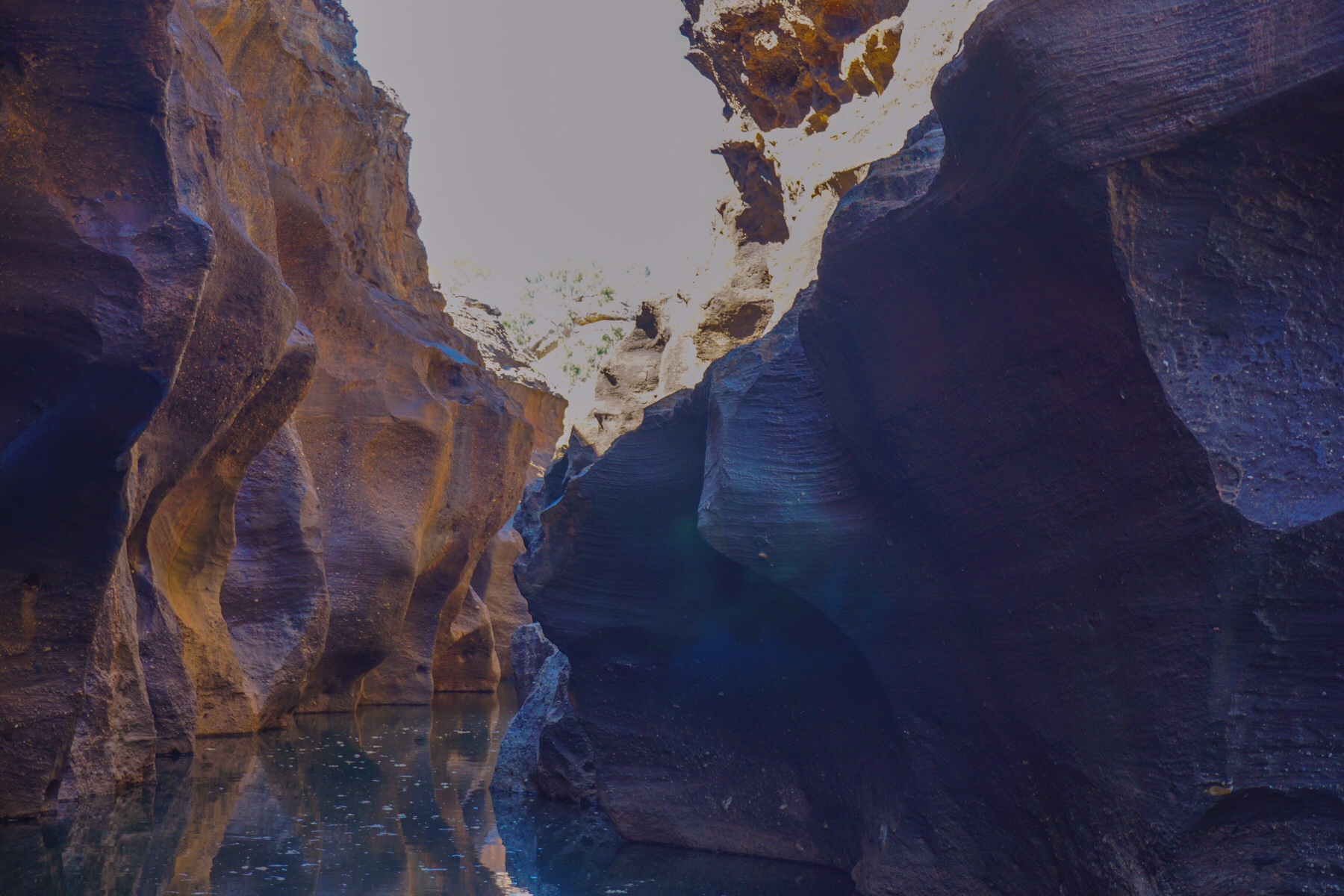
 Tourism here has brought many economic and social benefits for the local communities that were really struggling through drought and depressed cattle prices. It’s great to see entrepreneurs doing this out here. Small shops, pubs, caravan parks, and servos (petrol stations) all benefiting. Mick even said “people are taking more care of their yards now”. A returning sense of pride…awesome.
 Undara is Aboriginal for ‘long way’, and is the name given to Undara Volcanic National Park when it was established in 1993. It’s interesting they chose to give it an Aboriginal name, since there is no evidence of any Aboriginal habitation, visitation or use in the direct vicinity. Still, I’m pleased there some nod of acknowledgement to the traditional custodians of this land, who suffered great losses at the hands of the original settlers.
 The sun soon came out and the dry landscape lit up with the coppery tones of the iron filled granite contrasting with the jet black basalt. It’s all quite different to the rich and green landscape of the past few weeks and we are really noticing the impact of the rain shadow cast by the Great Dividing Range along the coast.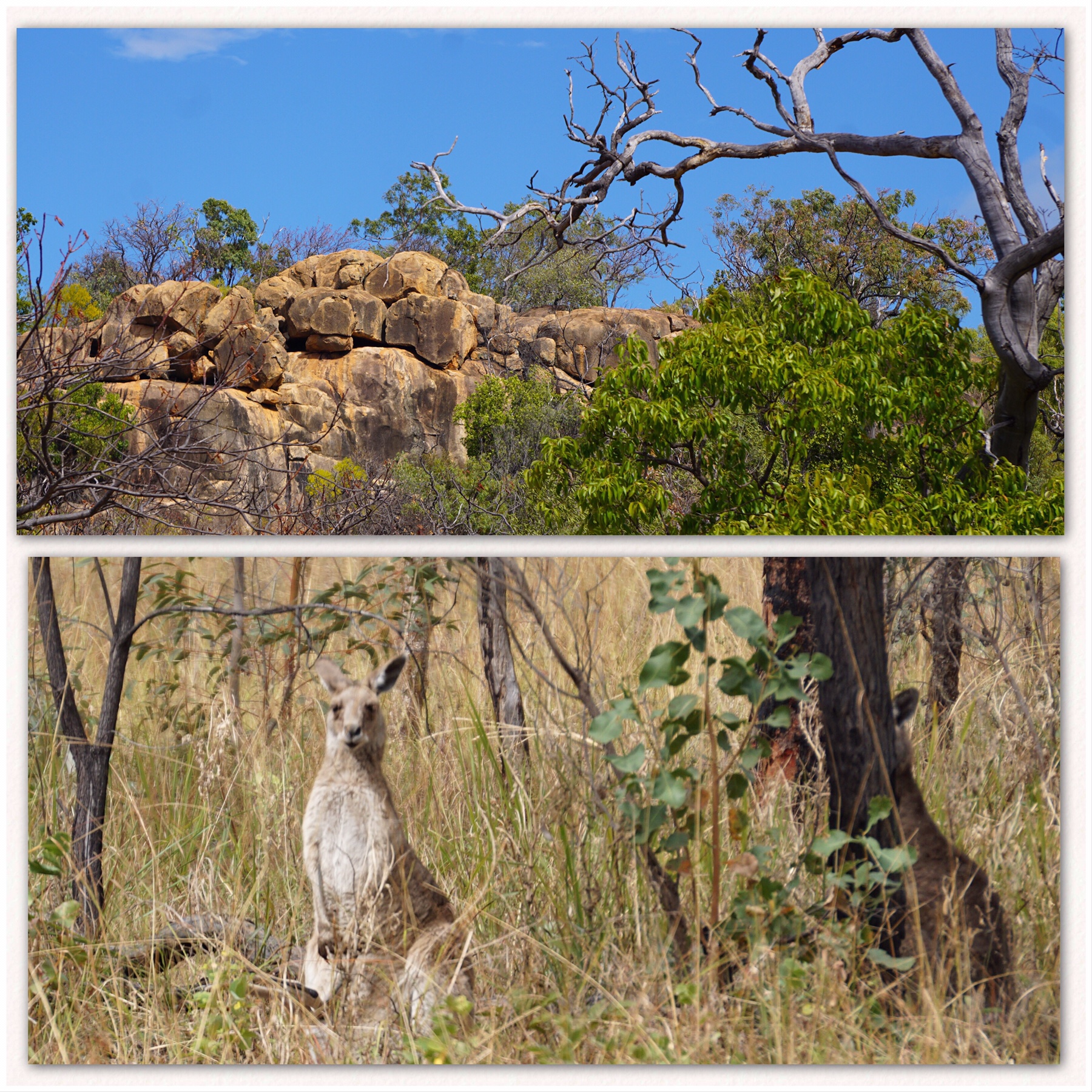
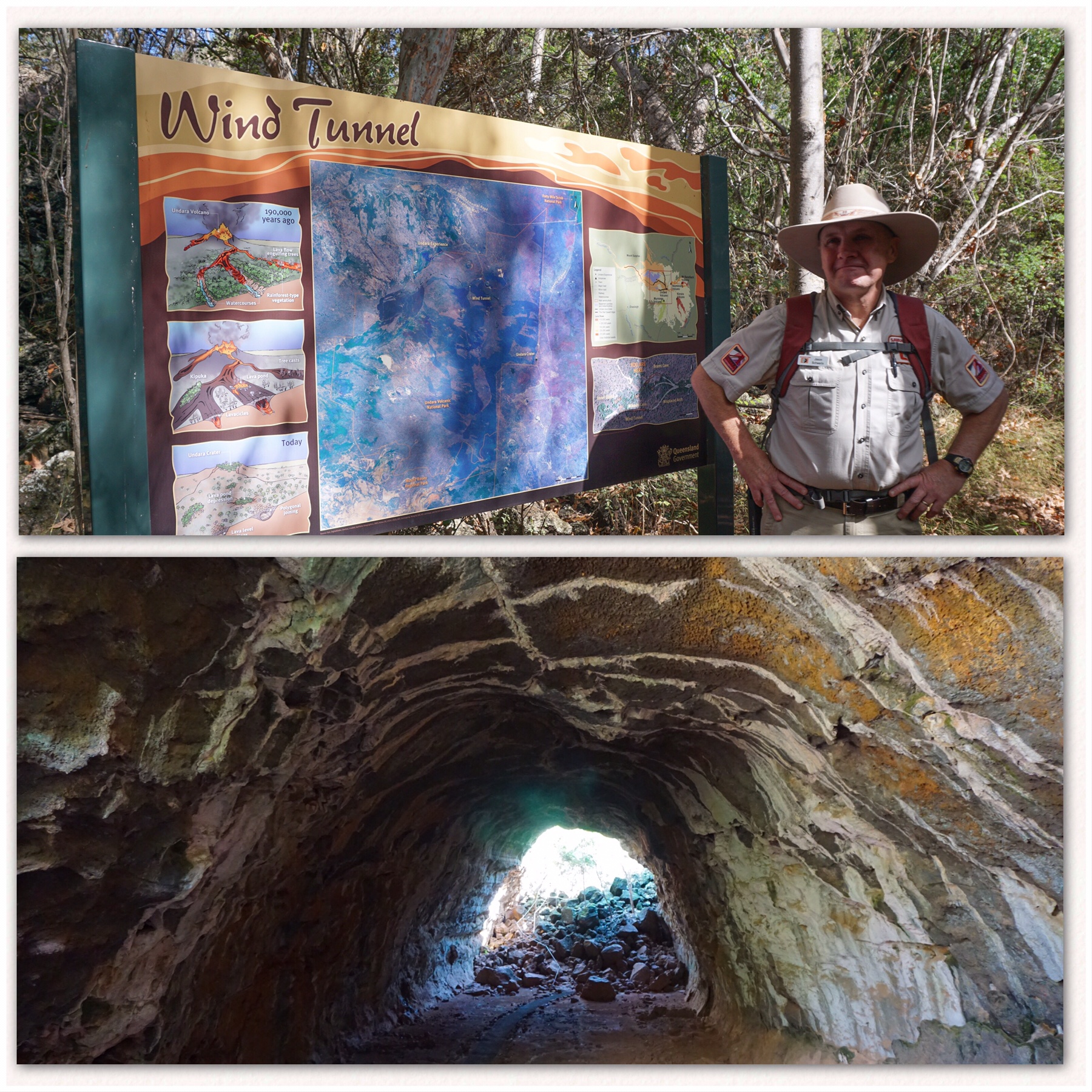 Before long, we were entering the first tube, clambering down piles of rubble left from a roof collapse. We were all too aware of the many tons of basalt over our heads, held together by little other than the compressive strength of the arch. Should the keystone break, then our travels would have ended right here.
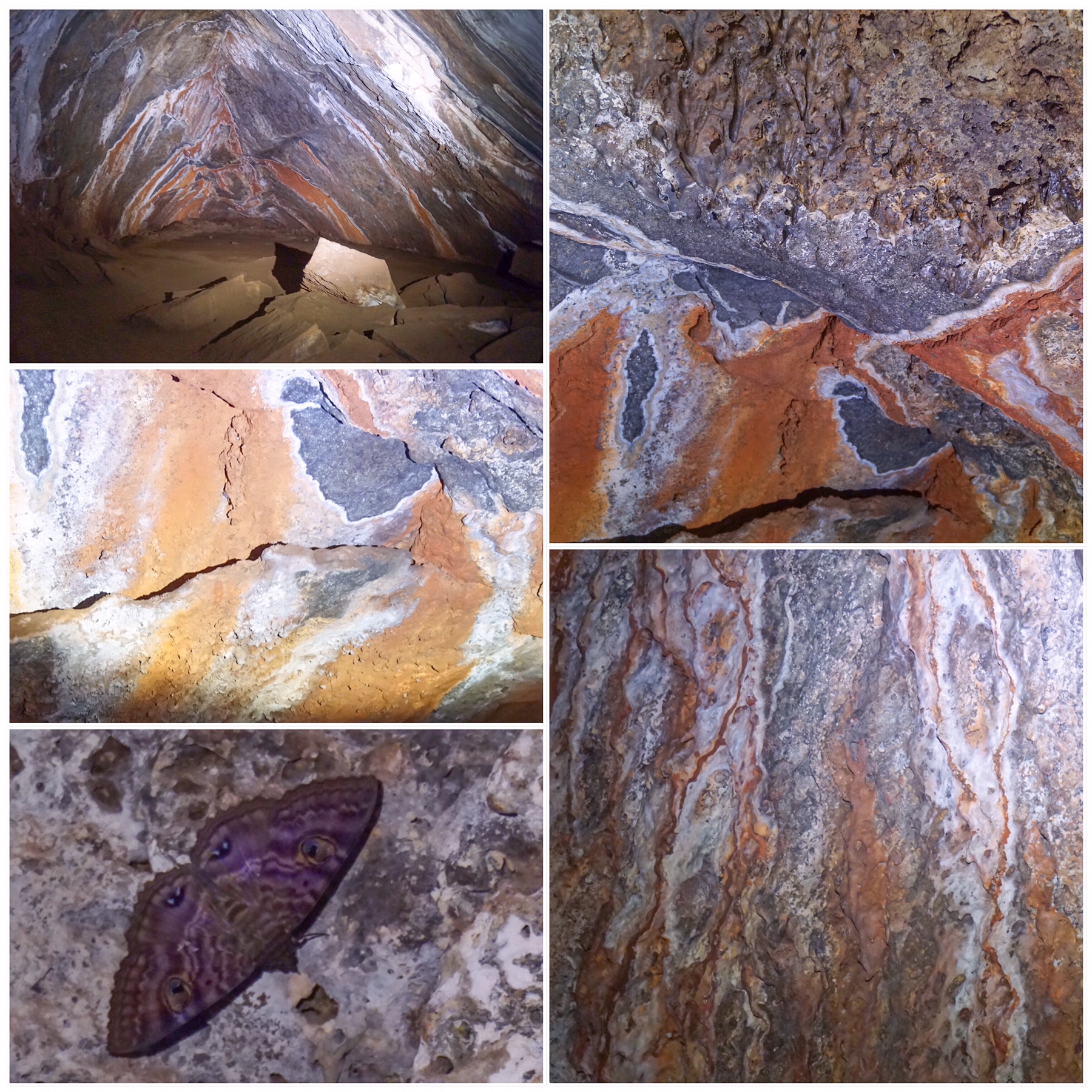 Fortunately for us, today was not that day, and we lived to explore another tunnel, this one around 1.3km in length, winding its way along an old watercourse. Bats, moths, cockroaches and cane toads are among the known (and seen) residents of these tunnels, and the colours are fabulous.
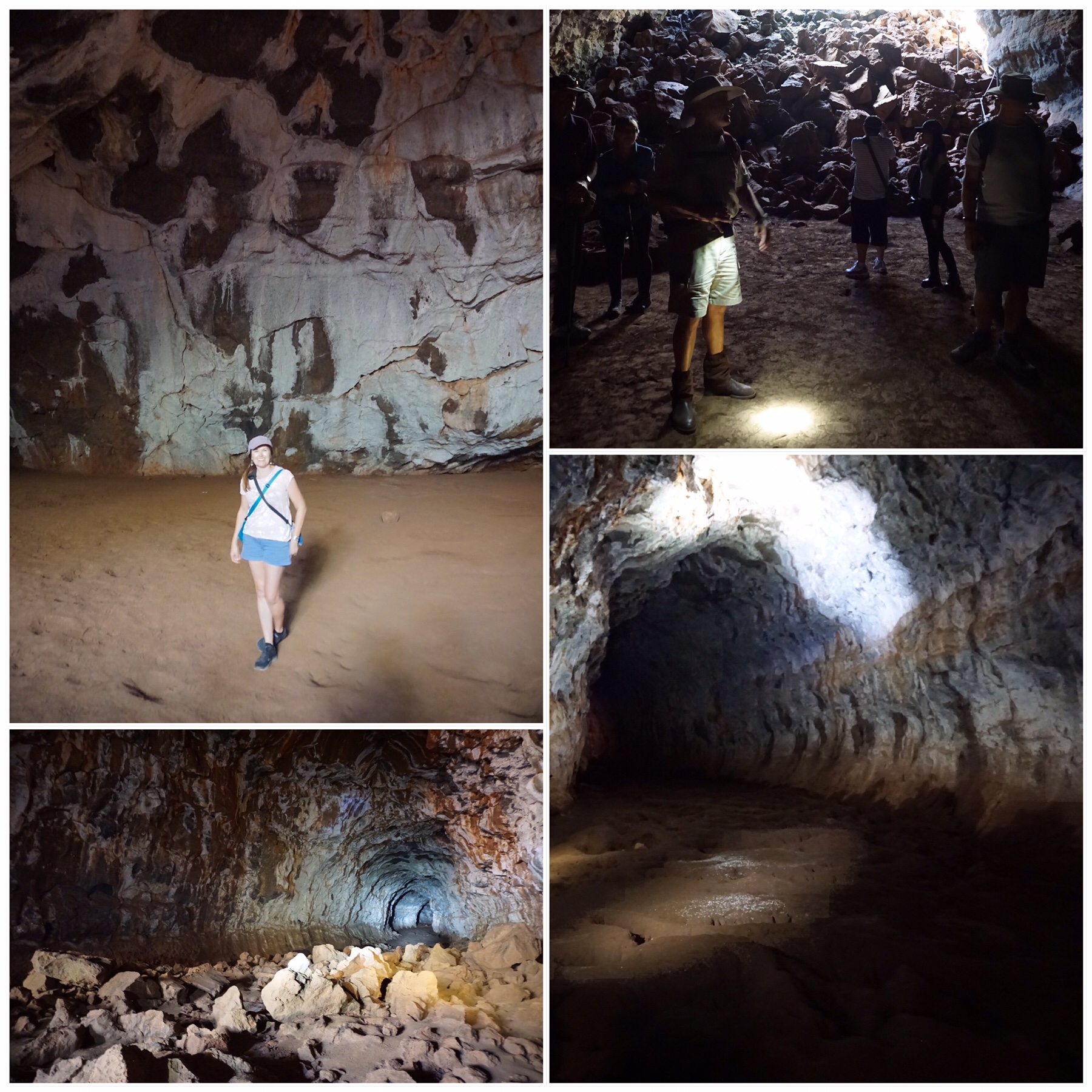 Memories of my Uni Geography degree came back in troves, with images from text books flashing through my head, not revisited for more than 25 years! We both really enjoyed the visit – yes, it was pricey at nearly $60 a head for two hours, but we felt well educated at the end of it and further immersed in some of the geological history of Australia.
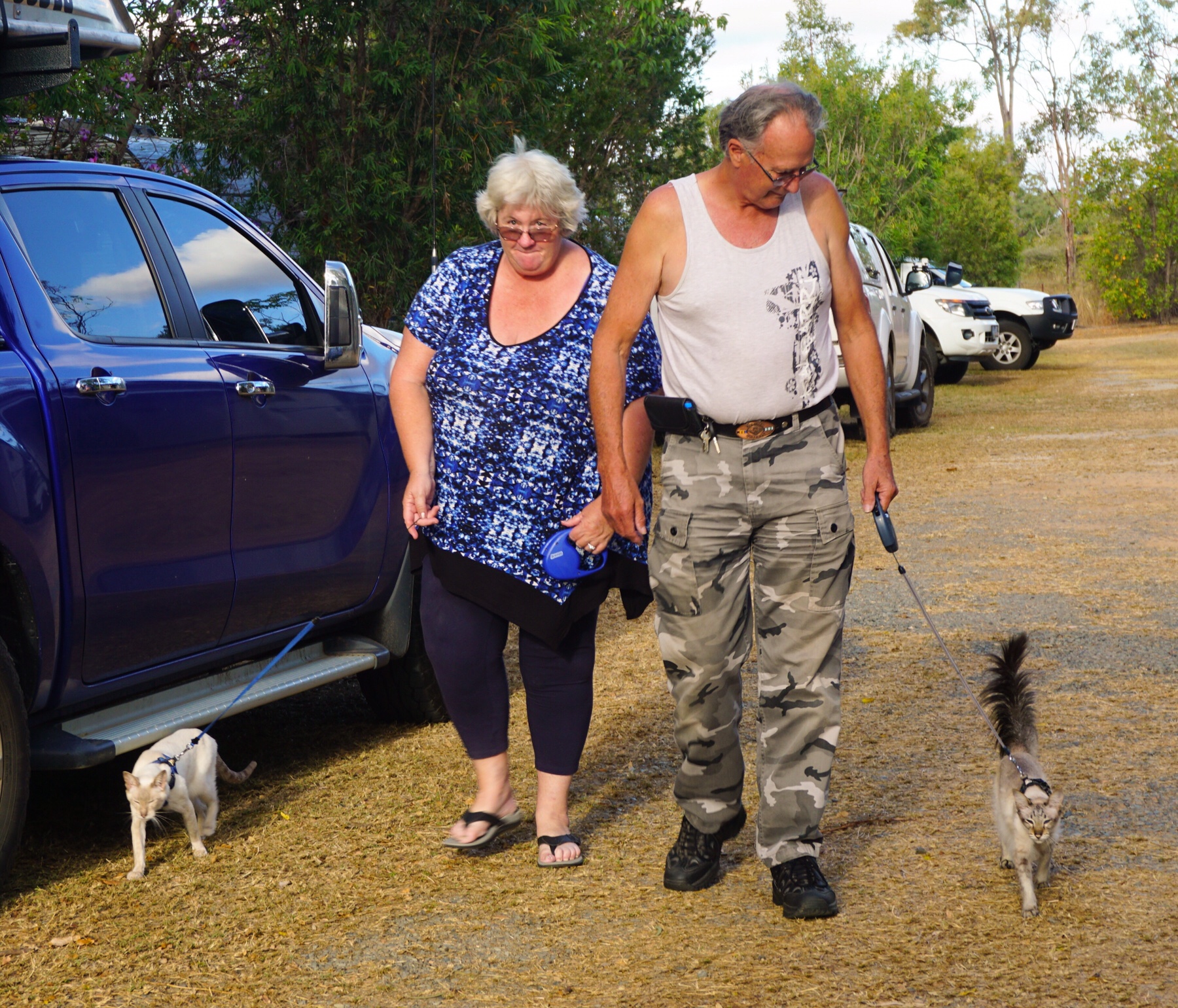
 We decided to go for a stroll and what did we see? None other than a couple of handsome male cats on leads exploring. See folks – it’s not just us!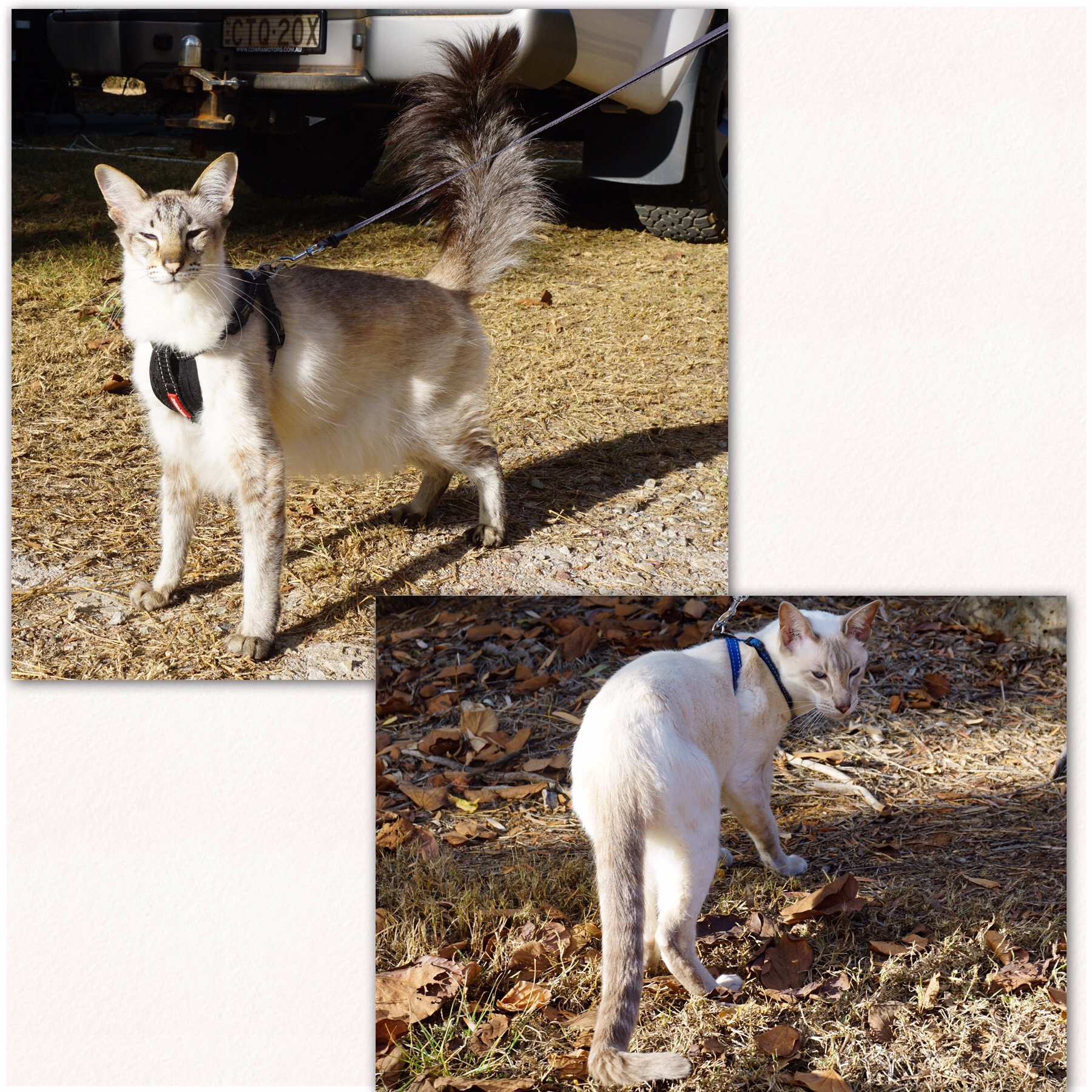
 We continued our walk as the sun lowered in the sky, spotting birds and just enjoying the feeling of sun on our skin. As nostalgic as the rain and drizzle has made us feel, we really do appreciate the warmer weather!
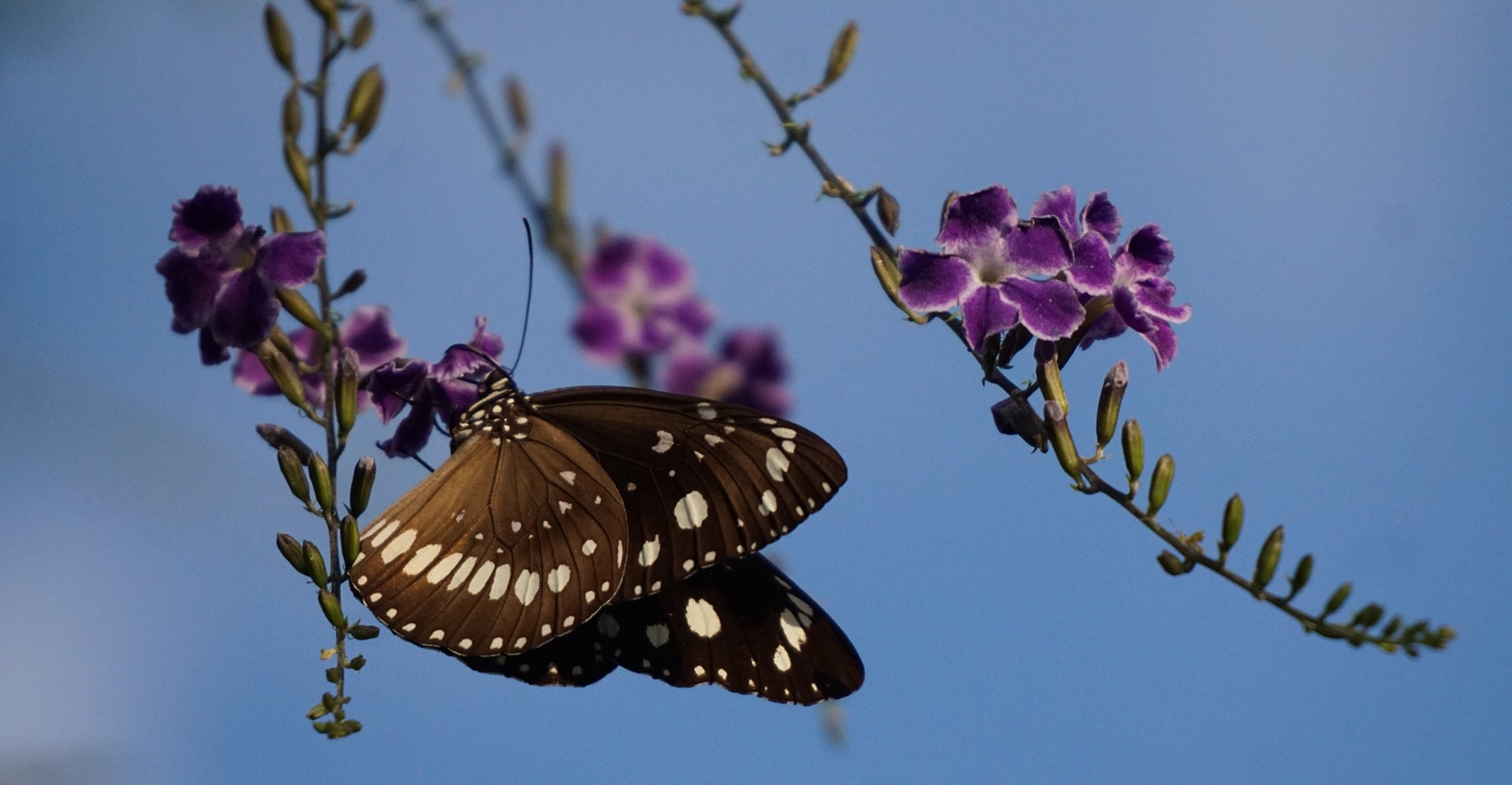 Common Crow Butterflies, red winged parrots, whistling kites – there’s plenty of wildlife to be seen here, and topped our day off nicely.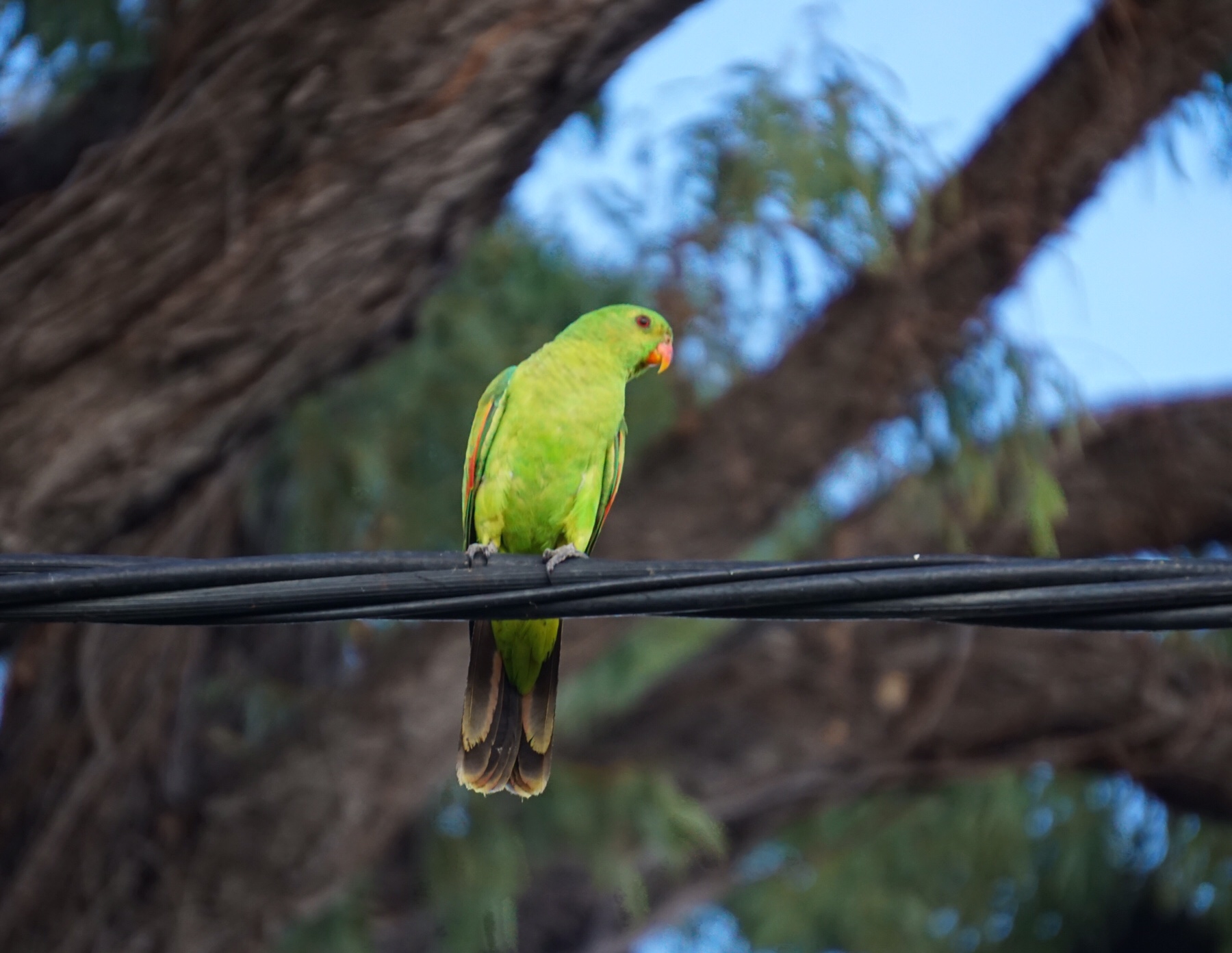
 Where are we on our Savannah Way journey? Just a short way along, but a world of difference from Cairns. Off to a new destination tomorrow and a whole lot more red dust!
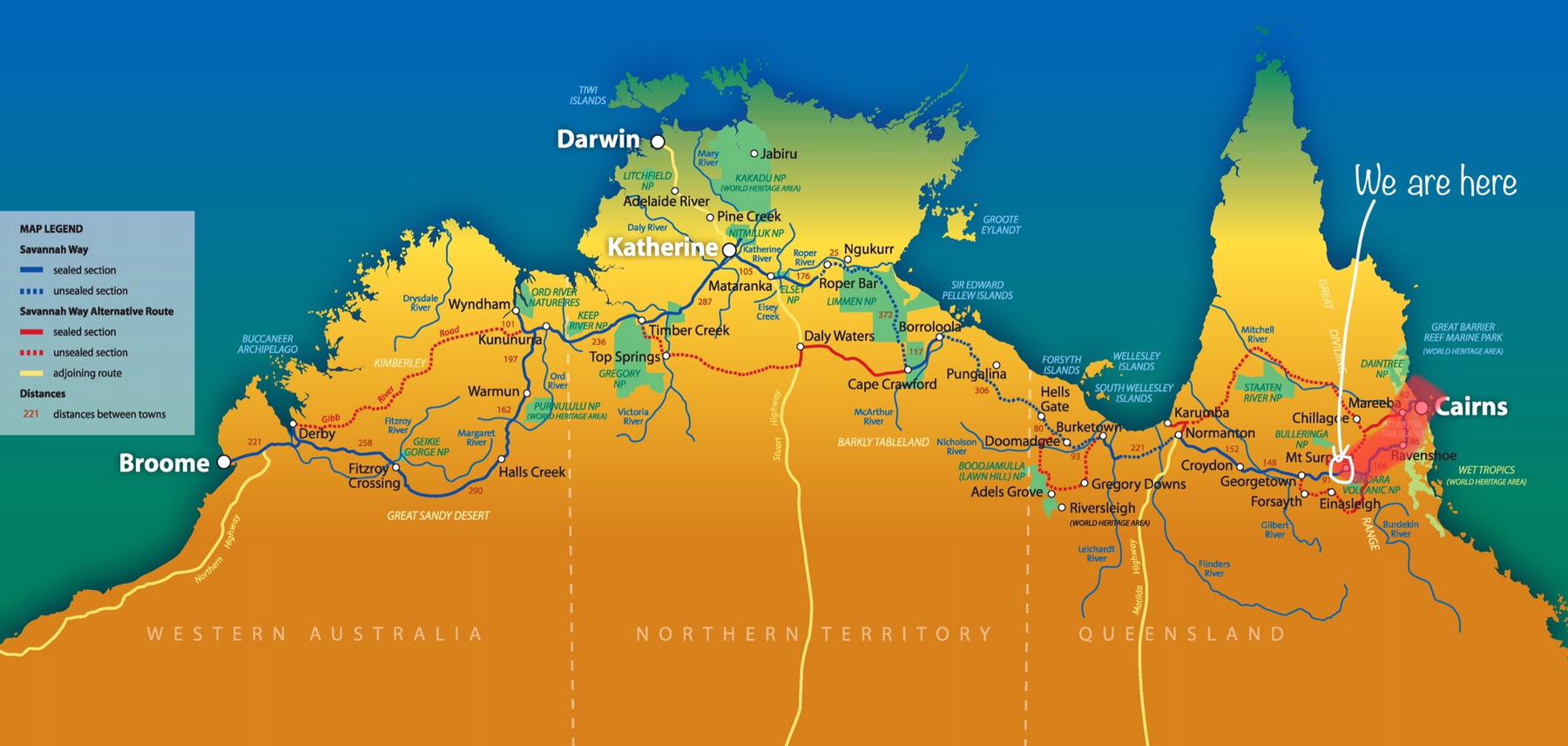 The Savannah Way
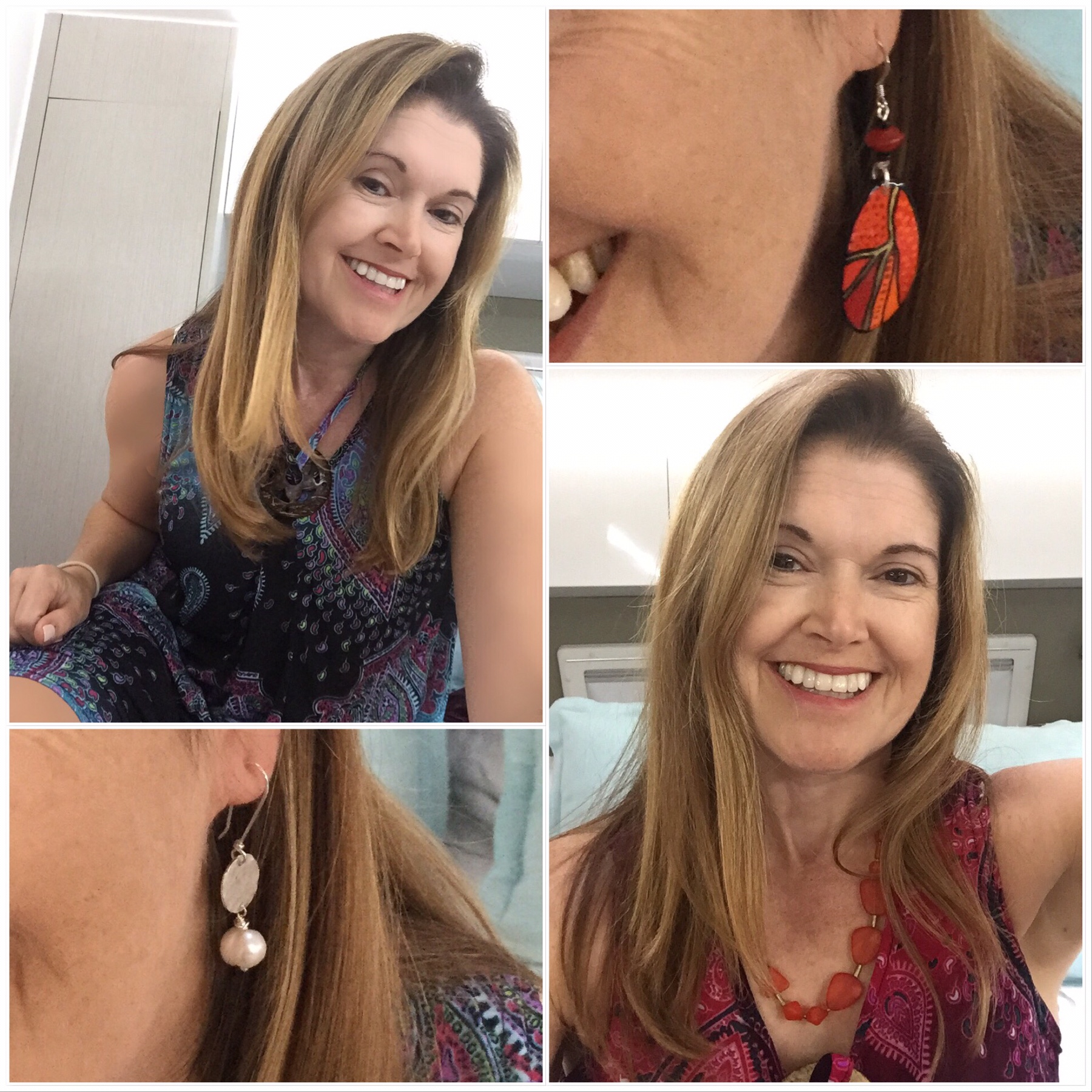
 Mrs A managed to score some lovely earrings and a necklace made by three local jewellers, and two dresses beautifully modelled here.
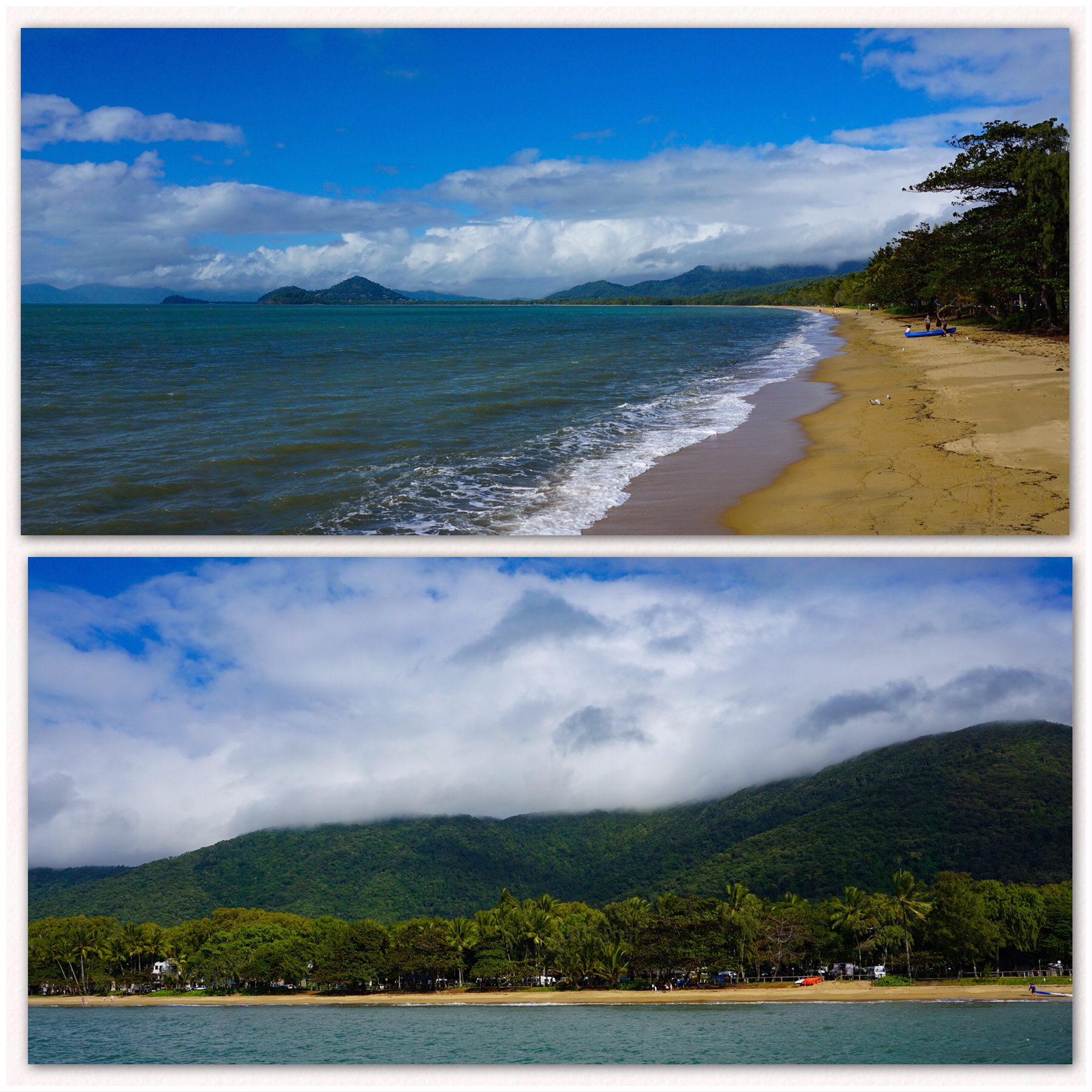
 It was with a good degree of excitement that we hitched up and said goodbye to the Coral Sea as the next ocean we are likely to see is the Timor Sea, up in the Gulf.
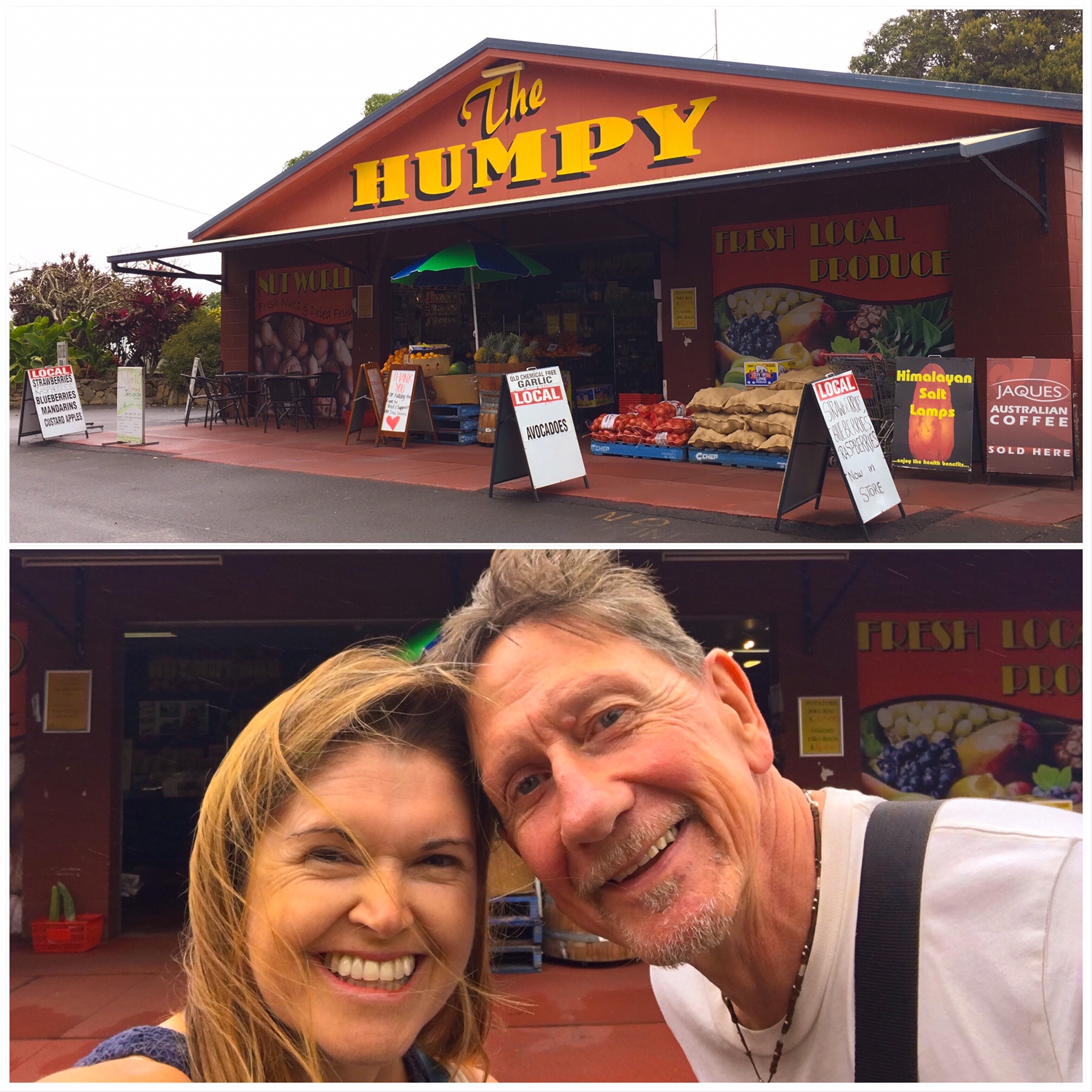 We called back in to our favourite store on the tablelands, the Humpy, for some last minute fruit, vegetables and other local treats, before deciding to press on to a place called Pinnarendi Station. This is another working farm that is making some money from the passing caravans by offering sites with power, water and even meals. Good on them. It’s great to see so many people having a go at something new, seeing an opportunity and investing in some basic facilities for travellers.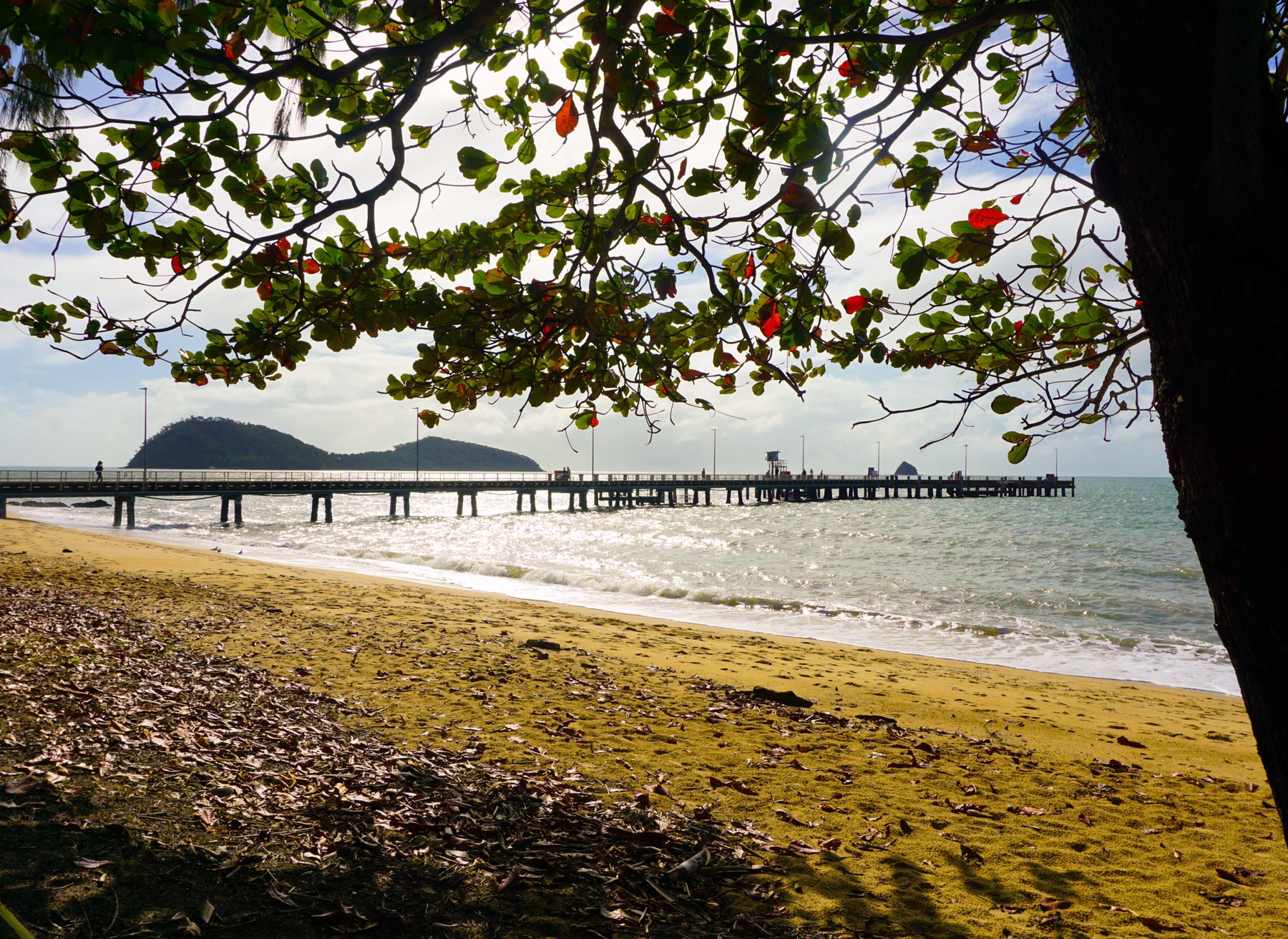
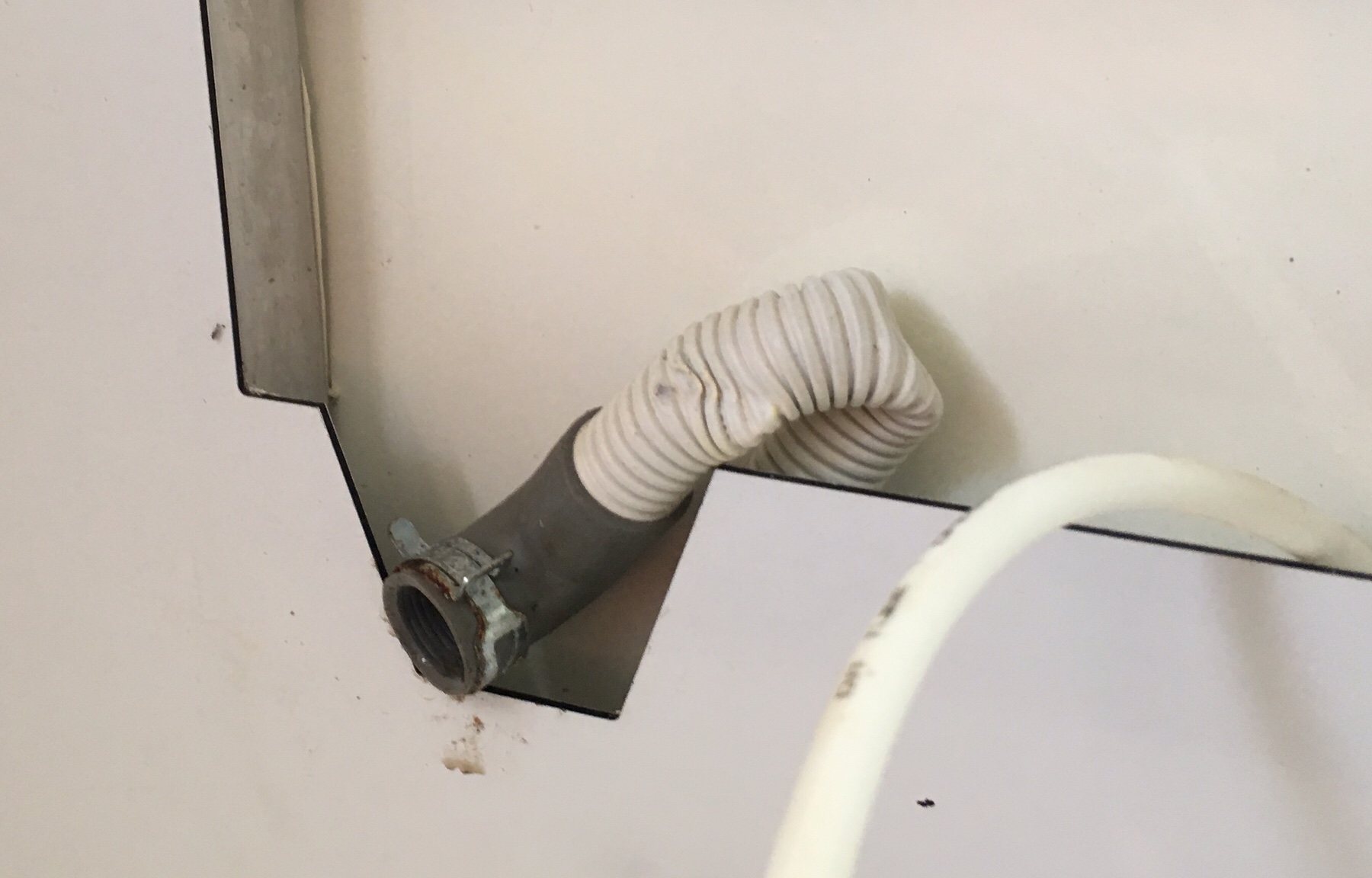
 Our washing machine has not worked since the end of May, so we have been pretty tied to campground washers – of variable quality. Our first task was to get a sack of washing done, including our sheets and towels. Sadly, one of the machines did not spin, and our washing came out absolutely sopping wet (it took some pieces three days to dry!). So frustrating, and not helped by the continuing showery weather.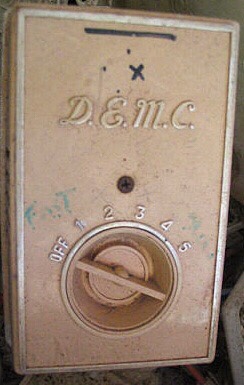
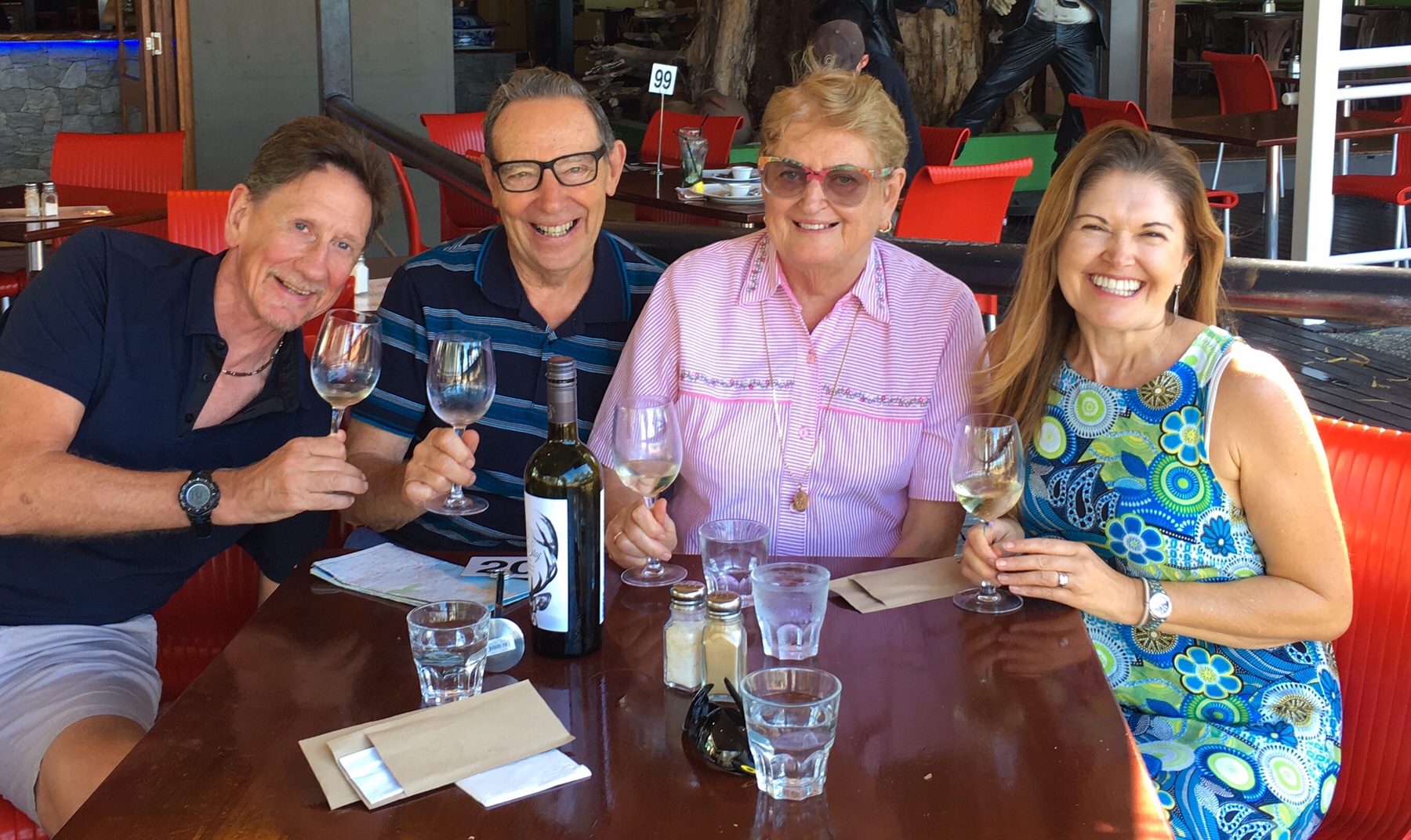
 It wasn’t long after that our friends Bob and Ann Gadd arrived to join us for lunch. We last saw them down in Adelaide where they live during the warmer months – this time of year they are found in their apartment in Port Douglas, escaping the cool South Australian winter. We ambled along the street, catching up on news and found a cafe for lunch. Lots of laughs were had, stories told, and maps looked at to help us plan for our next few weeks.
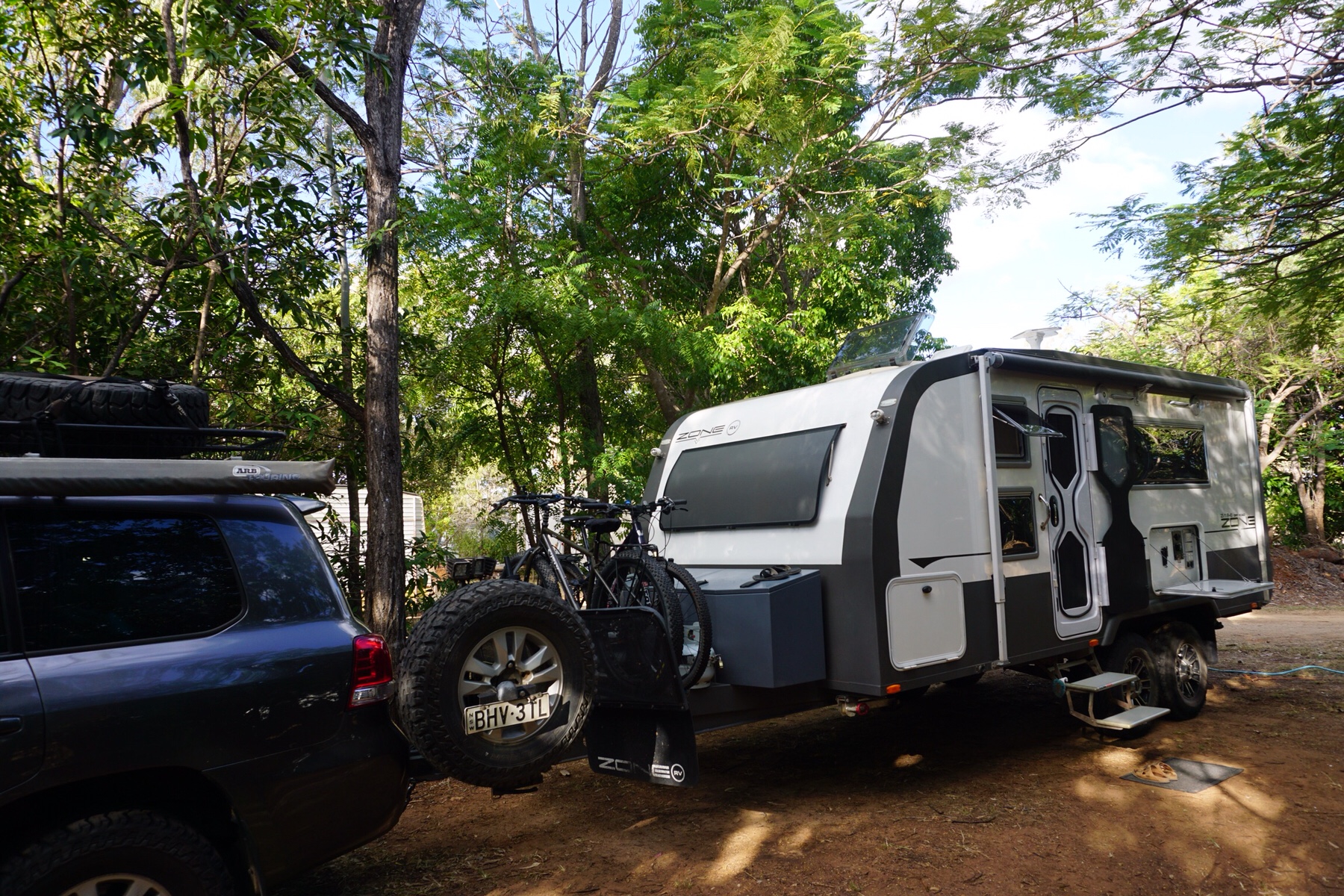
 After saying farewell to them, we returned to the Zone to find more Zoners were in town!
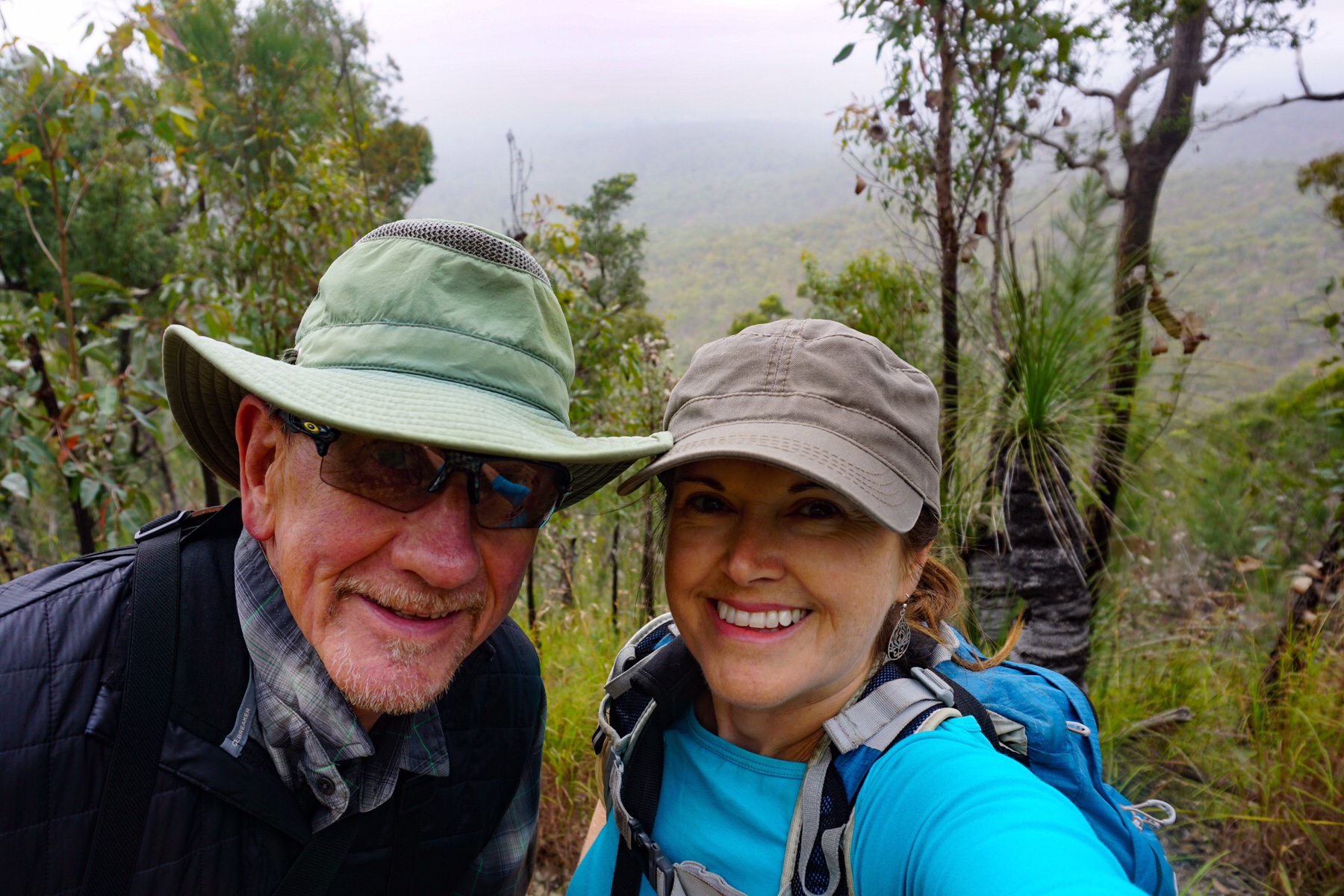 If only the clouds had lifted, which they did when we had finished, it would have been great views across the range.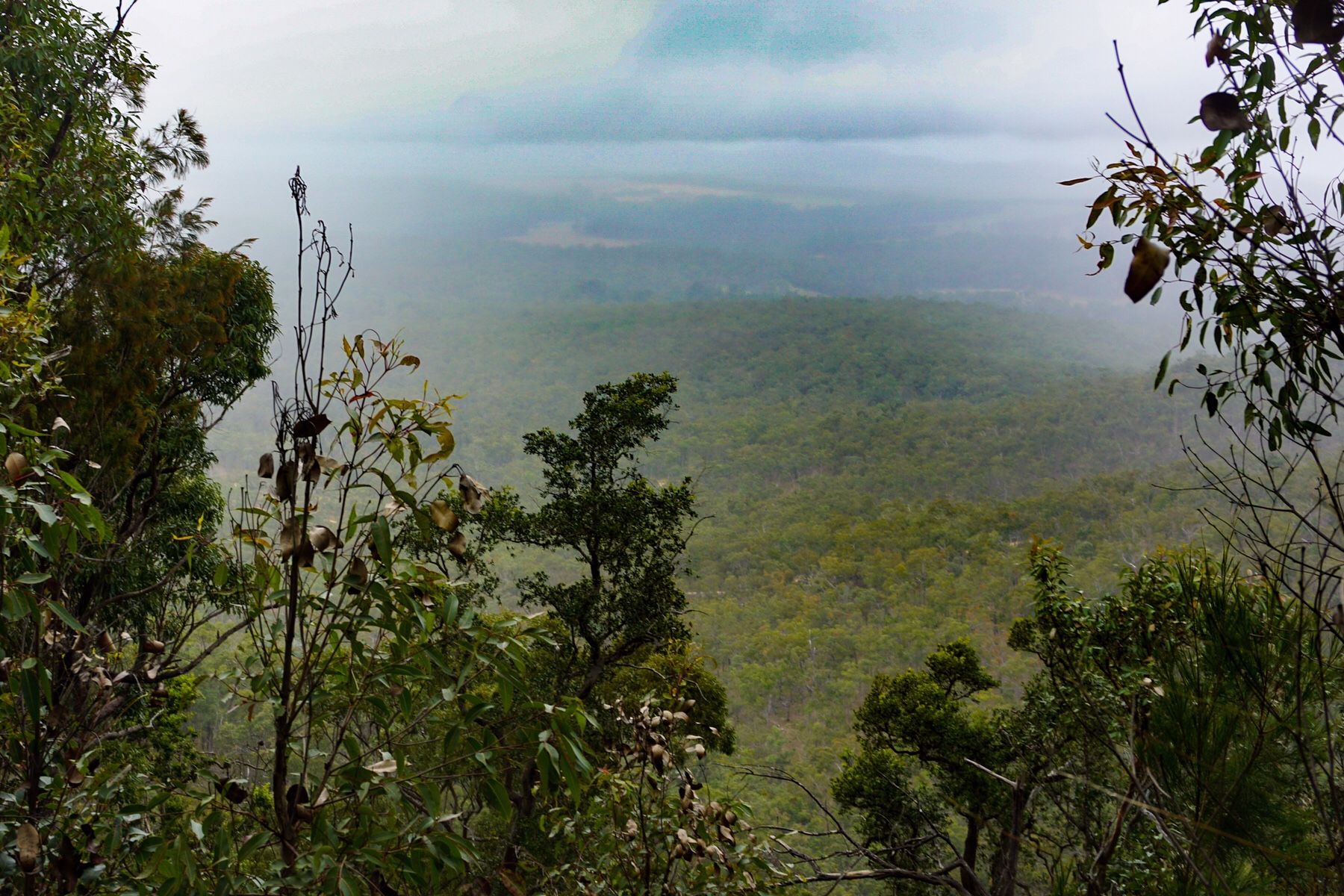
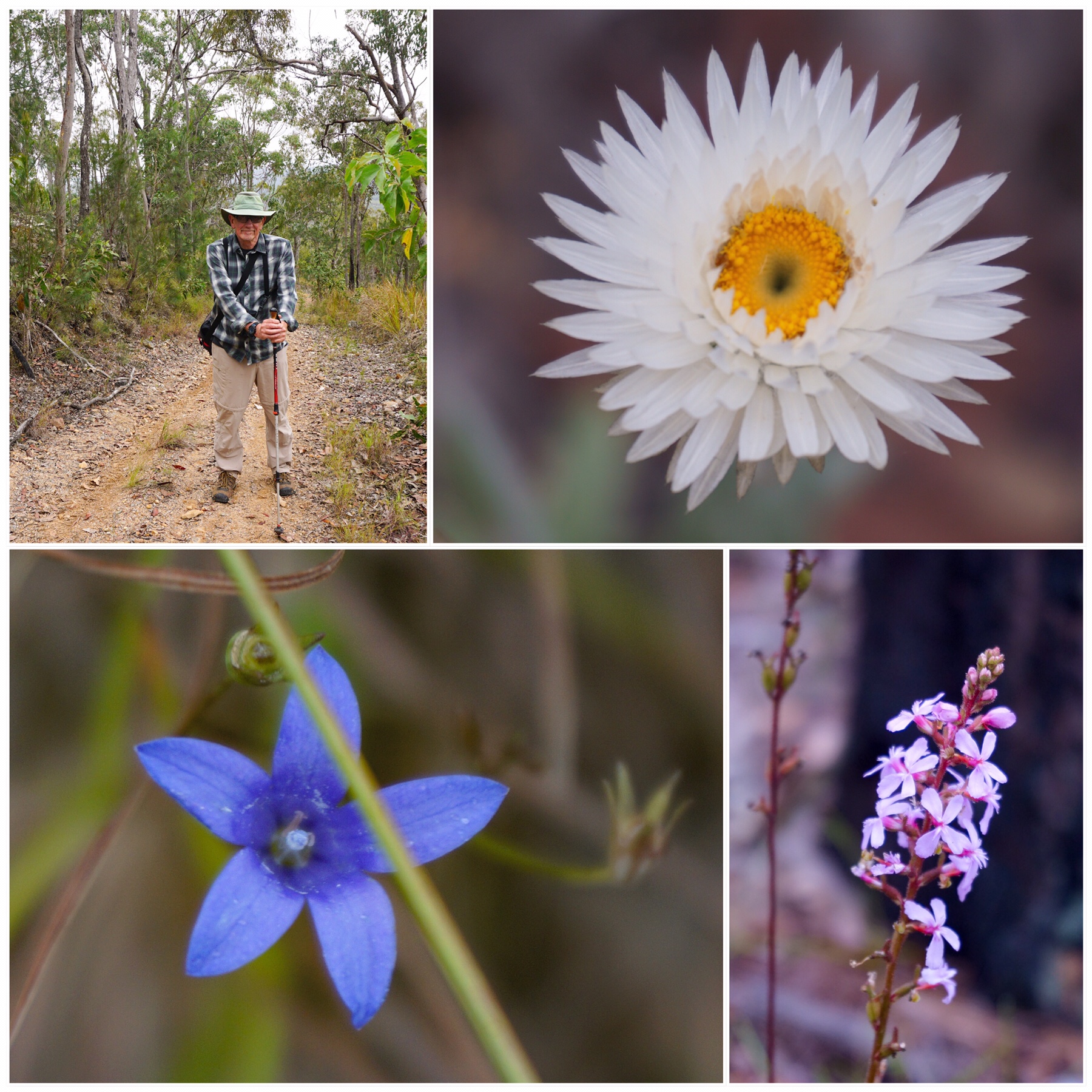
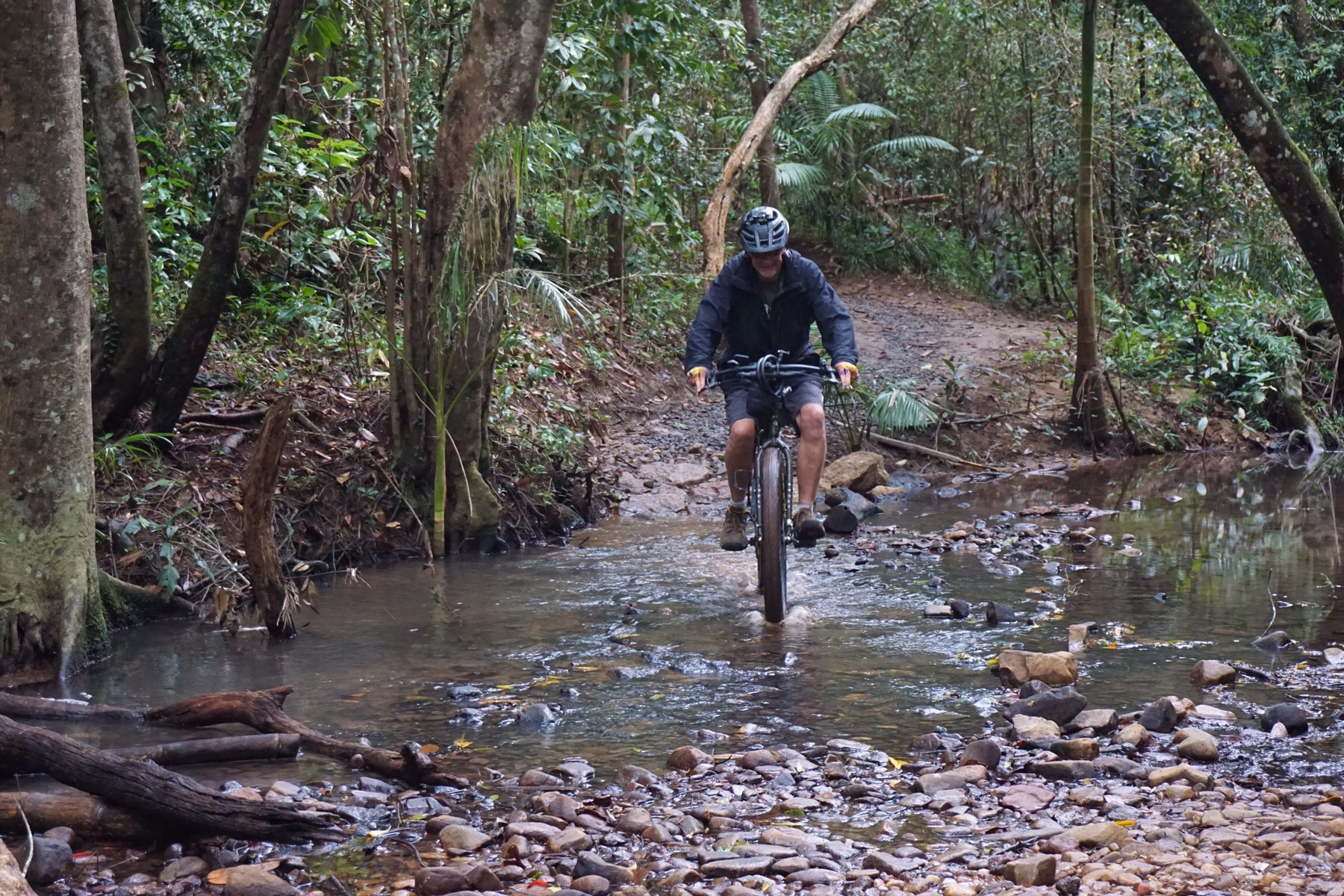
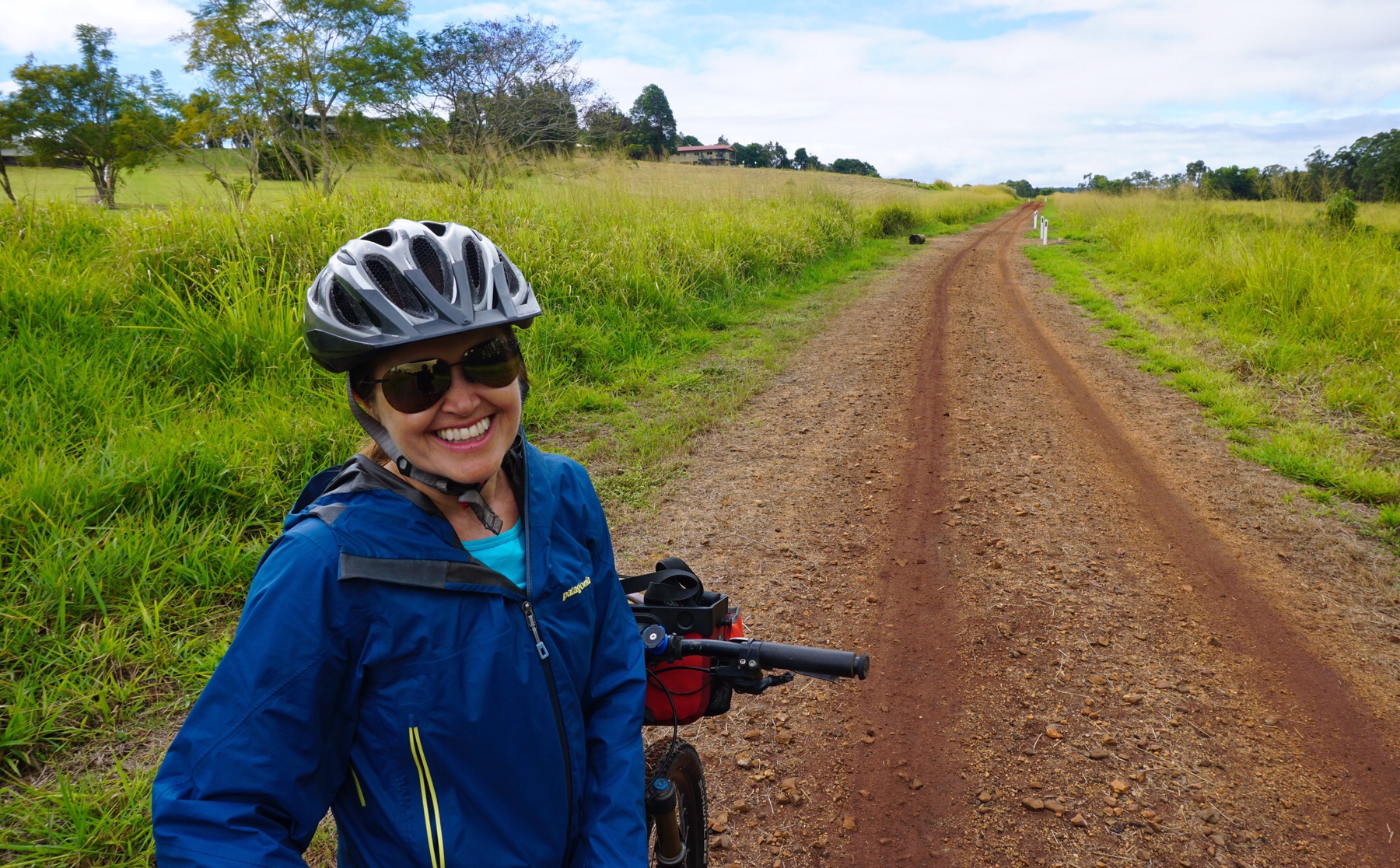 It was actually a great ride initially through a countryside of rolling hills, then we headed round a loop on some tarmac and back to base via a series of local mountain bike trails through the rainforest, ticking off just over 35km.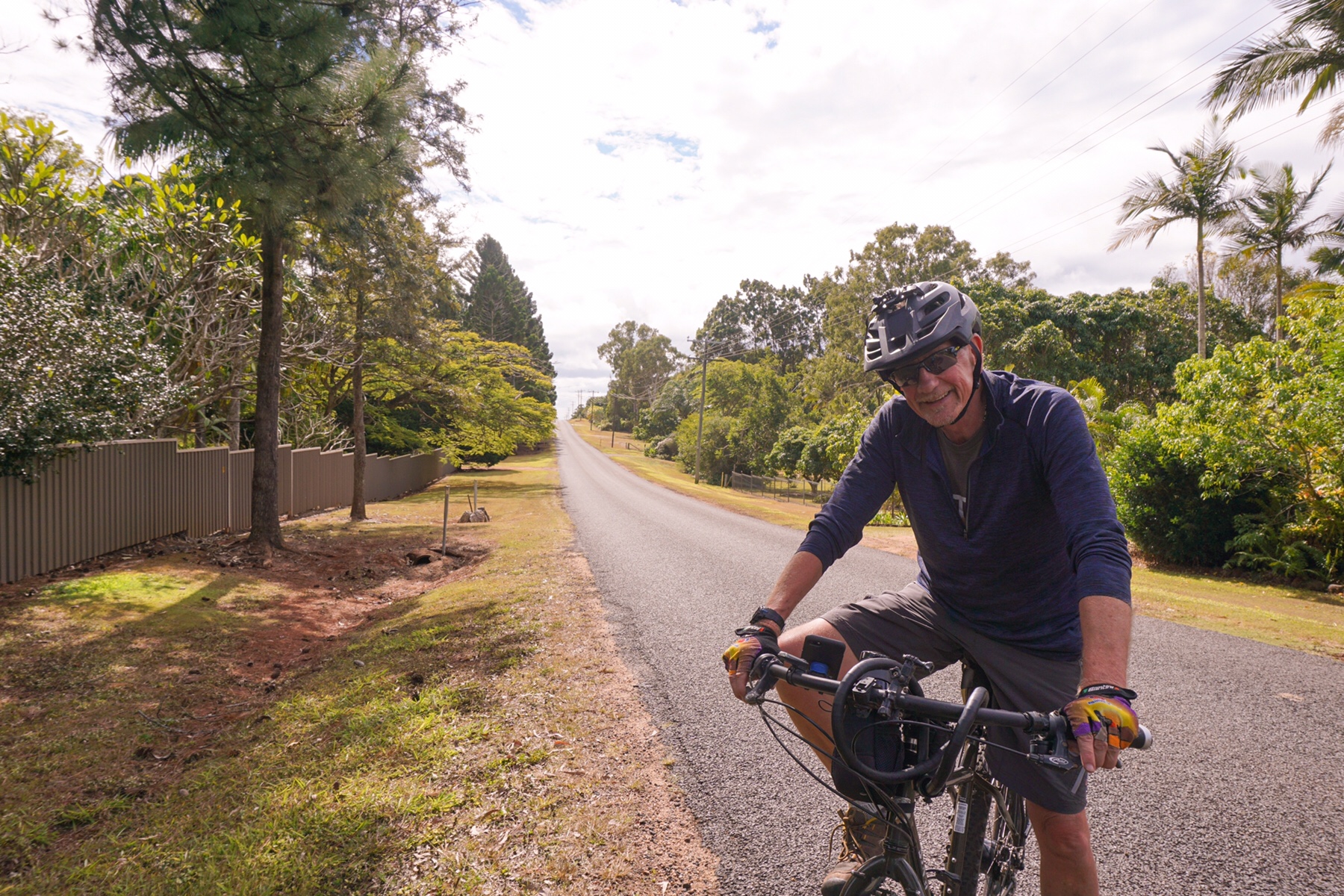
 A curry was called for after all that exertion, so our fellow Zoner Ken drove us into Atherton and we we finished our stay here with a great feed. We have really enjoyed the tablelands, apart from the weather, but tomorrow its time to head back down to the coast.
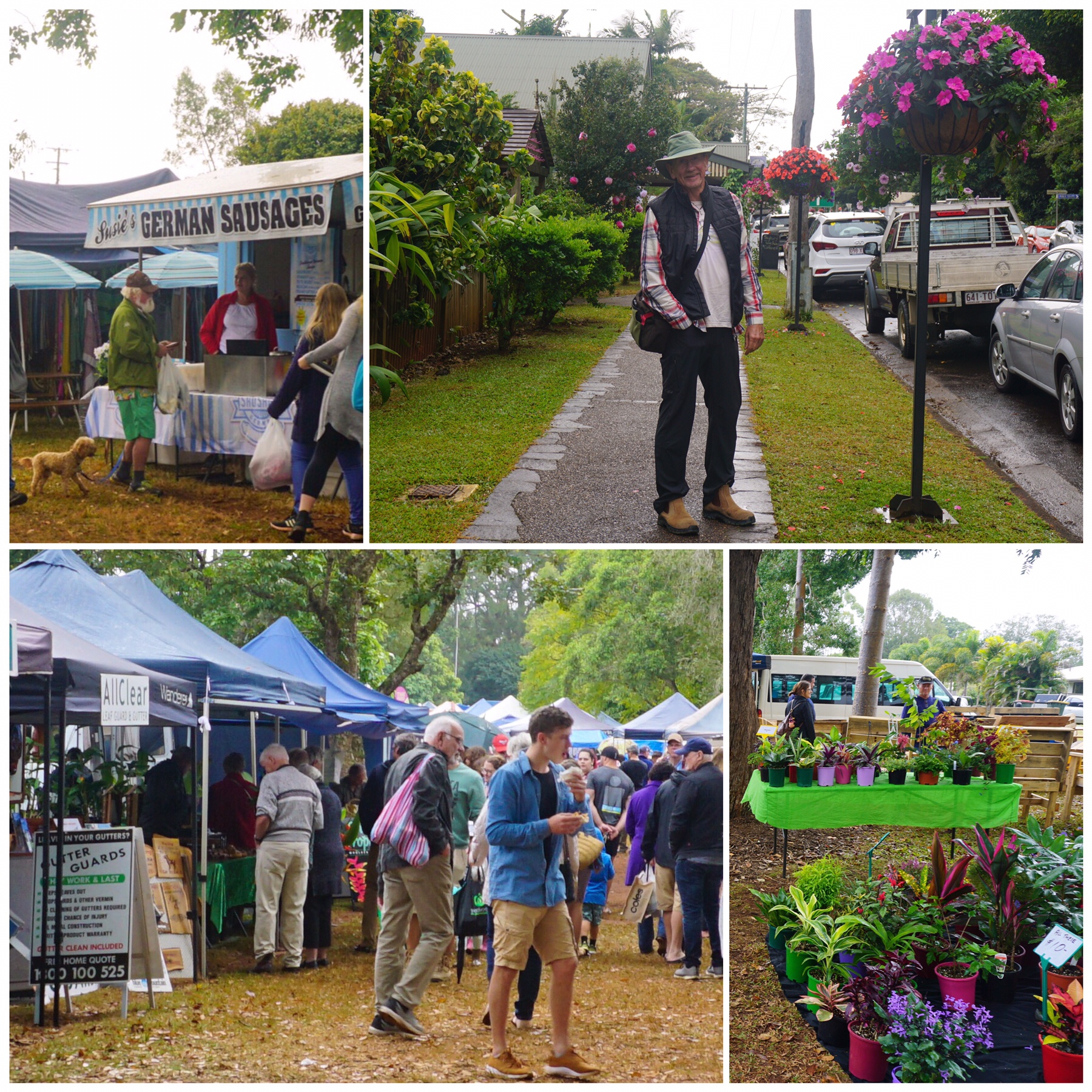 The market was great too. Alongside the stalls of fresh-from-the-farm vegetables and herbs were bakers, jewellers, artists (including musicians, painters, woodworkers, ceramic workers and potters), massage therapists, plants of all varieties, flowers and even fertilised eggs, chicks and chickens for sale. It all felt very authentically country.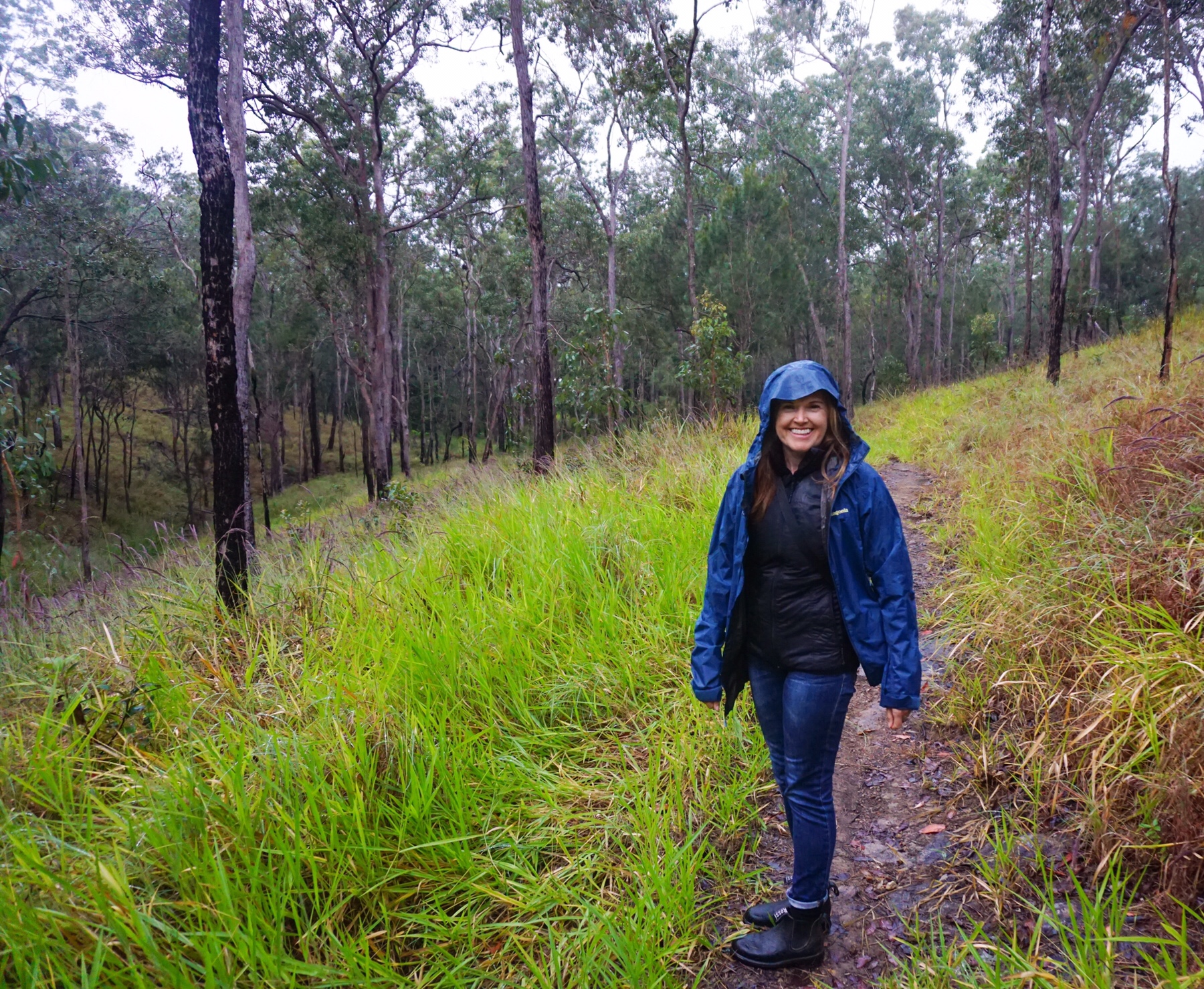
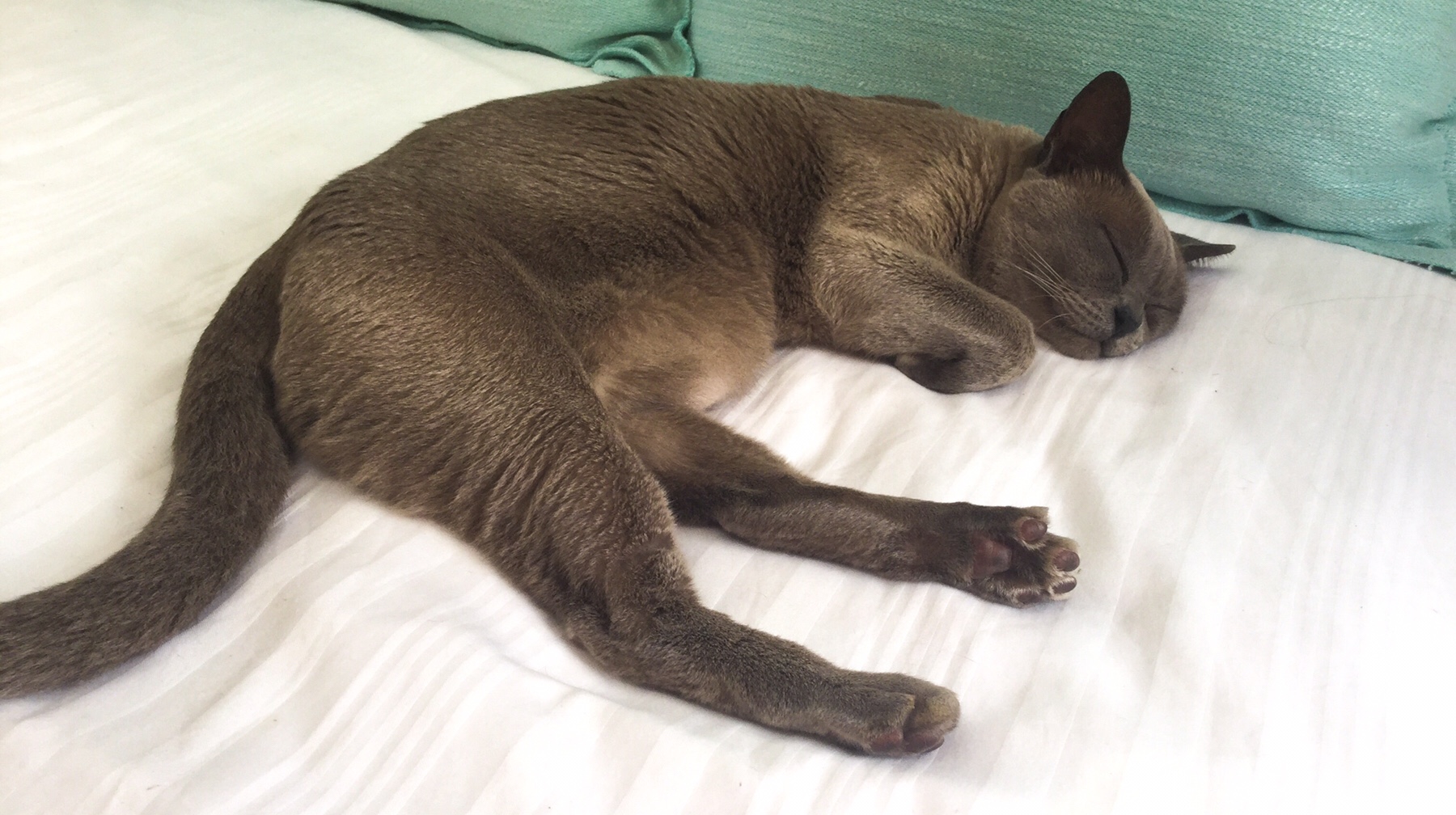
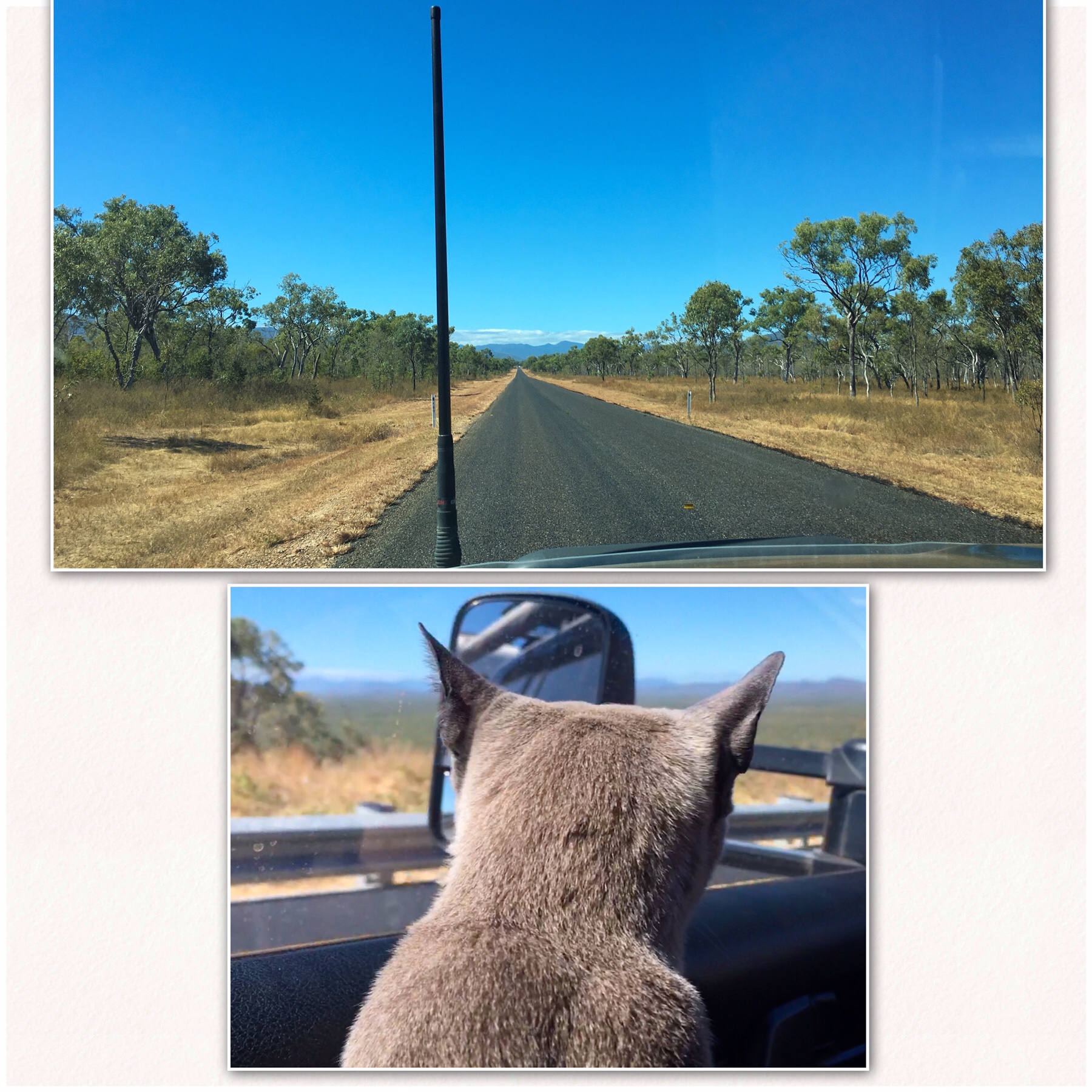
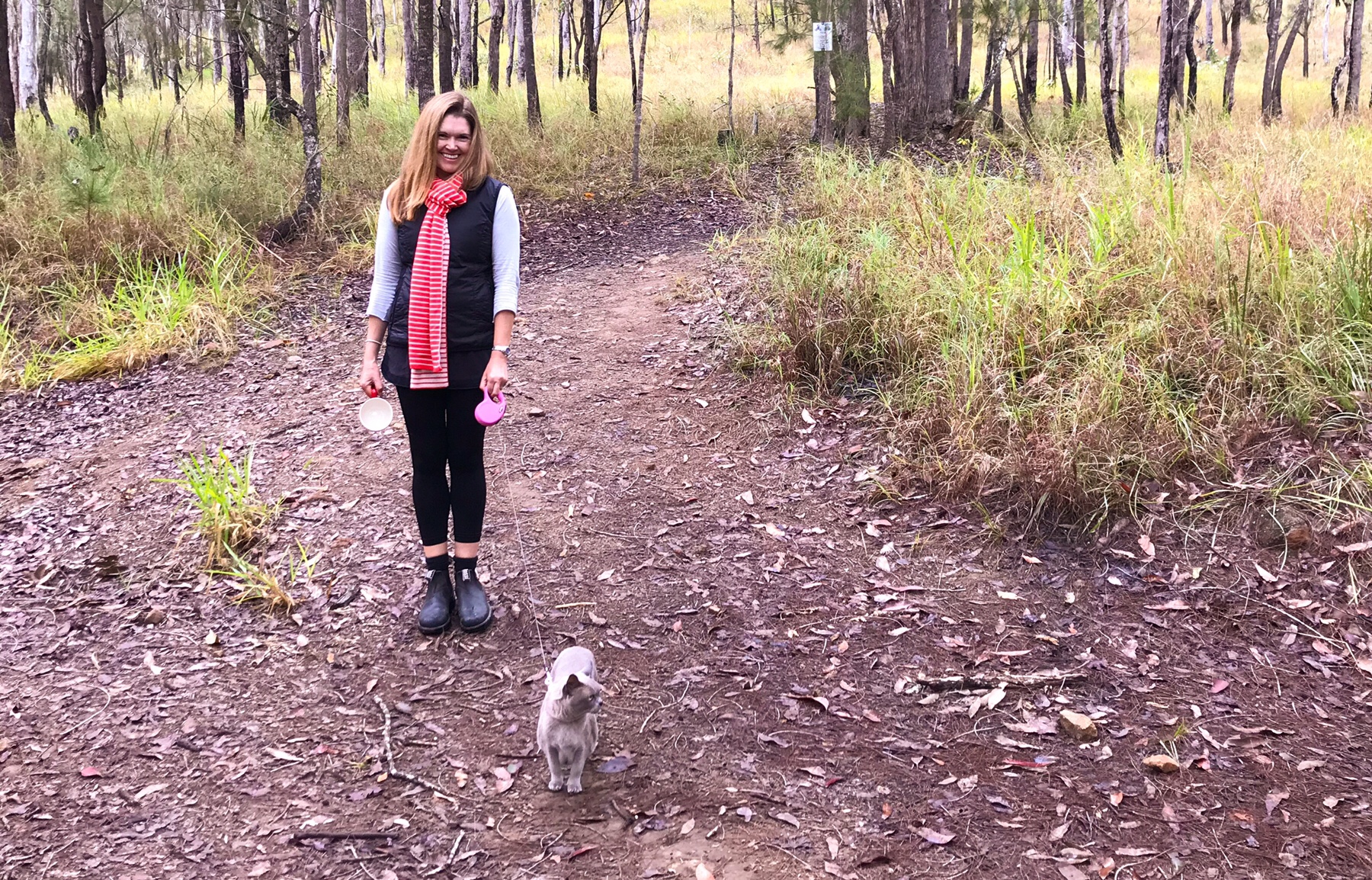 Again, we didn’t get too far before Tassie decided it was time to return to the Zone. She always amazes me with her courage – as a 14 year old predominantly indoor/garden cat, she had not really travelled much before last September, but now she’s been right across Australia. She always knows where the safe Zone is, and keeps her wits about her, even when being dive bombed by birds…they don’t seem to understand she’s a lover not a catcher!
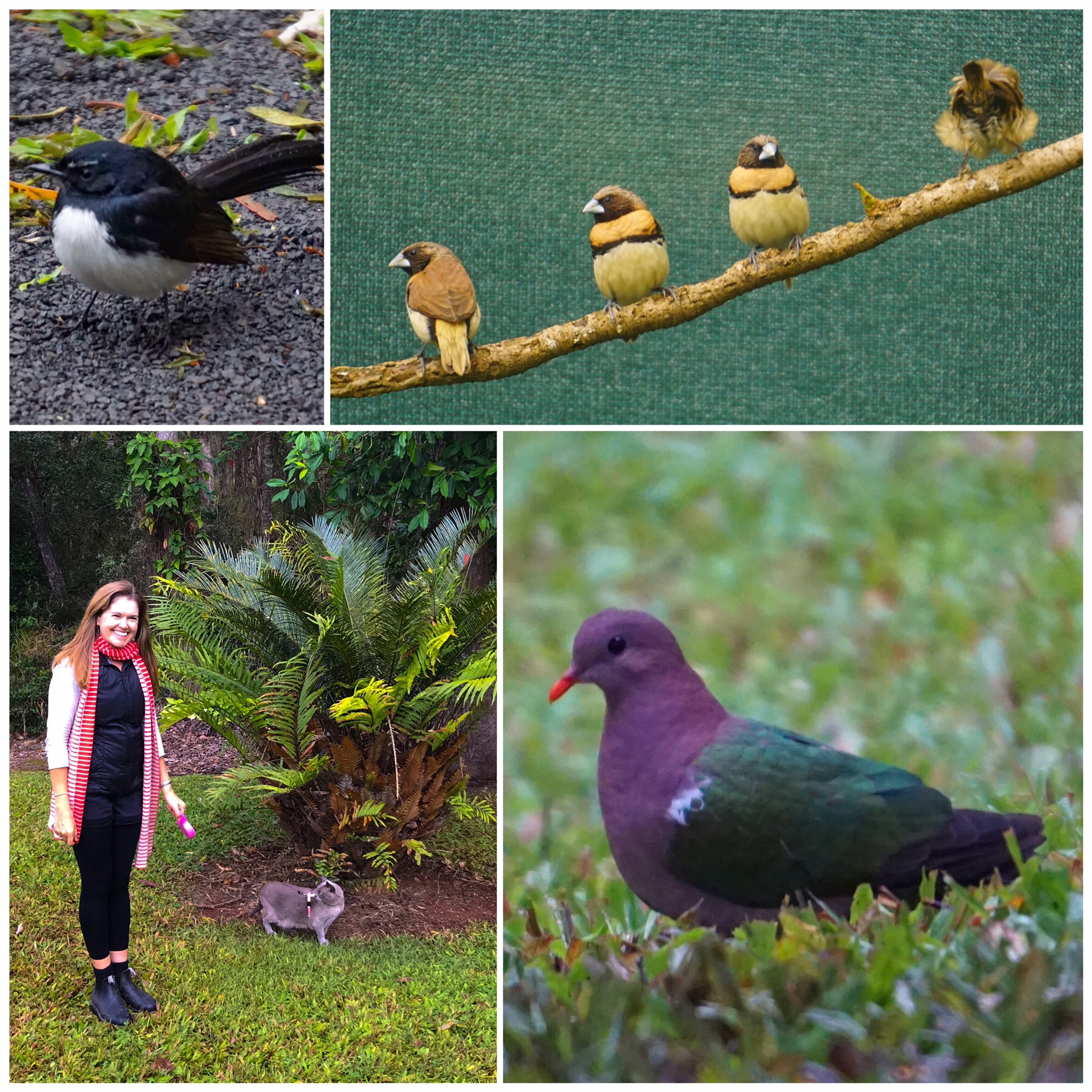 There are plenty of birds here. We have spotted pale yellow robins, firetails, finches galore, and lovely purple and green fruit doves feeding on the mandarins on and below the tree beside where we are camped. The little black and white Willy Wagtail is the feisty one, always flying at Tassie and frightening her back indoors. I guess he’s met some hungrier cats in his lifetime.
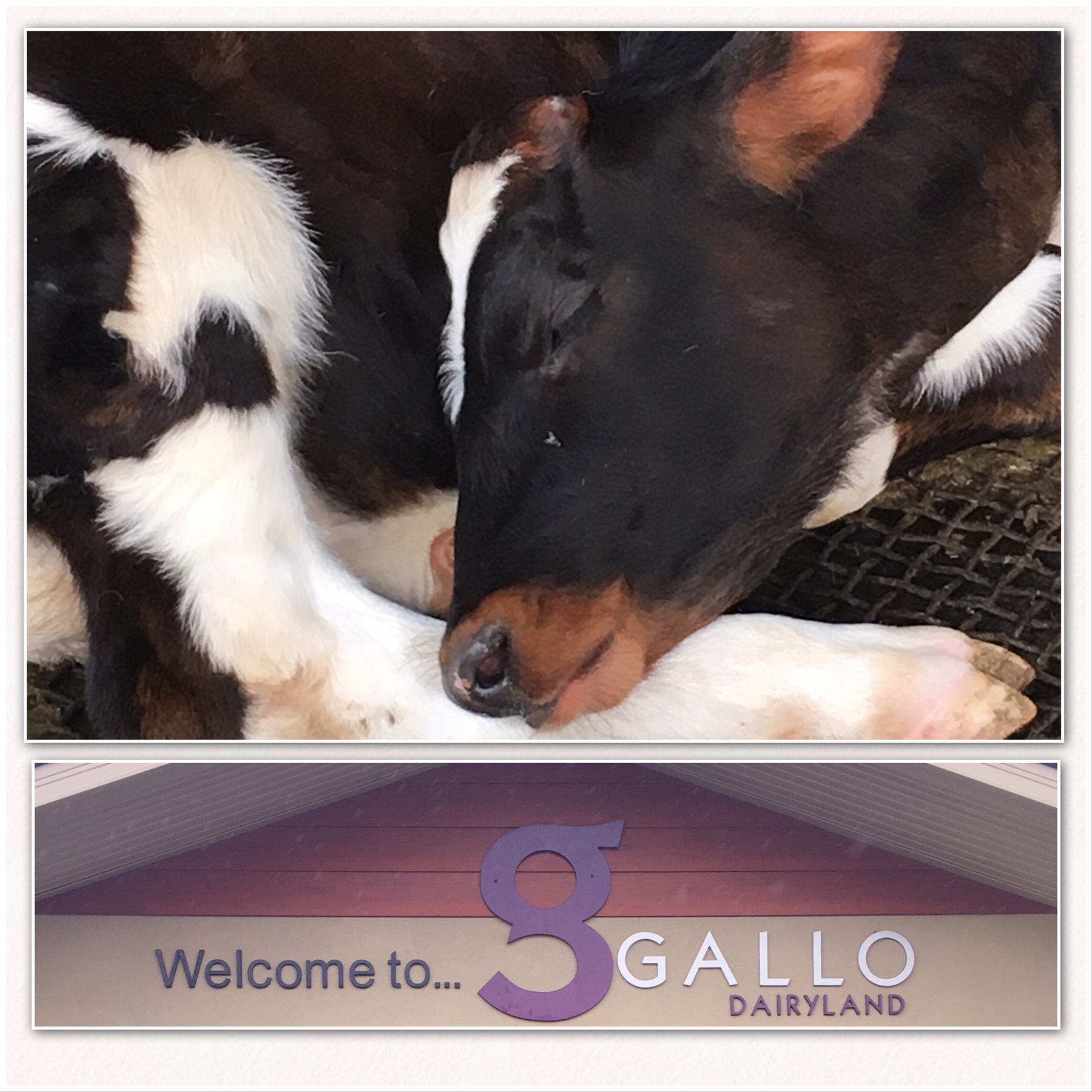
 Soon the cheese was calling, and off we went to the farm where Mr A tried some cheese and purchased a delicious (according to him) blue.
 From here we drove a short way to another little national park – home to the Curtain Fig. This tree is a survivor in a small patch of remaining rainforest which was saved from the saw in the 1800s by the rocky surface, not ideal for grazing.
 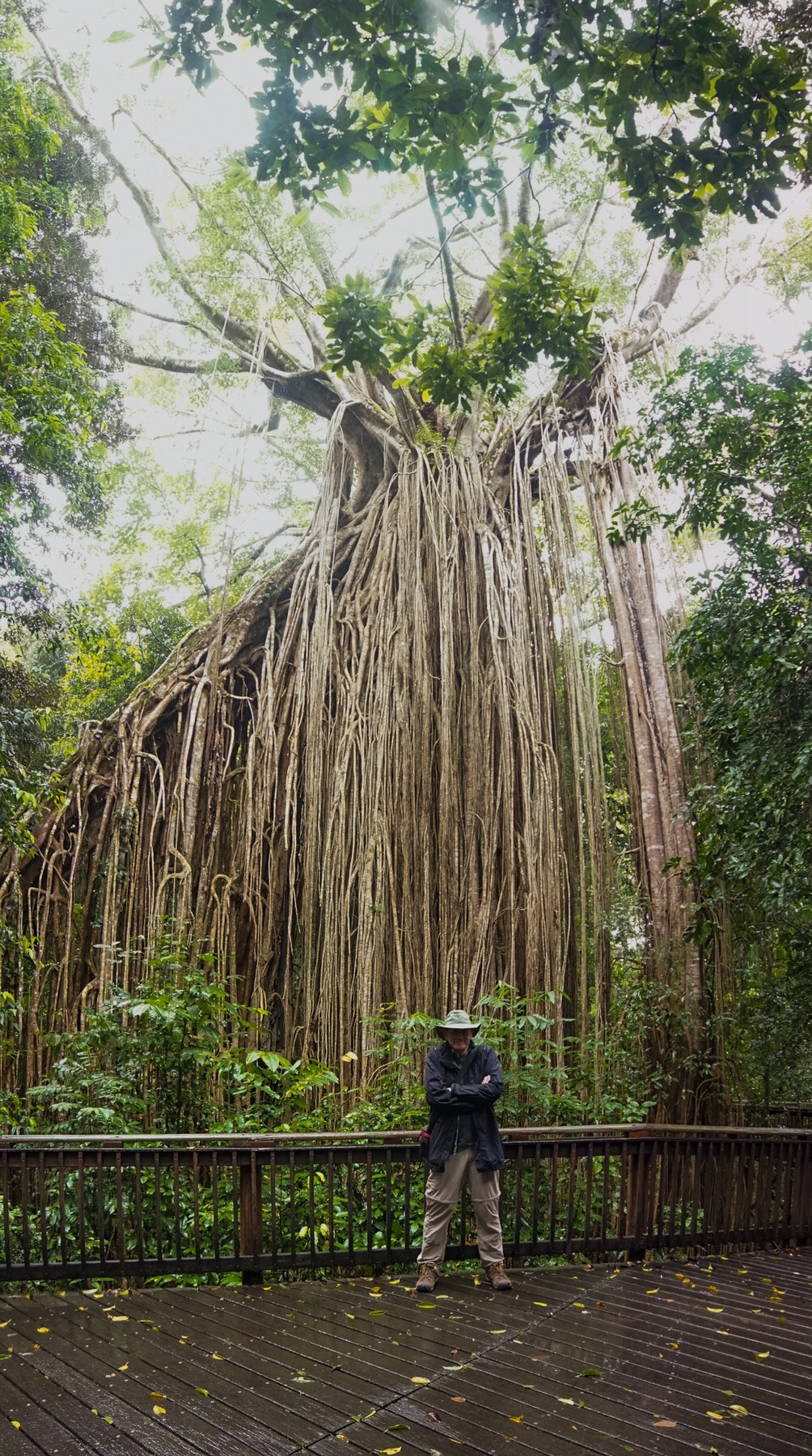 It is protected by a raised boardwalk, and pretty magnificent.
 Mareeba didn’t tempt us in to town, and it had a very uninspiring campsite as well, so after the using the time to clean sheets, clothes, truck and Zone we decided to head off to Atherton, the main town up here on the tablelands.
 Moving on, we called in at our first fruit and veggie shop on the tablelands. If you’re not au fait with the area then you should know it is famous for its basalt soils and temperate climate that encourages an incredible range of produce. Almost everything seems to grow up here!
 ….And then…we spot another Zone parked by us. So we all introduce ourselves and it turns out the Zoner (Ken, owner of #101) was someone I had already previously messaged to meet up in Cairns, as I had seen he had just picked up his van.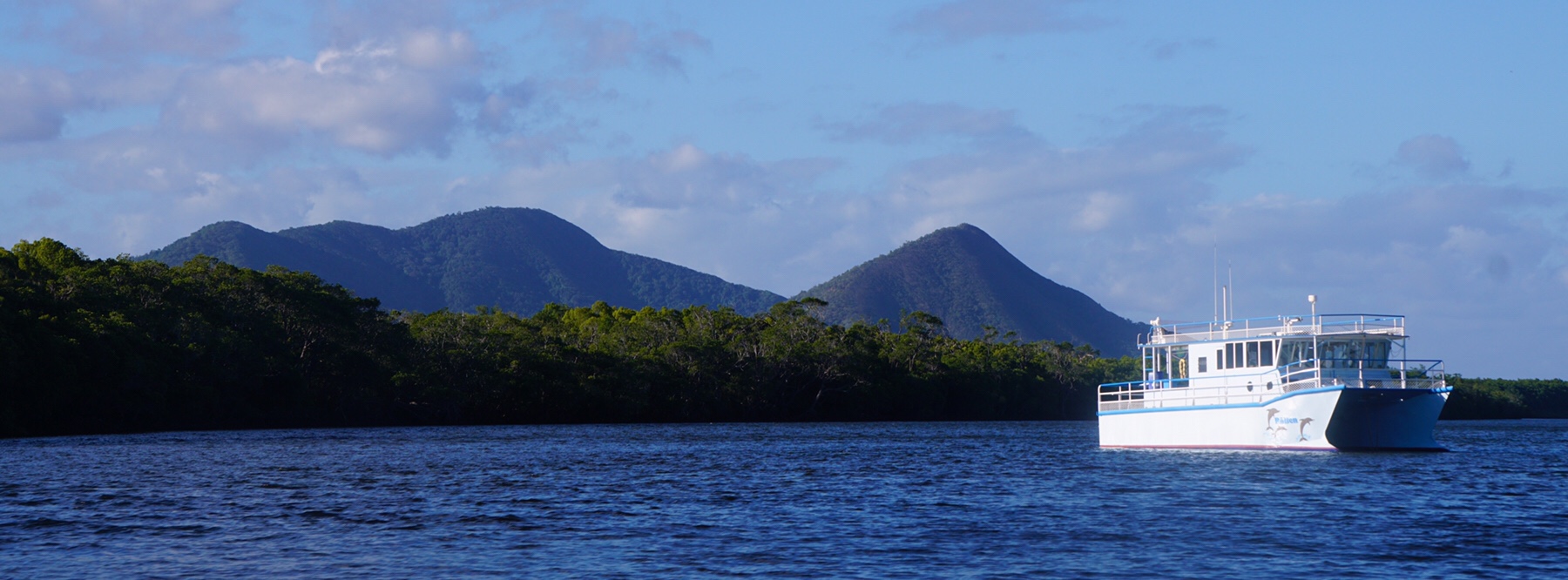
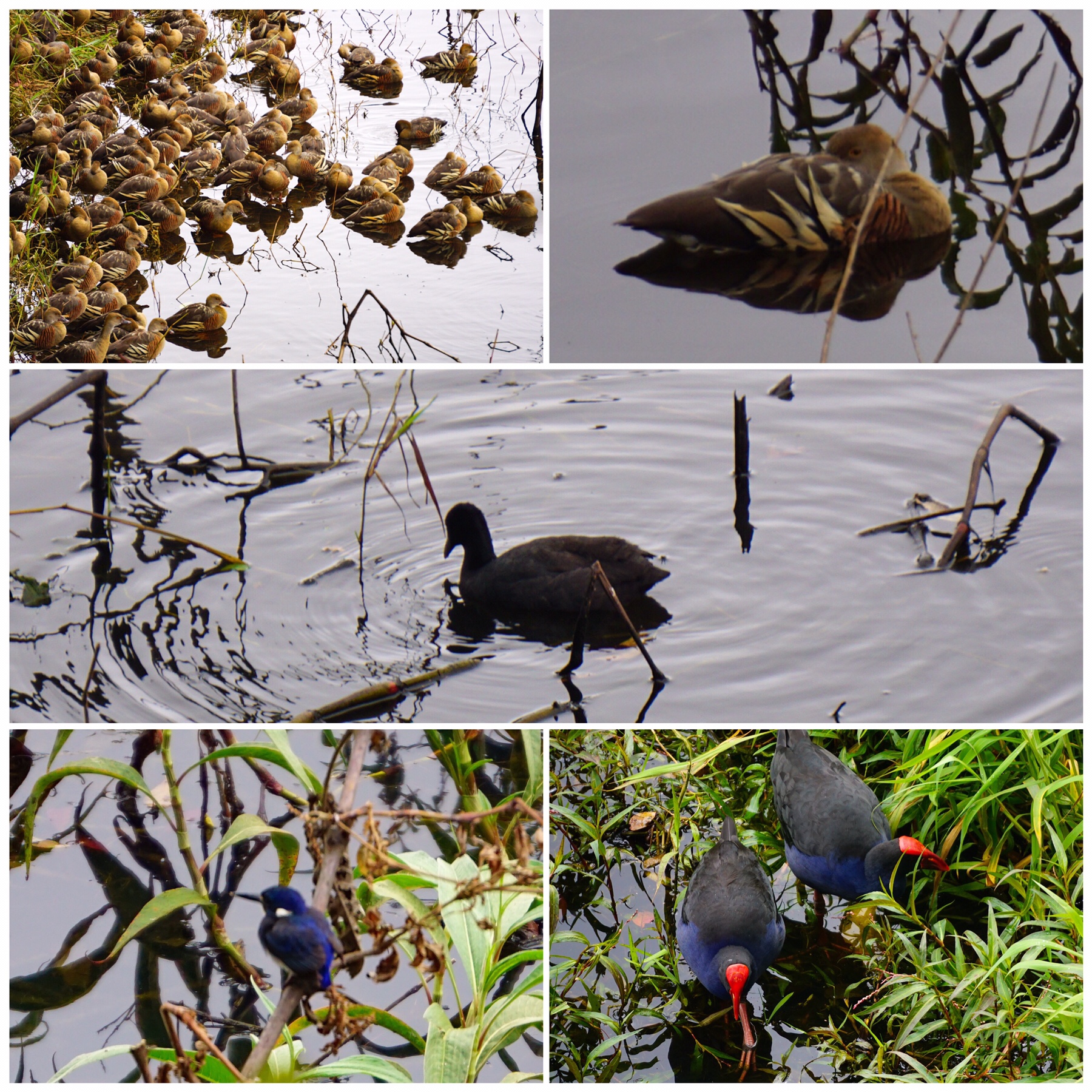
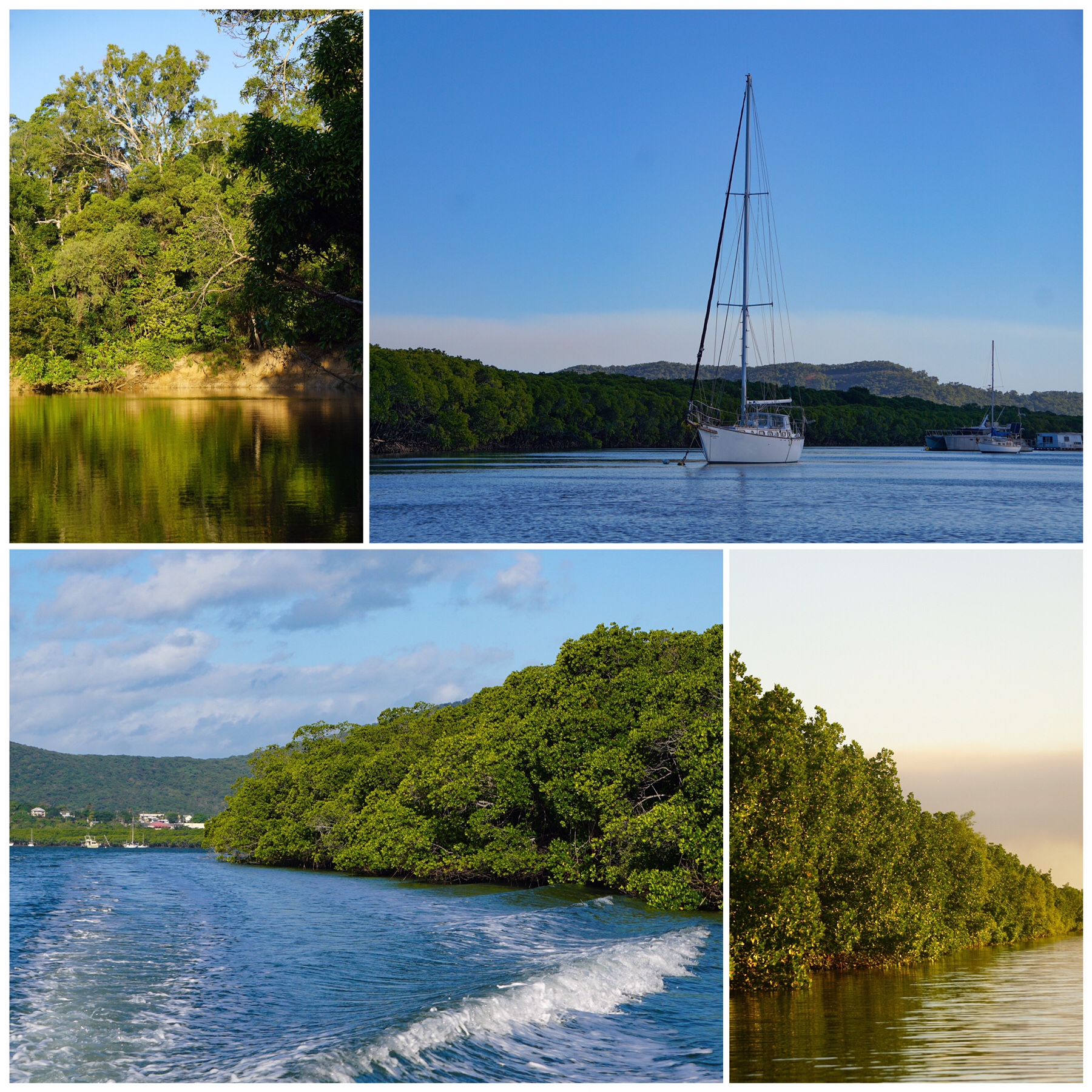 Skipper Mark let the motor rip, and sped us up to the quieter parts of the river, about 10km upstream. I spotted a Forest Kingfisher (my first one!), a blur of blue and white as we whizzed past, and hoped there might be more when we slow down.
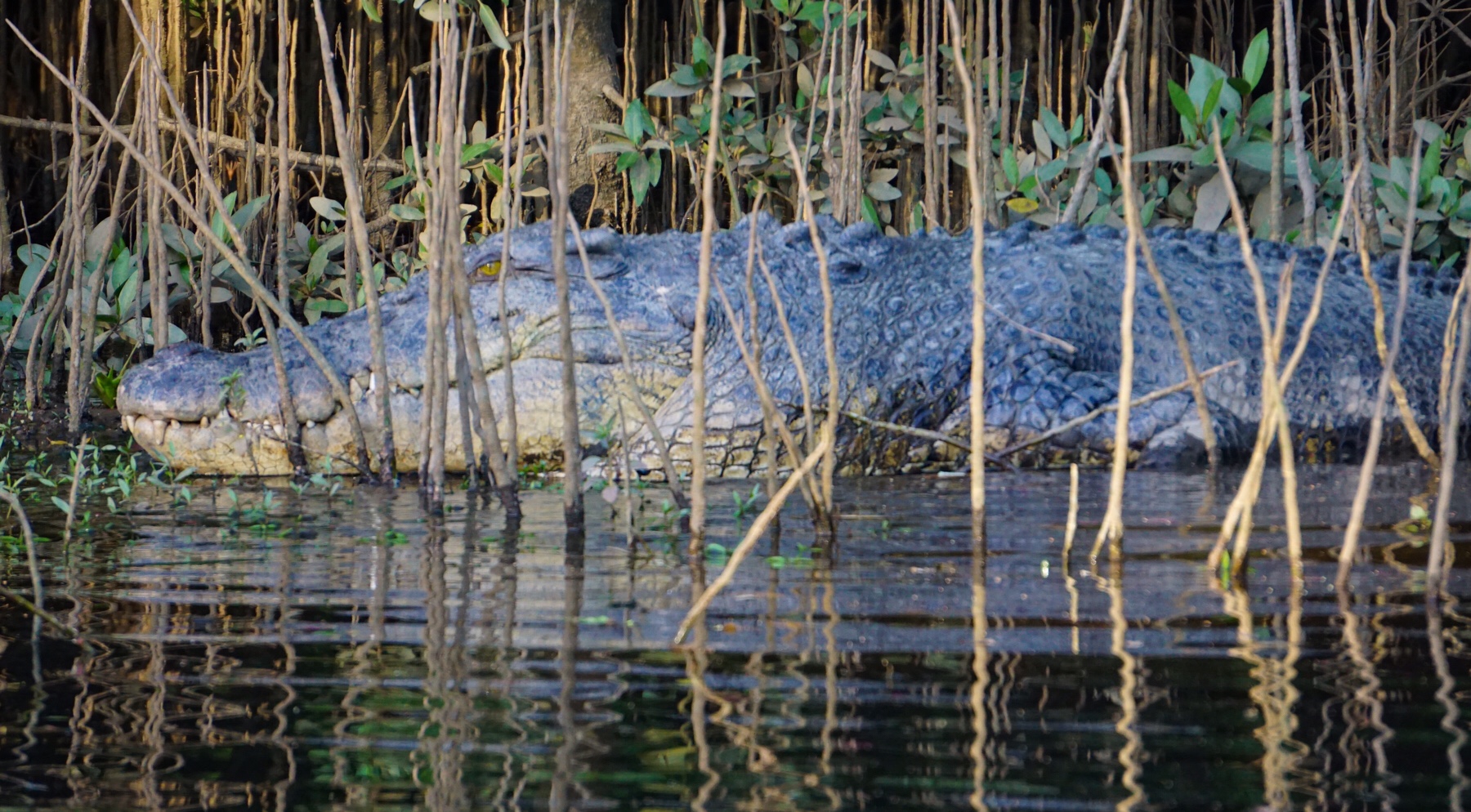 Our skipper lowered an electric boat motor into the water, and we moved slowly past for a better look, before leaving him alone in search for more wildlife.
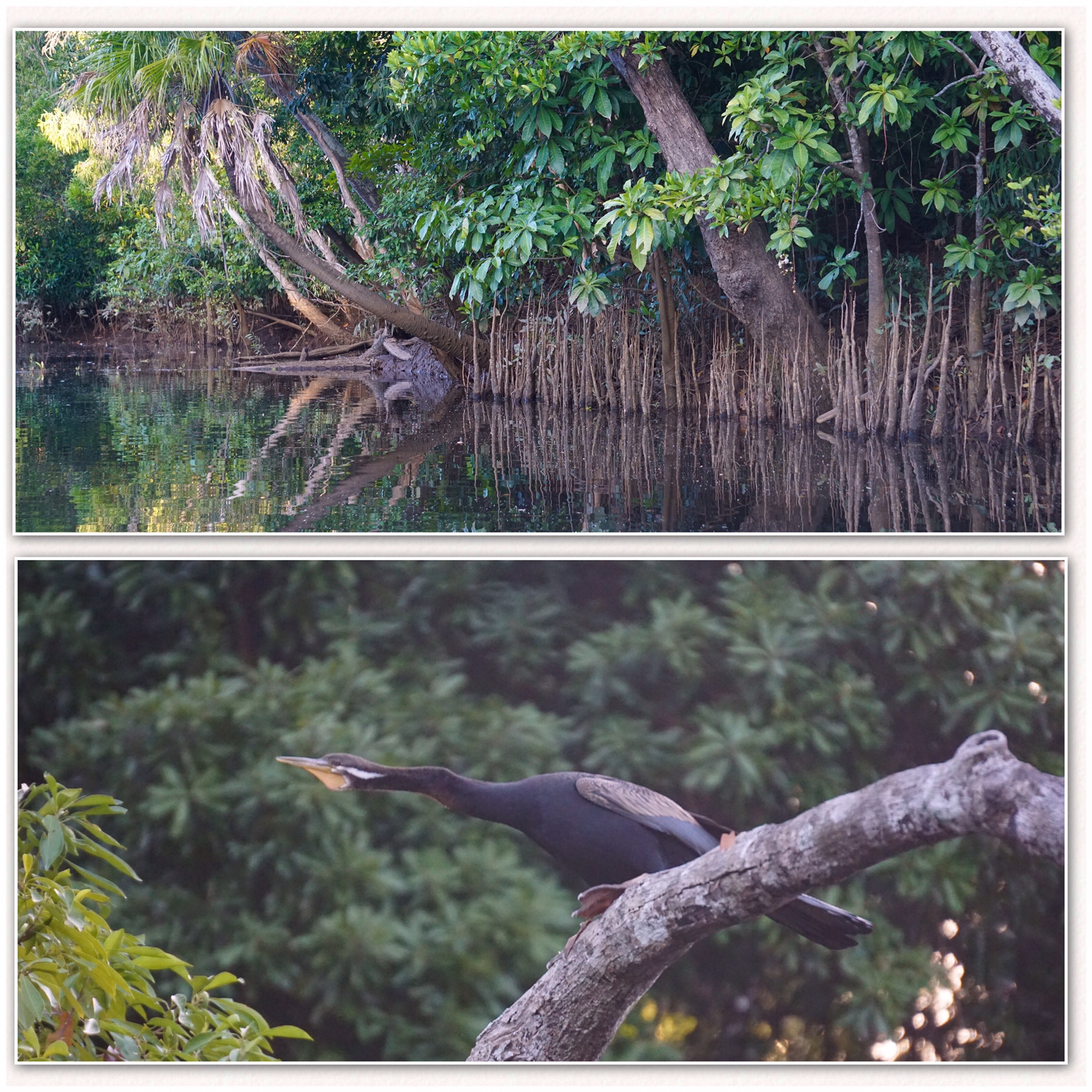 We spotted a Spangled Drongo and a Wompoo Fruit-Dove flying past. Our skipper called it a Wompoo pigeon, arguing a fruit dove is much smaller. That’s not what my best selling bird book says, but hey-ho…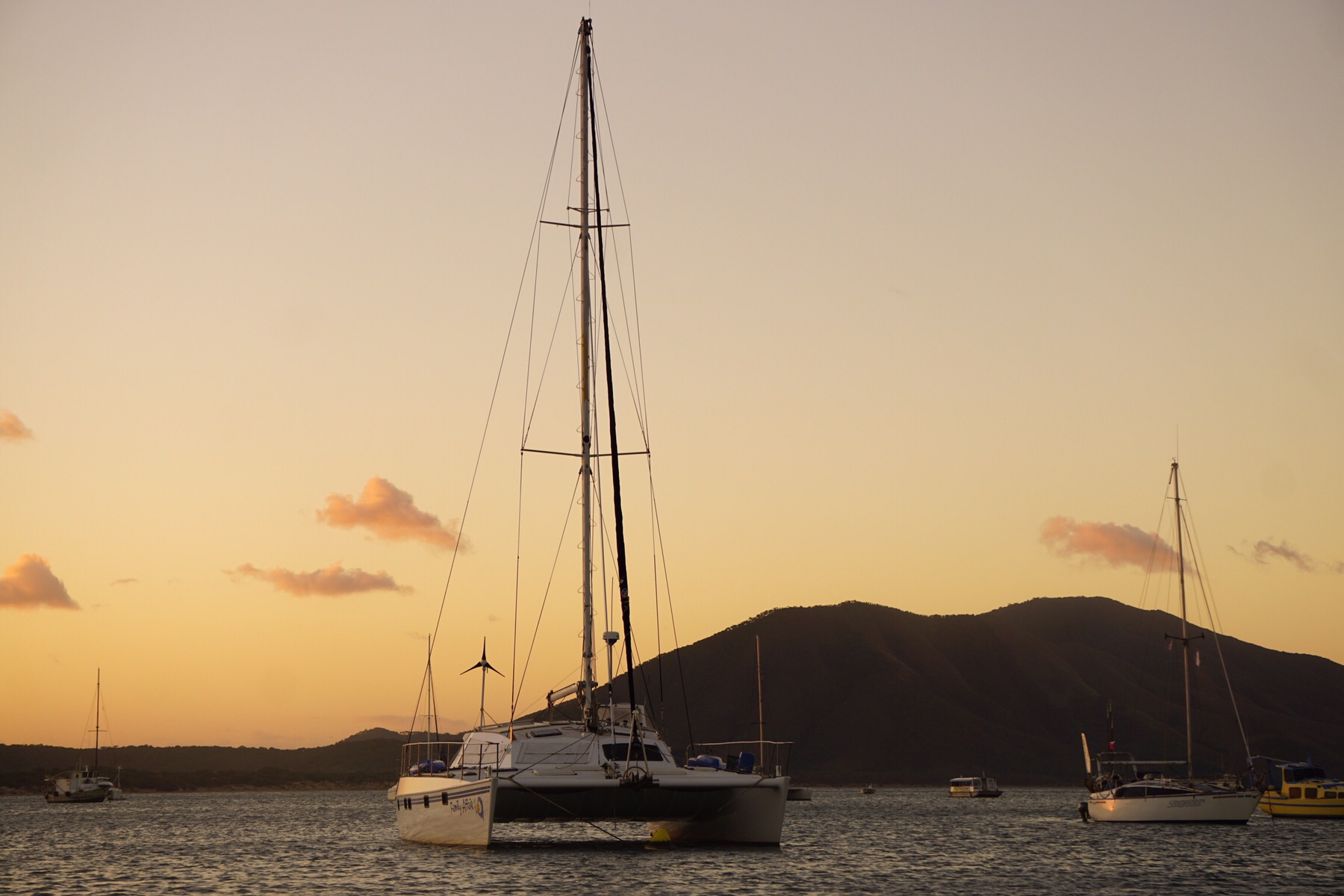
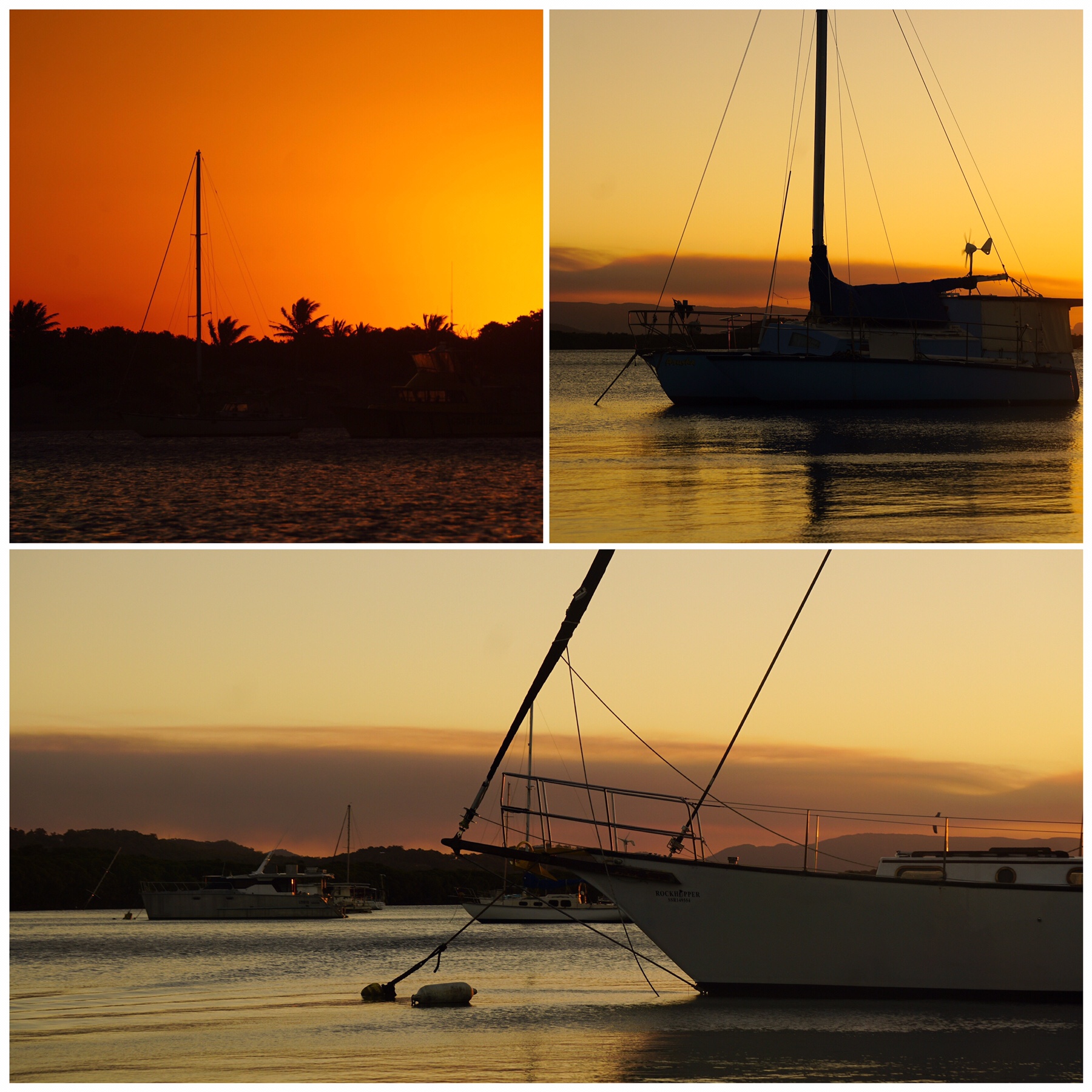 In dire need of defrosting, we decided to head to a nearby restaurant for dinner and a warming glass of wine…much better.
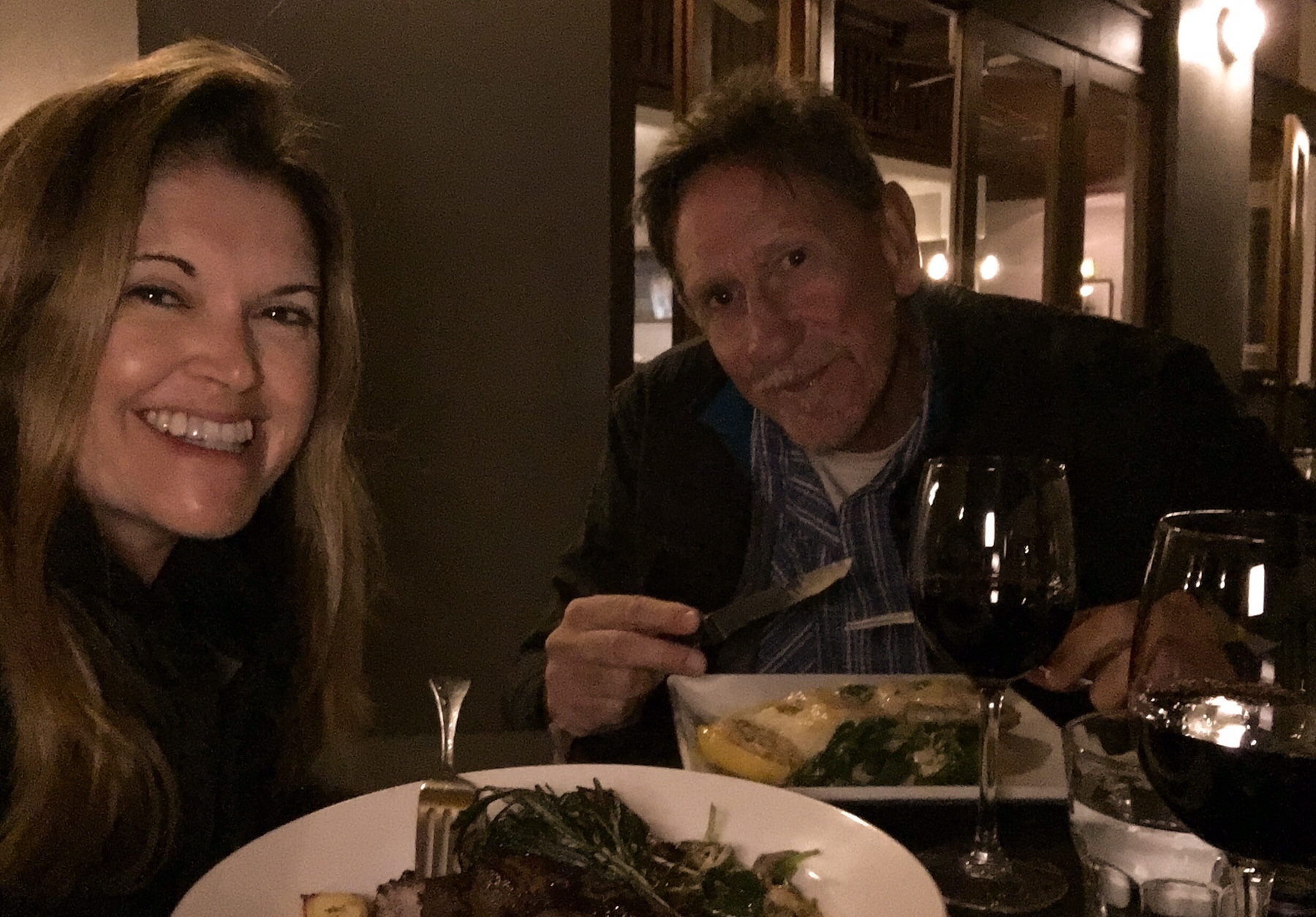 A fine conclusion to our visit to Cooktown, but not sure we’ll be recommending the bird watching tour!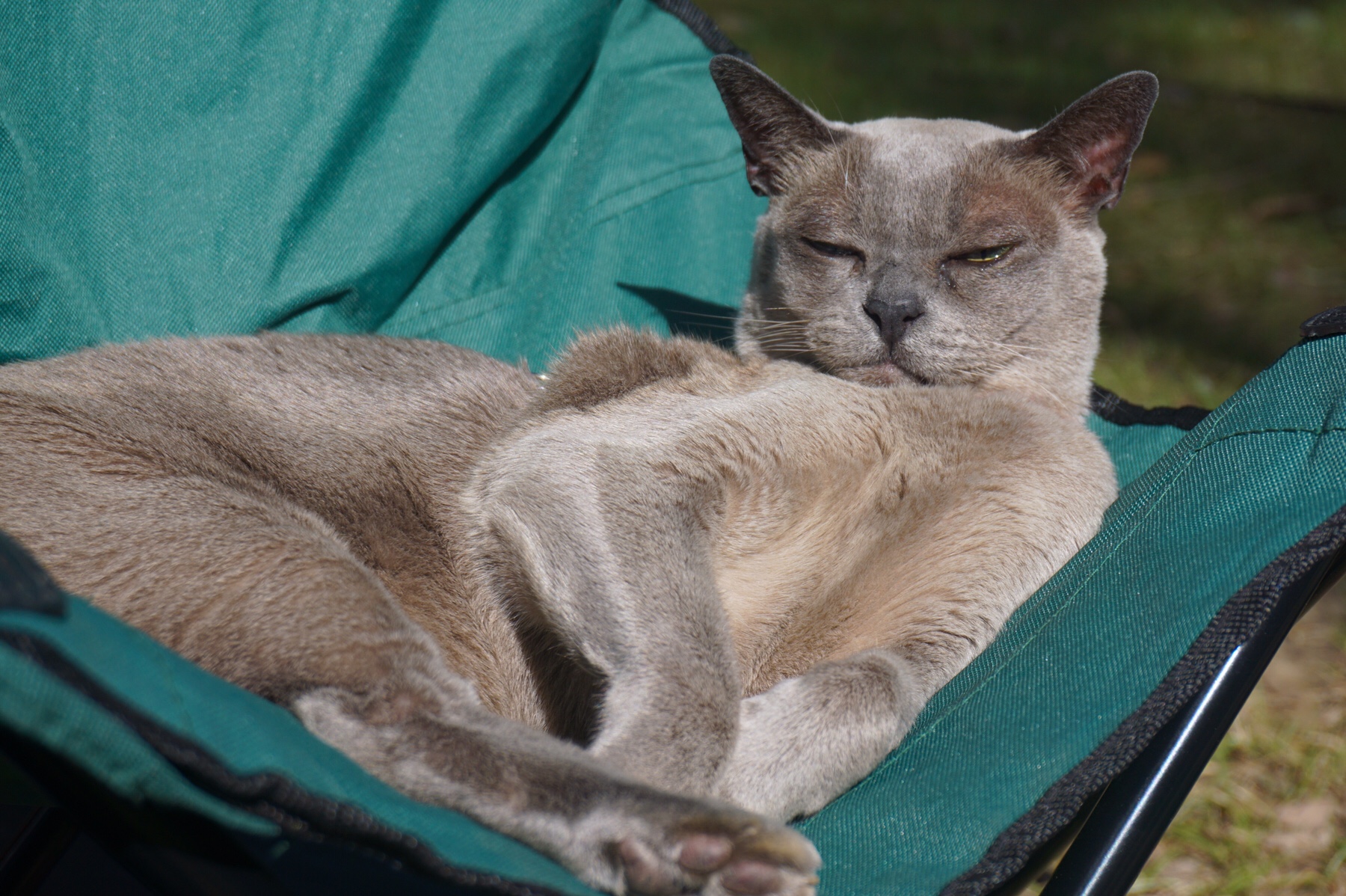
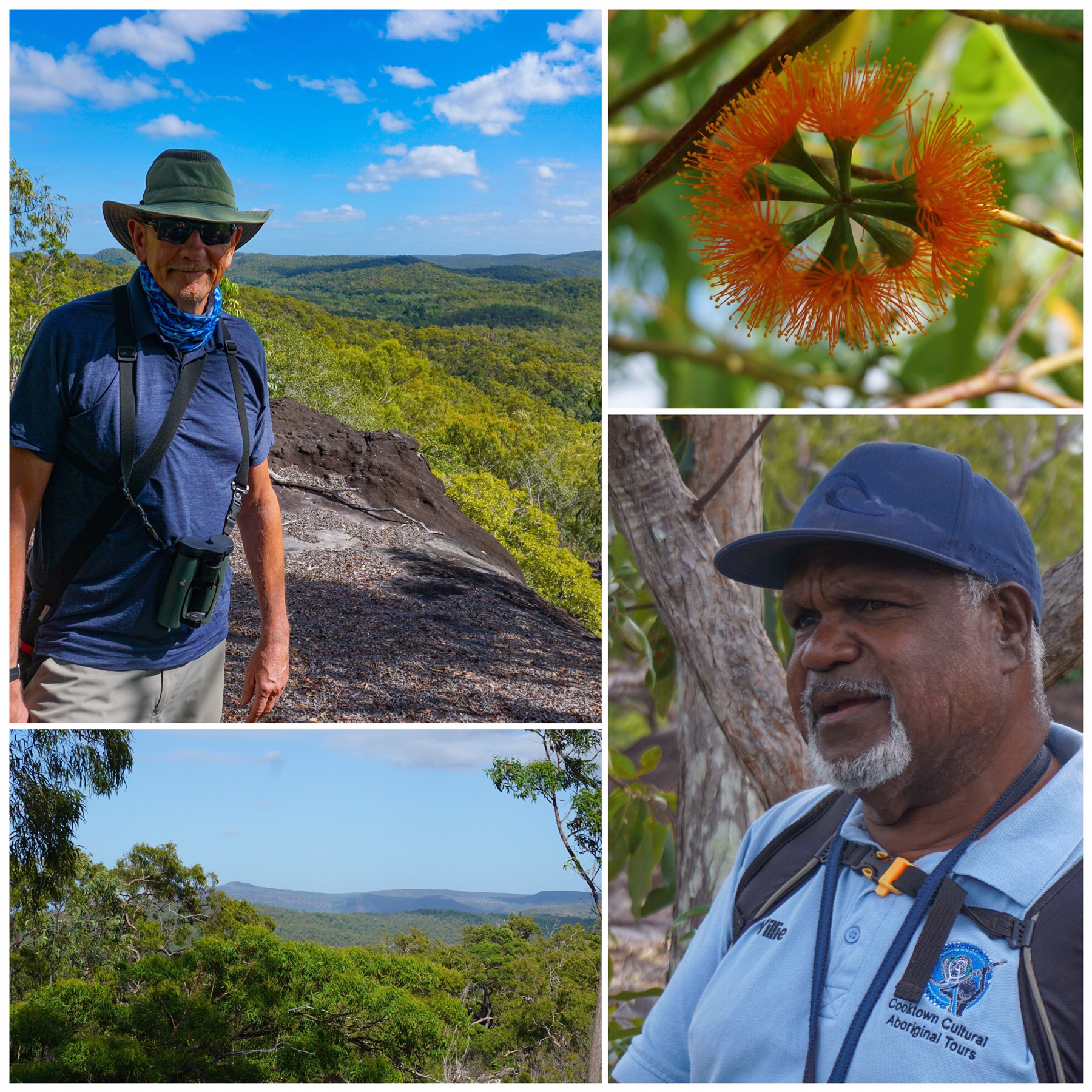 Willie started to take us on a tour of his “backyard”, where his grandfather’s bones are buried and where he was birthed. He explained what they ate and drank, plucking plants and fruit for us to smell and feel, and talked about the seasonal migrations from the bush to the beach, at pains to point out they were not nomads but followed a set path of migration along the songlines.
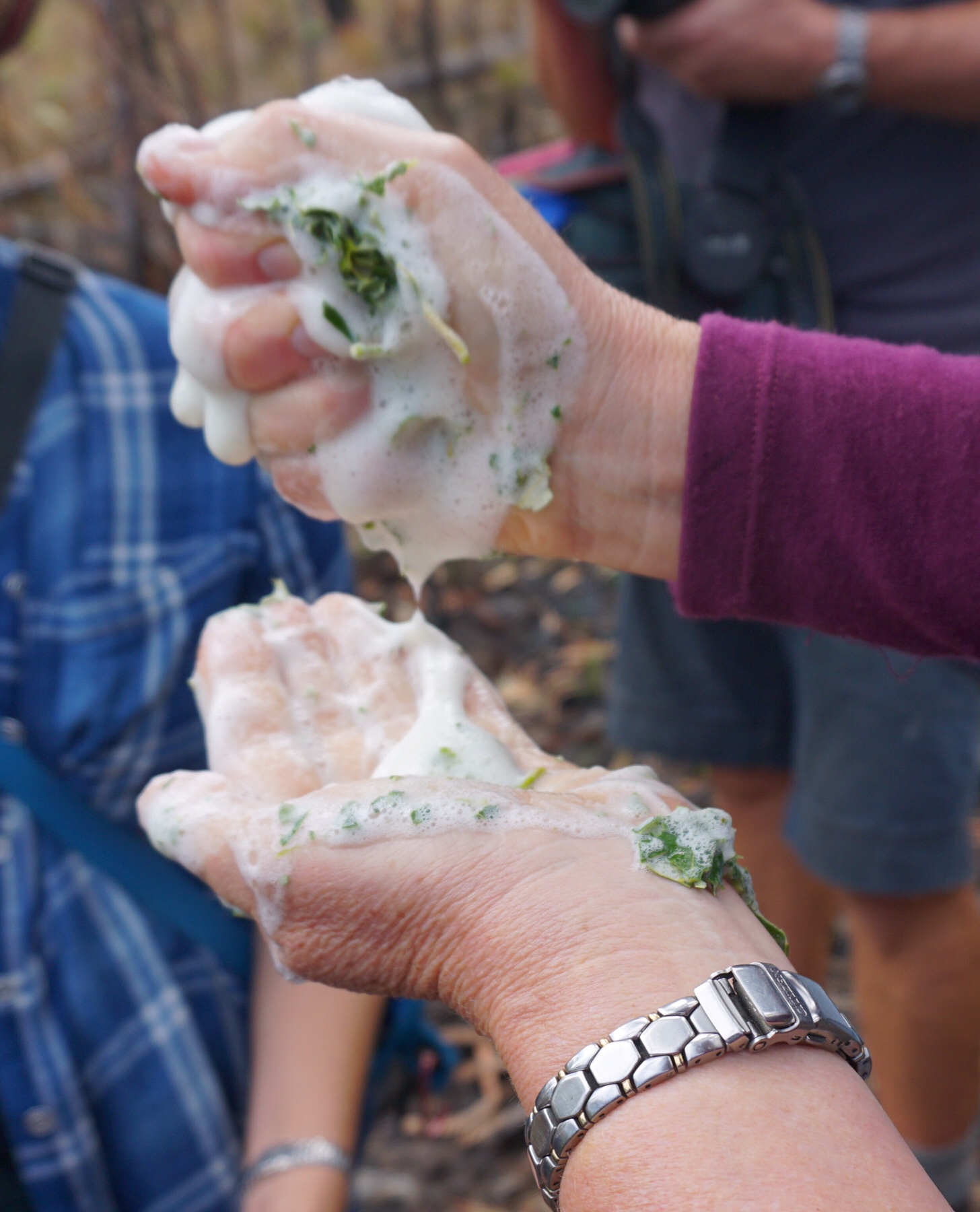
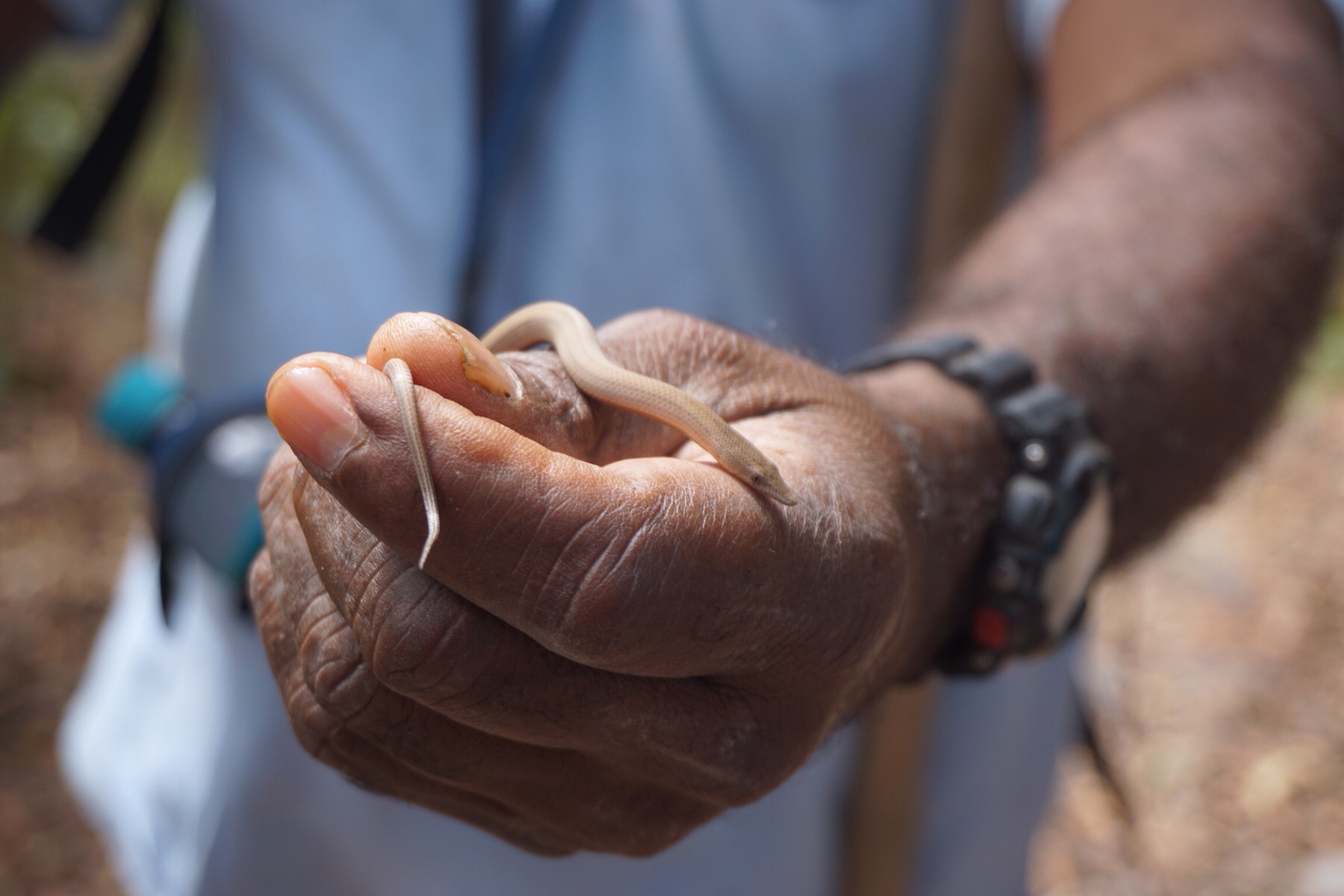 The knowledge of flora and fauna these people have accumulated over 40,000 years and passed on through stories, music and art is just incredible. He had Catherine mix up some seeds in her hand that are used to put a protective coating over a wound, while he had another lady rubbing together some leaves from the soap bush creating a cleaning compound that was antiseptic.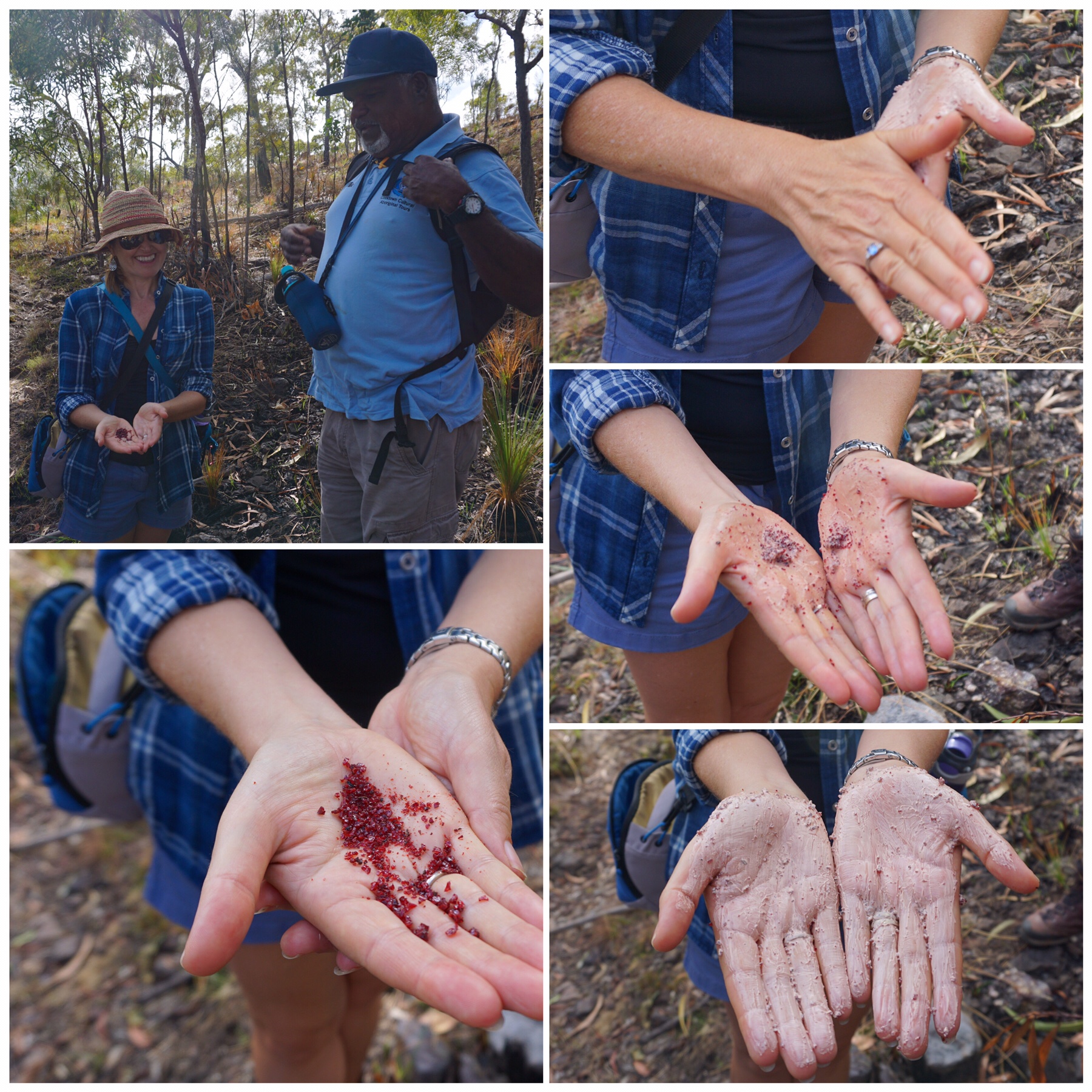
 We were led to a birthing cave and Willie explained the symbolism of some of the drawings, how they were painted and why. A big question the community is discussing is wether the drawings should be renewed, as they fade after a couple of thousand years. A couple of thousand! Incredible..these timeframes are mind boggling.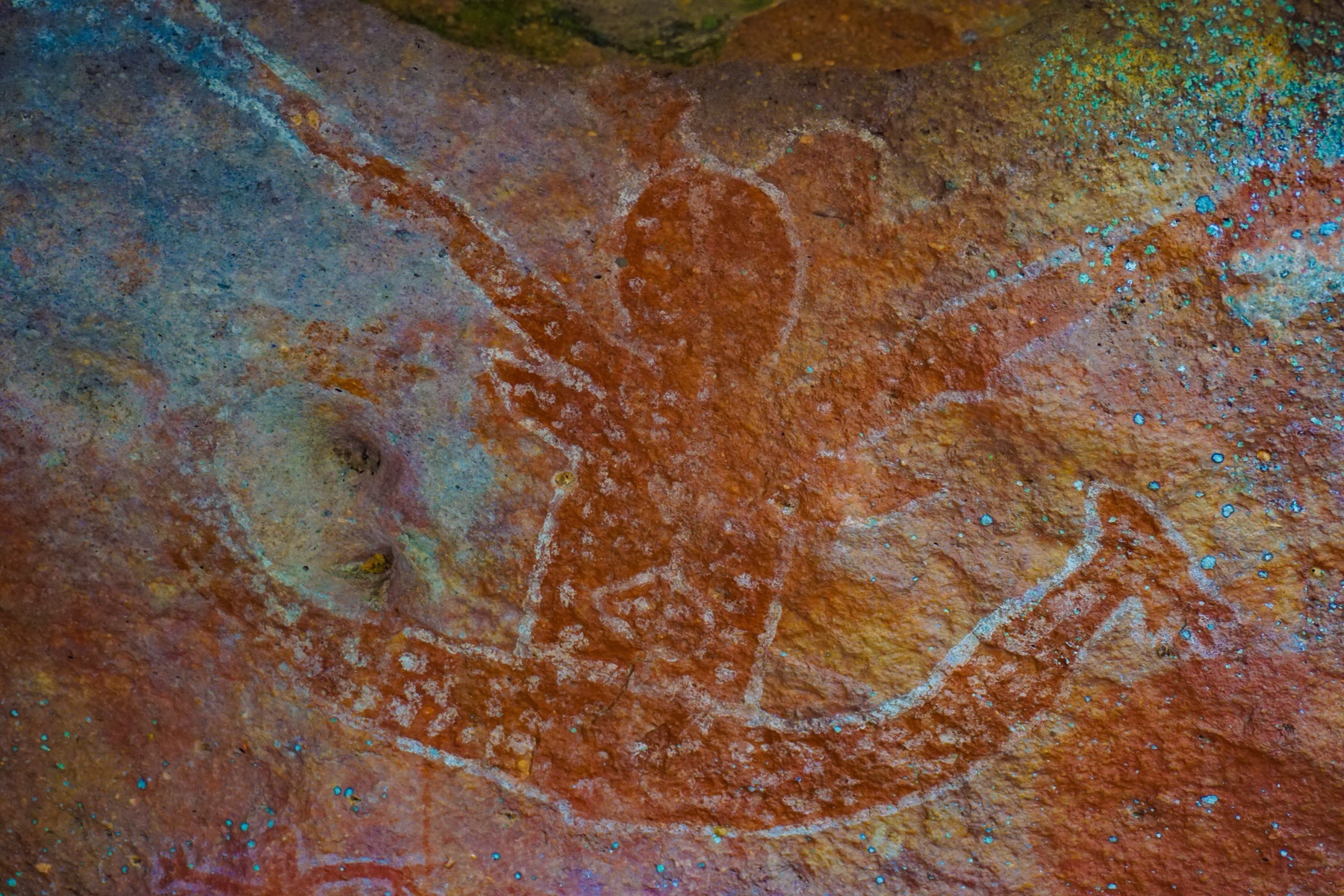
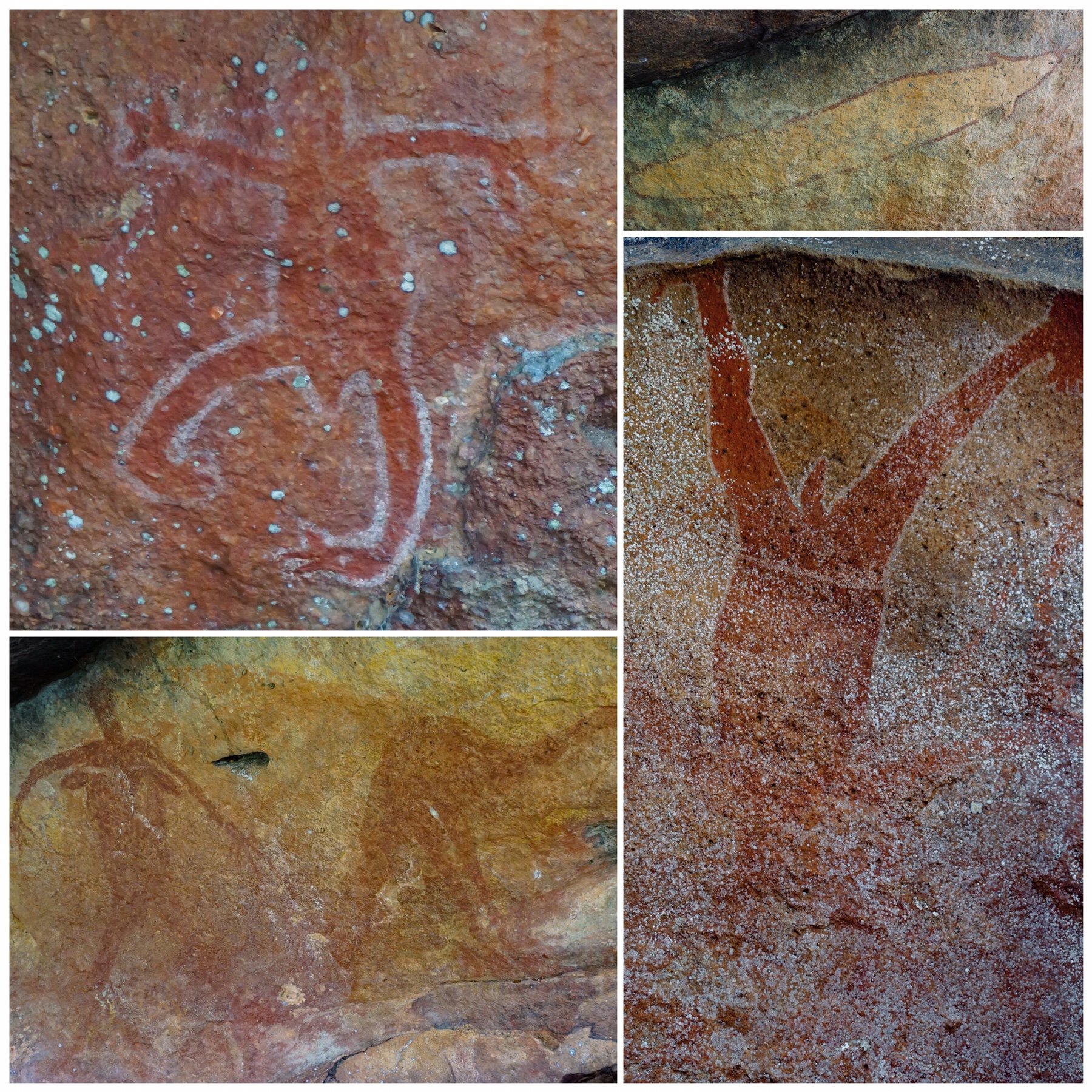
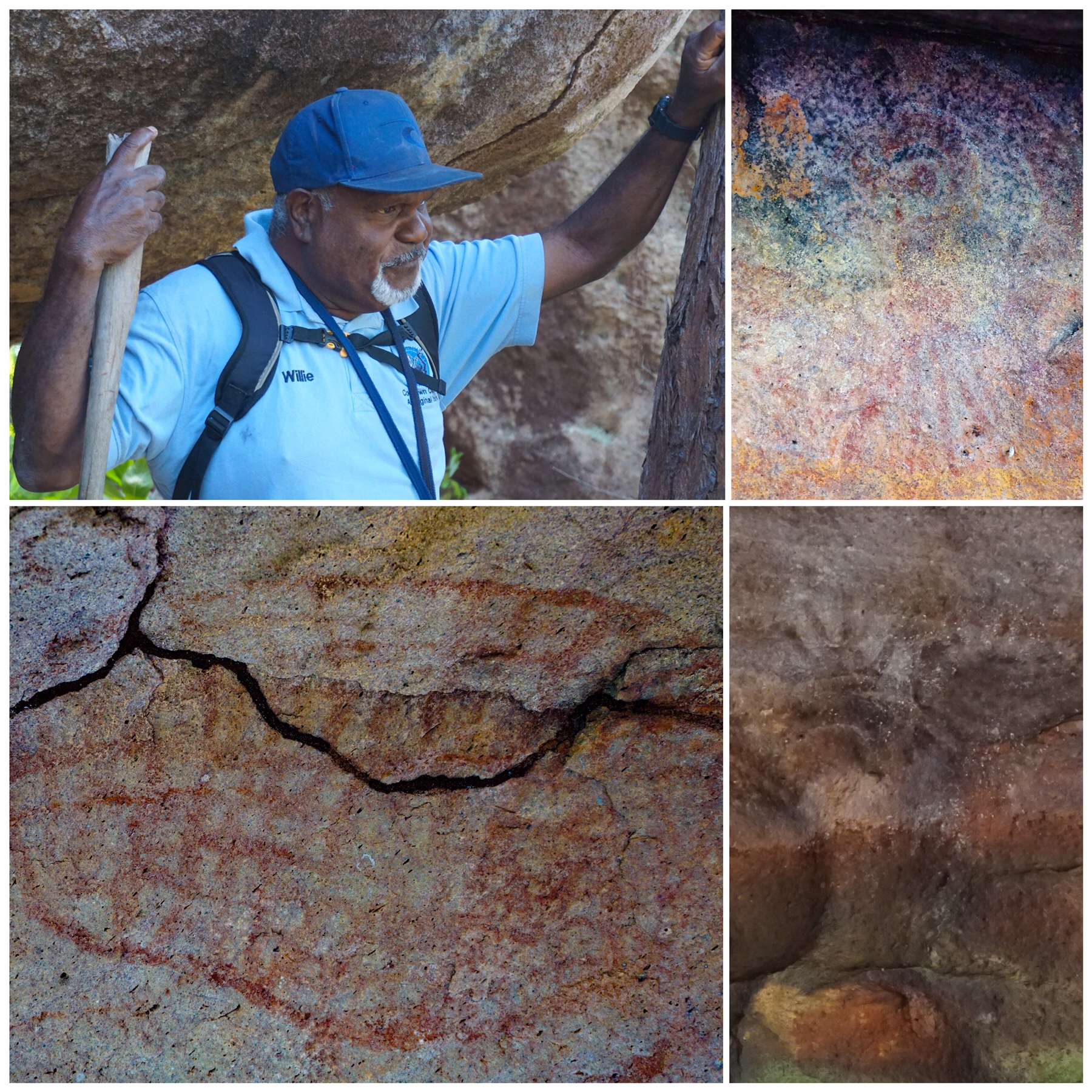 Catherine and I tried to take in as much as we could, but it was like walking into a library and having a teacher open a couple of books at random and read a few lines. We knew it was but a fleeting glance into a world we will never fully understand, but certainly appreciate and respect now even more what a trove of wisdom is there.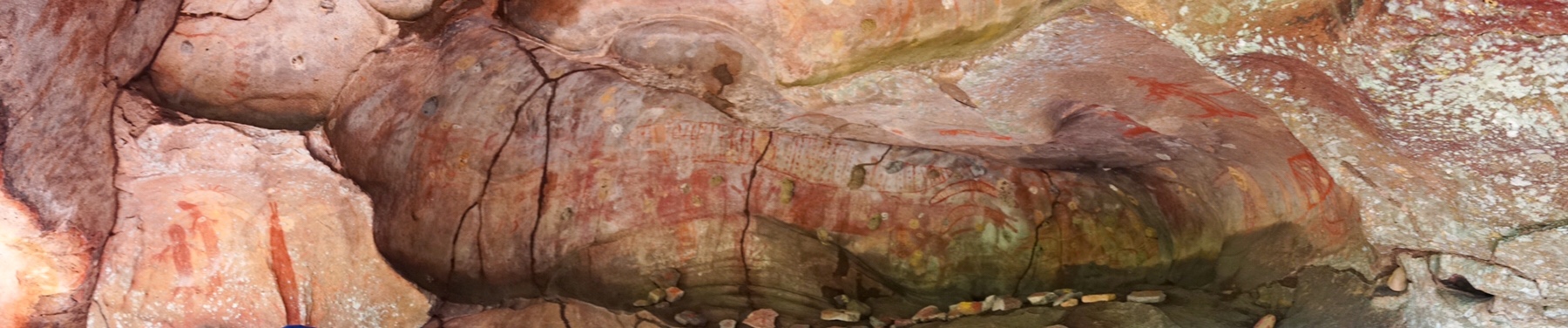
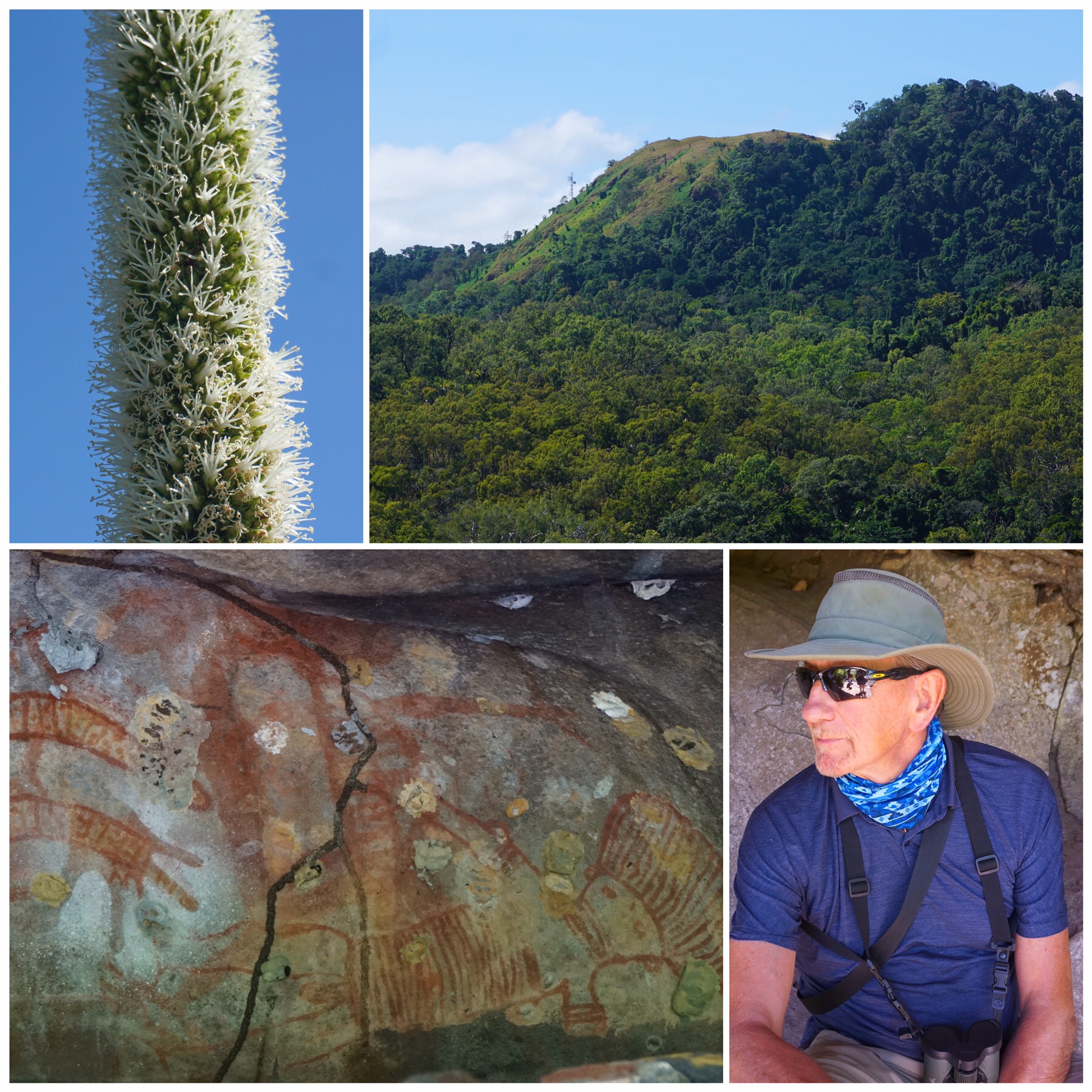 If you come this way, support these efforts to help us all better understand and respect aboriginal culture. Willie Gordon can be found at Cooktown Cultural Aboriginal Tours – the information centre knows where to find him or indeed others like him.