Location: Woodford, Moreton Bay Shire, and then Brisbane, Queensland, Australia
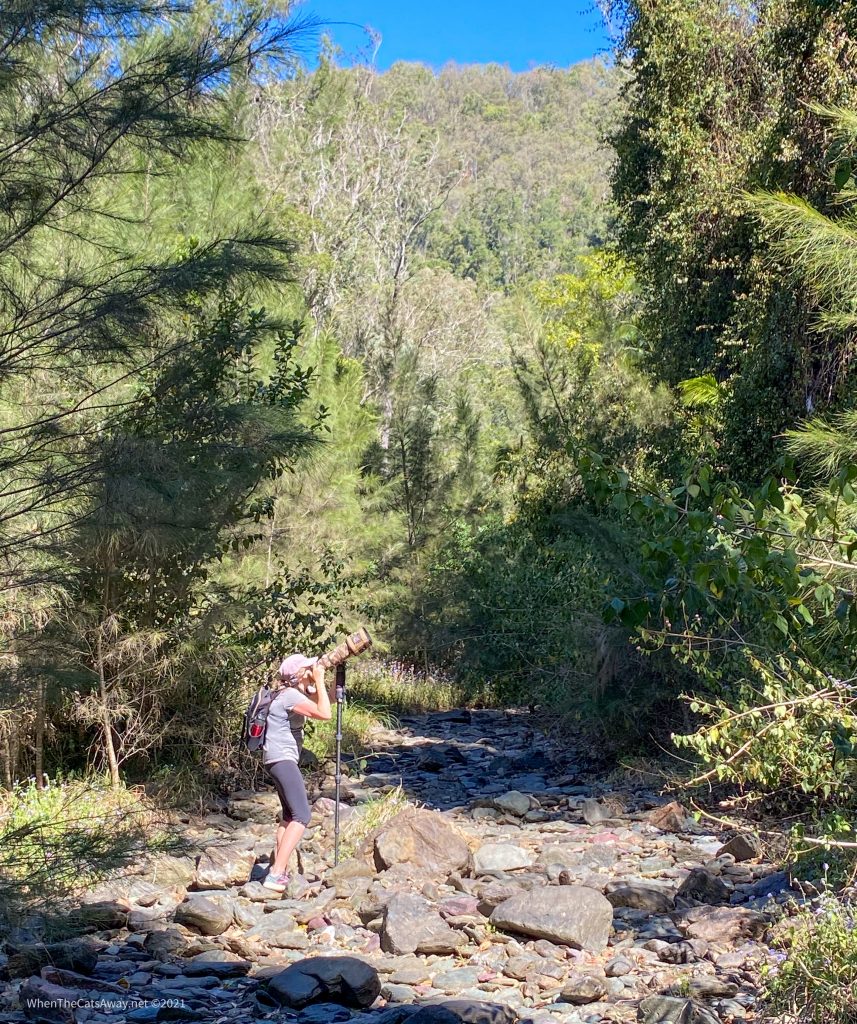
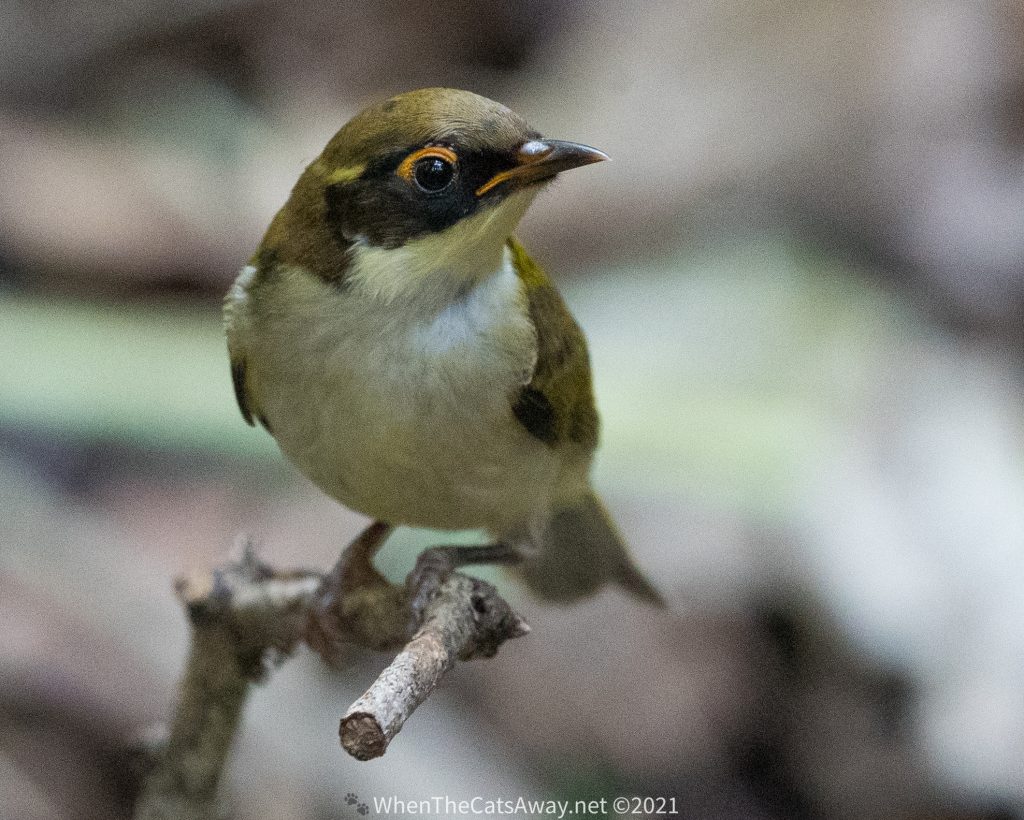
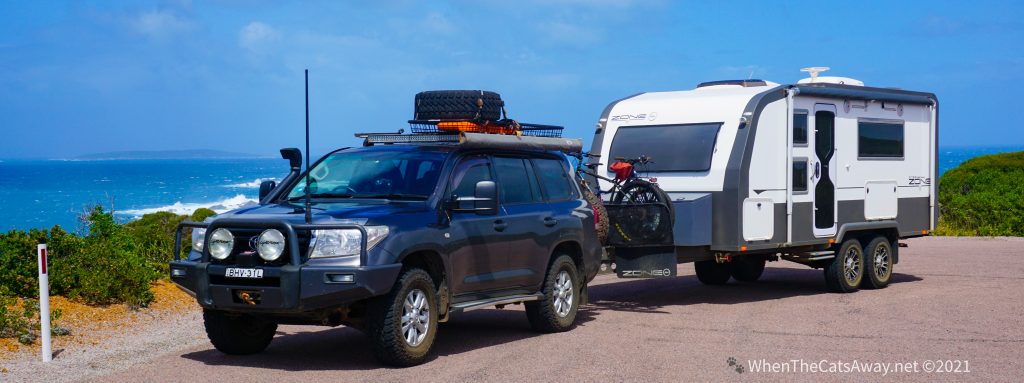
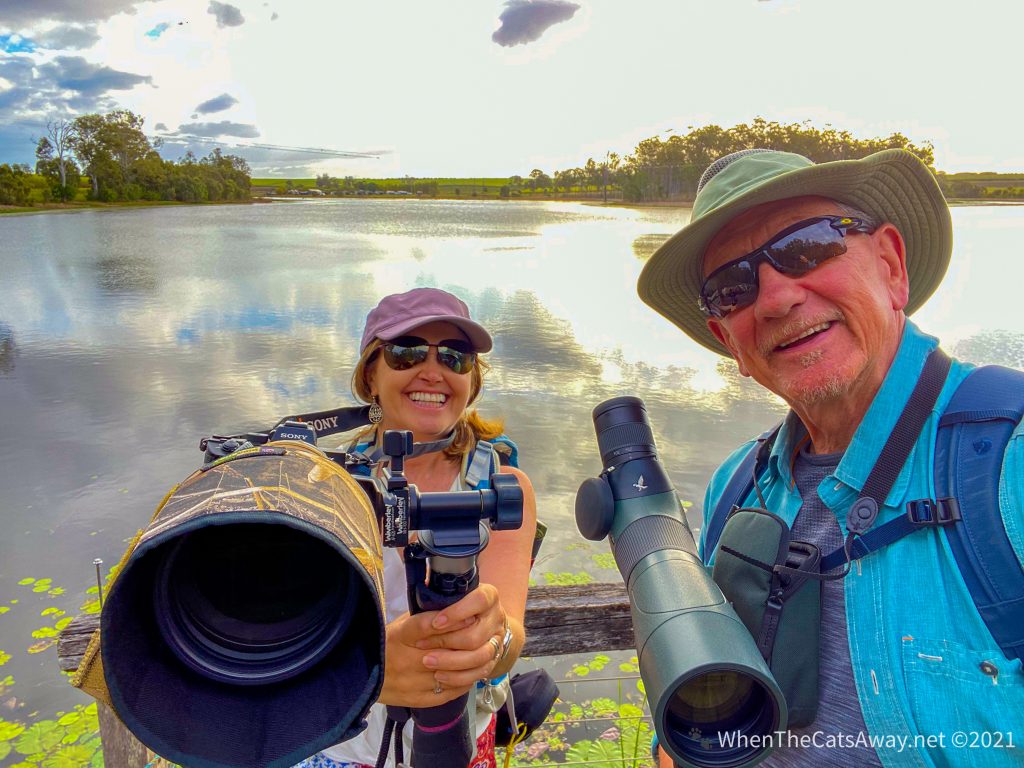
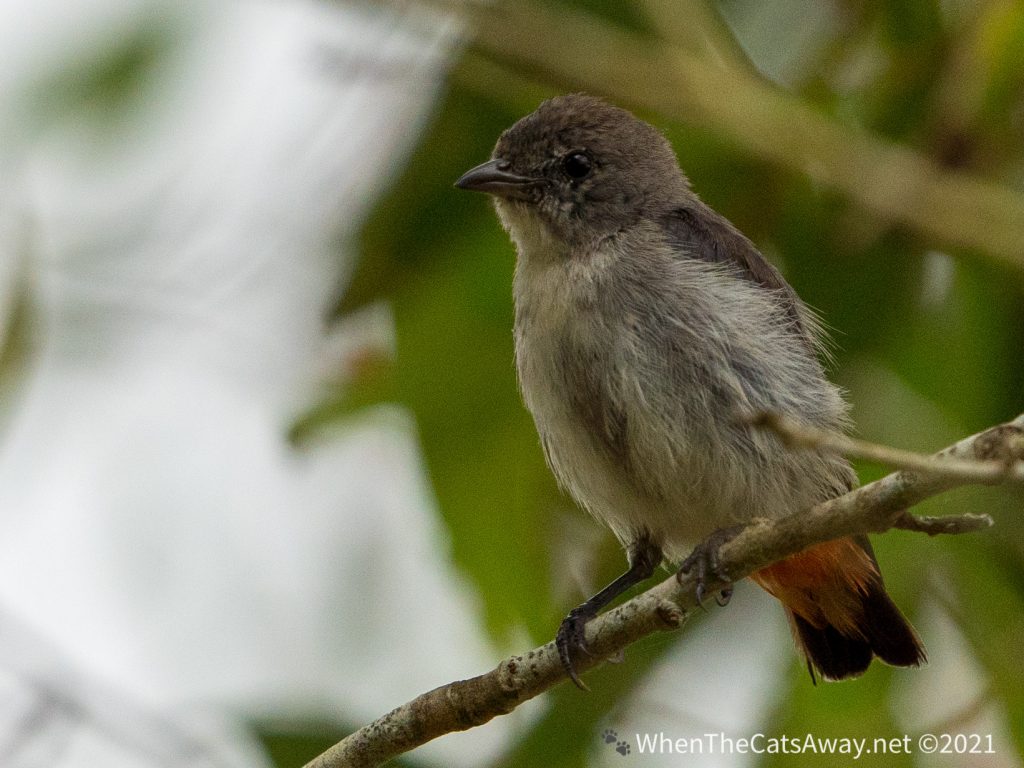
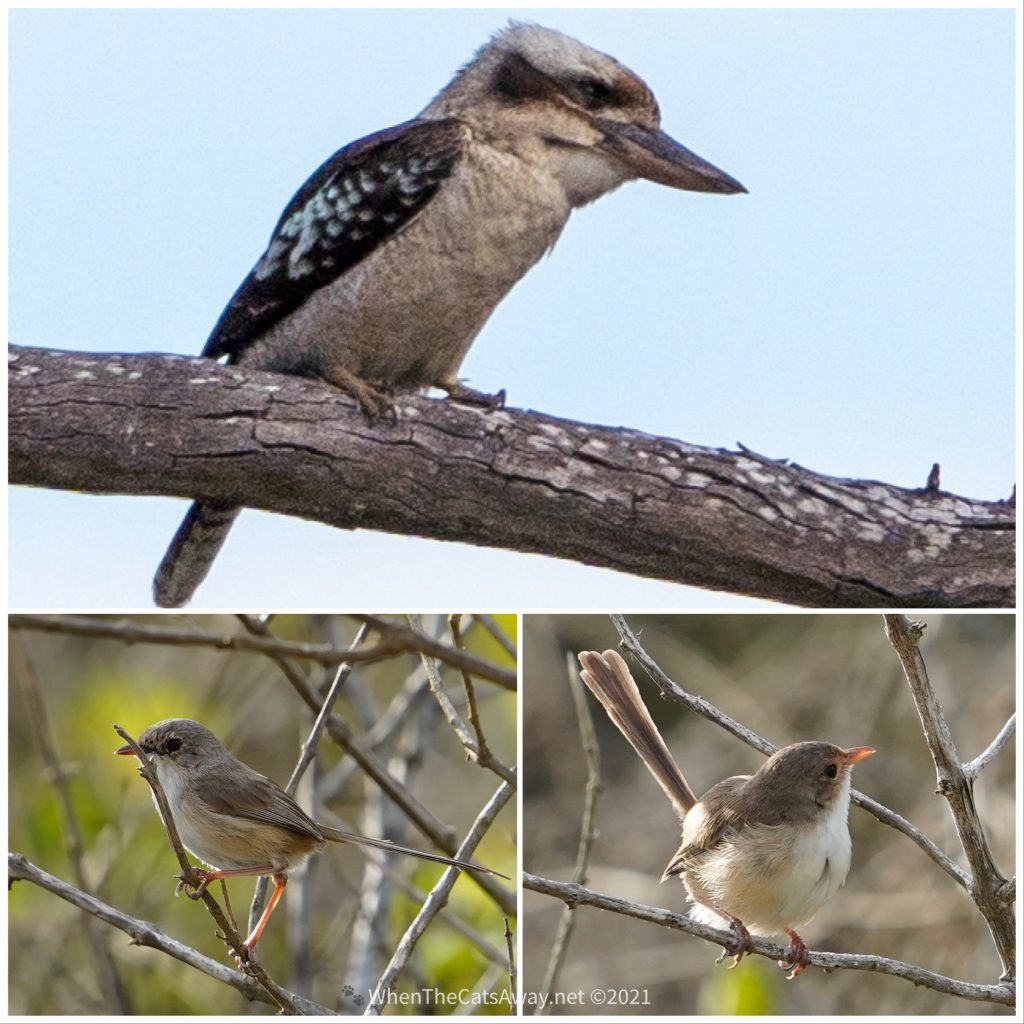
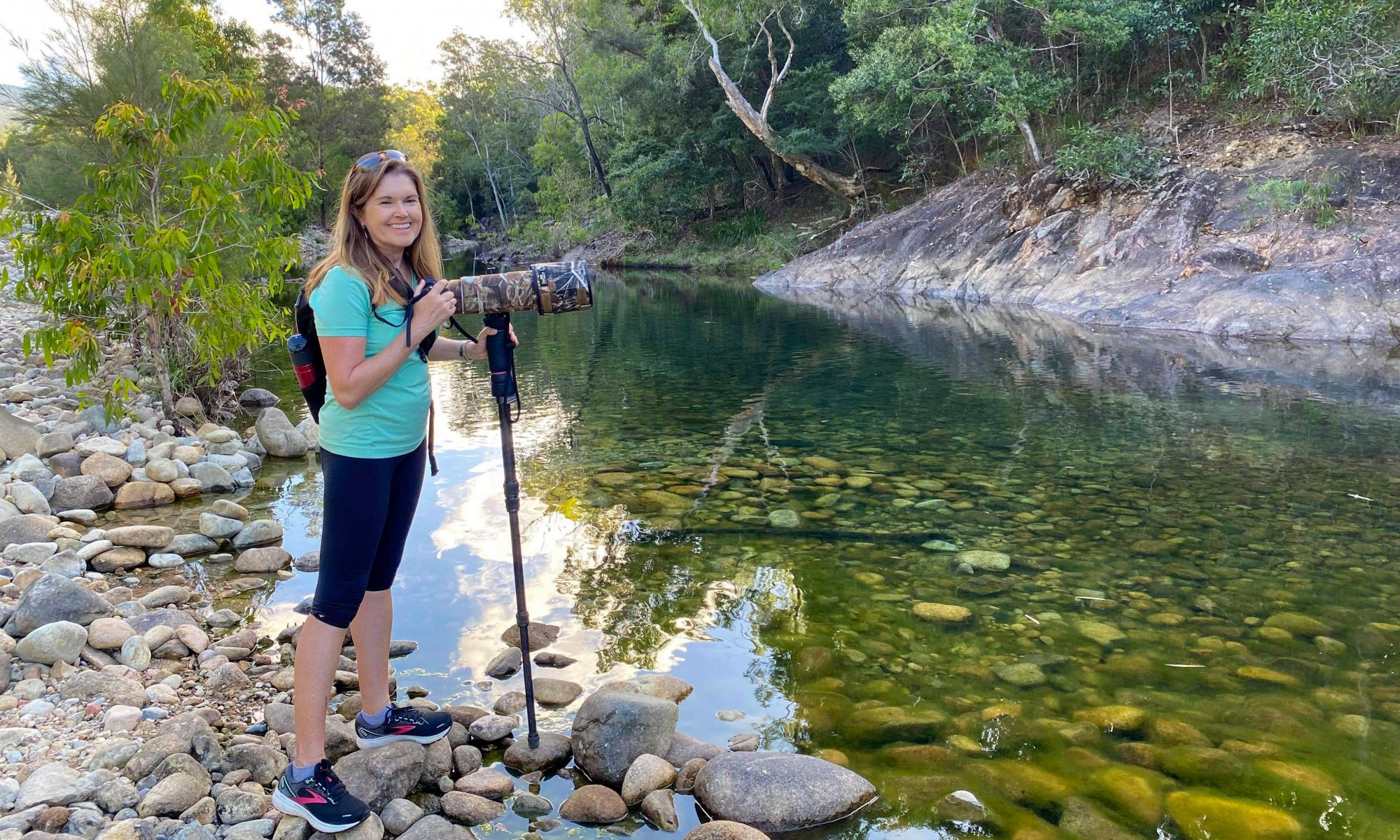
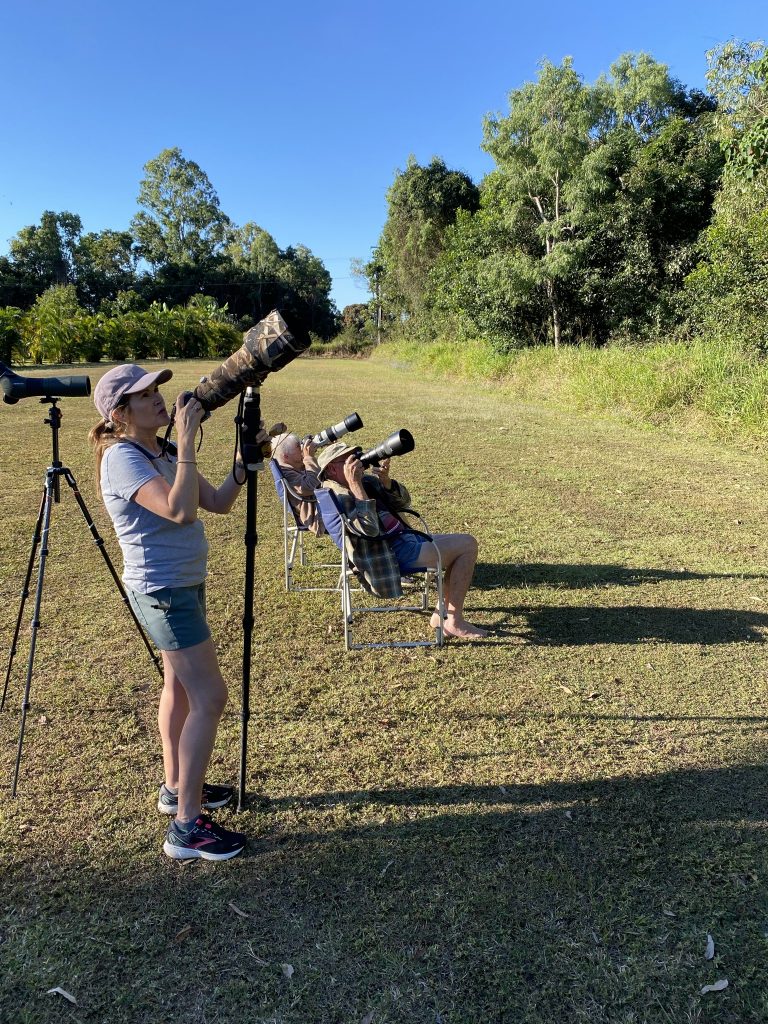
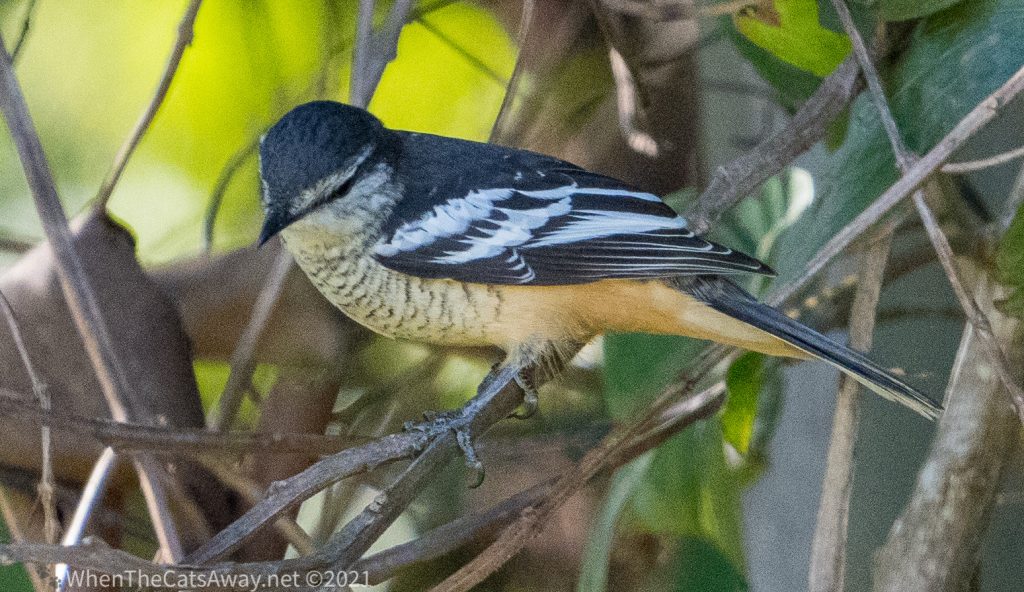
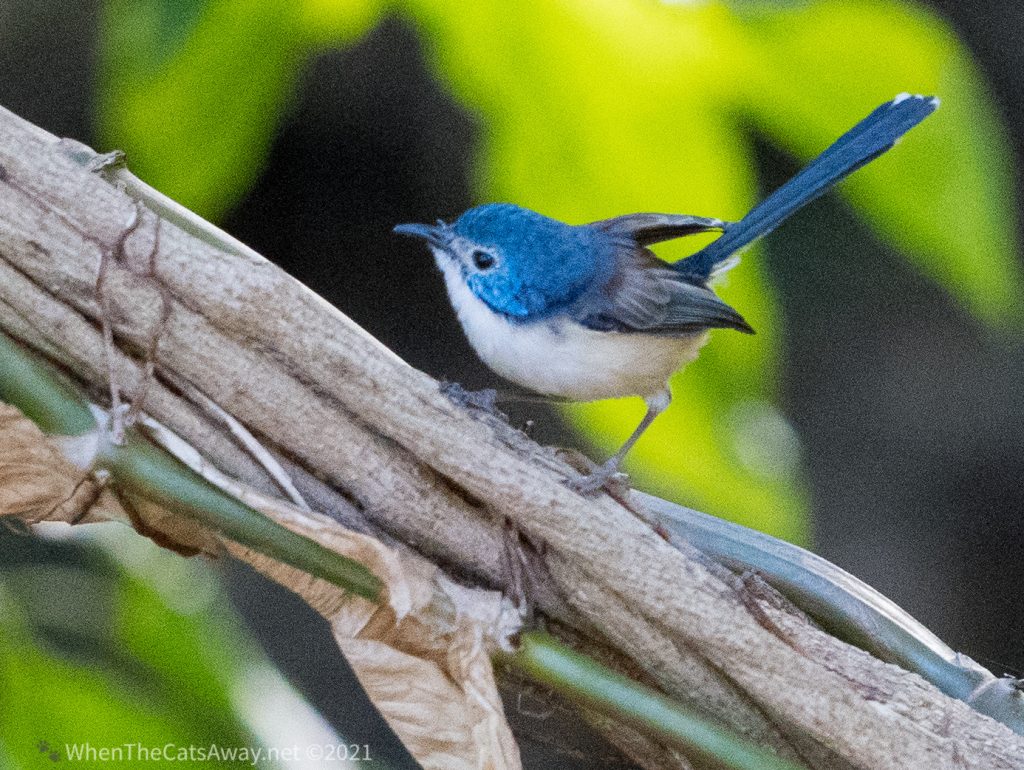
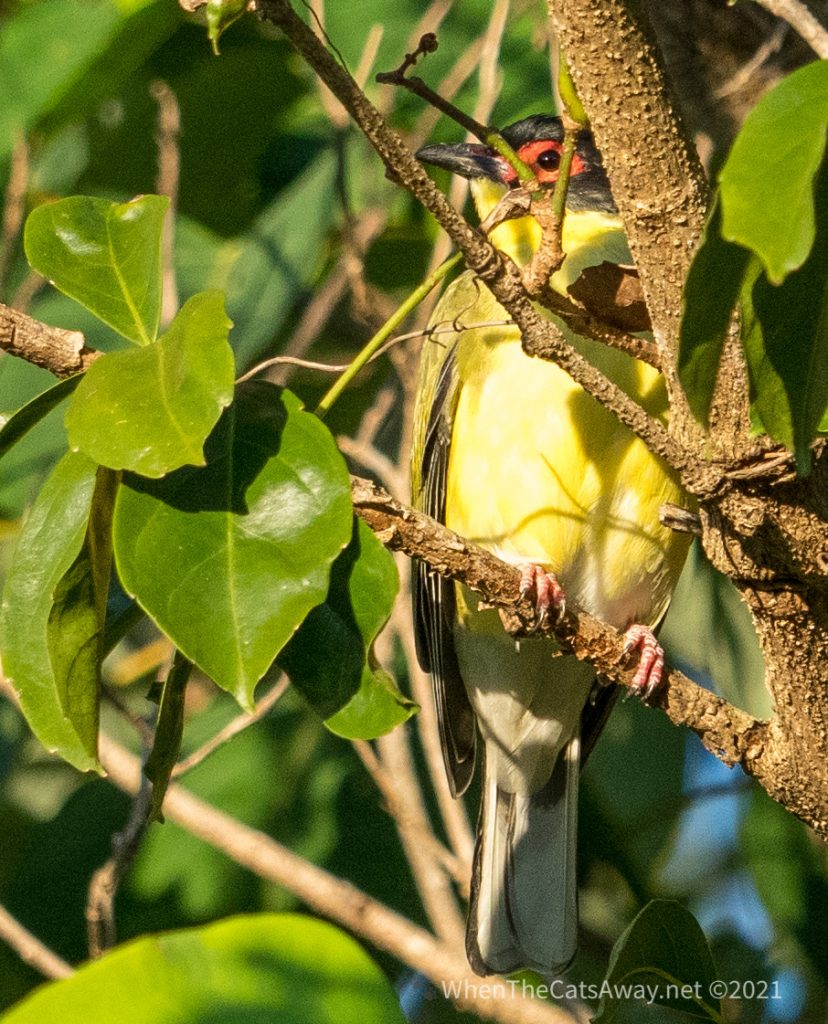
Well, what a mixture of emotions, our last week as proud owners of our Zone RV caravan. We were going to drop it off in a few days, and decided to spend our last two nights on a showground on the edge of the small town of Woodford. Surrounded by national parks, we had a few great outings where birdlife was once again captured by Mrs A’s eagle eyes (get the pun?) and her very long lens.
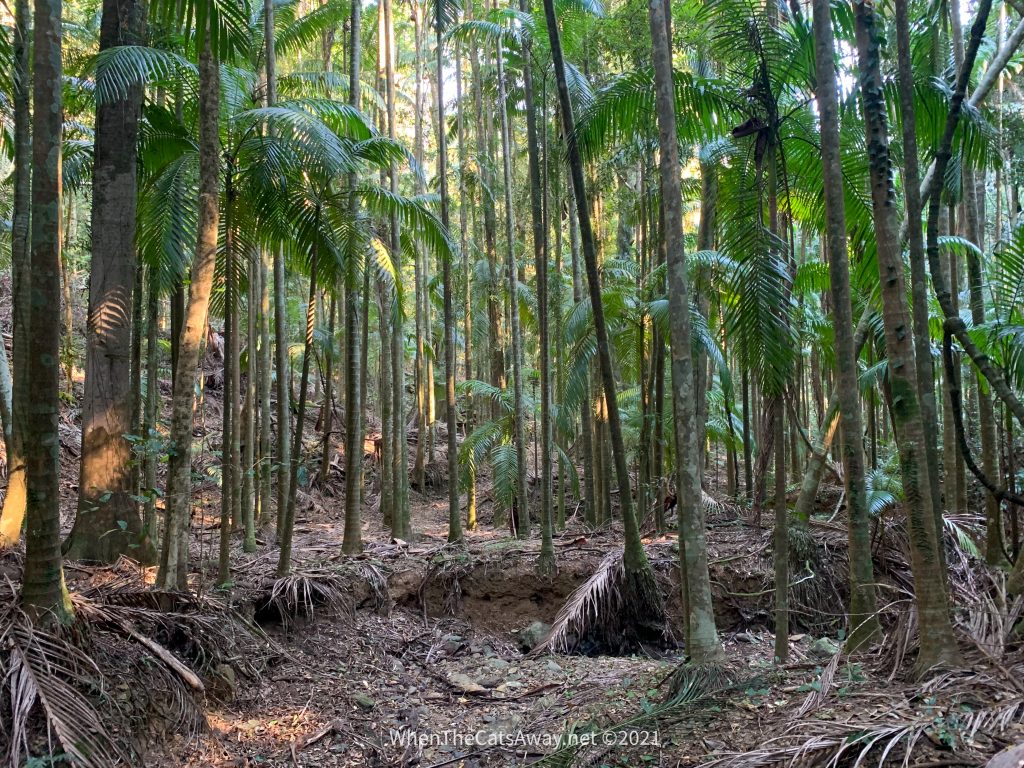
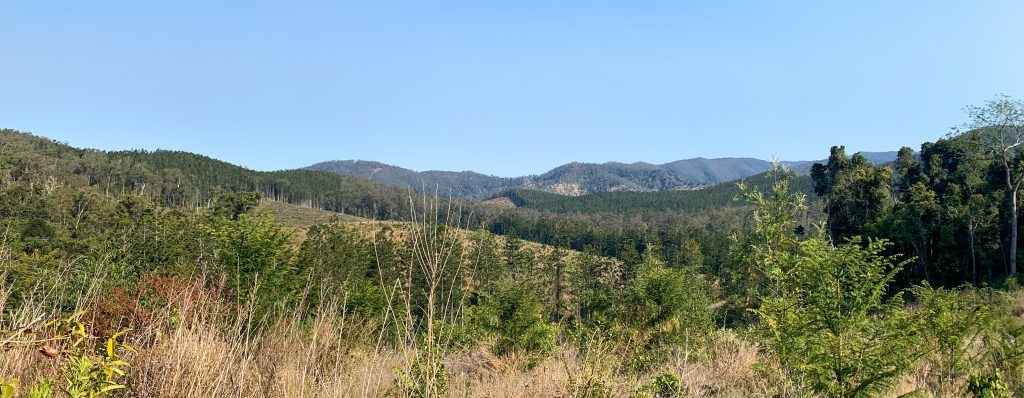
A couple of short walks showcased to us, for the last time, what nature has to offer in this part of the world. Dense forest with soaring trees, and the ever present calls of birdlife, both the familiar and the not so much.
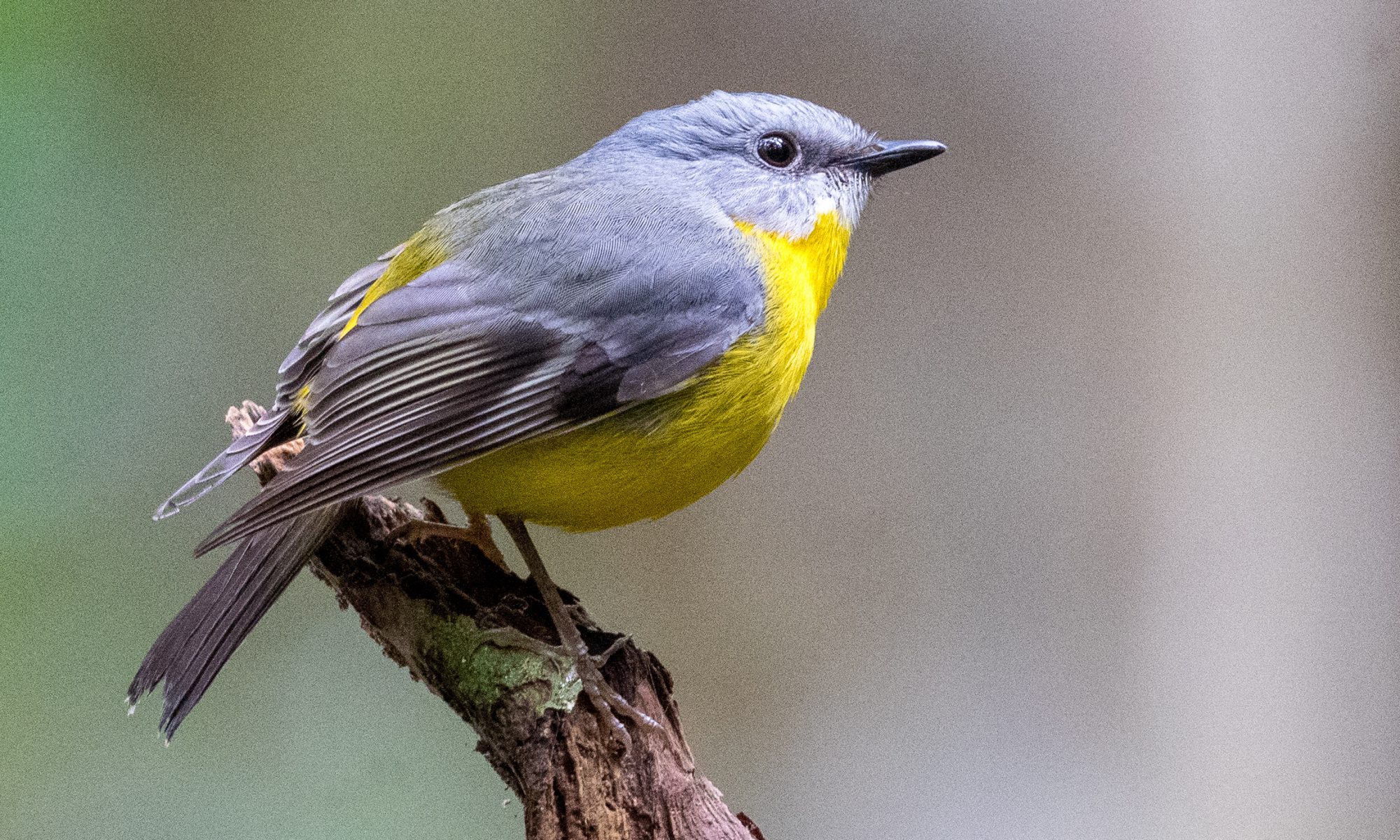
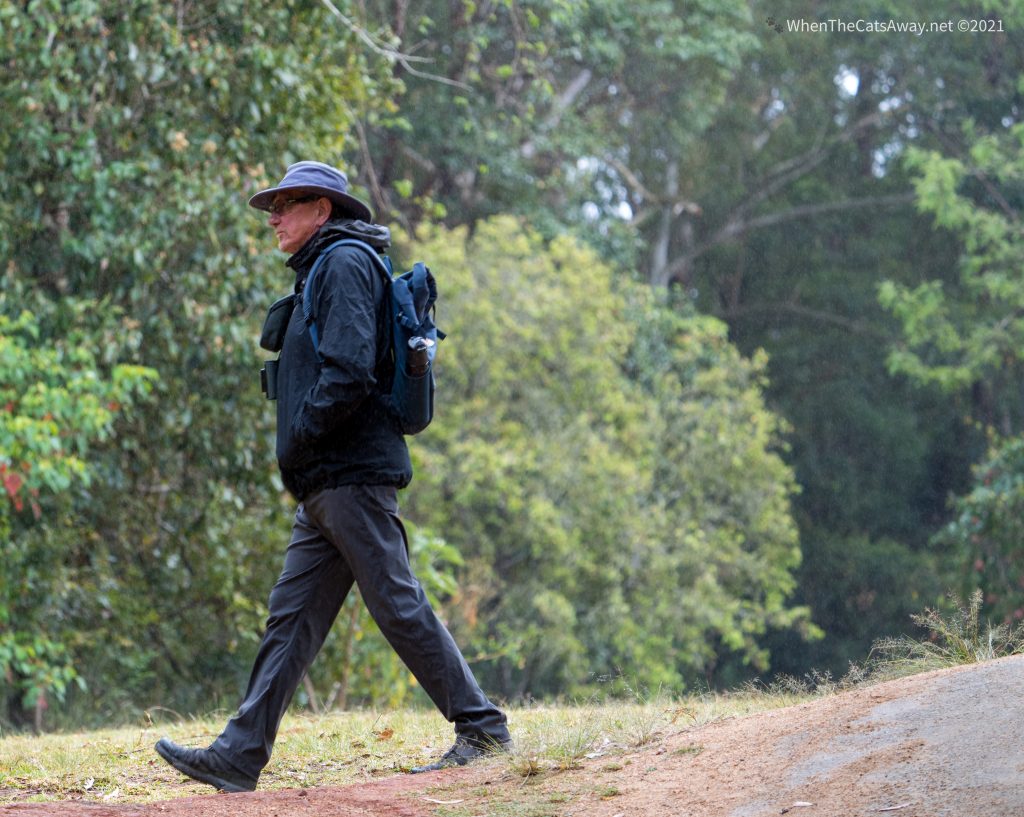
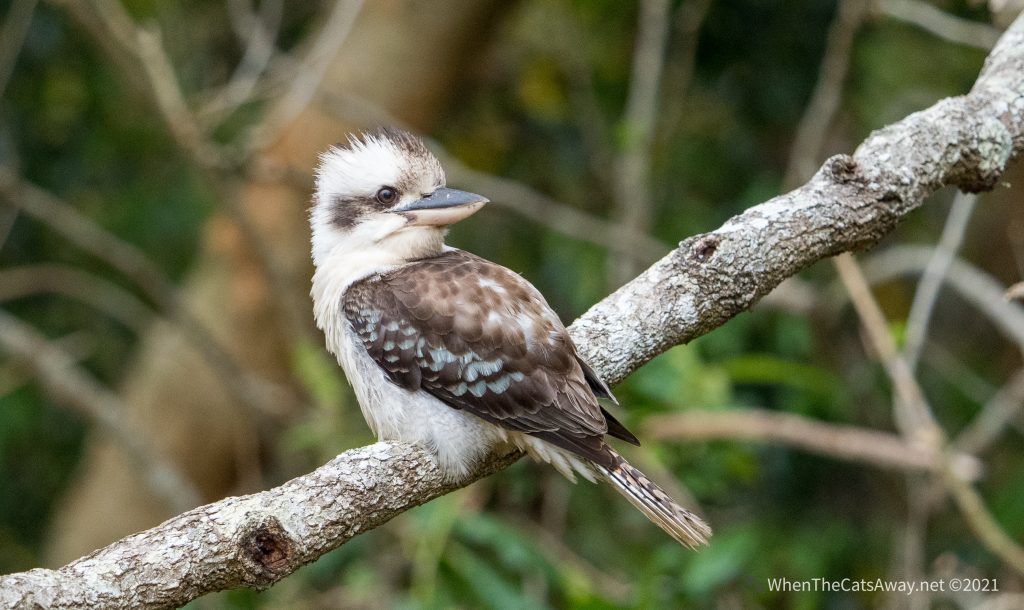
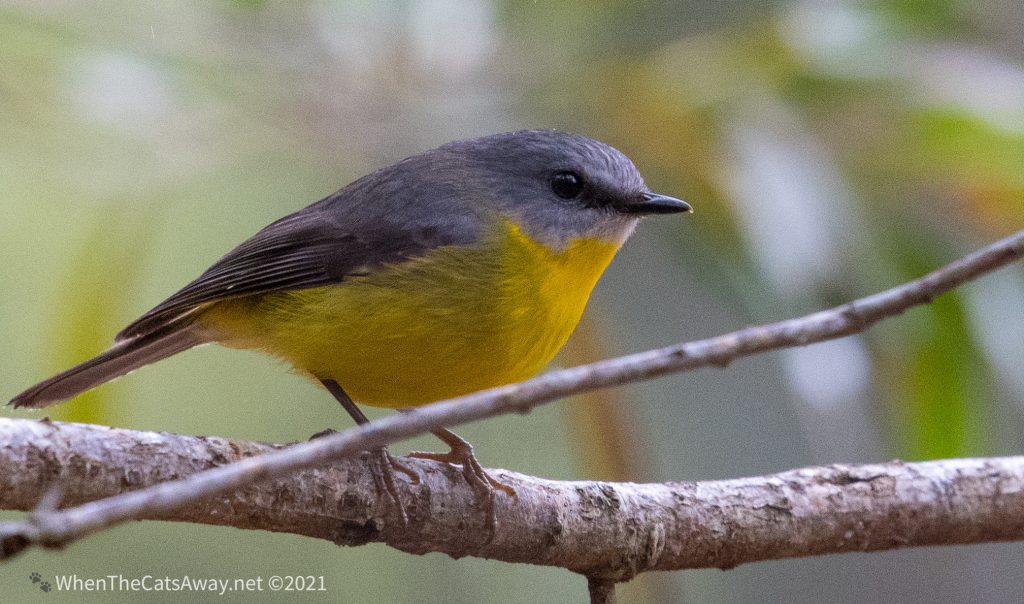
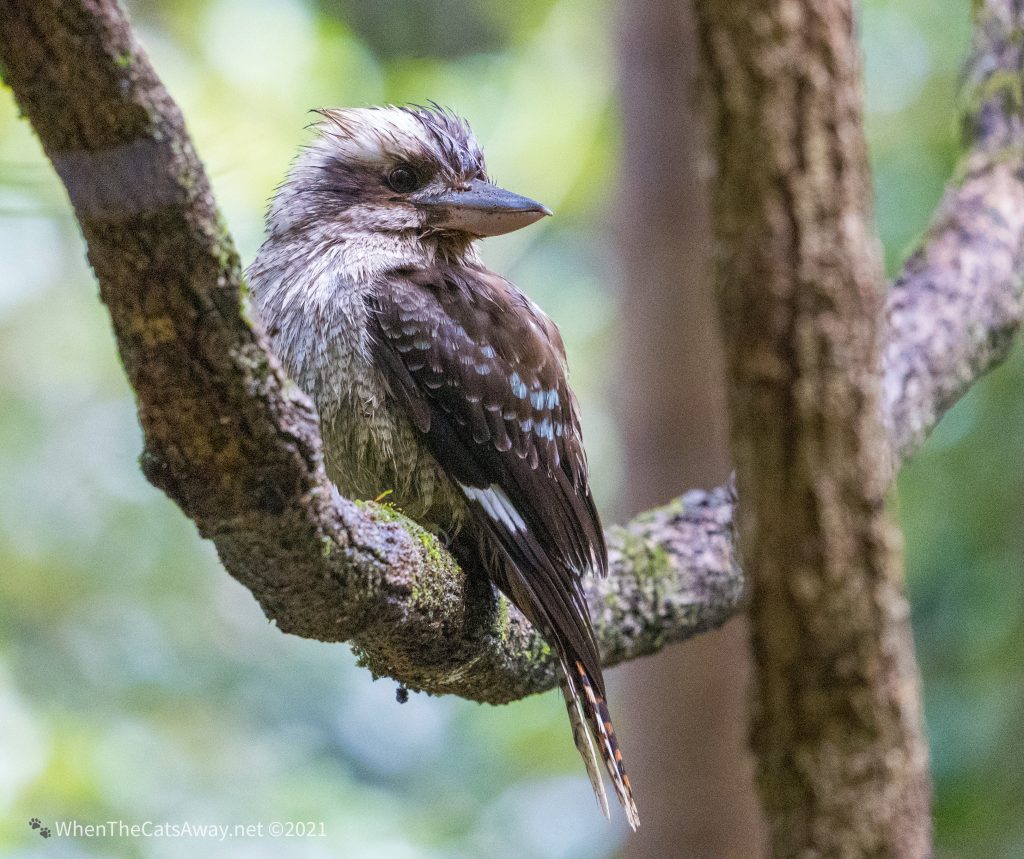
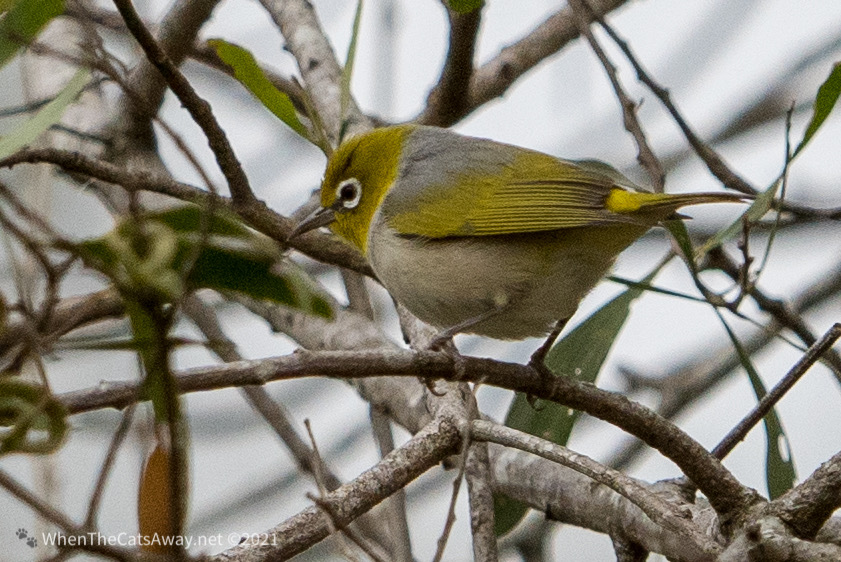
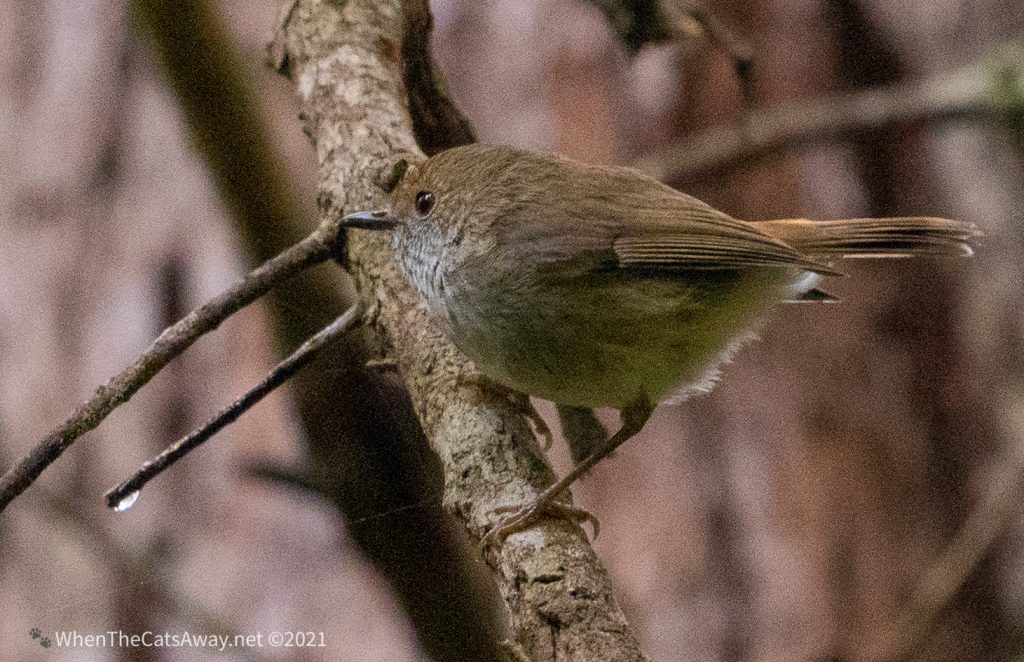
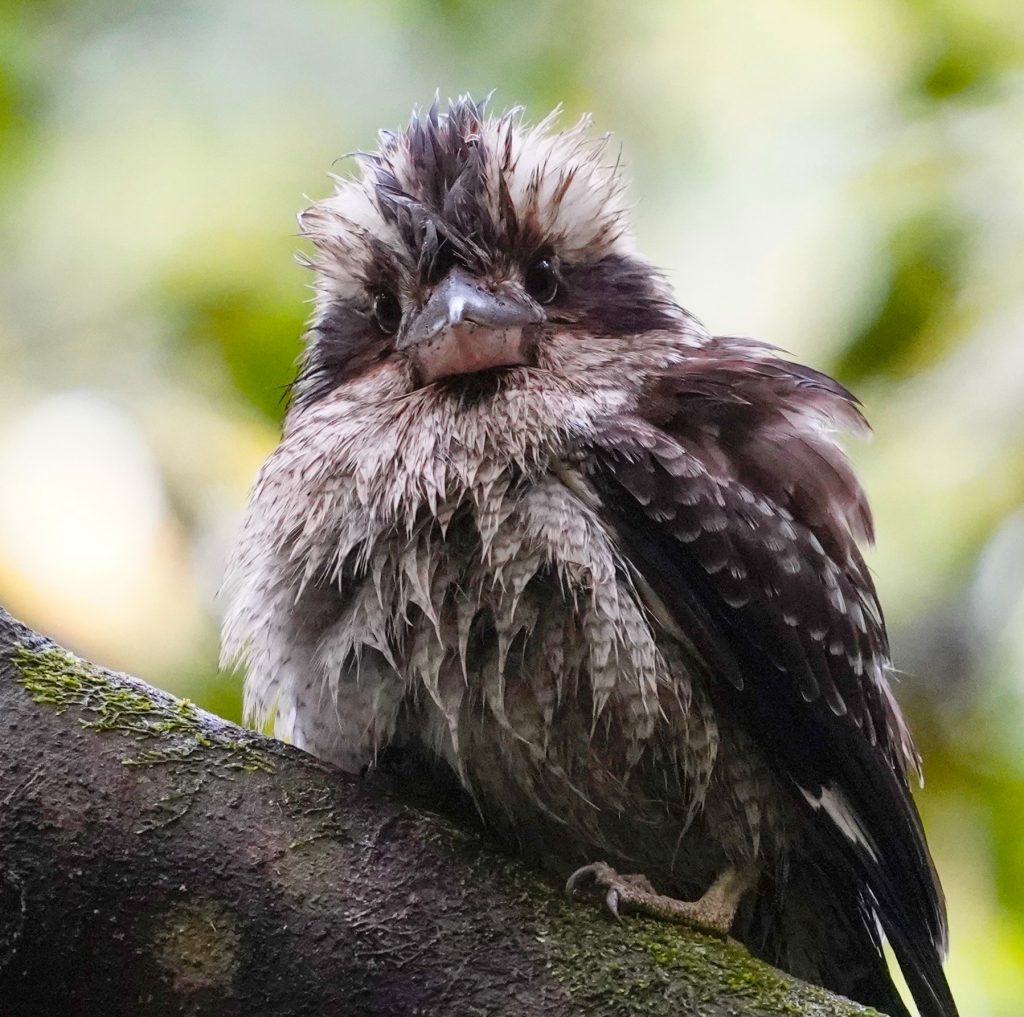
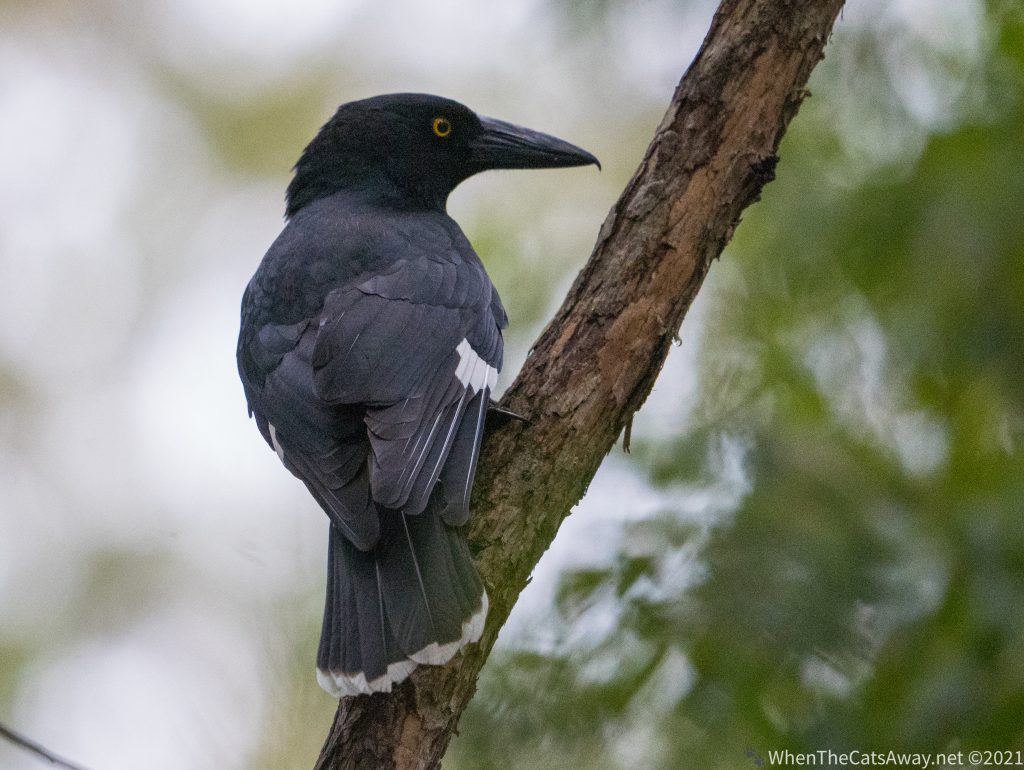
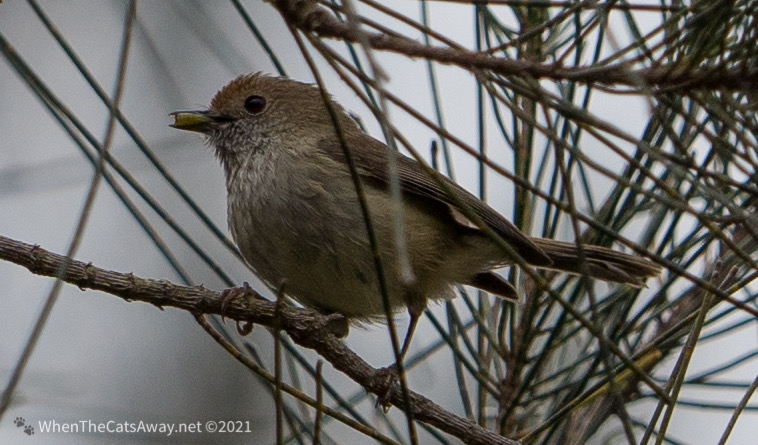
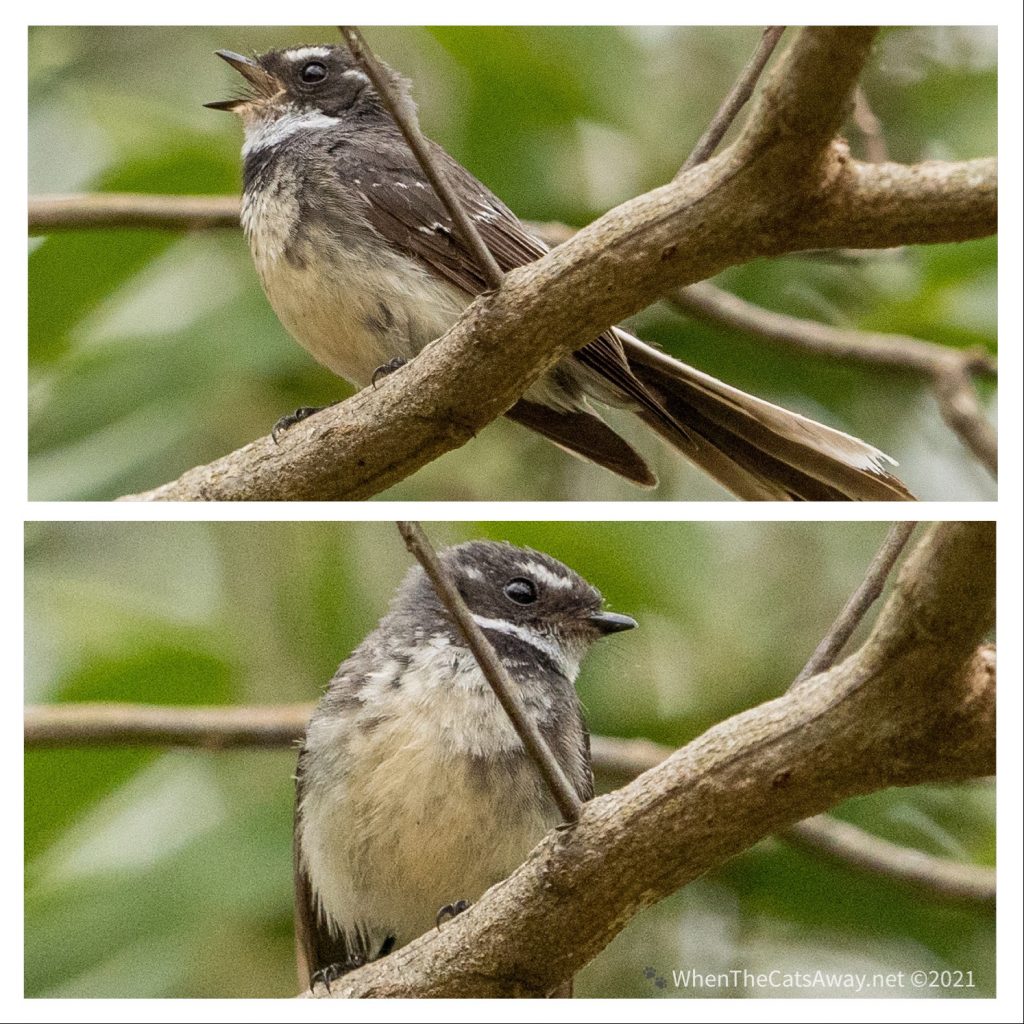
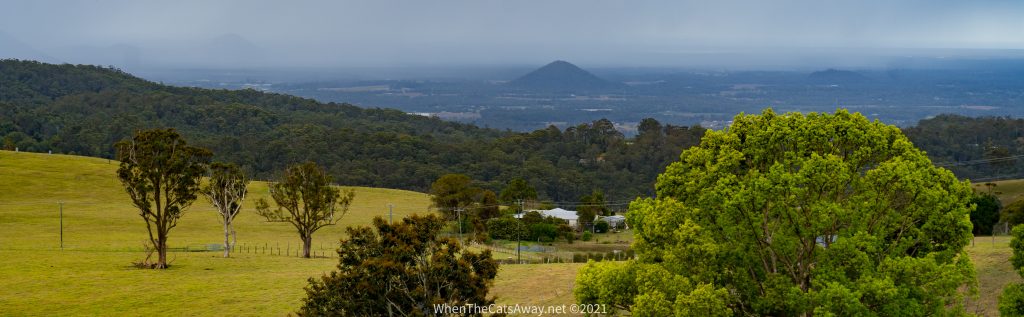
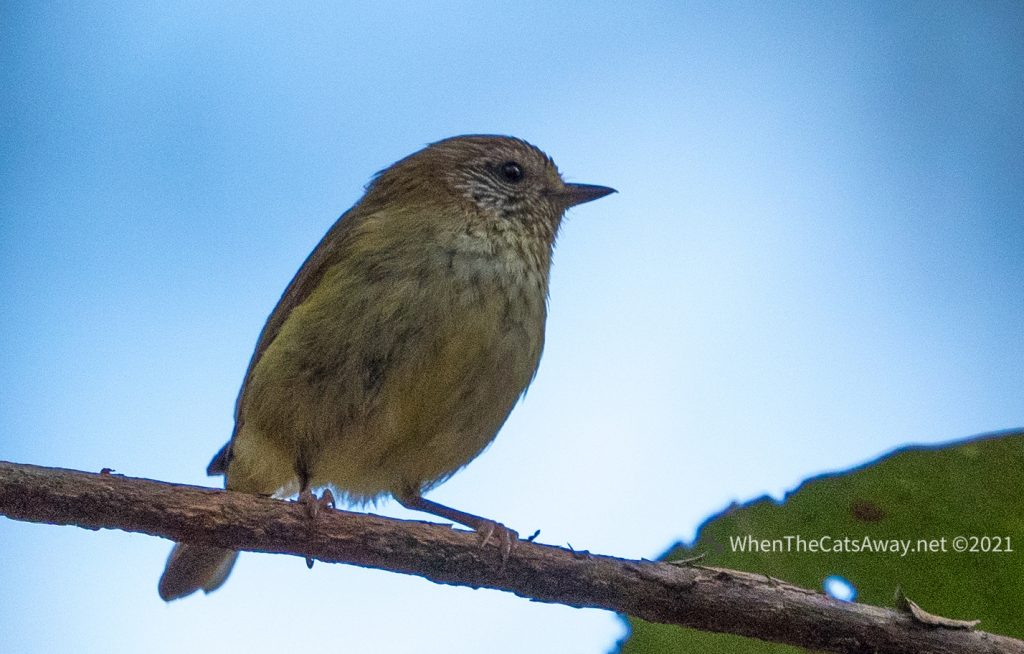
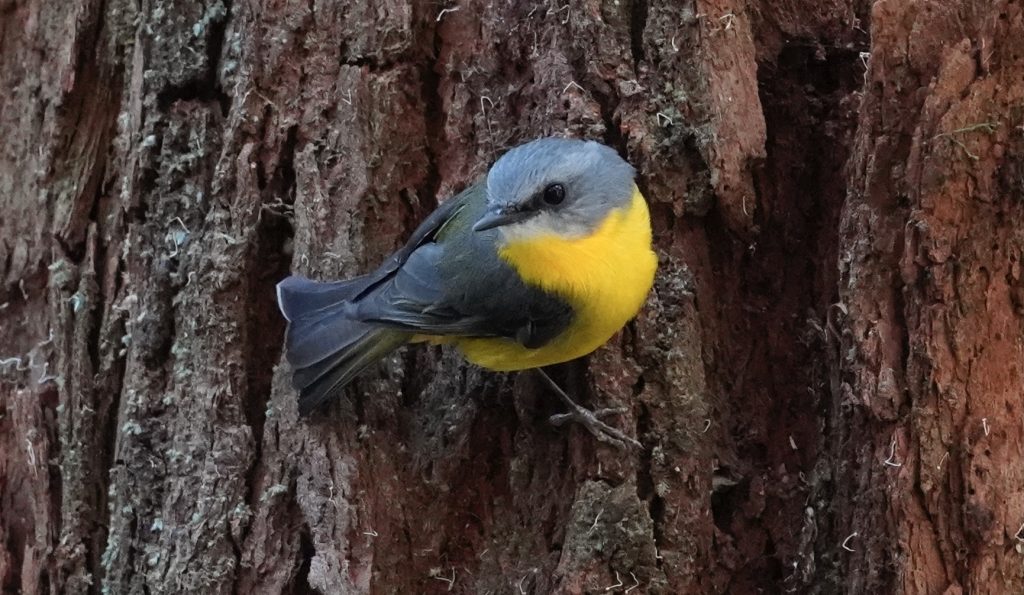
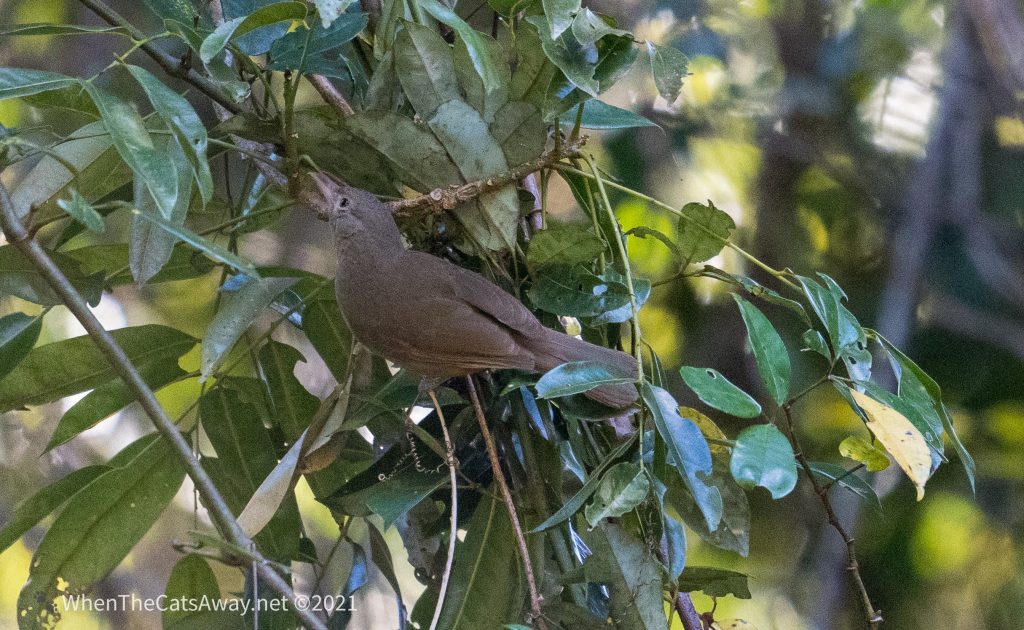
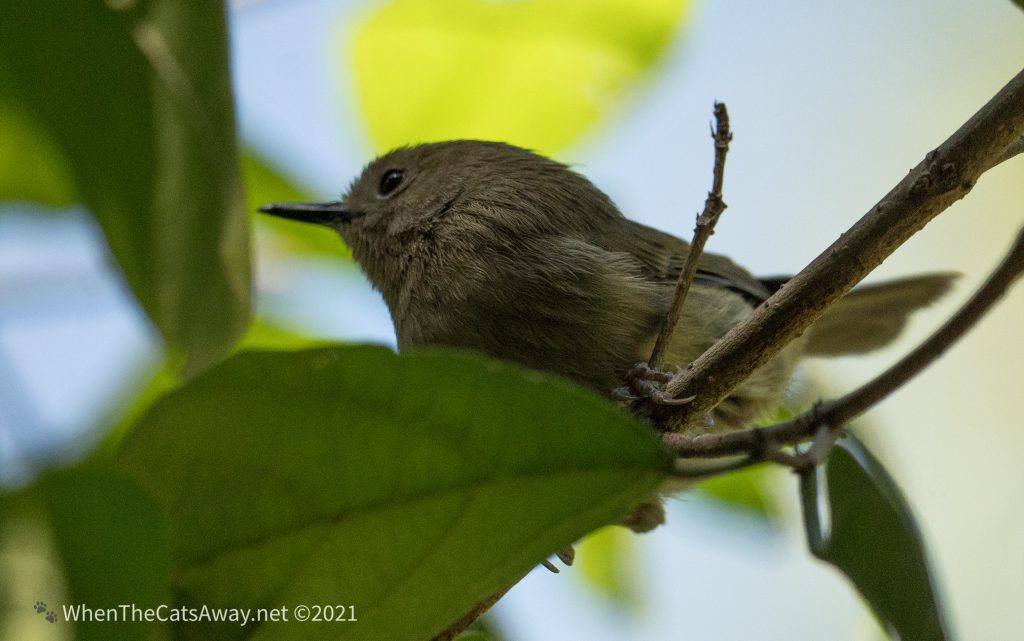
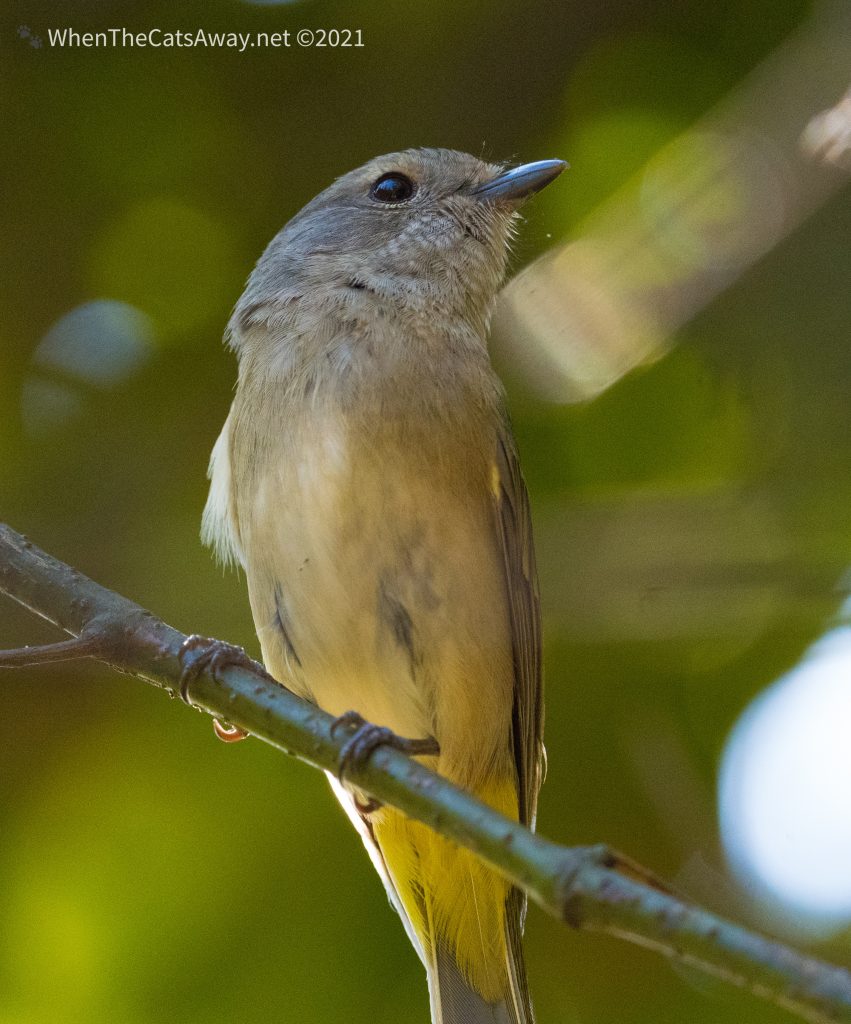
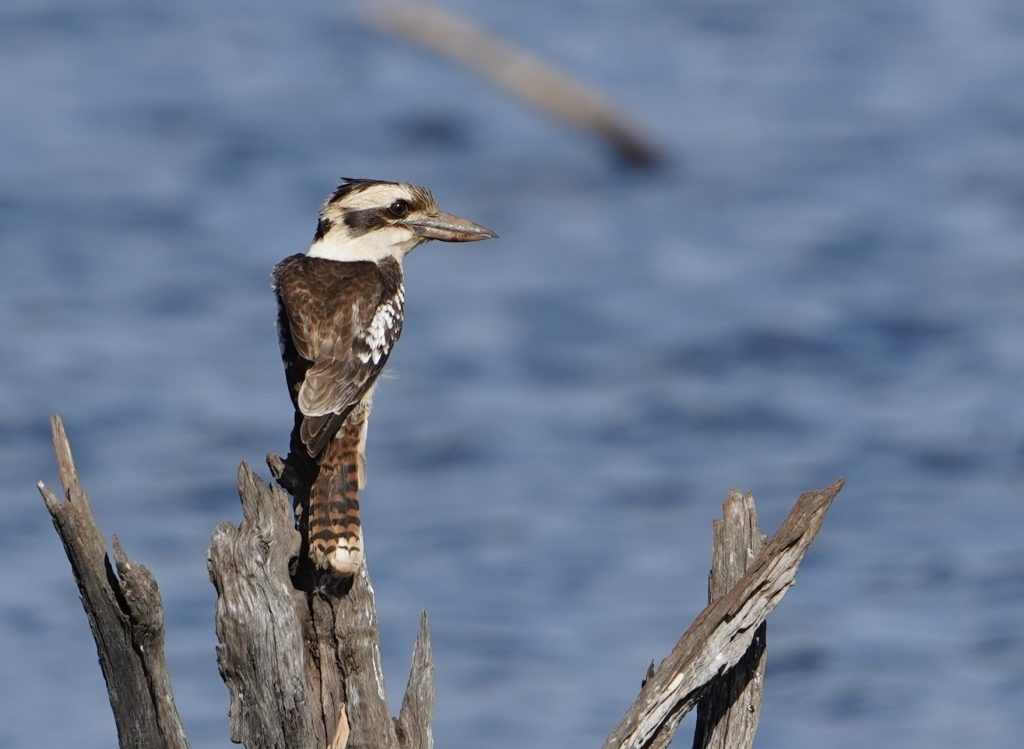
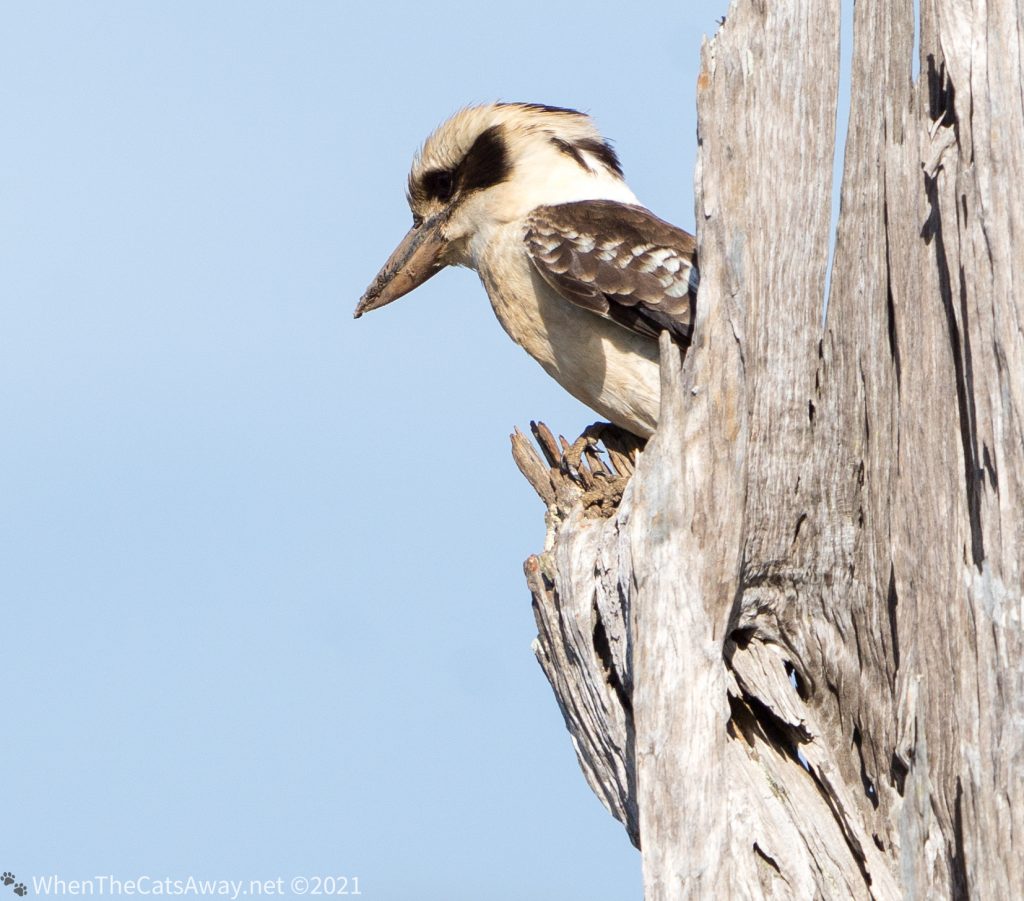
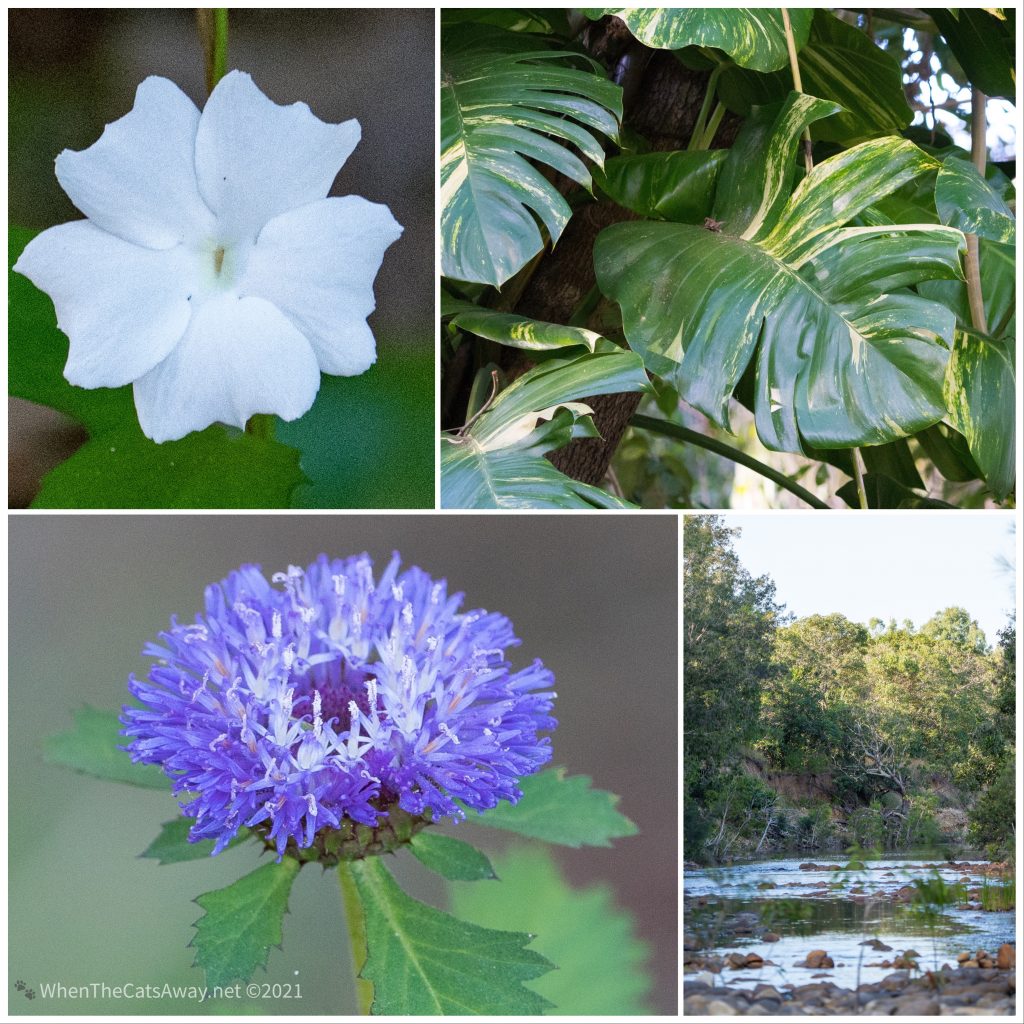
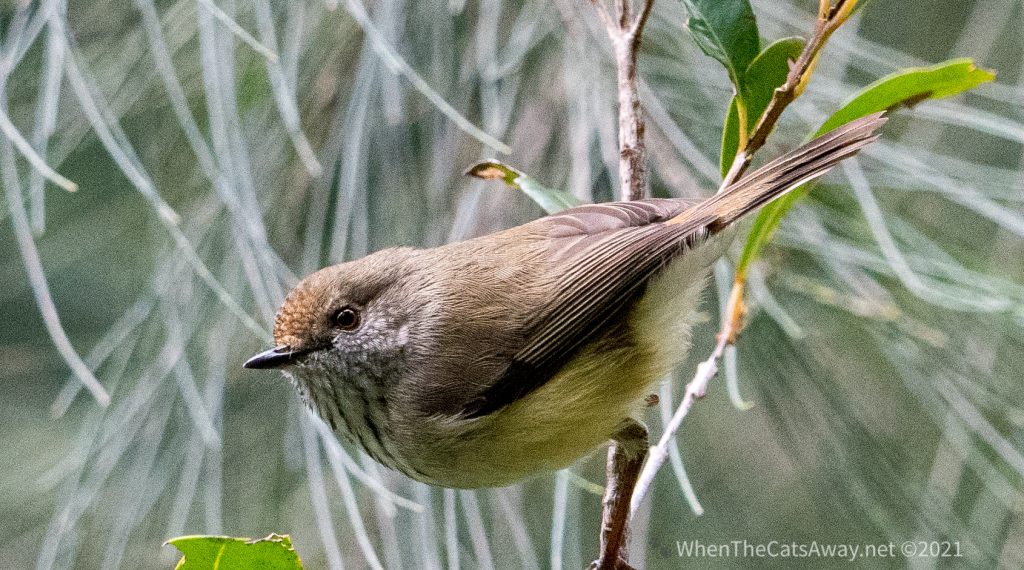
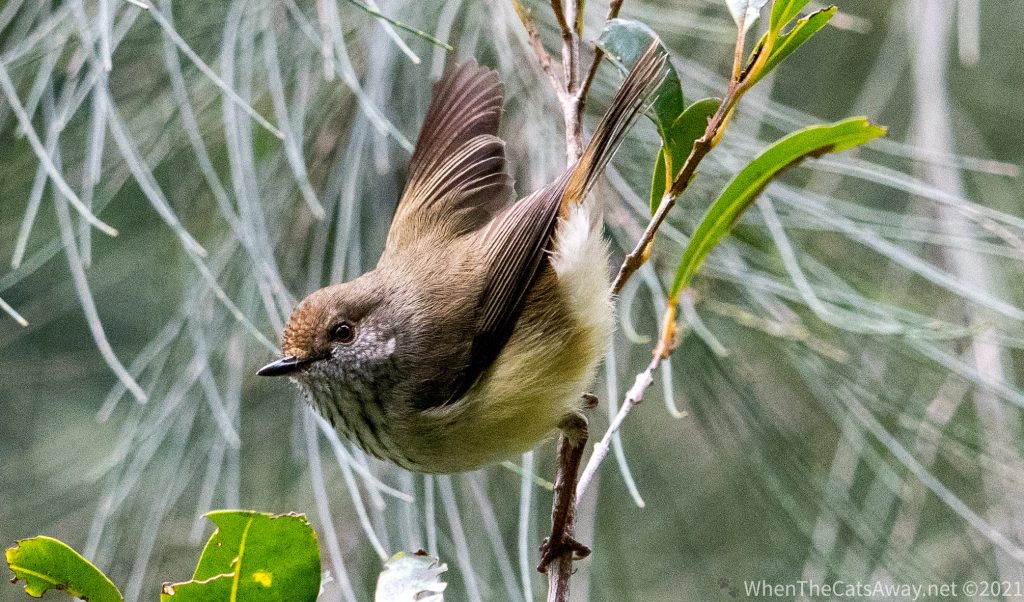
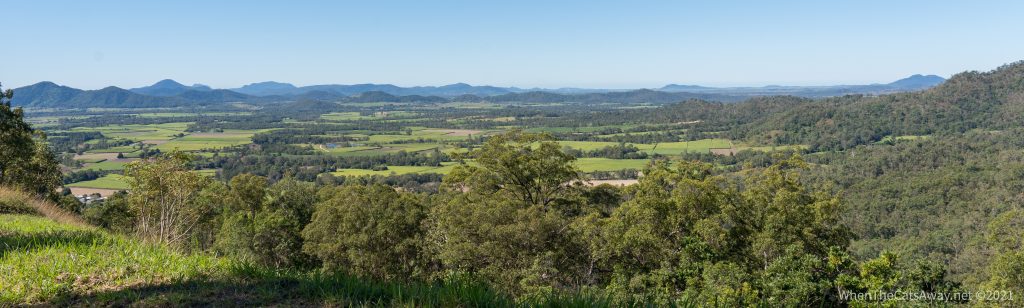
Setting off on a hikeKookaburra on the showgroundAn Eastern Yellow Robin eyes us curiously on a walk in D’Aguilar National ParkA Laughing Kookaburra flies into a thick vine, swinging back and forth in the sub-tropical forestA tiny Silvereye flits through the undergrowth A Striated Thornbill in the woodlandThe wet weather plays havoc with one’s feathersA tuneful Pied Currawong flies in A Striated Thornbill collecting seeds on the casuarina treeA Grey Fantail sings it’s melodious song from a nearby treeMagnificent views across to the Glass House Mountains so named by Captain James Cook as they reminded him of the glass kilns of 1770s Yorkshire.
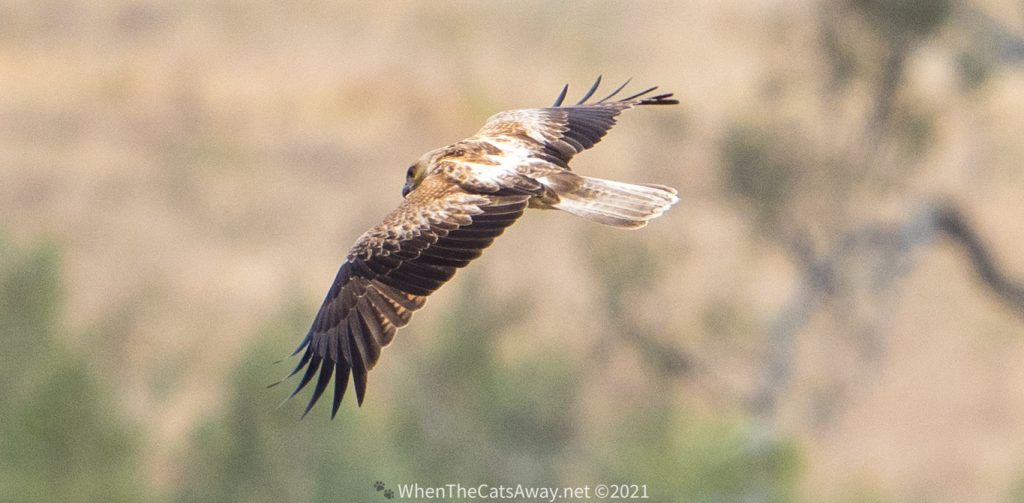
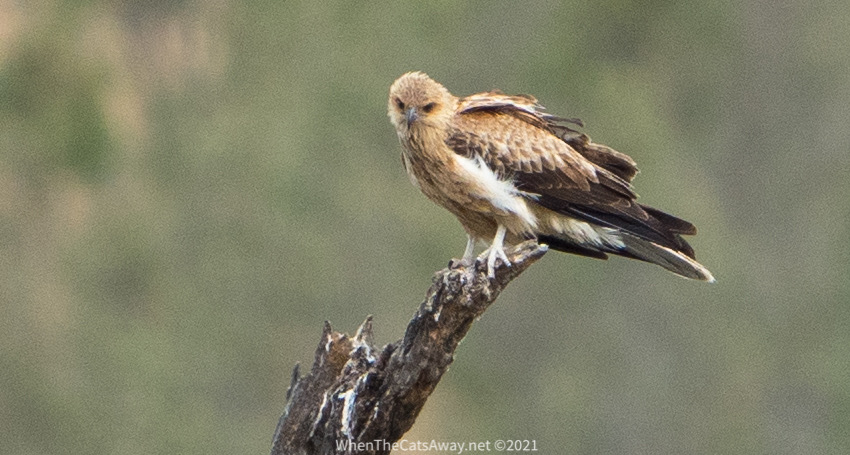
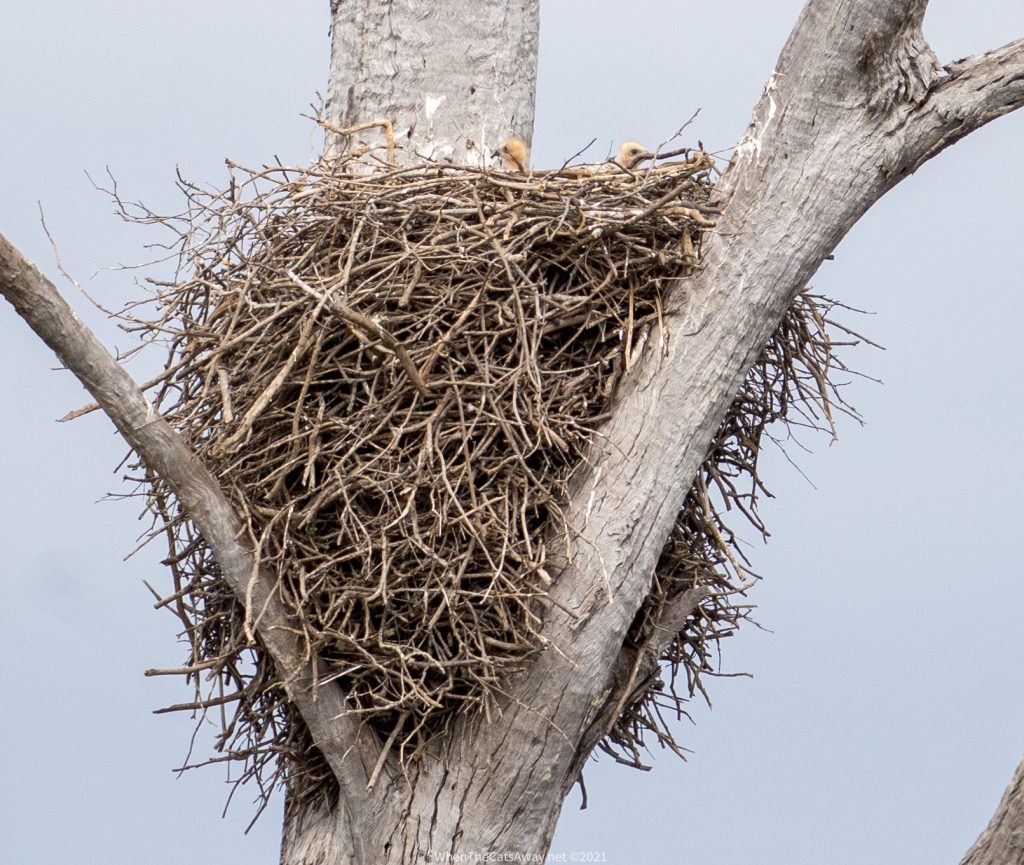
We had another potter around nearby Lake Somerset, a reservoir we found is home to a family of Whistling Kites.
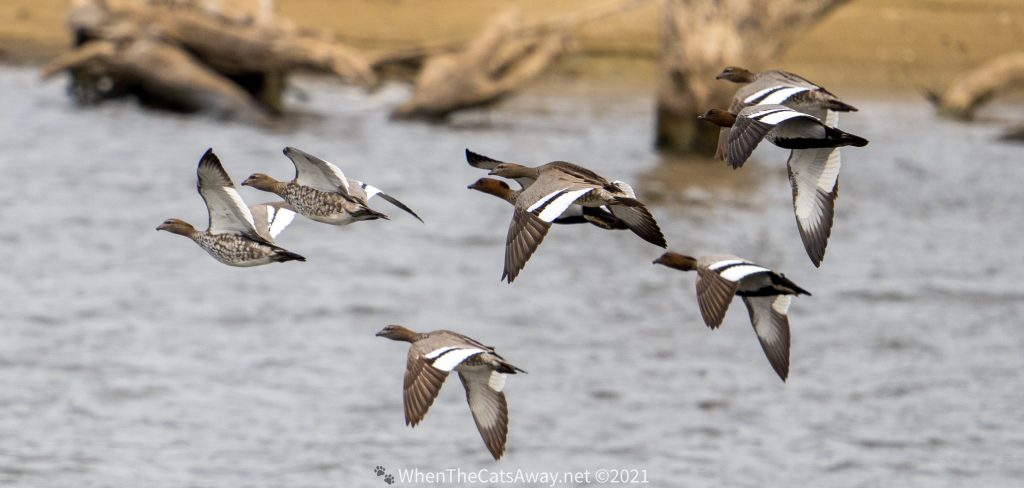
Mother-Whistling Kite flies byShe lands on a dead tree in the water eyeing us cautiouslyTwo tiny chicks peer over the edge of the giant nest, awaiting their next feedA flock of Maned Ducks flies off
*
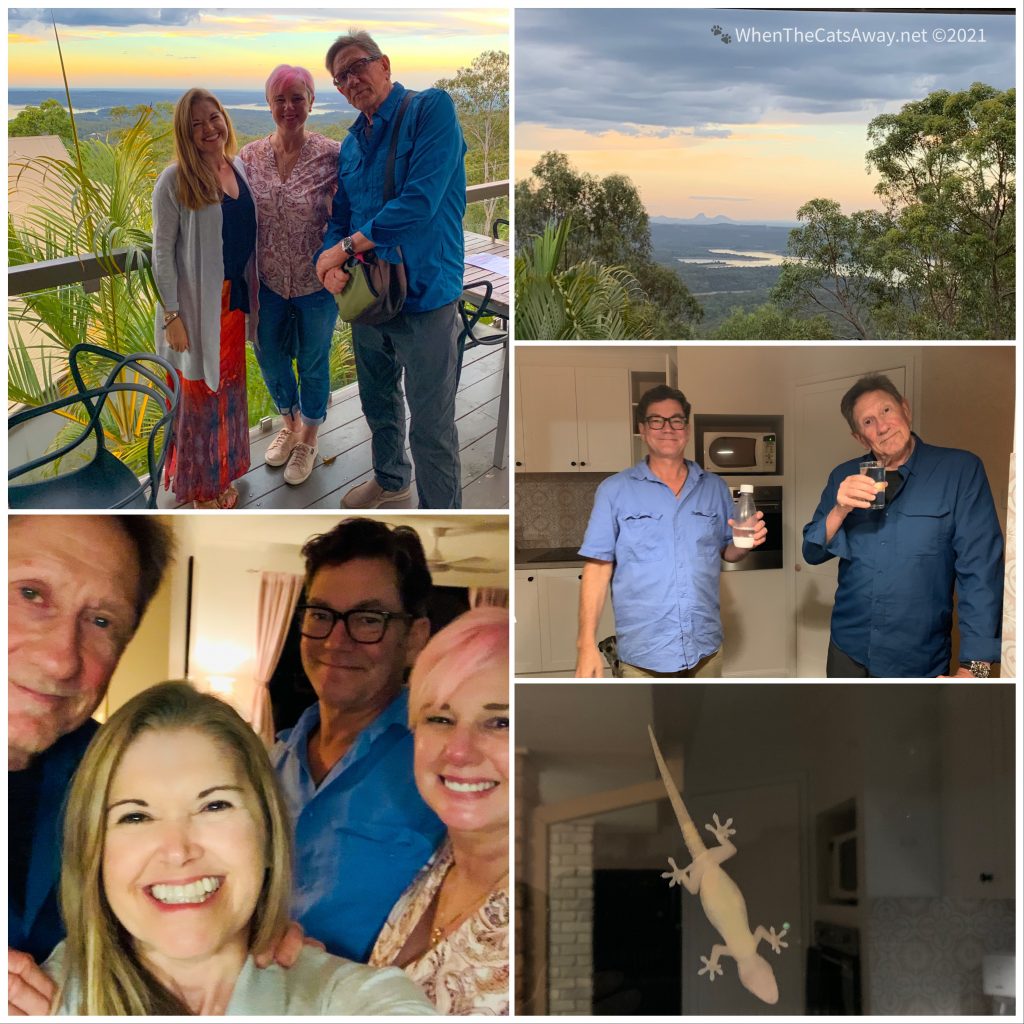
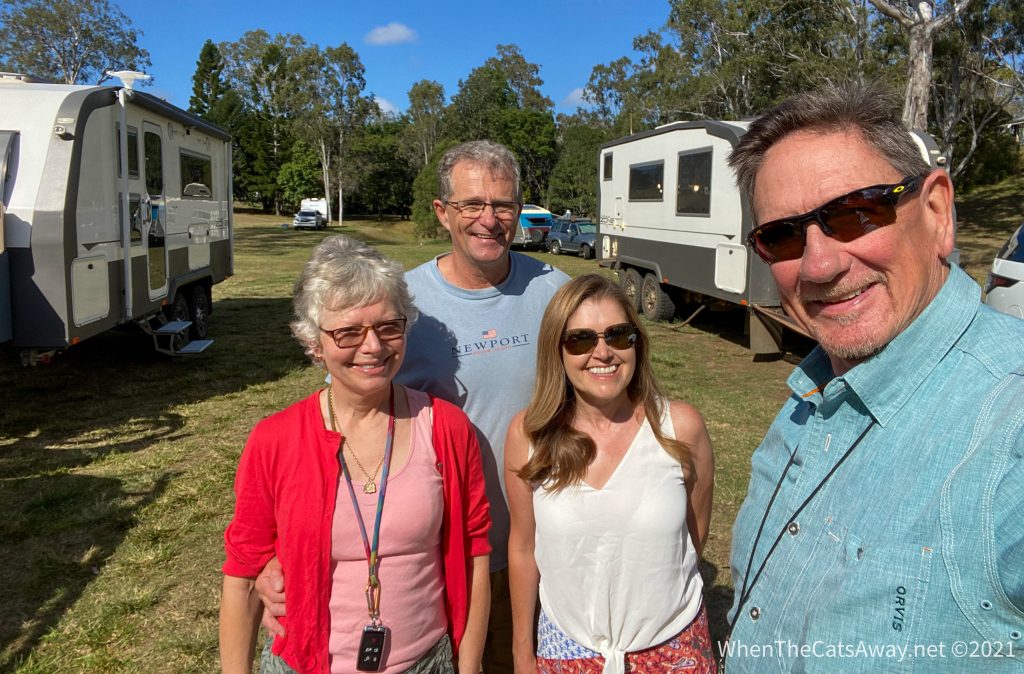
Then, with very mixed feelings, we packed up camp for the very last time, and headed down to Brisbane and our friends Phil and Libby who has so kindly invited us to stay with them while we emptied out our caravan and cleaned it ready to go to its next owners. Purely by chance, friends from my working life lived ten minutes up the road from them, so a glass of Prosecco at a local hotel with a view was called for, then off to their place for dinner.
Bubbles and Thai food with friends…and the odd gecko!
It was so great to see these guys, made even more poignant by wondering when and where we would next share a glass? I guess there will be a lot of that over the next few months as we prepare for our exit from Australia at the end of January next year.
*
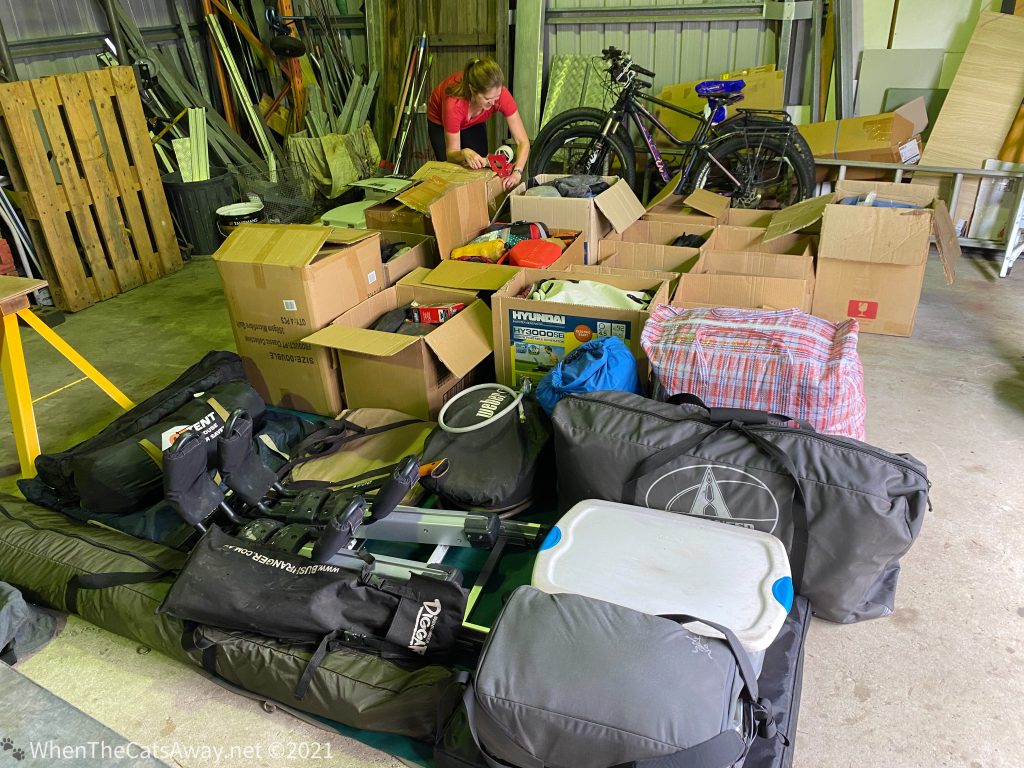
We settled into a week with our kind friends Libby and Phil, spending several days sorting out our caravan and boxing up all of its contents ready to ship back to Sydney. It was quite amazing how much we had crammed into the car and van!
Where did all of this stuff go? Basically the contents of a bed sit displayed here
*
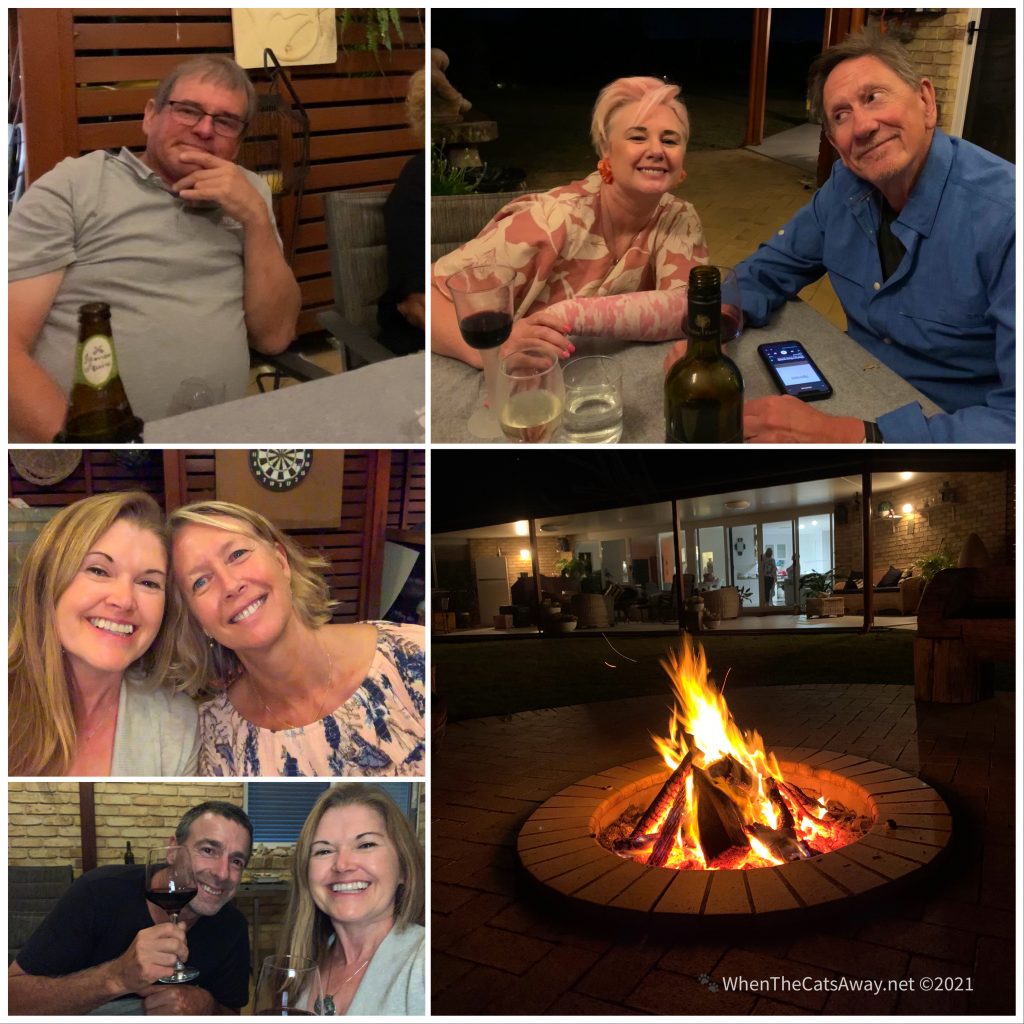
But it wasn’t all work, there were some very lovely evenings of fine food and wine, and many many laughs. Libby and Phil had asked our friends to join them and a couple of their friends, Daryl and Nat, for a Saturday night barbecue. Well that was a blast, as you can tell!
Phil and Libby’s house is designed for entertaining and they are superb hosts
I was self appointed barman and DJ, what could possibly go wrong?
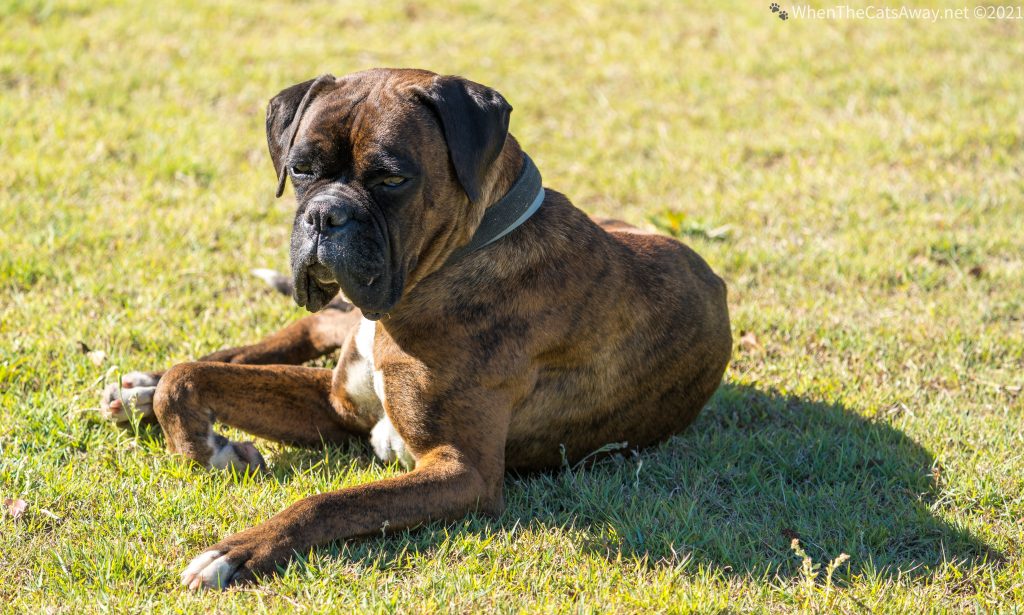
Daryl’s Boxer dog, Dusty, is still as lovely as ever. We first met him in 2018.
*
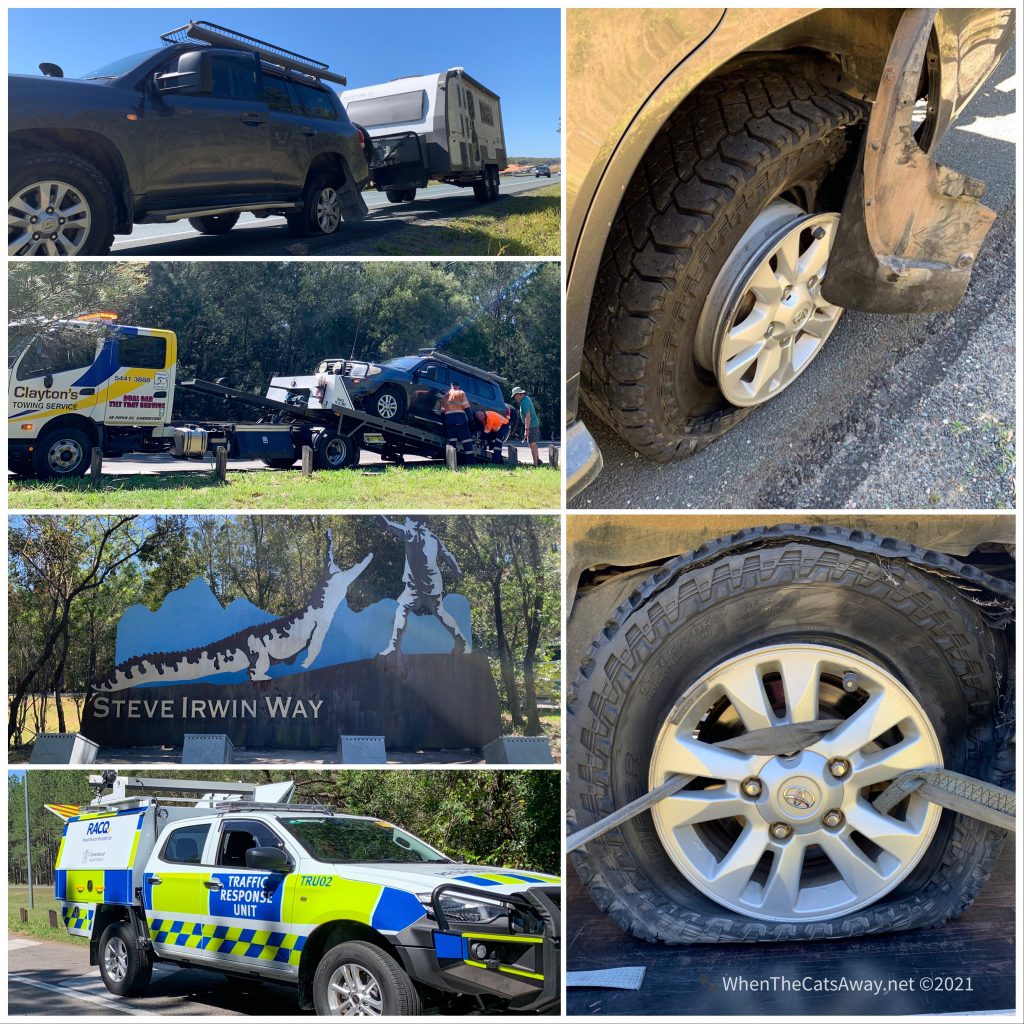
The day came when we had to drop off our caravan, an hour’s drive up the coast via the very busy Sunshine Coast motorway. Half way there an almighty explosion shocked both Catherine and I. We had had a spectacular blow out on our rear car tyre. I fought to control the rig, and managed to get us pulled over onto a very narrow bit of hard shoulder, while road trains hammered past centimetres from our window, rocking our heavy truck like a snowflake.
I quickly called roadside assistance, then climbed out of the passenger door, there was no way I could get out the driver’s side. Roadside assistance arrived in a few minutes, and we were towed off, it would have been too dangerous (and illegal) to try and change a tyre where we were.
Finishing our Zone travels with a bang!
He dropped us around the corner, where another RACQ Special Incident truck happened to be sitting. After I’d woke up the driver (yup!) he gave us a hand. We would have done it on our own, but our friends were waiting for us to handover the van and it makes it so much quicker with help.
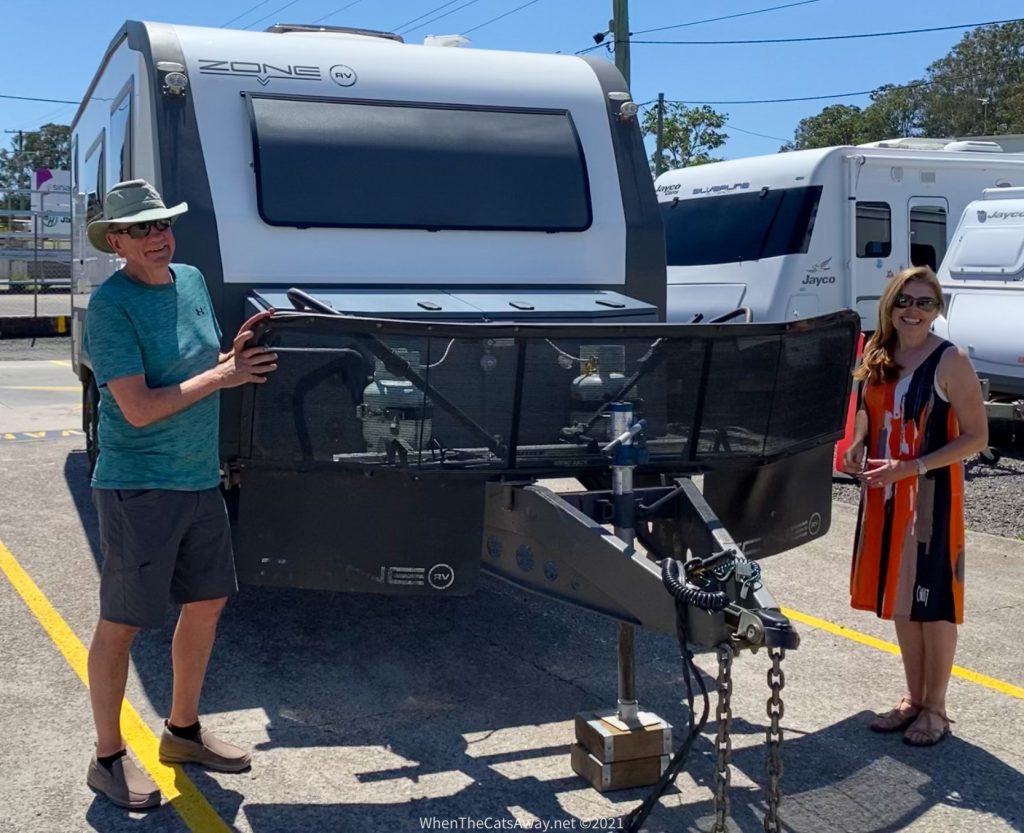
So, two hours late, we rolled up to our drop off point, and said goodbye to what has been our Australian home on wheels for four years. The adventures it has taken us on, in so much comfort. But we need to look forward now to the next phase of our life, making a new home in the UK.
Farewelling our Zone home for the last time. It gets a new stone guard, solar panels, tyres and lithium batteries before it heads of on adventures new.
*
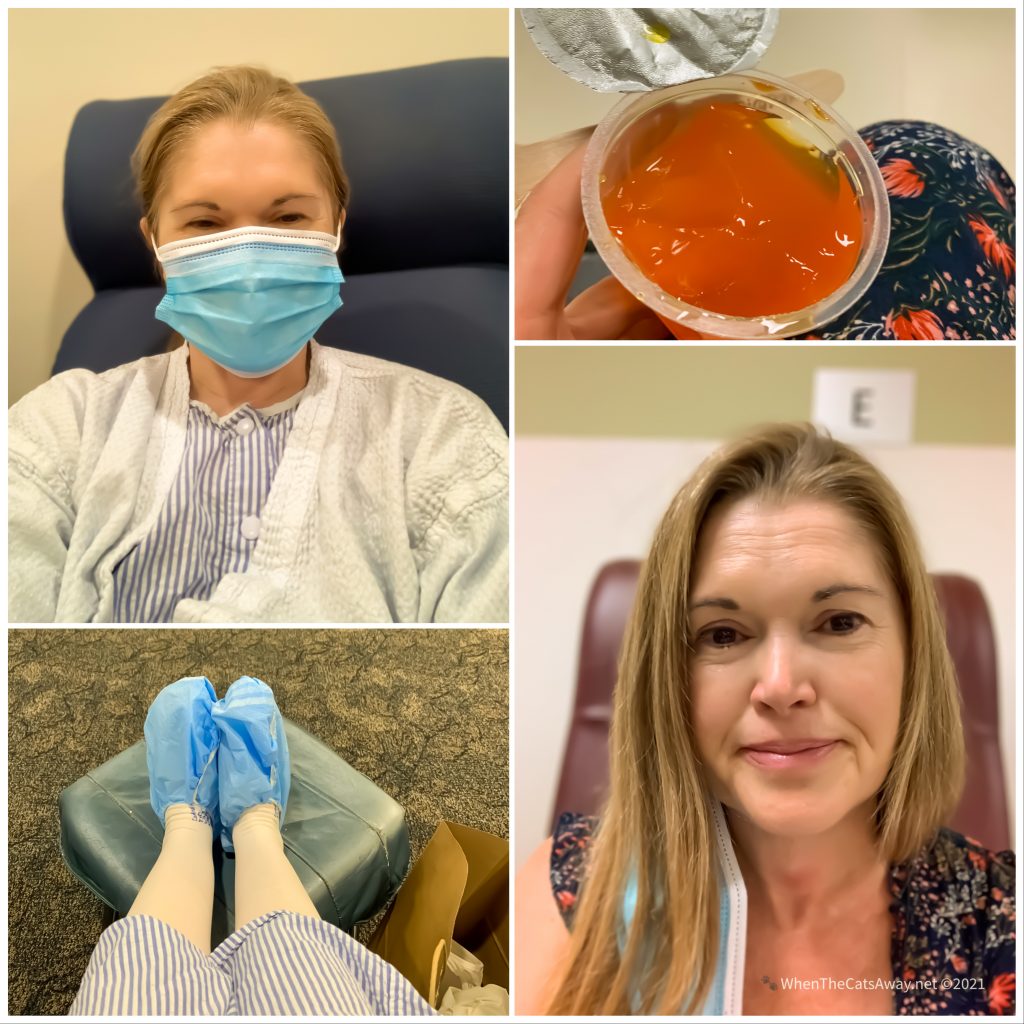
The new few days passed in a blur, with tyres getting fixed, and car batteries, our contents being picked up, a hospital visit for Catherine and again some lovely evenings with Phil and Libby.
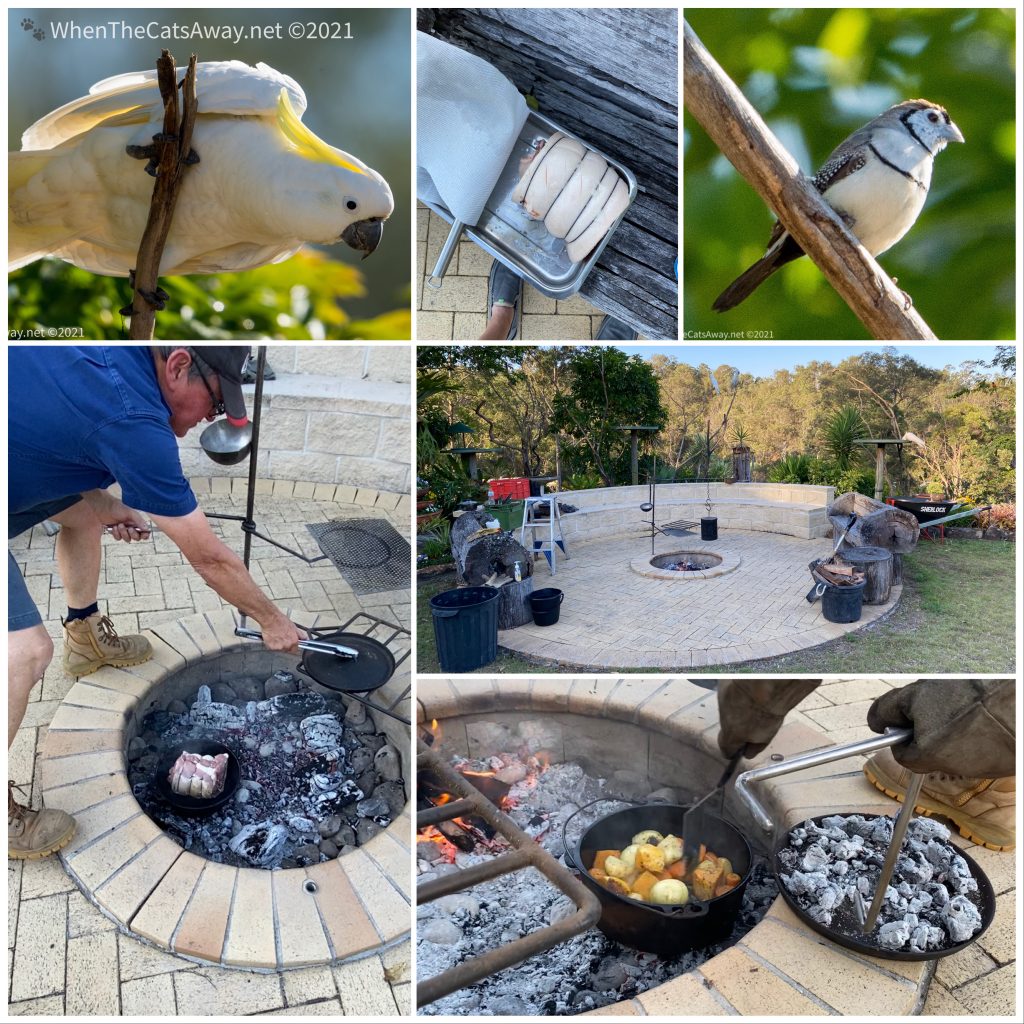
Phil was master cook one night treating us to this incredible roast cooked on their fire pit. What a delicious feed, and a night we will always remember as being so quintessentially Australian. A fiery sun setting over the eucalypt forest that forms a backdrop to their garden. White cockatoos screeching at apparently nothing in particular, lorikeets darting around their bird feeder. The smell of the fire, the chink of a glass, a shared belly laugh as day turns to night in between the blinks of an eye closed against the smoke.
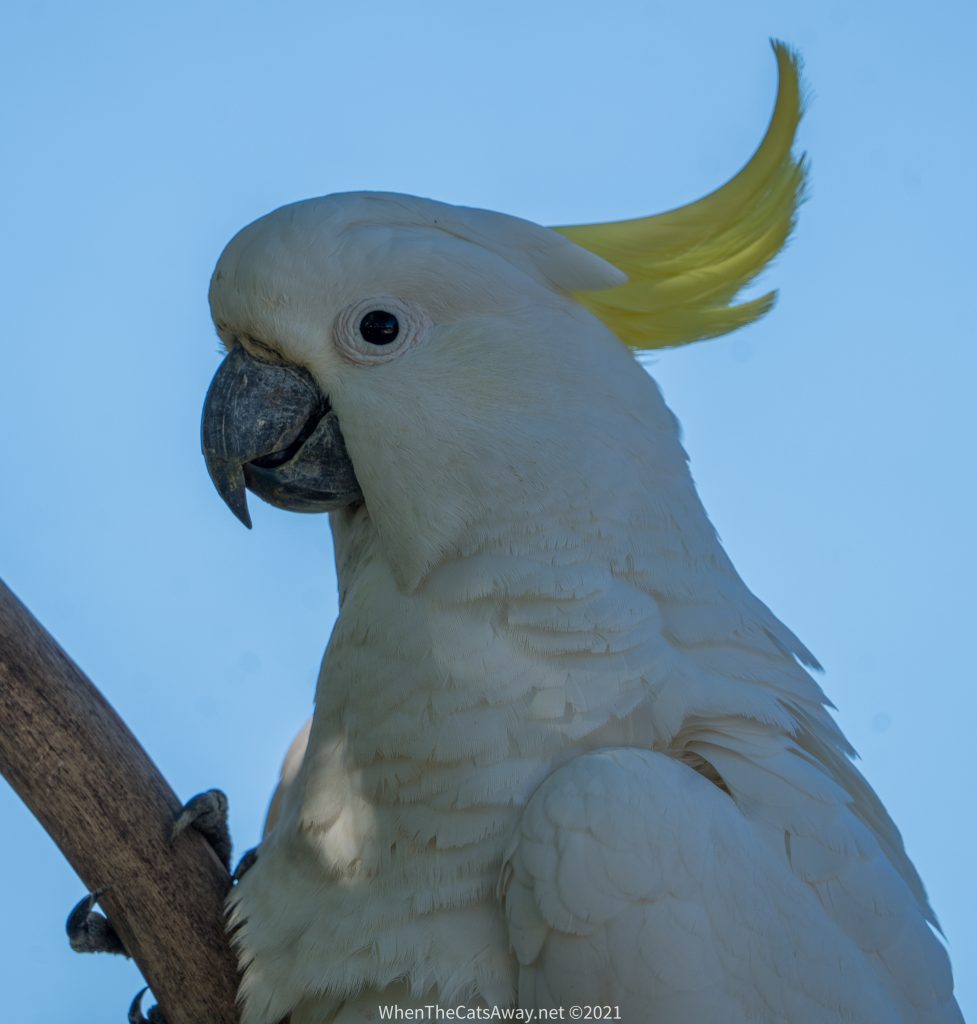
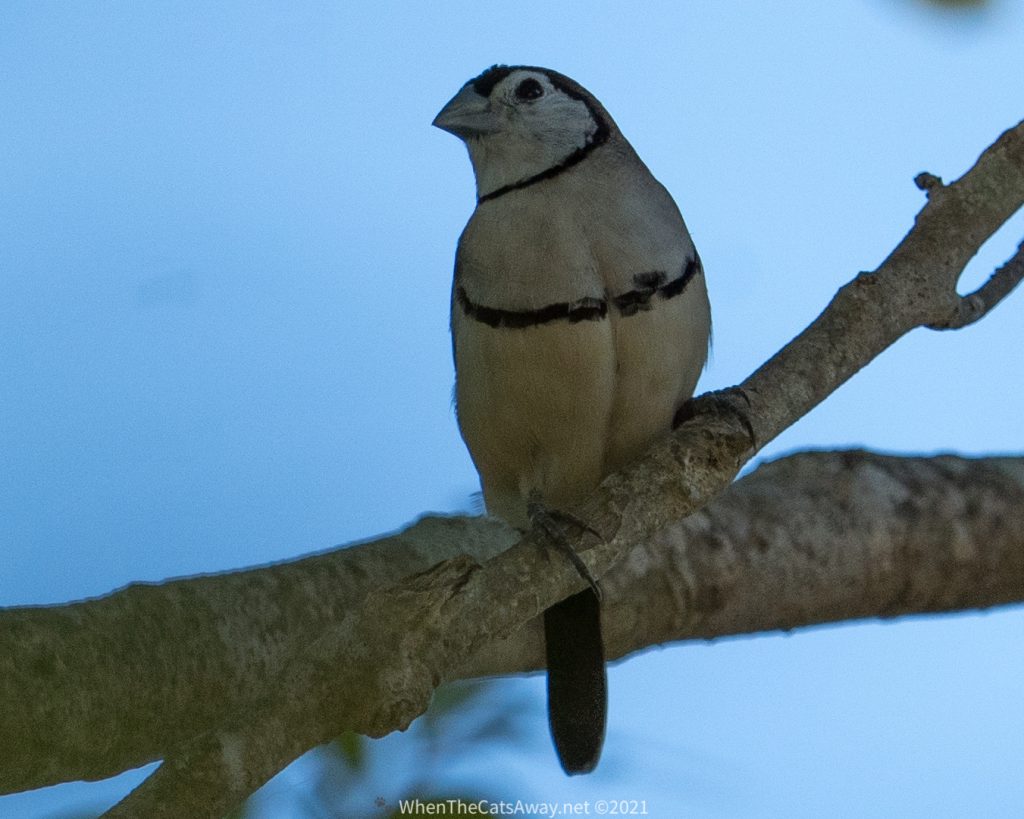
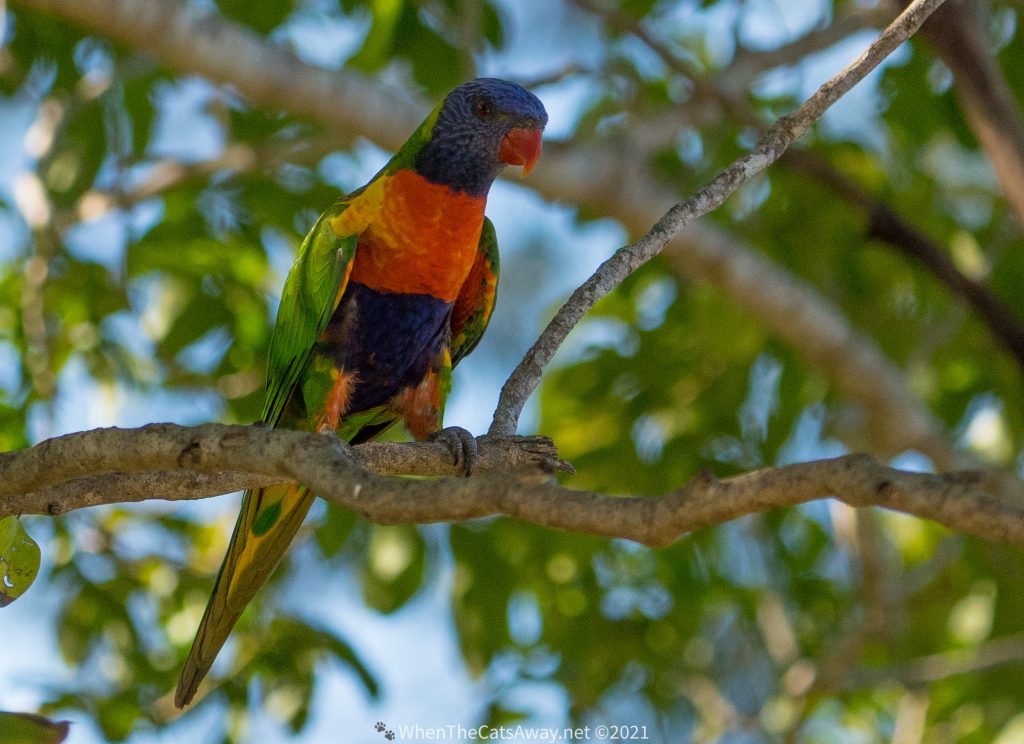
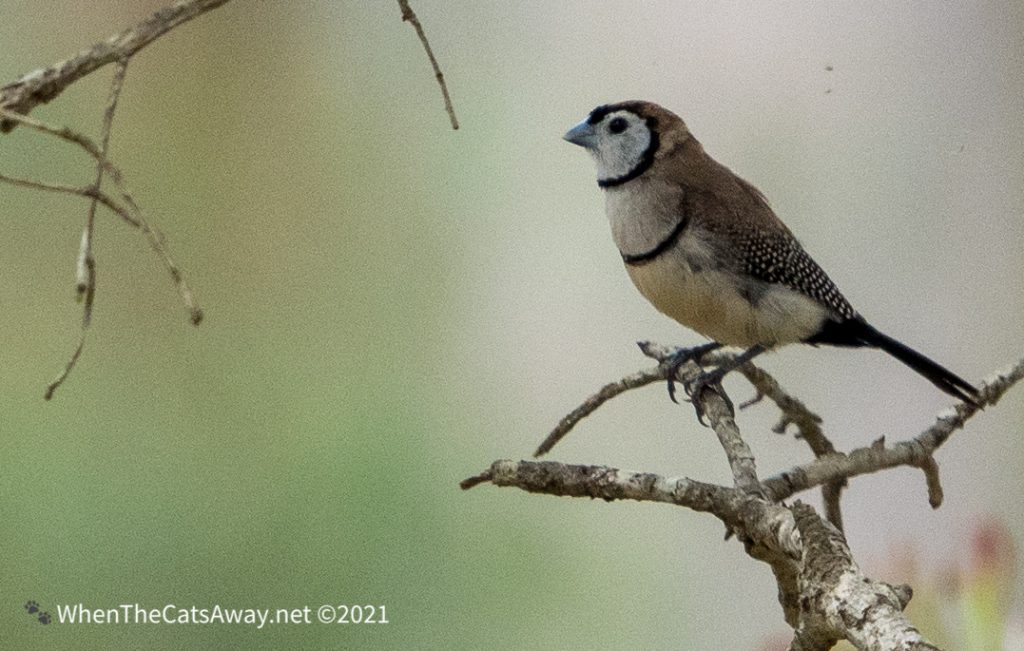
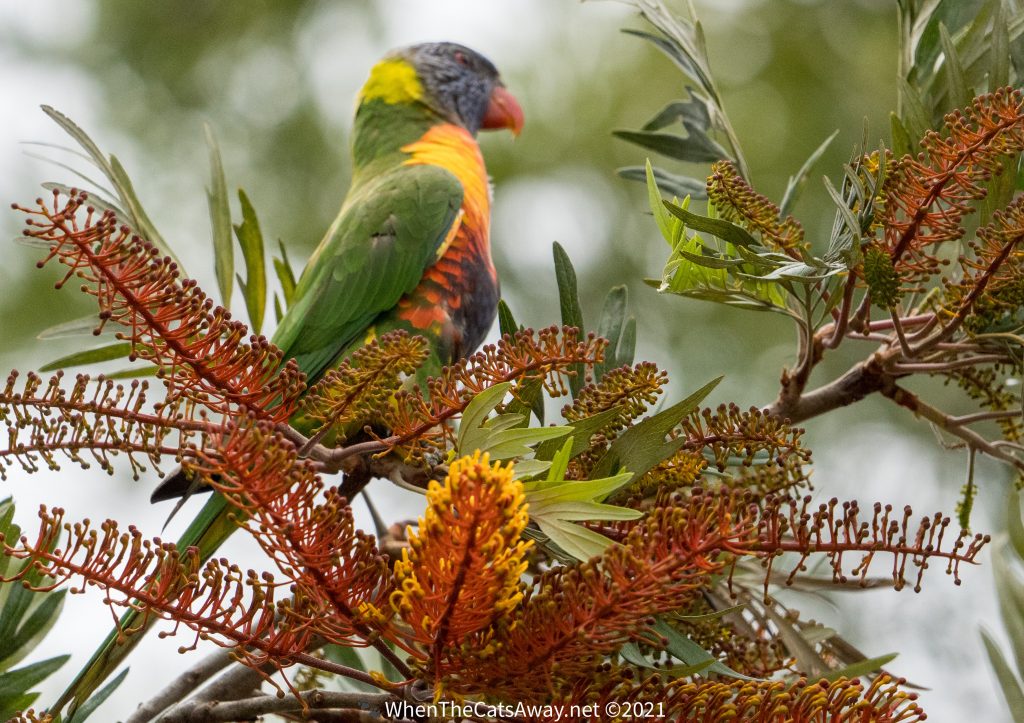
A Sulphur Crested Cockatoo flies in for a snack from the gardenA Double-barred Finch spies seed on the bird tableA colourful Rainbow Lorikeet joins its flock for a mealA fine campfire tended by Phil the chef, makes a delicious roast dinnerLess delicious is the orange jelly Mrs A got after her day surgery on her airway
*
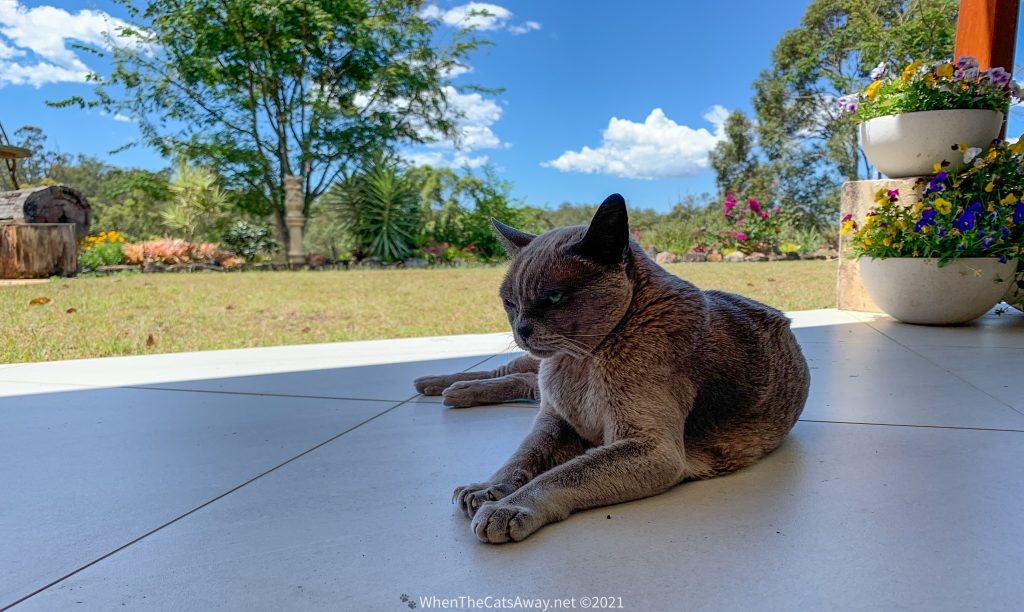
It was a sad goodbye as we started our journey back to Sydney, the car packed to the roof. Tassie was so displeased at being back on the road and confined she sat with her back to us for the first hour!. She had made herself so at home at Libby and Phil’s. Just look at this old poser.
Princess Tassie thought she had a new Queensland pad for a while there
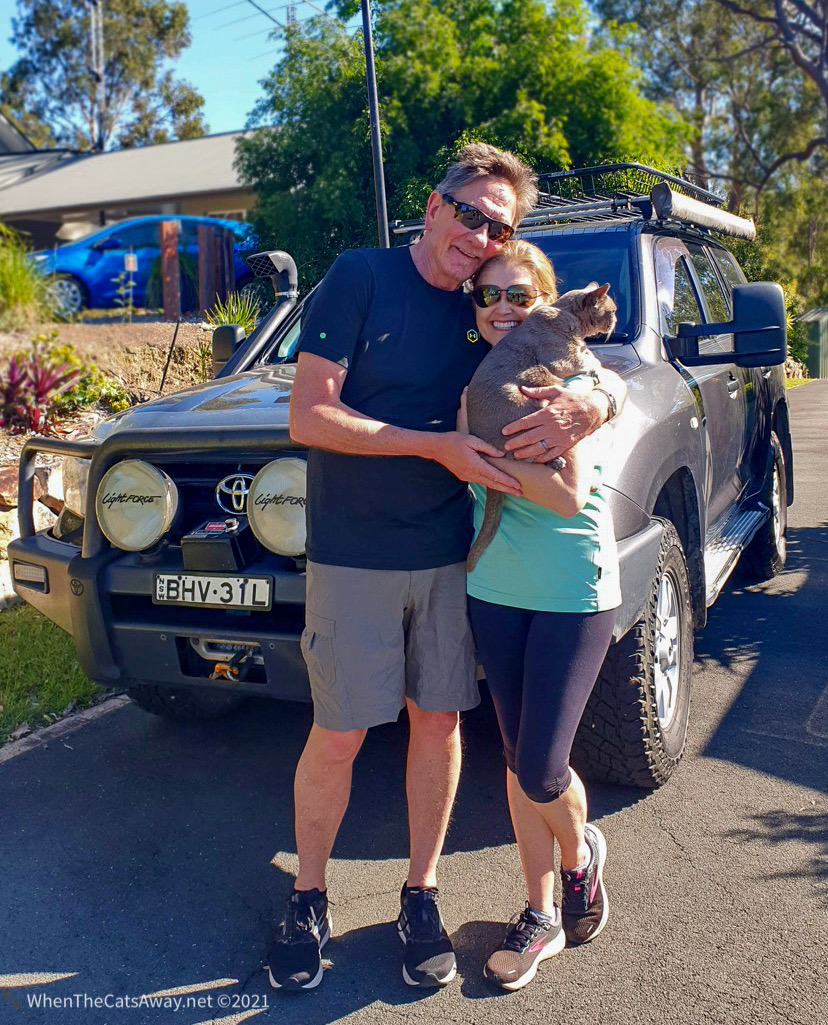
So goodbye Queensland and our friends there, the people who have made this leg of our trip so memorable. Thank you for your friendship, your kindness and your words of wisdom as we garble with the transition to a new life.
Sad to say goodbye, with strong hopes we will meet again
*
PS We will continue to share our travels and experiences as we return to Sydney and make the transition to our new life in Europe.
If you usually find our stories on a Facebook group and you still want to follow our adventures, please click below and fill in in your email address – our posts will come straight to your inbox!
Location: Kenilworth and surrounds, Sunshine Coast Hinterland, Queensland, Australia
Just when we thought our rainforest visiting days were over we decided to book in at the showgrounds in Kenilworth for a few days.
If you are unfamiliar with showgrounds (you may have noticed we have stayed on quite a few), a showground is a community run area of ground on which country shows – rodeos, livestock sales and comptitions and horse riding trials are held. Outside of major events, the land sits empty, so many towns have turned them into campgrounds, providing power and water to a number of sites as well as offering unpowered spots. We like them because they tend to be more bushy and spread out than caravan parks, and money earned from our fees goes back into improving the community facilities.
It was a breath of fresh air arriving in Kenilworth, after the frenzied school holidays crowds flocking to our Didillibah campsite, children keen to enjoy the water slides and jumping pillows on offer there. Although there were children around, mostly they were busy playing games on the oval or riding their bikes around the quiet driveways.
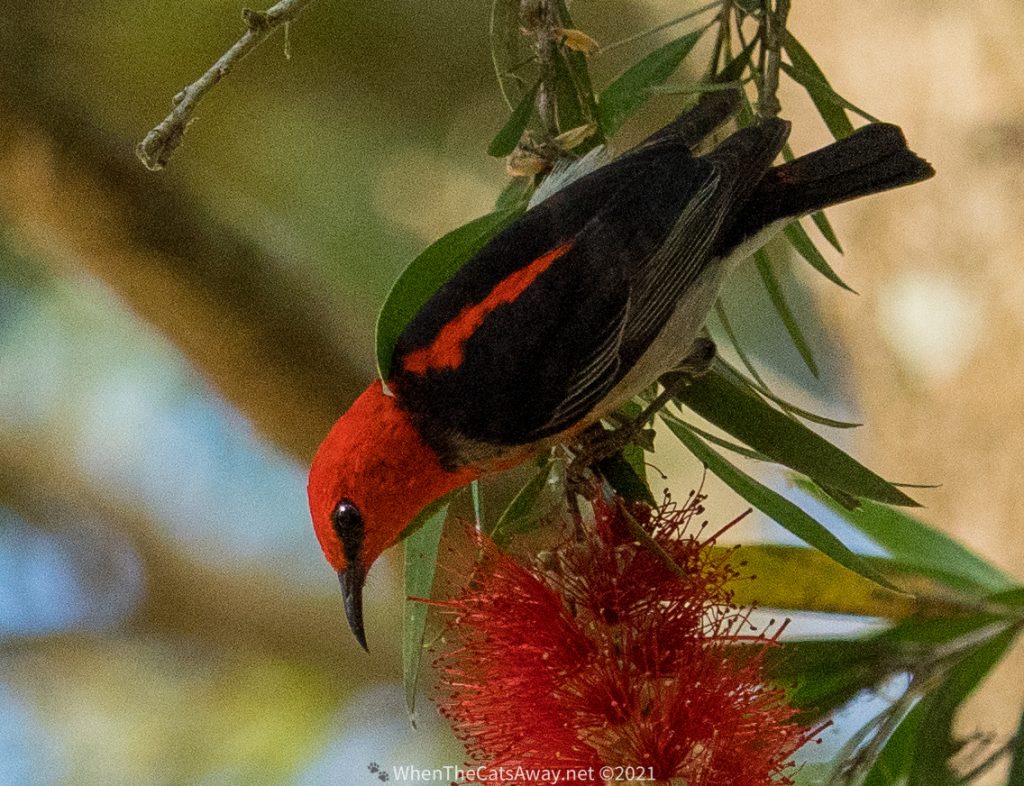
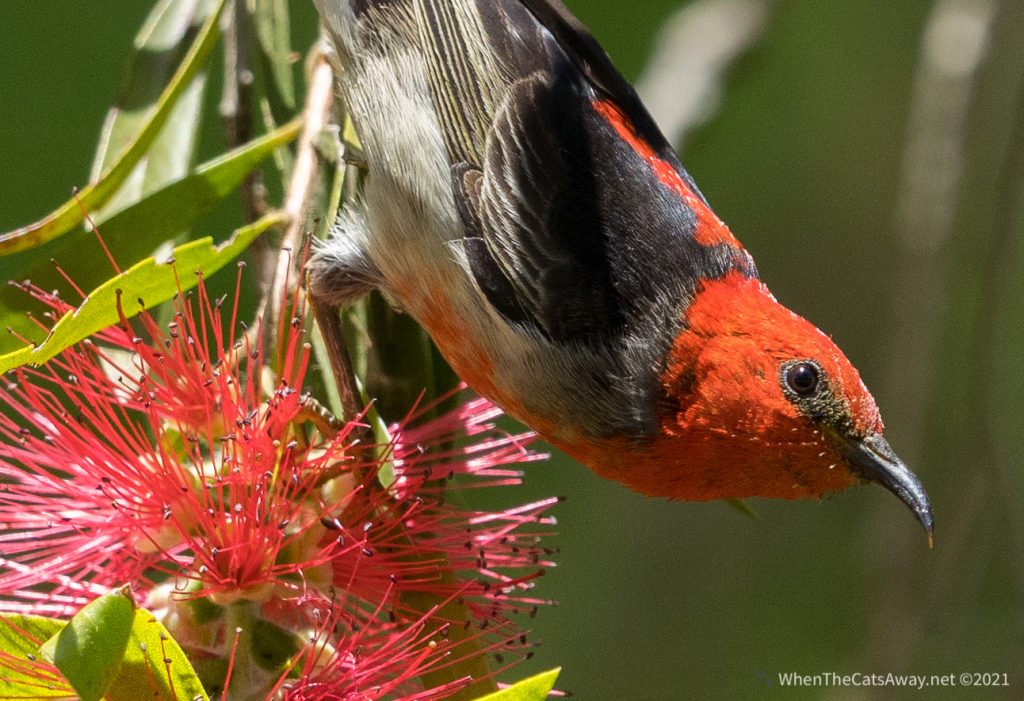
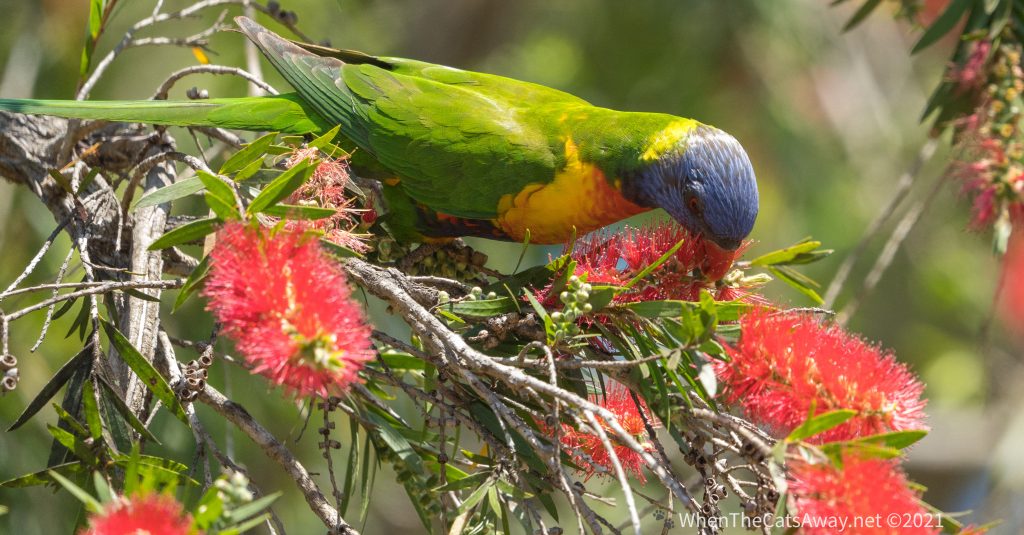
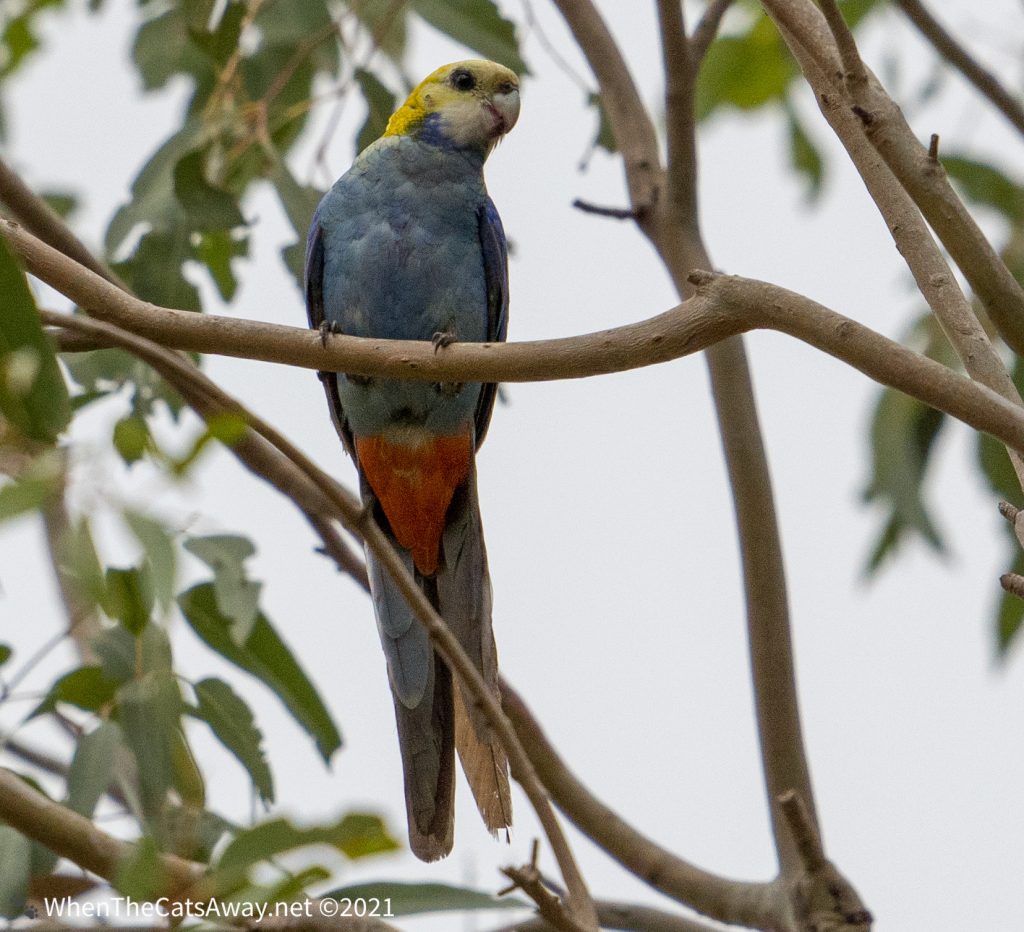
The overwhelming sound we first noticed was of birds in their hundreds, flocking to the flowering callistemon trees around the park. As well as Rainbow Lorikeets and Pale-headed Rosellas, there were dozens of tiny Scarlet Myzomelas, a challenge to see as they are so similar in colour to the flowers.
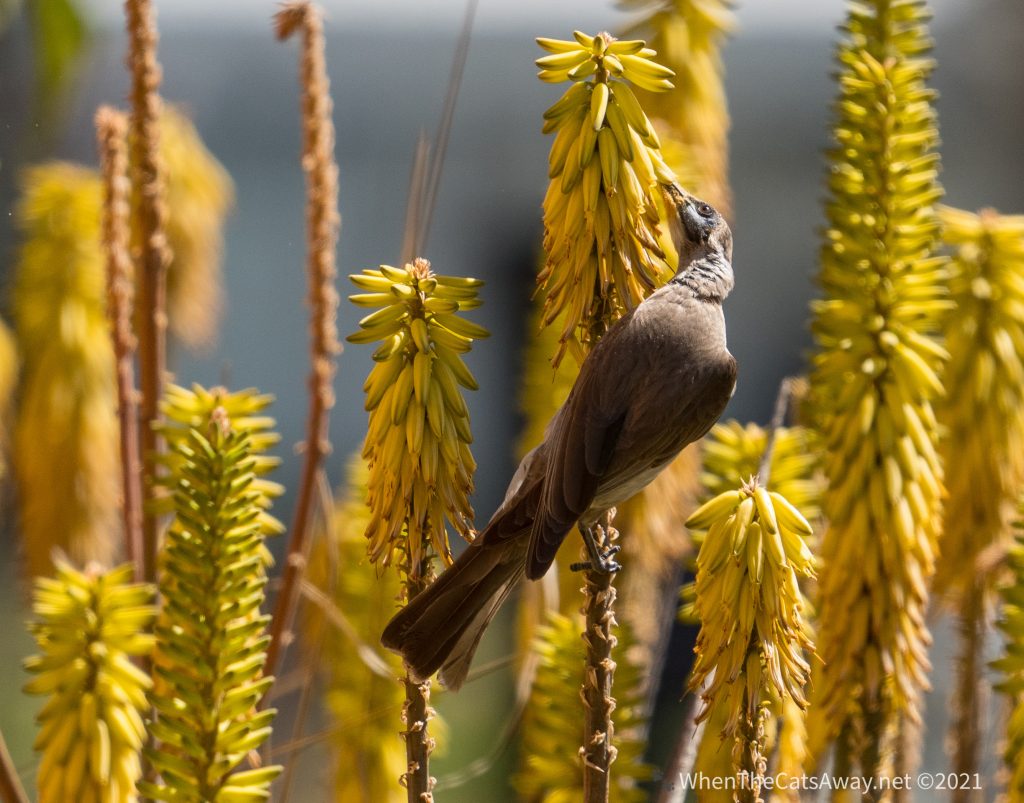
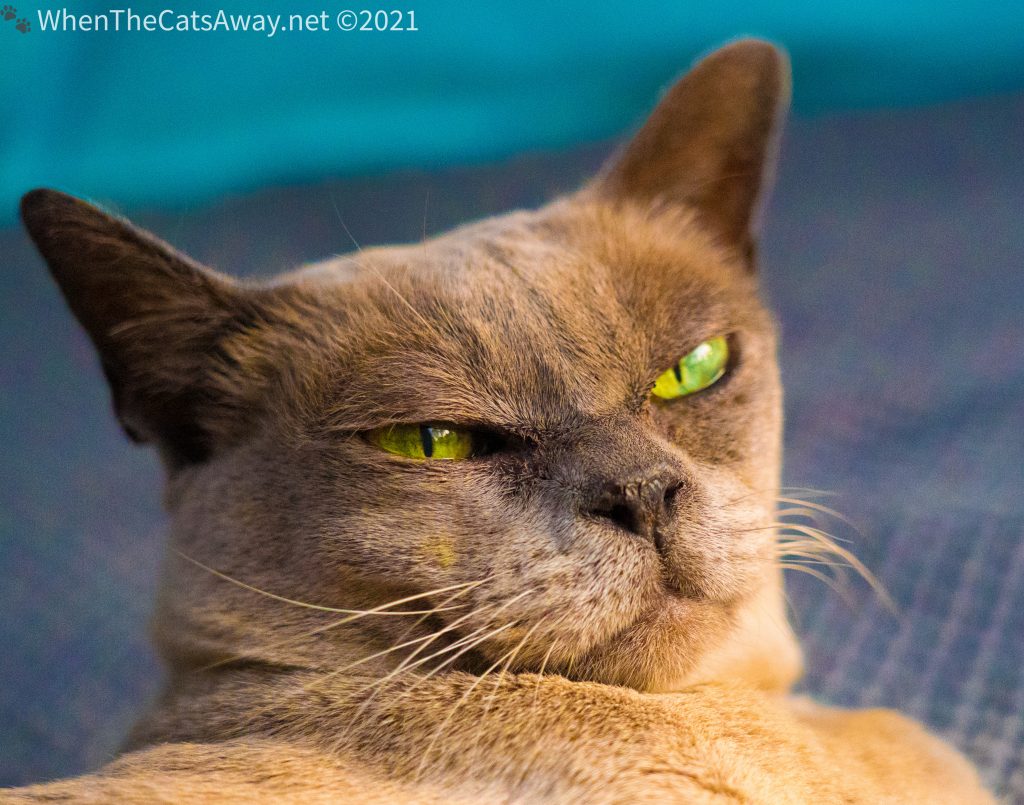
Bottlebrush flowers are clearly a favourite for these little red, black and white birdsScarlet MyzomelaHundreds of Rainbow Lorikeets flock here also to enjoy the sweet nectarAnother type of honeyeater, a Noisy Friarbird on Kniphofia flowersPrincess Tassie approved of the fine sunny weather we had here
*
Kenilworth is situated in a rural setting ringed by national parks and state forests in all directions, the green rolling hills reminding us somewhat of England on a fine sunny day. It sits in the Mary River valley, and the river itself runs just behind the showground.
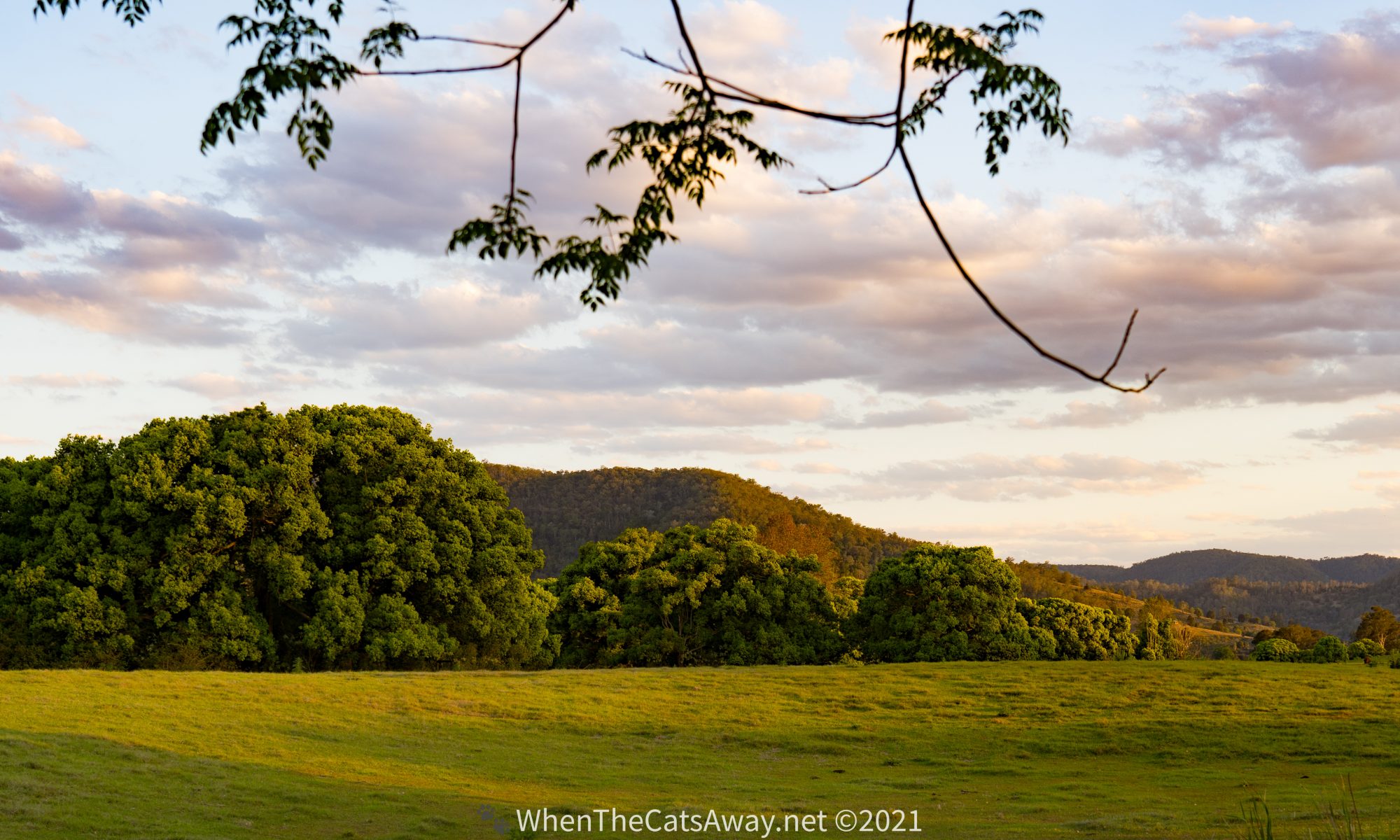
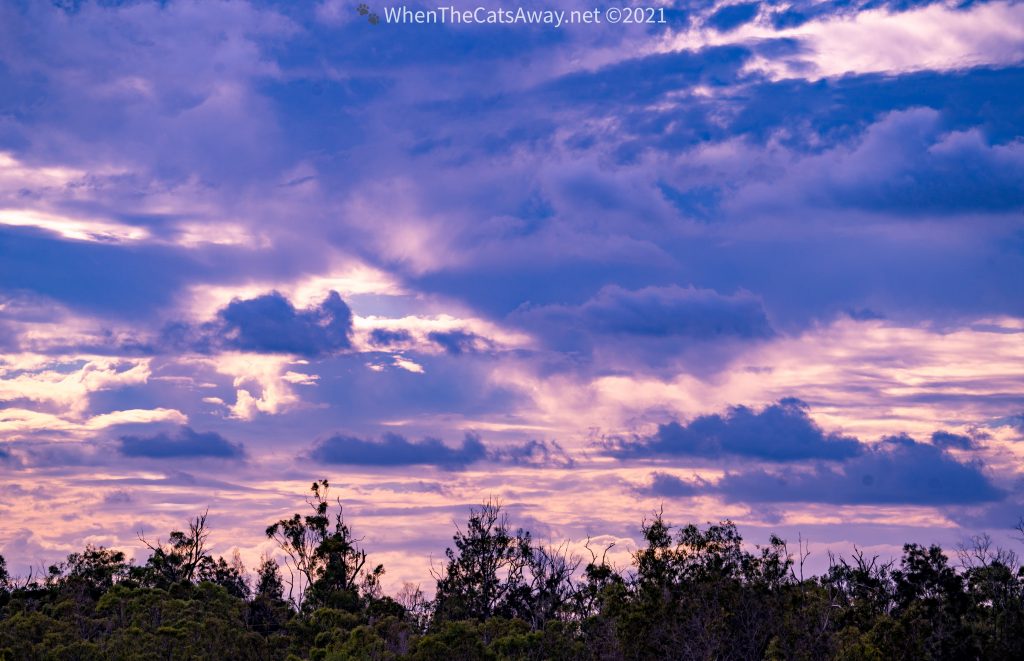
Sunset from the campground
All this natural environment makes for a wildlife filled location and we ticked off more than 35 different species of bird just footsteps from our caravan!
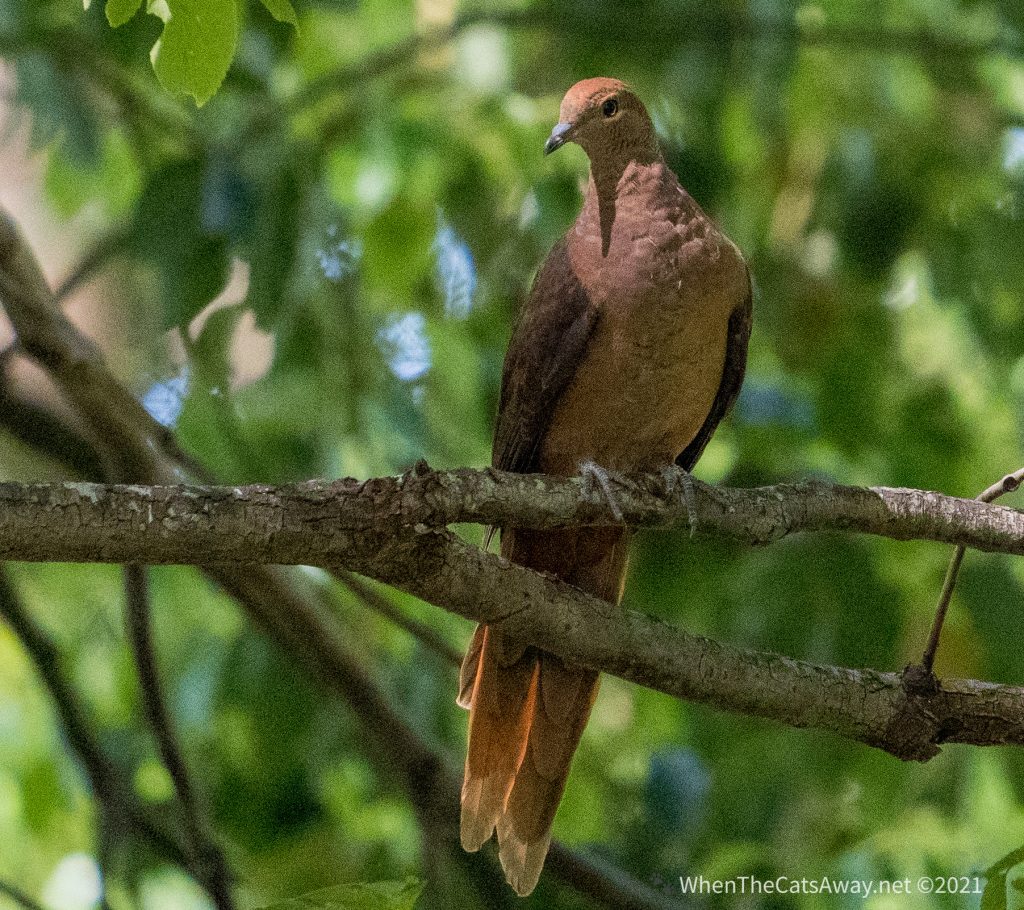
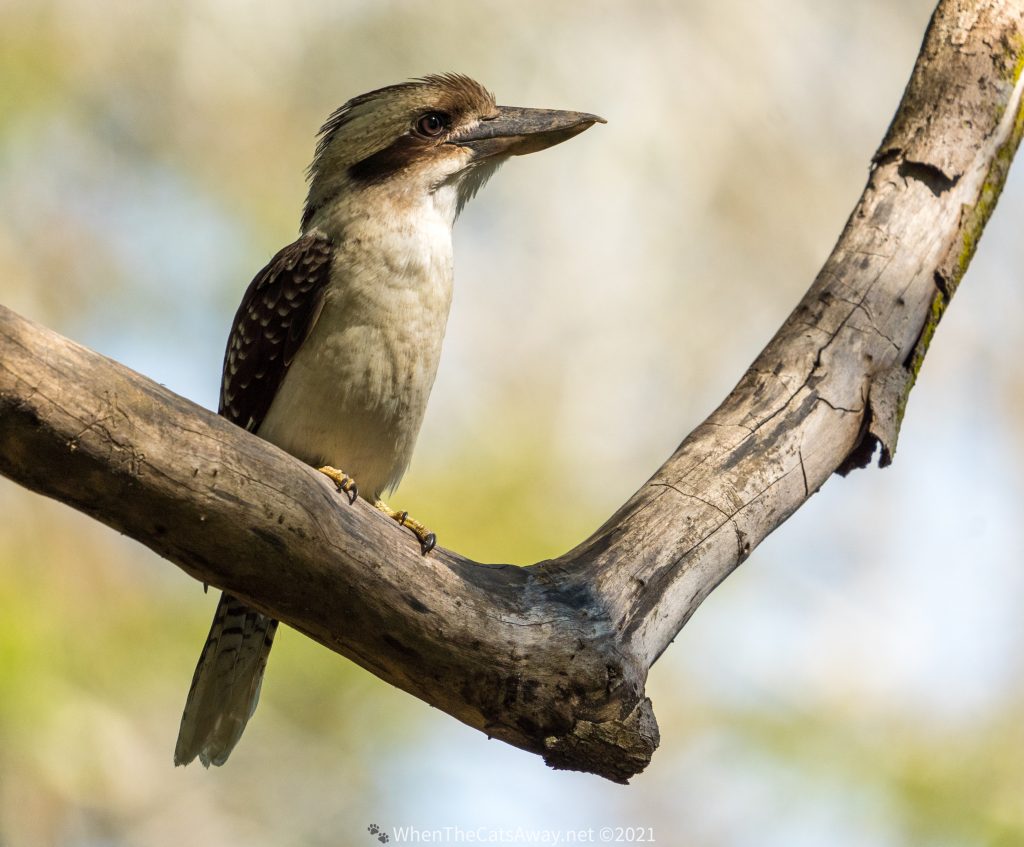
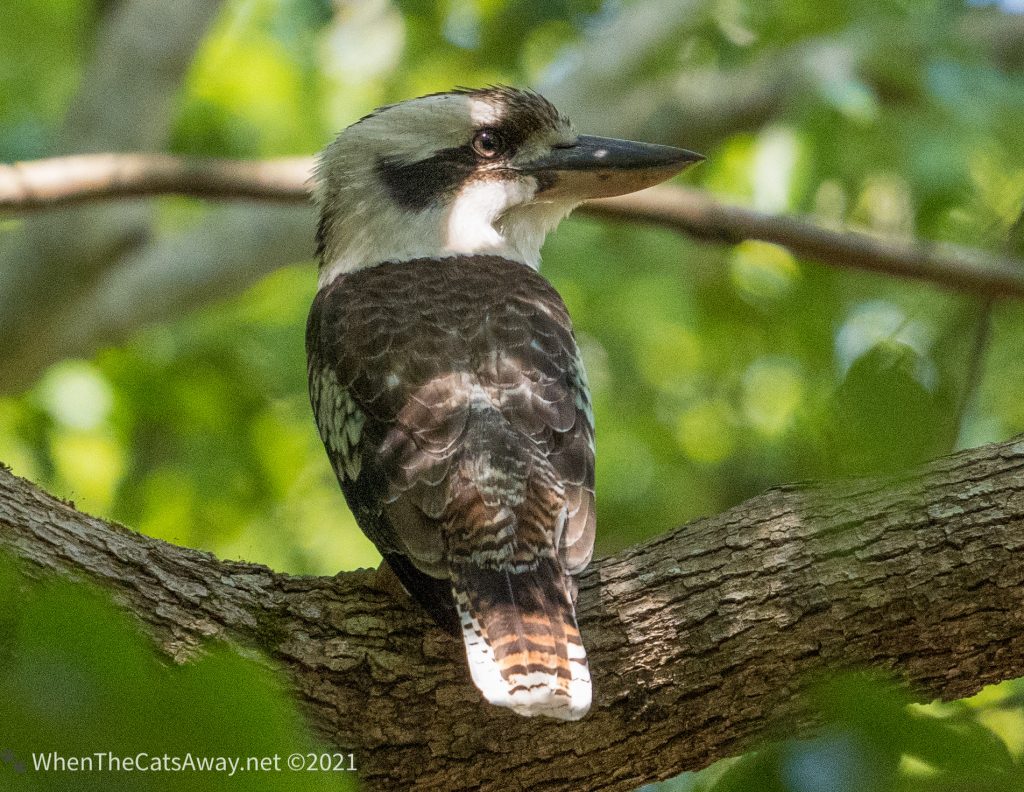
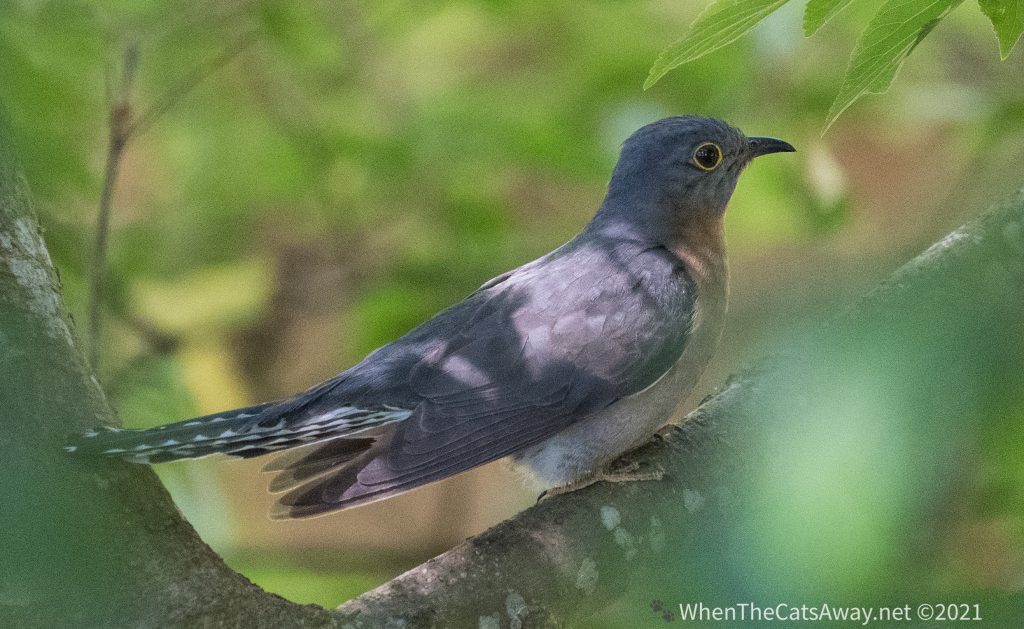
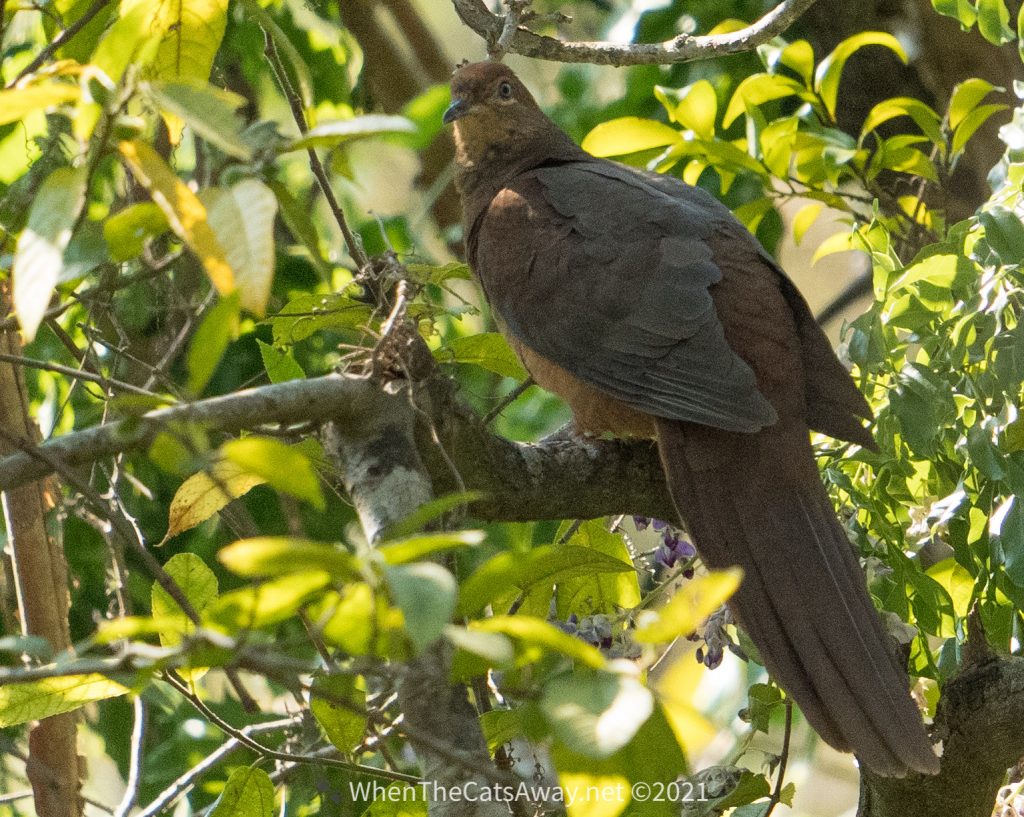
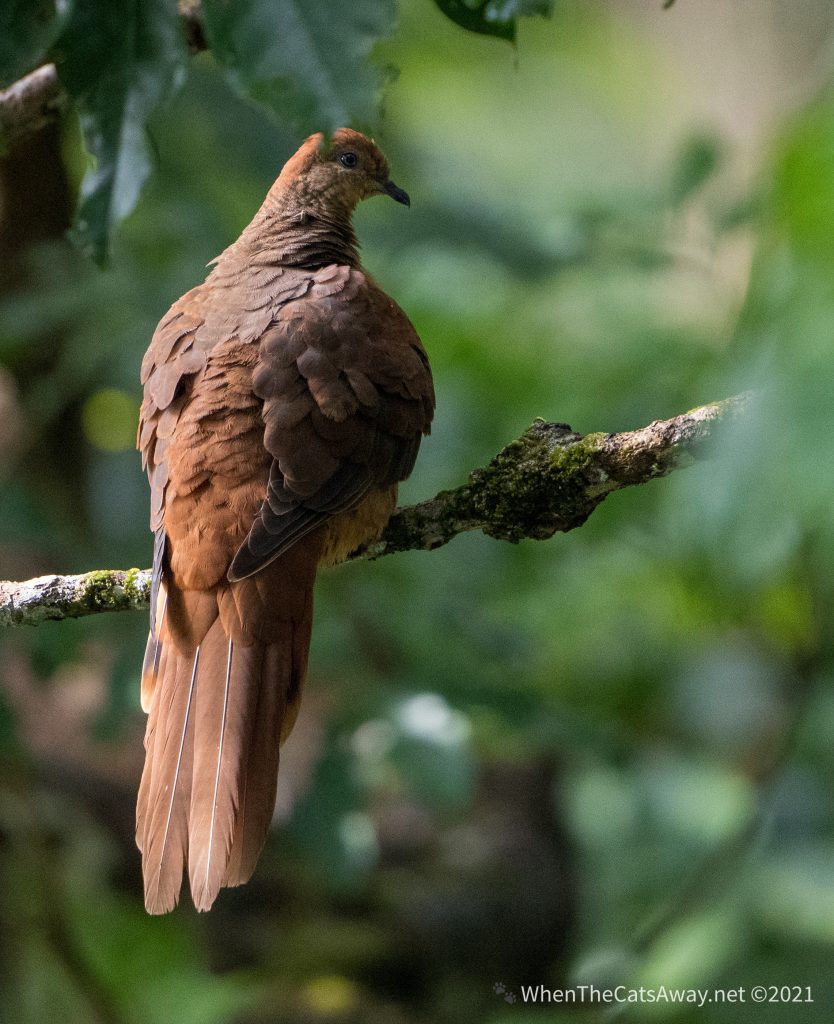
A Brown Cuckoo Dove flies up from the woodland floor and eyes me suspiciously One of several Laughing Kookaburras on the site which entertain us each evening with their cackling callsAnother Laughing KookaburraA Fan-tailed Cuckoo with its gorgeous bright eye
We were reminded in no uncertain terms that (despite the temperature reaching over 30 degrees centigrade on a couple of the days we were there) it is spring, and many of the birds were busy building nests, collecting food to feed young, and often in their vibrant mating colours. It is a great time to be spotting birds.
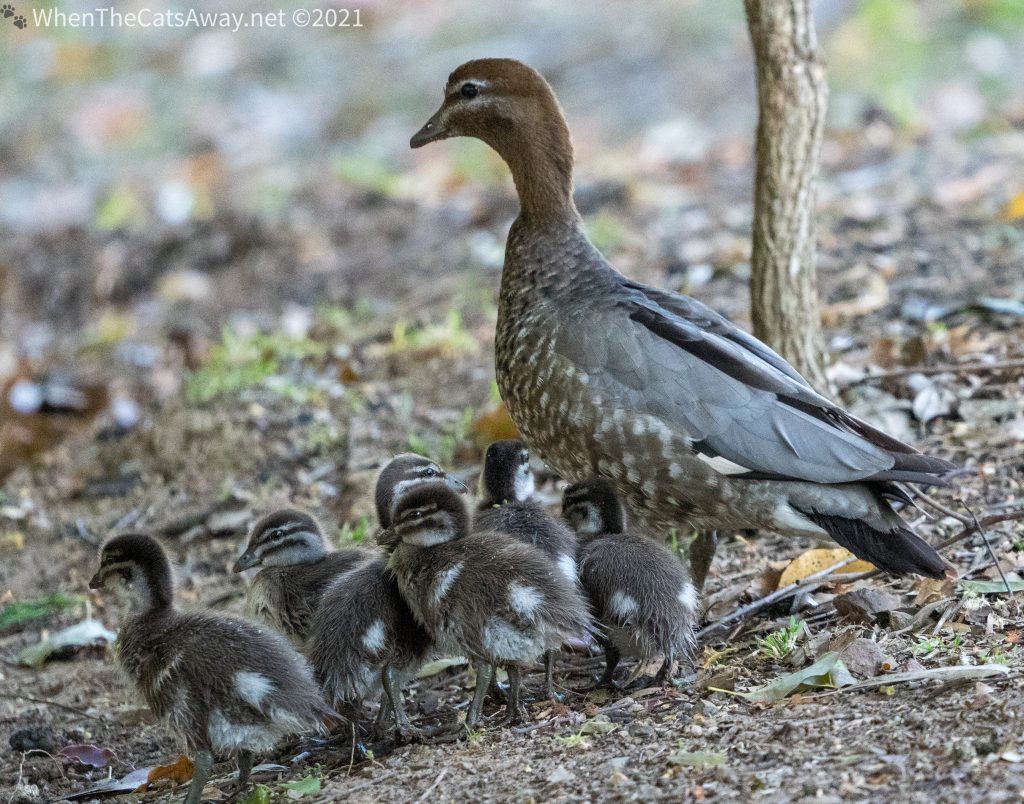
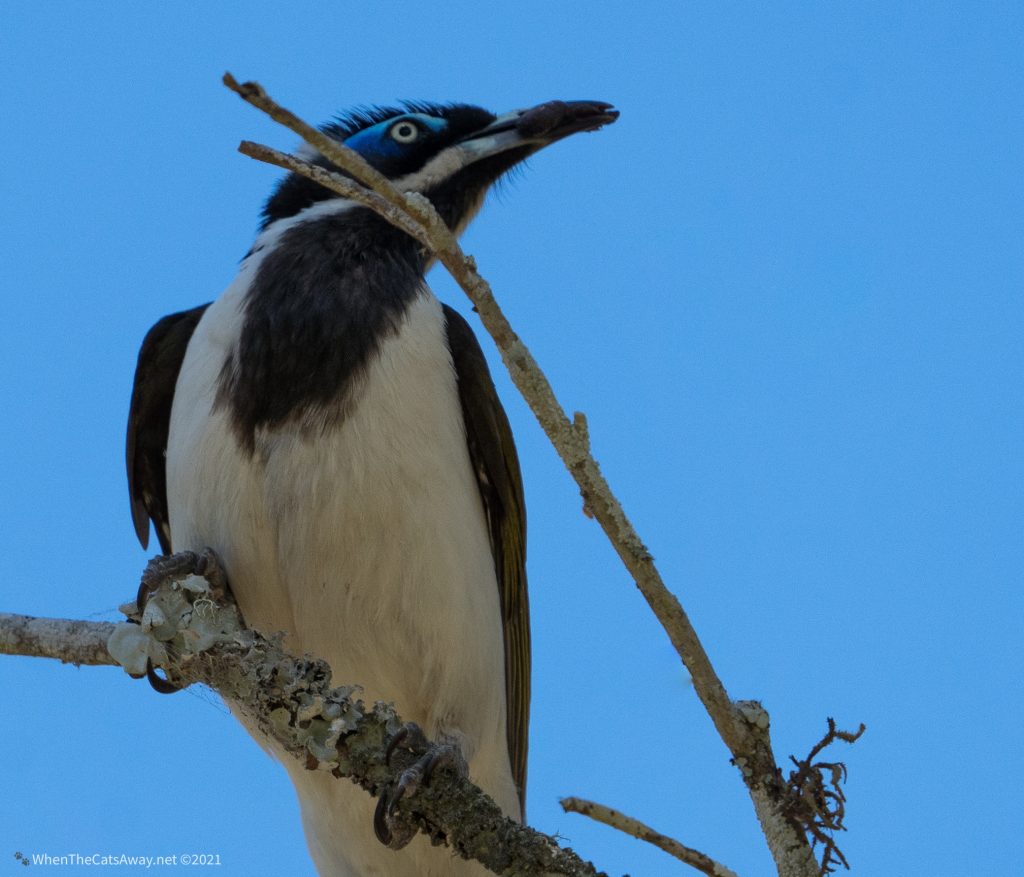
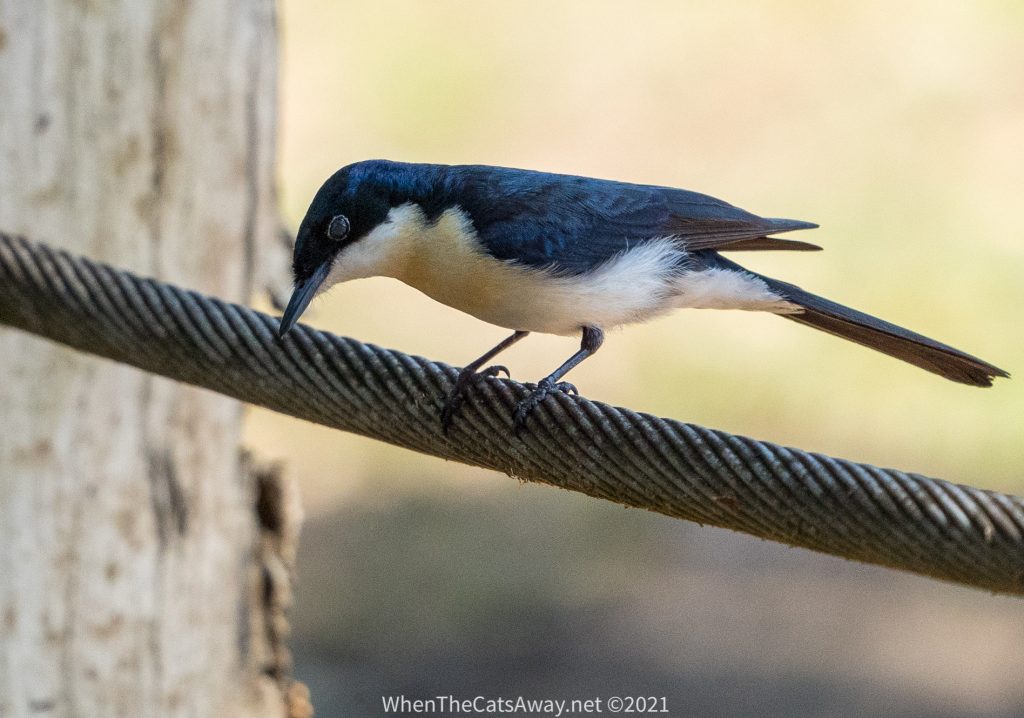
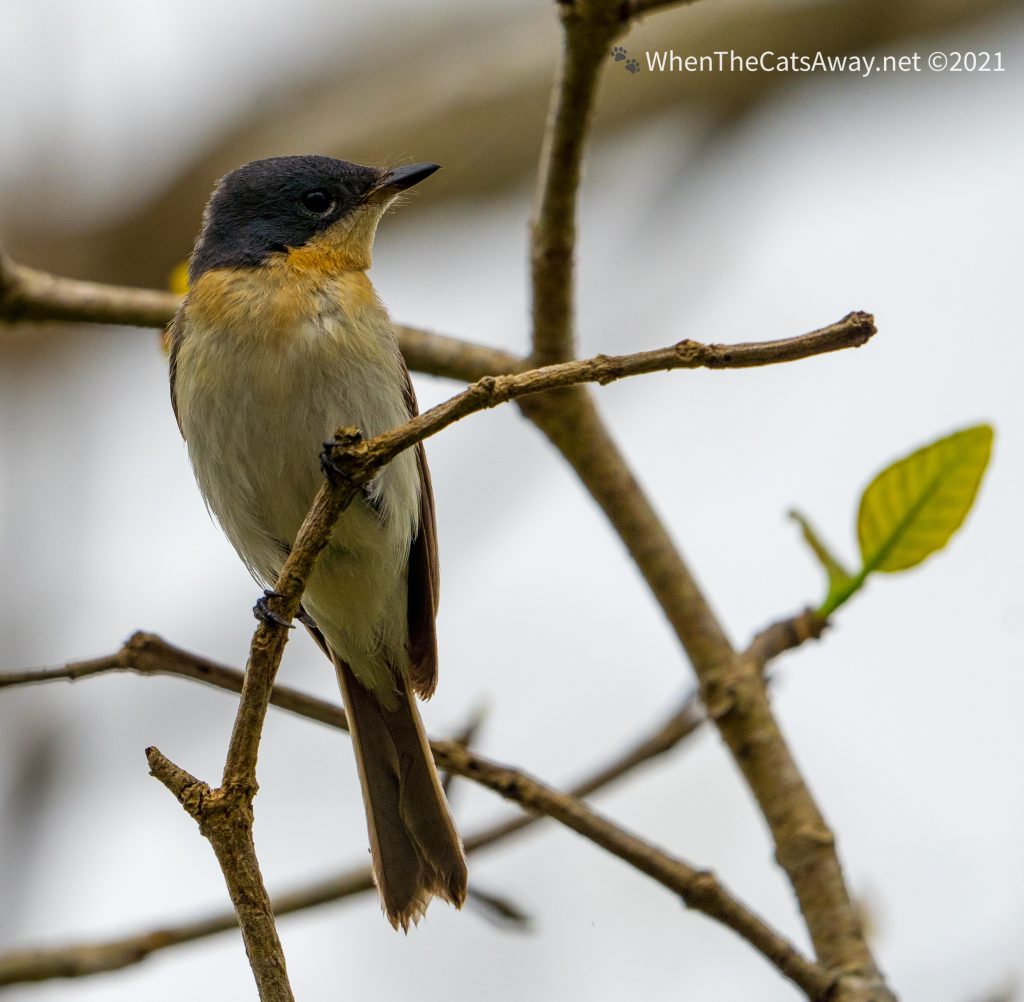
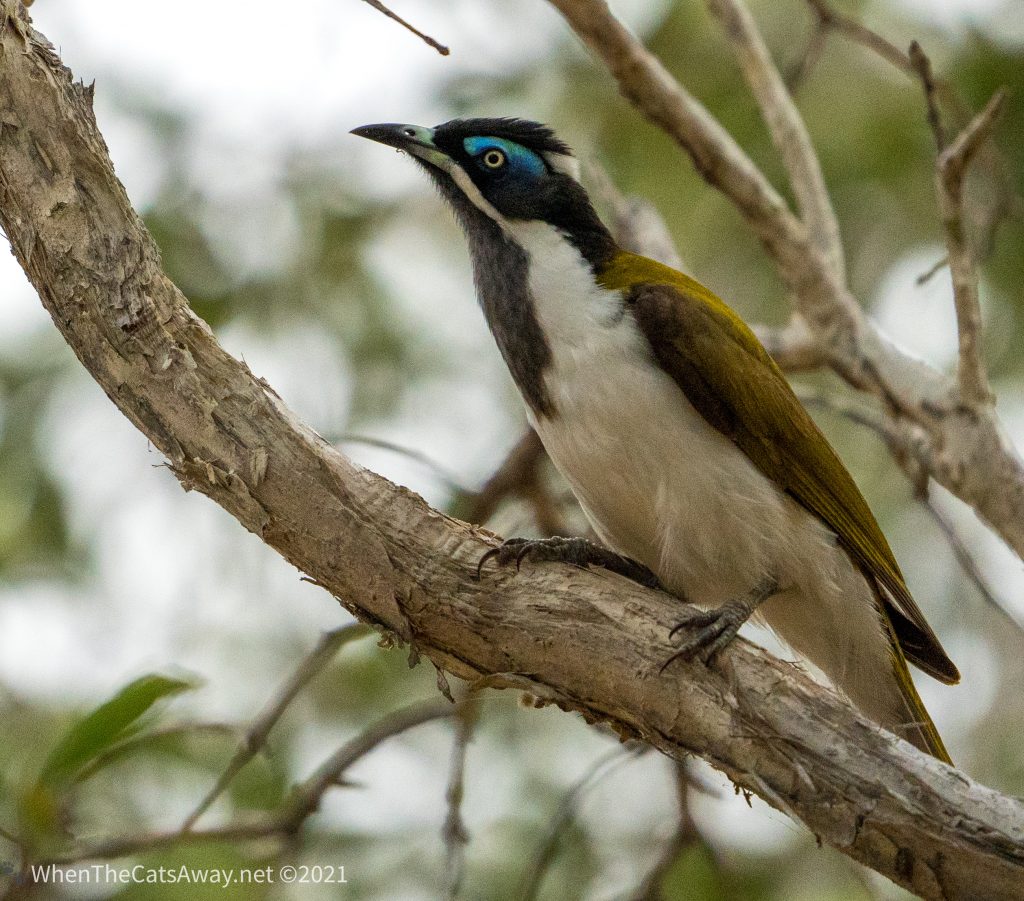
A pair of Maned Ducks have a very cute clutch of six chicksA Blue-faced Honeyeater with a beak full of insects to feed its hungry familyLeaden Flycatcher – this one was collecting horse hair from the edge of the paddock, presumably to line a nest
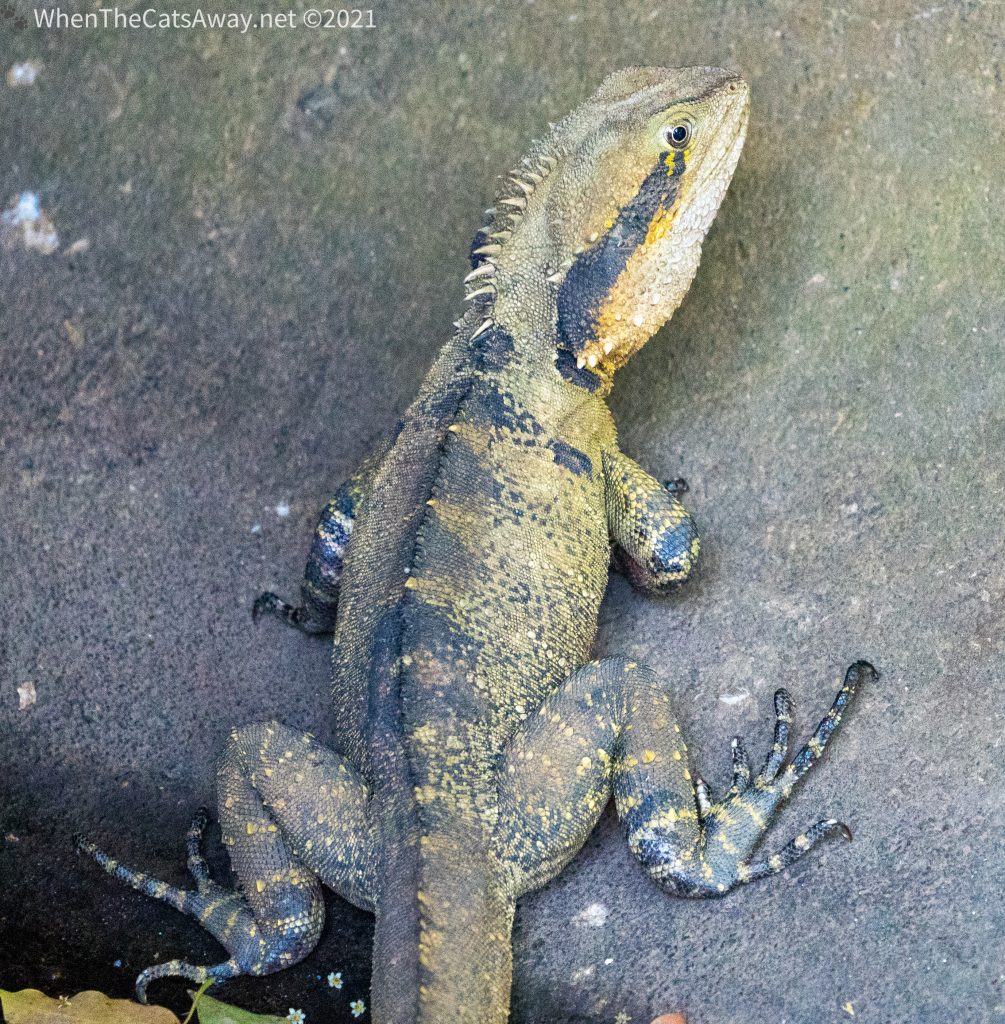
In addition to the many birds around, on one walk we even spotted a large Australian Water Dragon, located where I had previously seen the ducklings. I was so worried that they were missing I checked to see whether duckling might be on the Water Dragon’s dinner list – fortunately not, they prefer insects and the odd baby mouse!
An Australian Water Dragon – this adult was about 1 metre long (nose to tip of tail). Their diet consists mostly of insects (though they will eat small mice) and they live for about 20 years
*
The Mary River is about a 10 minute walk from the campsite, following a mown grass tree lined pathway which leads down to the river’s edge.
We came to this region back in 2018 when we organised a Zoner’s Muster at Kenilworth Camping, a farm camping area on the banks of this river further downstream. Back then we had paddled 4.5km in our inflatable pack rafts and had a great time with some of our Zoner (owners of Zone RV caravans) friends. So it was really fitting when our friends Phil and Libby, who had been there with us too, decided they hadn’t quite had enough of us in Noosa, and that they would drive up with their granddaughters, Ava and Hayley, for the day.
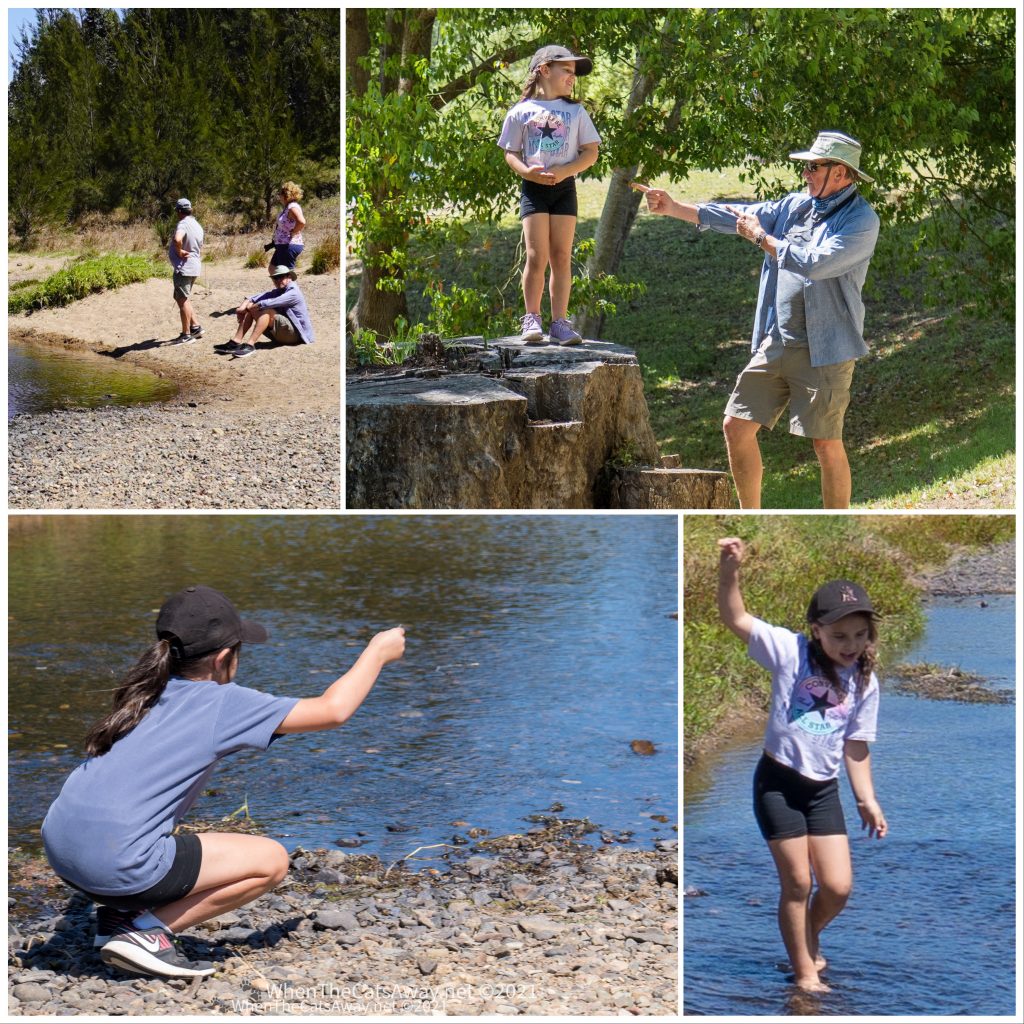
Hayley didn’t hesitate to jump in the river for a paddle, while Ava took time to learn how to skim stones. The water was definitely too shallow for kayaking and we certainly could not have managed the trip we did three and a half years ago.
Ava learning to skim stones while Hayley paddles in the shallow river
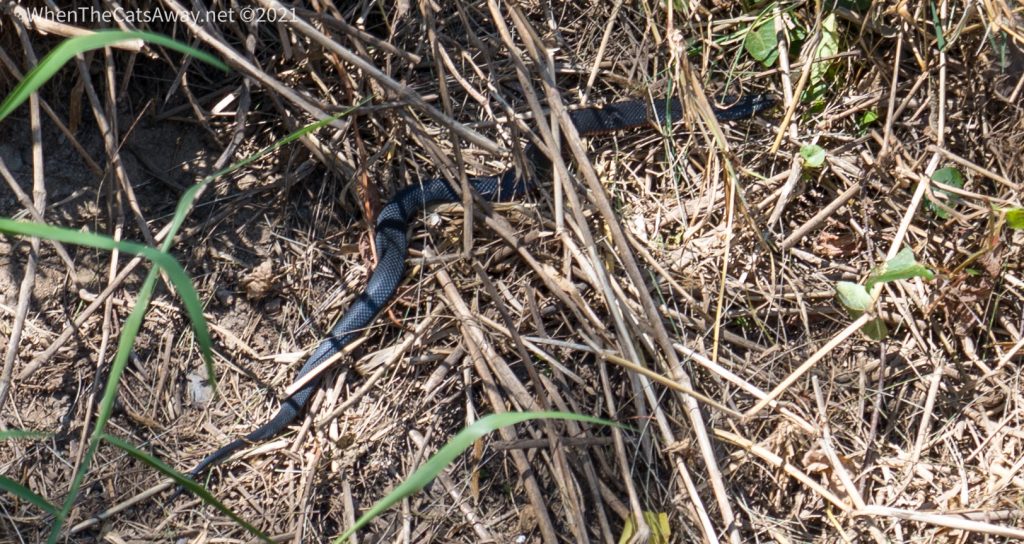
We were reminded that the river is home to more than fish, turtles and birds, when sharp-eyed Hayley pointed out a Red-bellied Black Snake slithering along the riverbank into the undergrowth. This one was just a baby – on another visit down to the water Mr A came rushing along the bank towards me ashen faced – a 2 metre long adult had just emerged from the water swiftly retreating into the reeds just centimetres in front of him. We steered clear from reeds and grasses after that!
Red-bellied Black-snake – venomous but shy unless they feel threatened
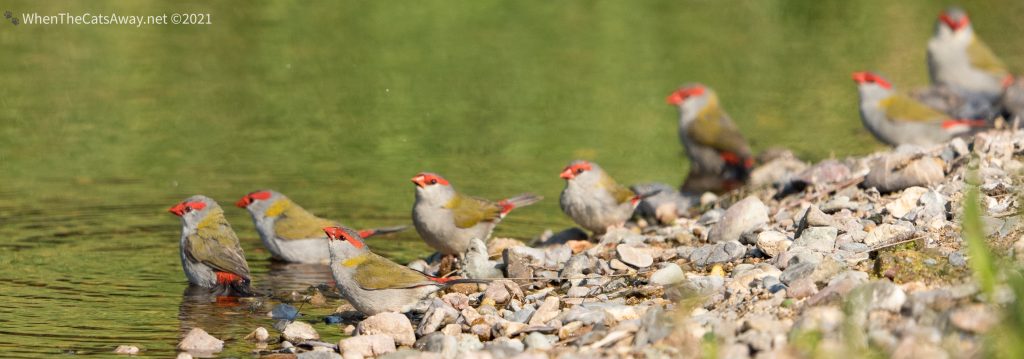
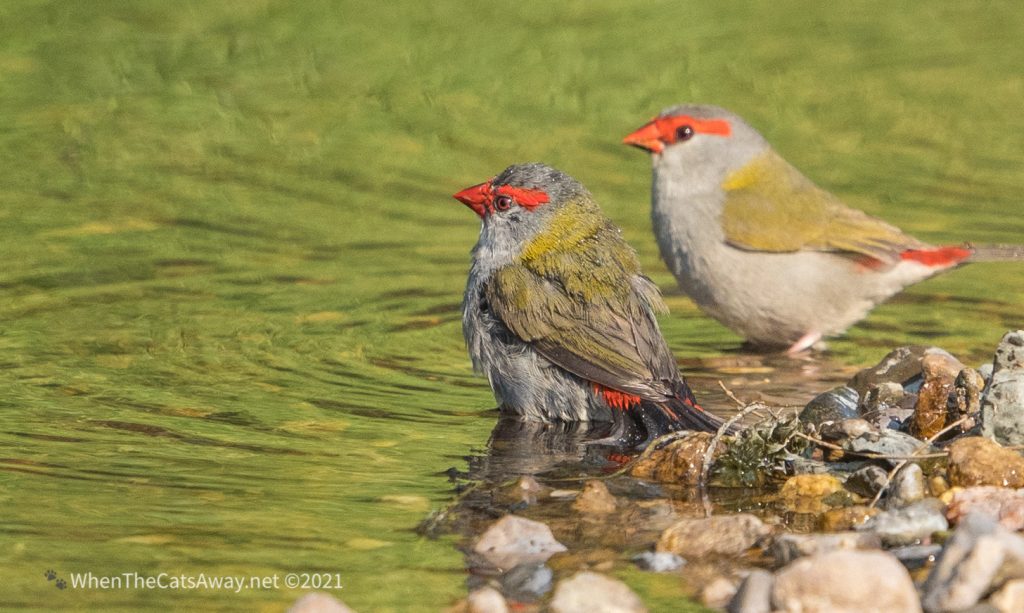
Mark and I visited the Mary River on a few occasions, every time rewarding us with new sightings – like these gorgeous Red-browed Firetails – tiny finches often heard but rarely seen.
Bath time for the flockOne very wet Firetail!
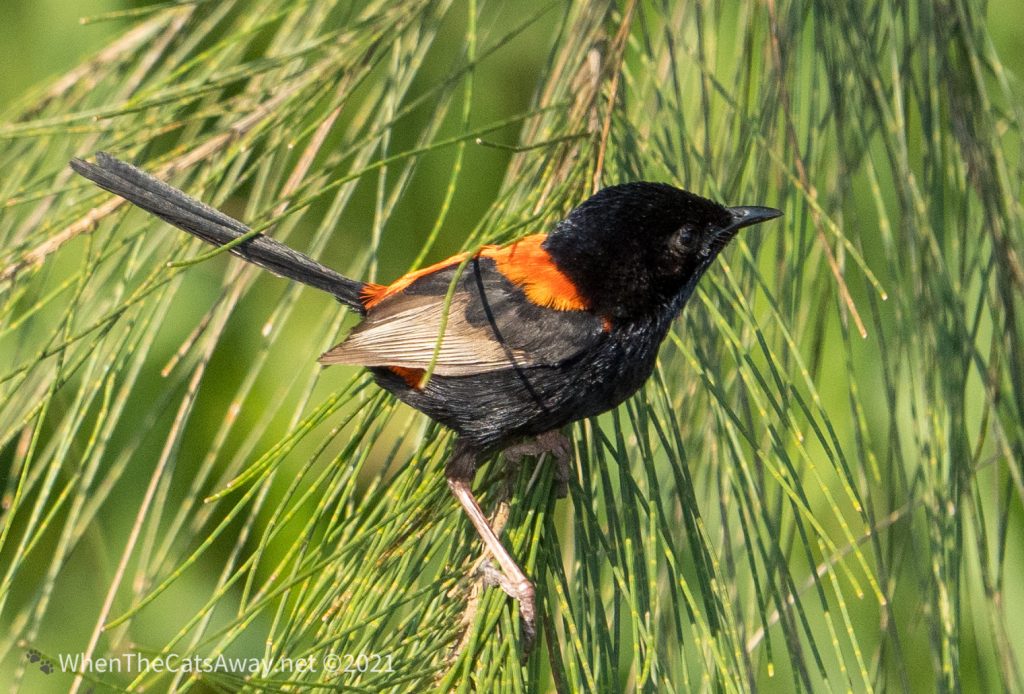
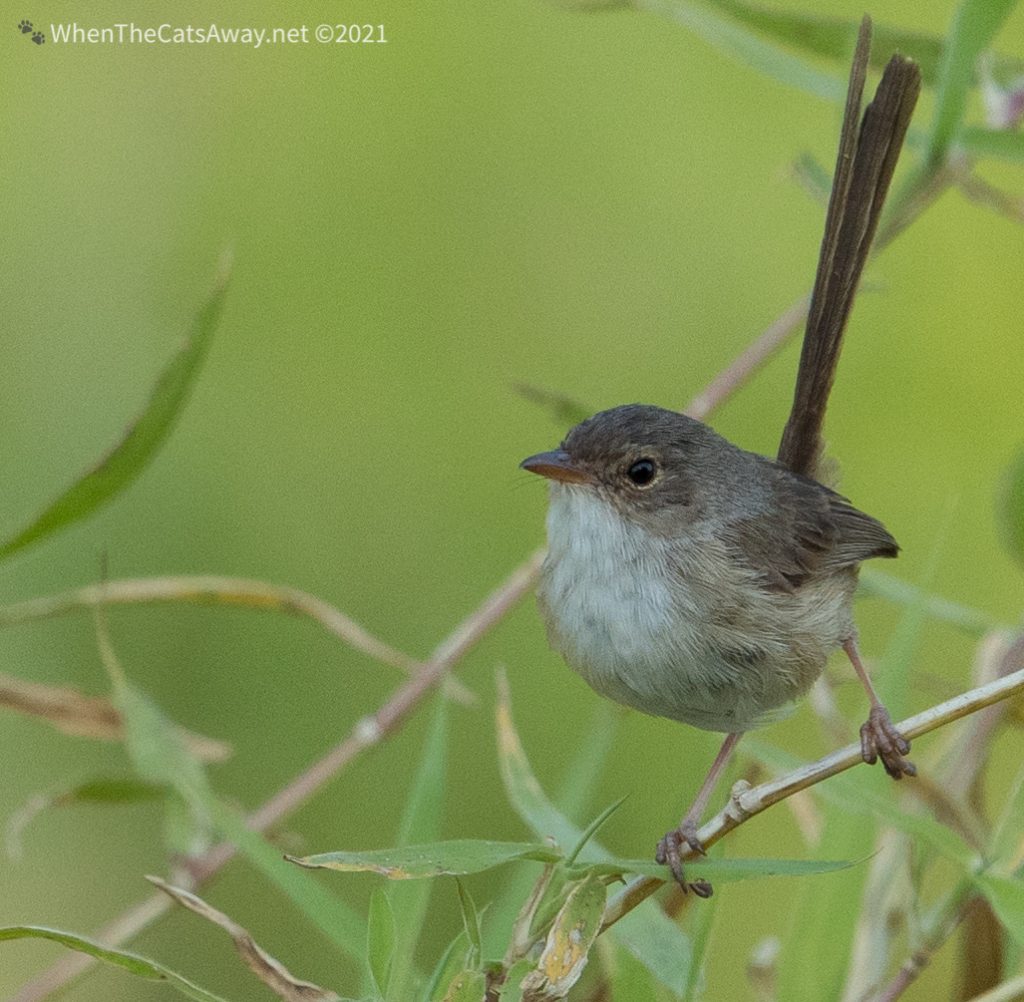
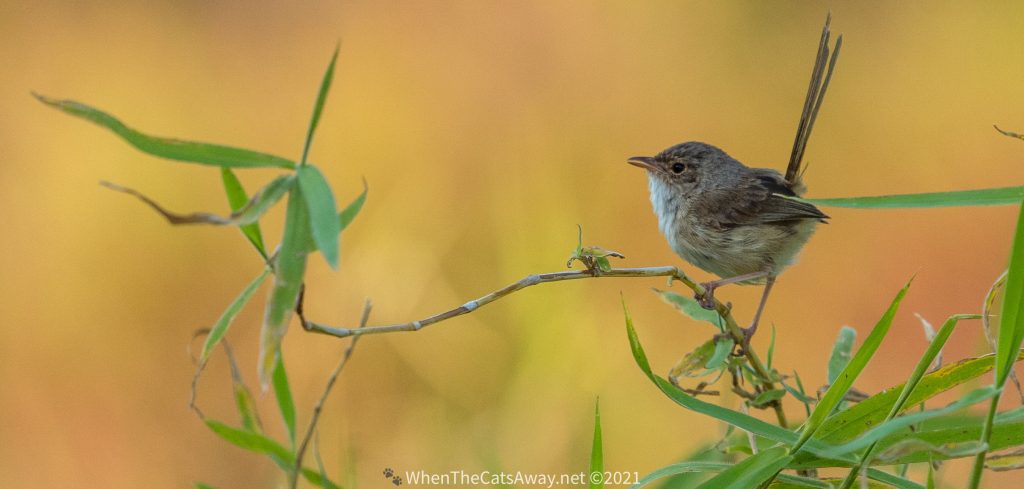
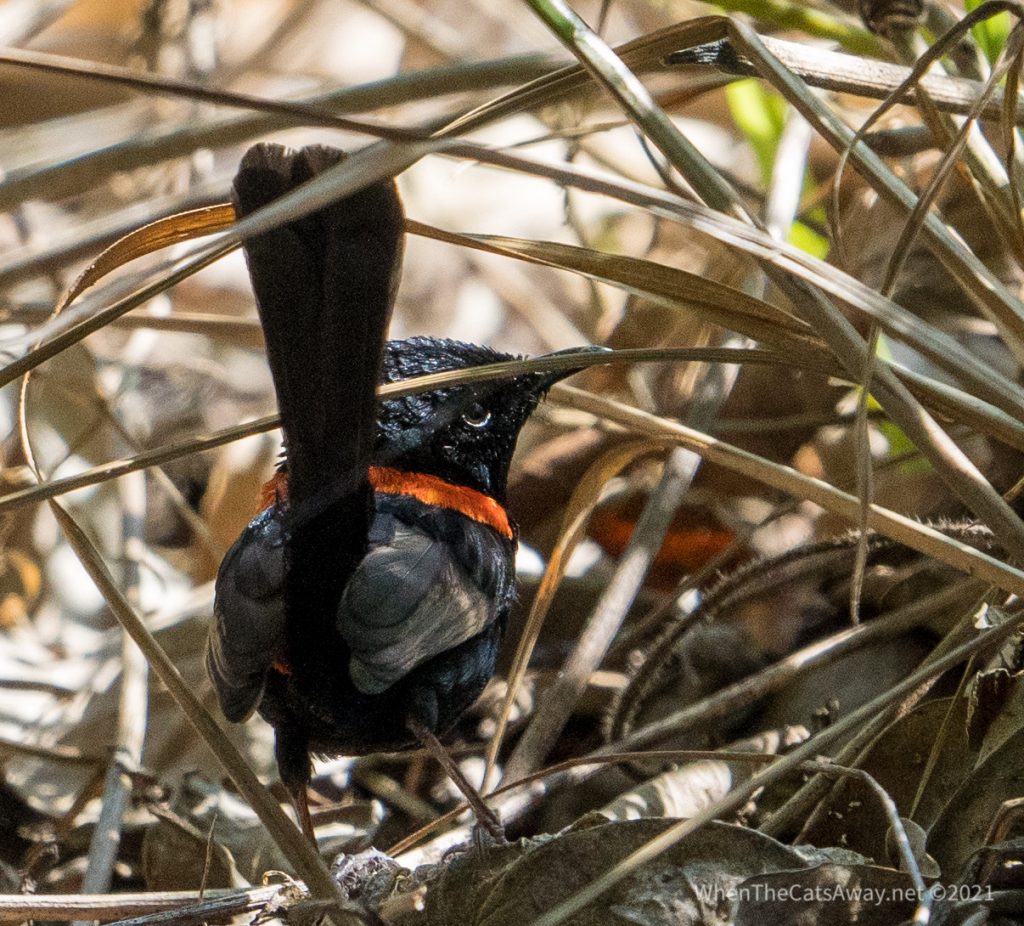
And little insect loving Red-backed Fairywrens flitting through the Casuarina trees (River Sheoaks) and grasses.
Looking magnificent in his breeding colours, a male Red-backed FairywrenA female Red-backed Fairy Wren with not a speck of red to be seenRed-backed Fairywren
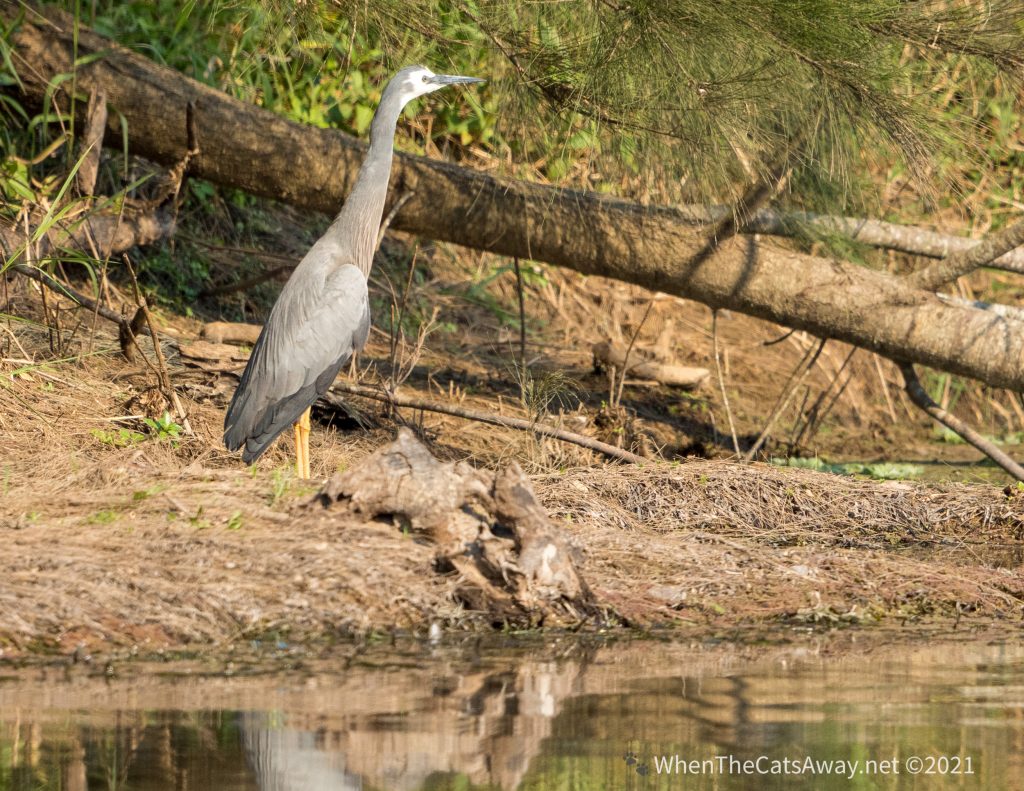
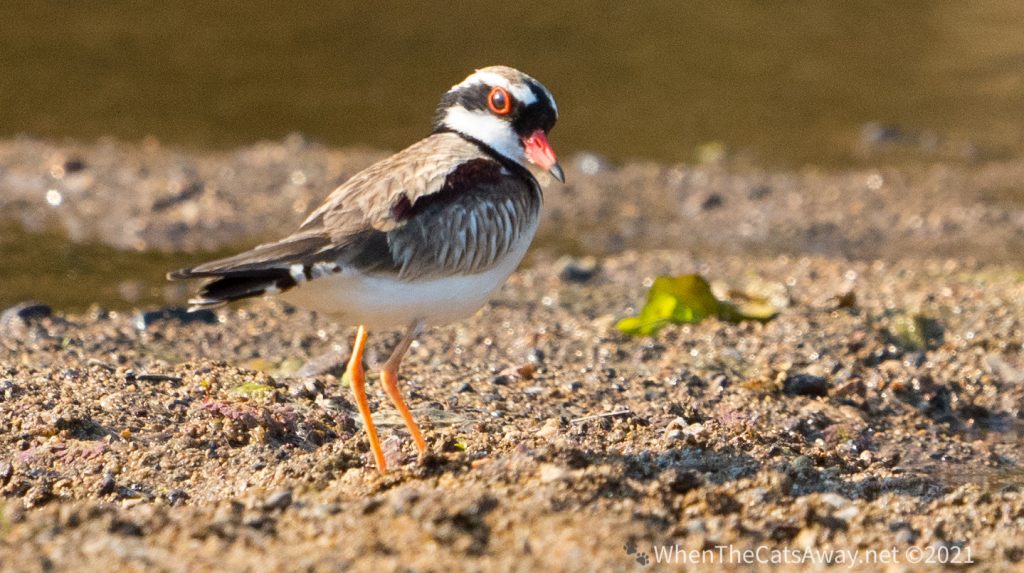
The river is also home to many more traditional water lovers, including Little Pied Cormorants, Intermediate and Great Egrets, Herons, Dotterels and more.
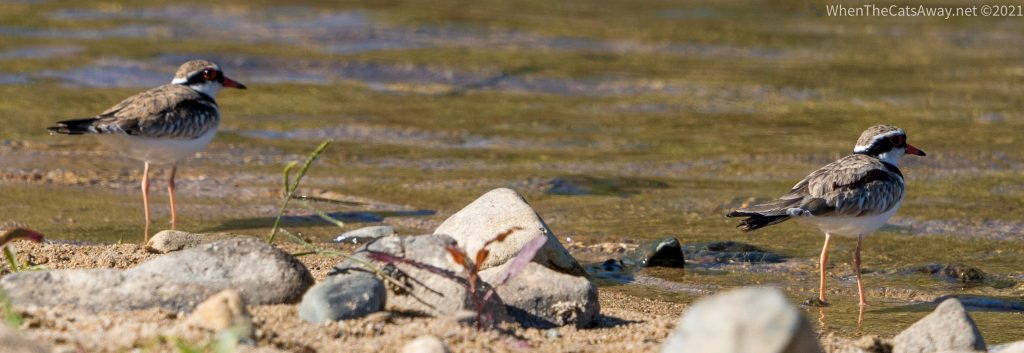
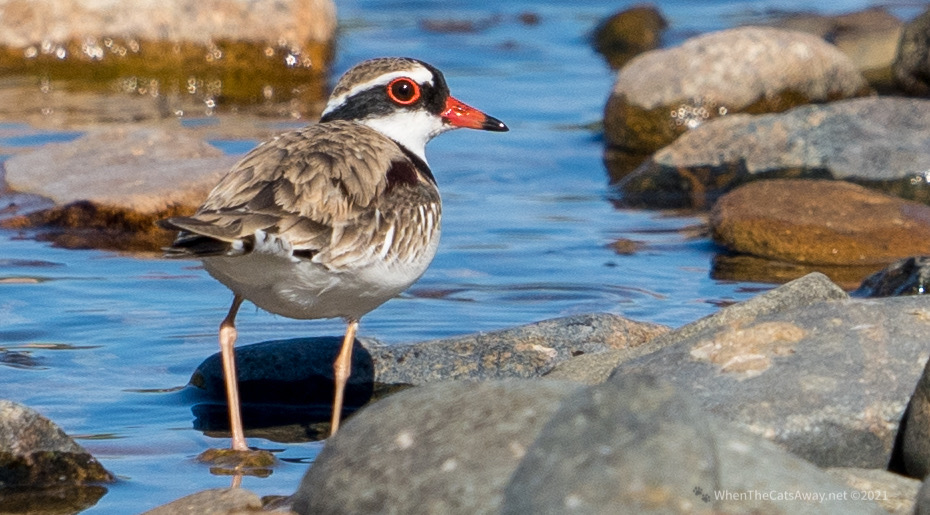
White-faced Heron standing statuesque on the riverbankA tiny pair of Black-fronted Dotterels run energetically along the sand and gravel banks
*
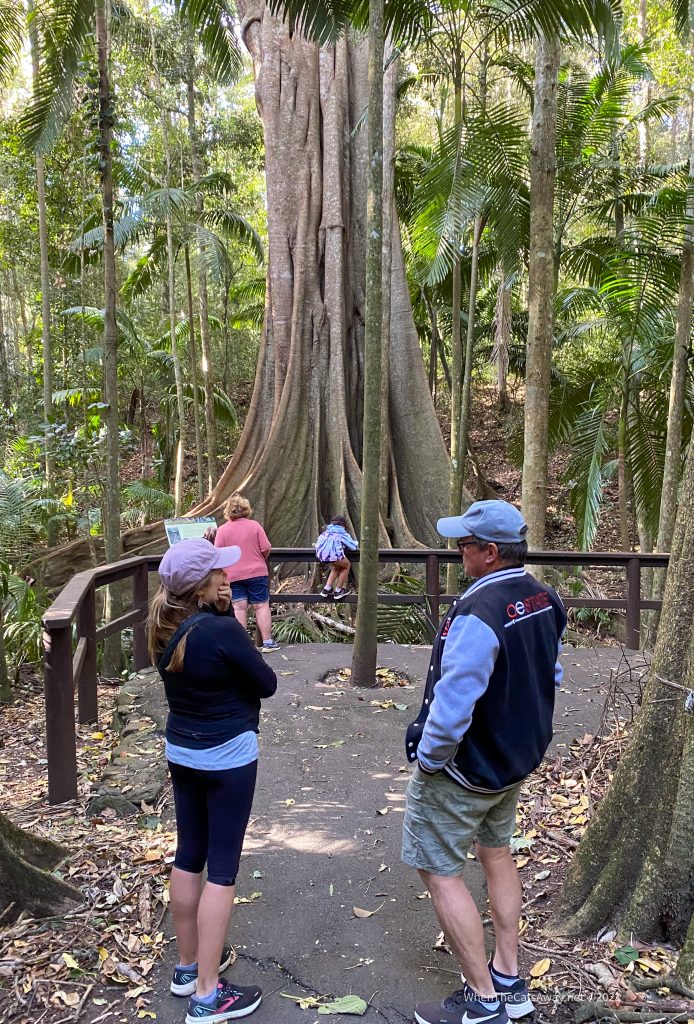
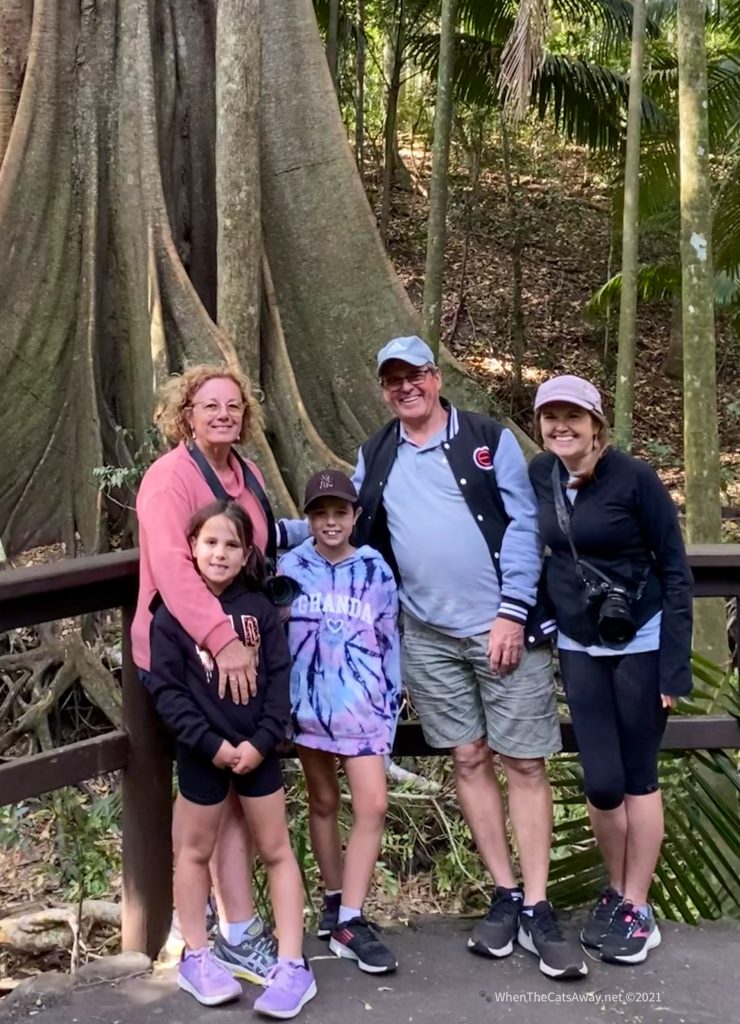
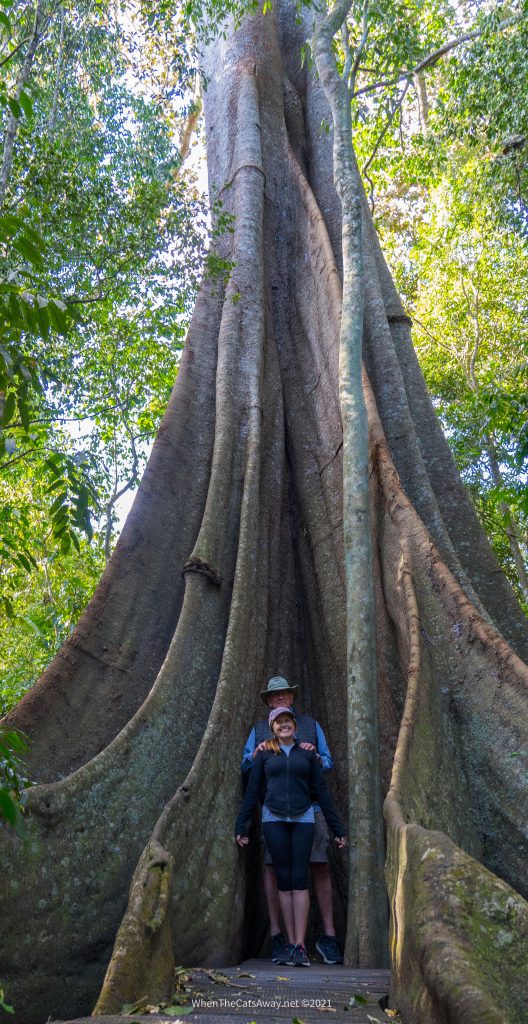
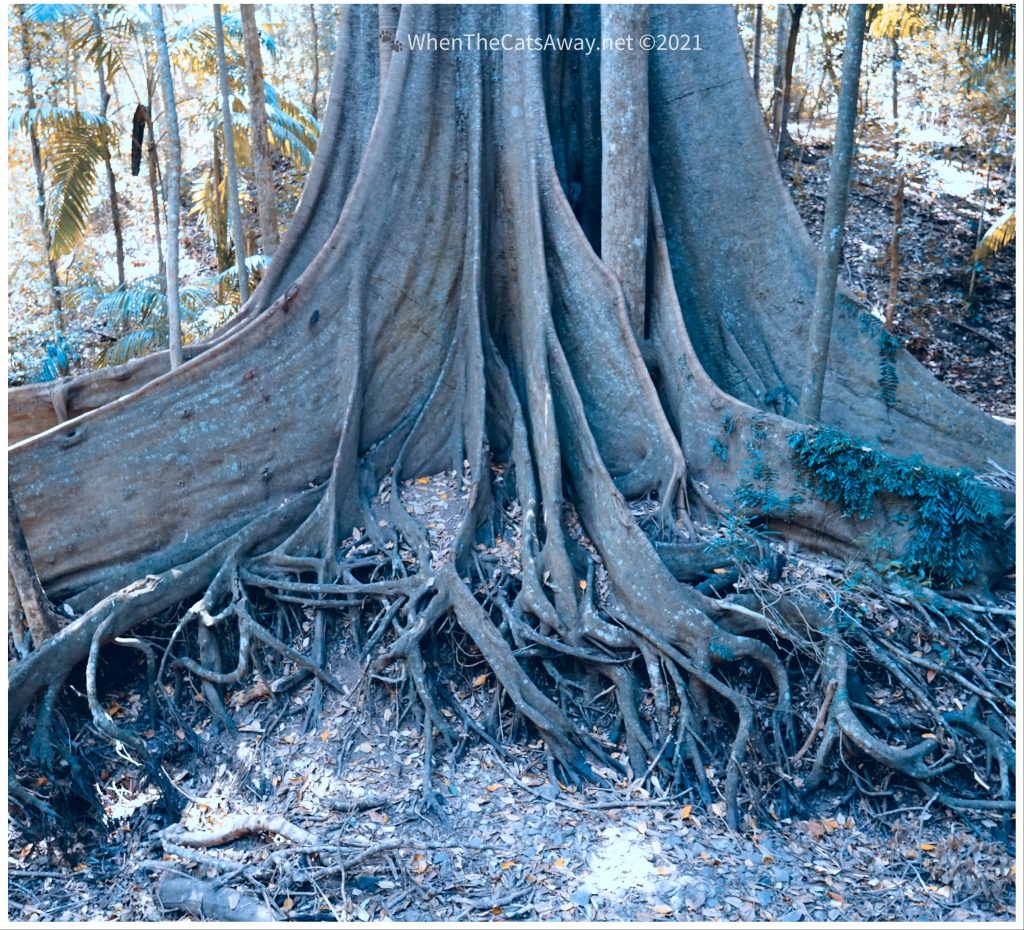
A short 10 minute drive from Kenilworth is a small area of ancient rainforest, home to the Fig Tree Walk. The boardwalk takes visitors on a short educational trail through the forest, explaining about the trees and the lifecycle within this special environment. Mark and I visited on two occasions, the second time bringing along Libby and Phil and the kids for an explore to finish their day out.
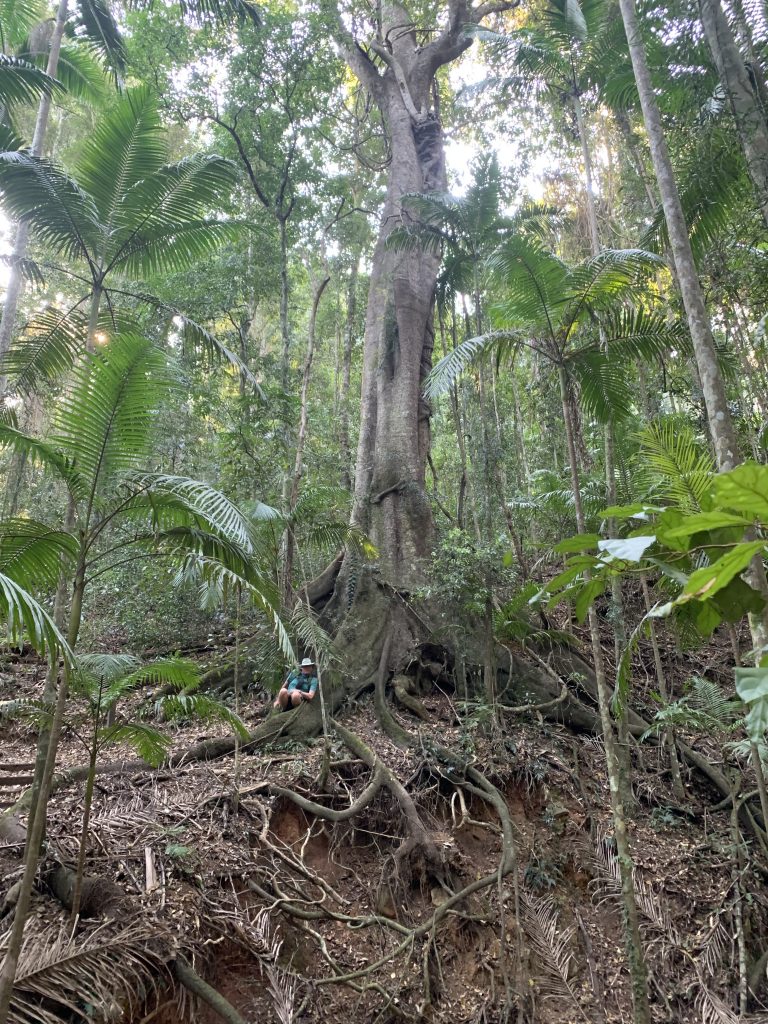
Stunning forest – Phil must be telling me a shocking story (else I am yawning!)Group photo (Mr A is photographer)Yes…keep on scrolling – this is a tall one! 150 years of growing, this tree is not yet finished…we feel dwarfed amongst its roots
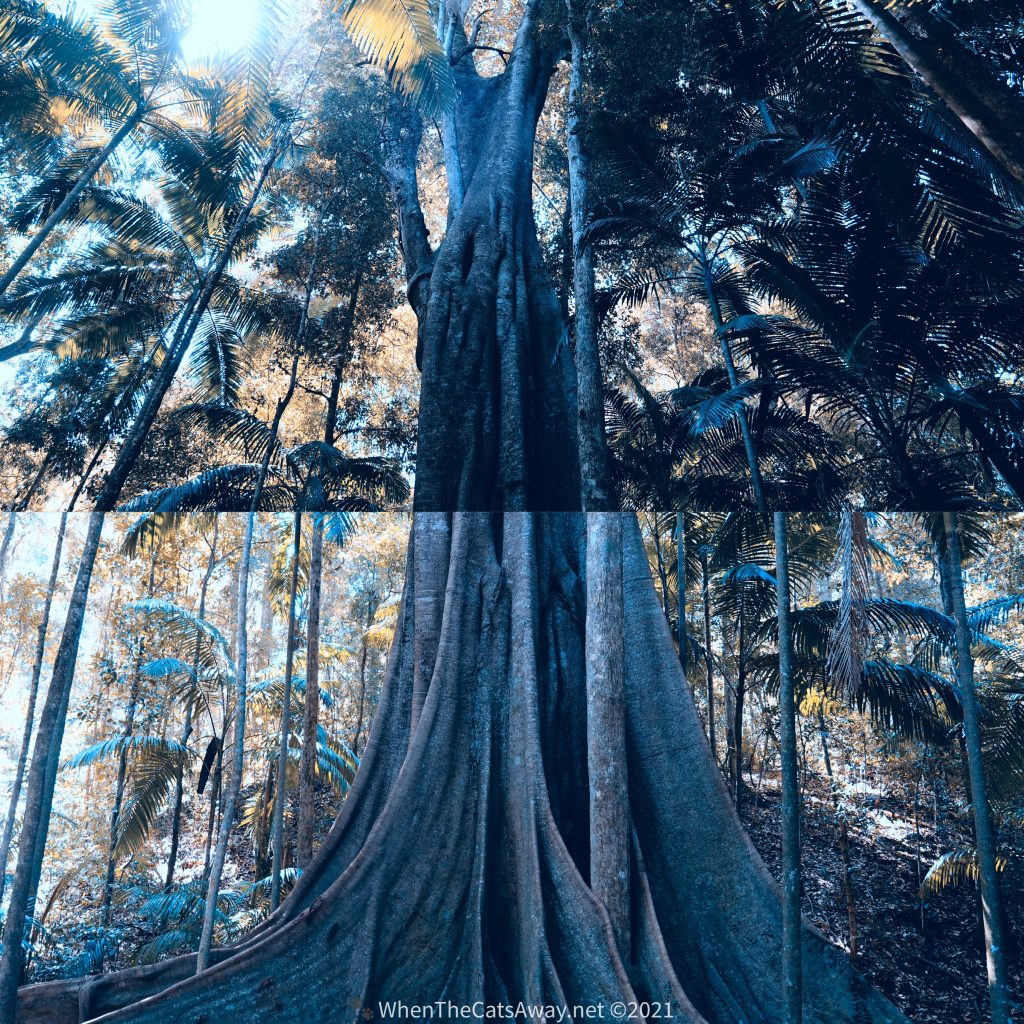
An attempt to portray some of the majesty of the towering trees in the forest
*
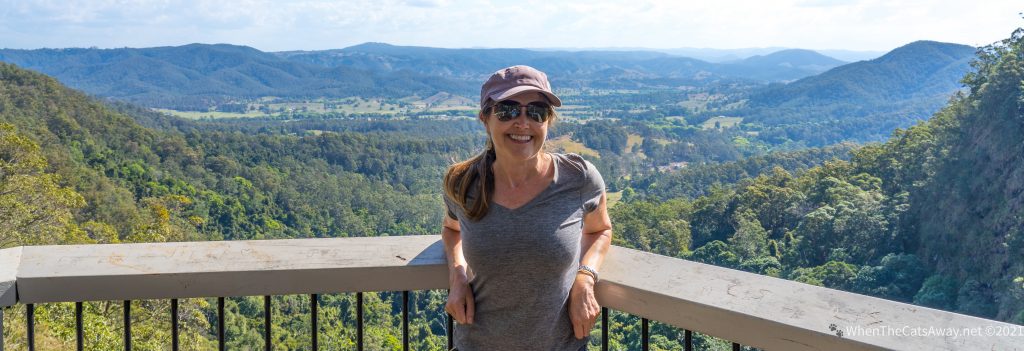
Mapleton National Park is located 24km west of Kenilworth and was the location for another trip during our week. We combined a couple of walks (map), hiking the short but picturesque Linda Garret Circuit and tagging on some of the Sunshine Coast Hinterland Great Walk (just shy of 60km in total – we only did a couple of kilometres each way!).
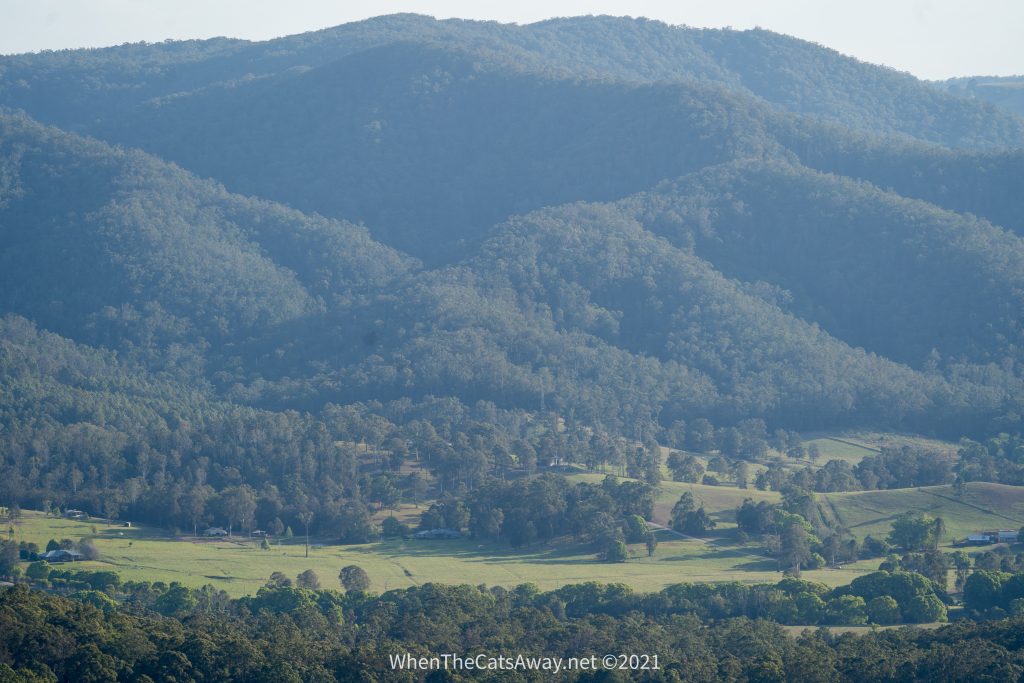
Our walk starts with a lookout with views over the Obi Obi ValleyLooking across the valley
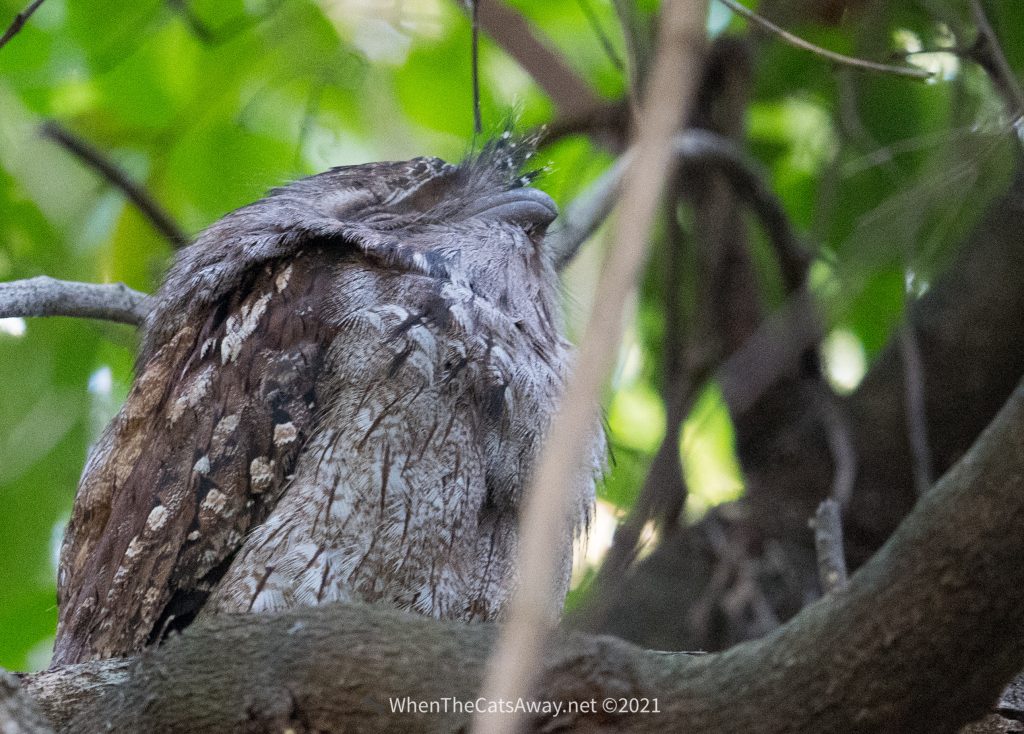
Amazingly I spotted another Tawny Frogmouth sleeping alongside the path – these nocturnal birds are not owls or related to them. They have a wide beak rather than hooked, designed for catching moths on the fly, and their feet are not talons, rather just designed for gripping a branch, more similar to a pigeon’s toes.
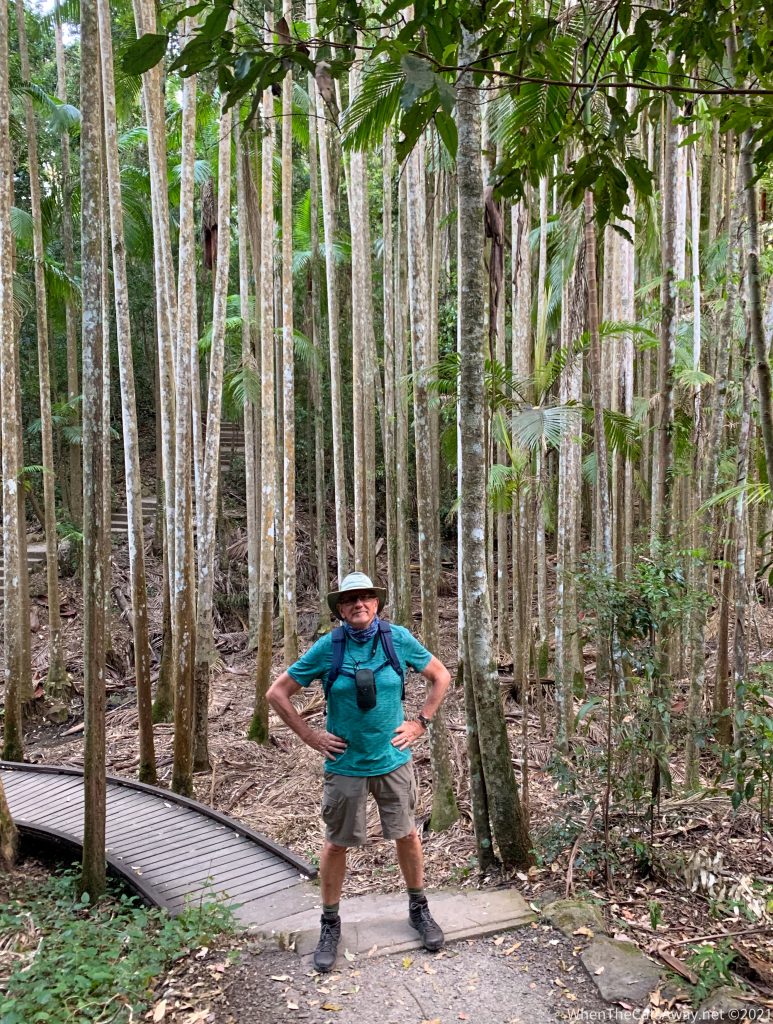
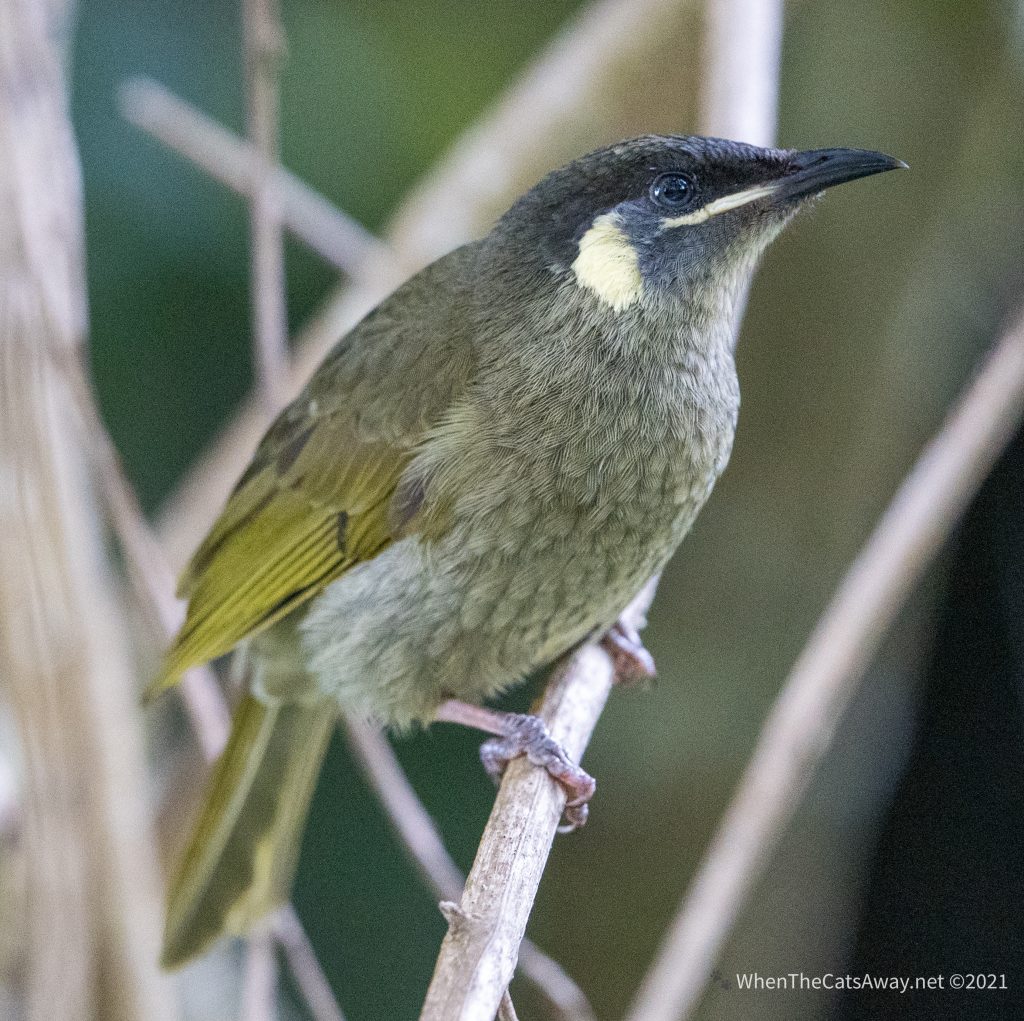
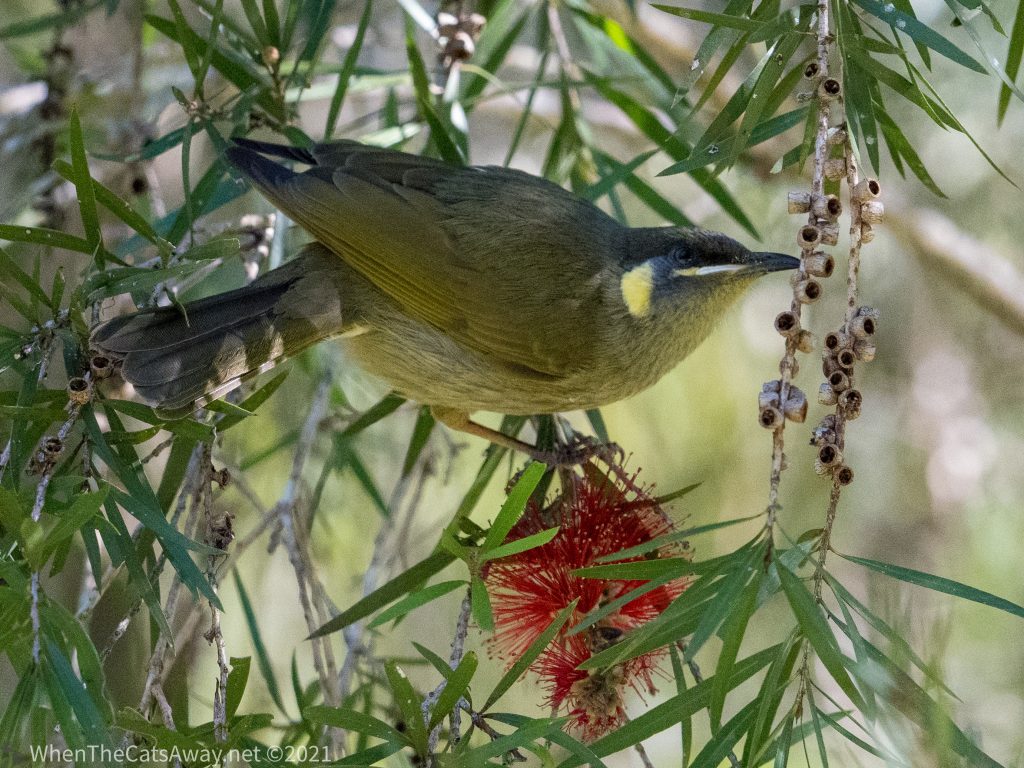
Tawny FrogmouthA tiny Brown Thornbill, one of a flock spotted flitting energetically through the undergrowth hunting for insectsMr A surrounded by palmsA gorgeous Lewin’s Honeyeater with its crescent yellow patch and creamy yellow gape (outer edge of mouth). Lewin’s Honeyeater is named after an English artist, John Lewin, who travelled to Australia in the early 1800s to paint the wildlife. He originally called this bird the ‘Yellow-eared Honeysucker’Loving the intricacy of these roots
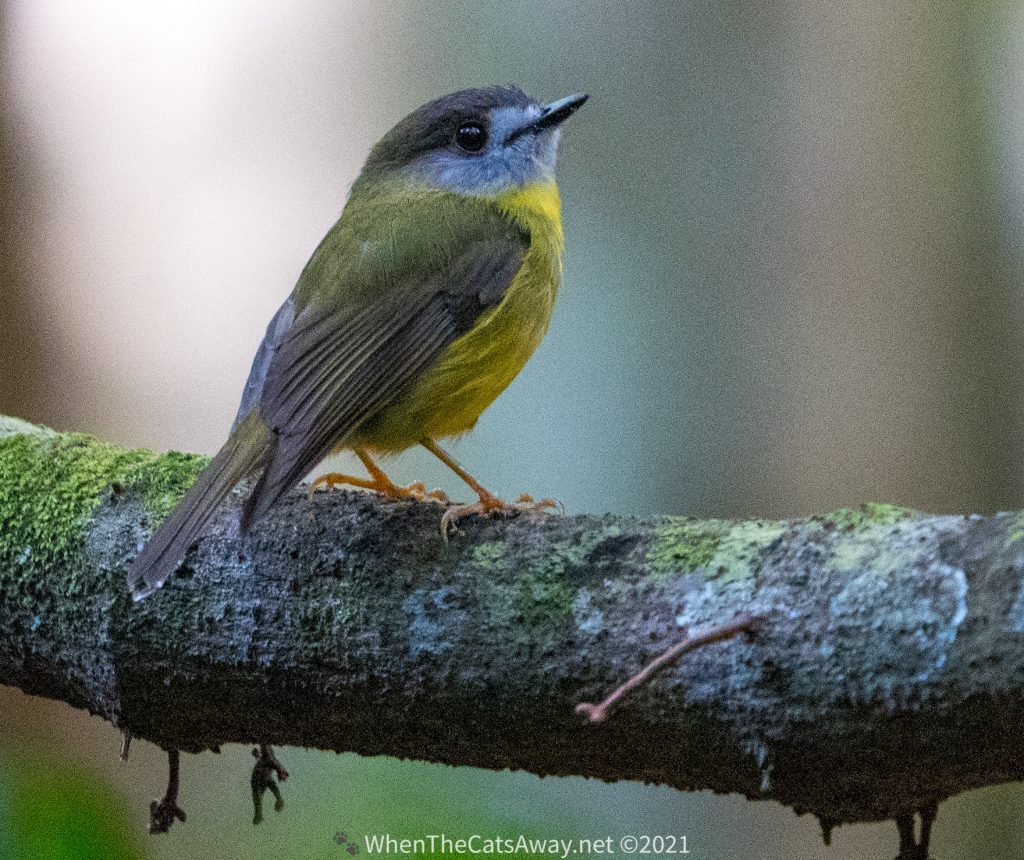
The walks in this area seemed to have fewer ground-dwelling birds, perhaps because the village is so close and domestic cats and maybe even foxes have killed them. There were plenty of yellow robins flitting through the trees though, chasing insects we disturbed on our walk.
Eastern Yellow Robin Pale-yellow Robin
*
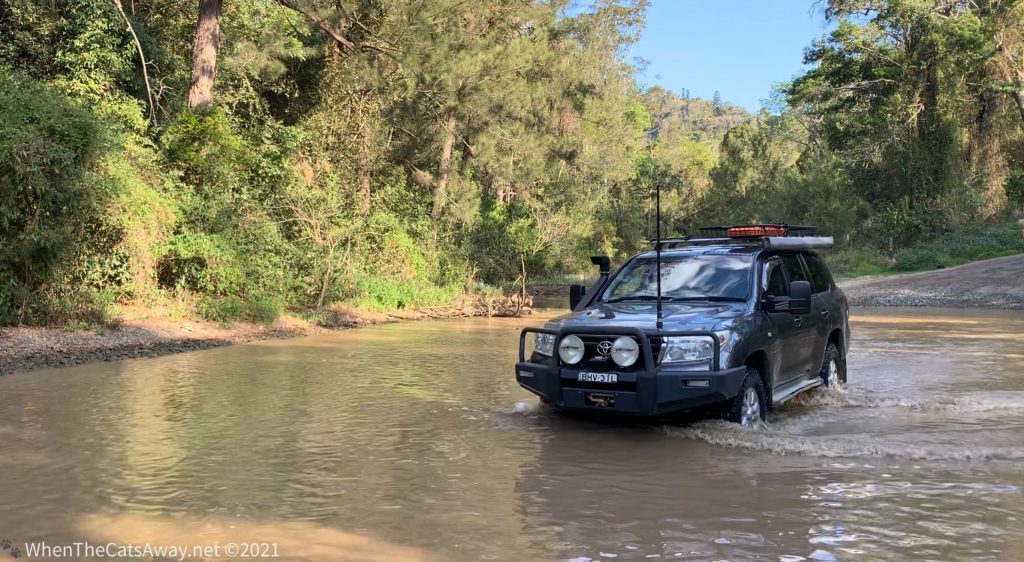
Conondale National Park is also not far from Kenilworth. Just a 20 minute drive and you reach a 4WD only track, where three water crossings deliver you to Boolumba Creek Day use area. From there you can start the Sunshine Coast Hinterland Great Walk or chose from a selection of shorter routes.
Mr A crossing one of the creek beds
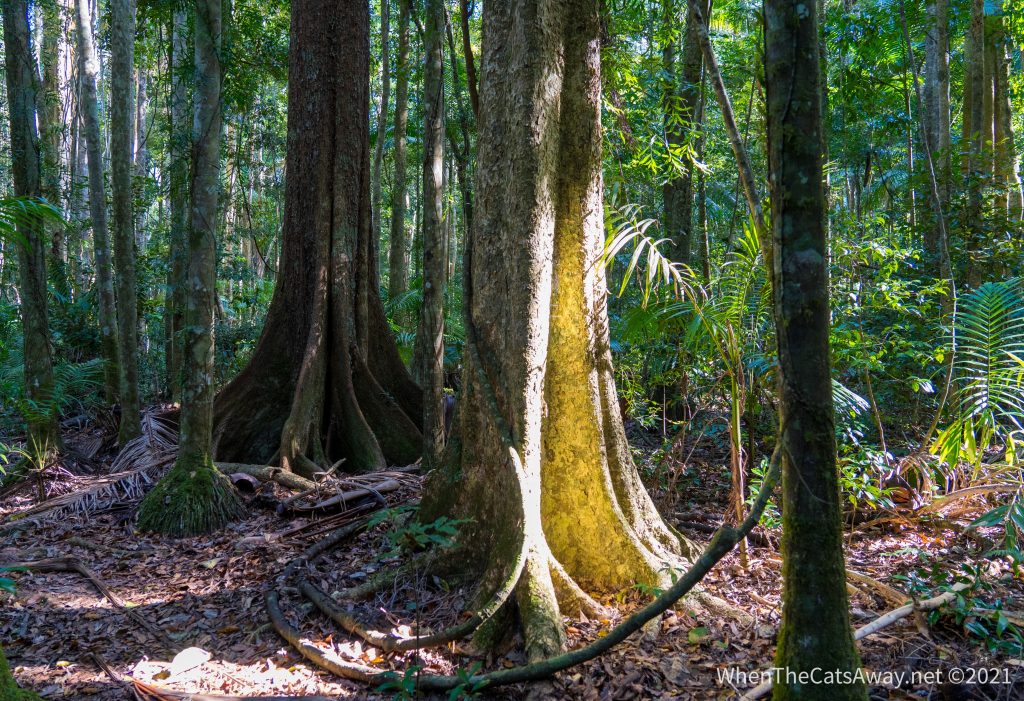
We visited on a couple of occasions, loving the area rich with untouched rainforest, the constant hum of insects and chatter of birds addictive.
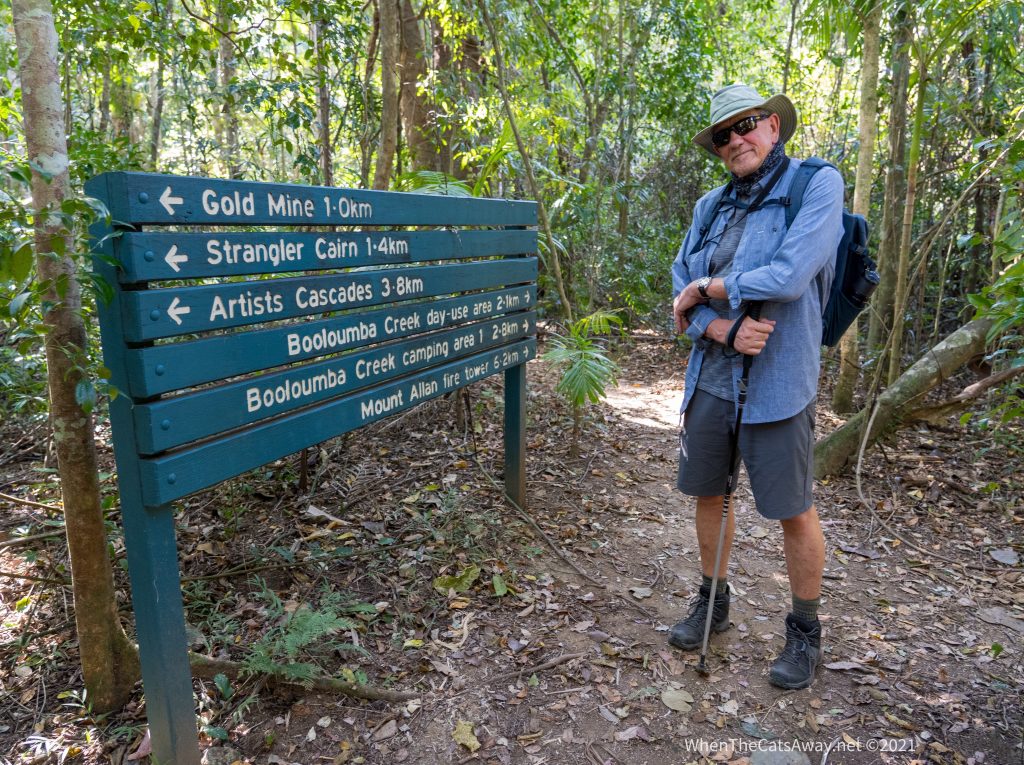
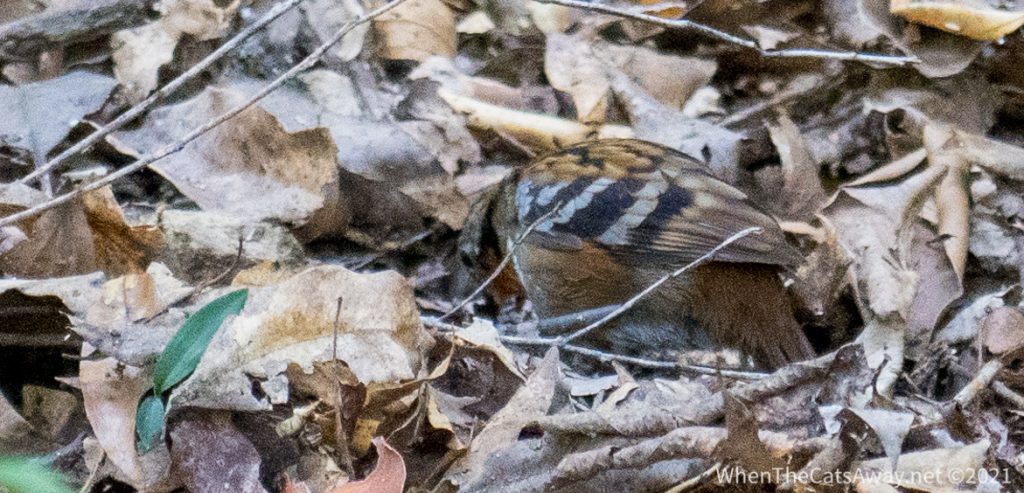
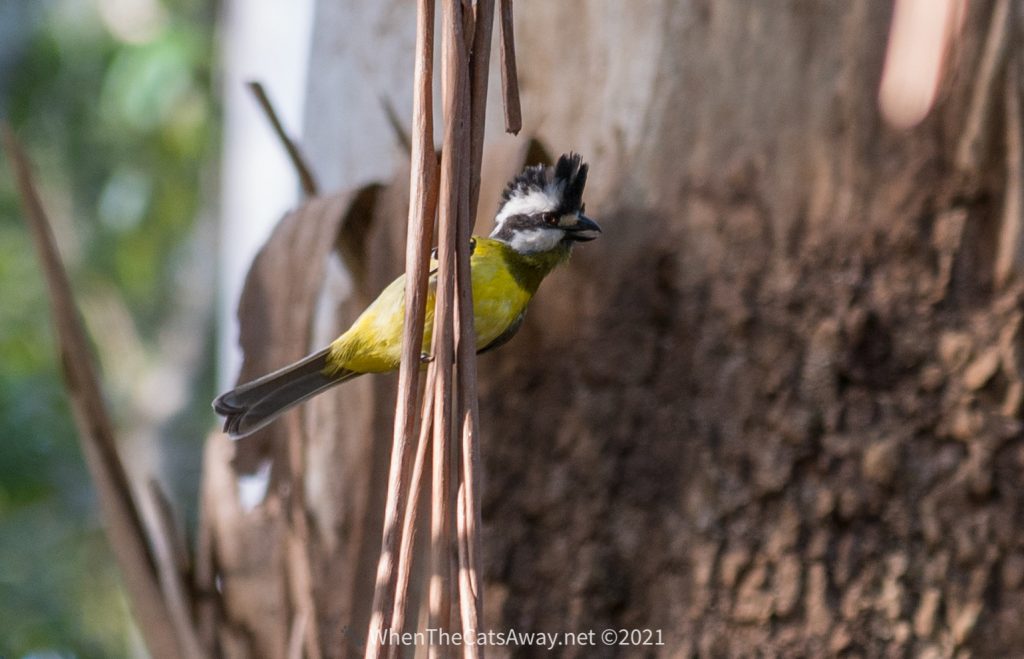
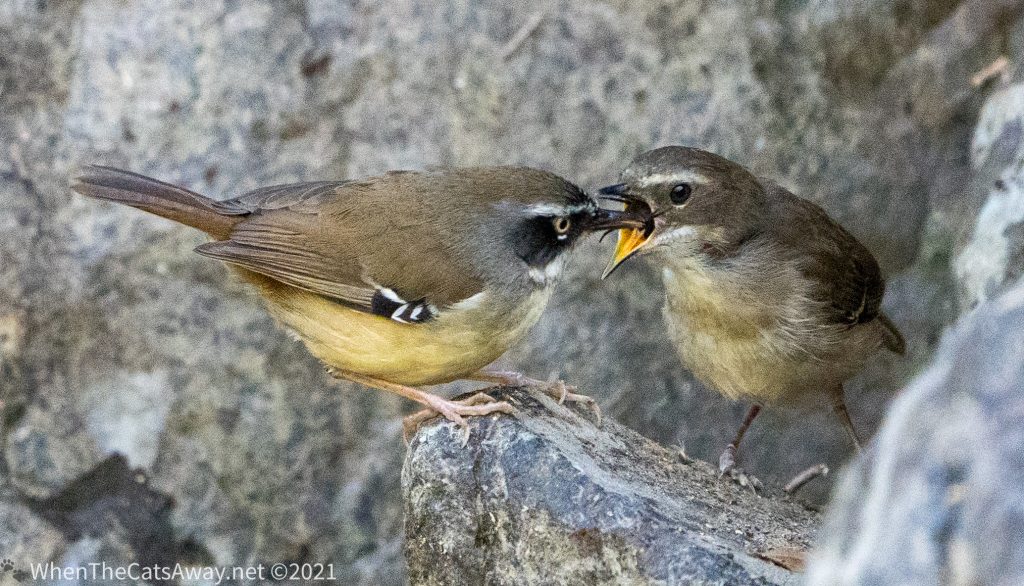
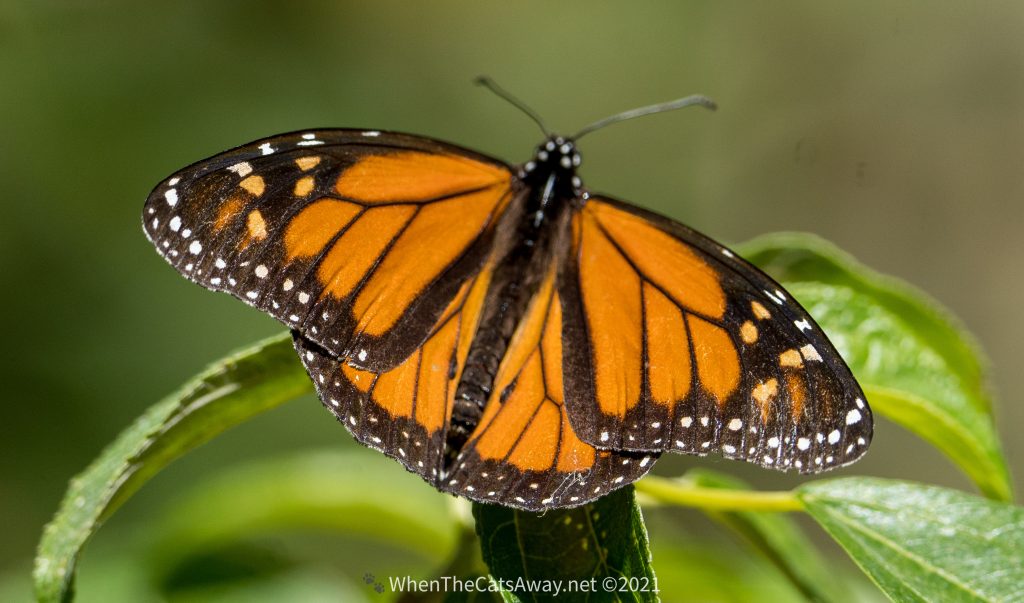
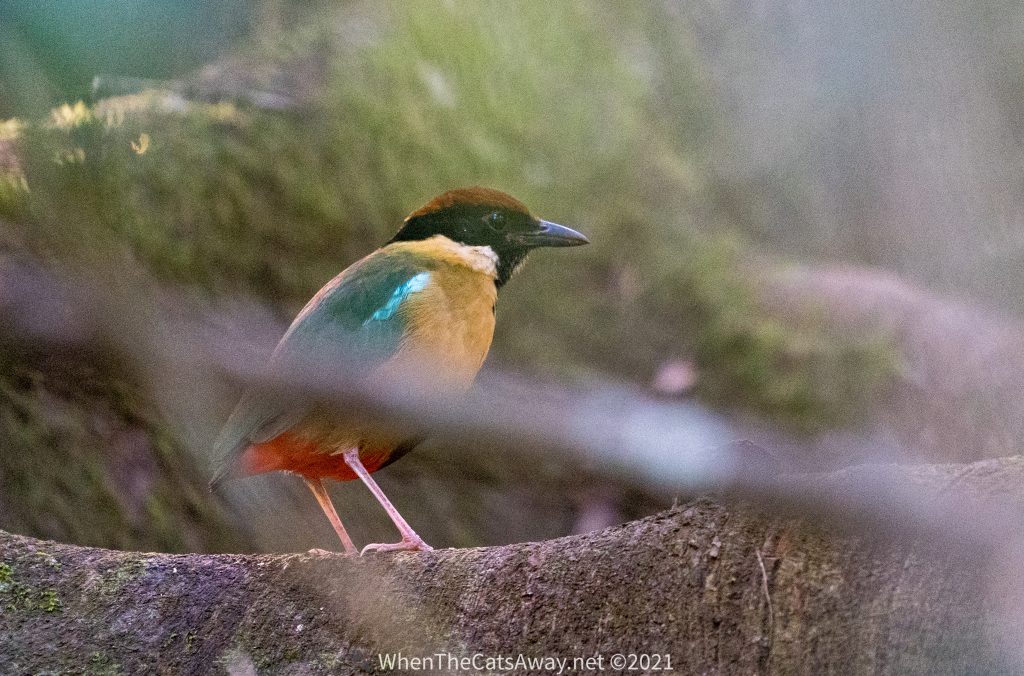
Mr A ready for action on one of our walks to an old gold mine shaft (map)Not a peaceful place, the rainforest is noisy, full of bird calls and the constant hum of insectsHard to see, a ground dwelling Longrunner bird rummaging through the leavesA gorgeous Crested Shrike-tit flies in for a visitPhotographing birds up in the treesA Rufous Shrikethrush Large-billed ScrubwrenA White-browed Scrubwren feeds its fledgling a rather large beetle Many butterflies add a touch of colour to our walksA Noisy Pitta – so exciting to capture this photo of this colourful ground dwelling bird in its natural habitat.
*
Imbil State Forest and the Charlie Moreland Campground are about a 15 minute drive from Kenilworth, and another location you can walk from. We combined two short walks, the Little Yabba and Piccabeen circuits which took us away from the busy camping area (we estimated around 100 people by the number of caravans, whizz-bangs (camper vans!) camper trailers, and tents) and over a small creek and into the forest. Despite the crowds at the campground, once we left the small day visitor car park and crossed the creek, we didn’t see another human for more than 2 hours!
The birdlife was prolific, starting with more Scalet Myzomelas feeding as we crossed the water, and continuing as we spotted Golden Whistlers, fantails, Fairywrens and more.
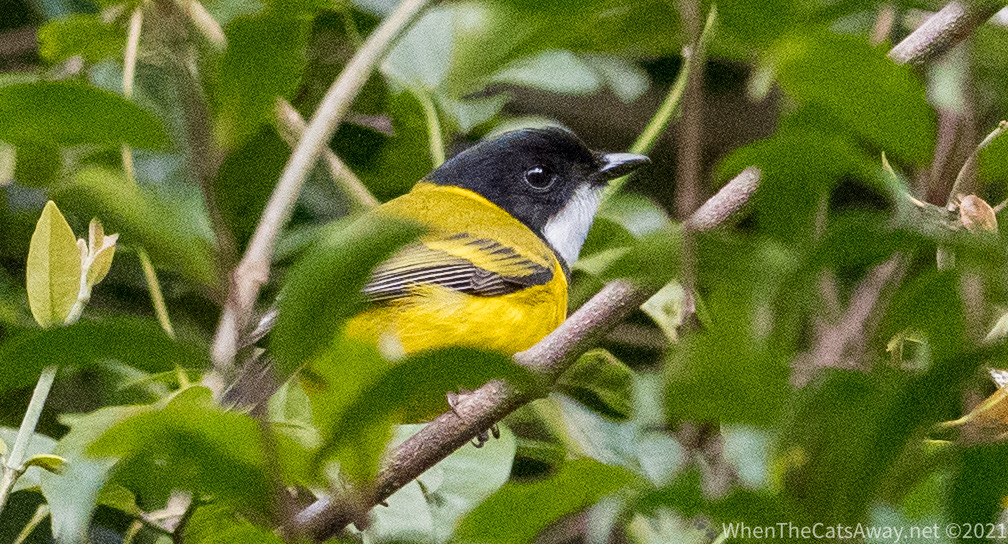
Golden Whistler (female)
It didn’t look as though many people had recently taken the longer Piccabeen circuit, as we had to clamber over a recently fallen tree to continue round. It was worth it though, with several species of bird in the forest, and the temperature cooling as nature’s air conditioning kicked in.
Piccabeen Palms – these 20 metre tall trees are native and attract many birdsBrown Cuckoo-Dove – look at that magnificent tail!A White-naped Honeyeater flies down to a rainforest streamMr A swamped by another rainforest giantThe views open up as we climb Beautiful flowers
*
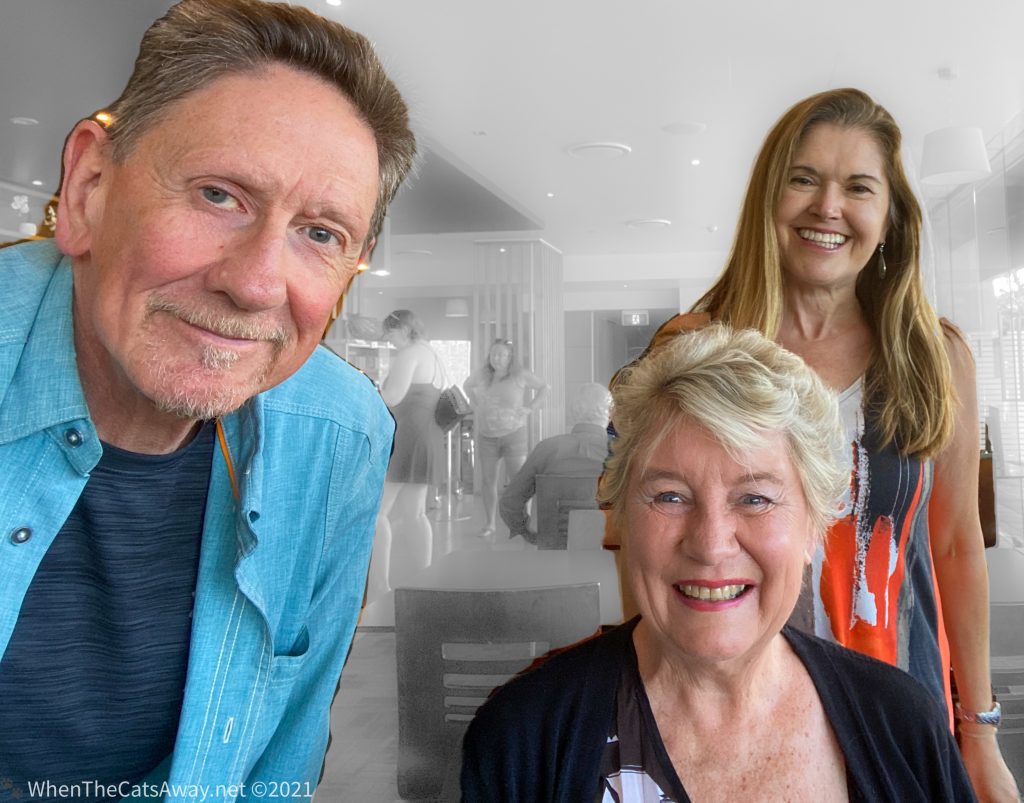
On Friday we had a coincidental surprise visit from our friends Carol and Nick Gray, who had (unbeknownst to us) been having some work conducted on their caravan in Coolum Beach, and decided to camp here a few nights once they had their van back. We first met them when we were staying in the Margaret River in Western Australia back in 2017 on our first lap around Australia when they were interested in buying a. Zone. We showed them around our van and Mr A did such a good sales job they ended up buying one!
Although we have met up with them on several occasions over the years, this was the first time we had seen their new van, ironically on the same day we heard we had officially sold ours. It felt like our Australian travels had come full circle as we once again shared food and wine with our travelling friends.
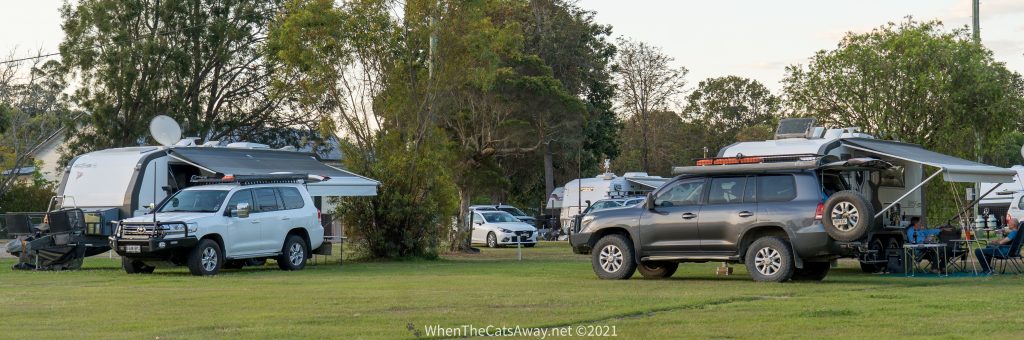
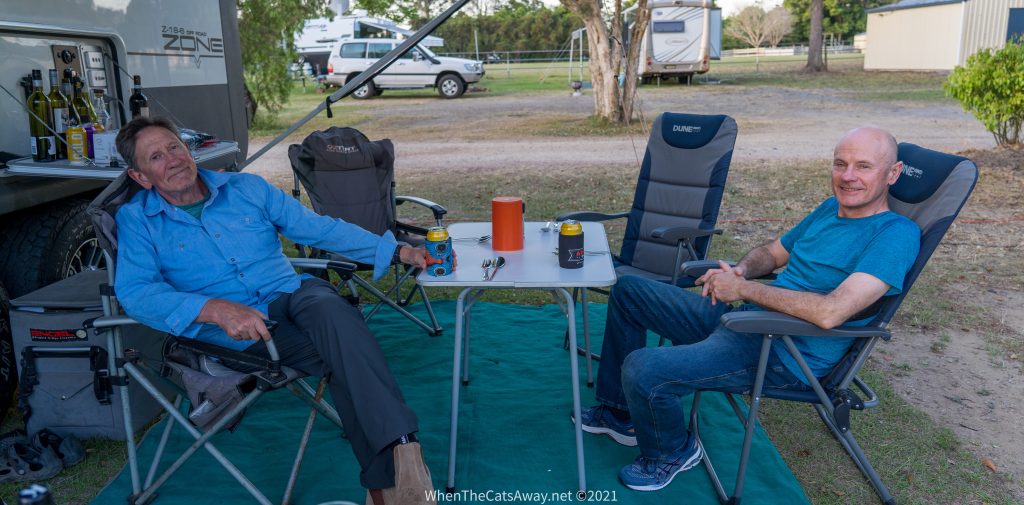
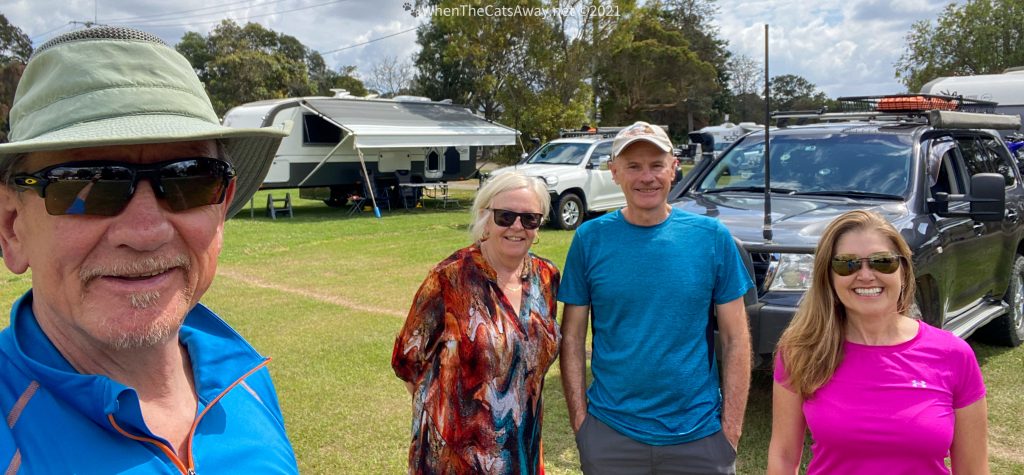
A pair of ZonesMark and Nick enjoy some Saturday night beersA final farewell on Sunday morning – L-R: Mr A, Carol and Nick Gray, Mrs A
We enjoyed a couple of fun evenings with them before we headed off for our final week in our home on wheels.
🐾🐾
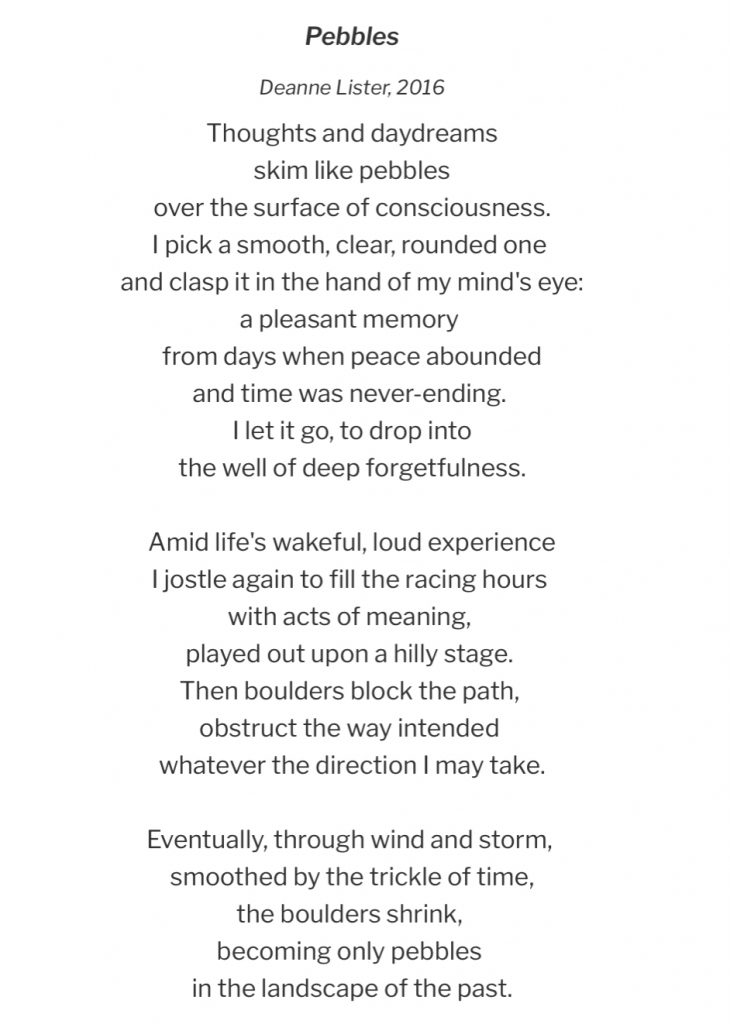
I conclude my post with a poem which was displayed at a reserve near the Fig Tree Walk, which feels quite poignant at this time when our life and travels in Australia are nearing the end.
We are certain there will be ‘boulders’ in our future, as there have been in our past. It is always good to be reminded that these boulders do fade with time and become much smaller issues, with somewhat smoother edges.
Location: Diddillibah, Sunshine Coast, Queensland, Australia
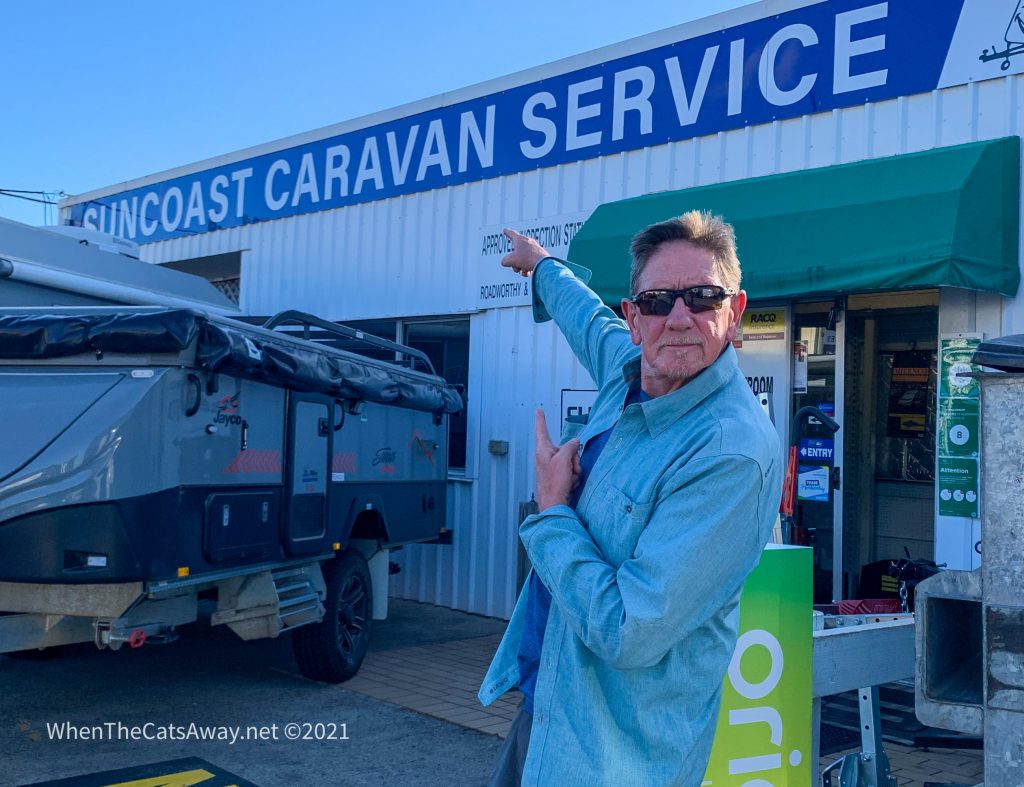
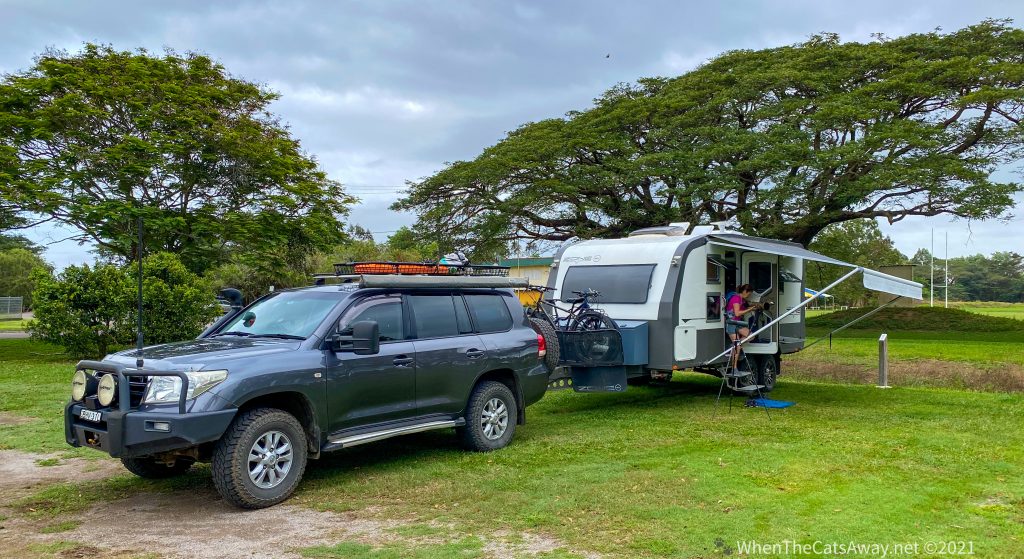
As we prepare to sell our lovely luxury apartment on wheels, the Zone RV caravan, a service was required. Off down the coast we went, saying goodbye (for now) to Noosa and the friends who live there. We had booked a couple of nights at a new caravan park on the Sunshine coast, at somewhere fairly challenging to pronounce called Diddillilbah, which we soon morphed into Diddely-squat, which was a bit unfair as it was quite a decent site with large pitches and a nice restaurant in the park itself. But not really our cup of tea, purely functional, we prefer being out in the bush more. But our caravan service was scheduled just round the corner with the marvellous Suncoast Caravan Service. Our friends who used to work at our caravan manufacturer, Zone RV, both work there now. The power couple of the Sunshine Coast Caravan Industry, Marsha and Rhys Gehrke.
Its a serious business getting a van serviced 🙂
Our home was handed our home over to these capable hands, and we spent the day based at our caravan site in our Oztent Screen-house (wonderful bit of kit!). Tassie is not a fan though, I think she senses we want her to settle in there so with perfect feline logic does the opposite. Instead she based herself on her sheep’s wool futon in the car with the windows open! We took it in turns to head out for bike rides and food.
We picked our van up that night, with new bearings and other stuff I have no idea of the function of, all fixed up and ready for a lucky owner to snap up when it is advertised.
Our luxury ‘Surry Hills apartment’ on wheels
The caravan park was a good base to cycle from, with a mostly traffic free route along the Maroochy River.
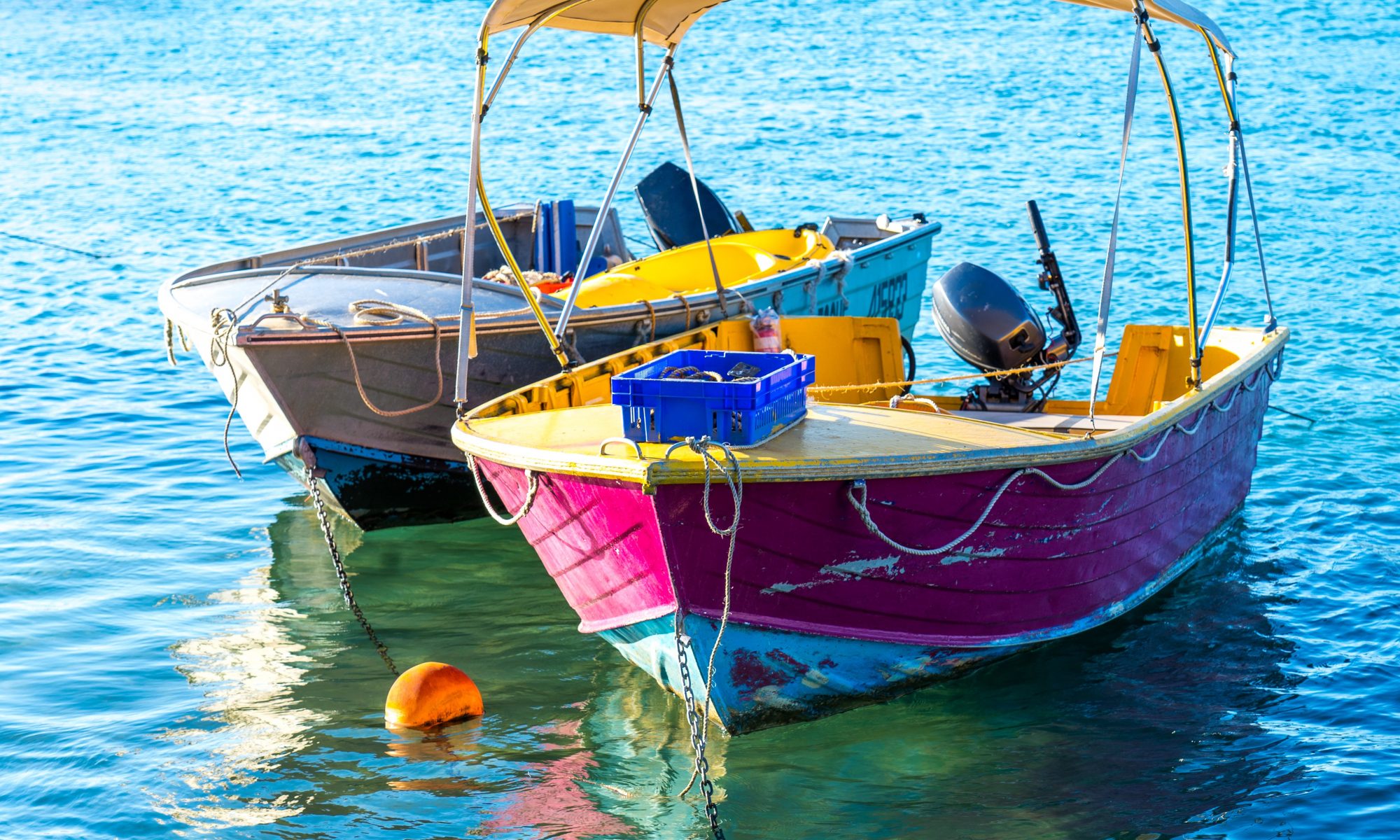
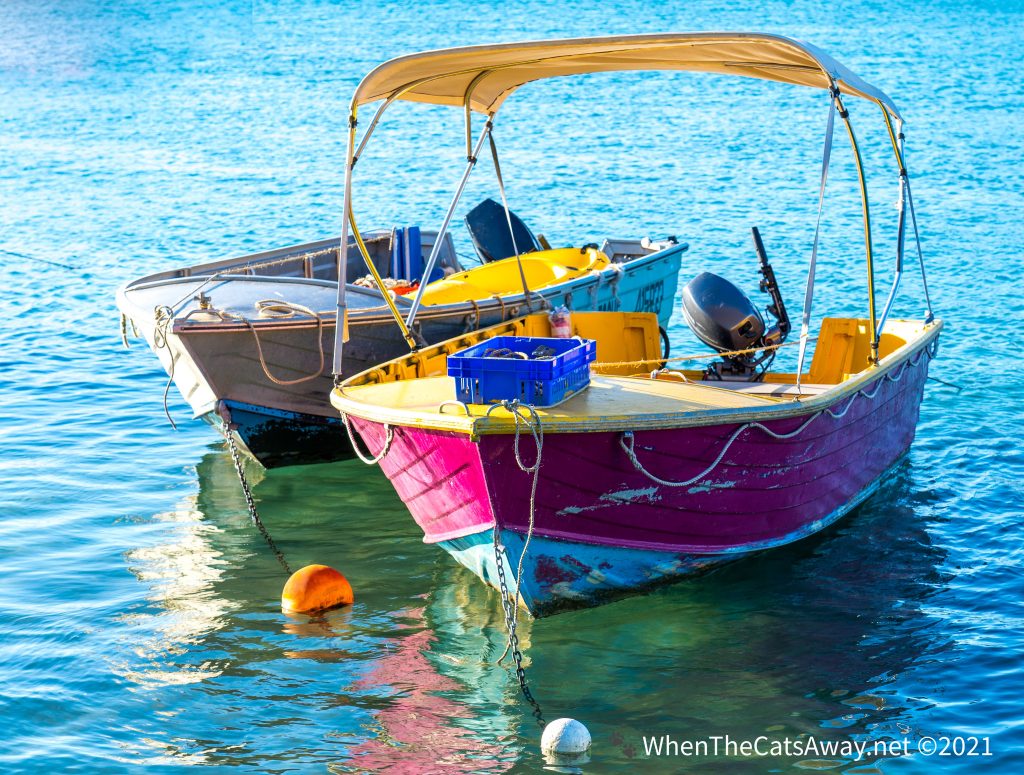
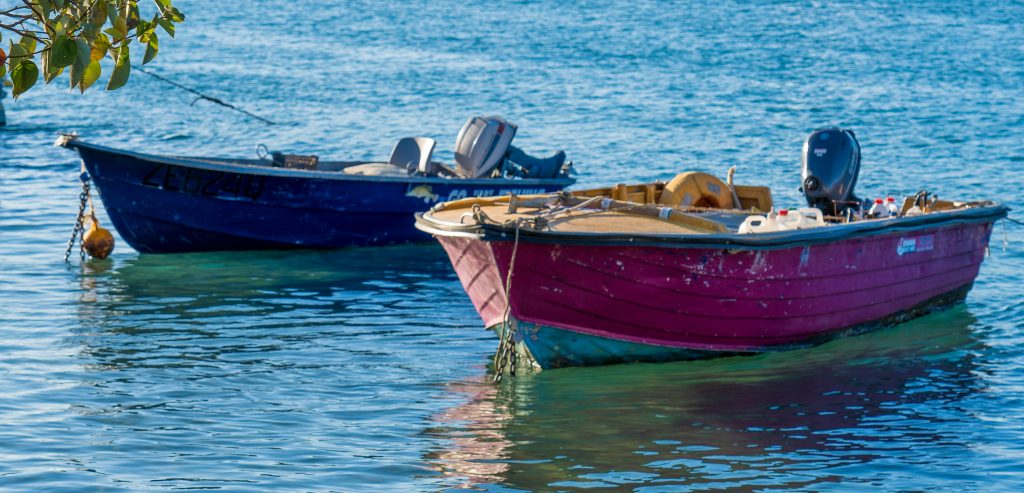
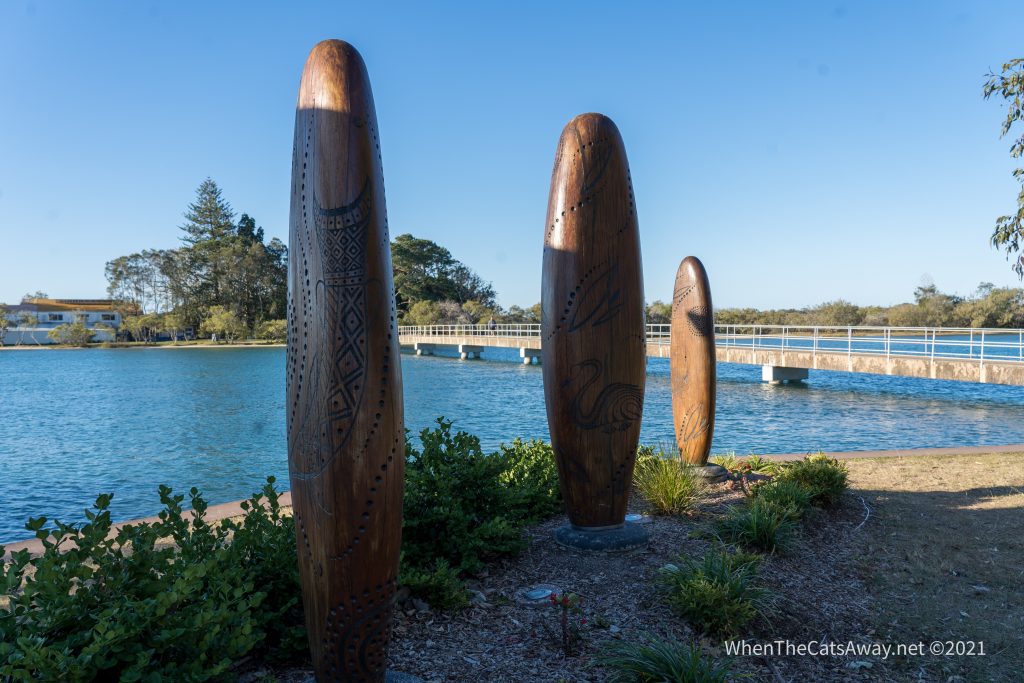
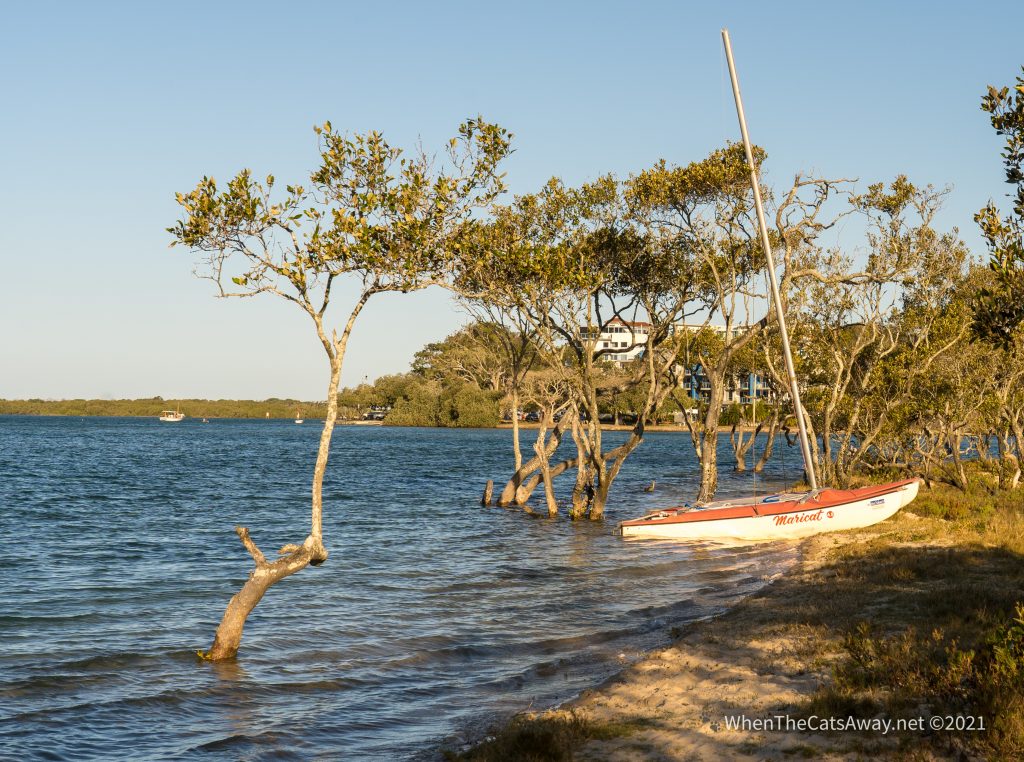
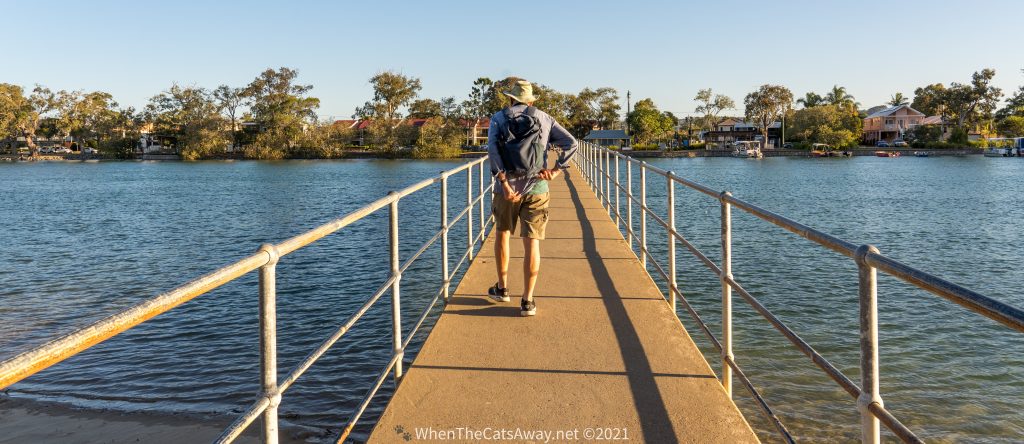
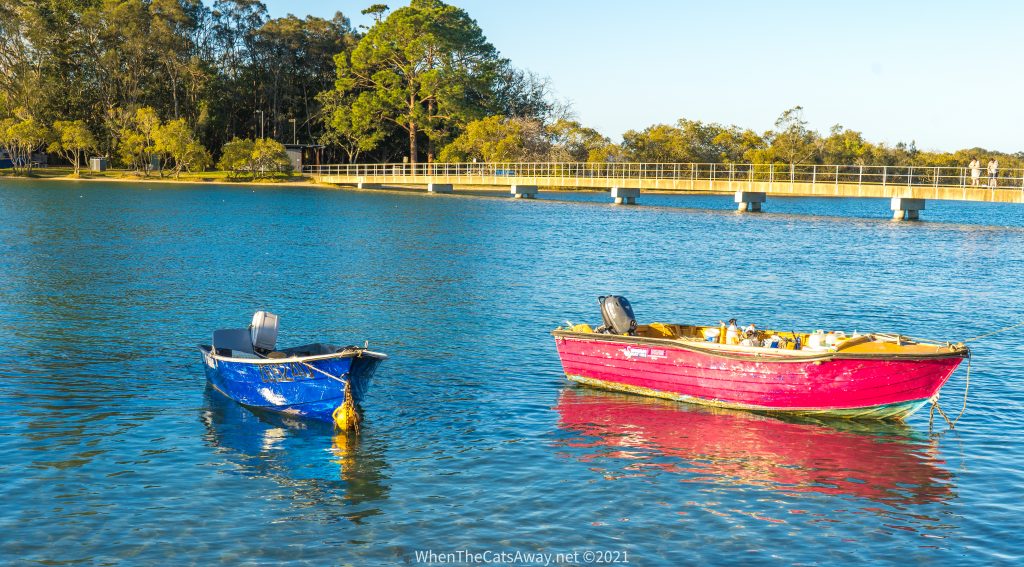
Boats on the Maroochy RiverMaroochy RiverAncestors (Cash & Davis, 2016) – a tribute to local timber workers, when the river was a conduit for the industry intertwined with a recognition of the local Aboriginal history.Chambers Island – a conservation reserve linked to the land by a footbridgeWalking over to Chambers Island – and no I’m not scratching my bottom!They like their brightly coloured boats on this river!
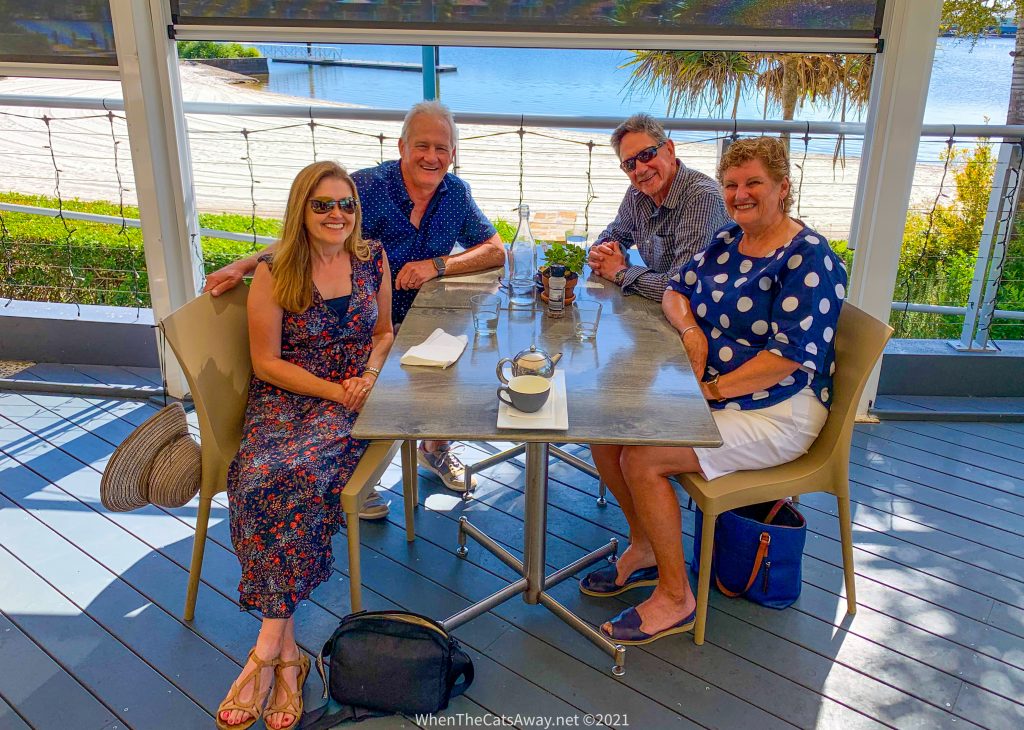
The next morning we had a catch up with friends we knew from Sydney who had moved up to the Sunnshine Coast a few years ago (Peter and Valerie). Always a pleasure with these guys, and what a breakfast spot! It was interesting to hear about how they had gone about integrating into a new community, something we are working out how we will do when we move.
That night was another catch up with Rhys and Marsha and their family. That was a cracking dinner at the campsite restaurant I have to say. Rhys and Marsha are going to be selling our van for us (all enquires to Marsha please via: Marsha.gehrke AT gmail.com). I just didn’t think there was much point towing a van that was built on the Sunny Coast, is registered there as well, and has a specialist like Rhys who knows this brand inside out on hand to do any upgrades a customer might like. Whereas Sydney is still locked down, so a harder environment to sell it in. So let’s see how it goes. It means we will be emptying and cleaning the van at our friends’ house up here next week, then shipping the contents back to Sydney.
Of course no plan will necessarily survive contact with the enemy, in this case lockdowns, so we are keeping our fingers crossed that the border with NSW just holds the virus back another two weeks. Catherine has an important medical procedure at a Brisbane hospital on the 5th of October, which is likely to be cancelled should lockdowns come.
Talking about lockdowns, and lockouts in the case of people trying to return home across Australian state or international borders, there’s something I feel very strongly about I want to air to anyone who is willing to read on while I mount my soap box.
I am appalled at the lack of compassion being shown to Australian citizens who are trying get permission to return to their home state, when celebrities and the well heeled seem to be able to come and go as they please. Every week I read of another case where someone has been denied permission to go home, and it’s always the poor and powerless, it would seem. This story documents two contrasting examples of how are travel rules are being so differently applied, and turned my stomach over once again.
This is an Australia that I am increasingly not recognising as the one I fell in love with and pledged my citizenship vows to. The country that was proud to say they looked after each other, with a hearty dose of egalitarian mateship. Yet around our friends I see nothing but kindness and compassion for others, and usually amongst those we meet around the campsites. So is it just some of our politicians, driven by what they think will make them popular amongst their voters on the next morning’s news cycle, who give so little weight to those in need? Or is the lack of humanity within our the leadership of our institutions who have to implement their policies, and who seem to encourage so little discretionary compassion from their staff? I don’t know. But it doesn’t make me proud to be Australian when I read these tales of suffering, and then read about another celebrity given an apparent free pass to roam at will. And don’t get me started on our treatment of refugees! Not much evidence of compassion there either.
Soapbox dismounted, but if you feel as I do, why not let your MP know (you can find out who and how best to contact them, here), if you are an Australian citizen. I have regularly communicated with our Federal member, and her office has encouraged me to keep feedback coming. Mind you, she is an independent! And a compassionate voice in our parliament.
If we just keep quiet, our political leaders will think they have a free pass.
Zali Steggall: Federal Member for Warringah (our home base on the Northern Beaches of Sydney)
Location: Tin Can Bay, the Fraser Coast, Queensland
We have had a great couple of days in an out of the way little coastal settlement with the unique name of Tin Can Bay, located on the Fraser Coast a few hundred kilometres north of the state’s capital Brisbane.
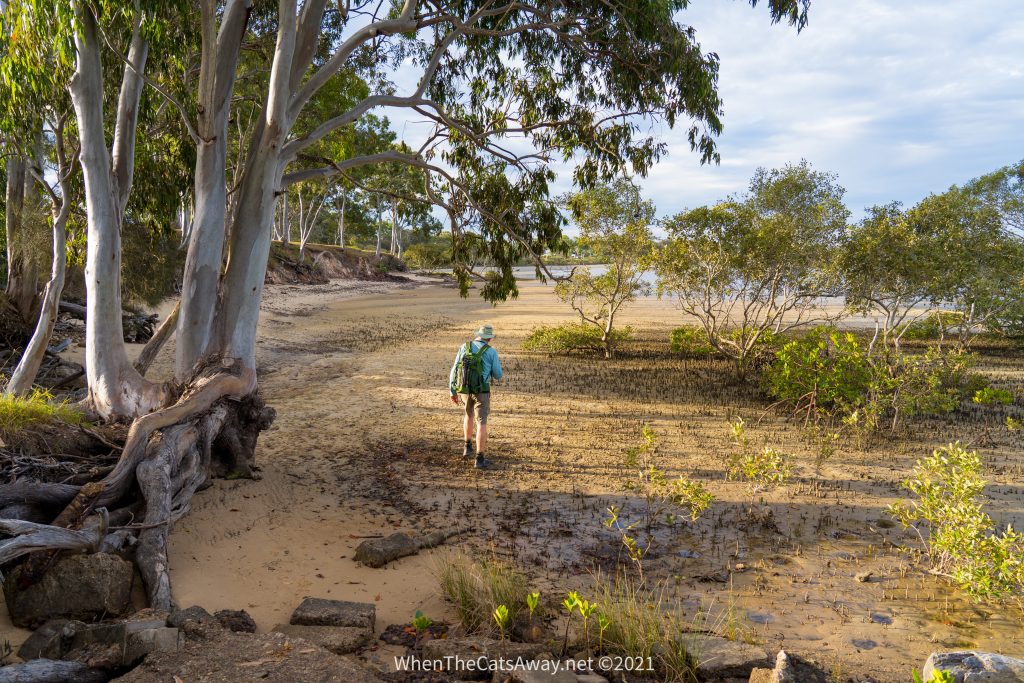
Unfortunately the origin of the town’s name seems to be unclear, but likely a corruption of what the traditional owners called things that grew there (tin-kung – a coastal vine). For us it is has a been a lovely quiet spot with walks along the beautiful coast, and of course a few birding opportunities in this area which is part of a RAMSAR wetland . We’ve walked both days following the Tin Can Bay Foreshore Bird Walk, with detailed signage following nearly ten kilometres of unspoilt coastline lined with paperbark and gum trees, that went right down to the edge of the crystal clear waters of the Great Sandy Strait.
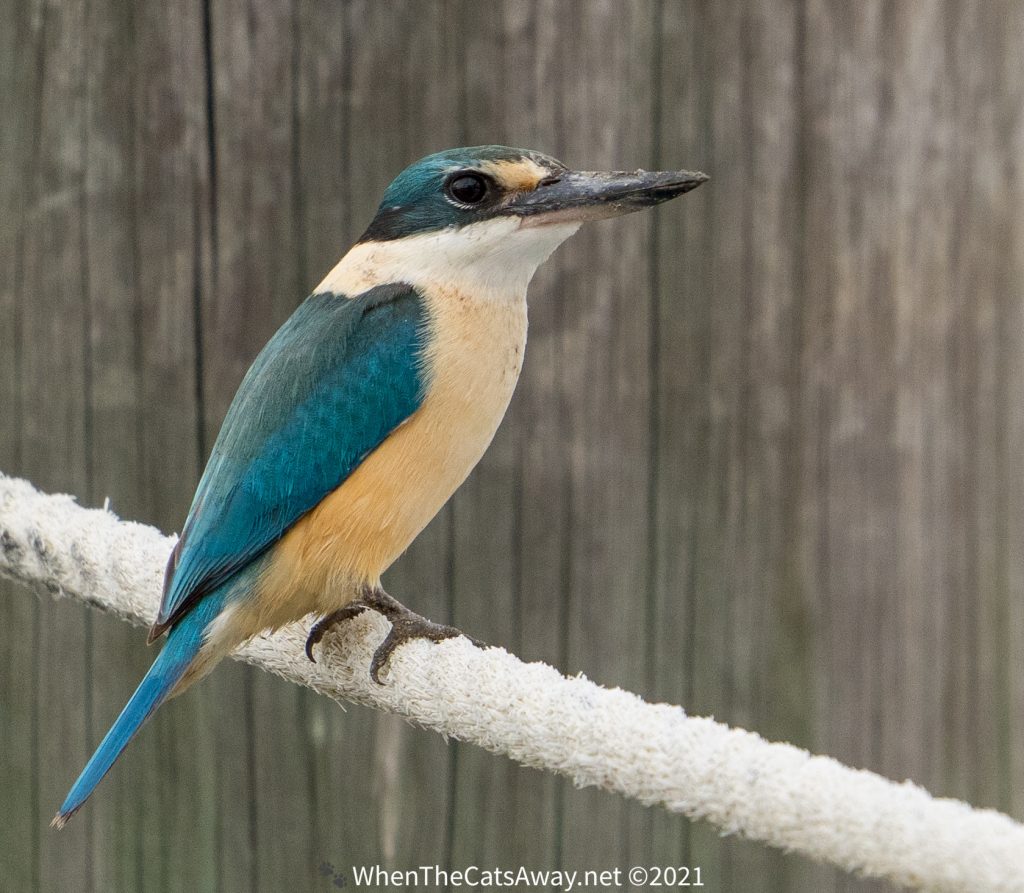
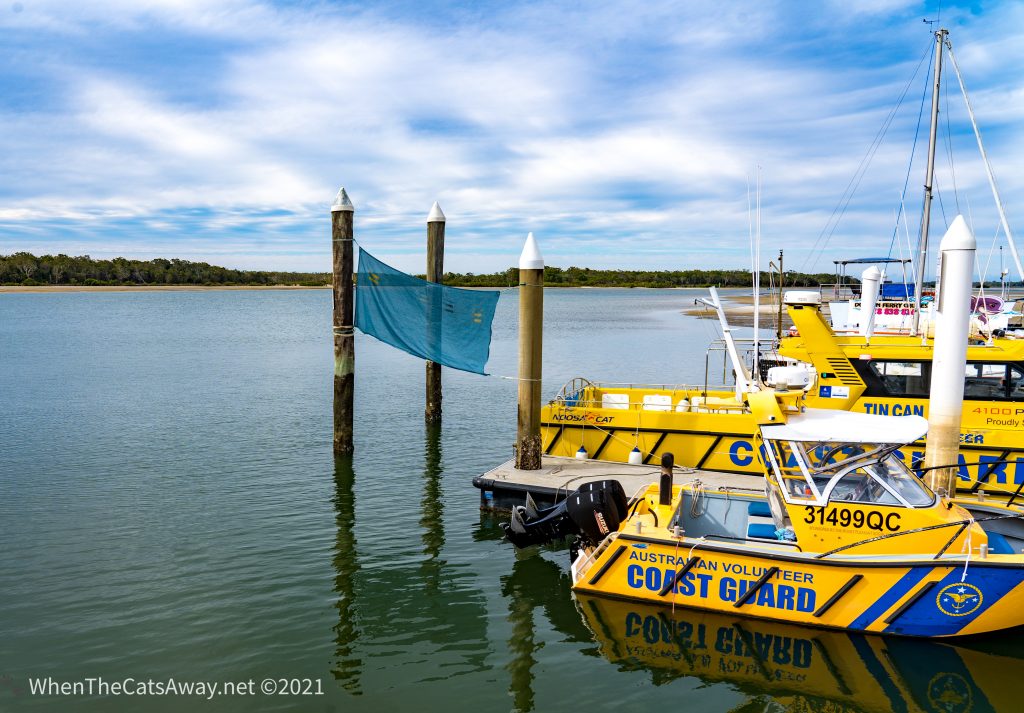
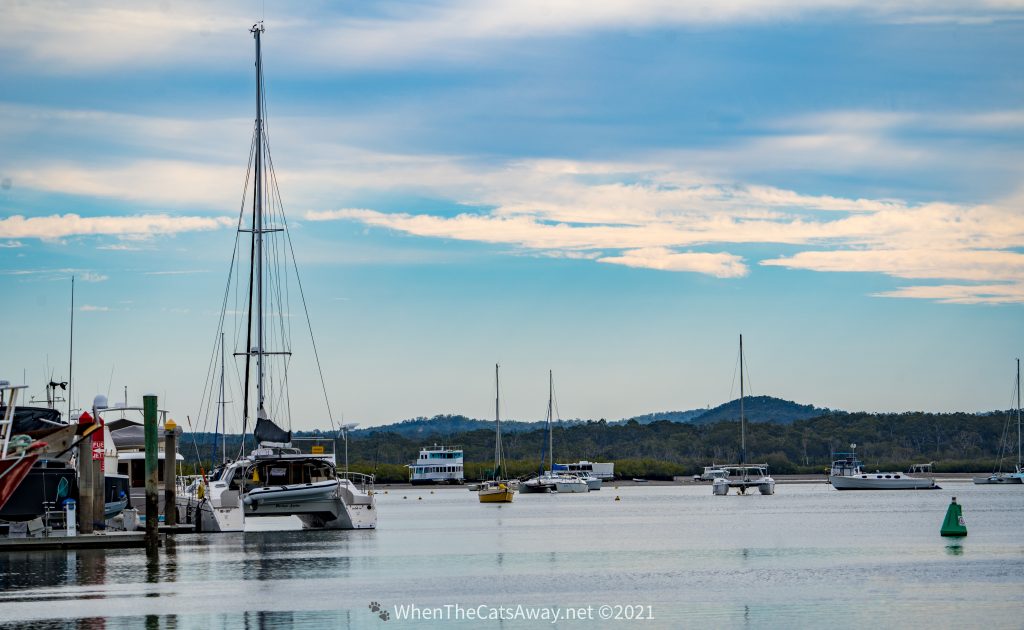
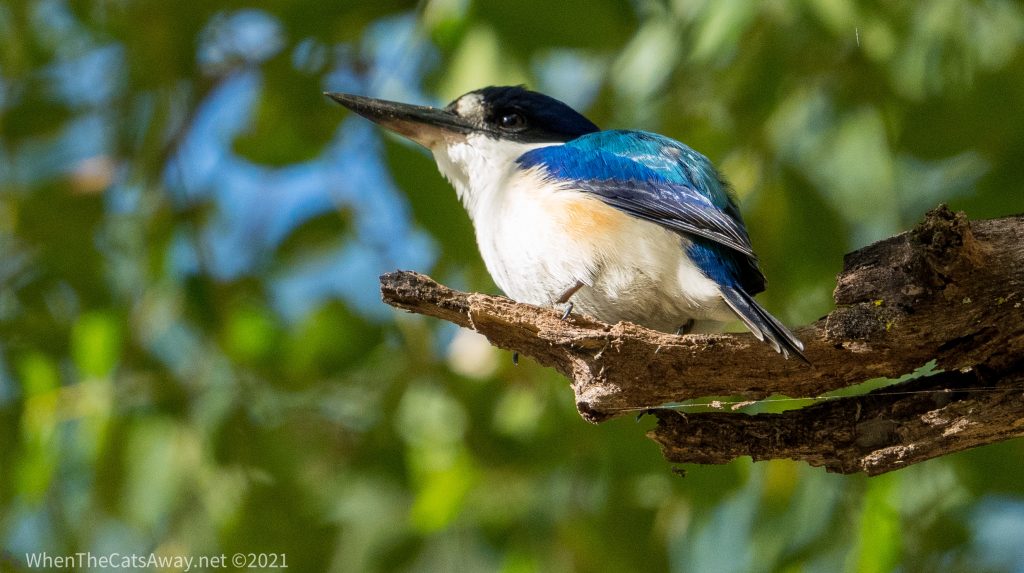
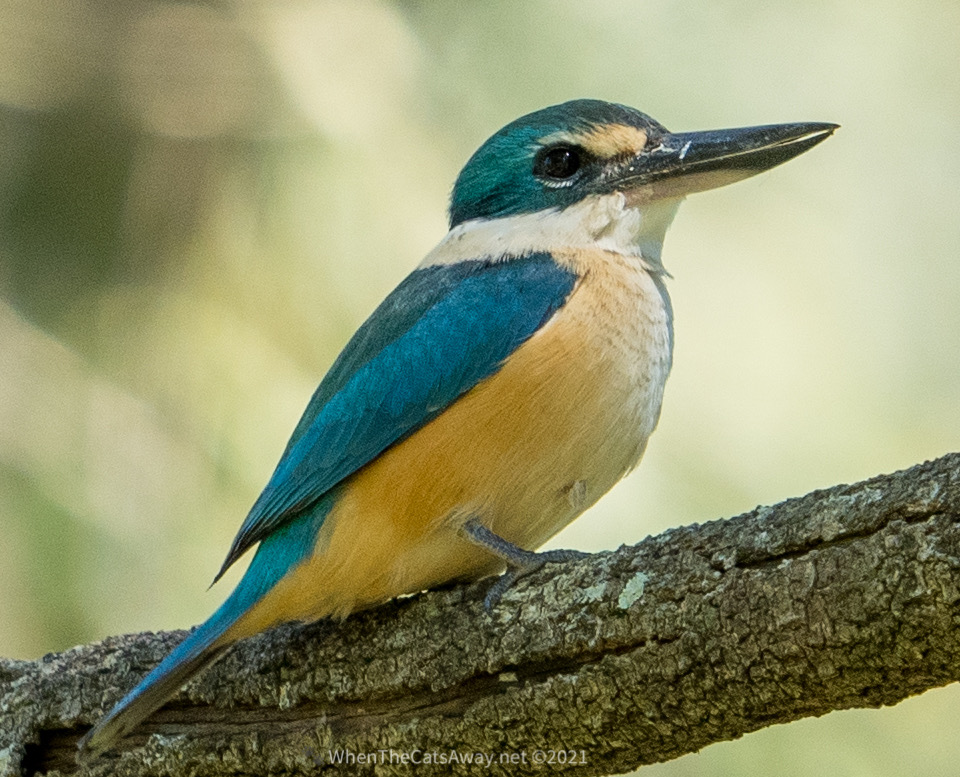
A Sacred Kingfisher on the marina alongside Griffin and Schnapper CreeksCoastgard boats along the creek side marinaLooking up the riverMangroves at low tide
This would be a great place to get the kayak out, as finally we are finally south of the area where crocs are a hazard. Just swap that disappearing water hazard though for sharks stingers and stonefish (nasty) which are all still there waiting for the unsuspecting tourist, but in a kayak, you’re good. Unfortunately the wind was up and it was walking only.
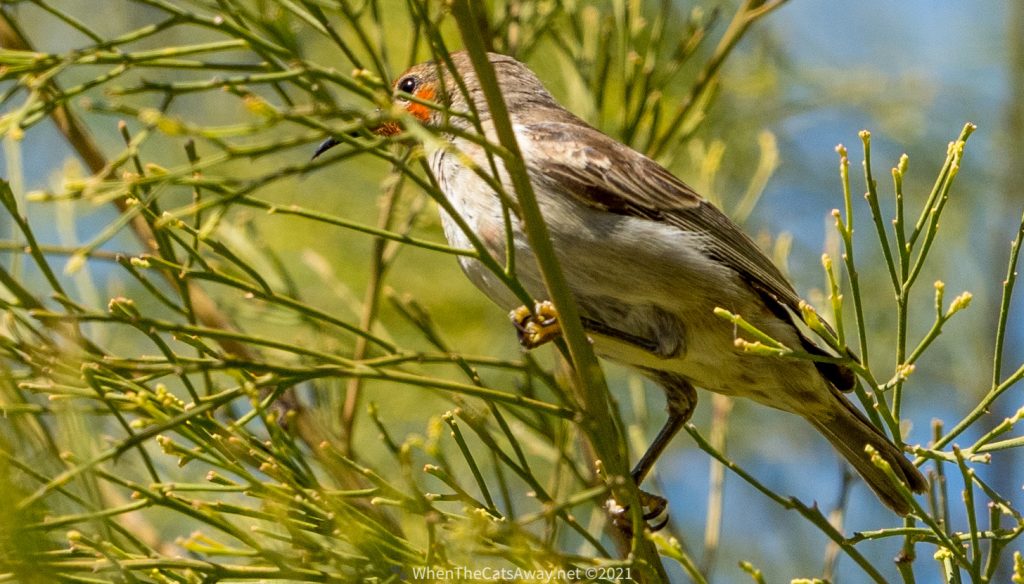
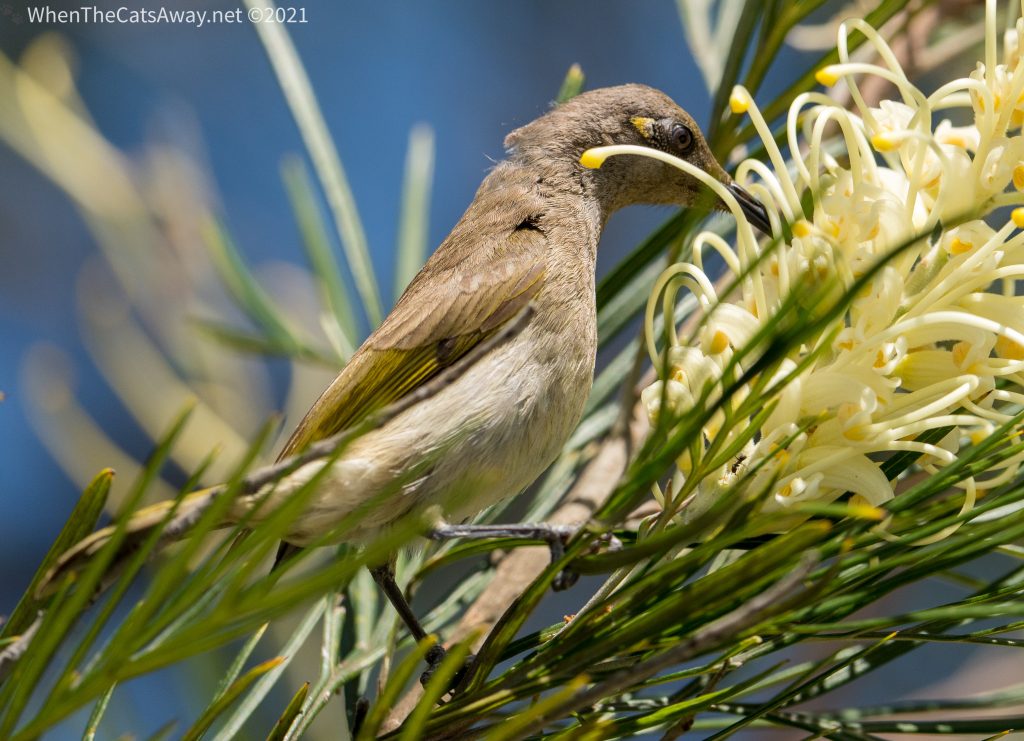
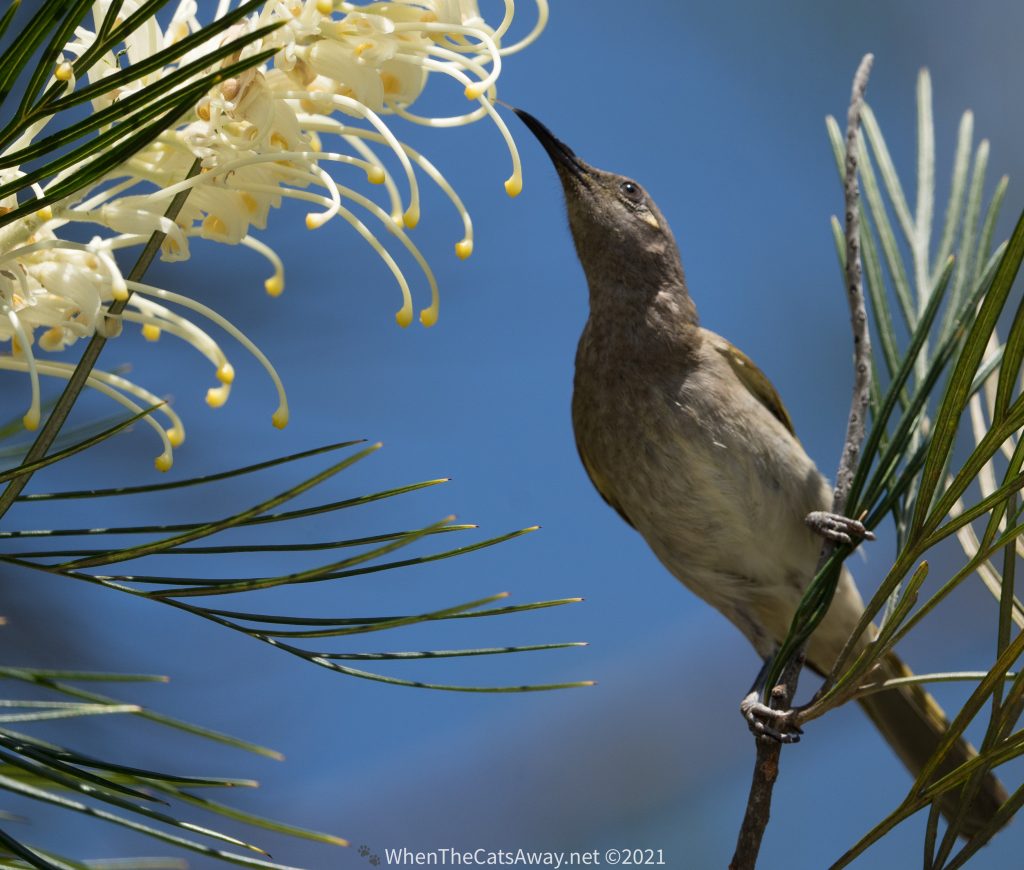
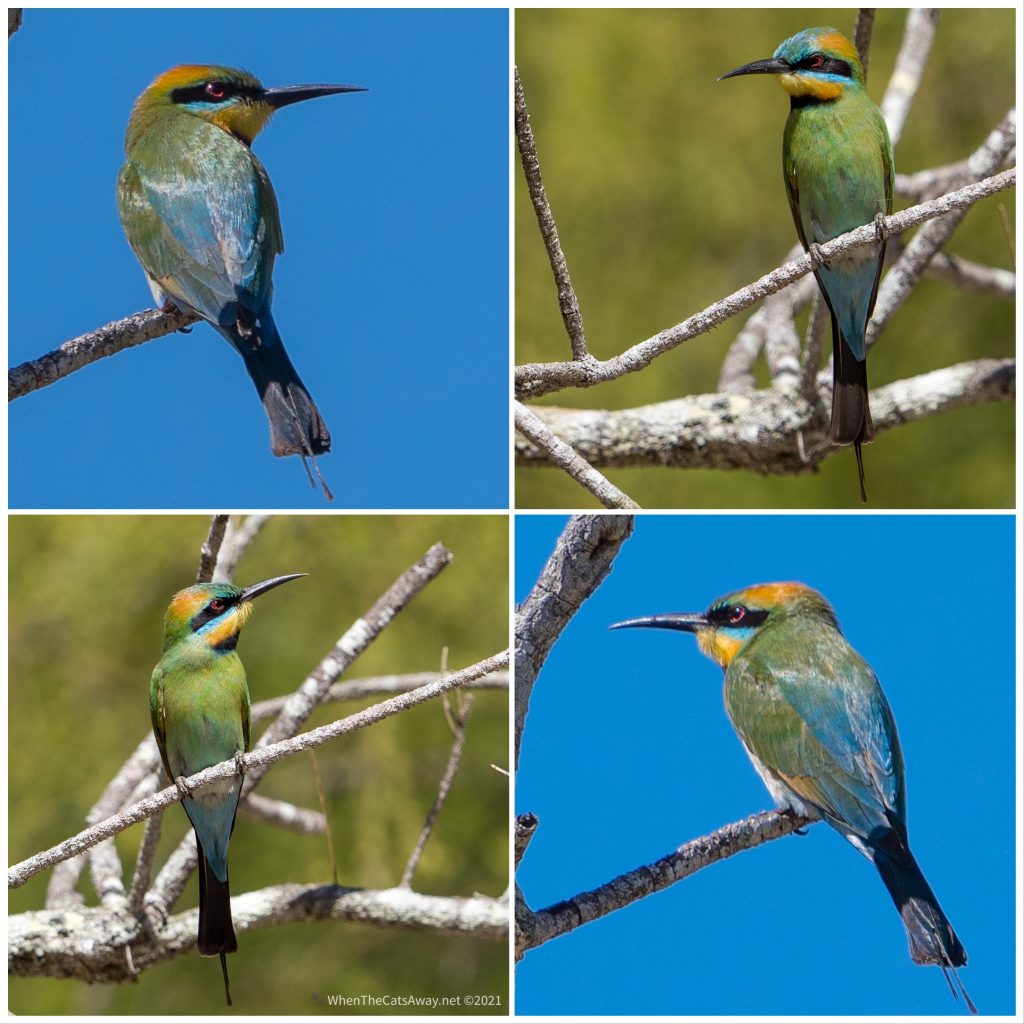
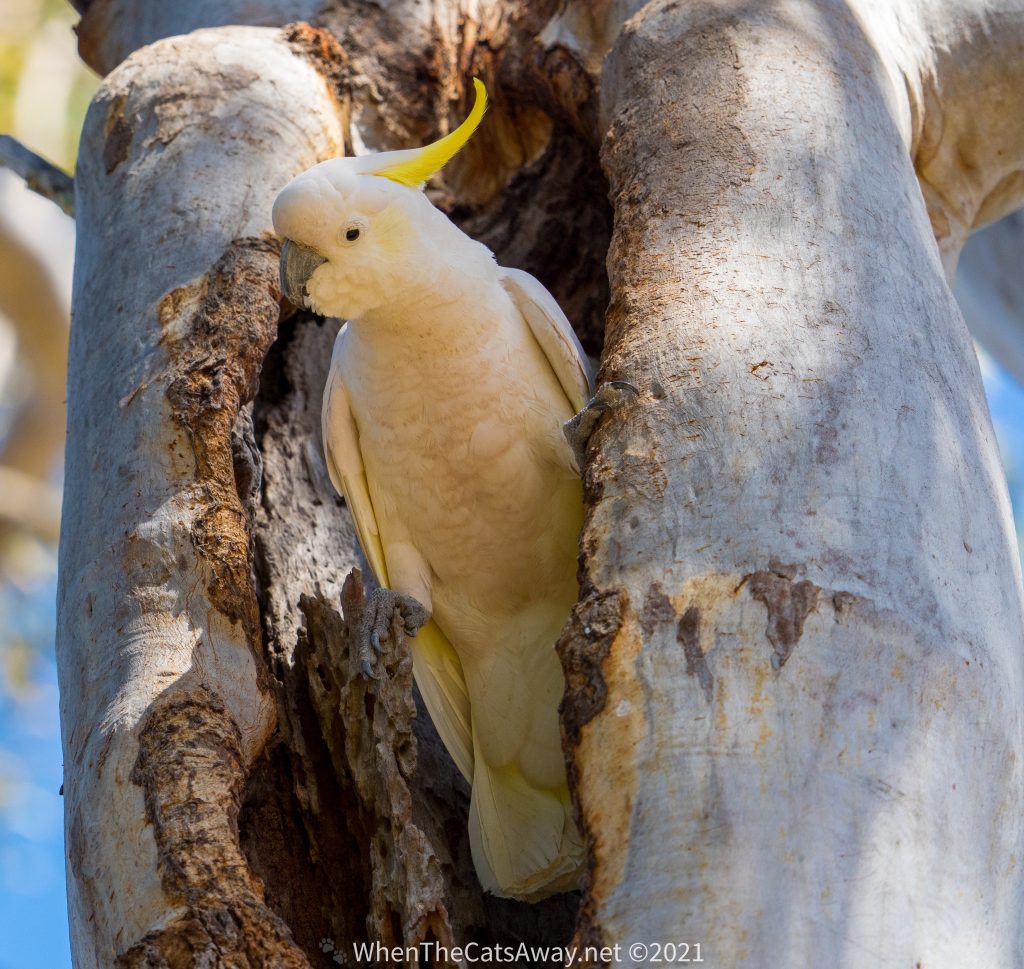
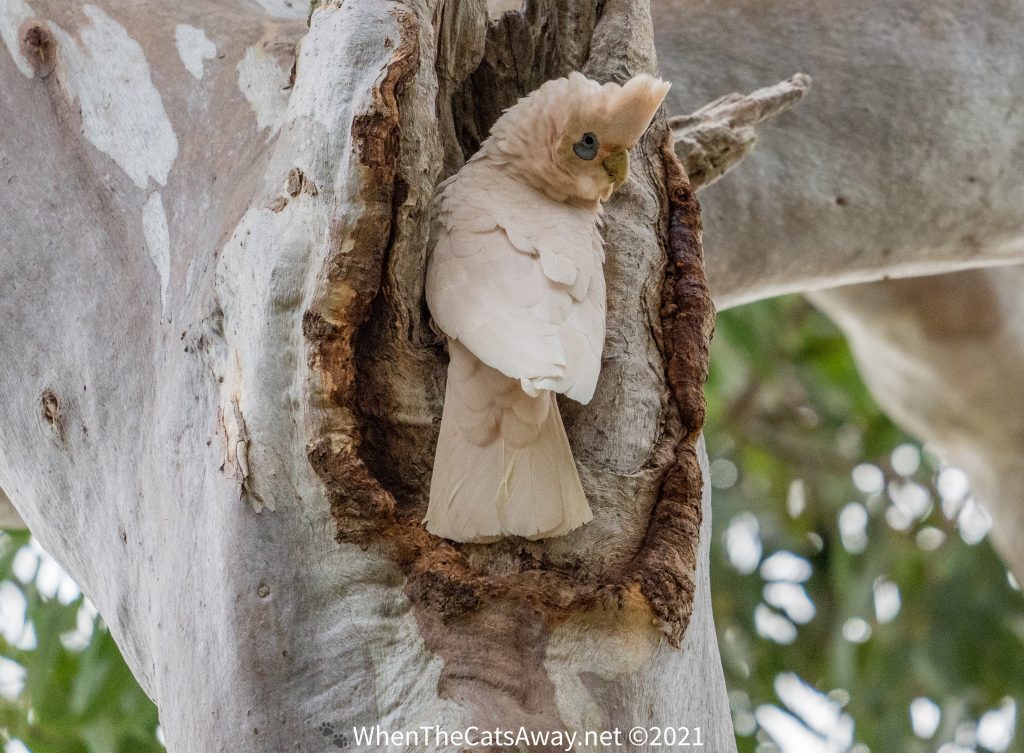
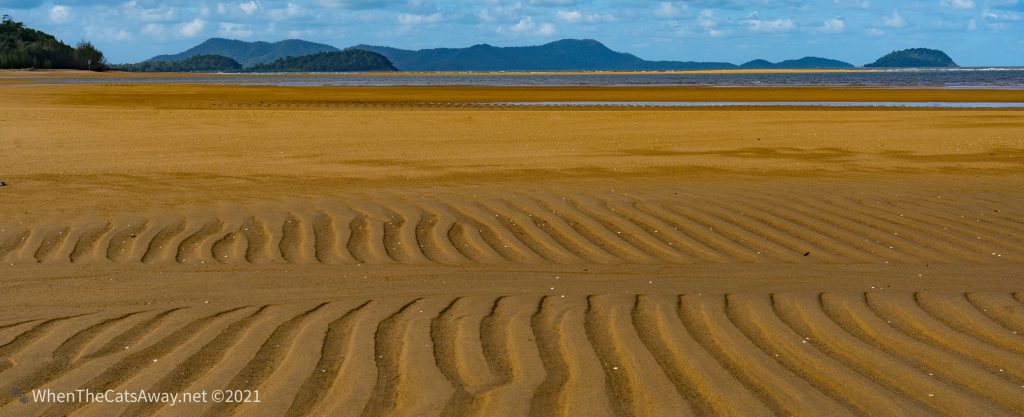
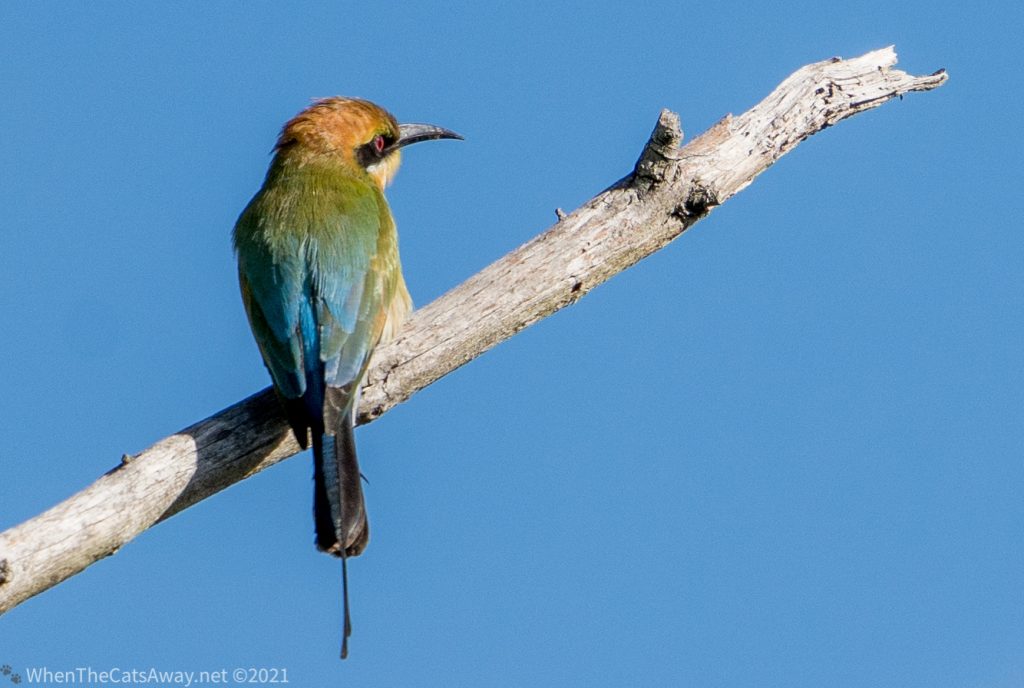
Many lovely views framed by mangrovesA brief pause along the pathwayMore lovely viewsStripes on the sand as the tide gently goes outA female Scarlet Myzomela Brown Honeyeater on a GrevilleaYou can just see this Brown Honeyeater’s tongue as it stretches towards the flowerRainbow Bee-eaters hunting for insects along the coastA Sulphur-crested Cockatoo nesting in a tree hollowA Little Corella nesting in another hollow
It was hard walking along this pristine coast, with blue skies and mid-twenties temperatures, to not think how much we will miss places like this when we move back to the UK early next year. But on the other hand, when I Googled the history of Tin Can Bay, there’s almost nothing, very different to what our future holds in the northern hemisphere. The original inhabitants of this Fraser Coast area have lived in it for thousands of years, and I’d love to know more about their lives, but sadly it’s still almost completely inaccessible to us white fellahs, and I really don’t want to read about another set of massacres, because that’s what there was.
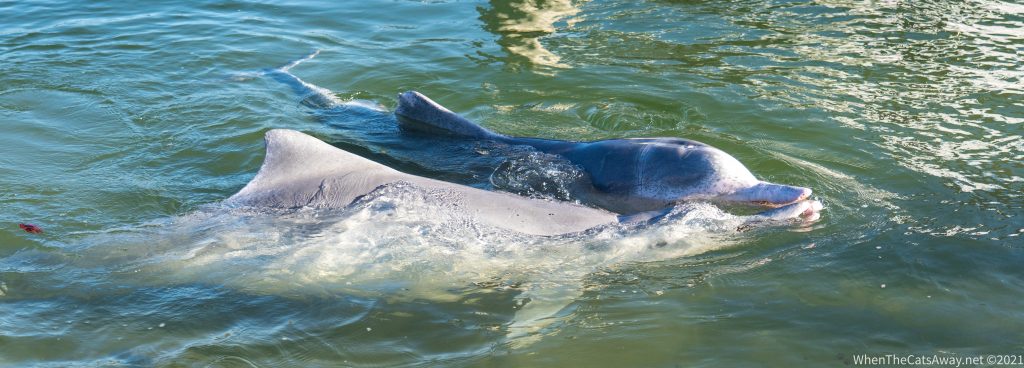
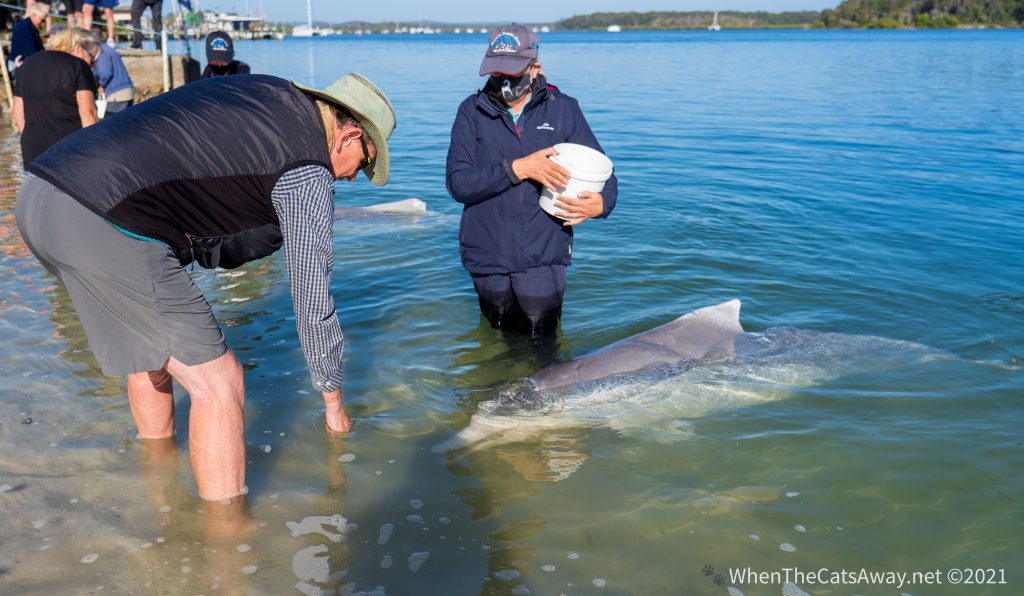
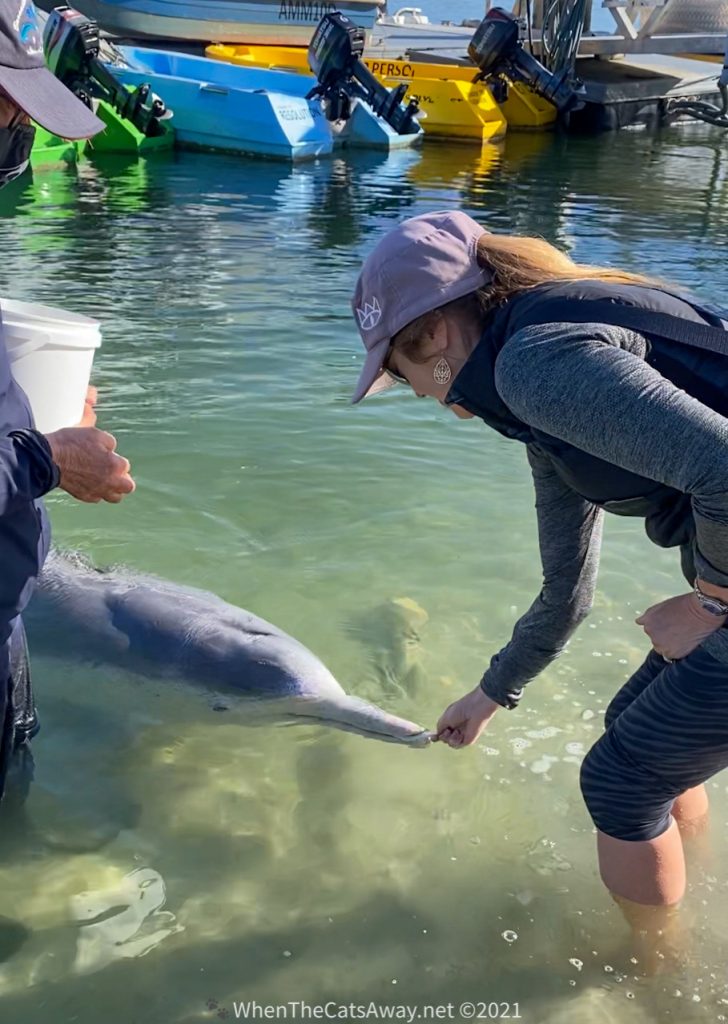
One pretty unique attraction that Tin Can Bay has that it’s one of the few areas where wild dolphins come into to the beach to be hand fed.
I wasn’t totally comfortable with the idea of humanising wild creatures like this, and sure enough one Google search turns up this report from Action For Dolphins that claims (from a review of the research on the topic) that it leads to changes in behaviour where the dolphins become more aggressive towards other dolphins and humans, also reducing their maternal care time (which may account for the high death rate at the Money Mia feeding site we have been to in Western Australia?), and a number of other issues.
But I’m pretty sure there are also contrary points of view, with records of human-dolphin interactions in these parts for thousands of years. We decided to go along and be educated.
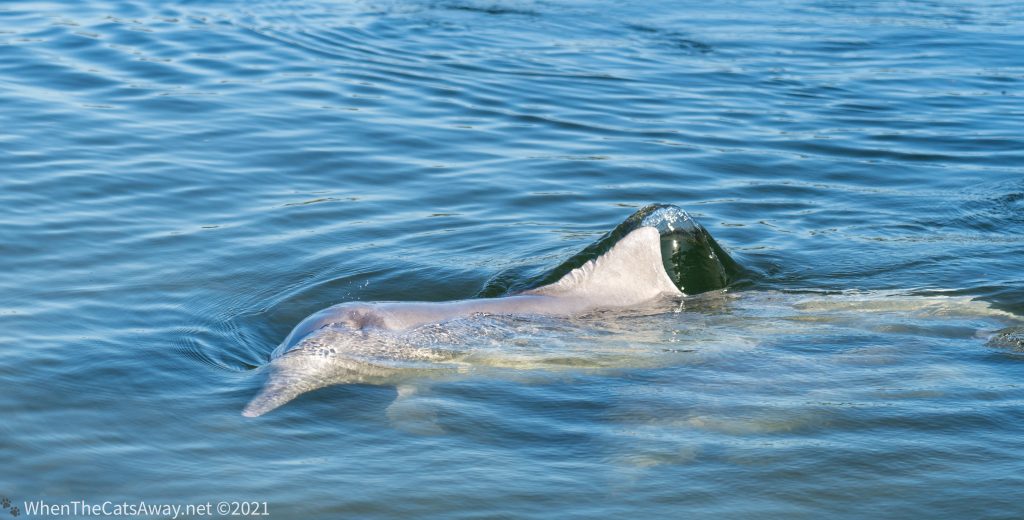
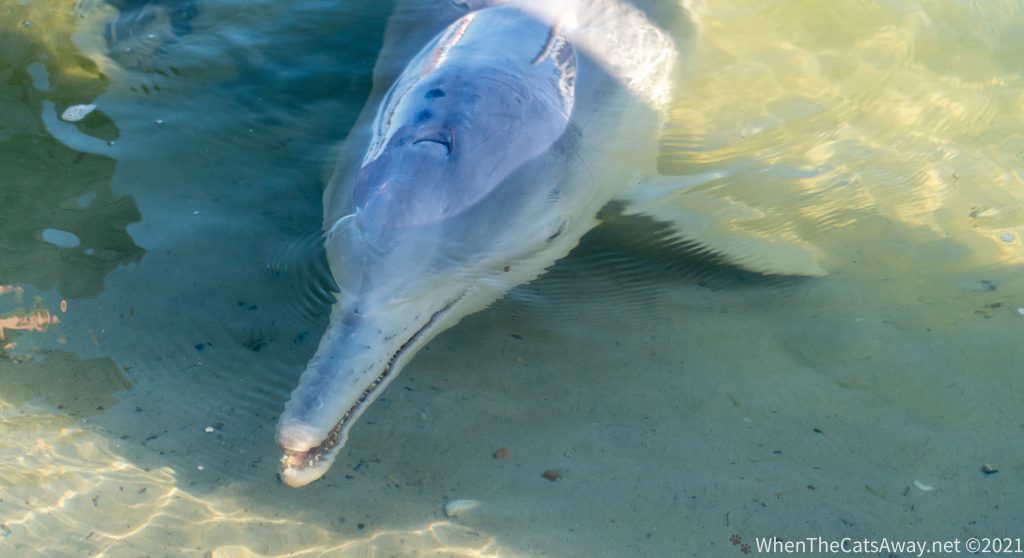
A humpback river dolphin swims in to see usSmile for the camera! These teeth are made for fish eatingMother and daughter swim in to join in the session
While these dolphins are fed small amounts of fish each morning (3kg per animal), this is a small fraction of the 15kg they need to consume daily and ensures they are not totally reliant on humans to survive. We gave them two small fish each.
The dolphins are so gentle, it is hard to believe they are wildTo see the video of the feeding click here
It’s my birthday this week, the sun is shrinking, and I am content as I gaze at this beautiful landscape, and enjoy the lack of crowds and the fresh air.
Location: Calliope River and Lake Redbrook, Queensland, Australia
While we were in Rockhampton we received a message from some old travelling friends, fellow Zoners (owners of the same brand of caravan as us, Zone), who originate from New Zealand (‘The Kiwi Zone’!). They were visiting Great Keppel (Wop-pa) Island, and would be travelling back through Rockhampton on the 3rd, staying an hour south of the city on a free camp beside the Calliope River. We decided to change our plans and headed down there early on Friday to secure us a campsite.
The Calliope River winds its way down from the Calliope Range, through this area before emerging into the Pacific Ocean just north of Gladstone. Our free camp was on the northern bank of the river, where we found ourselves a level patch of grass with plenty of sunshine to top up the solar power.
Both north and south banks of the river were packed with caravans and campers. There is a two night limit to staying, but it was clear that some people had spent a lot longer living in this location. You need to have brought in all your own water, and while there are public toilets, there are only two males and two females – hardly enough for the dozens of vans present. I just hoped some of these travellers were spending money in the local region to help pay for the upkeep of these facilities.
We had a wander down to the river, finding people fishing, children launching kayaks, and a pair of Brahminy Kites soaring on the breeze.
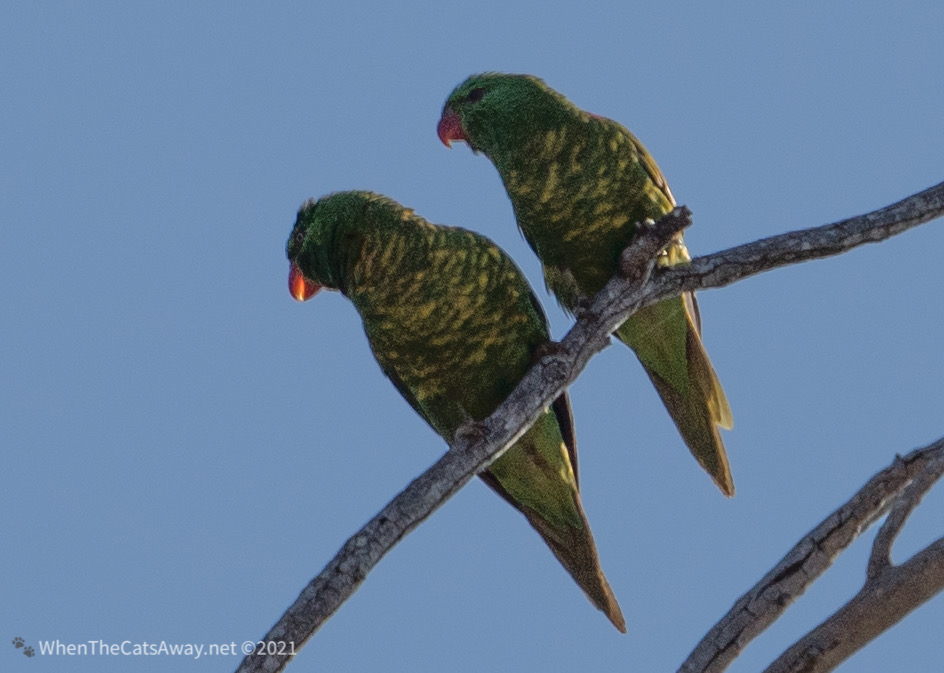
In the trees, a frenzy of bird calls led us to look up, and we found the Scaly Breasted Lorikeets lived here – cousins of their more common Rainbow Lorikeets. We’ve seen photos of these birds but never before in person, so this was a lovely sighting.
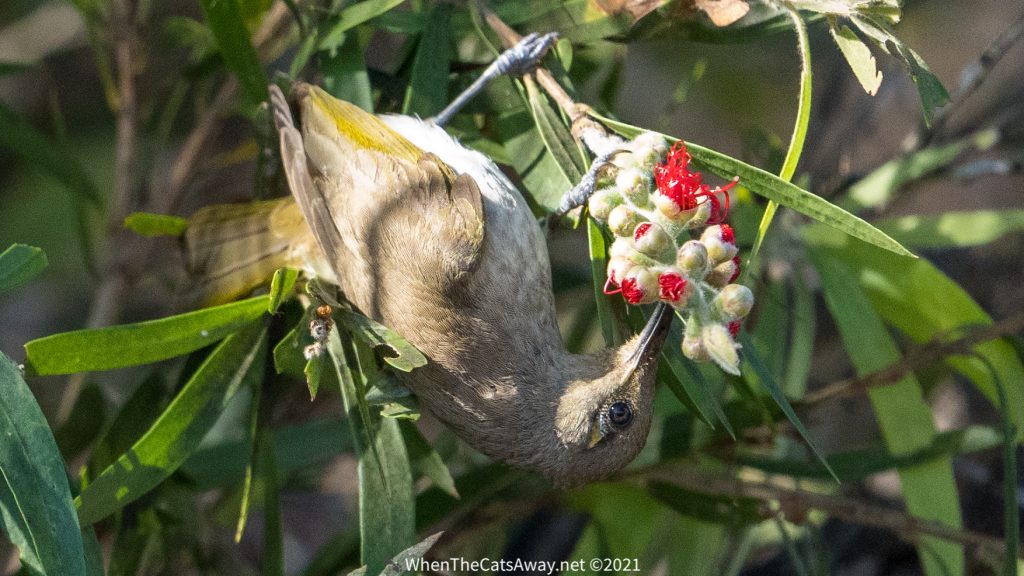
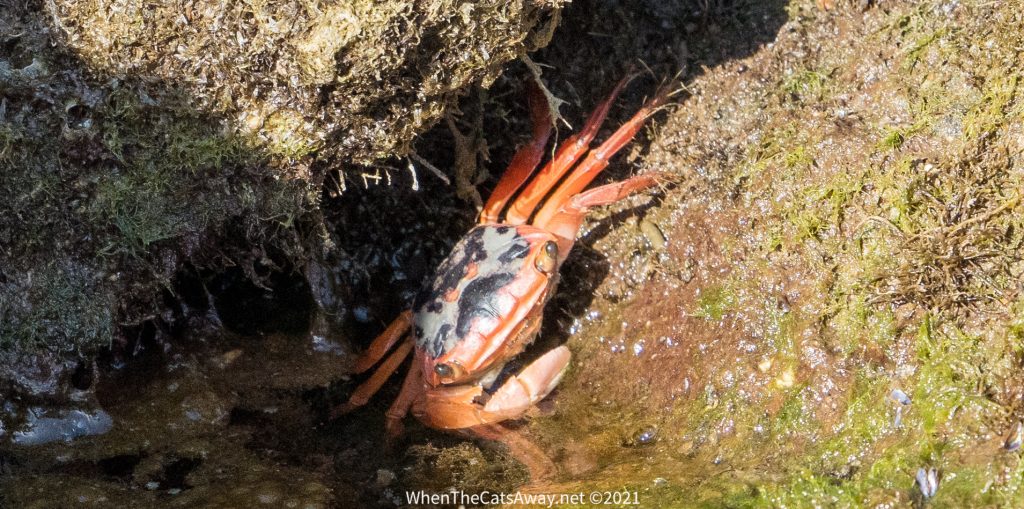
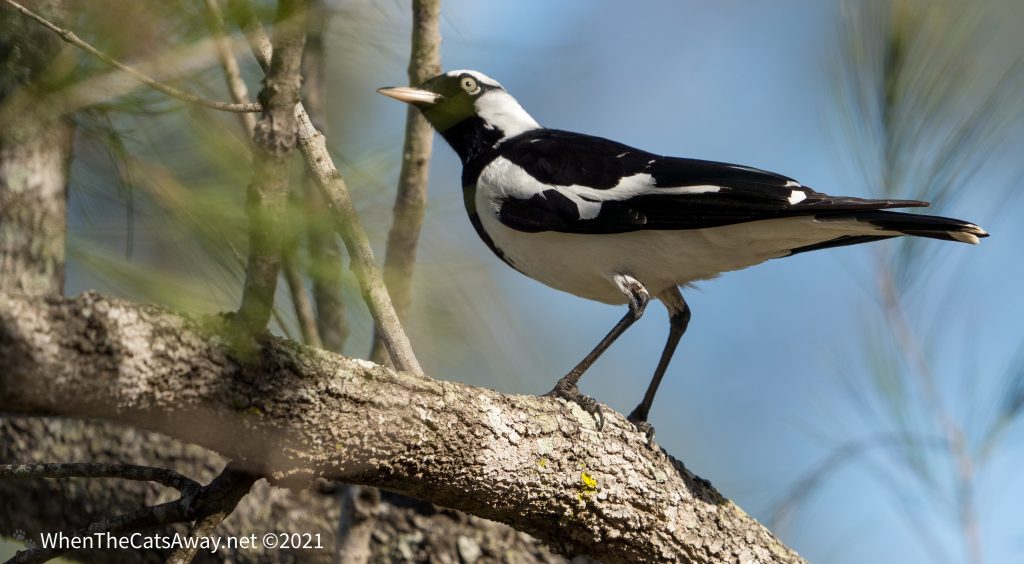
A pair of Scaly-breasted Lorikeets – a first for us!A Brown Honeyeater shows it is possible to drink nectar before the flower bloomsA young Mud Crab hiding in the rocks on the river – a huge 2kg crab was caught somewhere near here two years ago, which made the news. There was nothing that big around on our visit! A Magpie Lark keeps a lookout from up in the trees
We had a lovely evening catching up with Beverley and Ben, many laughs and travel tales told. It was sad to say goodbye the following morning, thinking it may be many years, if at all, before we meet again.
The Kiwi Zoners – Beverley and Ben joined us for an evening
Lake Redbrook was our next destination, a 165 acre property bordered by sugar cane plantations. Run by ‘Gazza and Shazza’ (Gary and Sharyn Walters) it was a welcome respite from the roaring road trains and frenzy of the Bruce Highway we have spent so much time on, and alongside, the past 10 days.
Located south of Bundaberg and close to the small town of Childers, it’s a nature lover’s paradise, with a bird-filled lake, native woodland and a friendly nightly campfire to meet the owners and some of your fellow campers. In July, Childers holds a festival with food stalls, live entertainment, tours and events, with this lake the location for afternoon opera with local wines and antipasto for sale. It would be the perfect setting for such an event.
While we decided not to visit the small historic town of Childers, a short drive away, we found plenty to entertain ourselves on the property, spending our day and a half spotting just shy of 40 different types of bird.
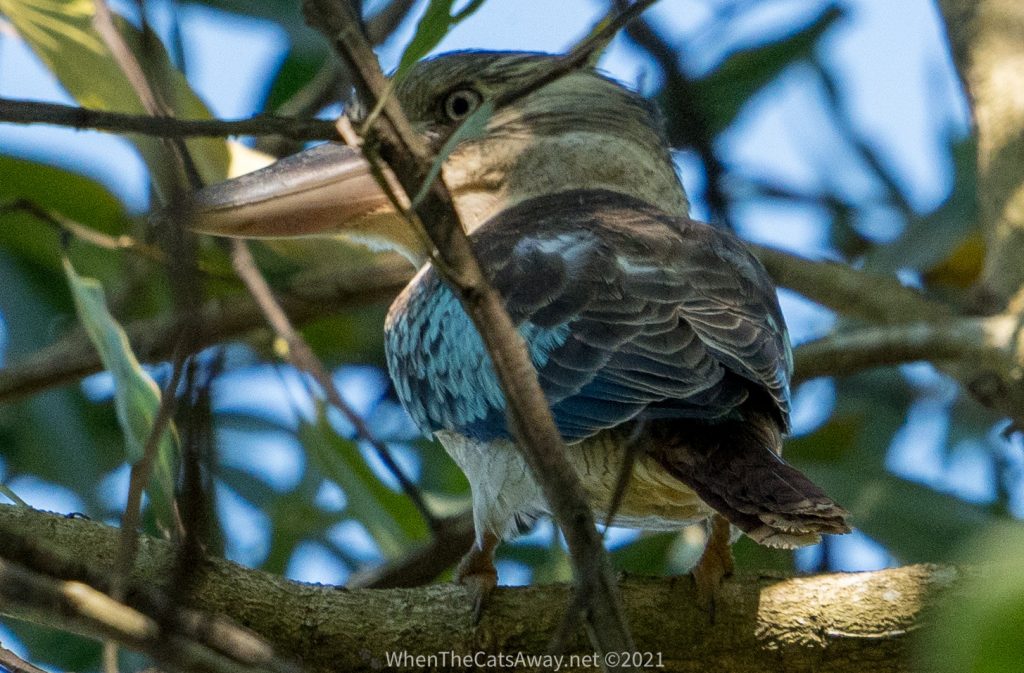
We get a workout carrying our spotting gear!Always a Laughing Kookaburra, one of Australia’s 10 species of kingfisherA muddy beak shows this chap has been digging in the water’s edge for its meal
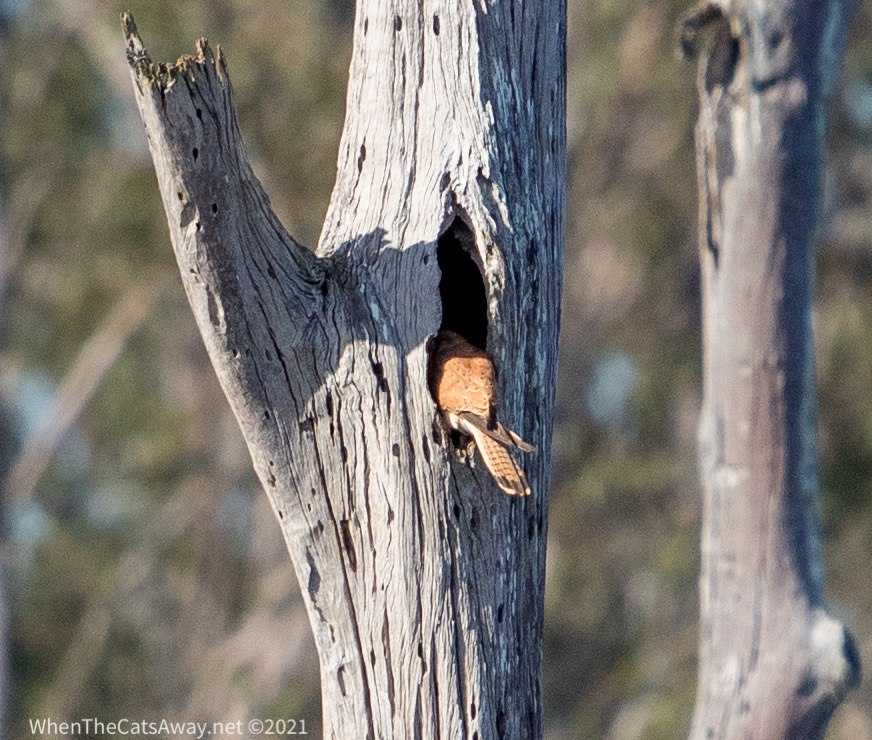
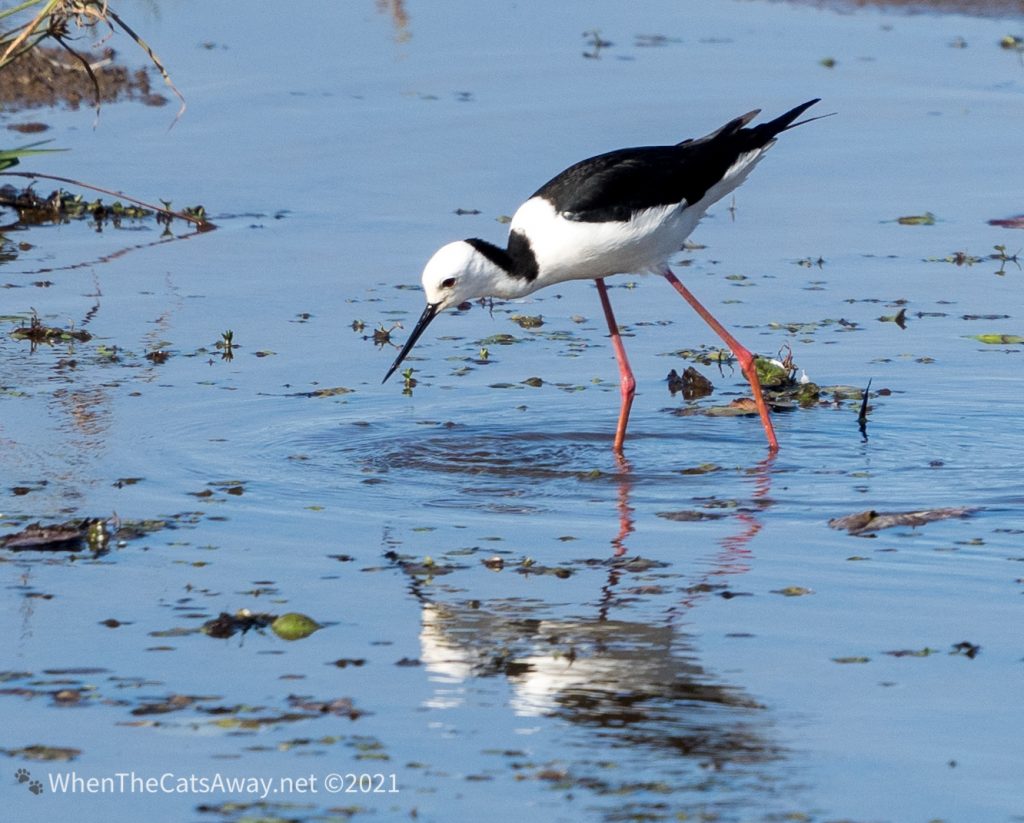
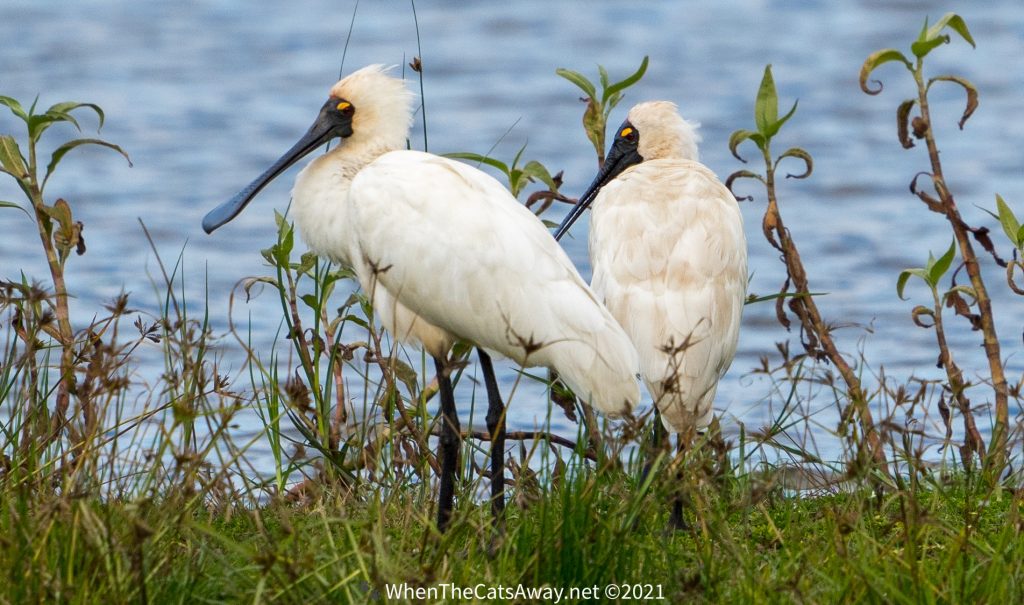
There’s a bird hide alongside the lake’s edge, from which we spotted Royal Spoonbills, Pelicans, Pied Stilts, Black-fronted Dotterels, Intermediate Egrets and more. As we watched I saw an Australian Kestrel soar low over the water, landing on a dead tree on the water’s edge. I quickly snapped a photo, discovering it was disappearing into a hollow, most likely a nesting site.
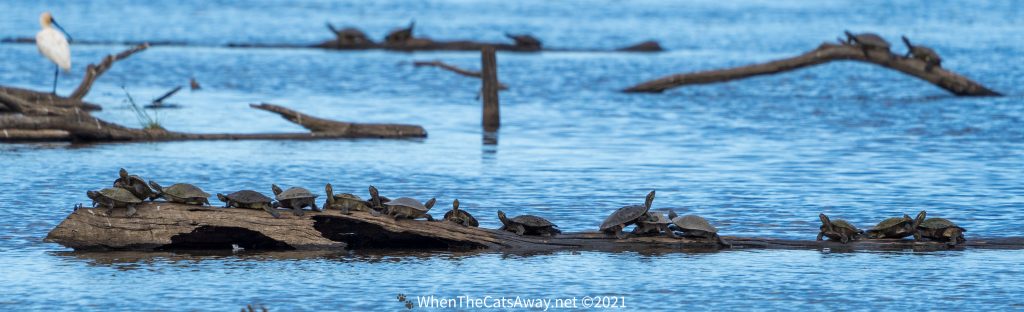
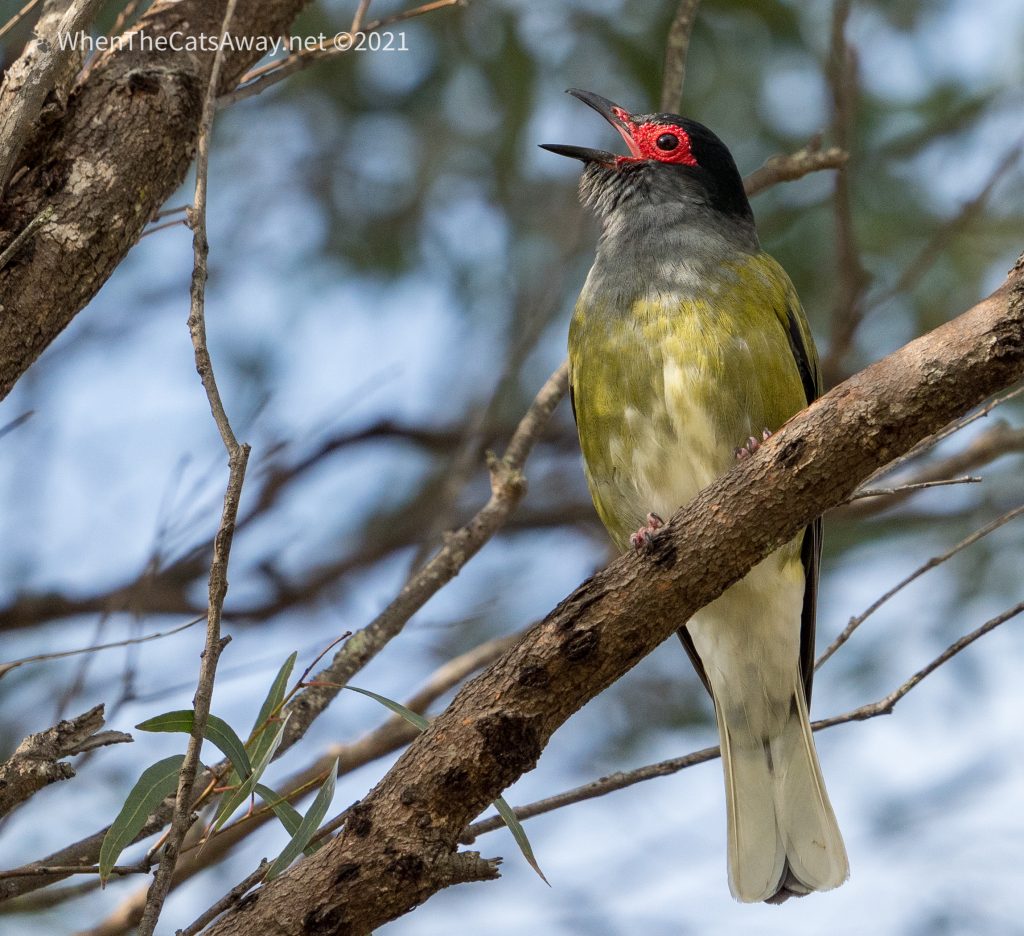
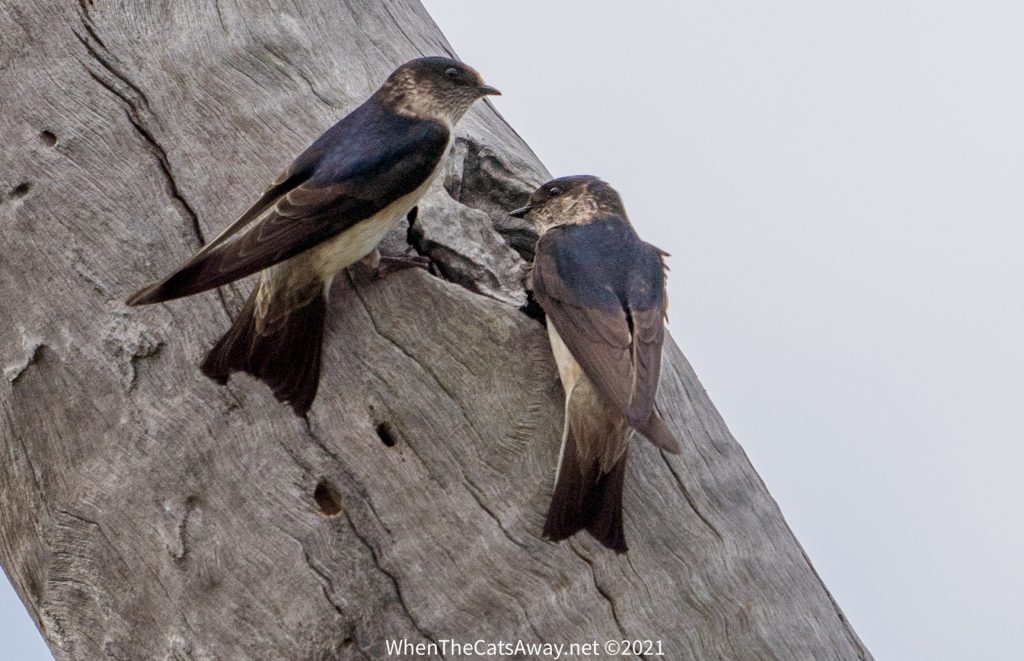
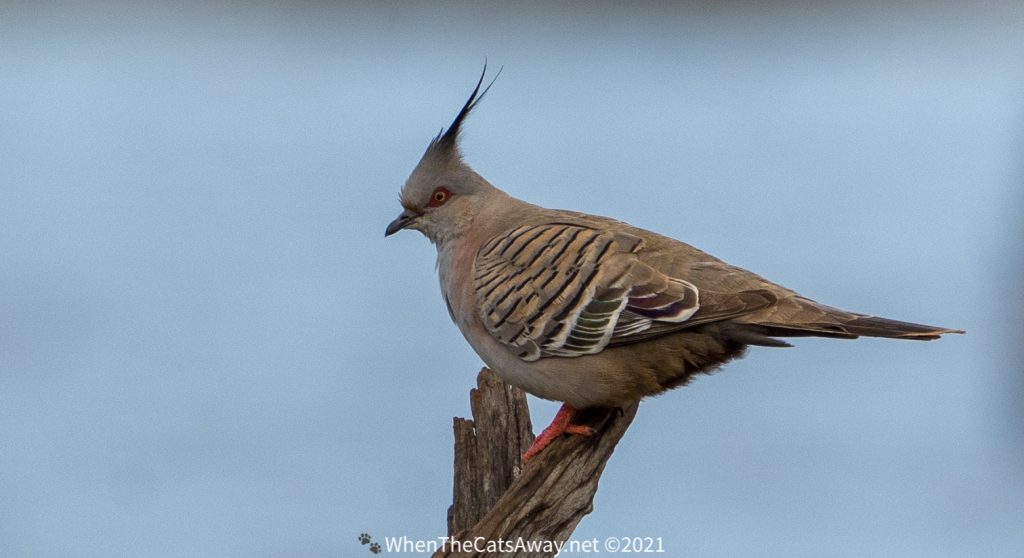
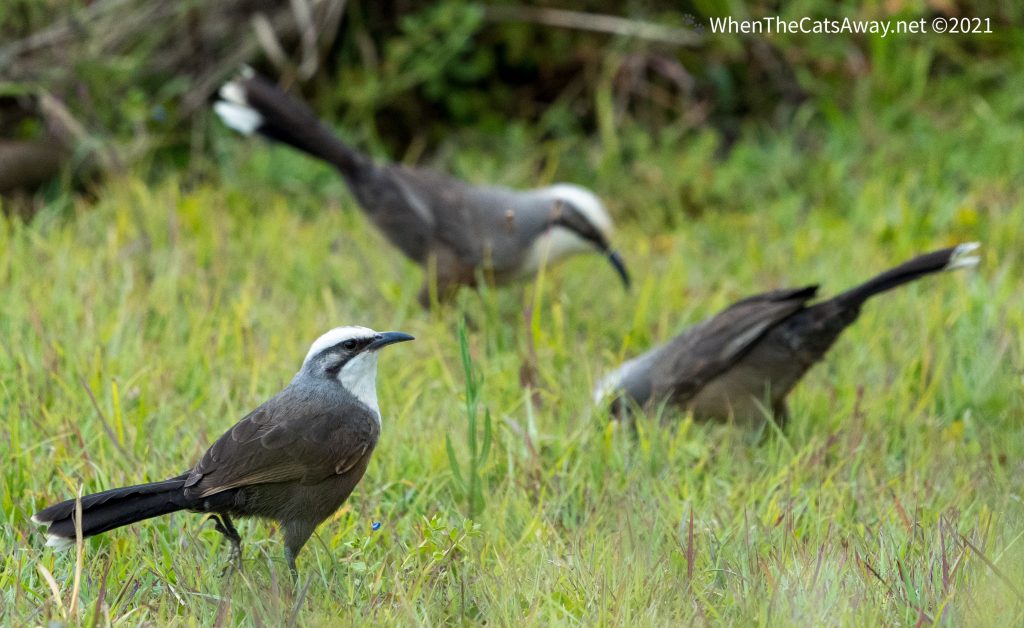
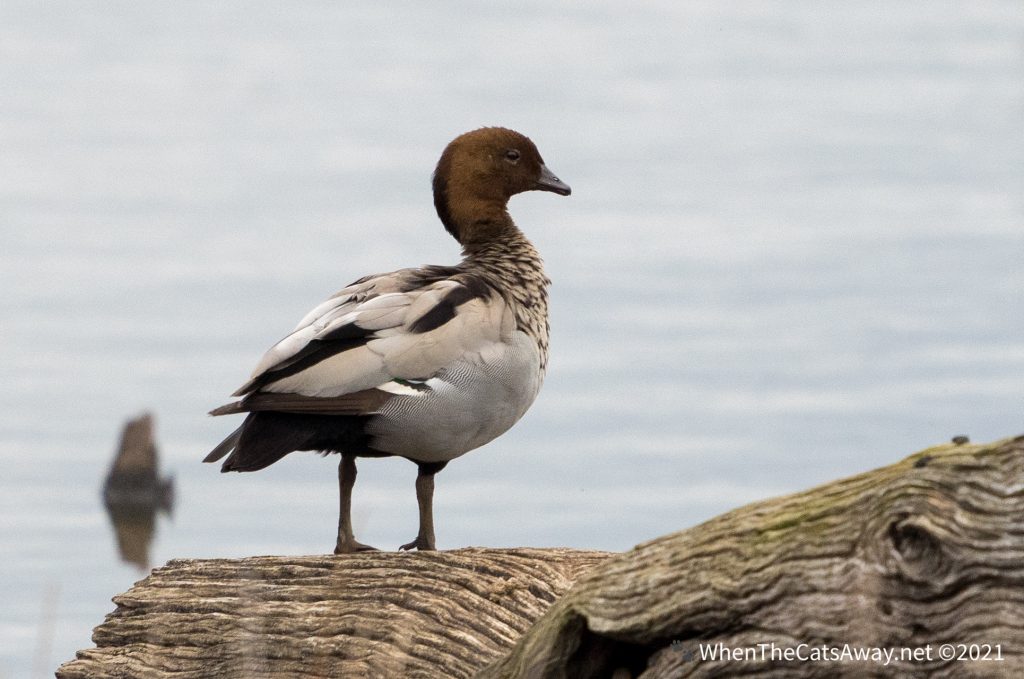
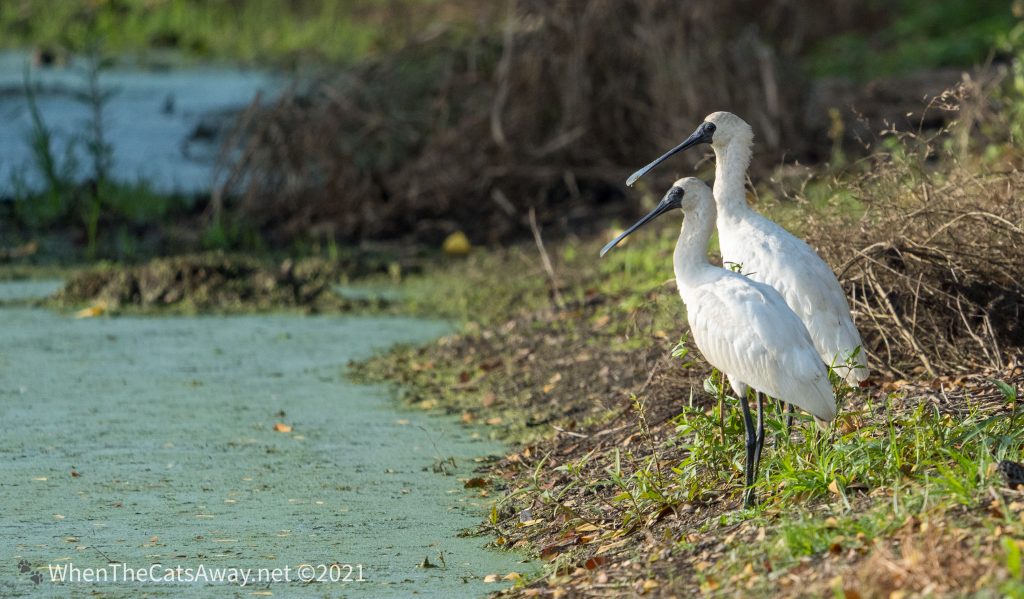
An Australian Kestrel has found a fine location for a nestPied Stilt on the water’s edgeA pair of Royal SpoonbillsMark counted 20 turtles balancing on this fallen log and there are more in the distanceAn Australasian Figbird – they are more olive than yellow in these partsMany Tree Martins make their home here and are seen swooping over the lake catching insectsA Crested Pigeon perches precariously on a branchA group of Grey-crowned Babblers hunting for invertebrates in the orchardToo common for the aviary, this is a wild Double-barred Finch in the woodlandA pair of Pale-headed Rosellas fly in for a visitAustralian Maned Duck (also known as a Wood Duck)A Rainbow Lorikeet finds the newly flowering Grevillea
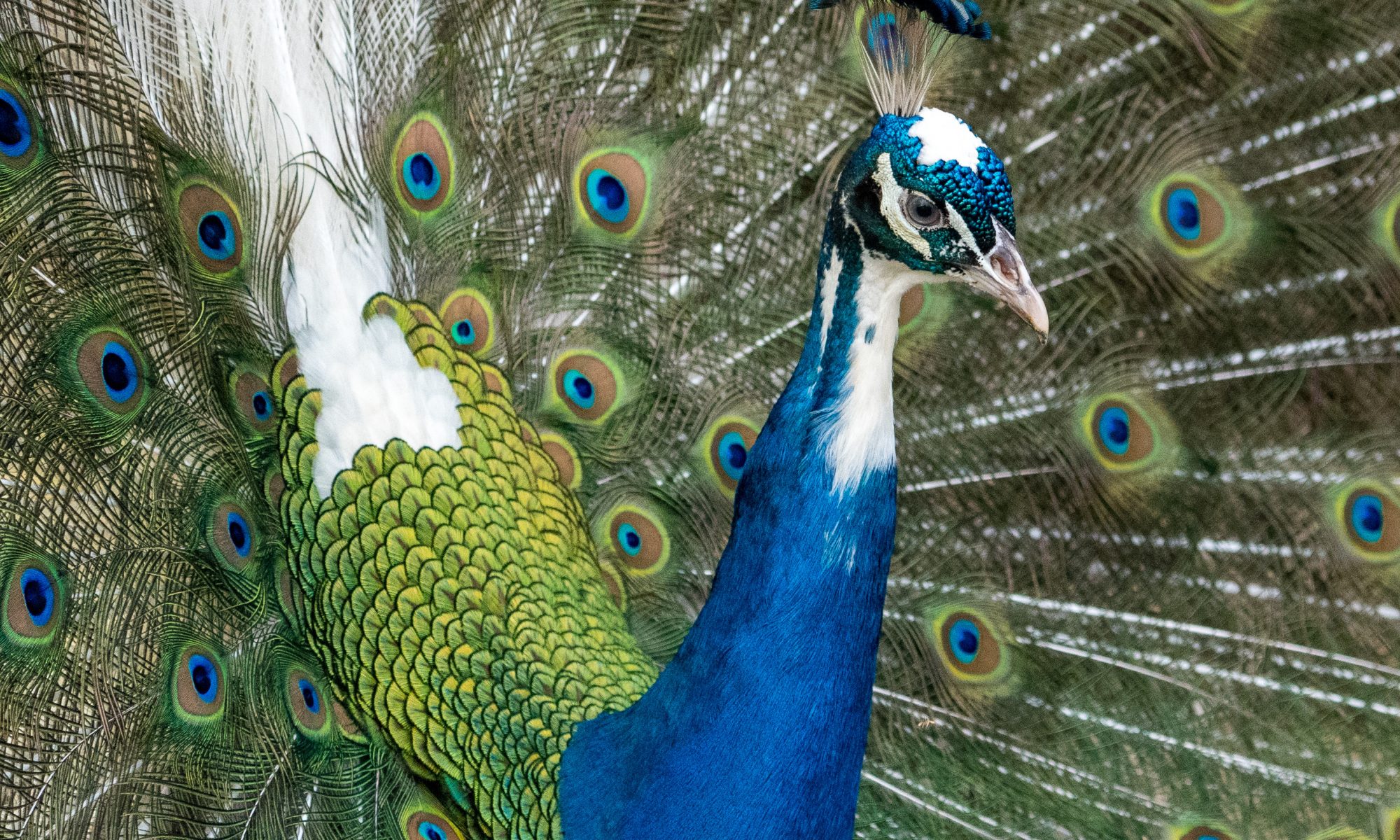
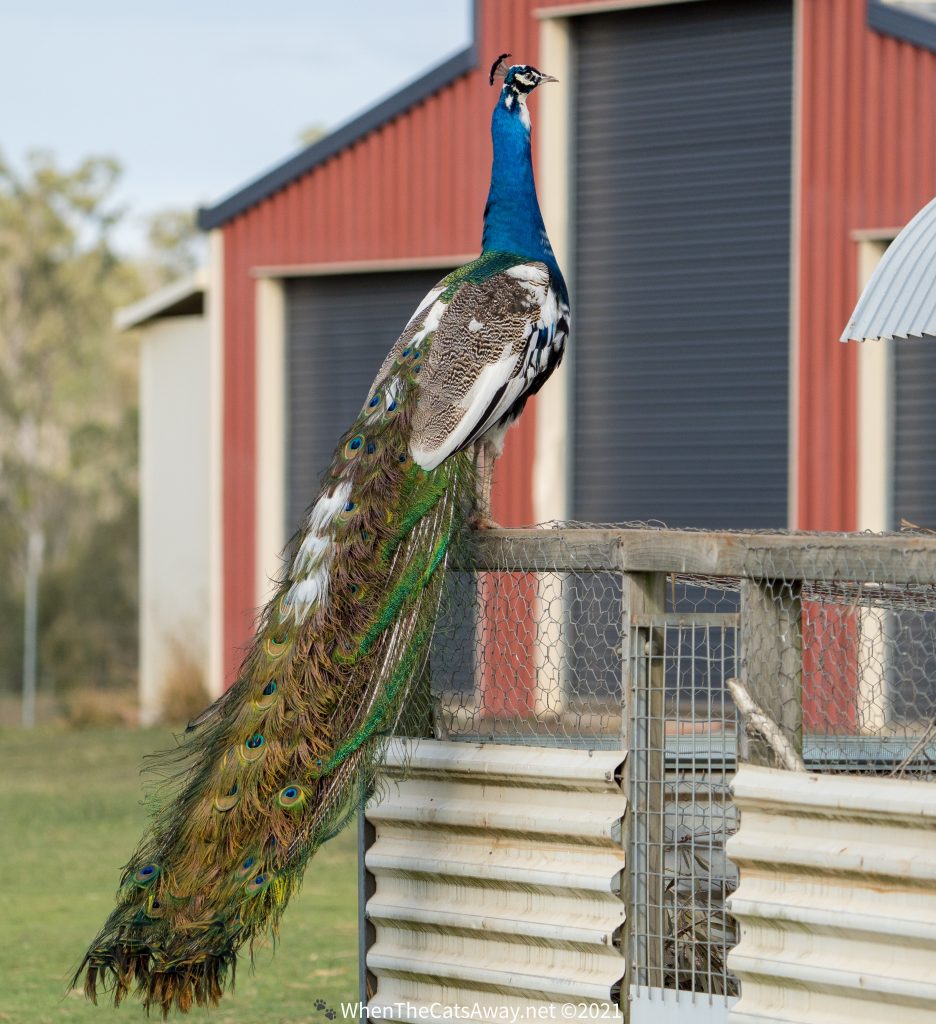
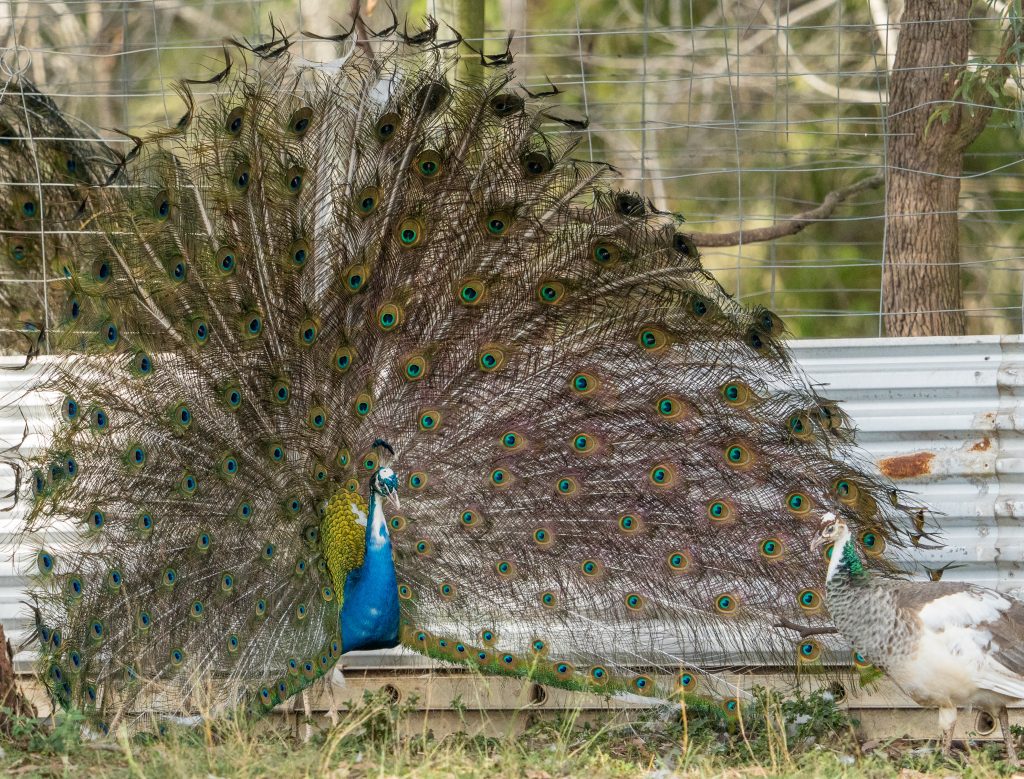
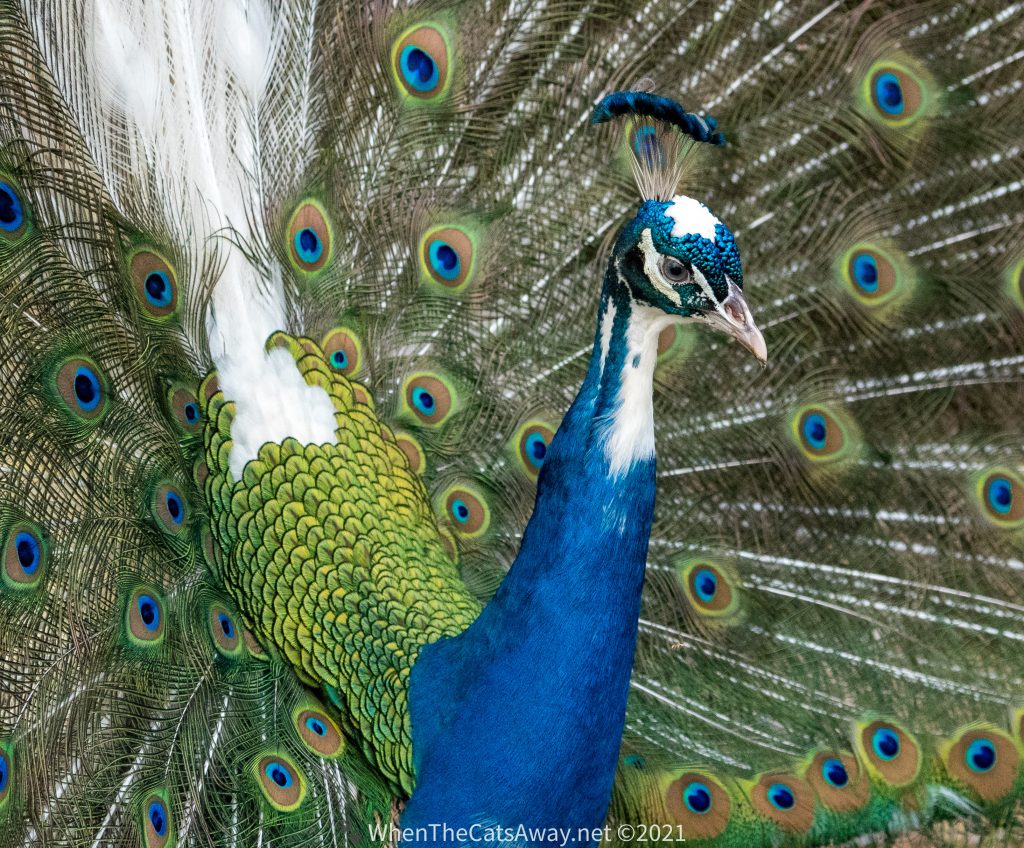
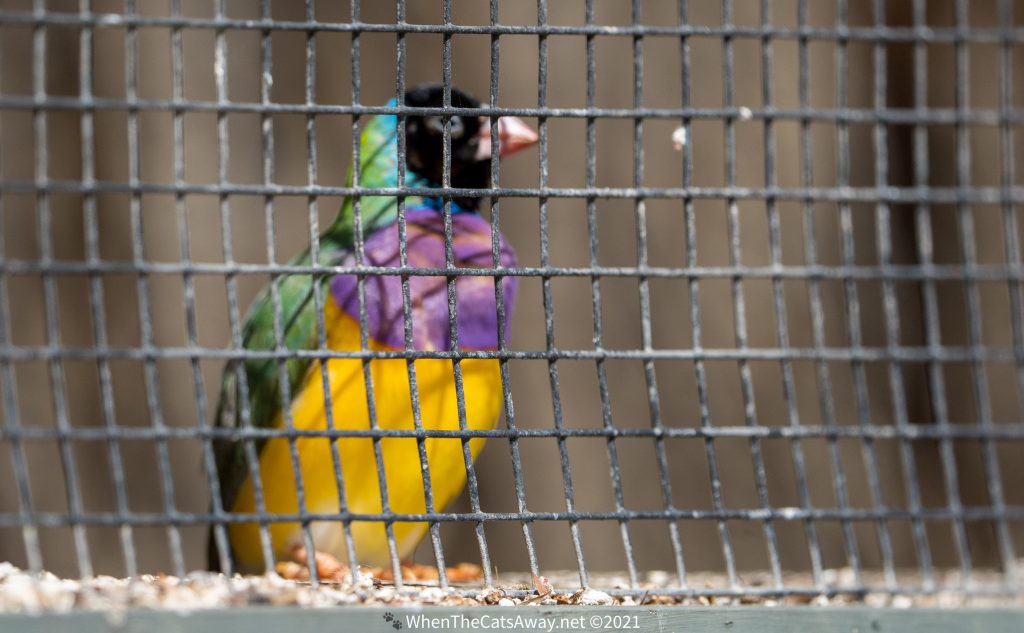
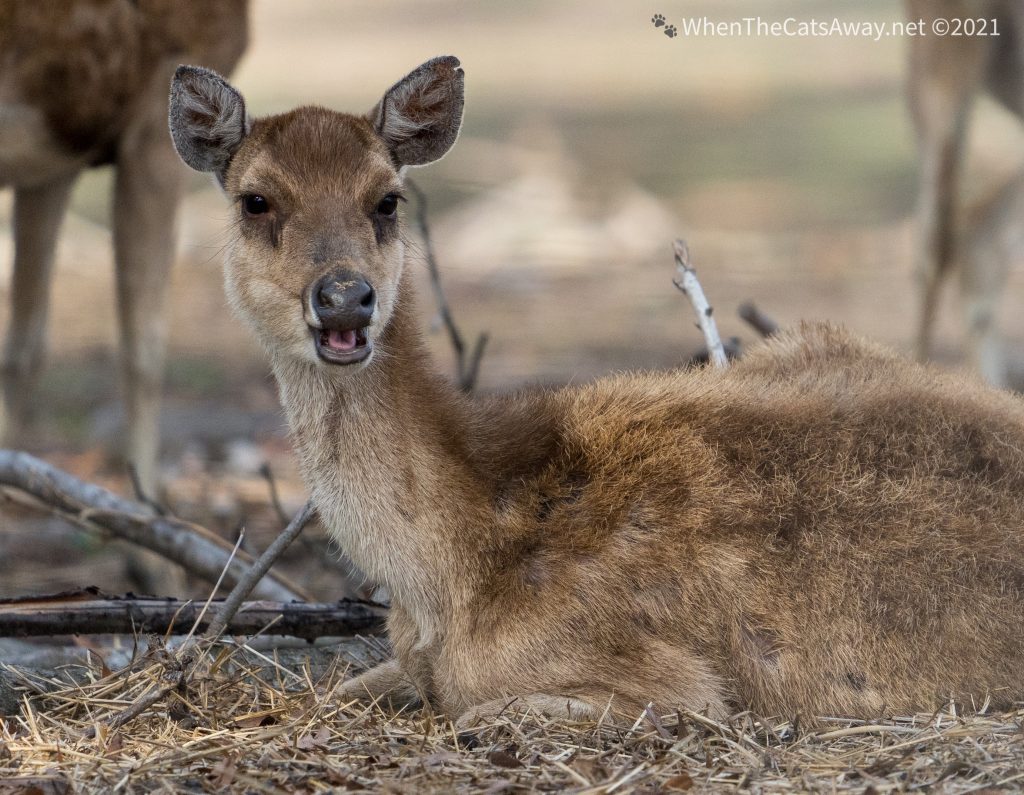
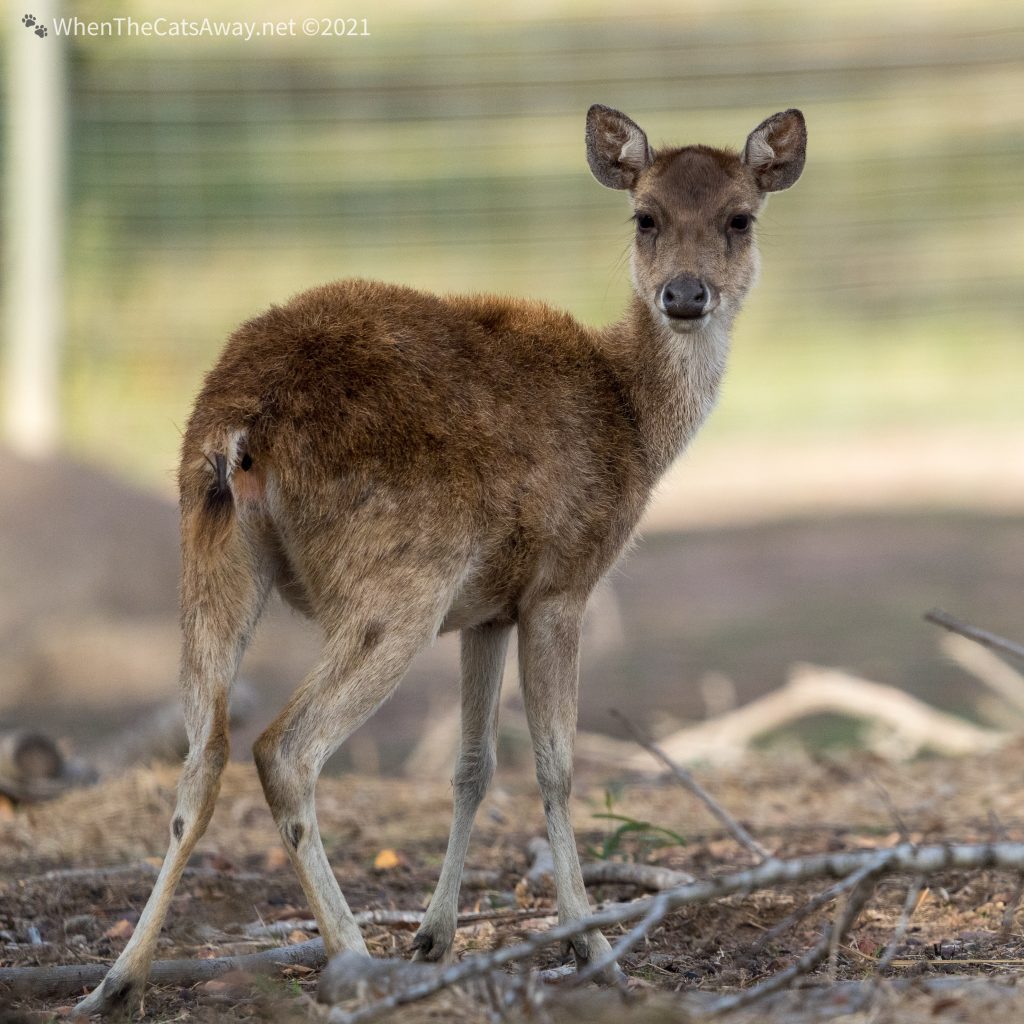
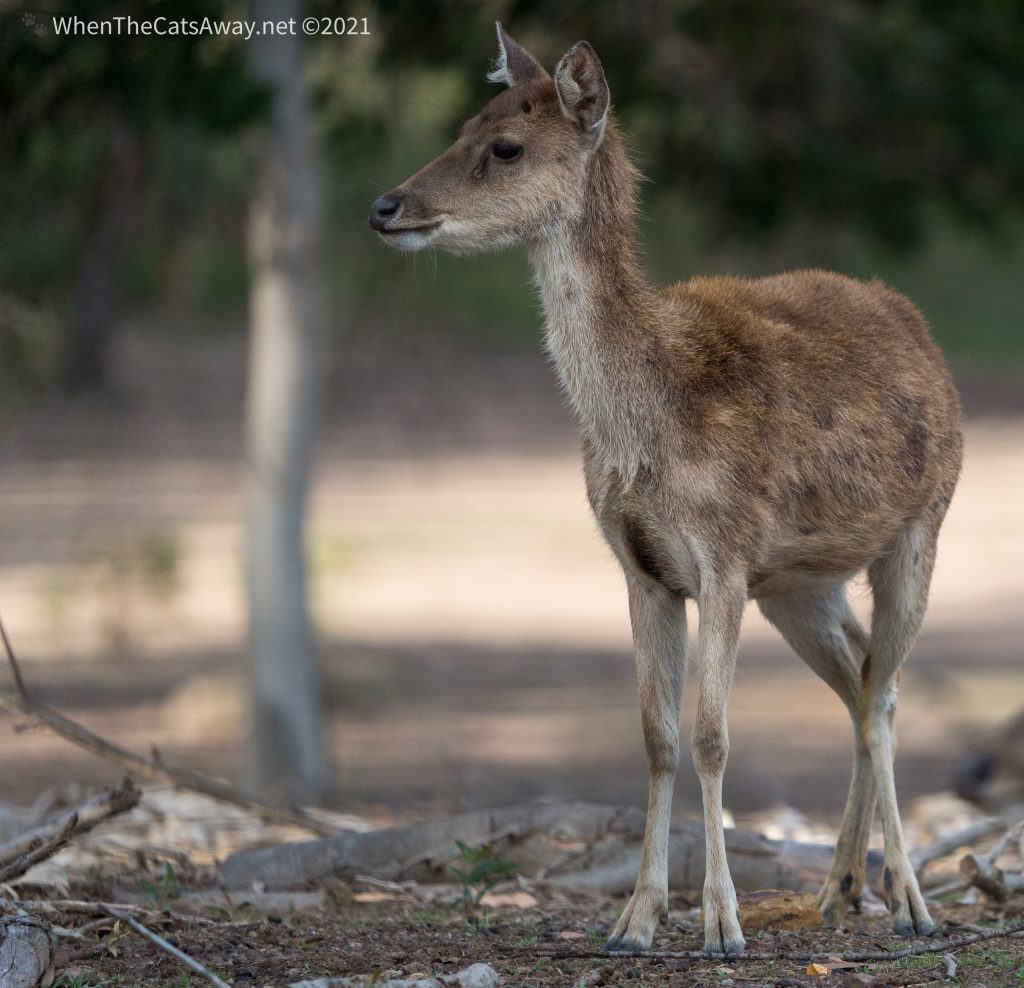
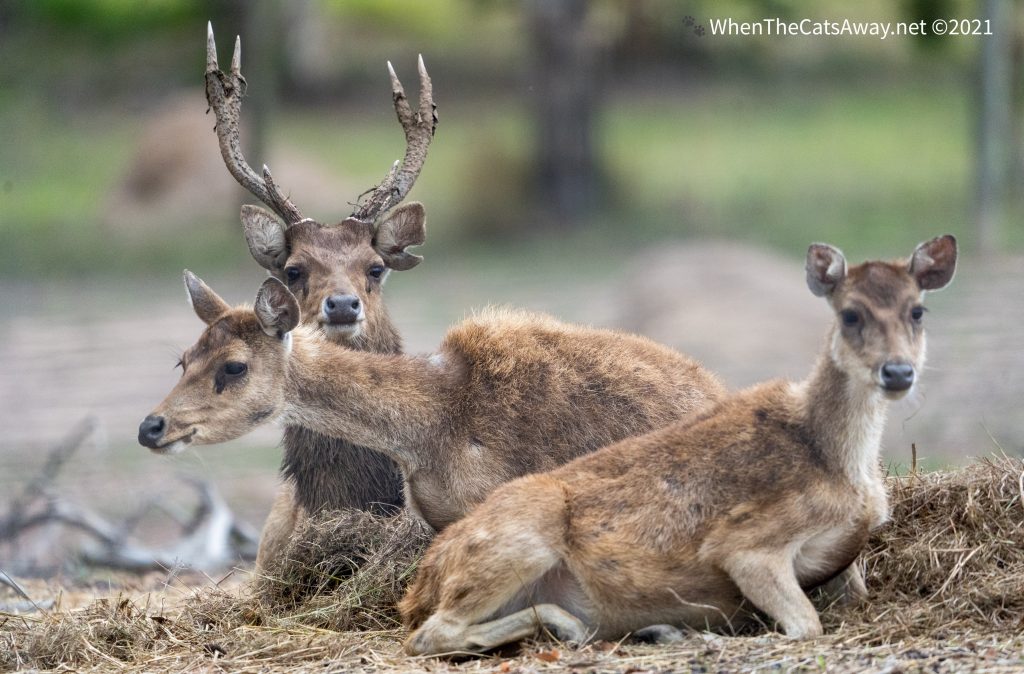
The site owners have quite a collection of birds and animals on site, including a finch aviary, beautiful peacocks (both blue and the more exotic white), a small herd of Moluccan Rusa deer (native to Indonesia). The property is also a working sugar cane farm.
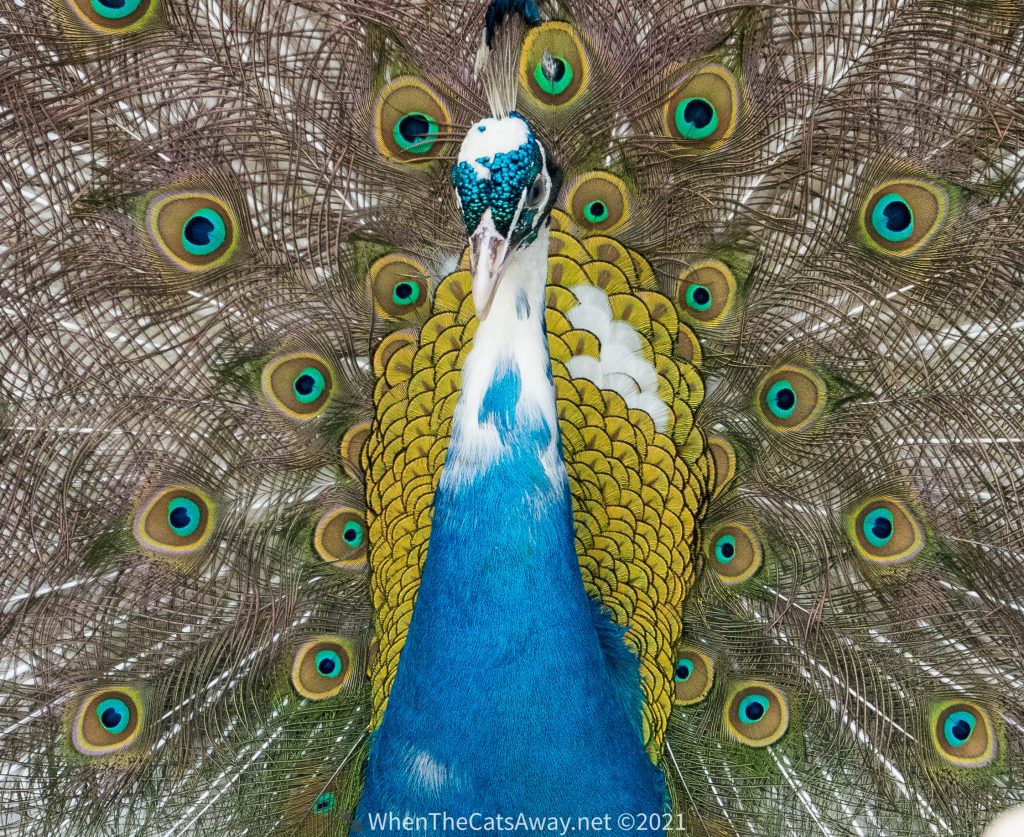
A magnificent Pied Peacock – not an Australian native!He leaps down as soon as he spots a group of Peahens strolling past, and up go the tail feathersHe is quite a handsome speciminHe knows how good looking he is!Meanwhile, in the aviary, this pretty Gouldian Finch is an Aussie native, but we haven’t seen one in the wildSmile for the camera!They are quite shy deerVery curious if cautious creatures
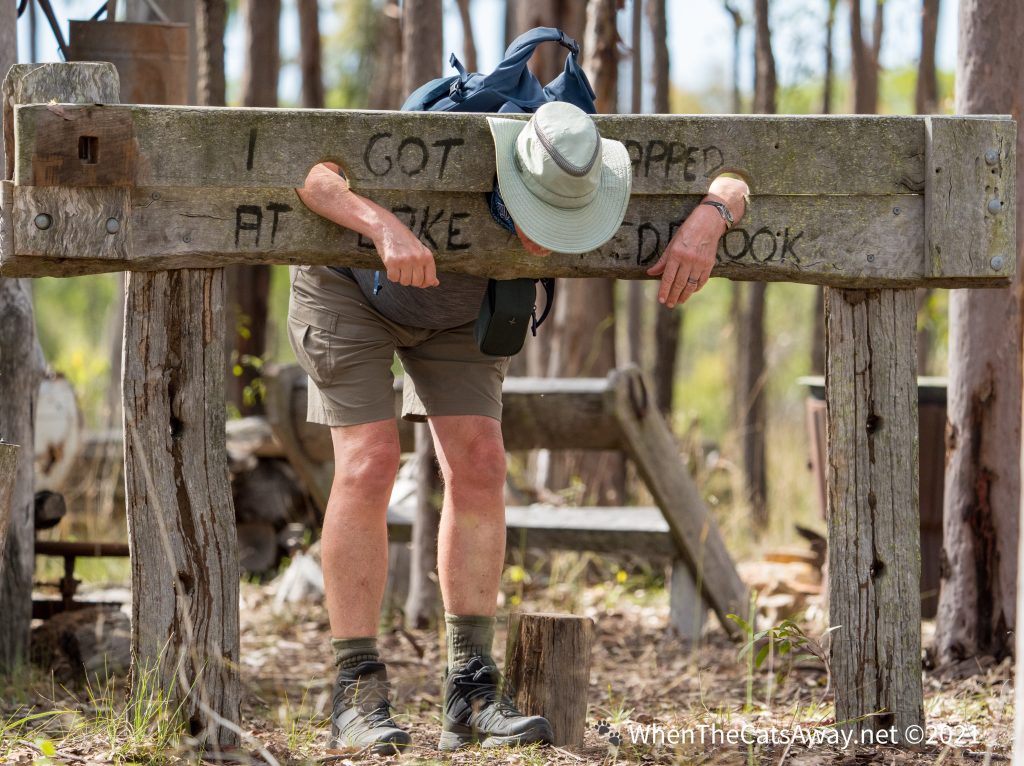
There was even one rare creature in captivity:
I didn’t get there in time to put the locking pin in!
It was a great couple of nights’ stay in stunning surroundings with some very welcoming and kind hosts, and somewhere we would definitely recommend to others.
We recognise and thank the Gubbi Gubbi First Nations people upon whose traditional Country we stayed and traveled on, and pay our respects to elders past, present and upcoming.
We’ve covered a lot of ground (for us) over the last five days, only staying one night at each place, which makes it tiring for all, but especially Tassie who doesn’t get her usual 17 hours deep sleep in per day. Gee can that cat sleep! But we had a few bookends of dates that were fixed, so not much flexibility unfortunately.
After leaving the Atherton Tablelands, it was a winding road dropping down to the coast, plenty of warm brakes, to the small river side town of Innisfail. We had arranged to meet up with the editor of the Freemason NSW and ACT magazine that I’ve written a couple of articles for, and Catherine has provided the all important visual images. No I’m not a mason, but a good friend is, and had asked if we could write something about our travels for them. We did and it must have gone down OK as they asked for another, which is being published shortly. I’ve really enjoyed writing for them, just delightful people, and made it very easy to work with. We have seen these people give so much back into their community through this organisation.
A cup of tea in a local Innisfail cafe
Our destination for the night was once again the town of Ingham, home of the TYTO Wetlands, which will visited for the fourth time! Just an amazing diversity of birdlife here and a credit to the individuals who provided the leadership to establish it. We read an account of one of of these, John Young, who recently went back to see how it had developed. What a justifiable sense of pride he had for his role in creating what has become a huge draw card for this lovely little town. Catherine managed to catch some great photos, as usual 🙂
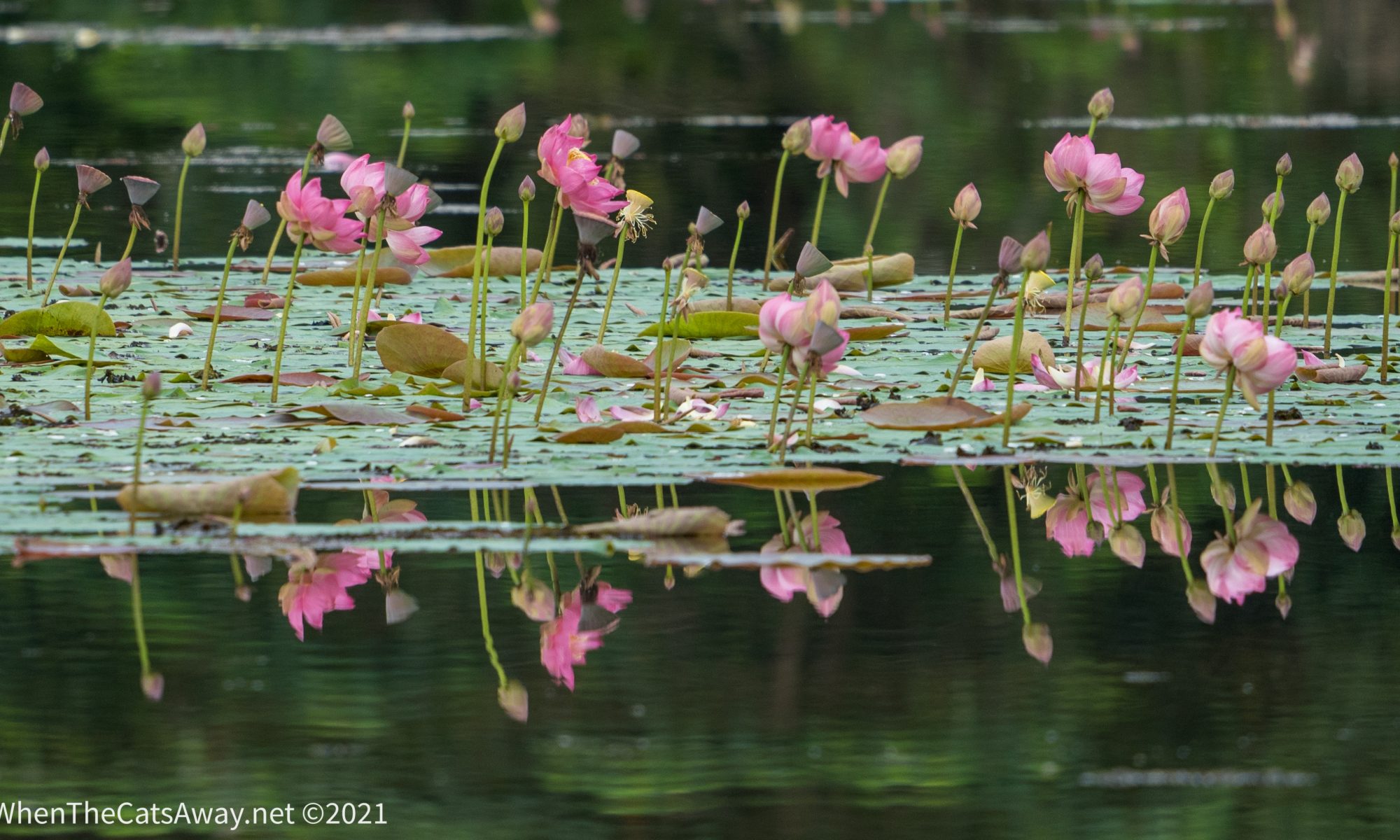
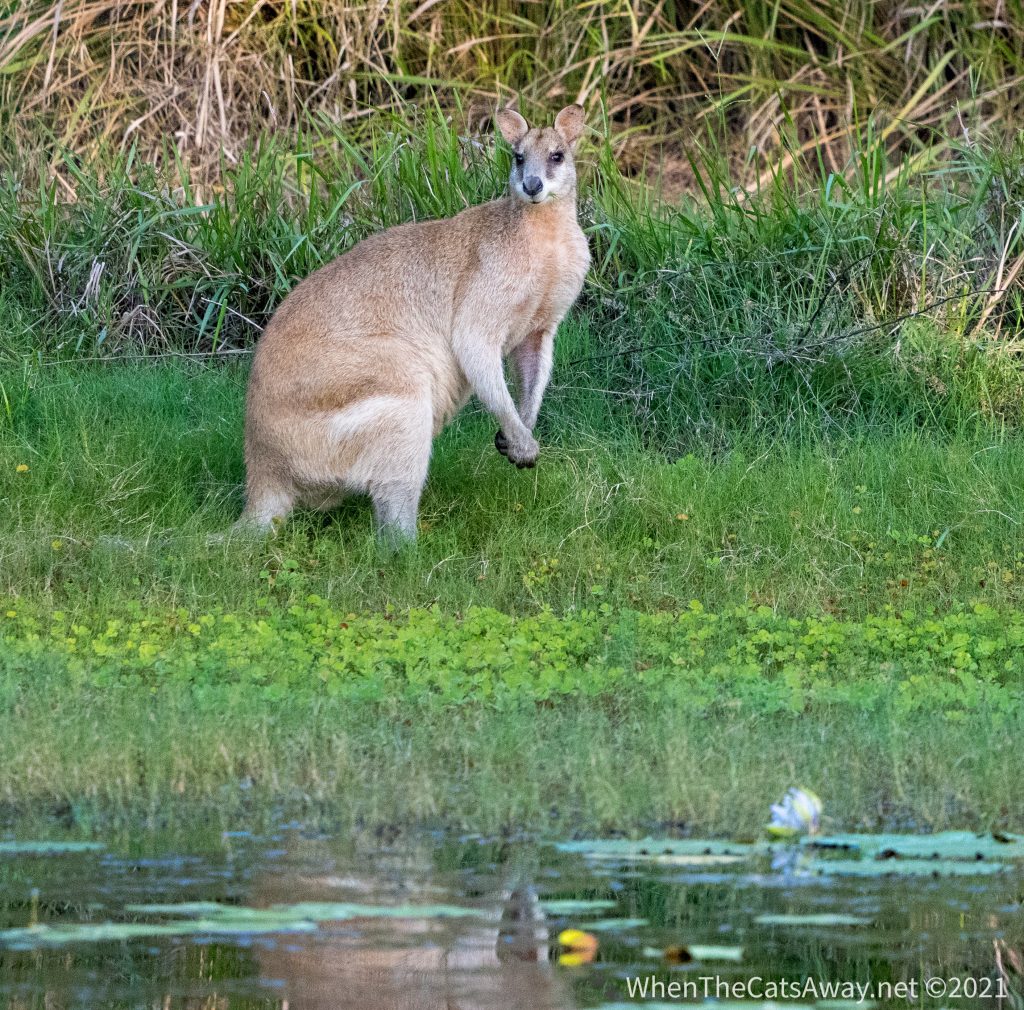
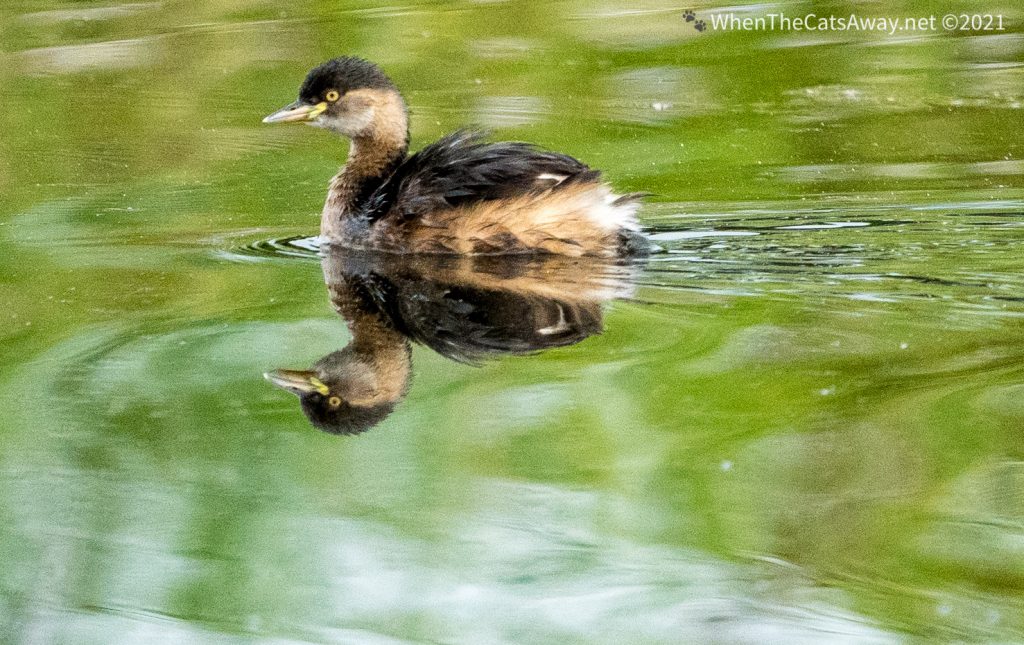
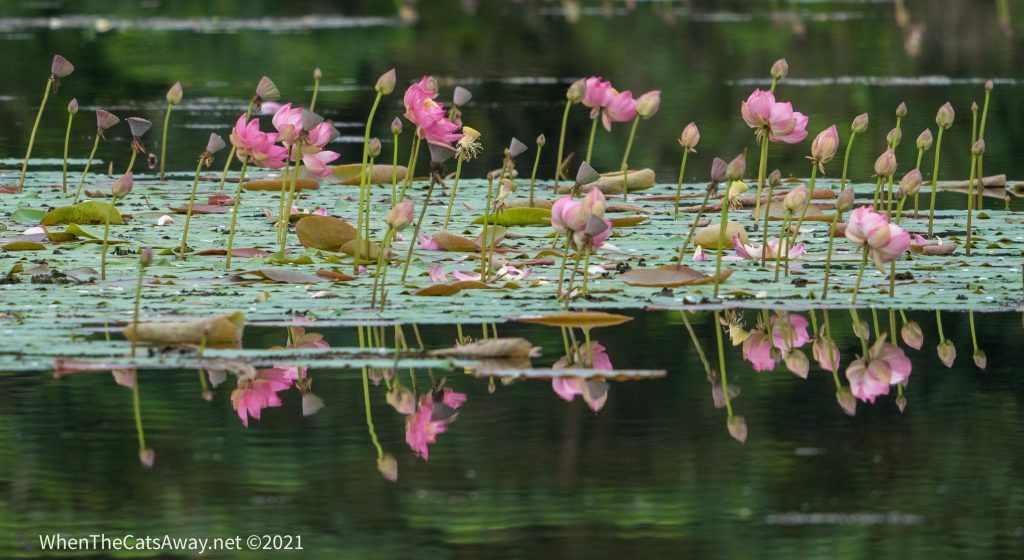
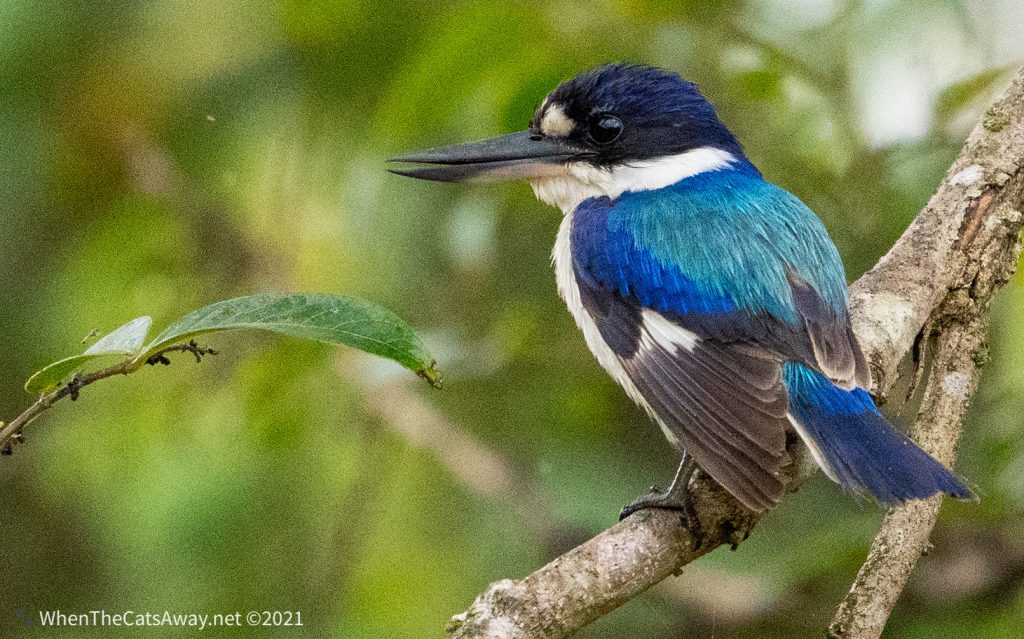
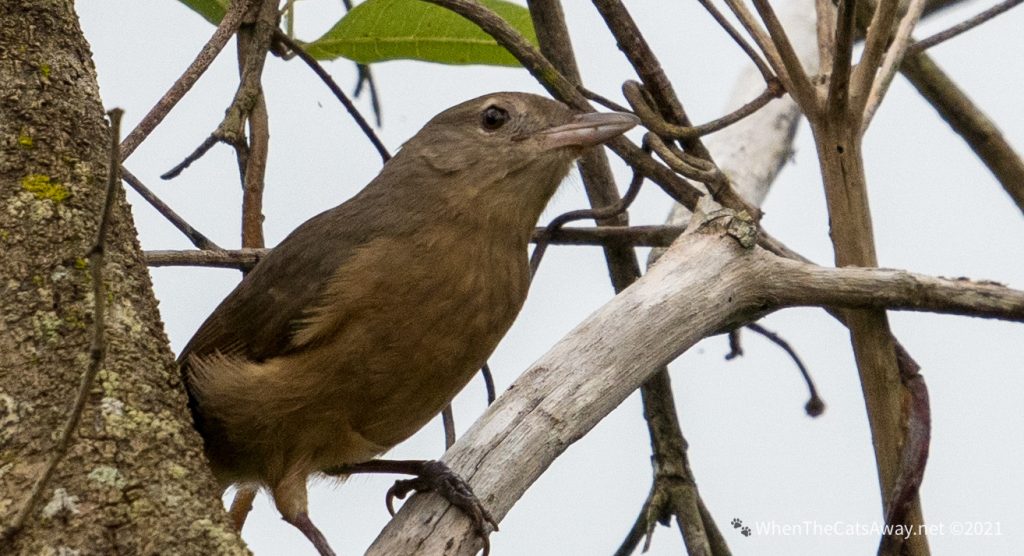
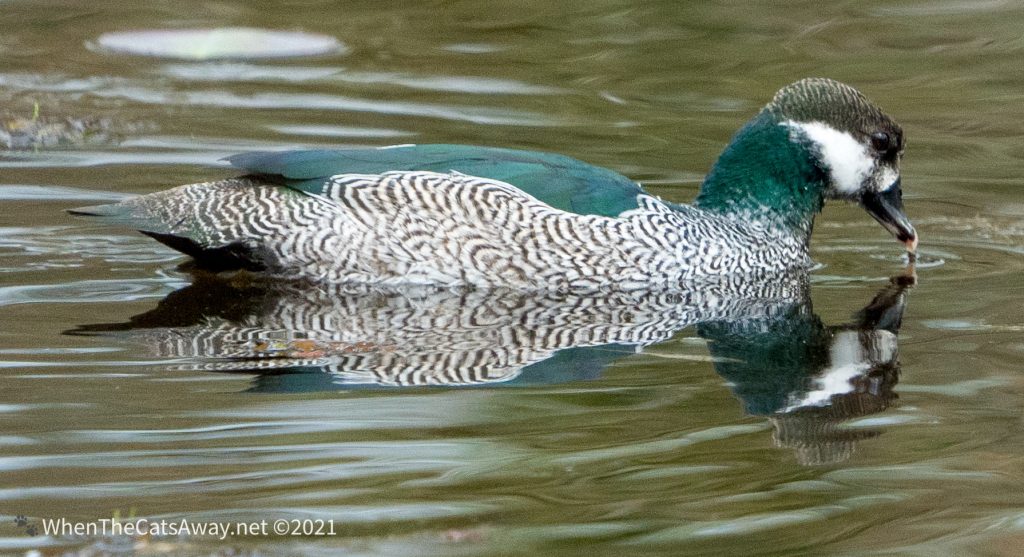
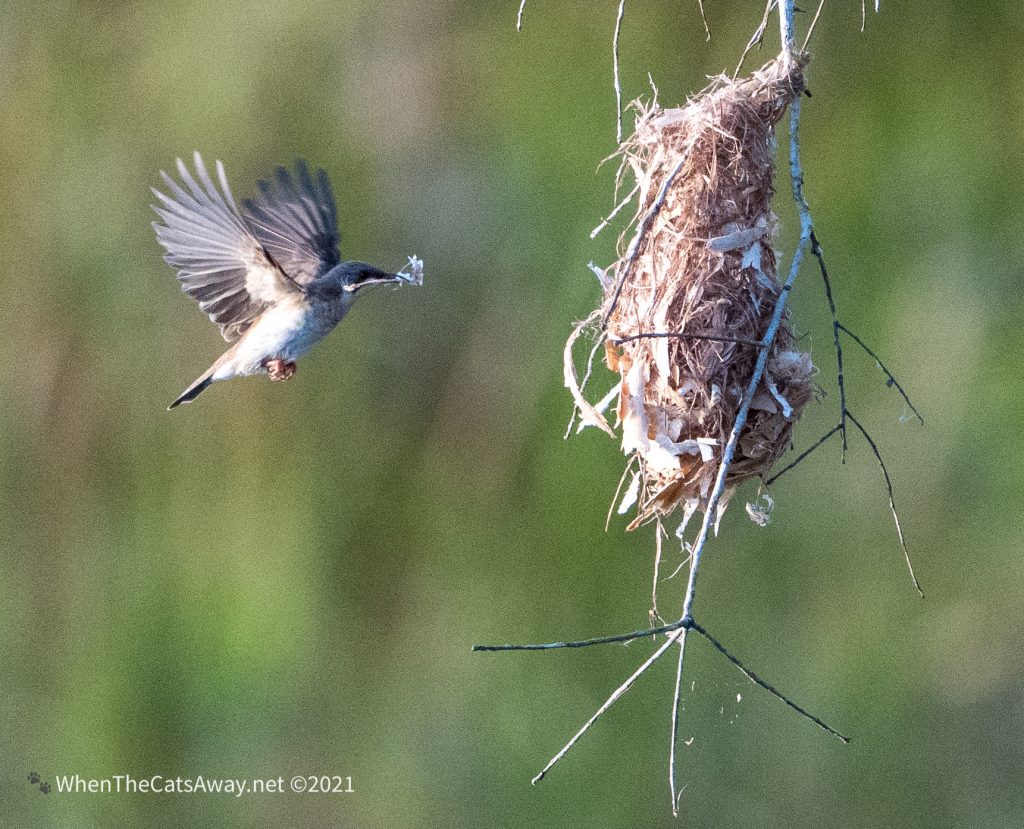
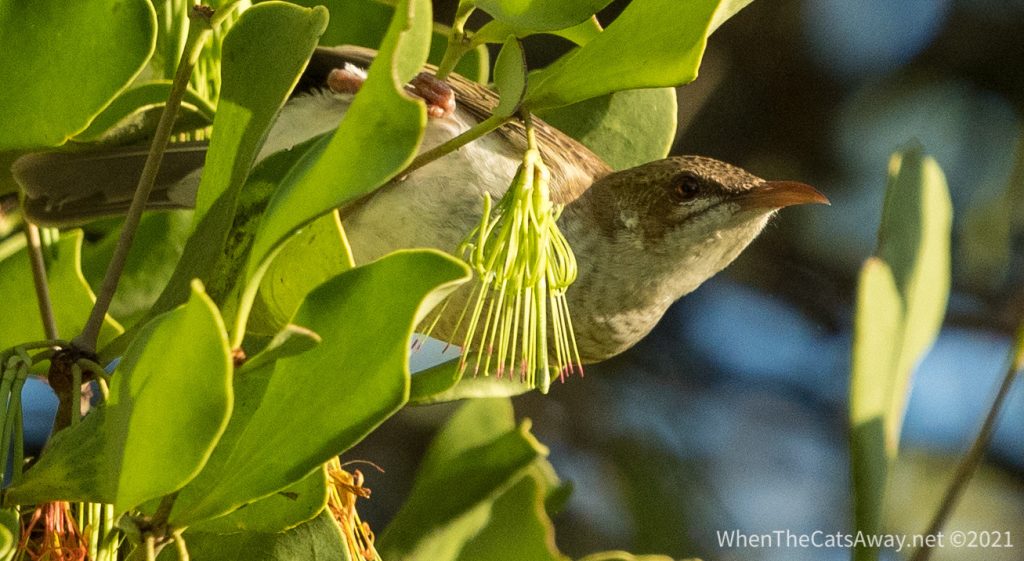
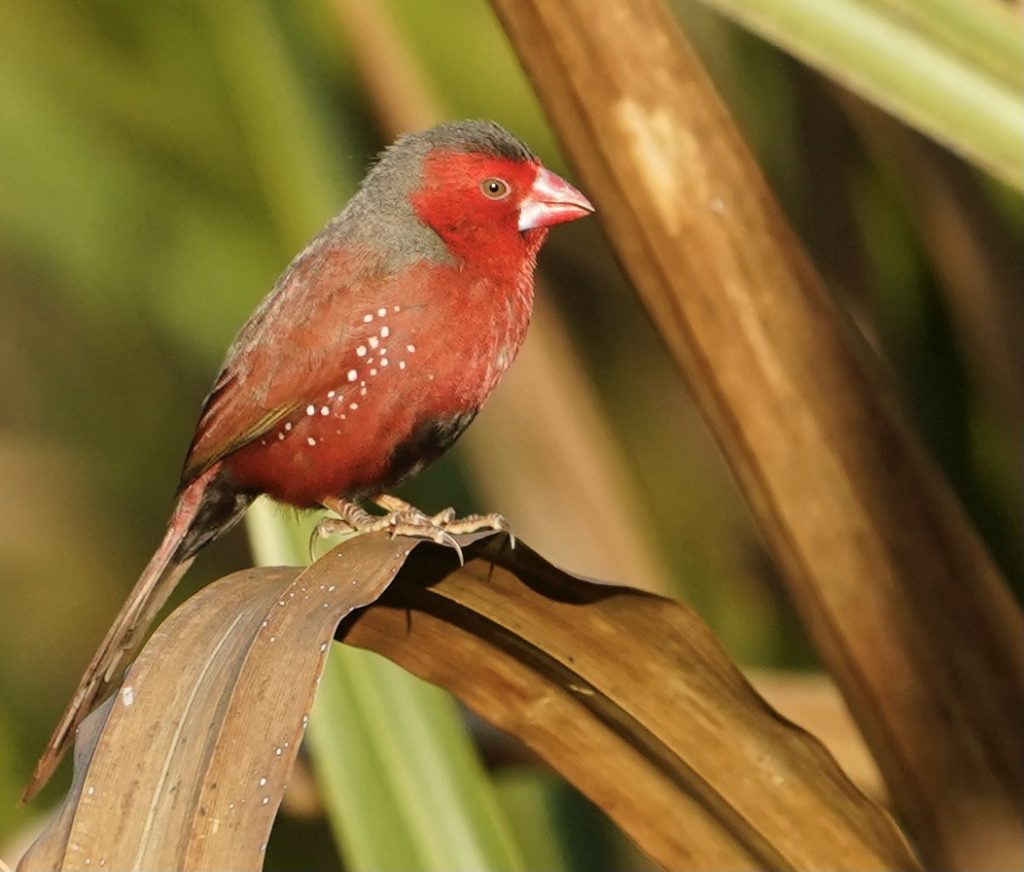
Our set up beside the wetlandsAn Agile Wallaby watches us from across a lakeSpring is in the air with birds pairing up, like these SpoonbillsAustralasian Grebe – not a chick as it looks, but a non-breeding adultThe water lilies are bloomingForest KingfisherBower’s Shrikethrush A Green Pygmy-GooseBrown-backed Honeyeater building a nest over one of the lakesA Brown-backed HoneyeaterThe Crimson Finches were munching on seeds in the grassMistletoebird (female) looking rather wet in the drizzleBroad-billed Flycatcher
It was then on down to Townsville the next morning, as I had an appointment with an Ophthalmologist for my biannual battery of eye tests. They were measuring to see whether the recent pressure spike I experienced had done any damage to my field of view. I am still waiting for a comparison to my previous checks from my doctor in Sydney, but at least my pressures are back down thanks to the double dose of eye drops. I can only implore again to anyone reading this in middle age, especially if there is a history of glaucoma in the family, to get your pressures checked regularly. Sight can deteriorate so quickly. Mine did.
Then the following morning it was off down the coast again to a bush camp just inland from Bowen. We had stayed here on the way up, and quick wander around the property once again rewarded with a few bird sightings. The owner is renowned for her lovely damper, cooked over the fire, but torrential rain knocked that on the head! So once again it was off in the morning for another big day in the saddle driving south. Queensland is big, really big.
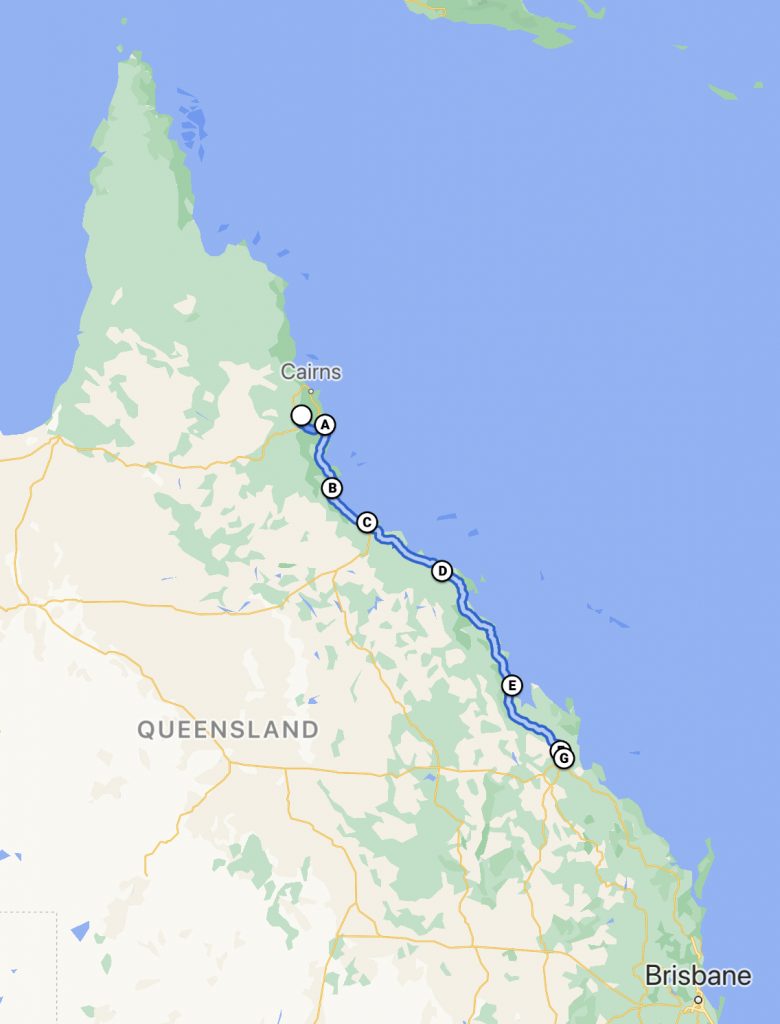
Blue-faced HoneyeaterAround 1,100km (nearly 700 miles) driven in 7 days
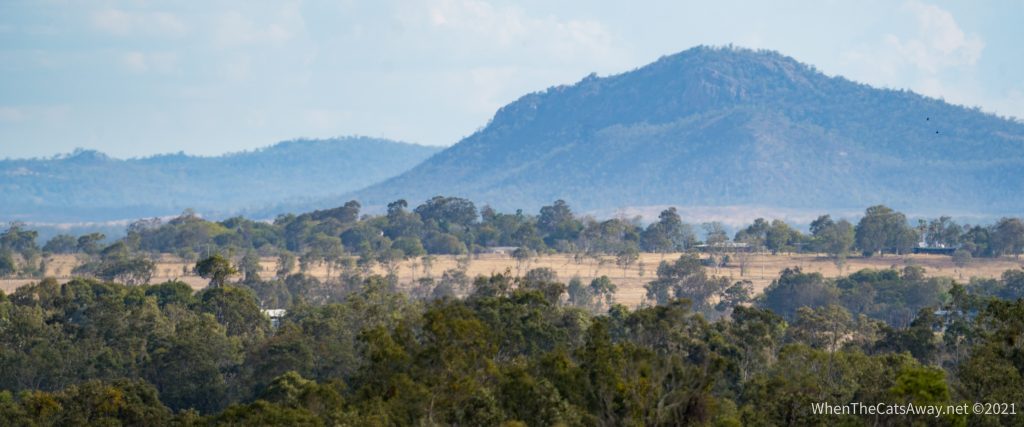
Another bush camp was our stop the following night, just north of Clairview. We like these places, not too busy, space to wander around, and a bonus here was the owner was cooking lamb shanks that night. Yum…not a meal we would tackle in the caravan, so something different for us.
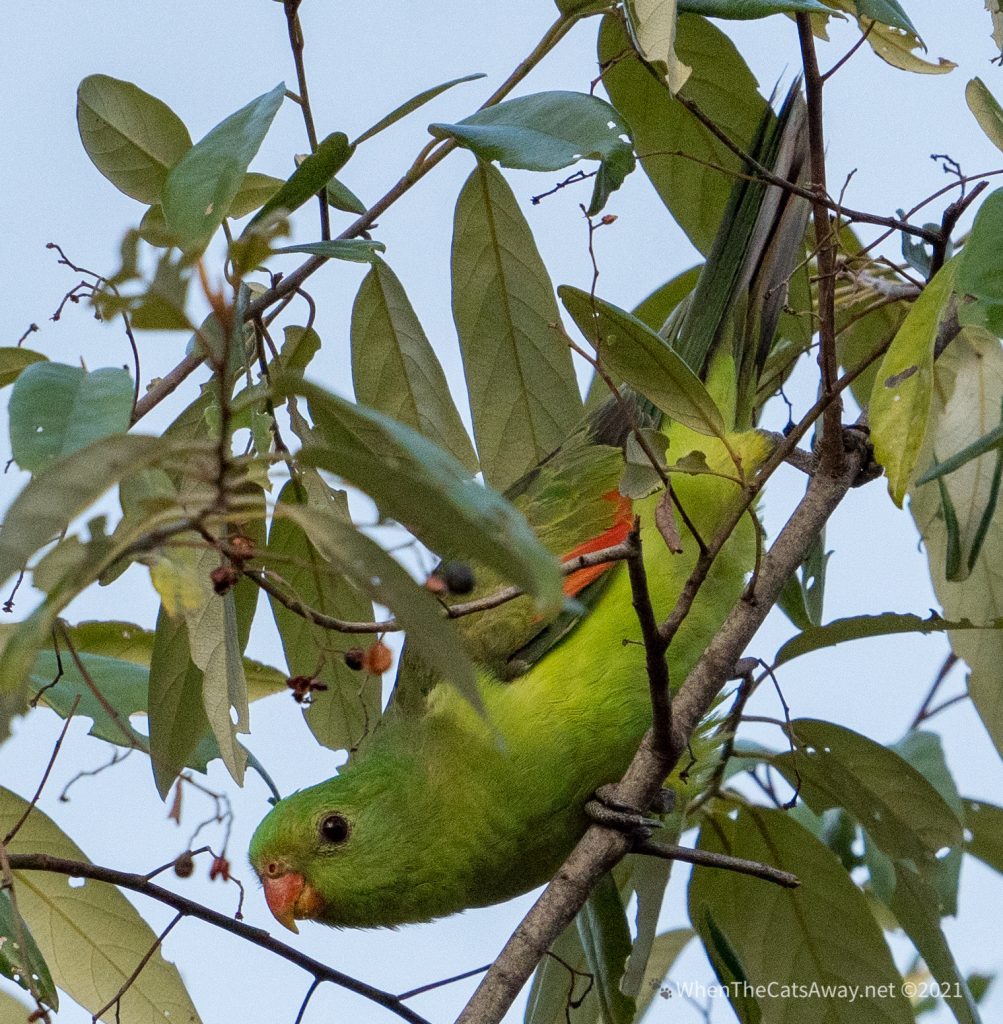
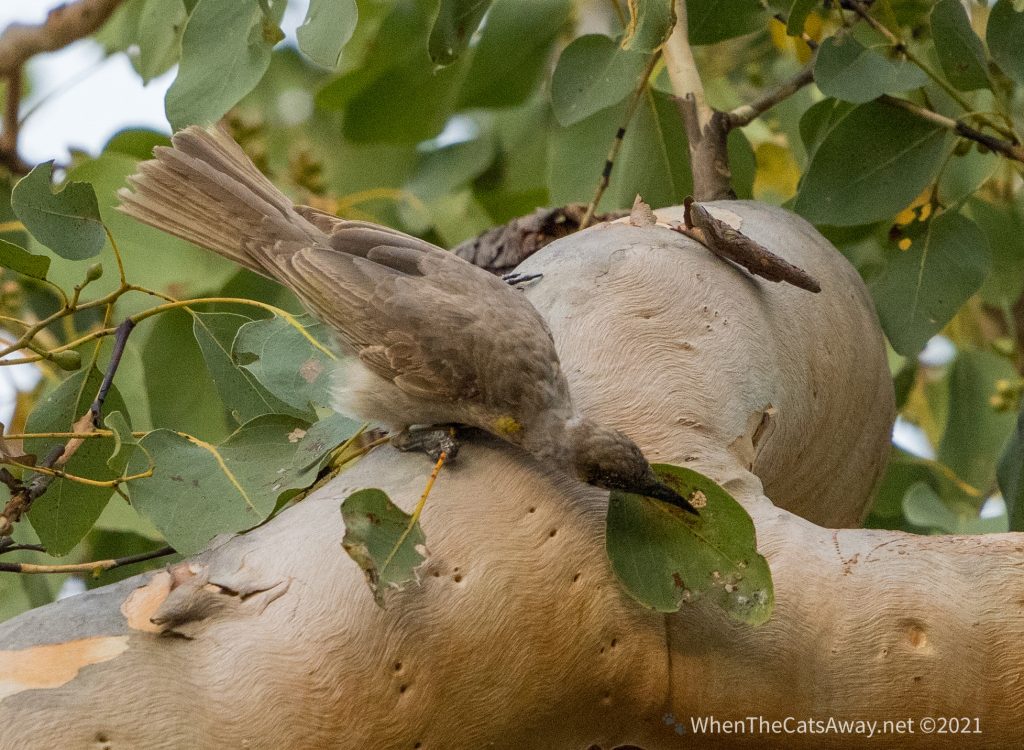
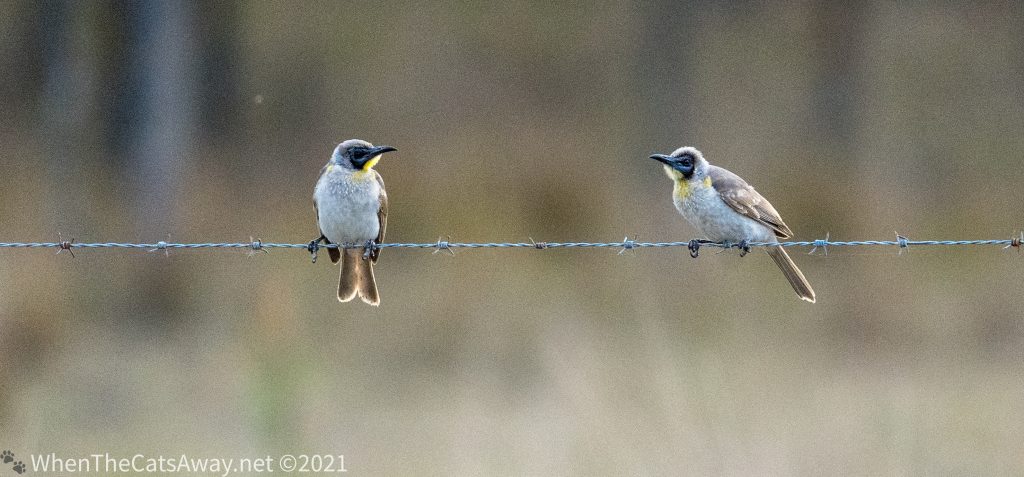
Red-winged ParrotLittle Friarbird hunting for caterpillars in a gum treeLittle Friarbirds
We made it down to just north of Rockhampton, staying at yet another bush camp run by the most delightful lady (Robyn) who insists on laying on snacks in her “girl cave” for all the campers. She said she just enjoys meeting her campers and hearing their stories. A short walk around the property also gave Catherine a few sightings. I tried with my binoculars and spotting scope but too quick for me. The scope is great for more stationery habits like on wetland. Flitting around in dense woodland, not so much.
A fine view from our campsiteA Laughing Kookaburra and a couple of female Red-backed FairywrensBig skies from the top of the hill
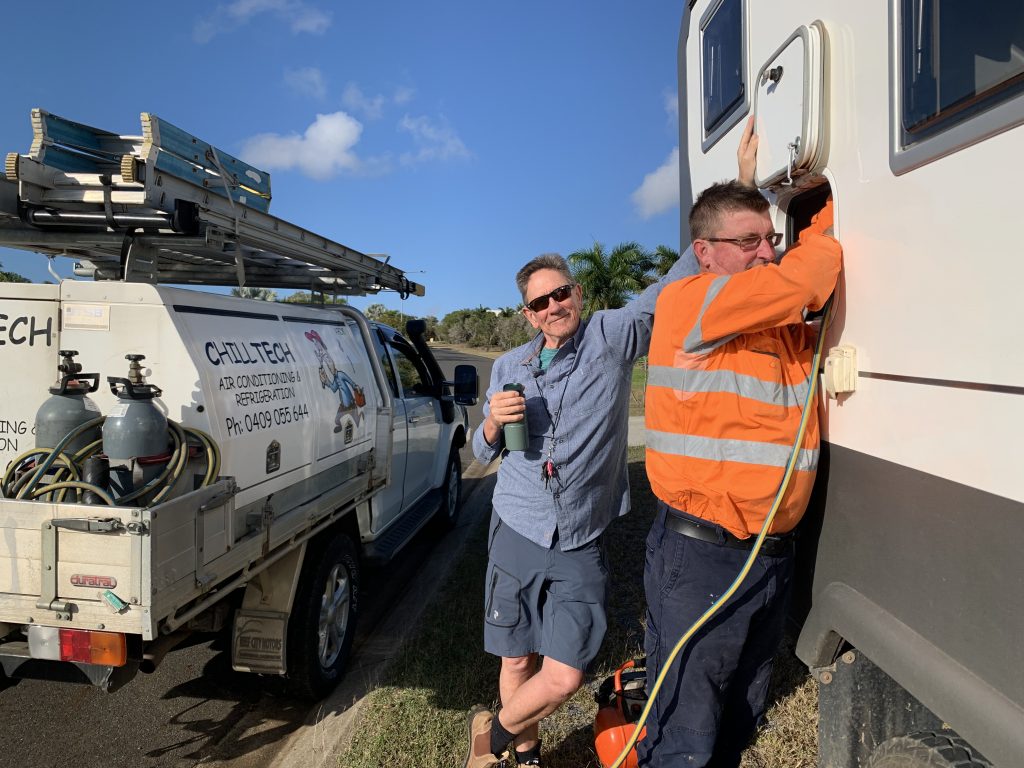
Once again we were on the road early, as we had a date with a fridge repairer, the super helpful Clint from Chiltech. We had been unable to get the temperature down sufficiently, but a ten minute clean of our condenser with his compressor was all he thought it would take to fix it. And he was right. Clint’s the man if you in his area just north of Rockhampton, and no six gun required!
Blasting the dust particles off the condenser
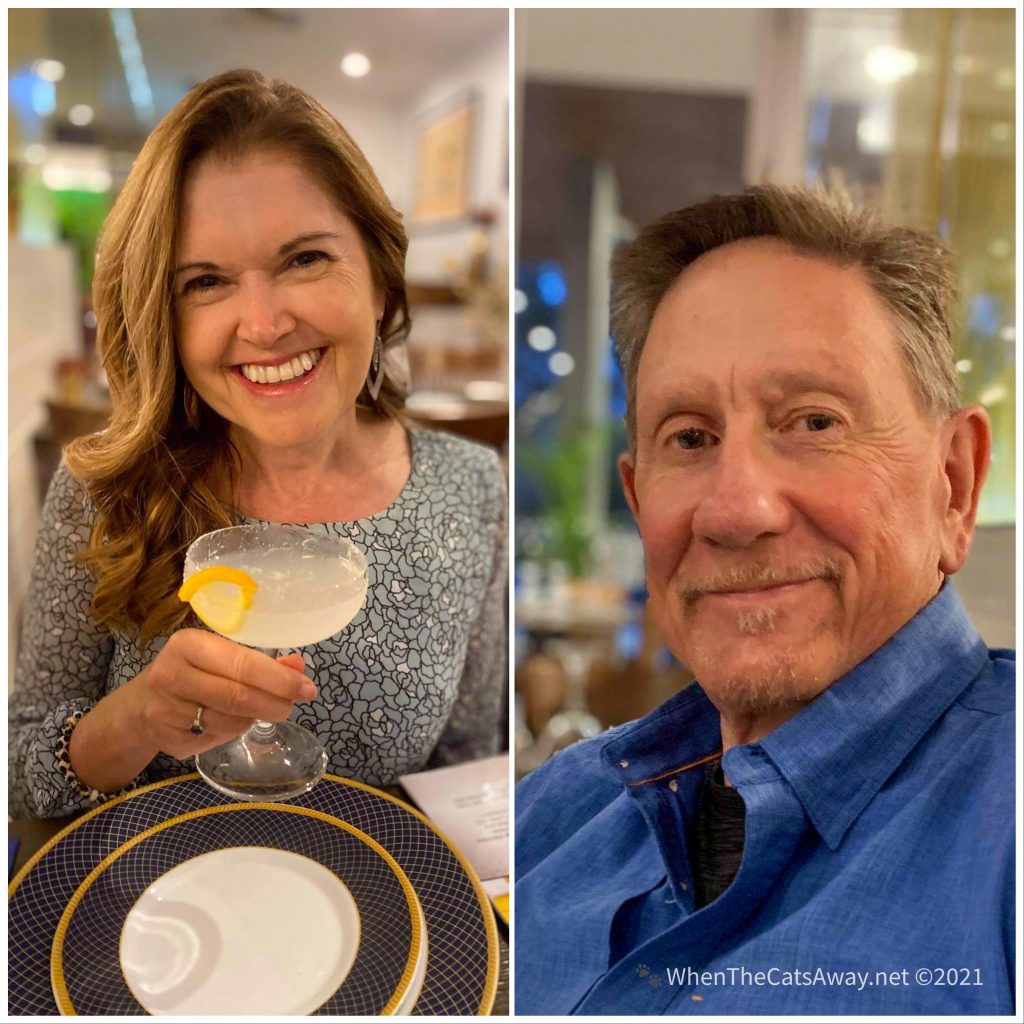
A short trip into Rockhampton city centre to one of our least favourite campsites was next, adjacent to a busy main road with dated facilities, but it is within walking distance of what we rated last time we came as our best dining experience in regional Australia. Trufusion delivered again, preceded by excellent haircuts from Katie Lauren.
Pre-dinner Margaritas went down a treat
It feels so special to go out to dinner somewhere nice, and especially so given how much of the country is in lockdown. We know we have been very fortunate travelling in areas that have not been affected by lockdowns. Next month we are going to back in Sydney, and then all that ends!
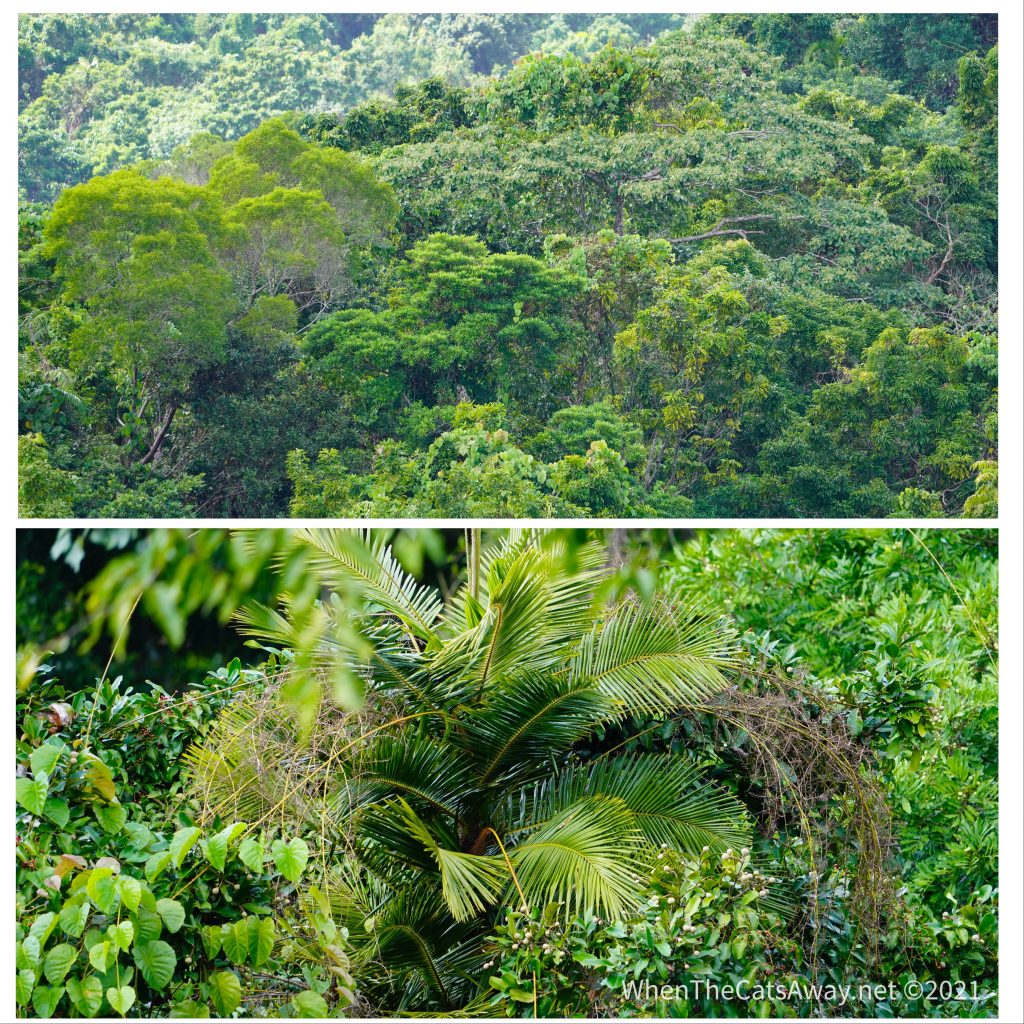
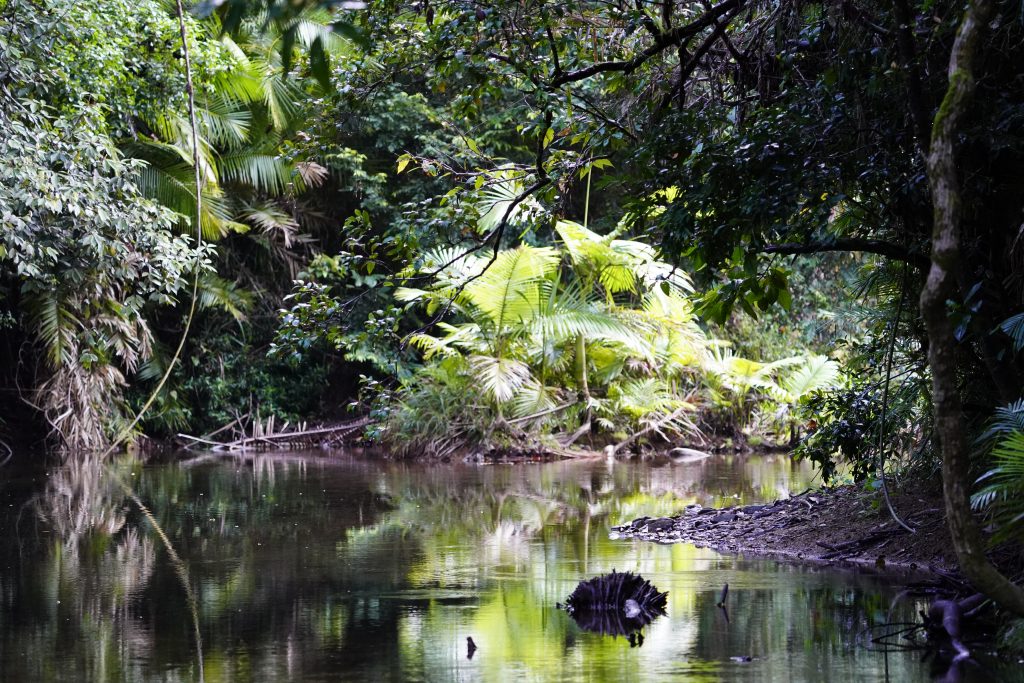
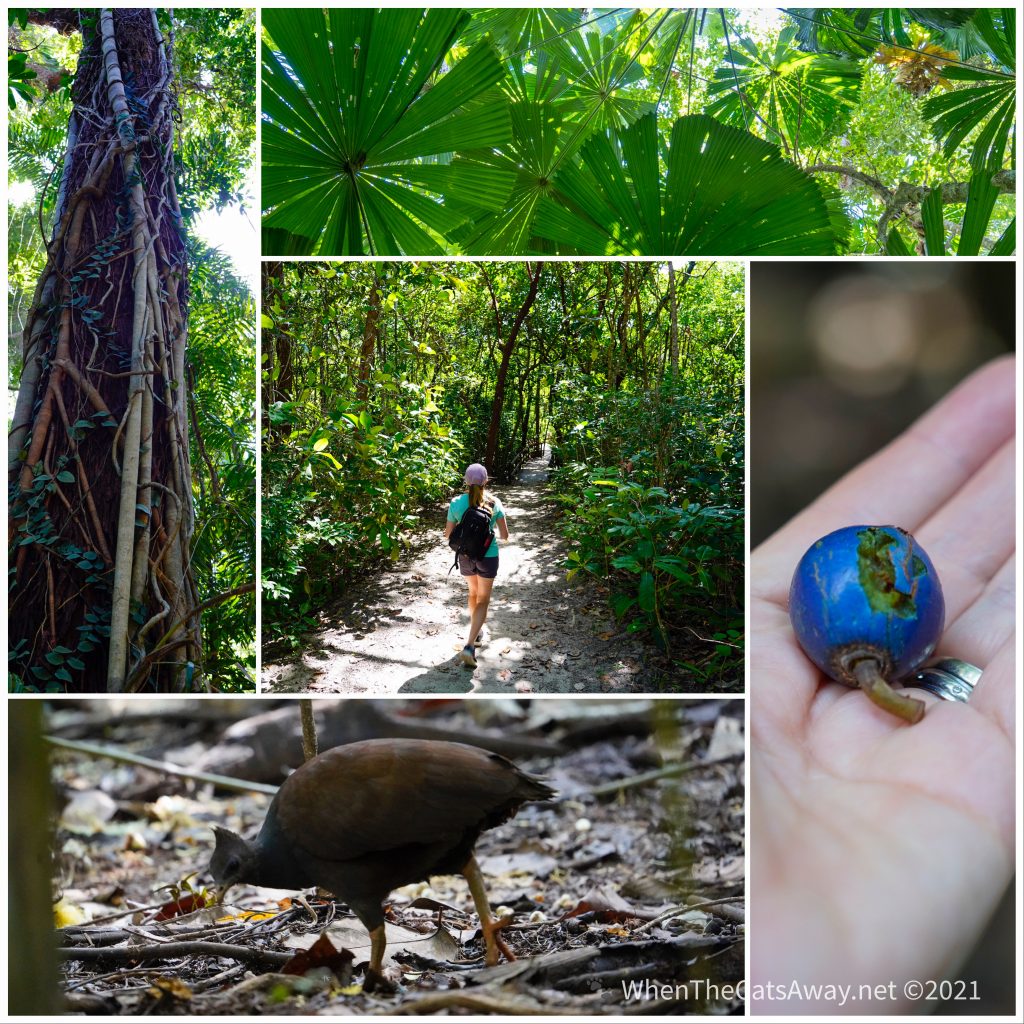
It was just over an hour’s journey to our next and final destination travelling north up the Queensland east-coast, deeper into the Daintree Rainforest and up towards Cape Tribulation. This area was called Kurangee by the Kuku Yalanj First Nations people, meaning ‘place of many cassowaries’. If it was up to us we would call it ‘place of many greens’ – that is certainly the dominant colour up here.
We thank and recognise the Kuku Yalanj people, present and past, for their custodianship over these lands upon which we stayed, travelled and explored.
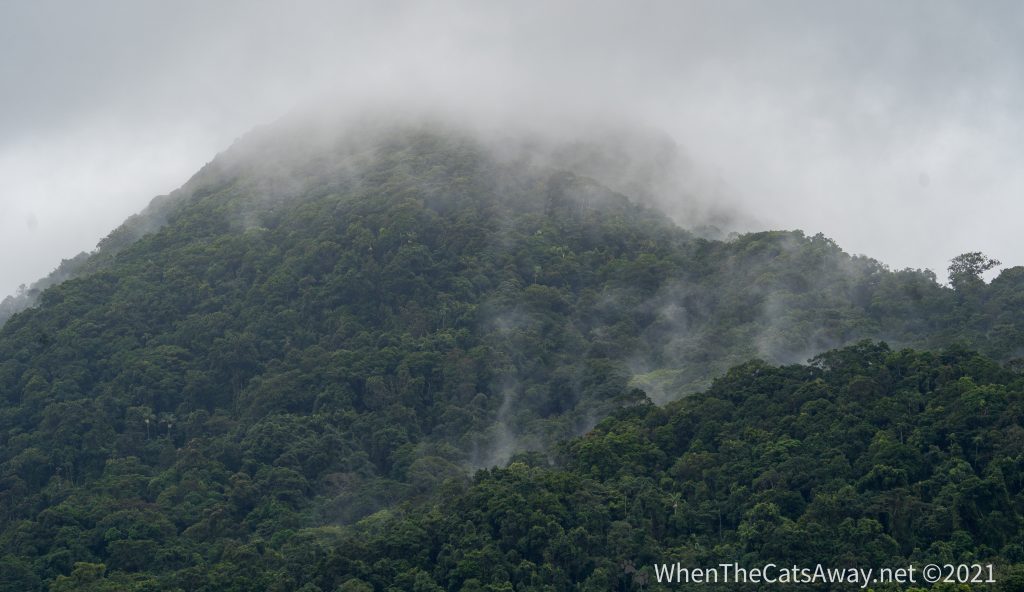
There is every shade of green here…and when the cloud lifts and the sun shines through, a multitude more!
We set up camp at Daintree Rainforest Village, a site that had only newly opened when we last came up this way in 2018. We were pleased to see they had accepted some of our then recommendations, with a roomy camp kitchen and dining area plus landscaped campfire social space. The grounds of the camp are beautifully planted with a steep terraced garden with views over the rainforest attracting birds and wildlife.
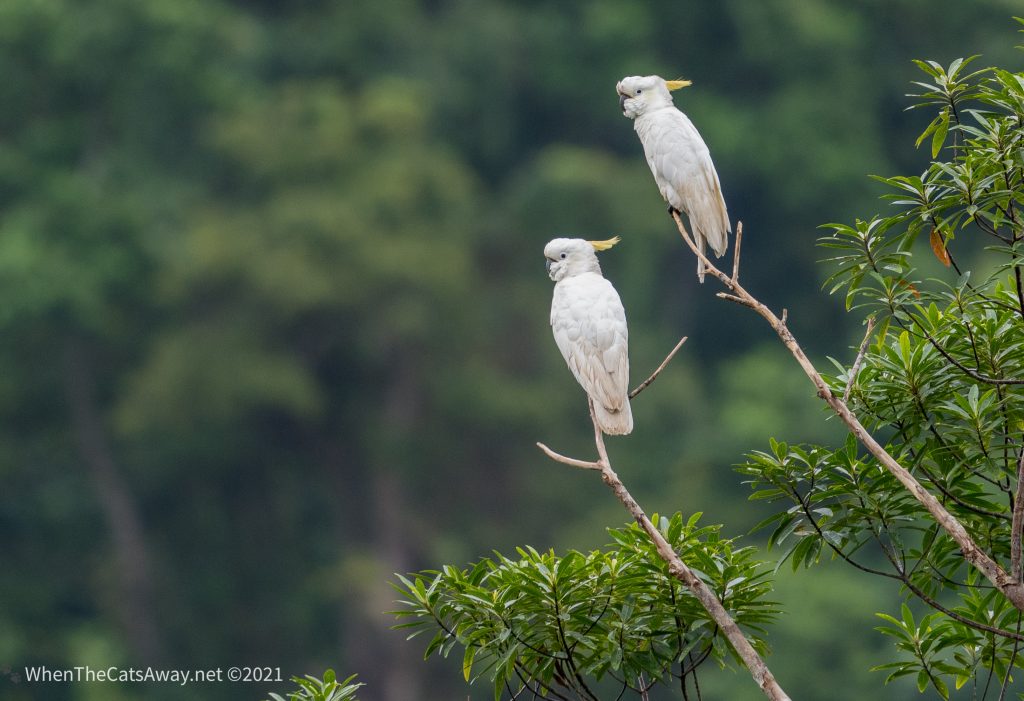
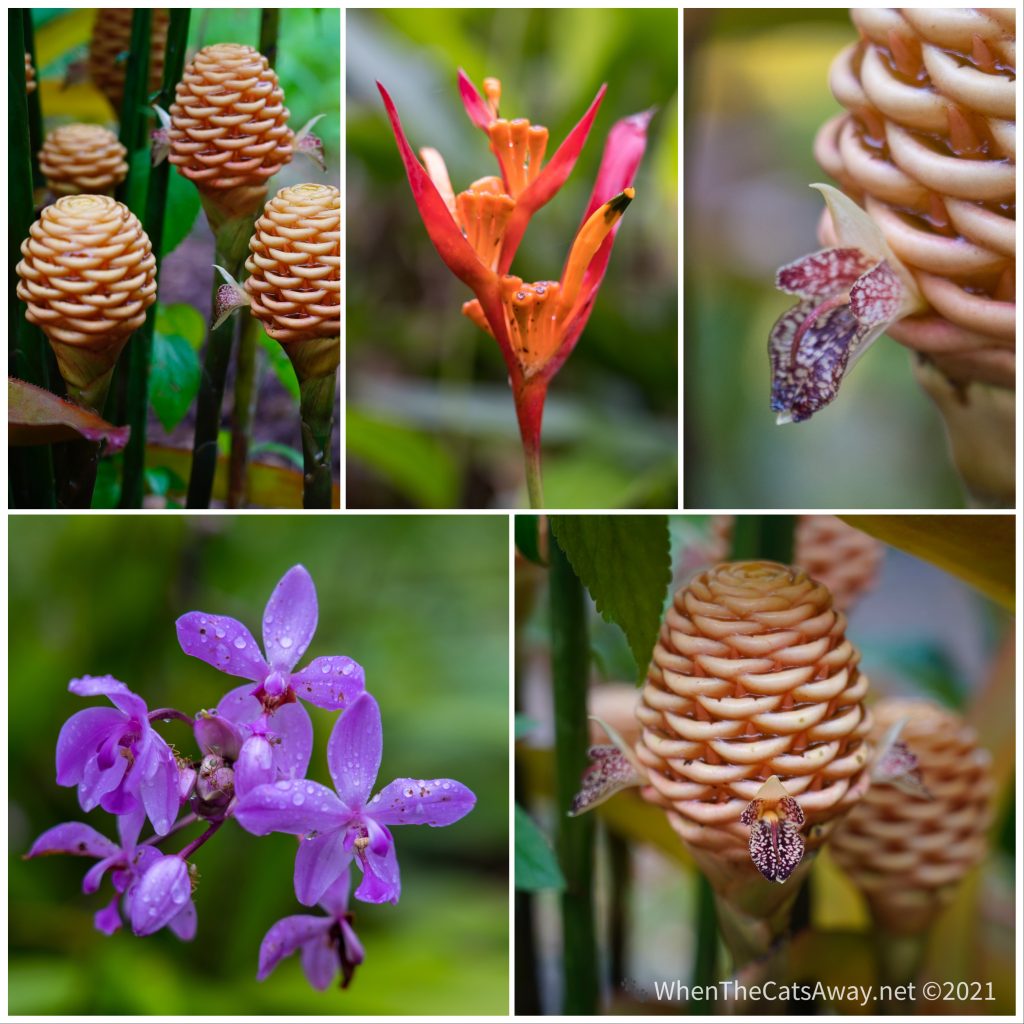
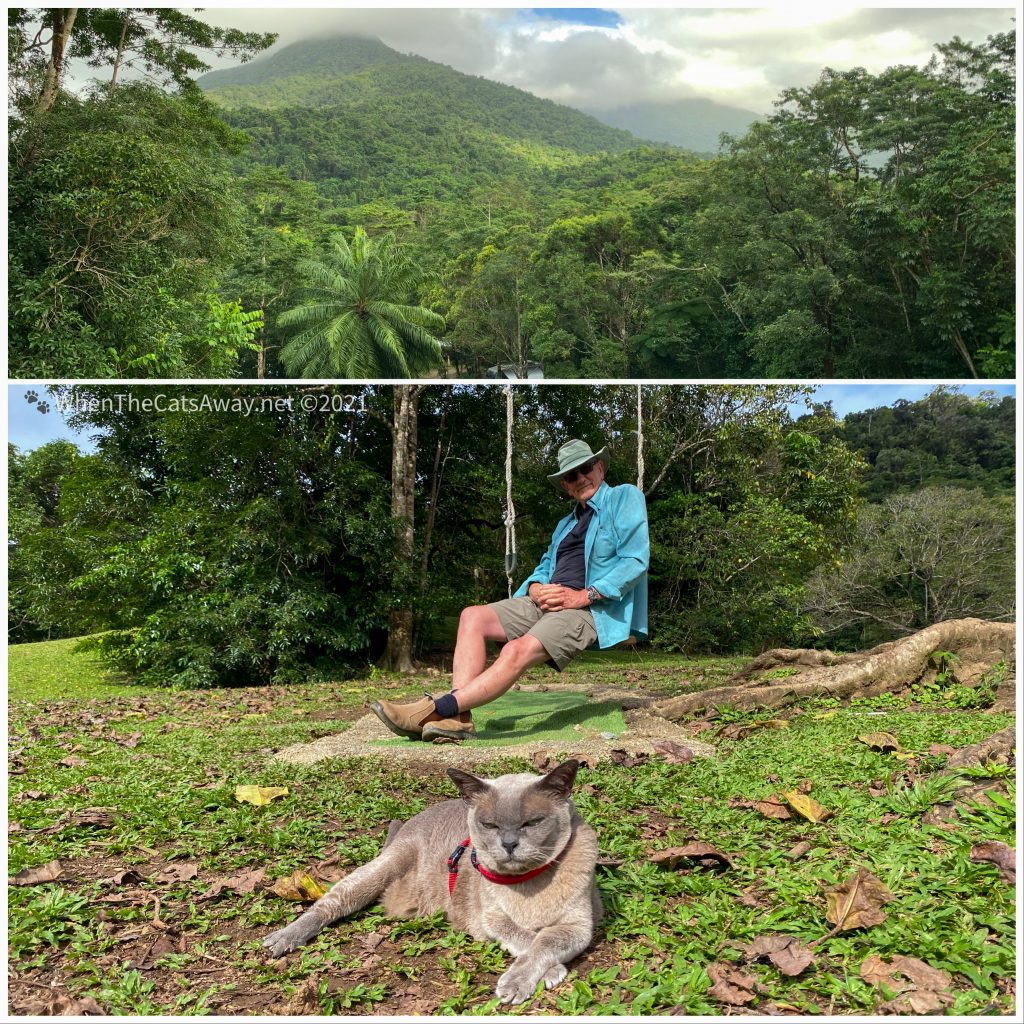
Sulphur Crested Cockatoos are regular visitors to the campgroundCloud drifting through the range behind our camp – we didn’t see much of Thornton PeakSome of the sculptural flowers and plants around our campsiteOn rare occasions the cloud lifted and we saw the sunshine too! Princess Tassie liked that!
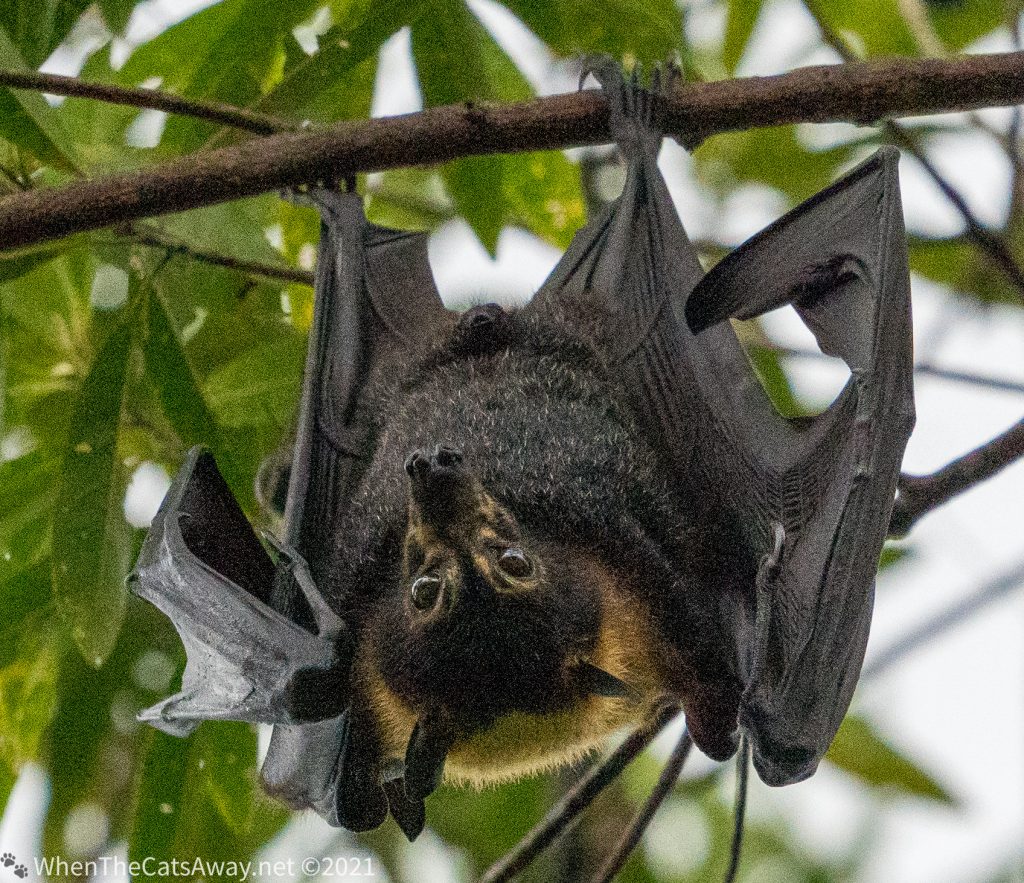
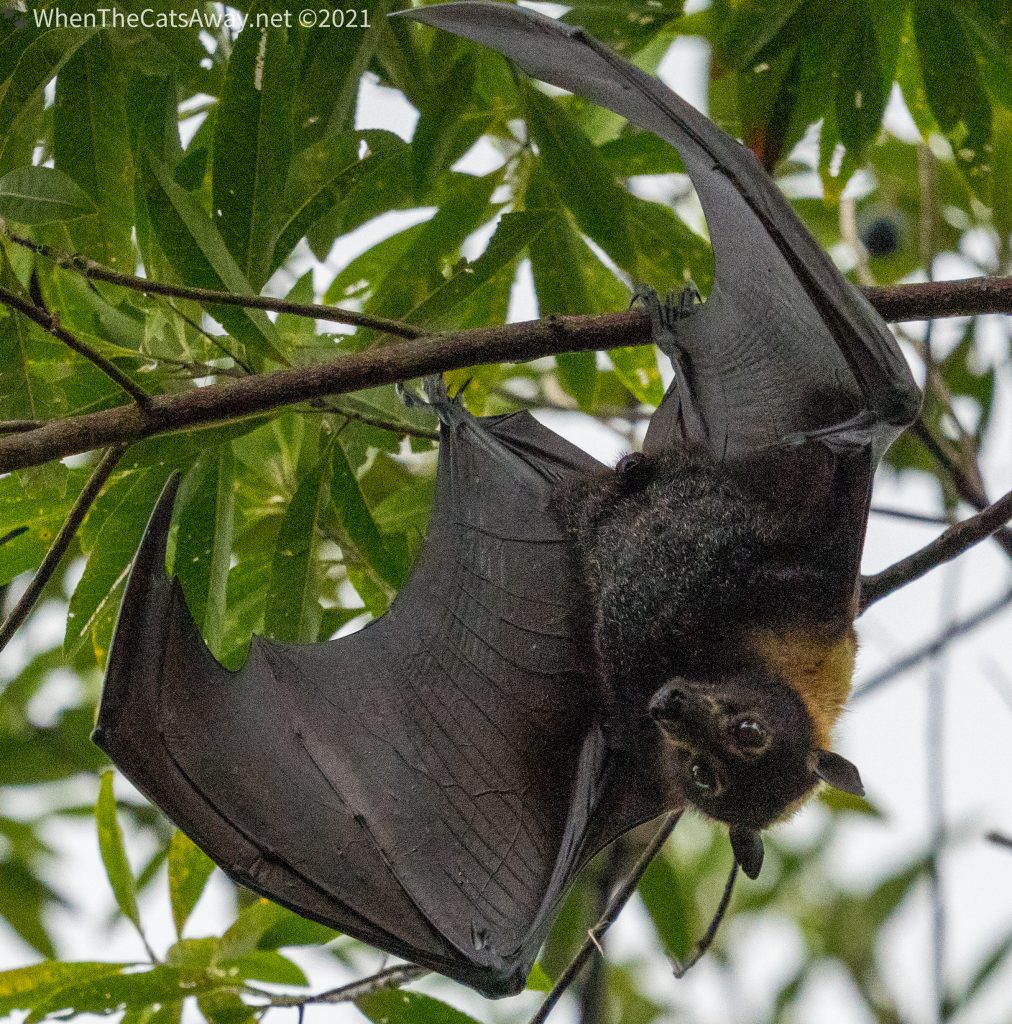
In the early evening we were delighted to see the endangered Spectacled Flying Foxes, a type of fruit bat, swooping in to the treetops around the campground to feed. They have been listed as threatened for more than 20 years, but slipped on to the endangered list in 2019 after a third of the population died in an extreme heatwave where temperatures exceeded 42 degrees centigrade. We hope they don’t become another casualty of climate change.
Spectacled Flying FoxThese gentle vegetarians are important pollinators of many of the rainforest flowers and their consumption of fruit helps spread the seeds throughout the forest
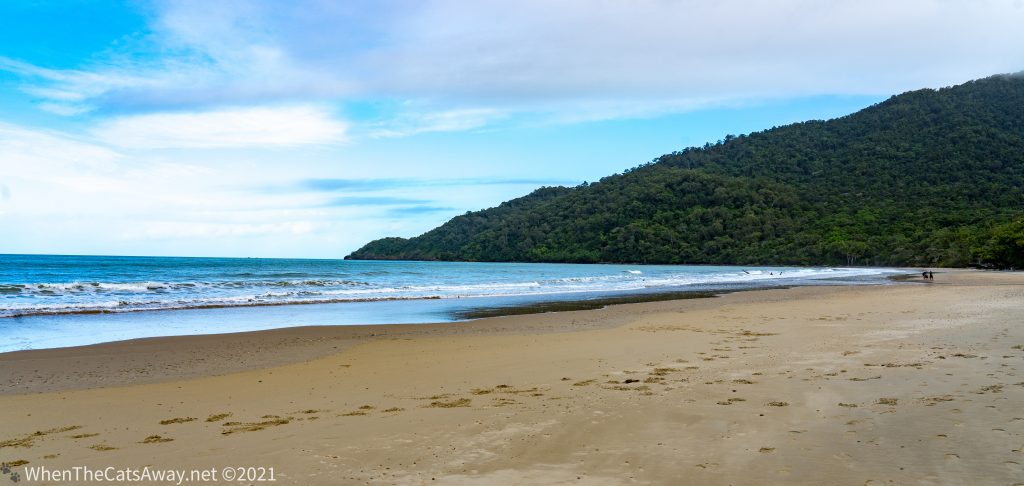
We were staying a short drive from Cow Bay, a locality which includes a beautiful rainforest lined beach, tea plantation and two tropical fruit ice cream stalls. A fine area to visit indeed, if only for the ice cream (and sorbet!). We love the tea from up here too, and ensured we purchased some.
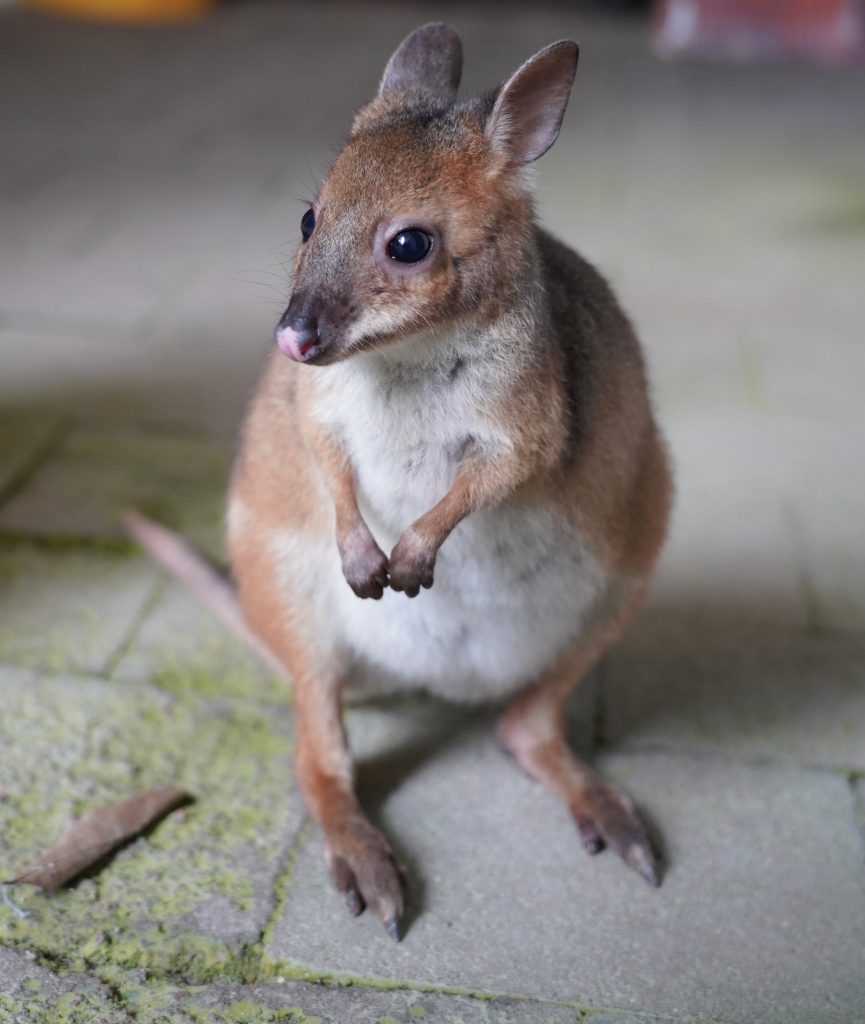
A very tame Pademelon at the ice-cream store. The owner is a wildlife carer who hand reared this little cutieBailey Creek which leads down to Cow BayCow Bay – where the rainforest meets the sea
We were excited to receive an invitation for lunch from the owners of some luxury holiday accomodation at Cape Tribulation, Mist.
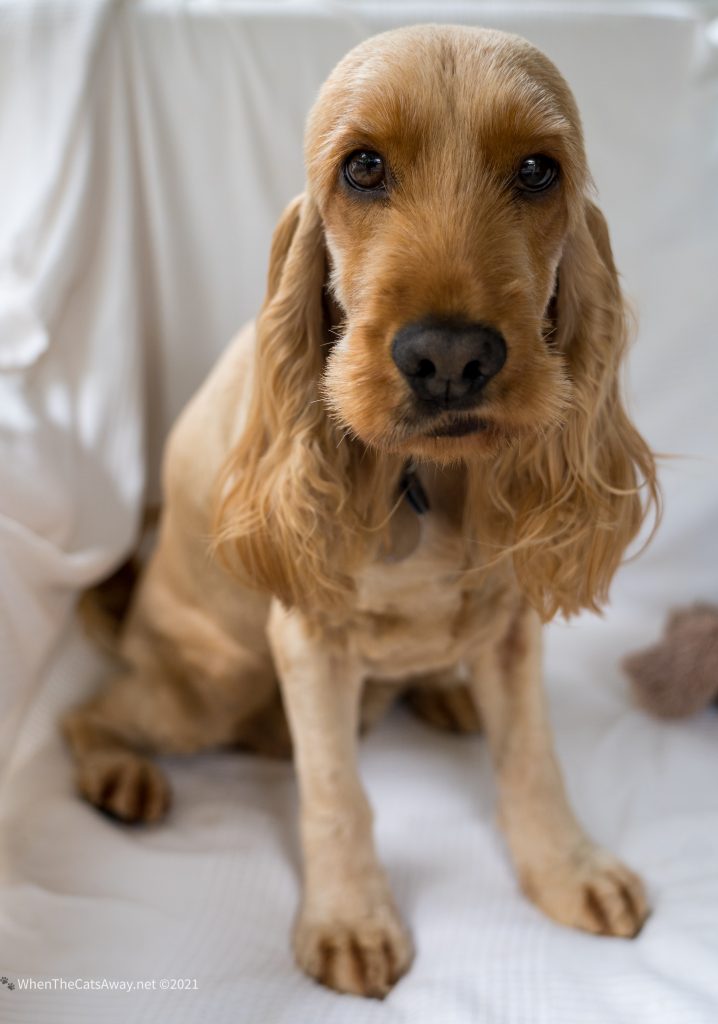
Miff, Paul and Toffee (the rather beautiful English Cocker Spaniel) opened Mist about four years ago and have created a stunning tropical haven with the luxuries of air conditioning, private holiday cabins, each with a barbecue and unparalleled views of the rainforest. Miff is a good friend of several of our friends – our paths have crossed on multiple occasions in the past, but usually in large crowds involving several glasses of wine, so we didn’t know each other well. This didn’t matter though, we were greeted like old friends.
Toffee the rainforest dog showing us her Elvis lip curl
After hearing all about Miff and Paul’s incredible journey to reach this point over a delicious lunch at a local cafe, we were given the VIP tour of the grounds…or at least until the heavens opened and we couldn’t stay outside any longer, especially with camera equipment.
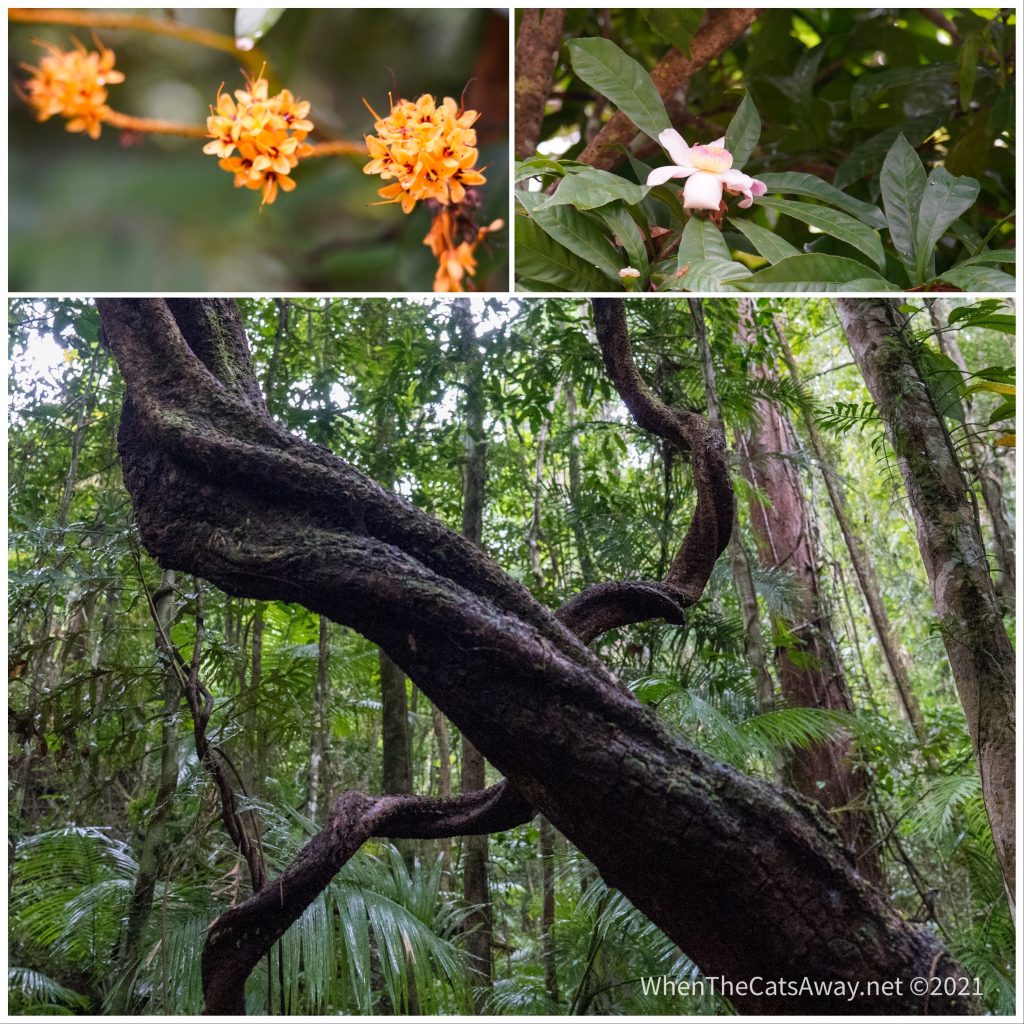
Many of the palms, trees and plants on their property are incredibly rare, and botanists have taken cuttings and samples which now grow in the Cairns Botanic Gardens. As we left the gardens and entered the pristine rainforest, thick vines twisted up into the canopy – these have been dated to more than five hundred years old. A very special location indeed.
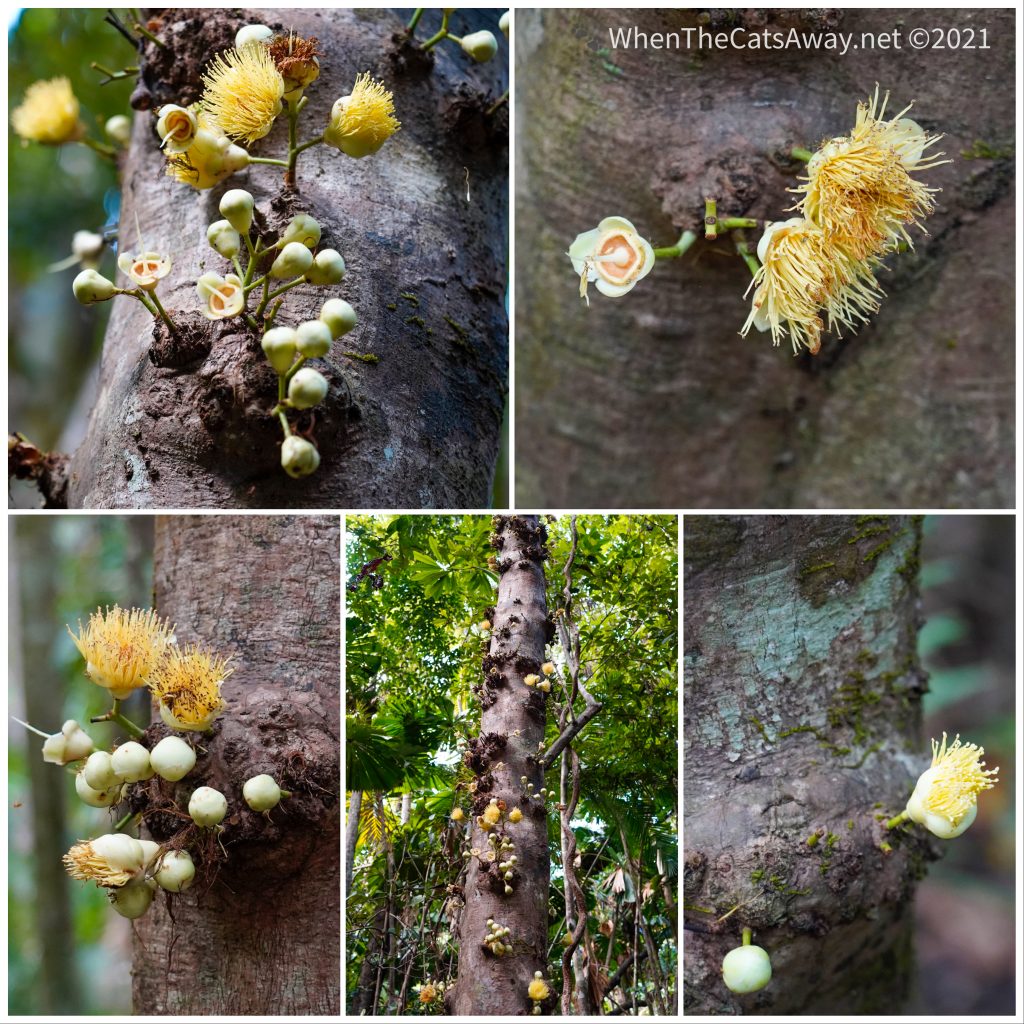
Some of the trees use cauliflory to pollinate their flowers – this means their blooms emerge from the trunk or stem rather than at the end of branches, they are pollinated by animals that climb.
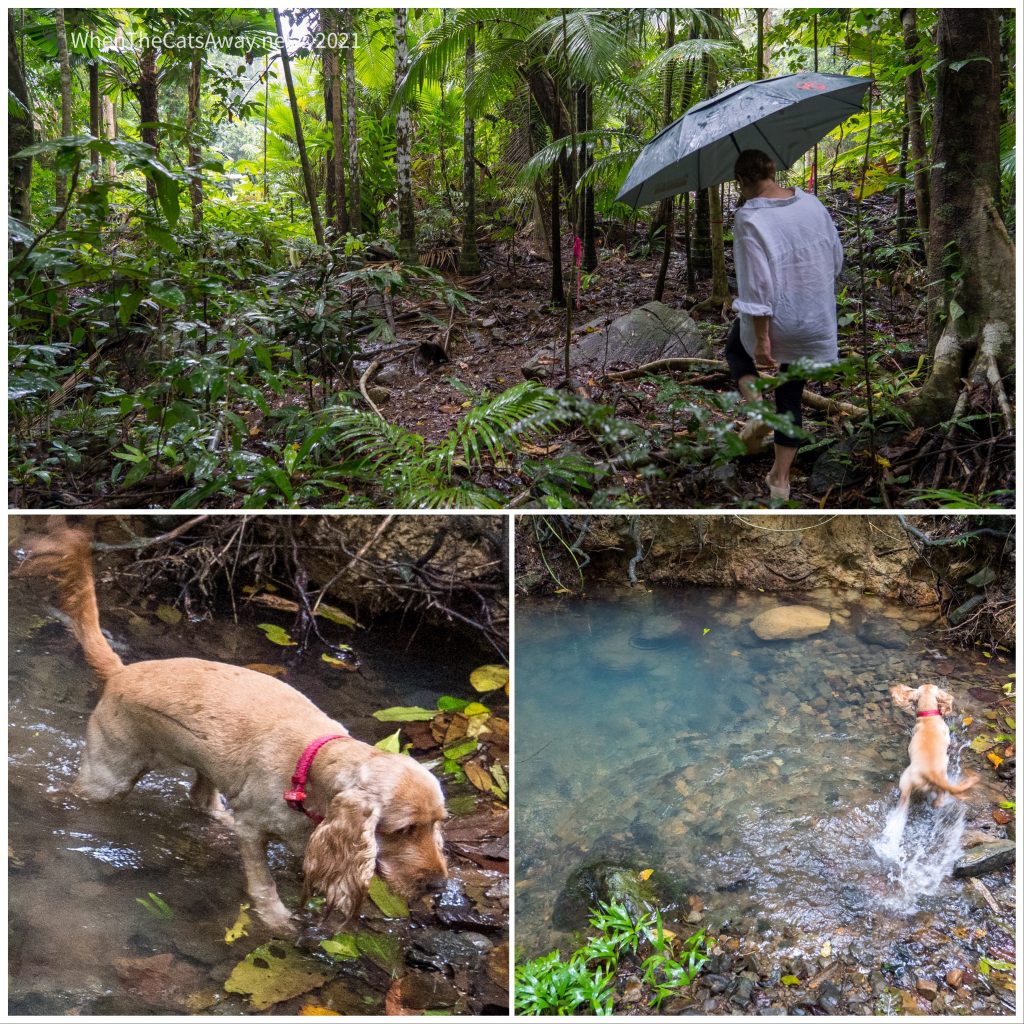
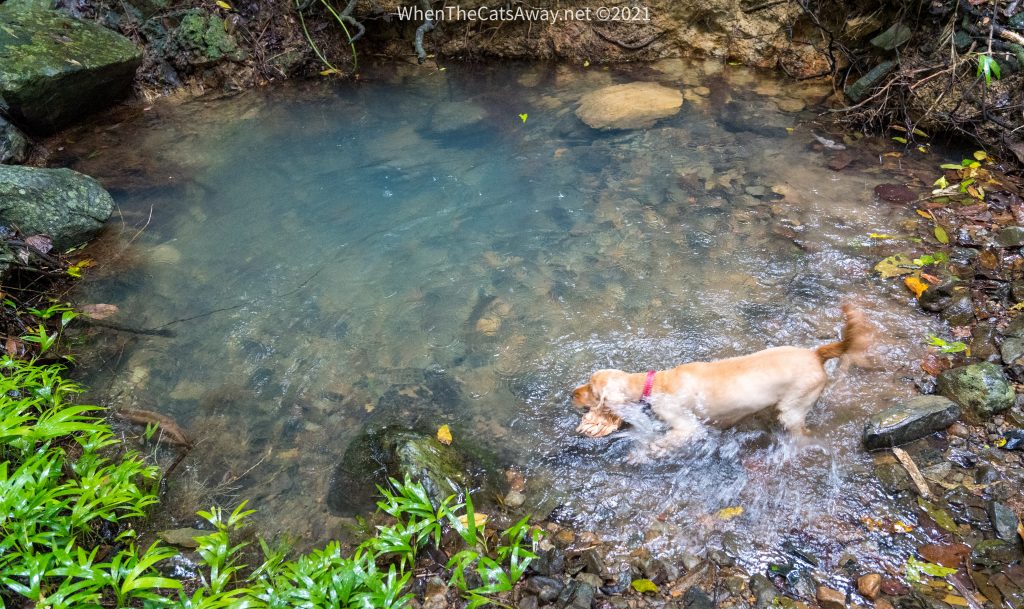
Miff was particularly excited to show us a blue pool, an aboriginal sacred site which was used by women for healing and birthing ceremonies. She had requested and gained permission from the Kuku Yalanj people to share this with guests., however the wet weather meant the only female jumping in this pool on this occasion was Toffee!
Miff leads the way through the forest to the sacred pool – Toffee shows us how to get the benefit from itToffee demonstrates the best way to enter the healing pool
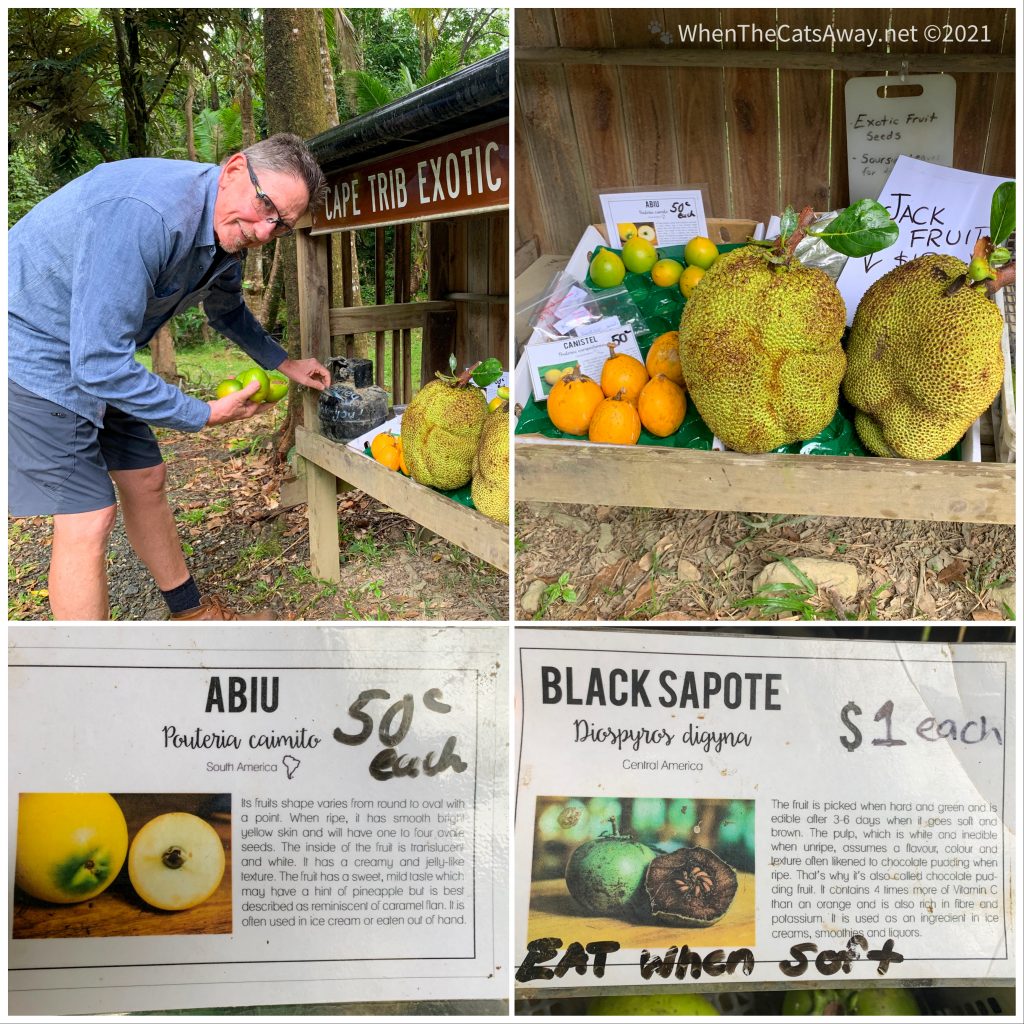
As we headed back to camp, the exotic fruit stand at the bottom of their road gave us a chance to sample some unusual samples. The Black Sapote is like chocolate mousse – especially when whipped up with a spoonful of yoghurt – delicious.
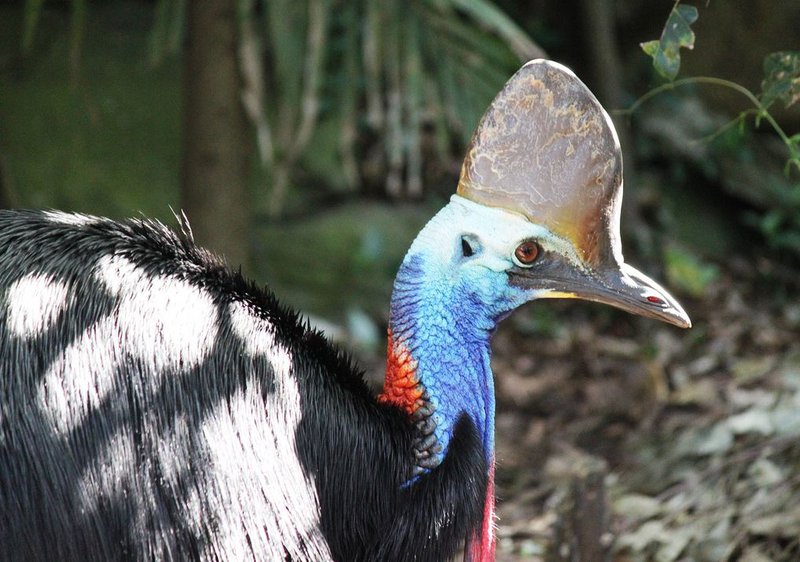
While this area may be known as ‘the place of many cassowaries’ you are lucky to spot one of these mysterious creatures. I had been fortunate to see one from the inside of a coach on my very first visit here while backpacking around Australia, way back in 1999, but since then they have eluded us.
The Southern Cassowary is a large flightless bird, a distant cousin of the Emu, Ostrich and the New Zealand Kiwi. Colloquially they are often jokingly known as ‘the murder chicken’ because of their 20cm long dagger claw which could easily disembowel and kill anything they see as a threat. It is therefore wise to ensure you particularly keep away from any birds with chicks, and never make them feel cornered.
Cassowaries live in the rainforest consuming forest fruits which would mostly be poisonous to us humans but due to their specialist gut can be safely eaten by them. A large proportion of fruiting trees and plants rely solely on their seeds passing through these birds in order to germinate.
(Photo source: Australian Museum, Creative Commons)
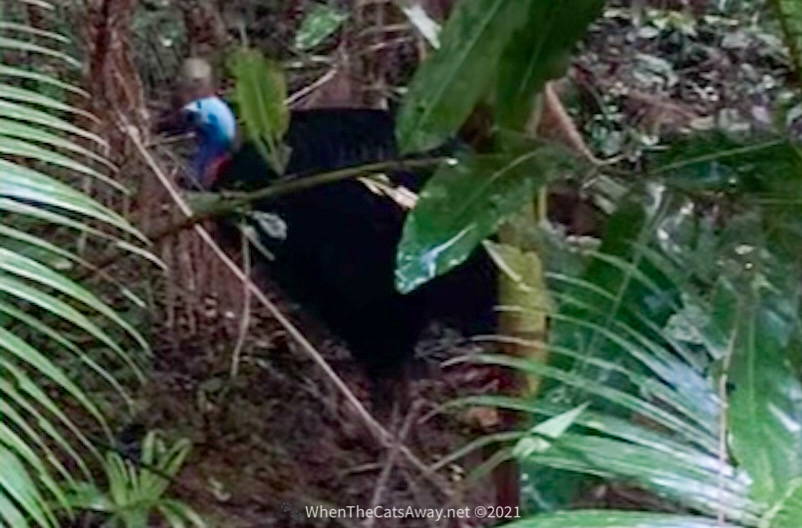
So we were excited to finally spot one at the edge of the rainforest, fittingly on our wedding anniversary as we drove out to the Daintree Discovery Centre on a bird spotting mission. She soon disappeared back into the forest, seeming to almost melt into the dense thicket of leaves and palms, but we were so pleased to have witnessed her presence.
All the fancy photography equipment couldn’t help here – I only had time for a blurry snap on my phone out the car window!
Feeling buoyed by this early morning sighting, we were some of the very first visitors to the centre. Following the raised boardwalk we climbed up a tower for a fine view of the forest.
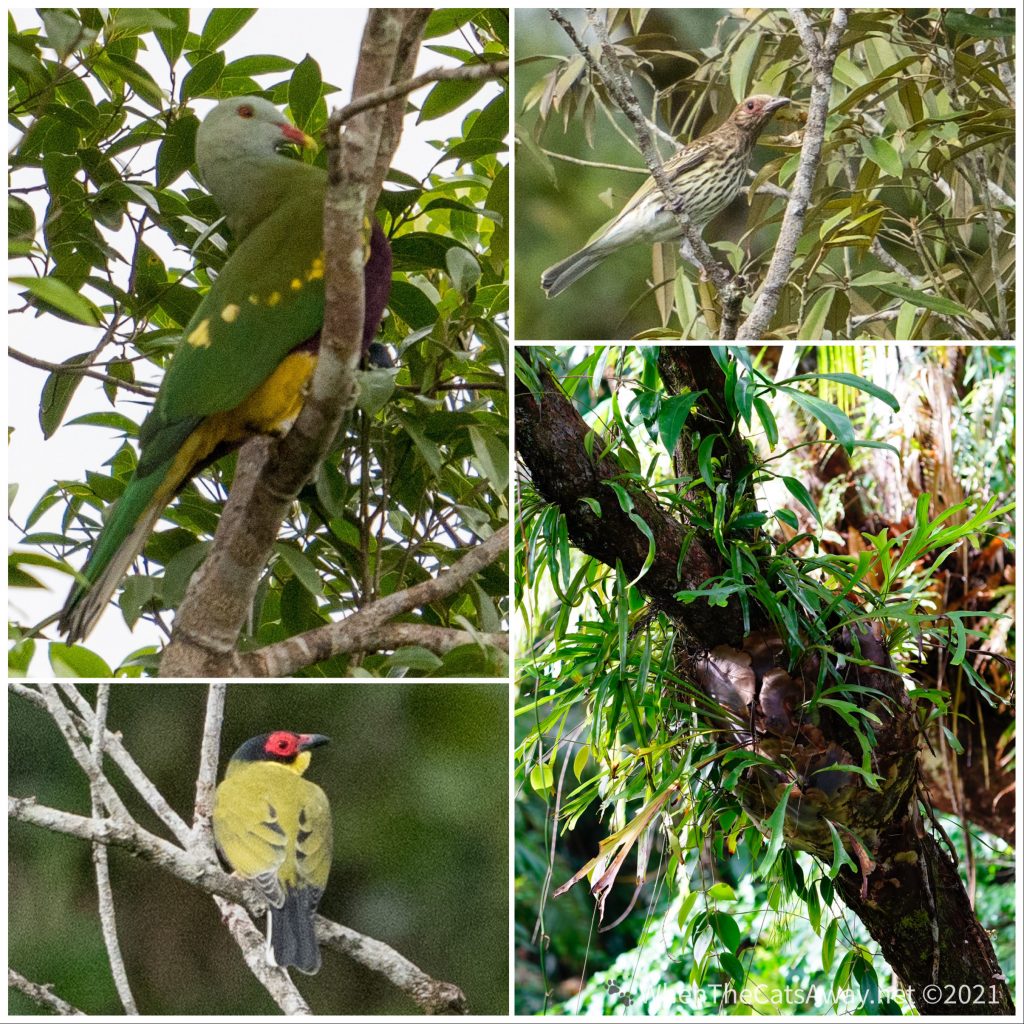
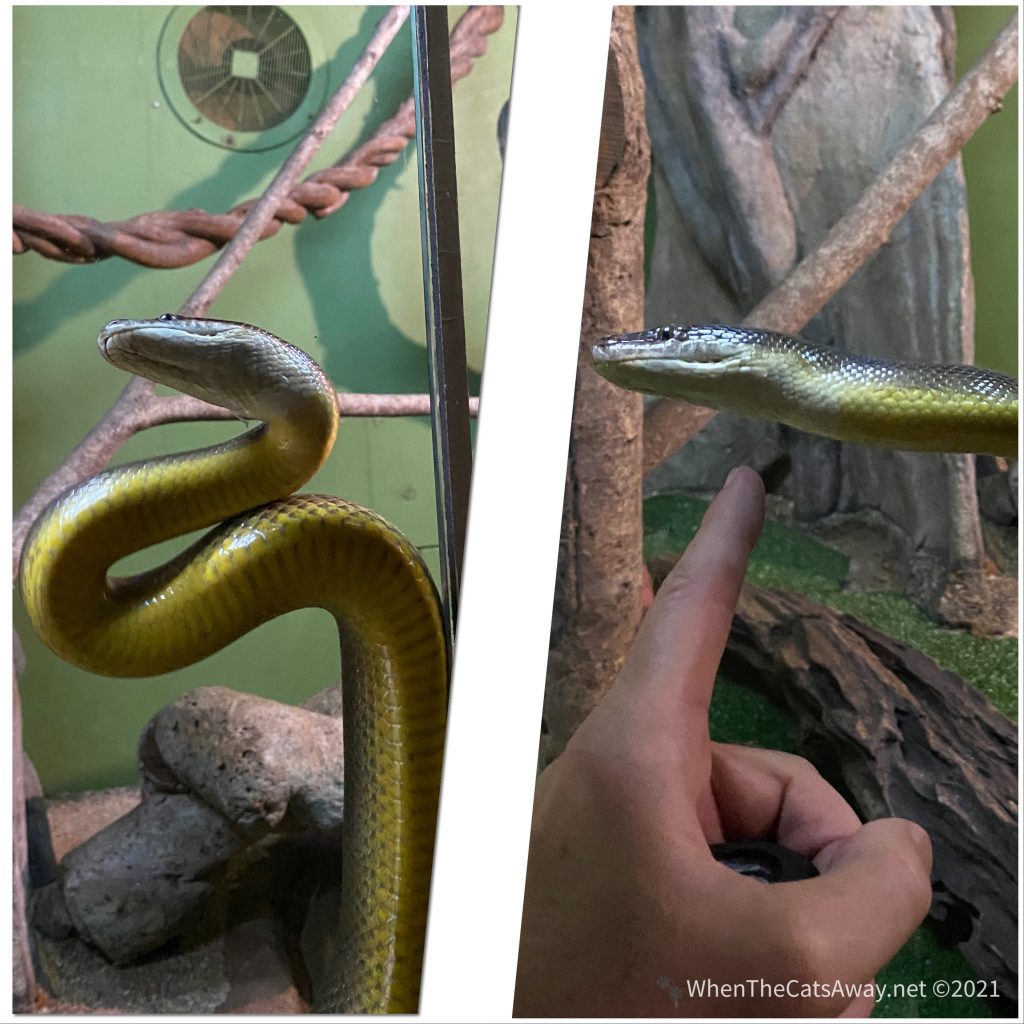
A Brown Cuckoo Dove sits close to the tower preeningClockwise from top left: Wompoo Fruit Dove, a female Fig Bird, a large Stag-horn Fern on a tree, male Fig BirdA Water Python – this is actually behind glass – Mr A is not that brave!
We saw flocks of Australia’s smallest parrot – the Double-eyed Fig Parrot feeding on fruit high up in the canopy, but none kind enough to fly close enough for a photo. Hopefully on the Atherton Tablelands – we have been given a few tips!
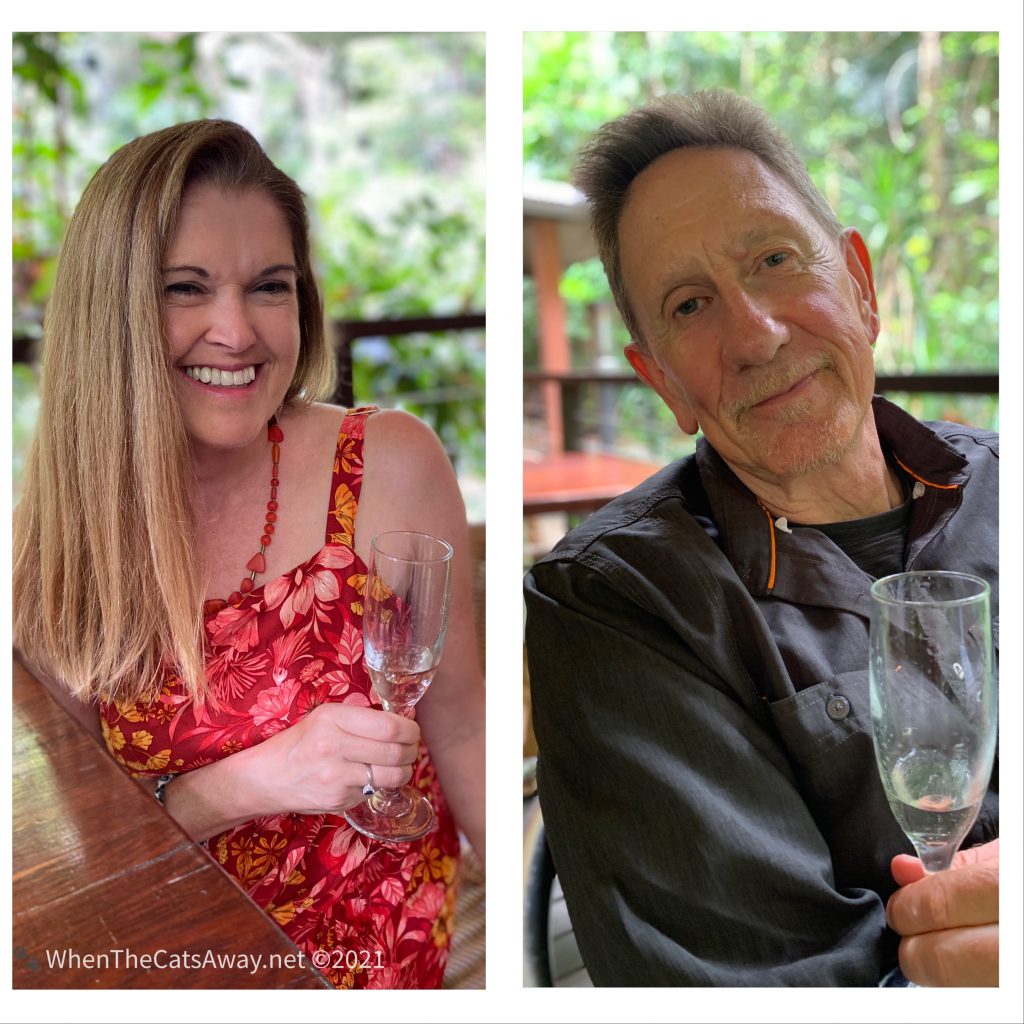
We took ourselves up to Cape Tribulation’s ‘best’ restaurant, Whet, for a celebratory lunch. There we enjoyed a couple of glasses of sparkling wine and some tasty food to toast 19 years of marriage. While there have been both ups and downs throughout this time, I can safely say the positives far outweigh any negative times, and I feel so fortunate to have met my soulmate and best friend all those years ago. It helps us to weather storms together and is how we are able to live in an 18 foot six inch long box for all this time without murdering one another!
Happy Anniversary – 19 yearsA couple of young pups 19 years ago
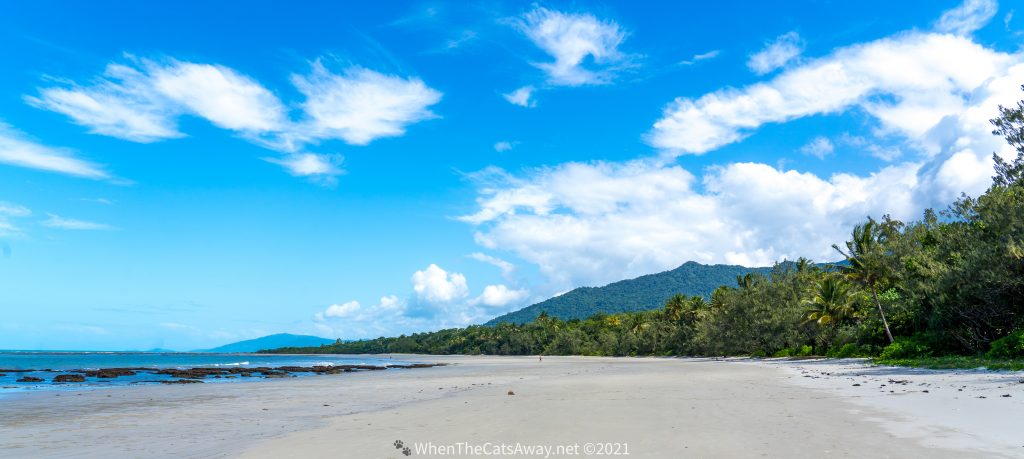
Cape Tribulation is the main village in this part of the coast, with several accomodation options, a very quiet backpackers (I remember staying here in August 1999!), our friends’ luxury cabins at Mist, plus a couple of small shops. The white sand beach is lined with coconut palms and crocodile warning signs!
Myall Beach at Cape Tribulation
There are a number of short educational boardwalks to help visitors interpret the impenetrable forest, which were well worth doing.
Madja Boardwalk takes you through the mangroves alongside Noah Creek – at low tide a frenzy of activity as birds flit through hunting insects or hunting the little crabs that emerge to feed on the mud.
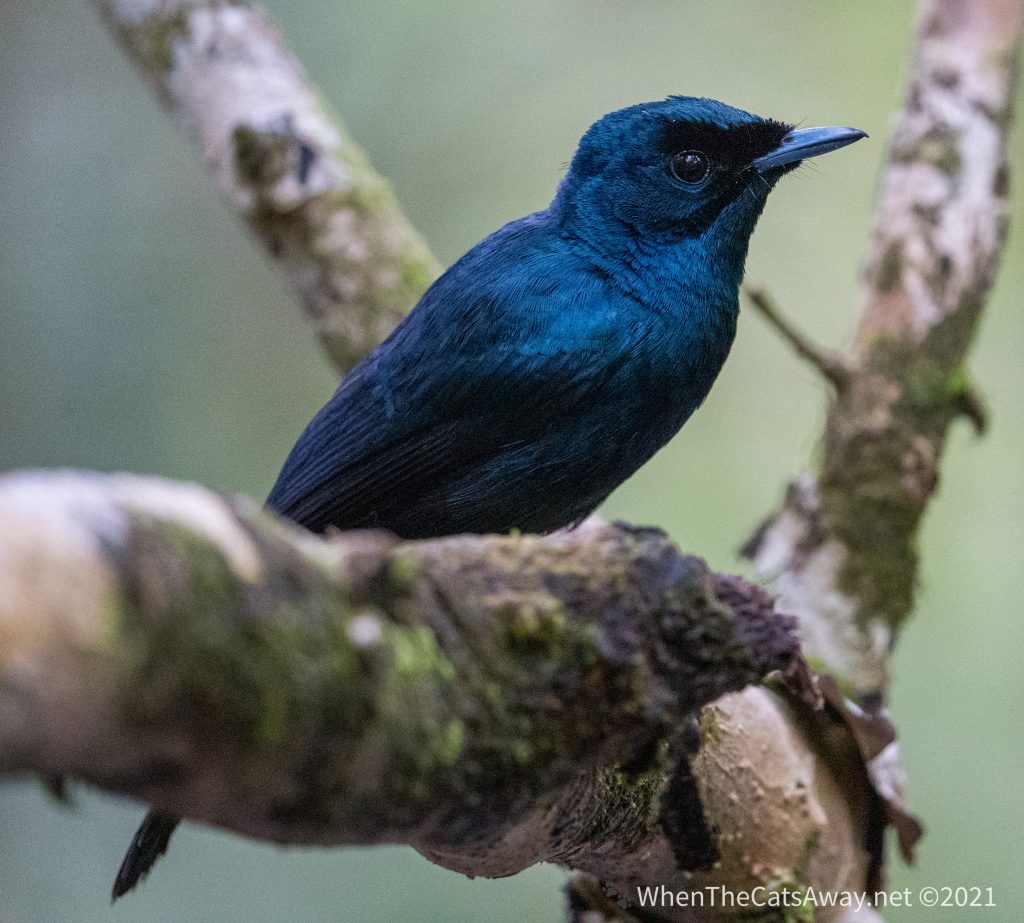
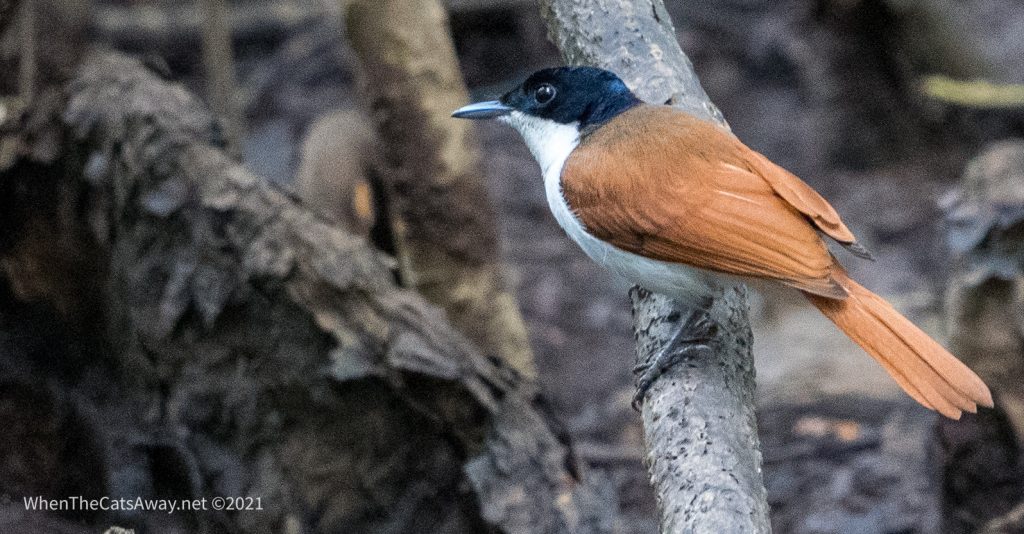
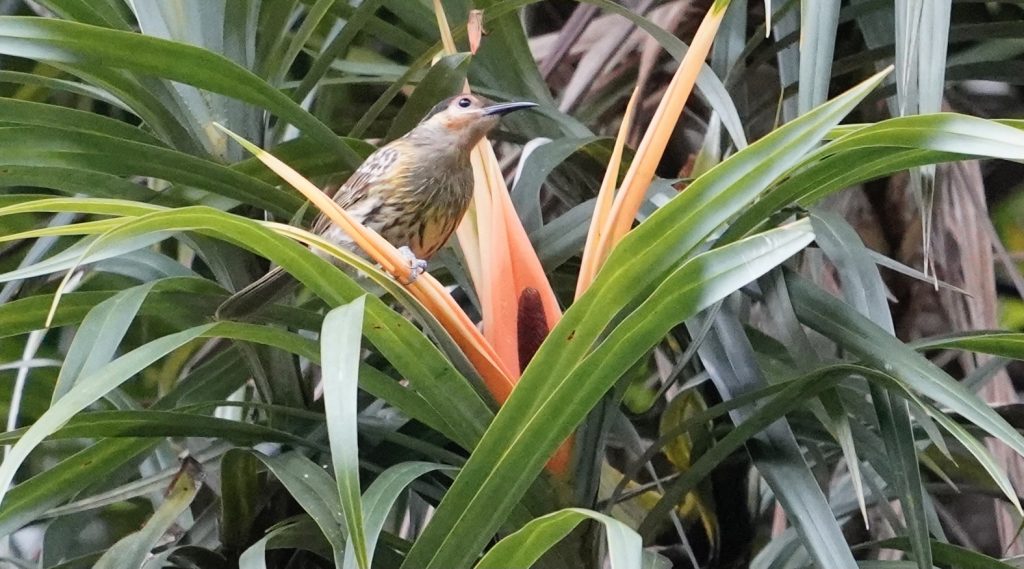
A male Shining Flycatcher pauses for breath on a branchThe female Shining Flycatcher is more colourful than the maleA Macleay’s Honeyeater – these only live in a small range of rainforest in Northern Queensland
Dubuji Boardwalk starts in Cape Tribulation village and is often where people sight Cassowaries. It winds through the forest, through varied ecosystems.
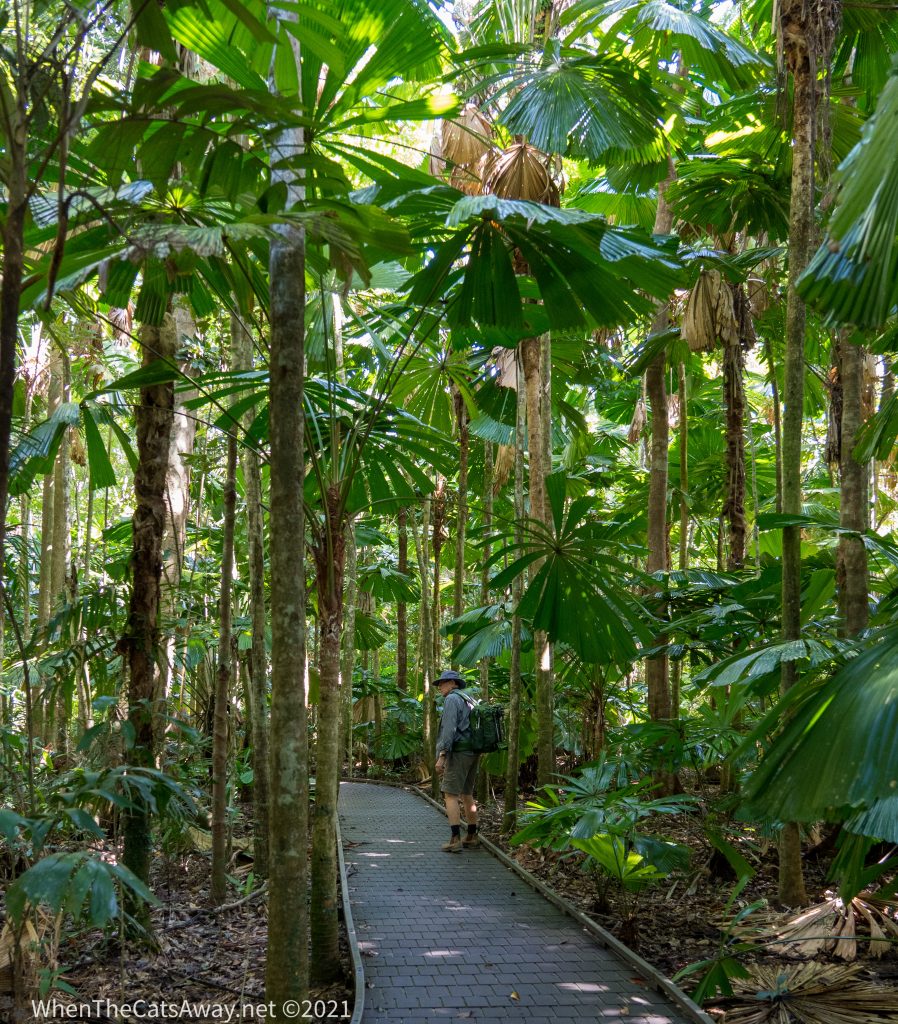
Mark walks through a palm grove – these are rare now, having been cleared for farming throughout much of Queensland
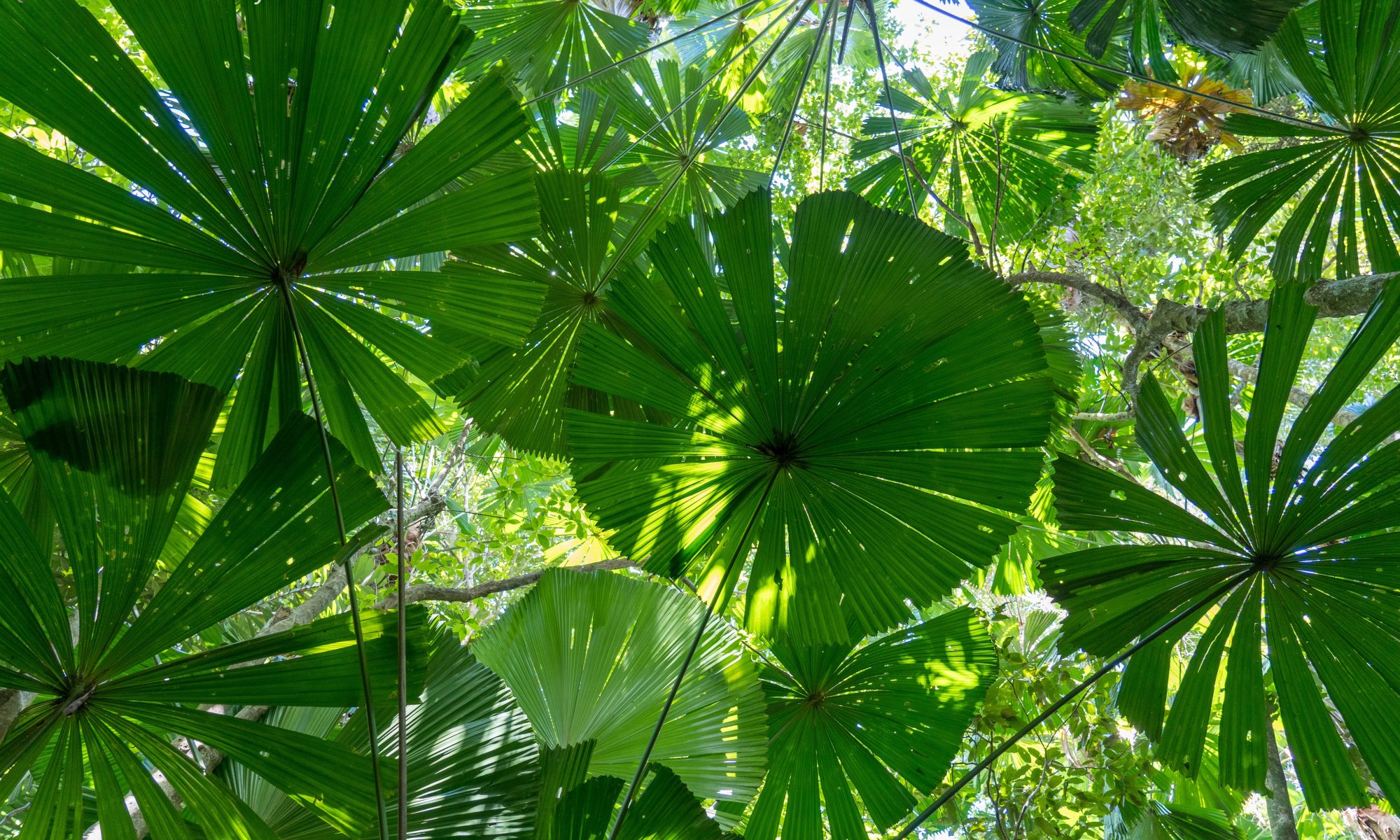
The Daintree Coast is home to 16 palm species which can tolerate low soil oxygen levels better. than most other rainforest plants, therefore often are found in flood zones. The almost 2 metre wide Fan Palm fronds look almost like umbrellas spread out, and indeed Sunbirds sometimes shelter under these during a downpour.
Another example of cauliflory – a huge tree with flowers up its trunk – making the most of the lower storey pollinating insectsLook carefully and you might spot the eel in the streamA ceiling of dappled greens and dense walls of undergrowth – if you have a tendency for claustrophobia it may well emerge here
We had a wonderful immersion in this incredibly special location, feeling privileged we could spend our 19th wedding anniversary in such unique surroundings. We so hope that this area remains unspoilt, and that climate change can be slowed to help wildlife adapt.
Out of five days here we had just one where it didn’t rain, but then that is what you get in the rainforest, even during the dry season. Apparently they are expecting an early wet season this year…we can only imagine what that’s like!
*A forthcoming prize to whomever can first name the comedy from which the title quote comes from 🙂
Location: Cardwell and Tully Heads, Queensland, Australia
Leaving Ingham we continued on our journey north, marvelling at the magnificent tropical views both inland and offshore. This is a truly spectacular coastline, and despite having travelled this way before, it felt like we were seeing it all through new eyes.
Our destination was Cardwell. A good friend in France had introduced us virtually to Gabi, an author, documentary maker and narrator who has now settled into life in this small town. We agreed to catch up with her and decided to stop for two nights.
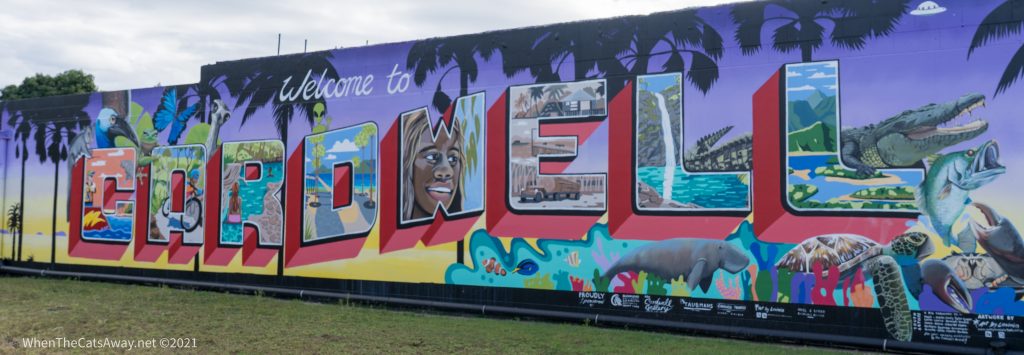
Welcome to Cardwell
When we arrived in town, we were surprised to see cut outs of aliens lining the streets and welcoming us to our campground. Mark checked us in and returned clutching a leaflet. It turned out the weekend we had selected was the 2021 Cardwell UFO Festival!
We anticipated a few strange antics in our future given the conspiracy theorists were in town!
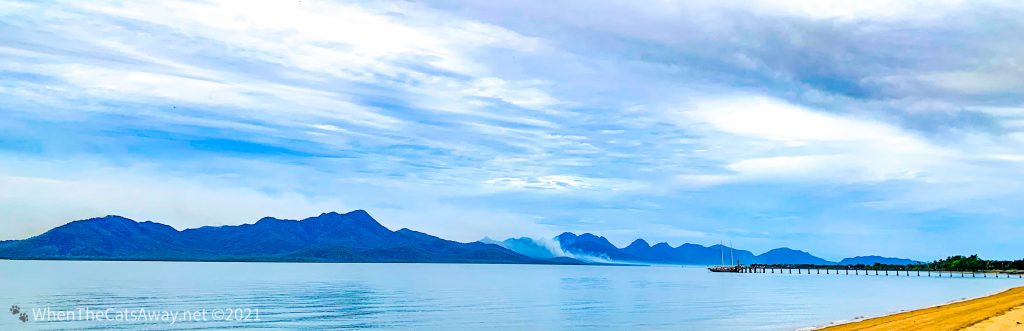
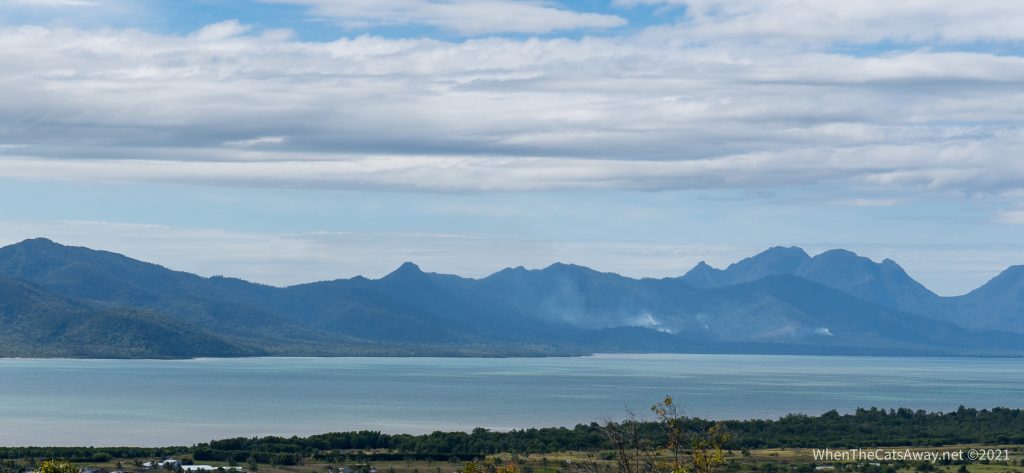
We met Gabbi at the Beachcomber’s Restaurant, located along the waterfront, with commanding views of Hinchinbrook Island a short way off the coast. With not a breath of wind, the water was a glassy ice blue, the hazard-reduction fires burning on the island (cool winter burning to prevent a more devastating hot summer burn) only serving to add more atmosphere to the scene.
Dusk falls as we walk to dinner. Fires on the island make the atmosphere all the more mysterious
We had booked dinner for 6pm at the insistence of Gabbi, which we thought was rather early, until we realised this is pretty normal for these parts – early to eat and early to bed. The food and company was excellent, Gabbi has led a fascinating life and is full of great stories. We’d definitely recommend the restaurant to anyone passing through Cardwell.
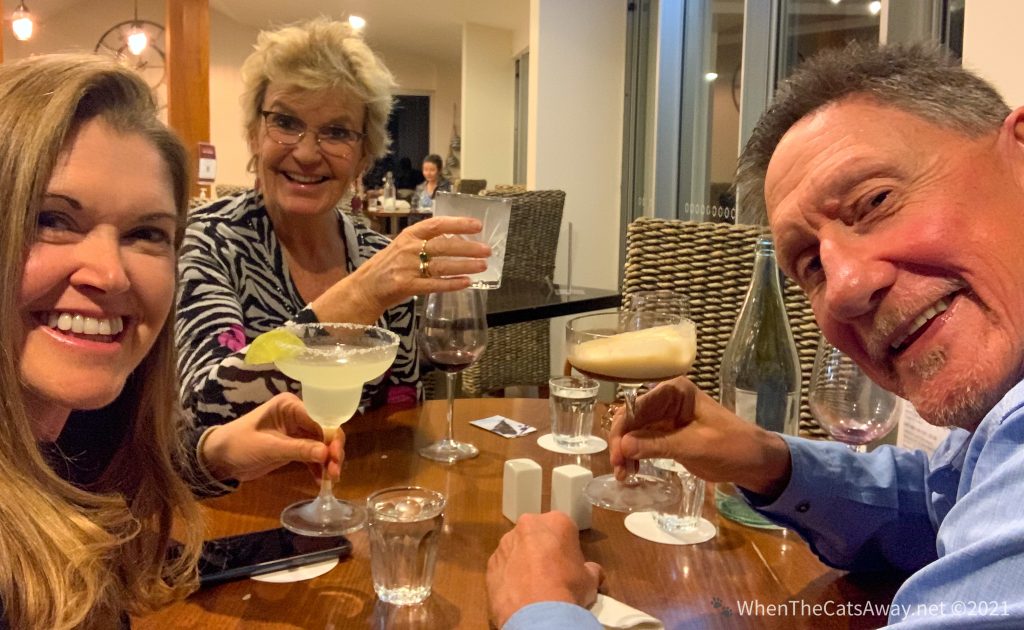
Concluding our delicious meal with cocktails
Did I say early to bed? Oh it seems not. Most of the town was all safely asleep by 11pm, but not anyone in our campsite…a house across the road was having a rather loud alcohol fuelled domestic argument and nobody could sleep. Mark ended up calling the police at 2am to have it shut down! Couple that with the Bruce Highway’s road trains roaring past every few minutes, and it wasn’t a quality night’s rest…but it was alien-free!
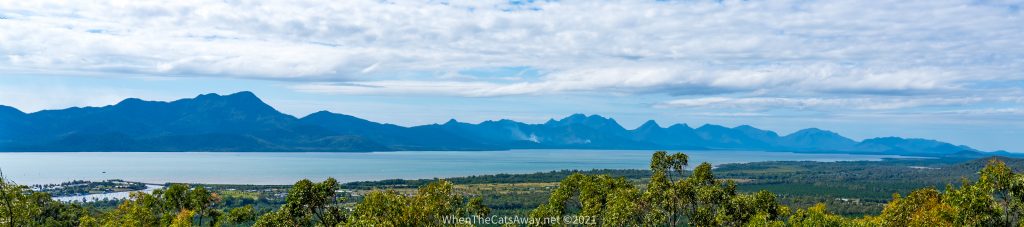
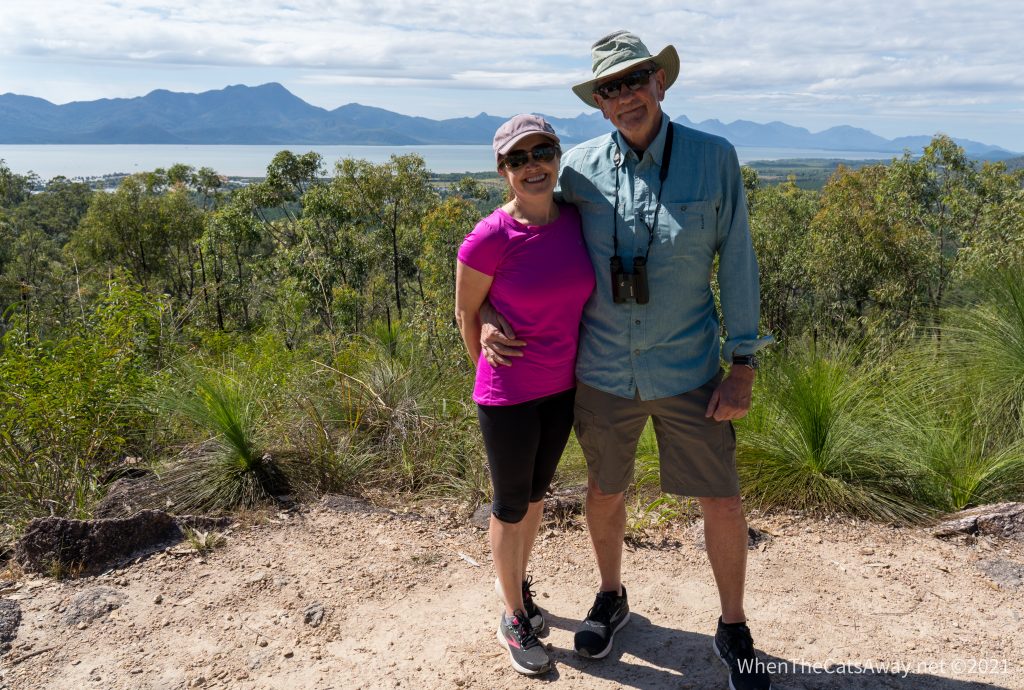
We finally managed to get some sleep and the following morning took a short drive up into Girringun National Park to check out views. From high up above the town Hinchinbrook Island (named Pouandai by First Nations people) looms mysteriously off the coast, its craggy peaks looking enticingly wild and rugged.
Eighteen thousand years ago the island was part of a rugged coastal range. After the last ice-age , sea levels rose and created the island. The island was home to the Biyaygiri people who lived there and along this coastline for many thousands of years. In the early 1870s a huge slaughter (initiated by the white settlers and police) wiped out all the indigenous residents of the island.
This area forms part of the ‘Girroo Gurril’ creation story. Known as ‘the first surveyor’ to local, Girramay Aboriginal people, Girroo Gurril rose out of the ocean near Hinchinbrook Island, part man, mostly eel and gazed around the newly made countryside. He pronounced his name loudly, then plunged into the sea and came out on top of the mountain at the back of Cardwell. He saw a freshwater lake surrounded by mangroves and he called it Girringun Lake.
Today Cardwell is home to the Girringun Aboriginal Corporation which represents the interests of traditional owners in the region, maintaining areas of cultural significance and educating young people. They largely work in partnership with the Queensland Parks and Wildlife service and would be responsible for the hazard-reduction burning we could see offshore on the island.
We would like to recognise and thank the Biyaygiri and Girramay people for their custodianship of this land we visited.
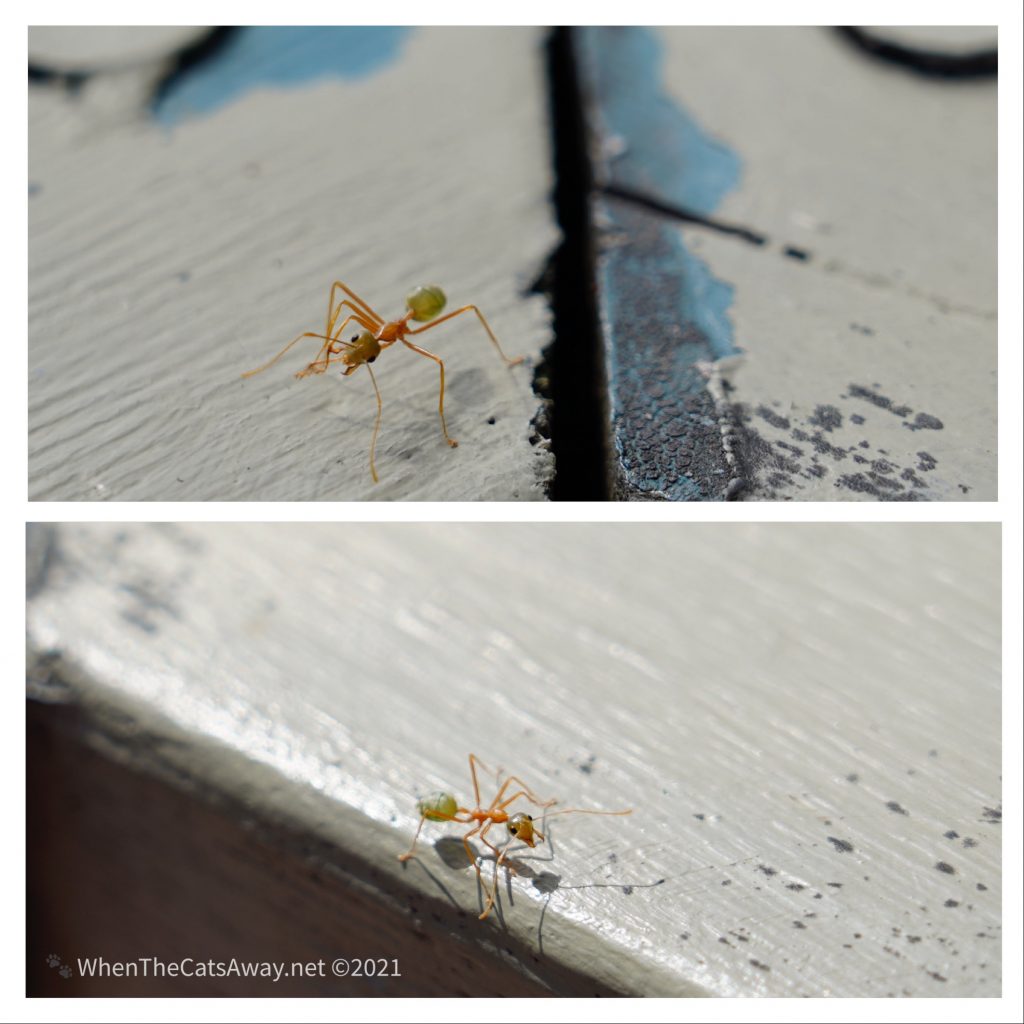
A fine view pointFires still burningGreen Tree Ants are the locals which make their nests by weaving together leaves with silk up on tree branches. They do bite, but don’t have a sting. Their green abdomen tastes of lemon and indigenous people would boil them up to make a lemon tea.
There is a shared pathway along the coast, and after a bite of lunch we decided to go for a walk. There is no denying this is a picturesque coastline and it was hard to walk far without taking several photographs.
Given the gruesome treatment of the first residents of the area it’s no wonder that many of the information boards along the coast walk blatantly ignore the indigenous history, choosing instead to start with the arrival of white settlers.
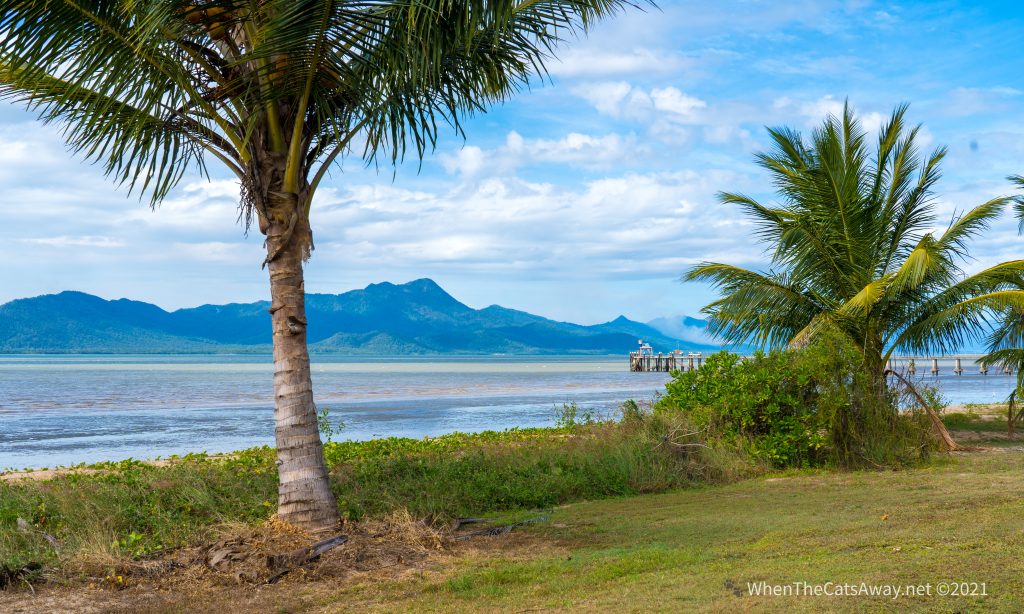
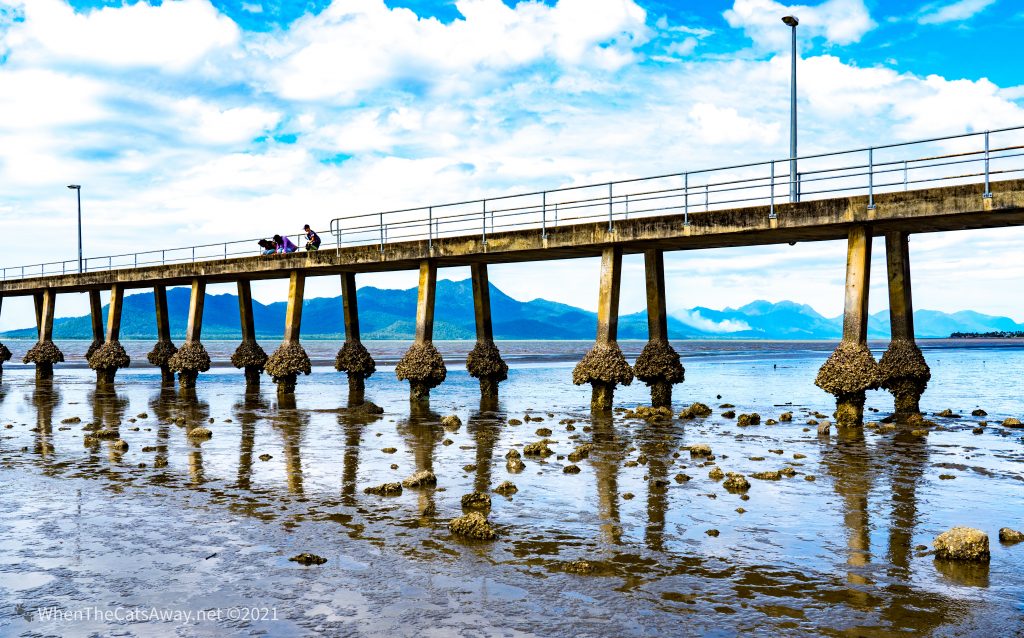
It’s hard to get a bad viewpointCardwell Jetty stretches out into the shallow bayCardwell Jetty More views of Pouandai IslandPicture perfect beachesThe coastal walk
On Saturday night Cardwell held a big concert to conclude the UFO festival, with a cover band playing Aussie 70s and 80s music and classics from the same era around the world. We didn’t have the energy to go along, but could quite clearly hear the events from our caravan – they drowned out the road trains quite nicely!
Before we departed on Sunday morning we paid a visit to the market, picking up a few things we didn’t know we wanted, and farewelled Gabbi who was busy serving sugared donuts for the Cardwell Lions Club.
Cardwell Market
We moved on up the coast less than an hour to a quiet campsite just south of Mission Beach near the heads of the Tully and Hull Rivers and on the edge of the Hull River National Park . We checked in for three nights, looking forward to a few peaceful evenings finally away from the Bruce Highway.
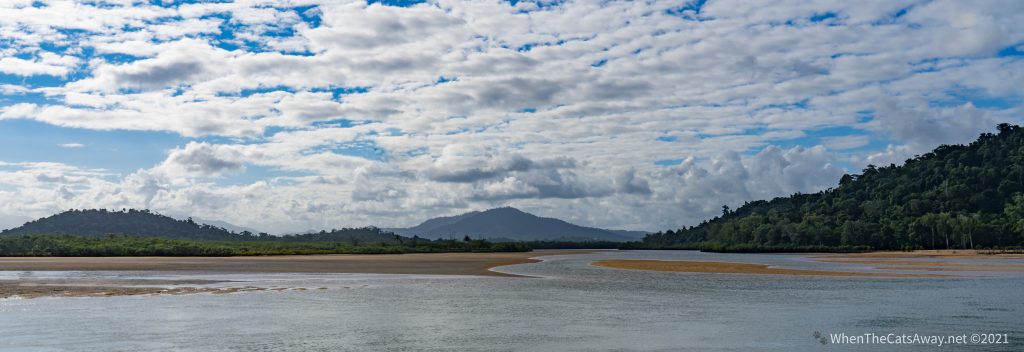
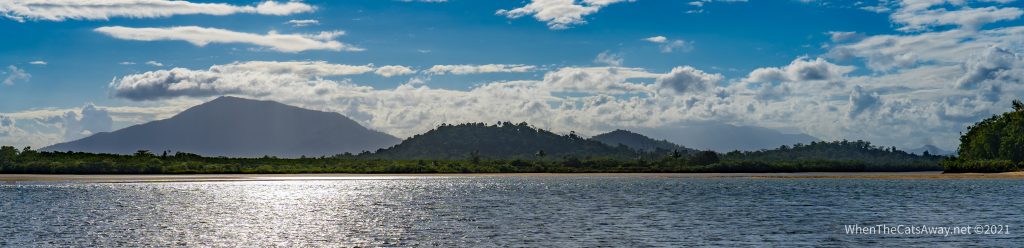
After getting all our washing done we had a look around the neighbourhood. We drove first to the Hull River estuary, a wide expanse of sandbanks and swirling water, with the coastal ranges stretching off into the horizon.
Hull River Estuary, part of the Hull River National Park
The National Park has been designated part of the Coastal Wet Tropic Important Bird Area listing for its preservation of wetland habitat essential for lowland birds including Cassowaries, Stone Curlews, owls, robins and a variety of honeyeaters.
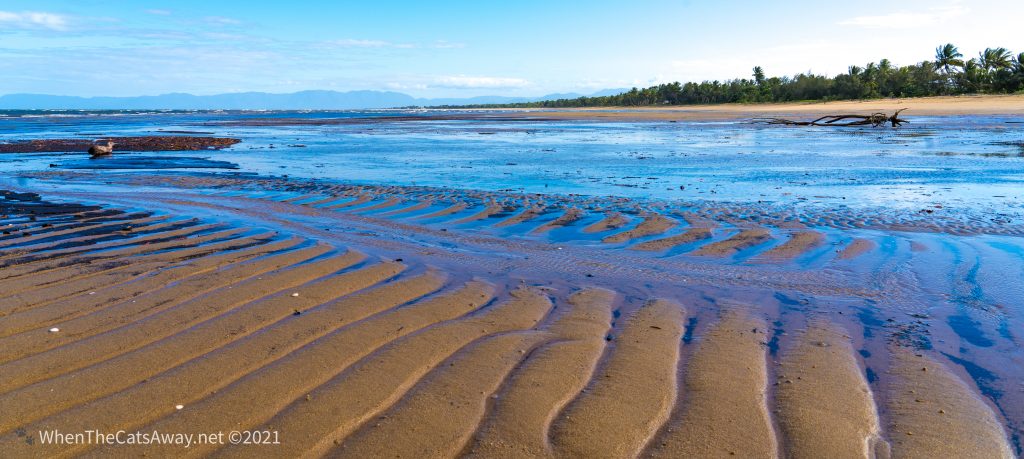
At low tide the birds are a long way away and hard to spotStunning sceneryEmpty beaches looking pristine
We then had a look at the Tully River estuary – regular readers might recall our white-water kayaking adventures higher up this river on our last visit in 2018. Looking out at the water we wondered at the tiny scraps of our DNA that might still be present here after our multiple dunking episodes on the rapids!
We were looking forward to spending a couple of days exploring this region but soon realised that wasn’t the best idea. The news broke that a taxi driver had been infectious with Covid-19 in Cairns for 10 days so the city was locking down for three days. It didn’t bode well and we couldn’t imagine that he hadn’t spread the virus to others, especially when we heard rumours of a mass exodus of travellers from Cairns – surely one of those had caught the virus and spread it?
Even more than our exploration of this area we were excited about spending time in the Daintree Rainforest, north of Cairns, and really didn’t want to miss the opportunity to stay there.
So after our little taster of this area, we packed up the following morning and did a dash north.
Location: Mutarnee, Hinchinbrookshire, North Queensland, Australia
It was a long drive up the main highway north, skirting the city of Townsville, but with interest provided by the streams of military convoys on the move as part of the once every two years bilateral US/Australia exercises (with smaller numbers from five other nations) called Talisman Sabre. With the changing geo-political landscape in our region as China seeks to assert itself, this regular war gaming has been tailored to send some specific messages about the capability of the participating nations to defend their territories against claims being made in the region by China. The exercises this year have even been given a new twist with social media being used a one of the weapons in the armoury of the fictitious enemy forces.
We arrived at our campsite to realise a) It was right next to the road b) There was no on site caretaker and the toilets were filthy c) Anyone using the road could and did just drive in and use the toilets d) It was the same price as a really great camp site two kilometres down the road we had been to before. It was in spectacular surroundings otherwise, and we did manage to enjoy an hour or so exploring the grounds.
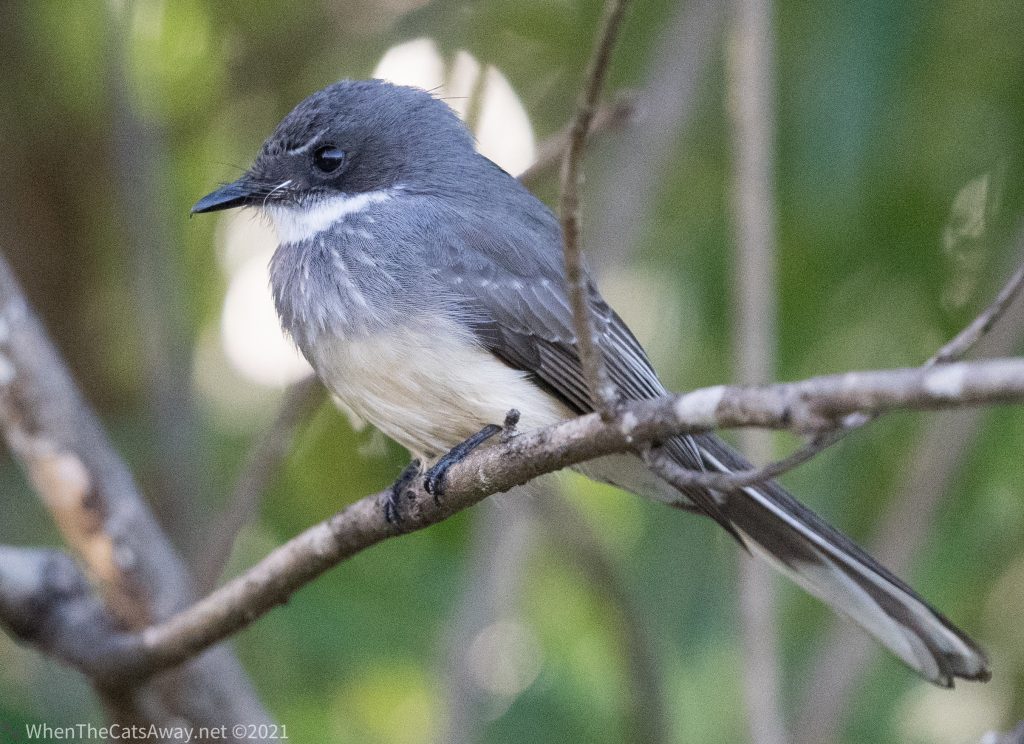
A short walk around the campground – for all its negative points, it is in a lovely setting Crystal Creek runs through the campsiteForest Kingfisher on our campgroundNorthern Fantail – a species only found in the upper reaches of Queensland – proving we really are in the far north of Australia nowRainbow Bee-eaters are so common up here now
After a night we pulled up stumps and moved, with a full refund. We don’t always get it right. The site had mostly good reviews, but our eyes and gut-feel told us differently, so off we went, and I’m so glad we did for the sake of an hour of packing and setting up again.
We find ourselves now at one of the best run parks we’ve ever been to. The facilities are modern and kept immaculately clean. We have heaps of space and surrounded by trees, and yes, birds! Tassie is always a good litmus test for us if she heads outside and lies down, it’s a thumbs up and we know all will be good.
So if you find yourself on this gorgeous piece of coast, come and stay at the Crystal Creek Caravan Park, owned and run meticulously by husband and wife team Rod and Elizabeth. Rod even came and mended a strut on our window where the rivet had broken off. Service above and beyond from this dynamic duo!
Catherine has also made a friend in the park – “Bob the Birder” as we affectionately call him. Bob and his wife Olive have already been here for a few weeks, and they sit there for hours right outside their van with their long lenses capturing the prolific bird life flitting around the park.
Bird photography in progress
Bob has taken Catherine under his wing to pass on some of his accumulated wisdom of 80 odd years birding in Queensland. Another top bloke! What a sharp eye he has as well. I‘ve not seen many people beat Catherine to the draw with spotting, but Bob does. And they both leave me completely behind of course with my impaired vision. Catherine is so patient though, trying to explain where in a tree they are.
Varied Trillers are regularly seenWhy do Fairy-wrens get all the wonderful names? This one is a Lovely Fairy-wrenCan you spot the male Fig-bird? They’re very yellow in this part of the country
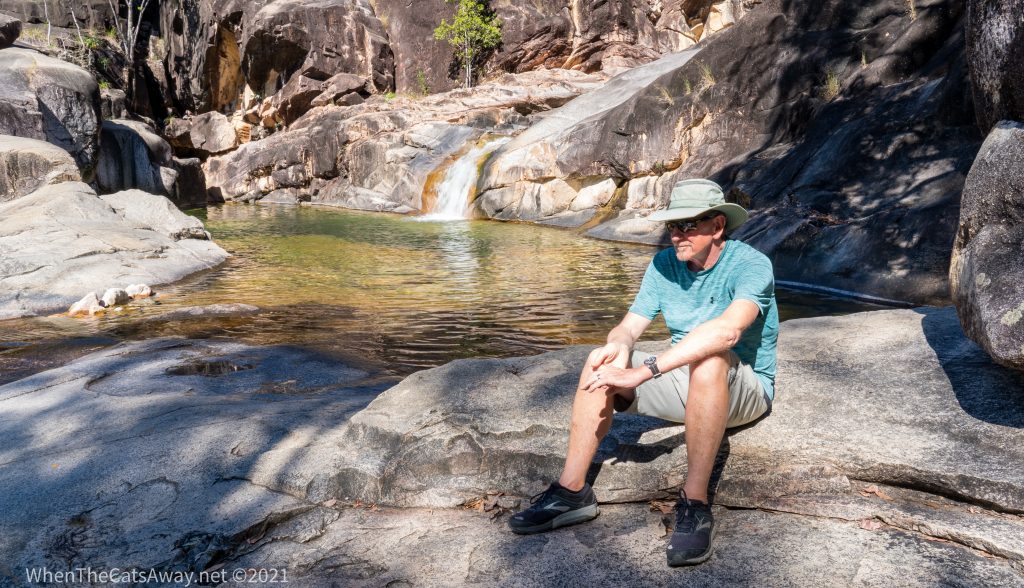
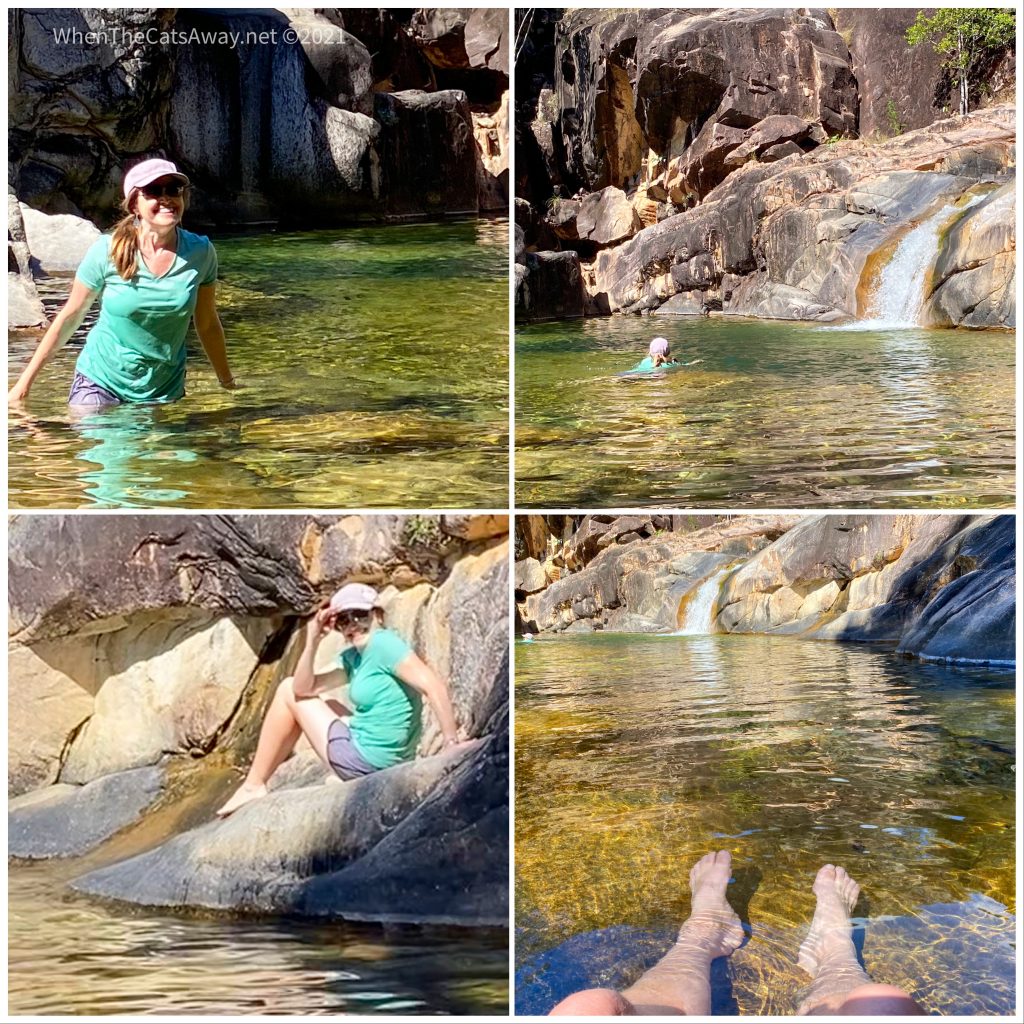
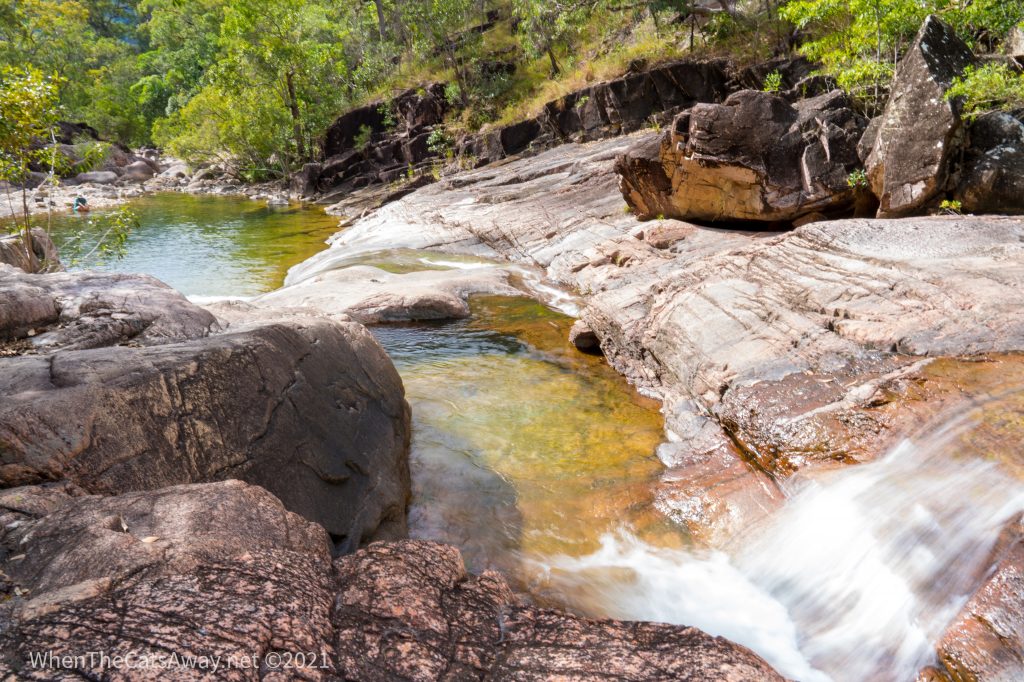
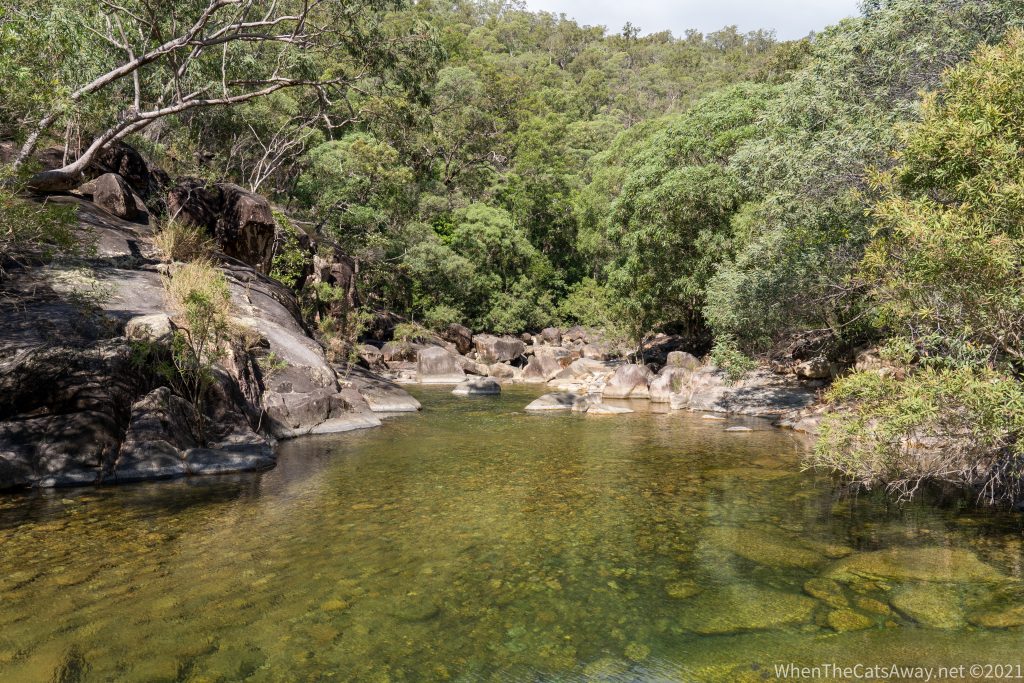
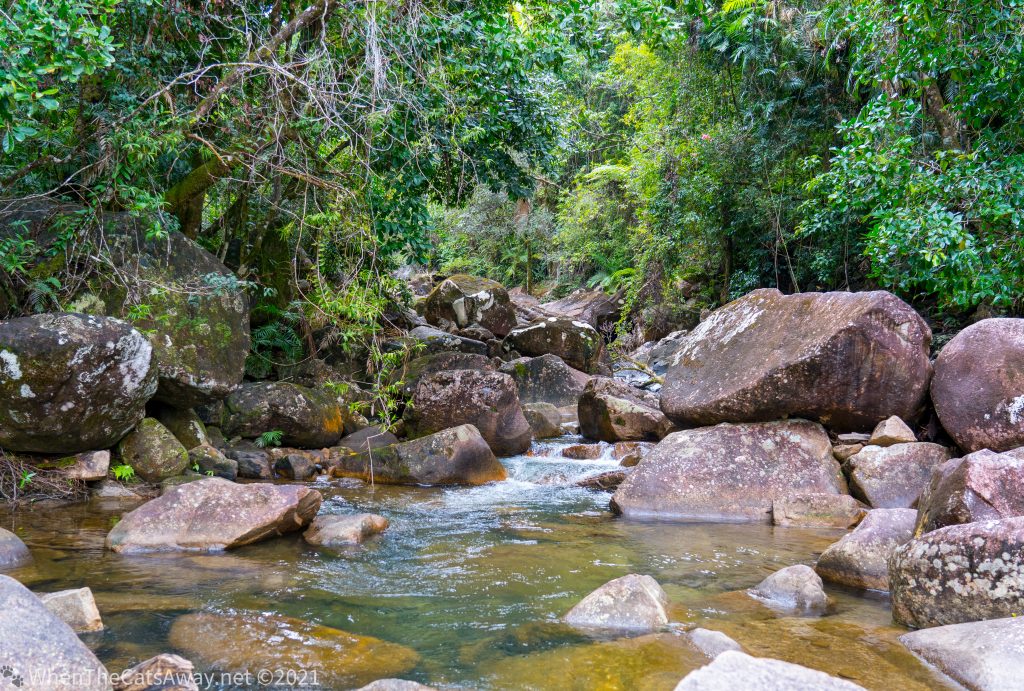
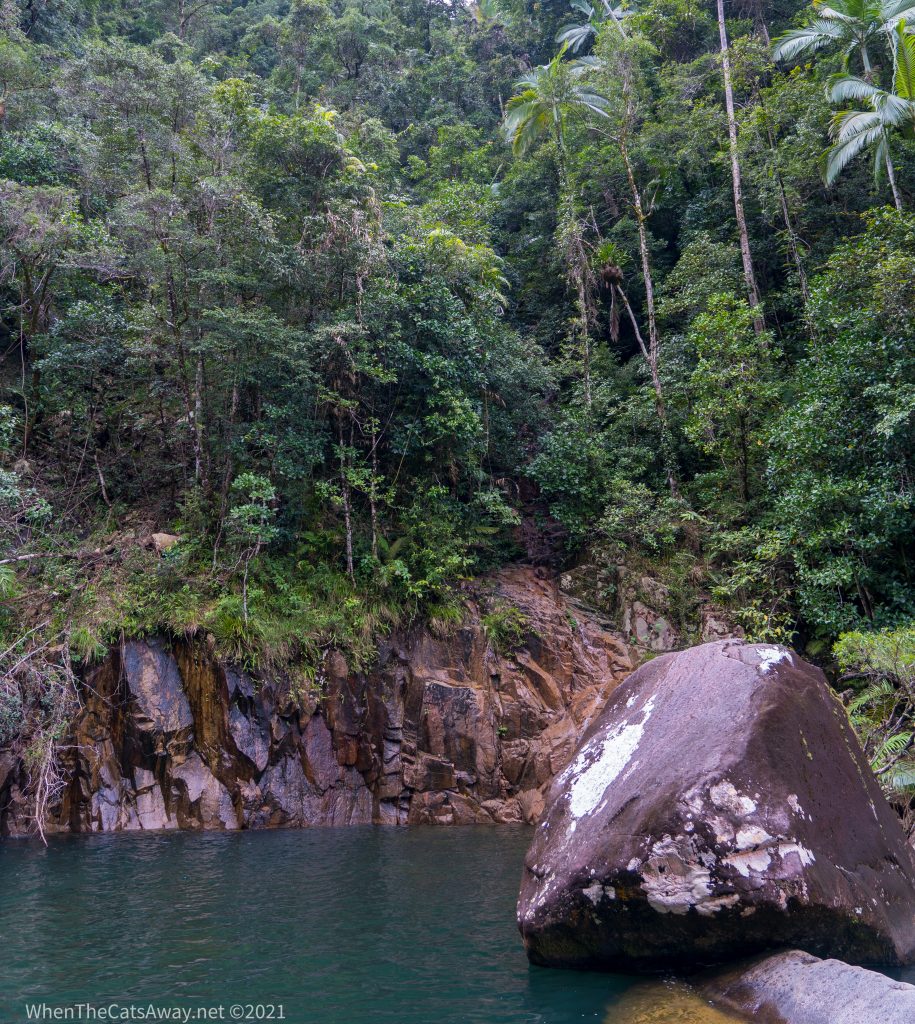
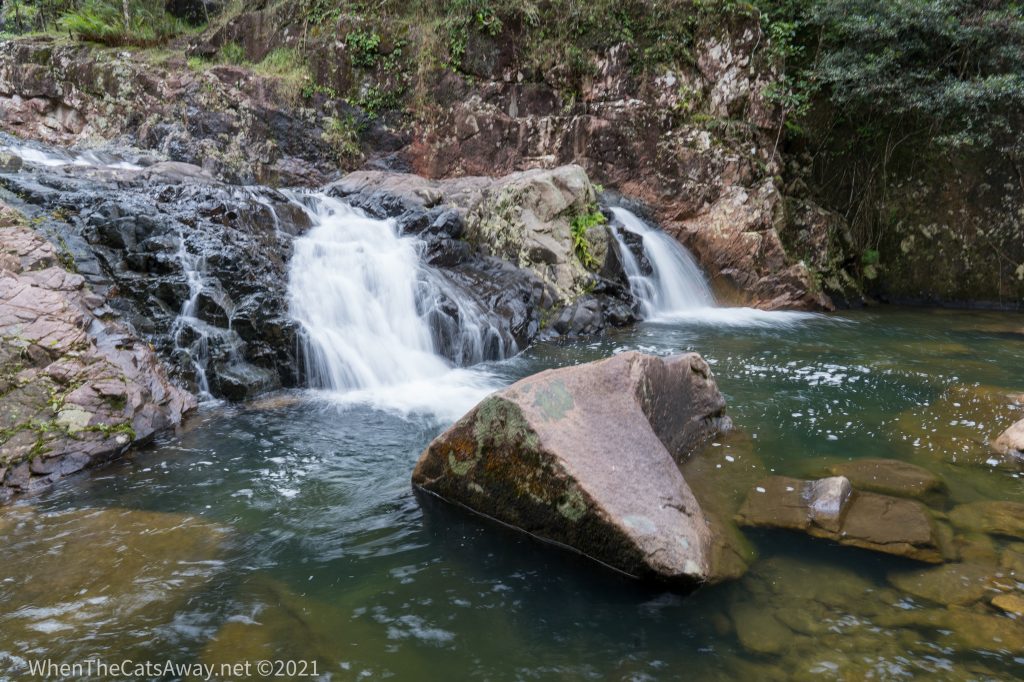
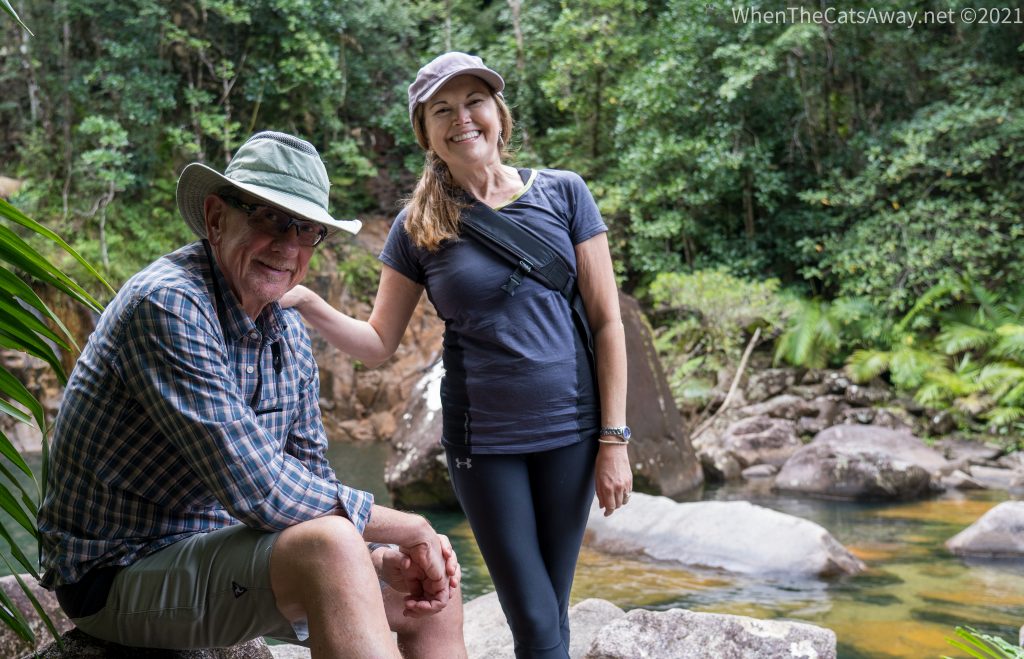
We had to tear ourselves away for a couple of day trips as there’s a lot to do in the area. The first was a short drive up the road to a series of pools and cascades we had visited many years ago. On this trip, in what is mid winter in the tropics, it was pretty empty. However, when I say winter, it was another 28 degree day, with water temperatures not far below that, so not too bad. As our park host Rod said, “Even in far north Queensland there has to be winter. Last year it was on a Wednesday”. So even I got the lower half of my body wet (I know…not a big fan of full immersion) and Catherine was swimming around in her hiking clothes having come totally unprepared with no swimming gear.
A perfect spot for meditation…in the brief half hour we were alone!A lovely day for a fully clothed swim
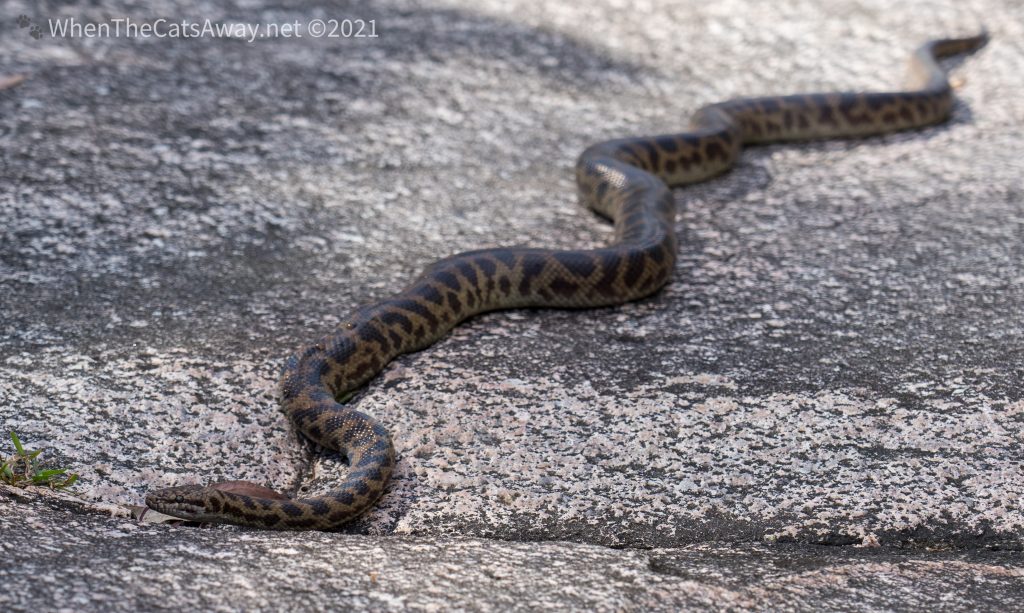
We clambered up the various rock pools further away from the few families that were there, constantly issuing strident instructions to their kids (equally determined to ignore them!), and had a swimming hole all to ourselves. We even got to spot a nice python slithering around finding some sun to power up on. As you do if you’re a python.
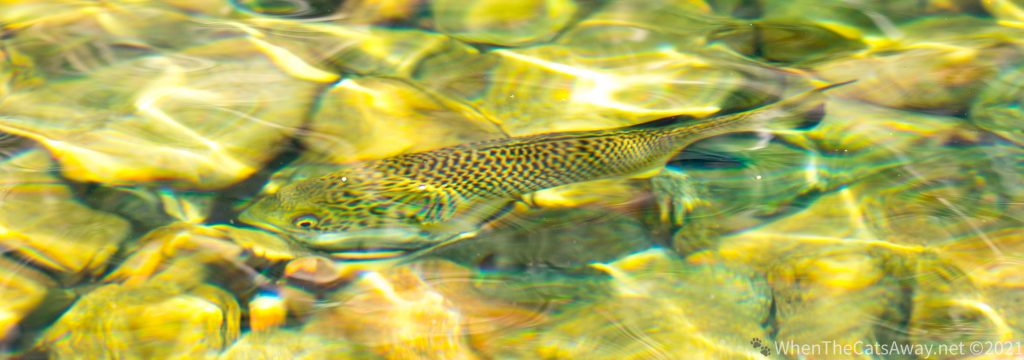
A non-venomous Spotted Python has just had a swimHeavenly natural spas created by the waterfallsA local fish swims over to say hello – clearly used to visiting humansMany options for cool off on a warm day
Our second day trip was to Paluma National Park, which is located a 40 minute precipitous winding drive away up on the ranges. At that this point in Queensland they drop down right near the coast and create a narrow corridor of flat land before the ocean. We did a couple of short walks, but sadly I wasn’t in the best of spirits as I count off the days to get my next eye test mid week. It‘s certainly affecting my mood, I know that. If the pressures are still high then its going to be really problematic finding treatment options. The risk is constantly there for me of slipping below the eyesight level required to hold a driving license. I’m right on the edge now, no room for further deterioration. It would certainly change a lot of things for us. So anyway, not our best day out, but Catherine did get some great shots…again.
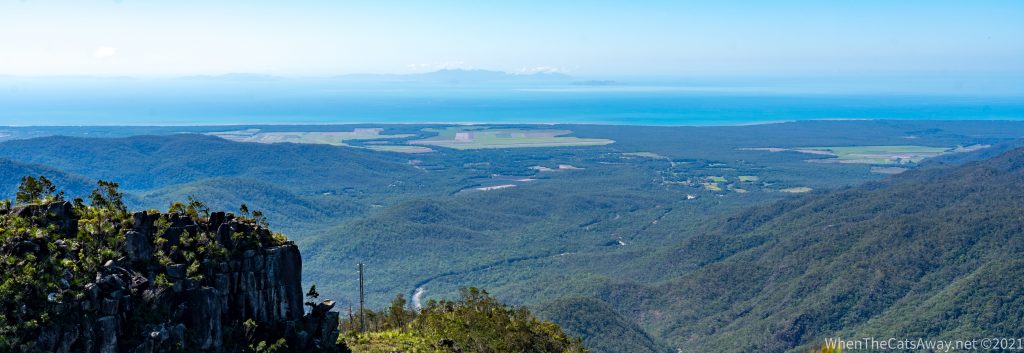
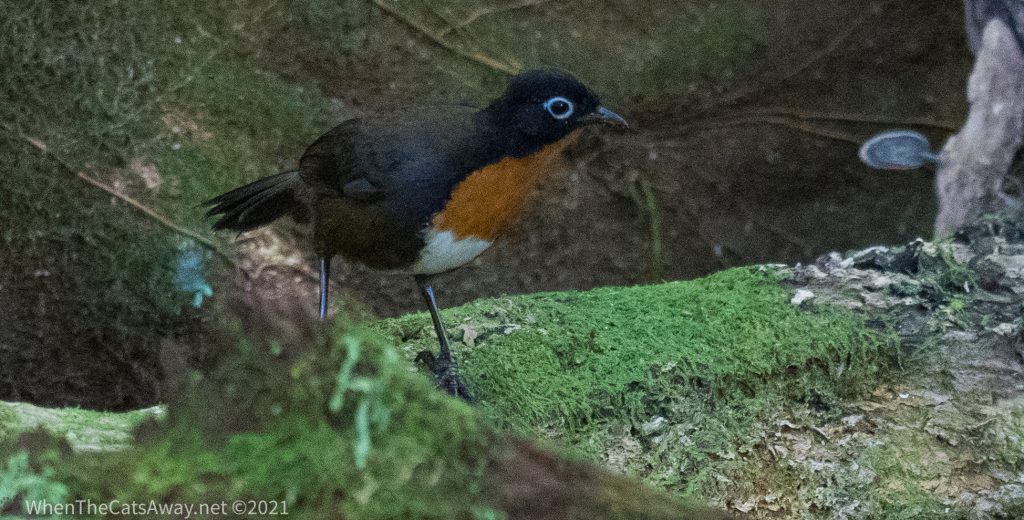
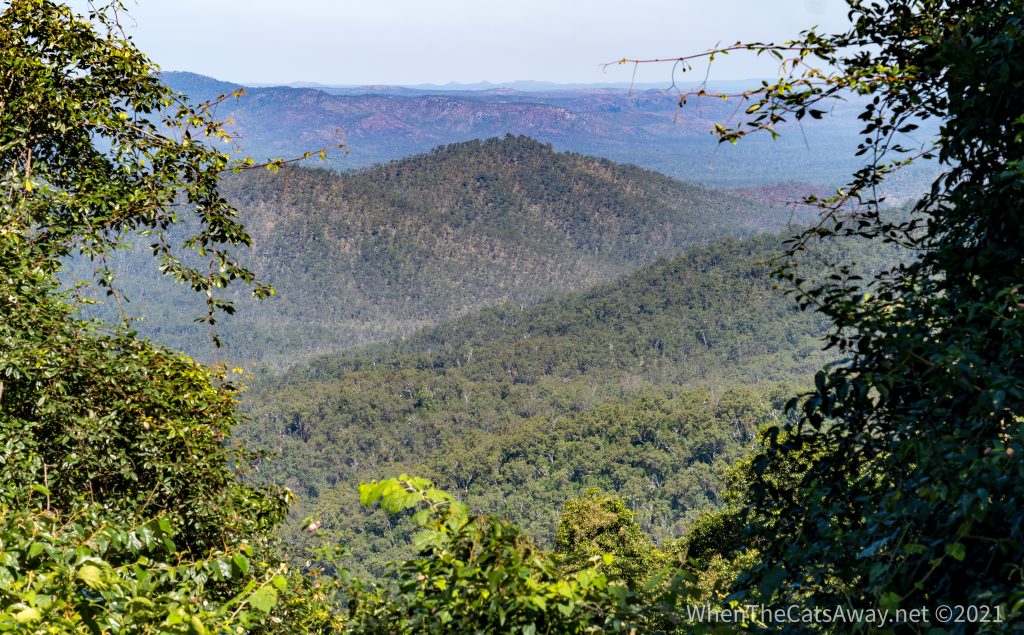
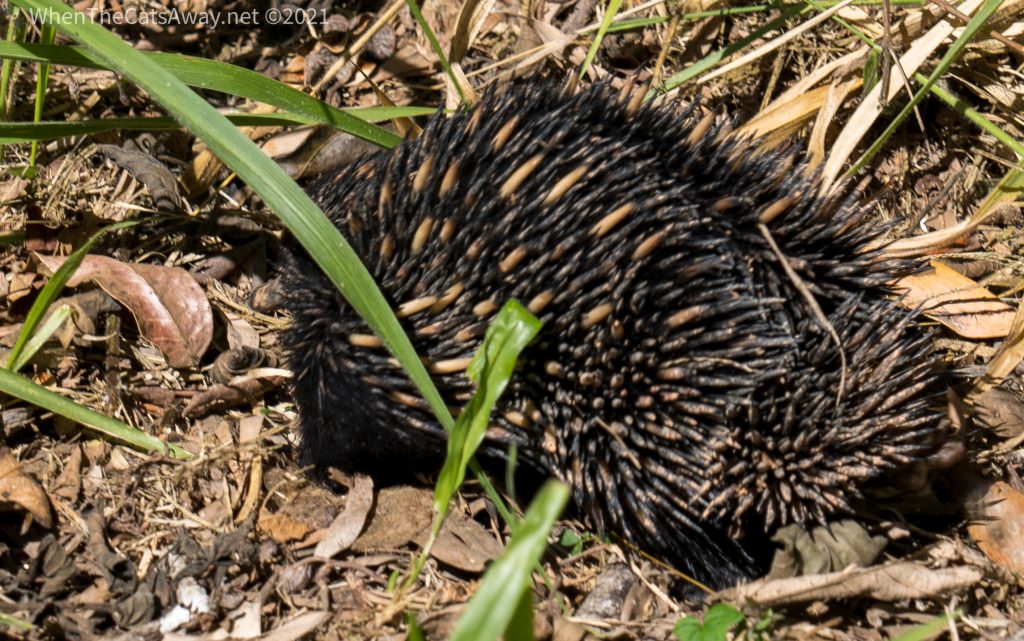
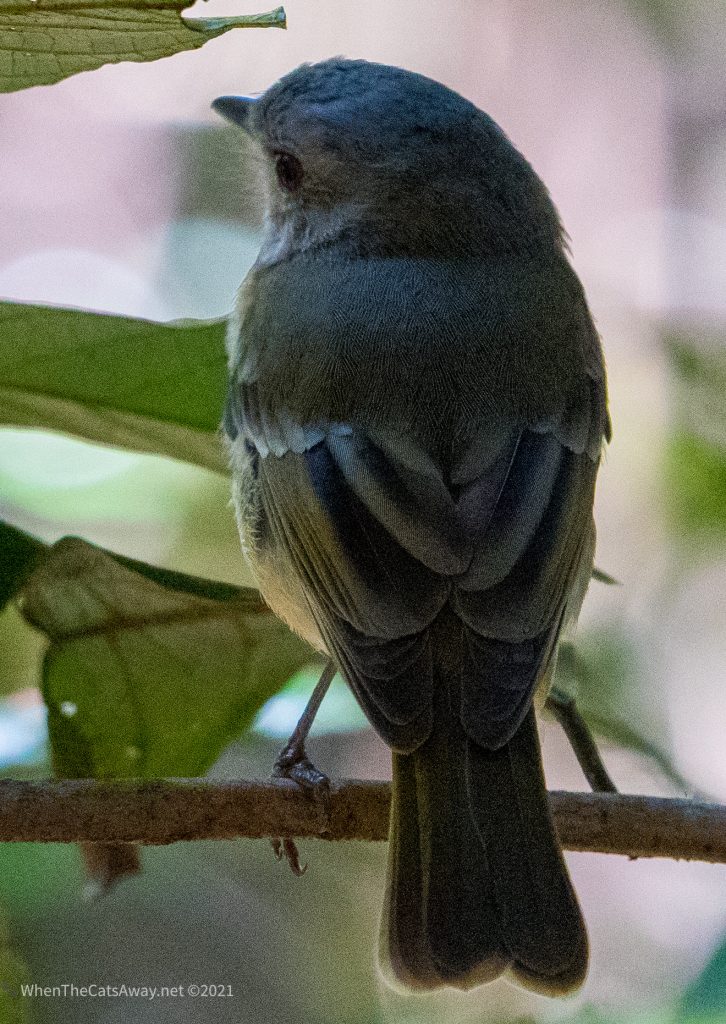
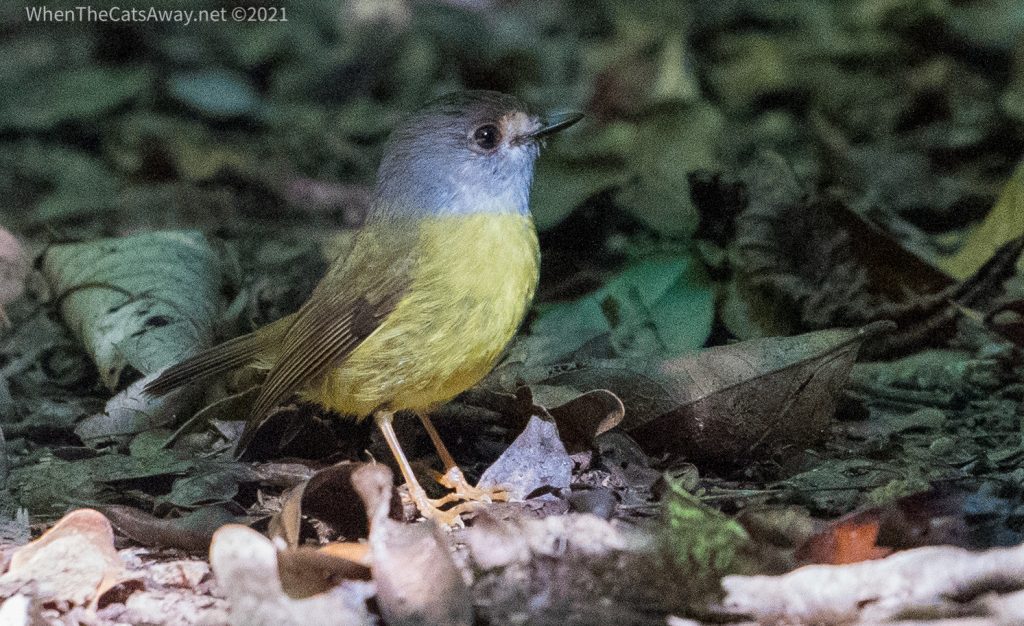
Witt’s LookoutChowchilla – rainforest dweller that digs in the leaves for insects Looking west from Paluma there is forest as far as the eye can see – Paluma Range National Park and Paluma State ForestAn Echidna comes snuffling through the undergrowth – the first we have seen this year!A female Golden WhistlerPale-yellow Robin…. how did they come up with that name I wonder?A Large-billed Scrub-wren hops along a mossy log
The next day I awoke determined to be more positive, did some exercises (always helps!) and set off for what we thought was going to be a routine trip to a supermarket up the coast at the nearest town of Ingham. I had noticed some wetlands marked on the map on the edge of town and we decided to give them a go. We also use an app called ”e-Bird”, which is populated with birders’ sightings around the world, and it was shown as a hot spot on there. Well, talk about having no real expectations then having them blown away! It was amazing. Much bigger than we thought, and absolutely packed with birdlife, many of them new-to-us species. Apparently it was also home to a four metre saltwater croc, which we didn’t see, and I didn’t mind that as some of our path took us along the water‘s edge!
The wetlands are named after an endangered species sometimes found there, the Eastern Grass Owl (Tyto Capensis), which we didn’t see, but look at all the species we did.
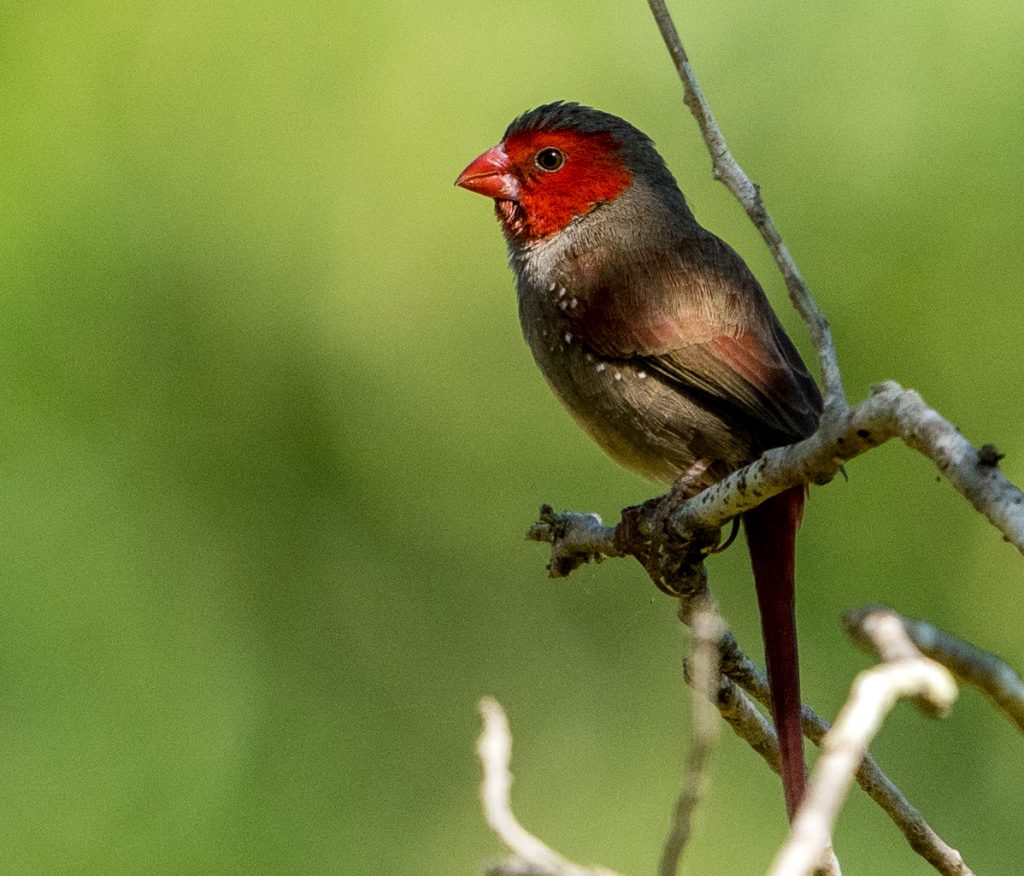
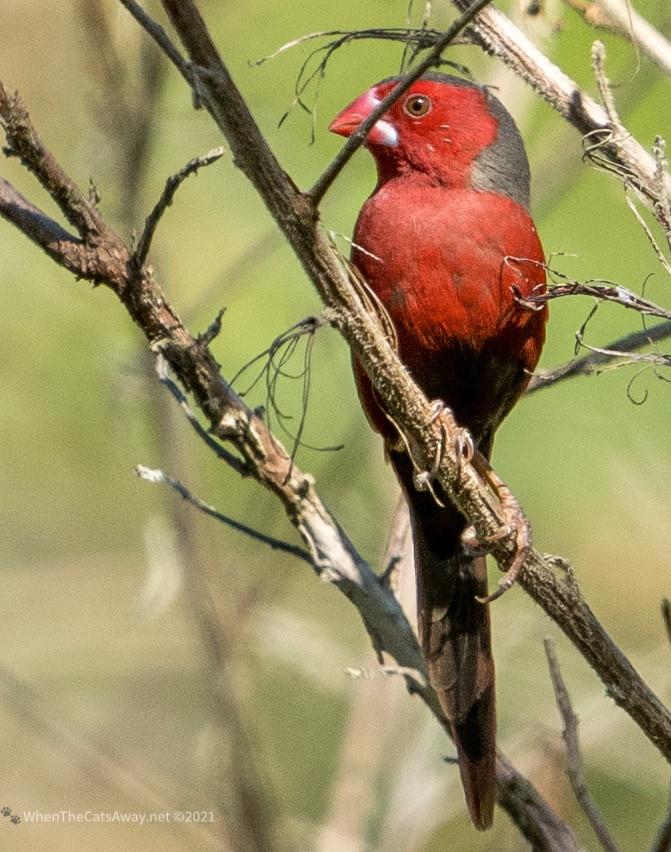
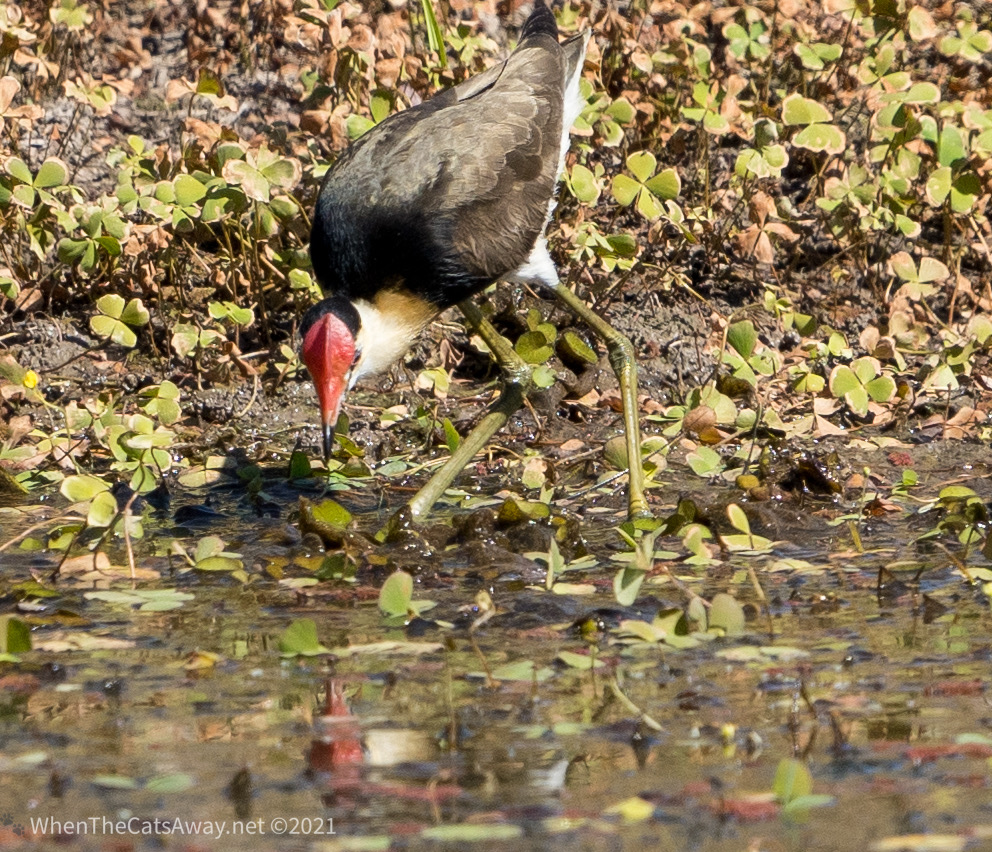
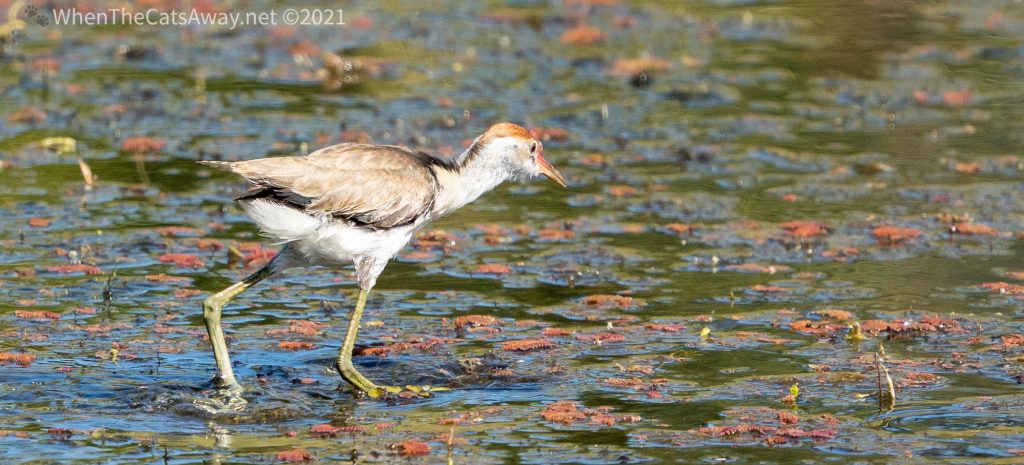
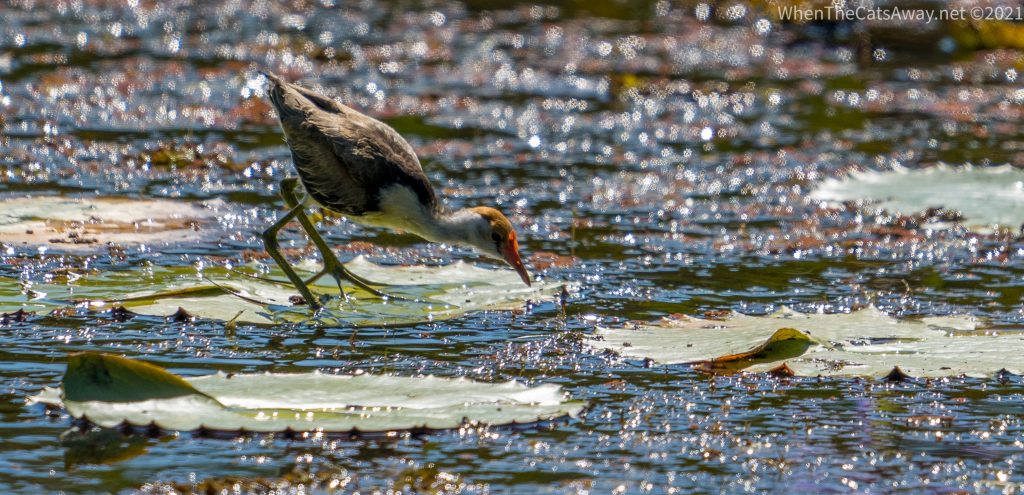
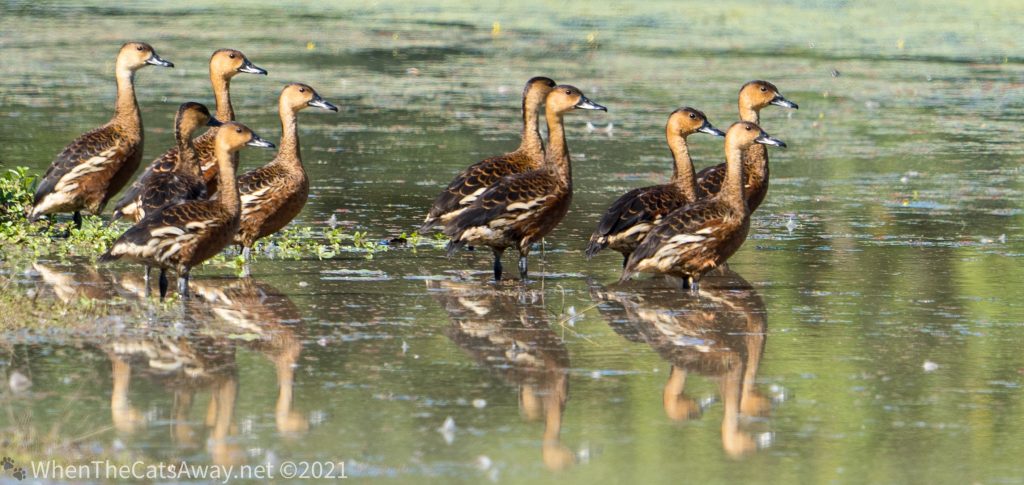
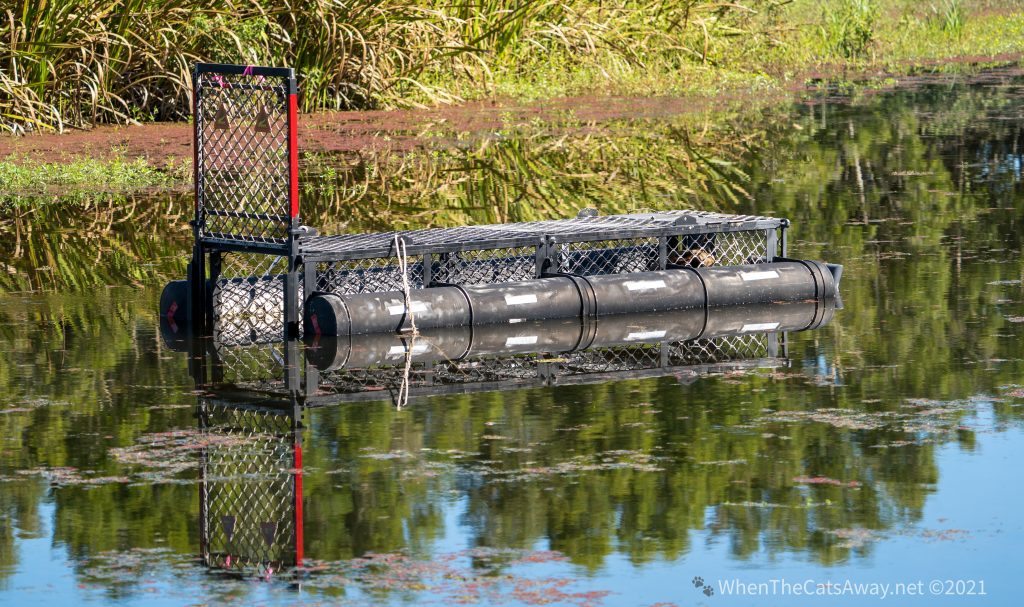
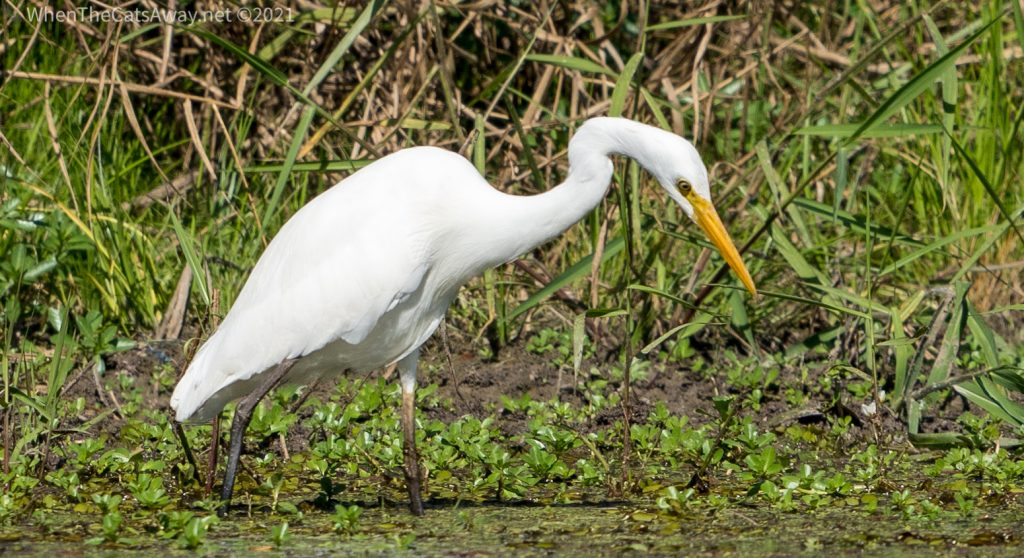
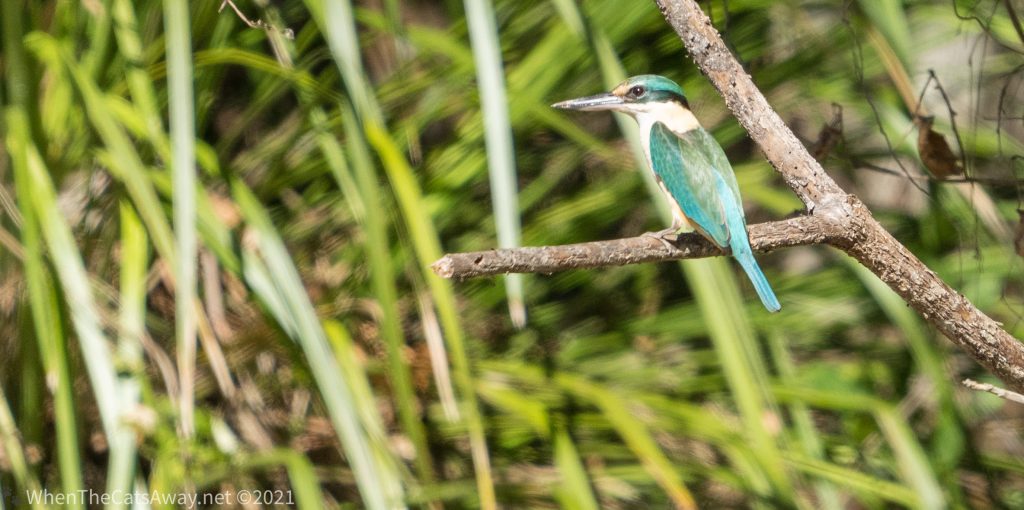
A female Crimson Finch sporting a rather fabulous hairstyleMale Crimson FinchComb-crested Jacarna – sometimes called the Jesus bird as they seemingly walk on waterThey have huge feet which allow them to walk over vegetation such as water lilies to find their foodLook at that poise!Wandering Whistling Ducks, all lined up ready for takeoff! Red-backed Fairy-wrens find solace amongst the grasses and reeds to hunt their insects – makes them a challenge to seeBlue-winged Kookaburra high up in the treesA crocodile trap – yes, there is apparently a 4 metre long Saltwater Croc in these wetlands…not yet caughtAn Intermediate Egret stalks its next mealA Sacred Kingfisher waits patiently
Hinchinbook Shire Council must be congratulated for this initiative. We walked almost all of the paths that meandered around this area that was saved from the encroaching sugar cane farming in 2002. With the mid winter temperature now over 30 degrees, I think we are visiting at the right time, summer would be unbearably hot and humid.
So a few days down, and we still have a while staying in this area so I will let Catherine take the writing reigns for the next instalment.
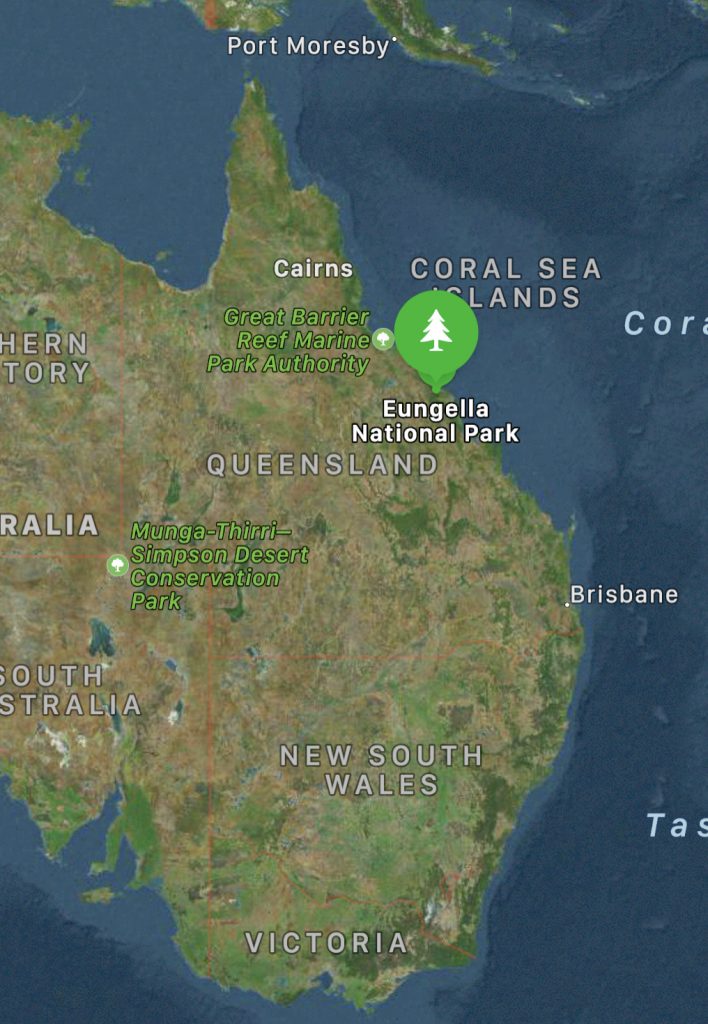
Location: Finch Hatton, Eungella National Park, Queensland
It was nearly 19 years ago when Mark and I first visited Eungella National Park. It was August 2002 and were on our honeymoon. After a week of sailing around the Whitsunday Islands with friends and family, we had a few free days to ourselves. hoping to spend some time kayaking around the islands. it was much too windy for kayaking, so we opted for plan B. After a couple of nights camping, we spent a few days in a cabin in Eungella National Park. I remember clearly us seeing our first platypus, and being enthralled by the rainforest birds that visited our cabin surrounded by trees and vines. And so the spell was cast – we had to return.
Eungella National Park is situated about 80km west of Mackay, half way between Cairns and Brisbane. Located on the eastern side of the Clarke Range, the landscape is lush and rich, receiving plenty of rainfall.
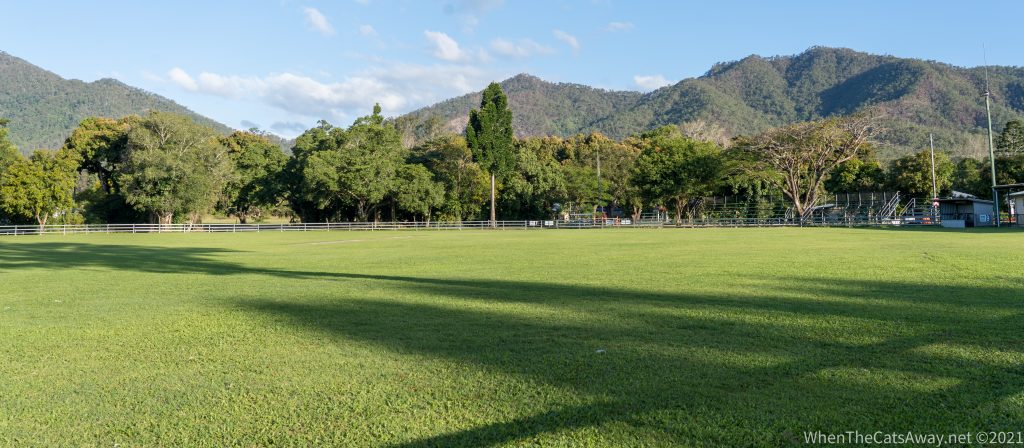
The location of Eungella National ParkOur campsite at Fitch Hatton Showgrounds is far from fancy but the views more than make up for it
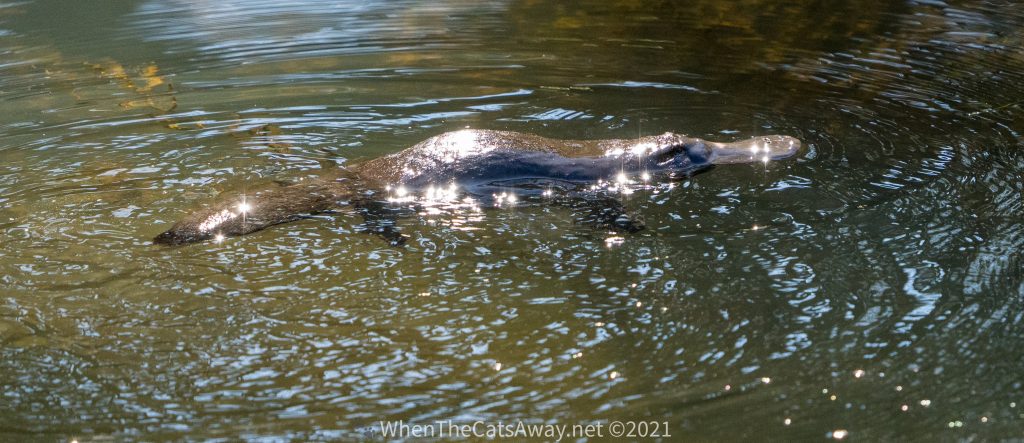
This is in fact our third trip back to this gorgeous location, every time as magical as the first. After setting up camp in the Pioneer Valley at Finch Hatton, we rushed up to Broken River to try and find platypus. As these bizarre looking creatures live for an average of 20 years, it could be possible we have seen the same ones on each of our visits.
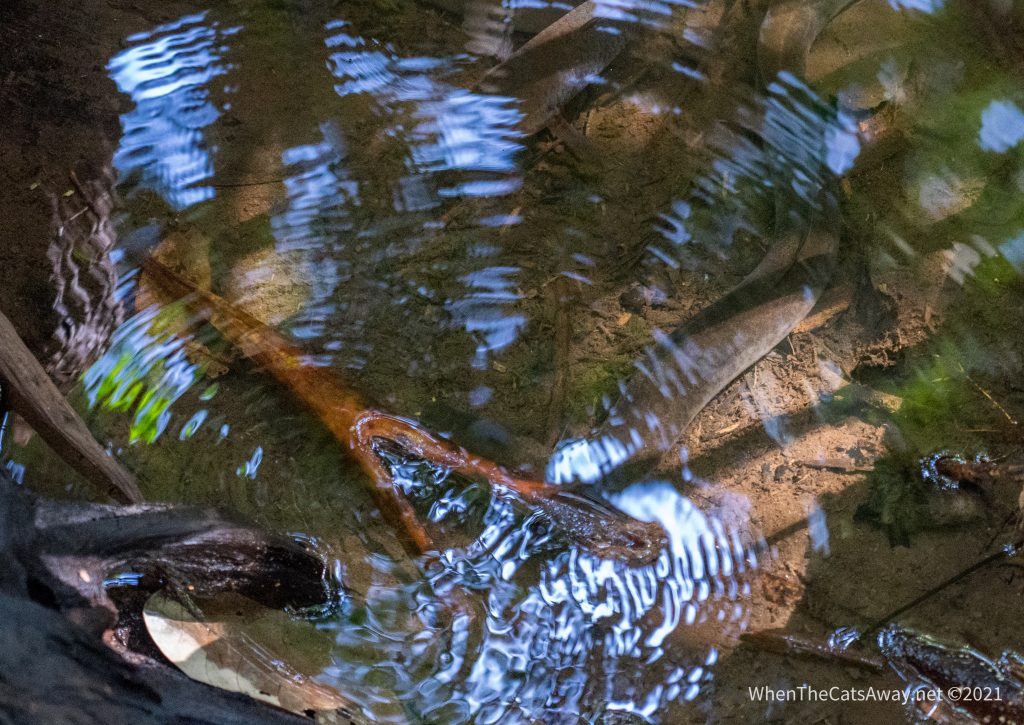
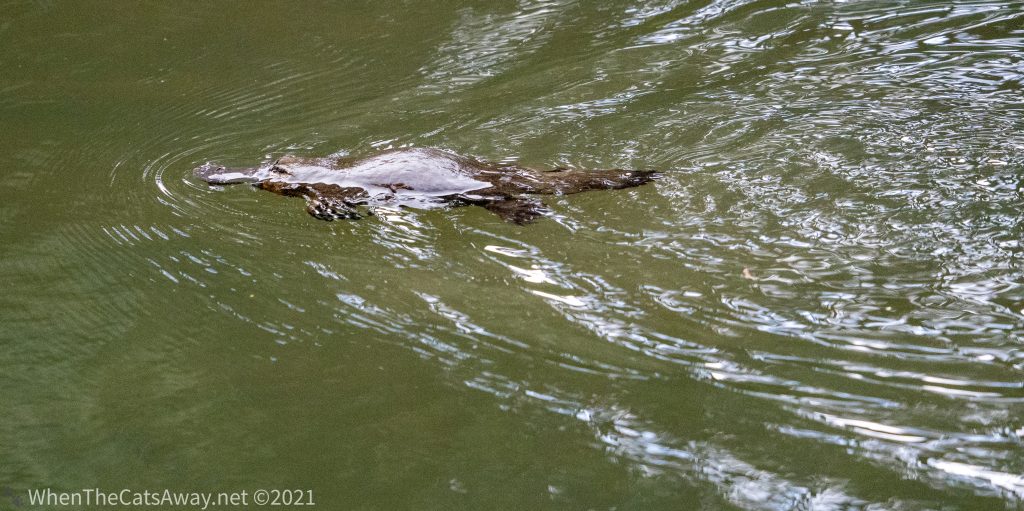
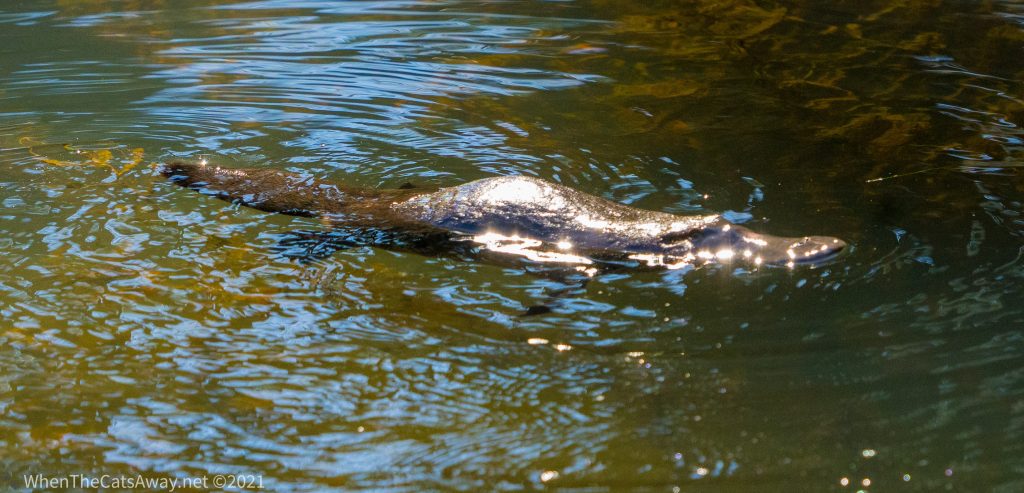
We followed a walking trail along Broken River, looking out for telltale ripples and bubbles. It didn’t take long before we spotted one.
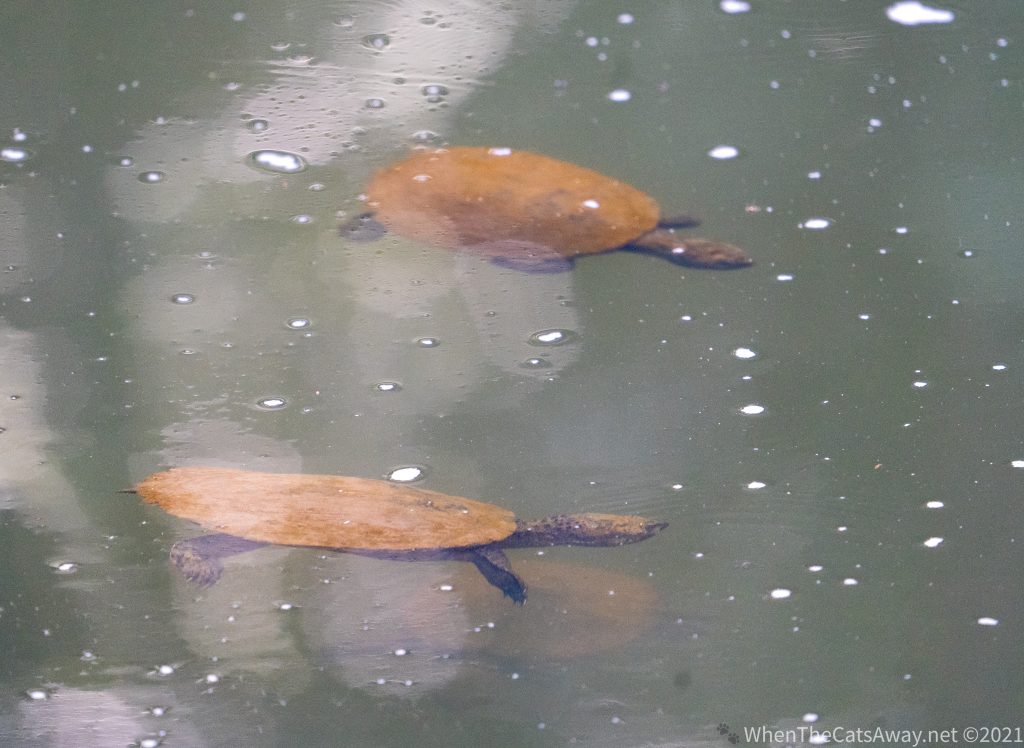
To our delight we find a platypus out foraging for foodIt is hard to know which end is which – you can see the eyes on the right hand side, before the ‘beak’Saw-shelled Turtles also are frequently seen sharing the pools with Platypus
Platypus are an endangered species, already extinct from South Australia (though they have now been introduced to Kangaroo Island), and with reducing numbers elsewhere. This is one of the best places to see them in the wild and we relished the opportunity.
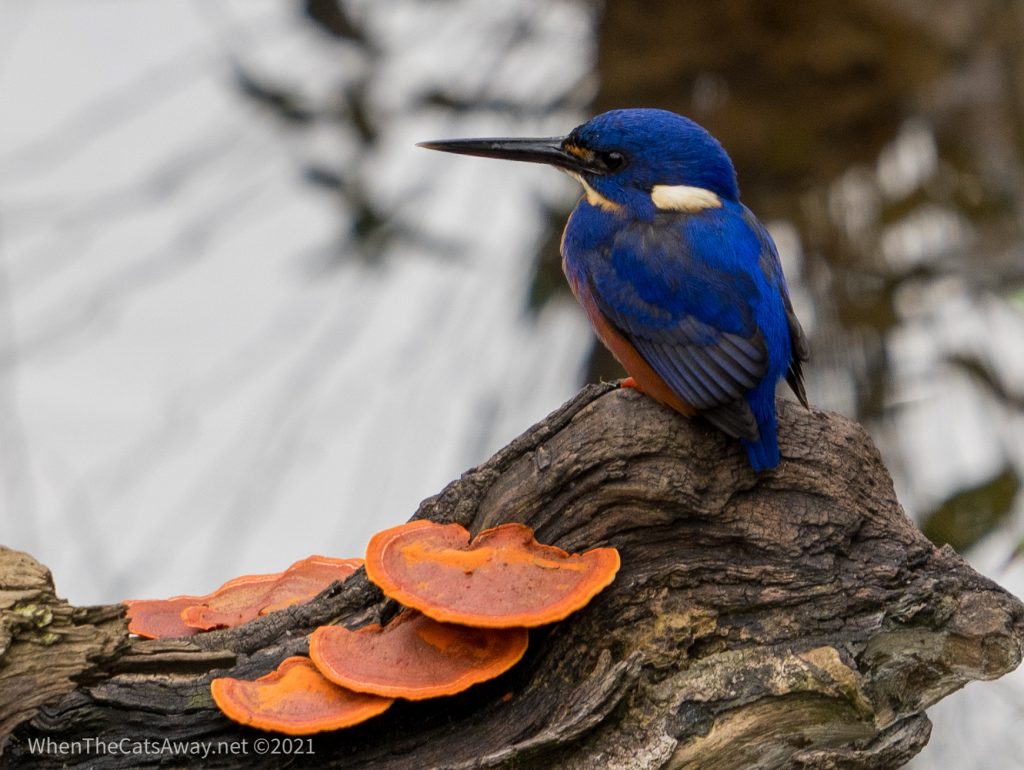
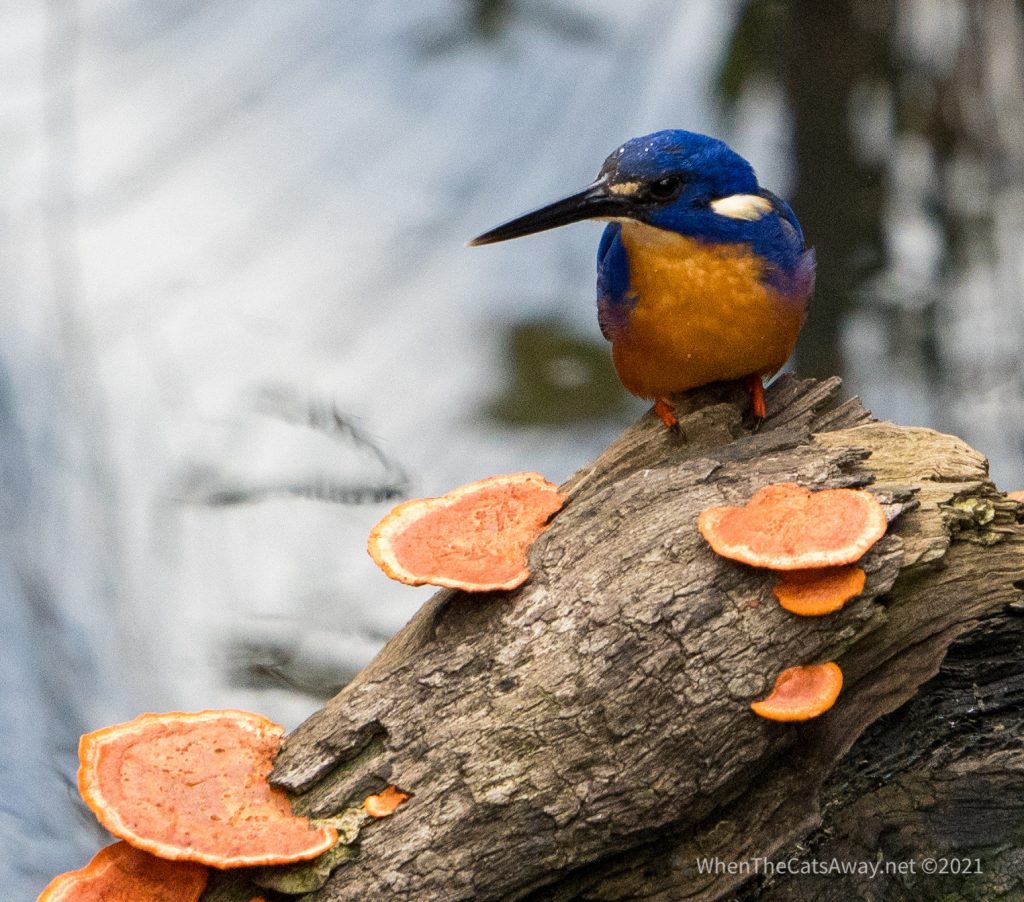
We spotted an Azure Kingfisher which seemed to have a symbiotic relationship with the platypus, following it around the pool and diving in when the platypus disturbed small fish. It certainly gave us a good show, nevertheless!
Spectacular colours of the Azure KingfisherThe Kingfisher kindly lands on a partially submerged branch covered in orange fungi, to bring out the beautiful orange colour of its chest
Due to the diversity of the environment, the bird life is of course prolific, though it is a challenge to see, as most are hiding away in the dense thicket of the rainforest. We managed to spot quite a few despite this, and even caught some with the camera. Walks were constantly accompanied by the rustles and calls of Whip-birds in the leaves and the booming cries of the Wompoo Fruit Doves high up in the canopy.
An unimaginatively named Brown Thornbill entertains us in the riverside undergrowthAnd our Brown Thornbill gets ready to take off again – they only stop still for a second or twoGolden Whistler – pretty shy but with an incredible voiceA Yellow-spotted Honeyeater drinks nectar from the bottlebrush flowers
We did a few walks through the rainforest, and despite the numbers of visitors were still able to see a large number of birds just going about their daily business. It just took a few moments of standing quietly listening to the rustling and occasional movement to start seeing them there. Of course the density of the undergrowth made it virtually impossible to photograph them so only a fraction of what we saw is shared here.
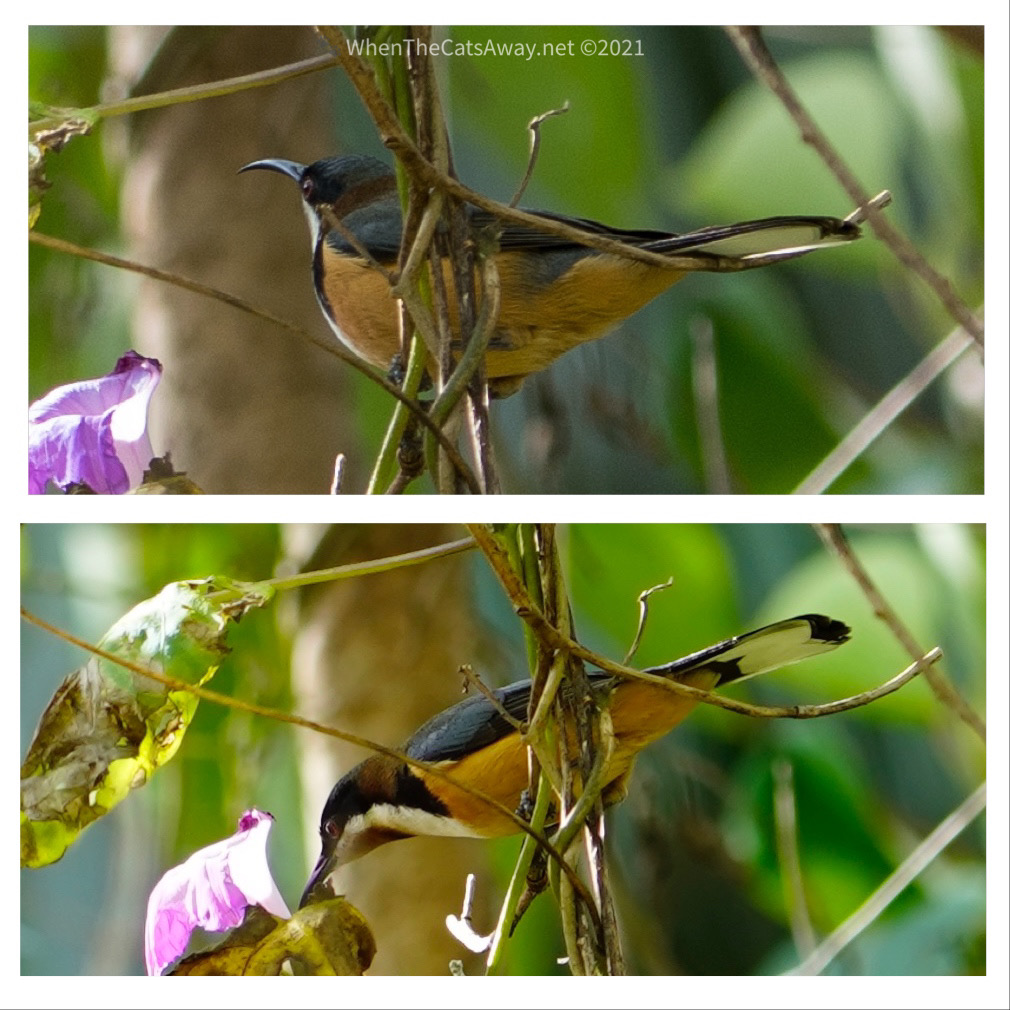
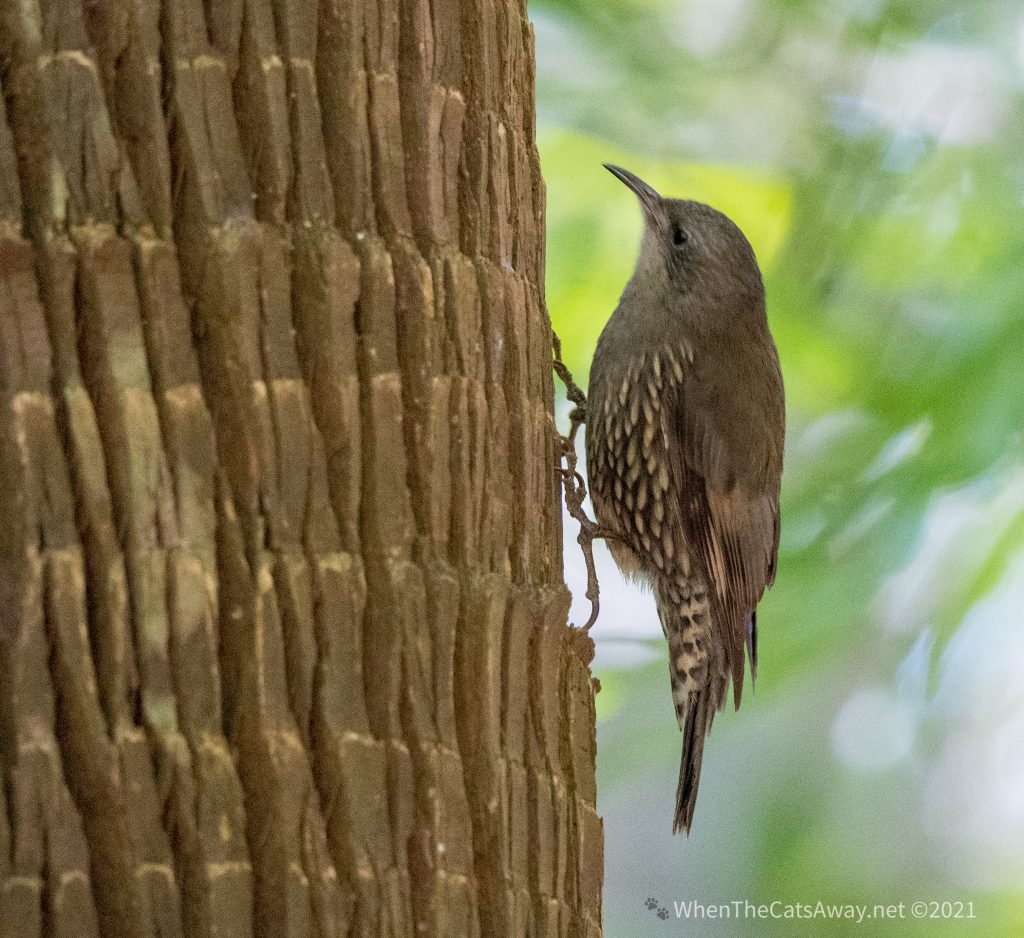
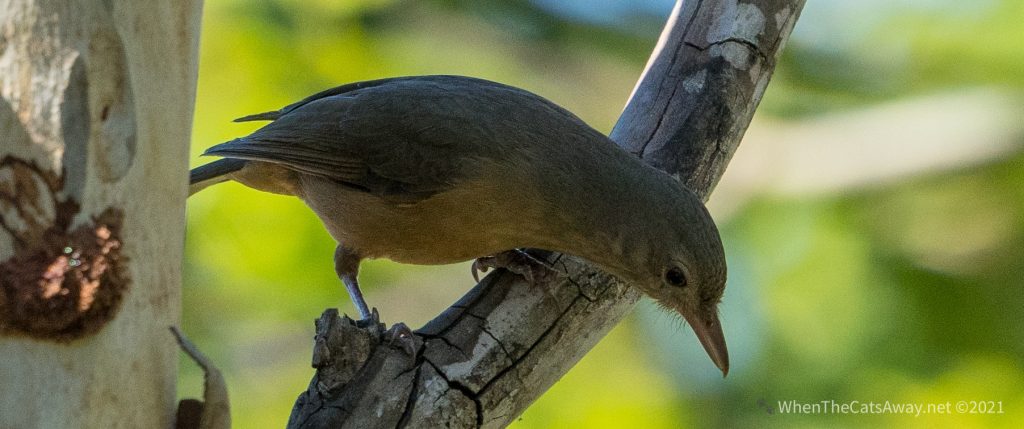
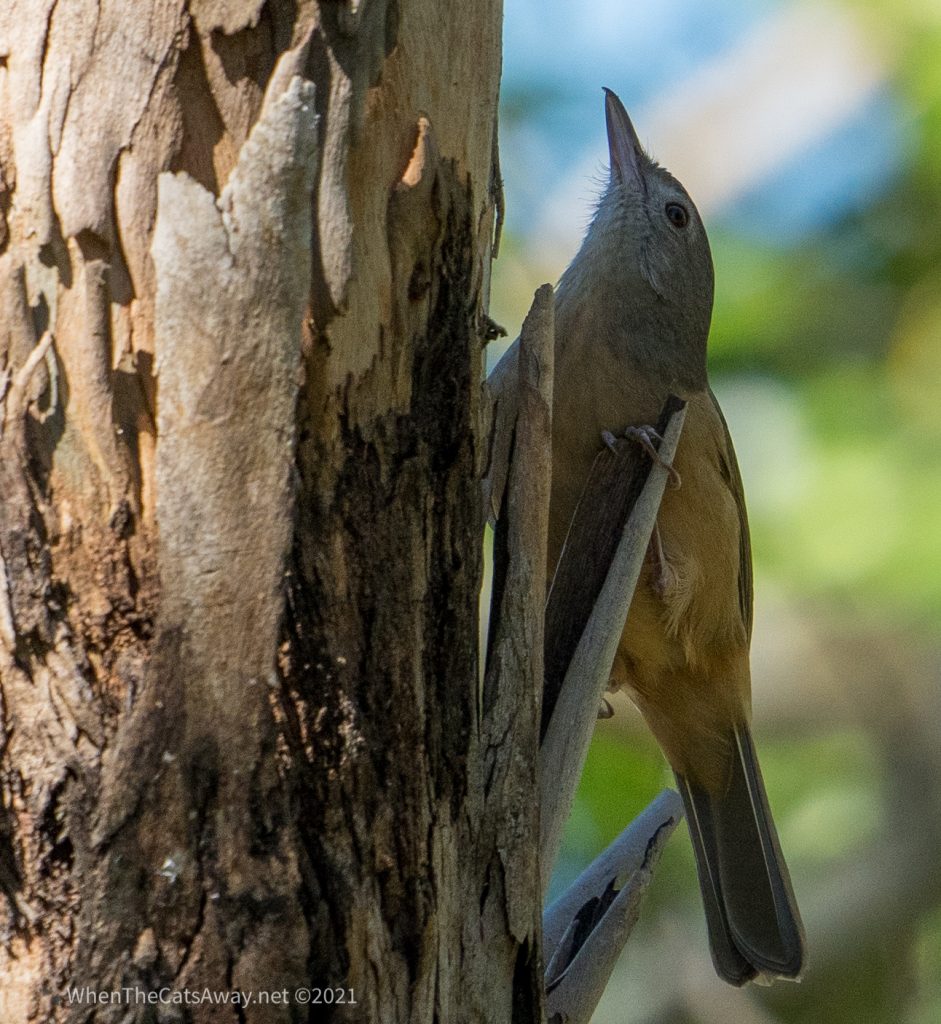
An Eastern Spinebill drinks the nectar from a Morning Glory flower – a pest weed in some of these partsA White-throated Treecreeper appeared on a tree just in front of us and climbed the trunk with its huge feet, hunting for insectsA Little Shrikethrush – another bird that loves hunting for insects, thinking nothing of ripping off bark in its questNo insect is safe from this Little Shrikethrush
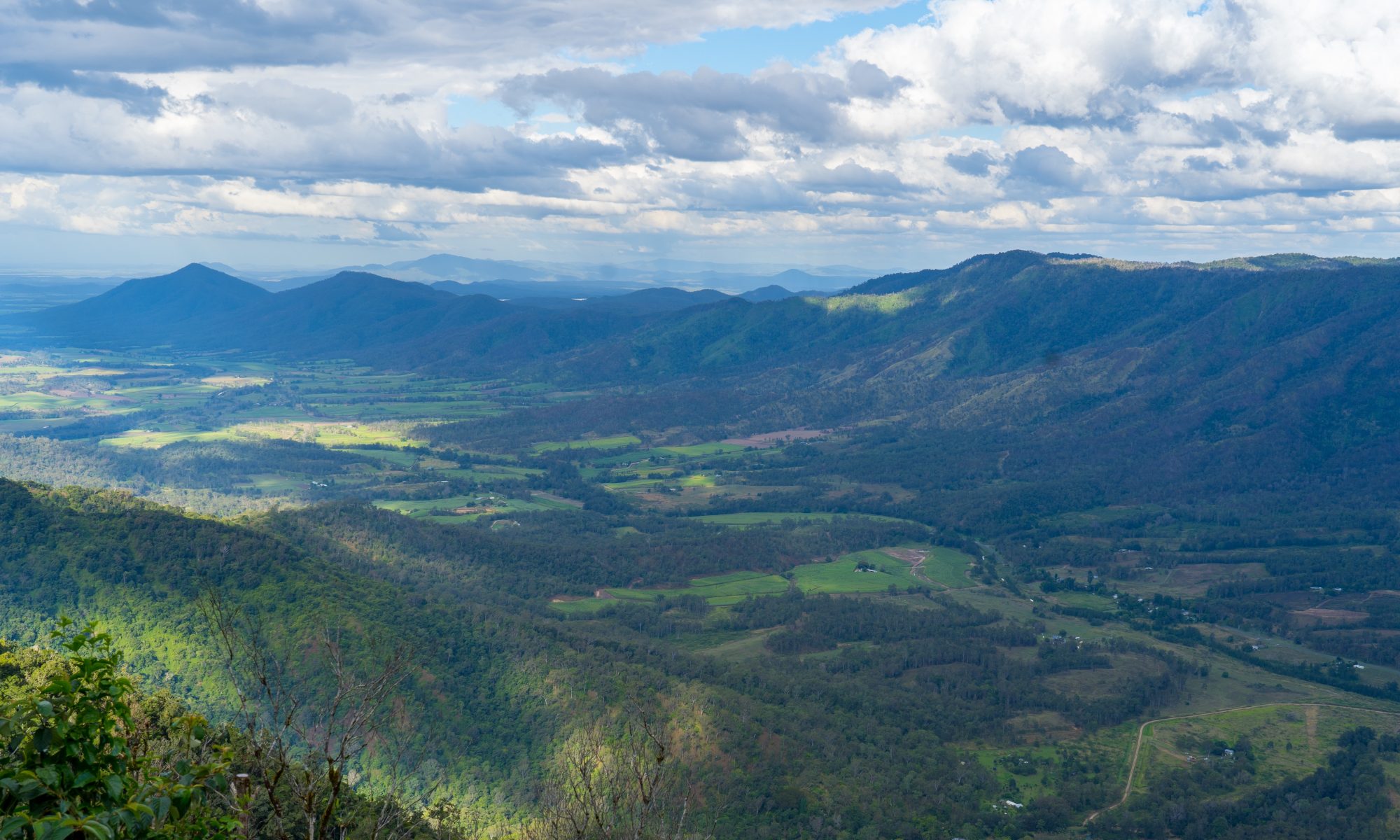
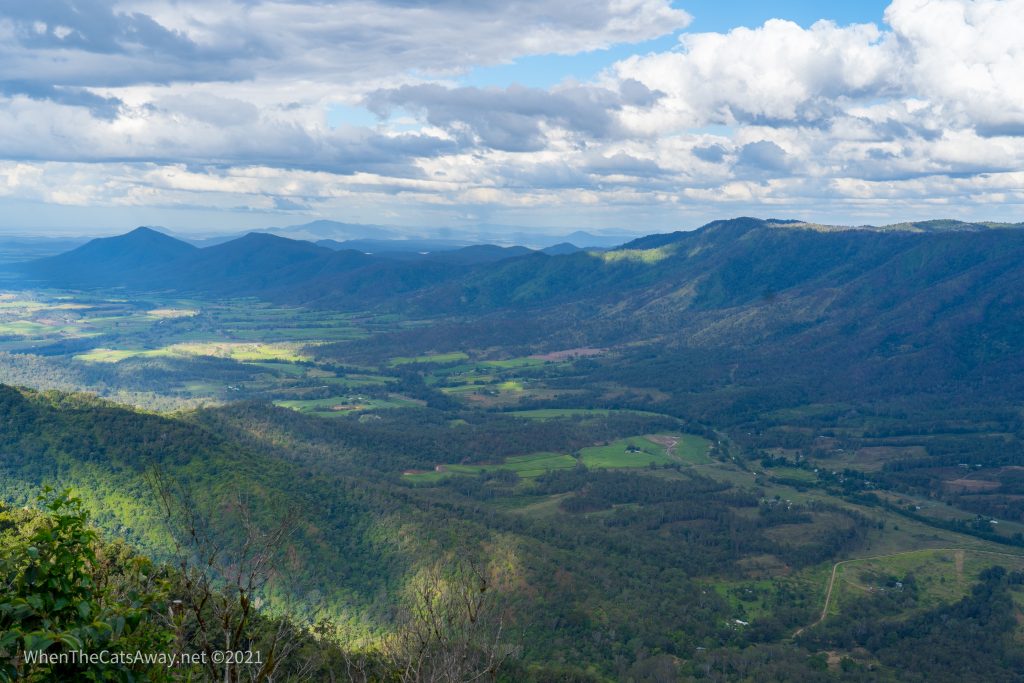
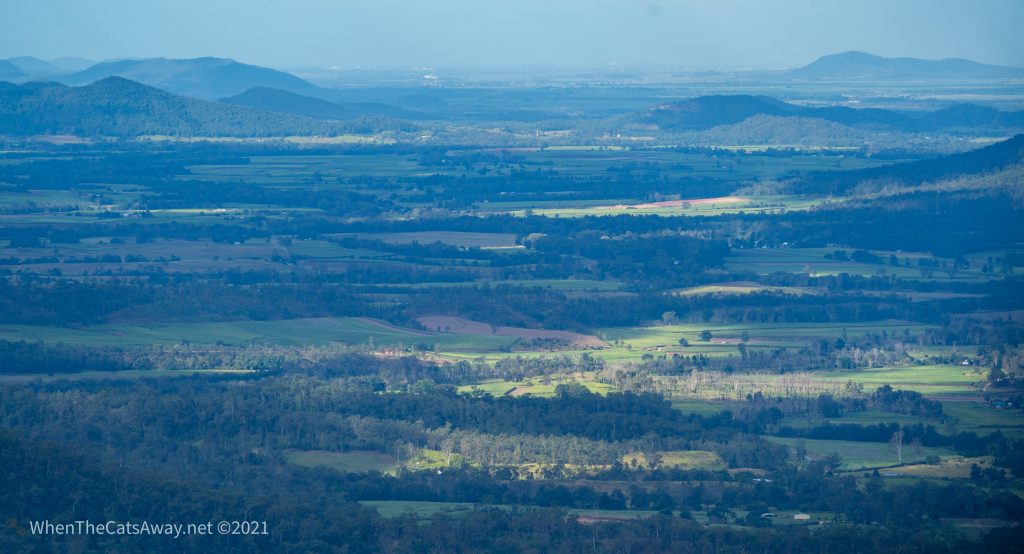
There are many lookouts up on the Eungella Plateau which makes up part of the Clarke Range. The views are simply breathtaking down into the valley where we are staying.
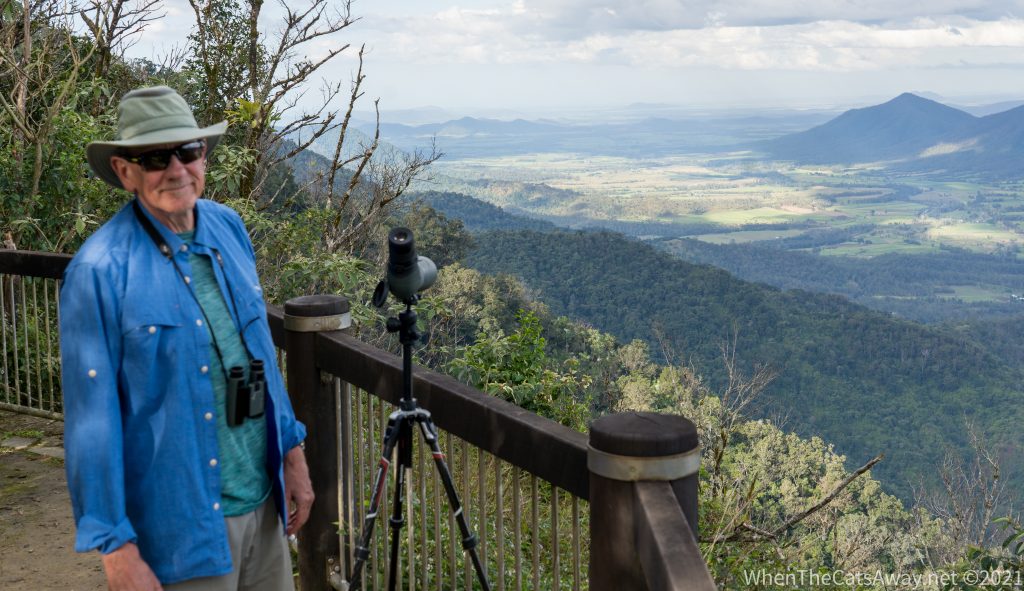
Looking down from Eungella into the valleyMr A finds another use for his spotting scope to look down the valleyOn a clear day you can apparently see all the way to Mackay and the coast from here, just over 90km away
Since European settlement of Australia, around a quarter of the rainforest has been cleared for farming, and this area was originally earmarked for that purpose. While some of the forest was cut down (now used for growing sugarcane and farming cattle), much of it was saved after a 12 year battle and designated national park in 1941.
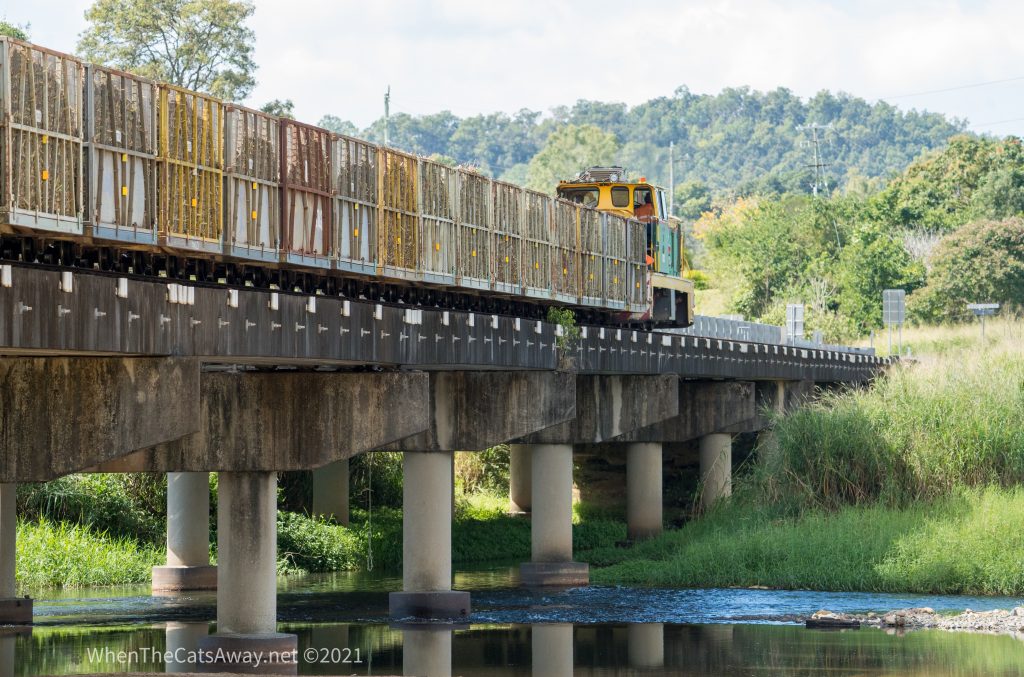
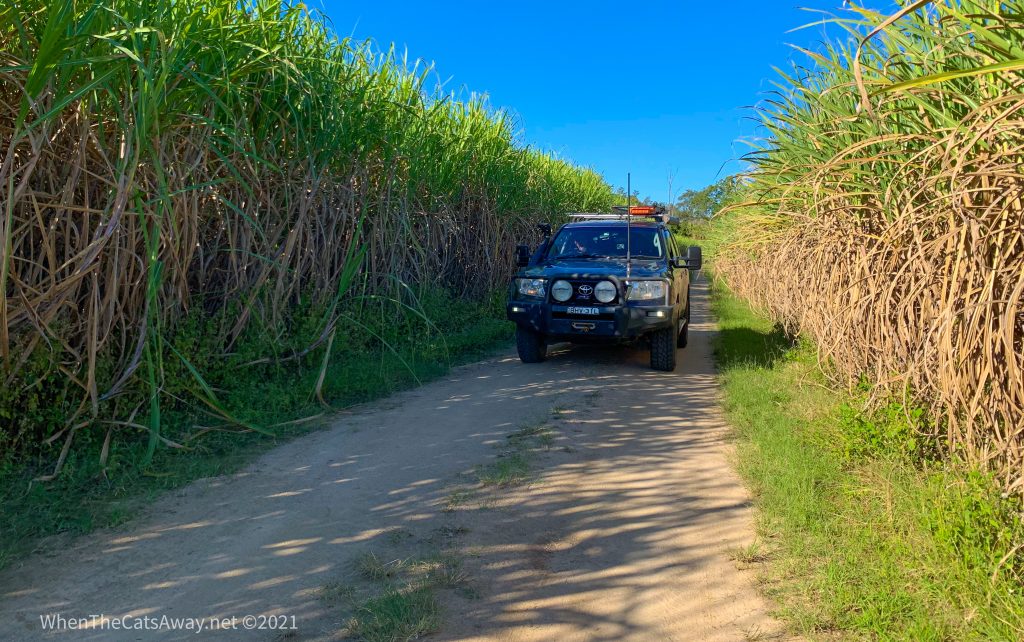
Our visit falls during sugarcane harvest season, with seasonal workers busy chopping the crop and loading up trains and trucks to take it for processing further down the valley. Much of the Mackay region is dedicated to sugar…I would have expected to see more dentists around than I have!
Sugarcane train crossing Cattle Creek
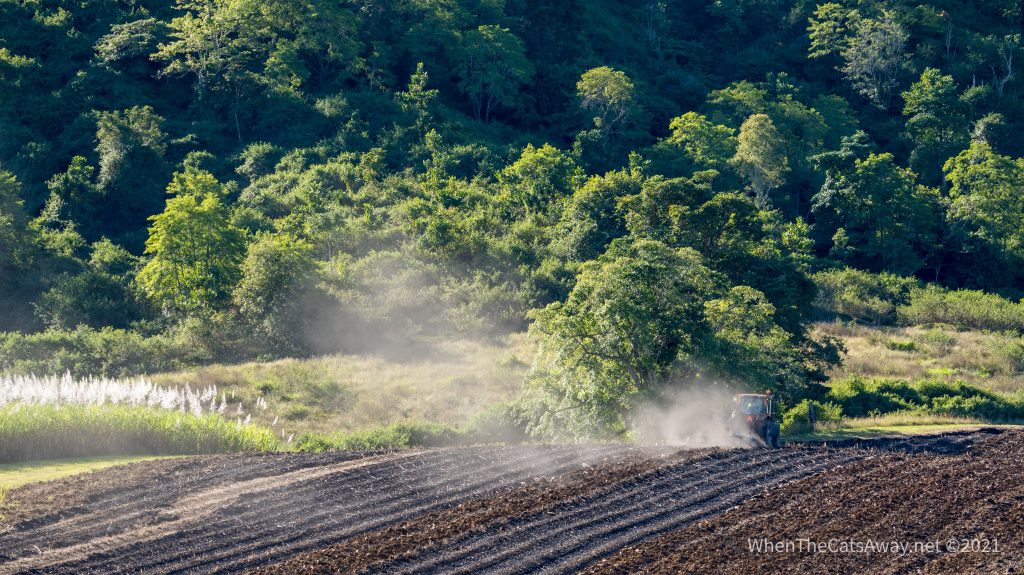
Where cane has already been harvested. the farmers were out busy ploughing the fields ready for planting the next crop. You can see the richness of the soil here, stark contrast to Australia’s land further west.
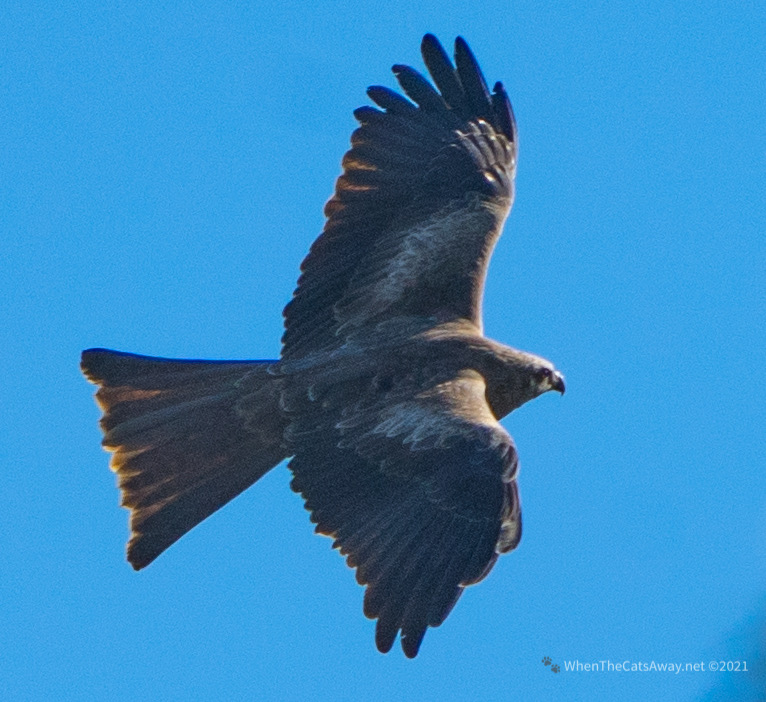
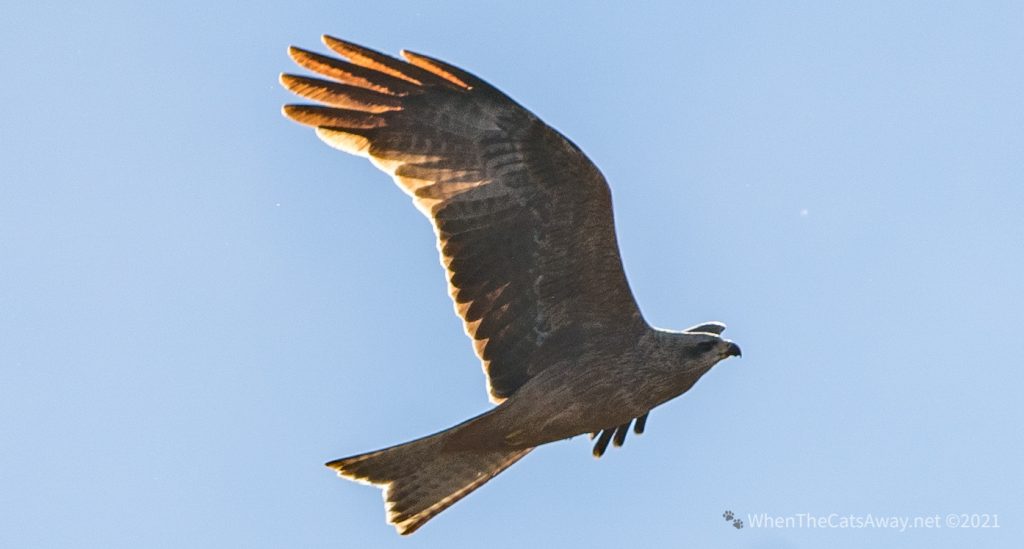
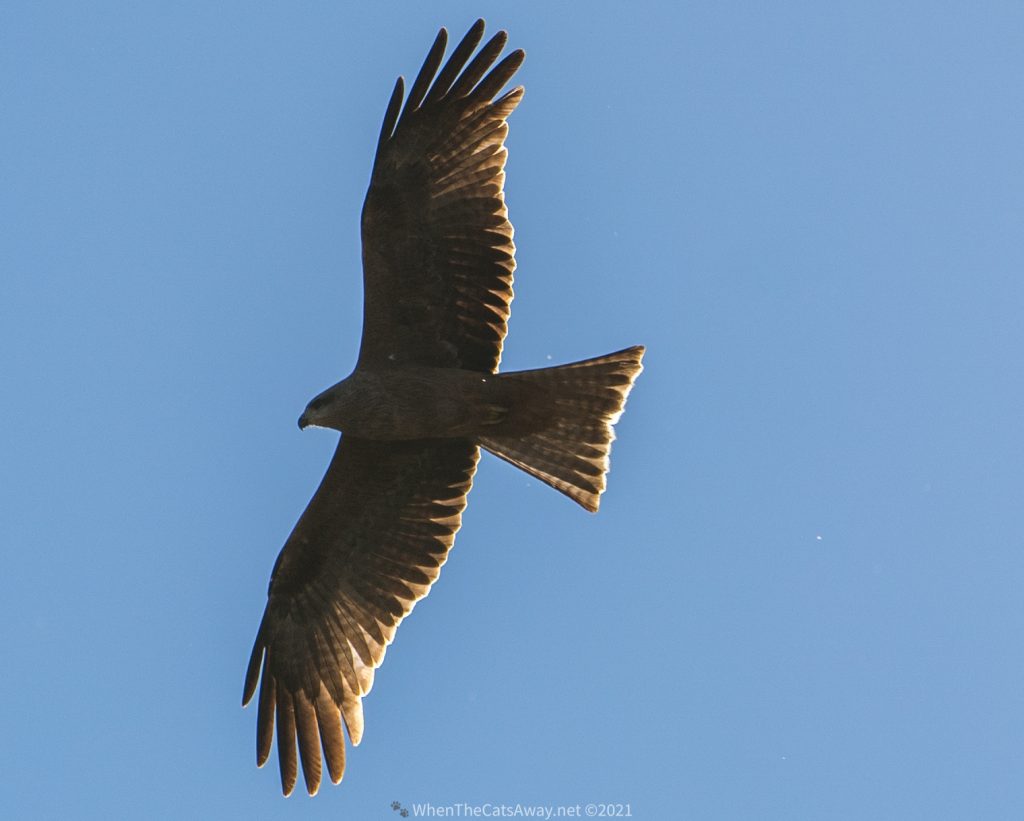
Getting ready for the next cropBlack Kites fill the skies behind the tractor, searching for mice and other goodies turned up by the tractorBlack KiteBlack KiteExploring the farm lanes – it is hard to believe this long grass becomes sugar!
The name Eungella is derived from the First Nations language meaning ‘land of the cloud’. We thank and acknowledge the Wiri-Yuwi People as the traditional custodians of this land. The waters of Broken River have been seen as sacred for the more than 10,000 years these people have called this area home.
Other than a cursory mention, there is little to learn about these nations. A little research reveals they were hunted down in great numbers by the white settlers in retribution for spearing cattle or trespassing on land. Others were enslaved to work on farms or moved to the coast to work on fishing boats. There was little policing in these parts in the mid 1800s, so people took the law into their own hands.
While information boards request visitors to respect the cultural significance of the park, they share no information about this. The Queensland Government National Park’s website talks only of the geological history, avoiding any mention of culture. It is sad to continue to see this when we as Australians should be taking time to recognise the significance of the long human history in this region, and perhaps learning from the way these first nations people lived in this evnivronment.
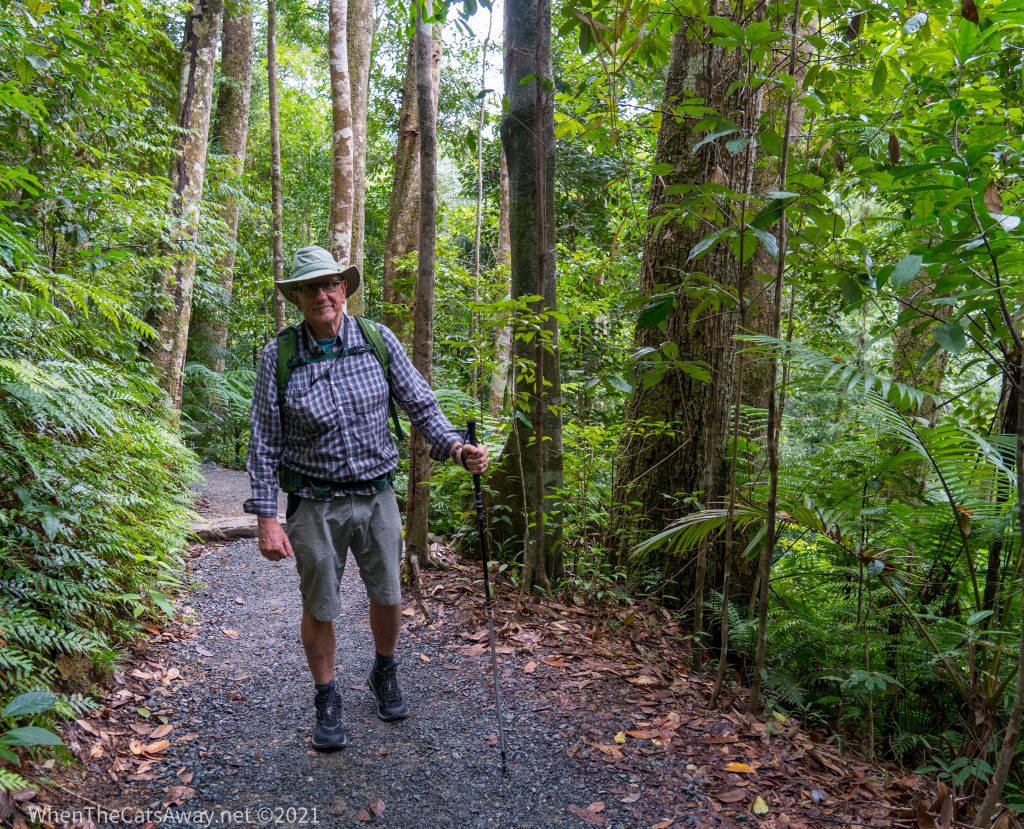
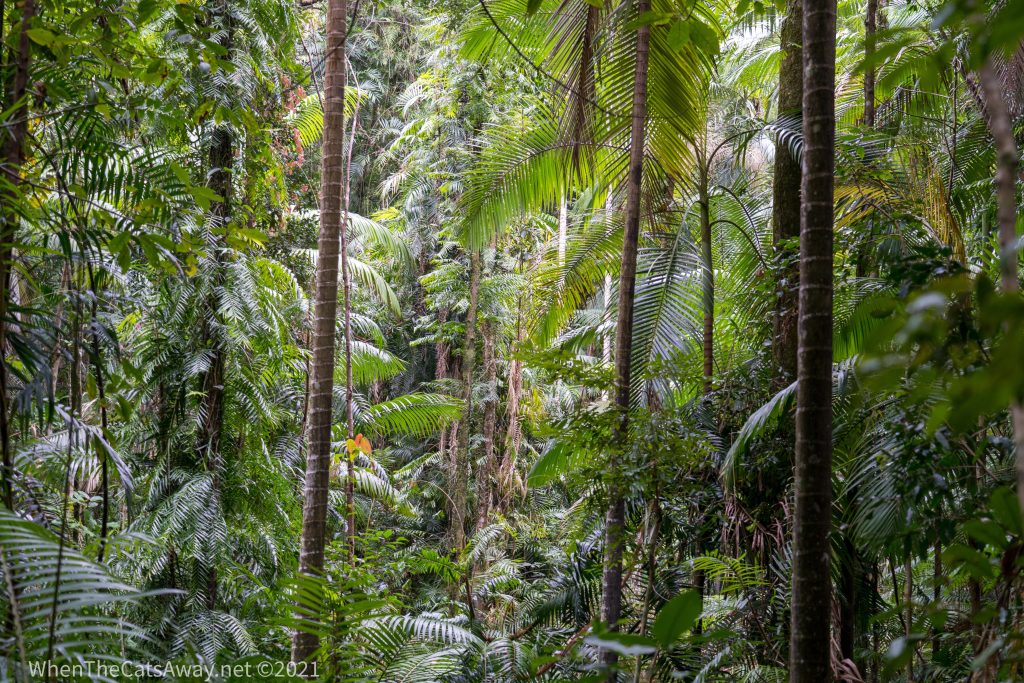
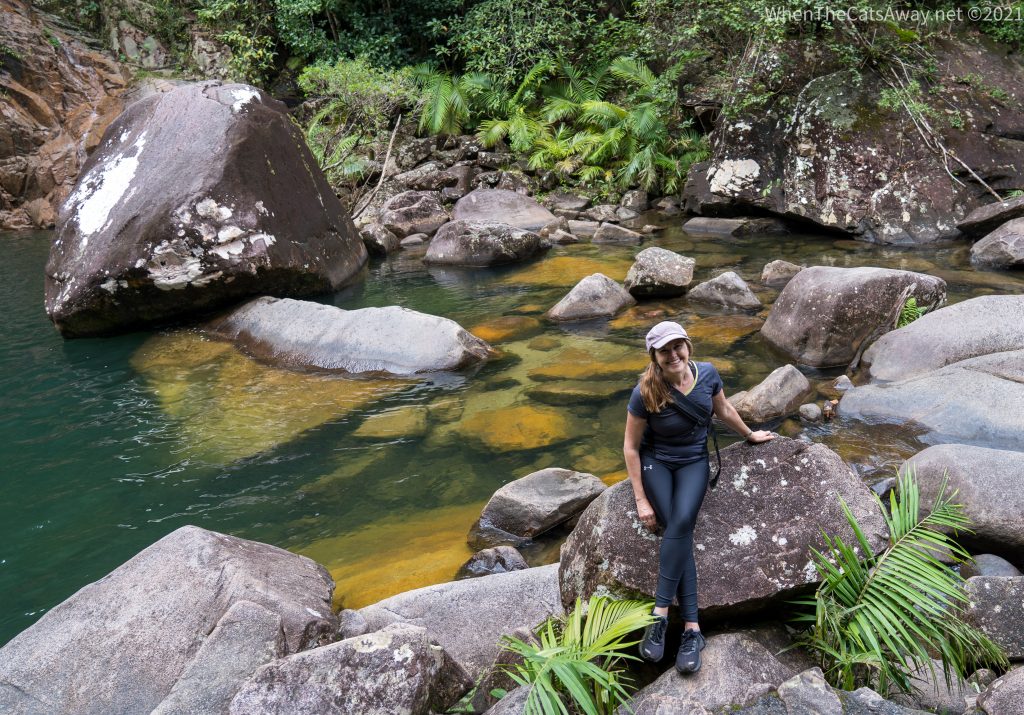
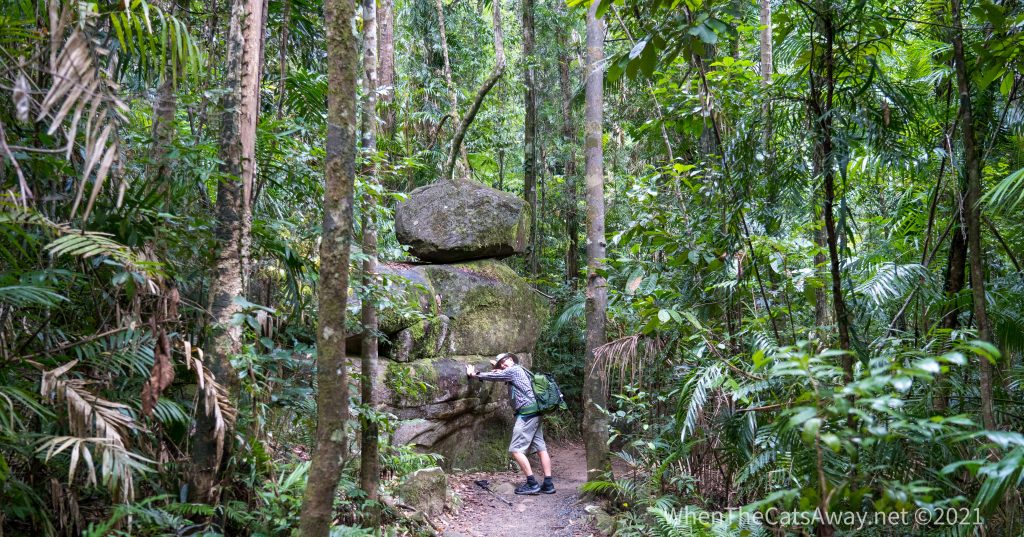
Finch Hatton Gorge is a part of the national park which is accessible from close to where we are staying, so we drove out there for a hike. The temperature in the rainforest is a few degrees cooler than out, reminding me of that feeling when you step in to a magnificent cathedral. Your breath catches as you experience the wonder of it all, the rich organic smell of decaying wood and leaves accompanied by signs of new life all around you.
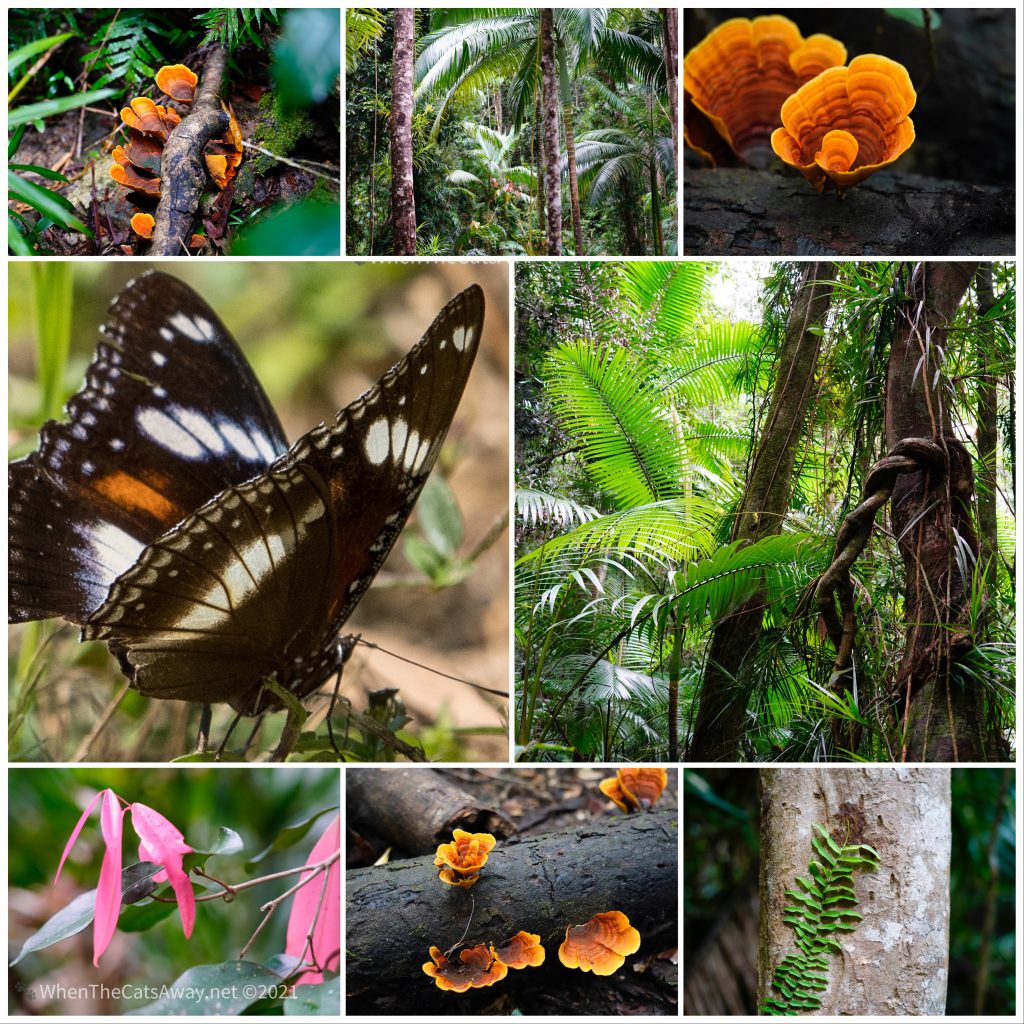
Setting off on the walk – what a contrast to our time in outback QueenslandThe diversity of plants and trees never fails to entrance usA feast for the senses – a Varied Eggfly Butterfly amongst lovely leaves and fungi in the forest
Our walk to up the Wheel of Fire cascades ( named for the red flowers that surround them in the summer months) entailed a precarious rock-hop over Arulen Creek before climbing many slippery stairs to the top. If you can cross the creek without getting wet feet – you are doing well. Mark hasn’t yet achieved this accolade!
Arulen Creek where we cross -requires balance and agilityIn between the cascades are deep waterholes – perfect for swimming in on a hot summer’s dayNearly to the topWe reach the topLast time we visited here we went in for a swim – not this timeA natural sculpture in the forest
Definitely worth the hike up if you’re game!
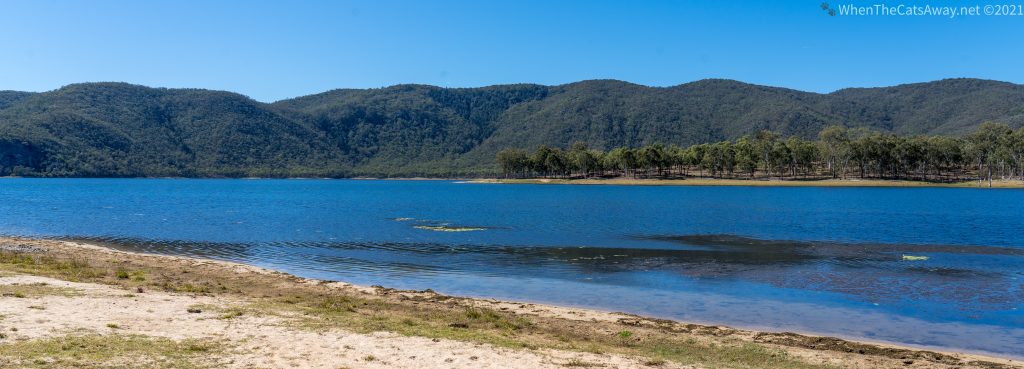
Up on the Eungella Plateau sits Eungella Dam, a large reservoir and freshwater fishery. You can actually camp out here, as long as you don’t need power. It sits nestled in a picturesque valley and is a great spot for birdwatching.
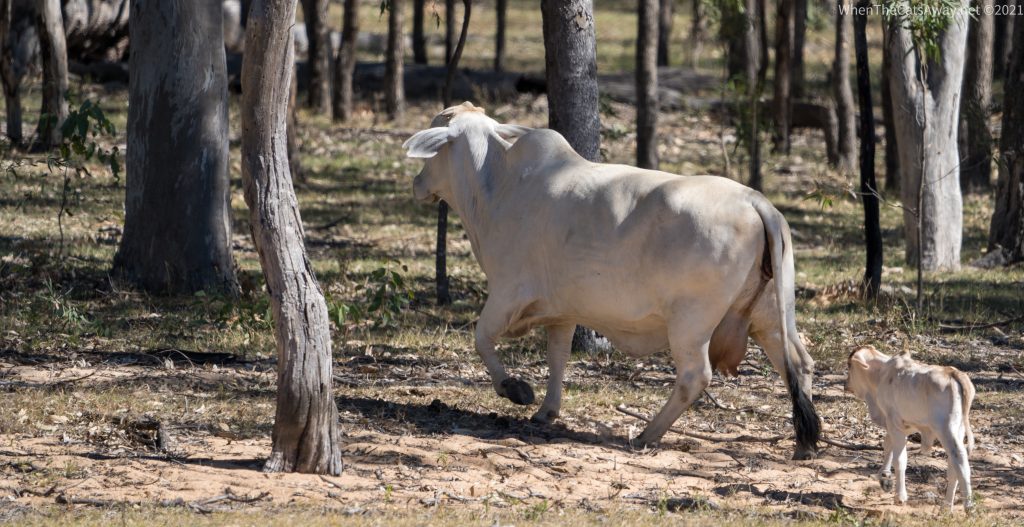
Eungella DamBrahman Cattle share the shores with campers and picnickers
We had lunch on the sandy beach before taking a wander to see what bird life was around.
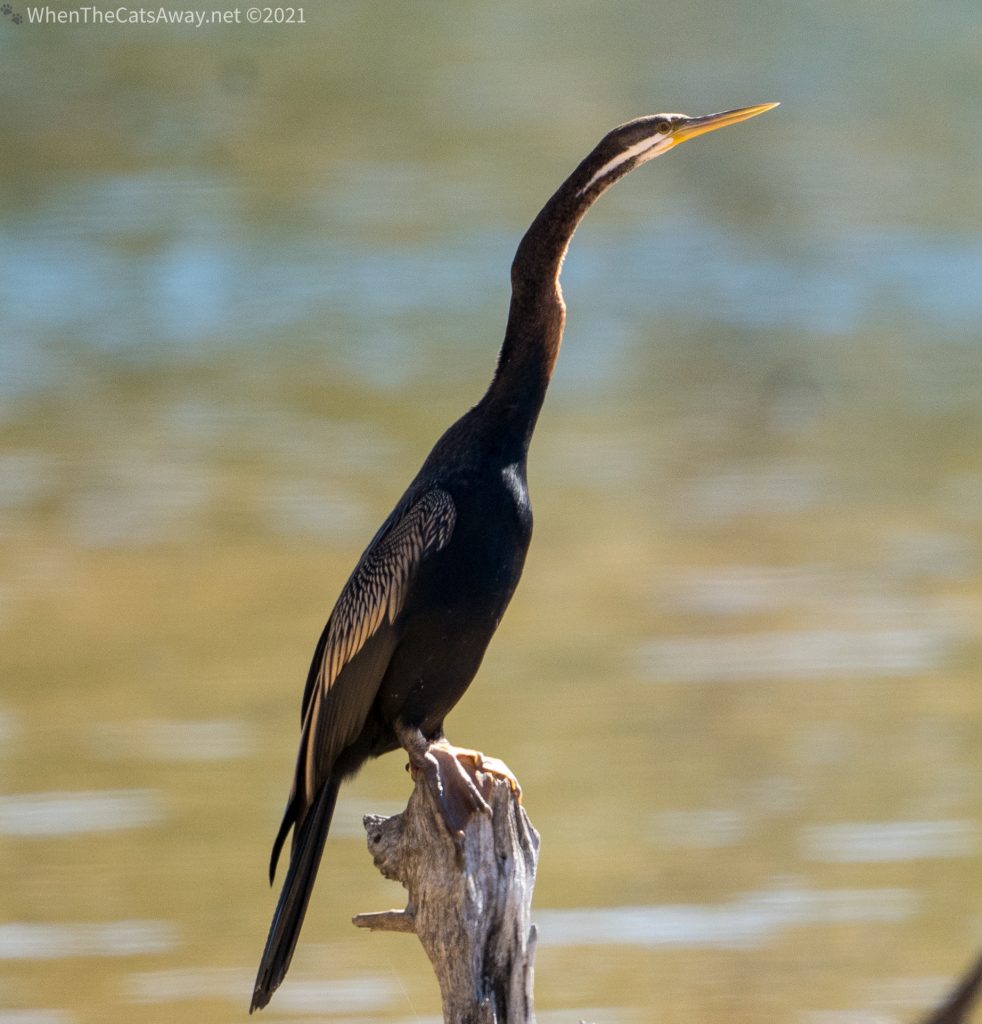
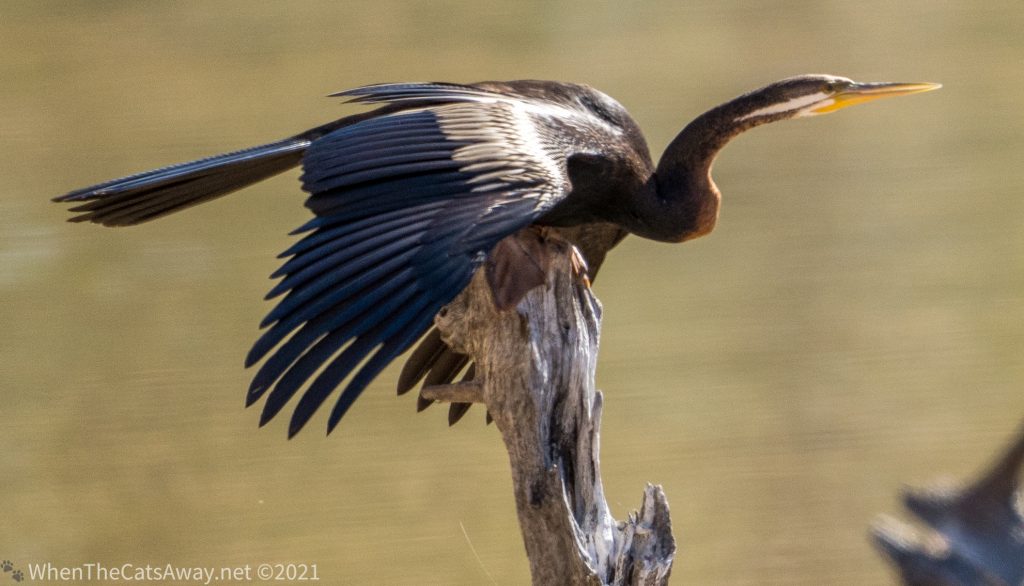
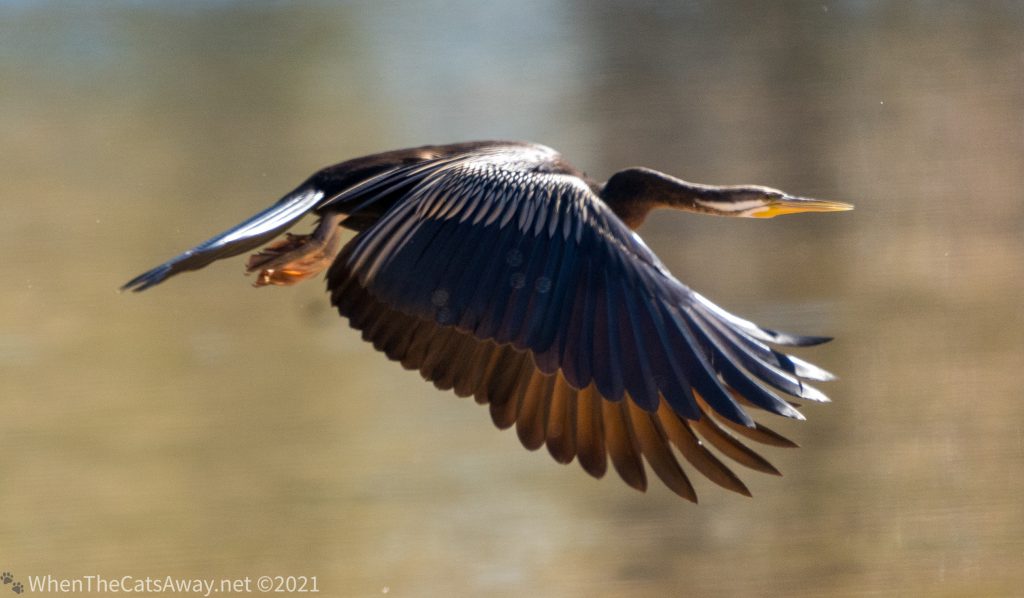
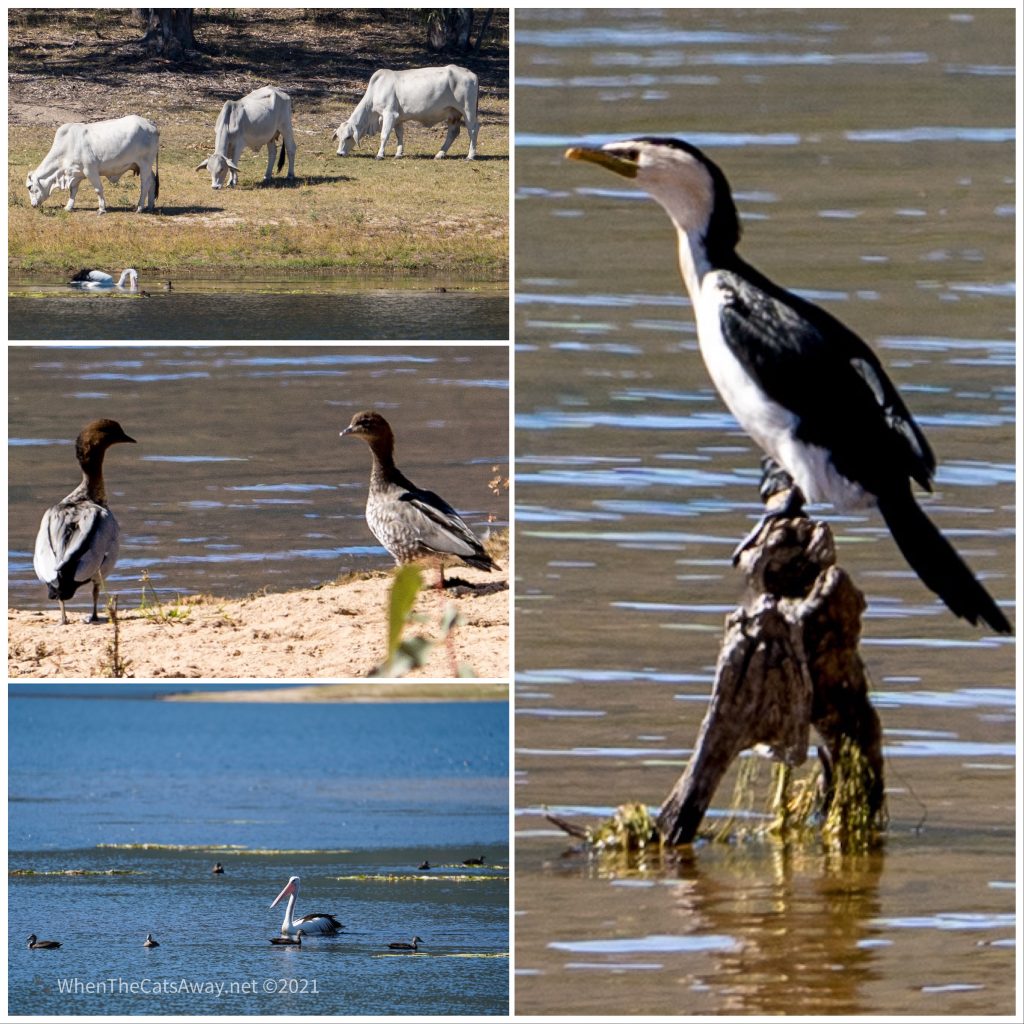
An Australian Darter sits on the shore drying off after its latest fishing expeditionIt decides it is time to head back out for more food….preparing to take offAnd away it goes – just look at those gorgeous wings. From afar, these beauties just look black.
Great Egrets, Cattle Egrets, Pelicans, White-eyed Ducks andsome very pretty Cotton Pigmy Geese were amongst the birdlife spotted.
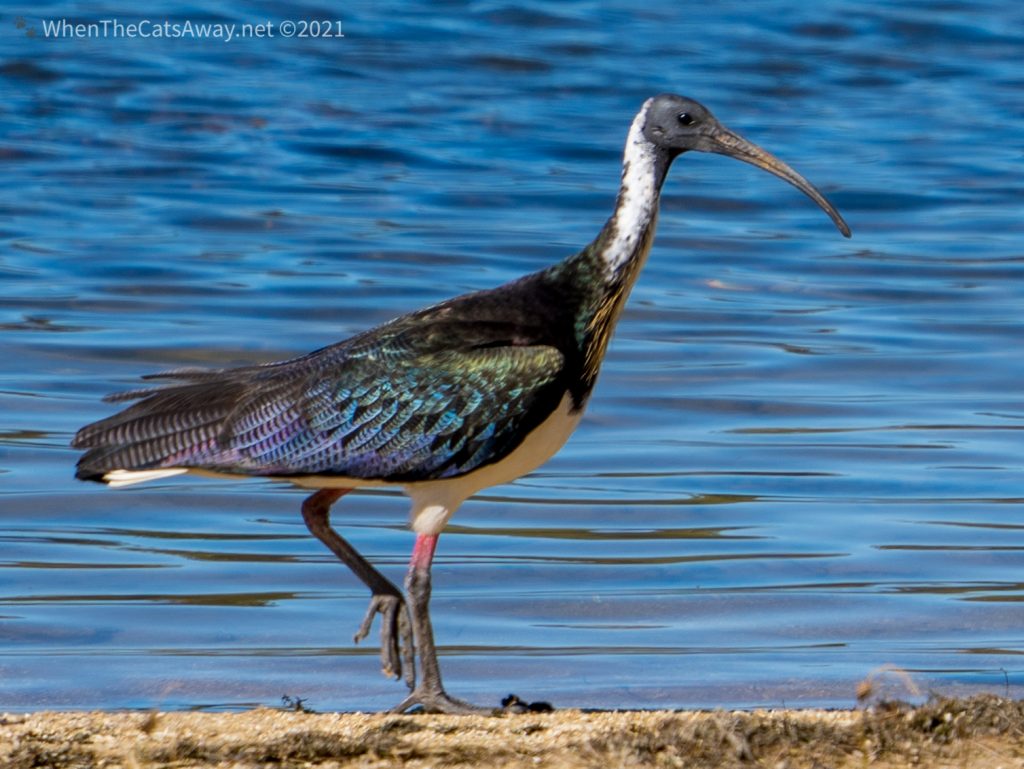
Straw-necked Ibis – just look at those colours!Little Pied Cormorants, Wood Ducks and Pelicans
Staying at Finch Hatton for a week has meant we could also visit some locations off the traditional tourist trail, finding our way to creeks and locations that are a little quieter. Cattle Creek winds its way through the valley past our campground and had a wealth of surprises for us each time we went out.
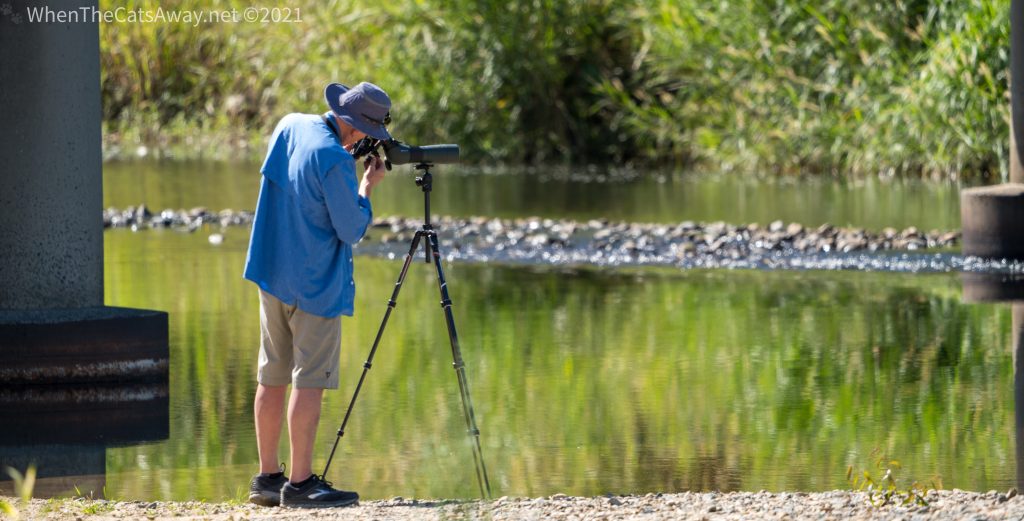
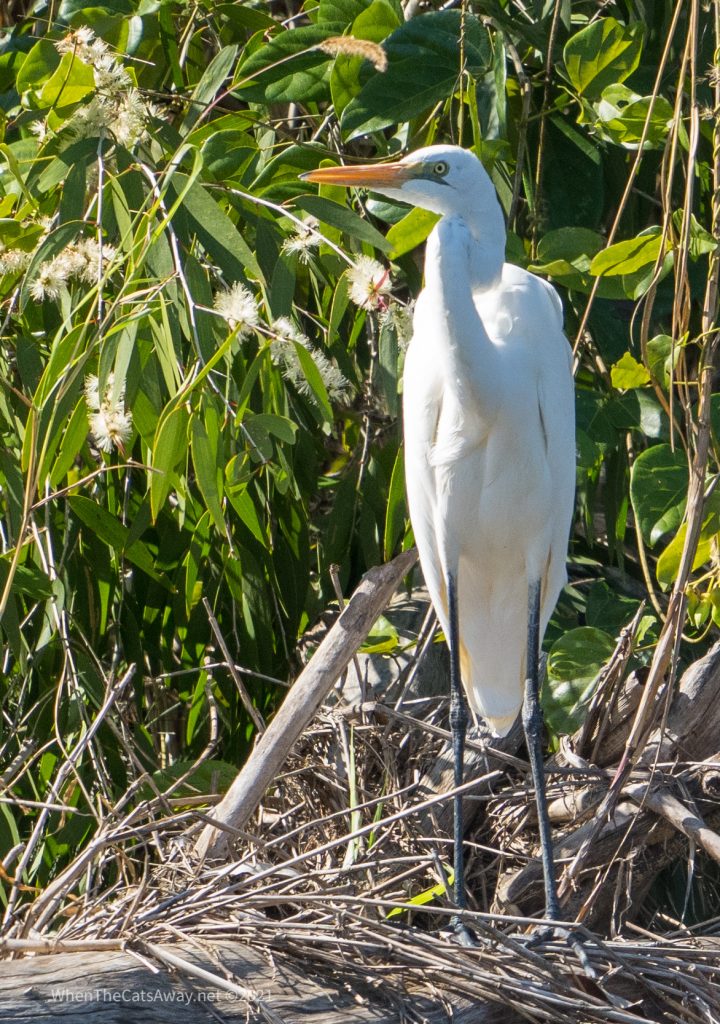
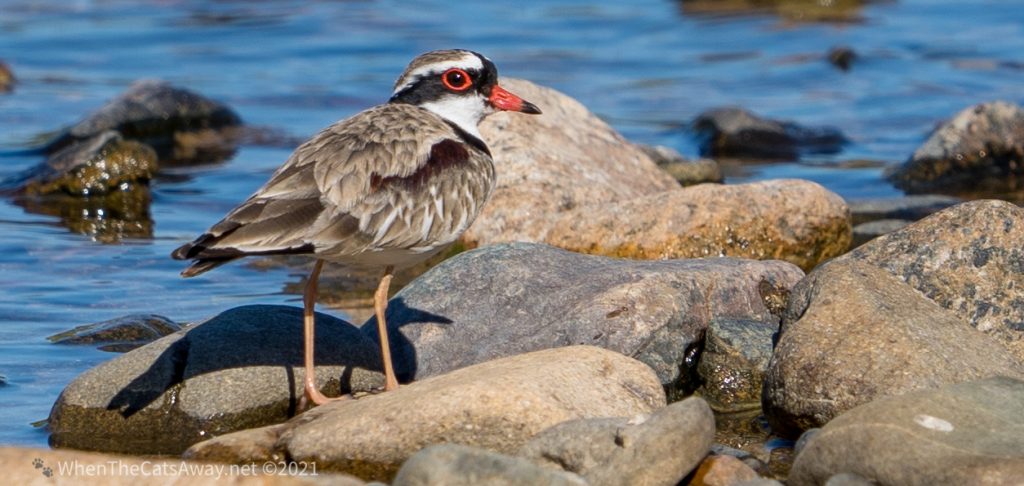
Mr A lining up to spy on a Great Egret across the creekGreat EgretBeautifully disguised among the pebbles on the creek’s edge, Black-fronted Dotterels dash along hunting for foodTiny and well disguised Black-fronted Dotterel A Sacred Kingfisher perched up in a tree with a good view of the waters belowAnother viewpoint across the Pioneer Valley from Teemburra Dam, not far from Finch Hatton
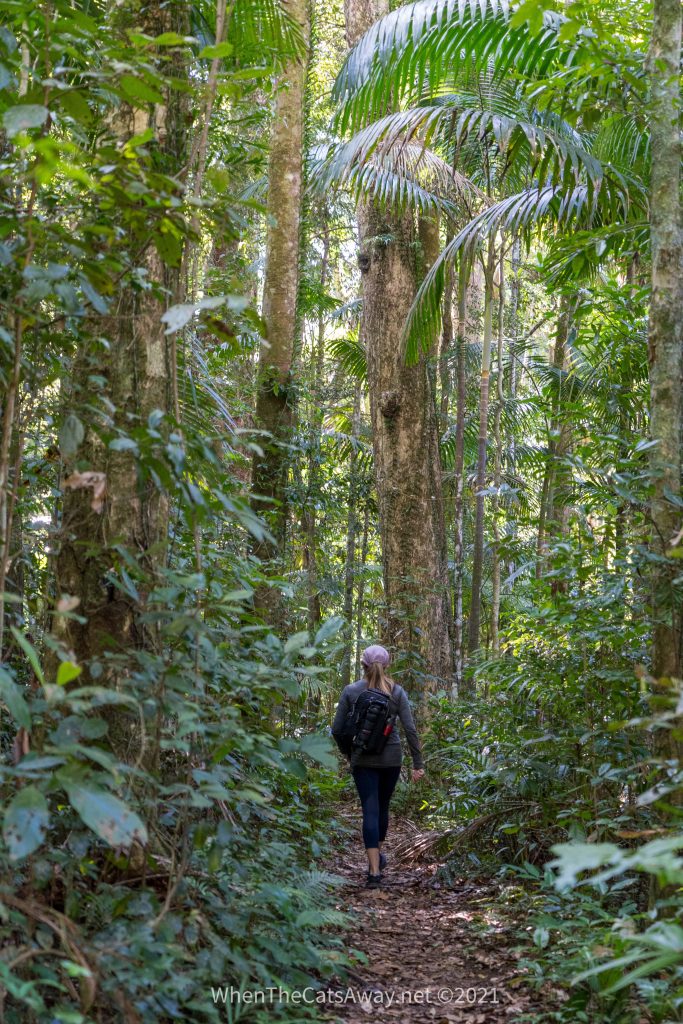
We finished up our visit with a somewhat longer walk along Crediton Creek. This hike actually continues on, forming the Mackay Highlands Great Walk – heading one way for 56km (taking 3-5 days). The short 10km return walk we did was pretty stunning.
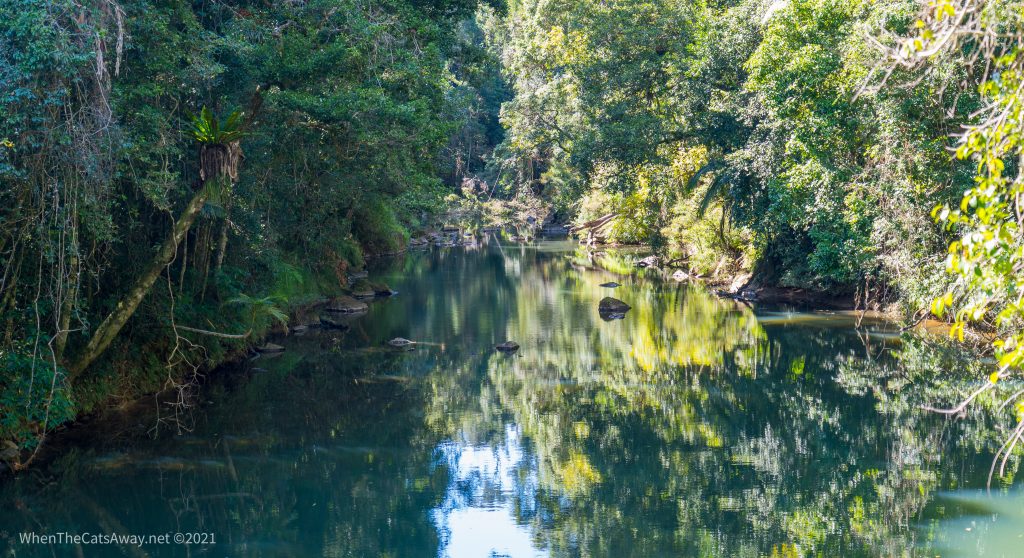
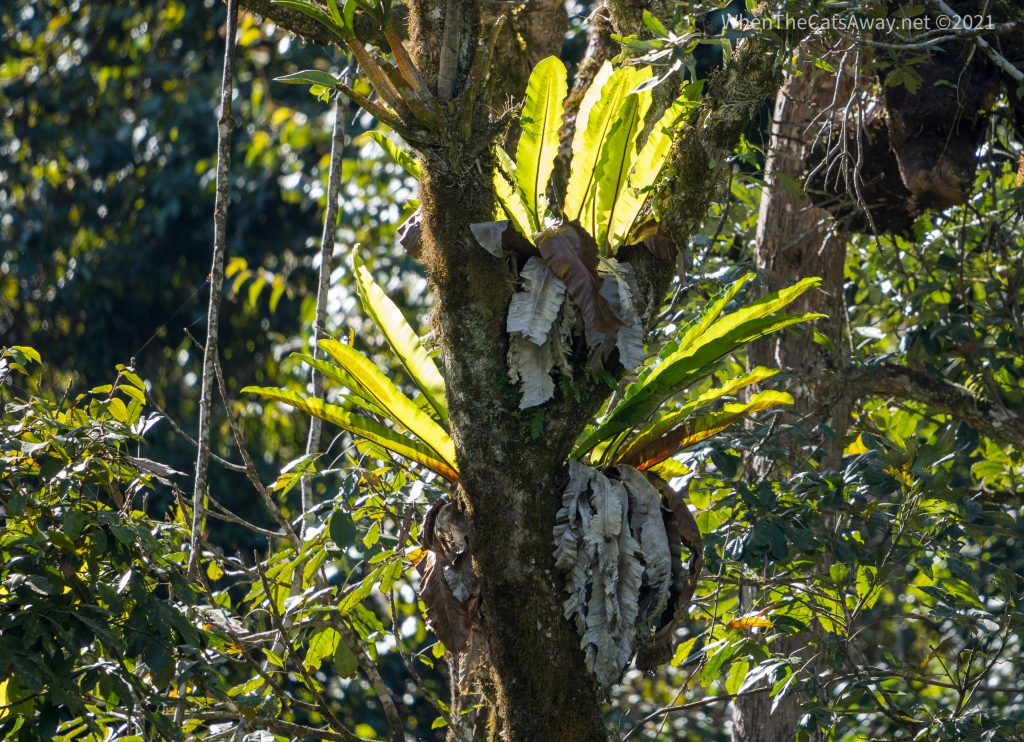
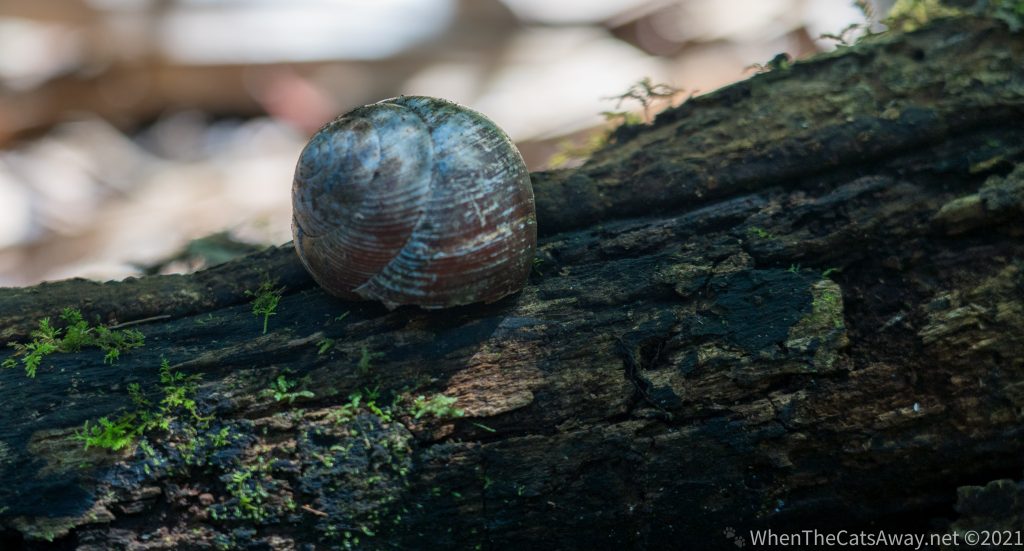
Beautiful waters of Crediton CreekEpiphytes (parasitic plants) growing on treesA Giant Panda Snail shell – these are the size of golf balls – the largest snail in Australia and a favourite of many birds in the rainforestA fabulous array of greens along our pathwayWindows through the trees frame vistas of the creek
Not far from the end of our walk we took ten minutes to sit down by Crystal Cascades (how many falls have this name, I wonder! A lot!) and just enjoy the ambience. Listening to the constant sound of the water running over the rocks as they have done for hundreds of years, to breathe in the clear, clean oxygen from the forest.
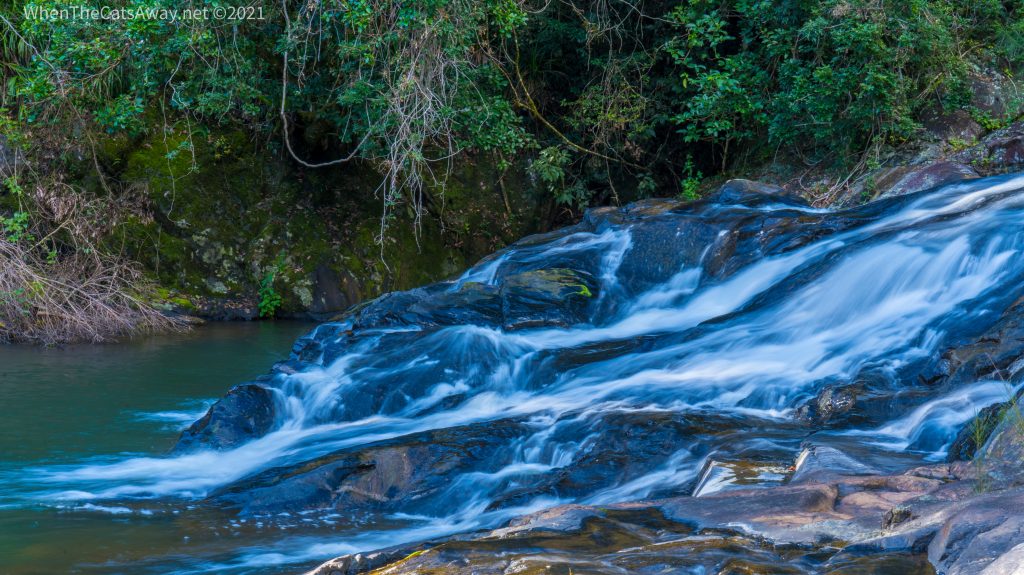
Taking a moment on the warm rocksThe water cascading down the rocks, smoothed from centuries of water action
Just before heading back to the car we diverted briefly to see whether we could catch our last glance of a platypus. Lucky us, we were rewarded with two.
Only one photographed – but still a special moment
Our week here has been so incredibly precious. We have relished every morning waking up to our incredible views, breathing in the clean air and drinking in the colours, scents and sounds of this unique location. As we move on back to the coast, we will continue to hold Eungella in a special place in our hearts. 🤍
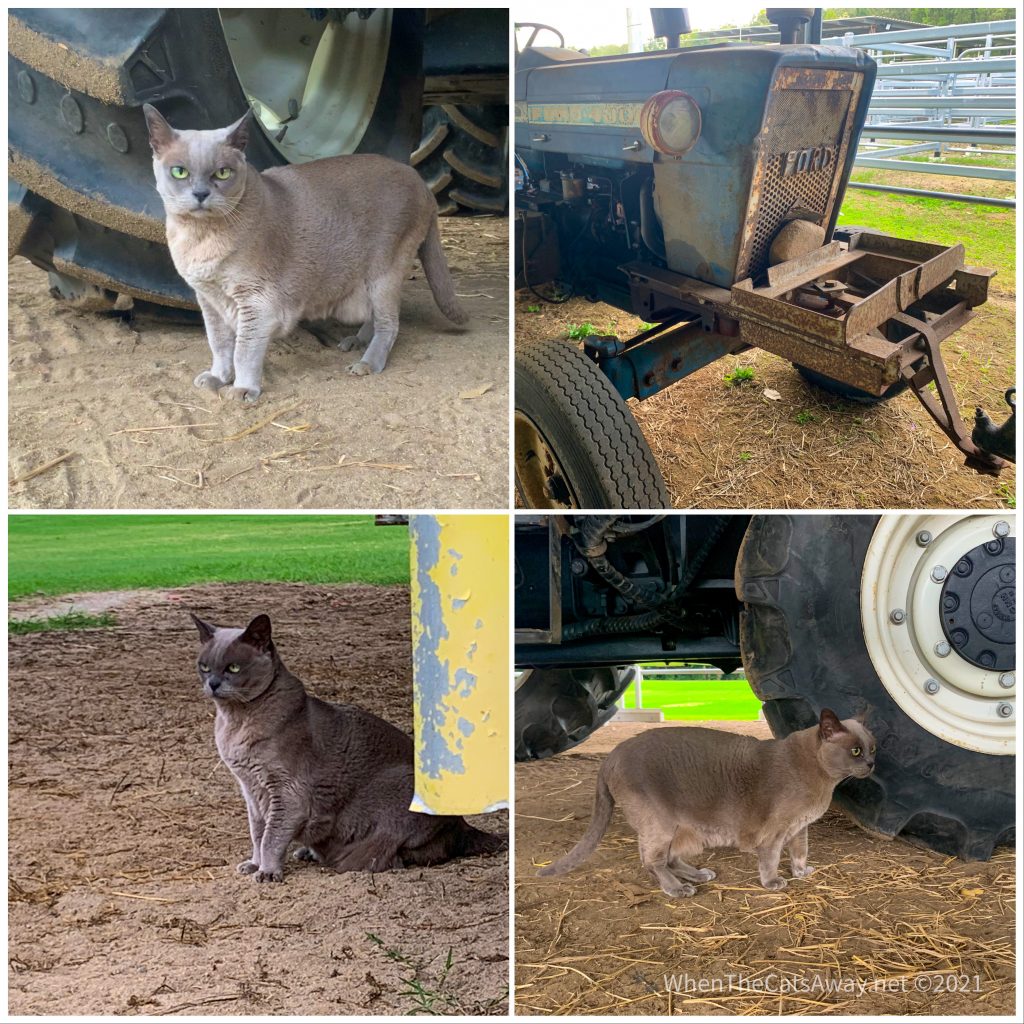
PS Tassie loved it here – walked and walked exploring the sheds and fenced paddocks where cattle would have been kept during the last show day. Her favourite area was the shed with the tractors in.! One happy Burmese!