

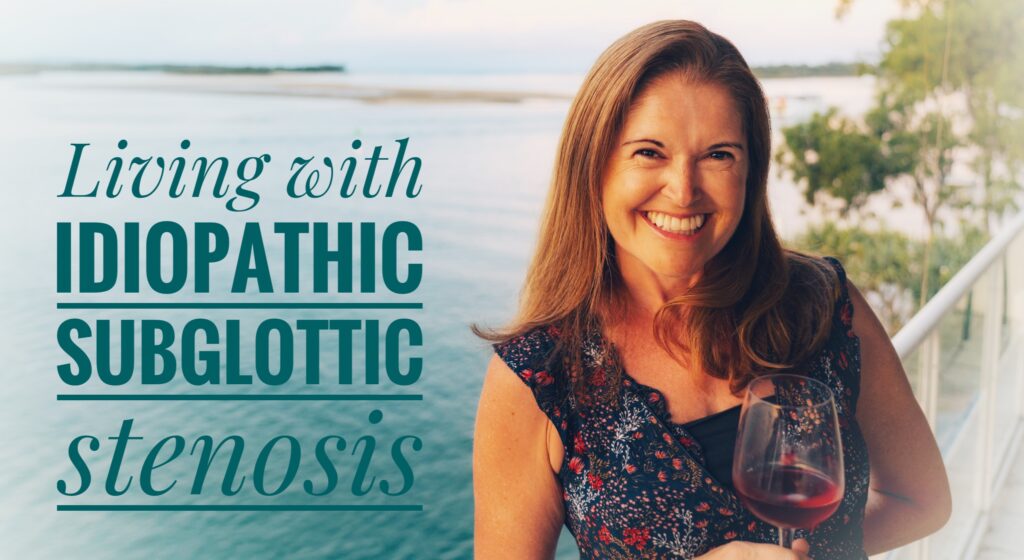
Catherine Anderson lives with a rare disease, idiopathic subglottic stenosis (iSGS). The condition causes progressive scar tissue to form just below the vocal cords, narrowing the airway for reasons that remain unknown. Symptoms include increasing shortness of breath and fatigue, with repeated surgery currently the primary treatment.
In the 22 years since her diagnosis, Catherine has undergone more than 30 procedures under general anaesthetic to reopen her airway.
The disease overwhelmingly affects women (approximately 98%), with an estimated prevalence of just 2.5 women per million.
In 2009, Catherine founded what has since grown into the world’s largest support group for people living with idiopathic subglottic stenosis, Living With Idiopathic Subglottic Stenosis. She speaks at conferences internationally, has authored numerous articles and papers published in peer-reviewed laryngology journals, and works closely with clinicians to support research aimed at improving outcomes for patients with this condition.
Read more about Catherine’s story here.
Click here to join the community: www.facebook.com/groups/airwaystenosis/

Purchase t-shirts, note books, drink bottles and so much more at the Airway Stenosis Research Store – 100% of all profits go towards airway stenosis research.
(Note: delivers to the UK, USA and Europe only at present)
There are also many resources to help you here:
The Rough Guide for Beginners – a guide book for airway stenosis patients offering advice and information about the various treatments available as well as tips on living with this disease

Preparing for an emergency – a one-page flyer that accompanies the guide to aid patients in preparing themselves and their supporters (e.g. family, friends) in the case of an emergency.
It is recommended you carry a letter and/or card with you explaining what emergency personnel (who may be well meaning but not familiar with airway stenosis) should do if you present with breathing difficulties. A customisable card can be downloaded here.
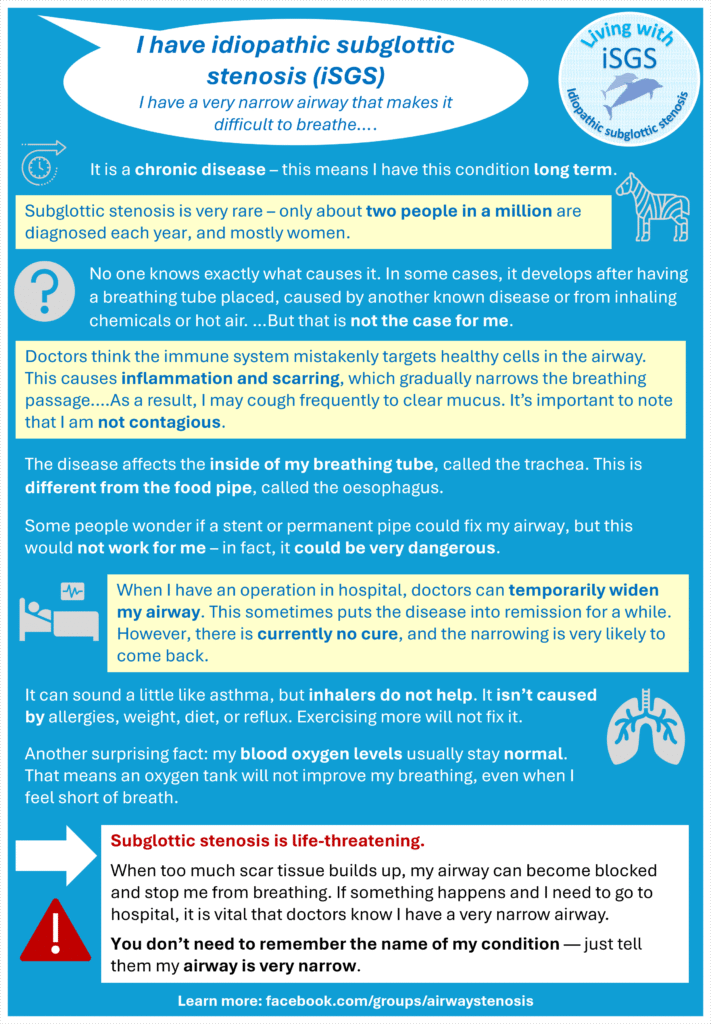
Explaining subglottic stenosis to friends and family can be very challenging. To make it easier, here is a short and simple one page document to help explain the disease, downloadable here.
Living with a Tracheostomy – help and advice for patients from patients, doctors and nurses with experience
Ask the Doc – Catherine was a panelist with four esteemed doctors from the USA – this was held in October 2021 answering many patients’ questions and educating on the latest research and treatment options for this disease
Conferences, meetings and webinars – Catherine frequently is invited to talk at events – here she shares recordings, notes and presentations from past events and details of upcoming sessions
************************
How can you help?
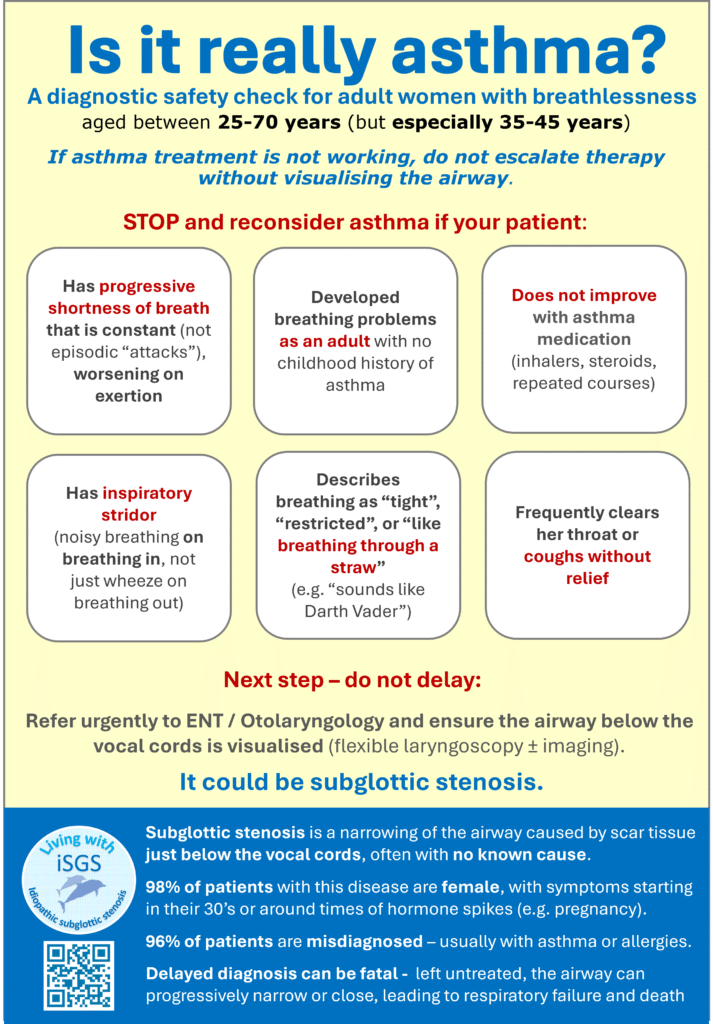
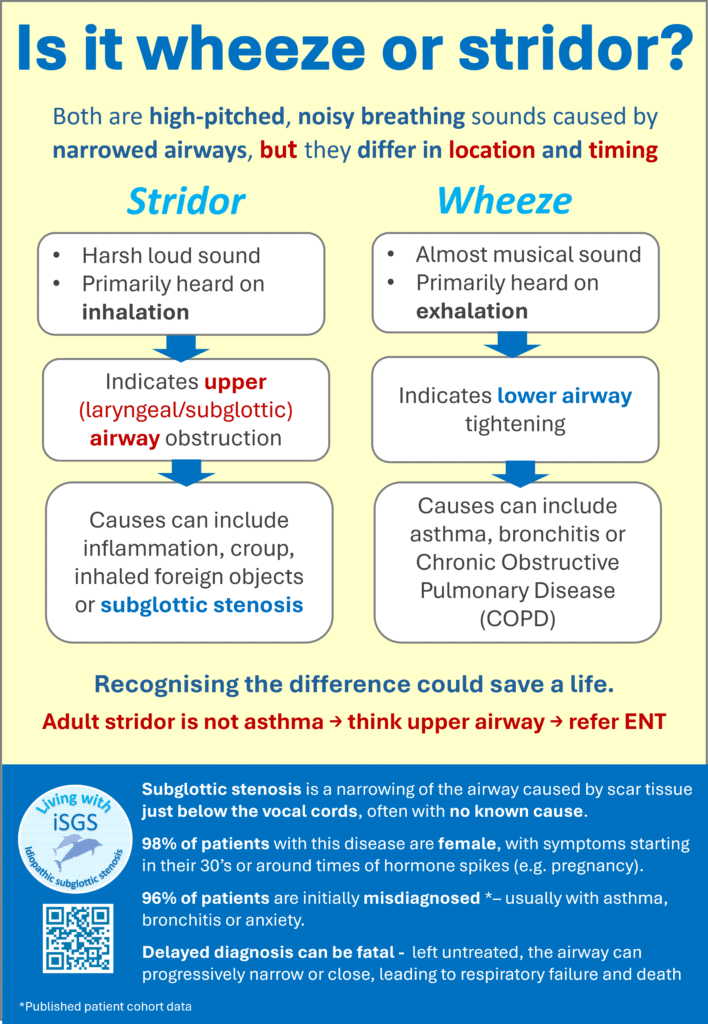
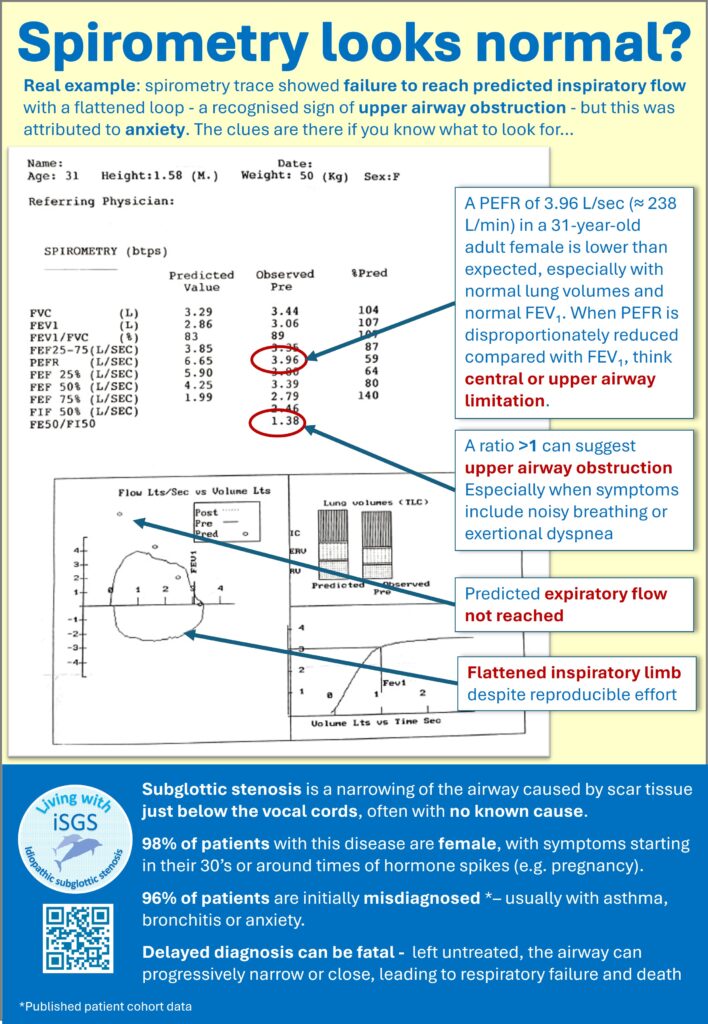
Recent research has found that women from lower socio-demographic backgrounds were extremely underrepresented with this disease, suggesting their symptoms are still not diagnosed correctly. Please download and print the following flyers and take them along with you to your next GP visit – you could help save lives!