September 2025 – Into the land of vultures – a road trip through northern Spain (part 2)

Author: Mrs A

Location: Morillo de Tou, Alquezar, Getario, Spai
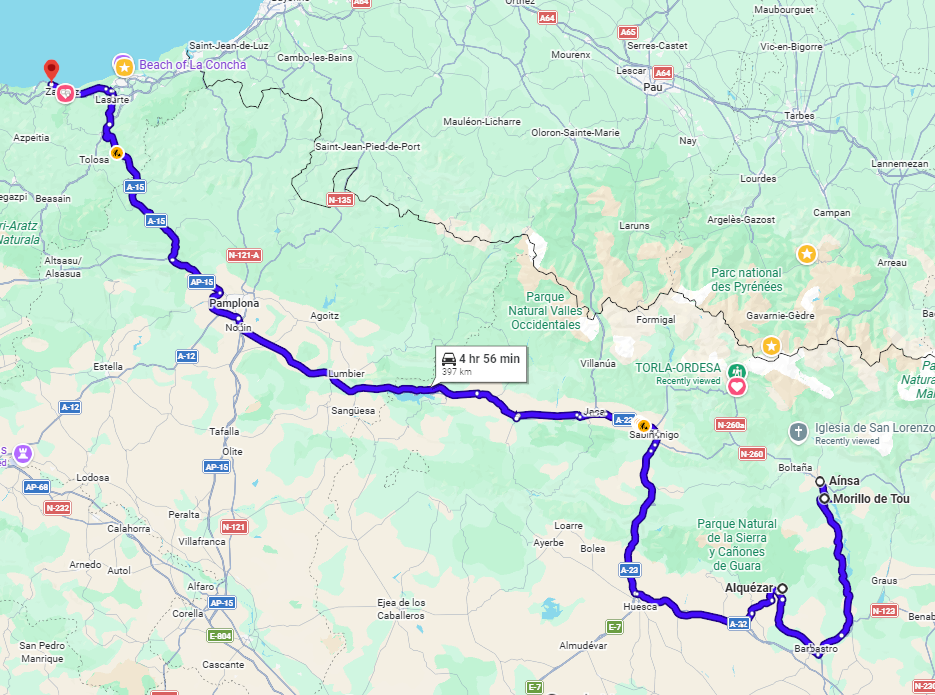
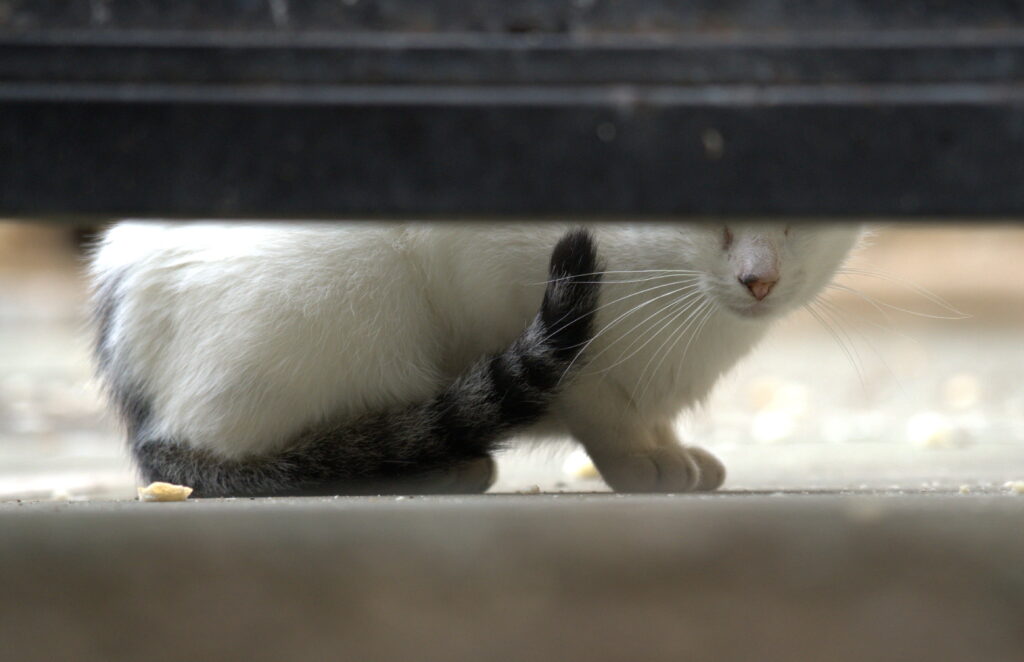
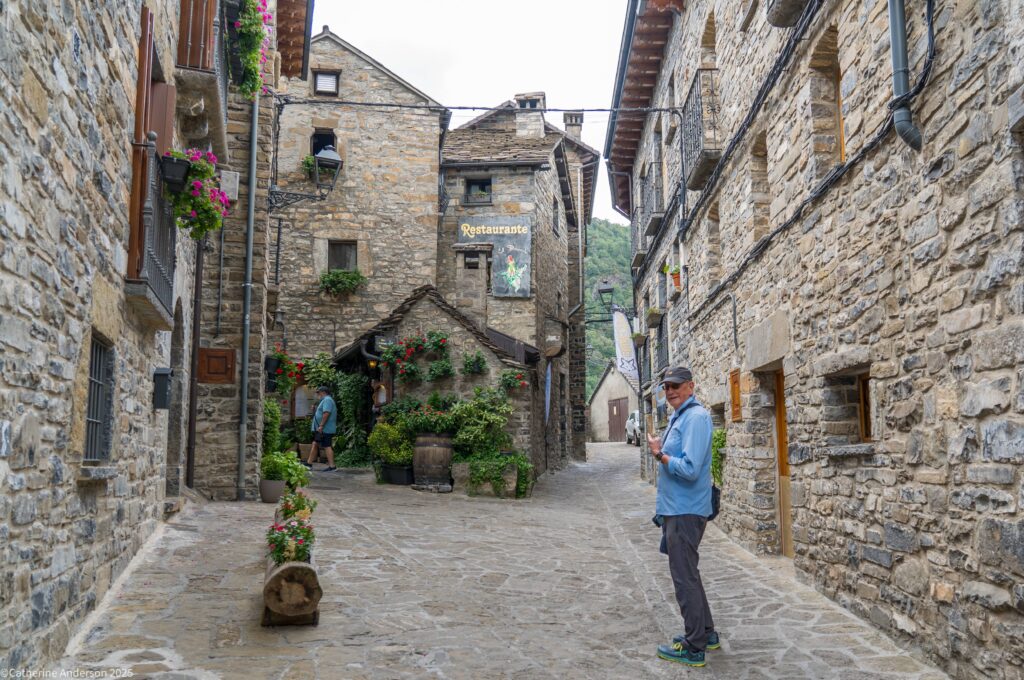
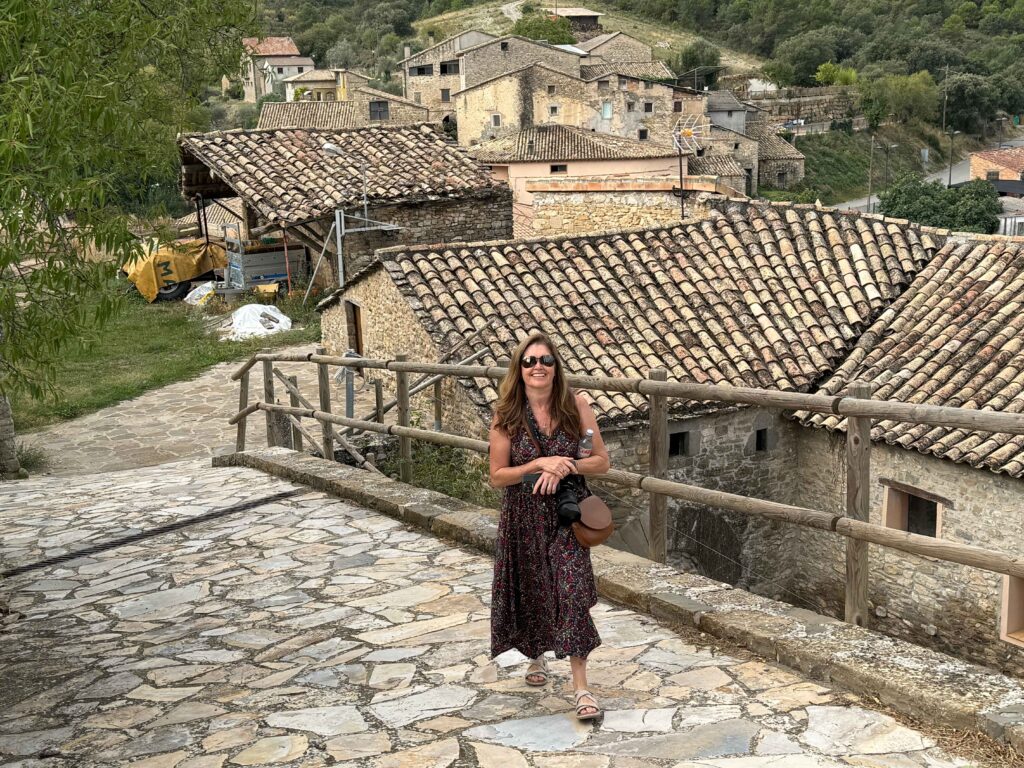
Leaving Aínsa, we travelled a short distance to the tiny, picturesque village of Morillo de Tou. It felt almost like a film set – stone houses, flower boxes, and a quiet square warmed by the morning sun. We watched in delight as a lady wandered through the plaza accompanied by her collie dog, two cats and no fewer than seven kittens padding along behind her like a fluffy procession.
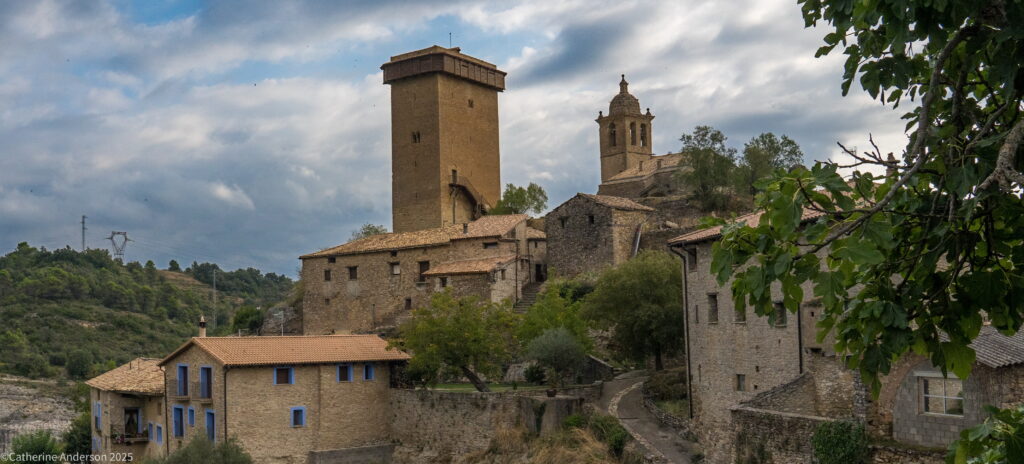
Morillo de Tou

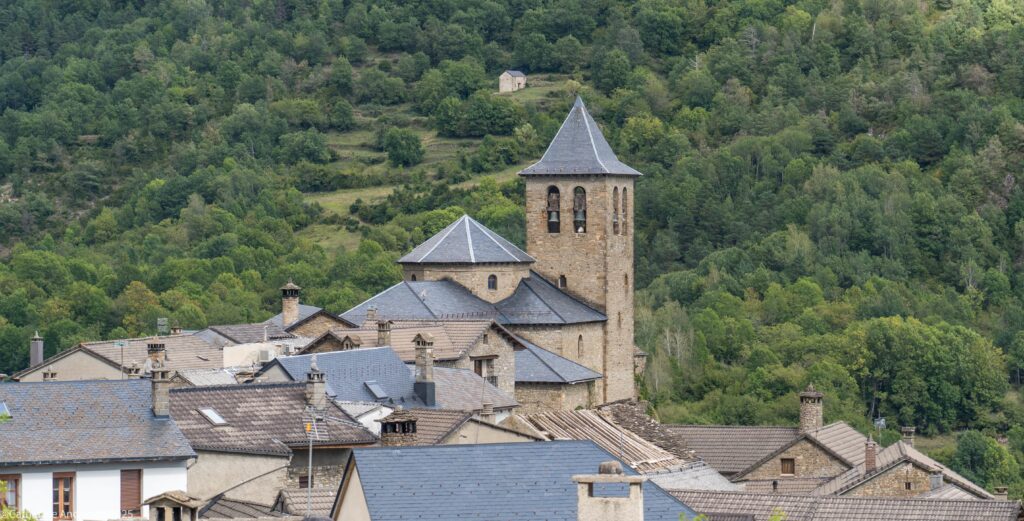
We strolled up to the main church hoping to climb the tower for yet more sweeping views. Sadly it was closed on this occasion, but we happily explored the cobbled lanes instead.
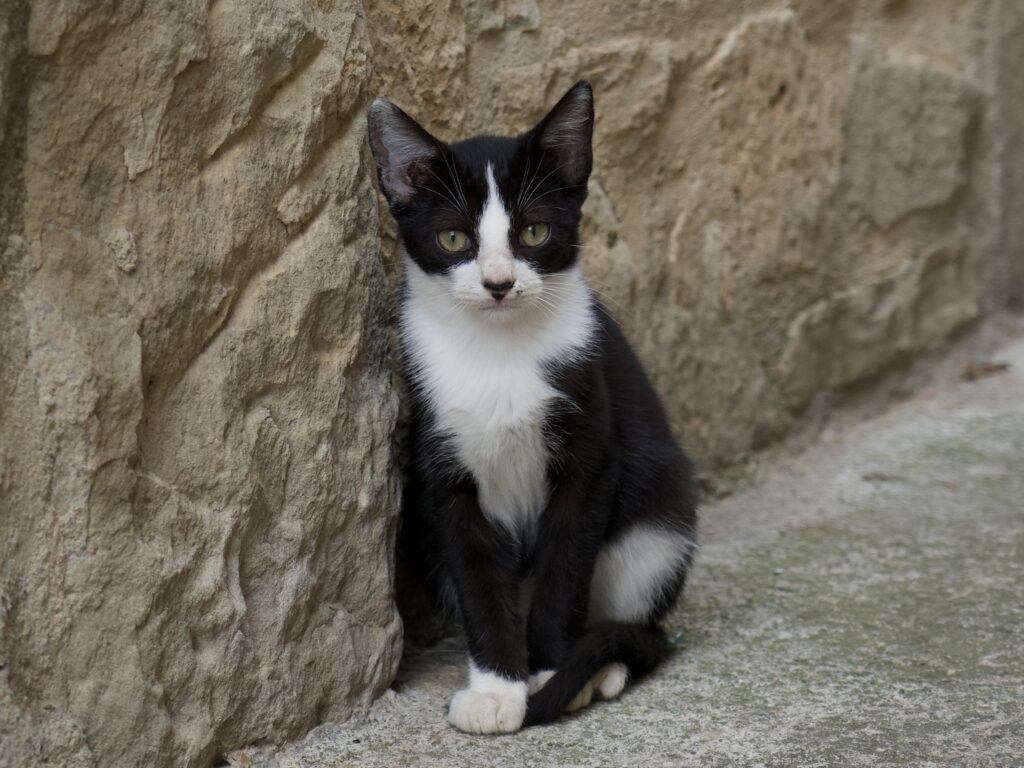
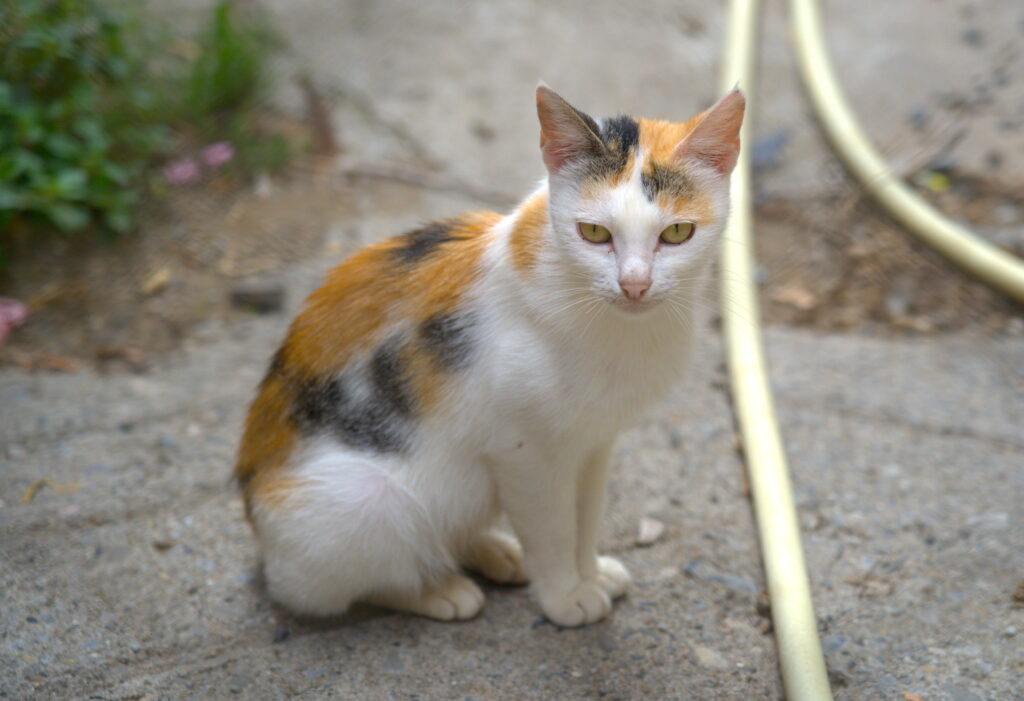
The kittens reappeared to inspect us — curious but cautious — lingering just out of reach while studying us intently. It was one of those small, unscripted travel moments that stays with you long after the grand vistas fade.
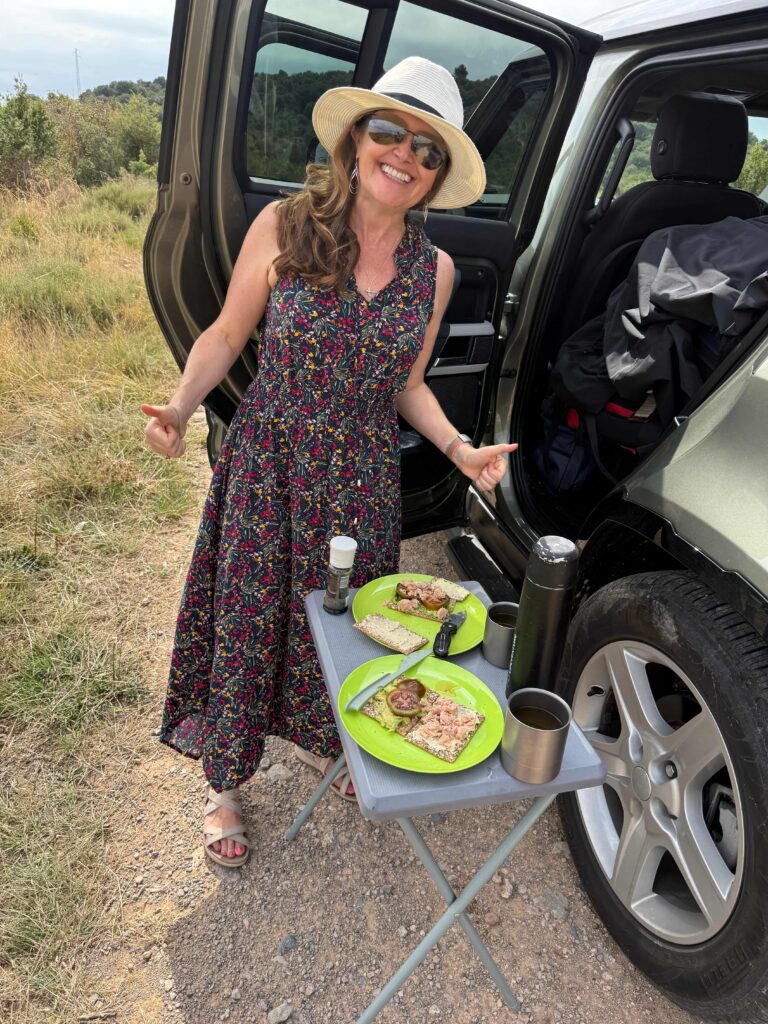
Overcoming Spanish opening times – we picnic by the side of the road – ah the glamour of it all!

16-18 September – Alquézar

An hour later we were back in the car, heading towards Alquézar.
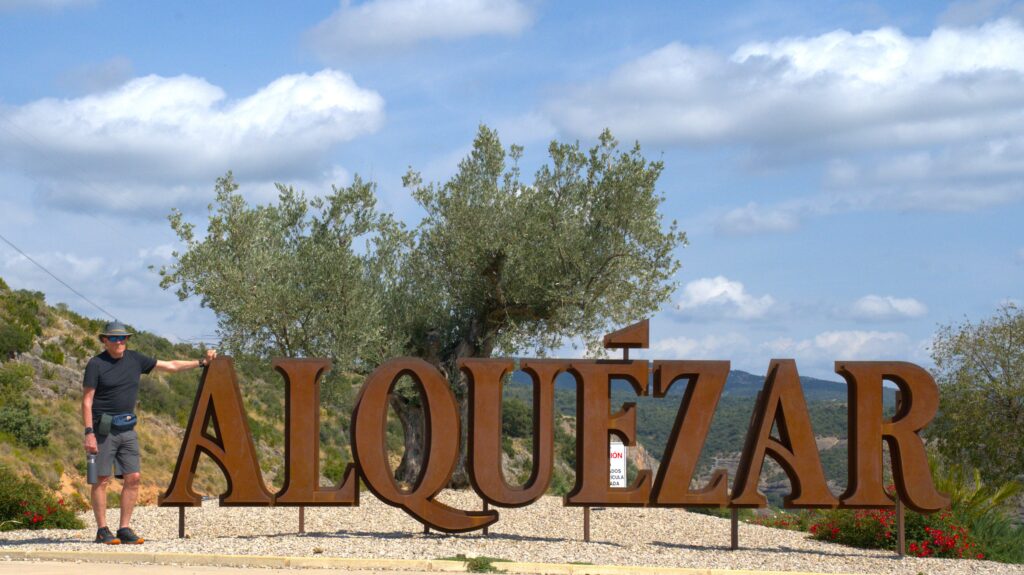
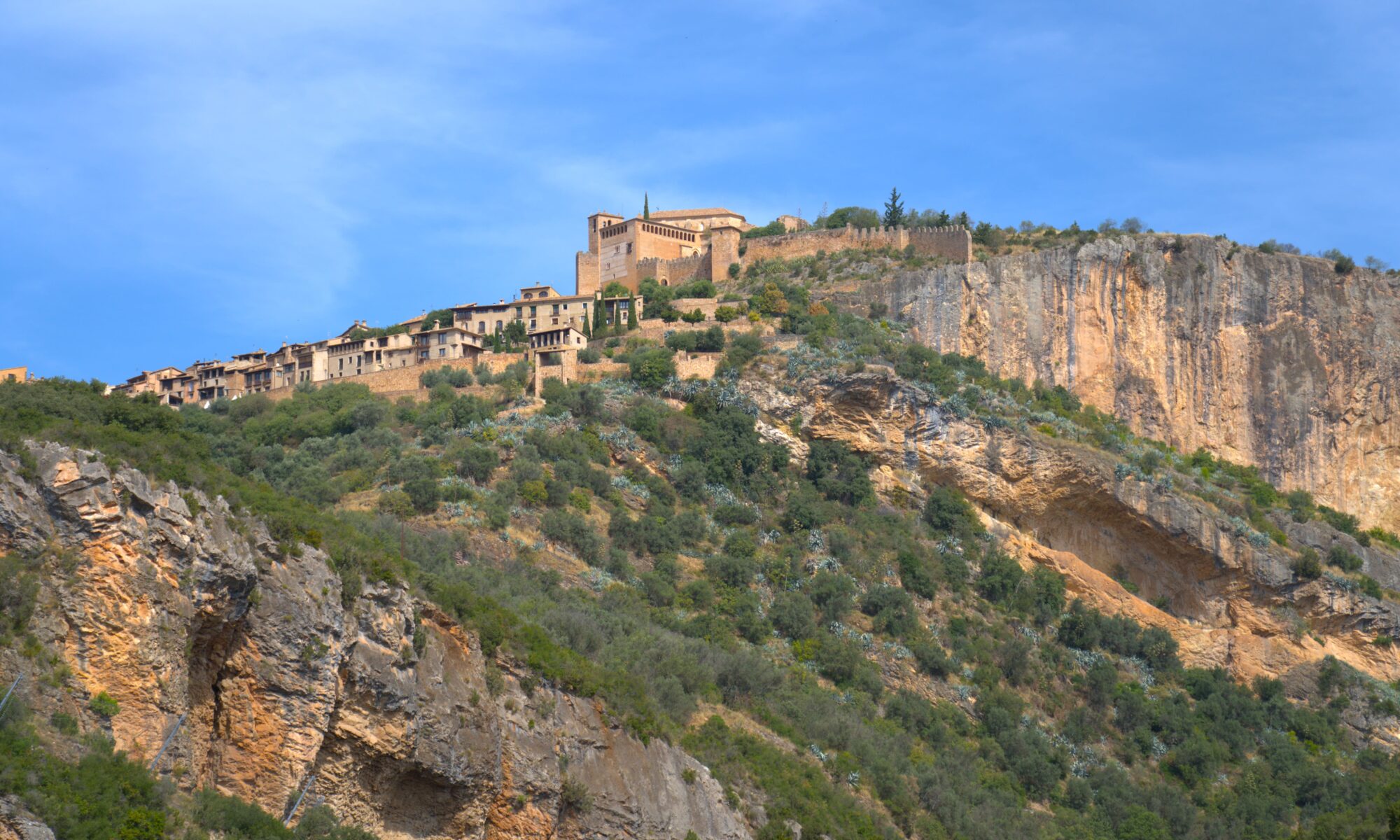
Our hotel was right in the heart of the walled village, which made for a rather hairy arrival. The Land Rover suddenly felt enormous as we navigated impossibly narrow streets, inching between ancient stone walls. Thankfully, Mr A’s many years of reversing caravans and motorhomes paid off; with impressive precision he coaxed it into a space that looked several sizes too small. We made sure to extract everything we needed before closing the doors – reopening them would have required architectural alterations!

Our room was glorious – a balcony overlooking the village below, with the cobbled streets just outside inviting exploration. After an hour reading in the warm afternoon light, we headed out to wander.

The magnificent view from our room (please ignore Mr A at the end!)

That evening we returned to a low-key bar-restaurant we had spotted with an outdoor terrace perched above the Rio Vero gorge. As we dined, we watched the sandstone walls shift from golden yellow to soft salmon pink before slowly dissolving into dusk. It was utterly mesmerising.
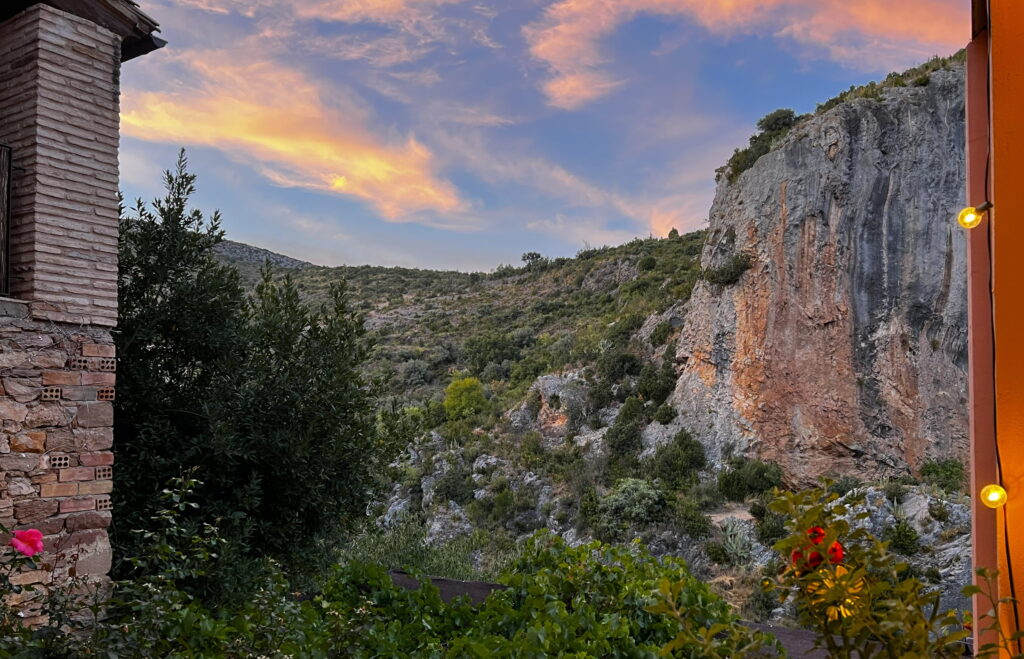
Sunset from our table
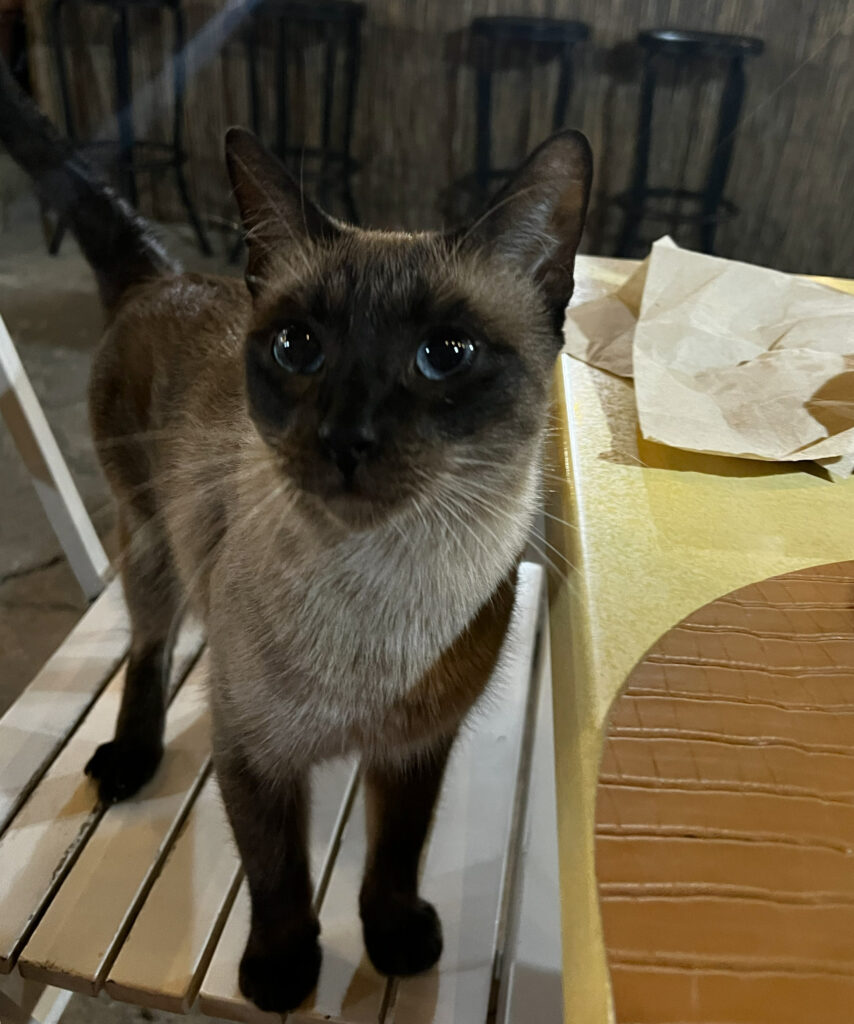
An extremely friendly neighbourhood cat calls by in the hope of snacks – he gets strokes instead

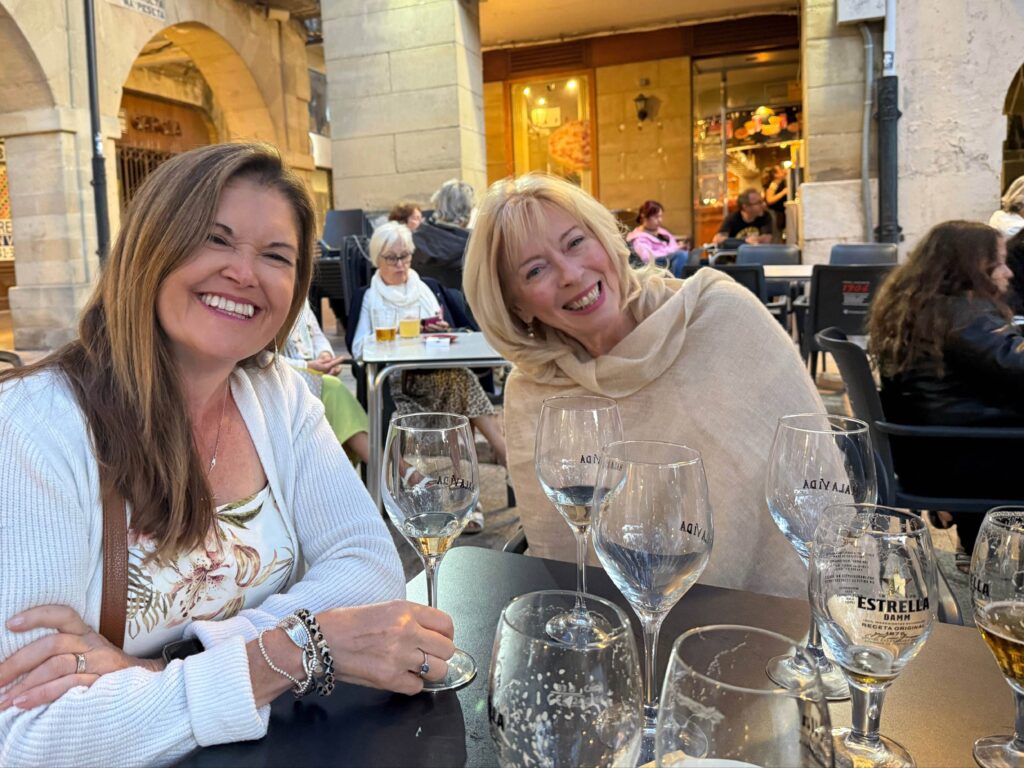
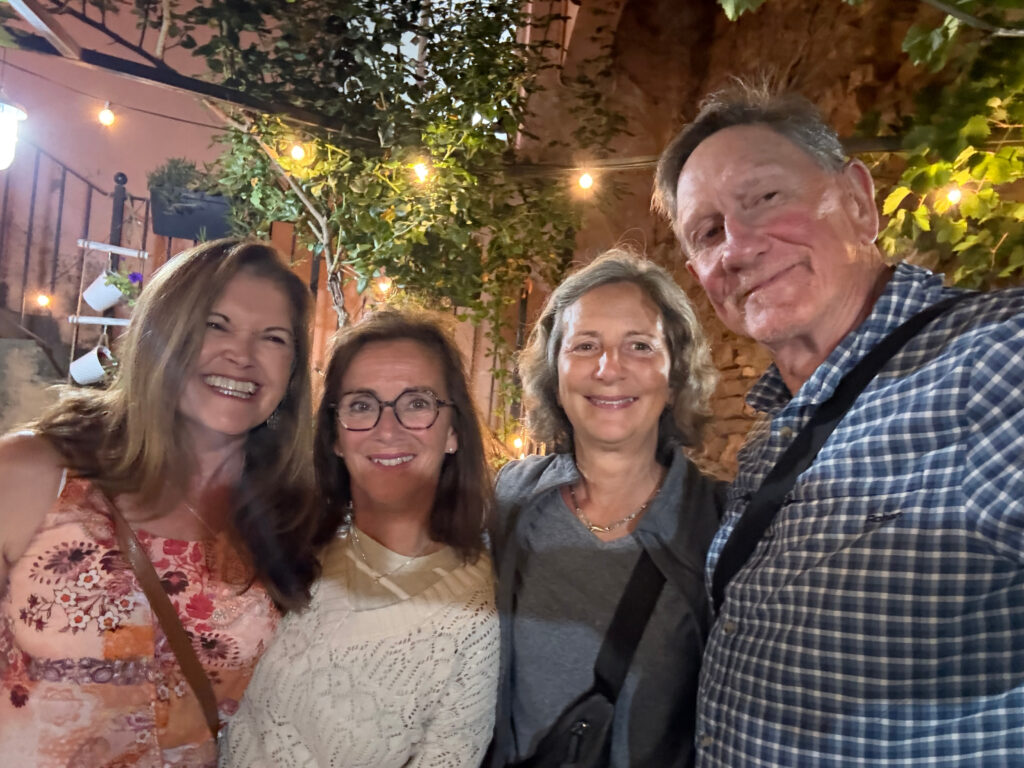
We struck up a cheerful conversation with two women visiting from Quebec. They laughed about how the French in France sometimes “pretend not to understand” their Canadian French. Their English was more than good enough for shared humour, and before long we were toasting with shots – eventually the last guests standing, save for the patient staff.
The following morning, thankfully hangover-free, we were ready to explore the gorge itself. Entry is ticketed and one-way, so we bought our passes and began the steep descent into the dramatic landscape below, eager to see what awaited us around the next bend.

From the medieval streets in the village of Alquézar, the famous Pasarelas del Vero drops dramatically into the Vero River canyon below via many rocky steps. “Pasarelas” loosely translates as walkways – though “catwalks” feels more accurate at times – narrow metal platforms bolted directly into the cliff face above the rushing water.
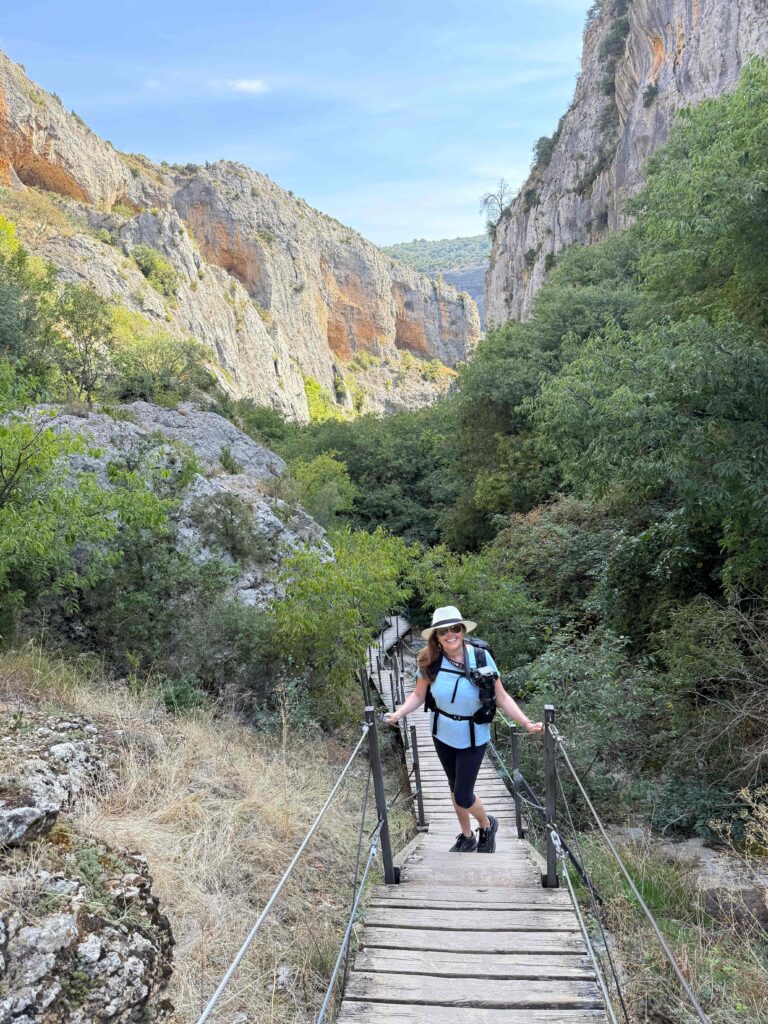
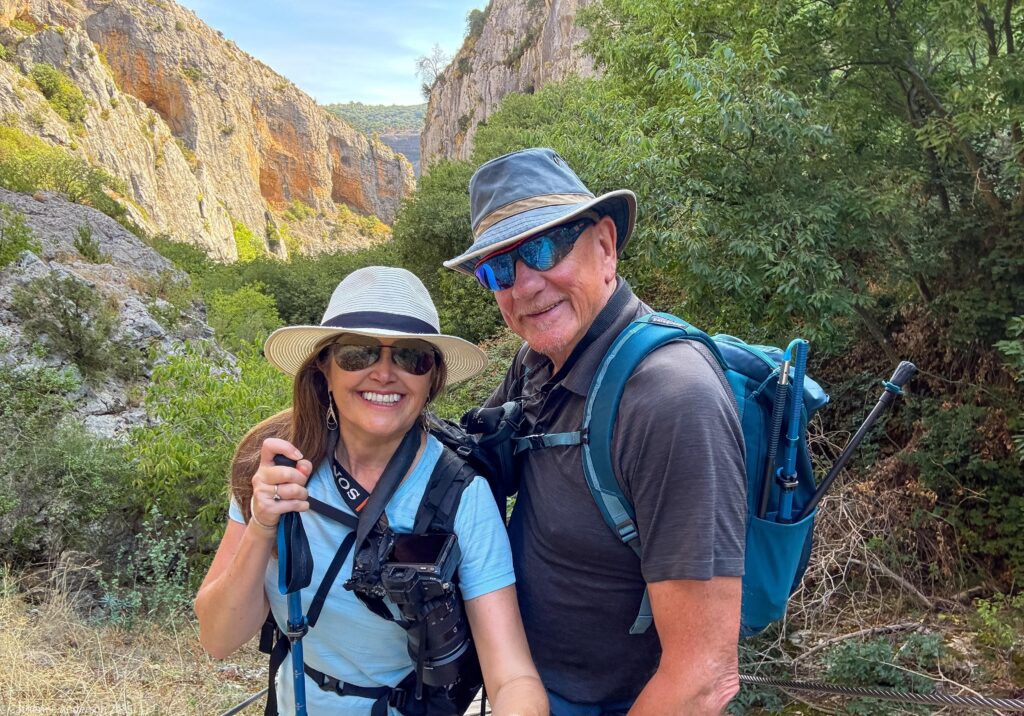
We descend 180 metres down the Barranco de la Fuente ravine

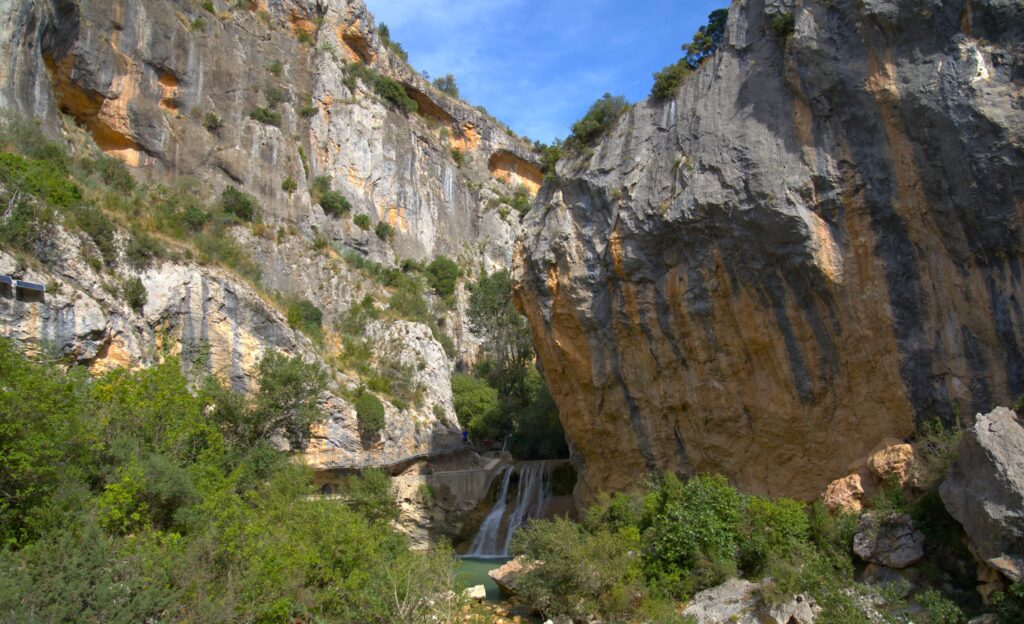
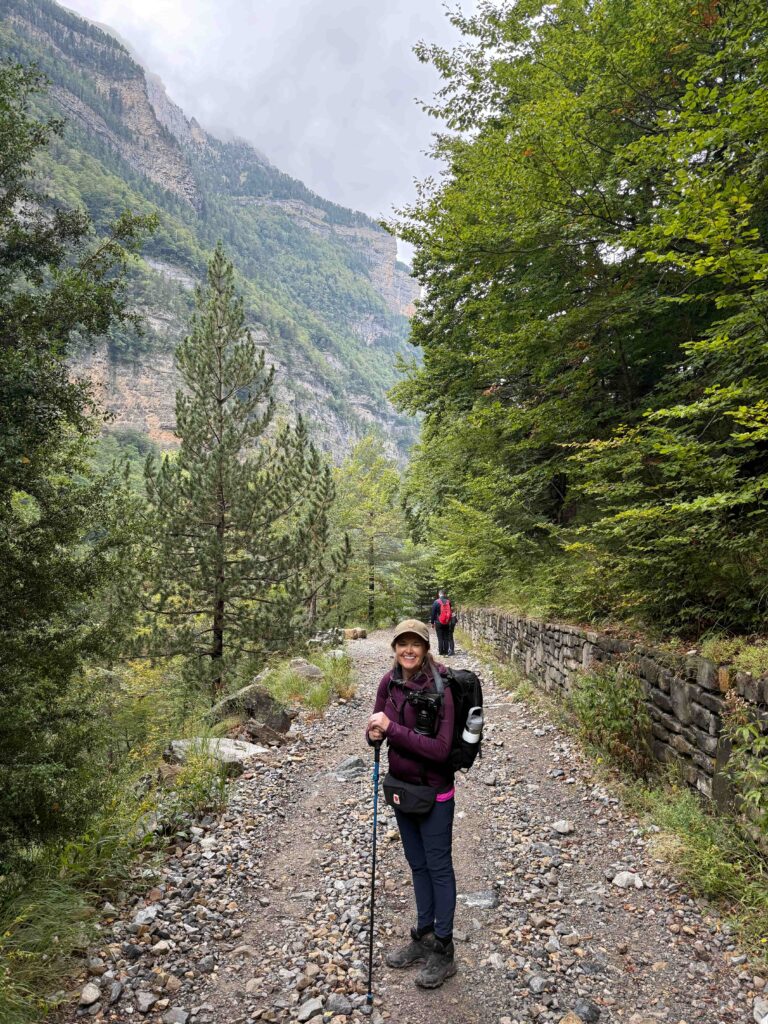
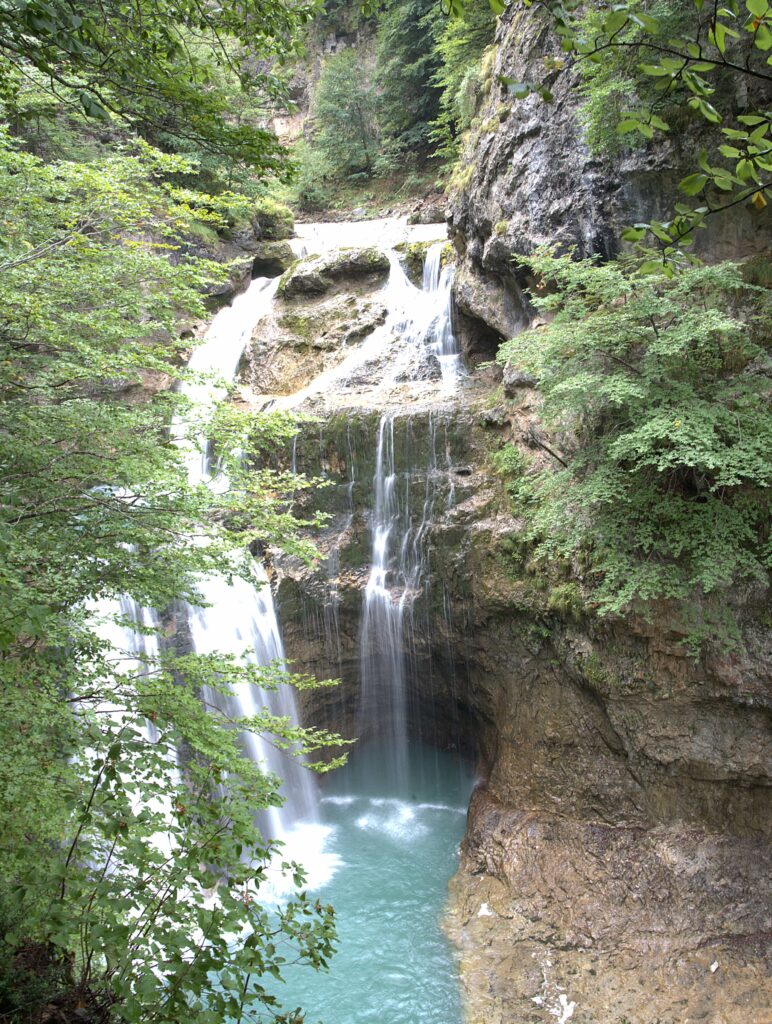
The trail follows the Vero River as it tumbles through waterfalls and pools, carving its way through towering limestone walls. Along the route you pass the old hydro-electric plant, built in the early 1900s to bring electricity to the village — a remarkable feat of engineering in such a dramatic landscape.

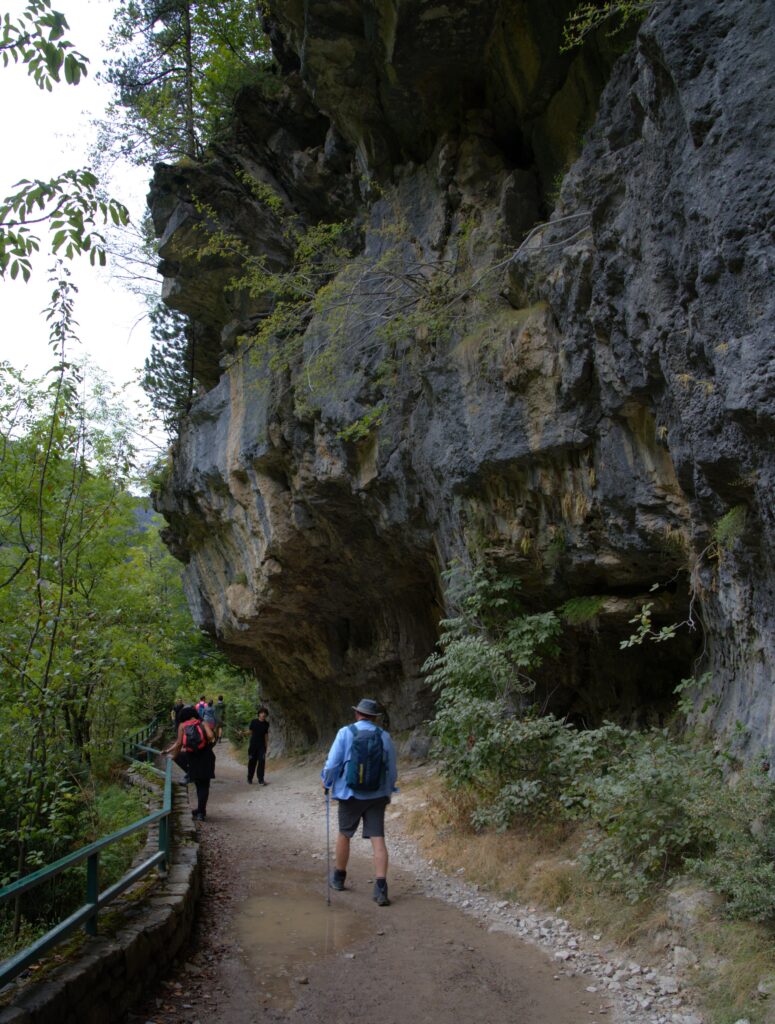
In places there is a rocky hiking path. In others, there is nothing but a thin metal walkway clinging to the rock, suspended some 10–20 metres above the water. The canyon walls close in tightly, and the sound of the river echoes upwards.
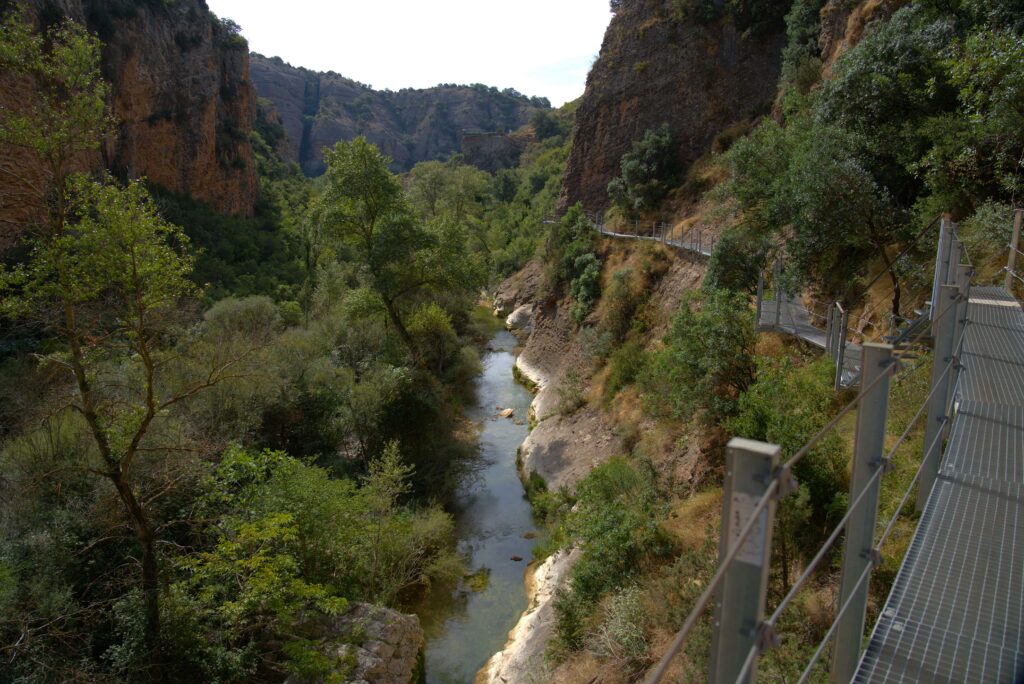
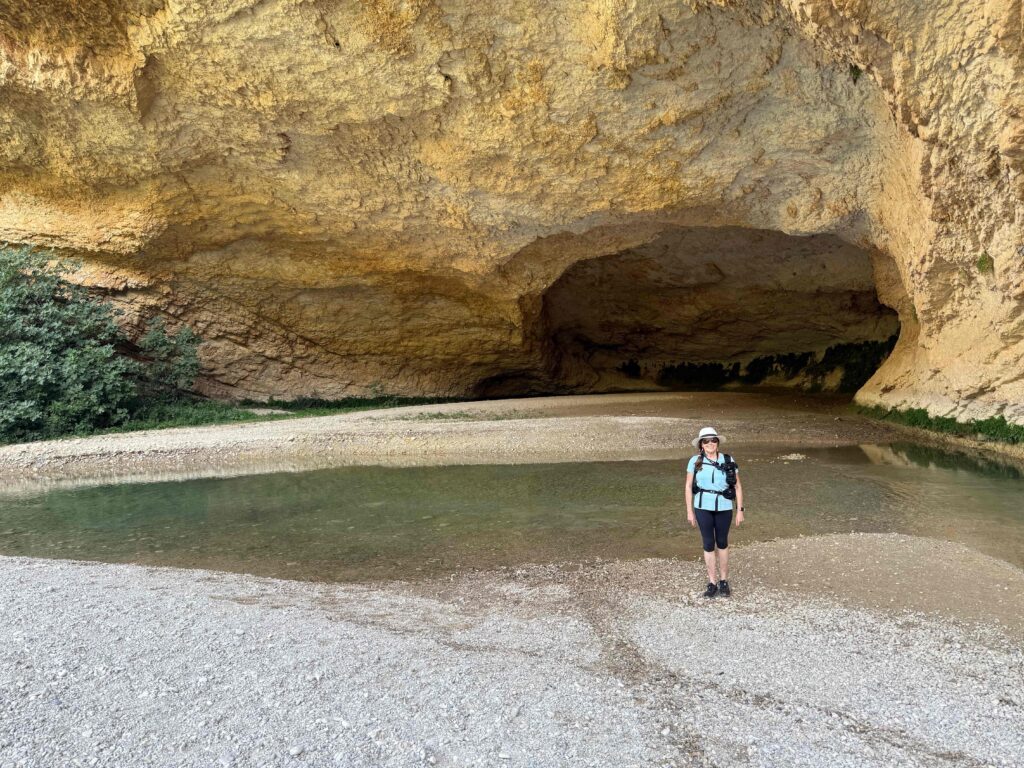
You can see how high the water reaches in wetter times- note how the pathway follows the cliffs

When the exposure became a little too “character-building,” Mr A sensibly peeled off along an inland alternative to avoid aggravating his vertigo. I continued carefully along the cliff edge, edging my way towards a magnificent lookout point that opened up to sweeping views of the gorge towards the village.

The climb back up was more breathless than I would have liked – my airway clearly narrowing again – and I took it slowly before reuniting with him on a welcome shady bench.
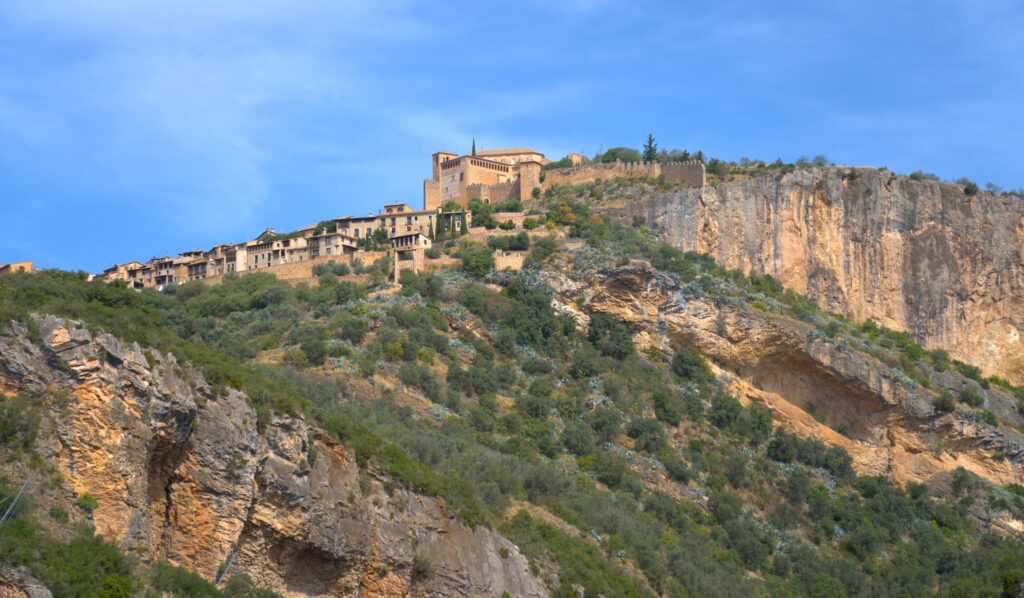
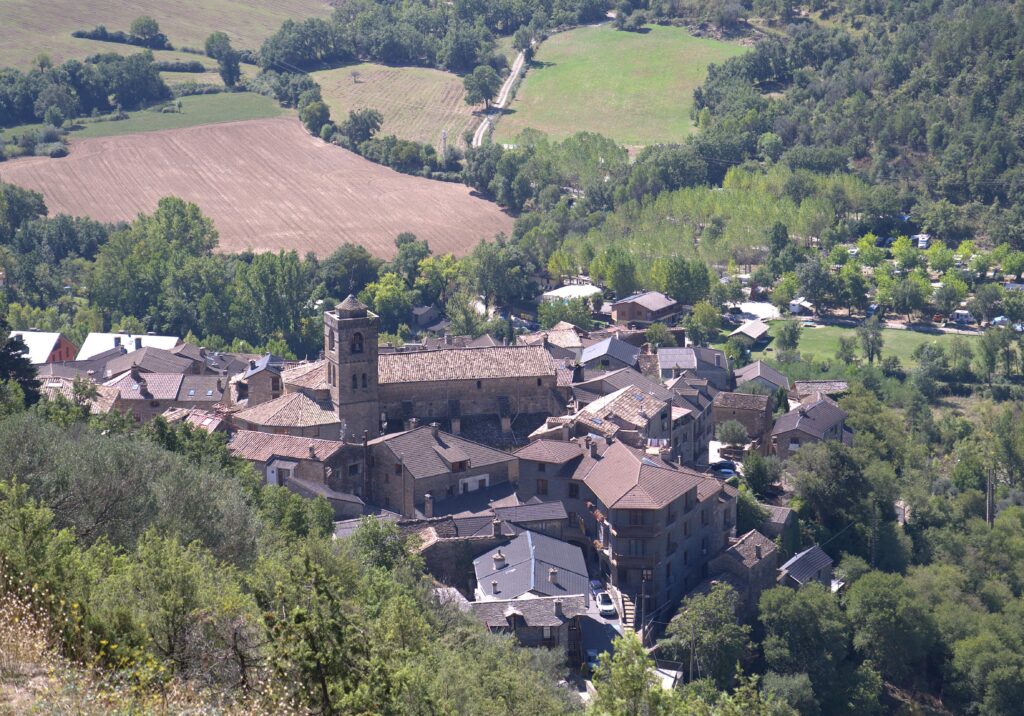
Magnificent view of Alquezar from down in the gorge- note how the stone blends into the landscape – you literally don’t notice it at first

High above us, vultures circled lazily on the thermals. We chose to believe they were simply enjoying the updrafts rather than assessing us as potential easy pickings.

It was a spectacular hike – dramatic, exposed, exhilarating – and certainly not one we’ll forget in a hurry. The final walk took us through almond and olive groves and lush orchards, back to the Church of San Miguel.

After freshening up we took another stroll around the village, soaking up the history and relishing the cooler temperatures in the shade. Many of the buildings seem to have simply emerged from the limestone rock, with it incorporated into walls and doorways.
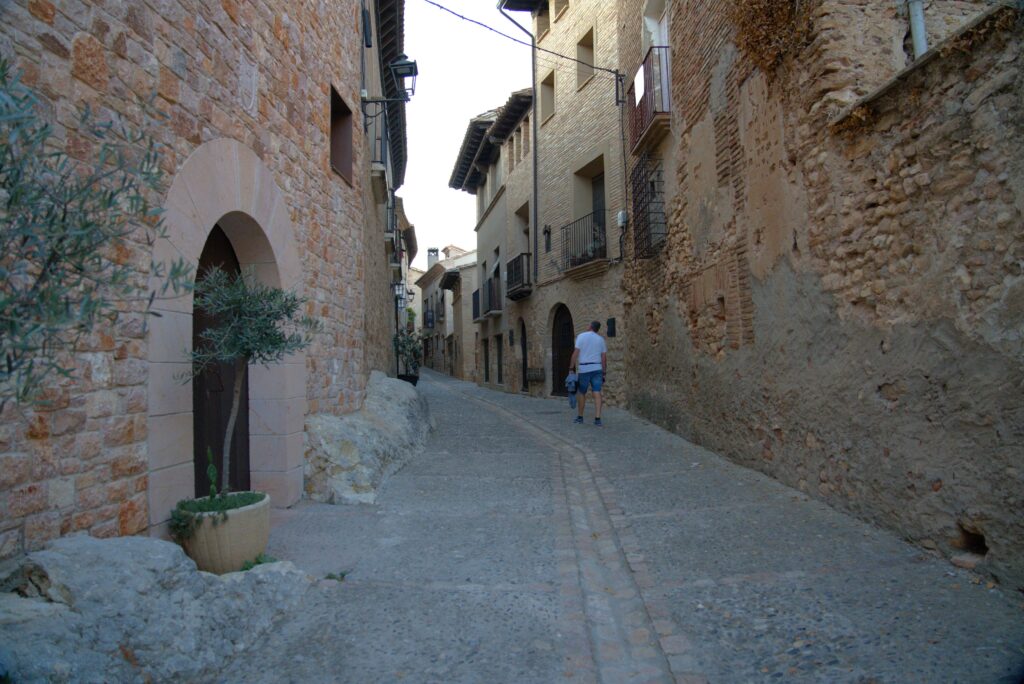
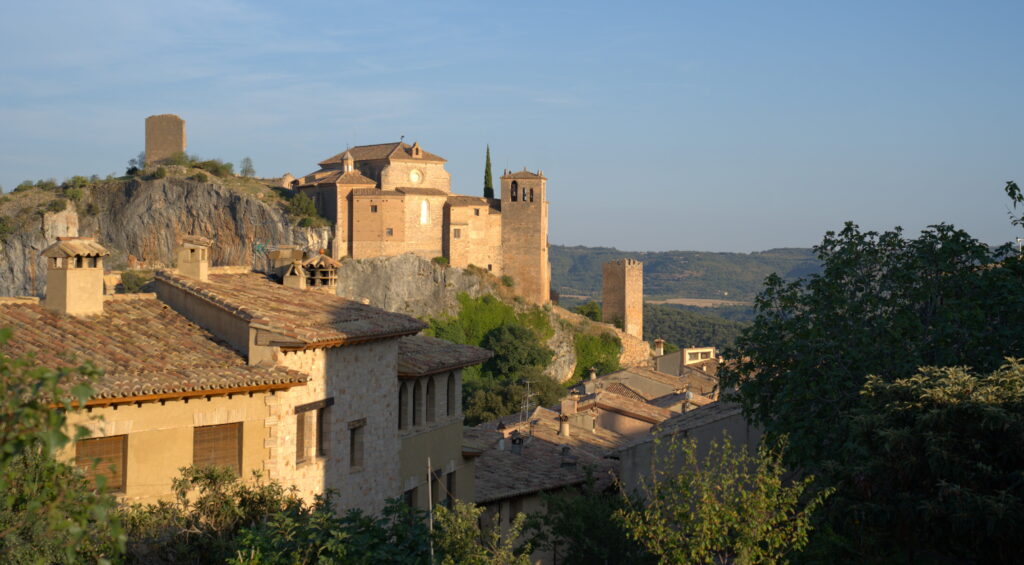
Exploring the cobbled streets
Sun getting low

18-21 September – Getaria, Basque Country

Leaving Alquézar required a few careful manoeuvres to extract the car from the tiny medieval streets, but Mr A rose to the challenge with characteristic calm – assisted, of course, by some enthusiastic co-piloting. Before long we were heading north-west across country towards the coast and Basque Country.
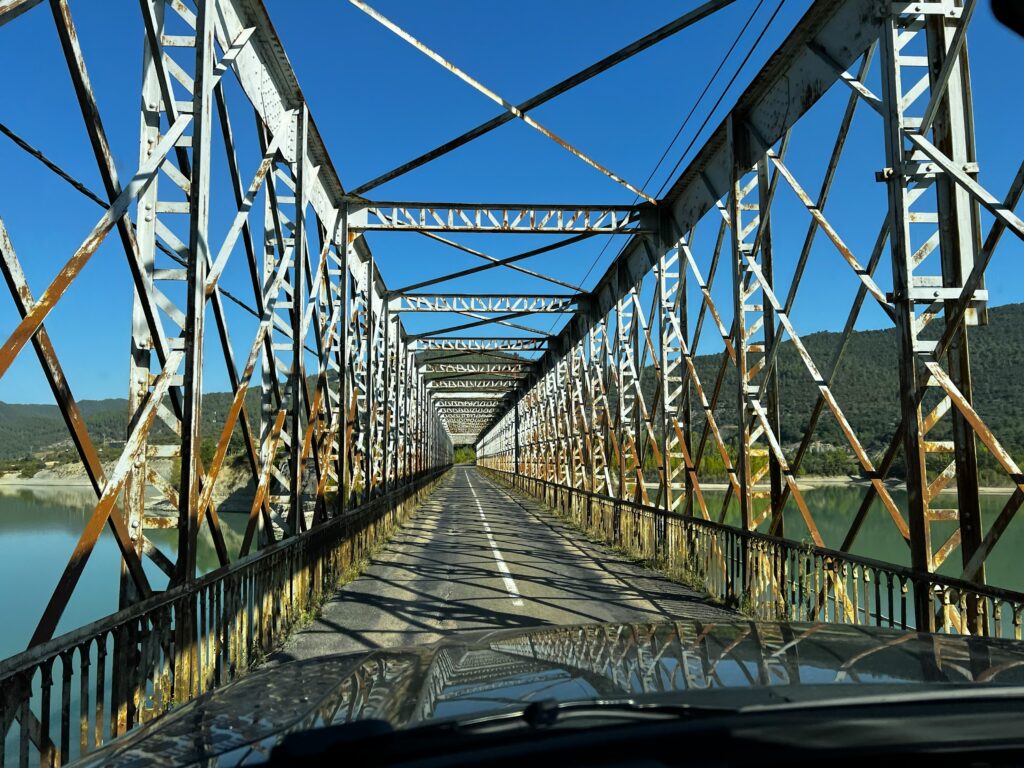
Hoping nobody comes the other way over this bridge!

Known locally as Euskadi, the Basque Country is a fascinating autonomous community with a language that predates most other European languages. Linguists have studied Euskara for decades, intrigued by its mysterious origins and lack of clear links to neighbouring language families.

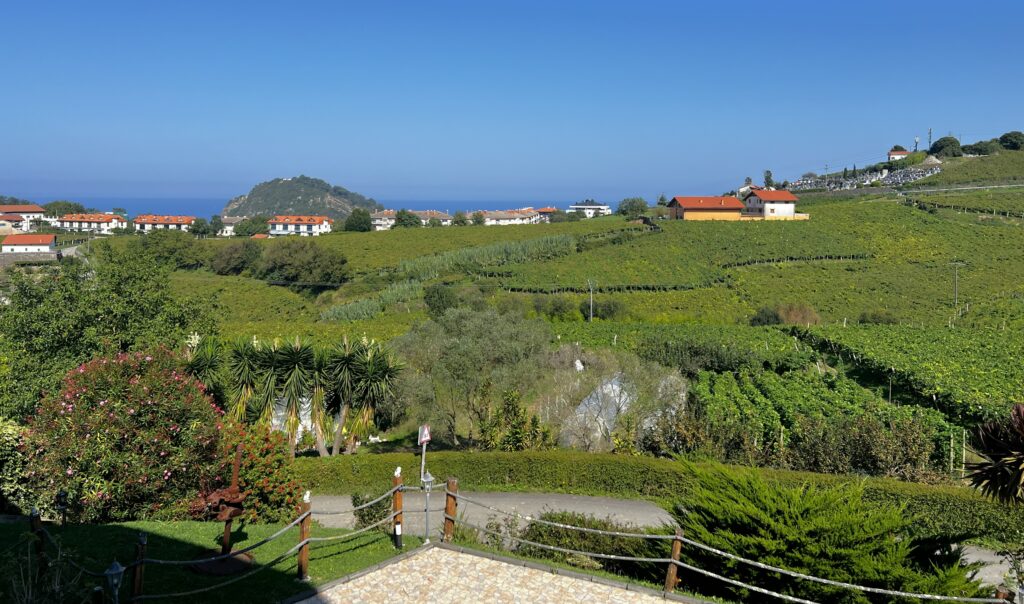
Our destination was the charming fishing town of Getaria, where we were staying on a farm surrounded by vineyards rolling down towards the sea.
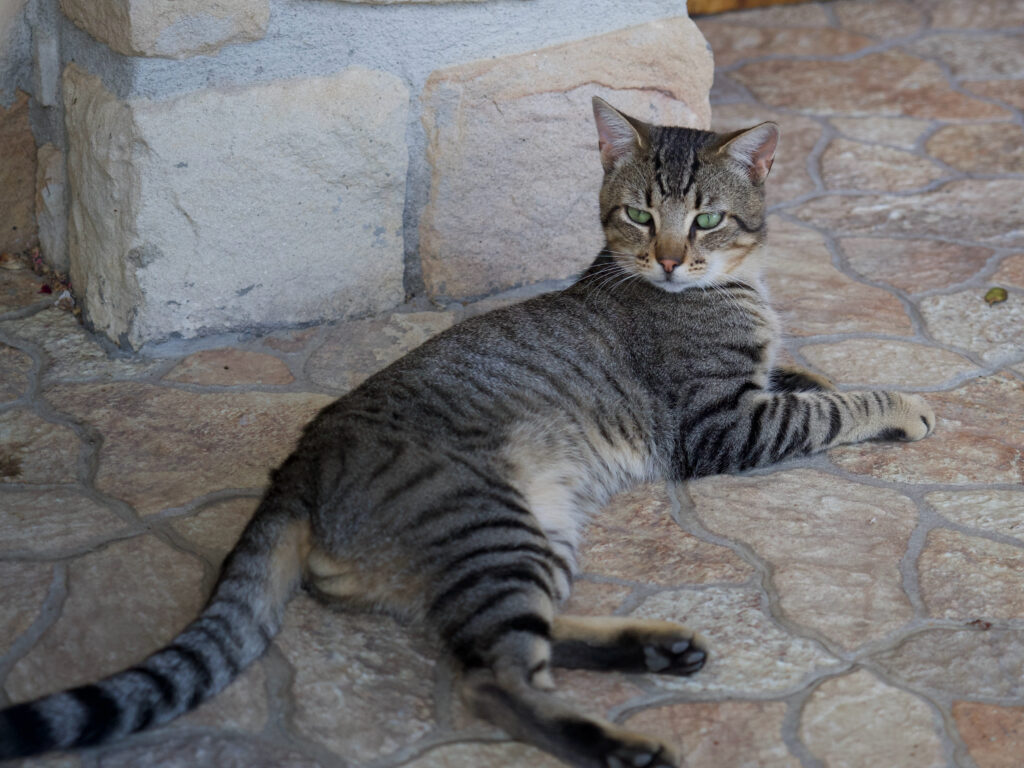
A friendly welcome at our farmhouse door
A fine view with sea glimpses from our balcony

Getaria is renowned for several things including exceptional seafood, the local dry white wine (Txakoli de Getaria) and excellent tapas – so we were delighted to stumble upon a tiny tapas bar on our very first evening, serving delicious seafood dishes fresh from the nearby waters. With a glass of superb local wine in hand, we settled happily into the Basque rhythm of life.
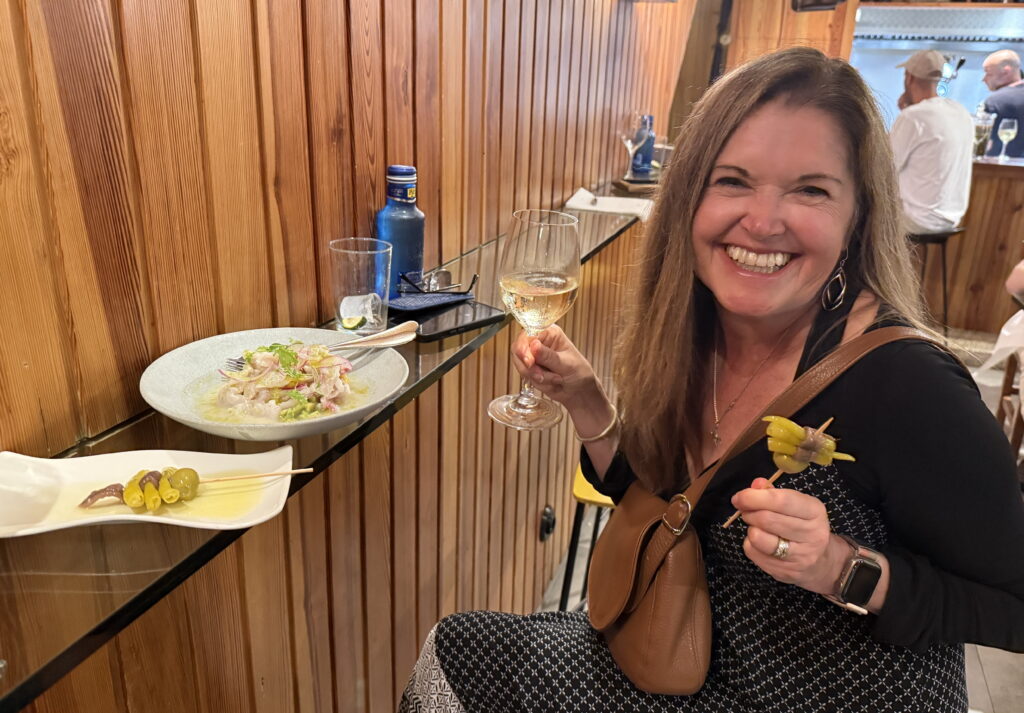
Yum! Not sure what to eat or drink next!
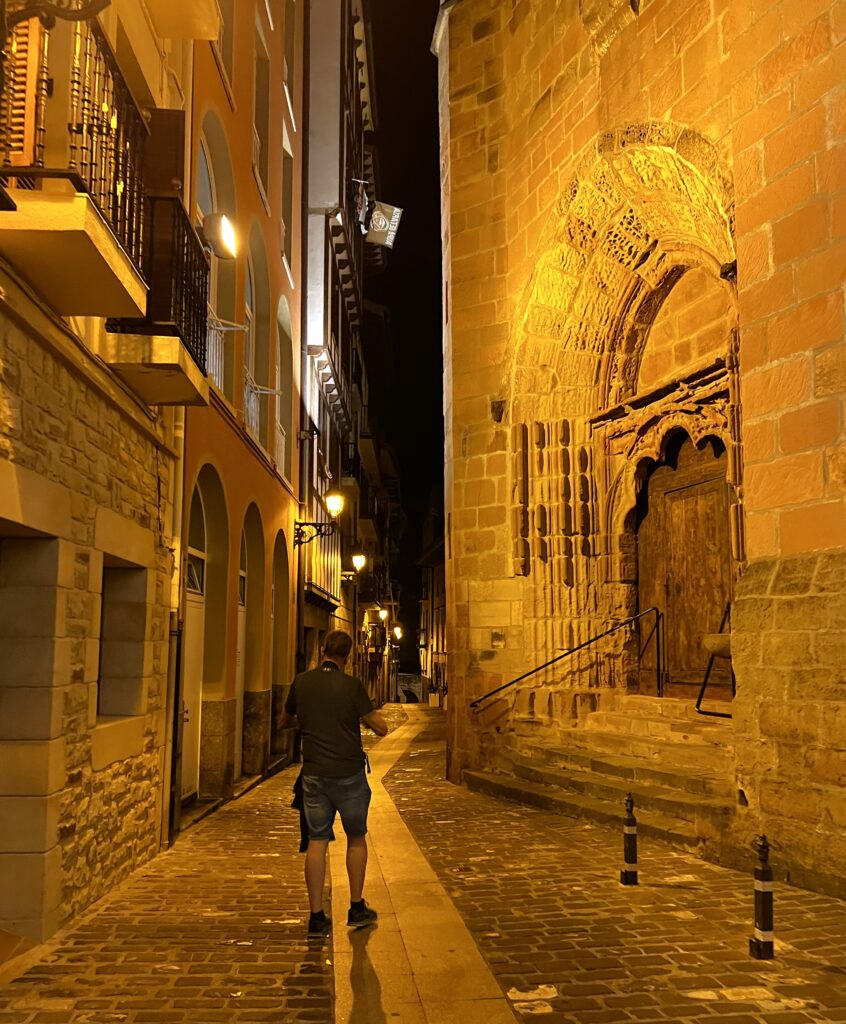
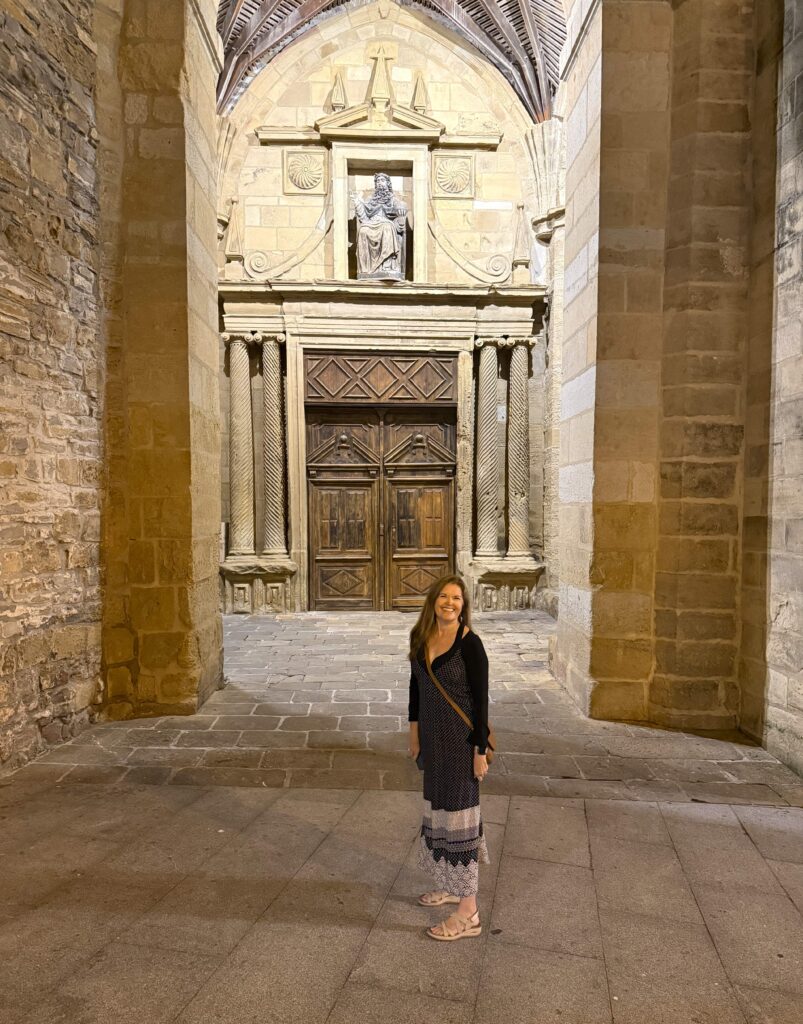
Ambling through the historic laneways after dark
Outside of school holidays the streets are quiet at night

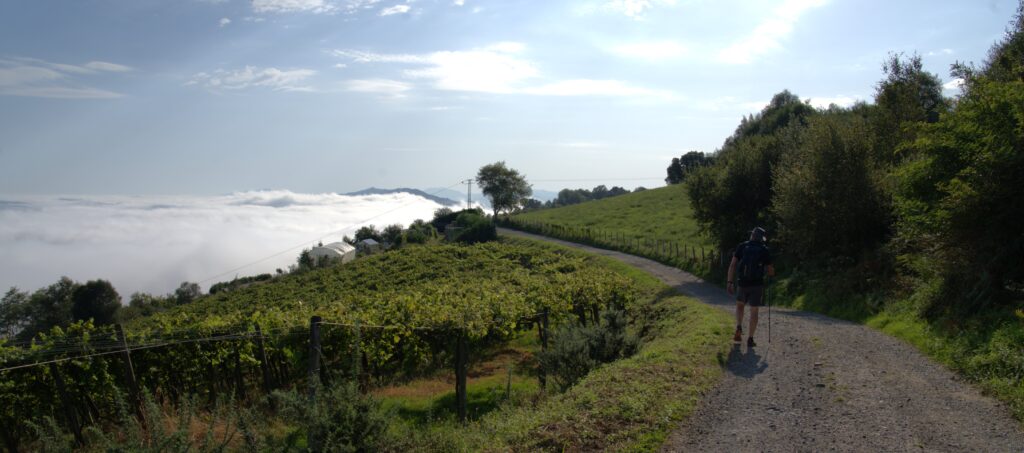
The following morning we set off hiking through misty vineyards, climbing steadily towards the ridge above the town. September is harvest season, and the countryside was alive with activity: migrant workers arriving by bus, tractors rattling along narrow lanes towing trailers piled high with freshly picked grapes. The air felt purposeful and industrious.
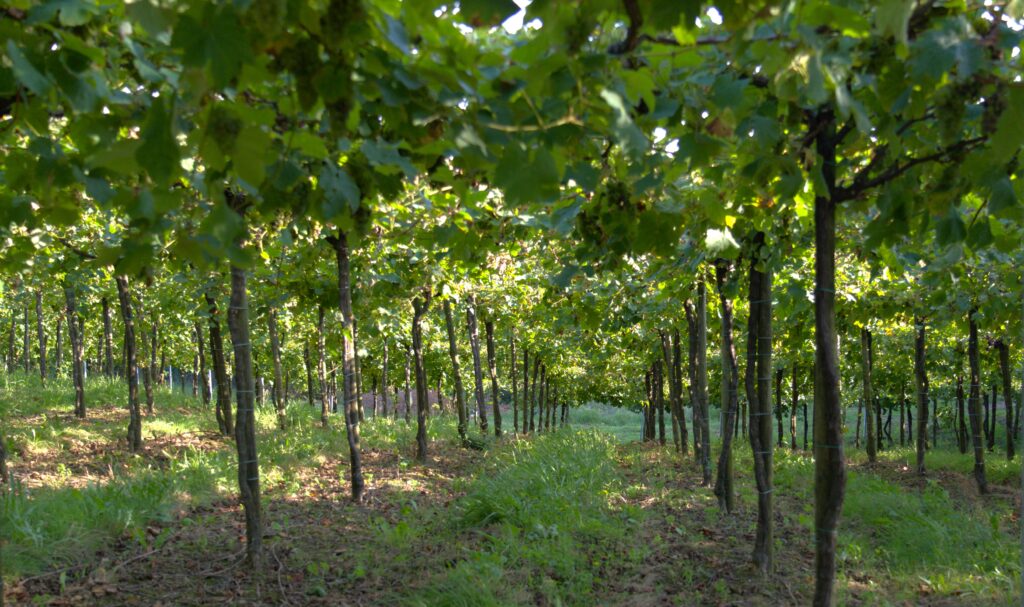
Hard to see, but these vines are tall enough for people to stand under and pick the fruit from above them

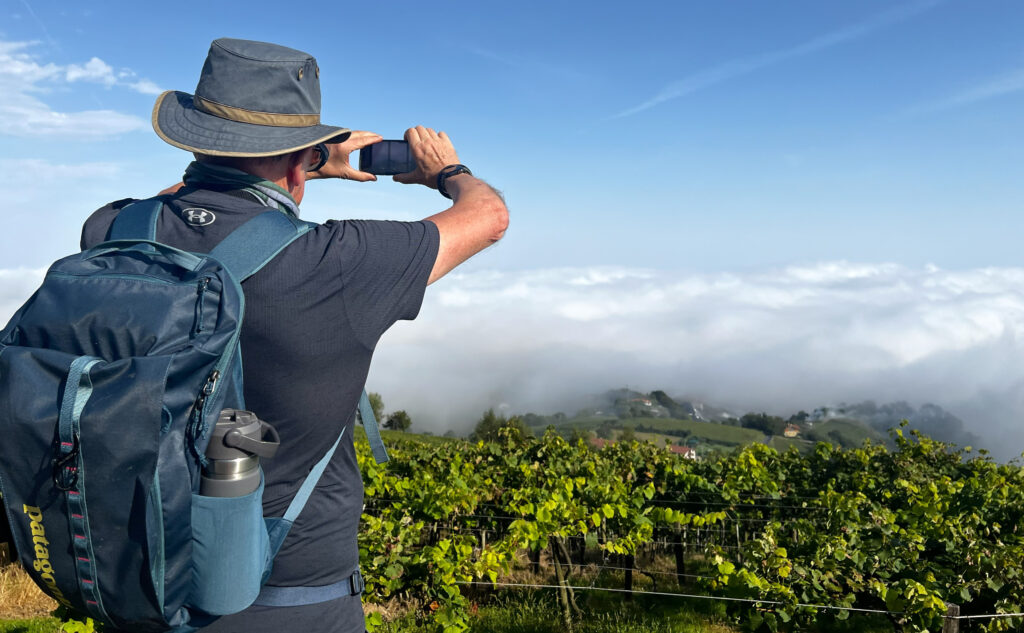
As we gained height, we emerged through the fog into bright sunshine and were rewarded with magical views across a sea of cloud below us. Gradually, as the mist drifted and thinned, glimpses of water appeared – flashes of silver hinting at the Bay of Biscay beyond.
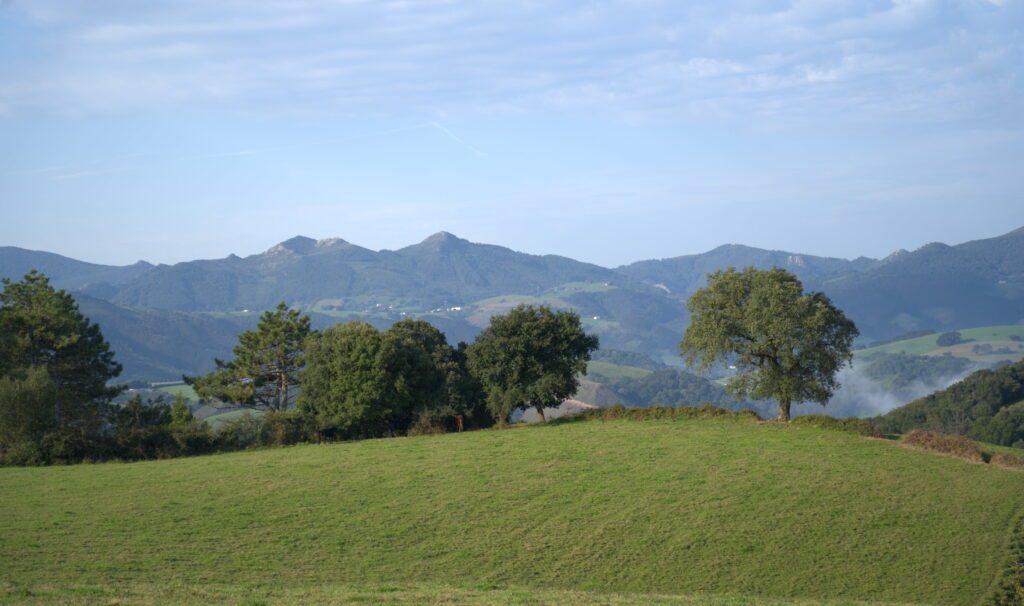
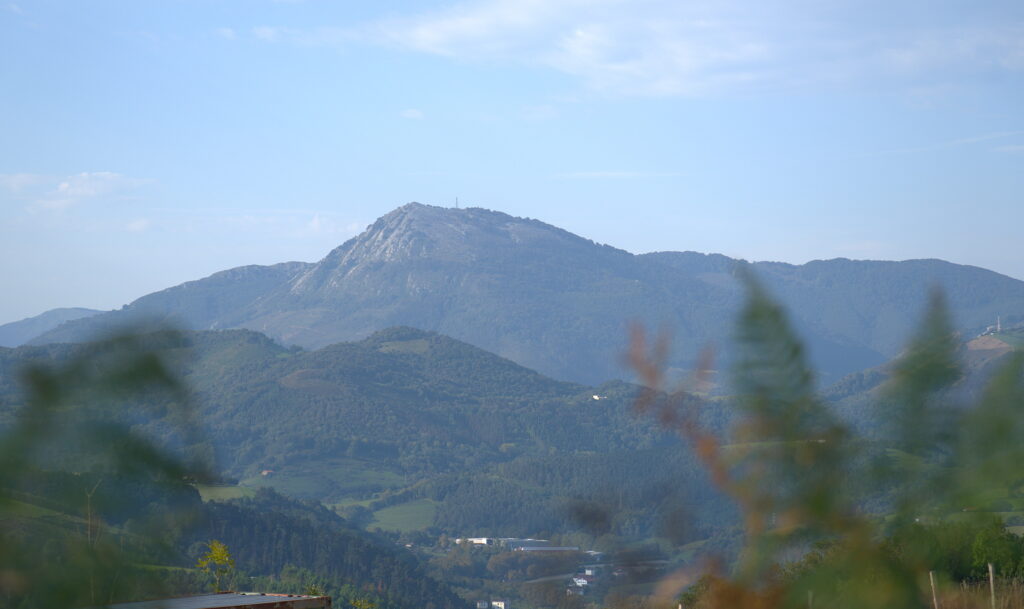
Looking inland towards the Basque Mountains
The Zarautz-Getaria Range
Looking towards the coast, we see a surreal sea of cloud
Wondering what might lie ahead
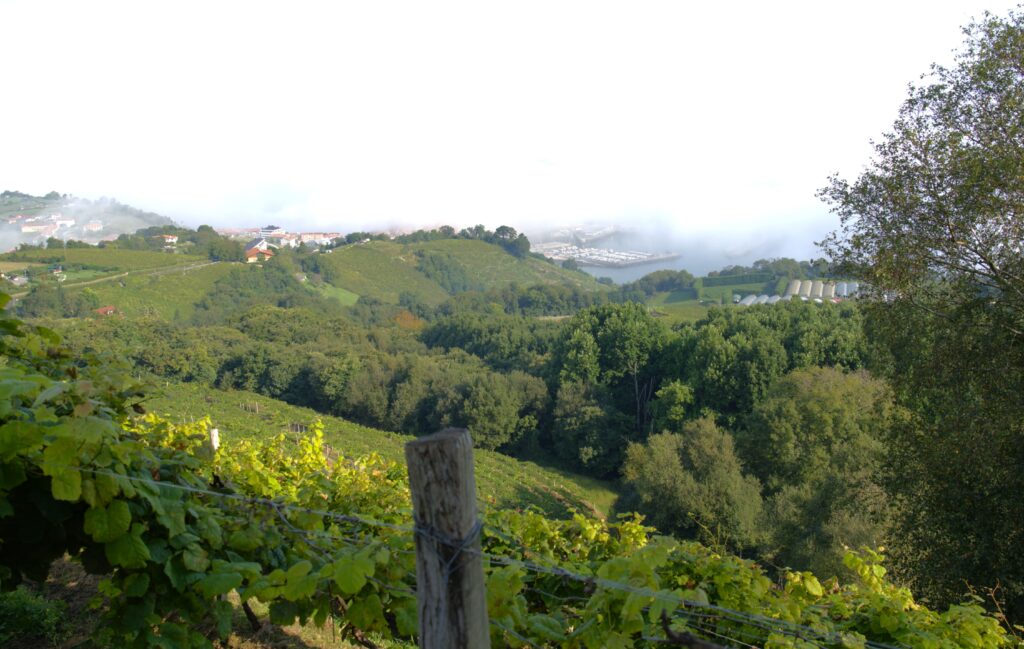
We spot Getaria harbour through the sea mist

We descended towards Zarautz, the next town along the coast, where we enjoyed a gentle stroll along the long sandy beach before finding a café serving fresh seafood salads.
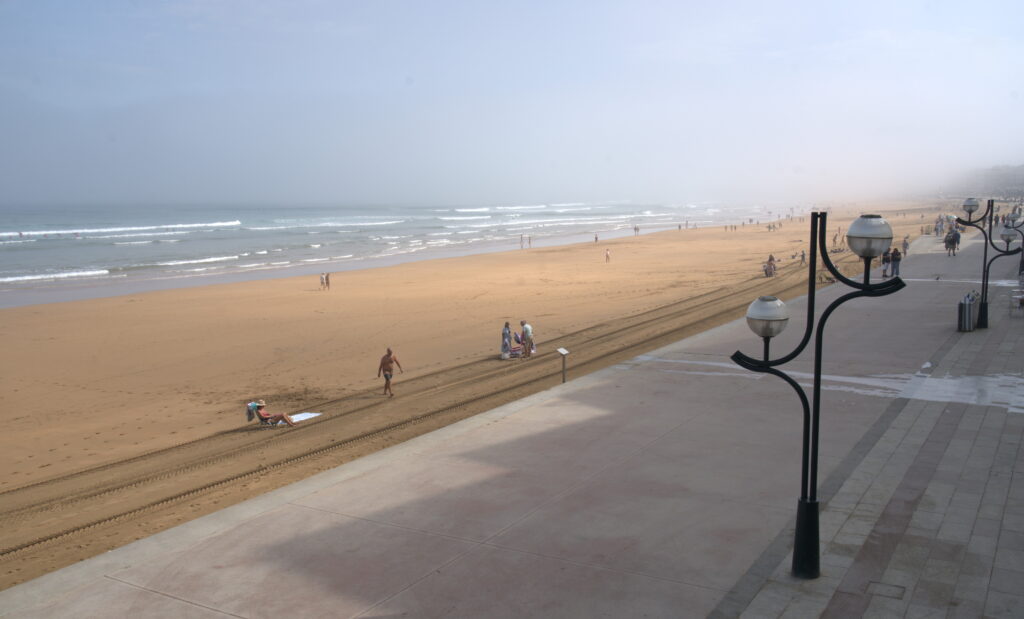
Hazy sunshine does not deter people from the beach
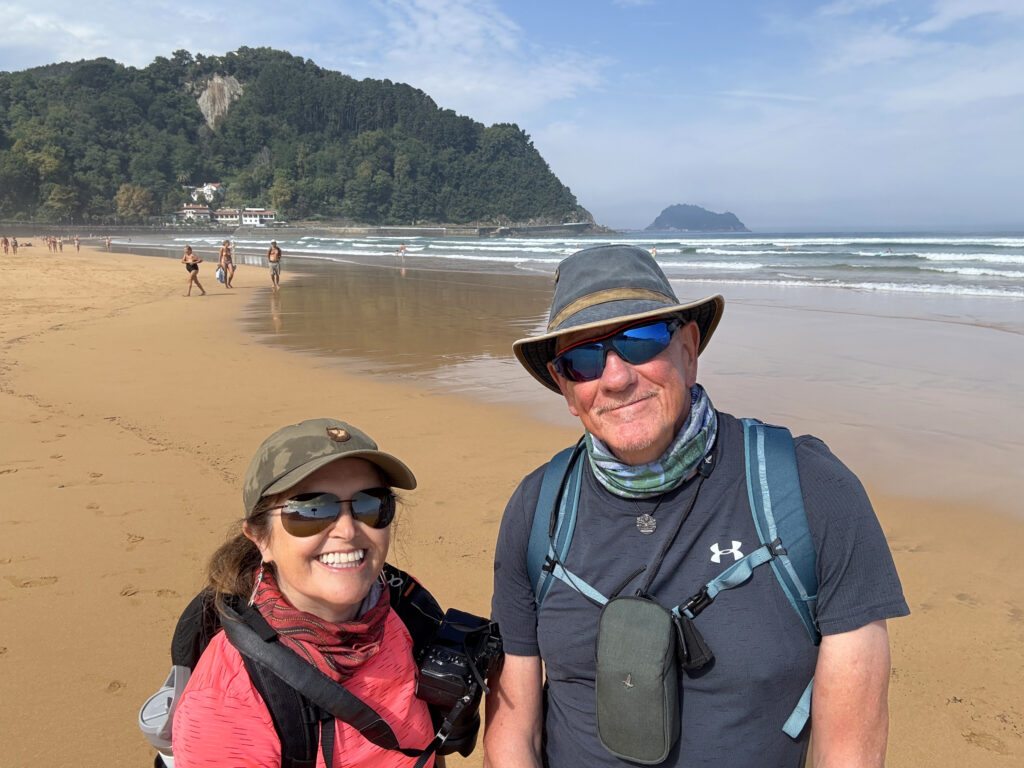
Walking barefoot across the sand – it has been a while since we last did this

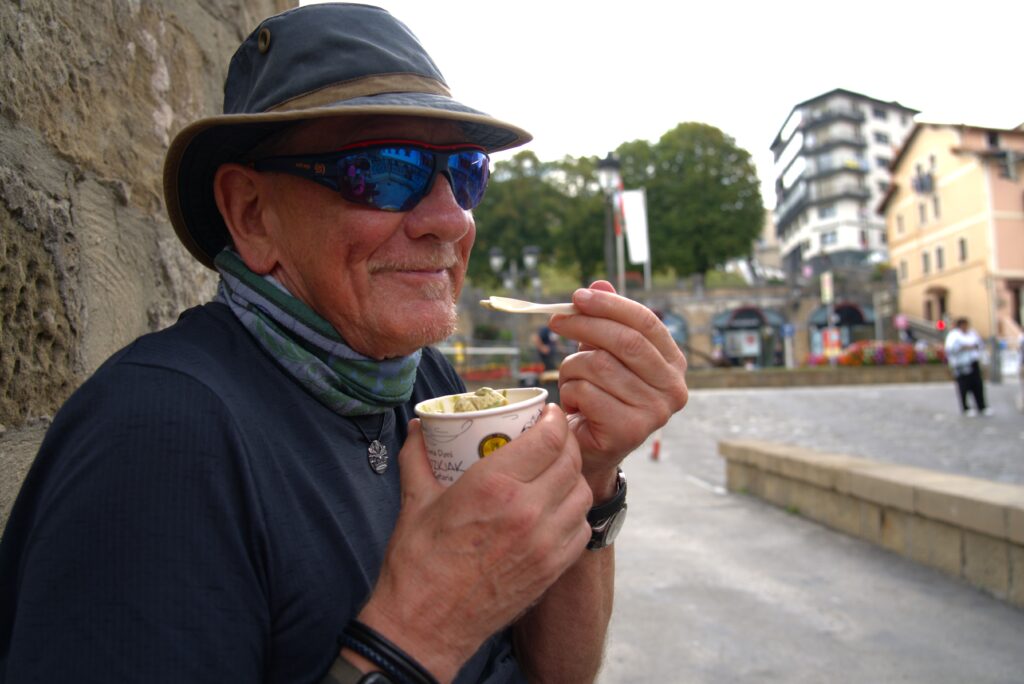
Refreshed, we followed the coastal path back to Getaria, finishing the afternoon in the best possible way – with a well-earned ice cream (17km under our belts by the time we reached our room!).
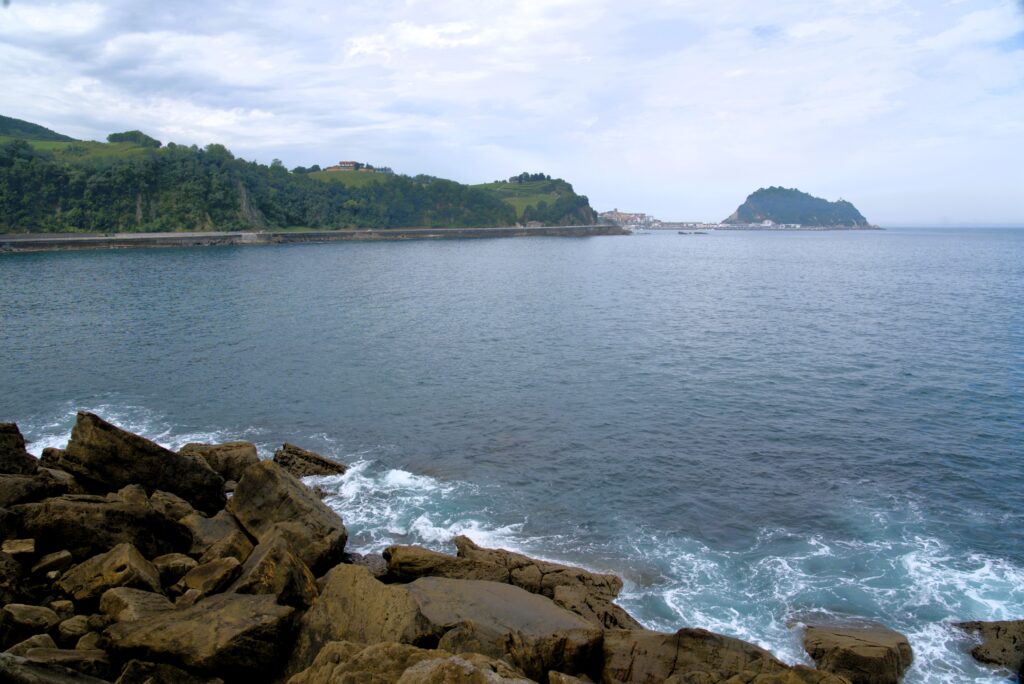
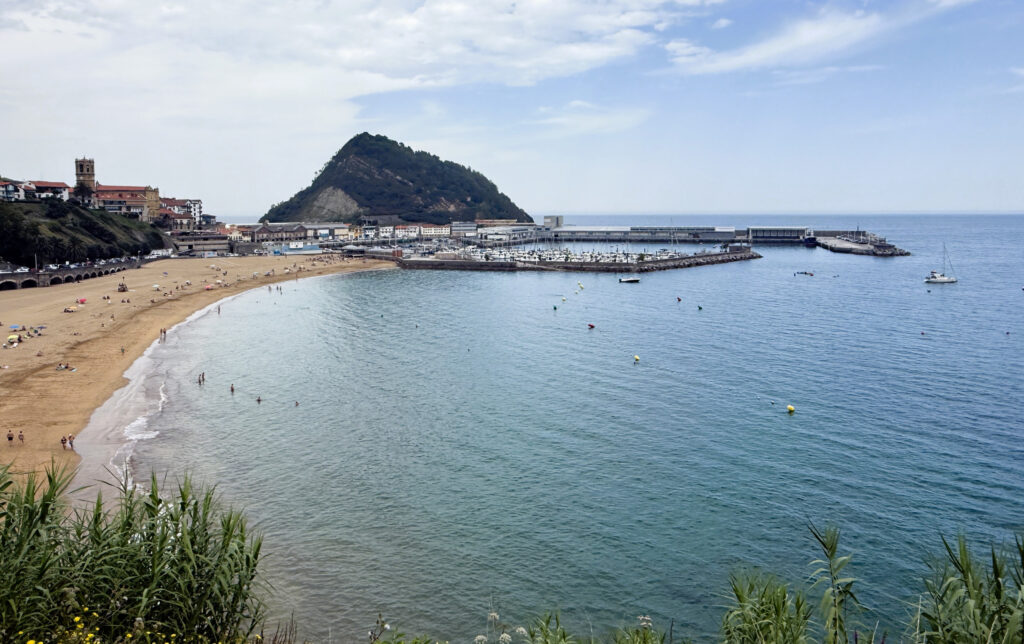
The coast path winds along, offering great viewpoints
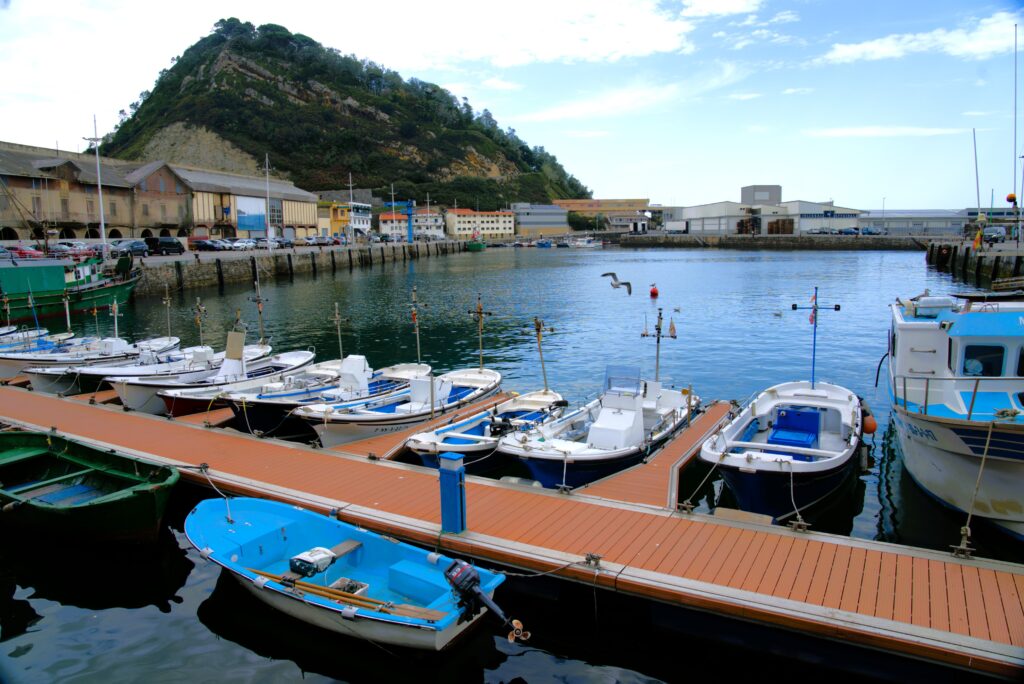
Getaria Harbour – there’s a paved pathway and scenic lookout up the San Anton Mendia, seen in the background – it is known as Getaria’s mouse due to it’s shape
Some excellent ice cream – I believe this one had jalapenos in it!

Getaria is also home to some truly wonderful restaurants, and we had booked a special dinner at Kaia Kaipe. The service was impeccable – I was even discreetly offered a cushion when it became clear the low seating might prove a little challenging for a petite guest!

The food was exquisite, beautifully presented and thoughtfully paired with local wines chosen to complement both the dishes and our preferences. It was one of those rare evenings where language simply didn’t matter; despite the staff speaking little English, we shared plenty of laughter and eventually said goodbye with warm hugs, feeling more like family than visitors.
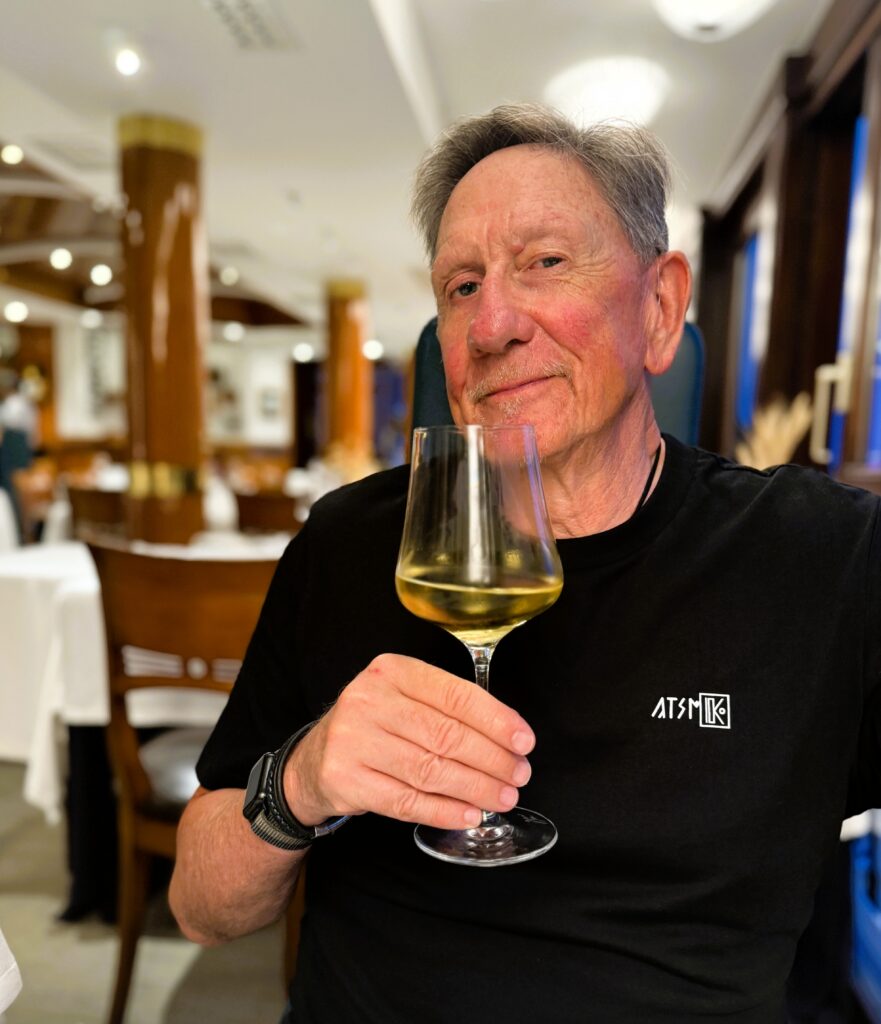
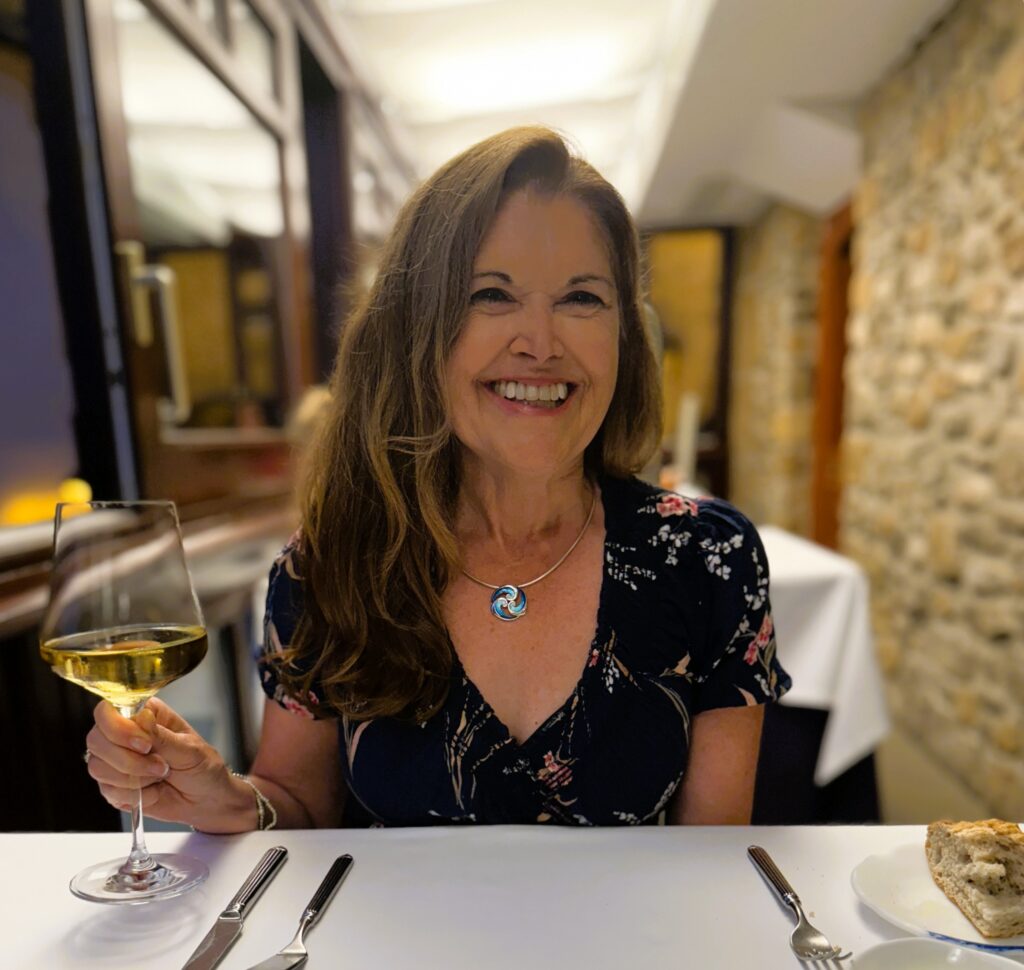
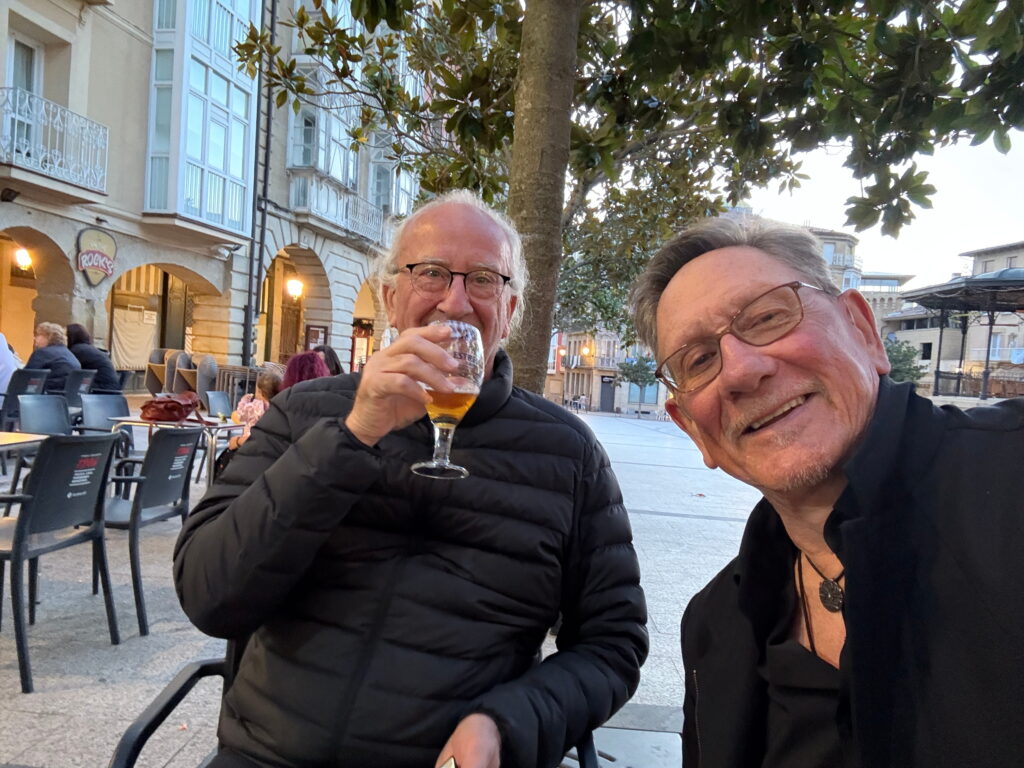
Mr A savouring a glass of local white
Cheers – this was pre the cushion!

The following day we drove south along the coast to Zumaia, entirely unaware that we were arriving on a very special day – Olarro Eguna (Octopus Day!). Everywhere we looked there were octopus symbols on clothing, lively boat races on the river, and stalls serving octopus in every imaginable form: soup, skewers, paella and more. Local tradition says the town was once saved from famine thanks to an abundance of octopus, and in 2004 the idea emerged to celebrate this curious piece of history with an annual festival.

Having watched My Octopus Teacher on Netflix, octopus was not on our menu, but we found a lovely spot for lunch before wandering over to Itzurun Beach, a striking stretch of coastline famed for its extraordinary geological formations.
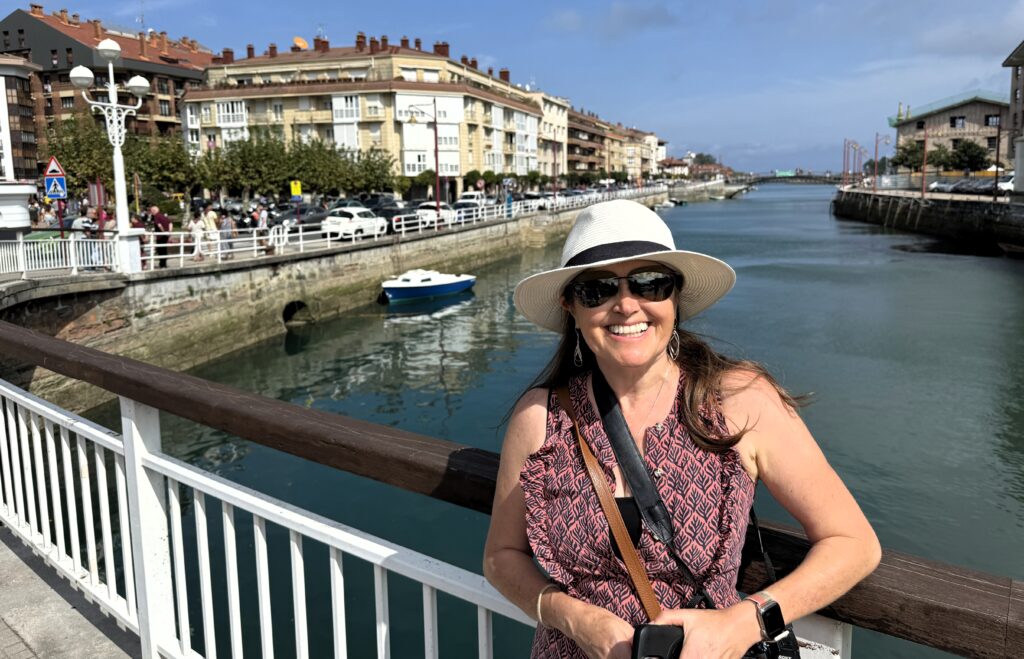
The dramatic cliffs here display a geological phenomenon known as Flysch – layers of sedimentary rock originally laid down horizontally on the seabed, later tilted and sculpted by tectonic forces and erosion into the remarkable striped formations seen today. The location also gained international recognition as the filming site for Dragonstone Landing in Game of Thrones.
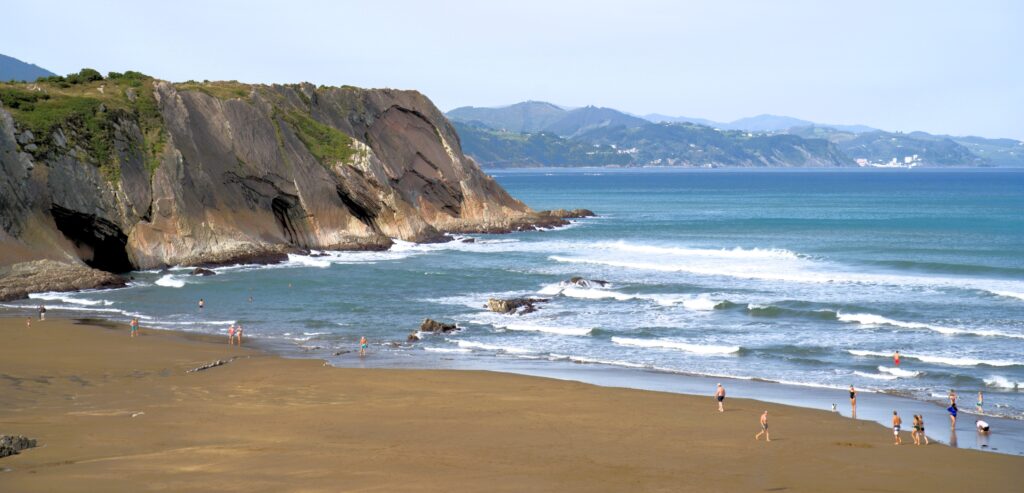
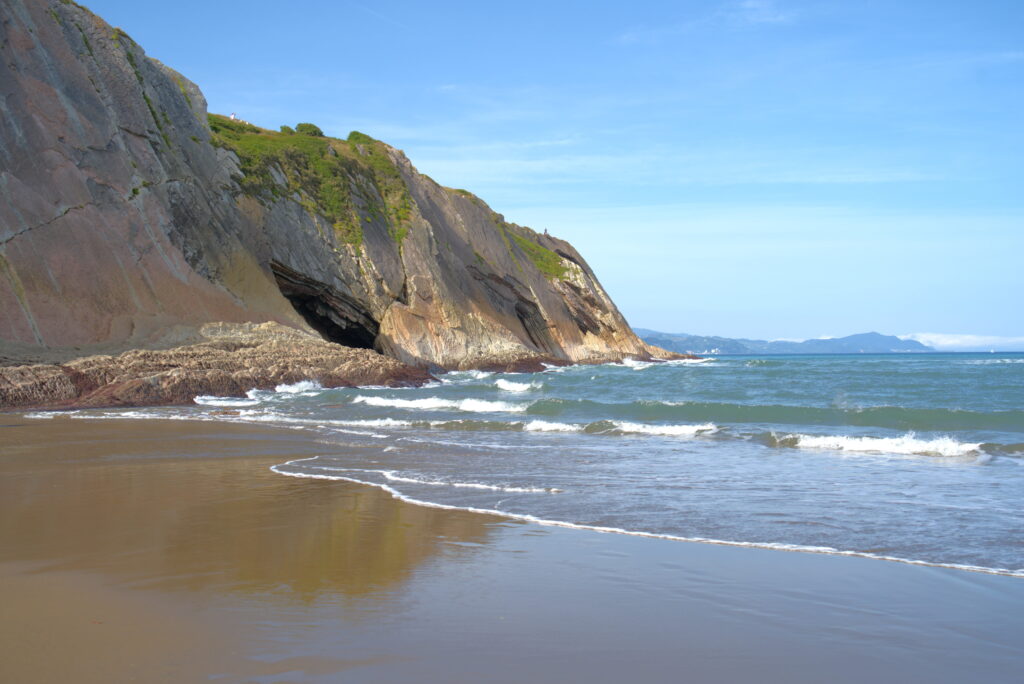
Unlike on our 2019 visit to Dubrovnik in Croatia, there are no people in Game of Thrones dress posing by these cliffs on our visit
It’s a beautiful coastline

It was a fitting finale to our time in Spain – a journey filled with extraordinary landscapes, memorable encounters and more than a little adventure along the way.

The following day, I bade farewell to Mr A and caught the bus to Bilbao Airport, flying back to Bristol and home. A day later, Mr A boarded the ferry in Santander for his 24-hour sailing back.

It has been a marvellous tour of a truly stunning part of Spain – rich in history, culture, food and natural beauty. We are already looking forward to discovering more on a future trip.
September 2025 – Into the land of vultures – a road trip through northern Spain (part 1)

Author: Mrs A

Location: Northern Spain – Haro, Laguardia, Torla-Ordesa, and Ainsa

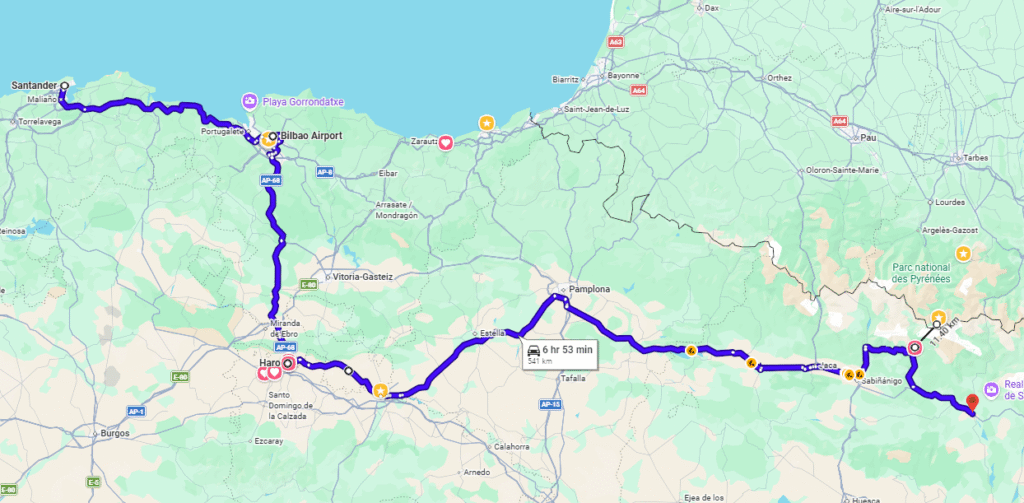
Santander to Ainsa by way of Bilbao, Haro, Laguardia and Torla-Ordesa

It was September 2025. The European summer school holidays had drawn to a close – the perfect moment to slip away and explore somewhere new. It also happened to be Mr A’s birthday, which felt like all the justification we needed for an adventure. Spain it was.

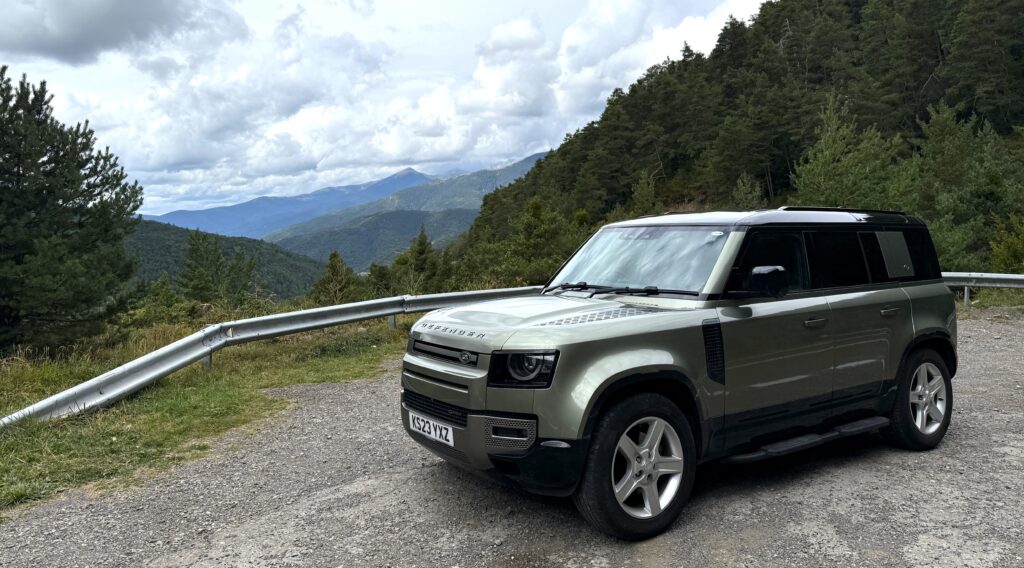
Mr A opted for the scenic route, taking the ferry from Plymouth to Santander with our Land Rover Defender packed to the brim with clothes, hiking boots and photography gear. I, knowing my limits when it comes to 24-hour cruises, chose the lighter option: a short flight from Bristol to Bilbao with only hand luggage, to be collected at the other end.

His crossing was, thankfully, surprisingly calm. The onboard experience, however, lived up to the long-held ferry tradition – functional rather than luxurious – and he was more than ready to disembark by the time he reached Santander, and after picking me up from Bilbao, our apartment just outside Haro.

9-11 September – Haro

Haro sits in the north-west of the Rioja wine region and proudly holds the distinction of being the first town in Spain to have electric street lighting – a little nugget of trivia for you. Within an hour of arriving, we were reunited with our friends Di and Colin, who had travelled down from the south of France, and were taxi-bound into town for drinks and dinner.

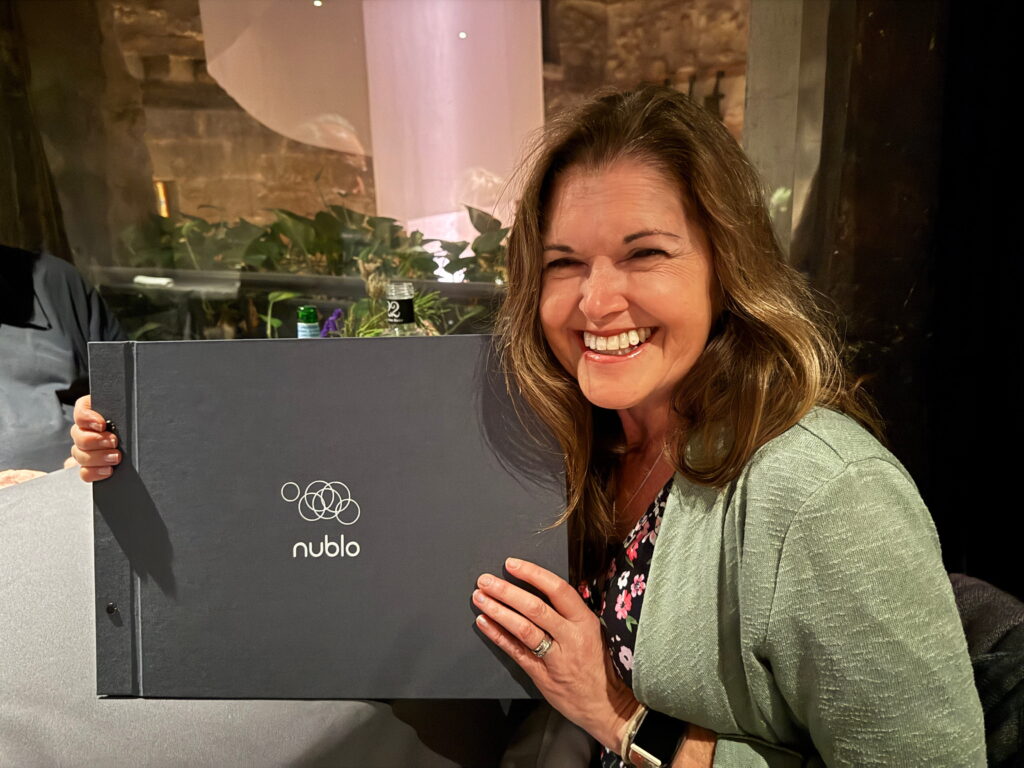
We spent two nights in Haro and ate exceptionally well. The first evening was at Los Caños – lively, bustling, and full of local flavour. The following night brought a first for us: a Michelin-starred experience at Nublo (which translates as “cloud”).

And what an experience it was.

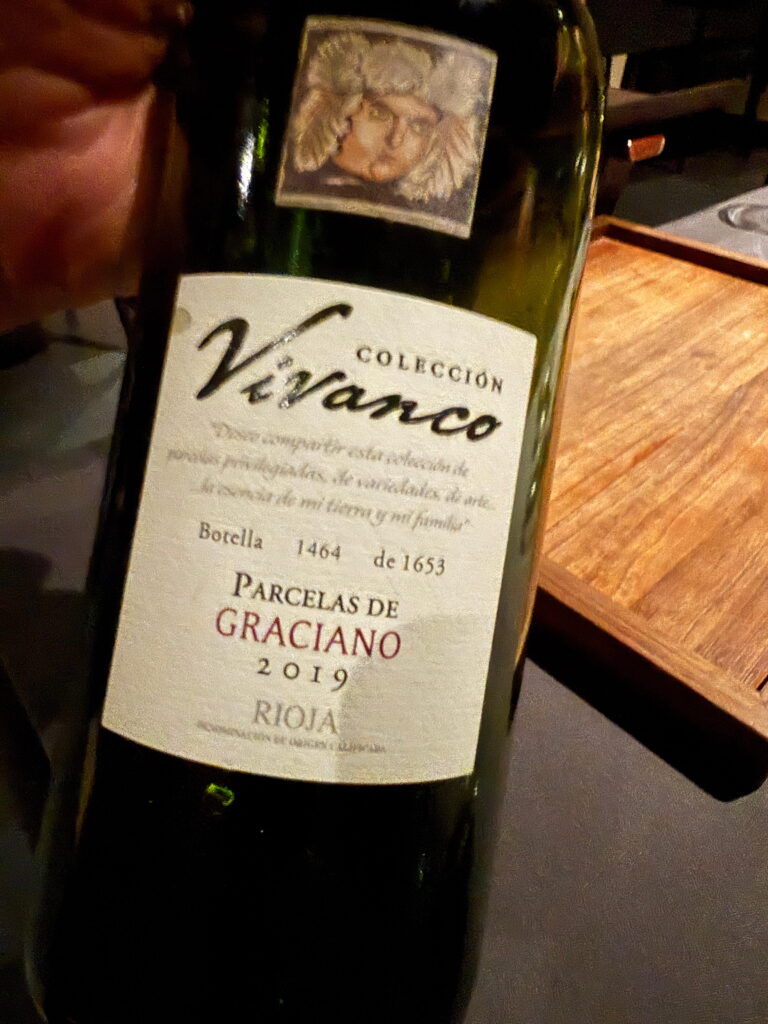
One of the very tasty drops we were treated to

Over three unhurried hours we were served eight wines, each thoughtfully paired with one of eleven exquisitely crafted courses. Every dish arrived like a miniature work of art, presented on unique platters that felt more gallery than tableware. As a dairy-free diner, I am used to compromise – but here there was none. Each course had been adapted seamlessly and beautifully.

The wines were almost theatrical in their presentation, each accompanied by the story of its local winemaker. (All were regional, save for the French champagne.) By the end of the evening, nearing midnight, it felt as though we had attended a performance – part theatre, part tasting, part art installation – rather than simply gone out for dinner.

What a way to begin the journey and celebrate a birthday and reunion with friends.

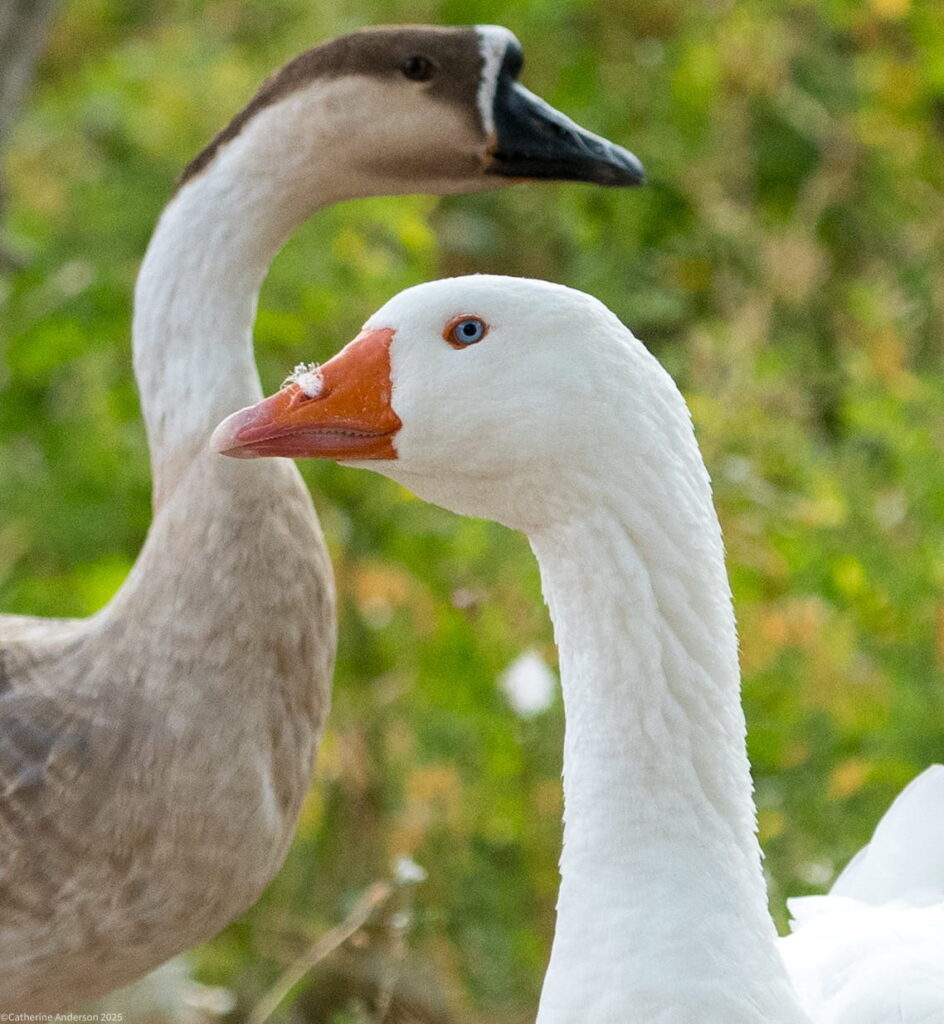
Geese alongside the River Ebro which flows beside Haro ‘Bless you!’
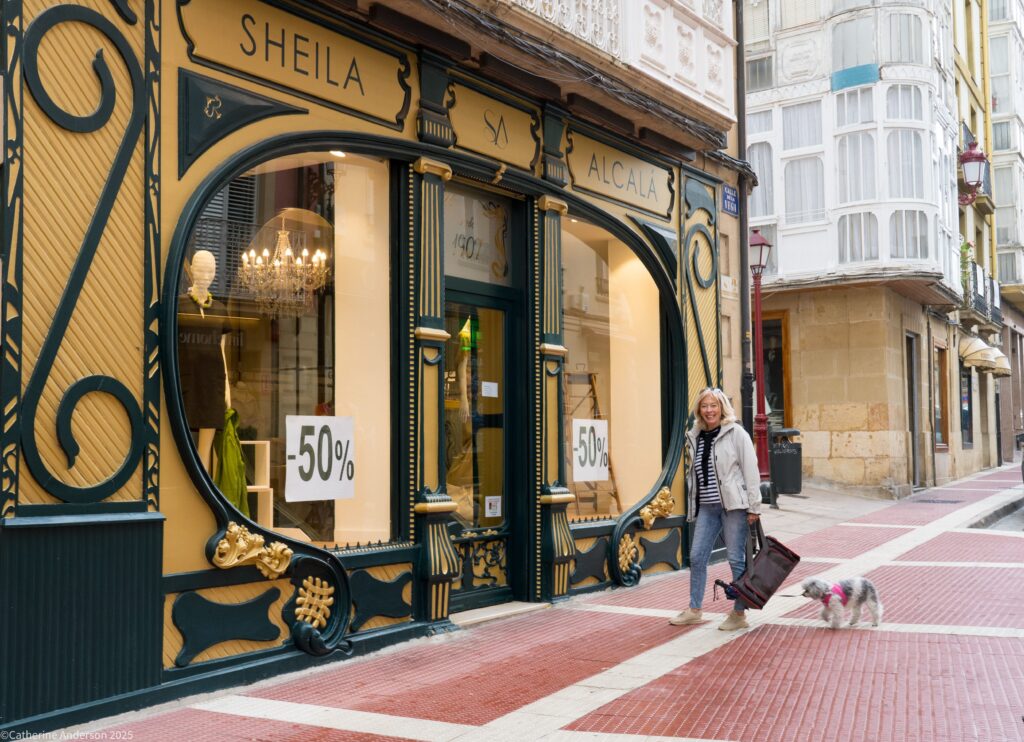
Di and Genie explore the streets of Haro with some of the traditional architecture – check out those windows in the background
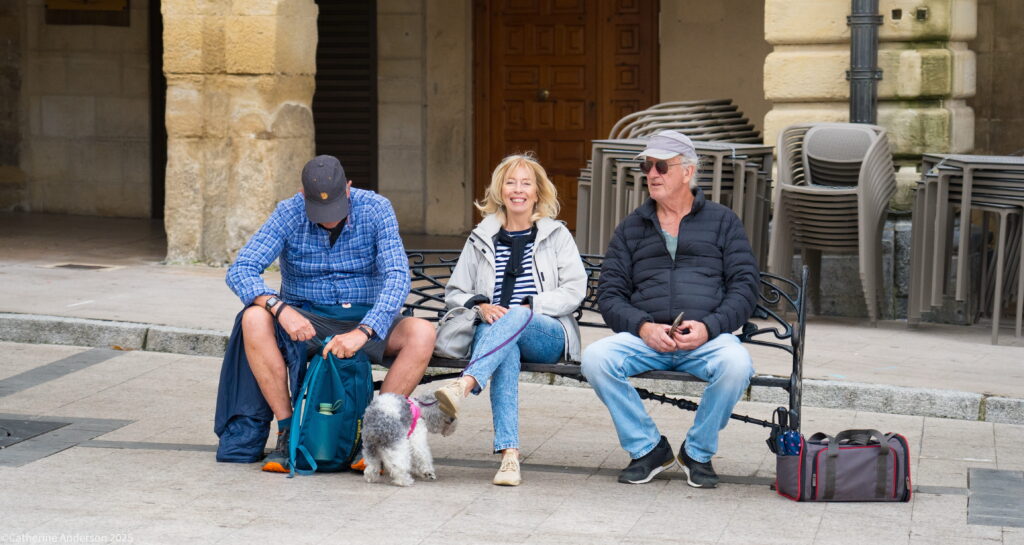
Lunch started late in Haro – missing breakfast meant hungrily killing time til 2pm when the tapas bars open – Mr A, Di and Colin with Genie the poodle
Some of the locals were a little wary of us

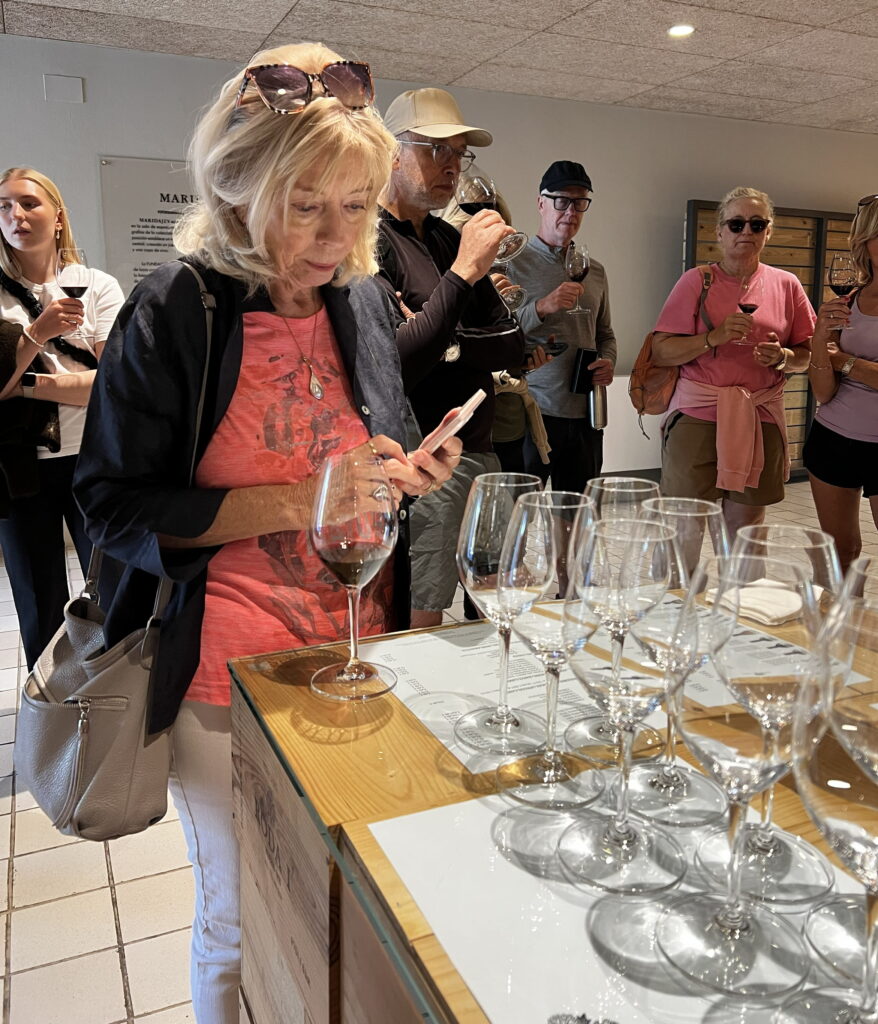
Of course, no visit to Rioja would feel complete without a vineyard tour and tasting. I had booked Mr A, Di and Colin onto a visit to Bodegas Roda, one of the region’s most highly regarded wineries.

It had been a few months since our last cellar-door experience – something we indulged in frequently during our travels around Australia and New Zealand – so we were more than ready. Bodegas Roda proved to be an interesting contrast to some of those more traditional estates. Founded in the late 1980s by a collective of wine enthusiasts rather than generational winemakers, it was designed with sustainability at its core. Renewable energy, meticulous temperature control, and innovative ageing techniques all play a role in how their wines are produced and stored.

And the results speak for themselves.

We sampled a selection of their premier reds and whites, each distinctive and elegant, alongside local olive oil – a bottle of which is now being happily enjoyed back home in Somerset.

Di enjoys a few sips of ‘The Ones’ – their premier vintages

11-12 September – Laguardia

Our time in and around Haro felt authentic and refreshingly untouristed. That changed somewhat when we moved on to the very pretty, walled village of Laguardia for our next night.

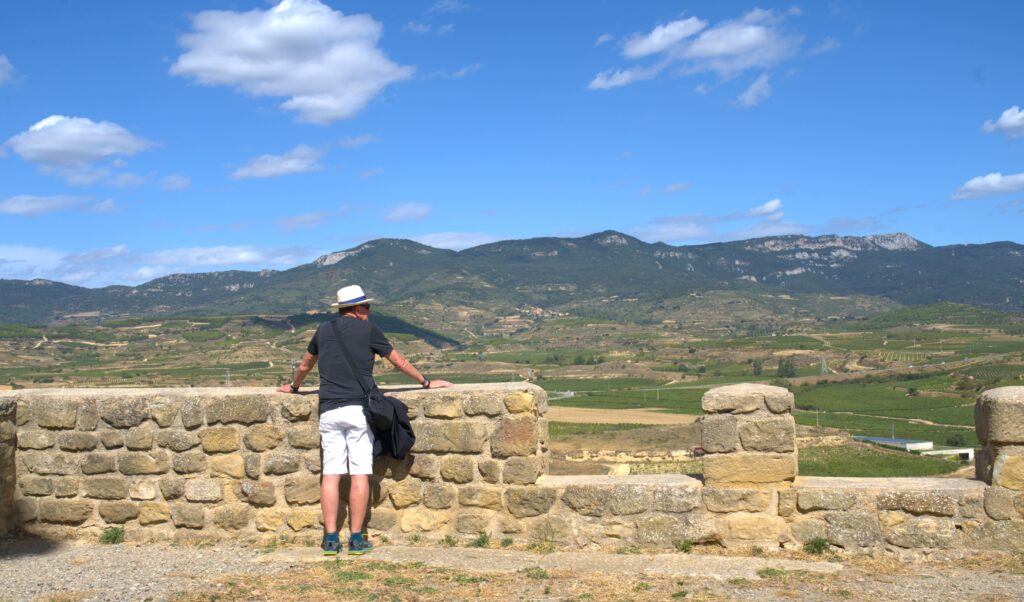
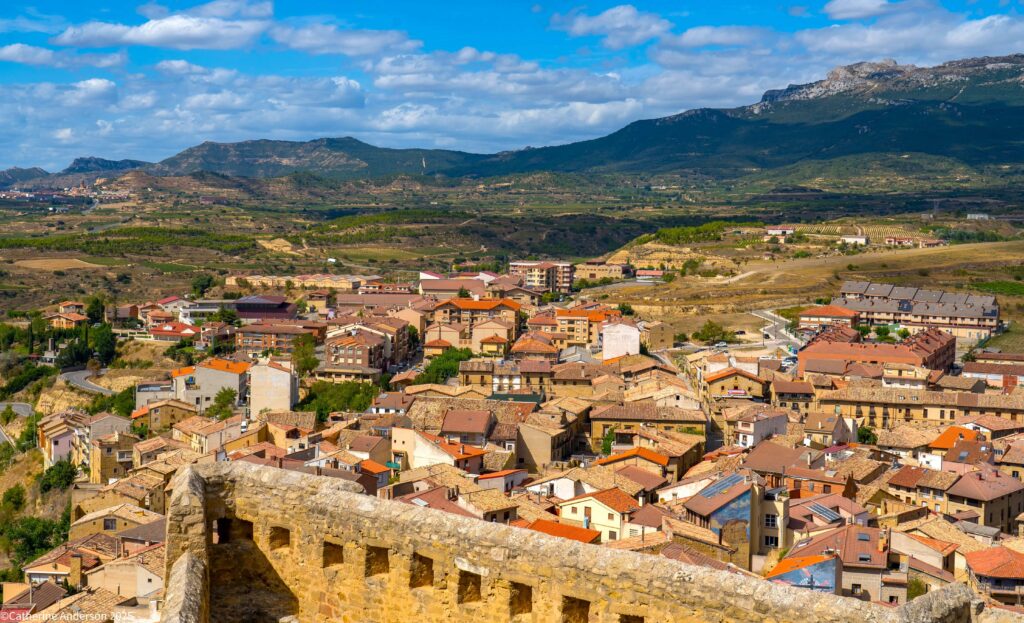
A brief diversion to the sleepy San Vincente de la Sonsierra – a walled town with castle ruins, and a magnificent viewpoint across the region
San Vincente de la Sonsierra as viewed from the castle ruins

On arrival in Laguardia, the narrow cobbled streets were packed with tour groups, guides recounting the town’s history in every language but English – no chance of discreetly hovering nearby to listen in!

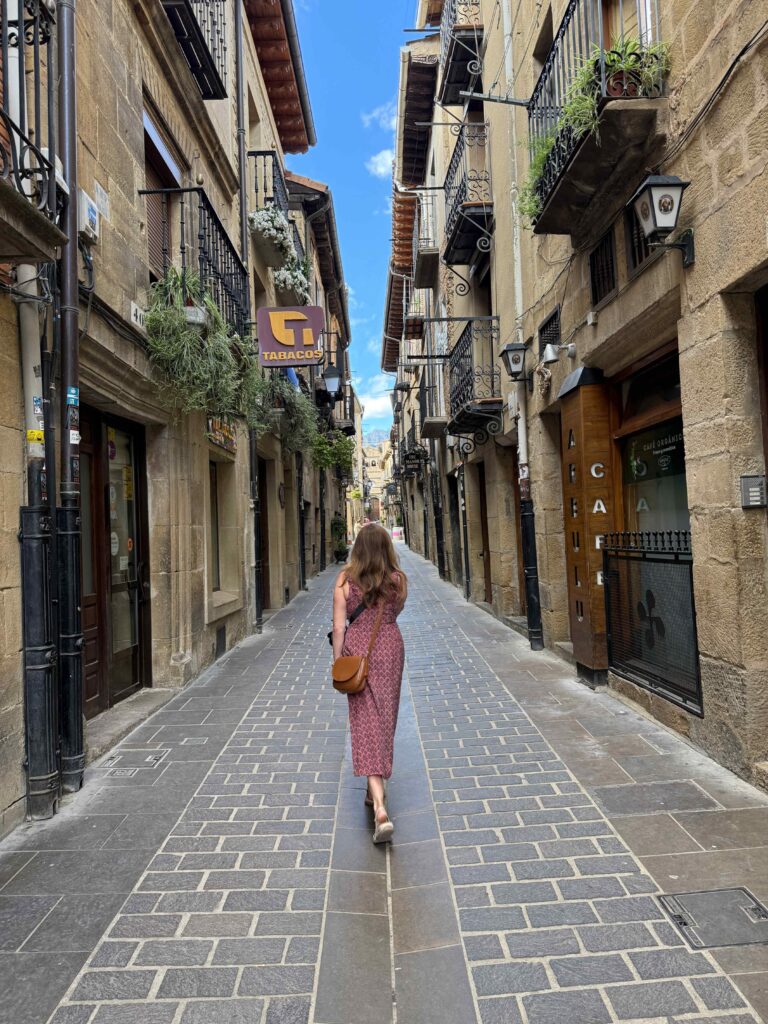
A quiet cobbled street, away from the crowds

Once we drifted away from the crowds, however, we discovered a quieter charm. Tiny interwoven streets, stone-built houses with delightfully wonky windows and doorways, and an atmosphere that made it easy to imagine life centuries ago. Laguardia was founded in the 10th century as a fortress for the Kingdom of Navarre, and that sense of layered history still lingers in the walls.

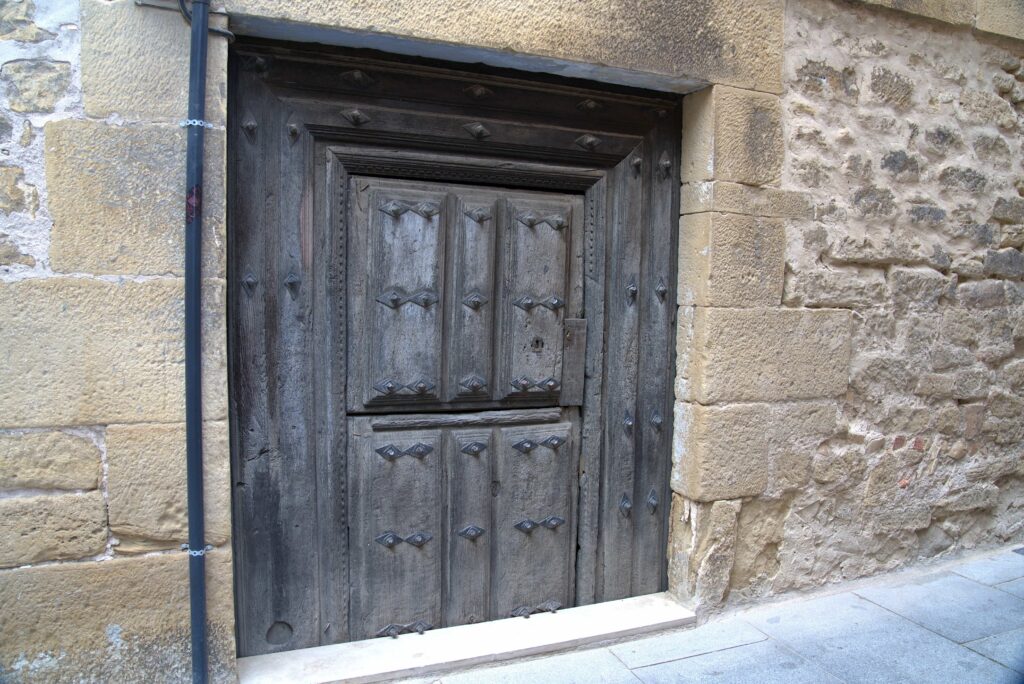
Every angle is different – old studded doors are abundant here
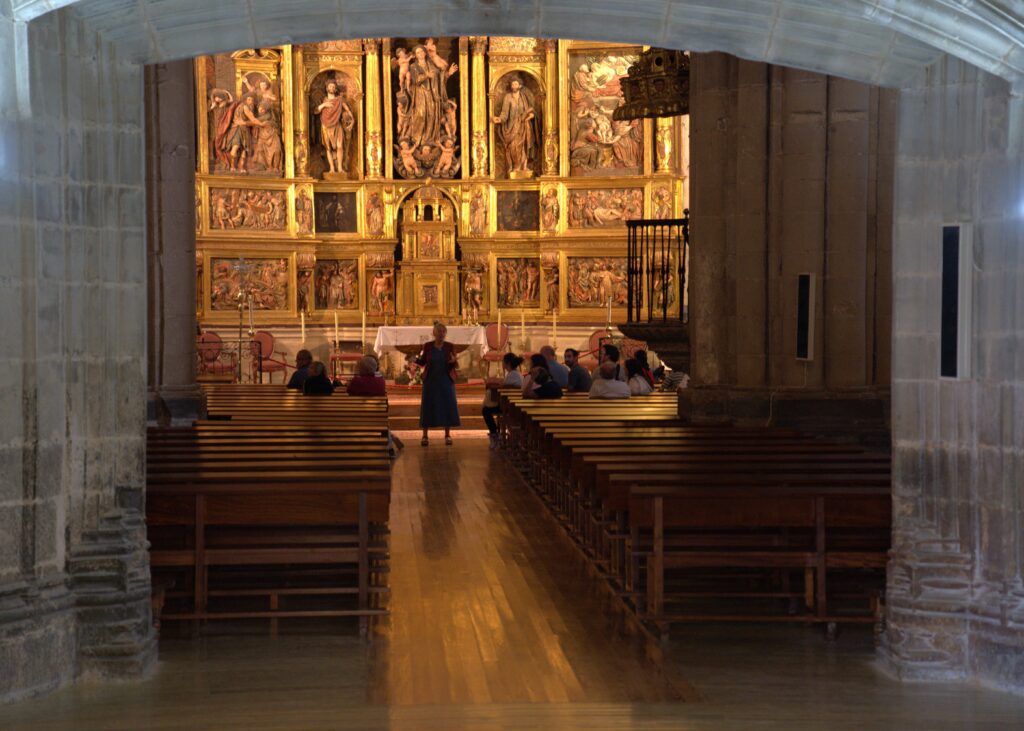
Another tour group learns about the history of the church

This was our final evening with Di and Colin. We shared a simple meal in town, followed by a starlit wander through the streets before saying our goodbyes – including to their elderly little poodle, Genie, who was carried everywhere like precious hand luggage. Then it was time to part ways and continue our journeys separately.

12-14 September – Torla-Ordesa

Our next destination was Torla-Ordesa, the gateway to the breathtaking Ordesa Valley in the Pyrenees Mountains. The drive alone felt like part of the adventure: narrow roads winding steadily upwards, the Río Ara tumbling and crashing over rocks far below us.

Torla-Ordesa is another picture-perfect mountain village with a fascinating geographical quirk. It borders France – yet there is no road connecting the two. Back in 2016, during a motorhoming adventure, Mr A and I had hiked in the spectacular Cirque de Gavarnie on the French side of the Pyrenees, accompanied by an abundance of cheerful marmots. As the crow flies, Gavarnie is a mere 11 kilometres from Torla. By road? A rather more committed 233 kilometres. Oh, to be a crow.

An orientating stroll around town on our first day – we spot where we have already booked for dinner
The view from our window, looking across the rooftops

Sadly, no marmots made an appearance during our two-night stay this time. We did, however, complete a fabulous walk up the valley – just over 20 kilometres there and back – passing plunging waterfalls and vast, dramatic views carved by glaciers over millennia.

It was undeniably beautiful. It was also undeniably busy.

You’re rarely alone in the Ordesa Valley!

Many of the routes in Ordesa are designed as multi-day hikes, and day walkers and backpackers alike are funnelled along the same main trail. There were very few moments of solitude, and private pauses – particularly those requiring a discreet crouch behind a tree – needed to be executed with impressive efficiency.

Even so, we loved our time there. The scale of the landscape dwarfs any irritation, and there is something energising about being part of a shared pilgrimage into such grandeur.

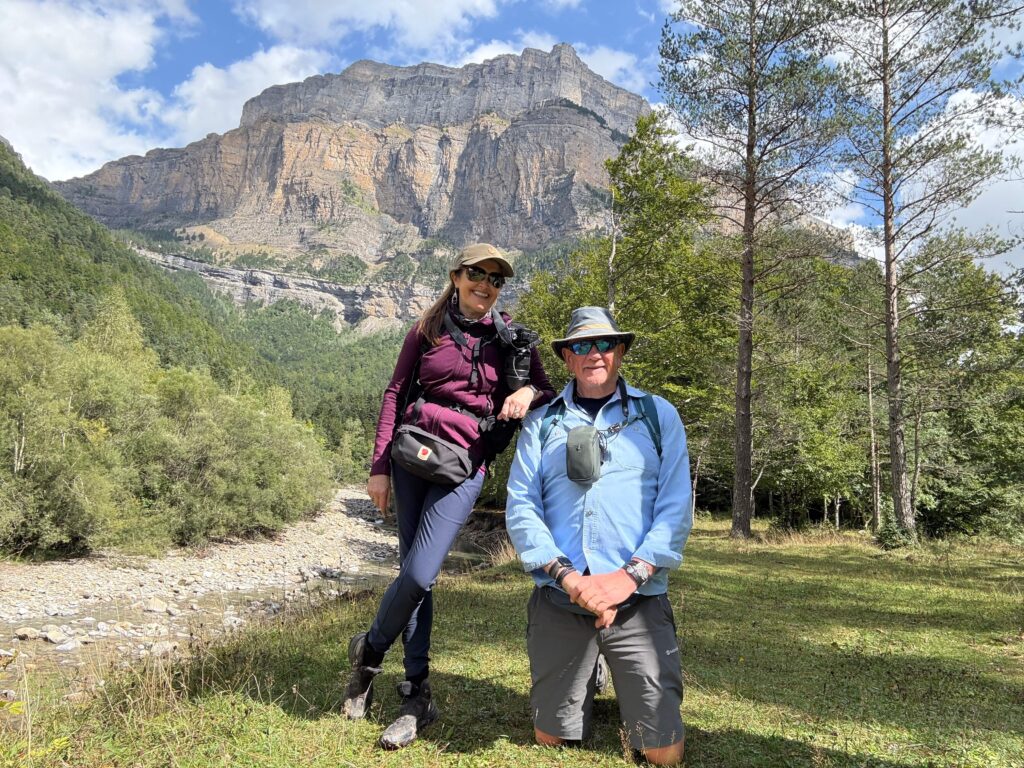
Mr A swears we are the same height in this image…grrr….

From there we descended towards our next stop: Aínsa.

En route to Aínsa, we took a short detour to Boltaña, having read about the ruins of Castillo de Boltaña perched high above the village. The promise of sweeping views – and perhaps a glimpse of circling raptors – was too tempting to resist.

We pulled off the road and began the steady climb, winding up through narrow village streets before the path steepened towards the hilltop. It was already hot and humid; the early morning mist had burned away, leaving the air heavy and still. The ascent was no small effort, but step by step the rooftops fell away beneath us.
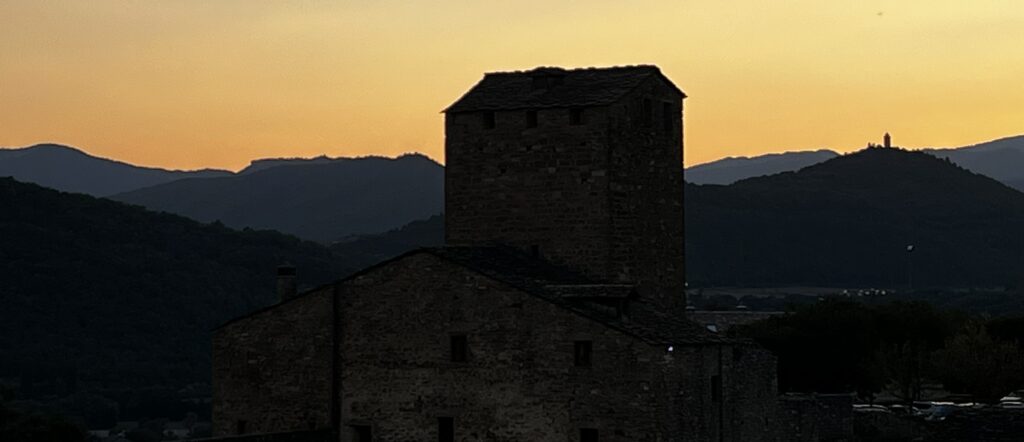
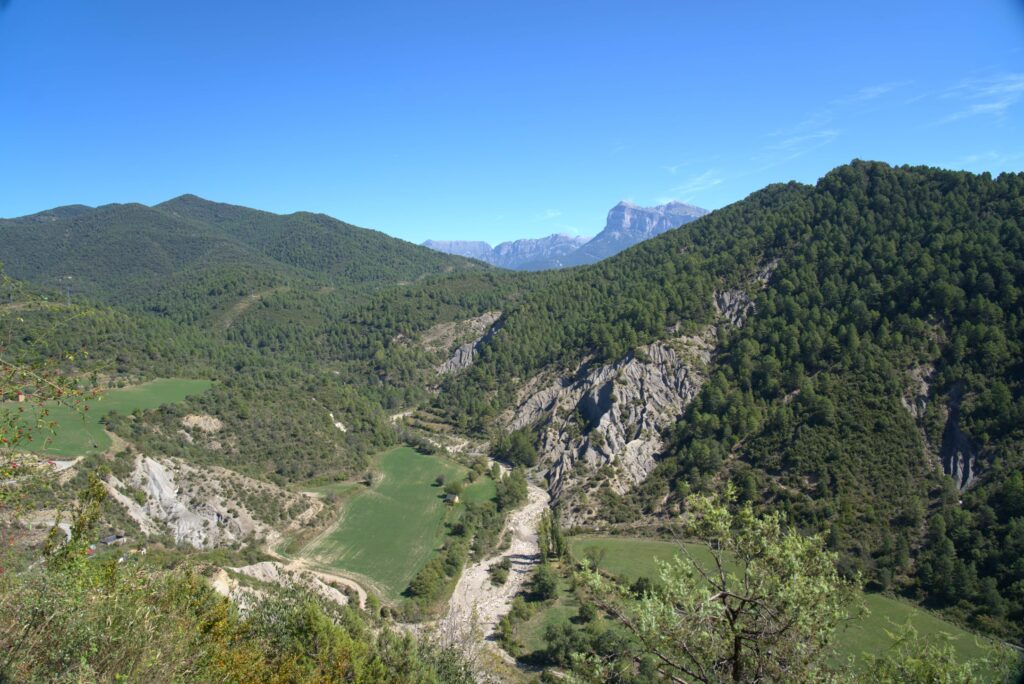
At the summit, the reward was immediate: glorious views across terracotta tiles, rolling hills and the broad Sobrarbe landscape stretching into the distance. Little remains of the castle itself – time has reduced most of it to atmospheric ruins – but the sense of history is unmistakable.

We see a glimpse of the rocky Pyrenees in the distance

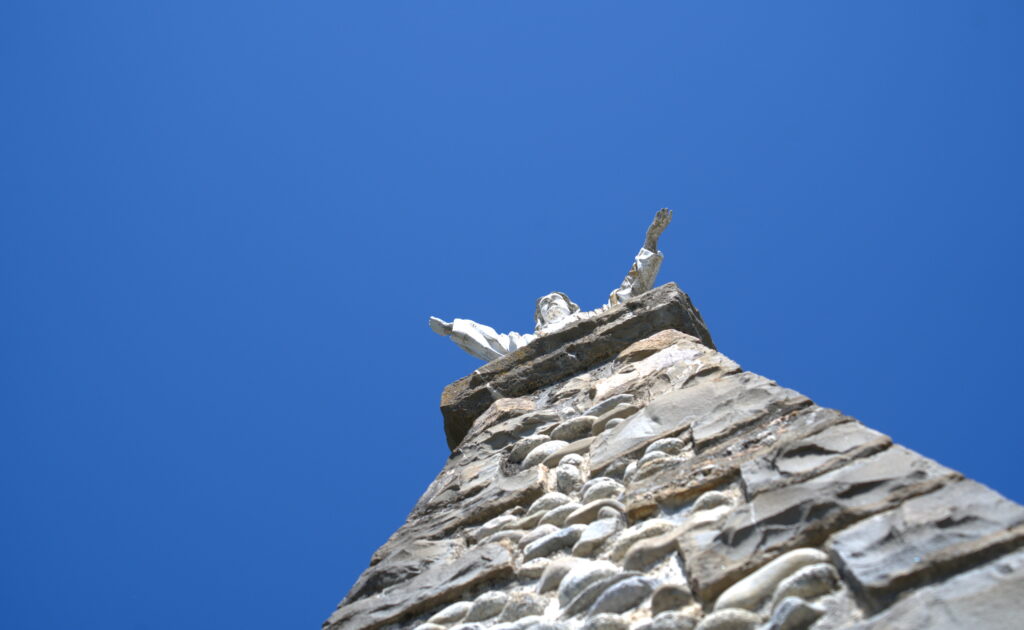
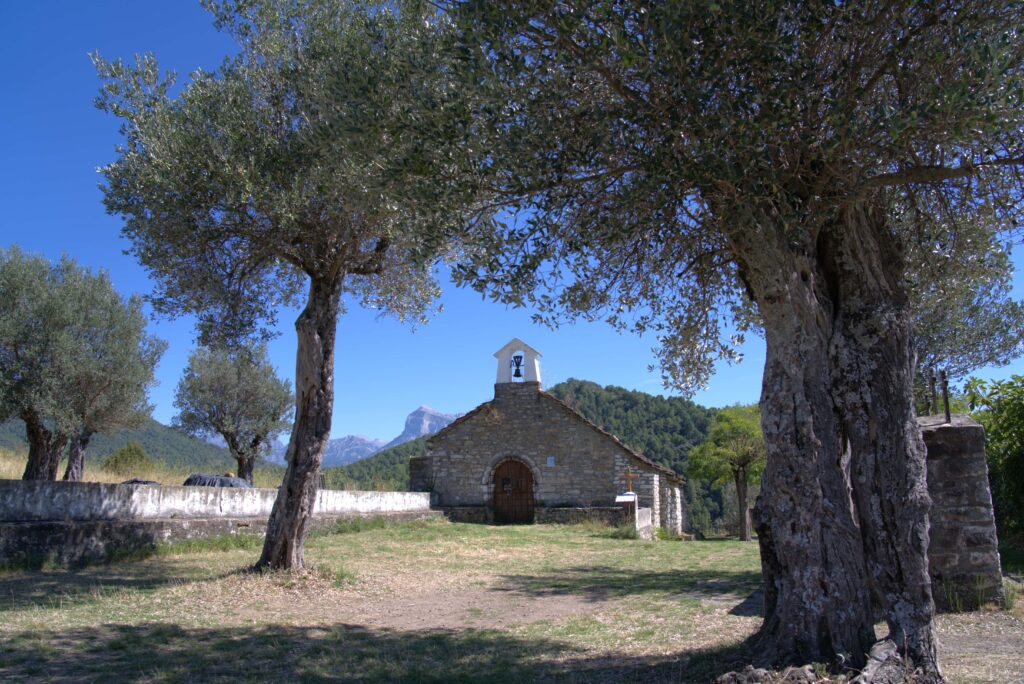
Beside the remnants stands the beautifully preserved Ermita de Santa Lucía, a small hermitage framed by gnarled, ancient olive trees. A statue of Christ, arms outstretched atop a stone pillar, seemed to greet us as we arrived — a quiet, contemplative presence against the vast sky.

Ermita de Santa Lucía

After lingering to take it all in (and scanning the thermals for any soaring birds of prey), we made our way back down and rewarded ourselves with a cold drink at a sleepy café in the village square before continuing our journey towards Aínsa.

14-16 September – Aínsa

Aínsa sits at the confluence of the Río Ara and the Río Cinca, where the Ara’s wild mountain rush softens into a broader, calmer body of water. After the drama of the high Pyrenees, it felt like a gentle exhale.

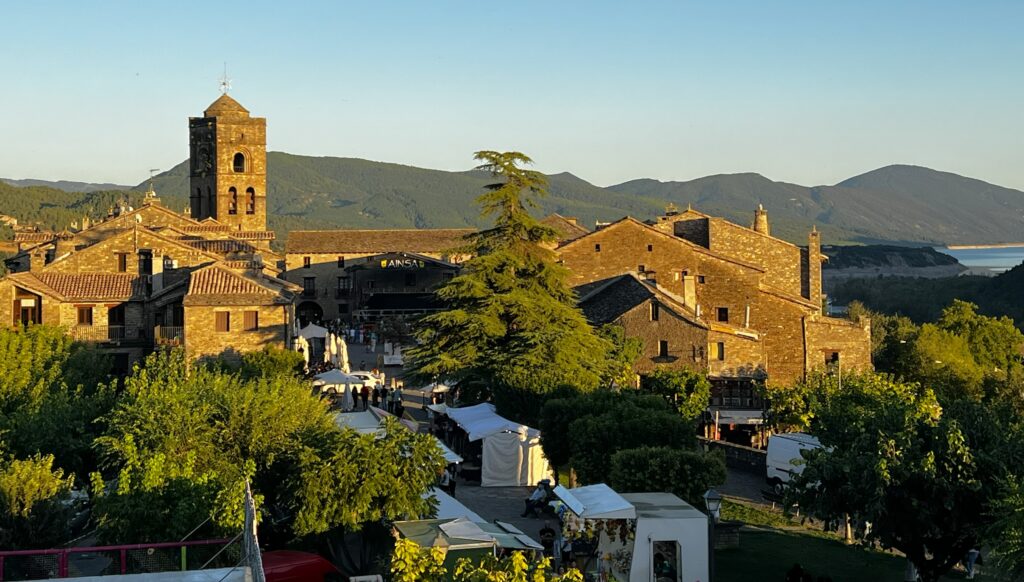
Aínsa is another magnificently preserved medieval town, its origins dating back to the year 724. Perched high on a hill, it centres around a lively main square framed by stone arcades, restaurants and bars – a place that hums with conversation long into the evening.

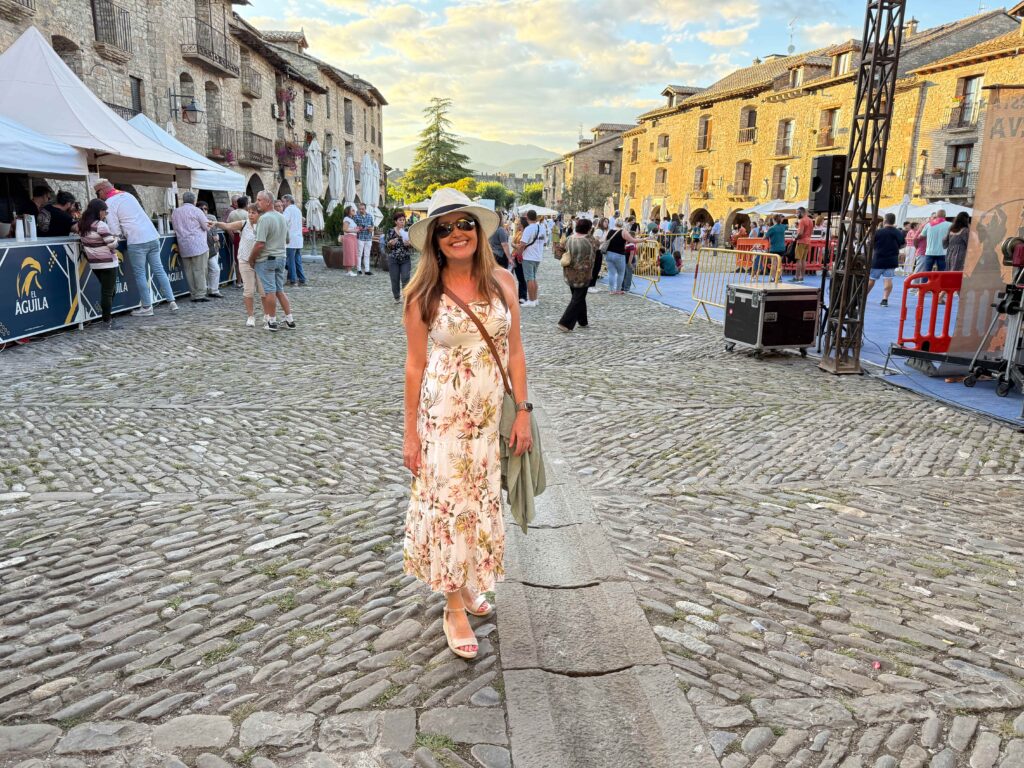
Looking over the town square, bustling with market stalls and a live band

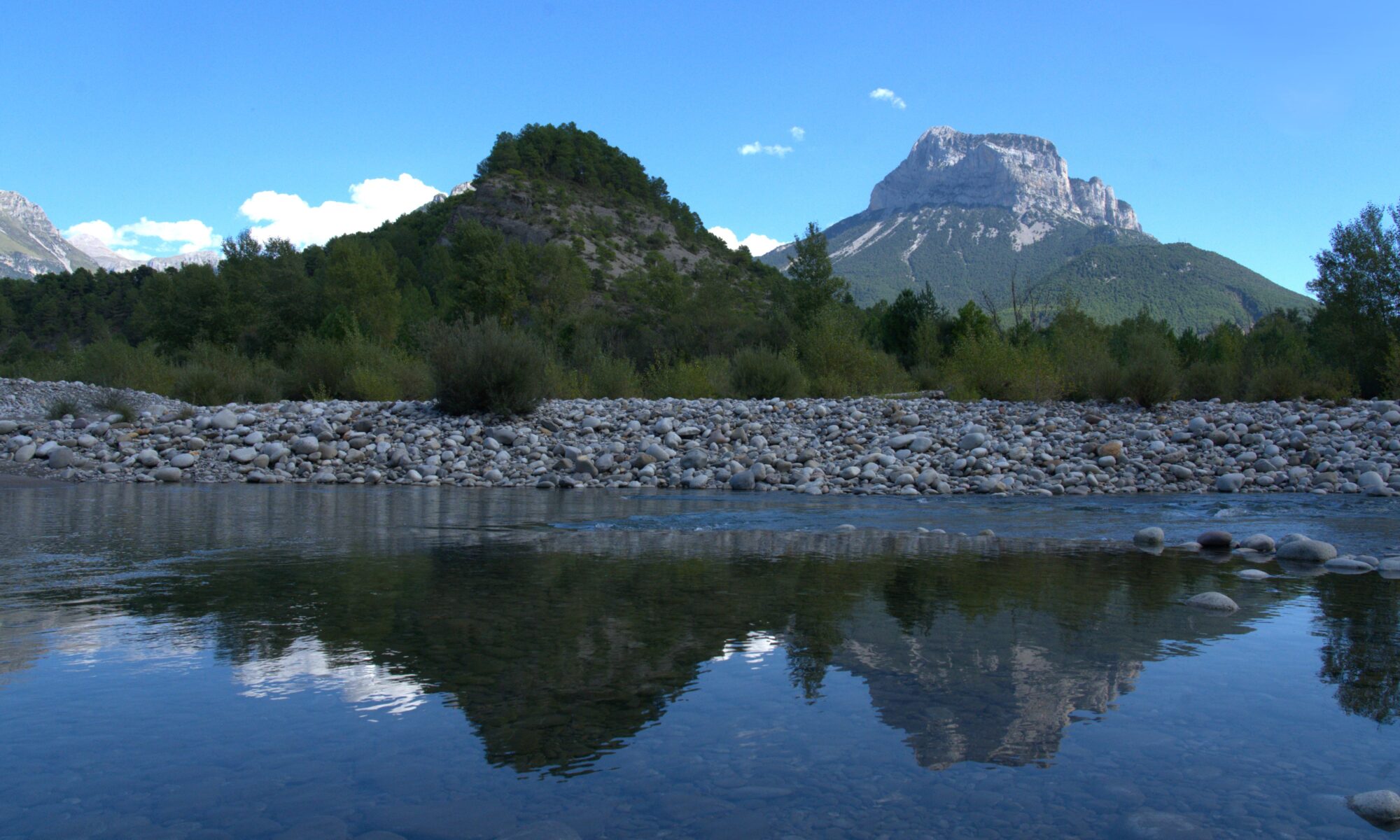
The landscape surrounding Aínsa is wonderfully varied: wide floodplains and rolling hills give way to steep, dramatic cliffs. It was this terrain – and the thermals it creates – that had drawn us here. We had heard it was not uncommon to see Black and Red Kites, Booted Eagles, Short-toed Snake Eagles, Egyptian Vultures and Griffon Vultures all circling overhead at once.

My telephoto lens was ready.

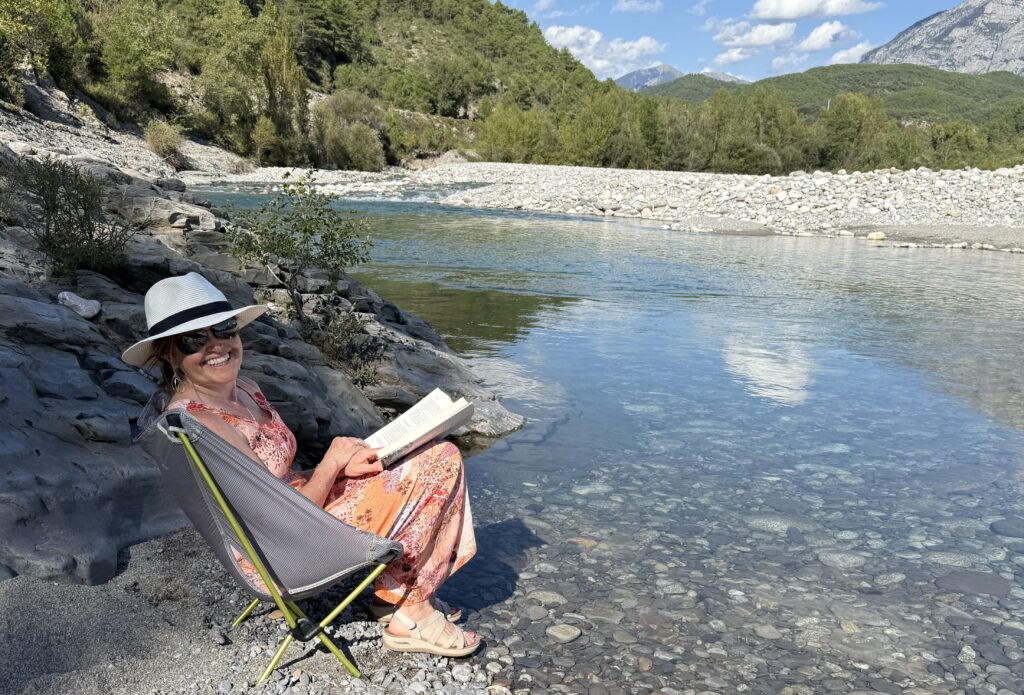
With temperatures climbing into the early 30s Celsius, this was not the moment for long, sticky hikes. Instead, we sought out a shady spot on a pebbly beach beside the river and settled in to watch the skies.

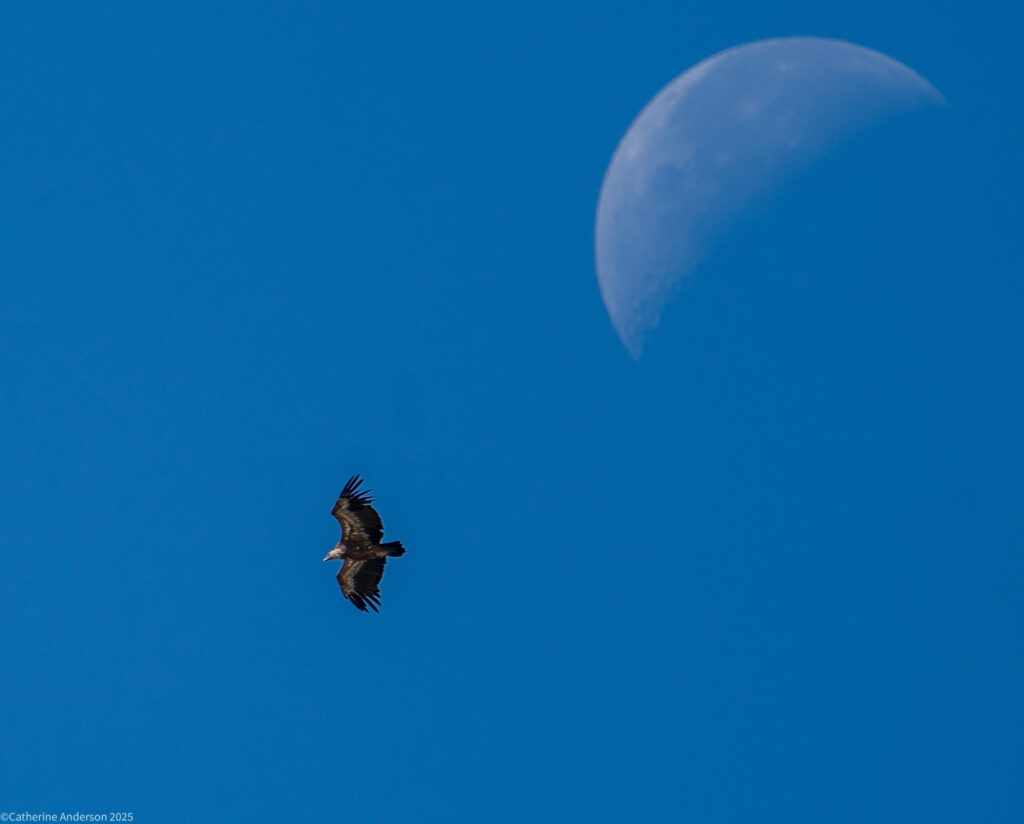
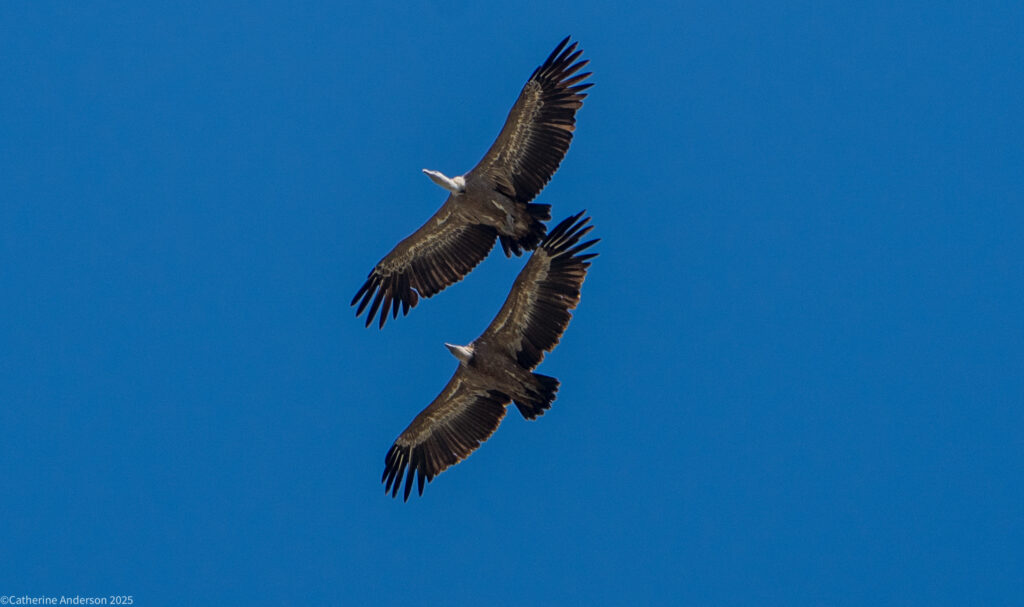
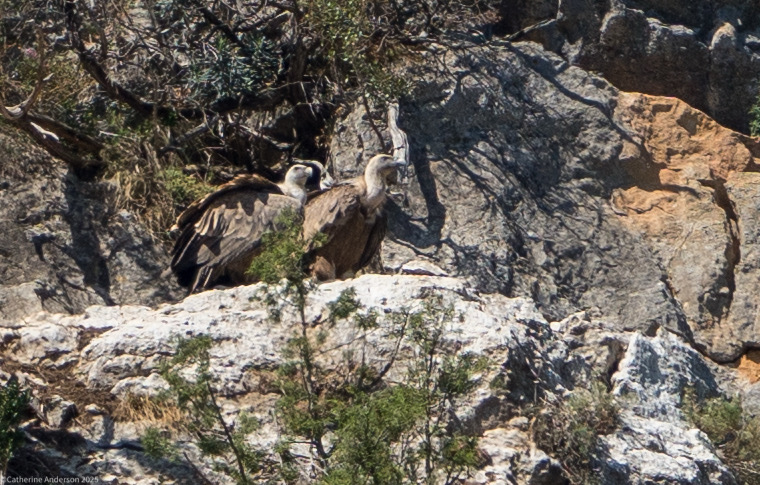
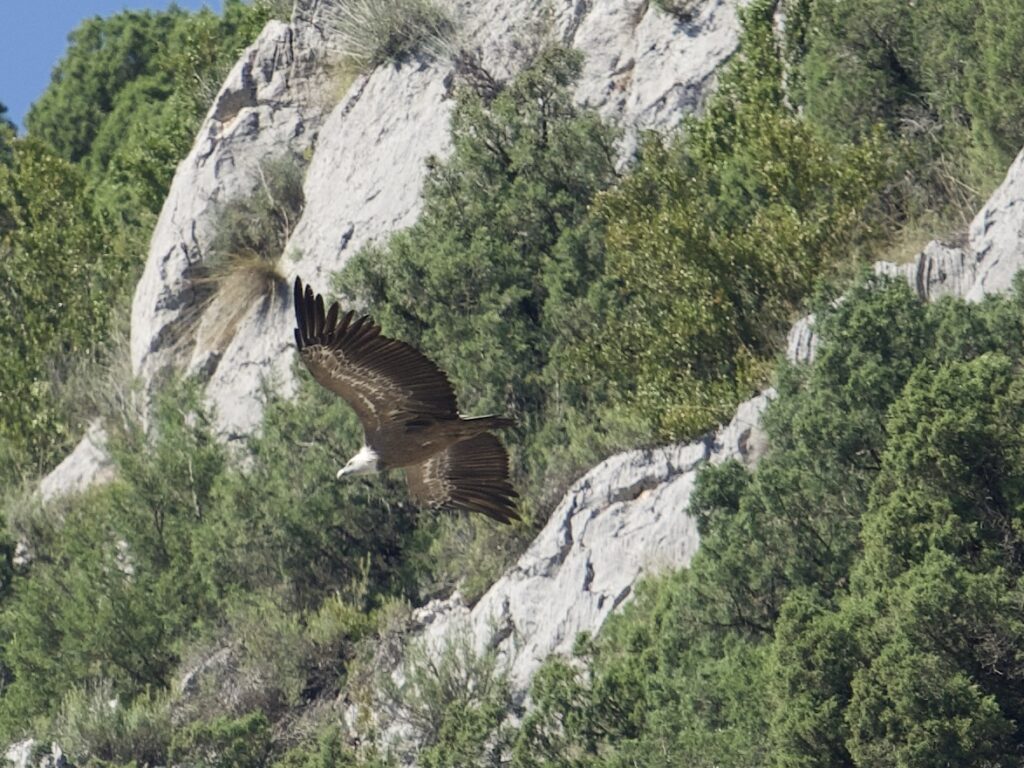
It wasn’t long before we saw our first Griffon Vultures, circling high above. Their wingspan is extraordinary – typically between two and three metres – and they glide effortlessly on the rising thermals along the cliff faces. There is something mesmerising about their slow, deliberate spirals, scanning the land below.

We spent a blissful couple of hours watching them before wandering further along the river in search of a place to cool off. No, don’t be silly – no swimming involved (we had seen the icy peaks where that water begins!). But sitting at the river’s edge with our feet submerged in the clear, cold flow was refreshment enough.

A book, a river and a chair…what more does one need?
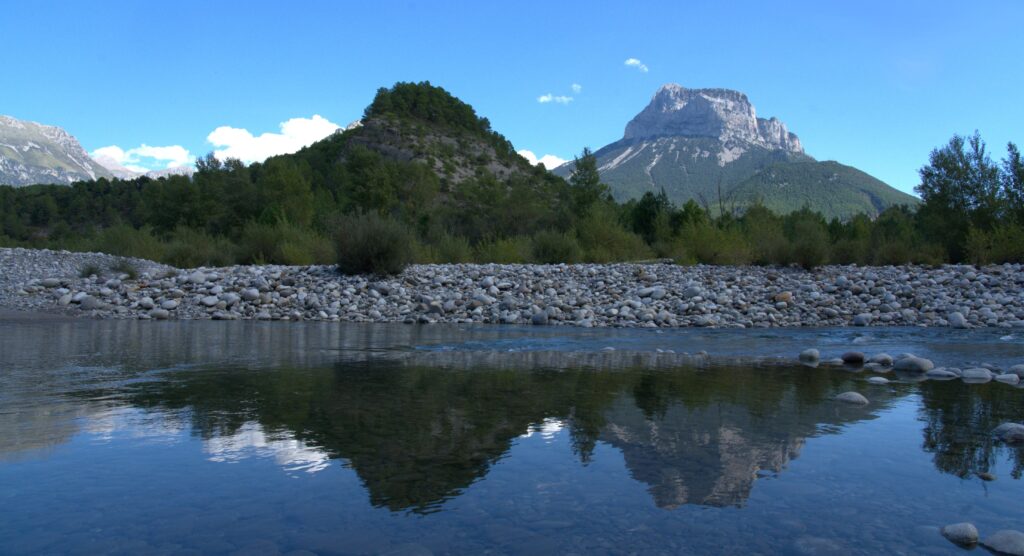
Picture perfect scenery

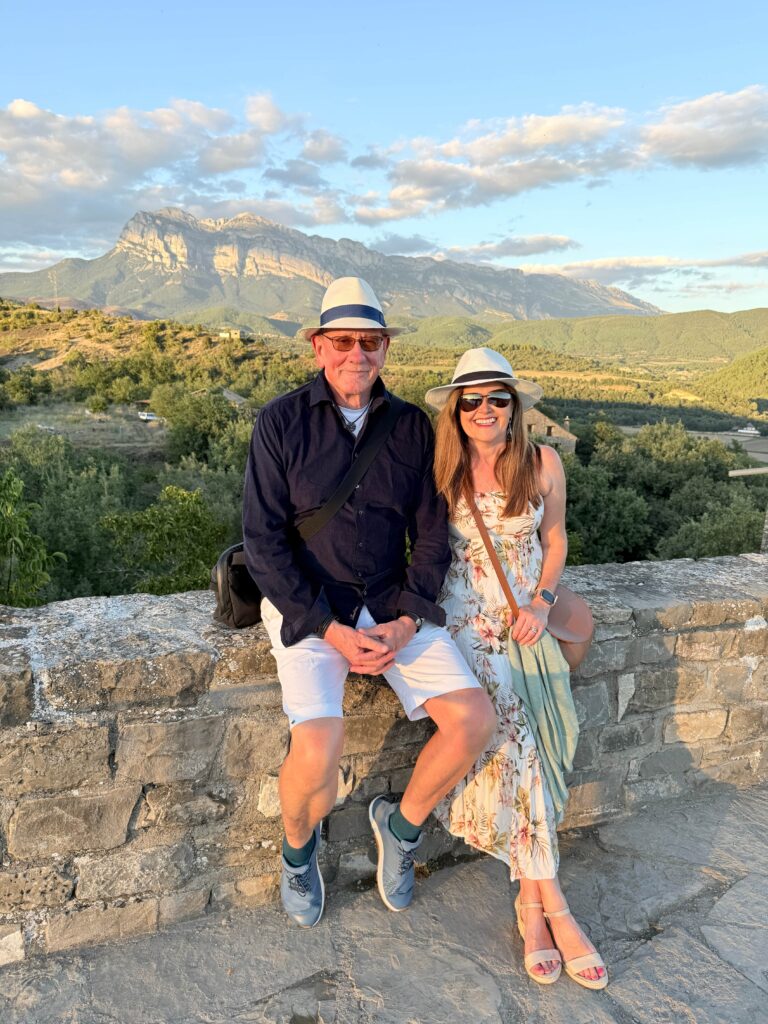
Sunset in Aínsa is not to be missed. We perched on the ancient stone walls as the sinking sun bathed the surrounding cliffs and hills in gold, the light softening every edge. Afterwards, we wandered back into town in search of local food and wine — the perfect close to another richly textured day.

Not everyone knows why I had to walk in the drains to not break my ankle, but some might!
Escaping the children who delighted in scaring people with their loud crackers
And the sun sets on another day

***

14-20 November: A week in Seville: it wasn’t all about the oranges!

Author: Mr A

Location: Seville, Spain

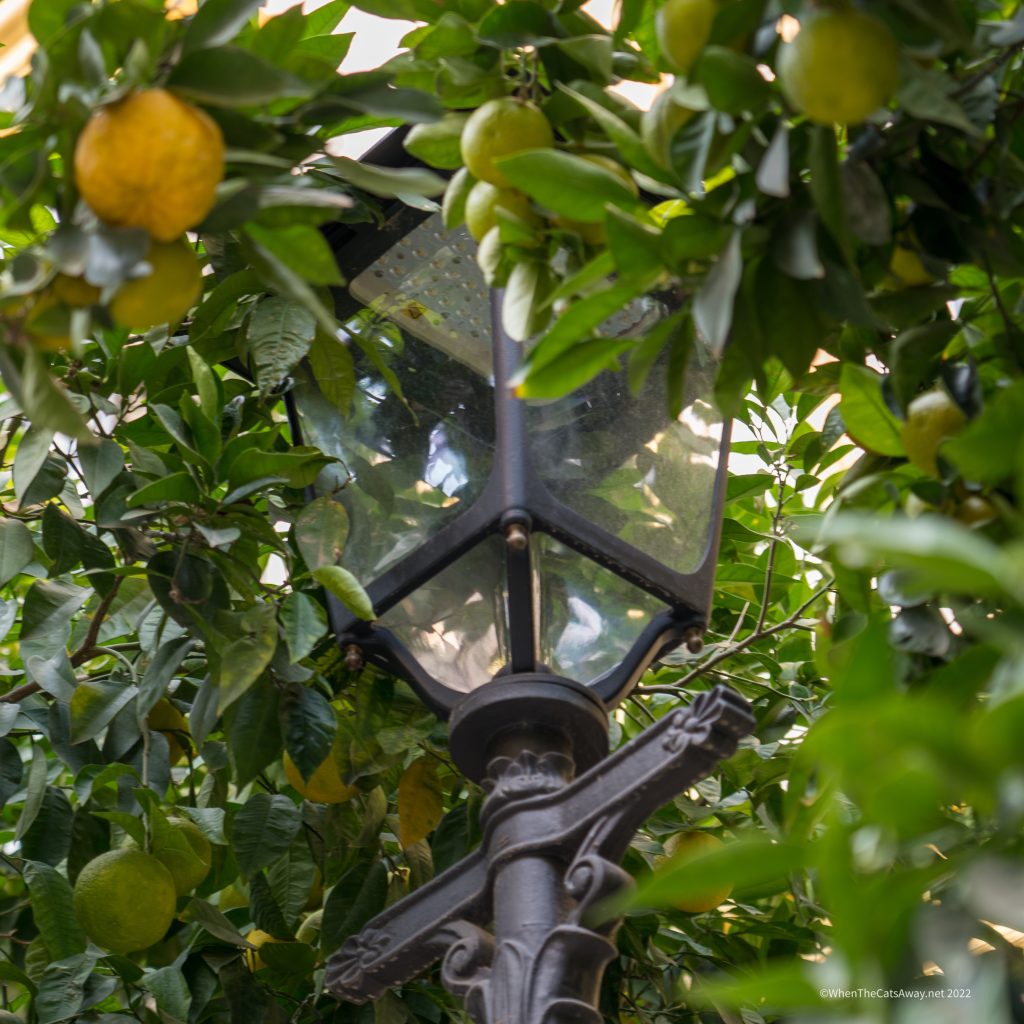
“Go to Seville!”, someone suggested when we were wondering where to head for a week’s break. Embarrassingly all I could conjure up in my mind was ….oranges. Yes there is around 45,000 trees laden with a rather sour variety from this tree that line the pavements of the city. But wow..so much more!

In the heat of summer (35 degrees and up!) these beautiful trees provide welcome shade for the diners seated at the seemingly endless rows of cafes. In this gloriously cool autumnal weather, the pavements were still buzzing. After a few pleasant lunches spent beneath these trees, my imagination fuelled by a decent vino rosso or two, I wondered what the oranges on the trees would make of the contrast in culture when they finally completed their journey as a jar of marmalade and made it onto an English breakfast table?

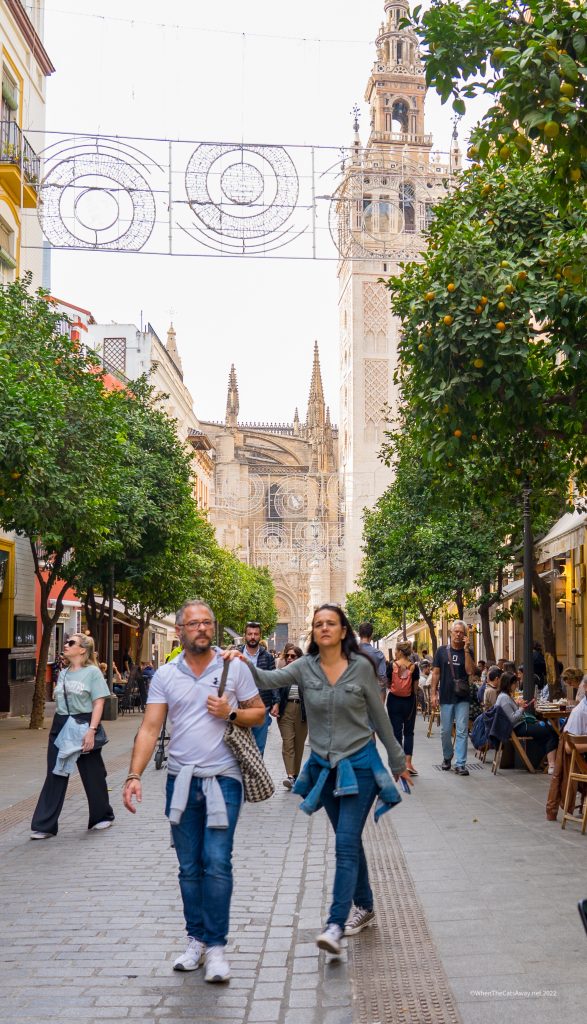
Cobbled streets lined with orange trees leading to the cathedral

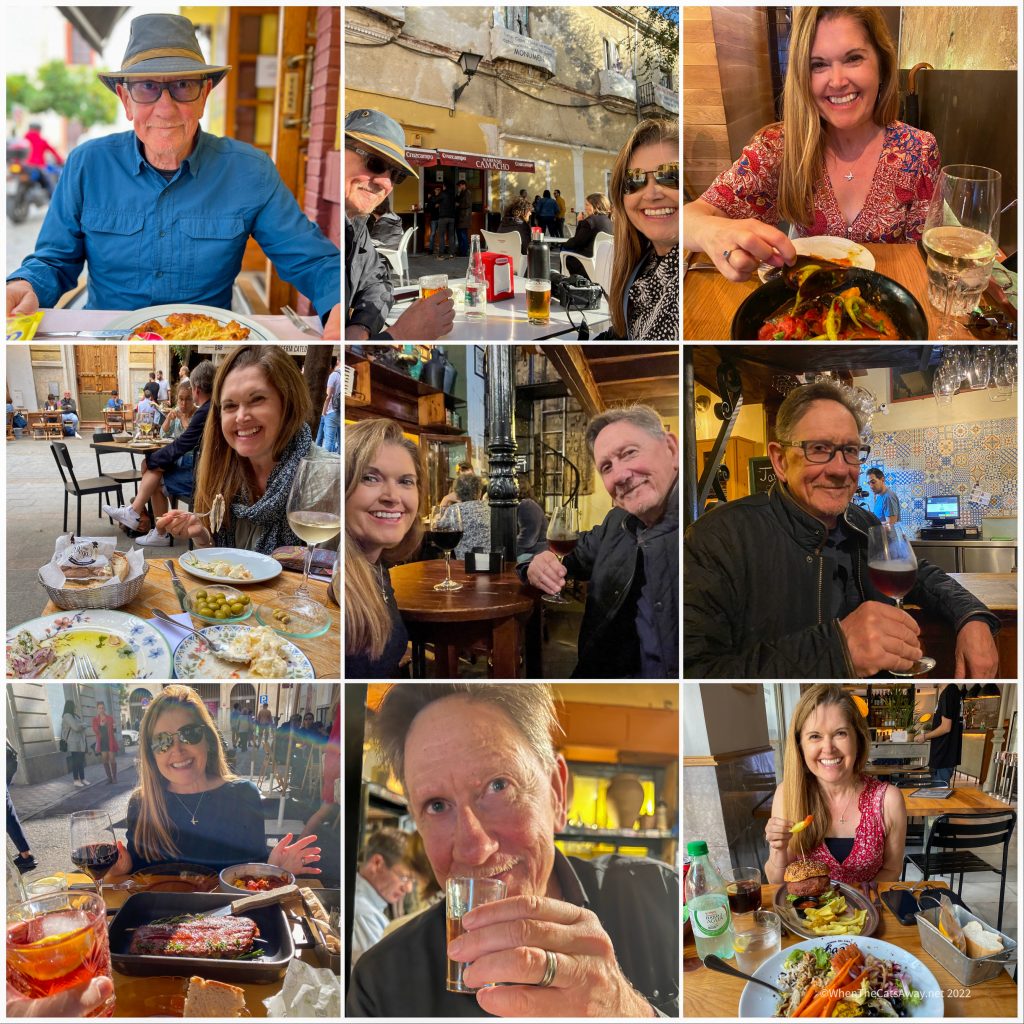
In a nutshell, or an orange peel, this was the biggest joy for me of the week, to be transported into such a different world, where mealtimes were an occasion for so much clearly passionate conversation, punctuated by peals of laughter, uninhibited by the presence of strangers at surrounding tables. It was impossible not to smile at the sheer pleasure and “all in” enjoyment being taken in sharing a meal with friends and family, and be in turn uplifted ourselves.

Well…we had to eat, didn’t we?

Of course it wasn’t all sitting around eating and drinking, well “all” is a relative concept isn’t it? There was a lot of that, but we did clock up just under 80 kilometres (50 miles) of walking in the week. I doubt that would have put us in calorie credit though, but at least most of my trousers still do up! There was definitely plenty to wander round and see.

🐾🐾

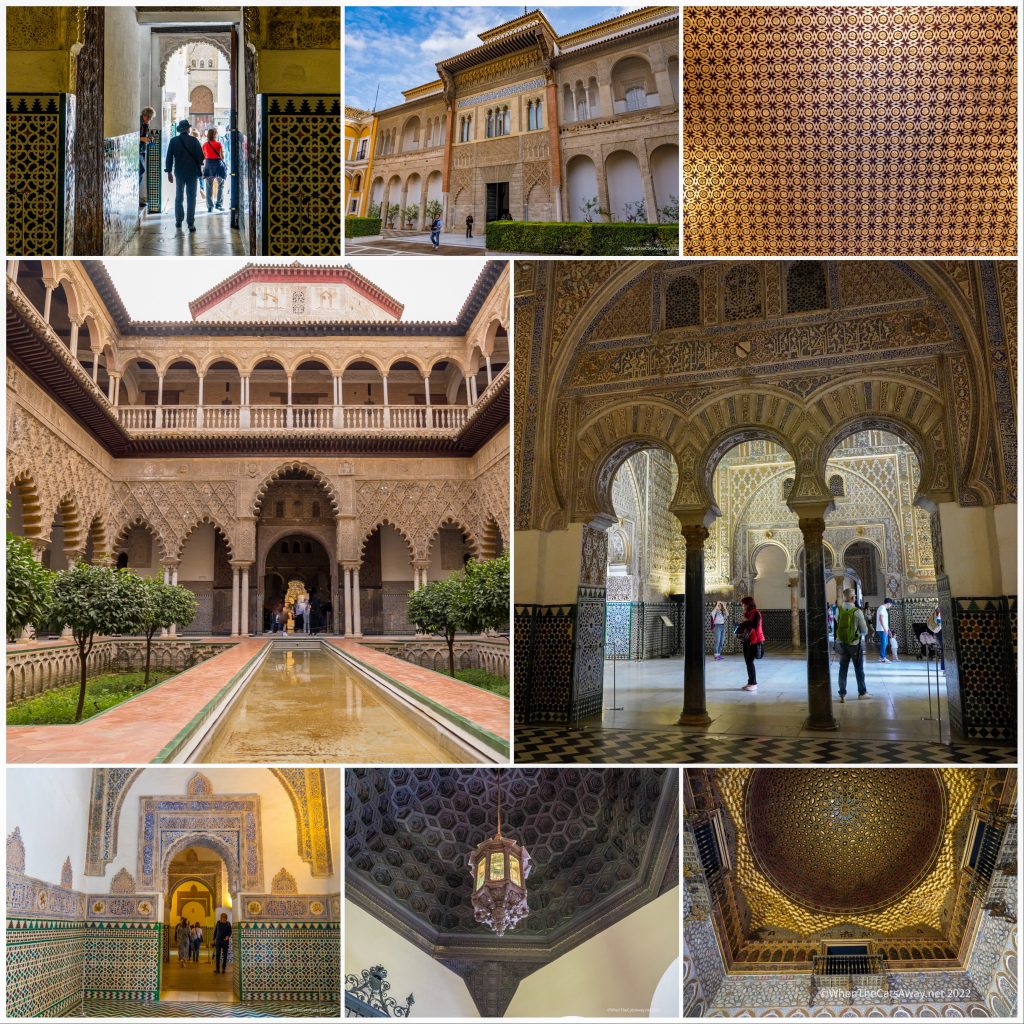
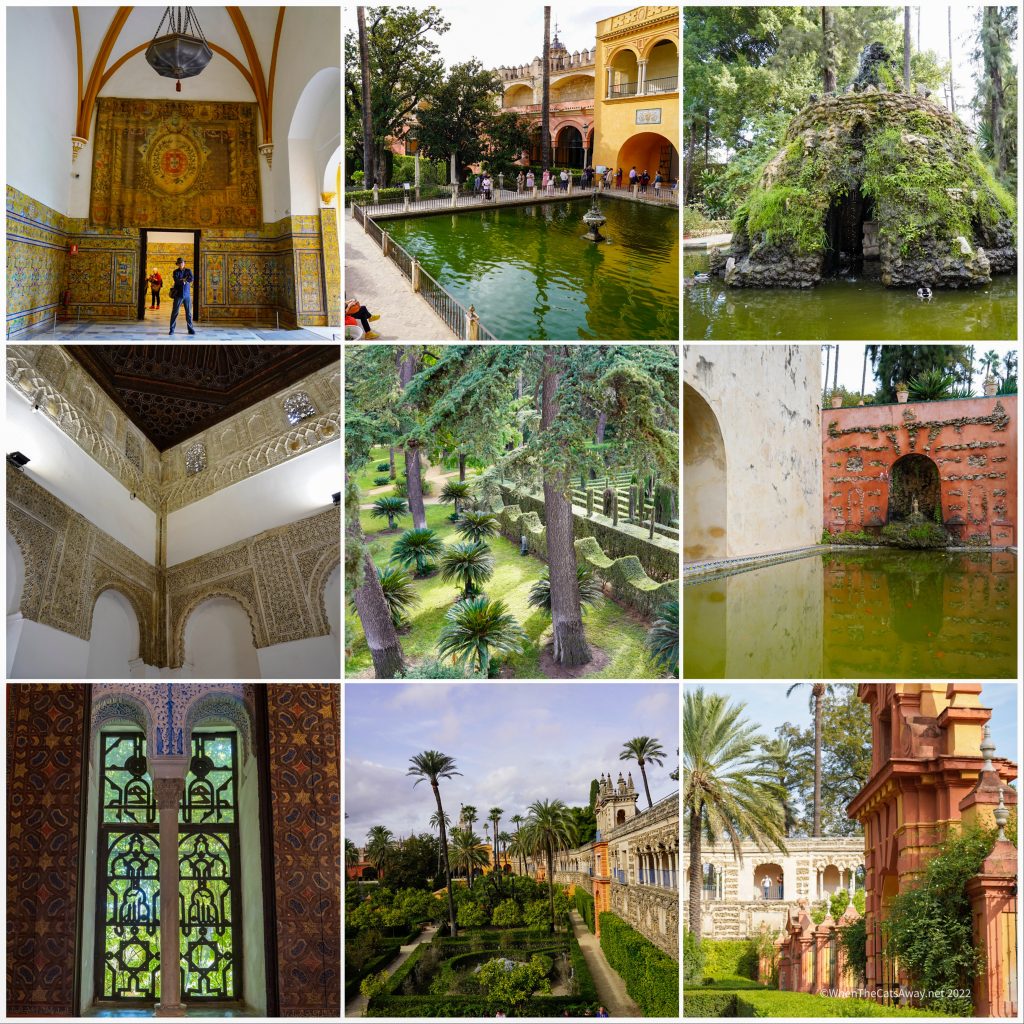
On the first day it was the Palace, one of the three UNESCO sites in the city. For us to see this Moorish (no pun there) architecture, was a real eye and camera lens opener.

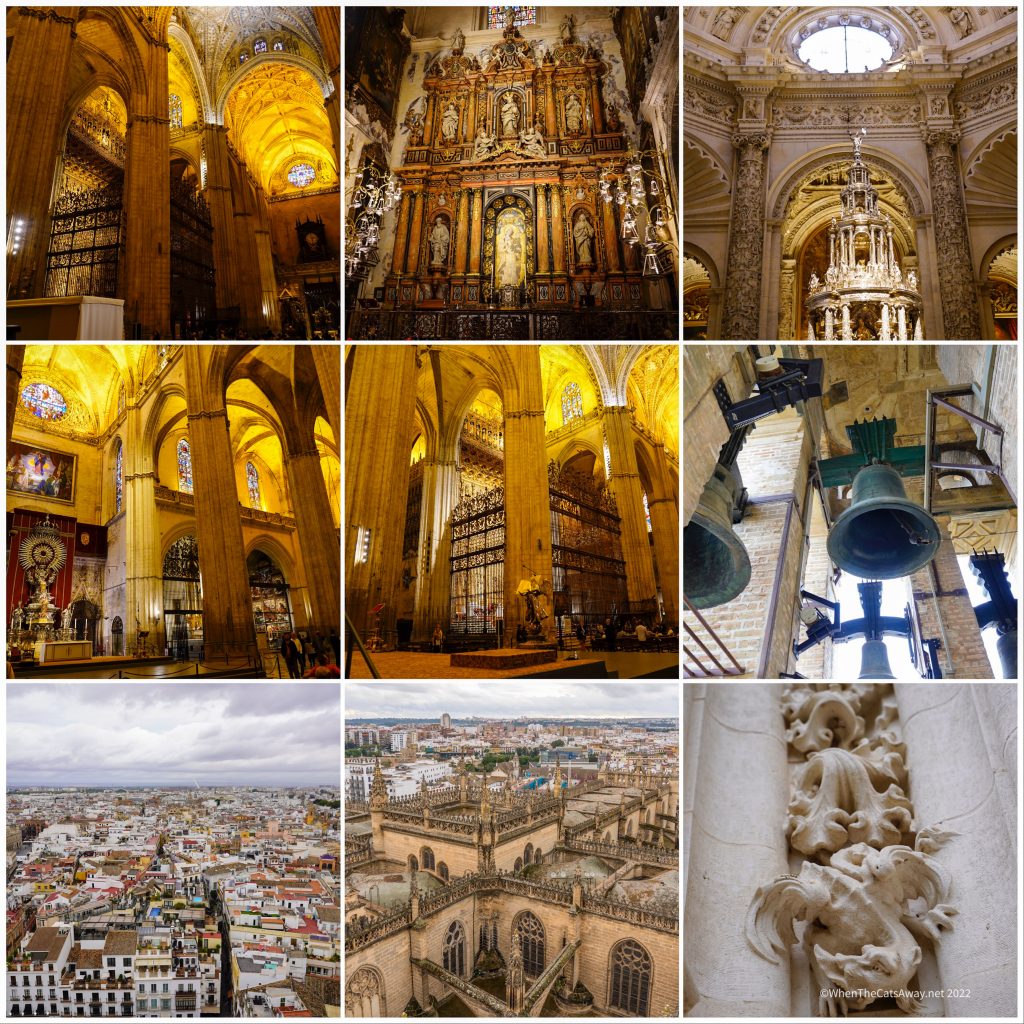
The other UNESCO site was the Cathedral that Catherine took a tour of, and luckily she had a brilliant guide who was able to bring alive the stories behind this incredible facade.

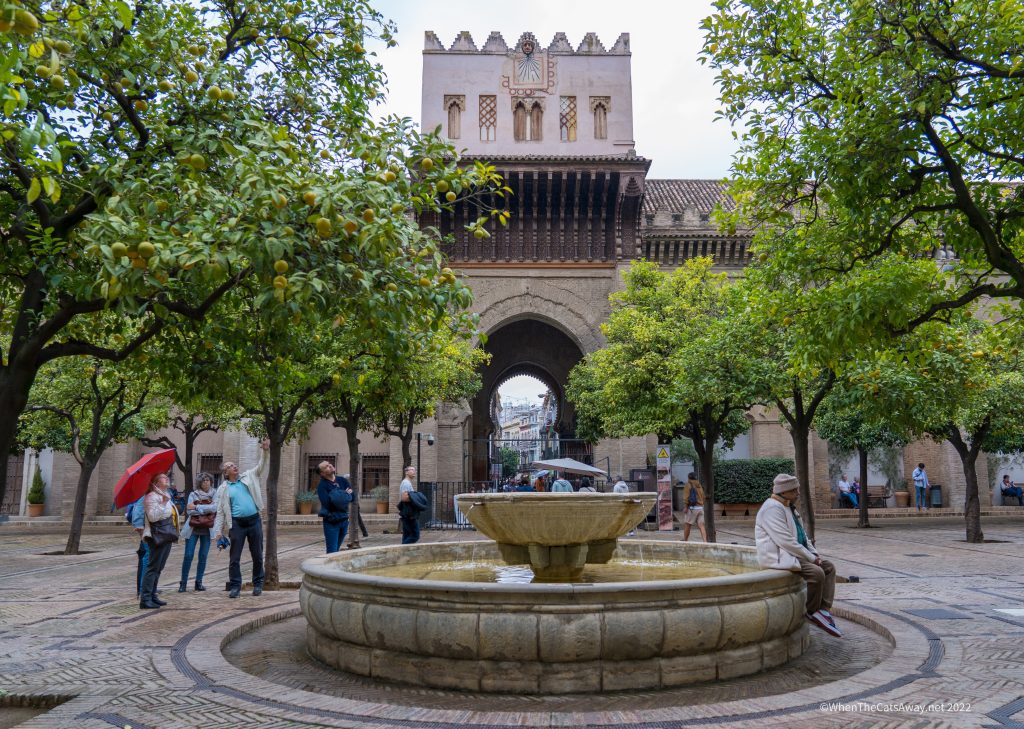
The quiet serenity of the Cathedral’s inner courtyard
Magnificent opulence, artwork and history – ranging from Roman times to present day
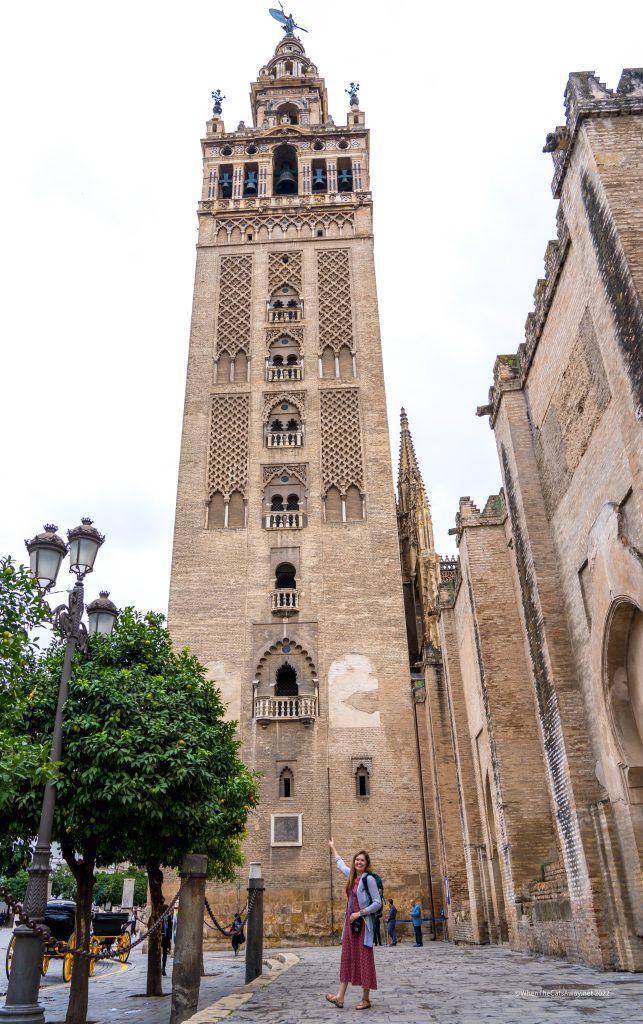
A series of 35 ramps guide visitors to the top of this tower, which Catherine climbed. This was so donkeys could be ridden to the top to allow guards to watch for invasion on the river.

*

But enough of that, lets get back to the food! Markets, to me, always also tell so many stories about the people and how they live. We visited the ones in the centre of the city, and were swept along in the frenzied buying and selling of the produce. Just ogling the sheer variety, with its proximity to Africa, and its history of being a city where fresh ingredients have always been so important to its culture.

Mercardo di Triana – a huge, colourful fresh food market in the flamenco area of Seville…not the place to visit when you are hungry!

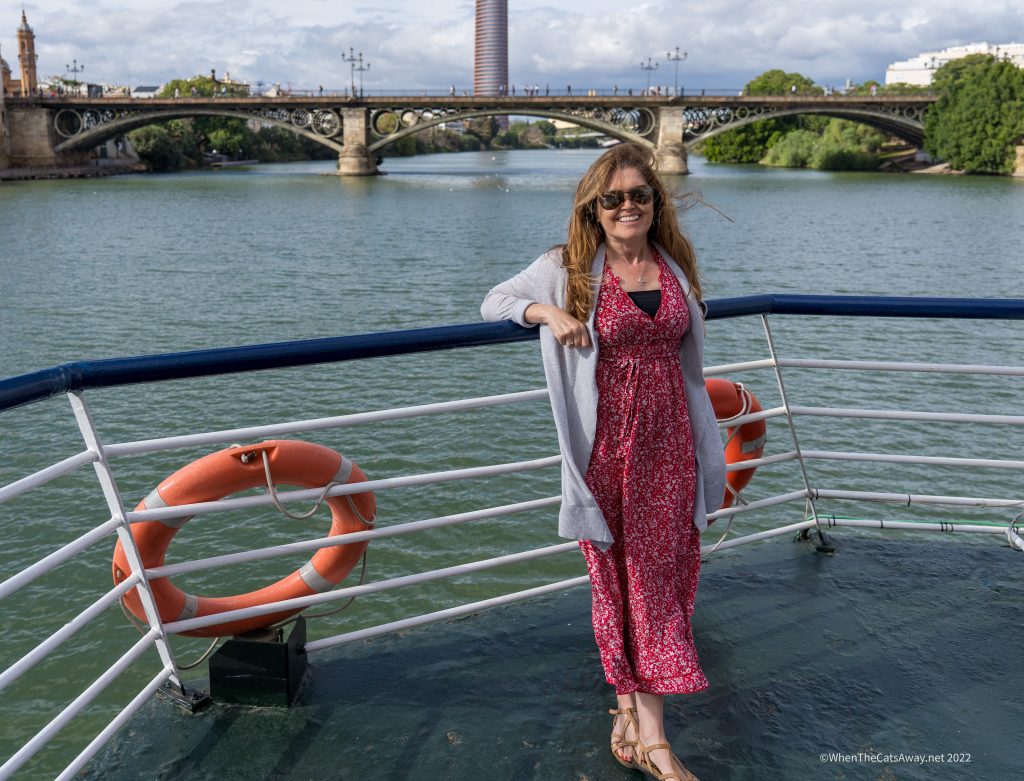
We also took a boat trip down the river, and got a less than satisfying guide, so my imagination fired up again to think of all the world shaping journeys that others had taken starting on this same stretch of water. Columbus, Magelllen, the conquistadors heading off to the Americas, the Romans, even allegedly the Vikings. Oh what tales those riverbanks could tell. Seville is still an important port, but the only boat traffic we saw was a couple of sightseeing boats like ours. Rivers no longer play the central role they once did, and Seville lapsed from its position as the hub of Spain’s commerce with the old and “new” worlds.

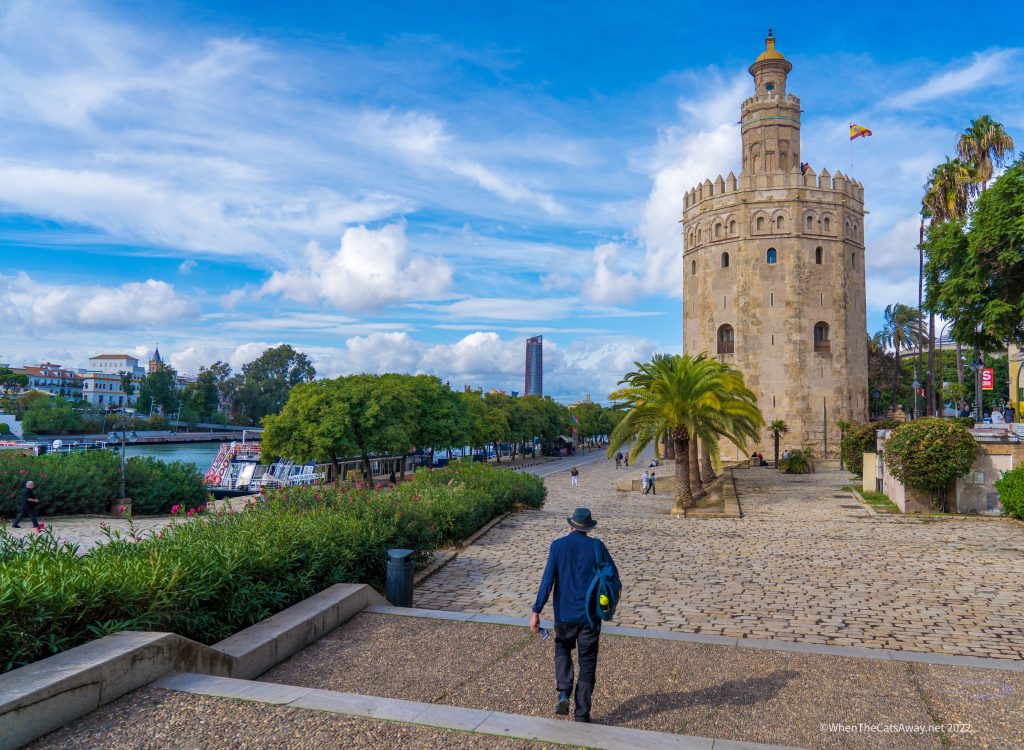
The Torre del Oro is the “Tower of Gold” in Seville.

Along the river were built places like this 36-meter-high tower used in the 12th century as a storage place for gold brought back from the South American colonies (hence its name).

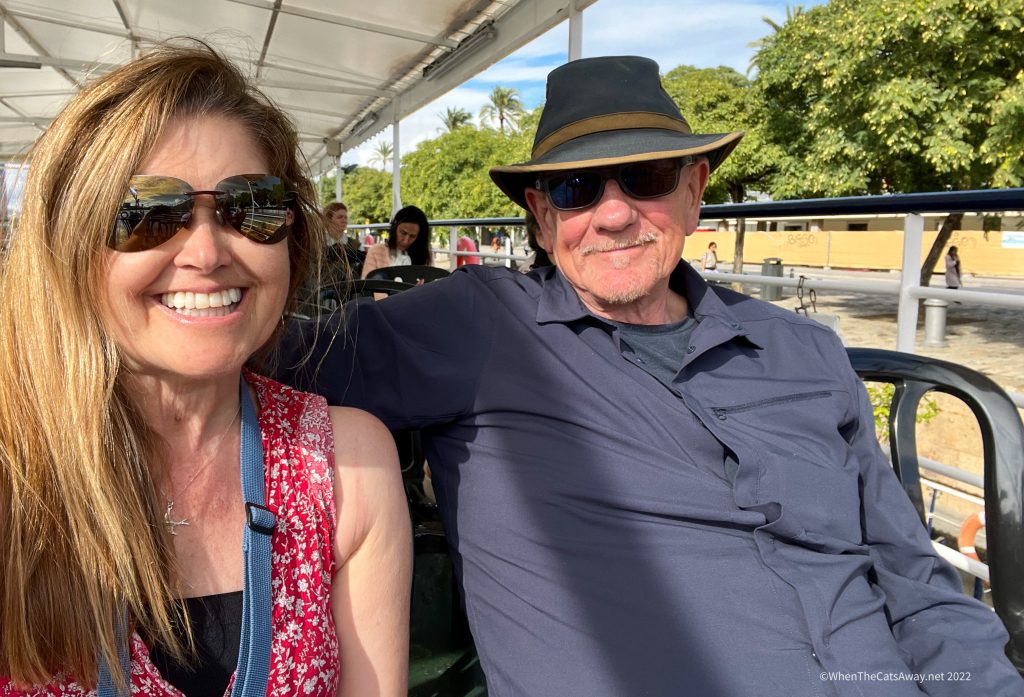
It was even briefly warm enough for bare arms!
Quite breezy on board the boat
So our trip on the Guadalquivir River gave us a very rudimentary recorded sight seeing tour in four languages!

🐾🐾

As a city, it is now the capital of Andalusia, and home to 700,000 people, a nice size for a city, but almost every single one of whom seem to head to the old town on a Saturday to shop, eat tapas, and drink some of their fabulous local wines. Brilliant atmosphere!

So it’s back to the eating and drinking as we settle down for a long lunch, kicked off with my new favourite aperitif…a vermouth.

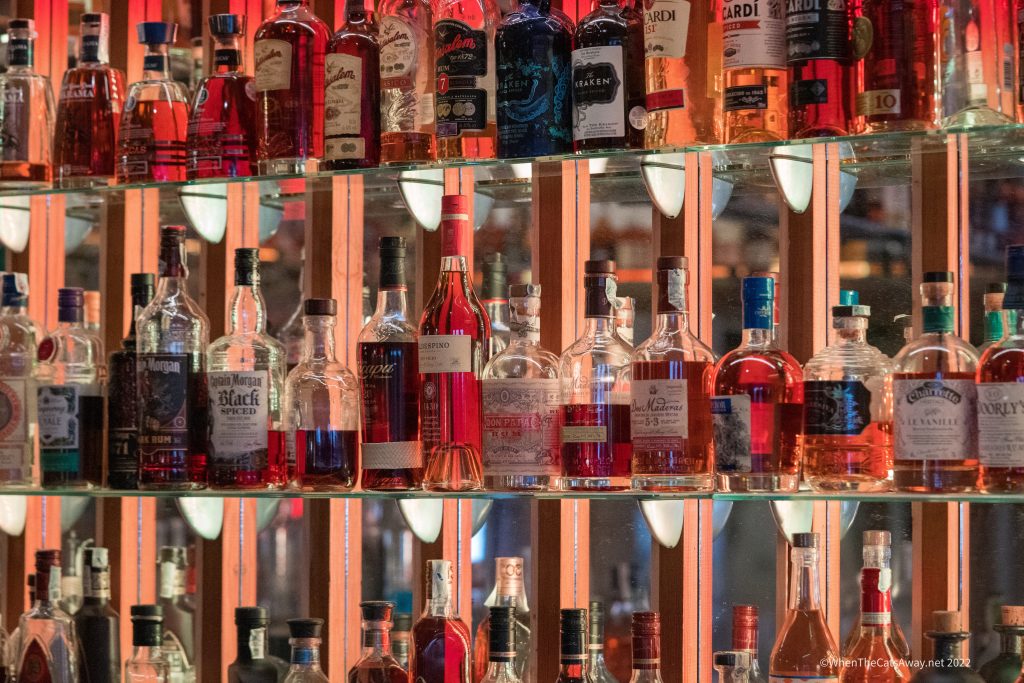
A little home bar inspiration

🐾🐾

We did also manage to fit in one evening a wine tasting, you will be surprised to hear 🙂

We profess to barely even skimming the surface of what Andalusia has to offer wine wise, but what we sampled we absolutely loved, that intense summer sun bringing out so many flavours.

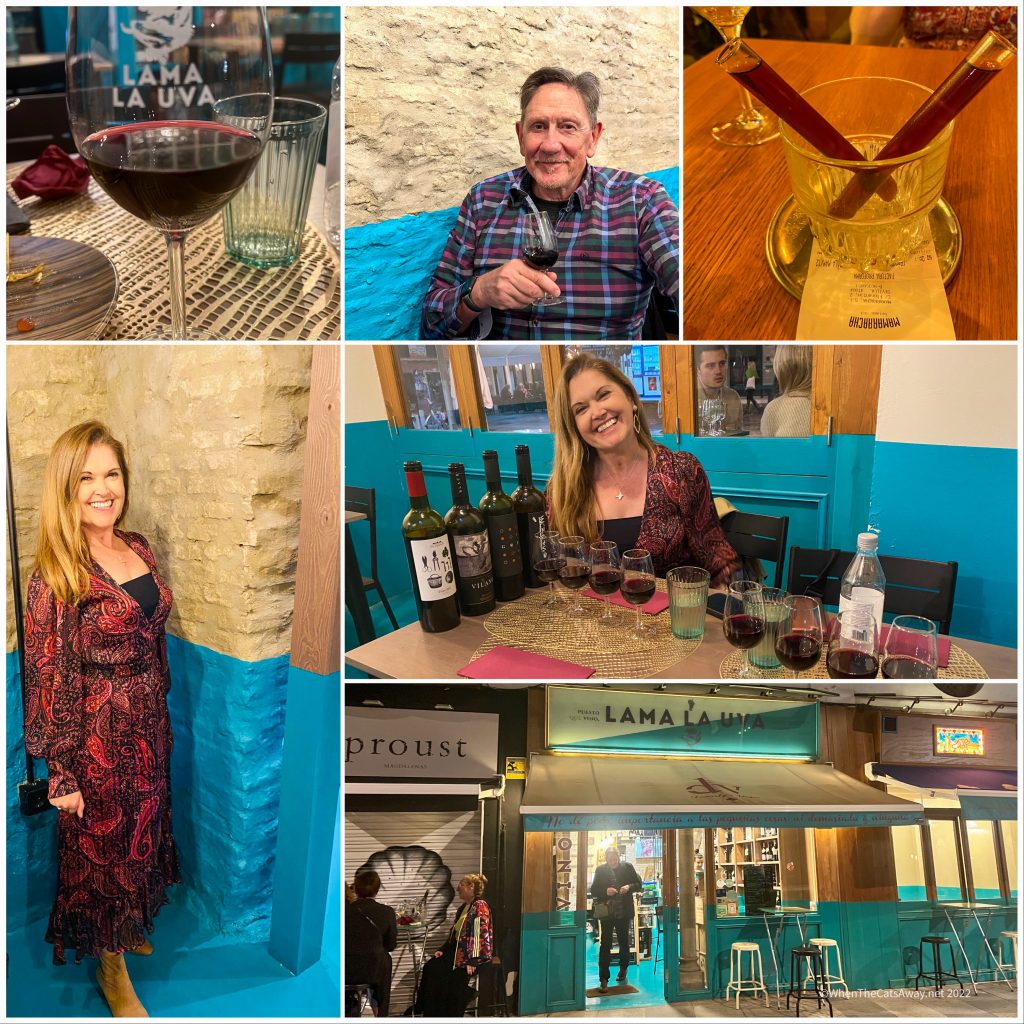
A local wine tasting at Lama La Uva

For Catherine, a smooth rjoca or occasionally a chilled alberino with seafood. I really enjoyed the drier sherries as well. More to explore there I think!

🐾🐾

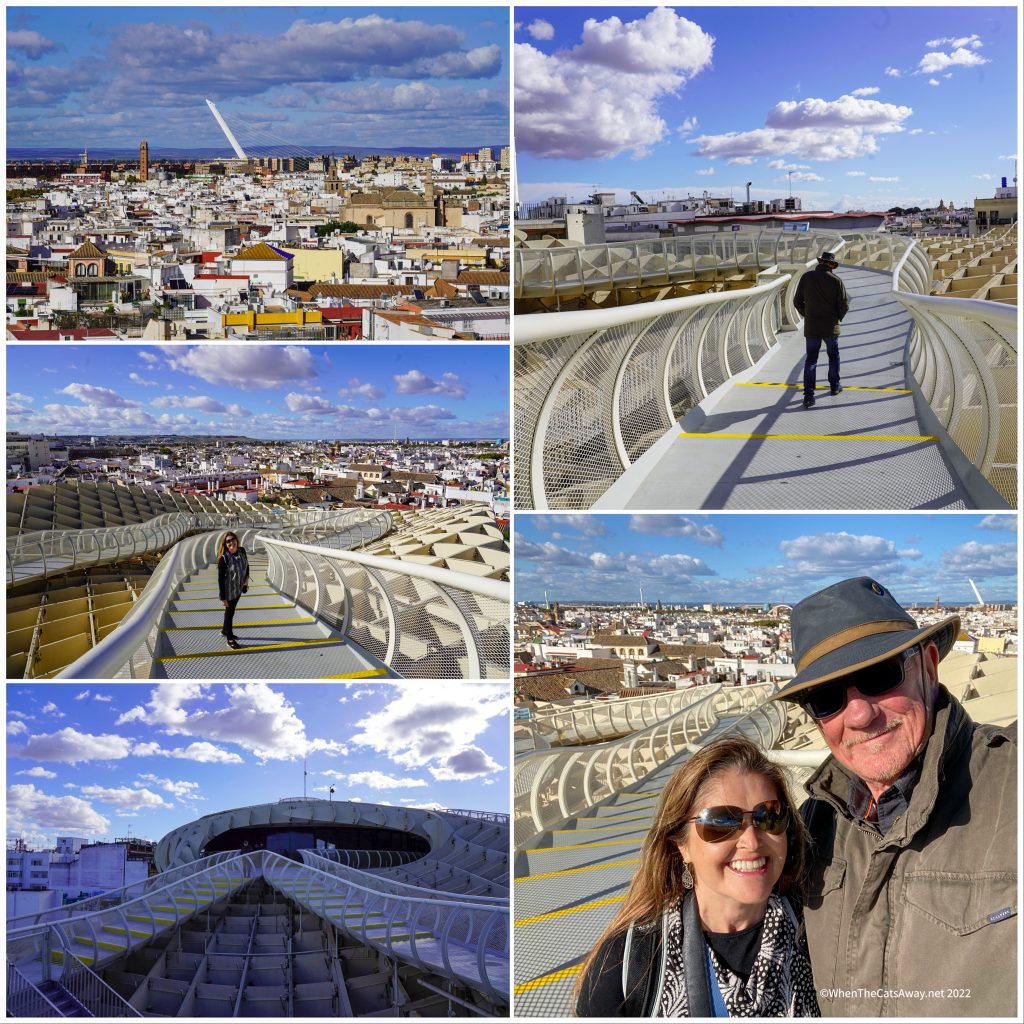
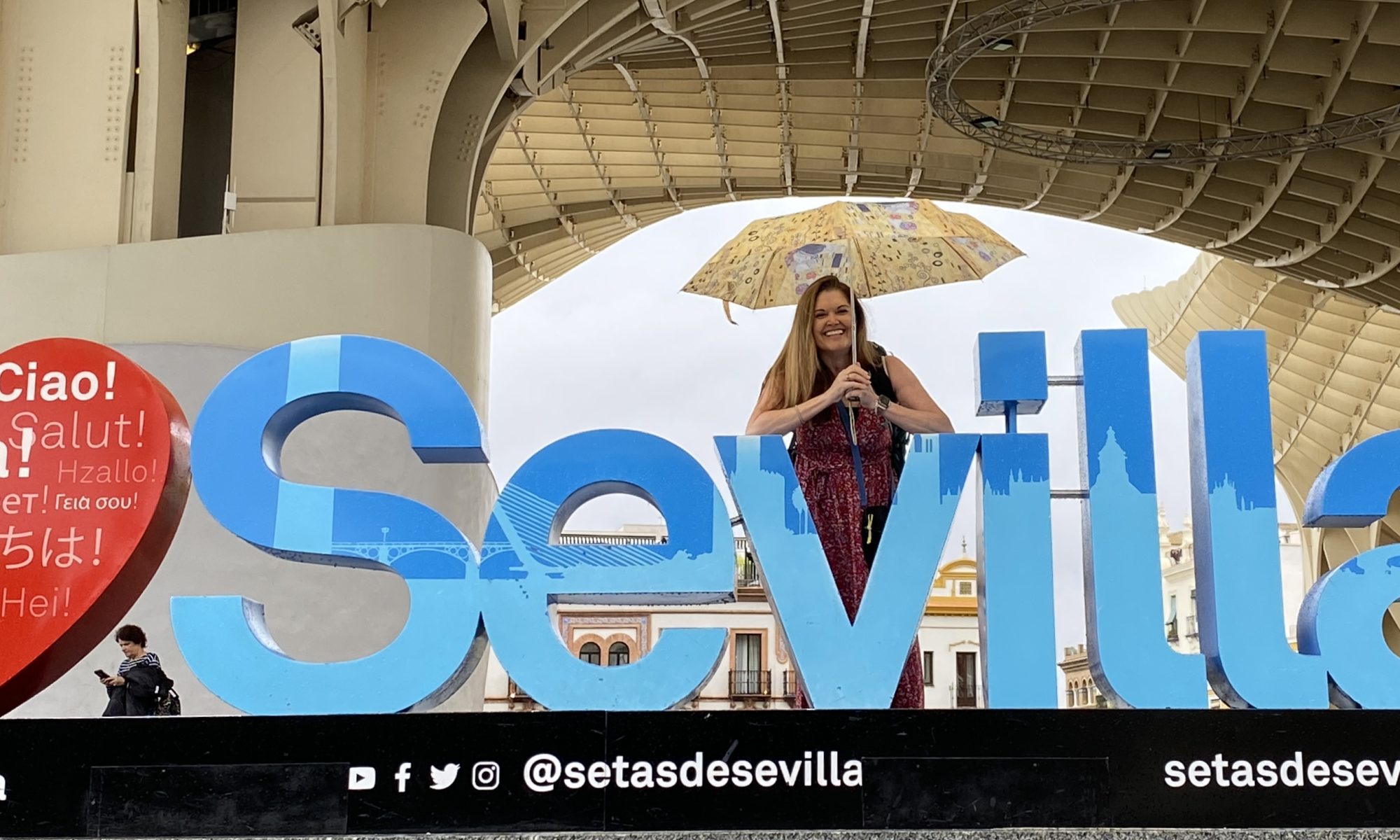
The city does still boast a rather unusual claim to fame though, apparently the largest wooden structure in the world. We had to have a look. Nice views. nice film of the city, tick. So now lets back to the tapas and wine…only kidding.

Setas de Sevilla (“Mushrooms of Seville”)

🐾🐾

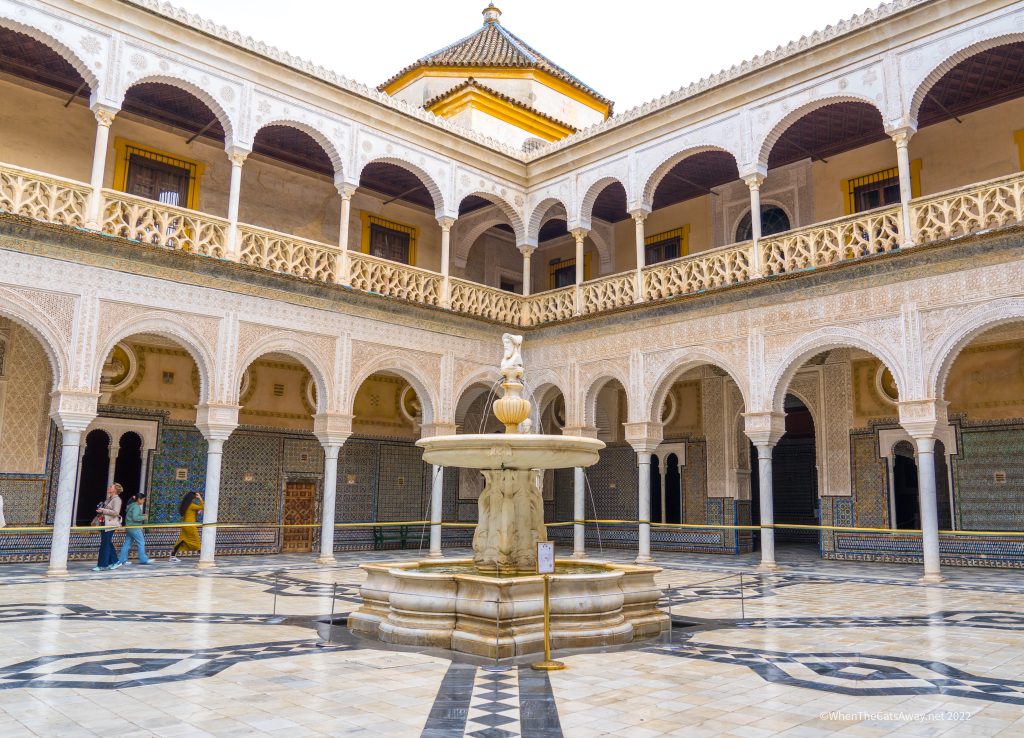
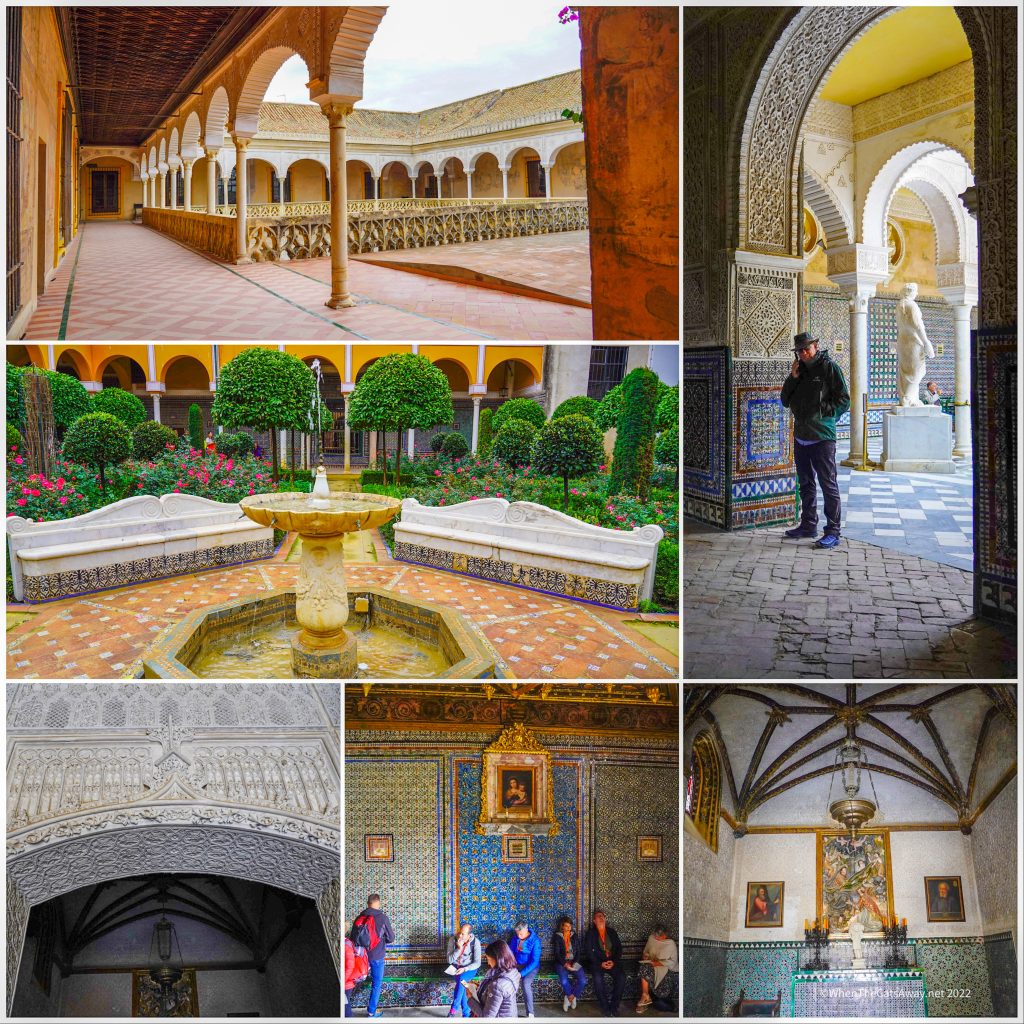
I have just been reminded by some photos that we did have a look round a medieval home, but then we went for tapas and wine, so I can’t tell you very much more than that!

This courtyard appeared in the movie, Lawrence of Arabia
Casa di Pilatos (Palace for the governors of Andalusia)

*

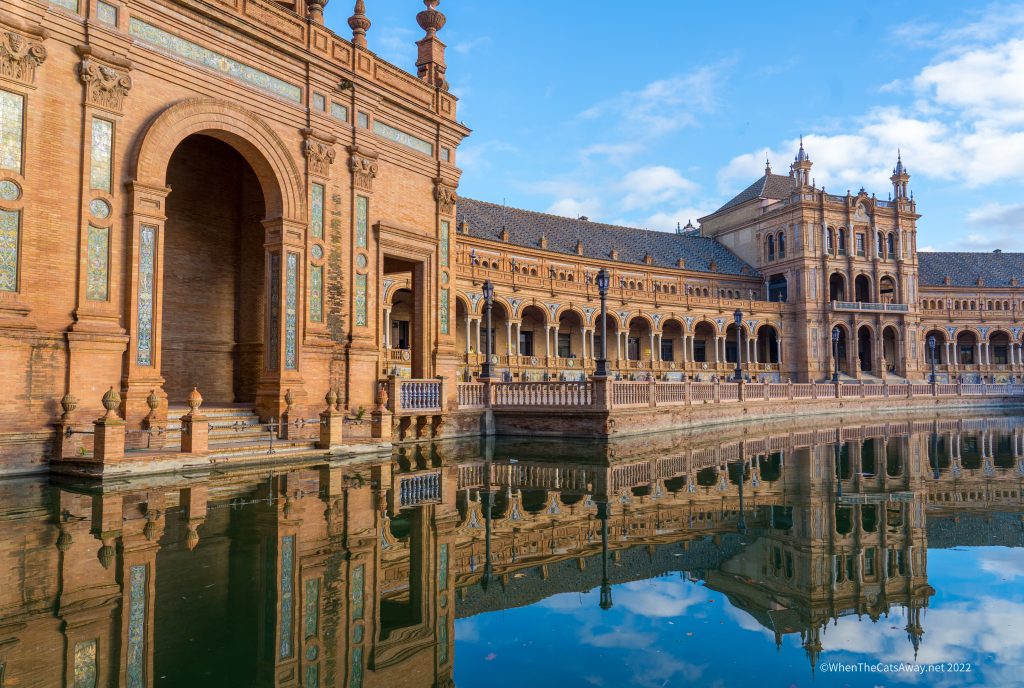
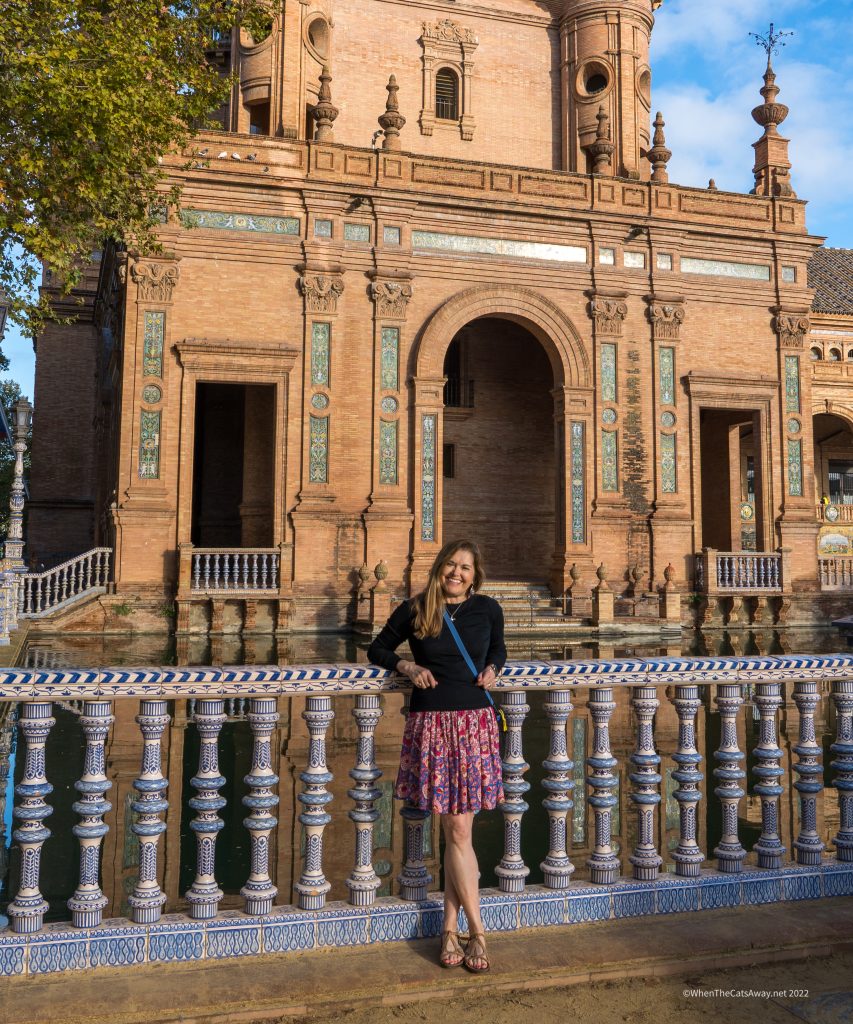
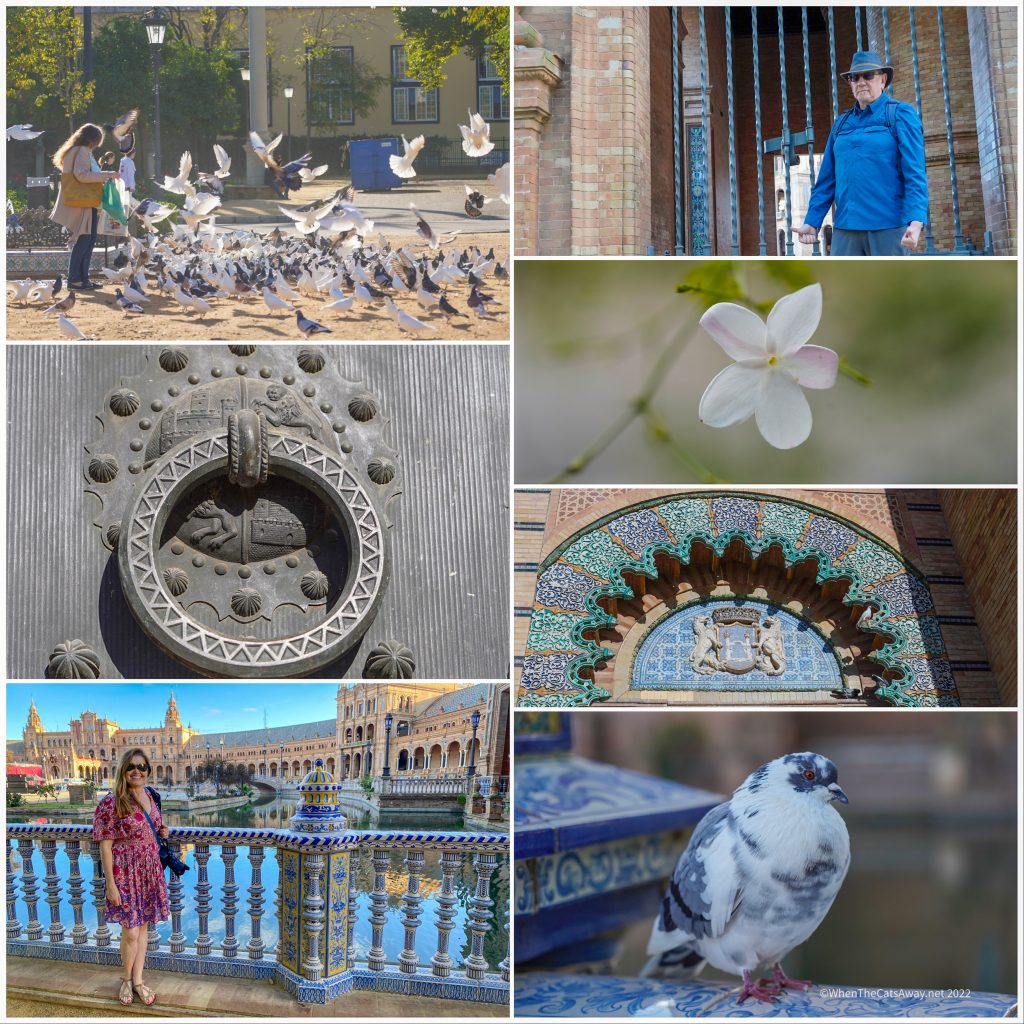
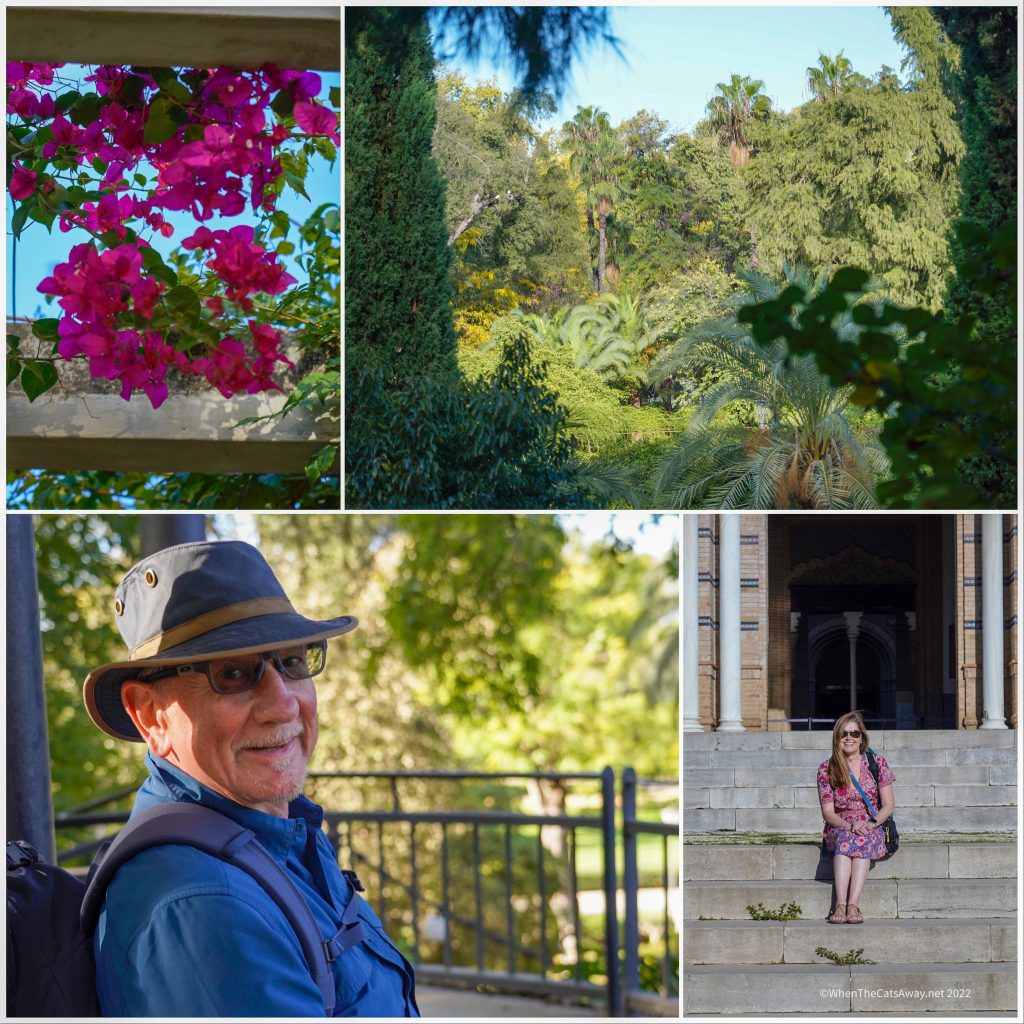
Another day brought more blue skies and pleasant walking temperatures in the low 20’s, so we took ourselves off to explore the Plaza de España in the Parque de María Luisa (Maria Luisa Park) – originally built in the 1920s as a symbol of peace with its former South American colonies. It was mostly closed for filming when we visited – flipping inconsiderate these movie types. In the past this has been a site for Star Wars (Episode II – Attack of the Clones for the geeks out there!). It was pretty picturesque with its tiled walls, moat and magnificent arches.

Plaza de España
Plaza de España
The devil is in the detail – even the pigeons are pretty!
Avenues of tall trees surrounded by scorched earth would be havens of shade in the summertime, when temperatures above 40 degrees centigrade are not unheard of
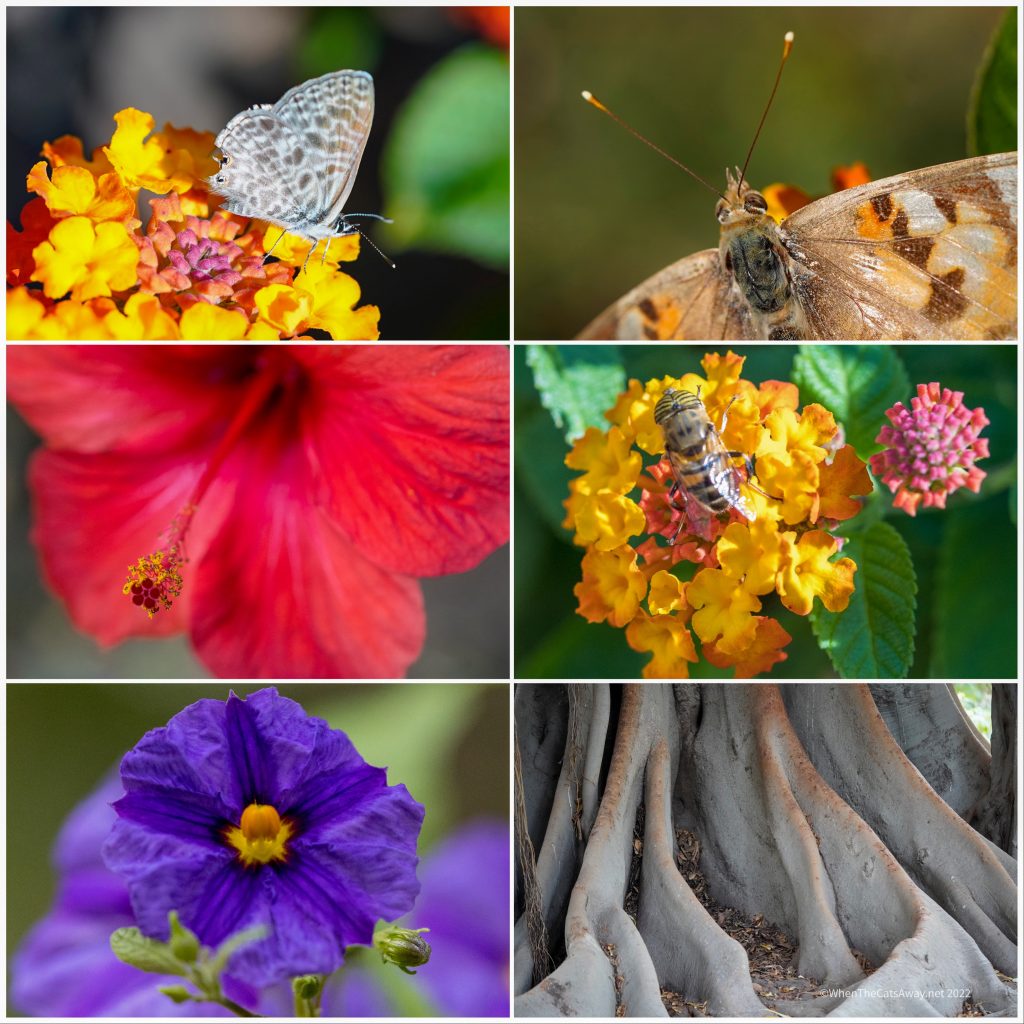
A new lens in Mrs A’s collection gets a workout – macroscopic gets her up close and personal to plants and insects
Enjoying some peace and tranquility in the Maria Louisa Park

*

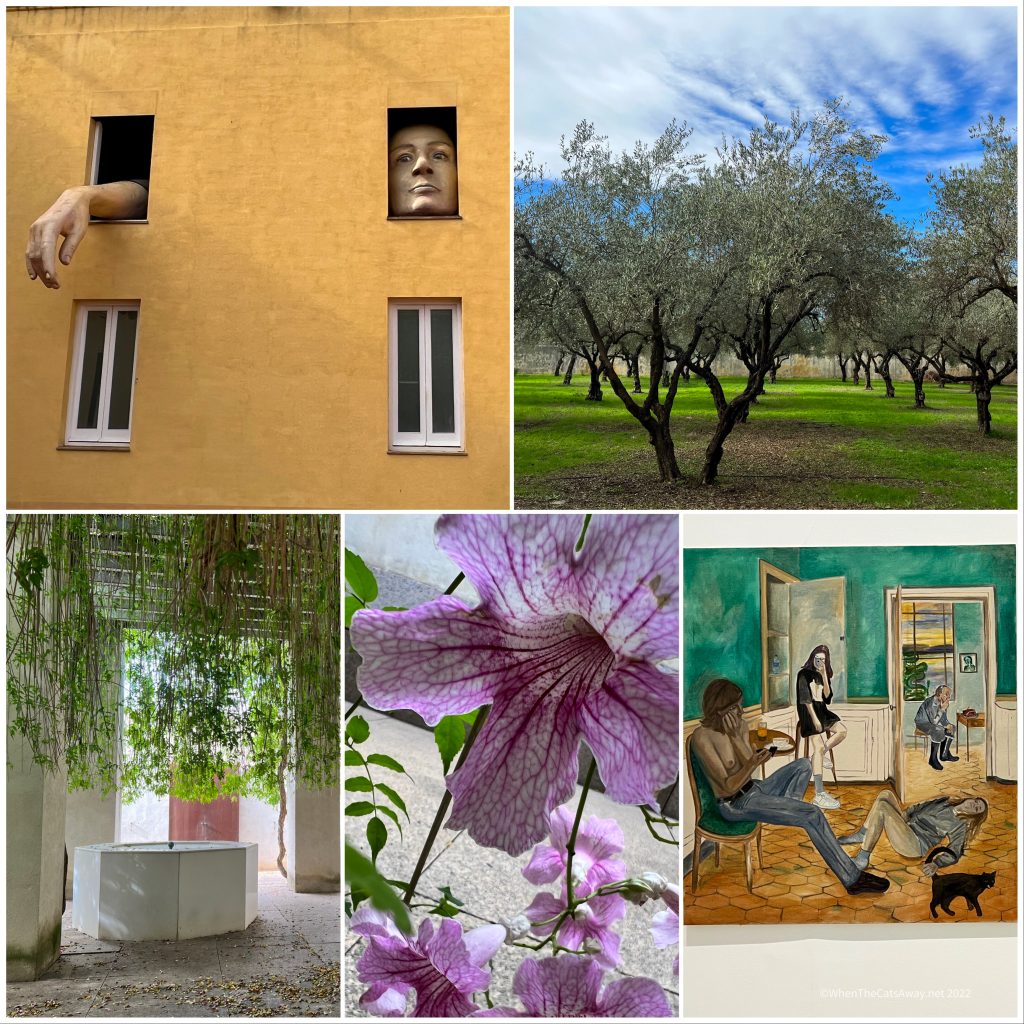
Catherine visited the Museum of Contemporary Art, housed in a 15th century monastery. The buildings were as fascinating as the artwork.

Meanwhile, I went to a local’s bar and drank some beer, and ate tapas, and quizzed the barman why everyone who lives in Seville seems to be so happy. He thought it was the tapas and wine. I’m inclined to agree.

*

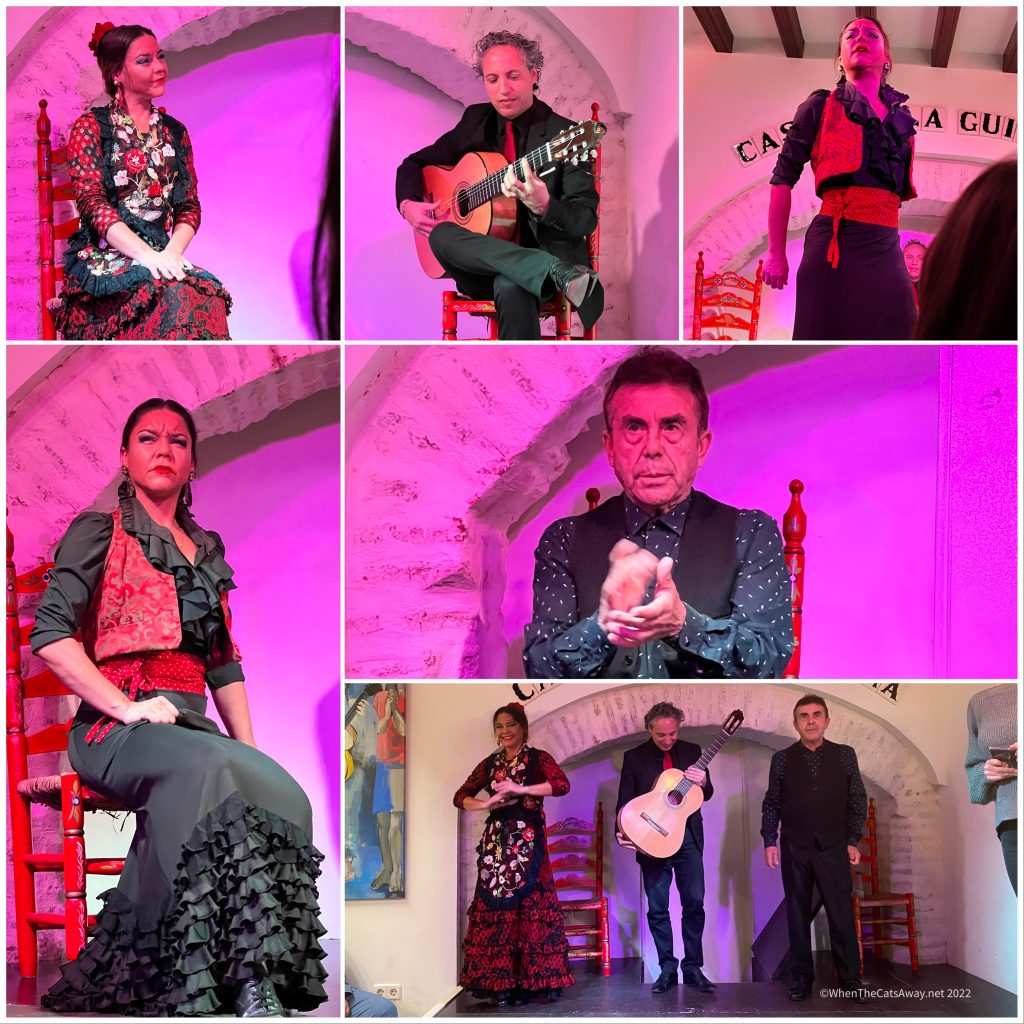
On our final night we booked a flamenco show at Casa de la Guitarra (House of the Guitar).

We loved watching the dancing and listening to the guitarist, but I think flamenco singing is a bit of an acquired taste. All good learning and a taste of the folk-songs of Spain.

*

So I think that conveys the spirit of the week right? It was great to once again be back in Europe, delving into the history, watching the people, feeling the vibe.

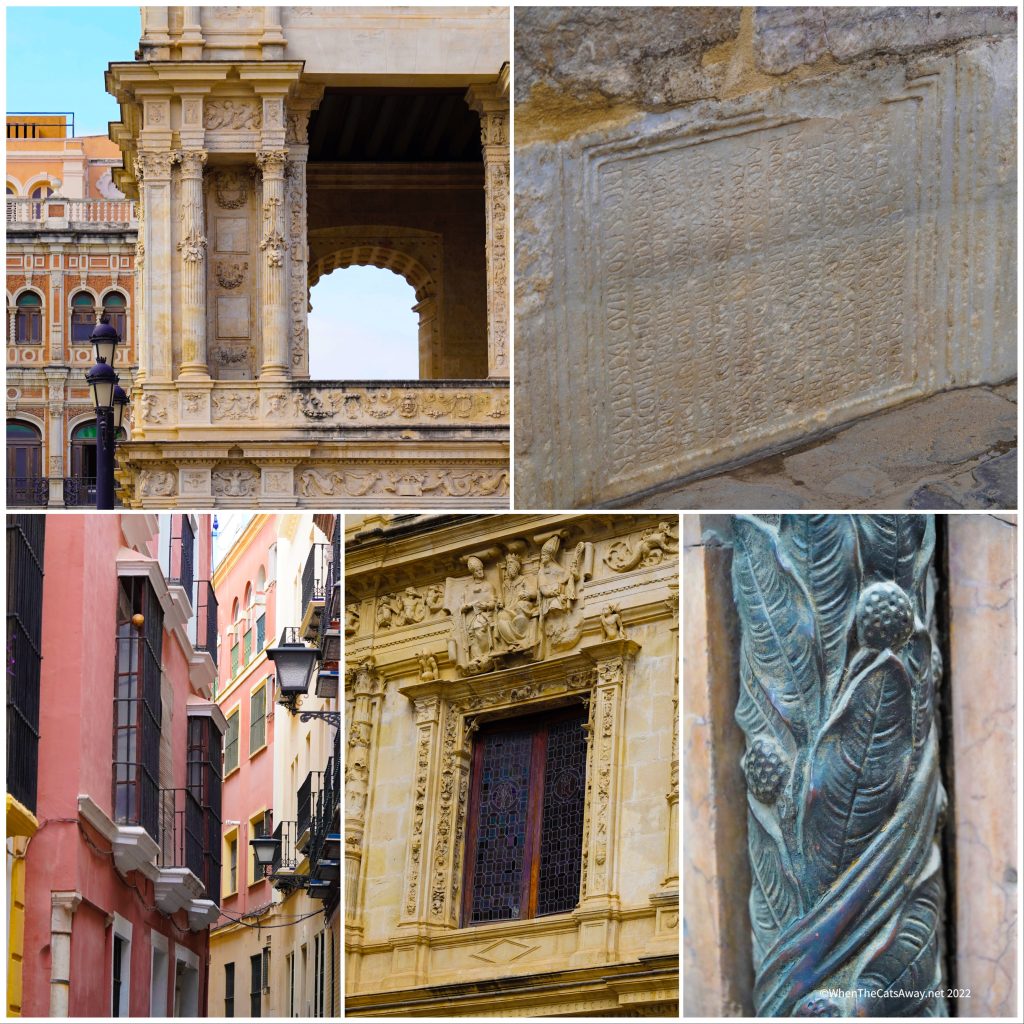
The spirit and colour of Seville
A mash of historical eras and architecture

We remain so glad we made this move. Europe on a our doorstep, and so many parts of the UK to see as well. Our own back door is still full of places we haven’t had a chance to see yet. Long trips in our motorhome are off the agenda for the moment – we are enjoying spending time in our home with Tassie, and feeling it’s quite enough to have a week away here and there. How times change!

🐾🐾