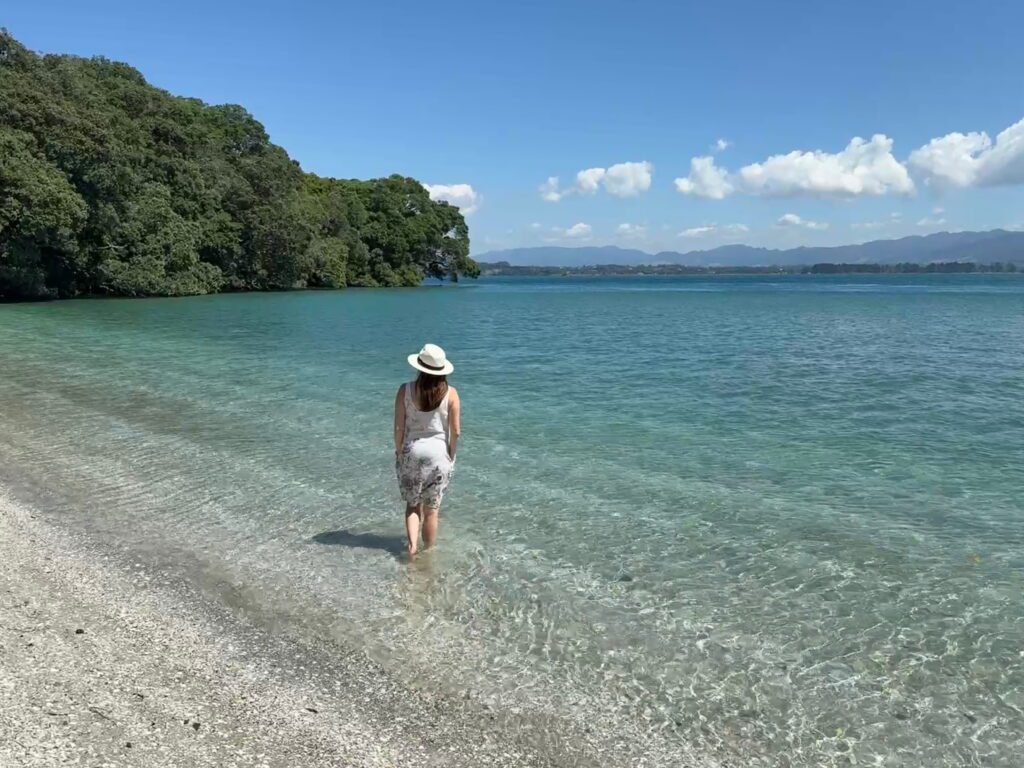
Mrs A and I recently were privileged to spend two months in Australia and New Zealand, with a quick dip into Tokyo for 3 nights. Yes..privileged. What percentage of the world gets to have 8 weeks of hedonistic travel, where they don’t need to work, cook, or clean. However, as I’m writing that, I also know people who would miss one, some, or even all of those things! We didn’t.
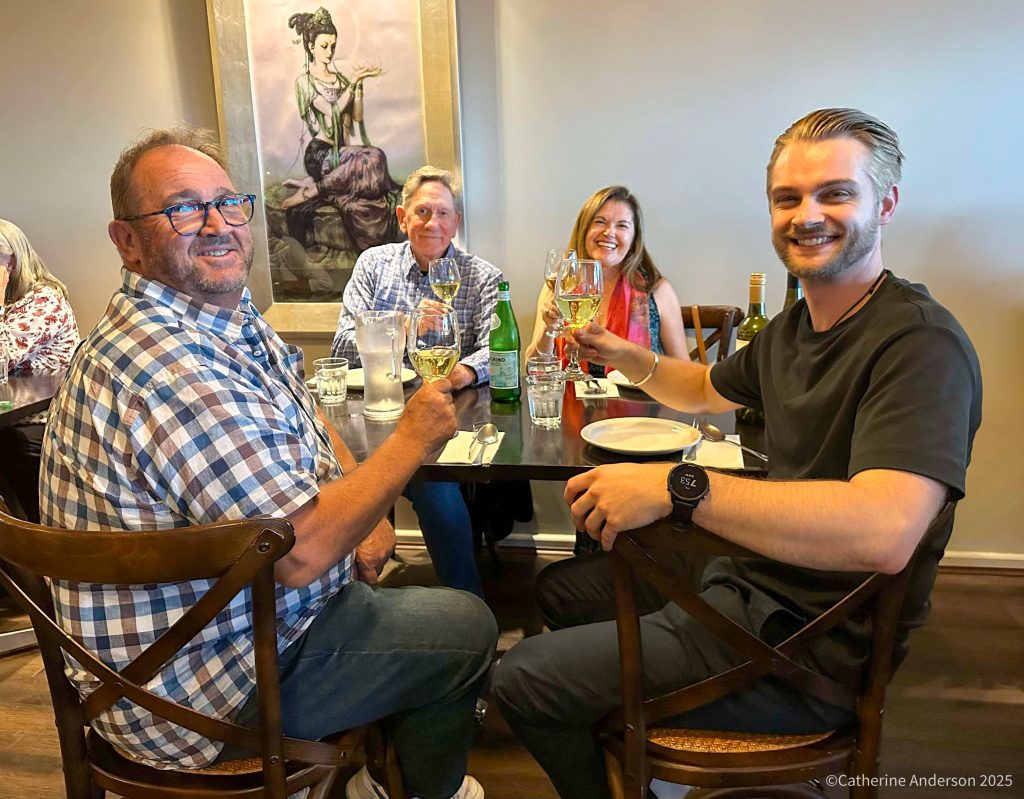
We spent time with friends and family who we hadn’t seen much of, or at all, since we migrated back to the UK three years ago. It was a blast. Lots of eating out with tables full of those smiling faces. Mostly we felt we slotted right back in, and were able to pick right back up where we left off. Some of them were kind enough to host us, and a special thanks to you.
But I’m going to focus in this post on just one part of the trip that I think may be of interest to others, because it was just so amazing, and friends/family reading this, may want to consider doing something similar.
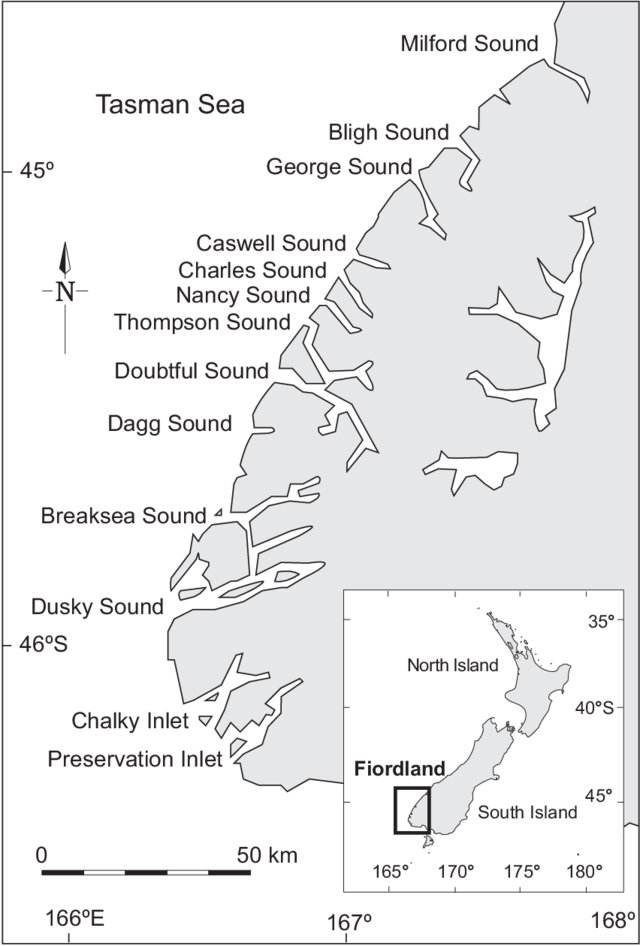
Down the bottom of the South Island of New Zealand is an area of largely untracked wilderness called Fiordland. A massive area around ten times the size of London, but with a population of just under 4,200 people, as compared to London’s 8.9 million! That’s right…there are not many people about.
In 1888 one of the very few paths that cross it was opened up through a section connecting two of the flooded river valleys that inundate it from the coast. The Milford Track was born, and along it were built some wooden lodges for walkers.
We signed up for a five day package that coached and boated us to the start of the walk, allowed use of the lodges, fed us, guided us along the track, and included a cruise on the last day up one of the sounds. You can also walk the track independently, if you are game to be totally self sufficient getting into and out of the area, and feeding and bedding yourself on the walk itself.
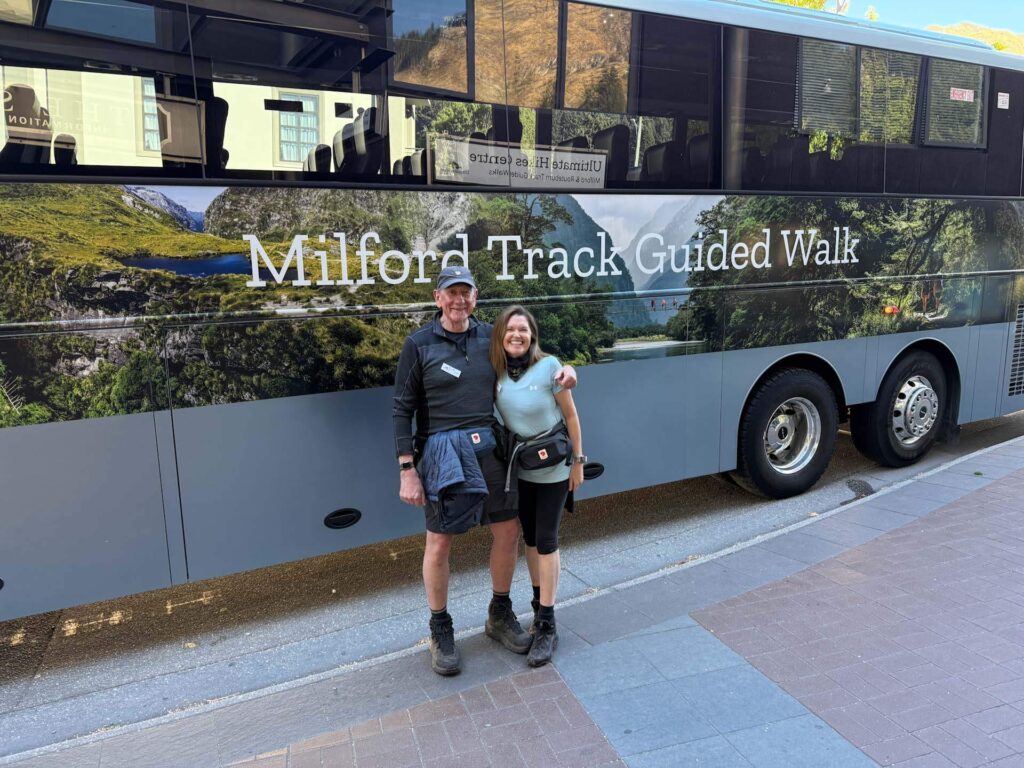
Mr & Mrs A getting ready to board the coach
The organisation we used was called Ultimate Hikes, and what a fantastic experience they gave us. Every aspect so well thought through and delivered. Our friends had recommended them after using them the previous year to walk the track, and were doing another one in Fiordland with them while we were on ours (the Routeburn Track).
Ultimate Hikes gave us a really memorable experience, from the briefing material about what to expect on the track (conditions, challenges, what to bring etc), to the quality of the guides they hired, who were always on the lookout and ready to support people who were struggling. Given the only way out once you start the walk is via helicopter at your expense, that’s important. More of that later.
After a long hike knowing you were going to be fed and watered with hearty, high quality meals, take a long shower, maybe even have a glass of something nice…that was outstanding! The huts even had special drying rooms so we only needed to carry one change of clothes and could wash our hiking set every day. Luxury…
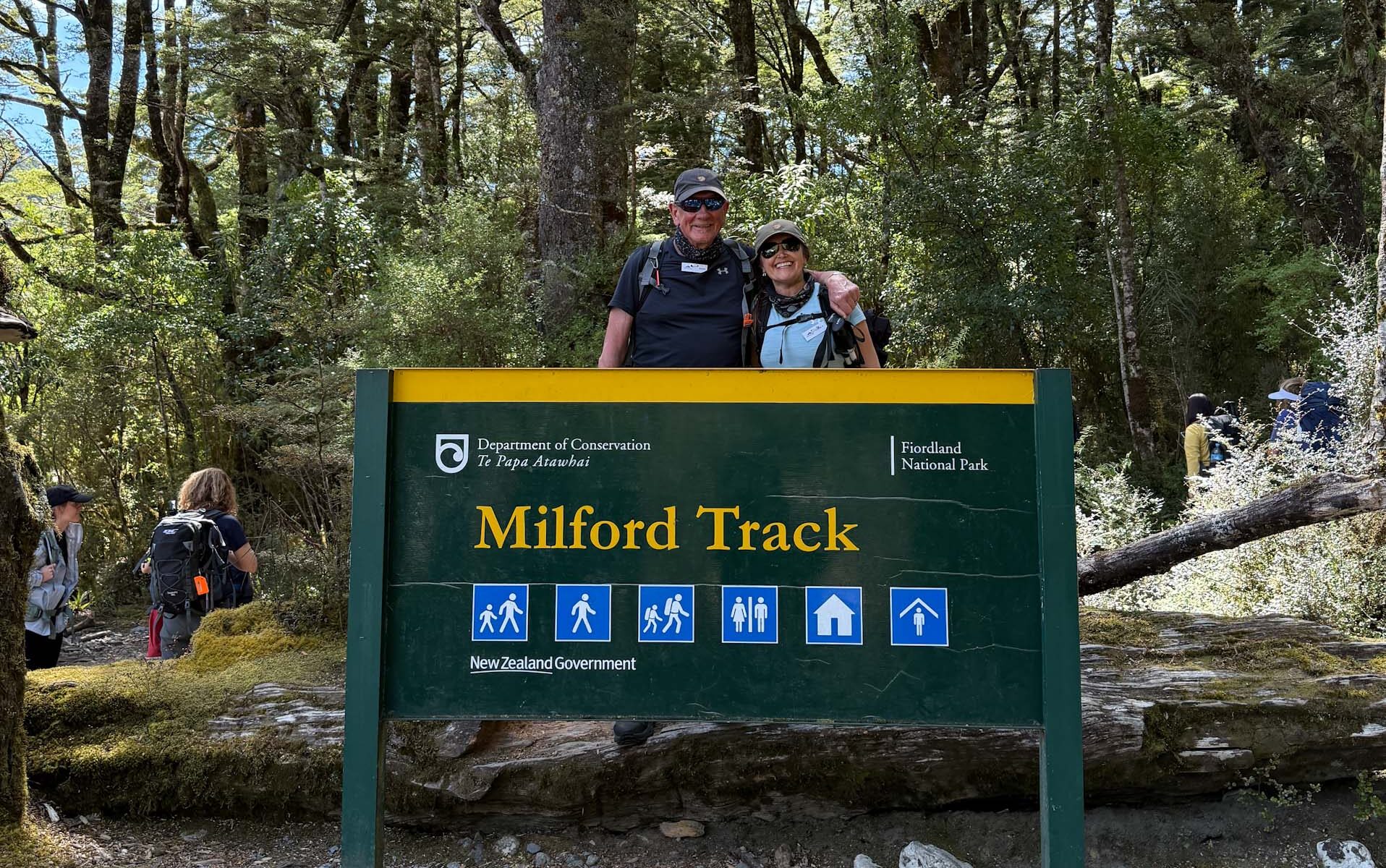
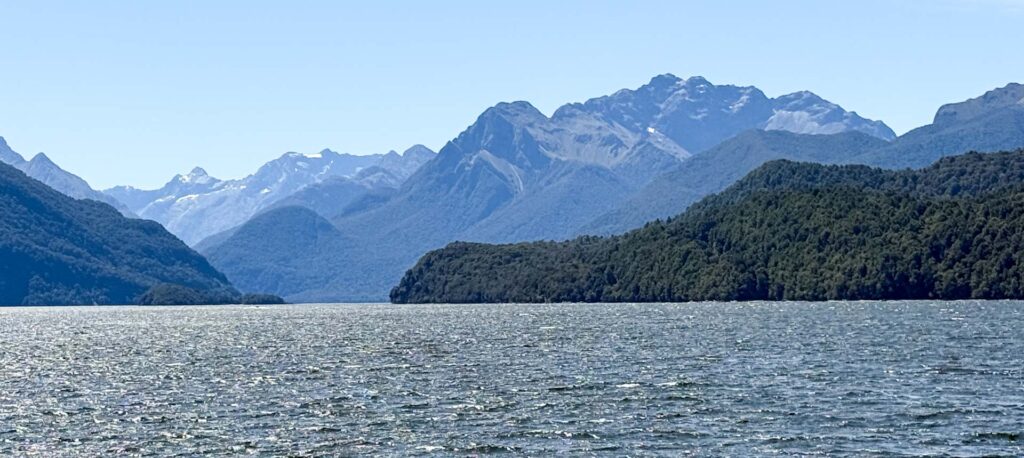
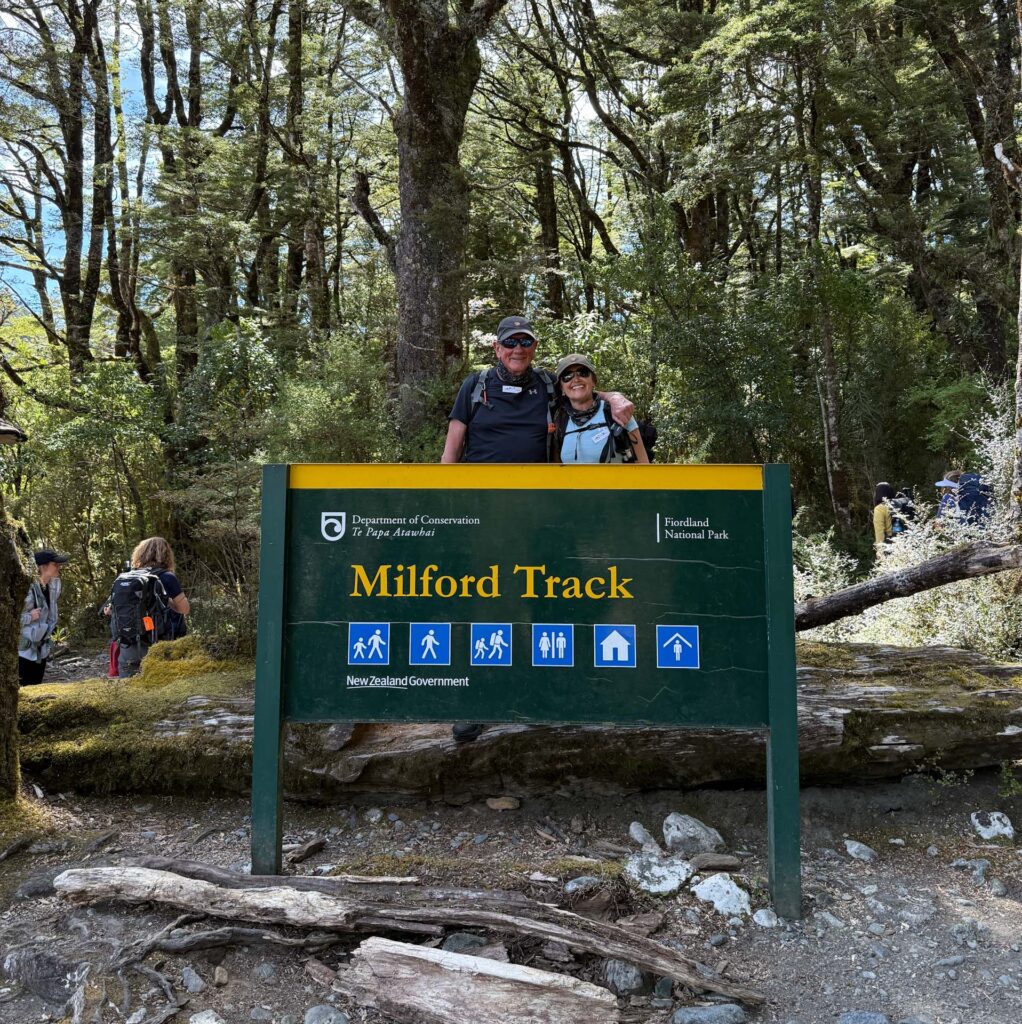
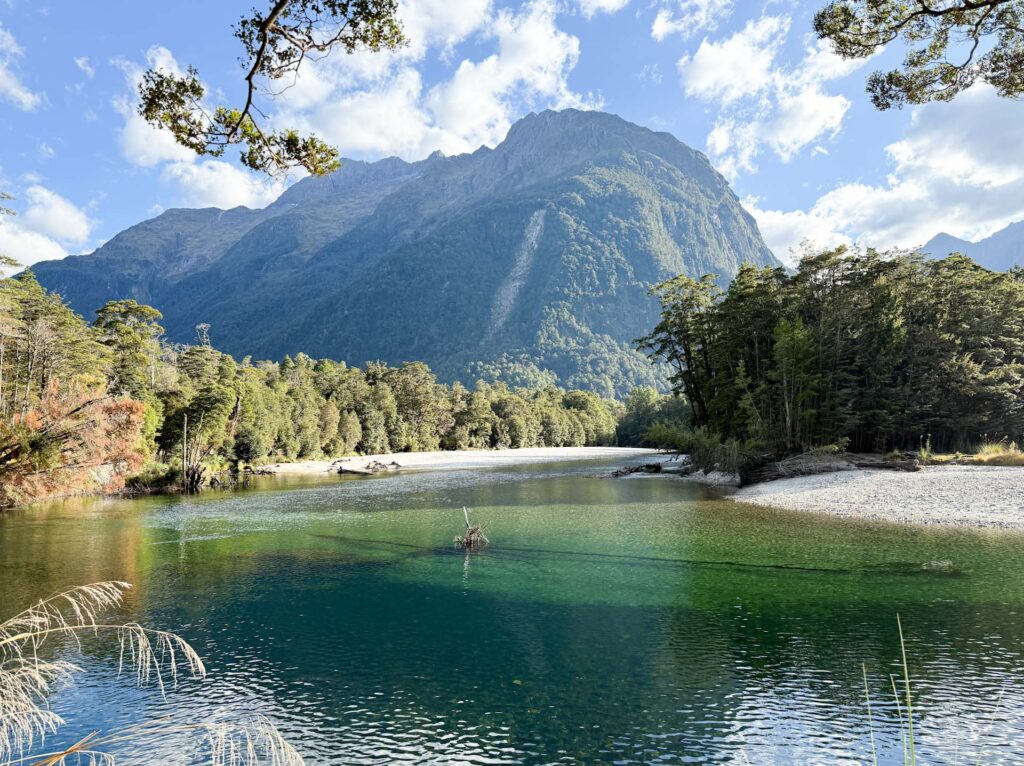
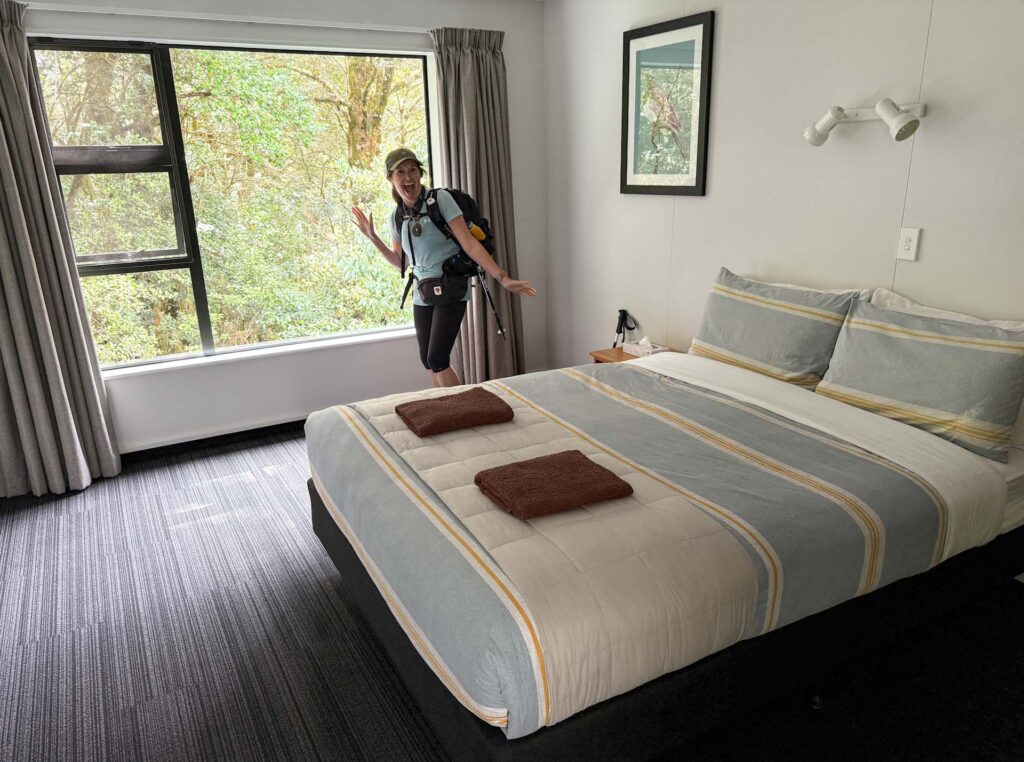
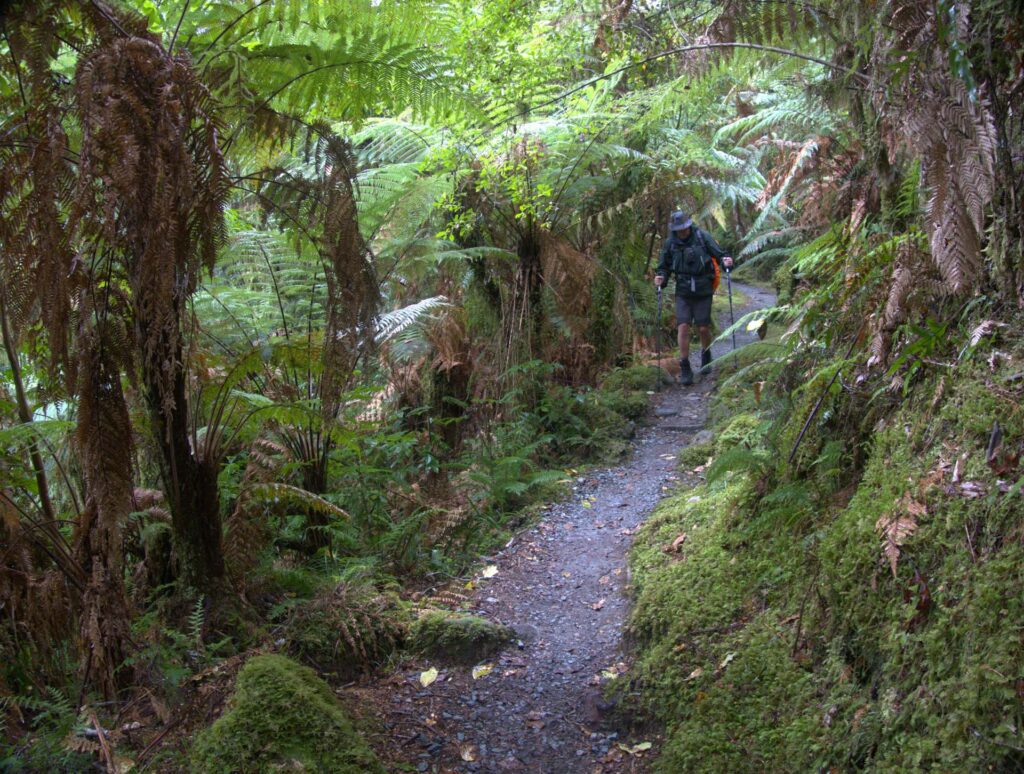
Our boat trip across Lake Te Anau rewarded us with breathtaking views, and yes, that is snow – the meltwater from those glaciers was to provide us with pristine ice-cold drinking water for the next few days.Excited to be at the beginning of the track – 49 miles/78.5 km of walking ahead of usOur group mostly New Zealanders, some Australians, Americans, one other person from the UK and a girl from KoreaOur view from Glade House, our first night’s accomodation beside the Clinton RiverA typical example of how we roughed it at night – not bad – with an en-suite too. Catherine managed to carry all her clothes, food, water and toiletries in her day pack, while I borrowed a larger pack from Ultimate Hikes for my more substantial items!
It was such a rewarding experience at so many levels. To be totally immersed in nature is something we love, but also to challenge ourselves and to learn more about what we can accomplish, now that was high value to us.
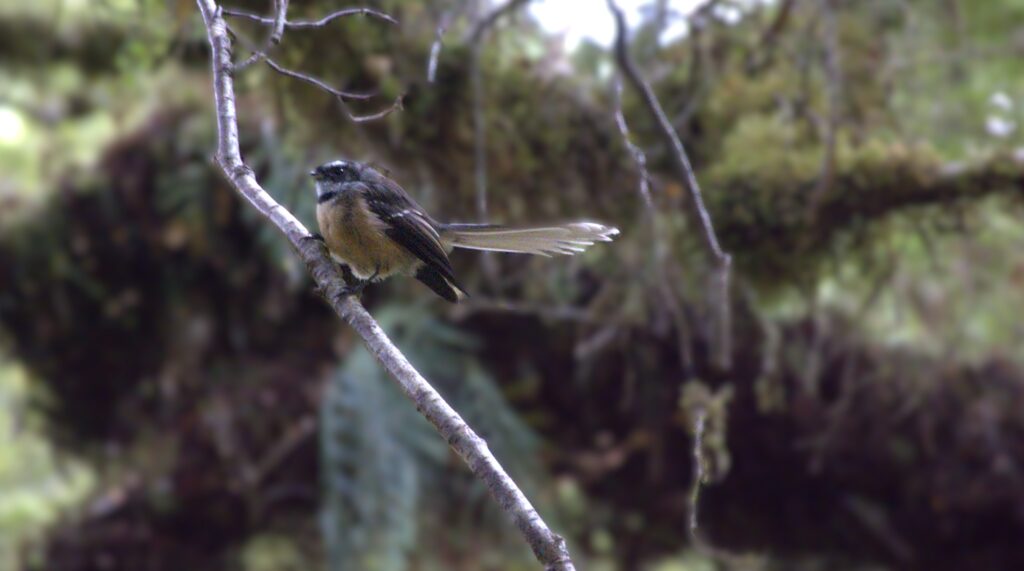
South Island robin (Petroica australis australis) on our nature walk – we saw a lot of these throughout our days walkingNew Zealand Fantail (Pīwakawaka) – friendly insect eater almost omnipresent as we hiked
So what was it like? Well the question most people have is “How hard is it?”, and you will get a lot of different answers to that from people who have done the walk. I can only relay the facts, and based on that assess if you would find it easy, hard, or not something you would even consider.
We walked the following distances and altitude:
Day 1: 5.5 km, a short stroll around the bushland surrounding the first lodge to acclimatise to the terrain and wildlife we might encounter.
Day 2: 22 km, a wander through a stunning river valley, with 285 metres climbing.
Day 3: 22.5 km up over a pass with 827 metres of climbing and 900 metres of descent, and finally…
Day 4: 28.5 km along another river valley lined with spectacular waterfalls, and just 205 metres of climbing.
The other two variables you should consider are terrain and weather. A good portion of the track is well formed and allows you to look up not constantly checking where you are going top put your next step. However, Day 3 has you very much focusing on your feet as you descend a boulder strewn path, and slippery routes with steep rocky cliffs for some of the rest.
The weather for us was dry, unusual for the Milford Track, it can often rain in torrents for the whole walk. It was 30 degrees centigrade in the sun on our big ascent and descent, and that was as hard as rain. So you have to be willing and prepared to walk in all conditions, including snow, and winds so strong you can barely stand.
A curious Weka – these were constant companions at lunchtime – they would snaffle your food if you didn’t watch it closely!
How did we find it? Well …we both finished…but had quite different experiences…
Catherine describes her Day 3 with the steep climbing as the only really quite challenging one, and without me holding her back would no doubt have been up among some of the early finishers, if she had chosen to rush it. She has strong legs, great balance, and determination. At the time, she also had a 25% constricted airway, and proudly wrote a message in the walk book for any future hikers with idiopathic subglottic stenosis to inspire them to keep on going.
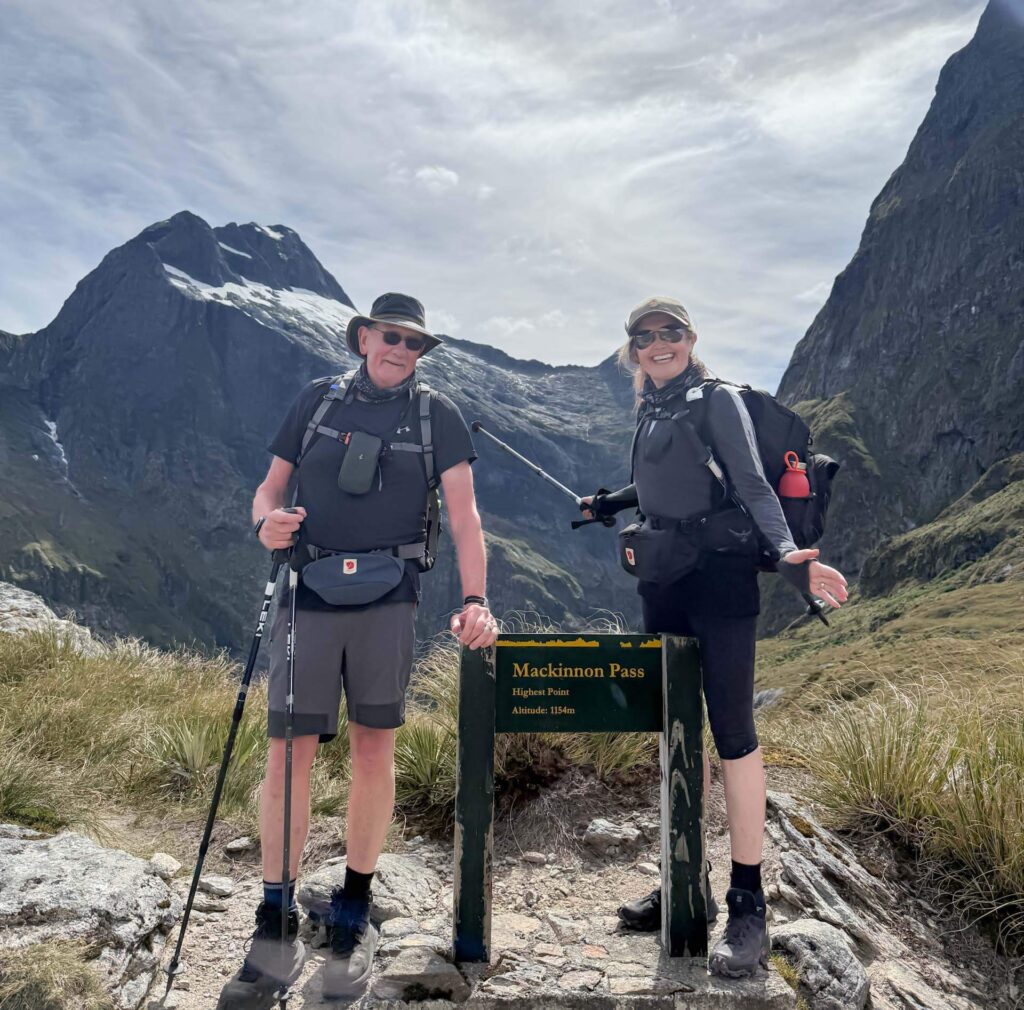
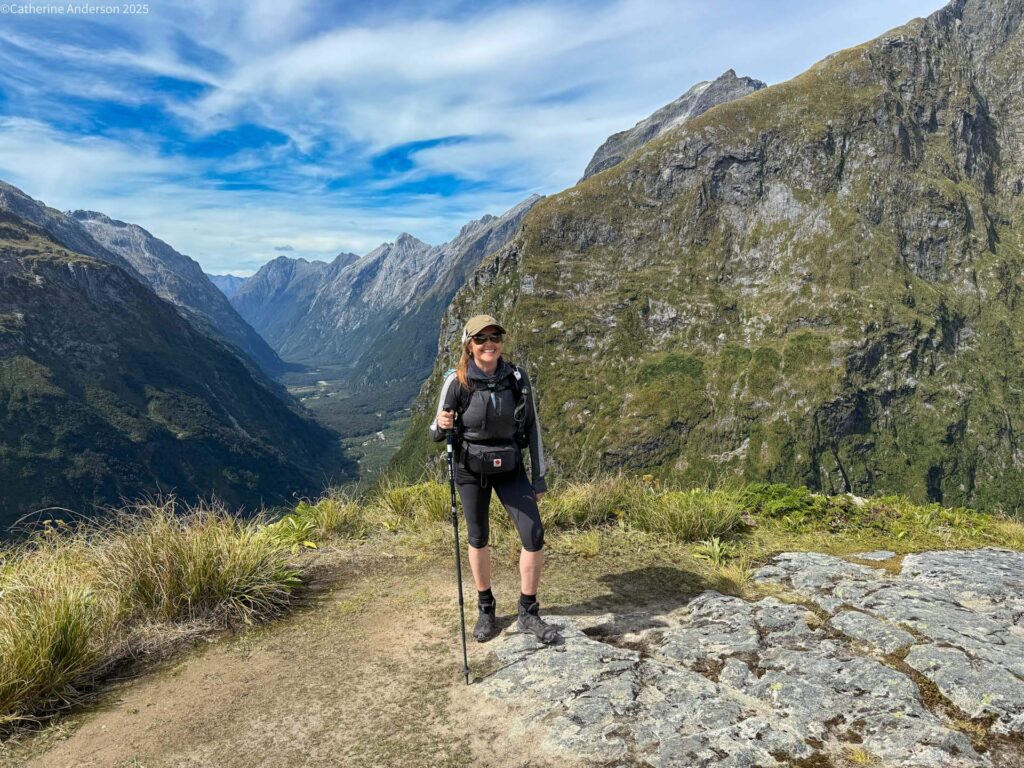
Both relieved to have scaled Mackinnon Pass with our various challenges. Apparently we were incredibly fortunate with the weather – usually you cannot see these peaks and their frozen glaciersMrs A with the Clinton River Valley behind herWay down behind us in the Arthur River Valley is Quintin Lodge, a few hours of downhill hiking still ahead. These views are magnificent.
I unfortunately damaged my calf on day one, a pulled muscle we think leading to cramping, that an hour into day two became very difficult to walk on. I had to make a call, to either press on and hope I could walk through it with some treatment suggested by the guides (massage and hydration), or turn round while I could still get out by boat. Any further and it would be the helicopter and a very large bill.
I chose option 1. The cramps, or whatever it was, came and went during the walk.
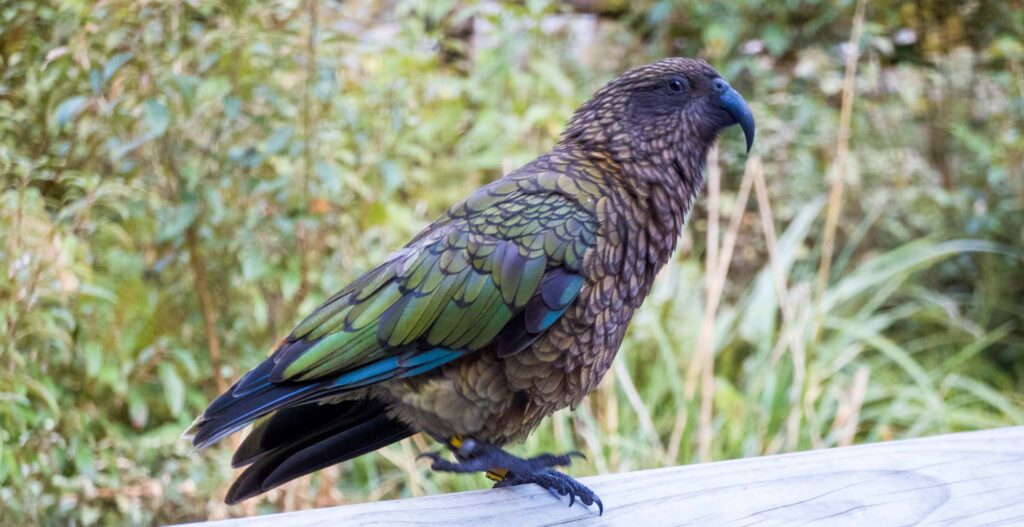
A Kea parrot – they have the intelligence of a 3 year old and are incredibly mischievous. This one and its three buddies were about to go and attack someone’s backpack they had left while they went for a toilet break!
The last 15 km of Day four I was reduced to shuffling along in a world of hurt with a left leg that I could barely stand to put my weight on. Less fun than you would imagine. Catherine would wait for me every so often and check in, as did the guides when they dashed past to set up for our next scheduled stop. The guides would provide sugary drinks to hydrate, and once we reached our hut there were massage rollers to help loosen the muscles. So for me it was certainly a challenge, mentally as much as anything. I knew I had to keep going. There was no option. It’s good to learn you can do that when necessity dictates.
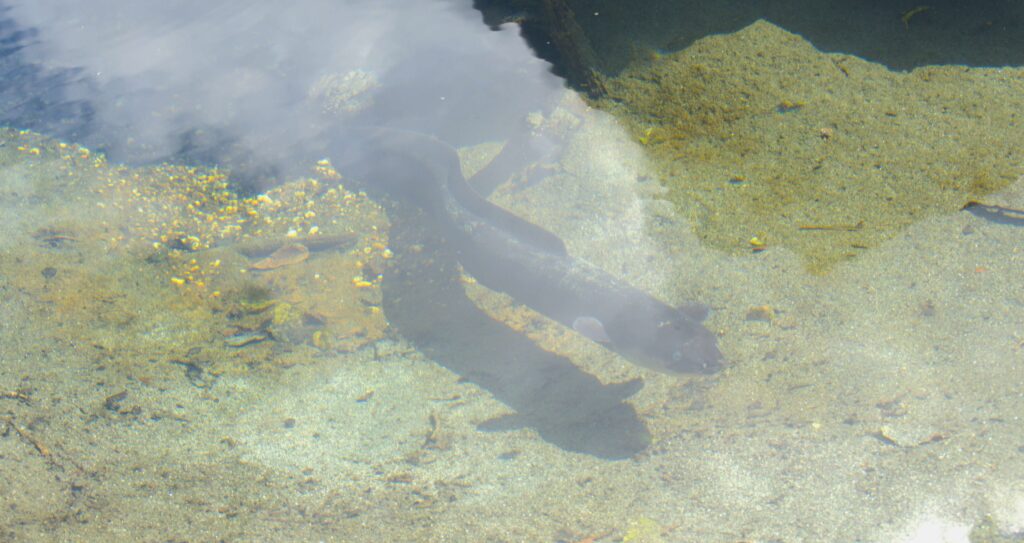
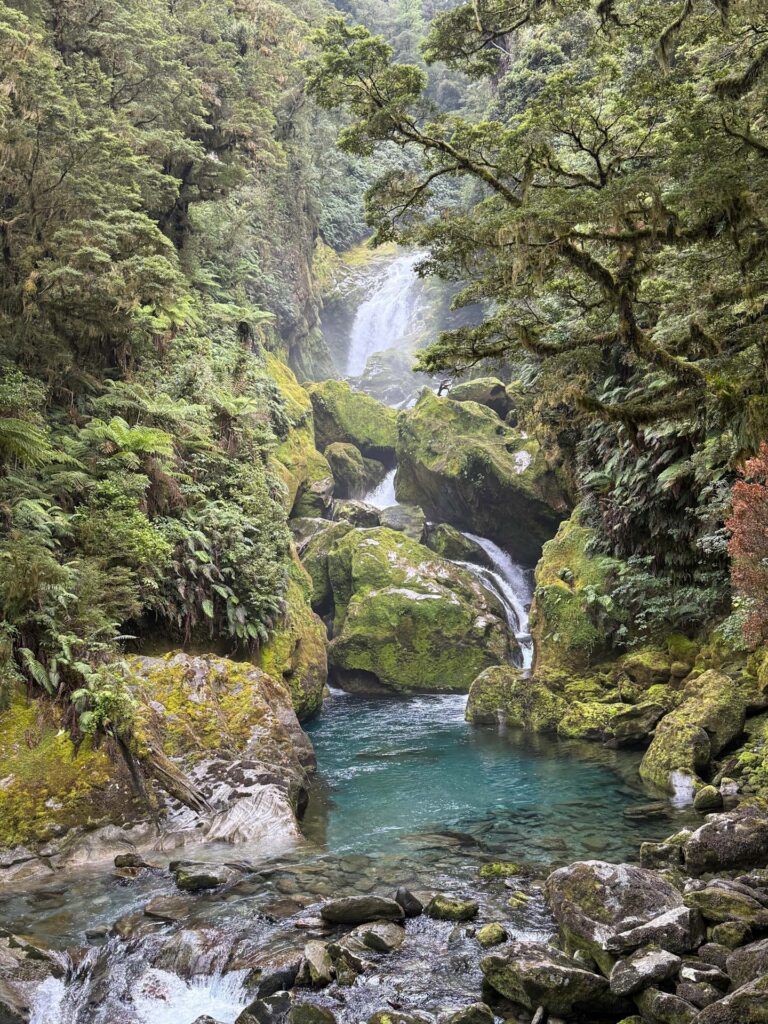
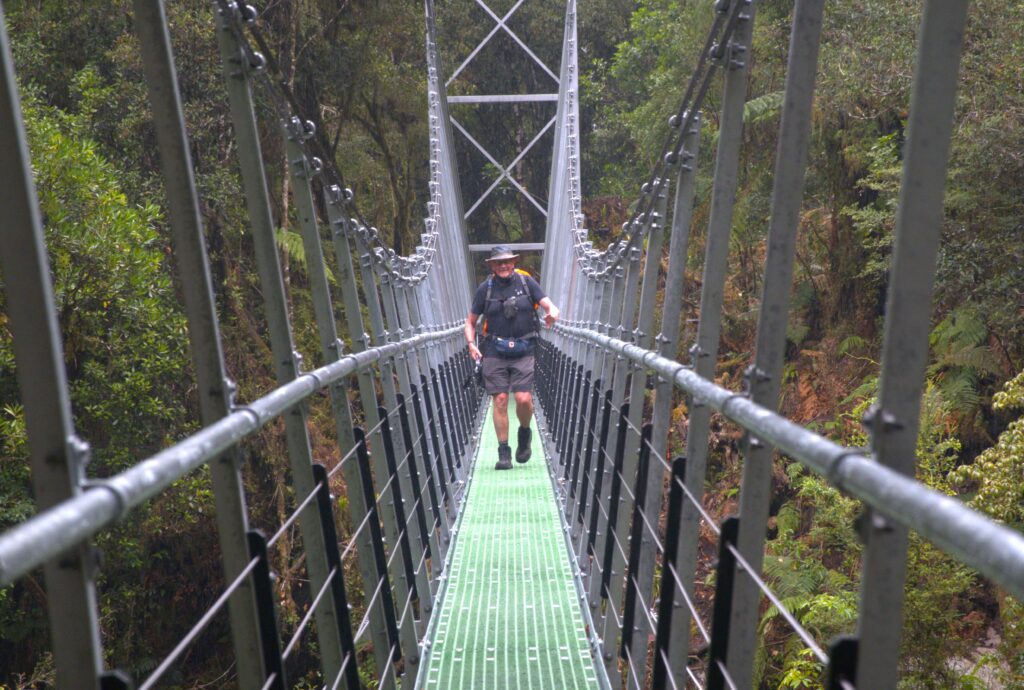
An eel emerges from rocks on the Arthur RiverThe rediculously stunning Mackay Falls was a highlight on day 4Crossing over one of the many swing bridgesThe Arthur River and Lake Ada, looking calm and moody on our final afternoonNo room for vertigo at this stage of the walk! This path was chipped out by hand by former minersThank goodness for those two hiking poles
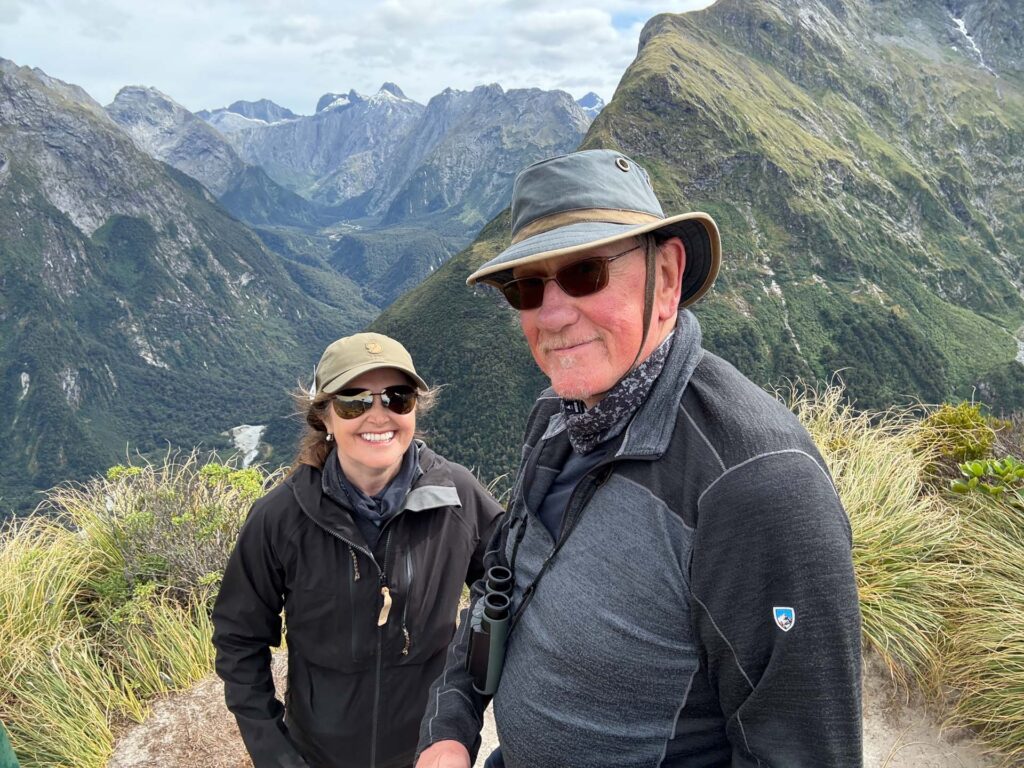
The scenery was, as you can hopefully see from a selection of these photos we took, spectacular. Lush rain forest, snow covered peaks, prolific birdlife, it had it all.
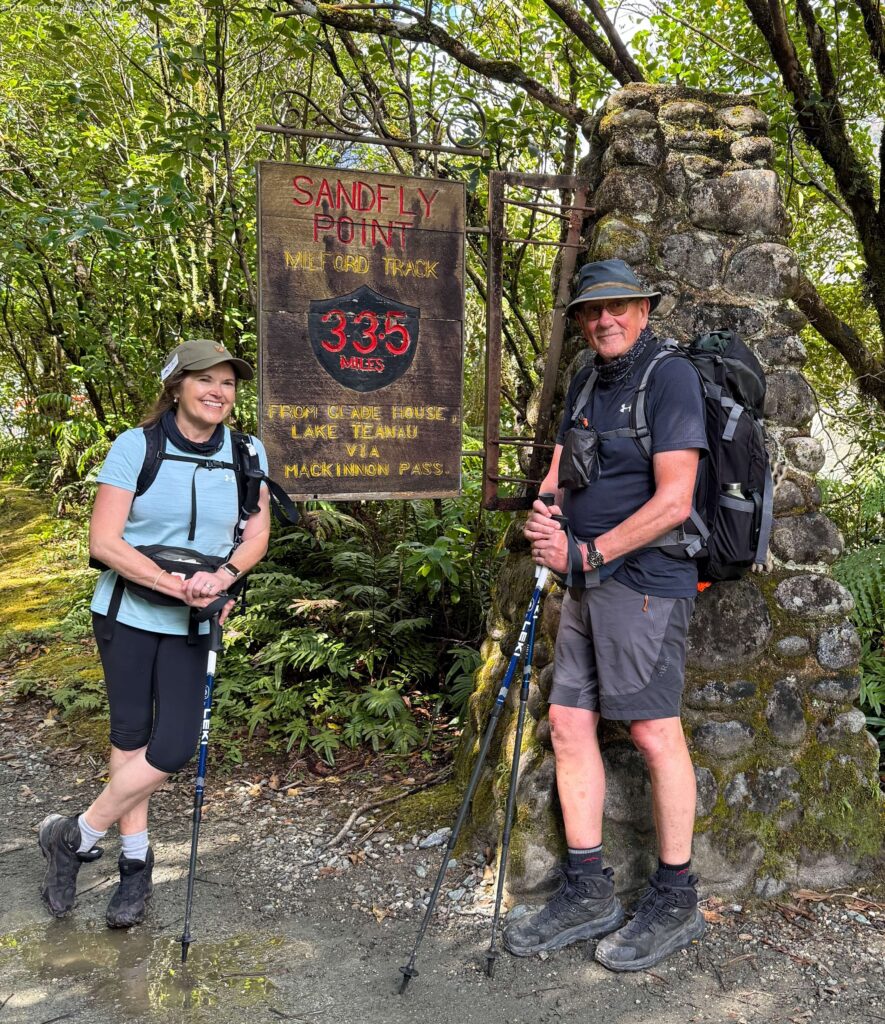
We were pleased to reach the aptly named ‘Sandfly Point’ (little biting flies which are always hungry and hunt in packs!) mid afternoon on our fourth day, and join a bunch of our fellow walkers on the boat trip across Deepwater Basin to our final night’s accomodation at Milford Sound.
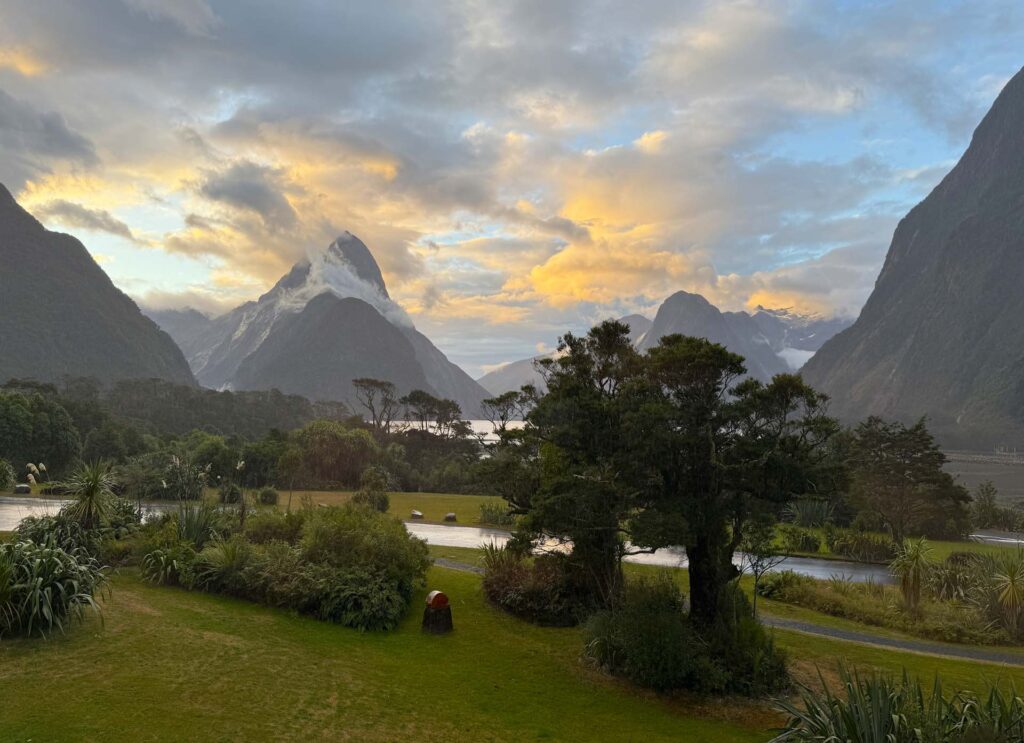
We tracked every step and side walk – for us this was 49 milesSun setting over Milford Sound – it feels like we are back in civilisation with washing machines and roads giving us a bit of a culture shock
Day 5 had very little walking – a short stroll to board a cruise around Milford Sound, before a coach escorted us back to Queenstown.
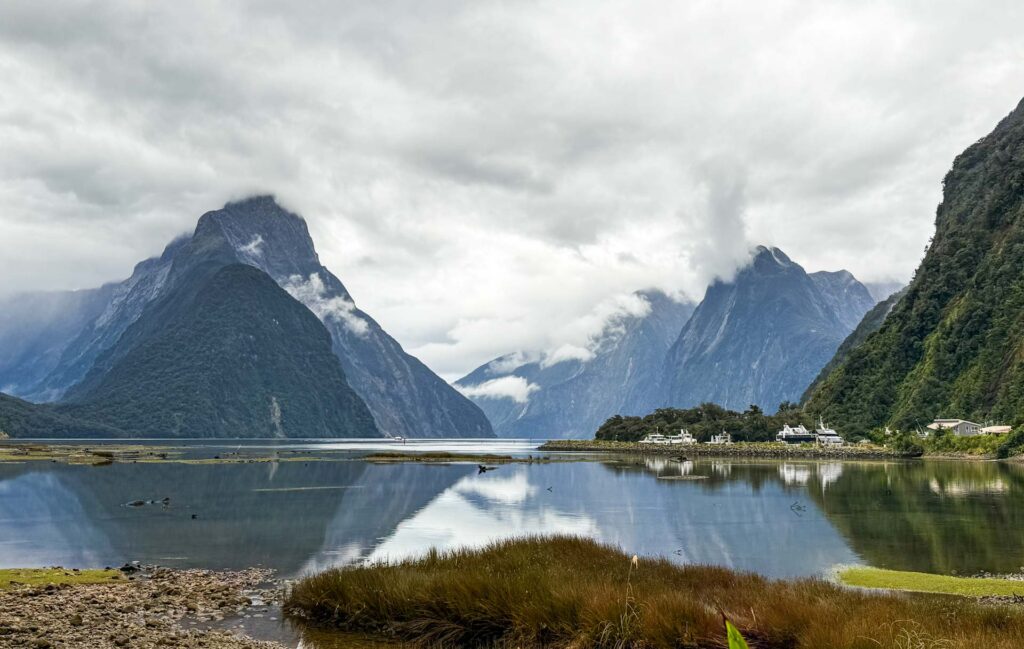
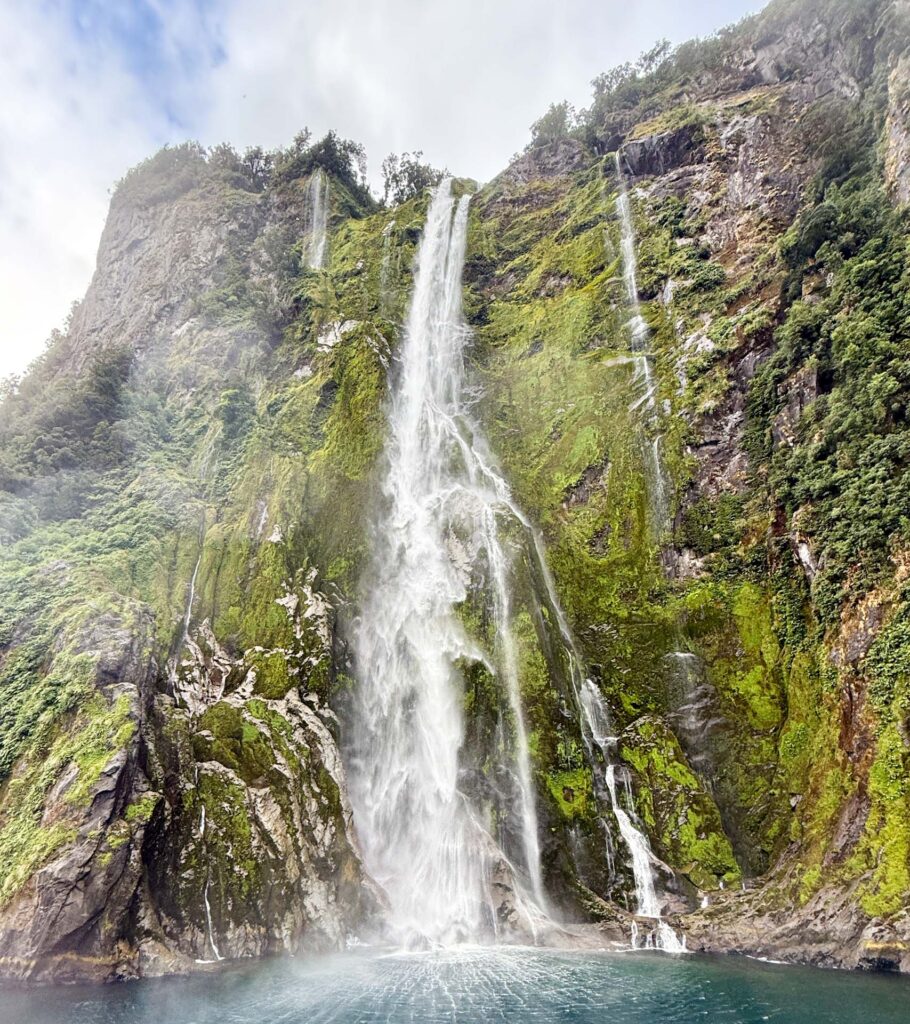
The view into Milford Sound is every changing – this as we headed off to join our post hike boat cruise on the sound before our coach took us back to QueenstownStirling Falls plunges into Milford Sound. It is said you will become ten years younger if you are touched by its waters…not entirely sure that worked, despite everyone on board our boat being covered in spray!New Zealand Fur Seal and Tawaki/Fiordland Crested Penguins seen from our day 5 cruise
Here’s link to Ultimate Hikes in case you fancy walking this route, or one of the other New Zealand walks. What a country. We love it.
Location: Omokaroa, Tauranga, Lake Taupo and Stratford, North Island of New Zealand
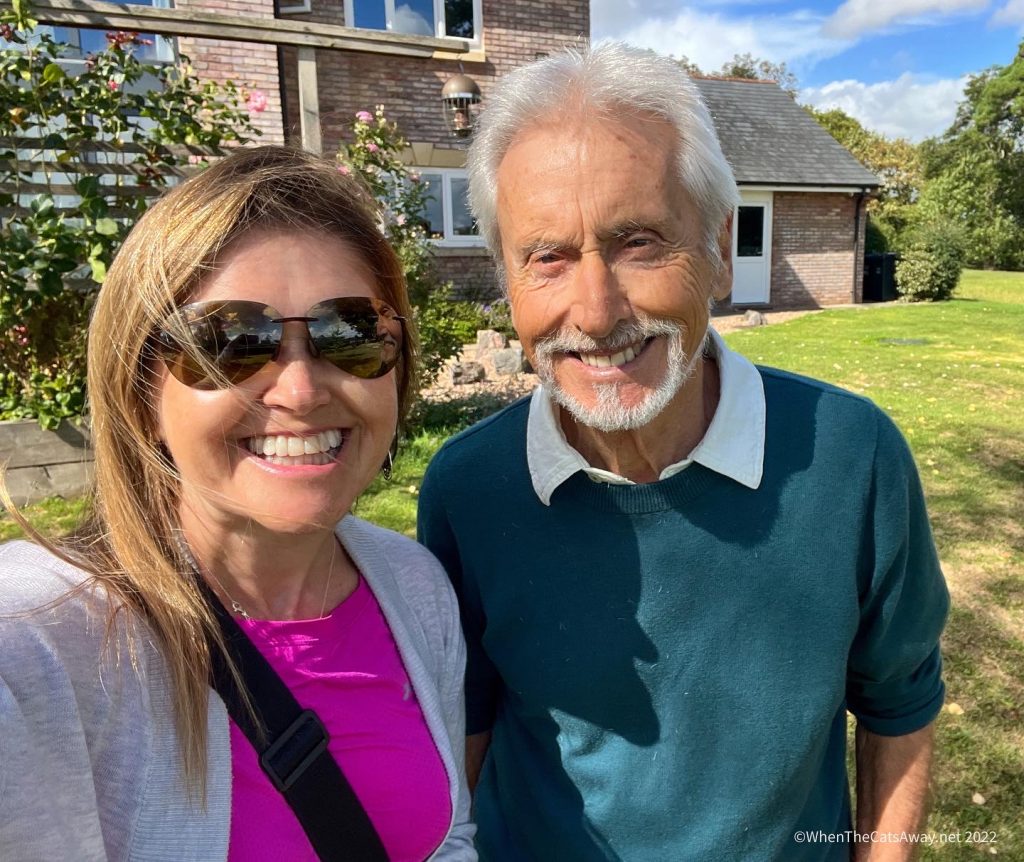
Omokaroa was our first port of call, and a restful few days with my dad, Richard and his wife, Sue. They have had a tumultuous few months with both of them not in the best of health, Sue with bad back pain, and Richard having multiple surgeries, the latest of which had been the day before our arrival. It was great to be able to help them out with shopping, meal making and gardening duties in between getting out and about and enjoying their stunning location.
Dad and Sue’s house (in the background) borders a wetland reserve and golf course
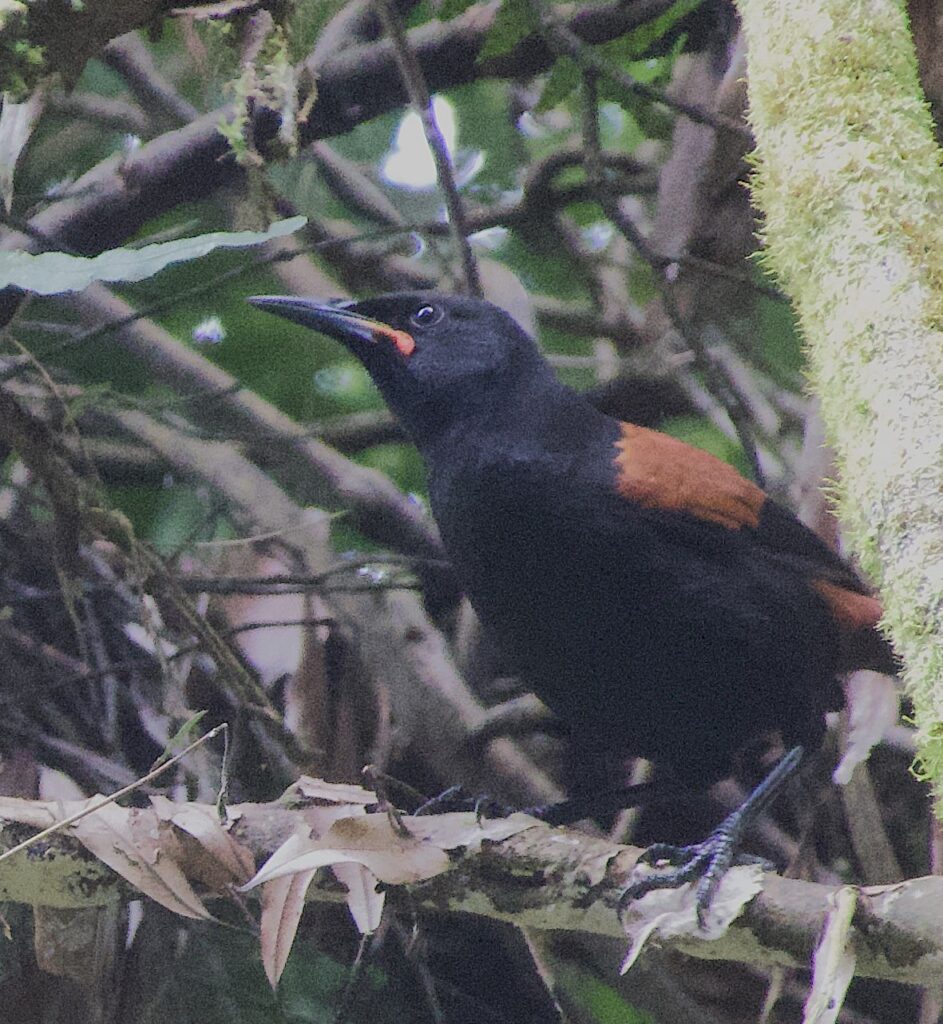
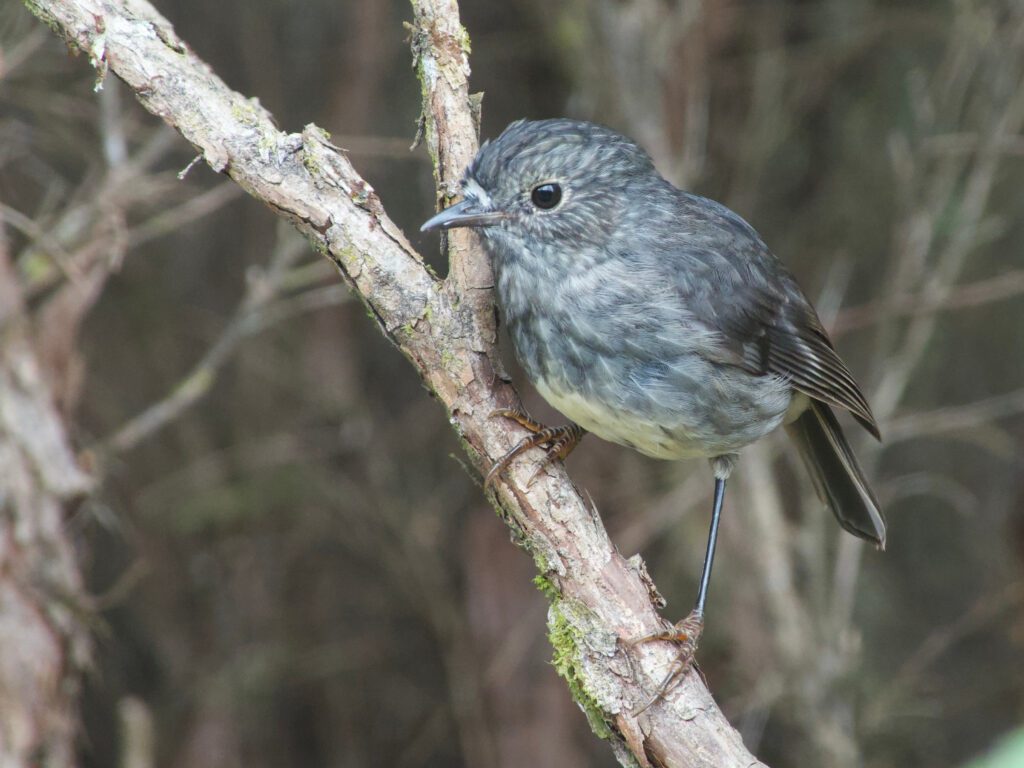
We did some very warm walks, one of which we had done about 8 years ago, but since then there had been some wild weather resulting in trees down and some pathway erosion, making it more of an assult course than previously! We were lucky to see quite a few North Island Black Robins which are endangered, but being encouraged back with many rat, stoat and weasel traps throughout the bush to rid the area of the most harmful introduced pests.
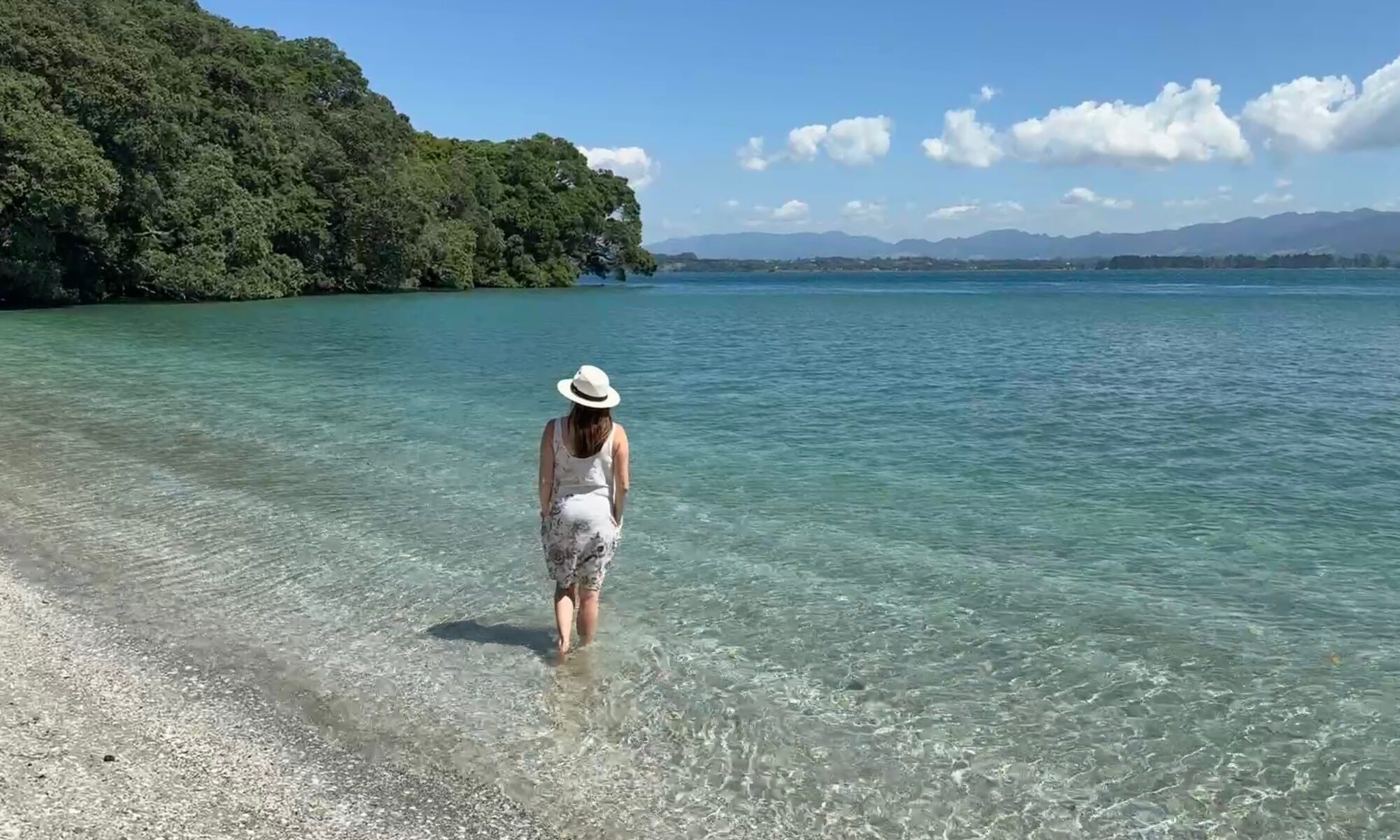
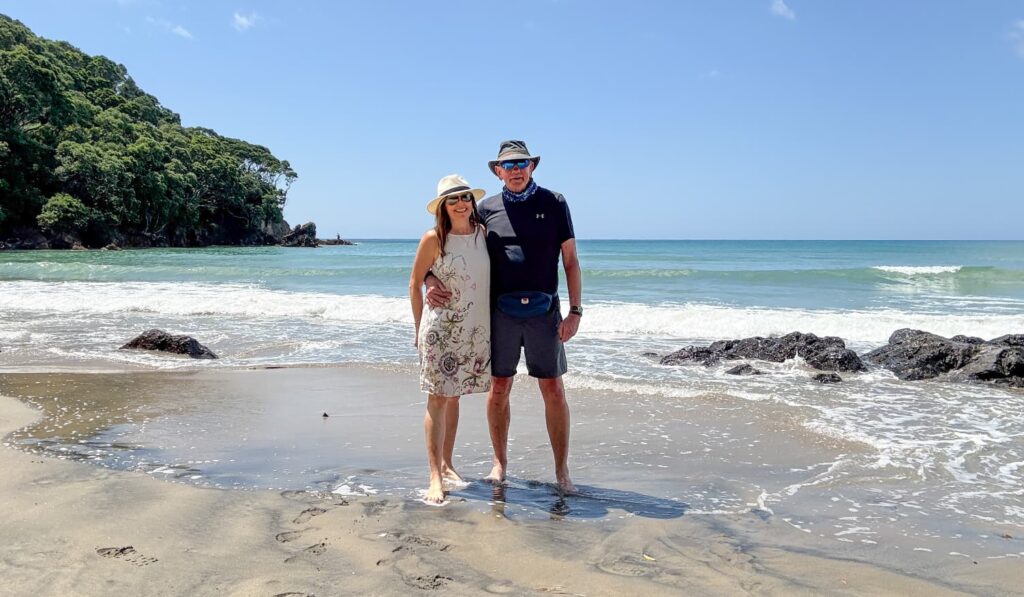
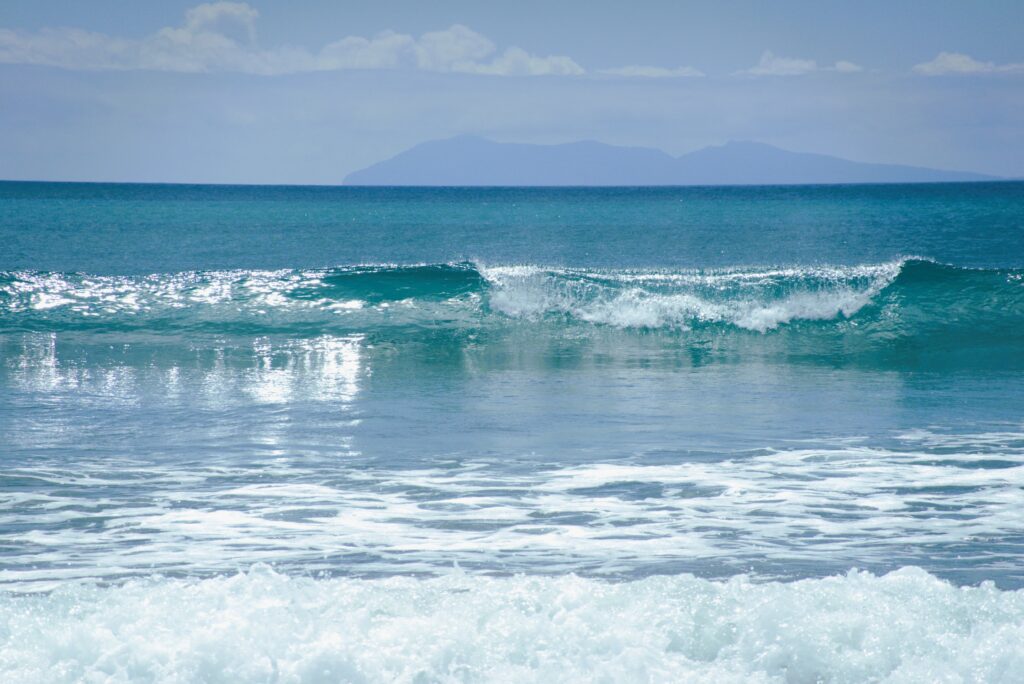
Relief from the scorching sun under the canopy of tree-fernsA very friendly and curious North Island Robin joined us through the forest walkAnother day we visited Waihi Beach near where Dad and Sue used to live – endless white sand and turquoise watersA wave breaks with an outlook on Mayor Island/TuhuaMark and I walked over to Shelley Beach near Bowentown, an old favourite haunt – the water was really warm, and it was here we had our first New Zealand swim of the trip
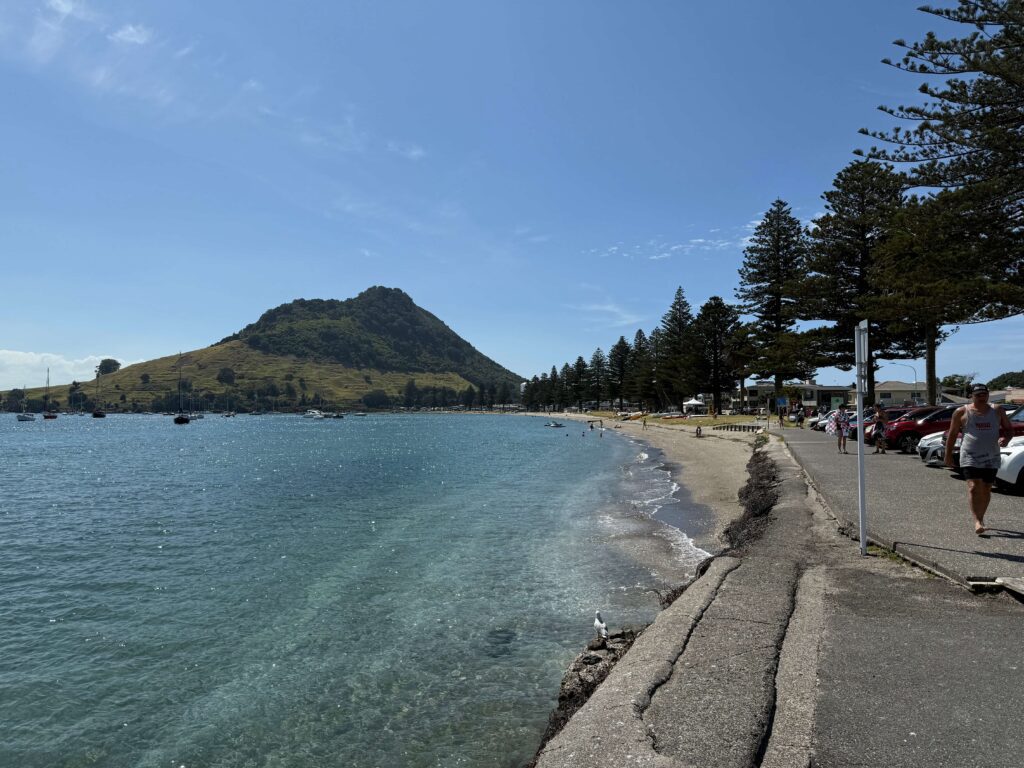
Our time rushed by, and before long we were travelling down to Tauranga to stay a night with our friend Owen’s sister Kay, and brother-in-law Frank, at the airport. It’s certainly a unique place to live, and after a superb lunch in nearby Mount Maunganui, we had a lovely afternoon enjoying the spectacle of planes arriving and leaving.
The view out to Mount Maunganui from our lunch spot
The following day, Owen, Mark and I left in our hire car heading to spectacular Lake Taupo. The weather was warm and sunny, and we arrived just in time to head out on the lake with Owen’s other sister Vicki, and brother-in-law, David, on their boat. Just stunning scenery.
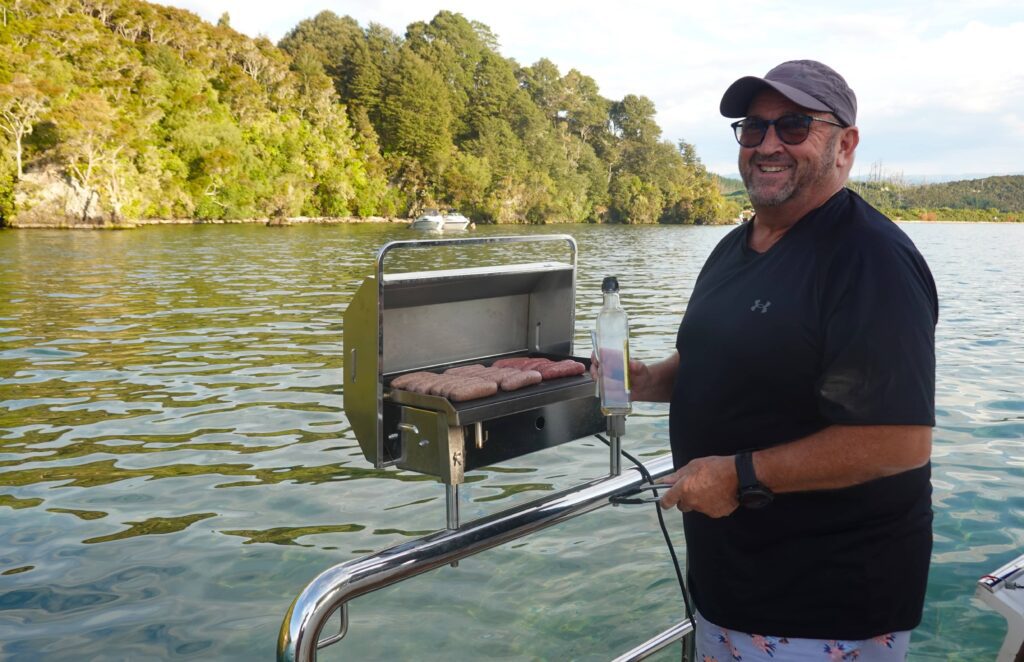
Owen took on chef duties for our BBQVicki, and Owen admire the sunset, while David admires Vicki
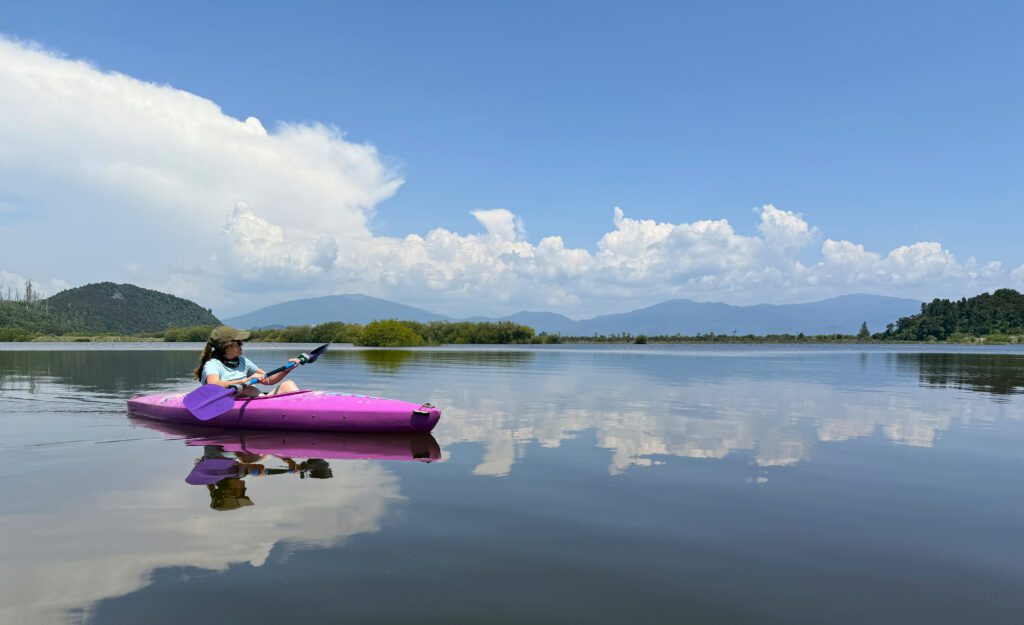
Our time there was just fabulous. Great company, mealtimes full of delicious food, wine and laughter, and more time on the water. Mr A and I went out kayaking, finding the shallow and bird-filled waters hidden behind Motuoapa Bay.
My boat was not ideal for sneaking up on birds…!Mirror perfect conditions
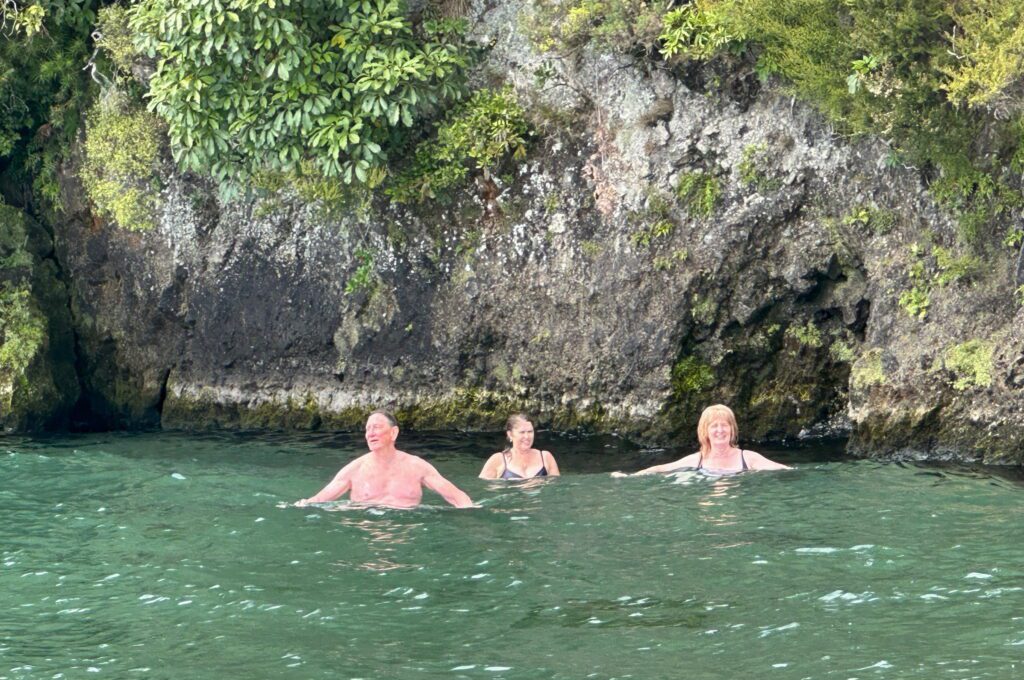
Our friends Jenny and David drove over from their home in Stratford to join us, generously also put up by Vicki and David, and joined us on another boat trip on the lake. The conditions were perfect and David and Vicki took us to where the hot springs fed into the lake warming the sand and water perfectly.
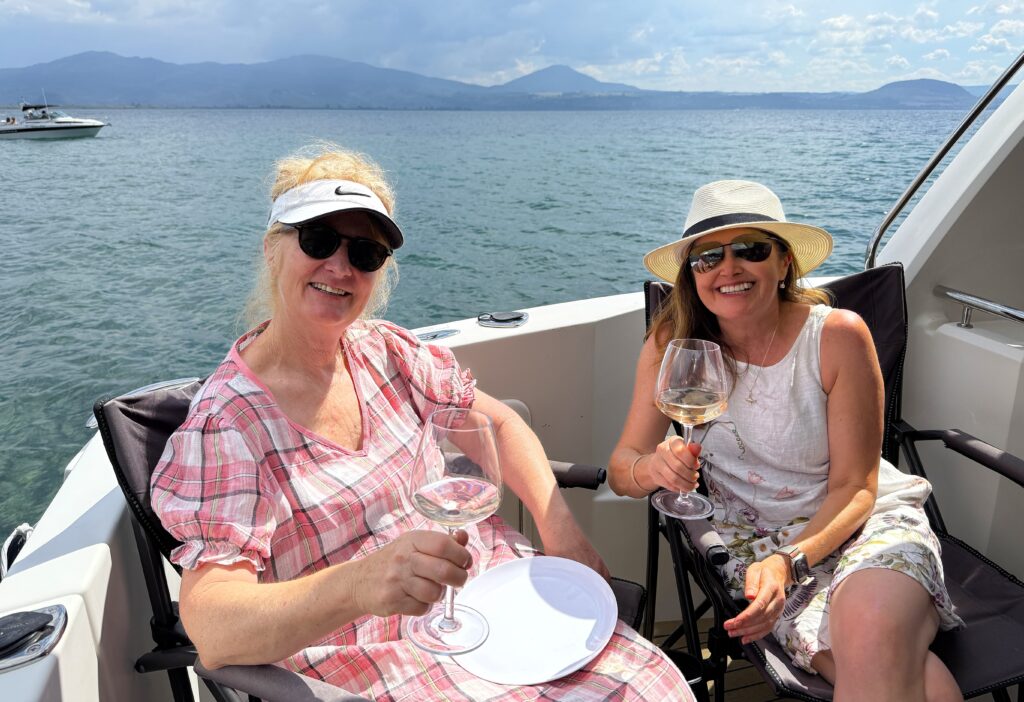
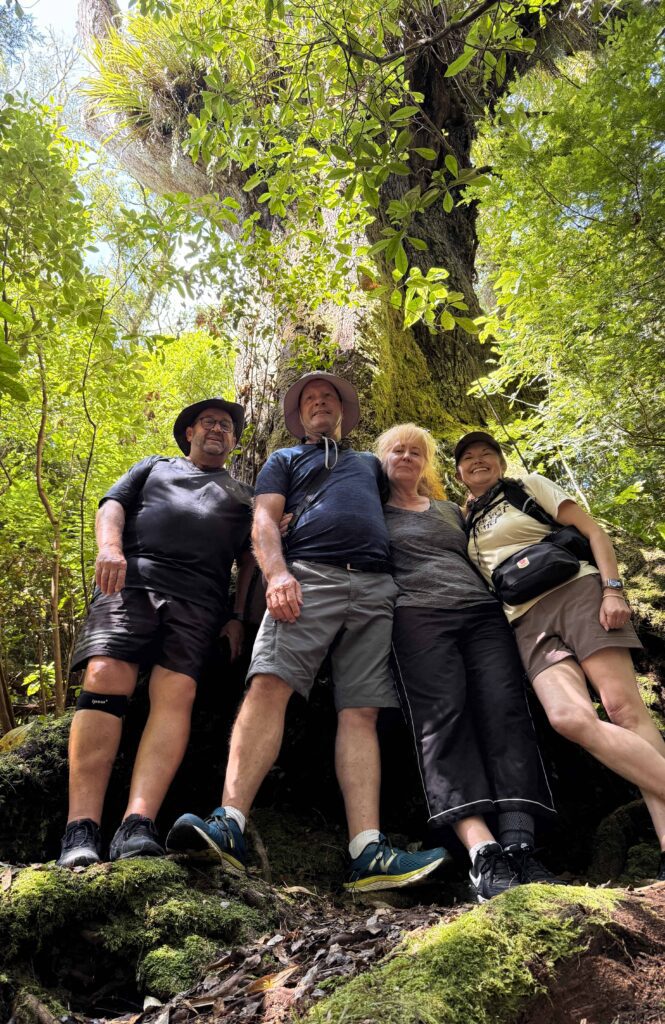
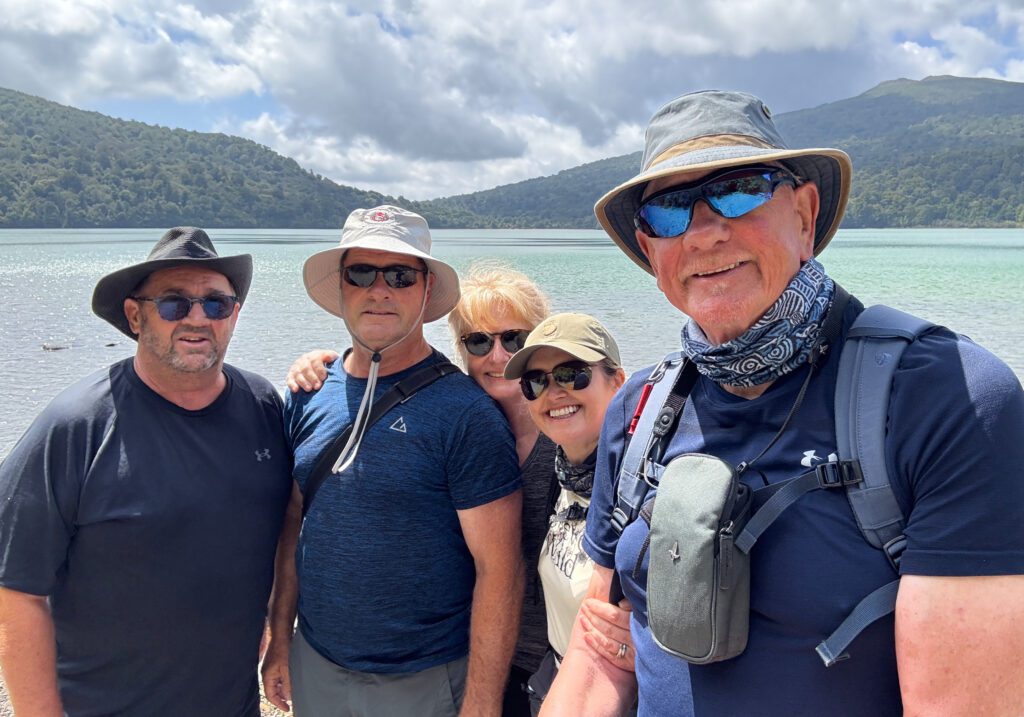
Can’t beat a glass of NZ white to accompany a sunny afternoon on the lakeEnjoying the warm waterAside from eating, drinking and being general lushes, we did a lovely hike around Lake RotopounamuTeam photo on the lake
Time flies when you’re having fun, and it was not long before we were hugging Vicki, David and Owen farewell, and joining Jenny and David for a winding drive along rainforest lined roads on the way to Stratford on the western side of the North Island.
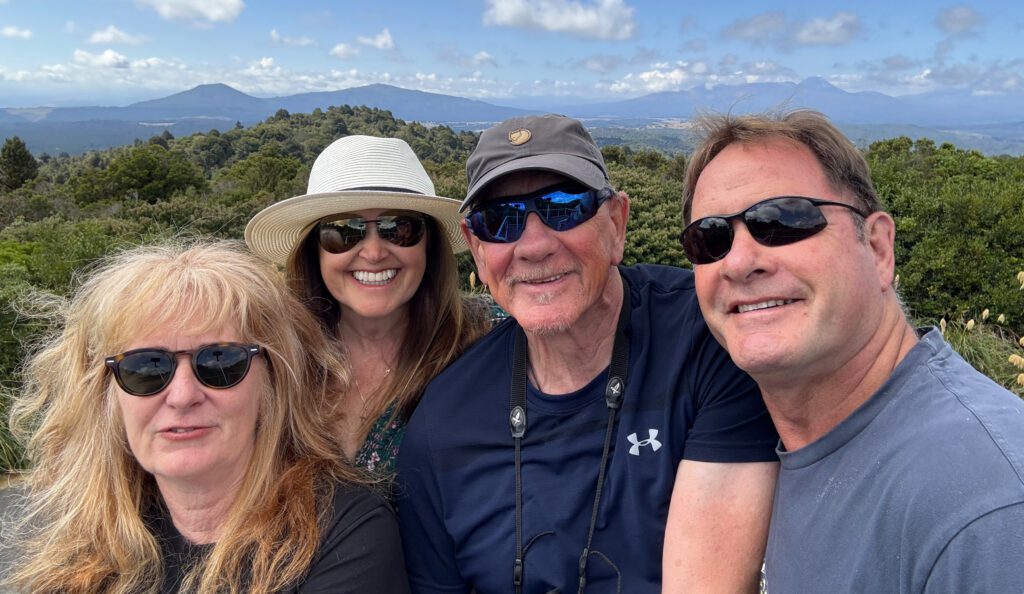
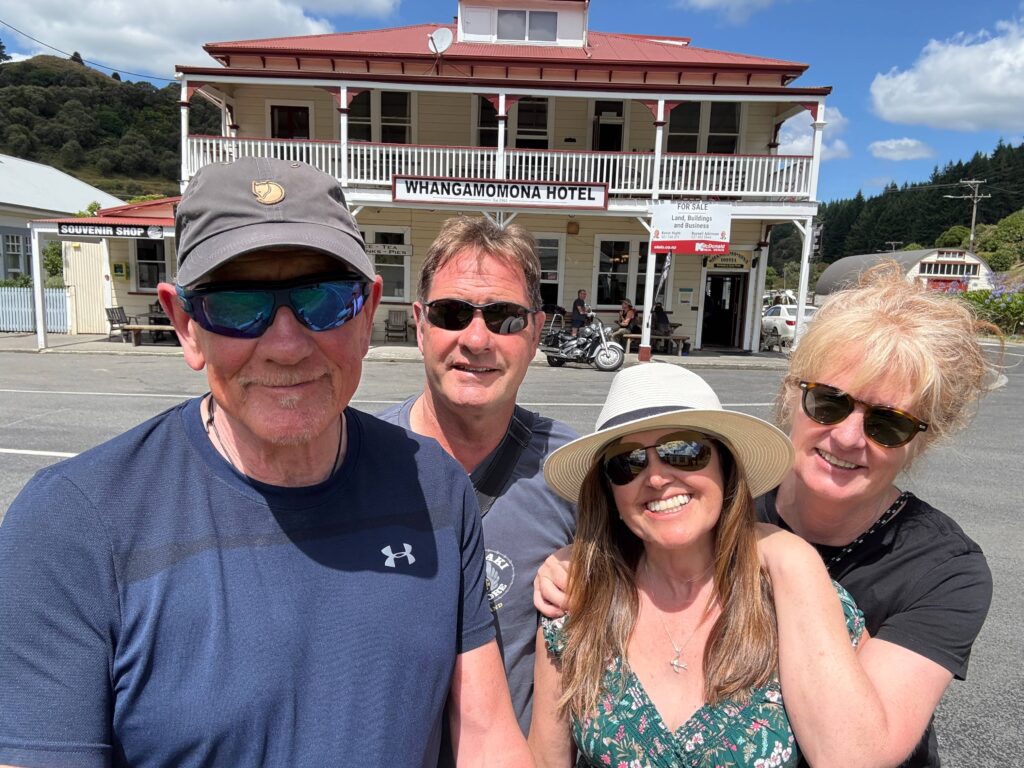
A viewpoint looking out over Ruapehu, Ngauruhoe and TongariroOur journey took us along the scenic and winding Forgotten World Highway (State Highway 43) which followed the Tangarakau River for much of its journeyLunch was at the remote Whangamomona Hotel. Frustrated with local councils, residents declared it ‘The Republic of Whangamōmona’ in 1989, and held their own presidential elections. The famous Republic Day is held biennially in January, Passports can be purchased at the Hotel to ensure safe passage through the Republic…we stuck to burgers and chips!
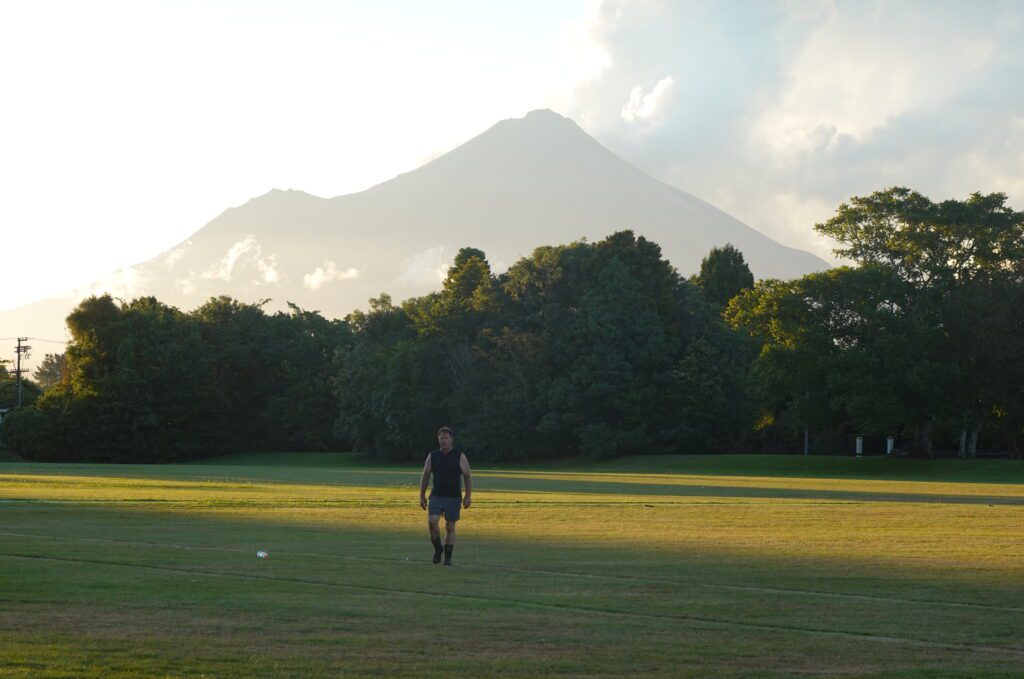
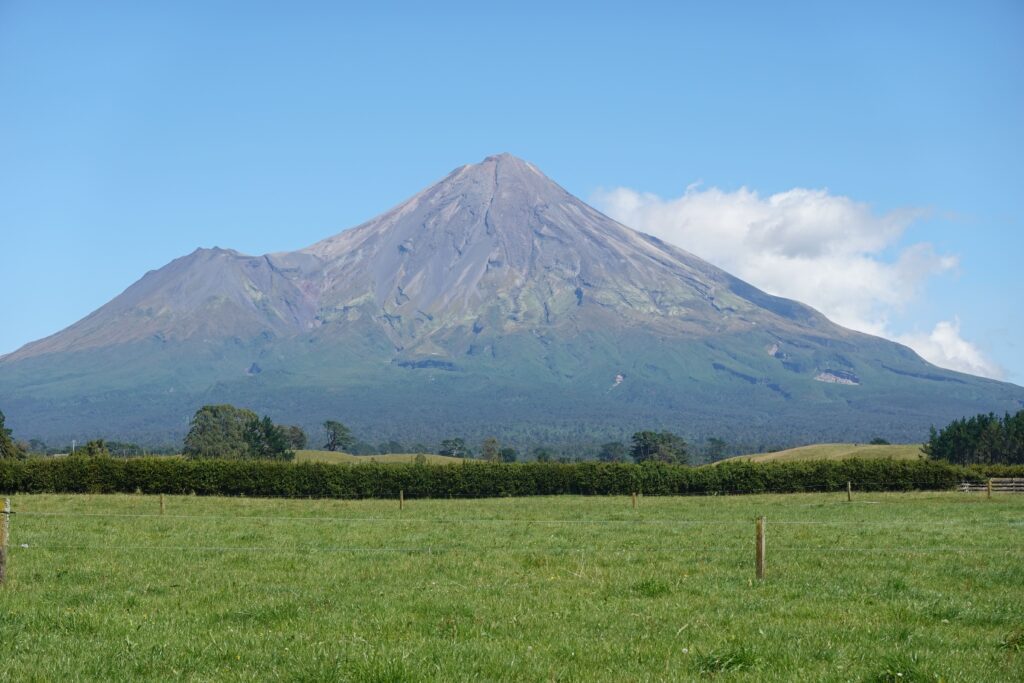
Jenny and David have a beautiful home in Stratford, tastefully renovated and decorated, and hosting some stunning art and photography from their collection. Initially we had to trust Jenny’s insistance that there was a huge volcano overlooking the small town – there was nothing to see but clouds. But as the sun set, the cloud lifted, giving us our first glimpse of Mount Taranaki, or ‘The Naki’ to the locals.
David crosses the playing fields across from their home as the clouds drift away from Taranaki
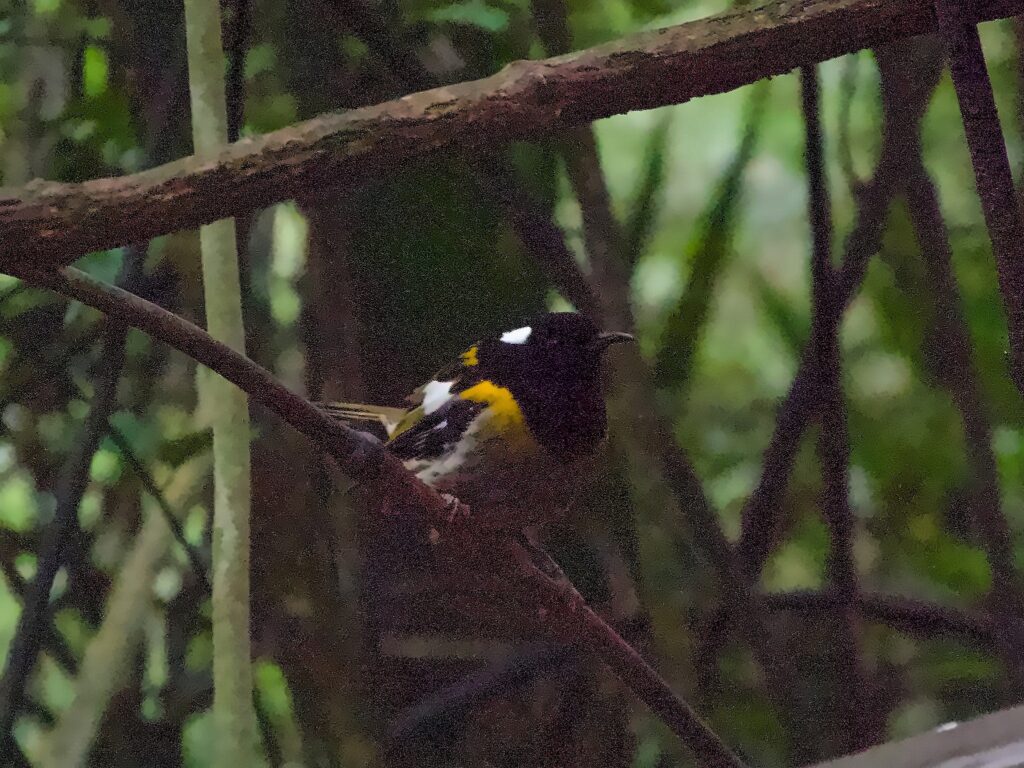
The next day Jenny took us to Rotokare Scenic Reserve, a predator-free sanctuary where 230 hectares of native bushland are protected from preditors. We saw so many birds which are endangered and rarely seen outside these fences.
A rest point along our circuit hike, over looking Rotokare LakeA saddleback (tīeke)North Island robins (toutouwai) were plentiful and always posing for a photoA stitchbird (hihi) – they’re pretty hard to see in the darkness of the undergrowth and like to feed on nectar
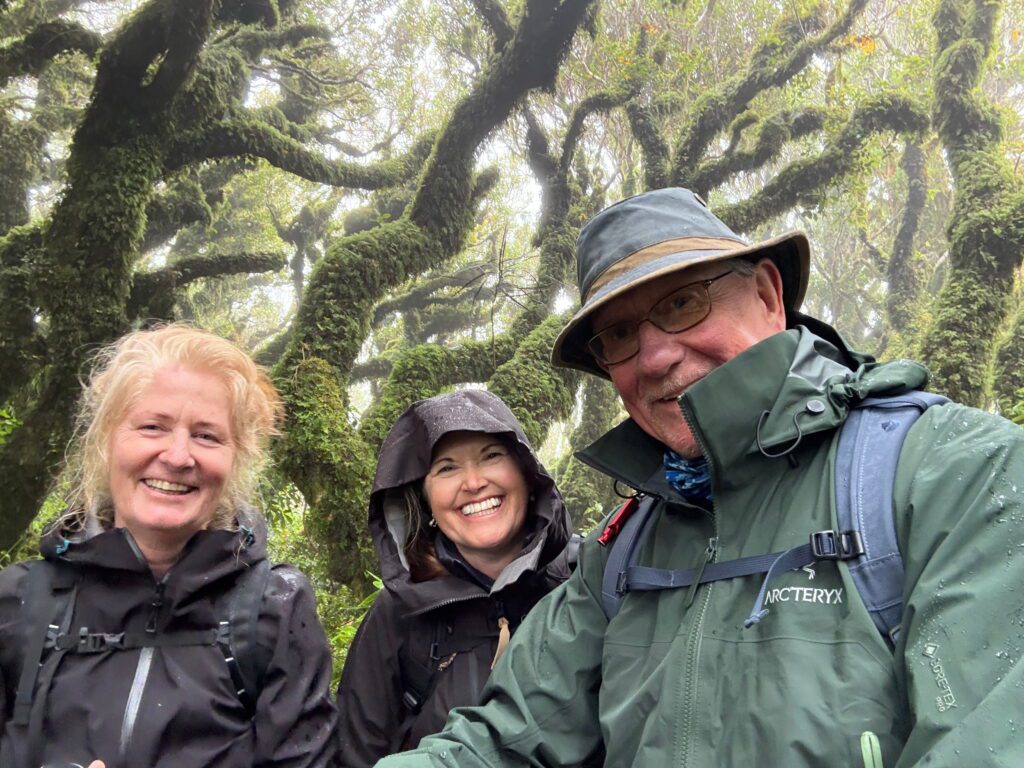
The mountain was our destination for our third day – after a brief visit to a possum fur and marino wool products factory, it was off to commence a hike up. It was a misty and drizzly morning, and while the views were not rewarding on this occasion, we certainly achieved a good training hike for our South-Island adventures to come.
The bushland is rich in plant life, the misty moisture a perfect ecosystem for mosses and fernsEndless steps up the volcanoNot quite the rewarding views we were seeking…but atmospheric all the same
The next day was perfectly clear, and Jenny made sure we took advantage of the day to see the volcano and its amazing views from all angles.
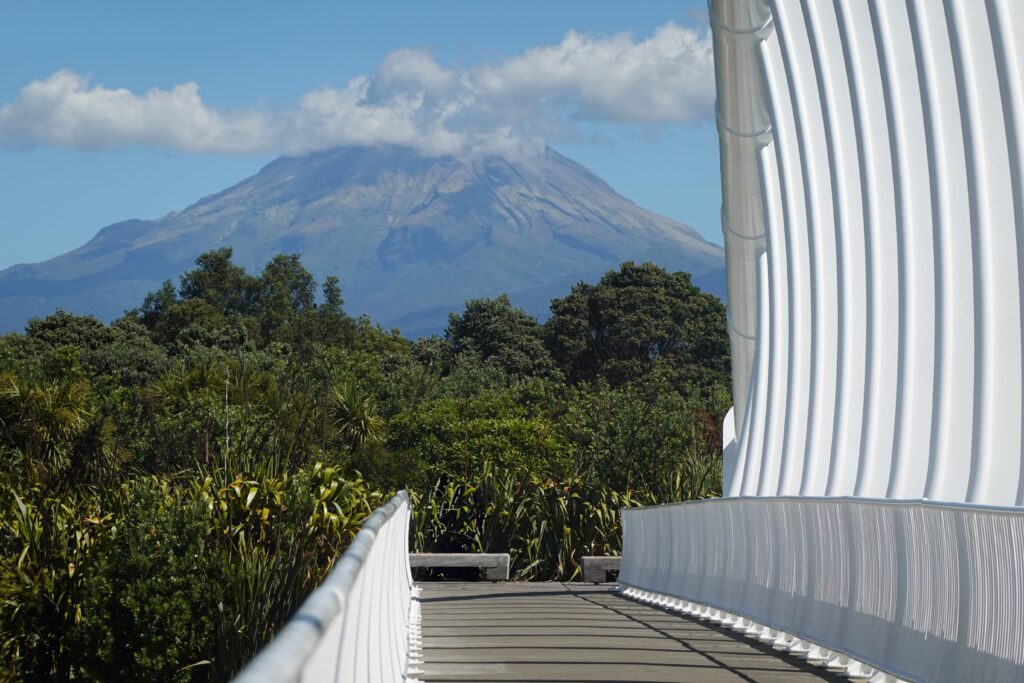
Considered active, Taranaki will one day erupt again. It erupts every 150 years on average – it has been 160 years since the last one…We can see for many miles from the lookout on TaranakiMount Taranaki once again shows itself as we cross the Te Rewa Rewa Bridge on the New Plymouth coastal walkway
It was a moonlit start to our final morning, as we departed at 4:30am to drive to the airport at New Plymouth.
From there Mark, Jenny, David and I took off at sunrise, and were treated to the most fabulous views of Mount Taranaki as the plane circumnavigated the vocano before heading due south towards Queenstown, and our next adventures!
We have recently hit the three year anniversary since our departure from Australia, and mentally we felt ready to go back for a visit to see our friends and family down under.
Leaving Somerset on a crisp, blue sky, winter’s morning in mid-January, we wondered what might await us in Sydney on our arrival. We both had nerves about how our heart-strings might be tugged, would we really miss our old life, and wish we were back there?
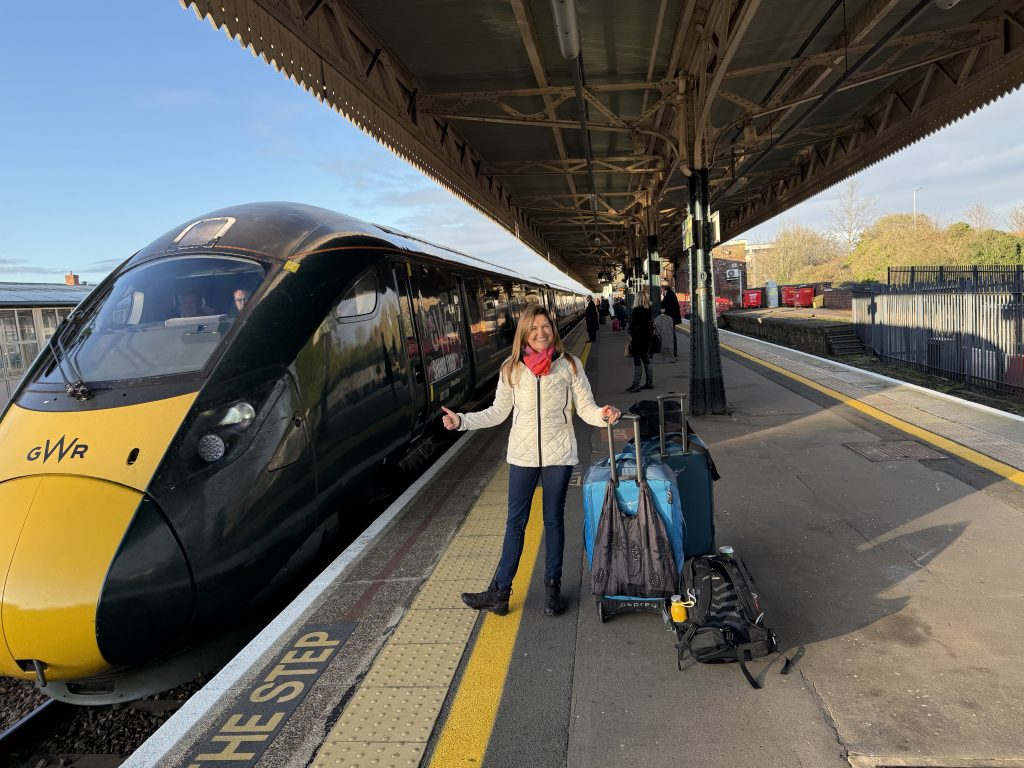
Boarding the ‘Shania Train’ (yes, really!) to head to Heathrow from Taunton
We had chosen to fly Business Class via Japan Airlines, substantially cheaper than the likes of Singapore Airlines, Emirates, BA or Qantas, and fabulous Japanese food too. Our journey was very comfortable with our own private ‘rooms’ on board the plane, and a luxurious seat that lay flat for a stretch out and sleep.
Cheers!
It was 14 hours to Tokyo, a stroll around the airport, and a further 9 hours to Sydney, arriving relatively refreshed to train driver strikes and the end of a severe storm which had unleashed heavy rain, strong winds, flash flooding and giant hailstones! Welcome back to to Oz!
Mad weather in Sydney! Luckily we had waterproofs easily accessible.
But as we always used to say when we visited the UK, we were not there for the weather, but for the people, and that certainly was true on this visit.
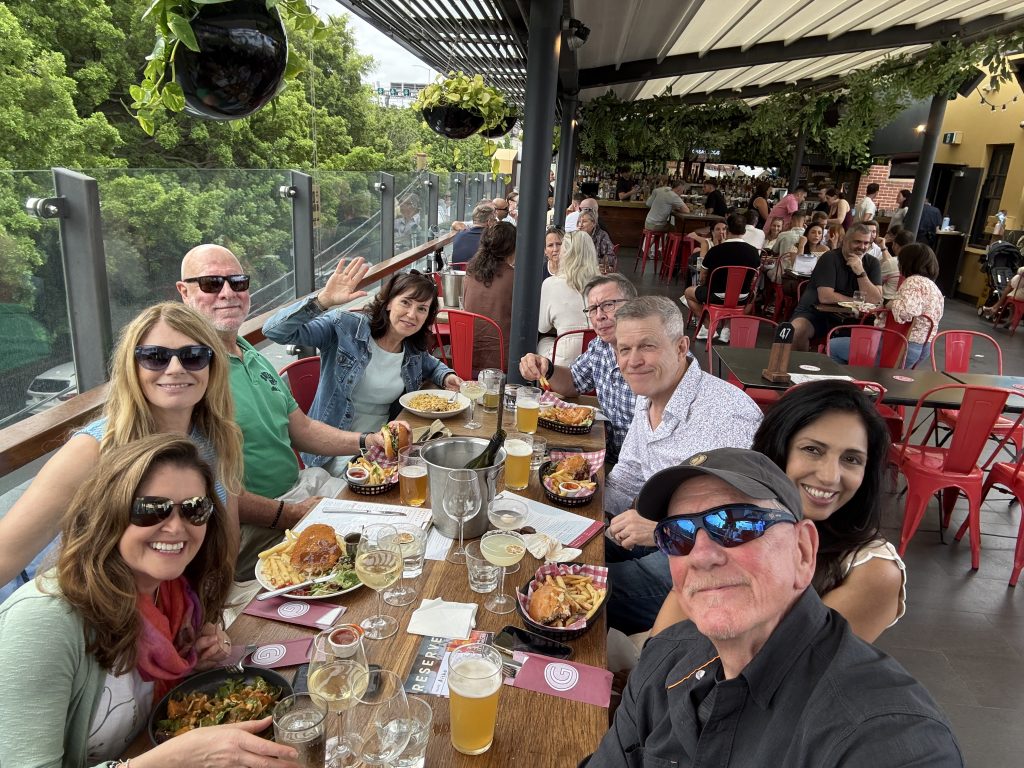
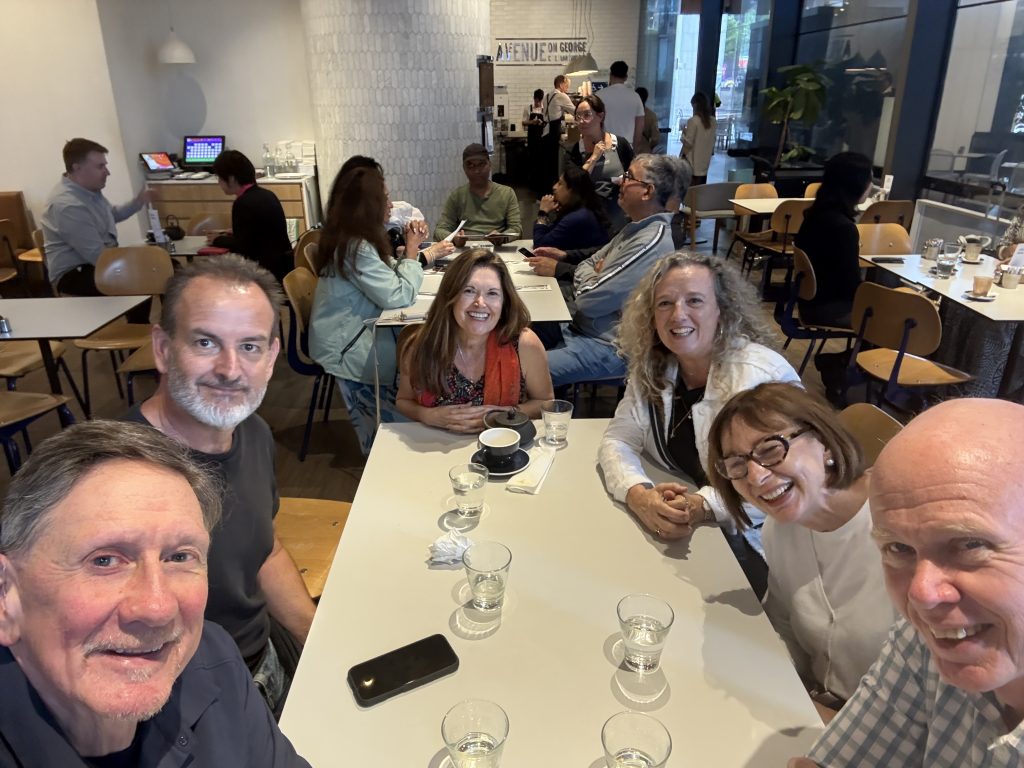
Our time in Sydney flew by, packed to the rafters with catch-ups over breakfast, lunches and dinners, with fun and laughter bridging the gap since our last time together. For many of our friends, it wasn’t too long, with catchups in the UK and Europe, but for those we hadn’t seen since Covid-times and beyond, it still felt like only yesterday. The mark of true friendships.
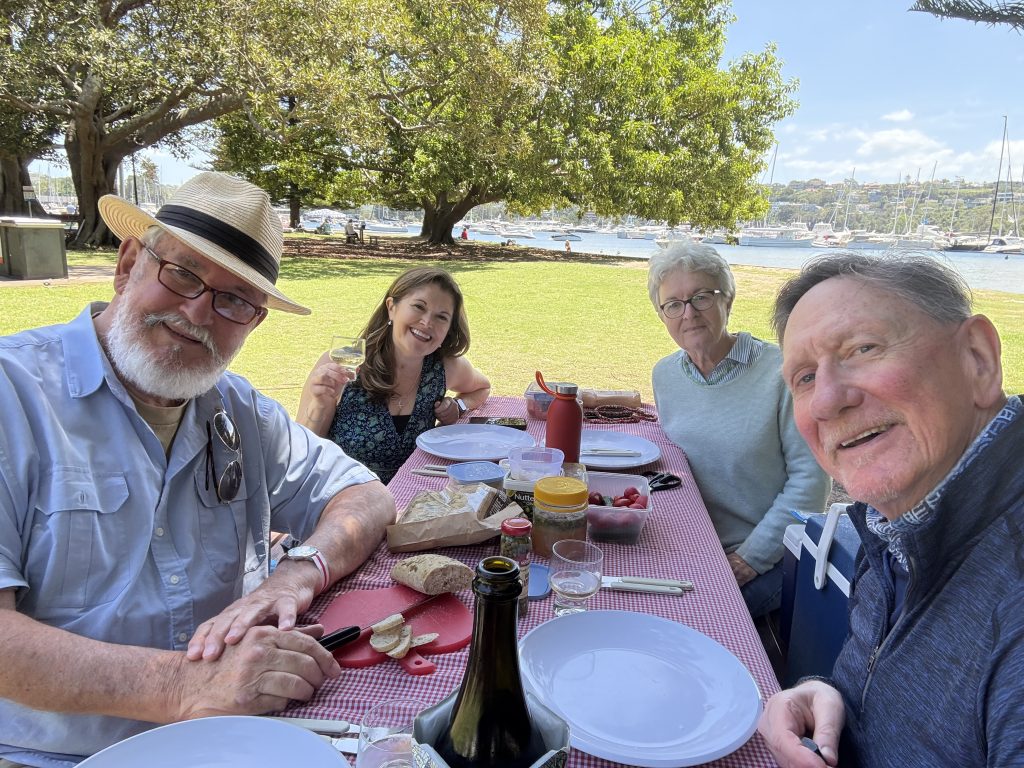
A Sunday afternoon session with oh so many laughsA breakfast catch up with friends from right across the stateRichard and Rosemary – the king and queen of picnics brought us a feast to shareFriends Diane and Mark from Victoria drove up to spend a day with usAnd we caught up with Trish, a neighbour from Somerset who was in Sydney at the same time
It was a whirlwind of 9 days in Sydney, and then we jumped on another plane to fly to Melbourne for a few days break with our friend Owen on the Mornington Peninsular.
Owen met us at the airport, patiently waiting while my luggage frustratingly flew in on a later flight, then took us to the market so we could eat our weight in seafood! Oh how we have missed those Sydney Rock oysters!
There followed five days of fun and laughter, as a couple more friends, Karen and Chris, joined in, and Owen’s son, Tom, also visited.
Welcome dinner and drinks at St Andrew’s Beach Brewery, where Mark and Chris tried the Imperial Stout – at 12.40% it was like a very large glass of wine without the grapes!
We managed to get in some walking too, an attempt to counteract the excesses of the previous few days.
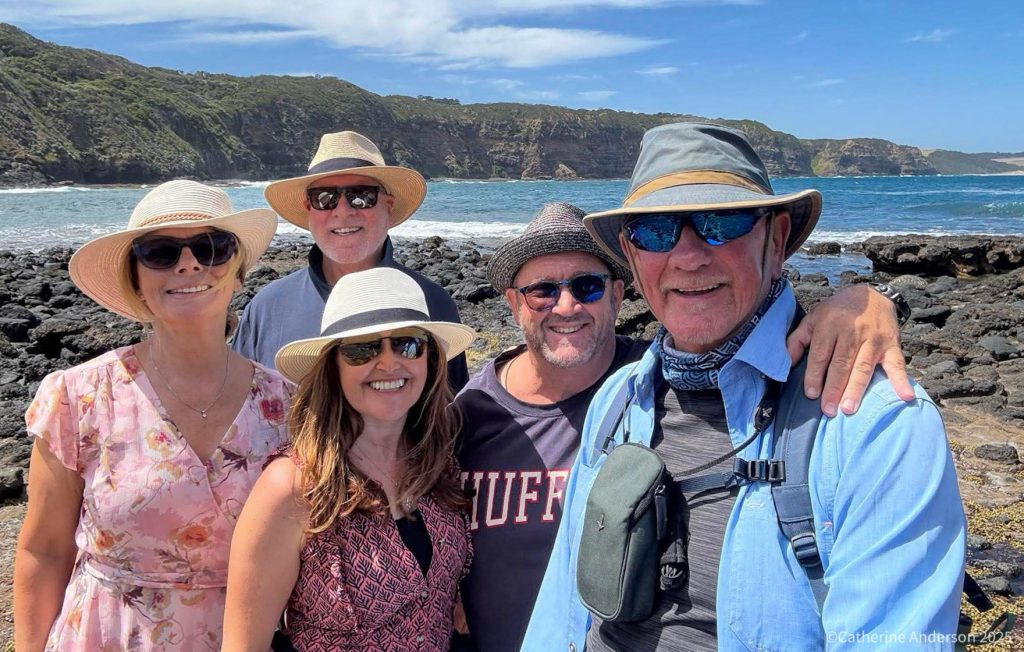
Owen, our guide and host for a few daysA picnic at Cape Schanck (or Schnack as Karen says!) lighthouseCape Schanck LighthouseLooking out into the Bass Strait – next stop TasmaniaA White-faced Heron glides pastTeam photo on the beach – Karen, Chris, me, Owen and Mr A
It was a few days of delicious food and wine, and great company, and we were able to see more of the Mornington Peninsular than we had in the past.
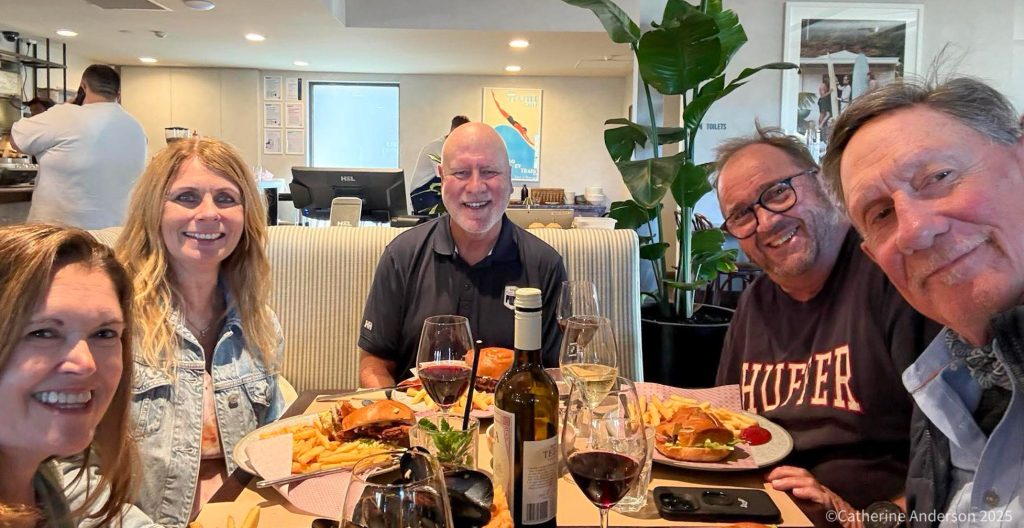
Pub dinner
After Chris and Karen had left, Owen took us to the very tip of the peninsular to Pont Nepean, well worth a visit. It’s one of those rare spots where jaw-dropping natural beauty and fascinating history collide. Perched at the very tip of the peninsula, this rugged stretch of coastline once served as a key defence post and quarantine station, and you can still explore the old tunnels, forts, and gun emplacements that once guarded the entrance to Port Phillip Bay.
Long before the military involvement, it was home to the Boon Wurrung people, and there are important cultural sites scattered throughout the area. These days, Point Nepean is part of a national park, and it’s a dream for hikers, history buffs, and anyone who just wants to soak up some salty sea air and incredible views. Think windswept cliffs (very windy on our visit!), turquoise waters, and a real sense of stepping back in time.
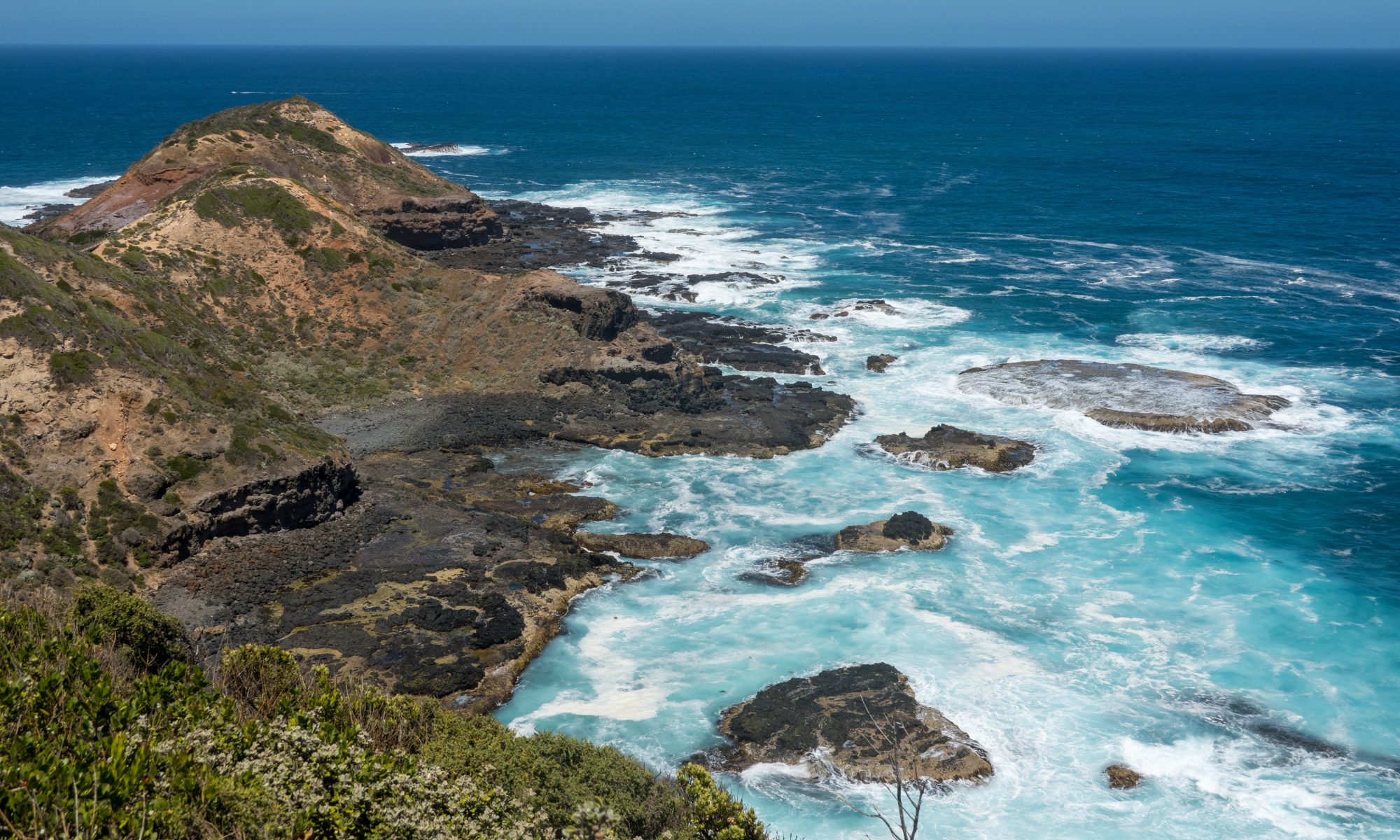
A bit of coast walking – check out the colour of the water!One of the many military tunnels we exploredThese weathered timber piles are all that remains of the historical jetty, which in the late 1800s was the jumping off point for livestock which were processed at this quarantine station to negate risking the spread of disease to the mainland. Our second Echidna of the visit – notice their backward facing rear claws, which help them with digging and cleaning. Did you know echidnas lay eggs rather than live young? Interesting creatures…
On our final day, Owen took us on a short drive up the coast to to do a bit of a coastal hike. It started off bright and sunny but soon clouded over, but remained a comfortable walking temperature.
Threatening skies off the coast thankfully stayed out at seaOwen looking along the wild coast – not ideal swimming conditions here!Mr A and OwenRabbit Rock? That’s what we called it, anyhow!Sooty Oystercatchers clustered together
It was lovely to smell the familar scents of the Australian coastal bush, spot lizards dashing off into the undergrowth, and birds which made me wish I had brought my big camera with me! But you can’t have everything, and with a two month trip with many destinations involved, it was important to travel fairly light.
Plenty of steps to add to the workoutEasily missed, a Jacky Dragon blends in with the sand particles
It was a lovely relaxing time with Owen and Tom, some delicious food, great music and fine hospitality, but before long it was time to say farewell, and take off for our next destination – New Zealand, and many more walking adventures!
Final delicious Thai meal in Rye
Our flying visit back had definitely tugged at the heartstrings a little, seeing our gorgeous friends, revisiting the fabulous wildlife and scenery, but reminded us that it is never goodbye, always ‘Until the next time‘!
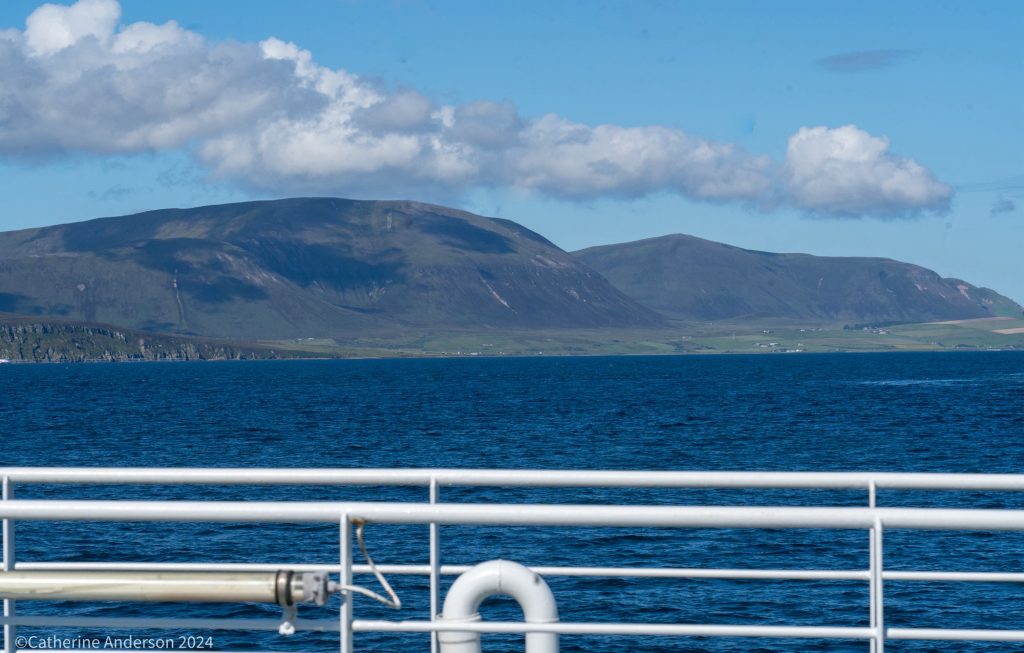
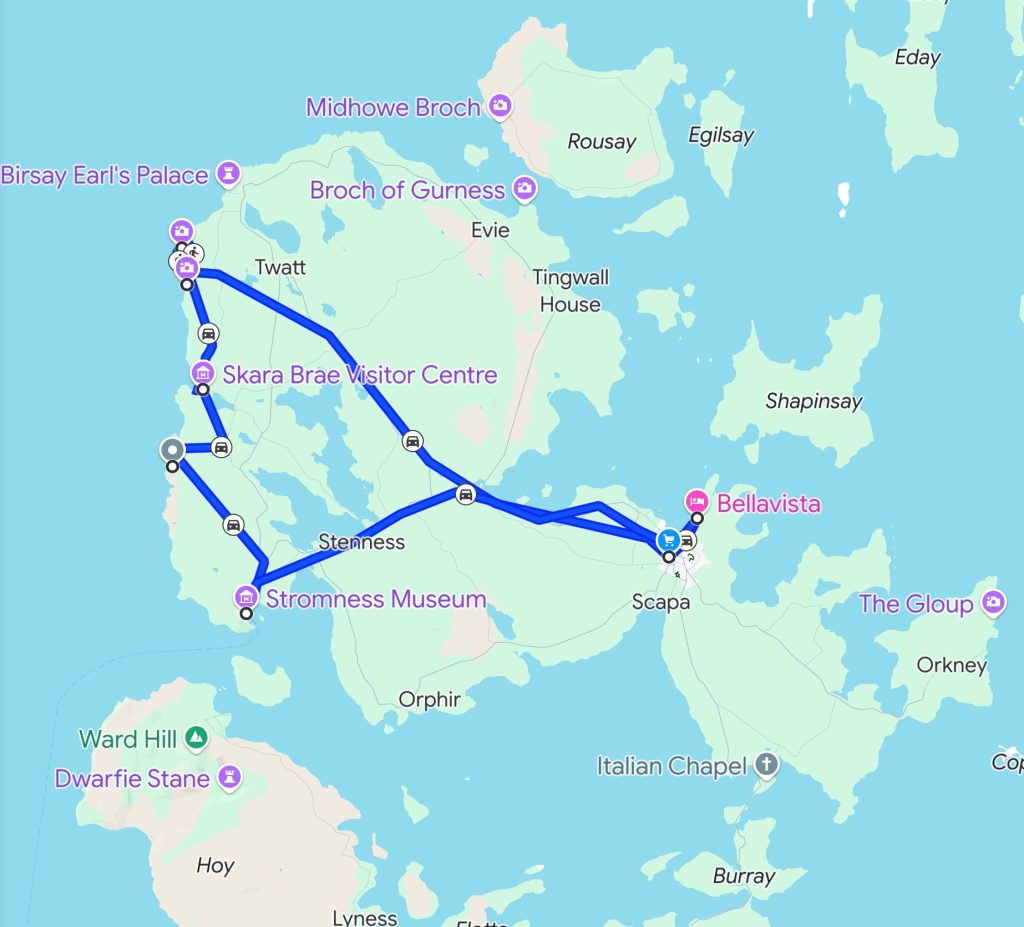
We awoke to a spectacular morning, and a 45 minute drive across Mainland took us to another ferry which took us to the island of Hoy.
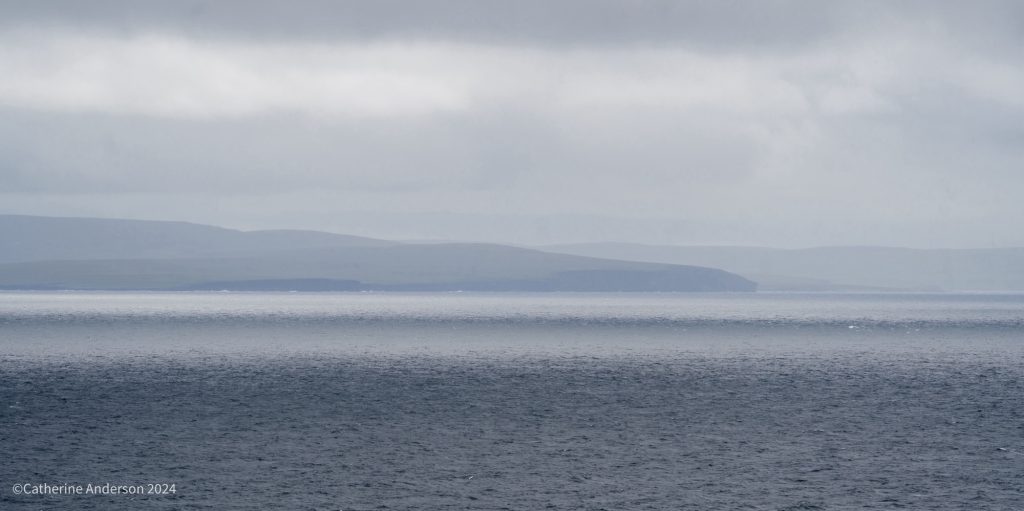
Fine views of hilly Hoy from our ferry crossing
From there we drove west to Randwick Beach where we commenced our walk.
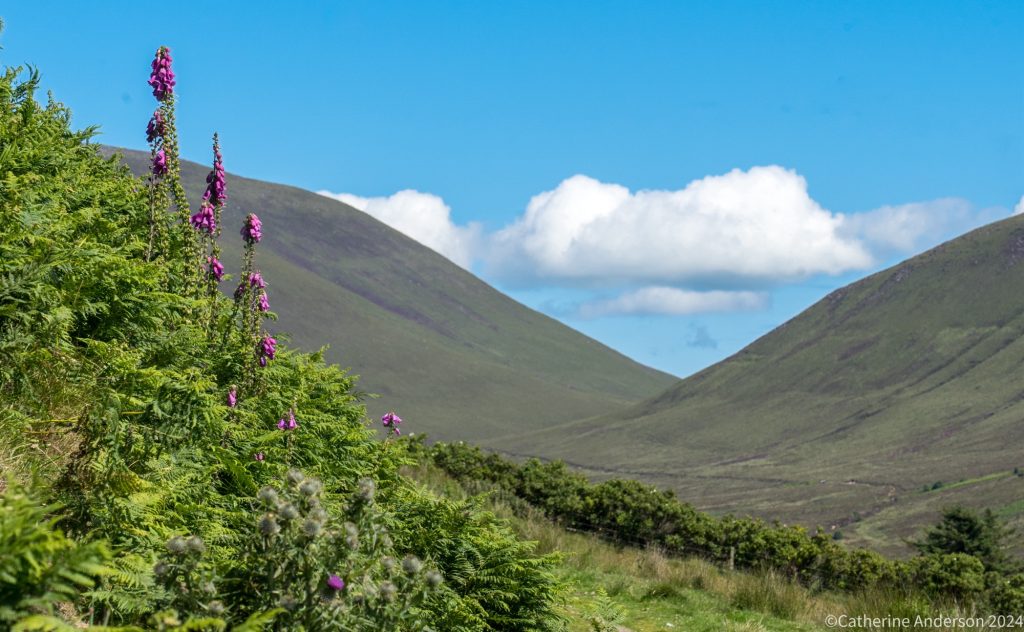
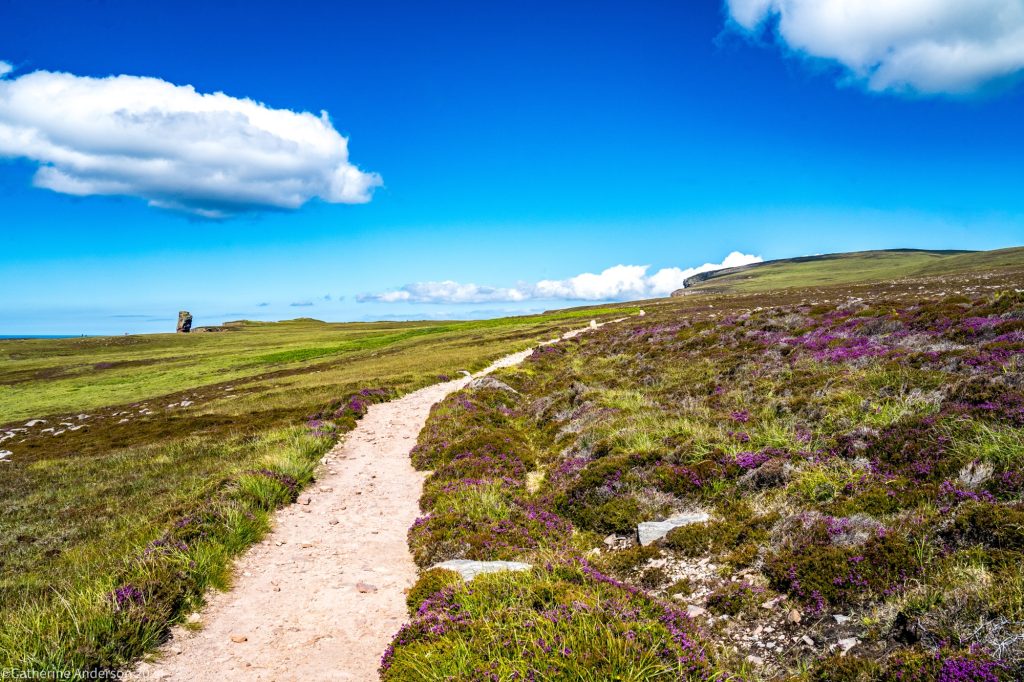
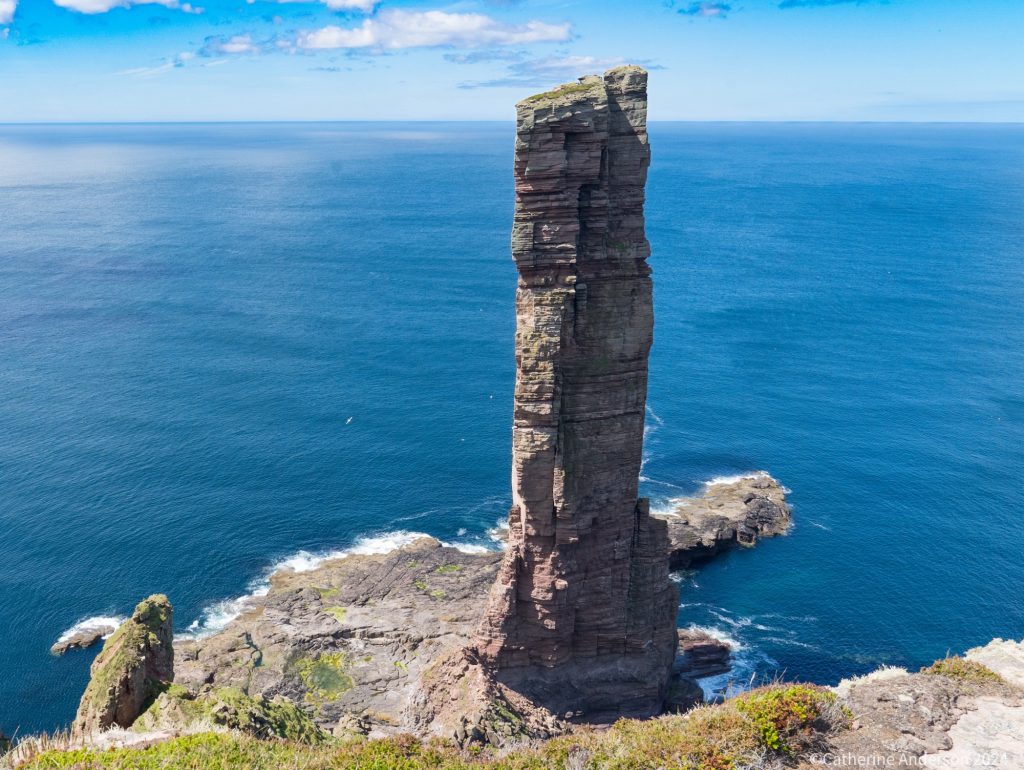
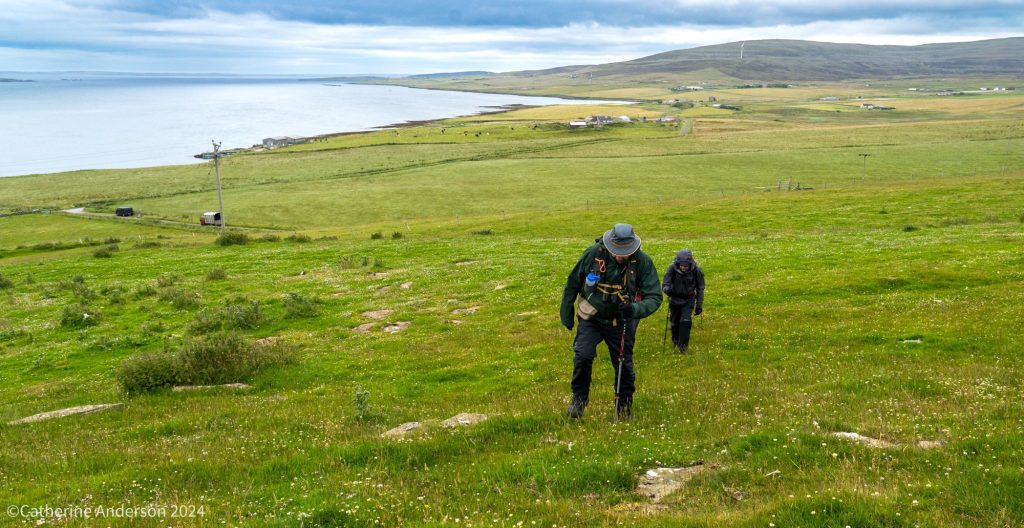
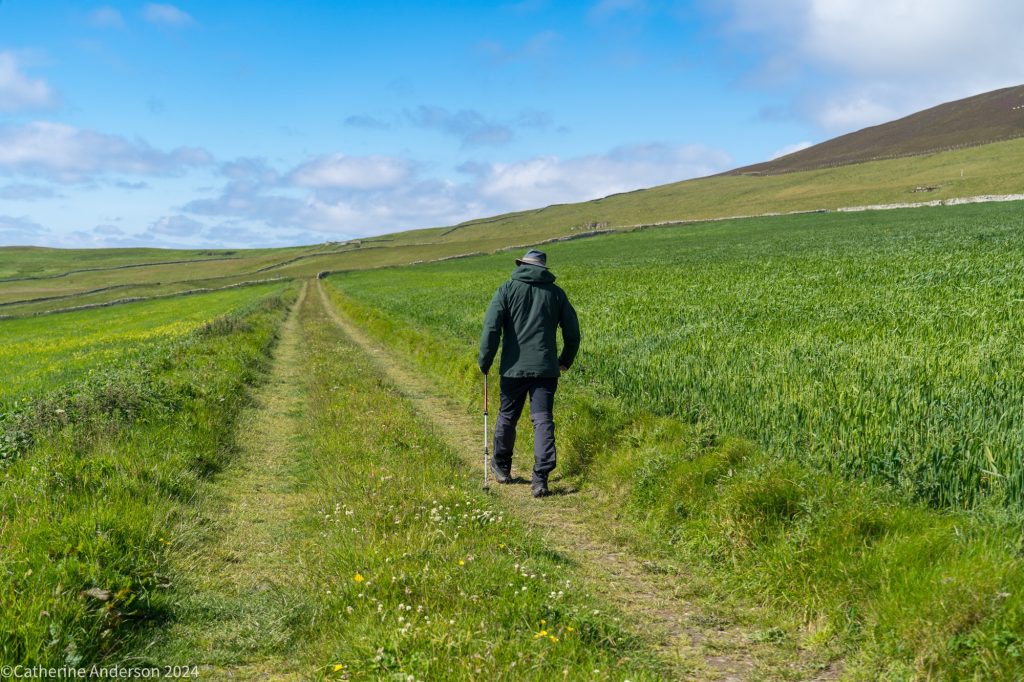
Foxgloves brightening up the multitude of greens as we walk up to the cliff sideThe locals are quite friendly, if not too chattyMr A leading the wayThere is barely any wind, making for a gorgeous July morningI even didn’t bring a coat…but the beanie stays!We can see a glimpse of the ‘Old Man’ on the horizon as our path winds us through the heather The Old Man of Hoy is a 449-foot (137-metre) sea stack on Hoy, part of the Orkneyarchipelago off the north coast of Scotland. Formed from Old Red Sandstone, it is one of the tallest stacks in the United Kingdom. The Old Man is popular with climbers, and was first climbed in 1966. Created by the erosion of a cliff through hydraulic action some time after 1750, the stack is not more than a few hundred years old, but may soon collapse into the sea.
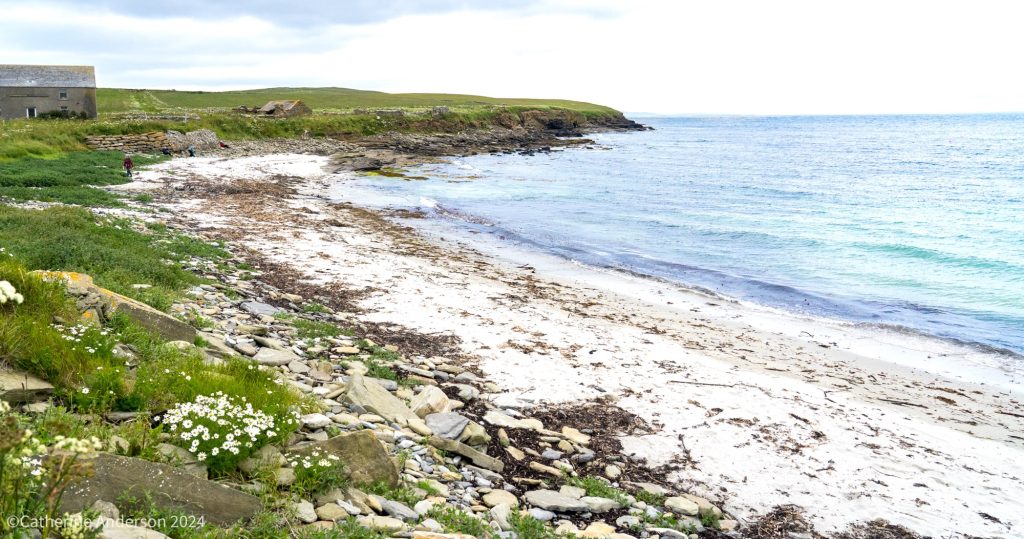
It was a fabulous walk, and gave us a real taste of the islands when the weather is fine. On a day like this, it would be hard to beat the turquoise waters and white sand beaches, pure and litter-free with no crowds. But we know this is a rare treat.
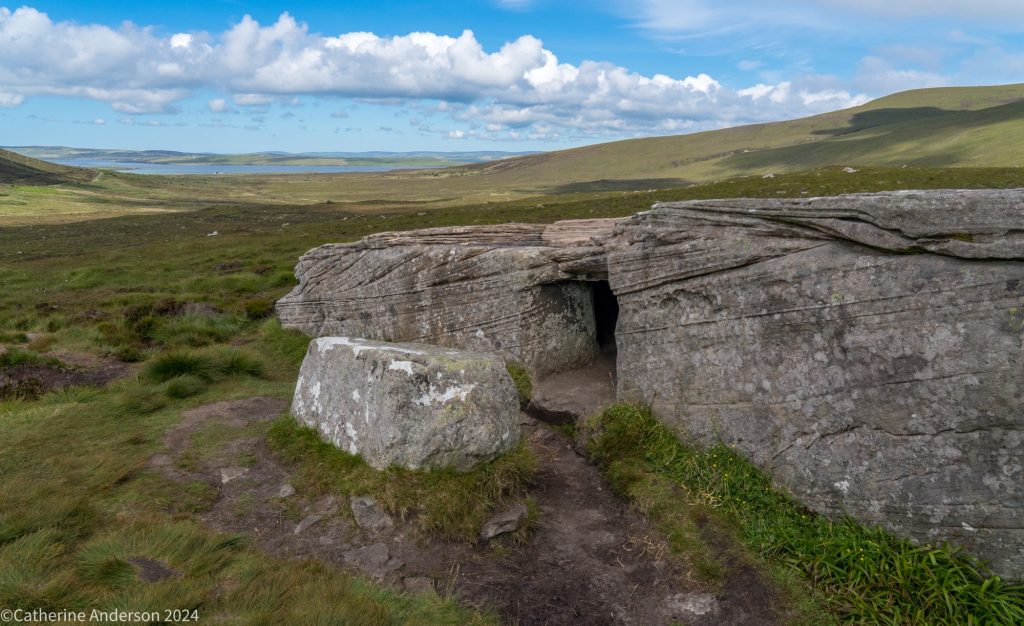
Before we drove back to the ferry, we decided to do a short side walk up to a tomb; Dwarfie Stane. Incredibly it had been carved out of the rock at a time pre-dating metal tools. The stone on the left was used to plug the entrance. Today you can crawl inside for a look, and two of our fellow walkers tested out the acoustics with a song!
Dwarfie Stane – the name arisen from ledgends of dwarfs due to the low access. The tomb dates to between 3500 and 2500 BC and is the only example of an above ground bolder which has been carved out internally in the British Isles
It was a chilly ferry ride back to Mainland, but to avoid sea sickness we remained outside, wrapped up as best as possible against the icy windchill!
Brrr!
10th July – Rain on Main(land)
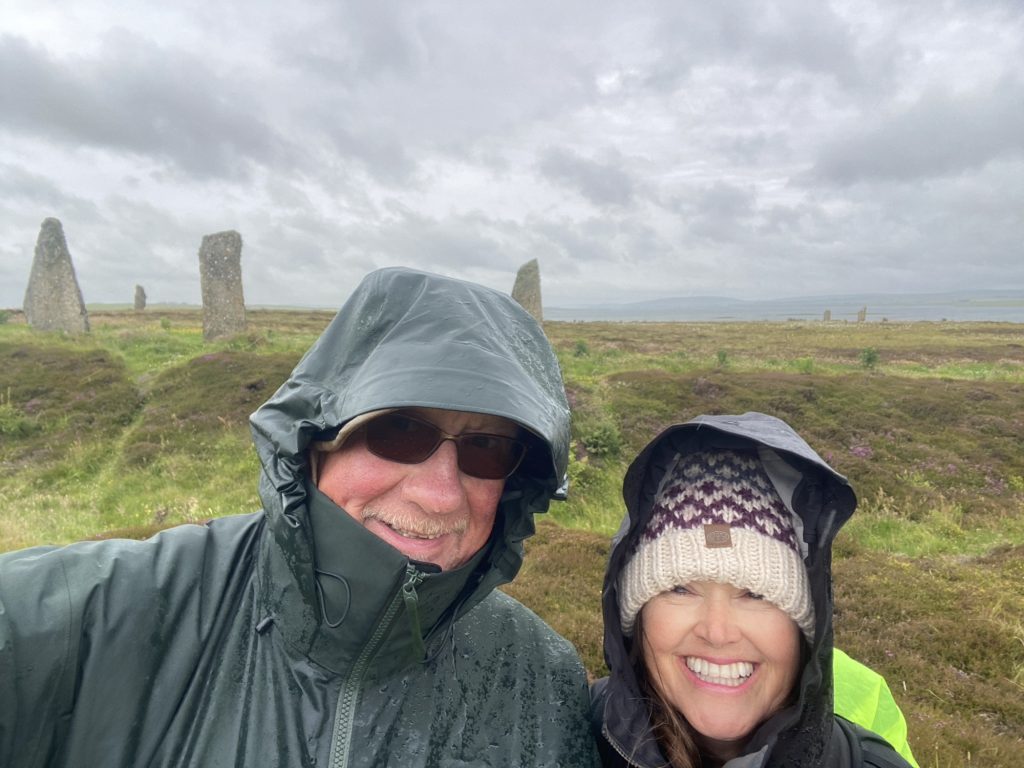
Well, it wouldn’t be Scotland without a little bit of moisture, and on this day I think the whole UK was copping it! We arose to heavy grey skies, and they stuck with us all day long, adding some incredible atmosphere to our visits.
Summer weather in Scotland!
On this day we were heading to a small stretch of land between the Loch of Stennis and Loch of Harray to the Ring of Brodgar and the Standing Stones of Stenness – both of which are incidentally older than the more famous Stonehenge, possibly the oldest ‘henge’ in the British Isles (history keeps on being revised, so am sure this will eventually be wrong!).
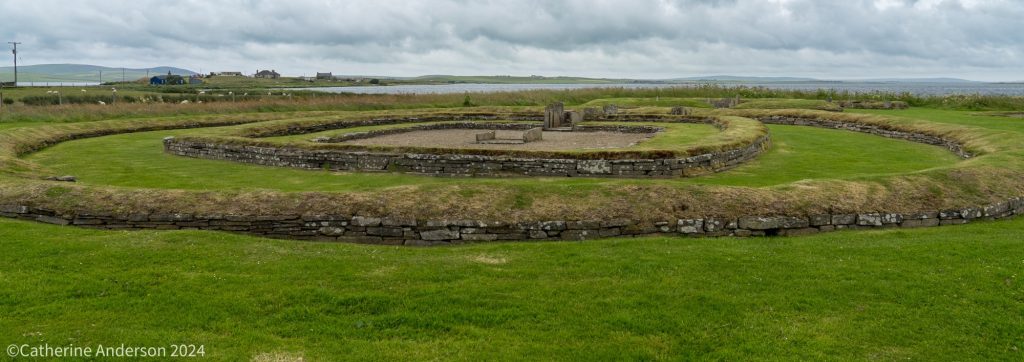
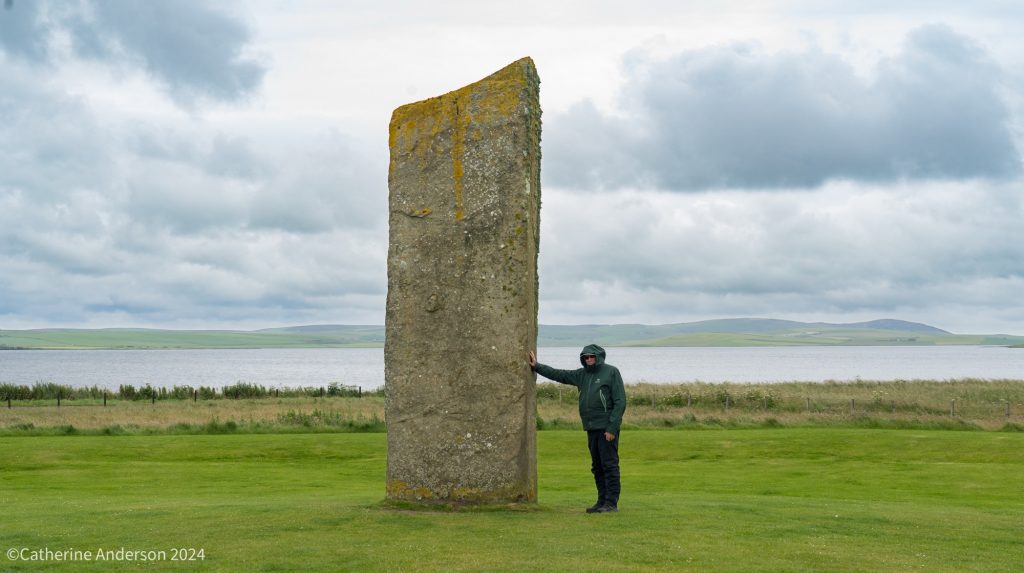
A village is revealed beside the Loch – mounds and stones, entranceways to doors, fireplaces and more – incredibleOnce the coach party had departed it was possible to feel the mysterious magic about the Stenness stones
We left the Standing Stones and crossed the bridge to walk to the Ness of Brodgar. The wind whistled across the treeless plane, the raindrops whirling around our heads and stinging our eyes, and yet it still added to the amazing atmosphere.
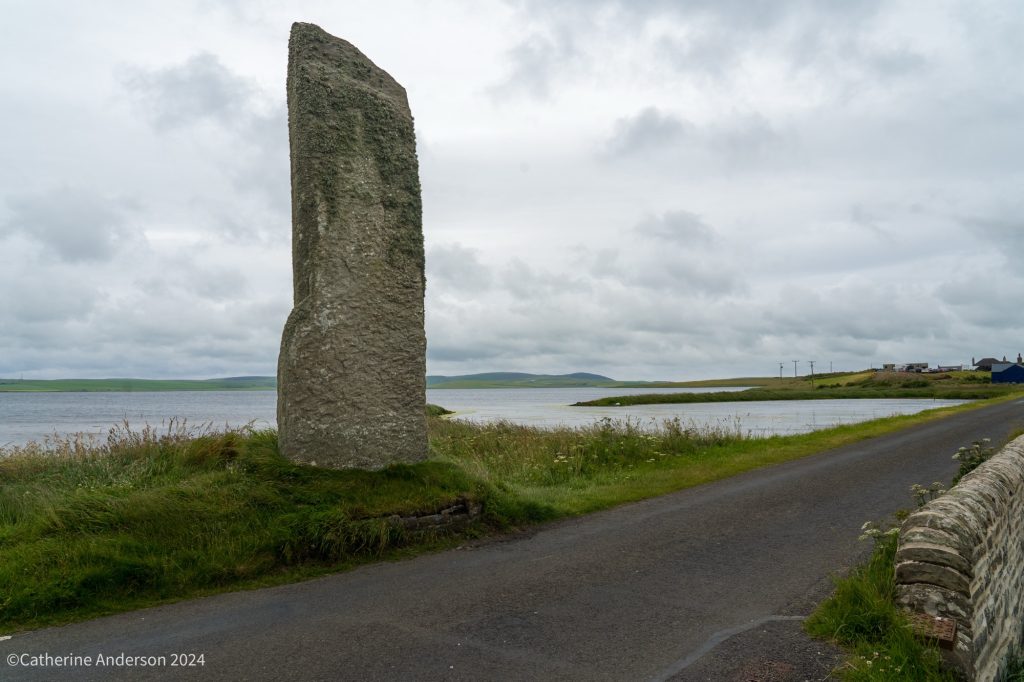
The Stenness Watch Stone keeps an eye on things beside a modern bridge which we cross on foot to visit the Ness of Brodgar
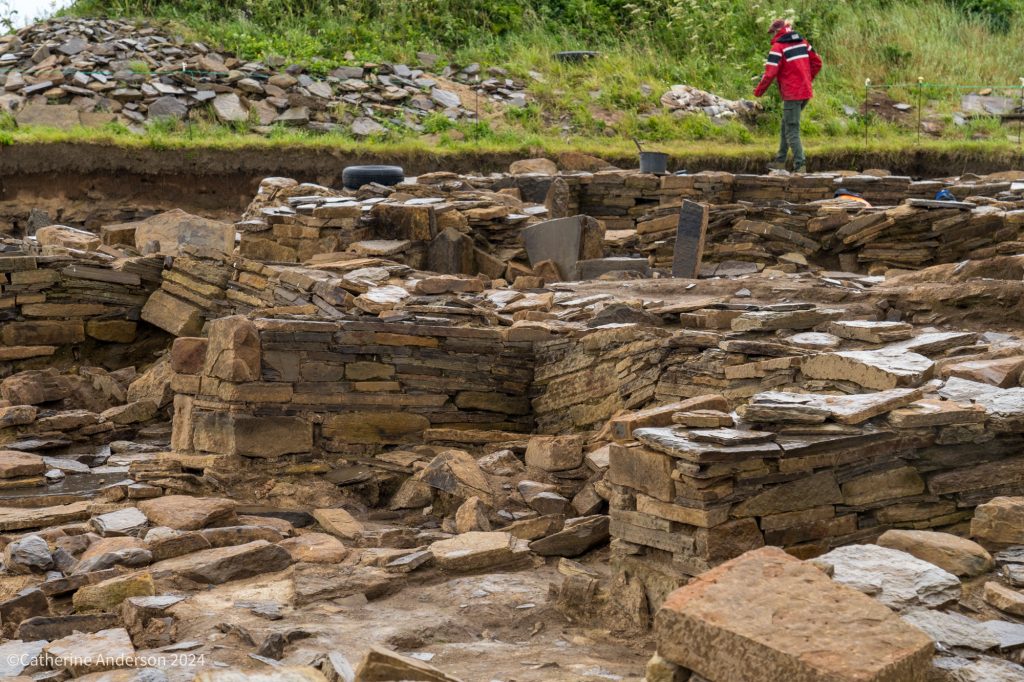
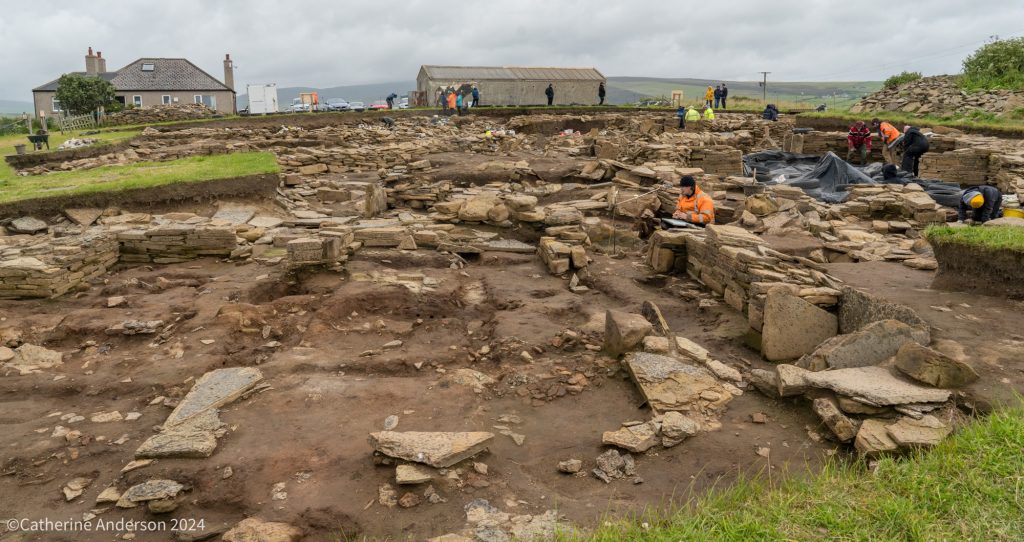
On the other side of the bridge is the Ness of Brodgar, an archaelogical site of several large buildings – some 25 metres long with walls 4 metres thick! Current estimates put it at around 5,000 years ago, and it is believed the buildings were in use for around 1,000 years before they were taken down and buried. The site was only discovered in 2002, and for most of the year it is covered up to protect it from the elements. It was only found because the owner of the nearby house commissioned a team to sow a wildflower meadow in the field beside her home…and they hit more than they bargained for! It is said that local people are nervous to stick a spade in the ground in case they find another historical artifact.
Despite the rain, archaeologists from the world over were busy painstakingly uncovering history from 3000 BCPottery, bones, stone tools and mace heads have been uncovered
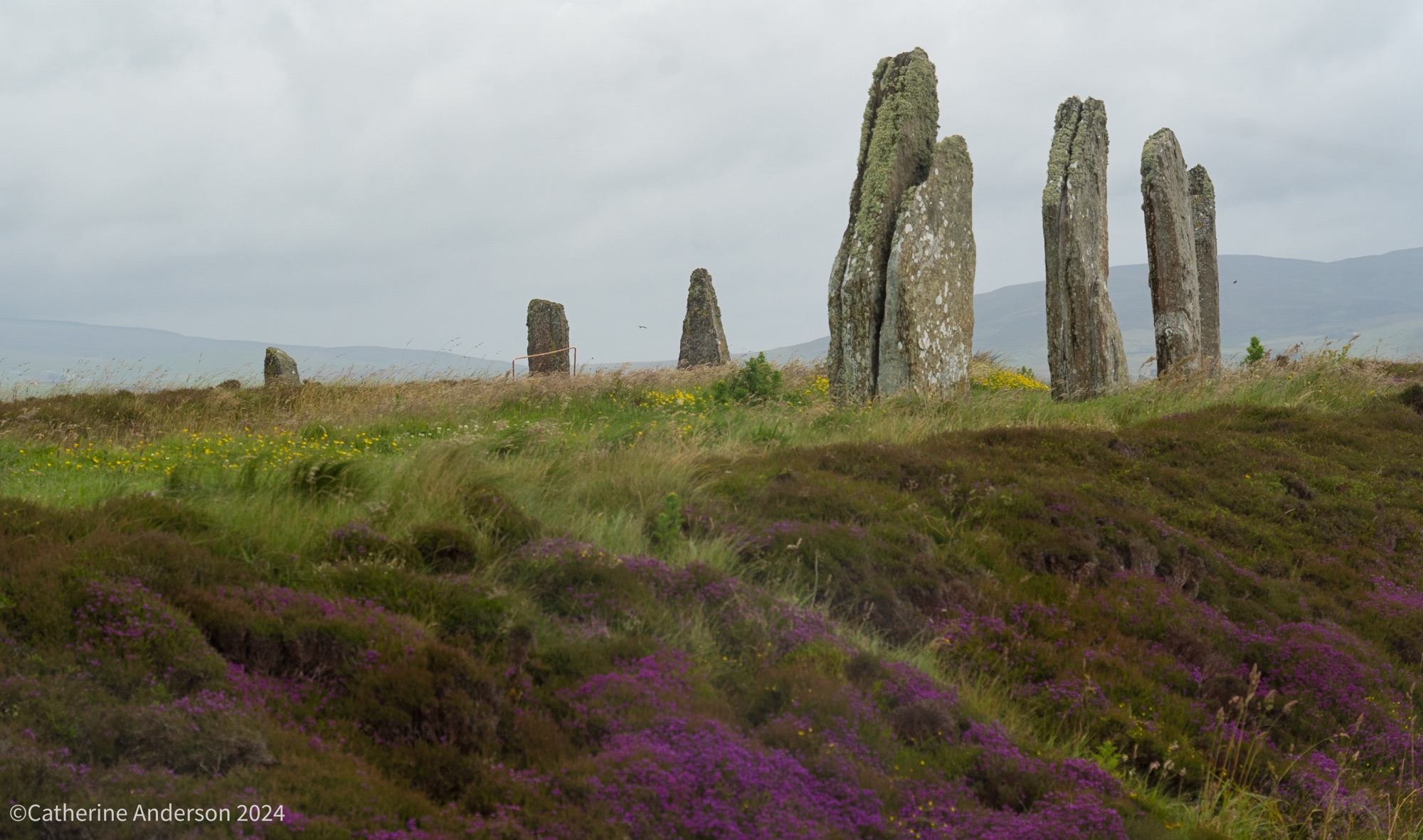
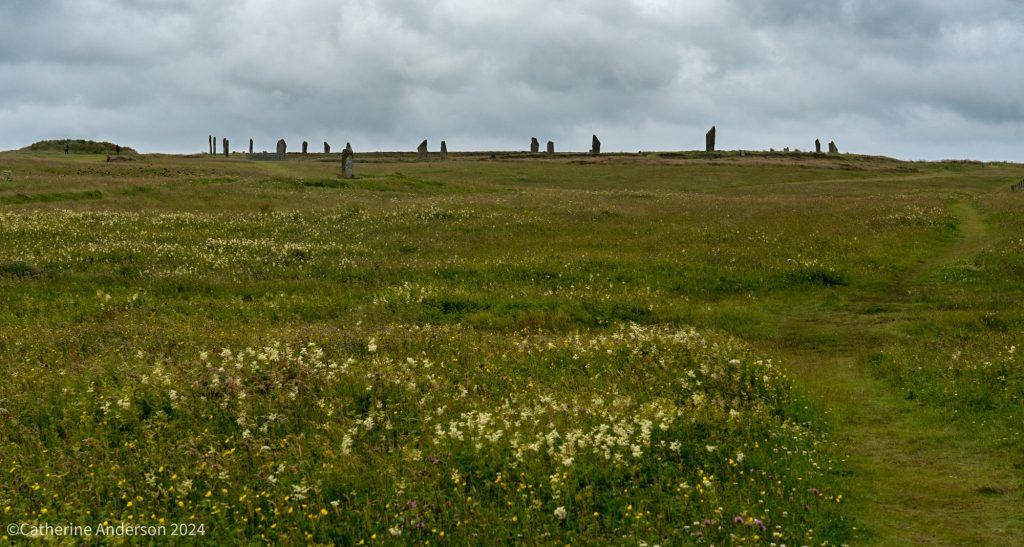
We continued our walk next to the Ring of Brodgar – like Stonehenge and Avebury, it is an almost perfect circle. This stone circle has never been excavated, so its interior mysteries still remain. It is set up within a circular ditch.
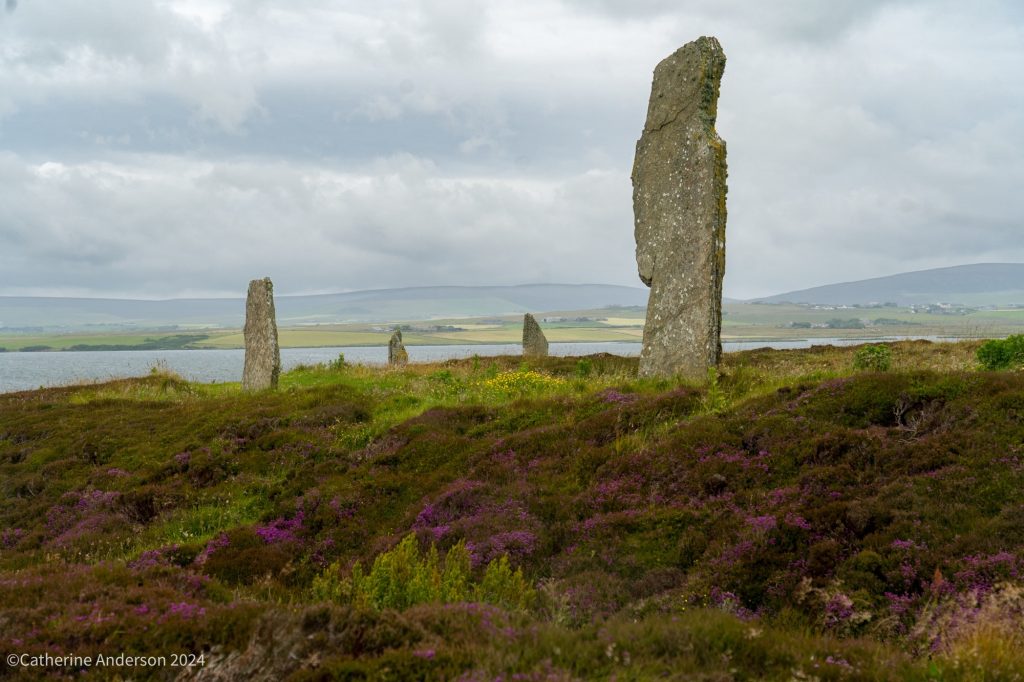
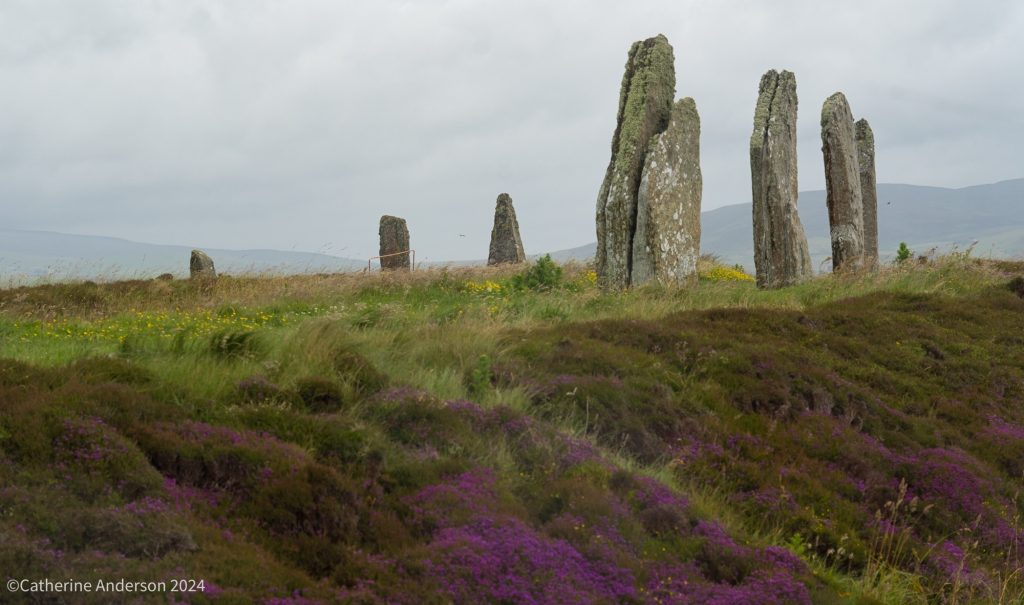
A mown path through the wildflowers takes us to our first view of the Ring on the horizonA magical moment as the sun emerges briefly, lighting up the stones which are surrounded by heather, buttercups and a multitude of little wildflowersYou can see the layers of the bedrock splitting over time
It’s just incredible to think these stones were all carved out by hand and placed here by ancient civilisations.
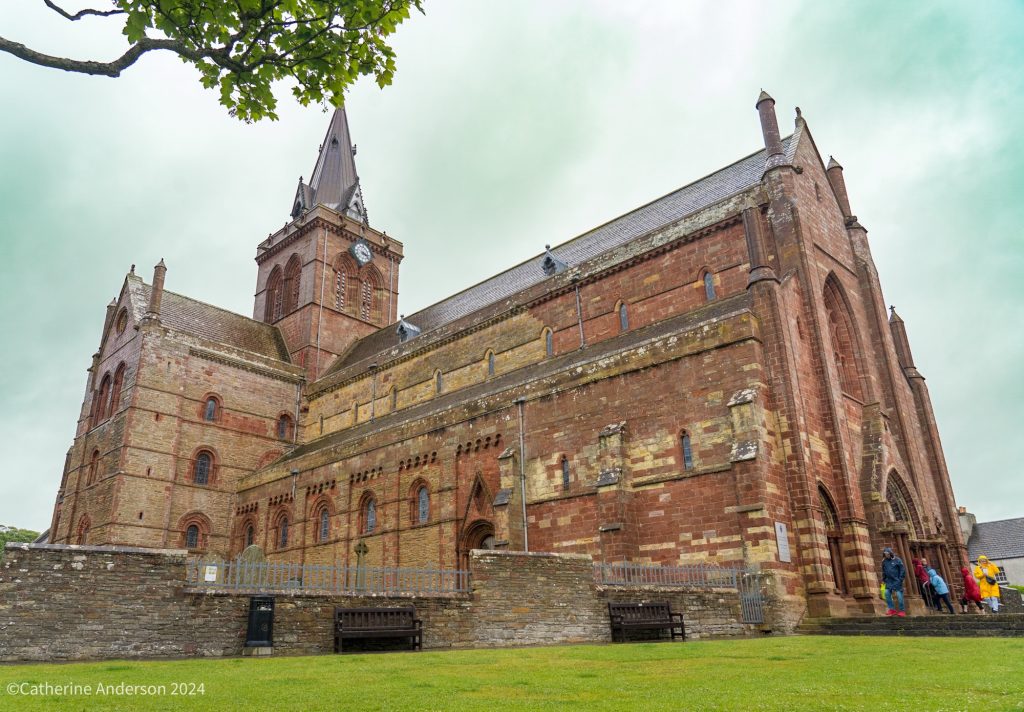
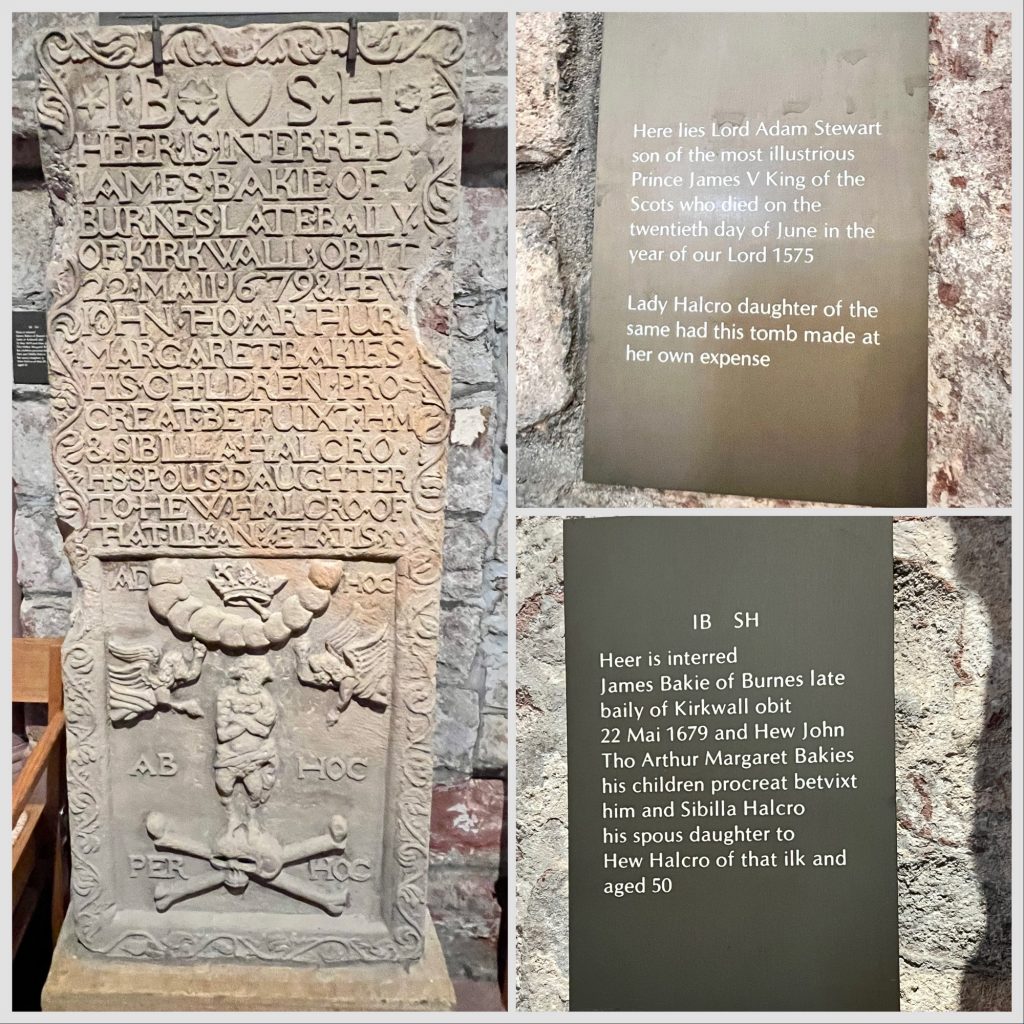
Kirkwall was our final destination for the day. I had a wander through St Magnus Cathedral. It is the oldest cathedral in Scotland, built by the Norse Earls of Orkney. While Mr A looked around the museum and browsed the shops in town, I marvelled at the history and many plaques within the church bearing surnames from my family tree. What relatives they were I am unsure, but it was still exciting to see!
St Magnus Cathedral – 1137The Halcro family name stands strong
11th July – Kirkwall reveals more ancestors
Thursday dawned grey and windy, but the rain decided to hold off and there were even hints of sunshine to be seen. After our usual Tesco visit to pick up lunch, we were on our way.
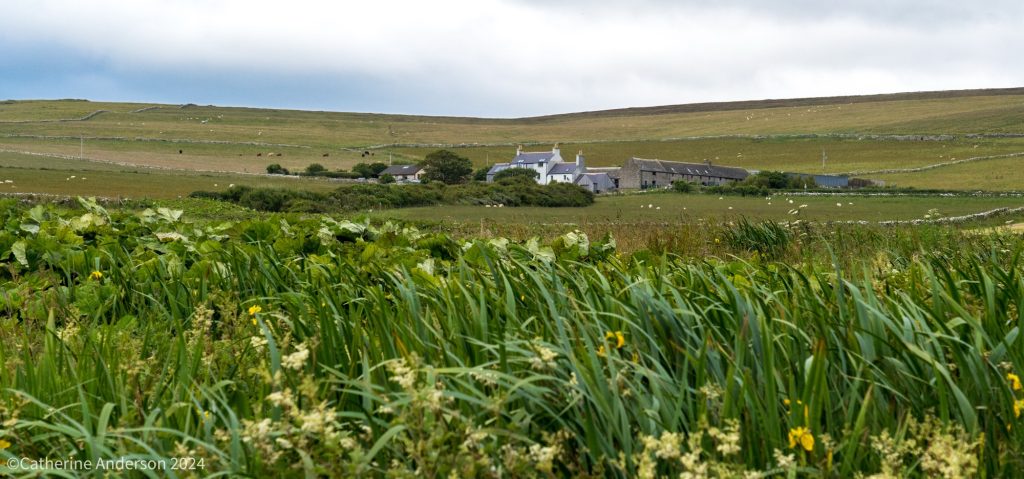
A rare sight of trees around these farm buildings, offering them a little shelter from the relentless winds
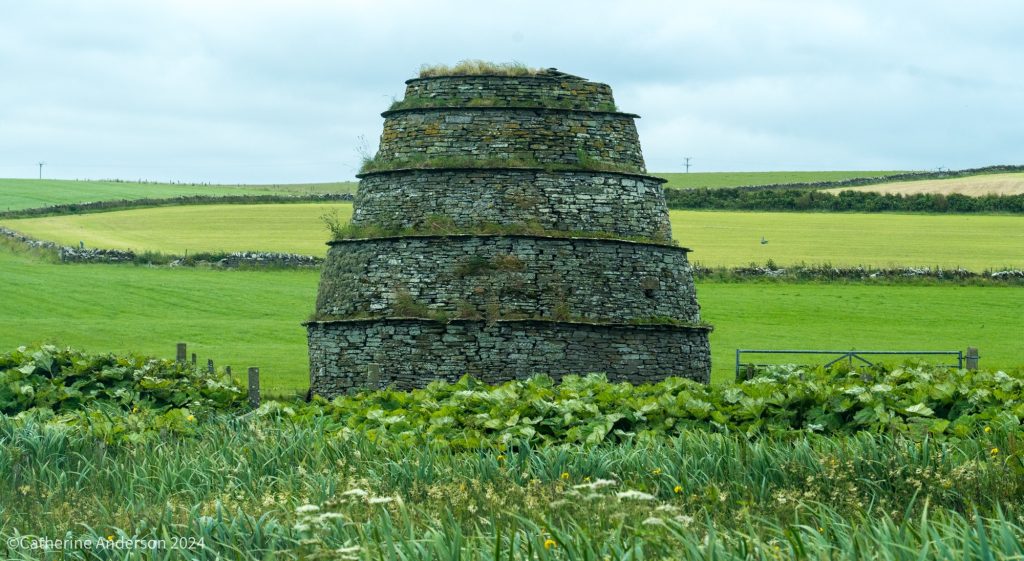
Tucked away as we drive along is this magnificent structure built from local stone. Created in the 1600s, it is called the Rendall Doocot – a dovecote built to house pigeons. These birds provided meat for the family at nearby Hall of Rendall. We poked our heads inside and noted there are still pigeons making this their home – I suspect they’re not used for meat these days though.
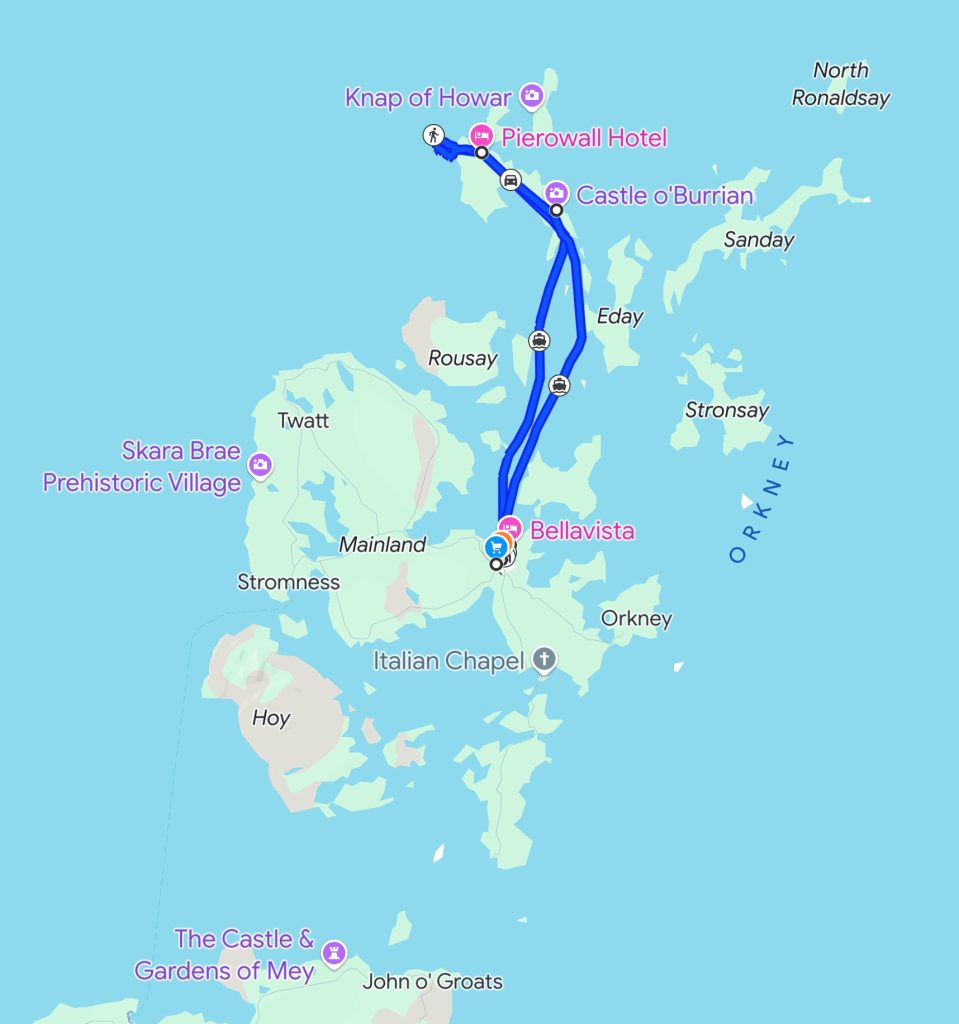
A short drive past here we caught our ferry for the day, over to the island of Rousay.
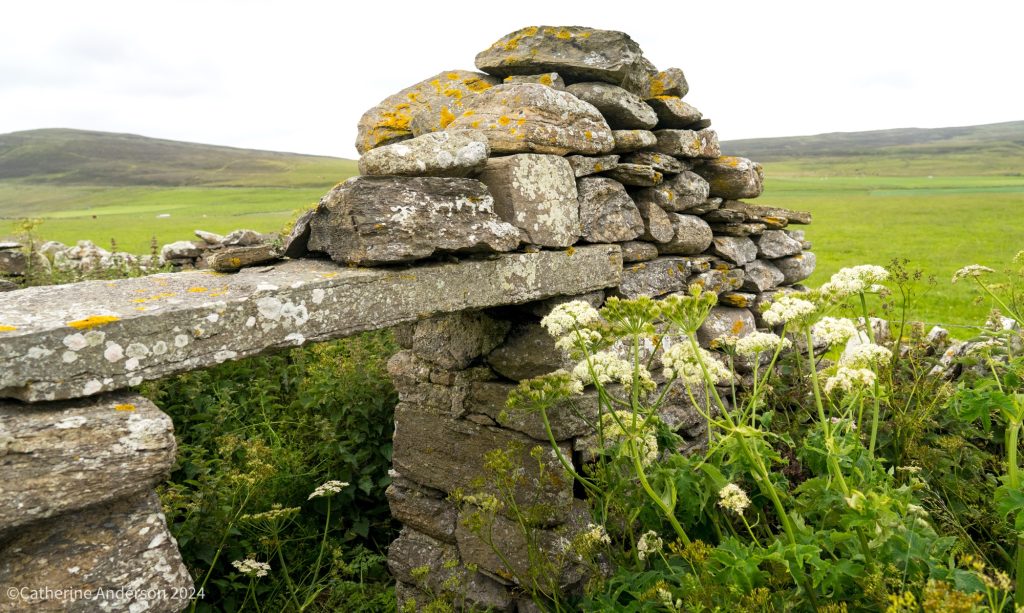
Nothing like a bit of uphill to wake up the legs in the morningLunch was beside this stunning beach at Saviskaill, watching a seal swim along the shoreline Local stone is plentiful and put to use everywhere – this over a drainage ditch
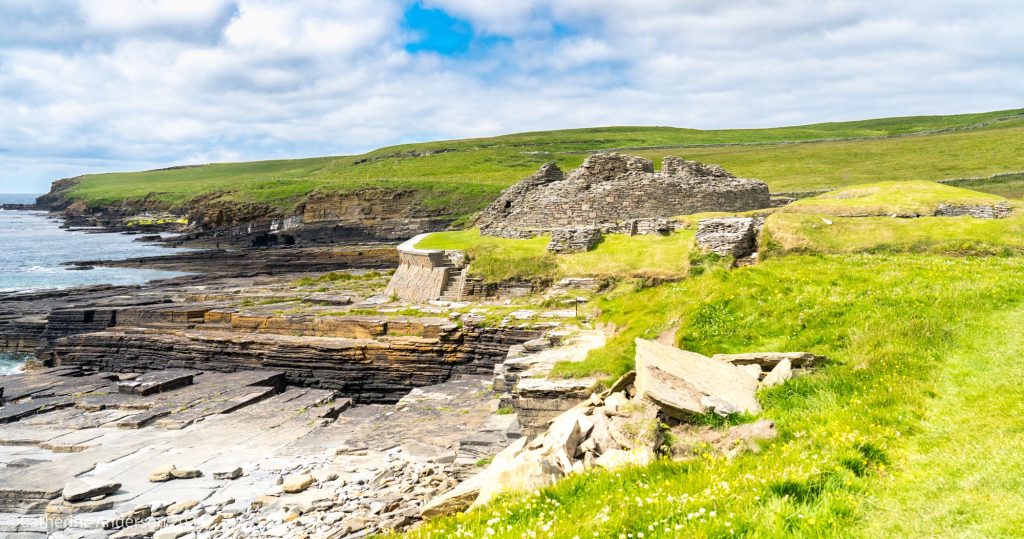
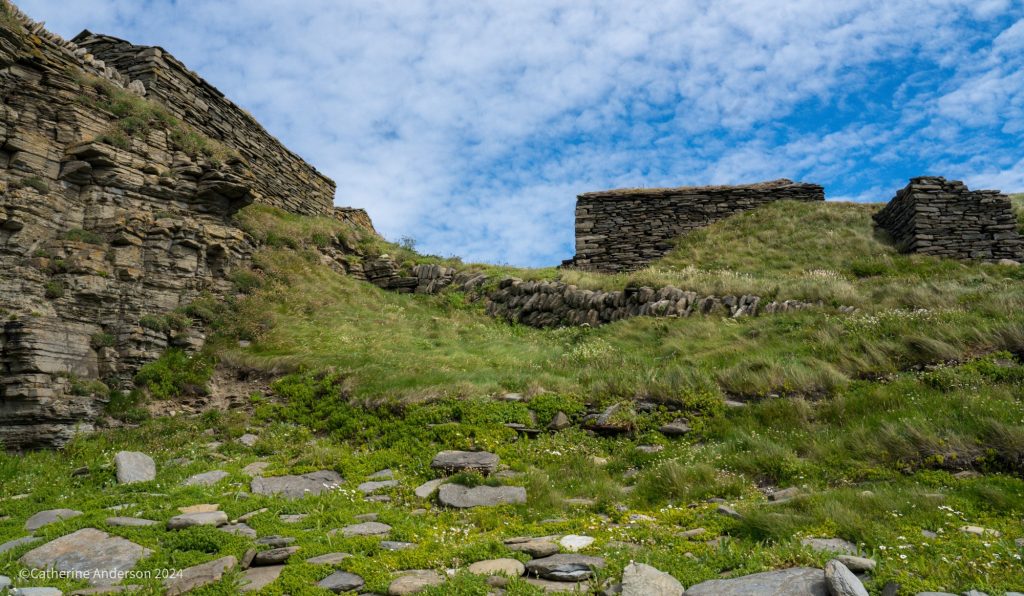
After lunch we drove around to the south-west coast, apparently described as ‘the most important historical mile’ in Britain. Our visit commenced with a visit to Midhowe Broch. A broch is a roudhouse building, unique to Scotland, found mostly on the islands and North Highlands. The word broch is derived from the Lowland Scots ‘brough’, meaning fort.
You can see the fortifications along the cliff-edge to protect the broch from being taken by the sea
Situated on the north side of Eynhallow Sound, this broch is part of an ancient iron age settlement, much of which has already been lost to coastal erosion. It would have been inhabited by important community members, with its own spring-fed water tank, and a hearth with sockets which may have held a roasting spit.
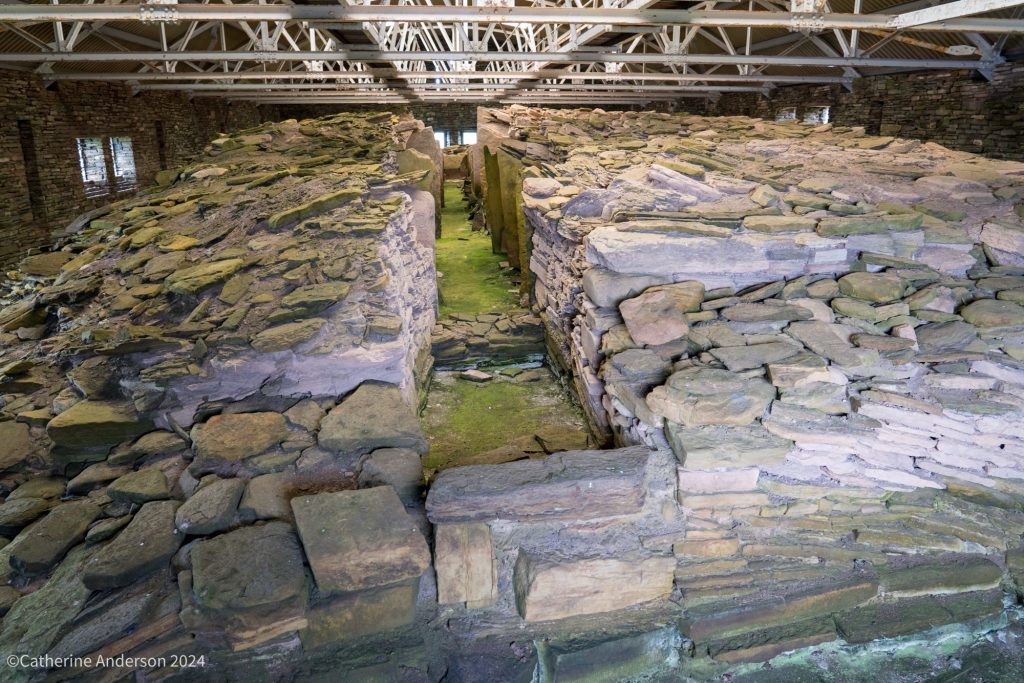
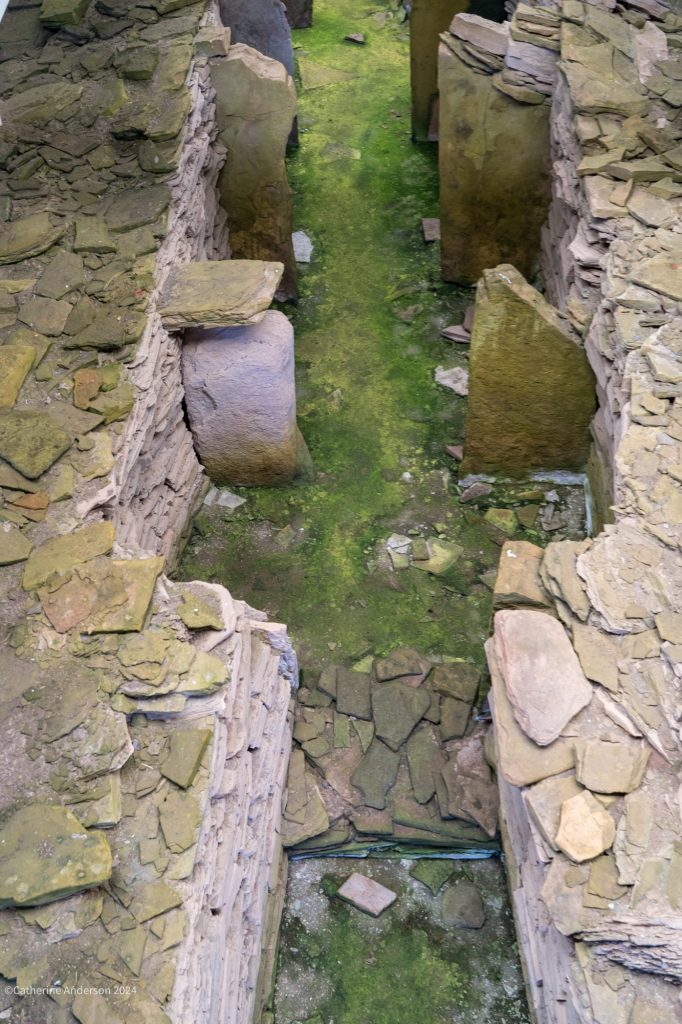
After exploring this building, we followed along the coastline to the Midhowe Chambered Cairn. This is around 5,400 years old. It is protected from the elements by an elaborate hangar, with raised pathways allowing visitors to explore the burial chambers without damaging them.
Rousay resident, Walter Grant, was the instigator of the excavation of this tomb, and he constructed the protective hangar in 1935-6 before giving it to the nationThe remains of 25 human skeletons (including two children) were found in the tomb, which was buried within a mound.
Access to human history here feels so tangible. You can see the chips in the stone where they were carved into place, almost as though they happened last week. It feels almost churchlike, with the aisle down the middle and the stalls either side.
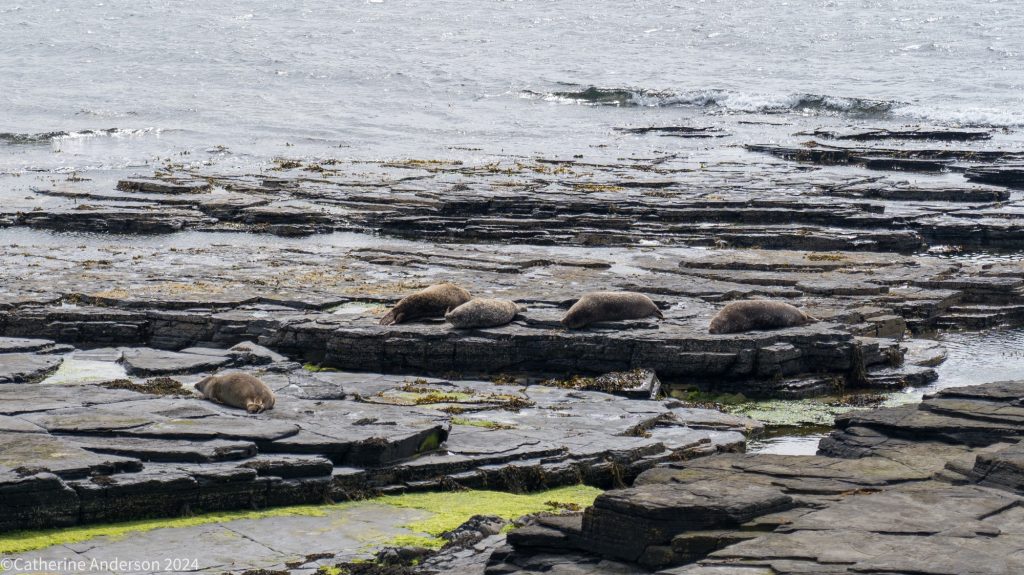
As we left the tomb, we followed the coastline past seals basking on the rocks.
I bet those dark rocks warm up nicely in the sunshine
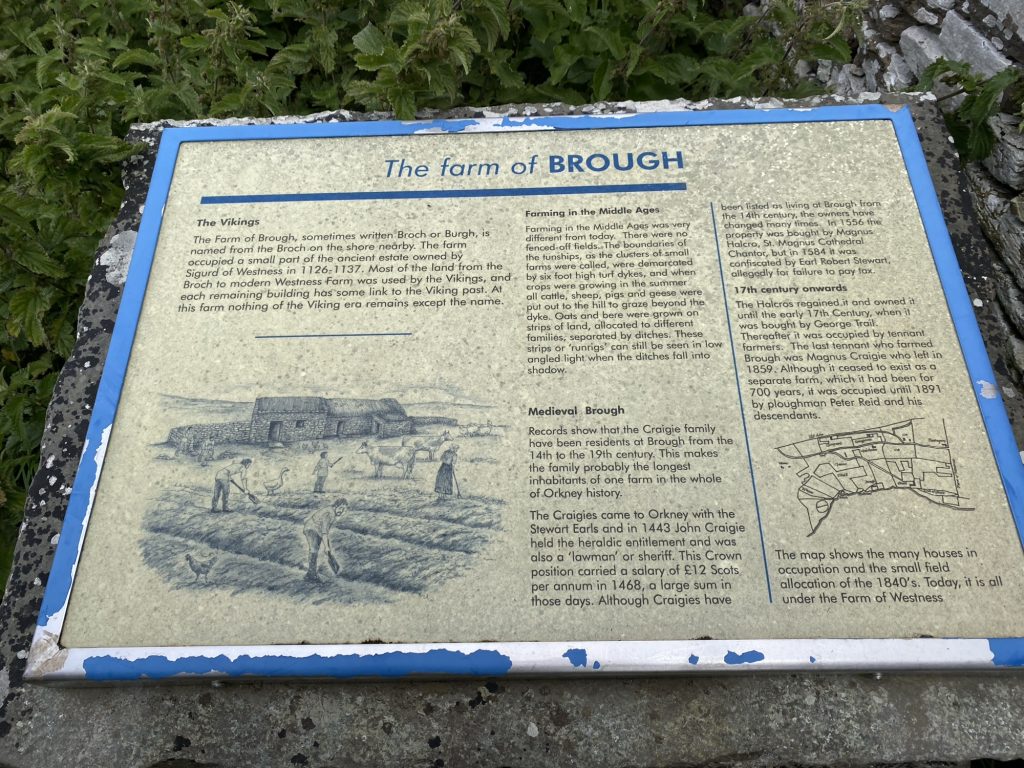
Our next destination along this coastal stroll was the farm of Brough, and low and behold, the Halcro name re-emerges. They were certainly quite prevalent in these islands. I tried to hold back from letting people know they were visiting another of ‘my’ houses!
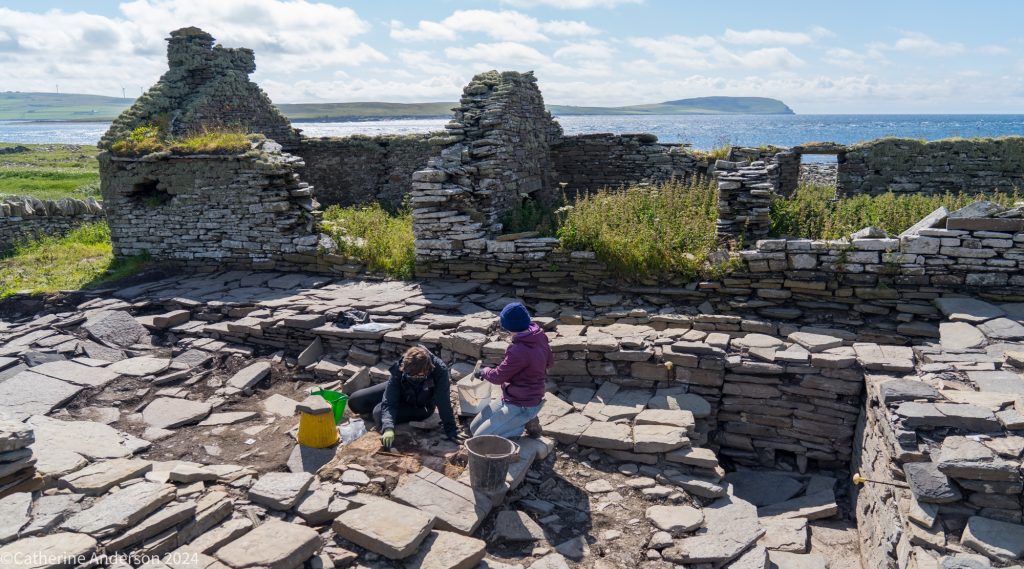
We continued to where an active dig was happening. They were happy to stop and give us an impromptu talk about what they were finding, excited that there were literally layers upon layers of history in this one site alone. One of the serveral archaeology students digging at the site brought up their finds tray, showing us the many cows teeth and pieces of old china they had found on that morning.
Incredible patience is required to gently sift through the soil in case some major find is revealed. I can’t help but think of my ancestors perhaps sipping on a warm cup of tea here, while watching out to sea at the maelstrom in the bay, where the Atlantic Ocean meets the North Sea.
We hiked back up the hill to our mini-bus to start heading back to the ferry.
So many shades of green
We had only driven a short way when we spotted another tomb – these islands are literally covered in ancient artifacts, and those of us with remaining energy, climbed up the hill, braving the field of cows, to Taversöe Tuick, another chambered cairn on two levels, built around 5,200 years ago.
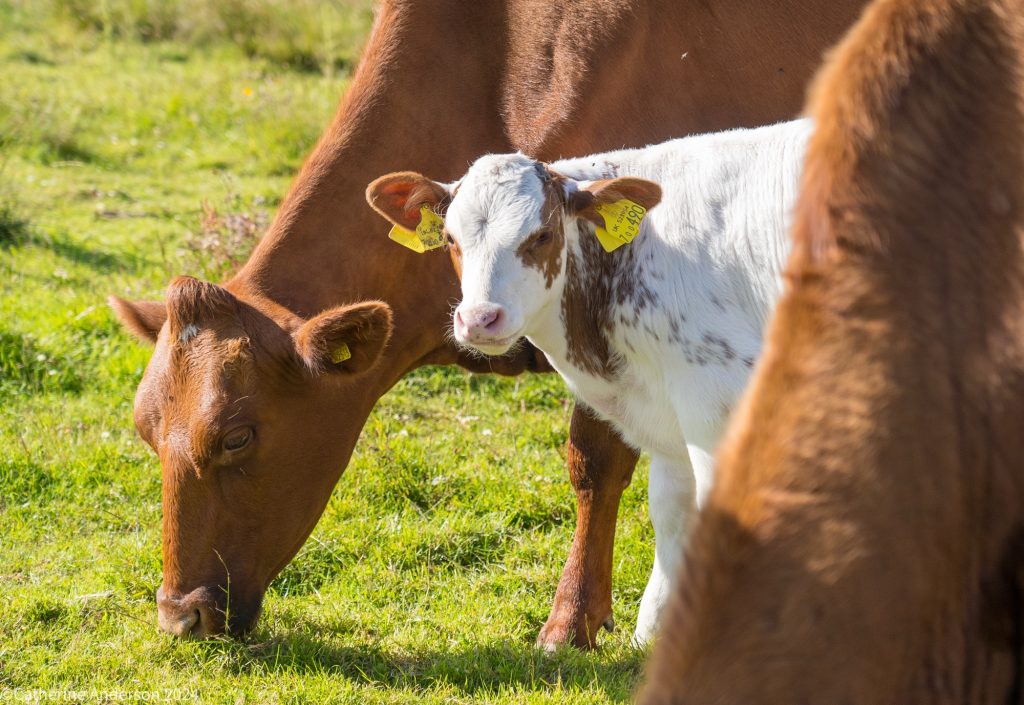
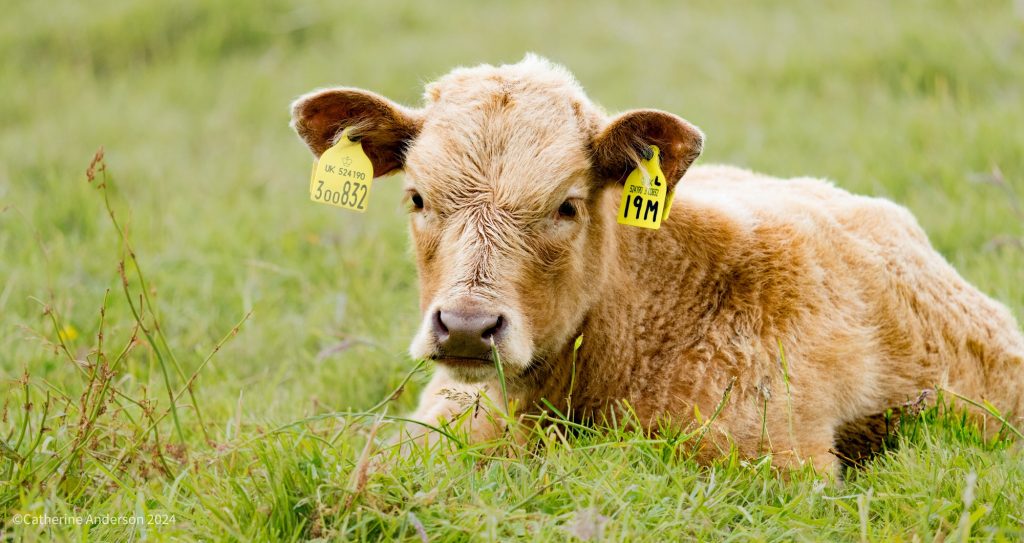
Calf feeling rather safe beside it’s mother
It was a rather quick look around the cairn (is it possible we had lost some of our enthusiasm for ancient tombs?), before heading back to the ferry.
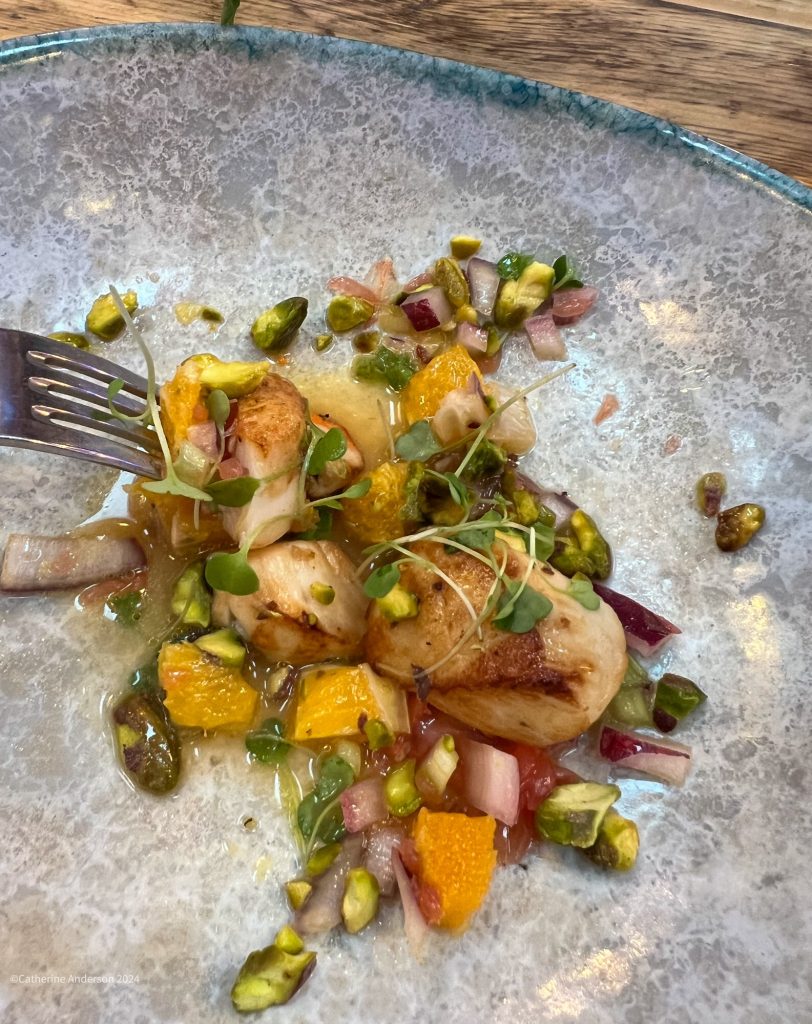
This marked our final night in the Orkney Islands, and so we were allowed to go back to our rooms to shower and change before going out to dinner. It was our finest restaurant yet, The Foveran, delicious local food (I may have had my fifth serve of scallops in the past week!), with incredible views out to sea.
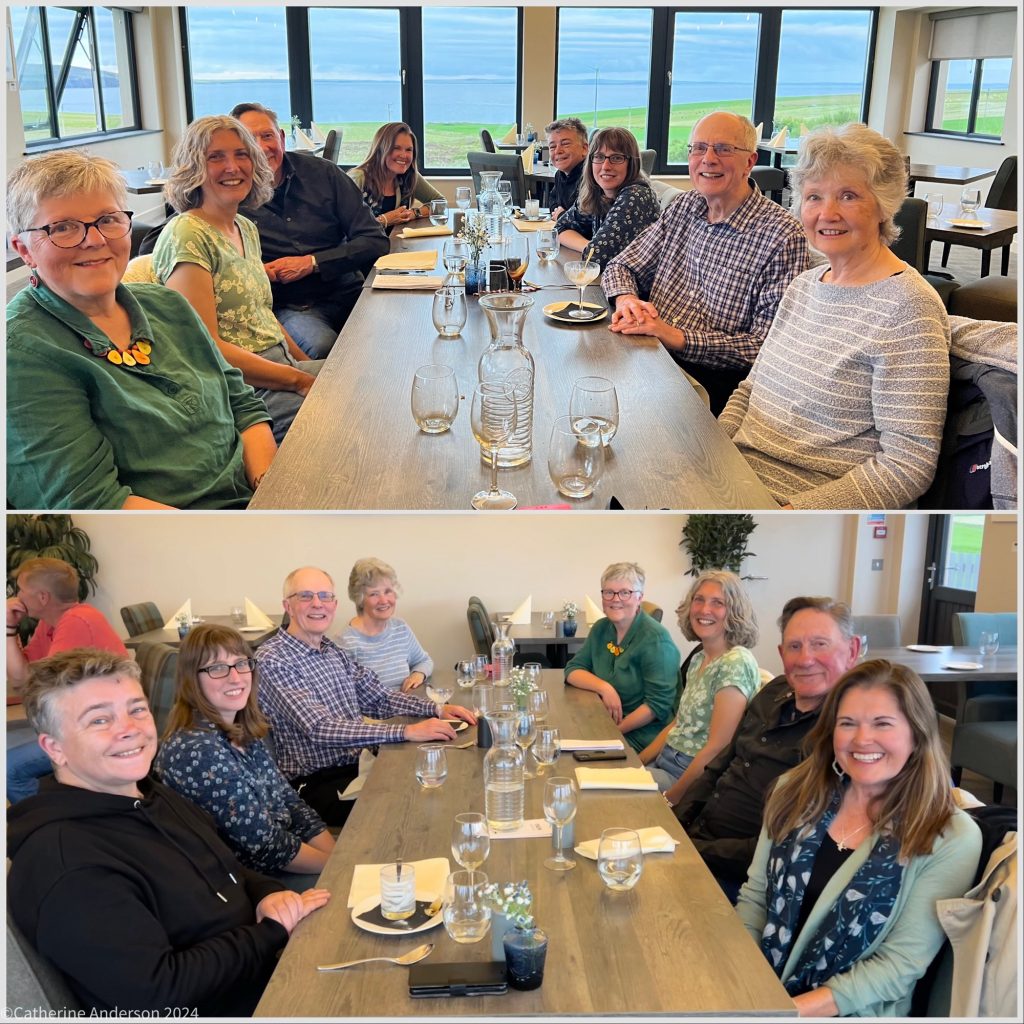
Our fellow walking crew (minus one who chose not to join us for dinners)
It was an incredible few days on Orkney – every day had been packed with activities from start to finish, making the absolute most of the lovely walks, wildlife and history the islands have to offer. It would have been incredibly hard to book all this yourself. It is virtually impossible to be spontaneous on the little car ferries between the islands, with spaces reserved for locals.
But despite all the amazing things we had seen and done, we have to admit we were ready for some warmer temperatures and a drop in the wind!
Location: Edinburgh and the Orkney Islands, Scotland
Author: Mrs A
Ok, I admit we are a little late posting this, but it has been a very busy summer! We are now on another holiday, this time in France, so I have had a few moments to reflect on our July trip. It will be in 3 parts due to the many photos!
4 July: Off to bonny Scotland
While we officially booked this trip in October last year, the initial seeds for exploring the archipelago of Orkney were sewn back during the Covid lockdown of 2020 when my cousin was working hard to explore our ancestry. She was able to trace on our mother’s side back to Orkney, stumbling on direct links to the King of Norway back in the 1500s. Very exciting! Mark always called me a princess, and now I know I am (or the tip of my little finger is, at least!).
Finally this much anticipated trip was upon us, and we took an EasyJet flight up from Bristol to Edinburgh and checked into our hotel. We had two nights before boarding a short flight over to Orkney Mainland.
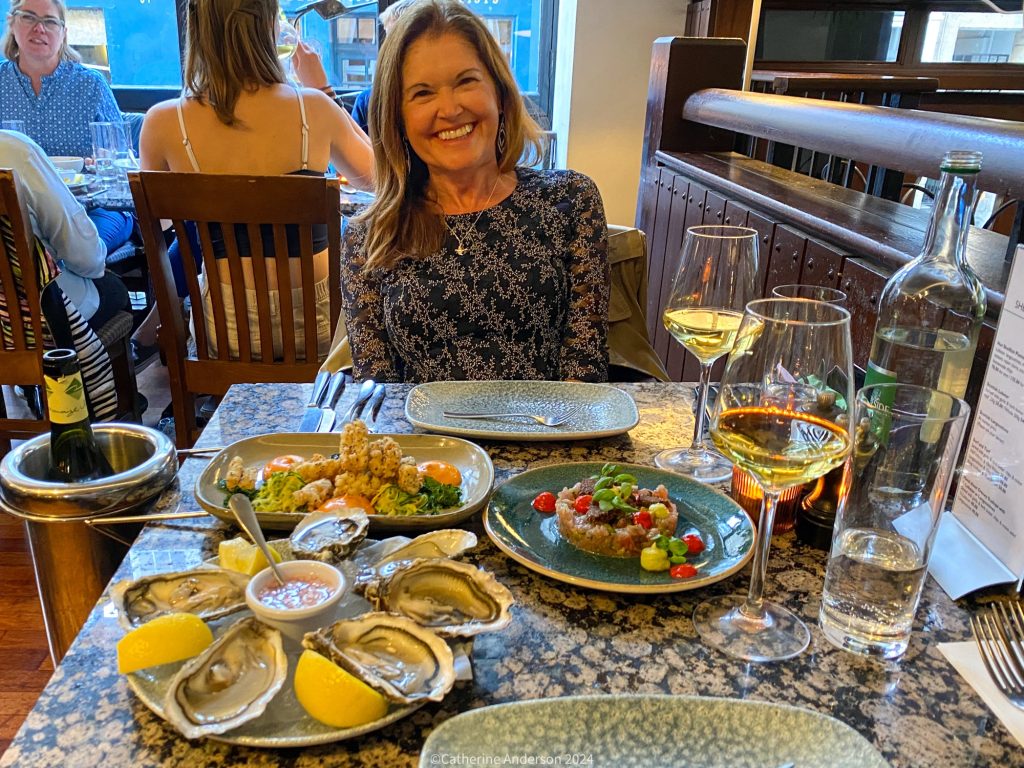
Dinner was a fabulous seafood feast at Fishers in the City, somewhere I had eaten at in 2019, but was very keen to bring Mark for our incredible meal of fresh oysters, scallops, squid and other local delicacies.
Dinner didn’t disappoint – even Mr A said it was one of the finest dining experiences he has consumed
5 July: Edinburgh’s underworld
Edinburgh is a bustling and pedestrian-friendly city with a variety of shops, overlooked by the magnificent castle on top of an extinct volcano.
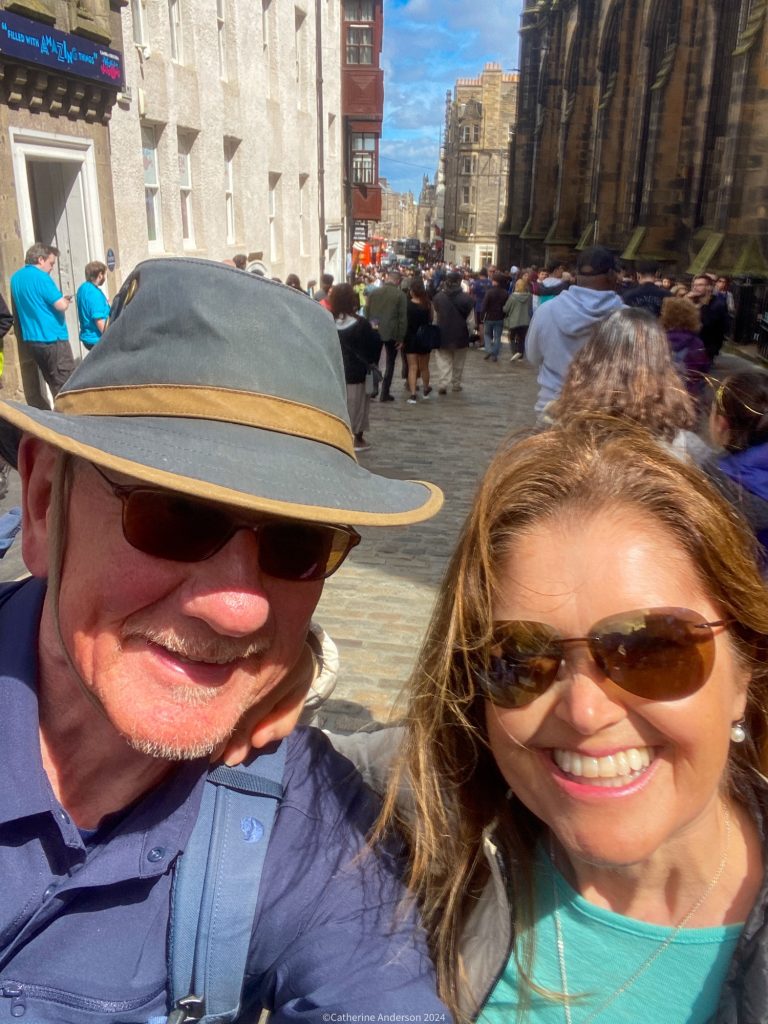
Windswept on the Royal Mile, Edinburgh
It’s been a few years since we last explored this friendly city, and (although some of the local residents could have done with subtitles) it was great to see new things. After a morning of Mr A satisfying his outdoor shop addiction, we attended a tour of one of the ‘underground streets’ of Edinburgh, a 1600s laneway which had been compulsory purchased and used as foundations in the 1700s to create a new indoor marketplace.
The Real Mary King Close – named after Mary King, a fabric merchant who built her own business after her husband’s death, a tour of the close is brought to life by one of the costumed character tour guides. Image source: Forever Edinburgh
The history was fascinating, and it was incredible exploring the low ceilinged rooms and even seeing the hand printed walls still preserved after all these years. It was presented in a somewhat theatrical way, with our guide dressed up and performing as though she was a resident from the lane which distracted a little from the interesting stories.
Dinner was at Sen, a little independent Vietnamese in the University Quarter. The food and menu was so delicious and interesting, we decided to book in for the following week too!
6 July: Another day, another flight
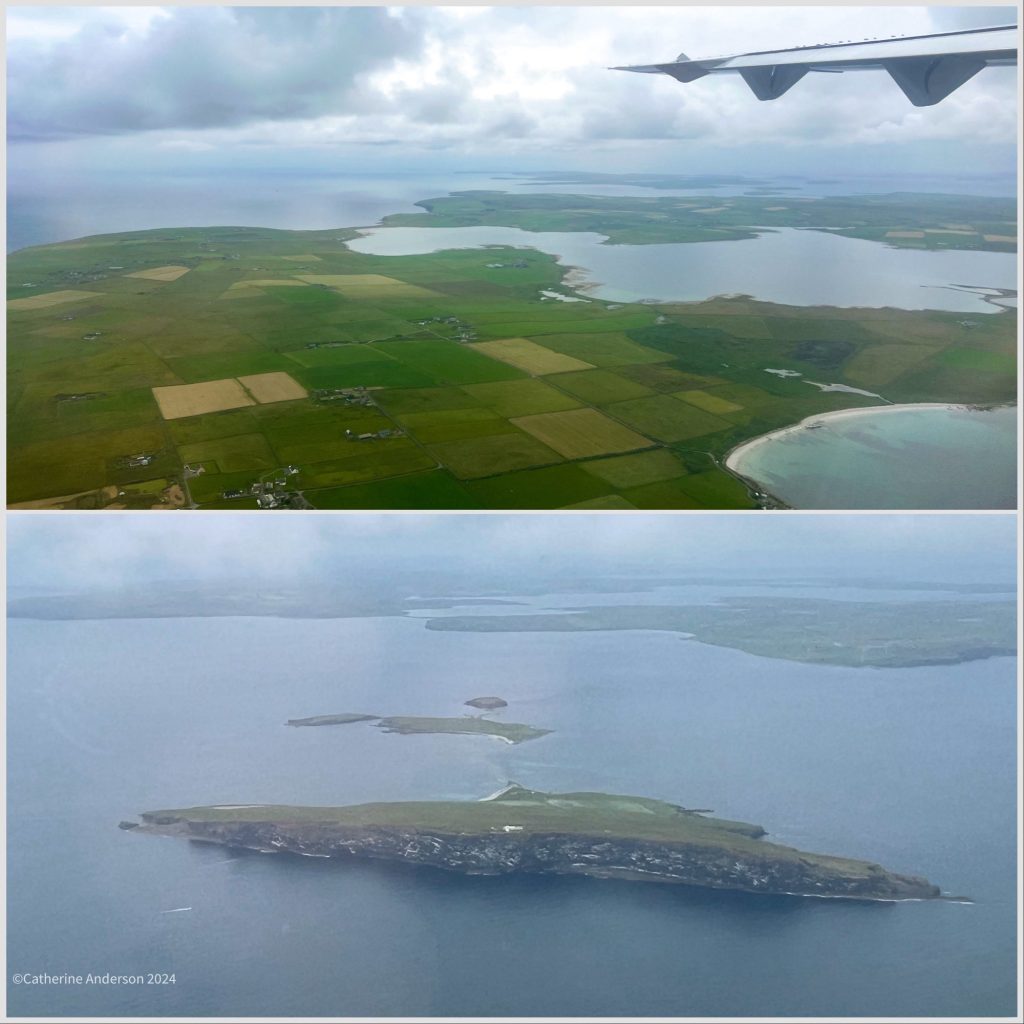
And so off we went to our ultimate destination, the Orkney Islands. It was a quick flight from Edinburgh to Kirkwall, and then a 10 minute taxi ride to our accomodation. The aerial views as we crossed the archipelago were magnificent, with turquoise waters lapping on white sandy beaches. The only thing missing was woodland. We could see the islands stretching across into the horizon, with barely a tree in sight.
A patchwork of greens to greet us
Our first impression of Kirkwall was somewhat grey and unremarkable. The majority of houses are single storey bungalows, or semi-detached, looking like they are on a 1970s council housing estate. Most have been rendered with pebble-dash, and together with the grey skies, and icy-cold July wind, made for a not-so good first impression.
We had dinner in town, the first of many dishes of hand-dived scallops, a speciality the Orkneys are famous for, and met our group guide at 9.30pm for a quick update on the plan for the following morning.
Delicious!
7 July: Westrayreveals its wonders
It was an early start for a huge Scottish breakfast, before loading our walking and photography gear into the back of a mini bus and meeting our fellow hikers for the week; three single ladies, one single man and another couple. The supermarket was our next stop, to pick up yet more food to make up our picnic for the day. This pattern continued all week.
Next it was off to board our ferry to the Isle of Westray, a 90 minute ride away from Orkney Mainland.
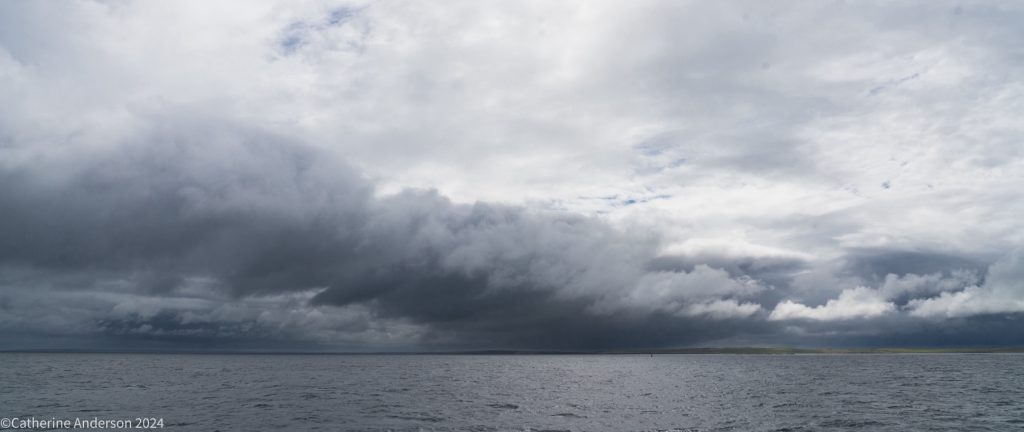
Threatening skies on our ferry journey In between the gloomy skies, glimpses of sunshine turning the water into glittering diamonds
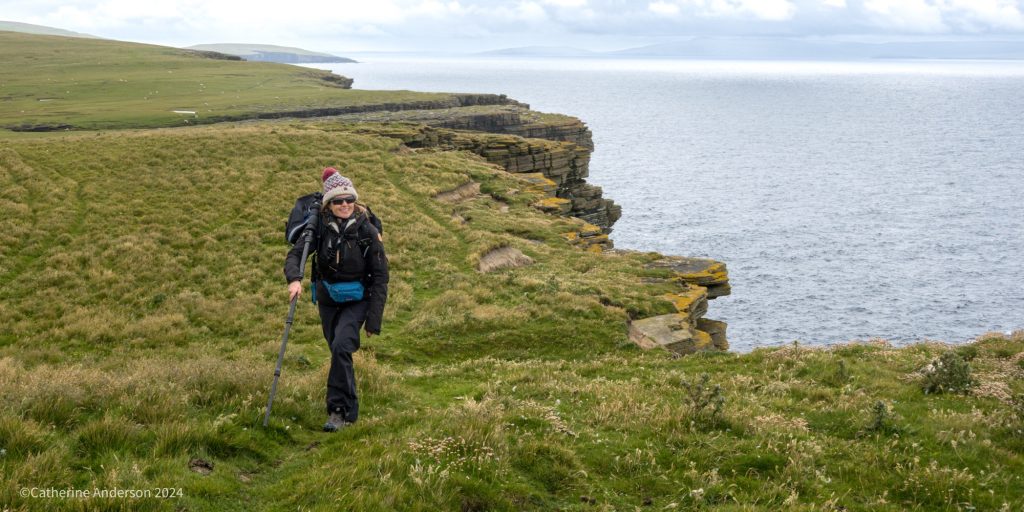
Once there, we drove up to the north of the island, where we parked up, donned our backpacks and took off on a hike.
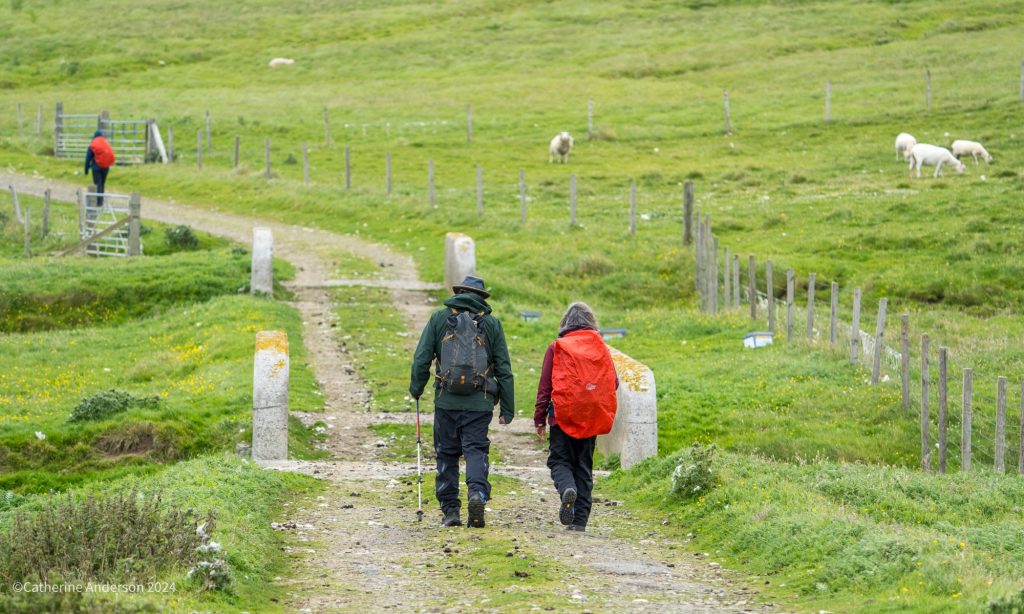
There was little else around us, the occasional farmhouse and plenty of cattle and sheep. No other people to be seen.
A cuddly looking calf watches on curiously as we walk past
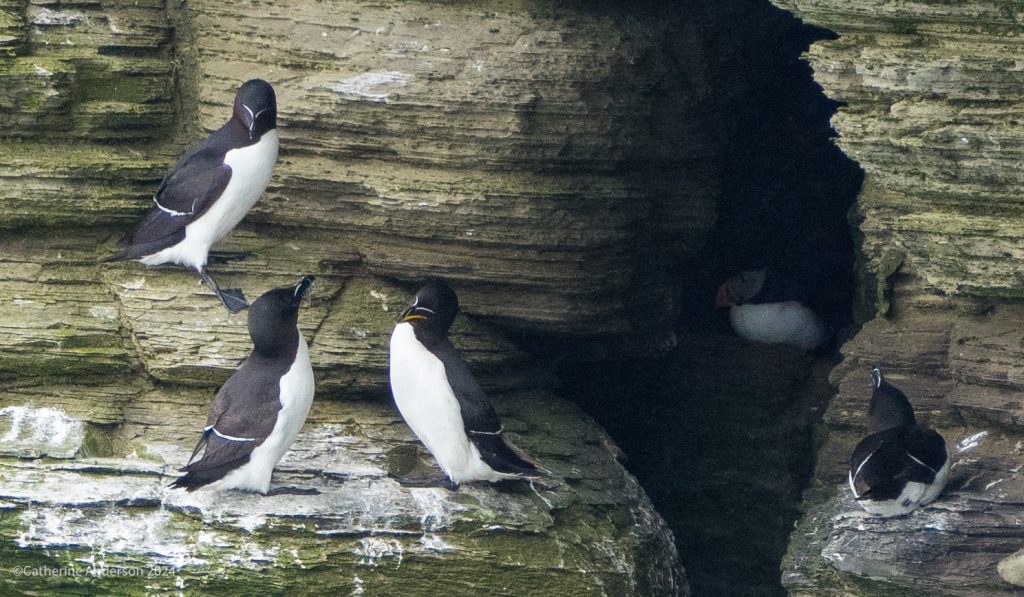
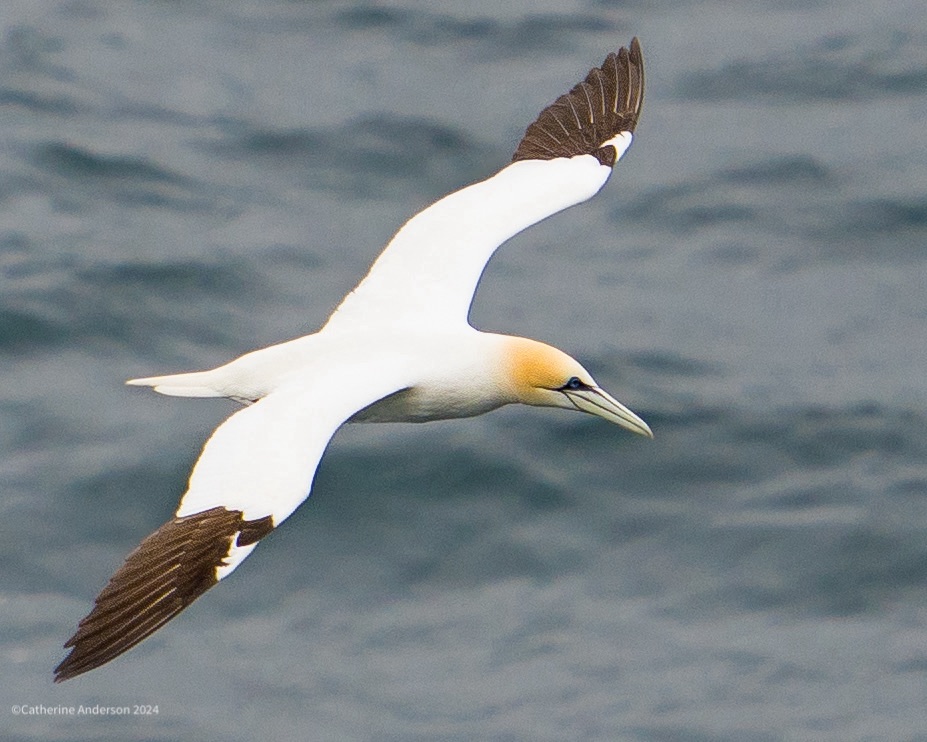
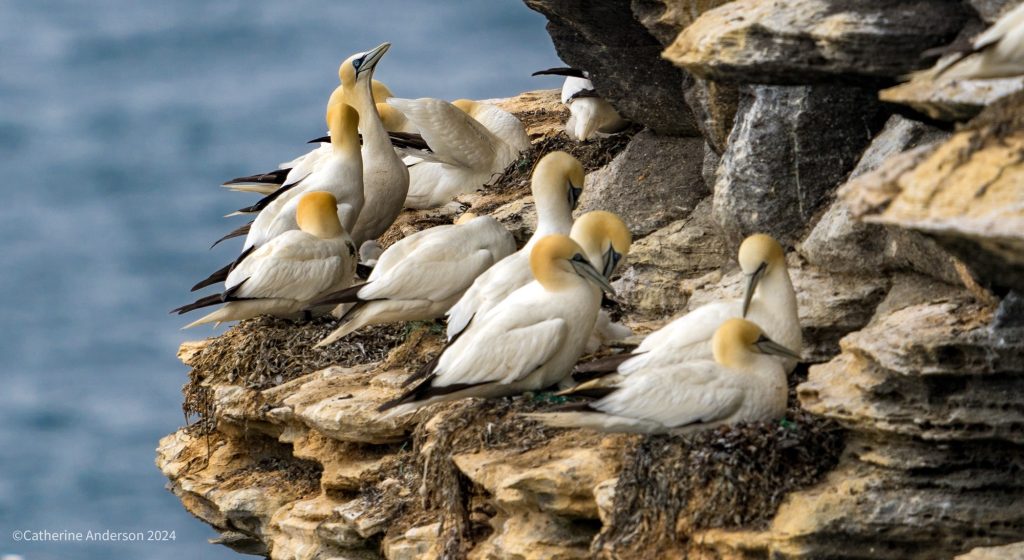
I was carrying my telephoto lens on this walk, so was hopeful for no rain. We had been told this was a great nesting area for seabirds, including Arctic Tern, Northern Gannet, Common Guillemot, Kittiwake and the much anticipated Atlantic Puffin.
Arctic Skuas, known as the pirates of the coast, soared along the coastline, ready to thieve the freshly caught fish from other birds.
We followed the coastline, seeing that breeding season was in full swing, with birds perched precariously along the cliff side with their young looking small and vulnerable with the huge drop below.
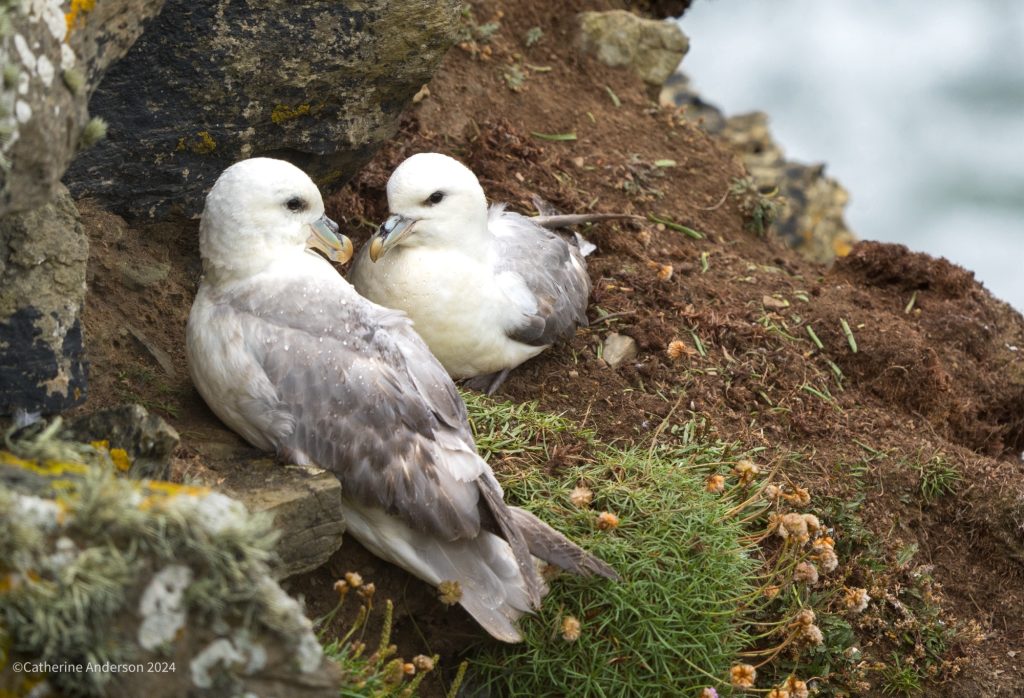
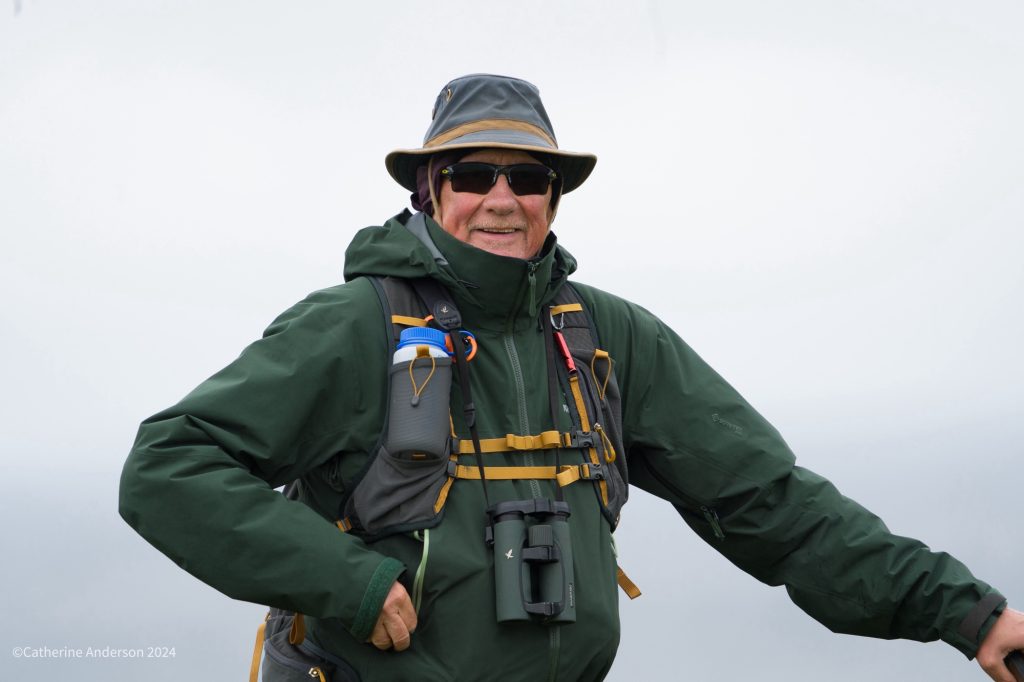
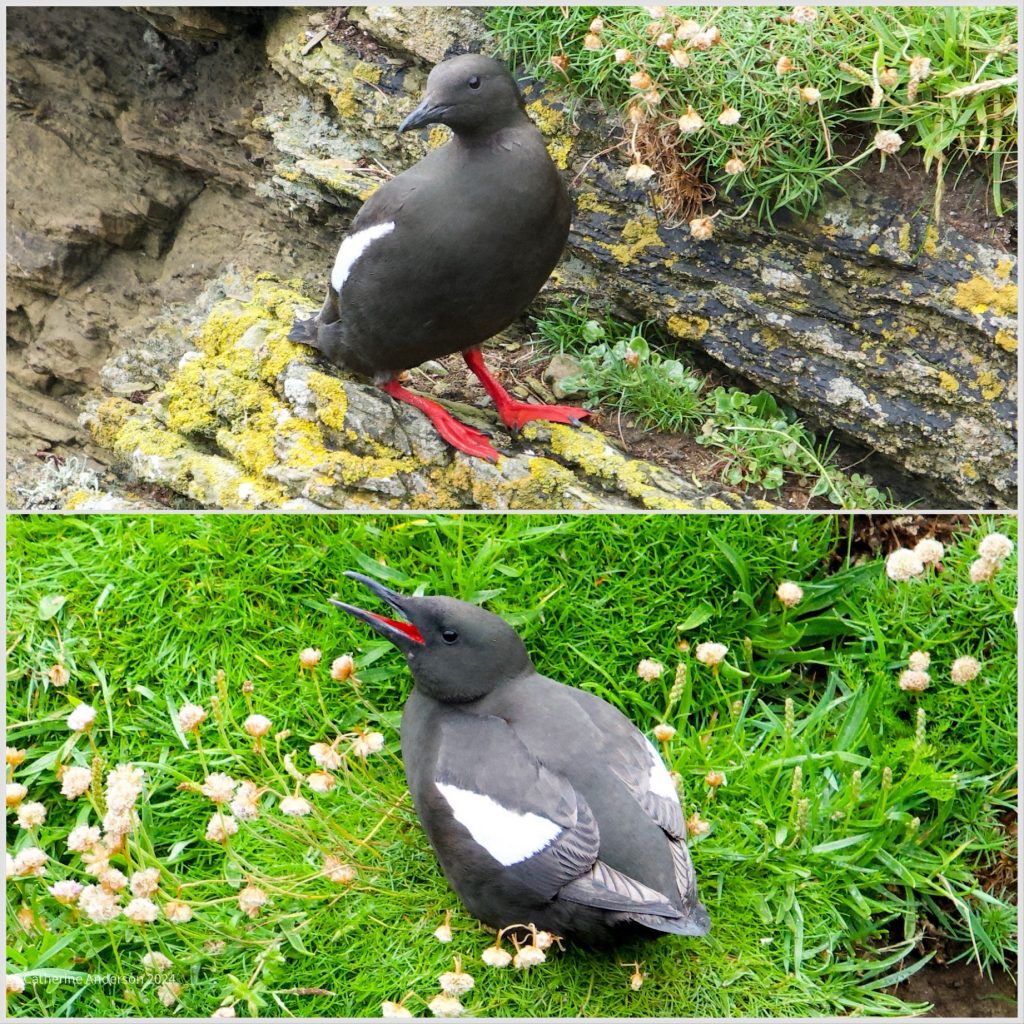
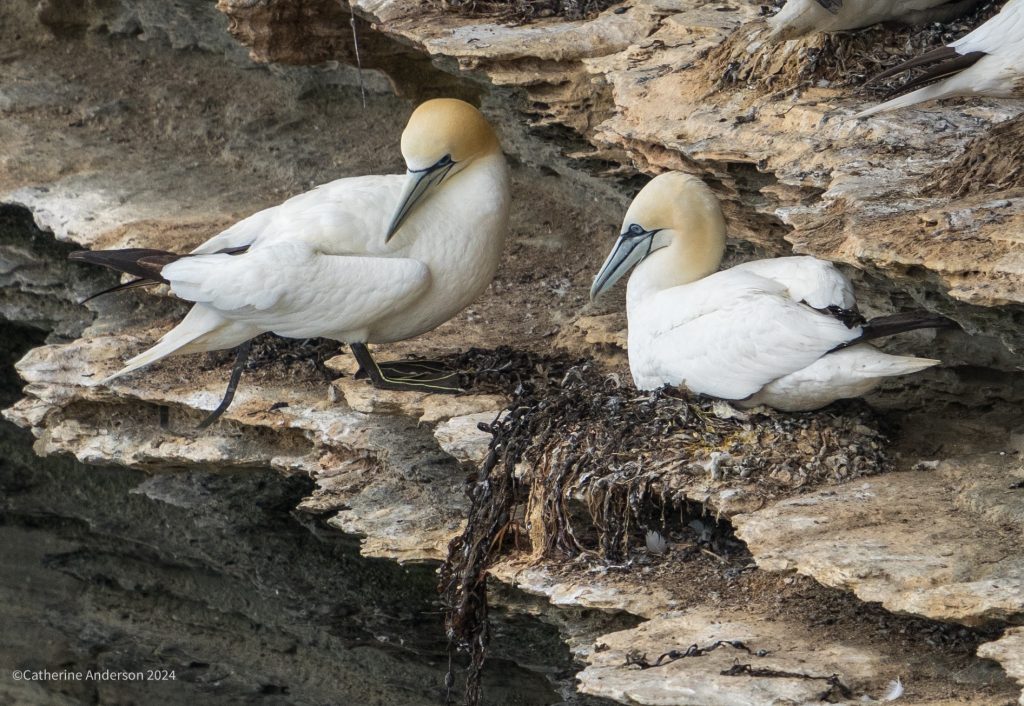
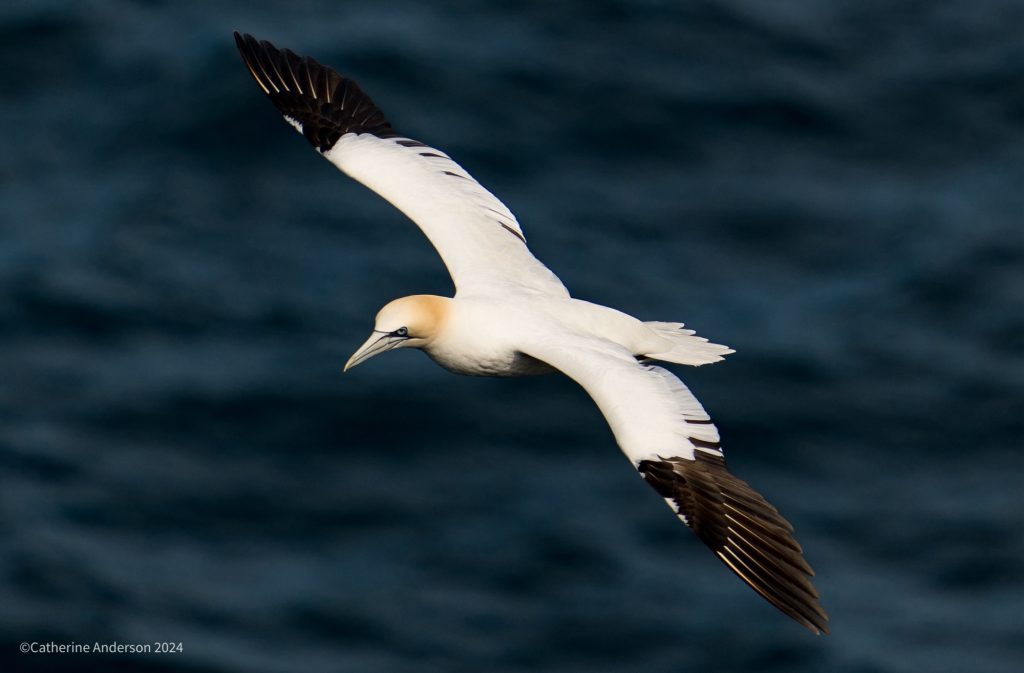
Northern Fulmar – Rarely seen from land except at colonies such as this – the male is beaded with water droplets, fresh from catching fish for his partnerWrapped up and ready for anything, Mr A got a lot of use out of his binocularsBlack Guillemots wearing their breeding colours – fabulous scarlet legs matching the inside of their mouthRazorbills having a chat on the edge of the cliff. If you look carefully into the shadowy crevice, you will spot an Atlantic Puffin listening in!A Northern Gannet soars along the coastline before diving torpedolike into the ocean for fish.A male Gannet has just brought food to his partner on the cliffsRain jacket and waterproof trousers blocked the wind quite nicely, along with the essential wooly hat!
We were dressed up warm against the cold wind that seemed to be ever present in the Orkneys, the treeless land offering little shelter or resistance, but once mesmerised by the birds, forgot all about the temperatures.
You could sit and watch the interaction between the birds for hours, accompanied by a constant cacophony of calls
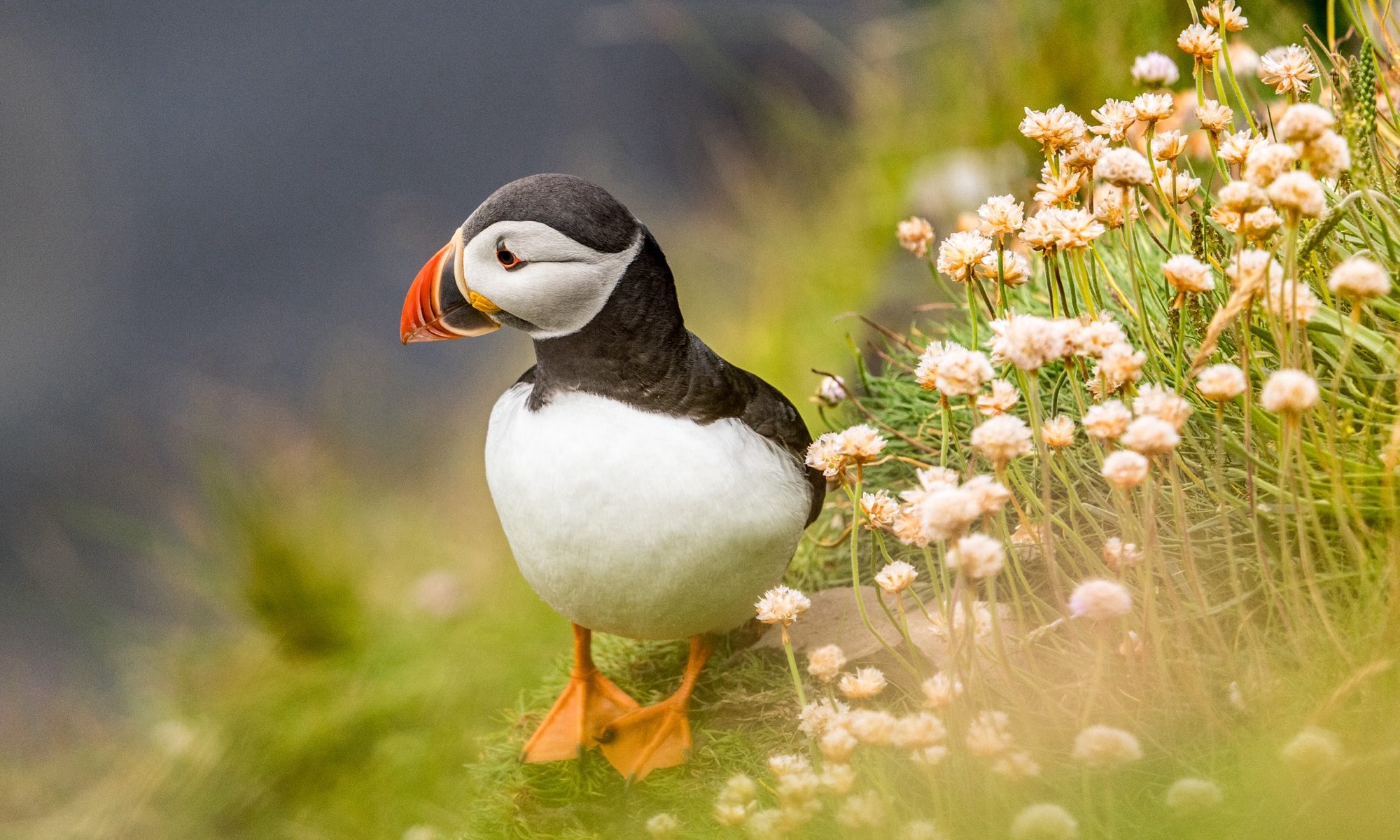
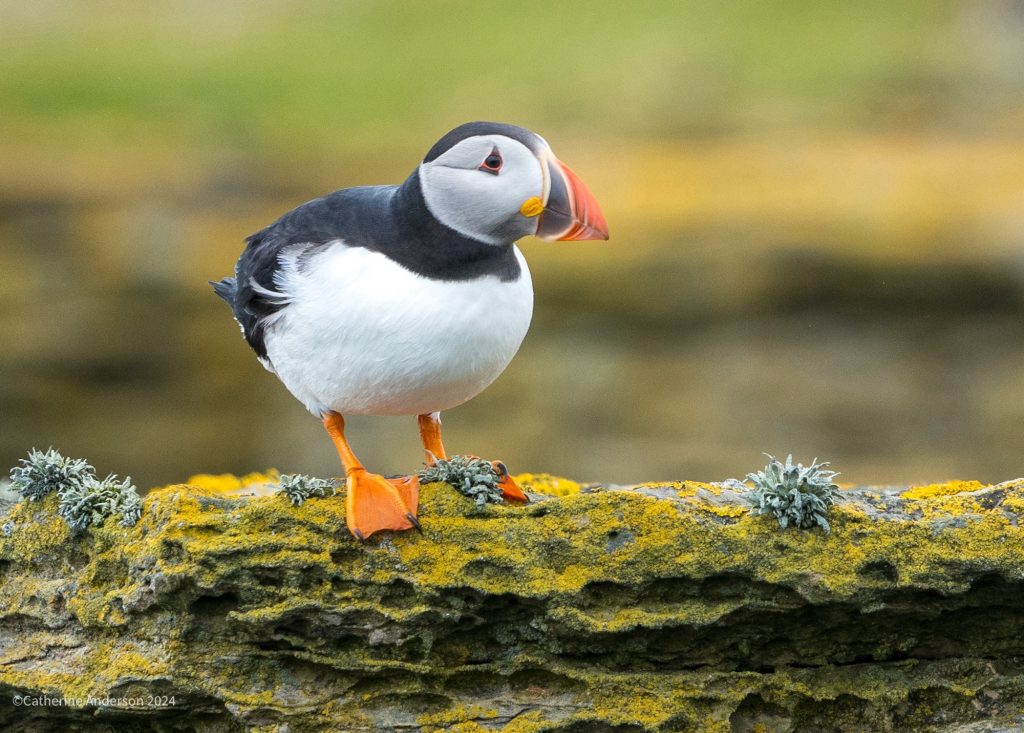
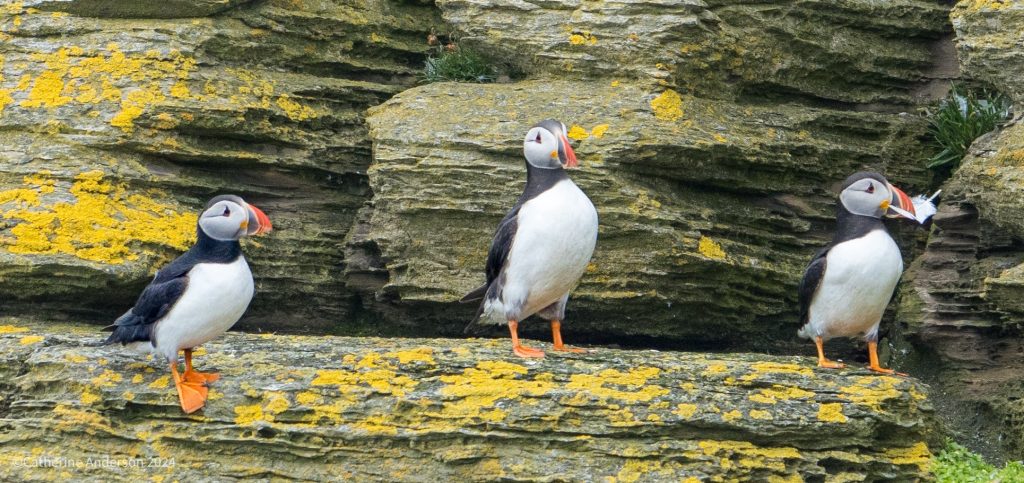
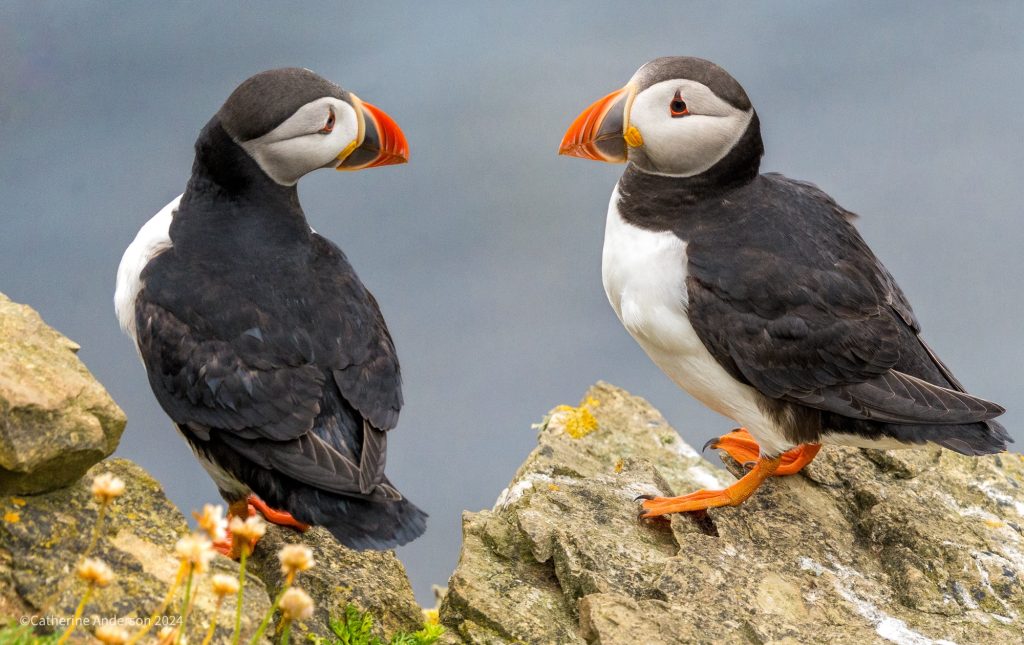
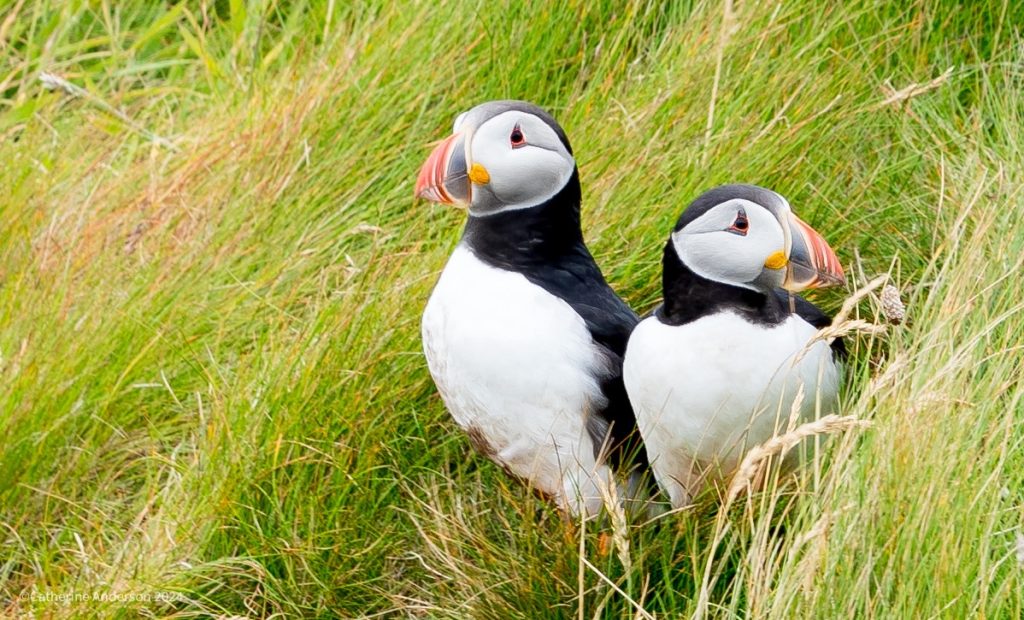
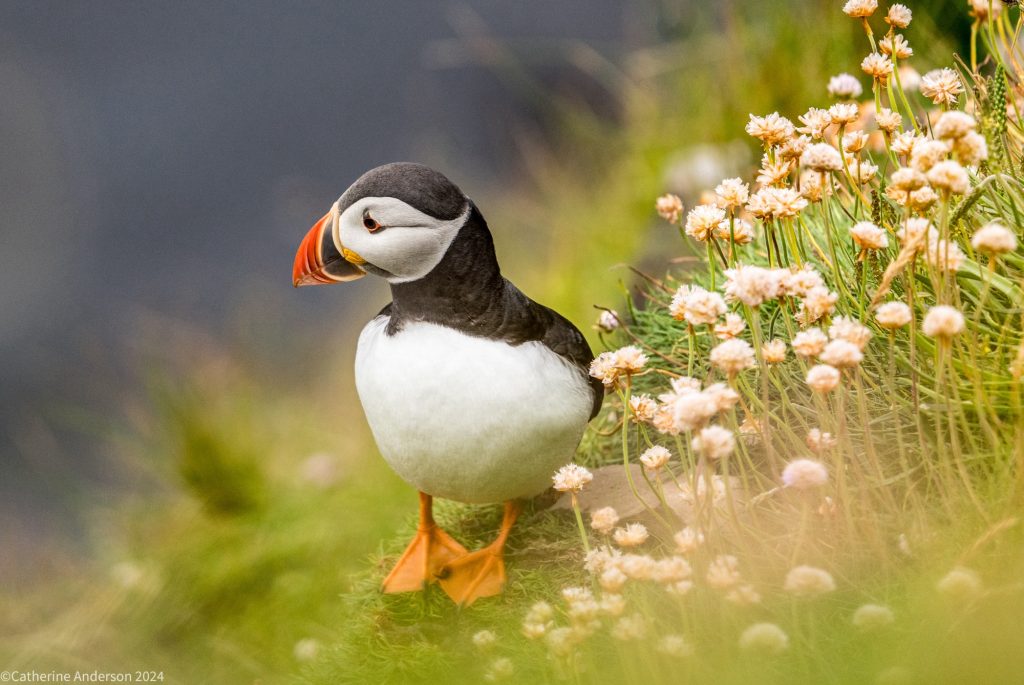
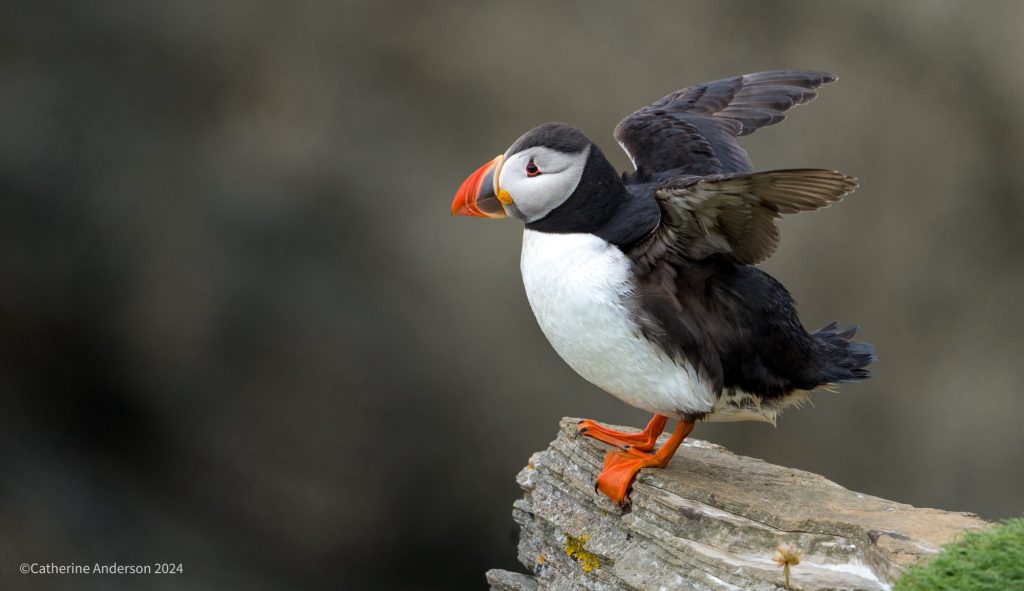
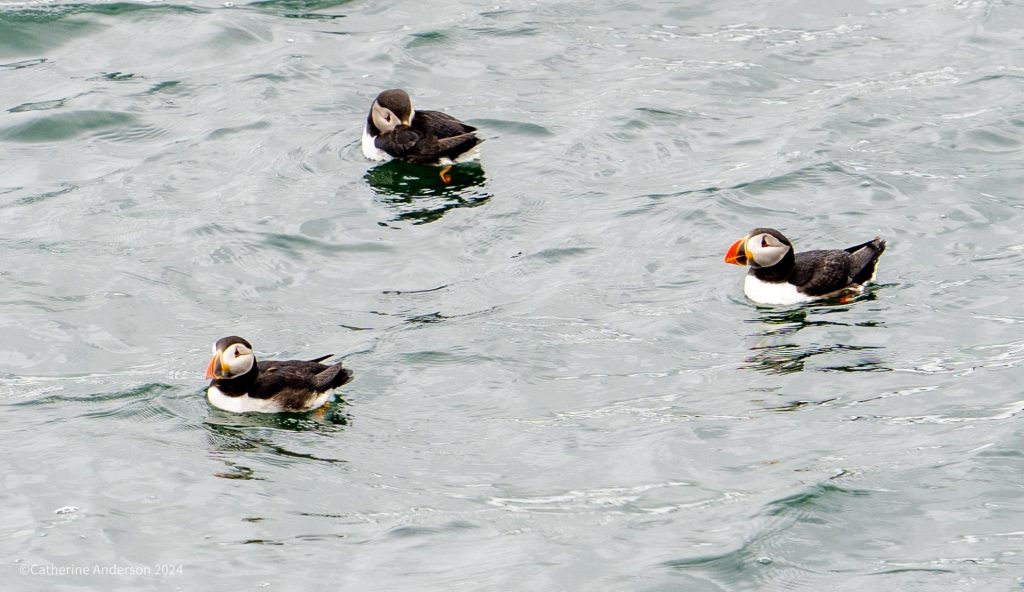
And, of course, the Puffins! They showed up in their comical way, like little clowns with their brightly coloured beaks and legs and yellow cheek spots.
And suddenly a Puffin appears on the cliff beside us! He’s in full breeding colours with white face and bright yellow cheek and a white extension to the beak between the black and red colouring.You know that classic picture of a Puffin with a bunch of fish in its beak? Well, I didn’t capture that one – just this one holding a feather!
It was hard to tear ourselves away, but after consuming our lunches we continued on our walk.
Mr A chatting to our fascinating guide, Alayne, who was a great storyteller with a lot of knowledge about the islands
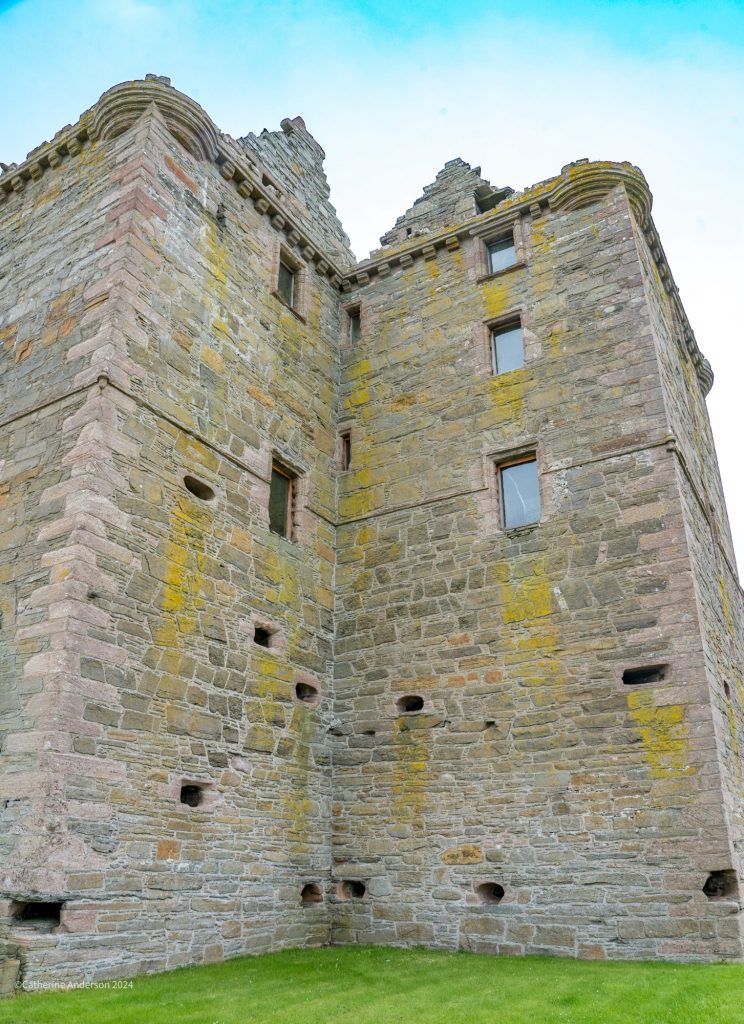
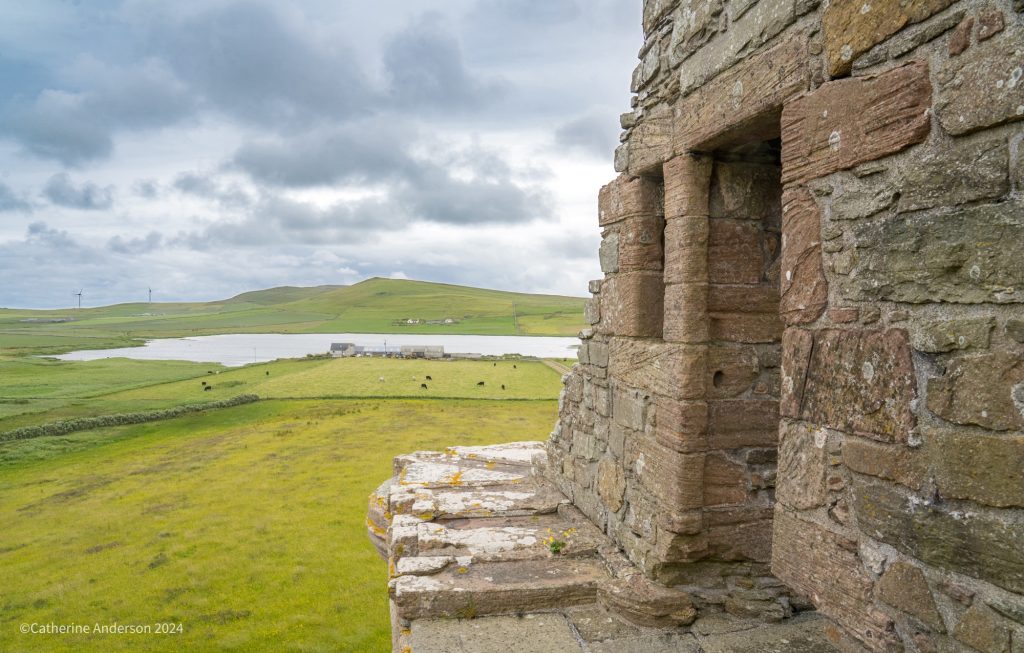
A short drive in our minibus took us to the ruins of a castle with a chequered history. Noltland Castle was built for Gilbert Balfour, master of Mary Queen of Scots’ household in the late 16th century. Apparently 71 gun holes dot the walls, making it as much of a fortress as a manor house. Apparently he was quite paranoid about being murdered!
Commanding views across the relatively flat landscape
After leaving this castle, we were taken on a short walk to another one – Castle o’Burrian, a squat sea stack with a bustling Atlantic Puffin colony. We sat on the cliff edge watching in wonder at the birds as they made their clumsy, fluttering flight, sitting amongst the sea pinks and grasses, and taking many photos.
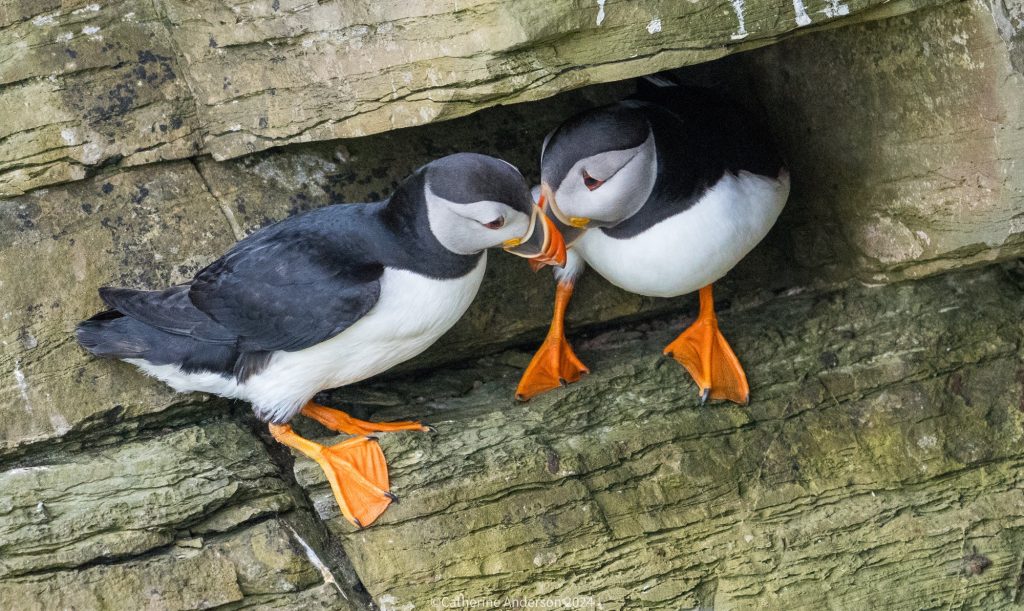
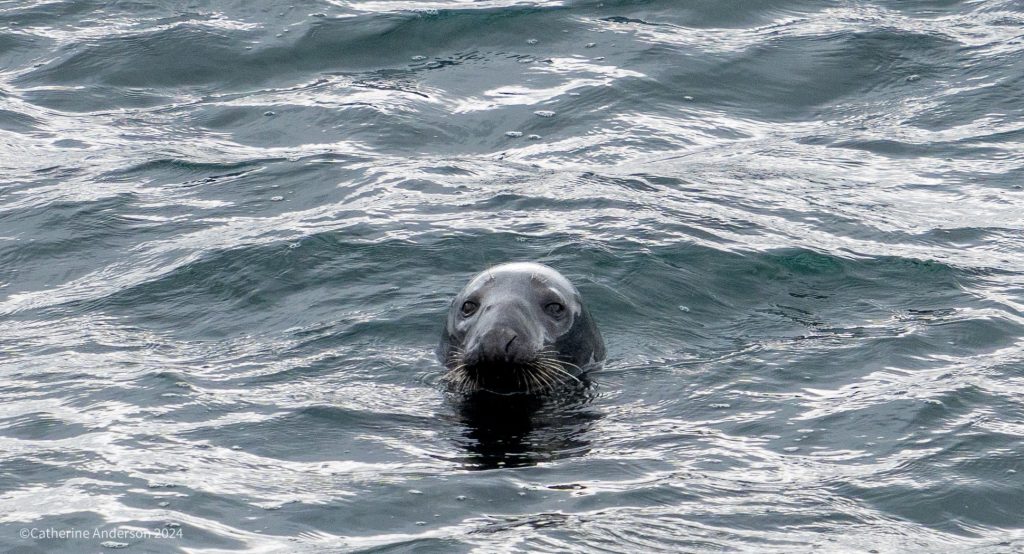
Puffin kisses – rubbing beaks to show affection – apparently they mate for life and this is a bonding ritual they undertake after being out at seaGetting ready for take-offJust bobbingA non-Puffin! Walking along the cliff back to our minibus we get the feeling we are being watched…and indeed we are. Far beneath us is a seal. There are two types found in Orkney; the Grey Seal and the Common/Harbour seal. About 15% of the world’s population of Grey seal lives here, and they are well known for following in the water as people walk along the shore!
Our final destination before our journey back was to a tiny museum which, among many other incredible discoveries, housed Scotland’s earliest representation of a human form, uncovered at an archaeological dig in 2009.
The Westray Wife – found at the Links of Noltland. Made from sandstone
A ferry back to Mainland, and dinner in a local restaurant concluded our day by 10pm, just in time for sunset.
8th July – Scara Brae and Stromness
Our start was a little later this morning, as we didn’t need to catch any ferries, our day entirely on Mainland.
Can you spot Twatt? Apparently the sign has been stolen so many times they no longer use one!
The day dawned bright and sunny, and although the wind remained, it felt quite a bit warmer and so one or two less layers were donned.
We started off with a drive across to the north-west of the island, where we did a spectacular coast walk to another major bird colony.
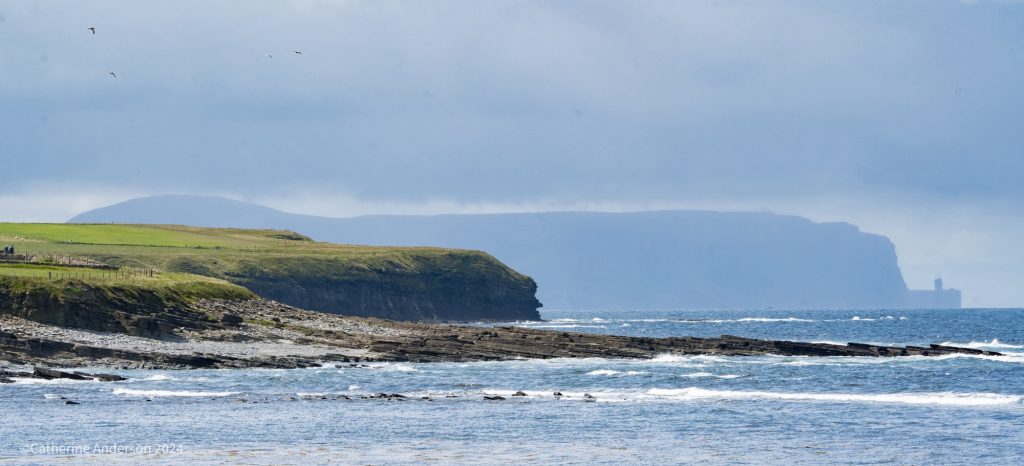
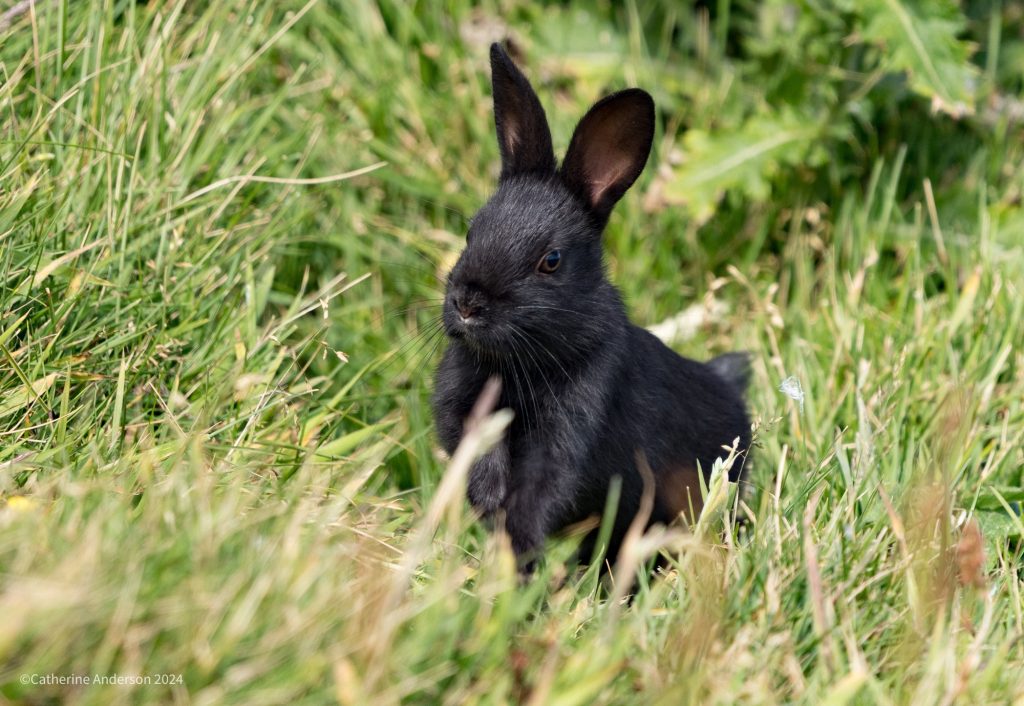
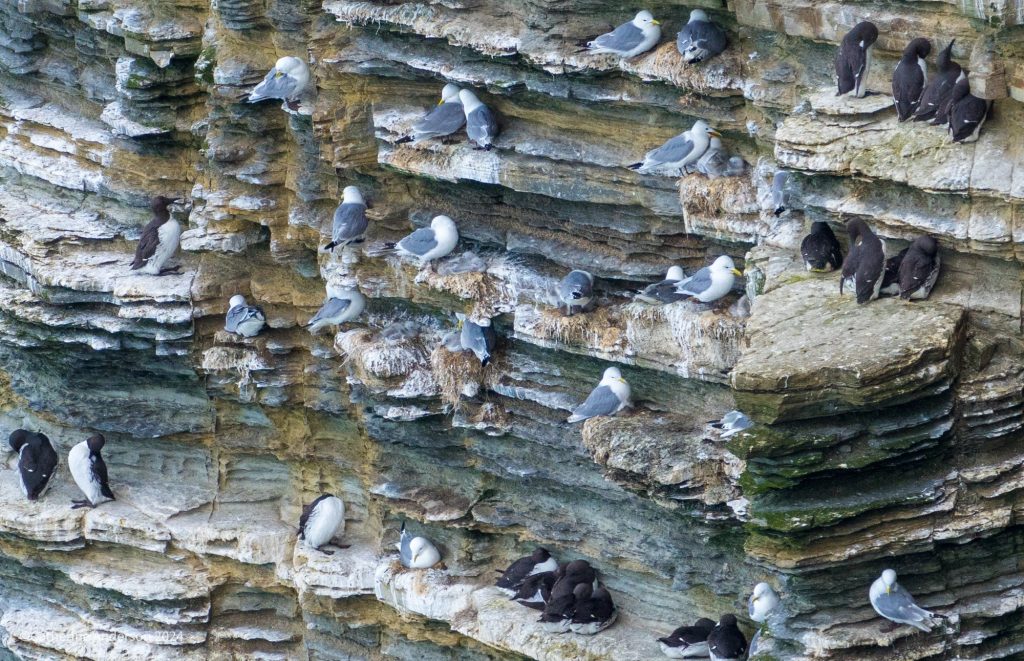
Our walk’s start point affords us a great view of Old Man Hoy, a sea stack off the coast of the island of HoyA huge Northern Gannet colony on the cliffs – the noise is incredible!There are many wild rabbits on this part of the island, including several black ones we spotted. There are no major raptors around to catch them, since the last Golden Eagle failed to rear chicks and died out in 1982.The huge seabird colony at Marwick Head – turn up your sound for the full effect! Up on top of the headland is the Kitchener Memorial, built to commemorate the HMS Hampshire which hit a mine in Marwick Bay in 1916. It sunk in just 15 minutes, resulting in more than 700 lives lost.Black-legged Kittiwakes perch alongside Razorbills on precarious and often uncomfortable looking ledges, raising their young
Finishing our walk we headed down to Sand Geo, a beach by some old fisherman’s huts for our lunch. Out of the wind it was almost warm! The huts themselves date to the 1800s and were designed as shelters for the local fisherman, house boats and equipment.
Looking up at the fisherman’s hutsSand Geo, our picturesque lunch spotA non highland cow using a bull as a pillowThe motley crew of hikers
Scara Brae was our next destination, much anticipated and read about in advance, though once we arrived we realised that most of what we had researched was already out of date and superseded with new learning – even the information in the visitor centre was now out of date.
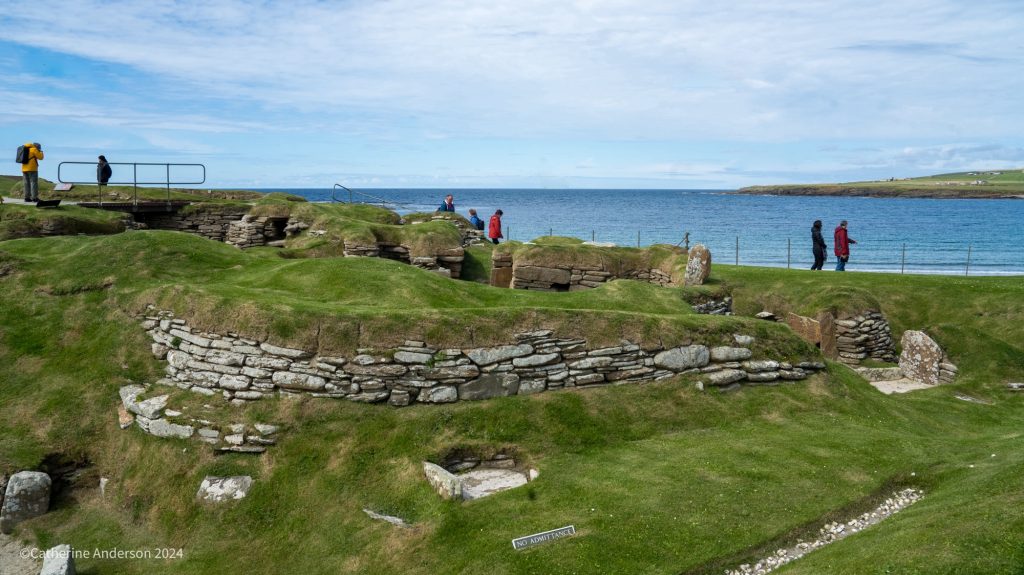
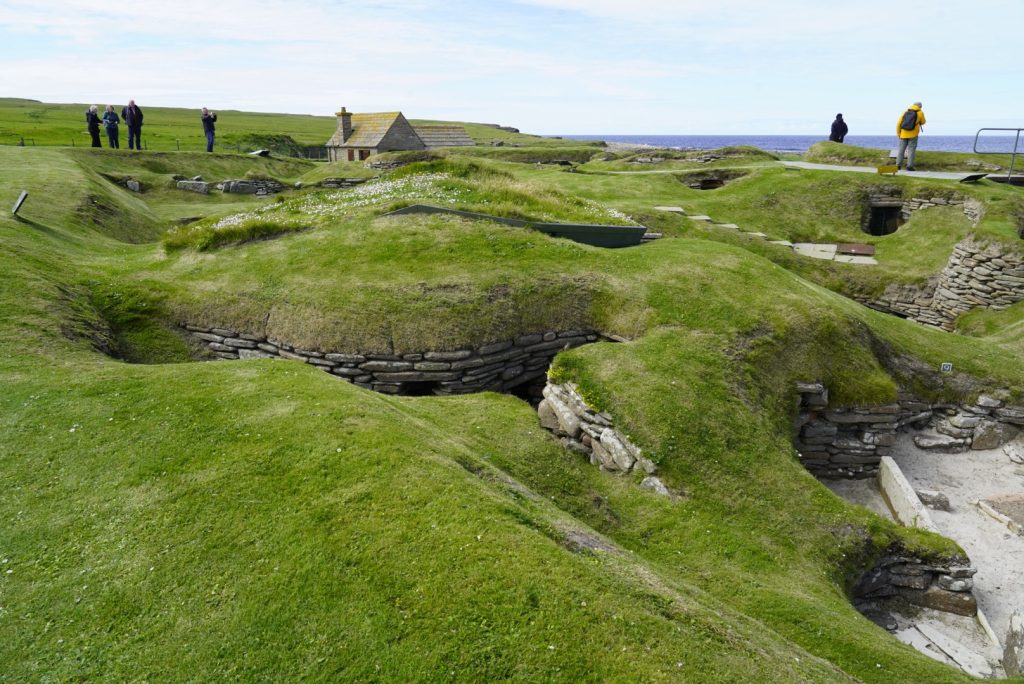
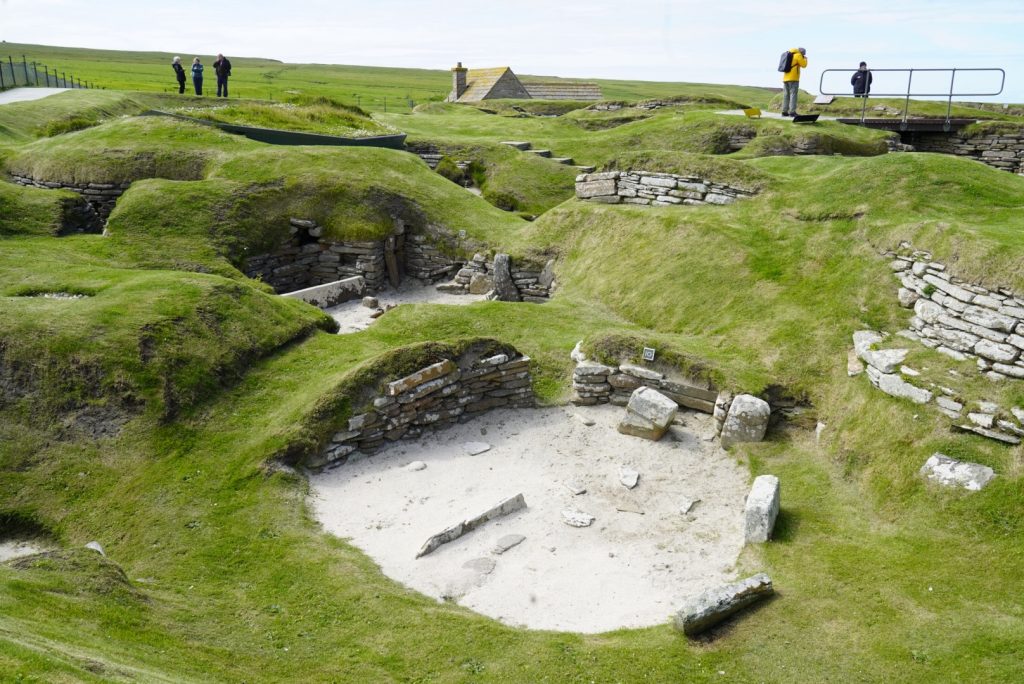
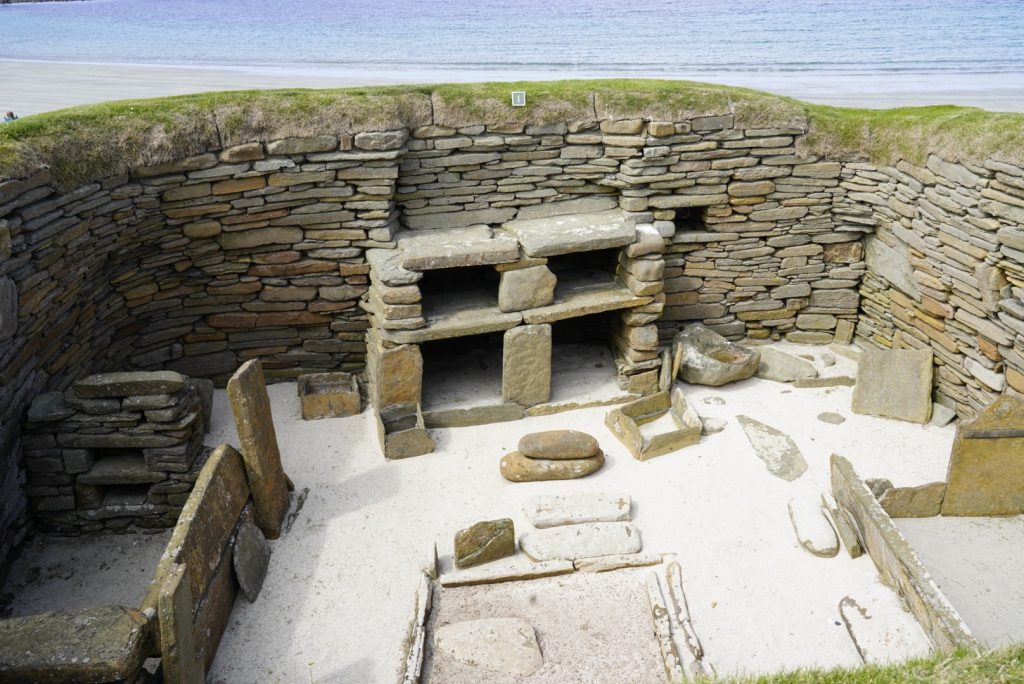
Scara Brae is Europe’s most complete and well preserved Neolithic village which literally emerged from the sand dunes after storms in 1850. You can almost imagine the amazement as literally overnight houses were revealed, complete with stone beds, dressing tables, fireplaces, drainage and even toilets were revealed. People would have lived here between about 3180 BCE to about 2500 BCE, and at the time the Orkney Islands would have been far further south, with a much warmer climate.
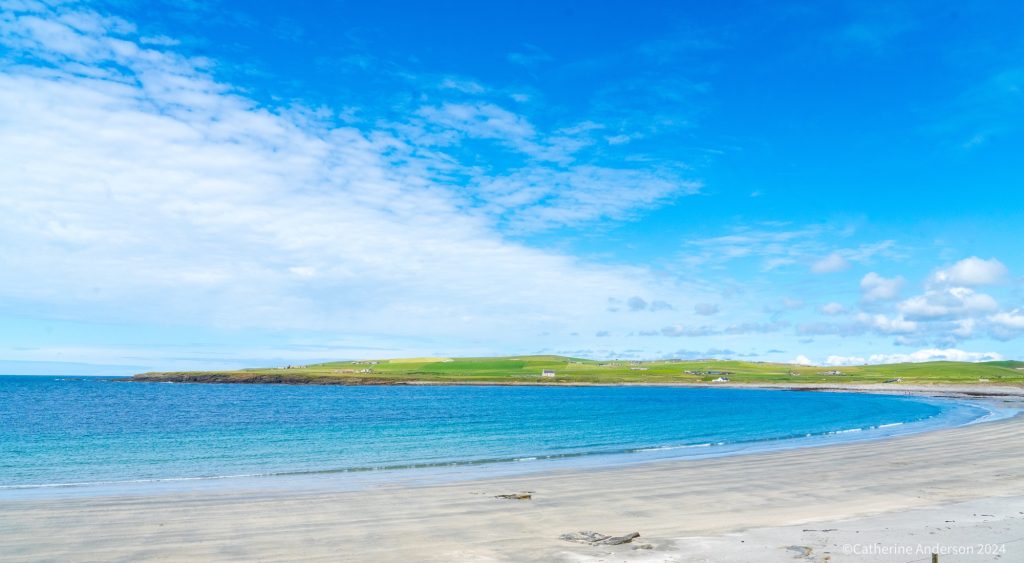
The site sits on the edge of a white sand bayThe houses had drainage and stone bed areas, and would have had stone slabs on the roofIt felt quite eerie seeing such familiar things from more than 5,000 years agoThe houses had curved walls, not corners as seen on the right hand side, and no windows. The ‘dresser’ front and centre of the room was thought to display precious things, the beds surrounding the fire in the centre of the home
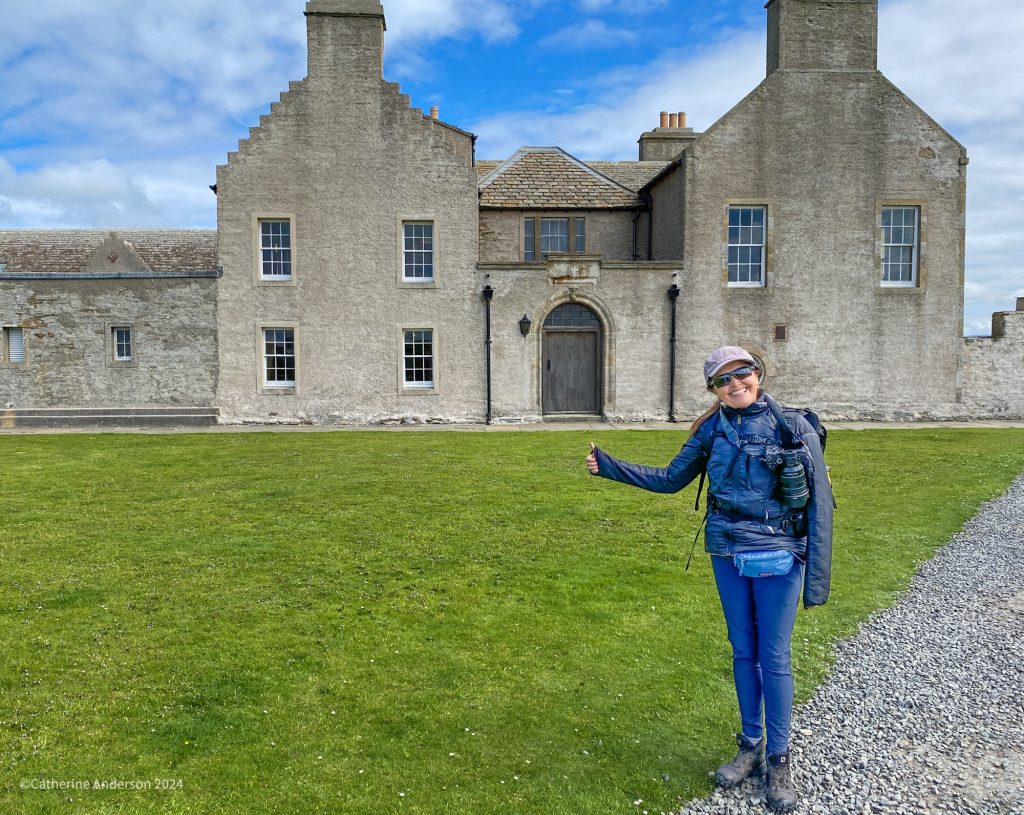
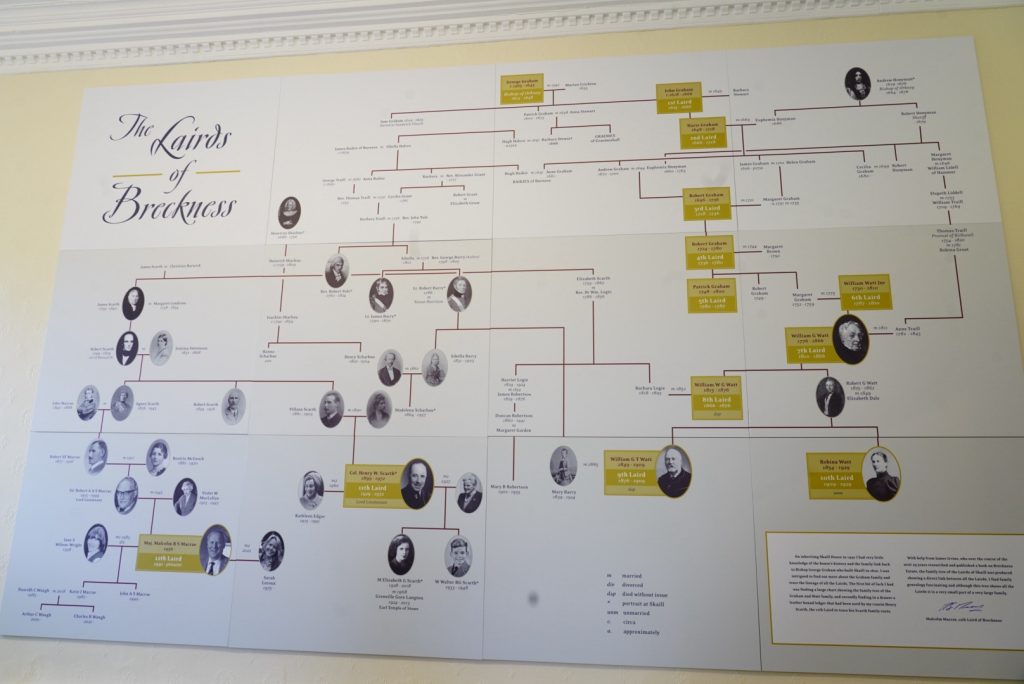
The house from which the village was first discovered is called Skaill House, and in it I was able to find a huge family tree on a wall which mentioned people on my family tree. By this stage I have lost trace of what relative Bishop Honeyman was, but we certainly have Honeyman genes in us somewhere!
My house! Ha ha!The beach in front of the house, surrounded by sand dunesThe family tree, which somehow leads to me on the Honeyman side
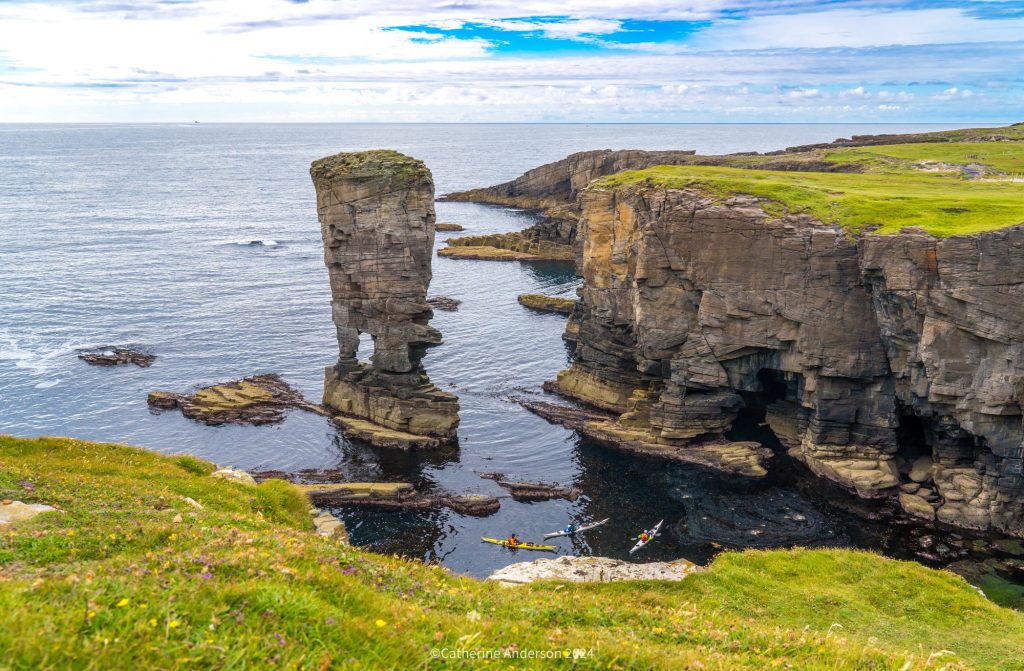
Our route took us on another short walk, this time to another magnificent sea stack along the coast, with some fauna and flora unique to Orkney along the way.
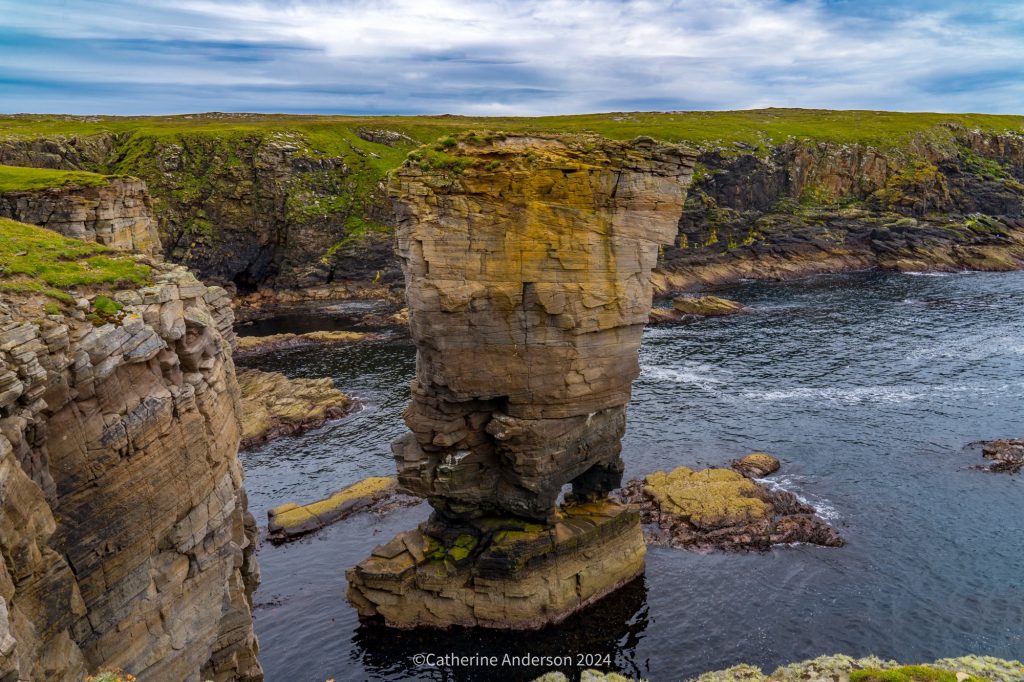
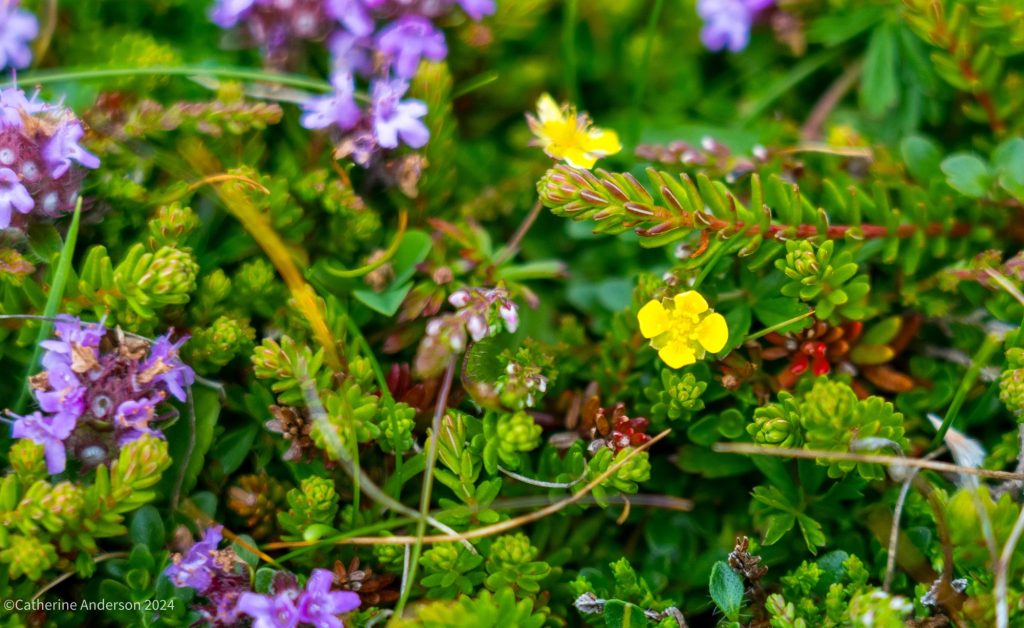
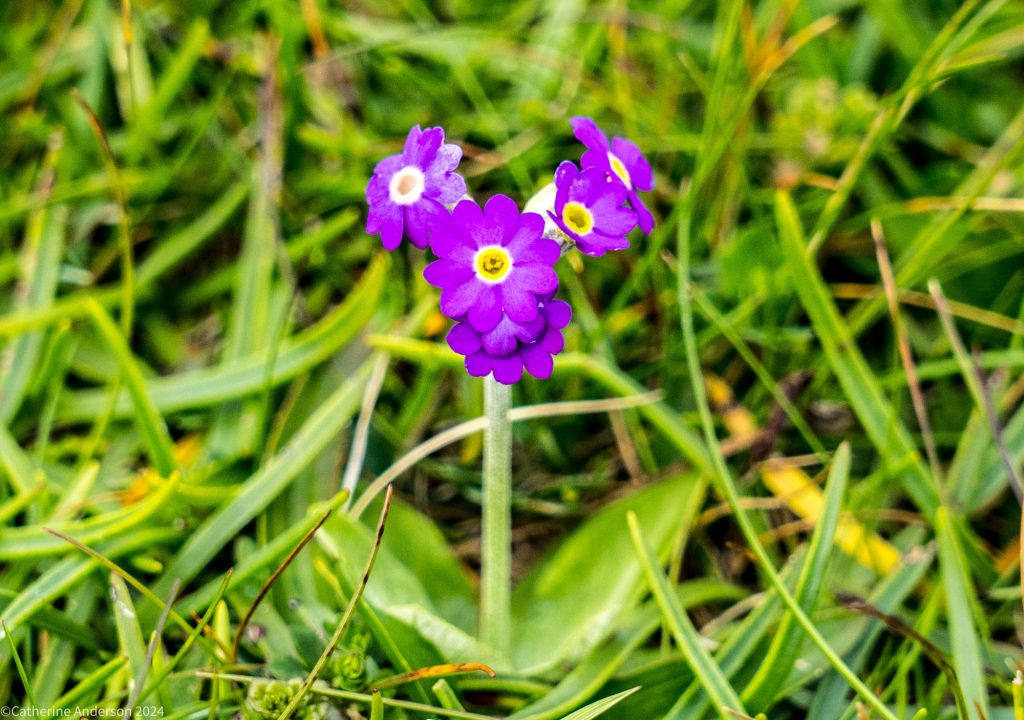
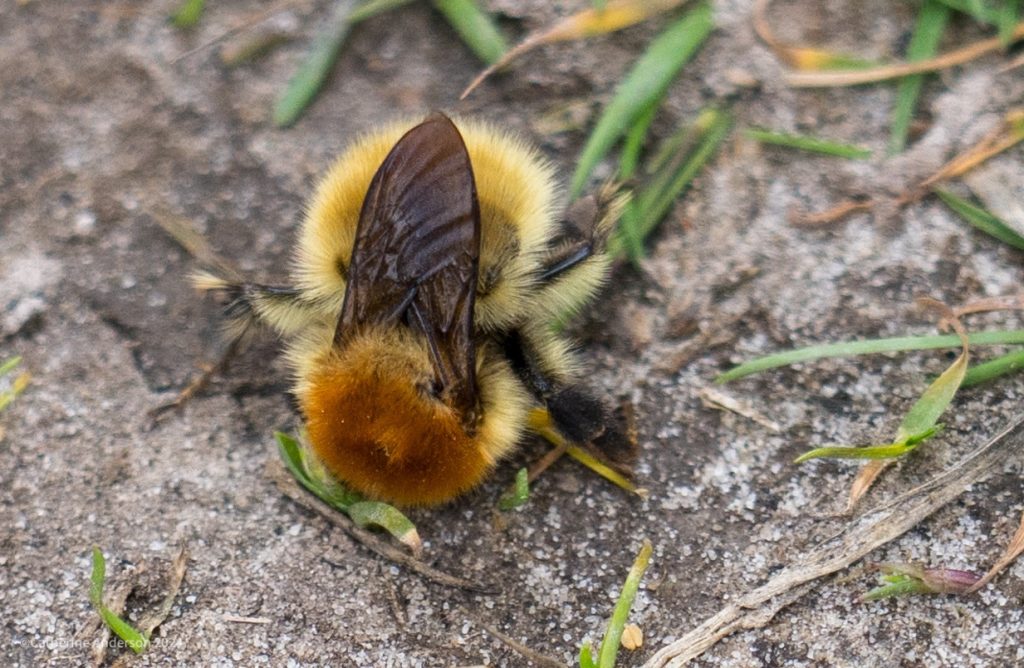
Yesnaby Castle sea stack – we watched the three kayakers explore the caves in the cliffI wonder how long until this completely collapses?When you get close to the ground you see it is rich in tiny plants and flowers, all adapted to existing in these harsh conditions – the purple flowers are wild thyme, the yellow are TormentilPrimula scotia – the Scottish Primrose – endemic to just three areas – Caithness, Sutherland and Orkney. It is commonly overlooked as its flowers are so tinyThis bee didn’t look well, but was alive. It is an endangered Moss Carder Bumblebee, and only found in the far northwest of the Scottish mainland, Orkney and some of the Hebridean islands.
We jumped back into the bus for our final destination for the day, the small town of Stromness, where more people from my family tree lived, and then sailed from to Canada to become founding members of the European settlers there.
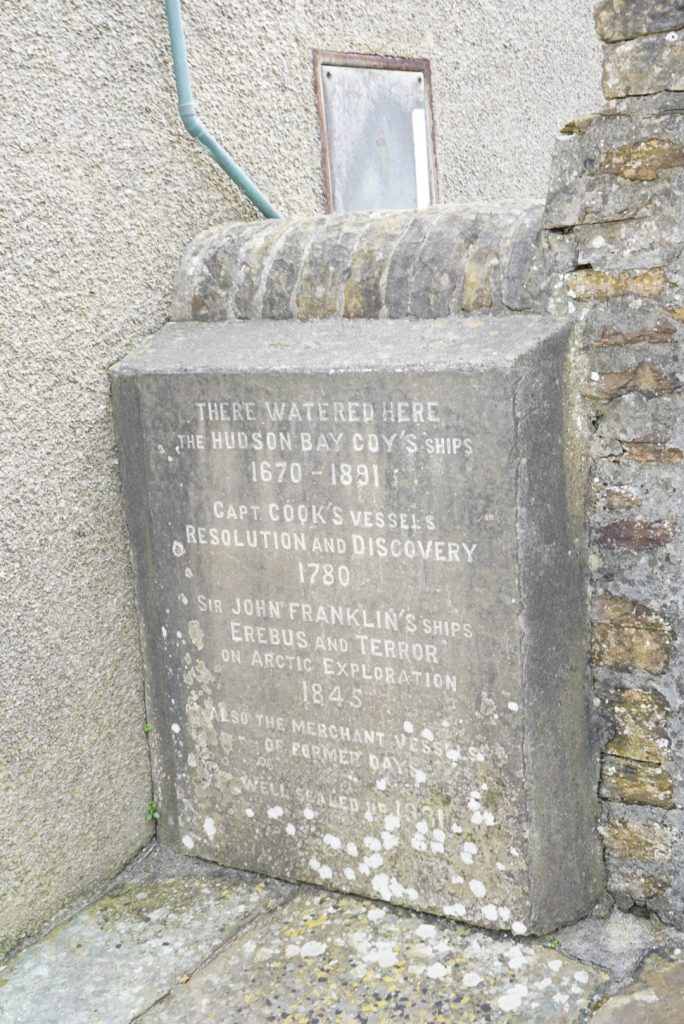
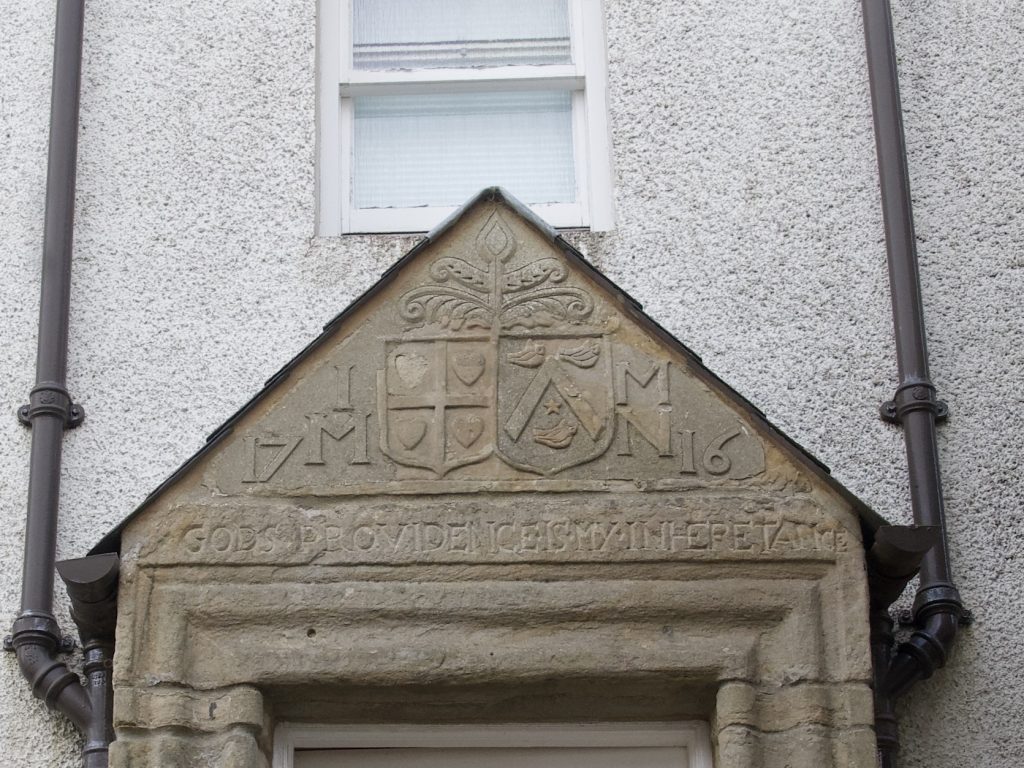
It was just spine tingling seeing the well from which the ships would have filled up their water for the journey, and finding the oldest house in Stromness, which would have been modern in my ancestors time, and perhaps somewhere they would have visited.
Marking the location of the wellThe entrance to the oldest remaining house in Stromness – built in 1716 and known as the Miller’s House
It’s easy to delve down rabbit holes on the interweb and a quick read about the time my ancestors would have lived there reveals a town with no sewerage, little fresh water, and no indoor sanitisation. Not a hard place to leave, once would assume, when invited to settle a new land with the promise of fine farmland and adventures across the oceans.
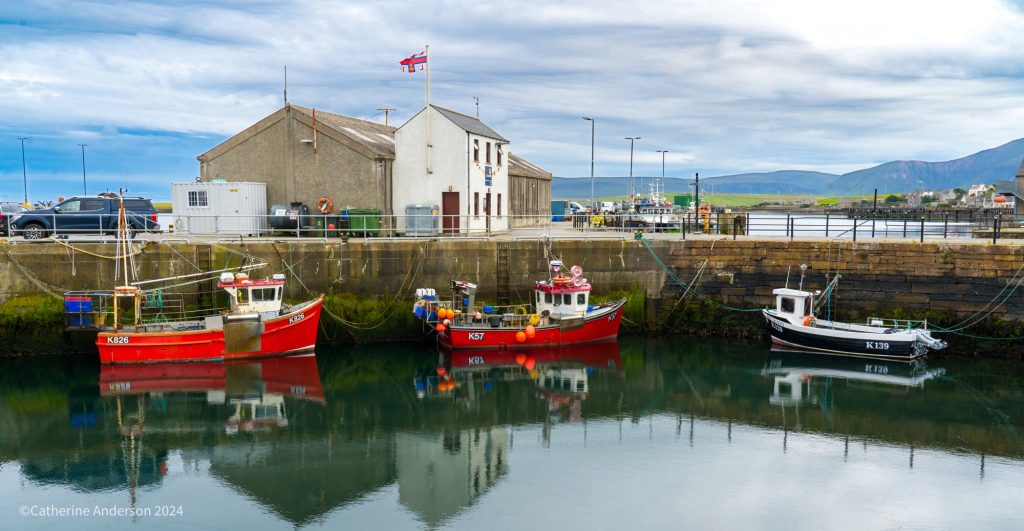
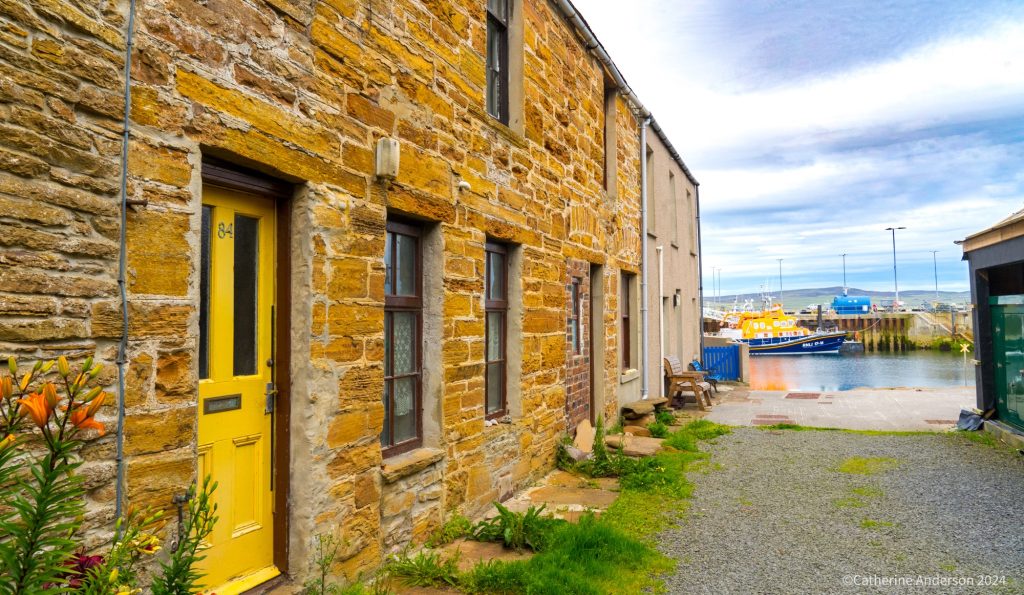
Stromness HarbourOld fisherman’s cottagesThe water was very serene
A pub dinner concluded our amazing day, and again we were home in time for sunset, just after 10pm.
10:10pm and the sun is just going down. At this time of year the dusk stretches out until around midnight, and then it starts getting light again around 4am!
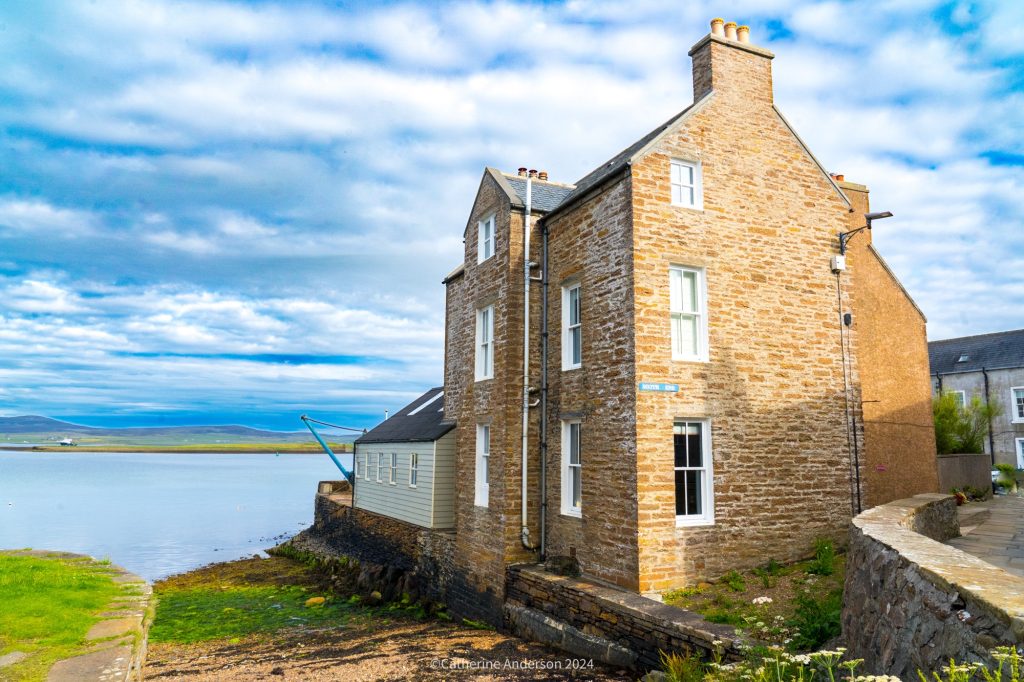
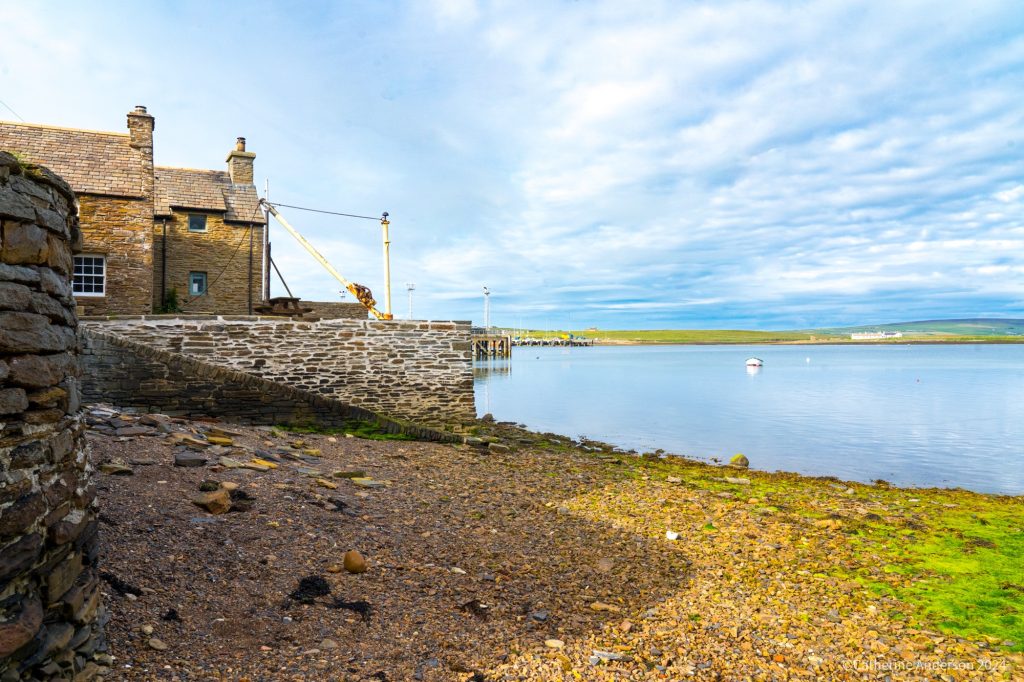
Location: Woolacombe, Mortehoe, Ilfracombe and Lee, North Devon, UK
After a couple of years mostly settling into our new life in Somerset, it was time to get out on the road again, so we decided to dip our toes in the water with a little three night trip to North Devon. We packed up our little Hymer 444 and Mr A hit the road, with me tagging along in our little 4WD Suzuki Jimny, giving us flexibility to explore beyond our campsite.
The Doctor (Jimny) and Truffy (Motorhome) and SUNSHINE!
Mr A had spent most of his childhood holidays with his parents in Woolacombe, and was keen to see whether the town of his 1960s memories was anything like it is today….though beyond ‘the beach had sand on it’, there wasn’t too much to work with.
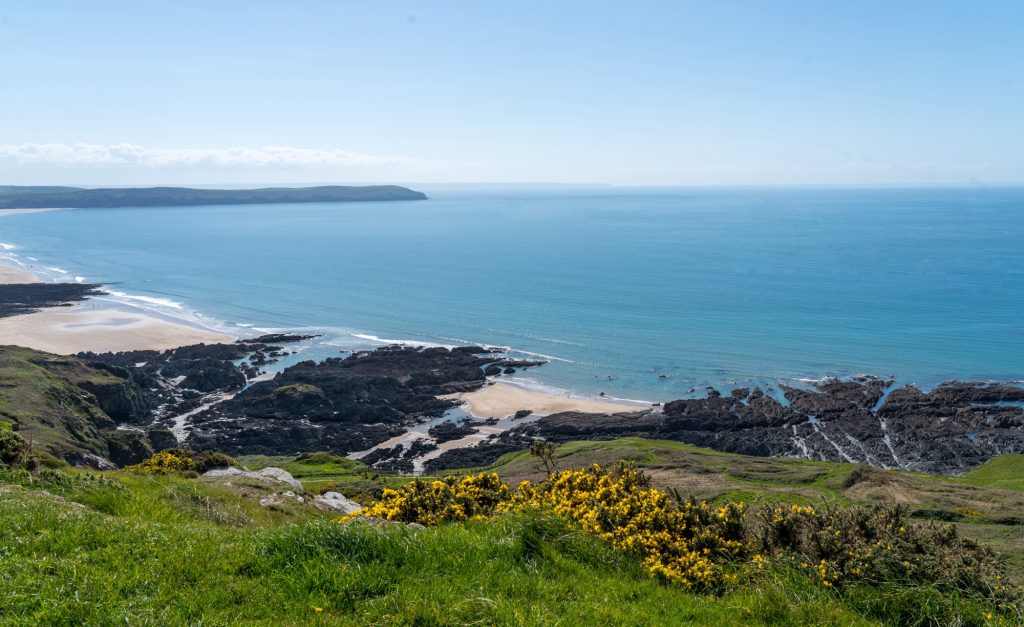
We arrived to a spectacular blue sky and generally stunning afternoon. It’s only a 90 minute drive from home, so theoretically could be a day trip, but it was great to know we had some solid time to explore this piece of the coast. So after getting Truffy set up, we jumped in the Jimny and drove to nearby village, Mortehoe for a walk.
It was so good to see the sun! And when we were sheltered it was even nice enough to take off the jackets and soak up the rays. Some of the really keen folk (who hadn’t spent the last 2.5 decades living in Australia) were in shorts, but not us. We did a walk around the coast, before stopping at one of the two village pubs for a refreshing beverage.
Out of the wind it was rather pleasant!
We drove down into Woolacombe, Mr A recognising the Woolacombe Bay Hotel (link worth clicking on even if only for the impressive website, showing off Woolacombe!), a very posh (and very expensive) hotel with a commanding view out to sea.
One thing we have noticed in Somerset and Devon is that there are many towns with the term ‘combe’ (pronounced coom) in their name. We have learned since moving here that a combe is a valley. Woolacombe was first recorded in the Domesday book in 1086 as Wolnecoma, literally meaning ‘Wolves Valley’. At the time the valley was thickly wooded and presumably wolves could be found.
The following morning was slightly less blue, but dry nevertheless, and Ilfracombe was our destination.
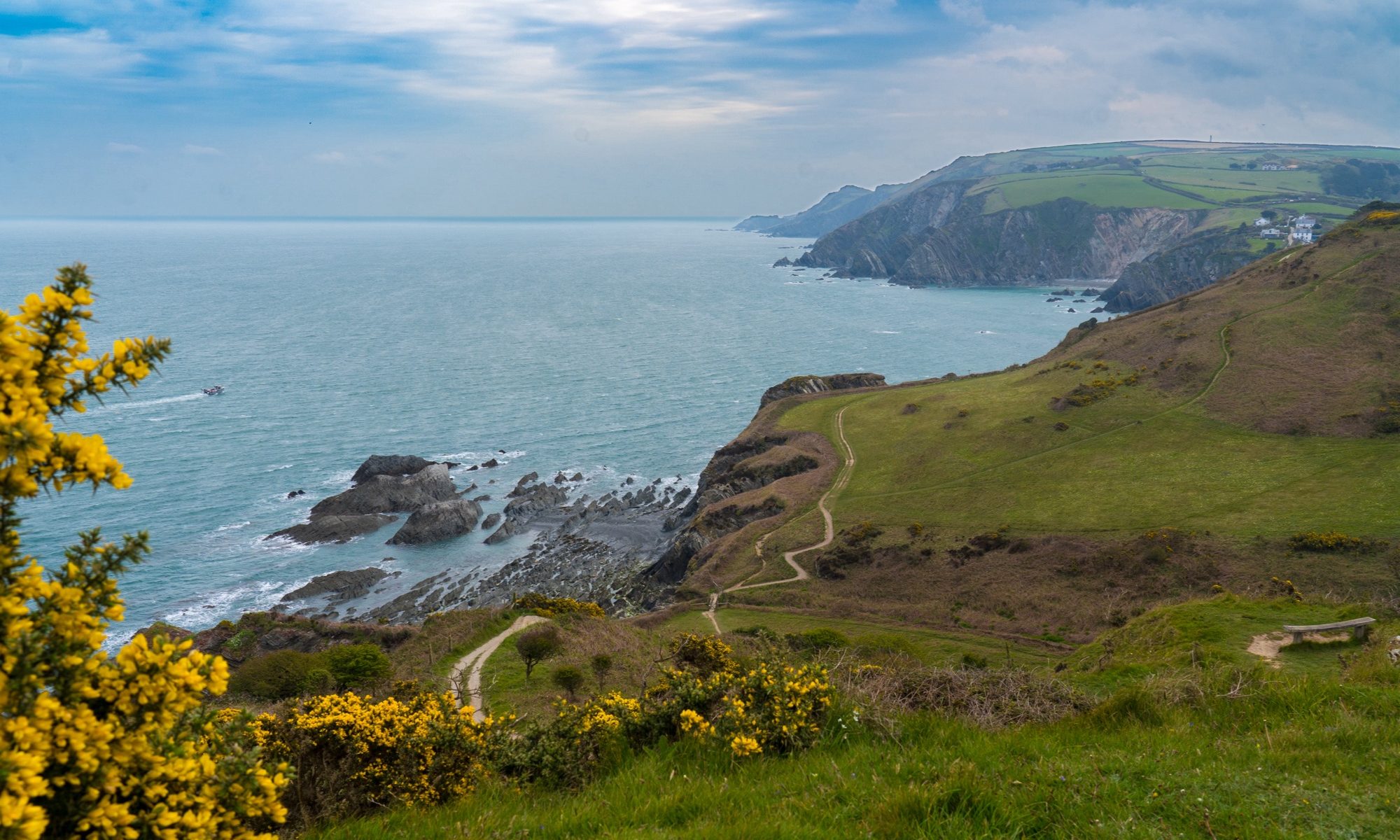
The 1,014km South-west Coast Path runs through this part of the coast, and we decided to check it out. Spectacular coastal views and steep paths were visible, but with my dodgy breathing and Mr A’s recently rolled ankle, we were not game to do more than admire the views and return to town.
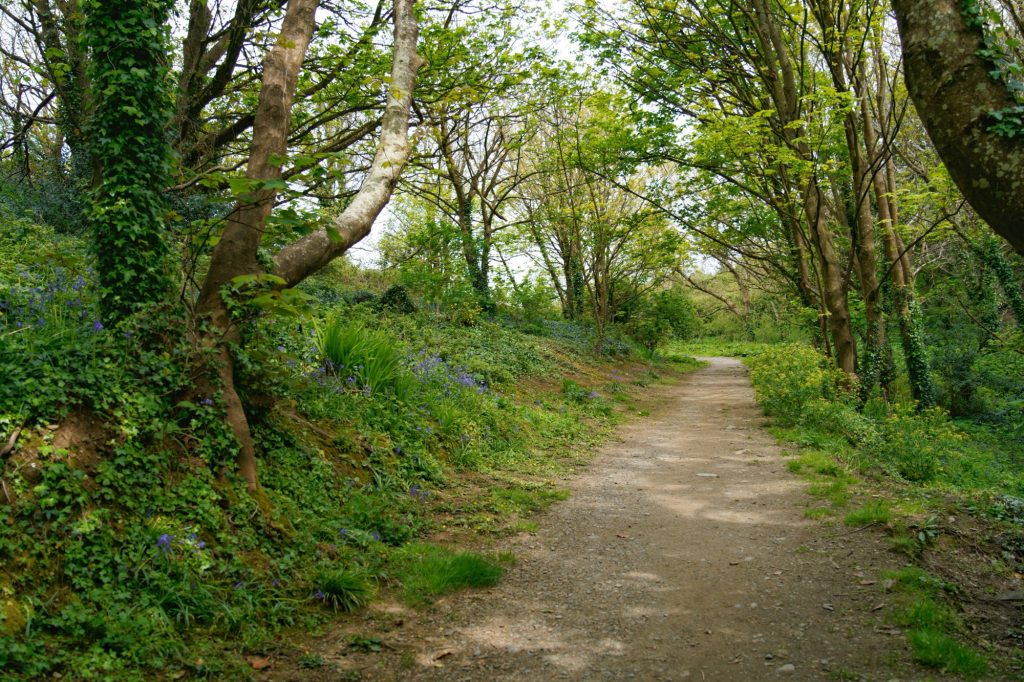
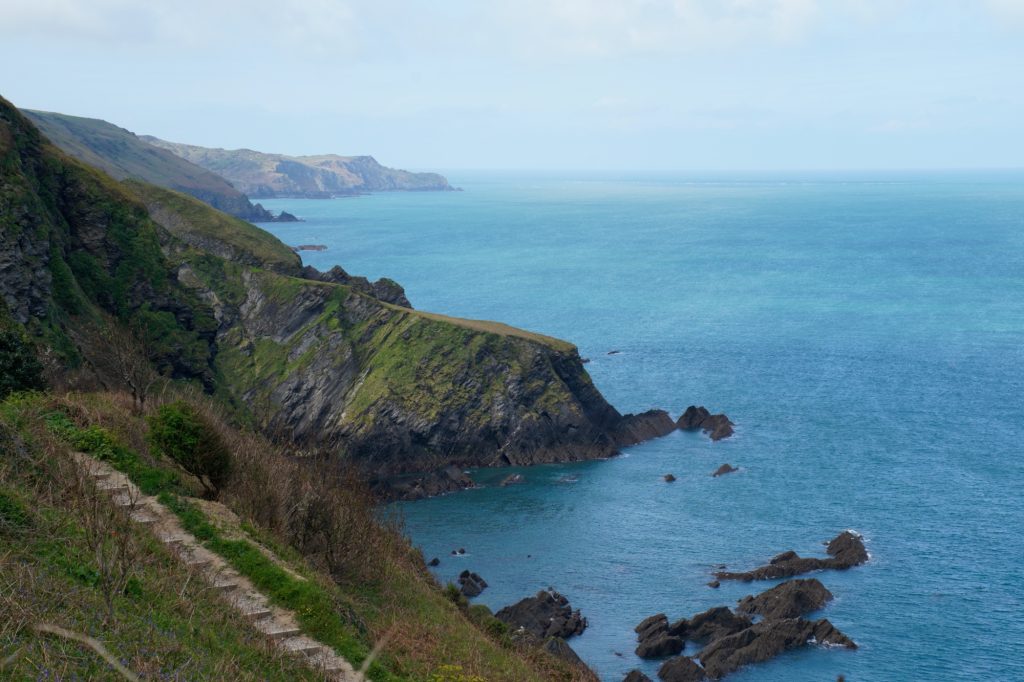
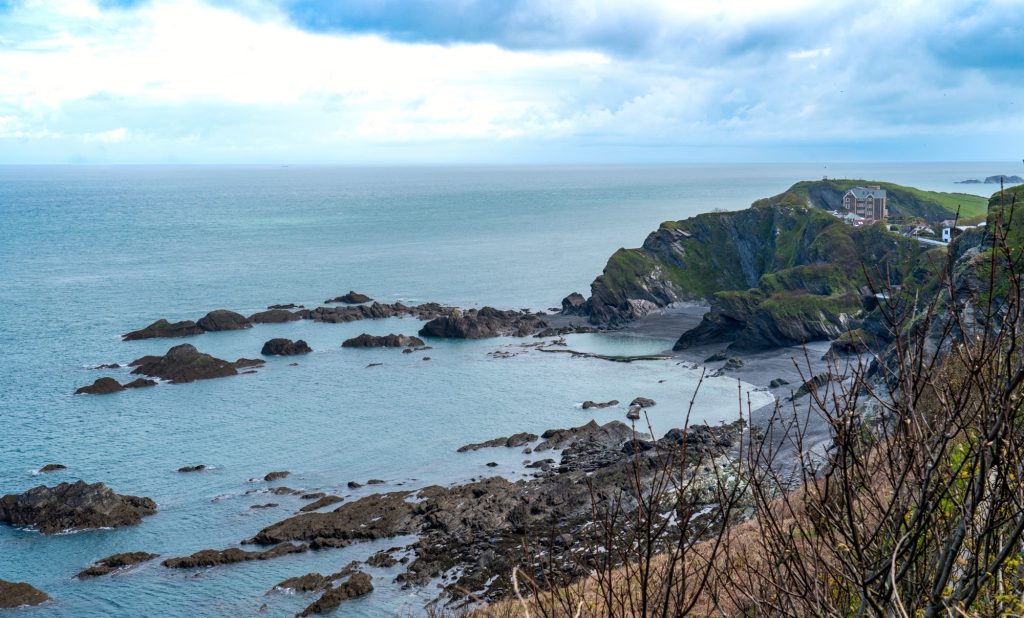
Bluebell lined footpaths lead us through the woodland to the coastLooking south towards WoolacombeLooking north towards Ilfracombe
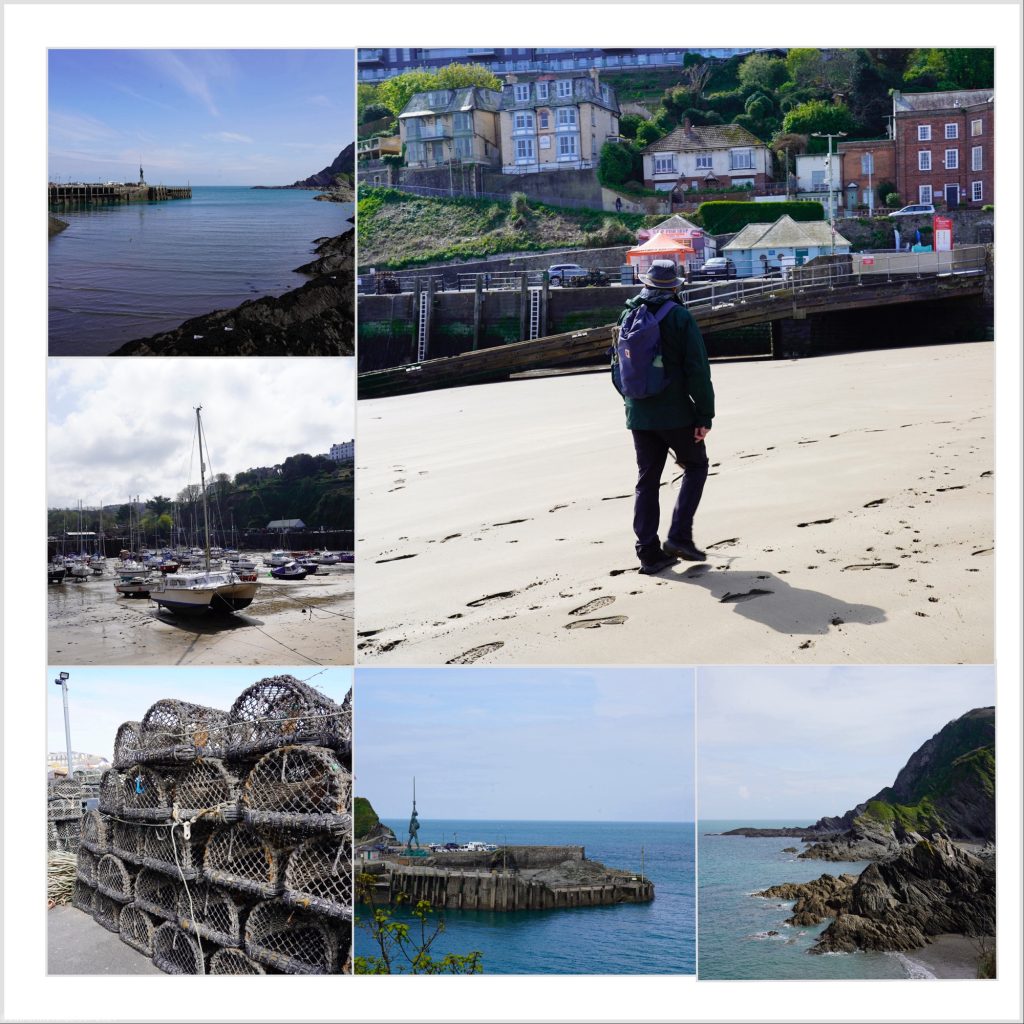
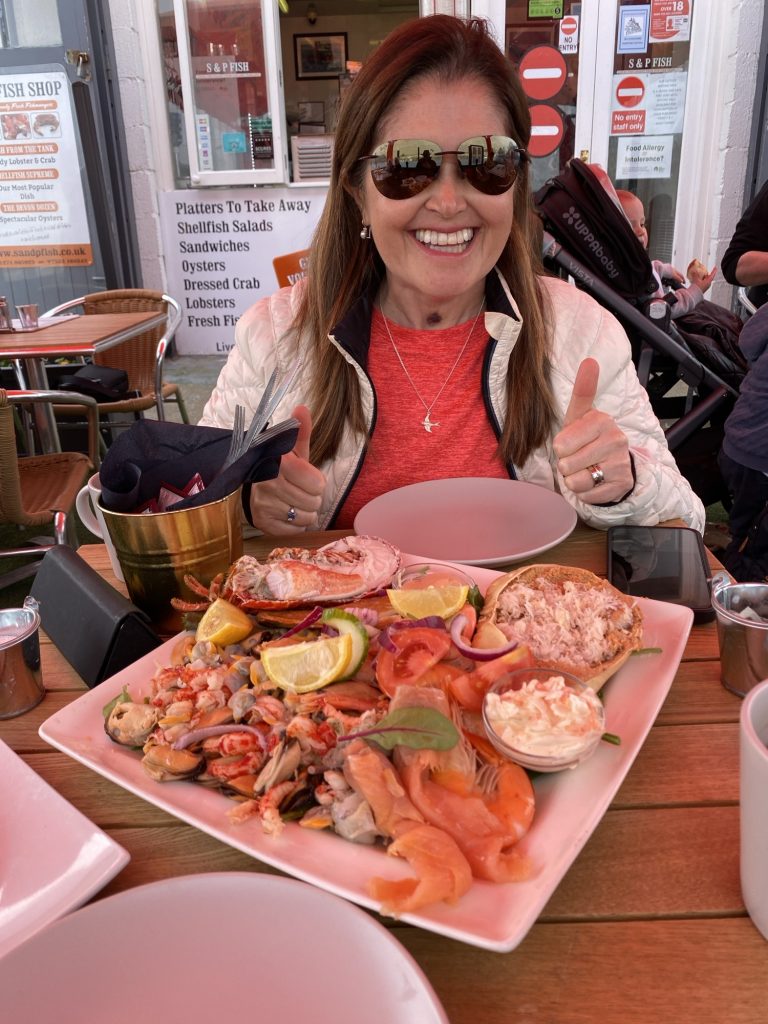
Friends in our village had recommended we book lunch at S&P Fish Shop on the edge of the harbour, famous for their fresh seafood platters. We had an explore around the picturesque harbour before tucking in to a feast. Lobster, king prawns, school prawns, mussels, pipis, salmon and more….we haven’t had a platter like this since our wedding anniversary last year!
Ifracombe has a working fishing industry – everything we ate was fresh and localWhat a feast!
We continued our exploration, with the cloud burning off as the day progressed, treating us to another sunny afternoon.
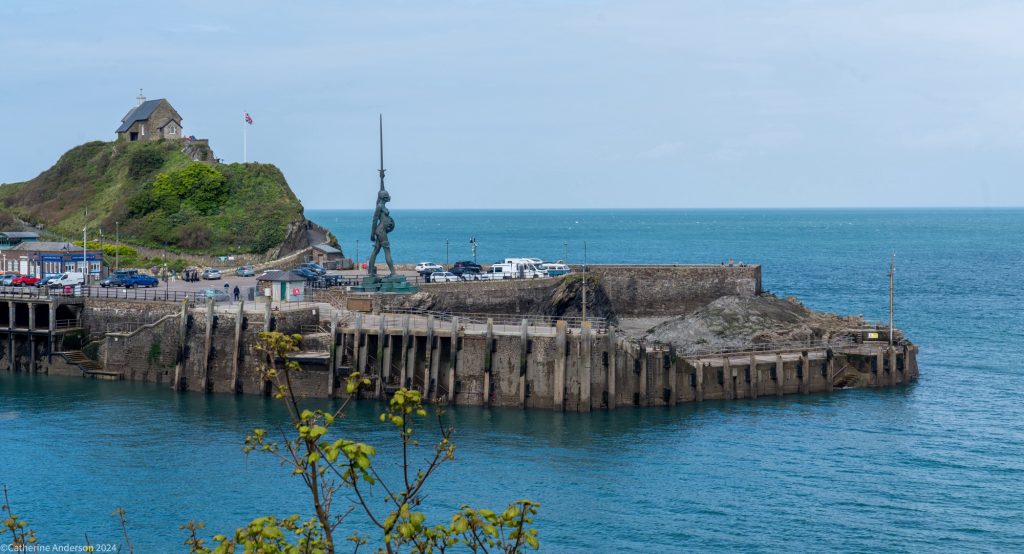
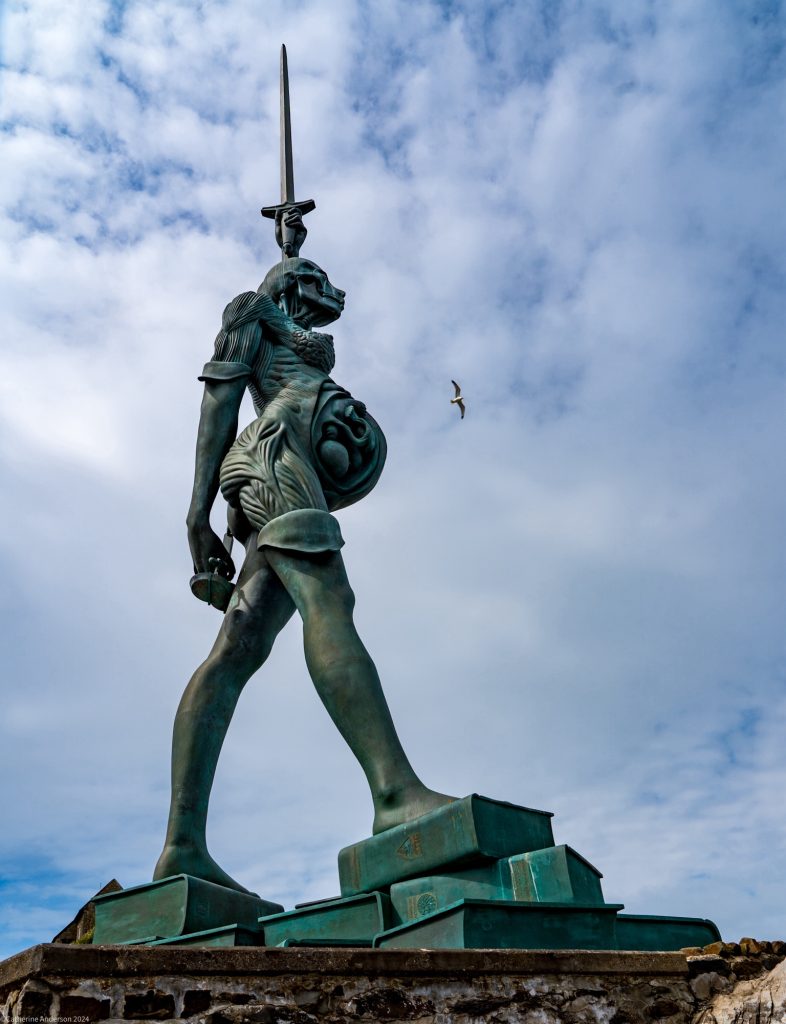
At the entrance to Ilfracombe’s harbour is this rather confronting sculpture – a pregnant woman, stood on a pile of books, half her skin stripped back to reveal her muscles and sinews, the foetus in her womb, thrusting forth a sword into the sky, and holding the scales of justice behind her back. This statue, Verity, was created by Damian Hirst, and is on loan to the town for 20 years. It’s currently the second tallest statue in the UK. More details here.
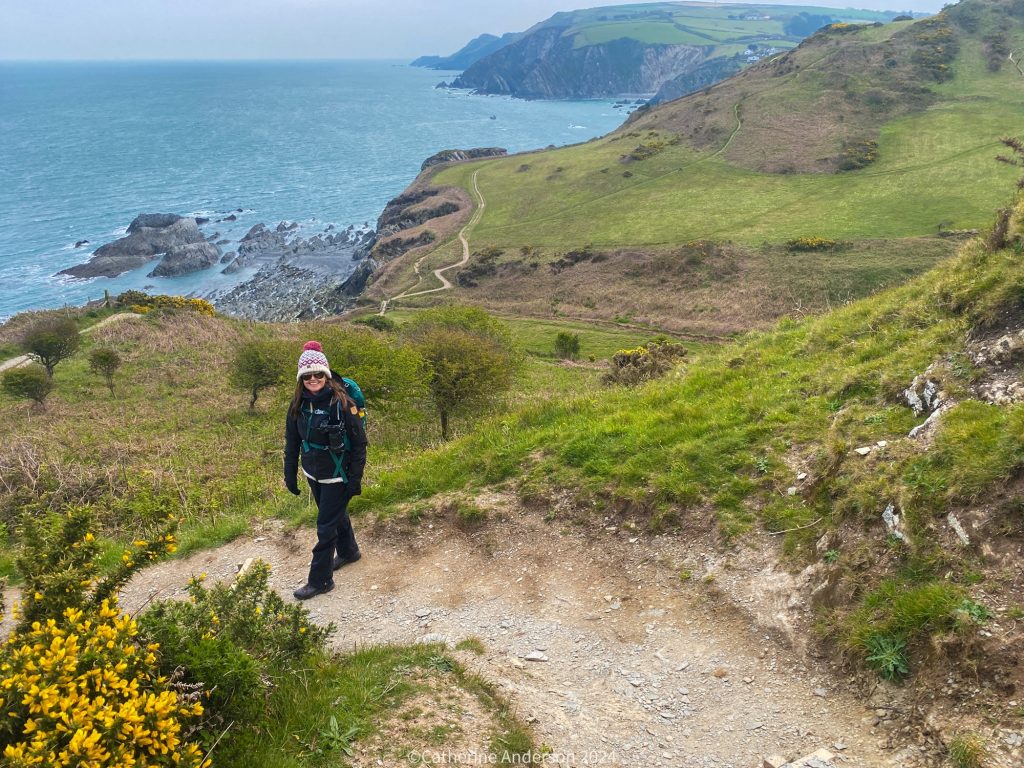
Our final day dawned and we decided to take a walk from the campsite. I plotted a route on Komoot, and we packed up a lunch to take with us. A steep downhill footpath took us to part of the Southwest Coast Path, and a chill wind right off the sea.
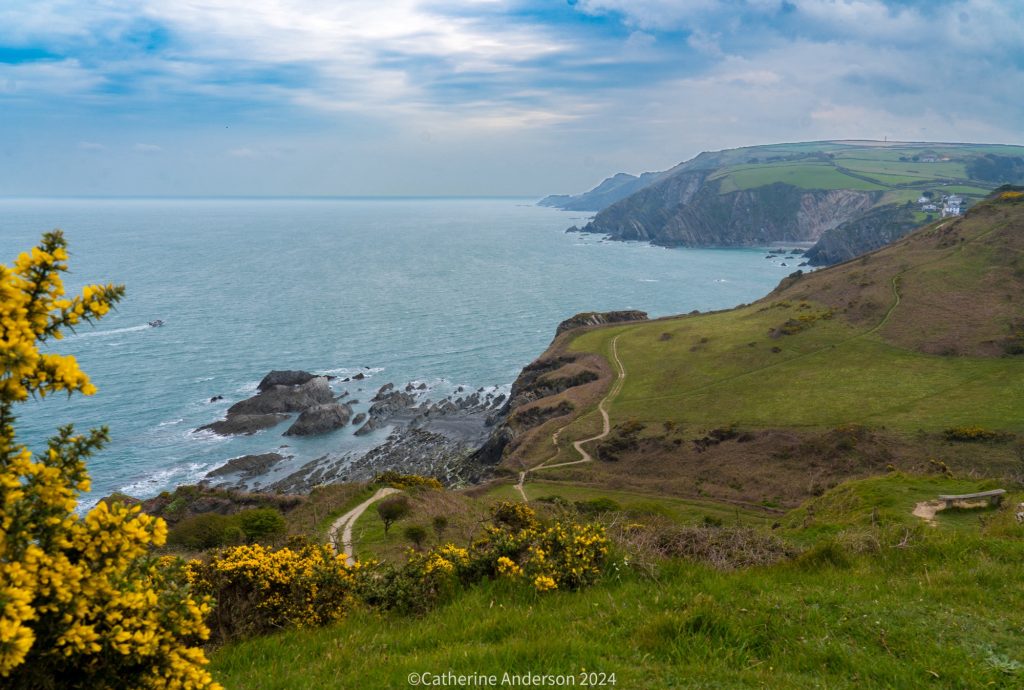
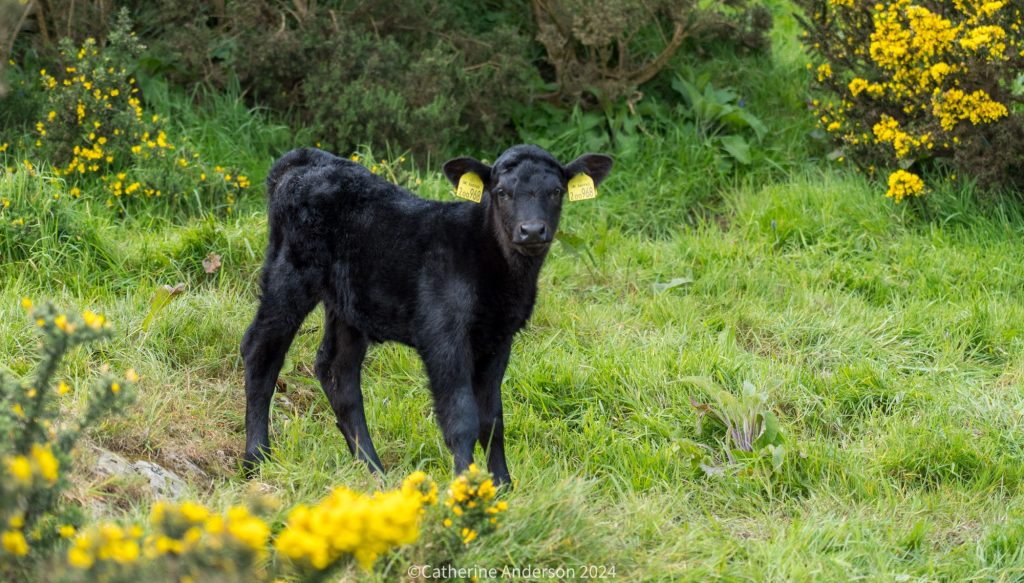
Our cliff top path weaving ahead of usA calf bravely eyes us off from a safe distance, before skittering away to hide behind the brightly flowering gorseBeanies donned against the fresh breeze
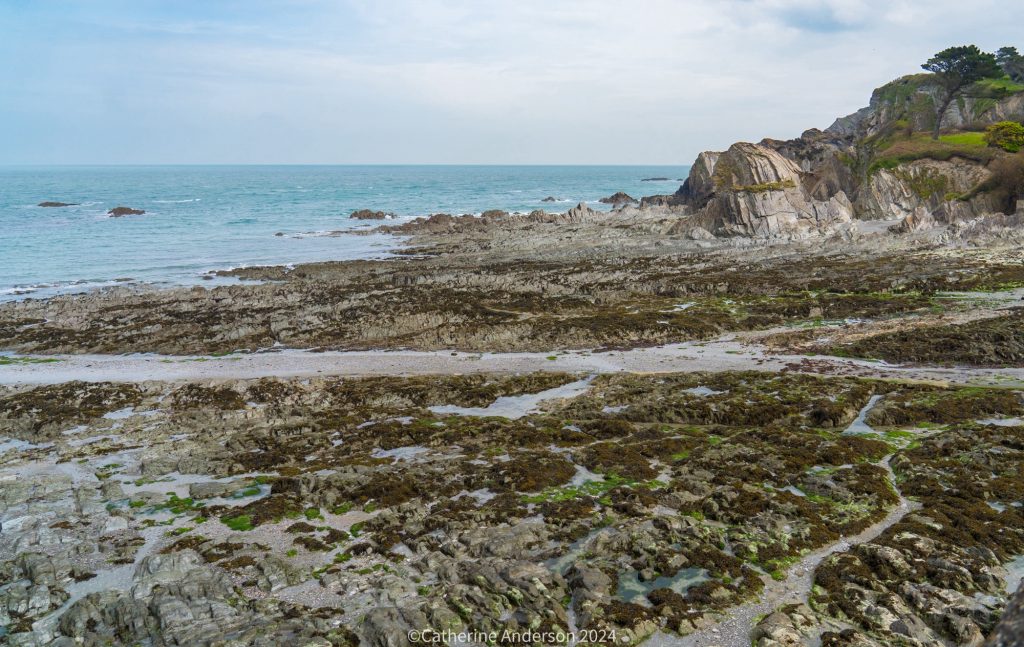
We turned right and wove our way along the cliff top to the next little village, Lee, which sat nestled in a sheltered valley. Lee Bay is a rock-pooler’s paradise, calm and quiet, with plenty of exploring to be done. It was inaccessible on our visit, with a large section of land just behind it being developed for apartments and houses.
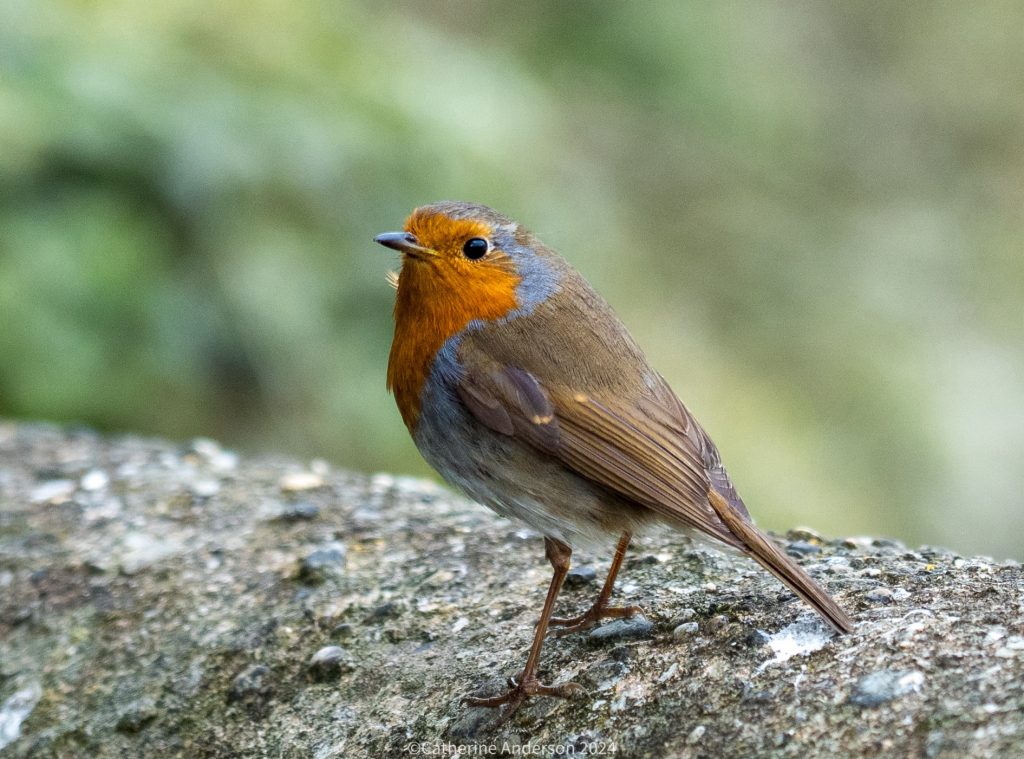
The rocky Lee BayOur lunch companion – one of a pair of somewhat disappointed Robins, miffed to learn we had made ourselves prawn salads rather than sandwiches, but making do with a few spare seeds we had as dressing.
We followed our path up the valley, spotting that the pub was open. It would be rude to pass through and not offer them our patronage, so we called in for a cup of tea and a vegan cookie. So civilised. Despite being a mid-week, somewhat gloomy Thursday afternoon, it was quite busy with people stopping for coffee and tea, and as we set off, a large group of 10 arriving for lunch. Mr A asked the bar-lady how the wet weather had impacted business.
“Ah”, she replied, “It has been up and down, and is definitely seasonal. You’ve just got to learn to dance with it.”
What a fabulous attitude, and one we are definitely learning to adopt in our new life.
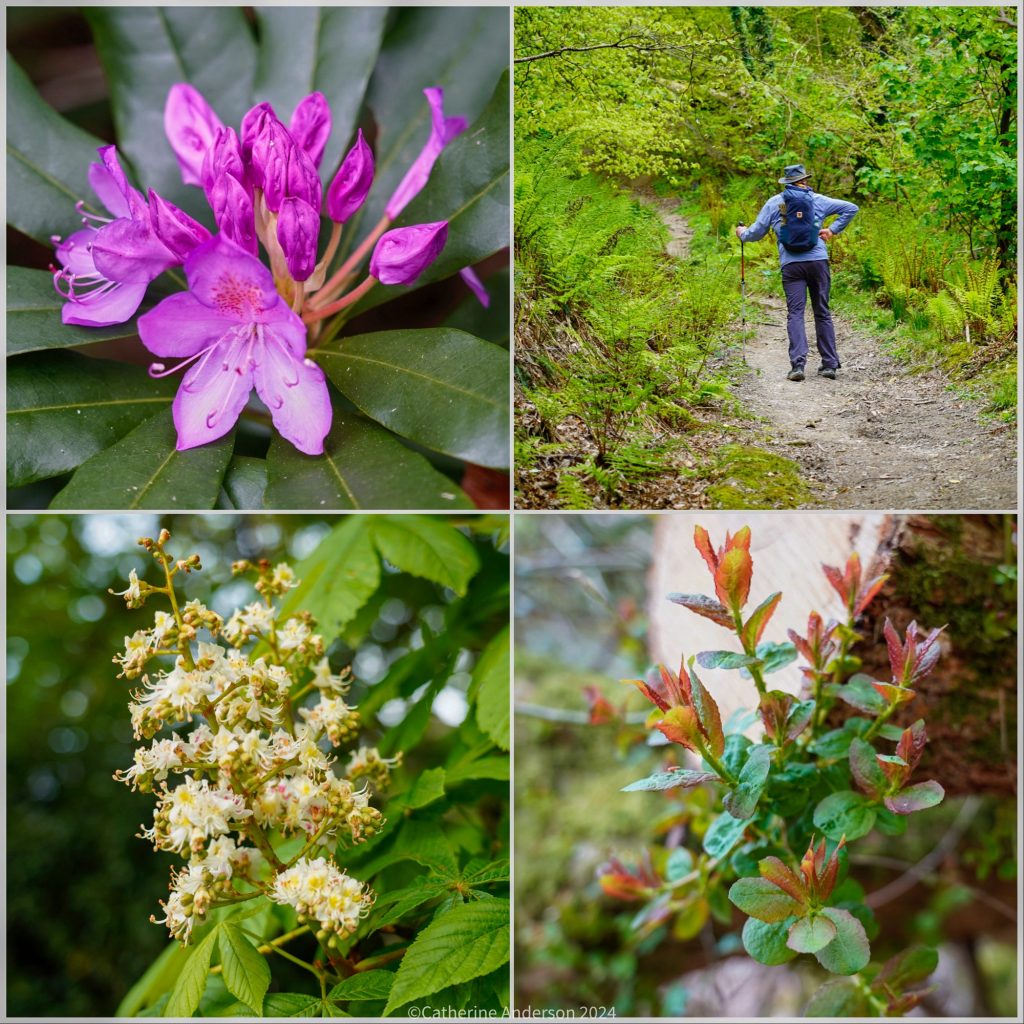
The Grampus Inn – a very cosy pub, with parts of the building dating back to the 14th Century when it was part of a working farmRhododendron and sweet chestnut flowers brightening up our climb back out of the valley
We finished our visit with a superb dinner at the Beach House Restaurant in Woolacombe (after a couple of extremely expensive cocktails at the Woolacombe Bay Hotel!), seafood prepared by an ex-London chef with very high standards. Superb.
Twelve months ago on the 2nd of the 2nd 2022 (a hard to forget date, even for me), we stepped off a plane from Sydney and showed our passports at Heathrow Airport. We had one way tickets…a fairly committing thought I can tell you.
Farewell Sydney, we headed ‘up over’! – this was us 12 months ago, in January 2022
Reflecting back, we’ve come so far, even my grand-kids recognise me! Old friendships have been rekindled, and new ones are forming. Toasts have been made to a new life. Oh and we found the house of our dreams in one of the most rural counties in England…where A roads are few and far between, and B roads look a lot like goat tracks…Somerset…we love you. Its been a wild ride, but we’ve settled now and love it.
*
Our village is starting to feel like somewhere we belong, and can really craft a new identity in. Everyone here has been so kind and welcoming. We recognise faces in the street , and in turn are recognised. That feels good. I help out in our community-owned shop on a Saturday morning and that’s got me known among some of the regulars, the ones who cross the street when they see me coming (to the other side!).
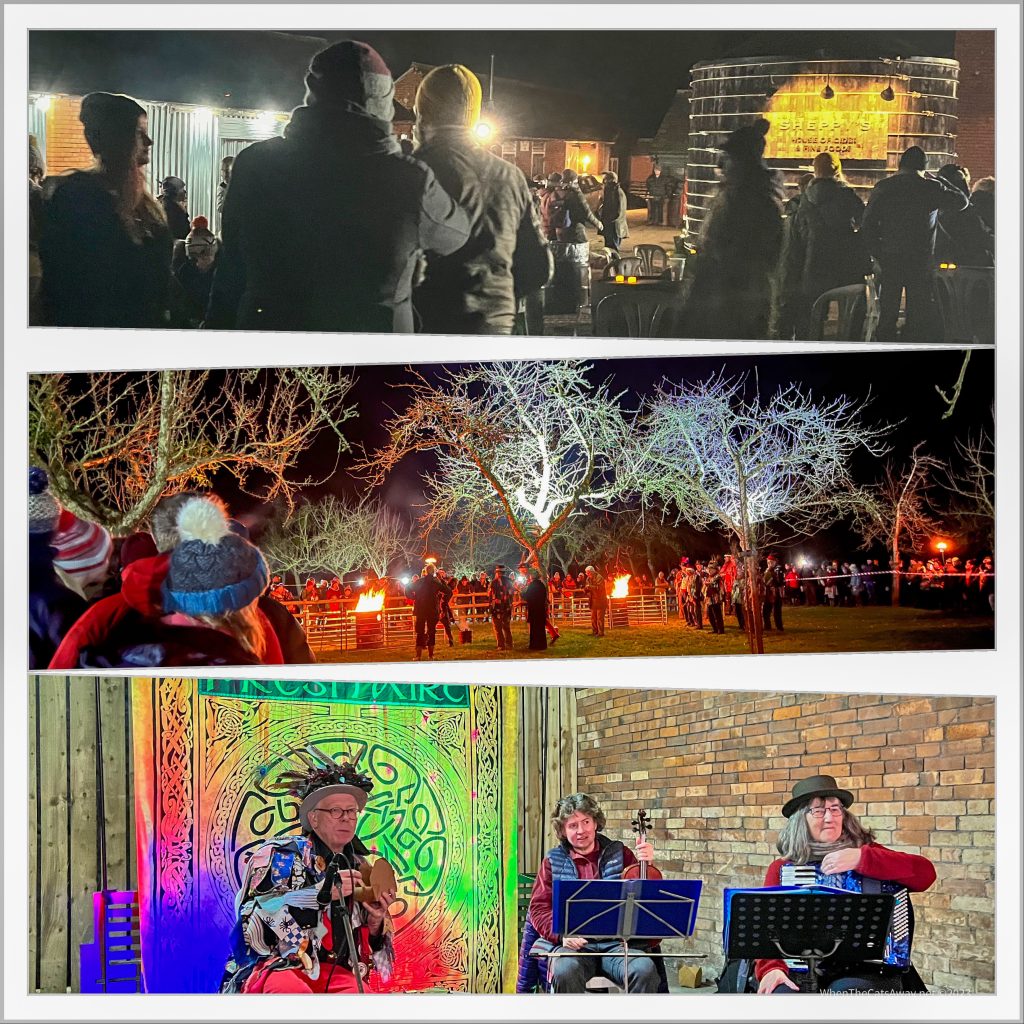
Our village square – the White Horse pub in front, the village shop is to the right of the pub…a three minute walk from home, so not too bad a commute!A night out at our local cider barn, Sheppy’s Cider, for their annual Wassail – an ancient West Country cider festival with songs, poetry, dancing and (of course) drinking to wake up the apple trees, therefore ensuring a good harvest! We bumped into friends from the village and had a great time there.
*
Catherine has started to bed herself into the community, joining in Pilates at the village hall, producing a flier for the shop, and taking herself off in a small women’s walking group she was invited to join.
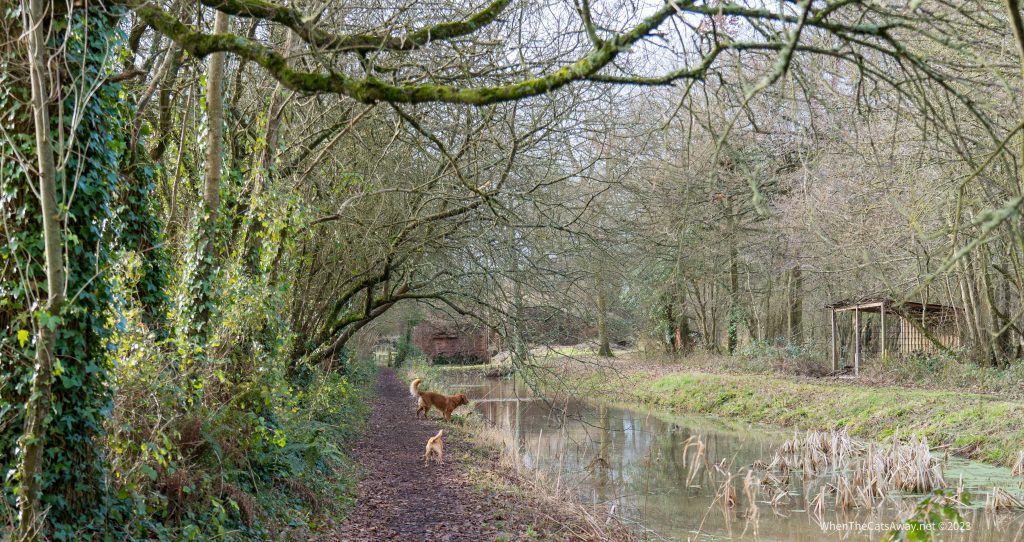
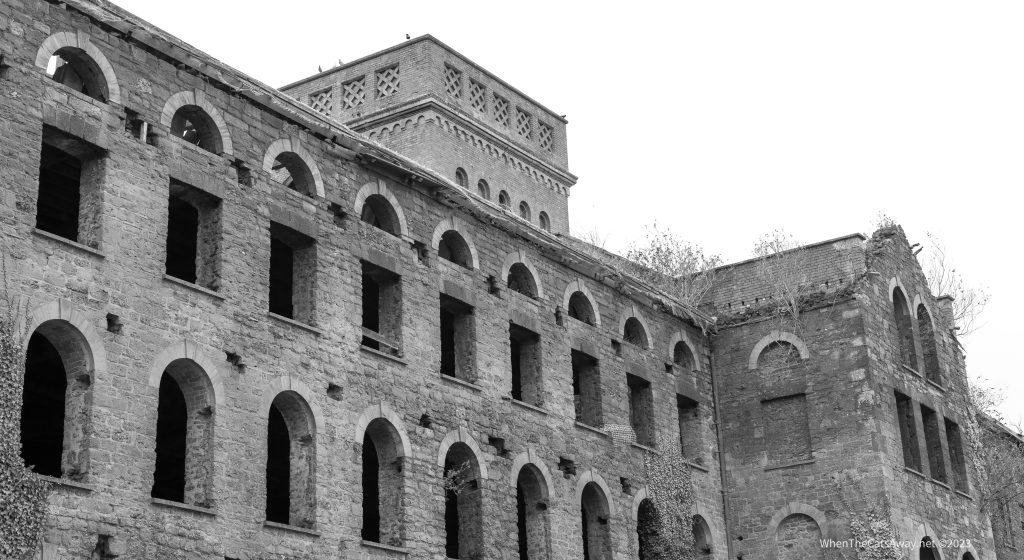
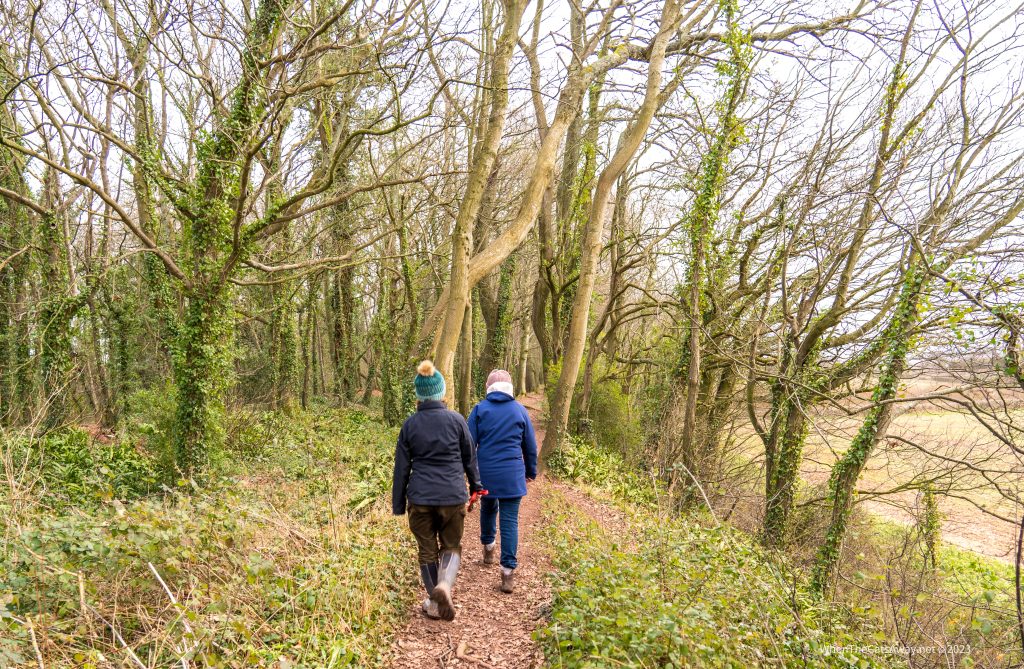
Joining Claire and Lizzie from the village for a walk with their two dogs, Amber and FudgeA little piece of Victorian history in the abandoned mill in WellingtonClaire and Lizzie heading off through the woodsA friendly local drops by to say hello
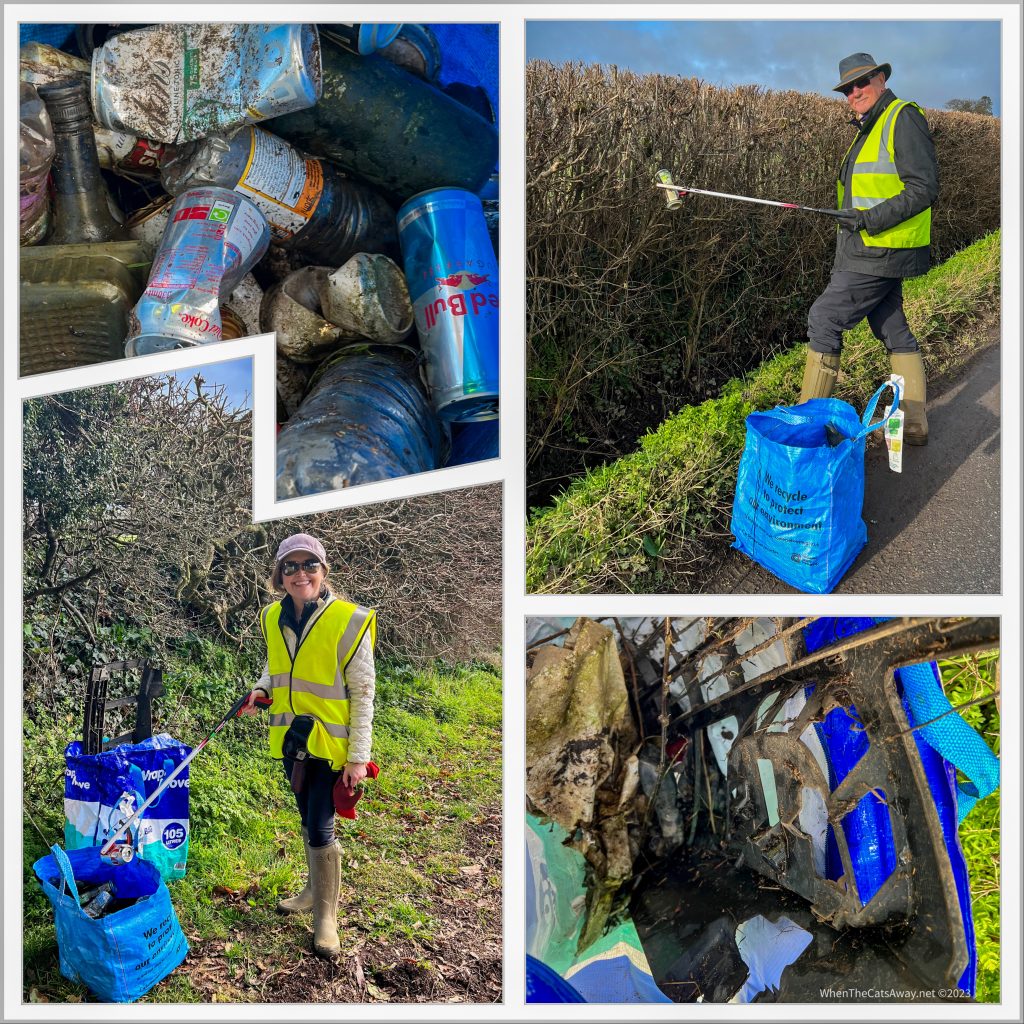
Catherine has also landed (another) voluntary job as photographer for the Somerset arm of a charity called CPRE (Campaign to Protect Rural England) – you’ll find her photos on their website and Instagram (@cpresomerset). We signed up to help with their litter pick-up initiative, and have used our kits to clean up the lane where we live.
We wonder how much of this falls off the recycling truck!
*
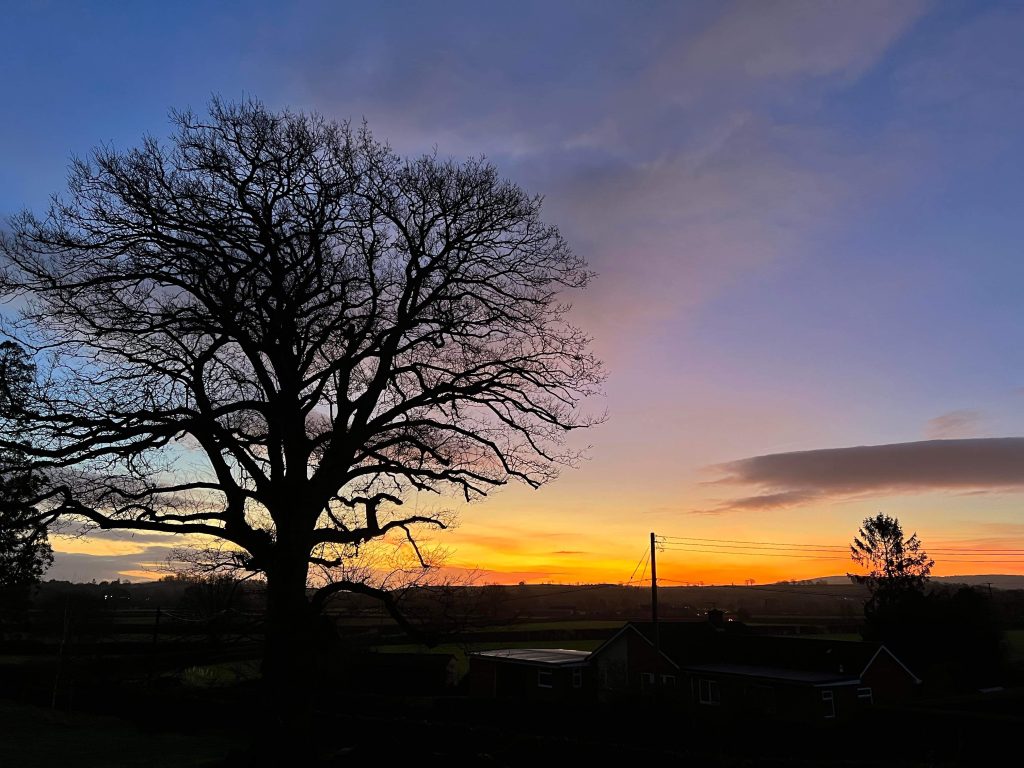
Another winter’s day sunrise
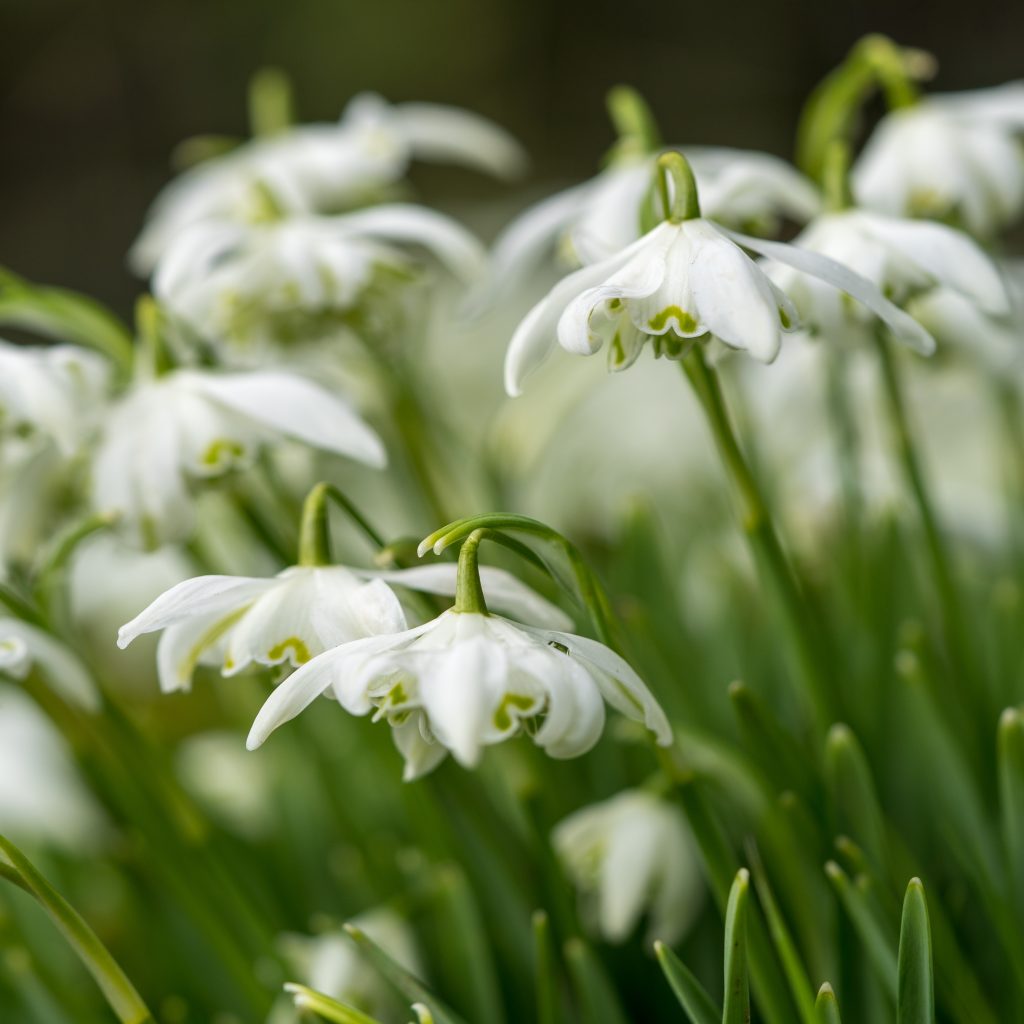
Oh but what about the weather you say? Well maybe we are still in the honeymoon period, but the long dark nights of this winter have been an opportunity to get the log burner cranked up, pour ourselves a nice glass of red, and chill out, which in my case means reading and music, and in Catherine’s writing documents for her support group or research papers she is contributing to. Now there are already signs of spring, with snowdrops and daffodils poking their heads out of our lawn and borders. Well …where the squirrels and badgers haven’t dug up the bulbs we carefully buried, little buggers!
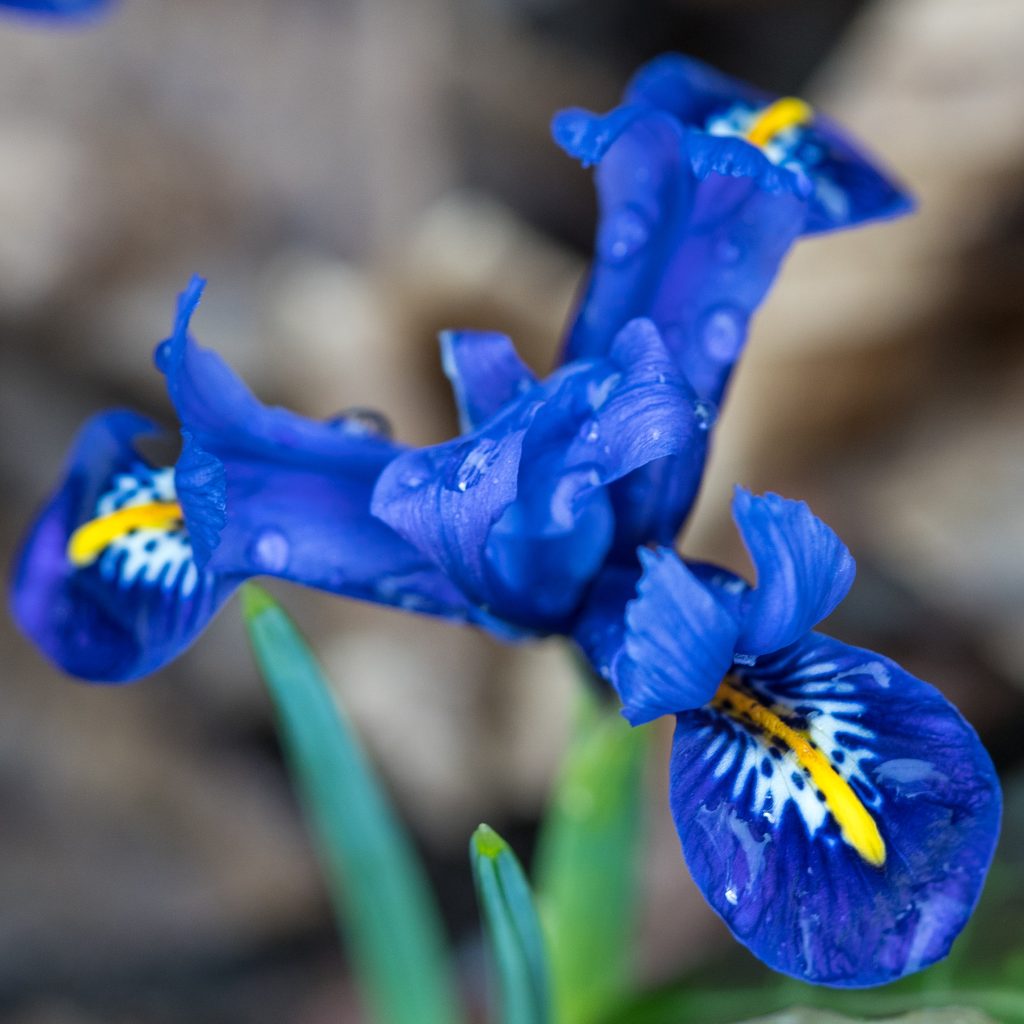
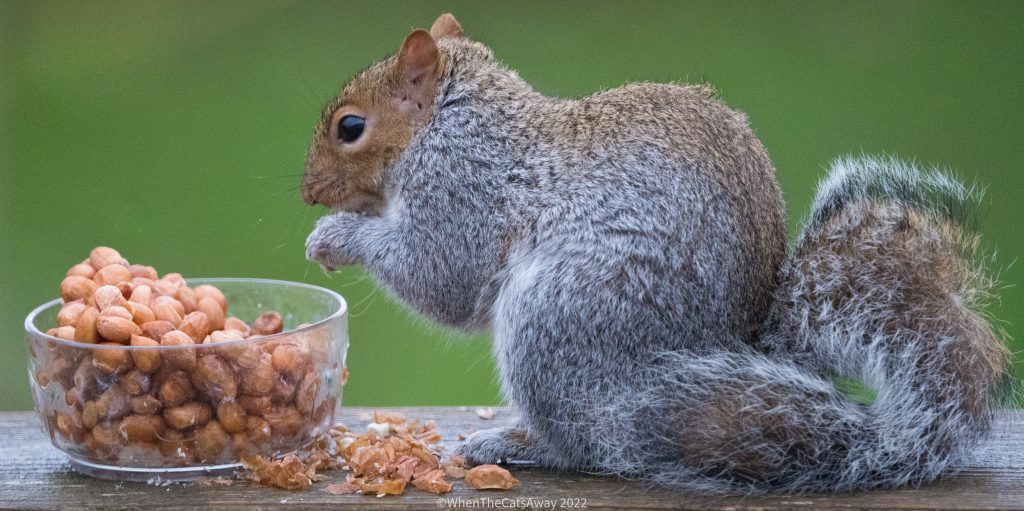
Snowdrops galoreNewly bursting crocus in the morning dewNetted IrisWe try to distract the aforementioned squirrels with peanuts…not sure it has worked though!
*
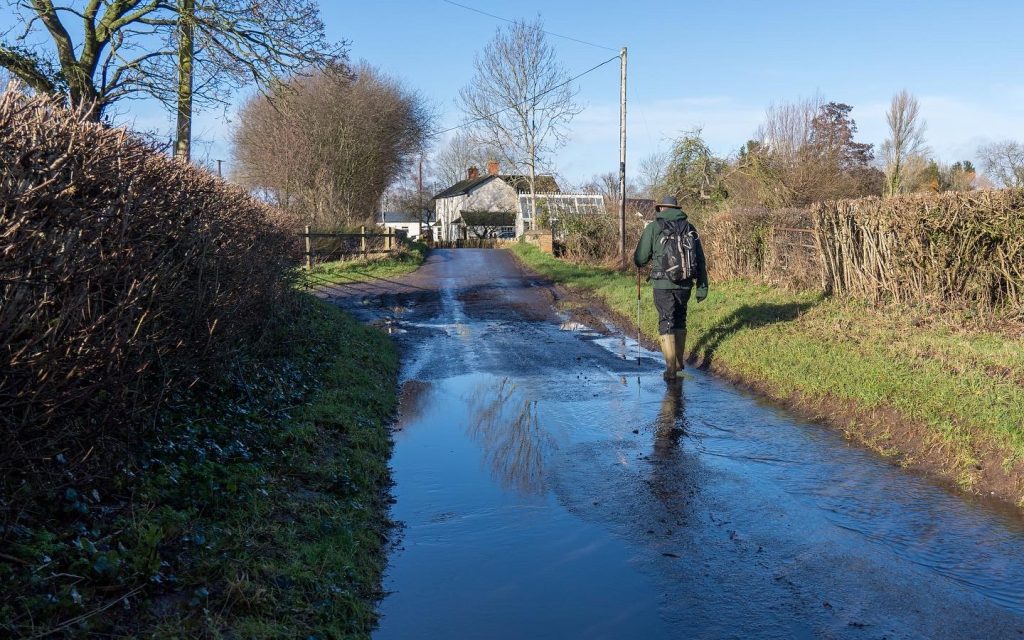
Our village did experience some local flooding, but not on our property which seems very well drained, and we don’t actually feel like we had many days of rain. We have been getting out and about no problem. There were certainly more than a few muddy walks, with some requiring wellies, but we have enjoyed them all. Just need to have the right gear.
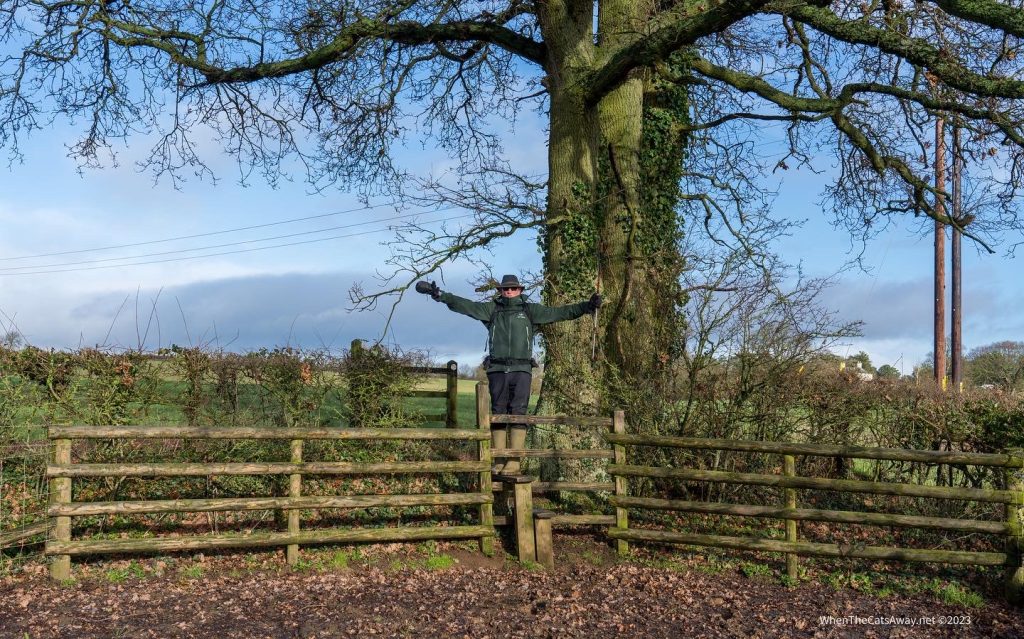
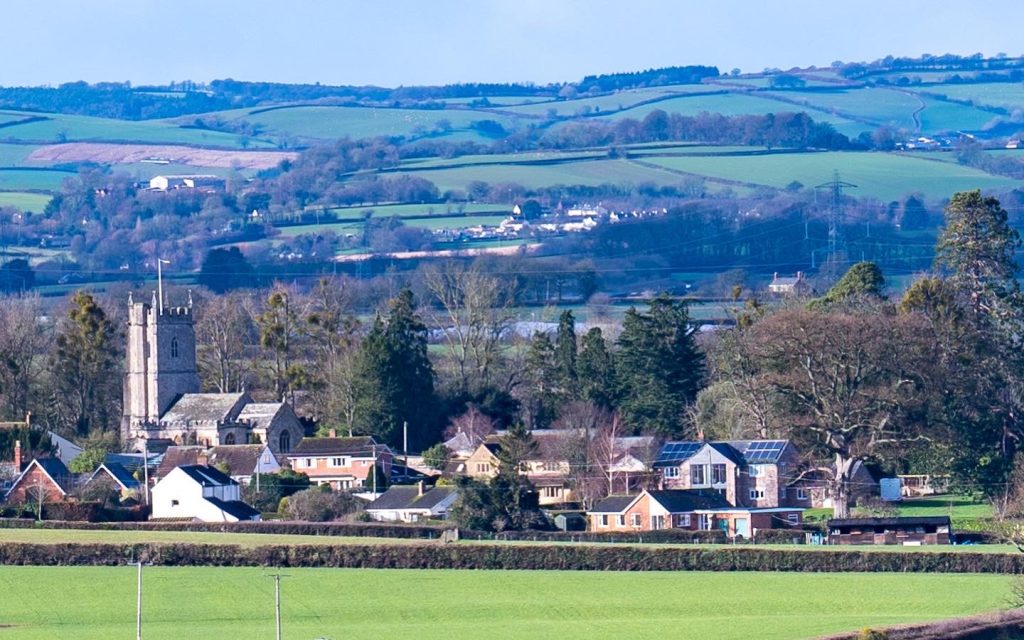
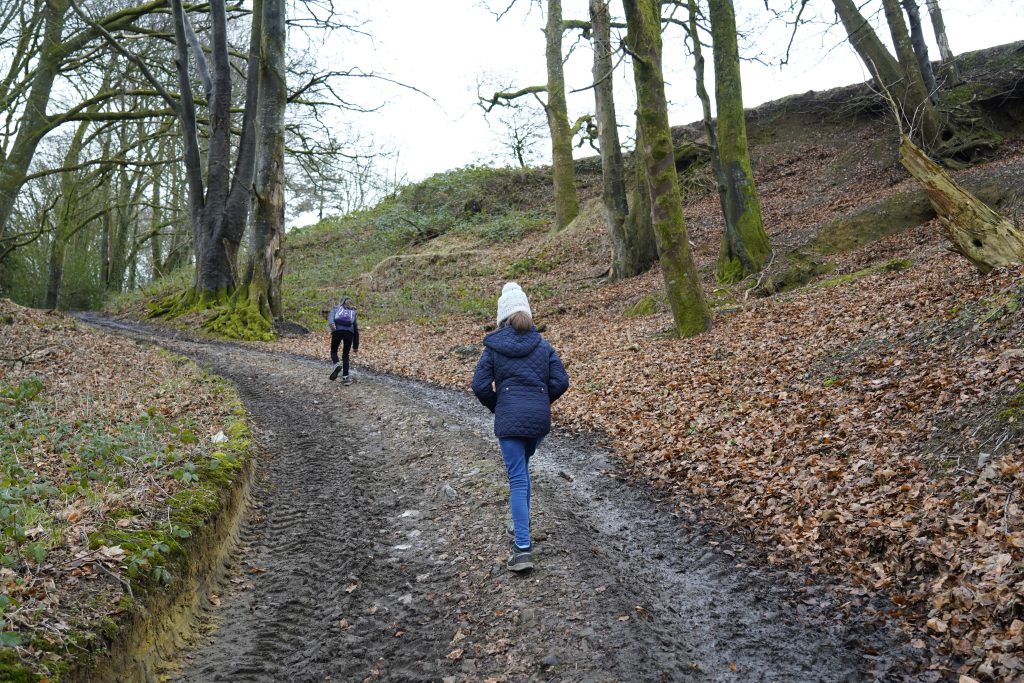
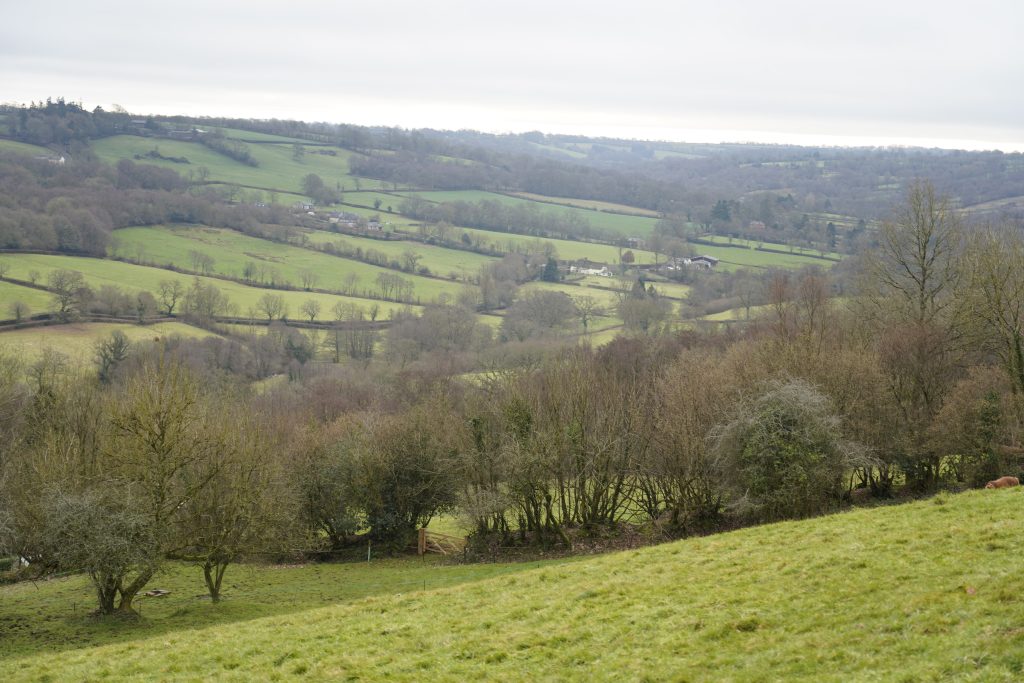
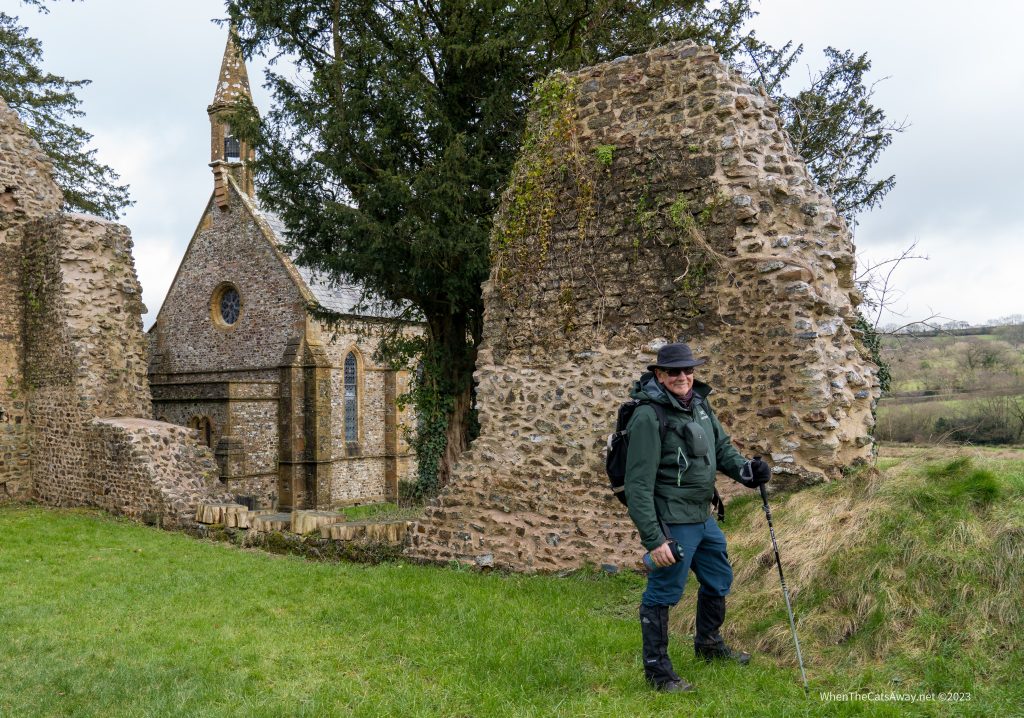
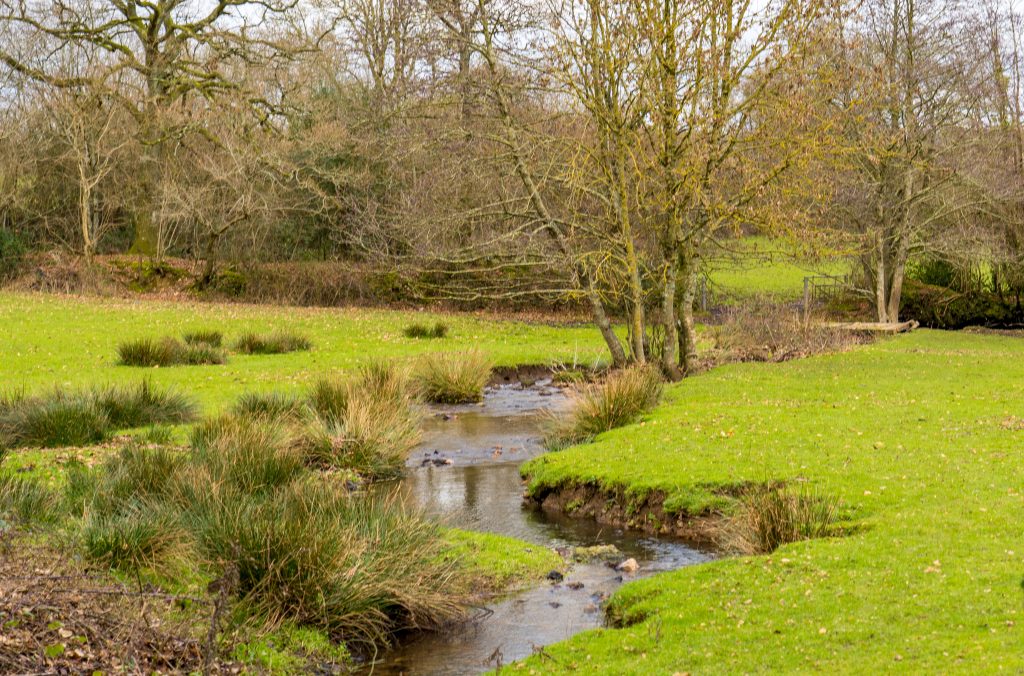
A walk from our front door took us up into the foothills of the Blackdowns Looking back at our village, nestled in the valley. Our house is the one with all the solar panels!Walking 8km in wellies takes some getting used to!On another walk we nipped over the border into Devon to catch up with our friends Julie, Russ, Maisie and BethBeautiful valley viewsThe remains of the 11th century Dunkeswell Abbey, where we had a picnic lunchA stream winds its way through a field…a perfect spot to sail our stick and leaf boats for a raceBeth and Maisie….or is it the other way around…?
*
We have also been able to borrow our new neighbours’ dog Ralph, and take him for a romp, and give him back muddy 🙂
Unbridled joy from Ralph the lab
We even walked out over the fields for a Sunday lunch at a local pub last week, that just felt so good. When I look back over January and February, I really have many happy memories created outdoors and in.
*
We haven’t had too many visitors, a nice break after the last summer’s rush just after we had moved in, but Catherine’s half brother Alex came and stayed locally and did a great walk with us.
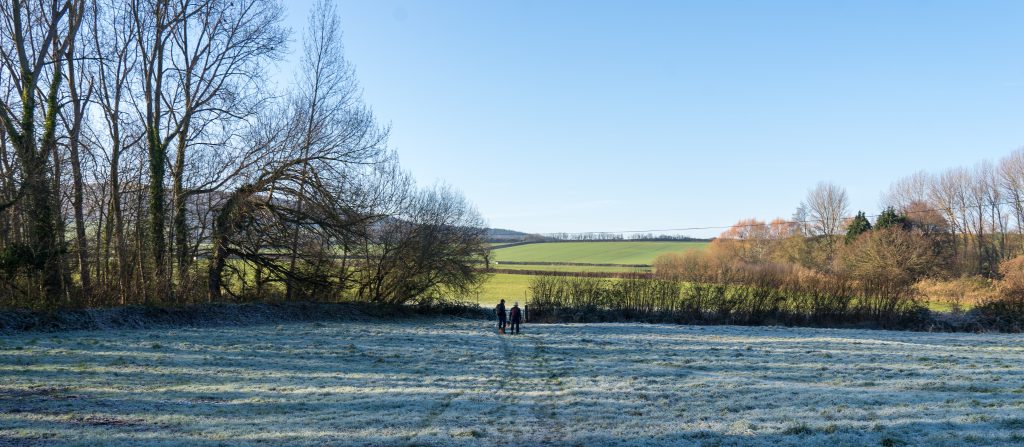
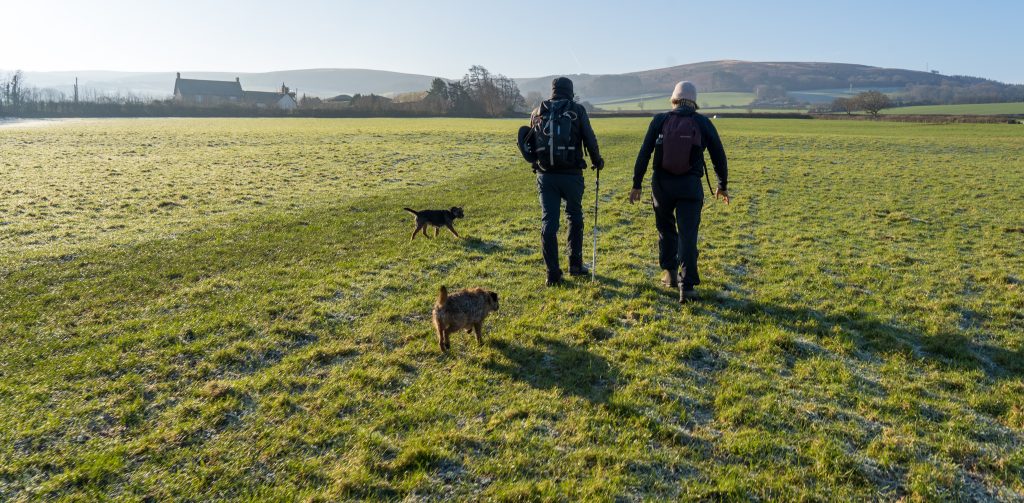
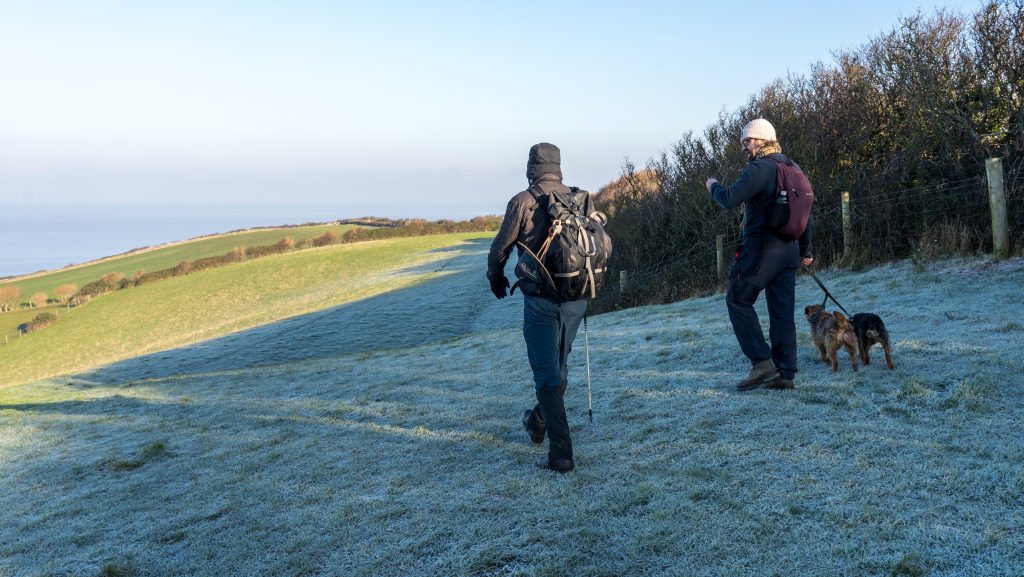
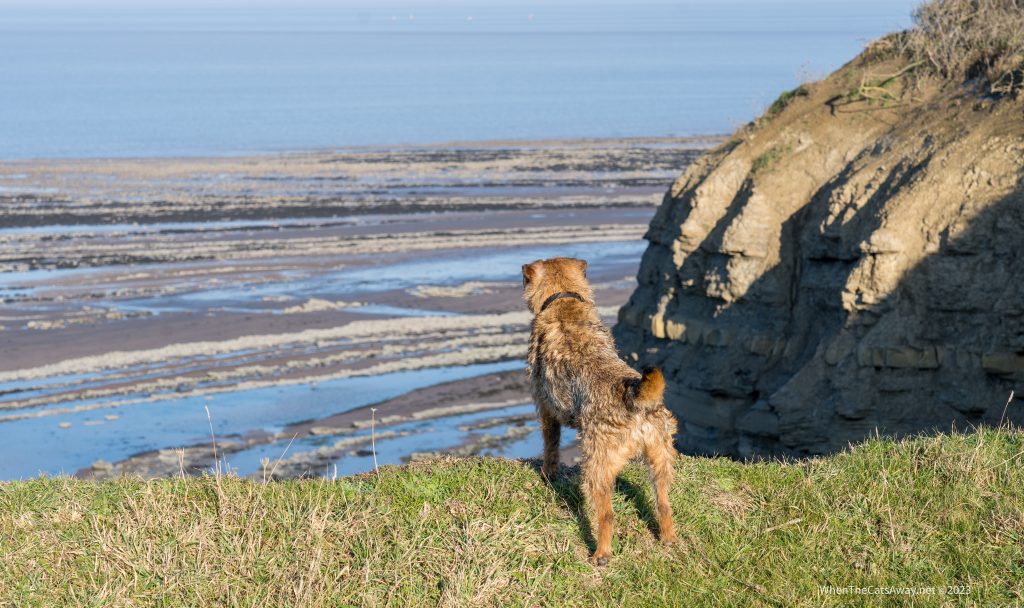
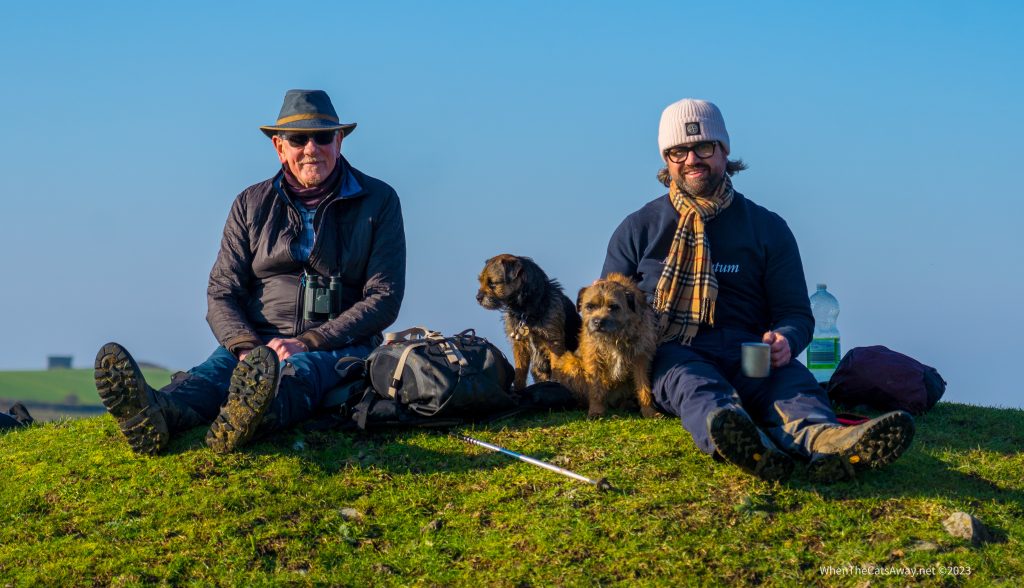
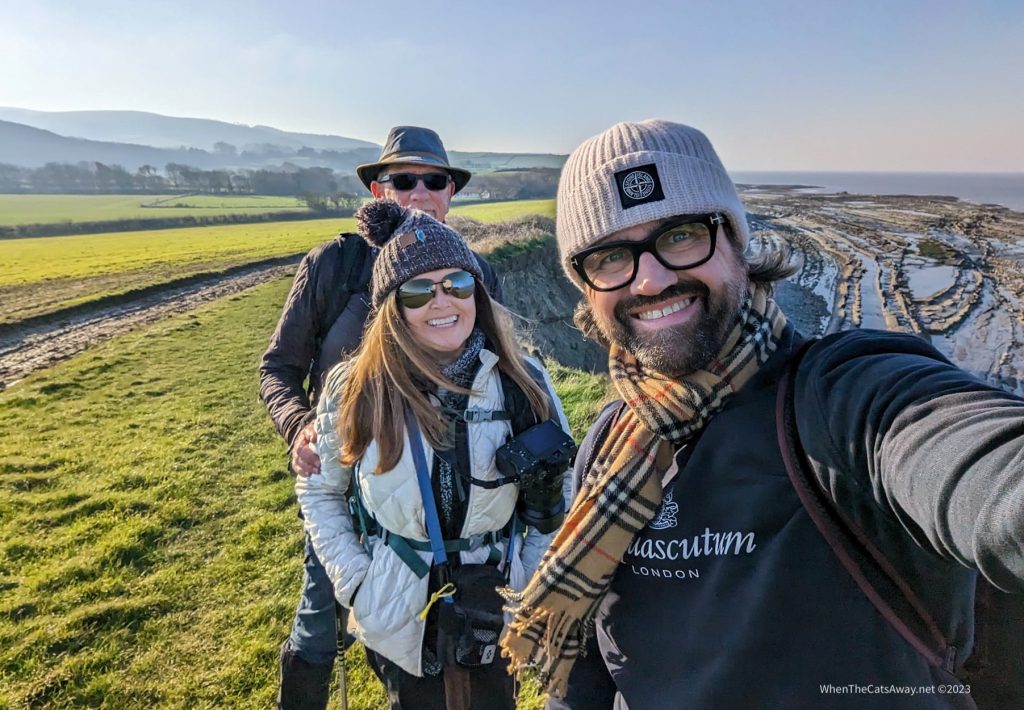
A frosty start on a cloud free morningAlex brought along his two border terriers, Scout and RafflesYou can see the sun is soon melting the frost in the fieldsHeading to the England Coast WalkHalf siblings“Don’t chase that seagull!”Break for drinks on an old iron-age burial mound…as you do!Group shot!
*
Then a couple of friends from Australia did an overnight in between family visits. We certainly miss our friends in Australia, but our life needed to move on to adventures new.
*
Catherine has been able to spend so much more time with her family, having another weekend in Brighton with her sister and family, then to Hastings, to farewell her grandma.
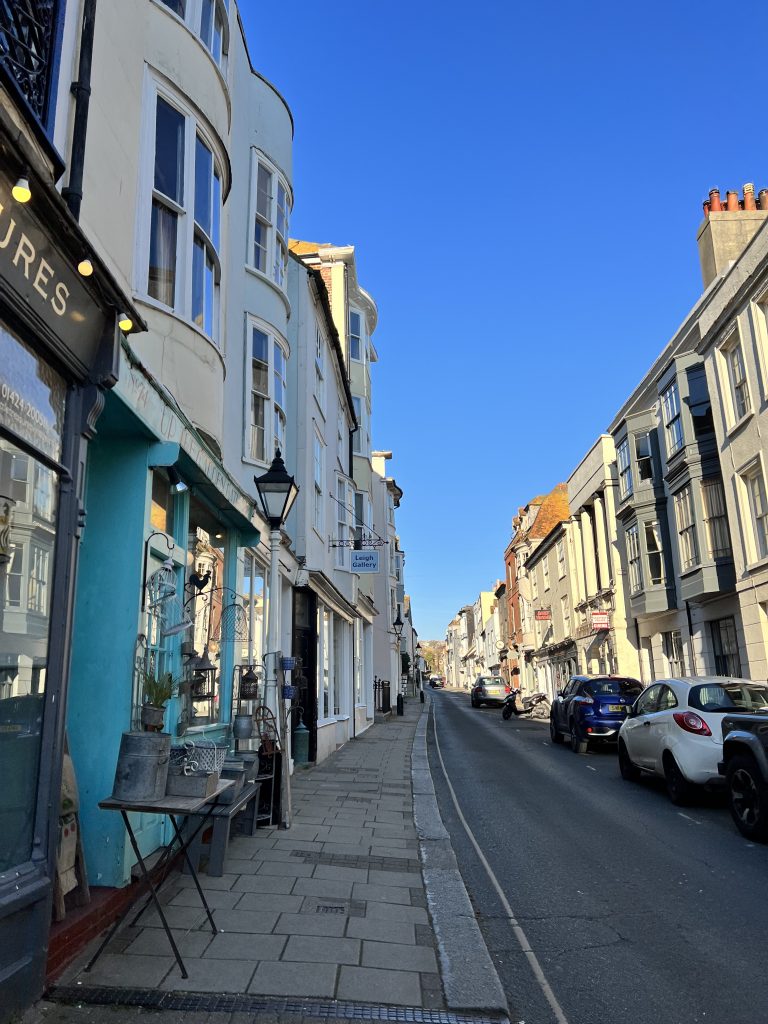
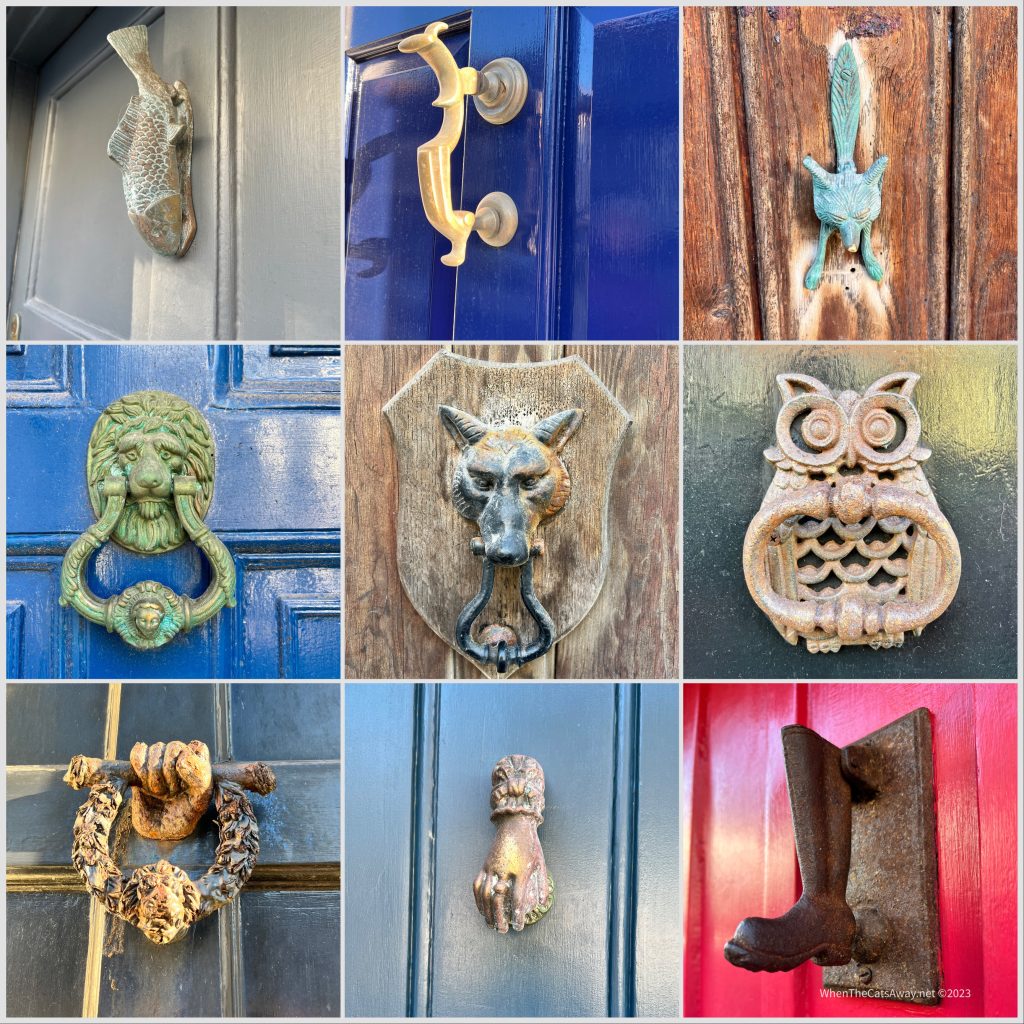
Claire and Catherine – old friends from Uni daysAlice, Keely and Catherine’s sister, Helen also joined for a night out in BrightonA timely catch up with friend from Australia, Wendy who happened to be in Sussex visiting familySunny Sunday walk in the woods with Helen’s dog, CocoaCatherine’s mum, Jenny with her younger sister, Pam, a rare reunion at their mum’s funeral. All guests wore a touch of red as recognition of Jean’s love of the colour, and dancing to Chris de Burgh’s Lady in RedCatherine stayed a couple of nights with her mum after the funeralAn amble through Hastings’ Old TownA multitude of door knockers to be found
*
We both also have had several trips into London for specialist medical support, which when the trains are running has been dead easy! So not very often…
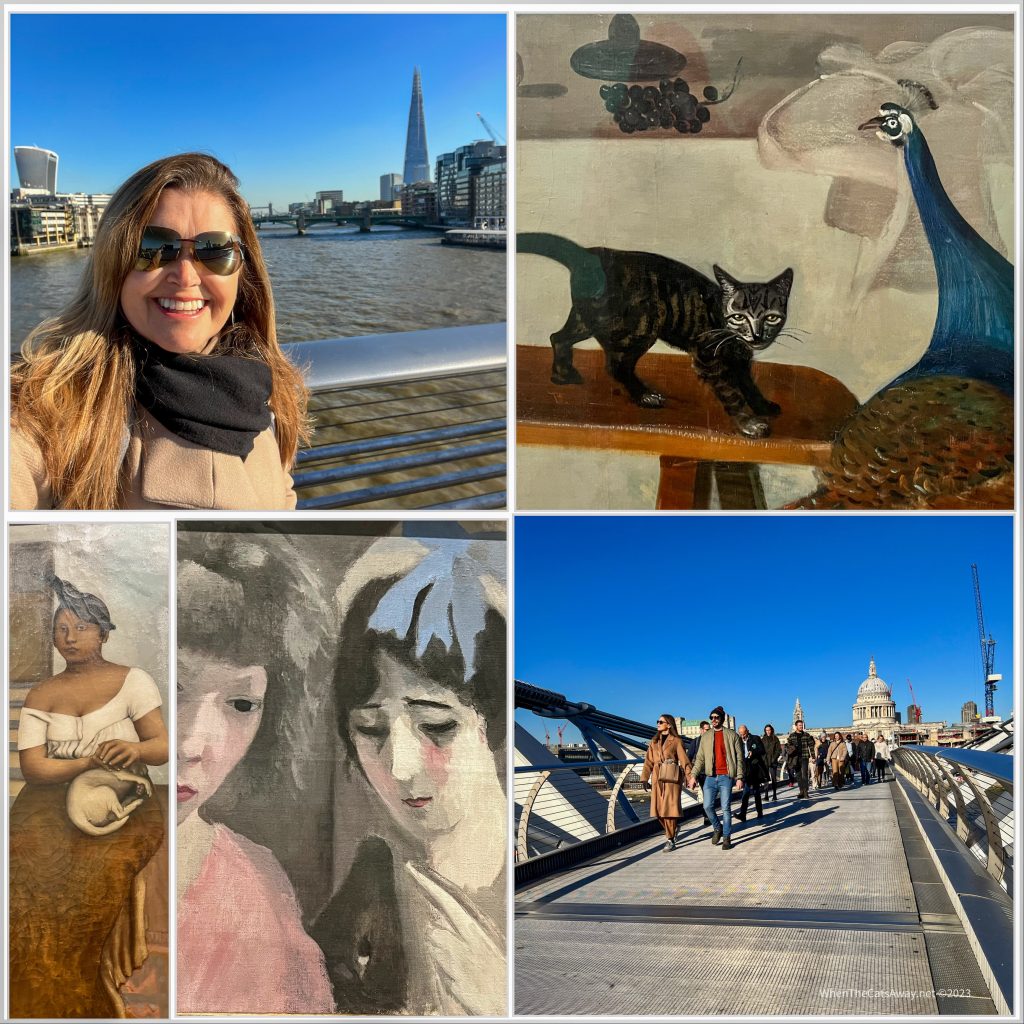
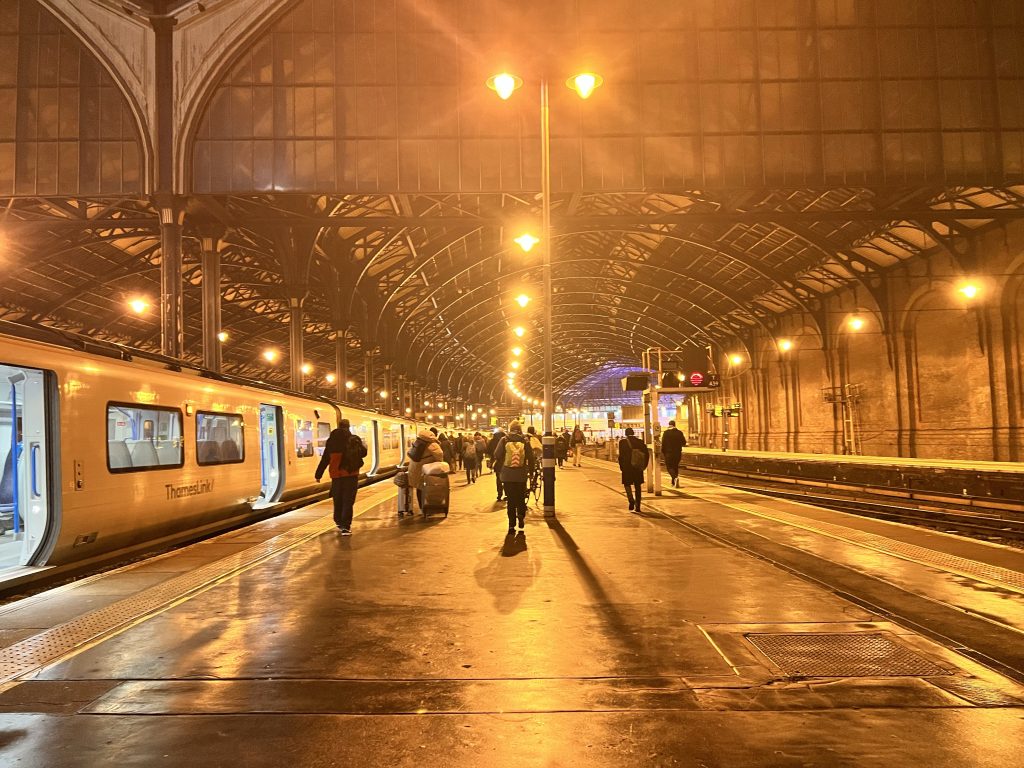
Catherine’s been exploring London’s art galleries along with her medical appointmentsBrighton Station at night after a day out in London
*
We are also setting ourselves up to get out riding this spring. We both have new e-bikes, ones that will cope with the potholes, mud and gravel a little better, and that’s just on the main roads! I’m also planning some more multi-day bike tours. Exmoor and Dartmoor beckon. A lot to look forward to.
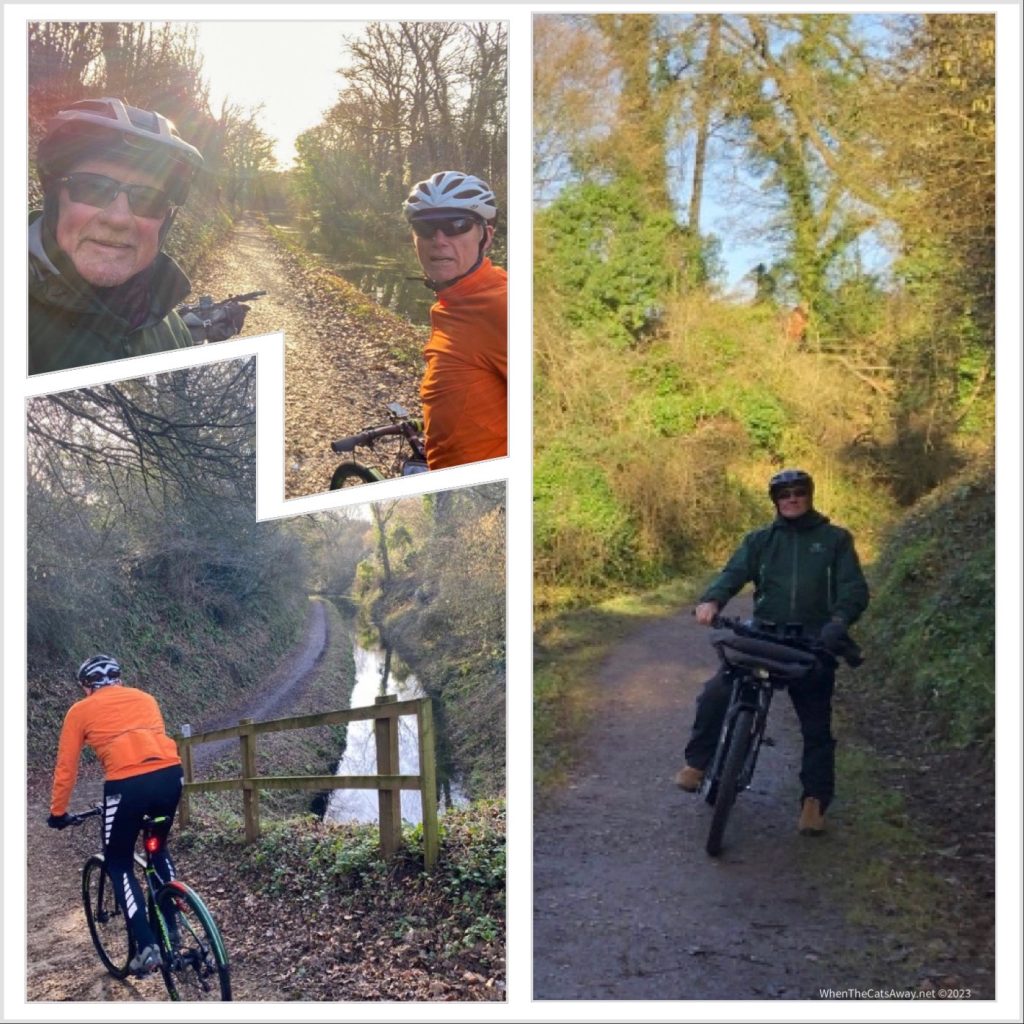
One of my oldest friends came to stay with his bike, and we took a 75km ride along the Grand Western Canal
*
Our home is also taking shape. We’ve lived here nearly 8 months now, and have finished most of the major internal modifications we wanted to do, and kitted ourselves out with furniture, blinds etc. We’ve really enjoyed it, and I’m not sure why its felt different doing it here, but it has. In our last house we landscaped the garden, then stopped. Perhaps deep down we knew it wasn’t going to be our forever home, whereas this one feels like it will be. So next will come the garden, starting with the hard landscaping. We’ve chosen our provider and mapped out a design for a new patio, then it will be the shrubs and adding more privacy with trees. If we have another summer like the last one, it will get a good work out.
So that’s us. Happy in our country bubble, just keeping fingers crossed about our respective health, and enjoying each day we have in this fabulous corner of the country.
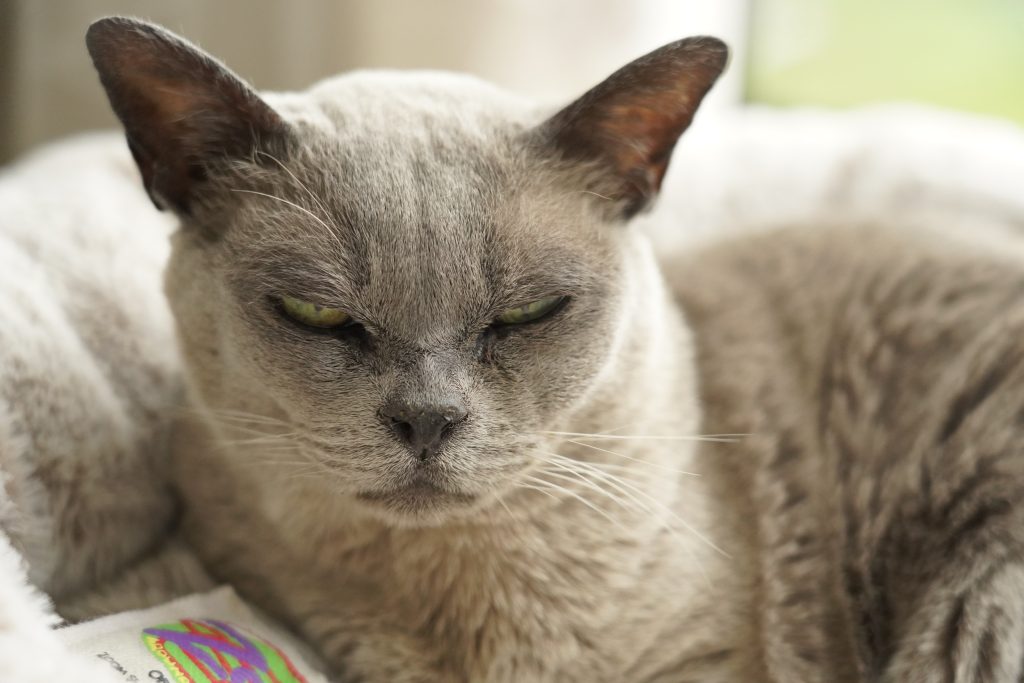
Finishing up with a quick shot of the most important member of our household, Princess Tassie, who is loving the multitude of warm sunny spots around the house
Location: Bradford-on-Tone, Somerset, Newcastle-upon-Tyne, London, UK
September was a busy month for us, hosting family and other visitors at our place. Catherine kicked things off with her Dad and his wife Sue arriving from New Zealand. It was the first time Catherine had seen him for over three years. Then her half brother Alex joined us and all were there to share in my birthday celebrations.
Catherine and RichardRichard and Sue joining us for a walk through the village and down to the riverAll ready to go walking but sadly rain stopped play up on the Quantock HillsMr A’s birthday celebration at our favourite Italian
*
Then my eldest daughter Zoe also came for a weekend. I dont think we have ever spent a weekend together like that. It was very special. We had talked for a while about walking a bit of the South West Coast Path together, after both reading The Salt Path by Raynor Wynn and being really moved by it.
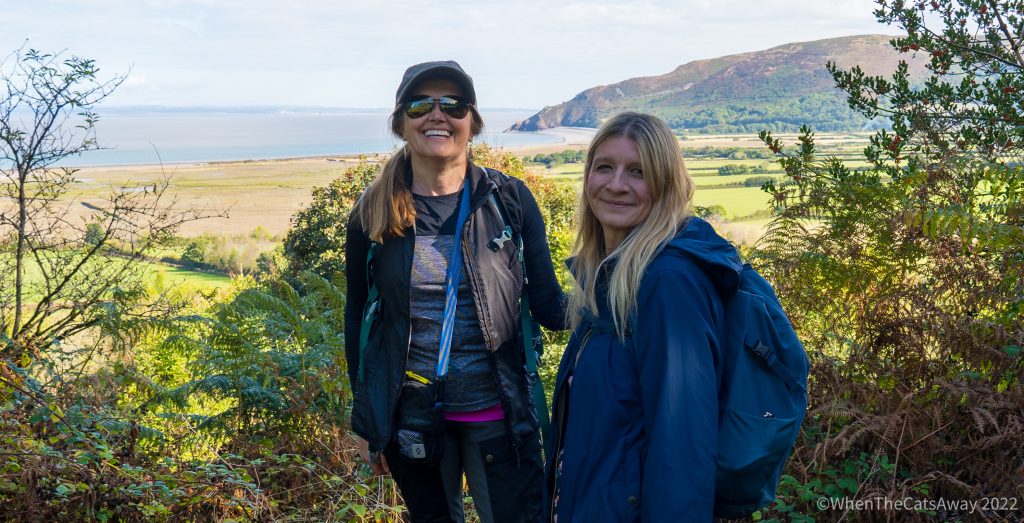
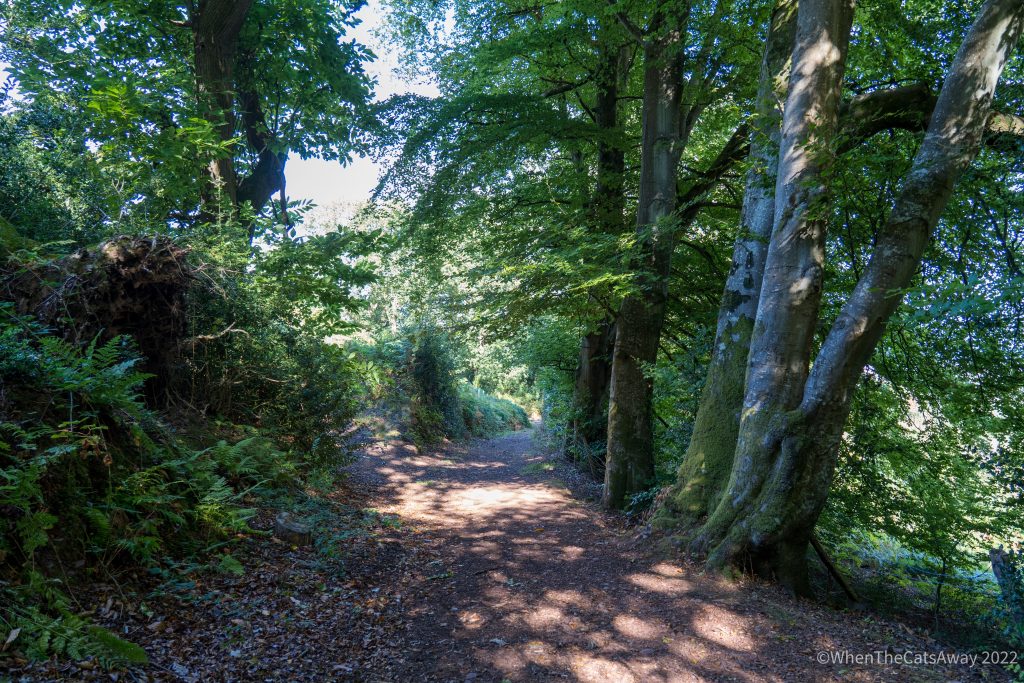
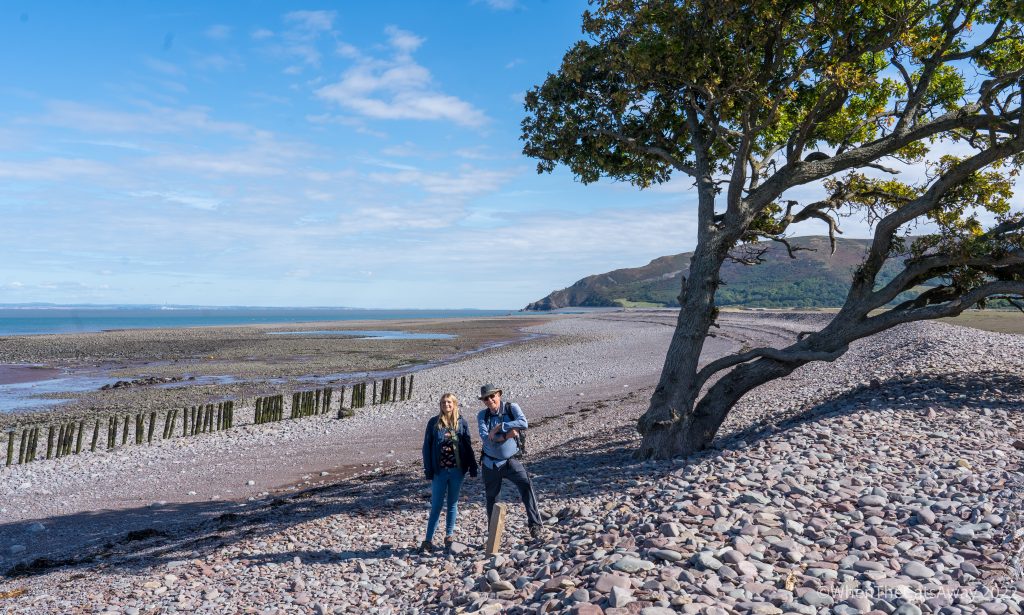
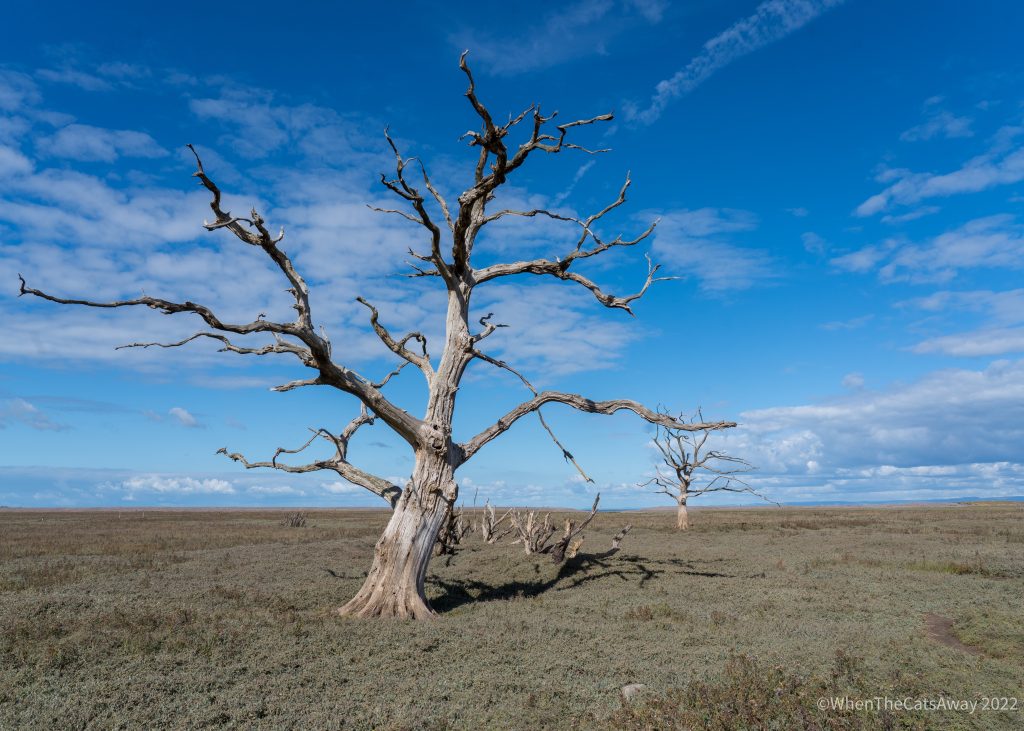
Zoe and I on the Coleridge Way, part of our 9km circuit walkMrs A standing on a log so she doesn’t look so little! Great views over Porlock Marsh and Bay, the eastern coastal part of Exmoor National Park An ancient woodland pathwayThe South-West Coast Path winds along the back of the beachIn 1996 a tidal surge driven by Hurricane Lili caused the land to flood here, killing these trees
*
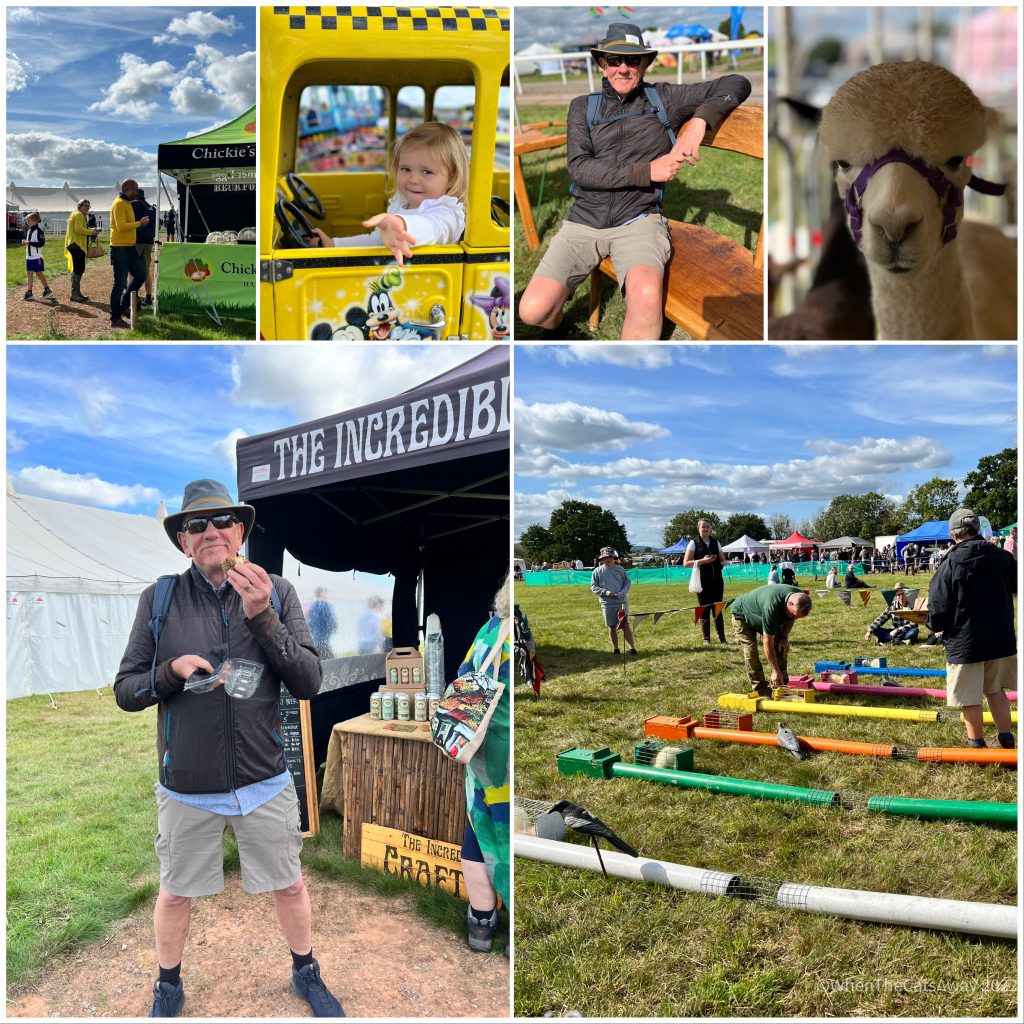
Catherine’s half-sister Elle and her family also joined us for a few days including fun at the Somerset County Show. Now, when I say fun, that can encompass many things in Somerset, we are learning. So a spot of ferret racing barely made us blink. Yes, the kids loved it, we loved it, and possibly the ferrets!
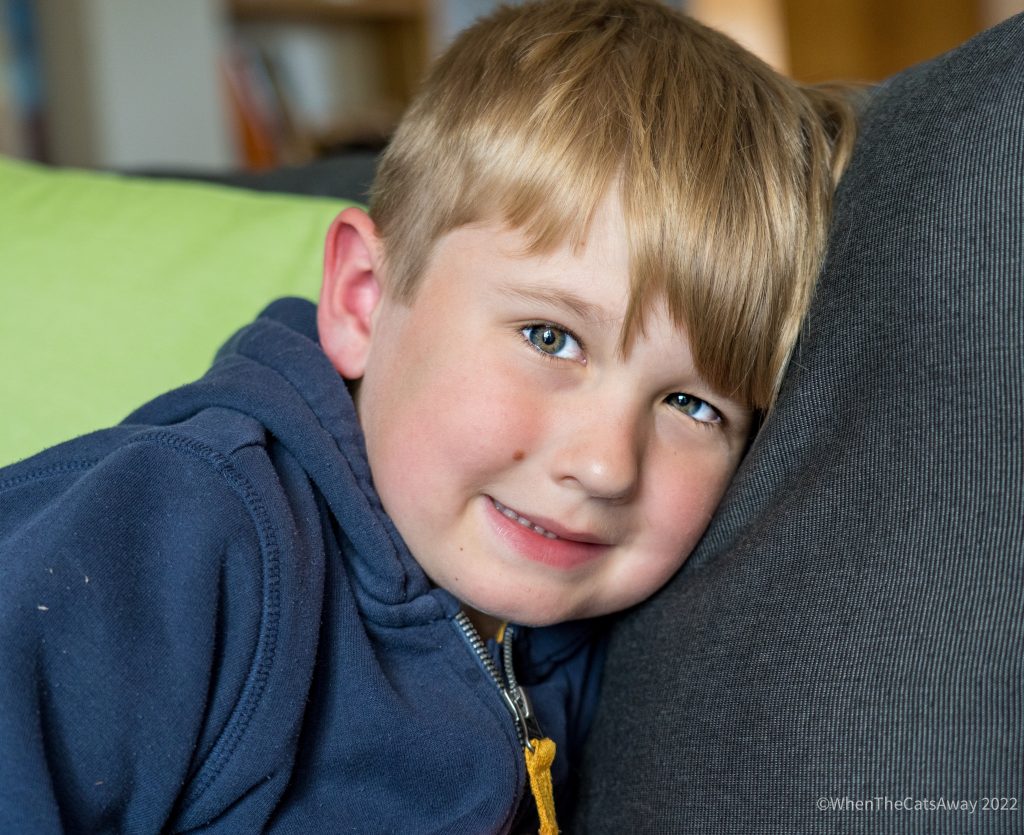
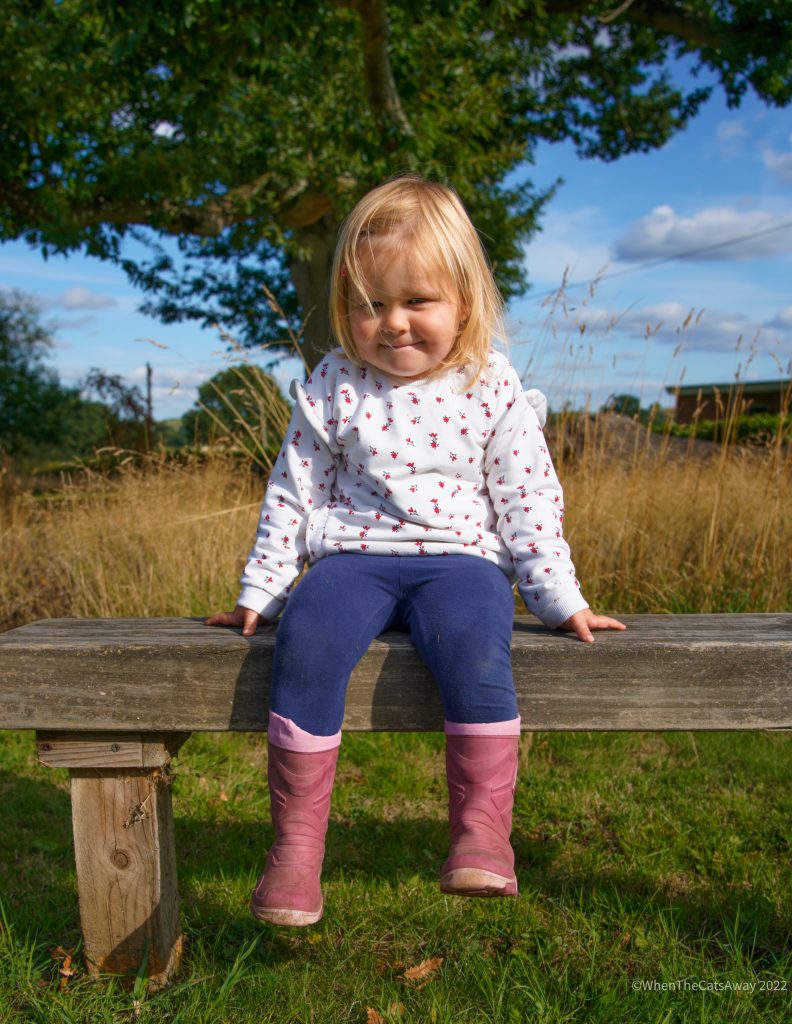
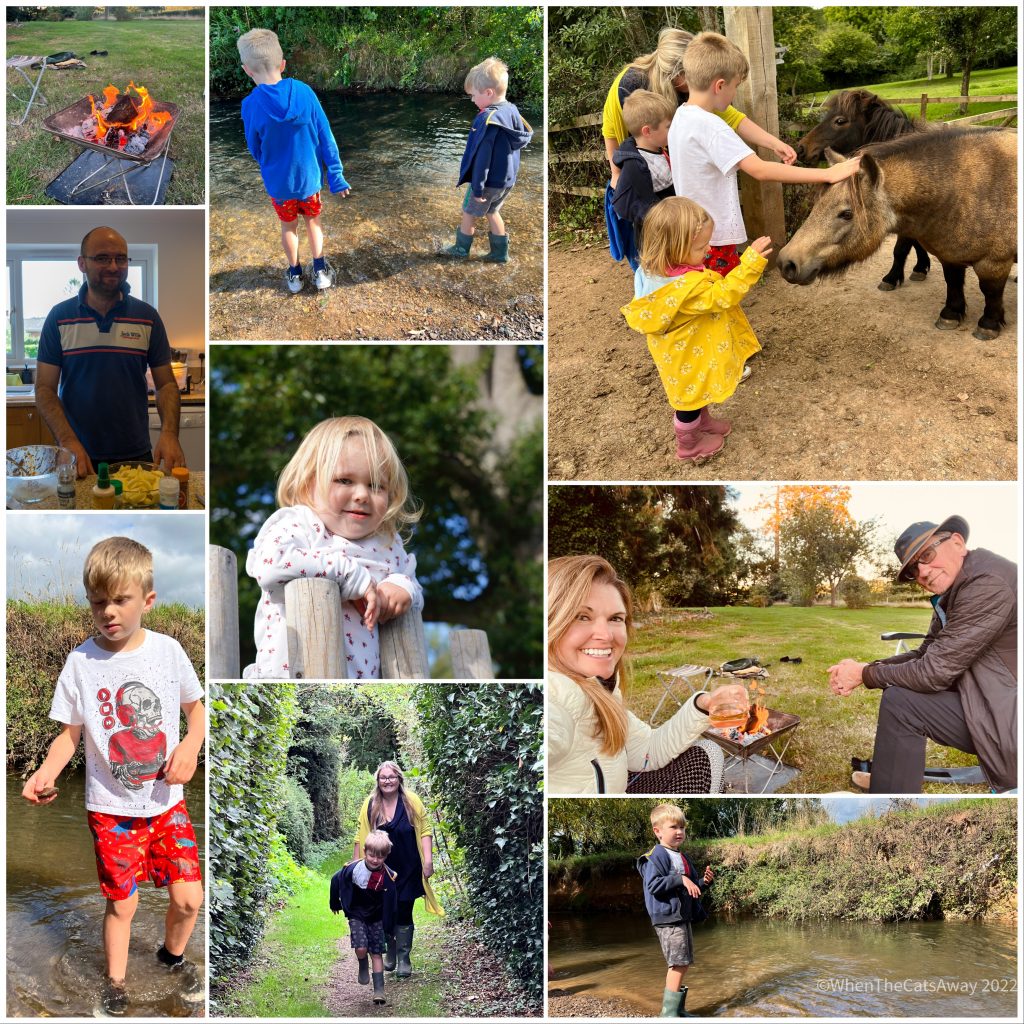
Scotch Eggs, craft beer and local cider, fairground rides, alpacas and the all important ferret racing at the Somerset County ShowSweet WilliamIris is mastering the art of posing for photosSkimming stones down at the river, meeting the local Shetland Ponies, marshmallows toasted on a campfire in the garden…a jam packed weekend!Catherine and Elle
*
Family weren’t the only visitors in September. We also had the crew from my school days. Stuart and Karen, John and Catriona, all came for a couple of nights, and as usual we went hard on the first one with a lovely long dinner out at what has become our go to restaurant, Villa Verde in the village of Rockwell Green. The early hours of the morning found us dancing round our dining room! Grow up? Never….
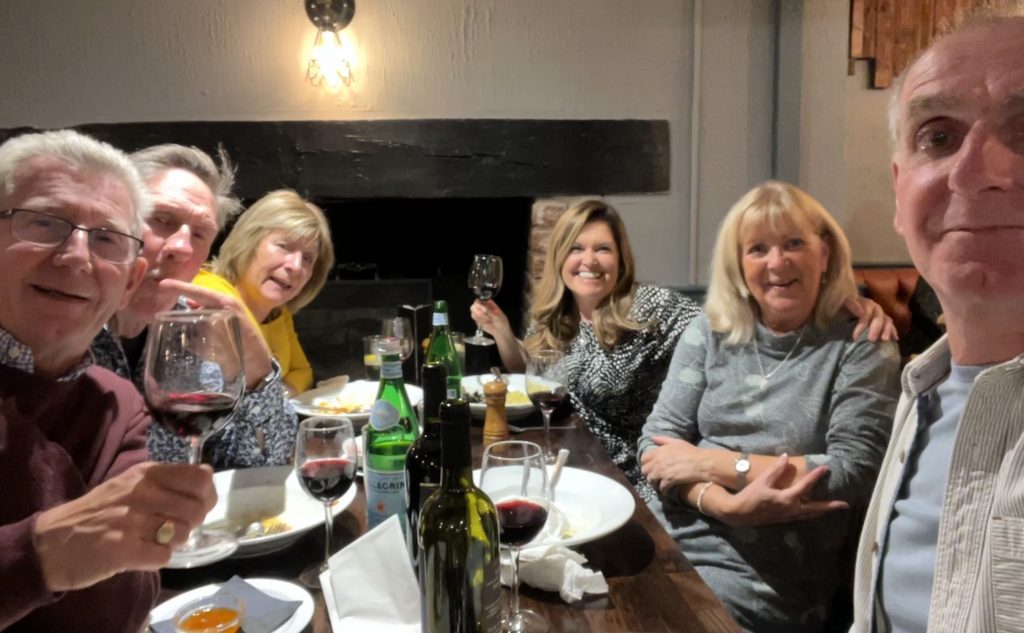
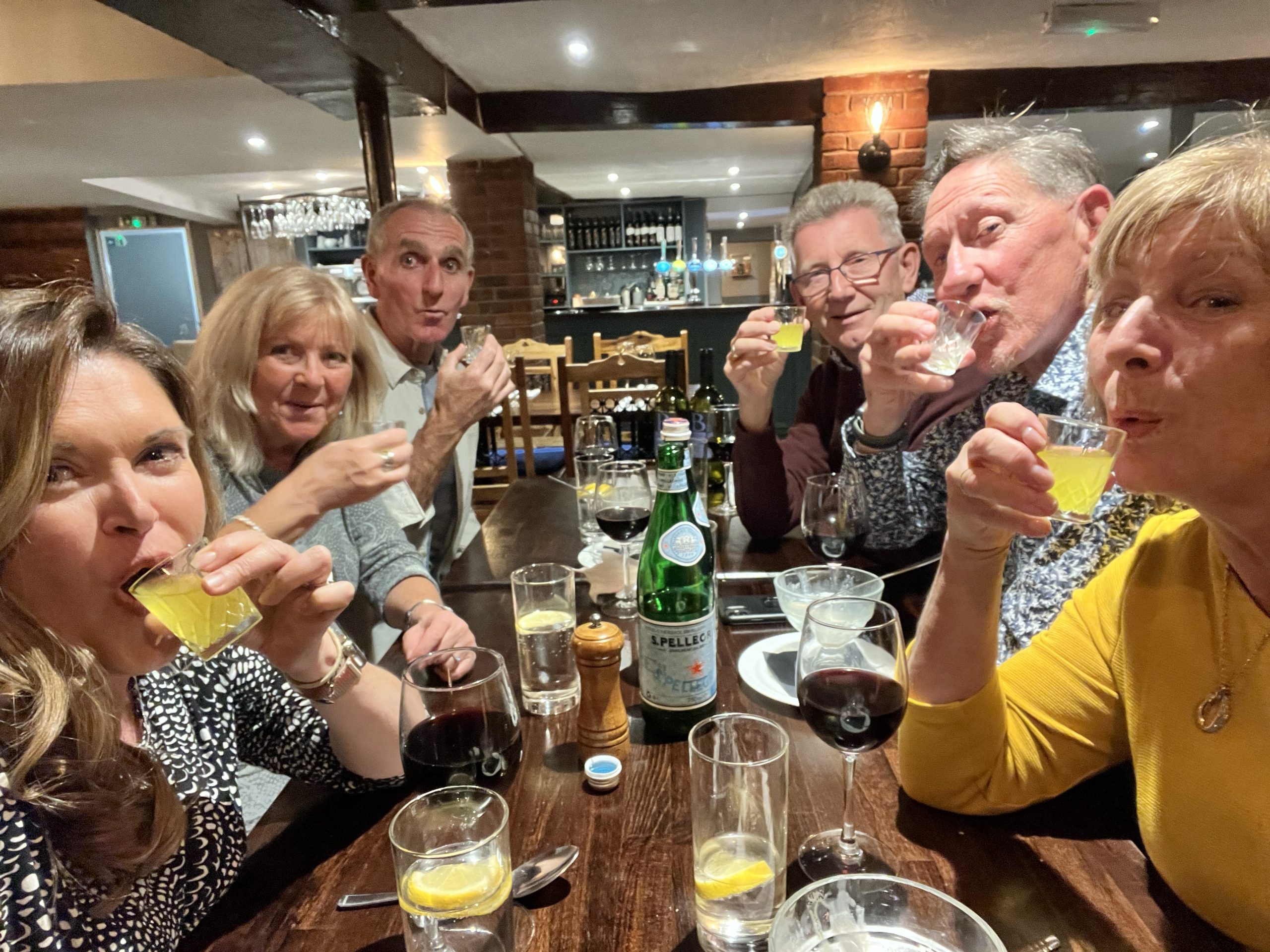
Dinner with the gang – many laughs were had, wine bottles opened and….…Limoncello shots to finish….!
My buddy Andrew joined for the next day and joined us for a head clearing walk on the beautiful Quantock Hills. This group of friends has been my rock through my whole life, and I love ‘em to bits :).
The picturesque Quantock HillsWalking from Crowcombe GateThe whole motley crew – Catriona, John, Andrew, Stuart, Karen, Mr and Mrs A
*
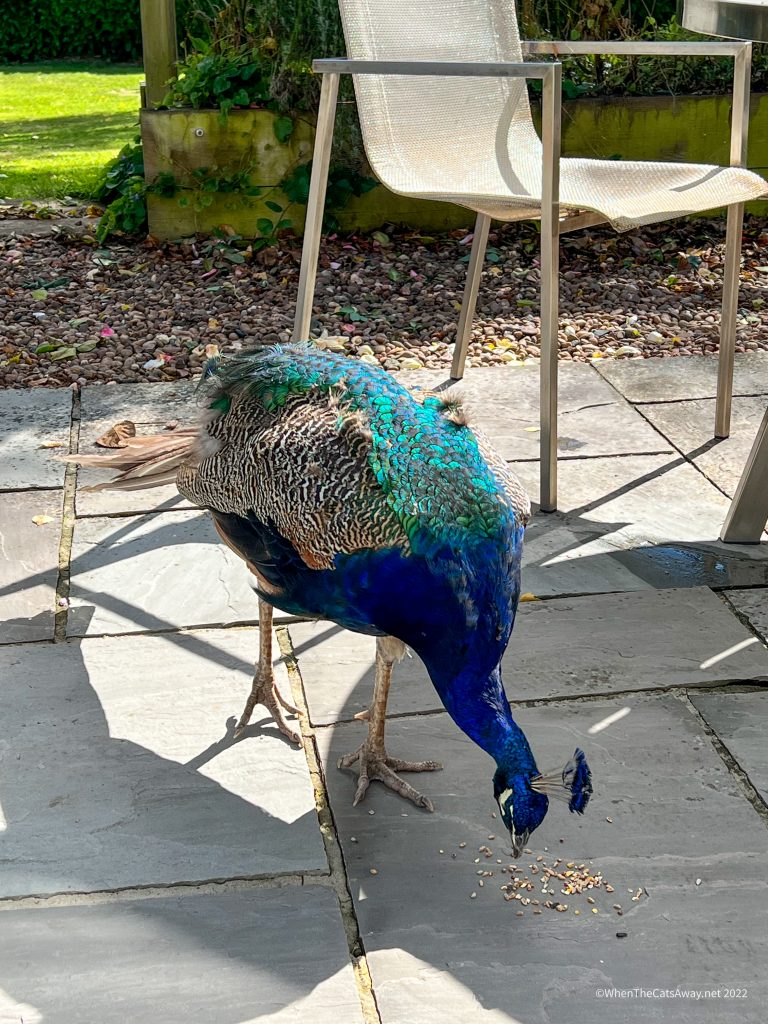
Finally on the visitors front, we had Percy, the peacock, who the village adopted after he escaped from a very cramped cage at a local farm. As autumn comes here, his tail fathers have been lost (well we found one that has pride of place now in a vase), and he has taken to resting up on our patio in the sun. Tassie, our Burmese, looks on with horror, and a speech bubble can almost be seen on her expression saying, “Wow, weird place this village!”
Percy doesn’t mind a little bit of seed, but is more than happy to hunt for his own in the garden
*
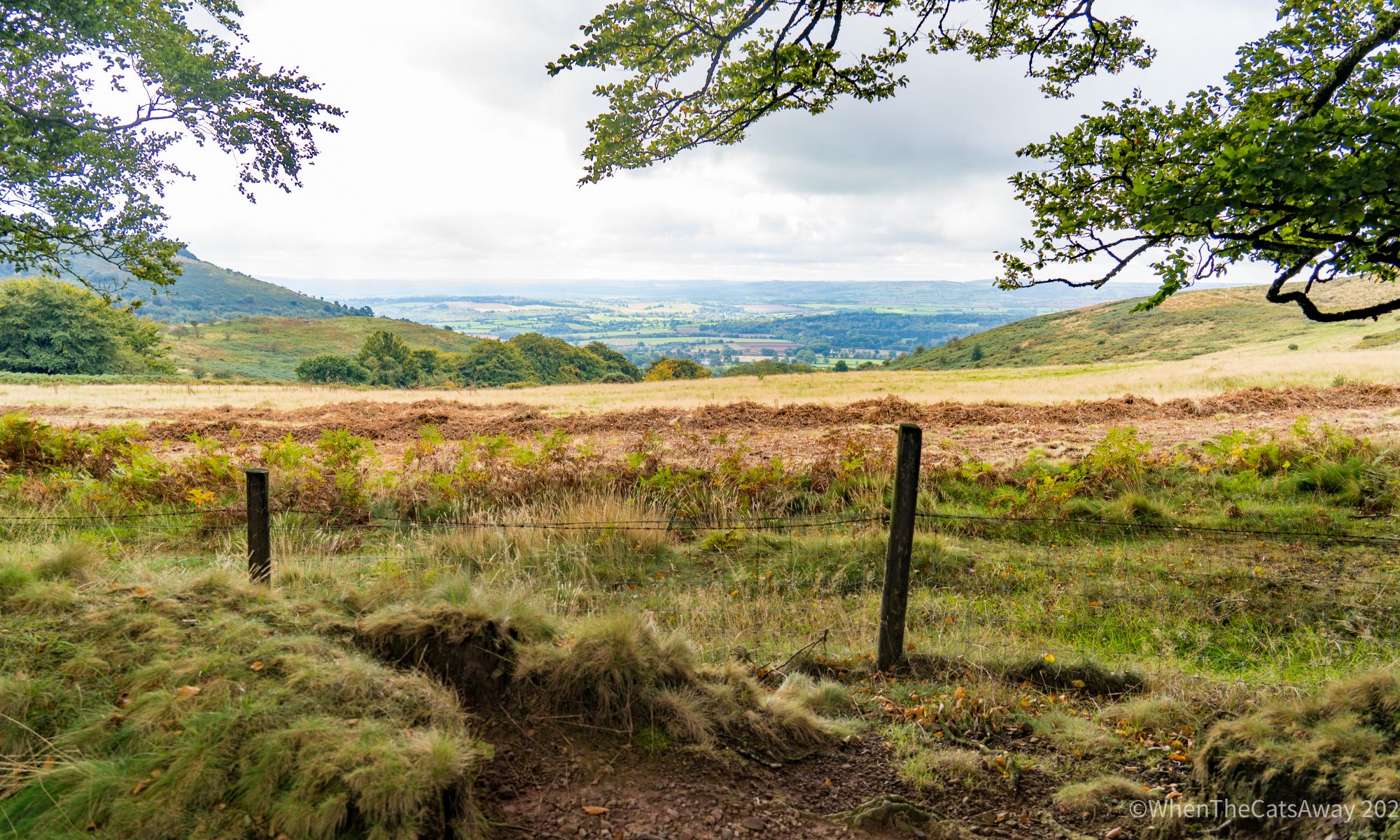
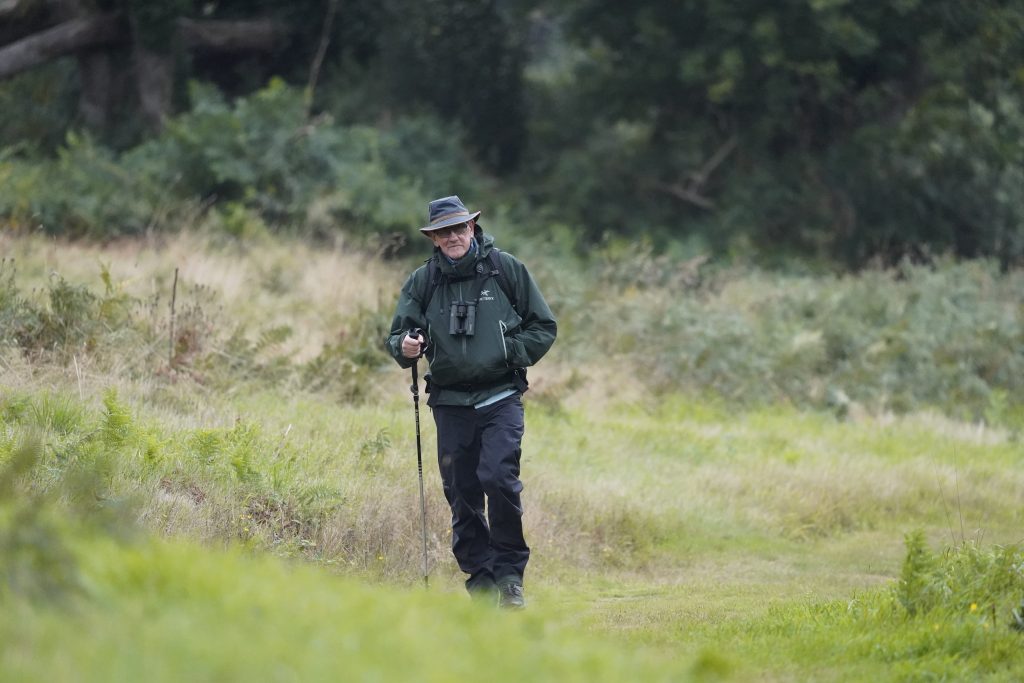
September has also seen us exploring our local area, both hiking and kayaking. Exmoor is just up the road, and Catherine plotted a few great little walks, including one around a reservoir up in the hills. I don’t think there’s any danger we will run out of local hiking trails. We really have landed on our feet here…hah hah.
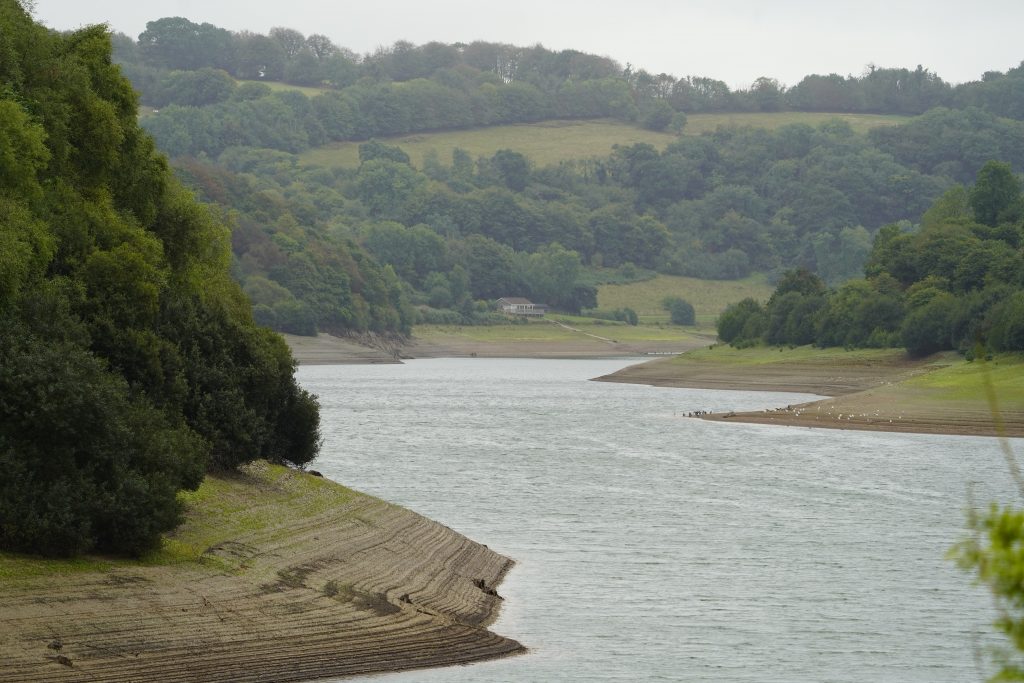
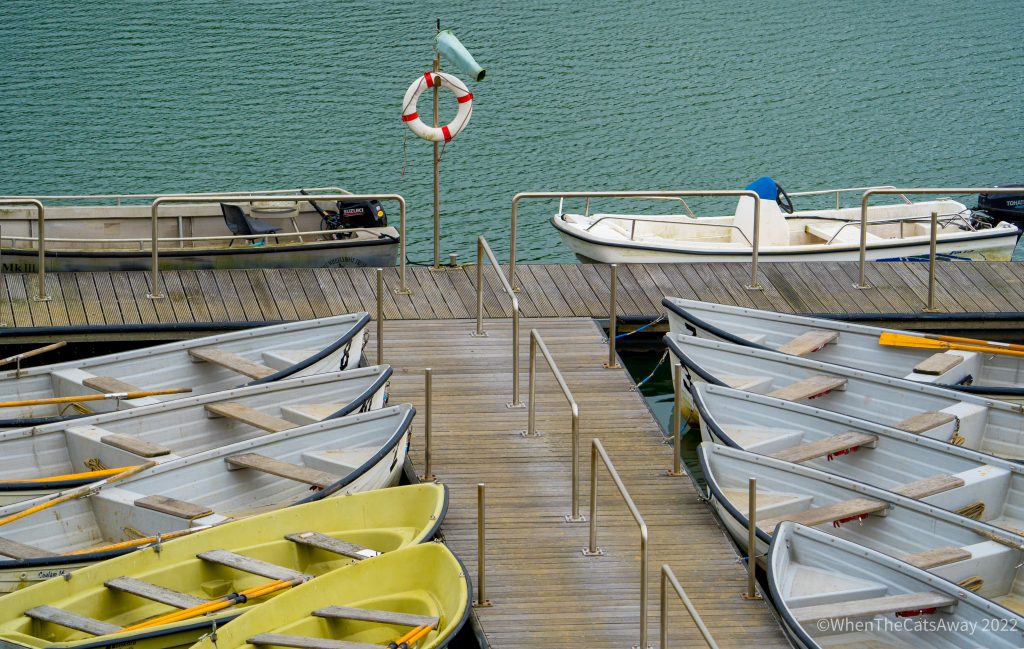
After all of the hot dry weather the cooler, damper day is a reliefClatworthy Reservoir is looking a little low after all the dry weatherNone of the rowing boats are out for fishing todayJust an 8km circuit for this hike, but a few hills
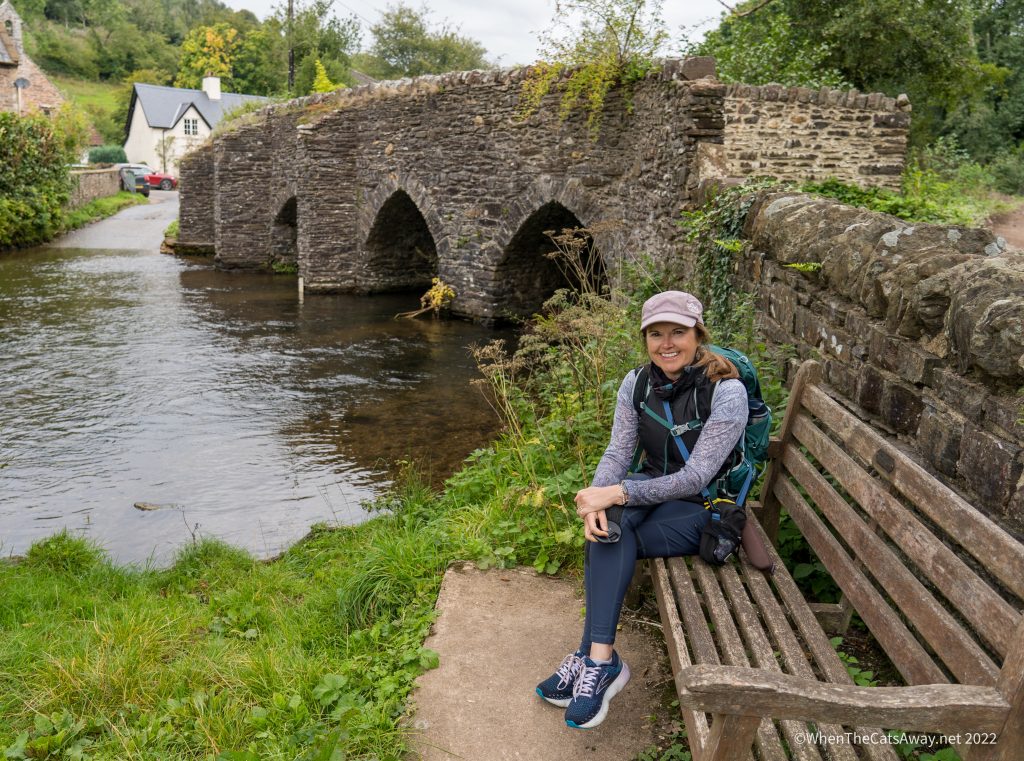
Another walk started from a tiny settlement, Bury, where we started and finished from a medieval packhorse bridge.
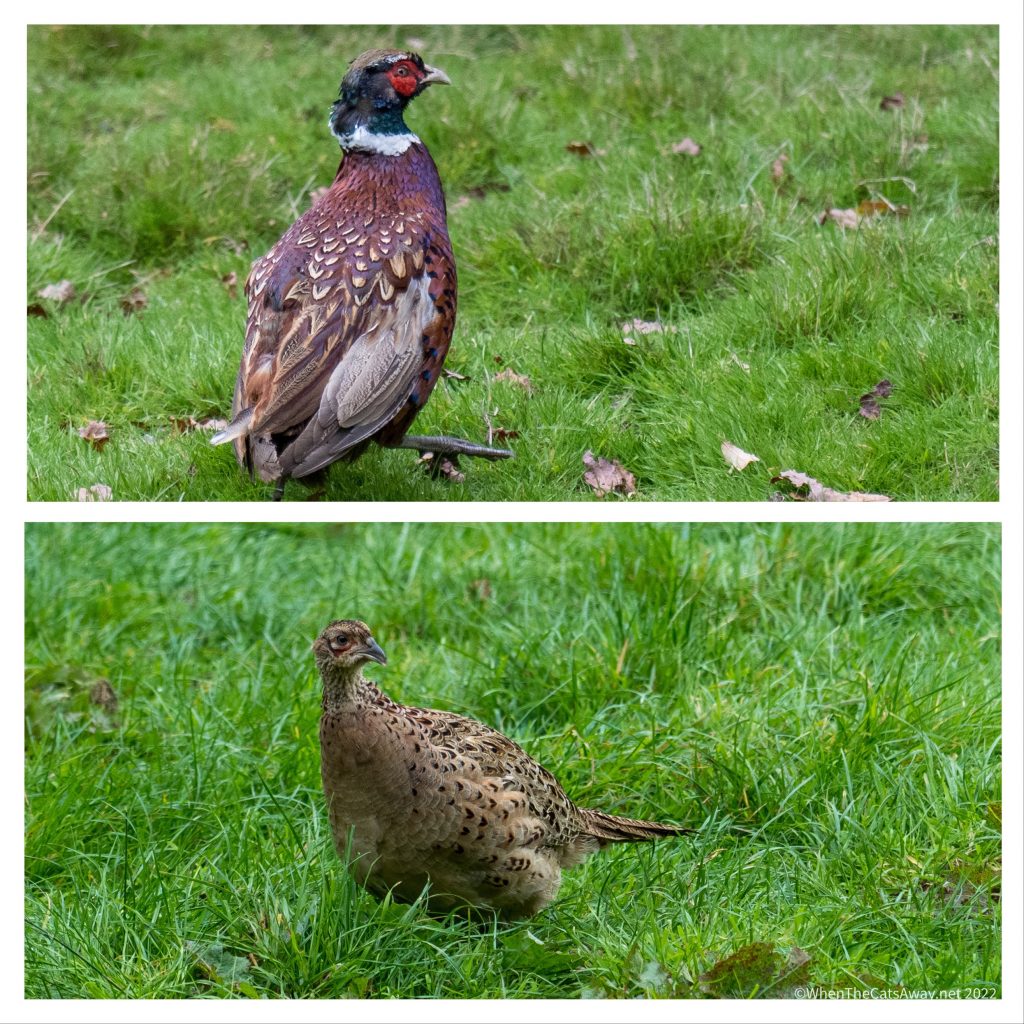
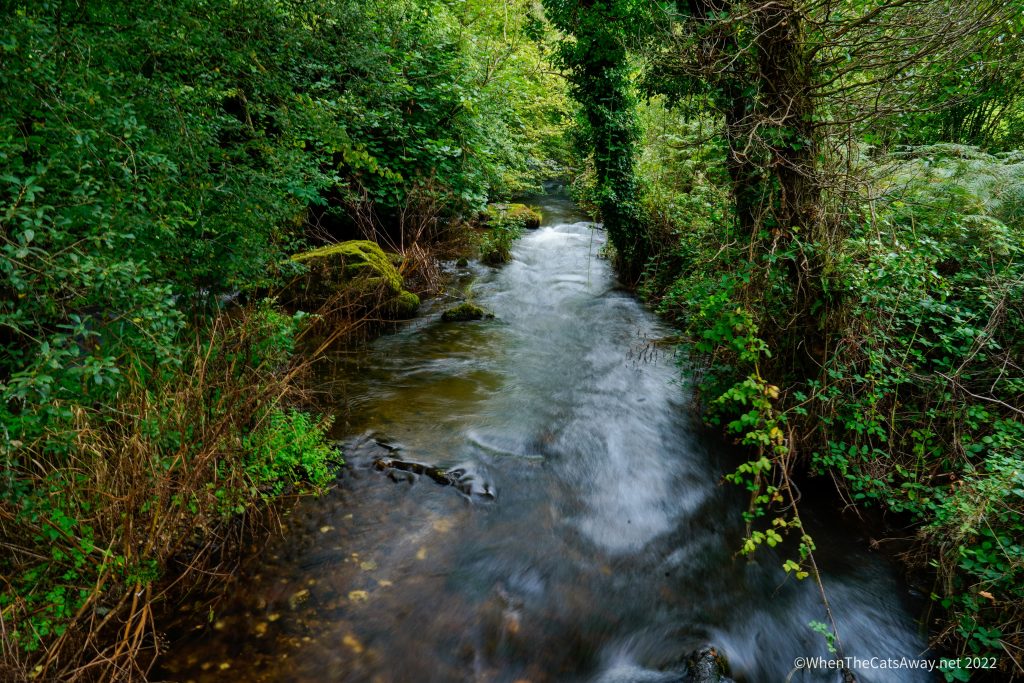
A 9km circuit walk across Exmoor from the little village of Bury with its medieval packhorse bridge and fordGreens of every shade on our picturesque riverside walk section, following the River Haddeo Juvenile Pheasants – bred for shootingThe novelty of these oh so green paths still hasn’t worn offAs we walk up river the white water increasesAncient stone walls are a haven for a multitude of shade and damp loving plantsOld stone steps guide us up onto the moorlandQuintessential Exmoor – a fine spot beside a trig point to enjoy a picnicAutumnal colours of Exmoor National Park
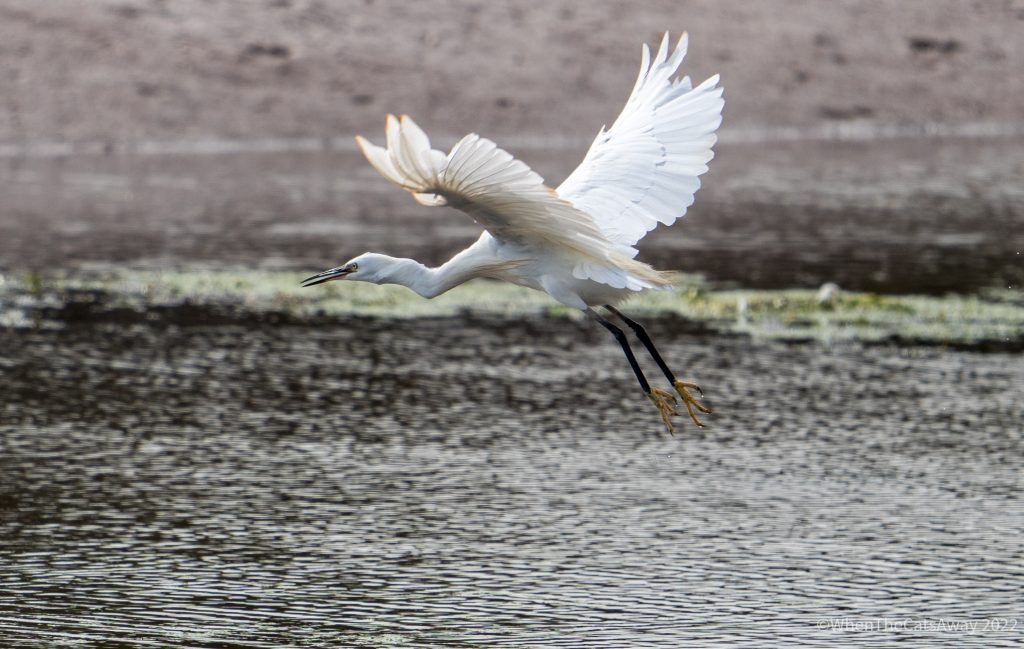
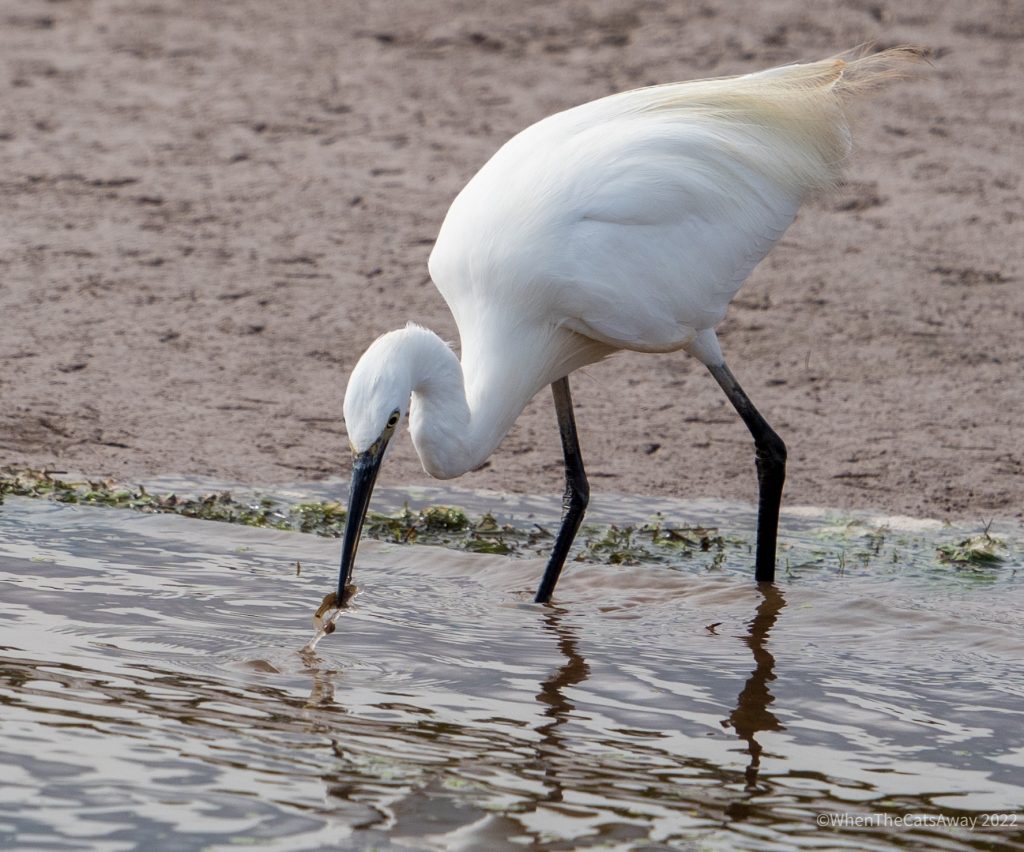
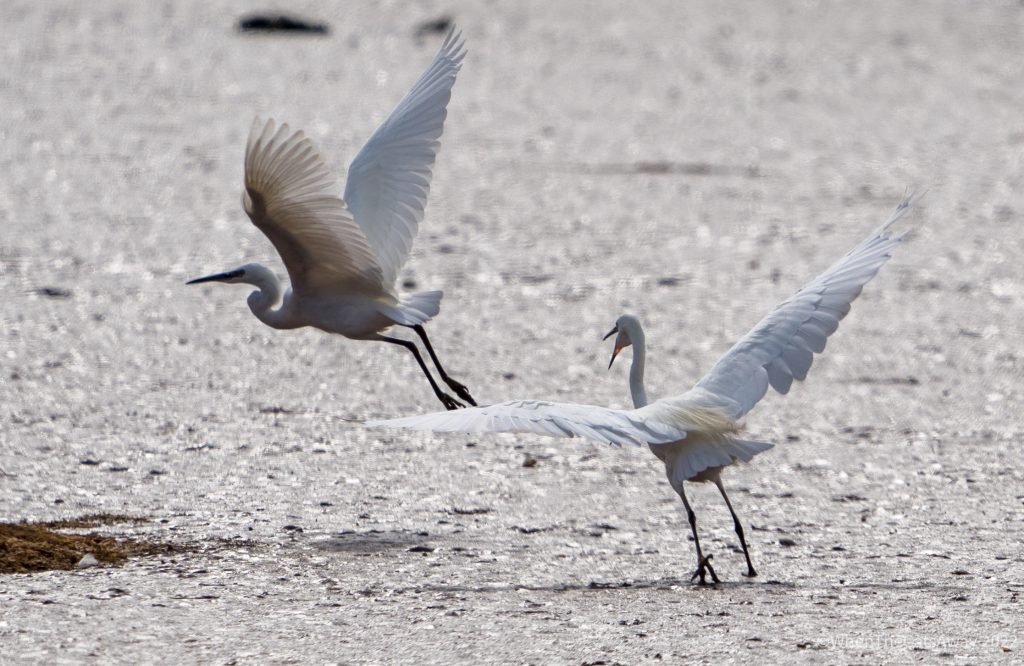
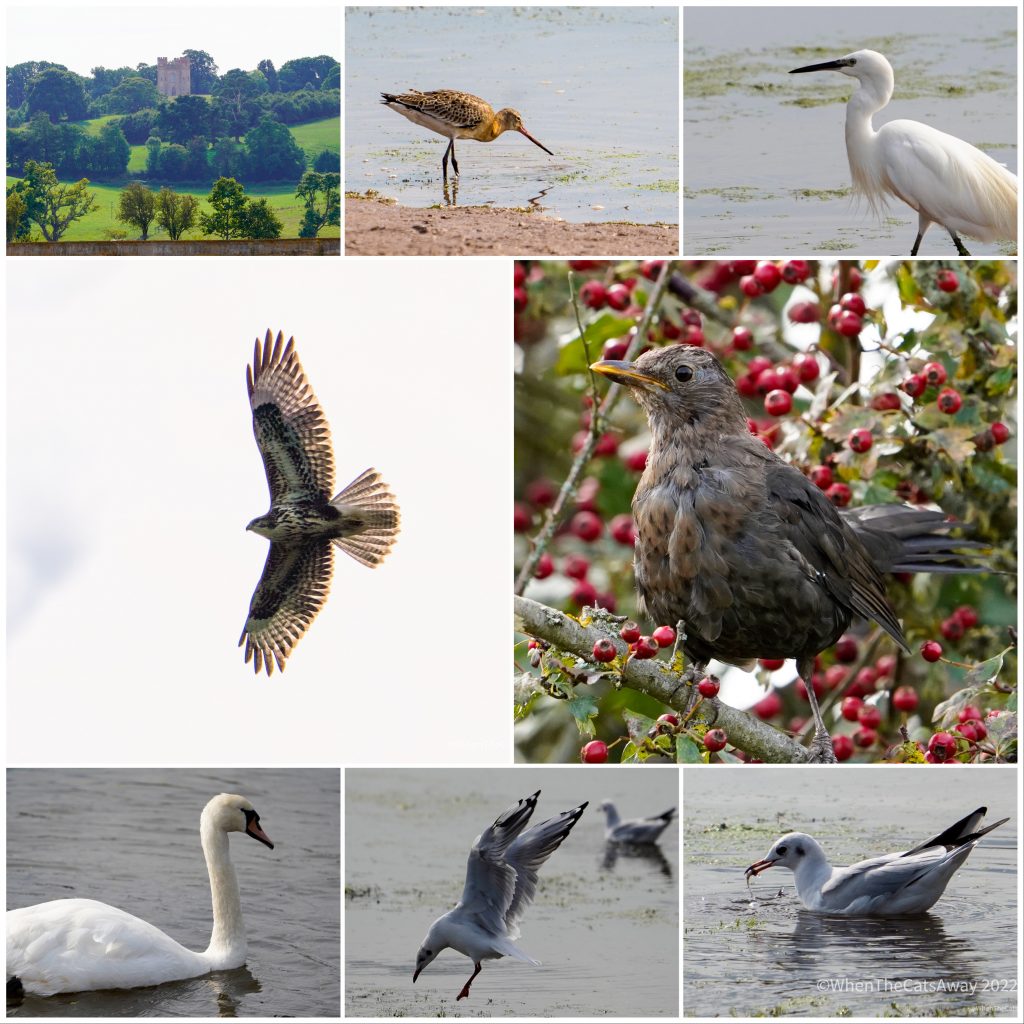
On another occasion we tagged on an exploration of the River Exe estuary to a visit to a stone mason, and found a great selection of birdlife and some fabulous scenery – we hope to come back here one day. It’s well known as a fertile fishing ground, and there were plenty of Little Egrets catching fish. As always, we were told; ”Oh you should have been here earlier, there was an Osprey catching fish here”…but obviously nothing for us to see!
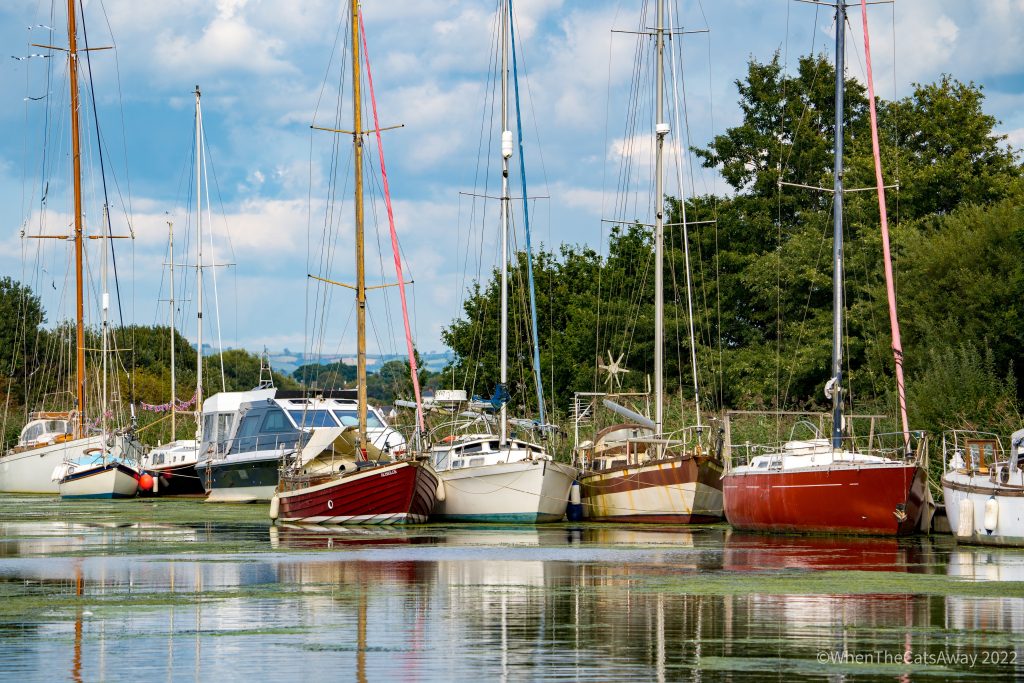
Yachts at Turf LockSeeking new fishing groundsGot one!Chasing off the competitionBar-tailed Godwit, Little Egret, Buzzard, Blackbird, Mute Swan and Black-headed Gulls galore
*
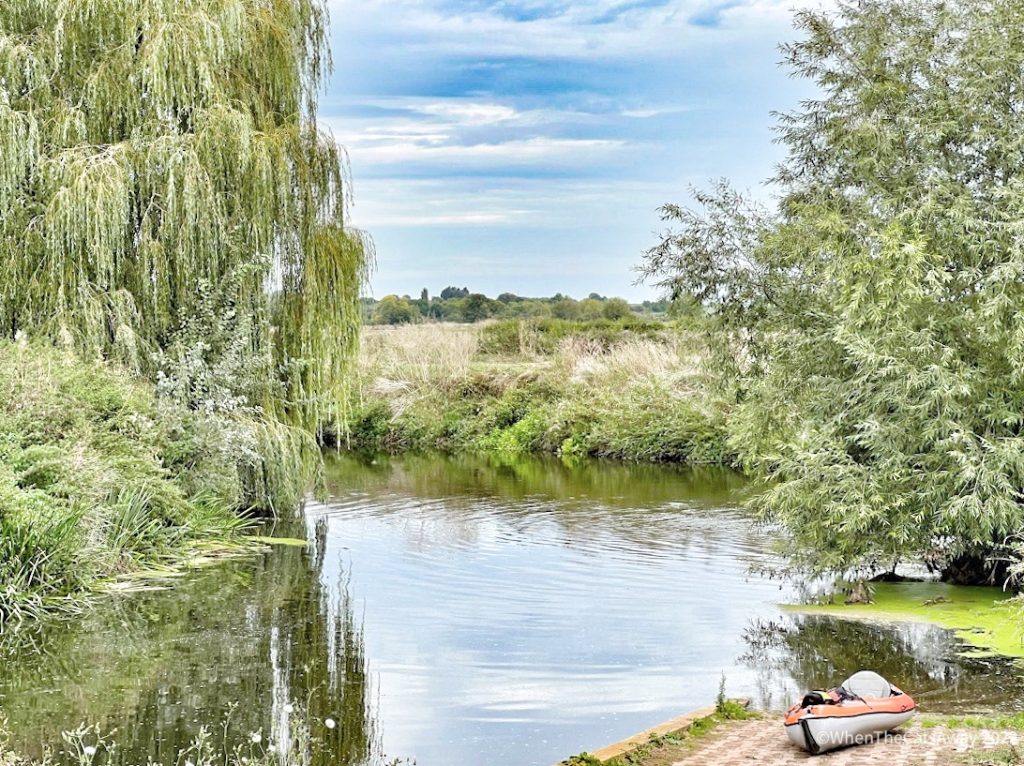
Then it was turn of our arms to get a workout, as we paddled across an area called the Somerset Levels, which we live on the edge of. With 160,000 acres at an average height of only a few metres above sea level, its is one of the flattest and most flood prone areas in the UK. It also home to rare species of birds, and our kayak gave us glimpses of some of these thanks to Catherine’s big lens. We weren’t sure how good the kayaking was going to be in the UK. How wrong could we be, certainly with the kind of weather we have had this autumn. So another tick in the move country (and hemisphere!) box for us.
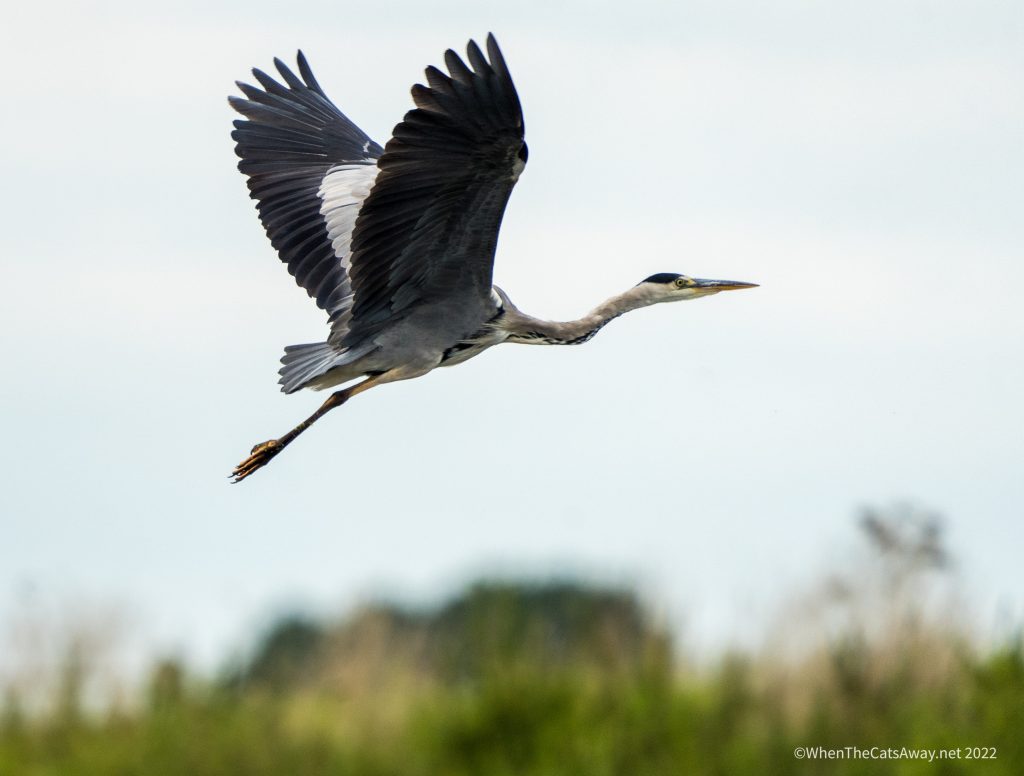
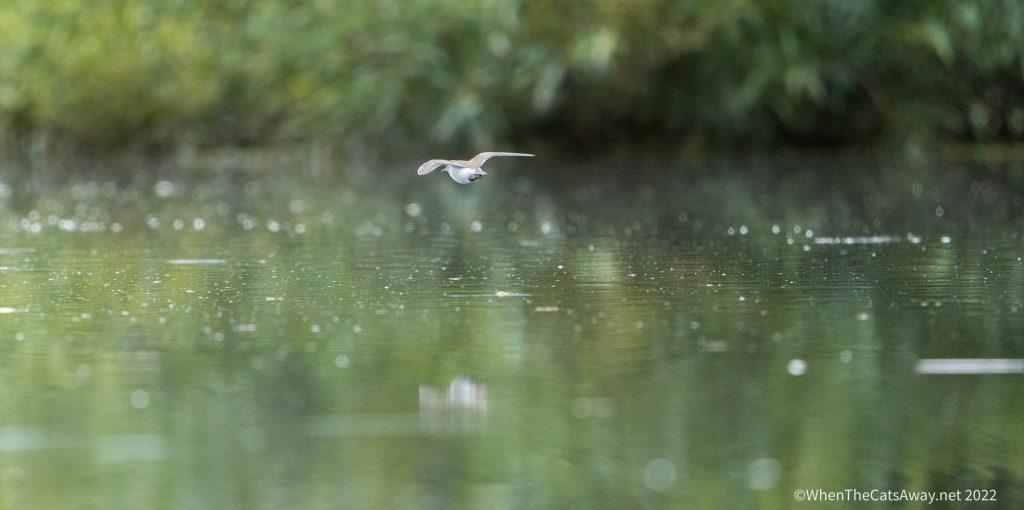
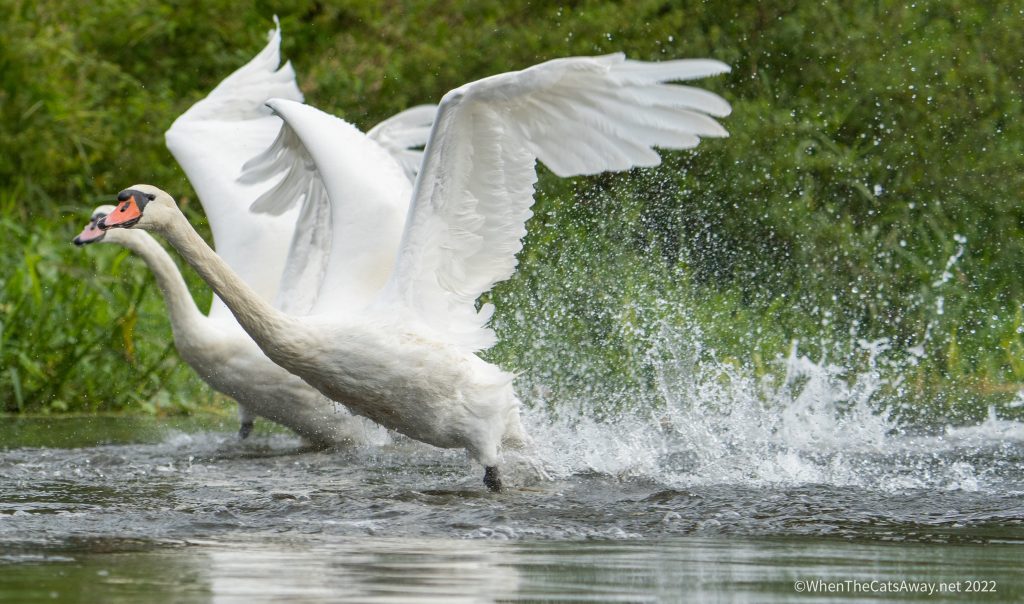
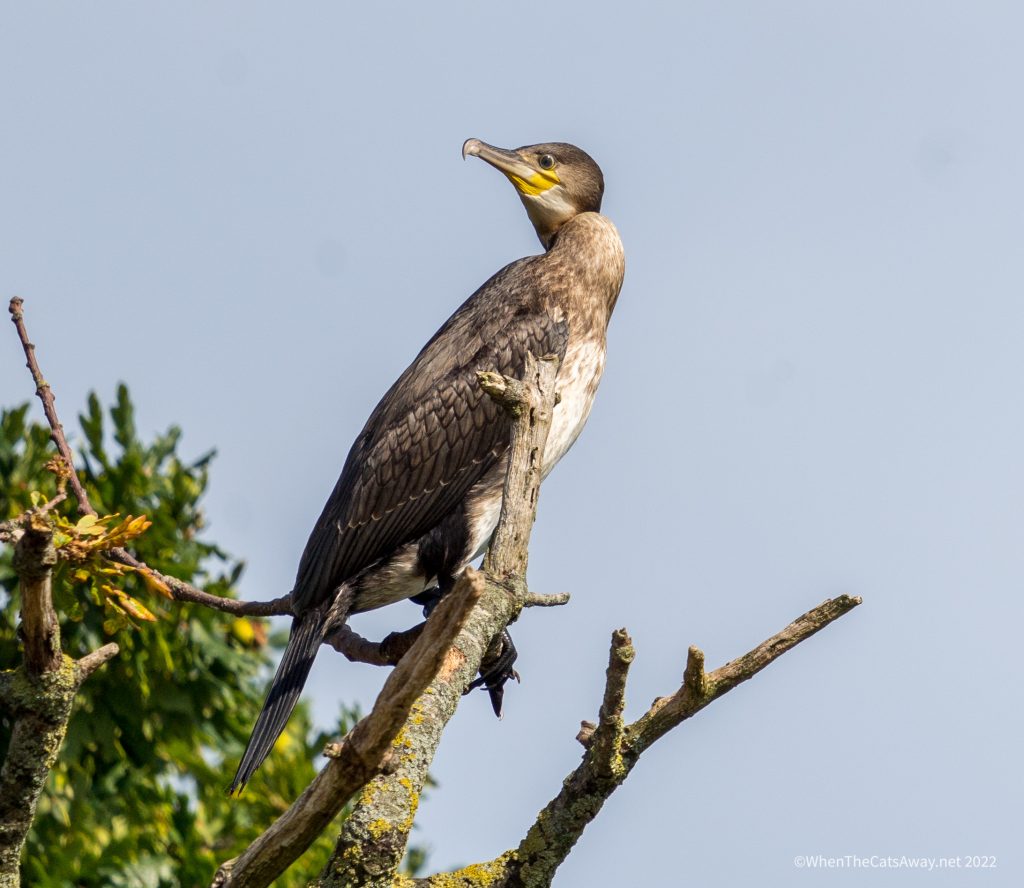
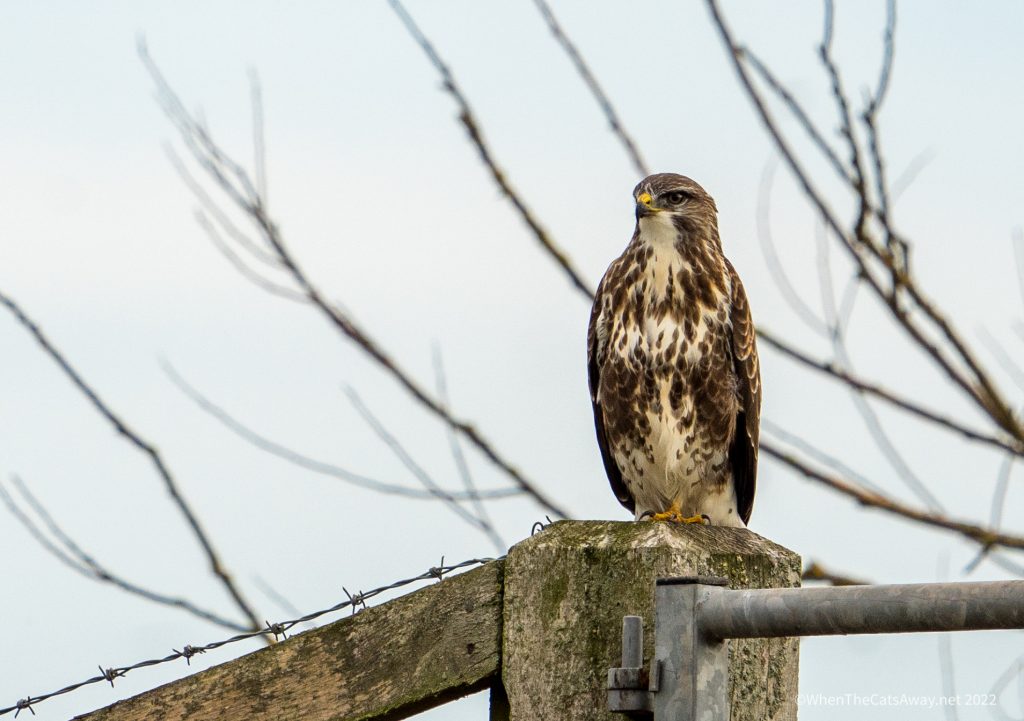
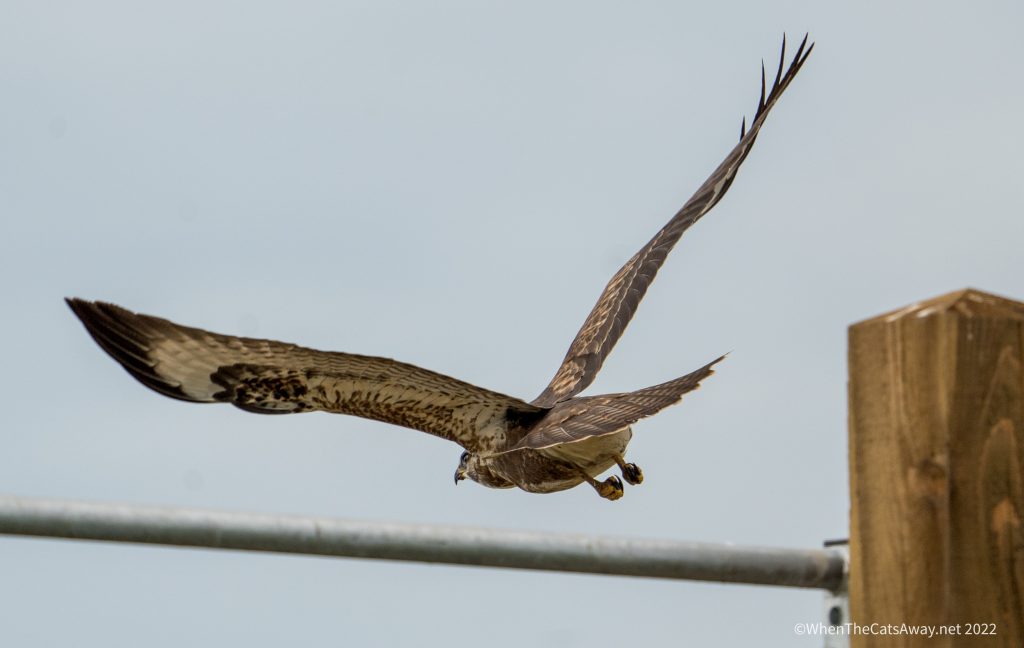
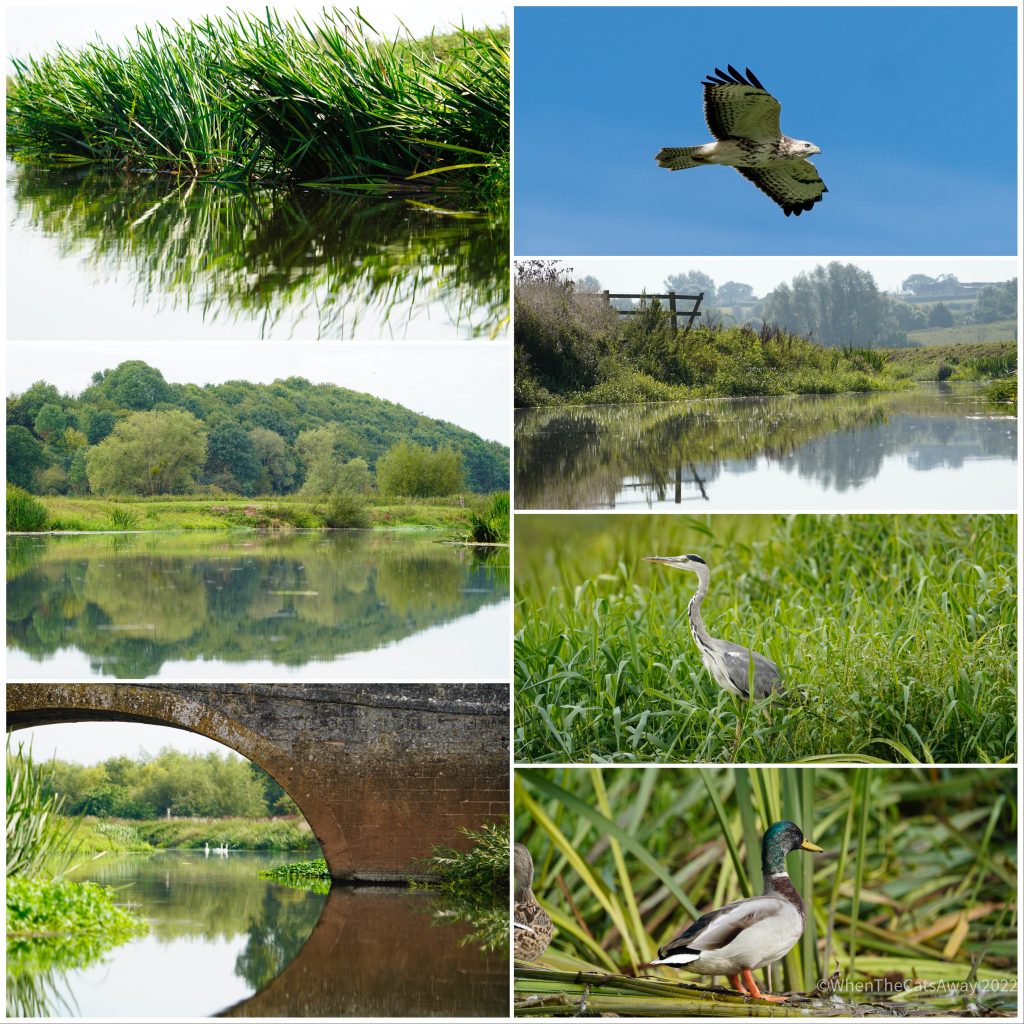
Kayak inflated and ready to launchA Grey Heron takes off across the riverA Sandpiper crosses the water in front of usA pair of Mute Swans take flight A Great Cormorant sits up in an oak treeA Common Buzzard keeps an eye on us from a fence post….Buzzard decides to take flight…The River Tone – just us and the birds
*
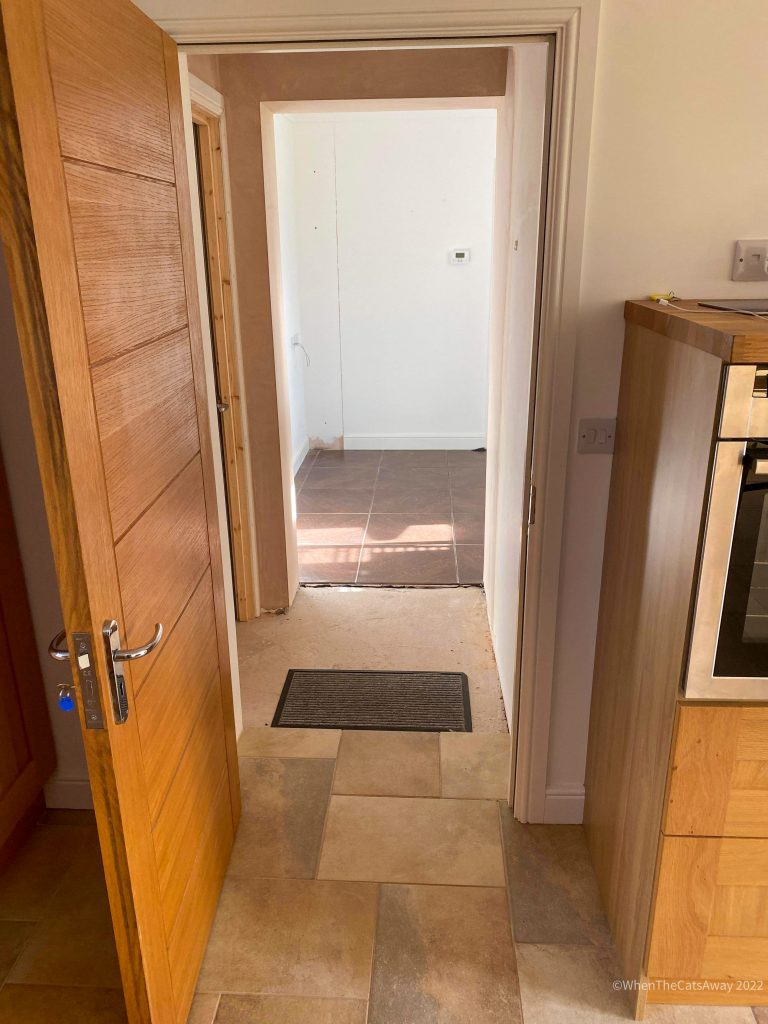
But it is not all visitors and playtime. We have been busy planning modifications we want to make to the house, and already have started on one project, converting a room used by the previous owners as an office (only accessible through the garage!) to….a bar. Yup, we are getting a whole new extension to our kitchen, having had a wall knocked down creating access to the room directly from it. Planning permission is in for bifolds to be installed as well, to open up the view. Much work to do but its great to get started on making the house our own.
Goodbye wall, hello doorway…
*
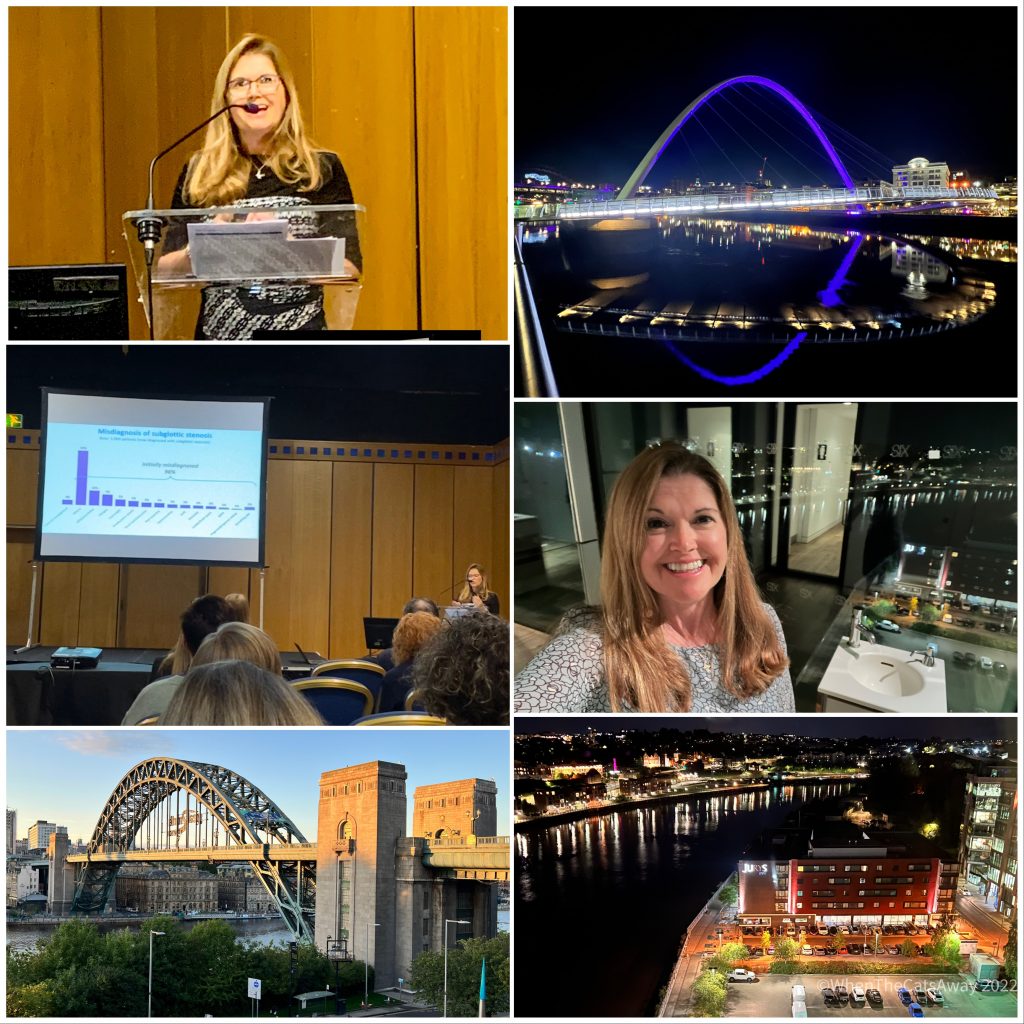
Catherine also as been working, doing her voluntary advocacy work, talking at conferences, contributing to research papers, managing an ever growing support group (approaching 6,500 members now!) and meeting fellow sufferers of the rare disease she has. She also manages to find time to do some paid work for a company in Australia. A right powerhouse she is, also squeezing in a flying visit to her cousin, auntie and uncle somewhere in that mix.
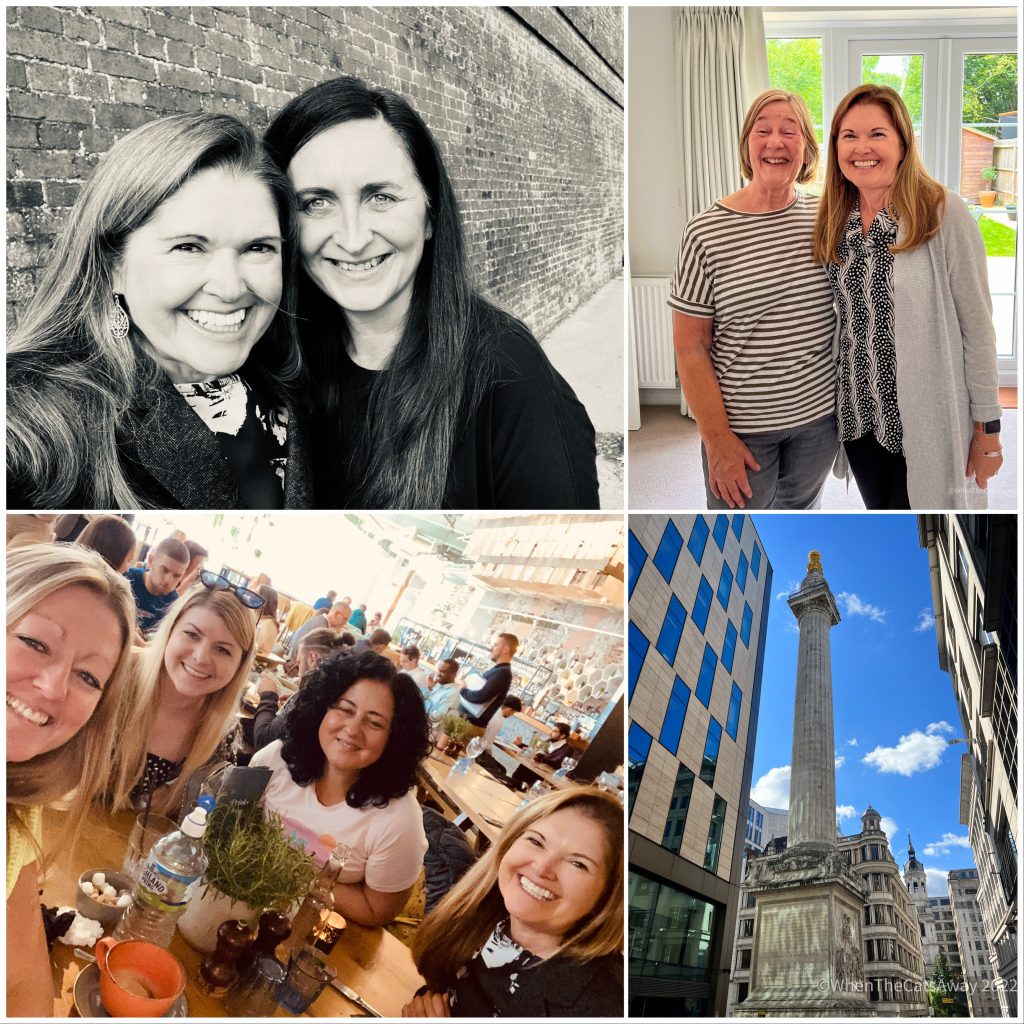
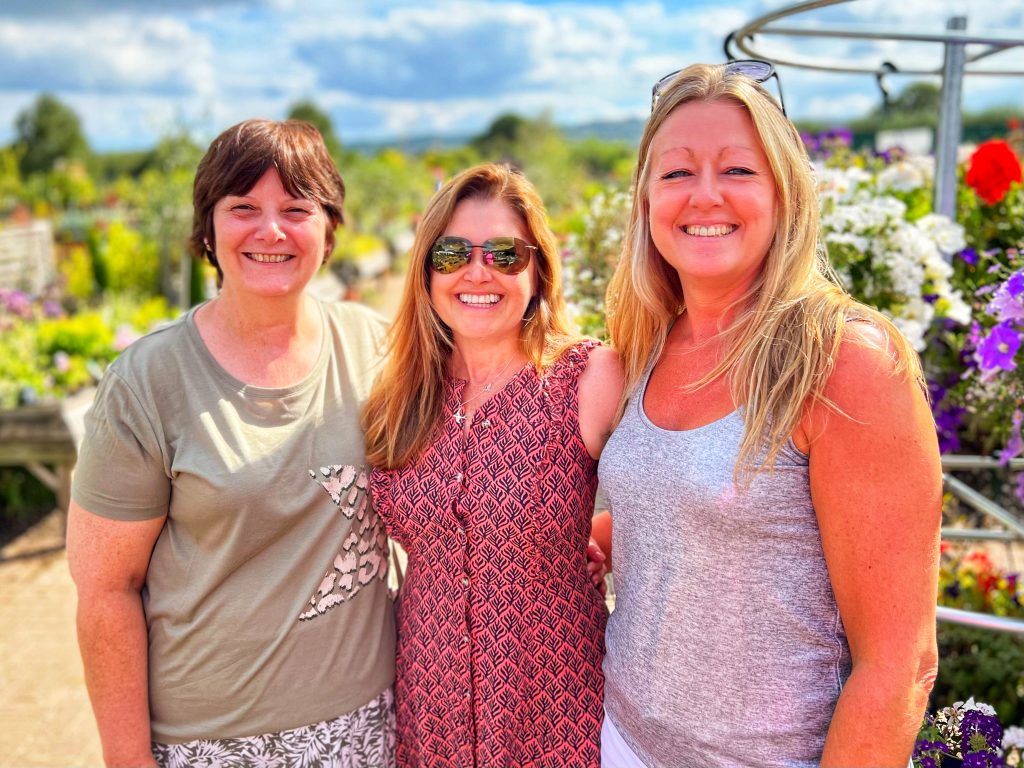
A long awaited (postponed from 2020) presentation at a Speech and Language Therapist and ENT conference in Newcastle-upon-TyneA flying visit to Catherine’s cousin Karen, aunt and uncle Pam and Brian, followed by a lunch with three ladies in London
Thank goodness for our easy rail connection here from Taunton. Well, when they aren’t on strike, or have leaves on the line, dead sheep, kinky rails, strong winds, overhead power failure, or the many other reasons we get given for delays. It’s not especially reliable, but mostly gets us there more easily than by car when London is the destination.
*
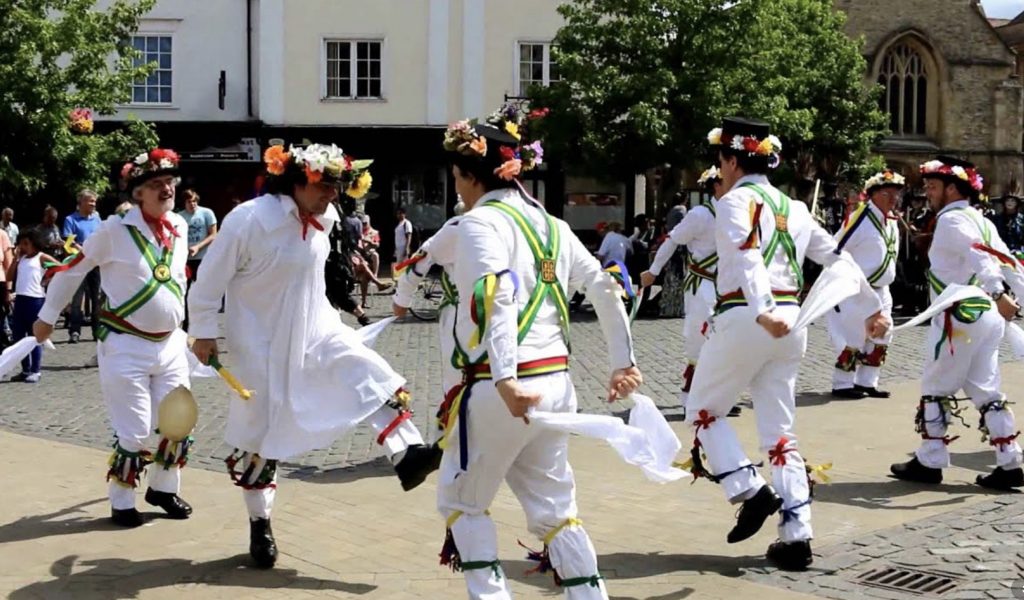
What about me then? Well, not too much to tell amongst the flurry of visitors. I have kicked off volunteering in the local community shop though, and they want me back for a second go. I know, surprised me as well 🙂 I did go along to the local Morris dancing club night, given my philosophy is to give things a go.
If you don’t know what Morris Dancing looks like, then this will give you a clue – men in white dancing with hankies and silly hats – ancient tradition has these folks blessing harvests and welcoming in Spring amongst other things…
Well, let’s just say I gave it go, and leave it there.
We are really loving the community here, never having felt part of one before, given we’ve mainly lived in larger towns and cities. I think we will always be ”the Australians at the Brodie’s place” (our previous owners), but that’s fine. One resident was telling us about ”The new people at The Old Schoolhouse”. It later emerged they’d lived there five years.
*
Change seems to happen slowly here. For instance, I can’t believe how attached every government department is to sending letters! Yes, actual snail mail. They seem to take pride in taking as a long as possible to enact a process. I started applying for my Government pension at the end of August. By the end of September I had made 23 phone calls, and finally received an application form for it through the post on the 29th. I said to one call centre operator, ”But can’t you just send me one from your computer?”. ”Ooooh no”, she says, ”That’s a whole other department that do that”. All part of the charm? Sometimes. Other times its all just frustratingly slow 🙂
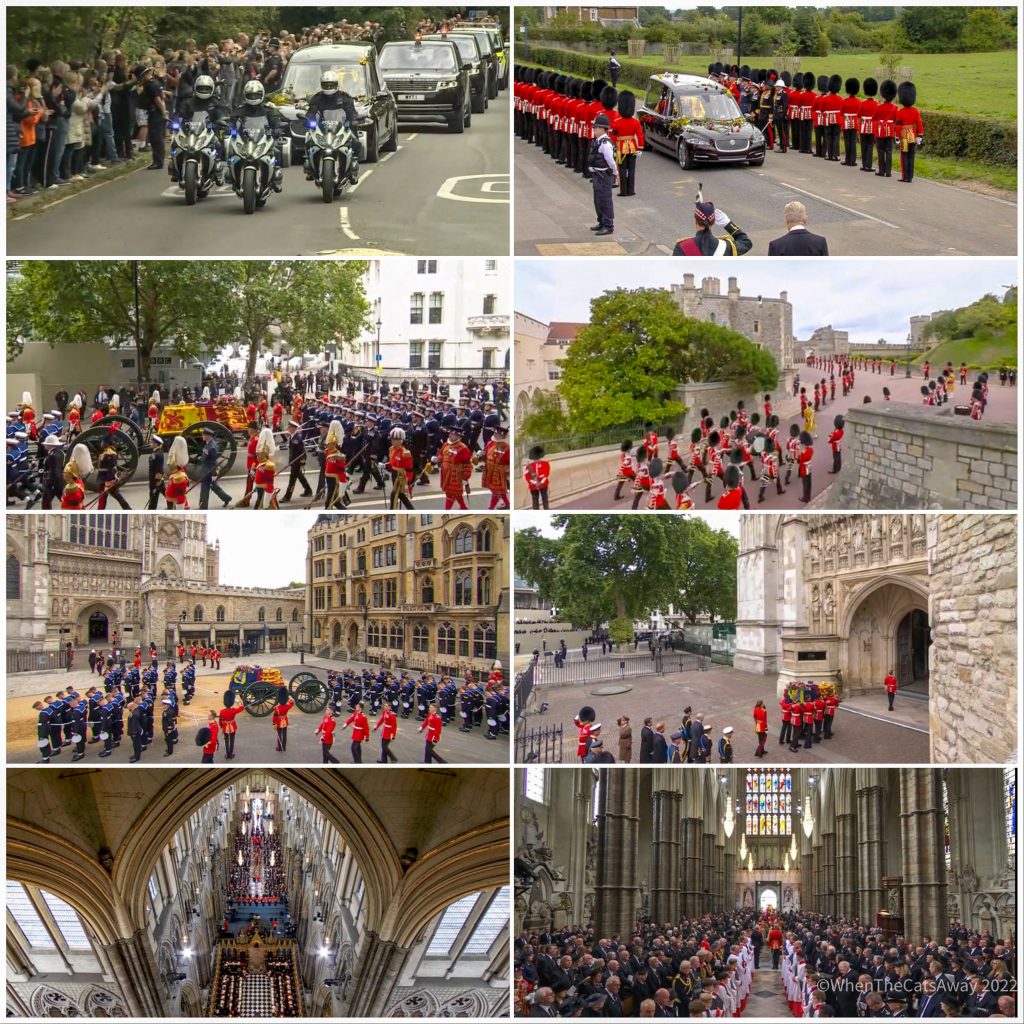
And while we are on the idiosyncrasies of this country, none were more evident then when we saw the nation mourning the loss of it’s Queen. One bloke even got arrested (later released) for holding a sign that read ”I didn’t vote for you”, referring to the new king.
Queen Elizabeth II’s funeral – a moment in history watched remotely
In the land that reveres its tolerance of free speech, I realised there are some very touchy subjects, and the monarchy is definitely one. I even saw local councils around us have cancelled food festivals where small businesses show case their wares. Apparently they are not appropriate at this time”, to quote the council minutes. Very strange.
There is much to learn. Best done by listening and keeping quiet and trying to keep my eyebrows under control 🙂
Location: Bradford on Tone, Somerset and London, UK
When Mr A last wrote he was struggling through a bout of Covid-19, isolated in his own wing of the house, while room service (me) delivered meals on a tray. Finally on day 9 he tested negative and was free to return to the shared spaces of the house, with a great deal of relief. I had managed to avoid catching it, thanks to his strict isolation.
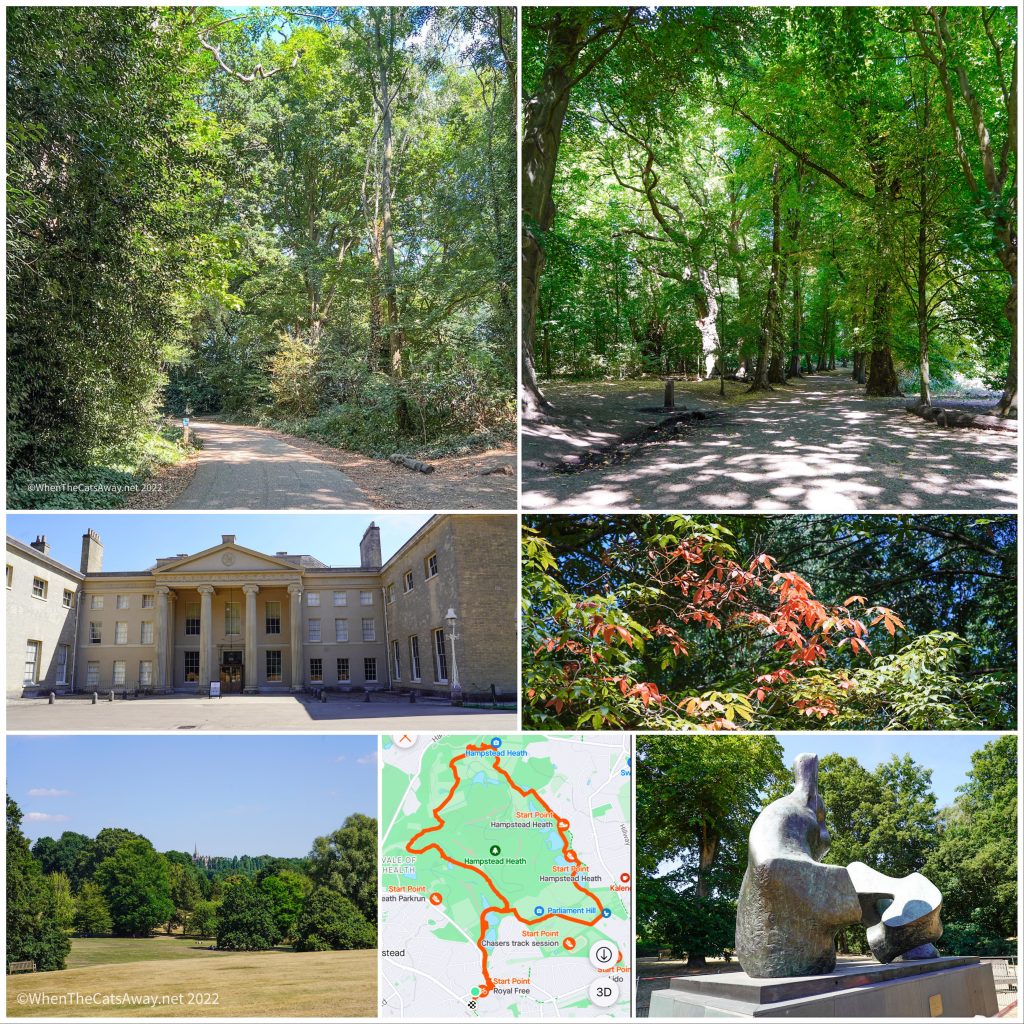
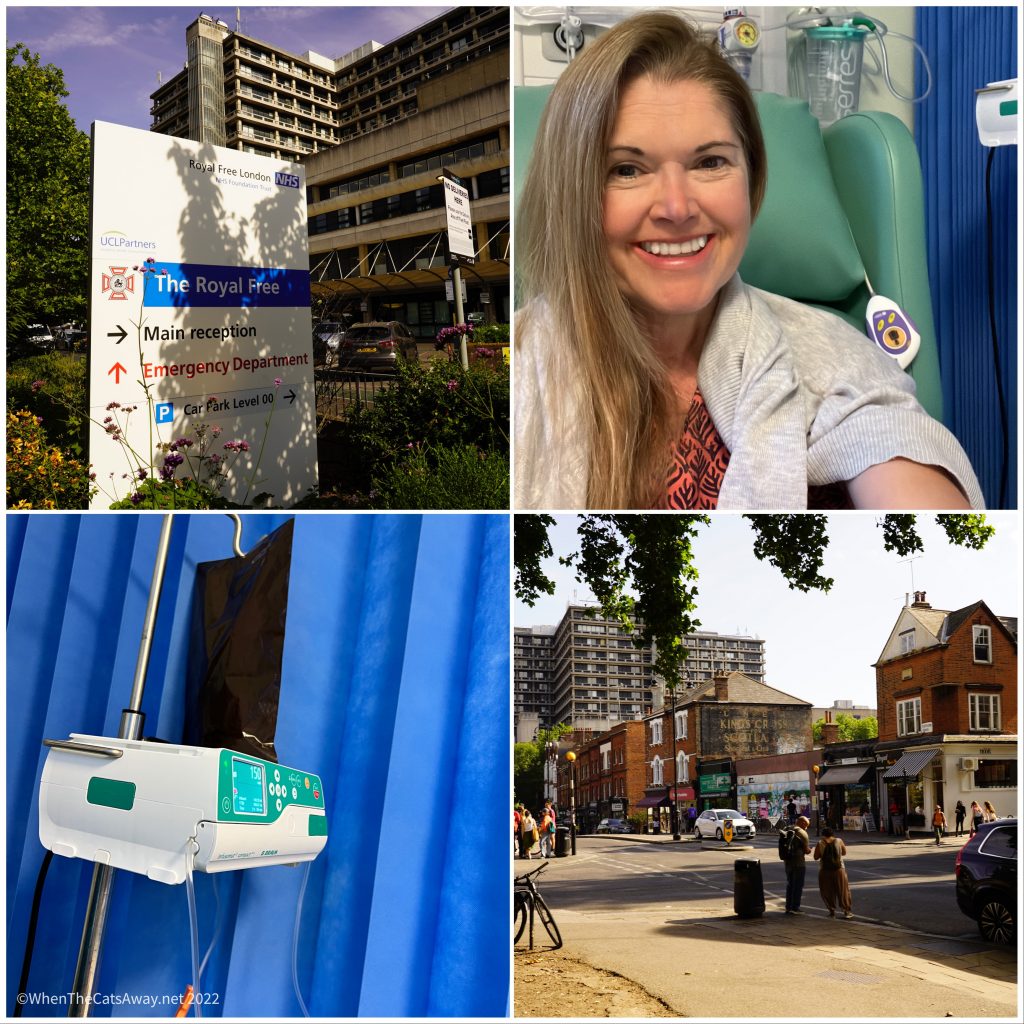
Soon after he was released, I had my second immunotherapy infusion in London, and on a hot Tuesday morning headed up to Hampstead. The Royal Free Hospital has a charitable arm which provides free accomodation in a brand new building for long-distance patients, conveniently located beside the hospital, and walking distance to shops, cafes and the London Underground. After checking in, I decided I wanted an afternoon in the great outdoors, given I had so much indoor time ahead (hooked up to a drip), and took off to explore Hampstead Heath.
The Heath is a bit of a hidden gem in London. First written mention of it dates back to the year 986 when Ethelred the Unready allocated some of the land to one of his servants. Nowadays, at 790 acres, it is one of the largest green (or mostly yellow at the moment) spaces in London.
There are about 30 ponds on the Heath, three of which are available to swim in (one mixed genders, one female only, one male only), which were absolutely packed on this 30 degree day. Looking at the murky brown waters, I decided not to partake! My mum grew up in this area, and told me of people swimming here in the 1950s and 60s – I cannot imagine they have been well cleaned since this time, but I could be wrong!
A cool haven on a hot day – the Heath, Kenwood House and an unmistakable Henry Moore scuplture
The woodlands provided nature’s air conditioning, perfect for walking, and I completed a 9km circuit, calling in at the stunning English Heritage Kenwood House for a look around the artwork and unique interior architecture (visit for the library alone, it is incredible!). The park is packed full of birdlife, and I saw Green and Spotted Woodpeckers, Wrens, Robins, Magpies, Grey Herons and huge flocks of Rose-ringed Parakeets munching on sycamore tree seeds. The ancient woodland is the UK’s smallest site of special scientific interest (SSSI) and is home to some rare and endangered plants and wildlife.
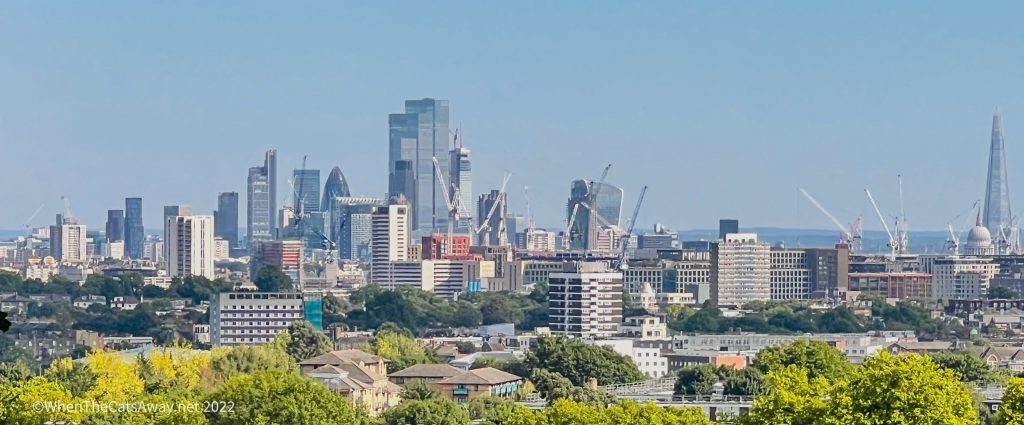
The view from Parliament Hill is well worth a visit – spot St. Paul’s Cathedral, The Shard and many other landmarks
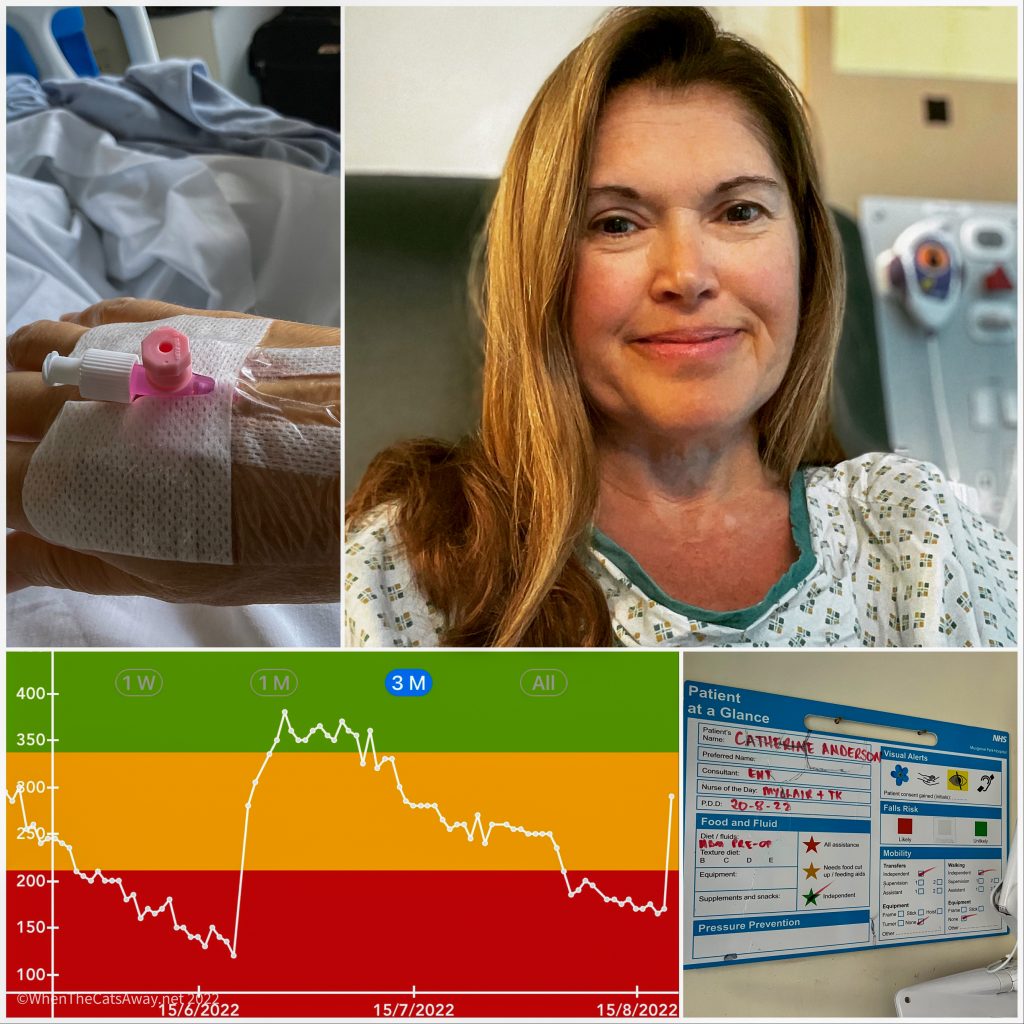
The following morning I was off for my infusion of unicorn juice. This is my second infusion of Rituximab, the aim of which is to suppress my immune system and stop it from attacking my airway unnecessarily! Already, despite having an op in June, at this point my airway was already on the decline.
The unicorn juice enters my bloodstream…hopefully working its magic
🐾🐾
The day after I returned from London, my sister, Helen, brother in law Stu and nephew and niece drove over from Brighton and spent a busy and very warm four days with us.
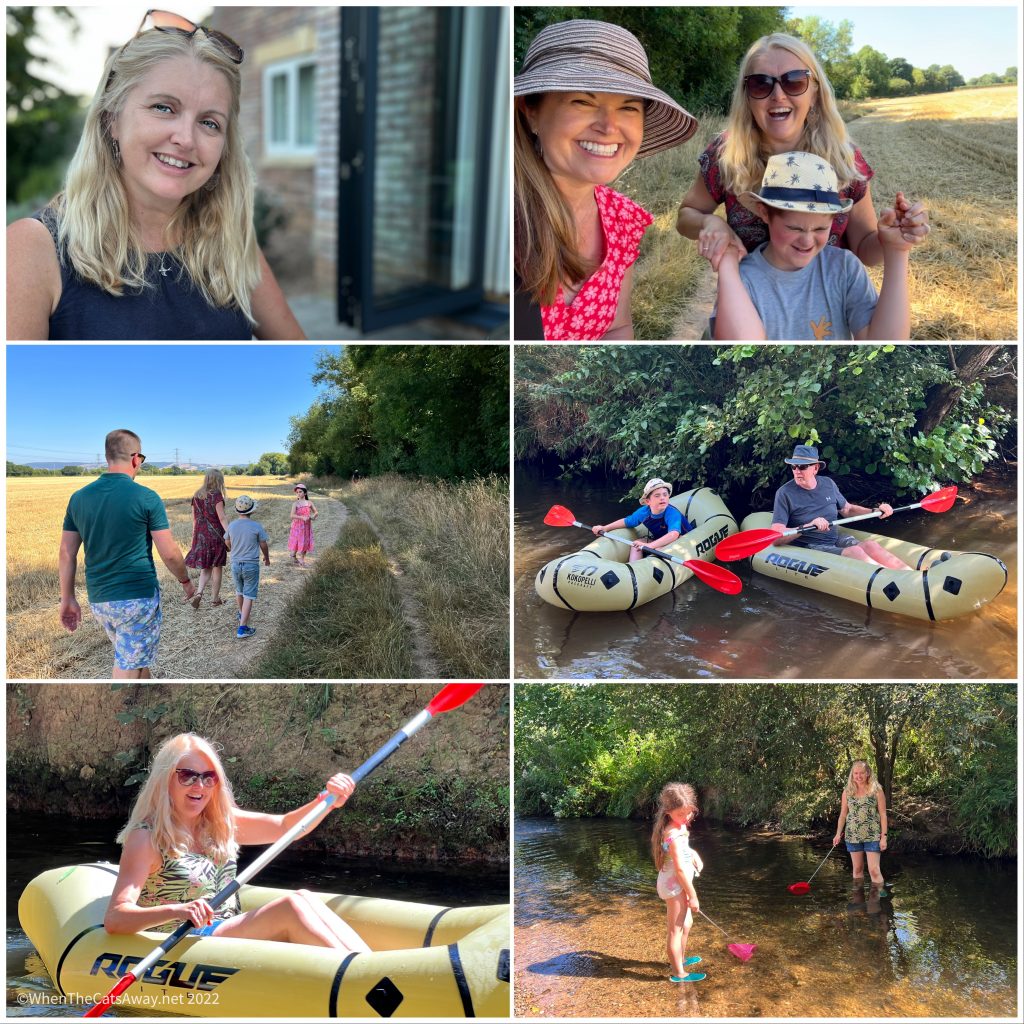
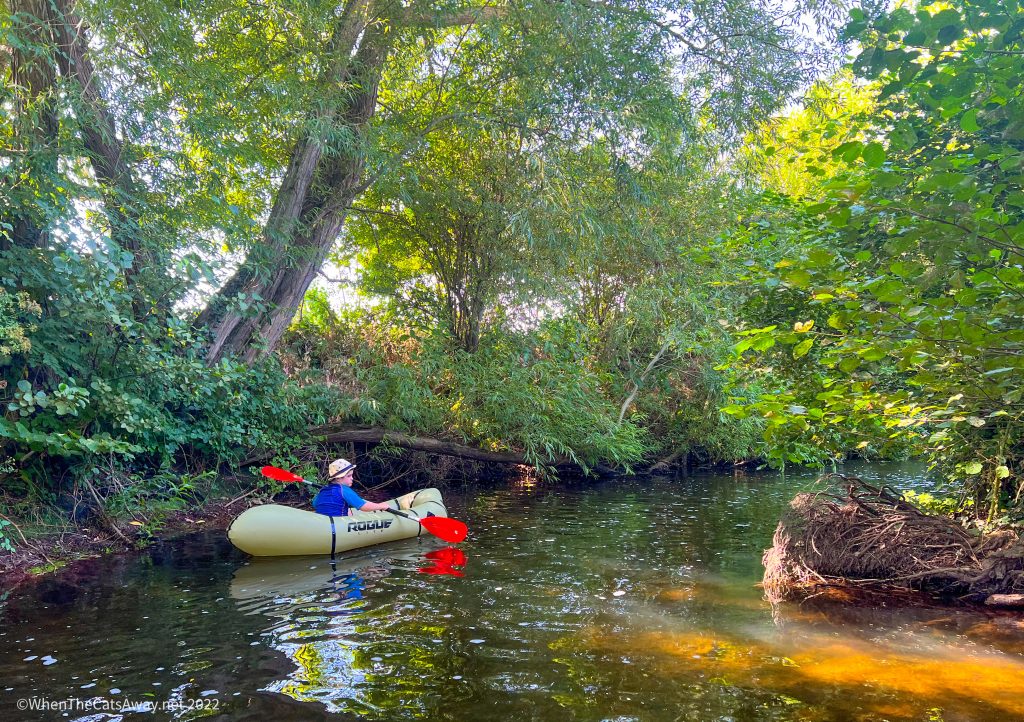
The temperatures were more like what we would have expected to find in Australia, and our local river was again a lovely cool haven for a bit more packrafting with the kids.
Living near a small river has its advantages Elliot did well with his paddling
We held a bit of a housewarming party too, with our friends from Honiton coming over for a BBQ one evening. We ended up congregating under the cool shade of the oak tree to sip wine, listen to music and share stories of our misspent youths!
The moon was huge and the werewolves out in force 🙂
🐾🐾
The first of our Australian visitors arrived, with John and Eveliene stopping by for lunch en route from Plymouth to Oxfordshire, the months falling away as we slipped back into old conversations and jokes easily.
Cups of tea under the cool shade of the oak tree with friends Eveliene and John
🐾🐾
The next visitors were also from Australia, Karen and Chris, who stayed for three nights. They arrived on our 20th wedding anniversary, so joined us and our new friends and neighbours, Jim and Lucy, for a celebratory dinner at a local Italian, and a glass or two of bubbles.
Cheers!Even Princess Tassie got into the celebratory action!
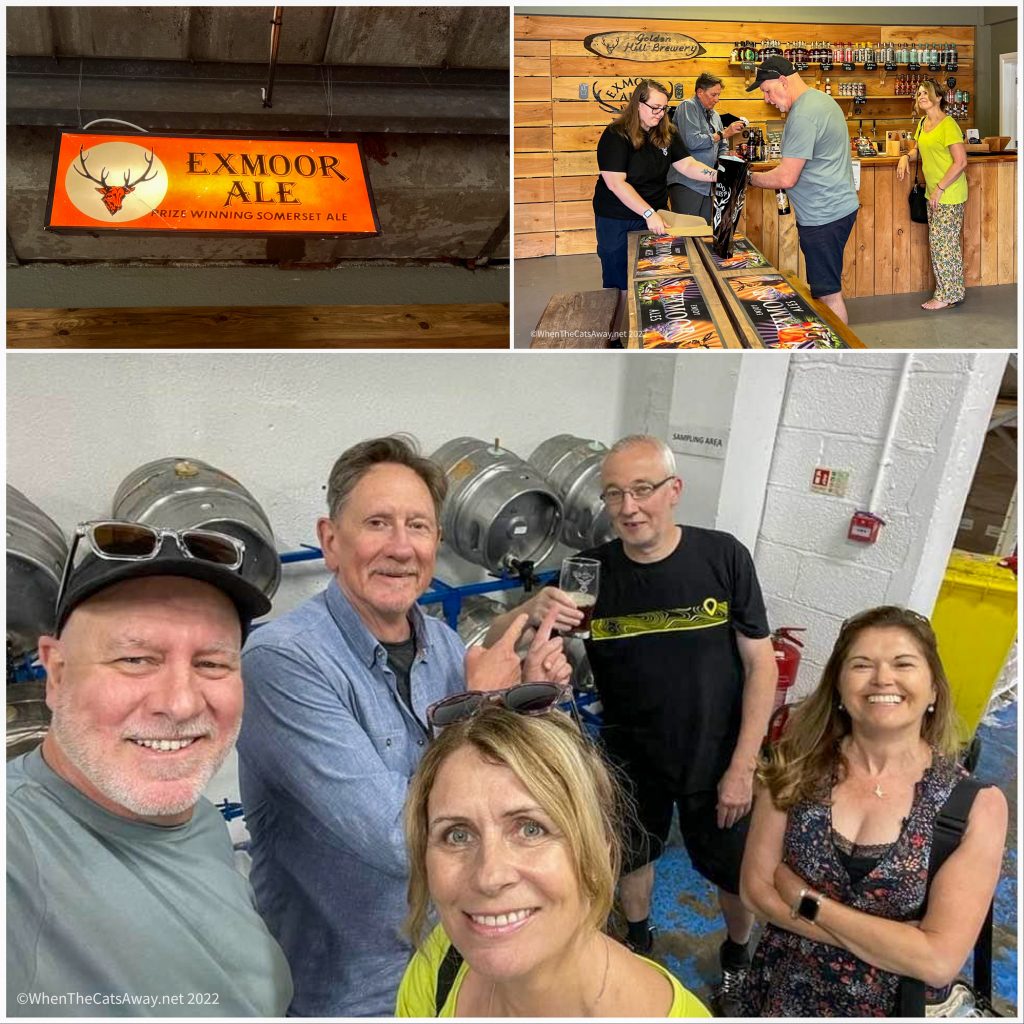
A tour of a nearby brewery was in order the following day, somewhat of a hair-of-the dog, and Exmoor Ales obliged us with tastes straight from the barrel. They were rewarded with a few purchases.
Some tasty tipples tried on our tour
No flying visit to Somerset is complete without a walk in the Quantock Hills before lunch at our local cider barn, Sheppy’s, and of course that was scheduled in for their final day with us (they also have a fine wine list, for the non cider drinkers!).
Starting our short walk at Crowcombe Gate – there are magnificent views almost immediatelyThis is the perfect time of year to see the Quantocks – the heather is blooming and hopefully the temperatures are not too crazyThe joy of the outdoors!Fine views all the way down to Minehead on the coast
🐾🐾
Not one to waste time, I squeezed in another operation on my airway on the day Karen and Chris left – hoping this is the last one this year – I have lost enough brain cells to general anaesthetics in 2022! Final pre-op photo for this year…(fingers crossed!), this one conducted at our local hospital in Taunton, just 12 minutes drive from home.
All went as planned and I could immediately feel the benefit of an open airway. If my peak flow chart were your share portfolio, you’d be a happy bunny today!
🐾🐾
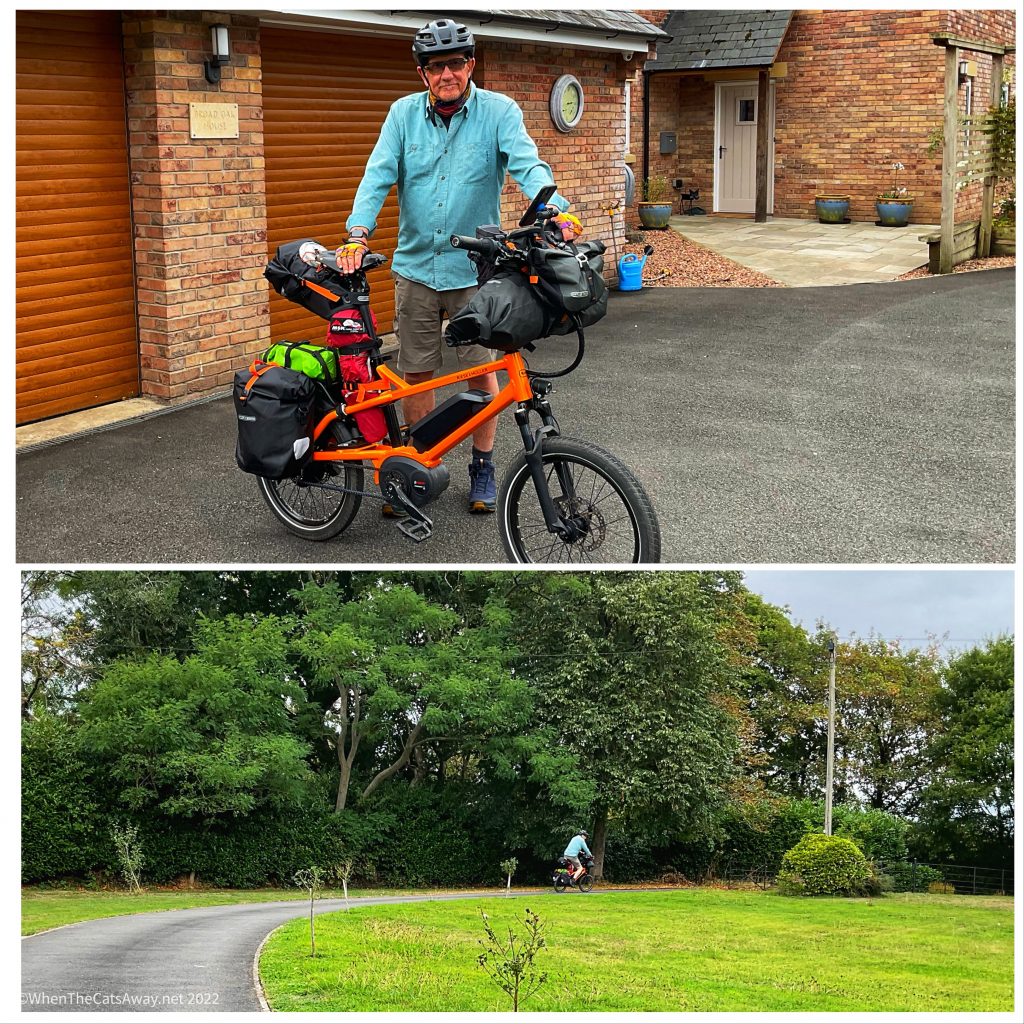
Readers who have been following us for a while will know that Mr A is rather partial to a solo cycling adventure, and he has been feeling he should plan a trip. So he set off on a training ride for two nights, loading up his electric bike with tent, sleeping bag, stove and a few supplies. The good thing about bike-packing (as it is called) in the UK, is that there is not hundreds of kilometres between water and food supplies, making the load a little lighter. The battery on the bike also helps a bit too! He had a great few days, saw some stunning countryside and was able to refine his packing list for next time.
And he’s off…and that’s just down our driveway!
Mark had not long left our driveway, and my sister and niece arrived from Brighton to join me for a few days.
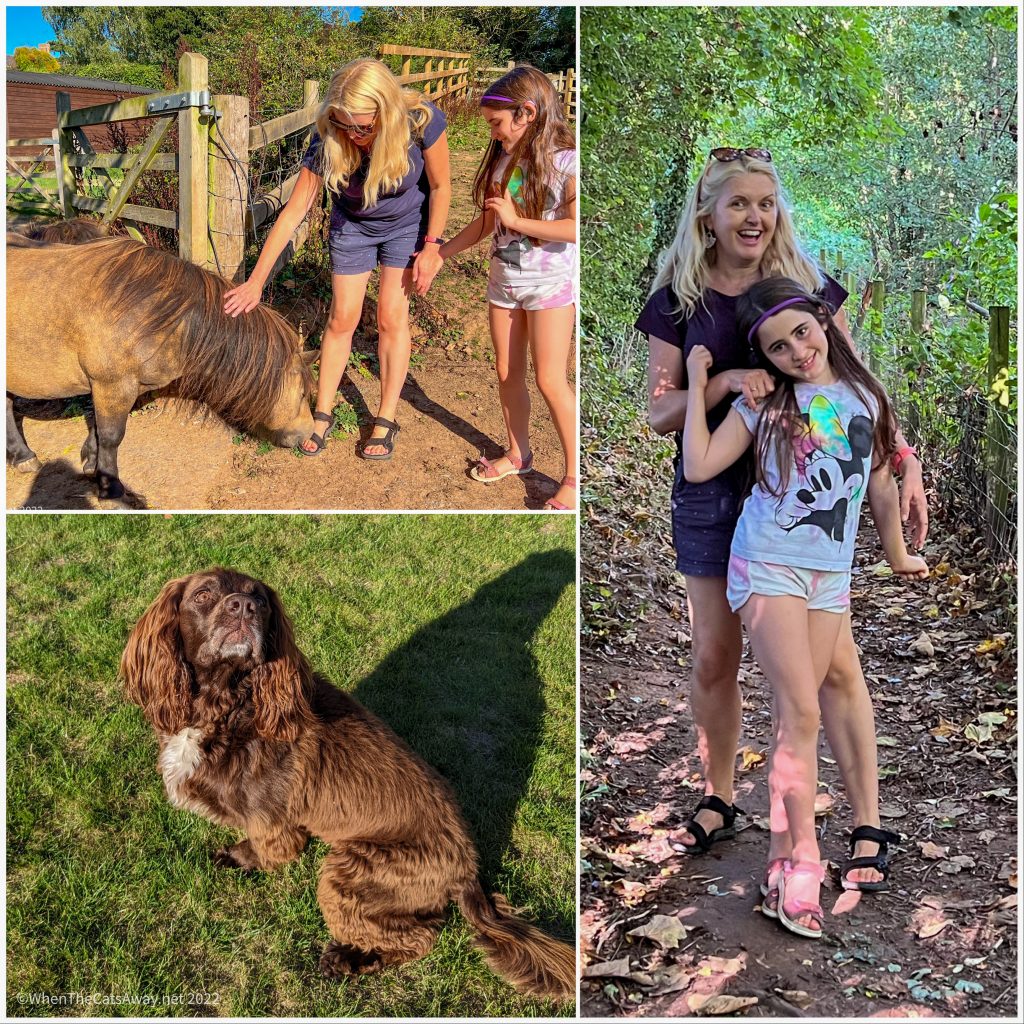
An afternoon walk for a paddle in the river followed by a rendezvous with our friendly local Shetland Ponies and concluding with a cool drink with neighbours Lucy, Jim and their lovely dog, Maisie
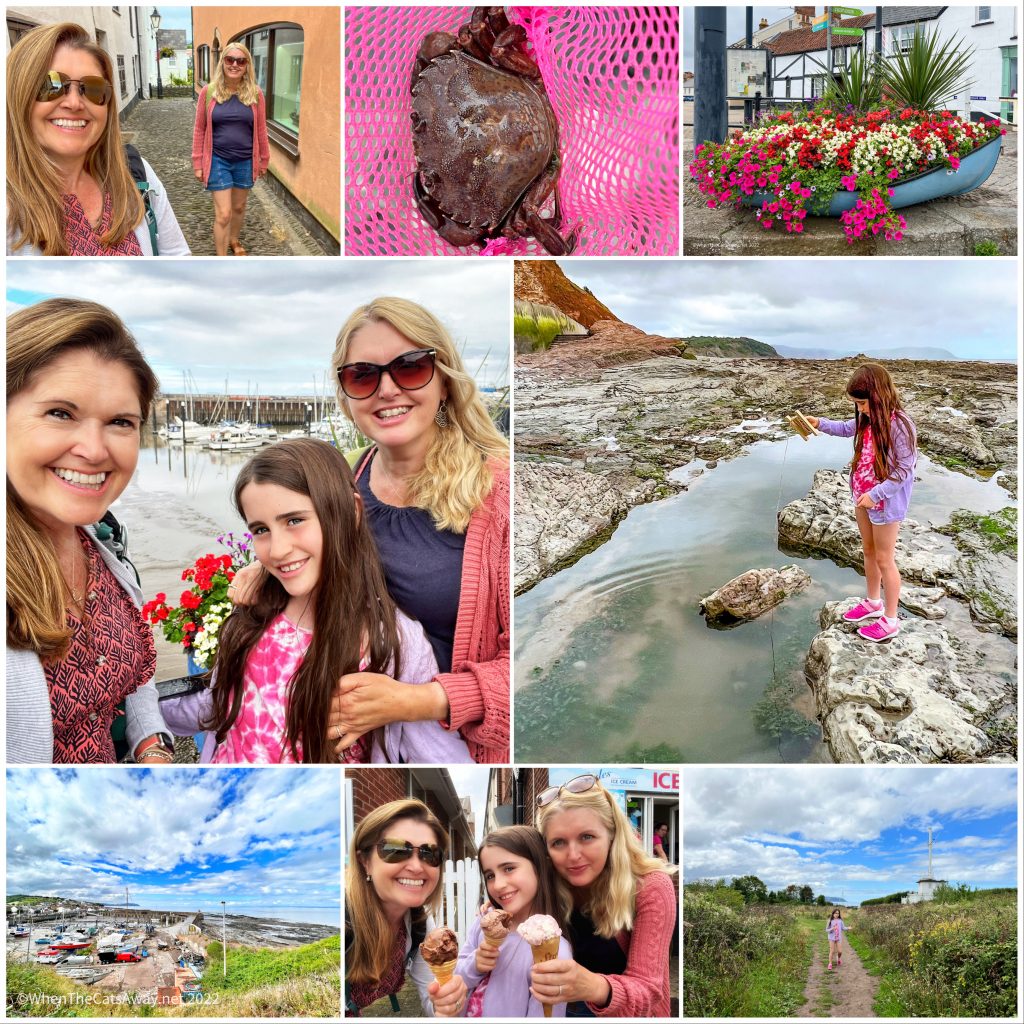
I took Helen and Isabel to the small fishing town of Watchet, just a half hour drive from home. Following Jim’s tip to use bacon as bait, had a successful hour of crabbing in the rock pools. All crabs were released unharmed and enjoyed their morsels of bacon!
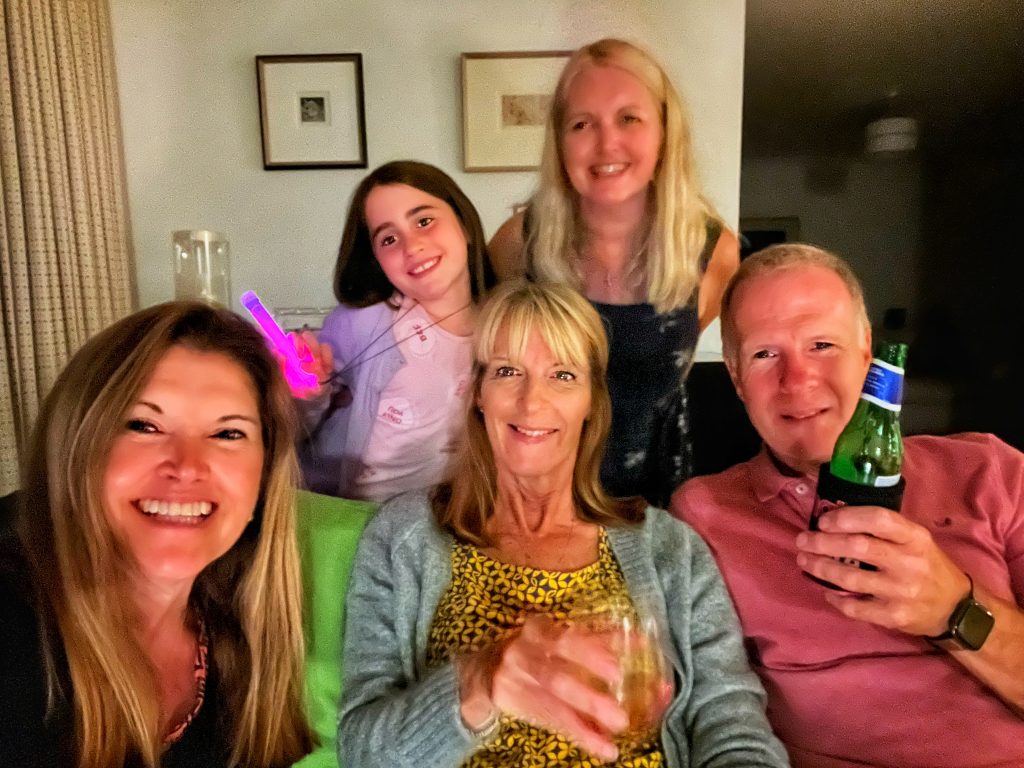
Fish and chips followed by ice creams – perfect seaside visitLucy and Jim join us for drinks, nibbles and games of Uno!
🐾🐾
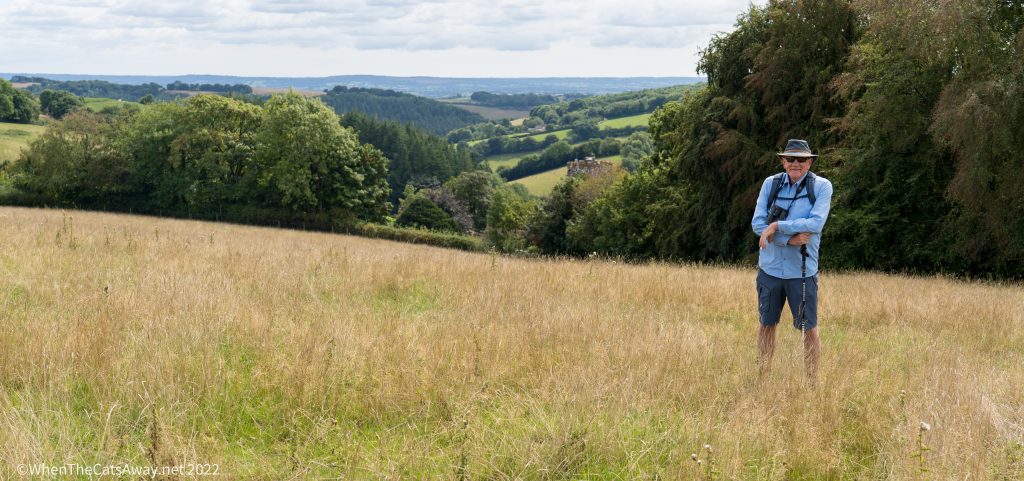
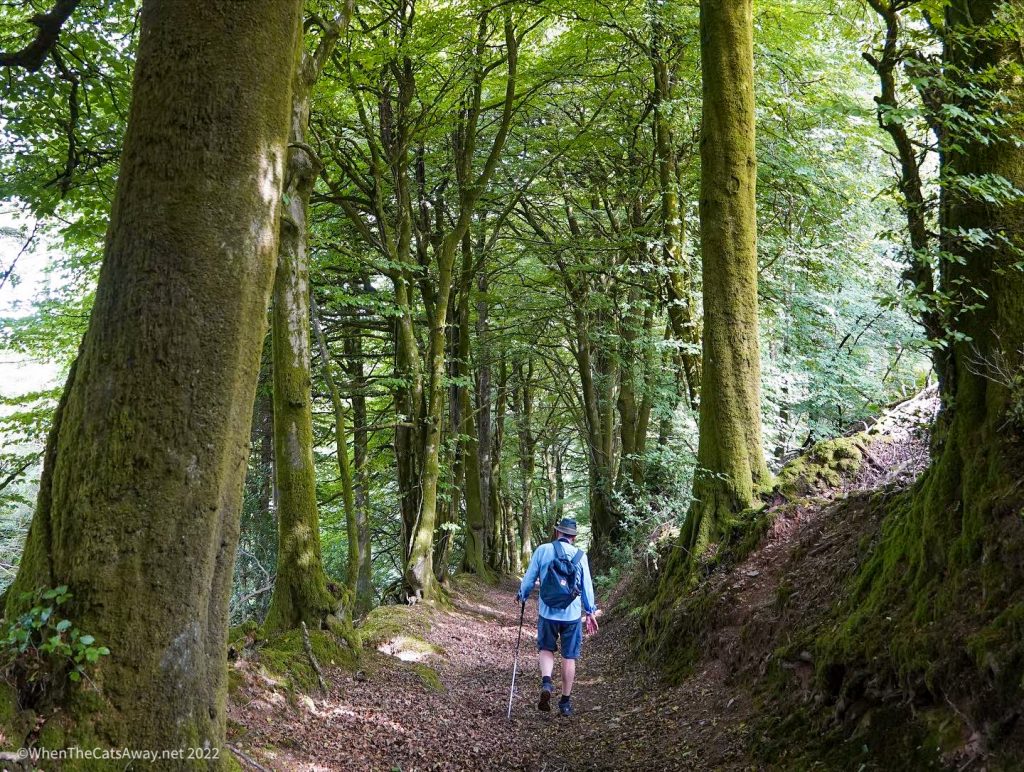
After saying farewell to Helen and Isabel, Mark and I realised we had a few days off from visitors, so decided to take ourselves off on a hike. I plotted a 9km route using Kamoot (our favourite mostly free app for plotting hikes via public footpaths and bridleways) and off we went. Despite being a long-weekend, we didn’t see anyone else on the paths.
The hikes up revealed fabulous countryside viewsGrand avenues of mossy trees guide us on through the Brendon Hills, part of Exmoor National ParkOur walk takes us way down into the valley, where we join the River Tone, which (further down river) passes through our villageAppreciating the joy of breathing easily
It was lovely to get out in the fresh air amongst nature for a few hours, to fully test the new (again!) airway, and make the most of where we live.
🐾🐾
We continue to feel more and more settled in Somerset, and metaphorically pinch ourselves on a daily basis when we admire the views from our windows or stroll through the village on our way to pilates at the village hall.
Creating memories with our friends and families, and having our Australian and UK lives mingle, all helps us to feel more at home here in Bradford-on-Tone. We are starting to make small changes to our home, putting our mark on it, and are enjoying fresh produce from the garden – a rhubarb and apple crumble last week, thanks to produce tended by the previous owners, and almost every day we are consuming salad leaves and peppery radish, sown by Mark’s youngest daughter, Hayley when she came to stay.
I am getting to know some locals as well, having met another lady with the same airway disease as me while I was in London, finding we live just 20 minutes drive apart. Last week another patient called in to meet us for lunch on her way home from holidaying in Cornwall – another time we really appreciate our proximity to the UK’s major transport networks!
Lunch with two iSGS sisters, Lisa and Jean – always good to talk to people who understand what life is like with a constantly closing airway!
While the past few months have delivered some health challenges, I am fortunate to have access to the best care, and a responsive medical team who are on my side. When I read almost daily about the waiting lists for medical treatment, I know that not everyone has this, and I am incredibly grateful. Mr A is now under the care of a world renowned eye surgeon in London for his glaucoma and pigment dispersion syndrome (PDS). We have had to organise this privately, the cost well worth avoiding the dangerously long wait to see an National Health Service doctor, which could be potentially damaging to his eyesight.
We’re learning how to navigate the systems, and though I am certain there will be more hurdles ahead, we have good friends and contacts who are helping us to overcome them.
One of the reasons we migrated to the UK was to spend more time travelling and exploring Europe…now we have been here seven months, we are starting to think about where and when we might get away…plans are afoot…watch this space!
Location: Brighton and Hastings, East Sussex, Widworthy, Devon, Charing Cross Hospital, London and Bradford-on-Tone, Somerset
What a month it has been! Time has simply rushed by with so much on our plate.
I left Mr A for a long weekend and headed over to Brighton for some family time with my sister, niece and nephew. It was perfect timing as just 10 days after my grandma’s 100th birthday, so we took advantage of that special event to pay her a visit (the first time I have seen her in three years) along with our mum.
Helen’s husband Stu was away on a boys’ weekend, so I stood in as responsible adult on school pick ups, swimming lessons and drama classes. It was simply exhausting – hats off to all those parents out there, especially those struggling to breathe (as I was!).
Helen and I on a dog walk in nearby Preston Park
It was a glorious weekend, and we made the most of every moment – lunch on Brighton’s seafront, a walk up on the Sussex Downs at Devil’s Dyke, and time in Hastings with mum with lunch on the pier and tea in her beautiful garden.
A little shopping and lunch in Brighton with my sisterStunning (if windy) afternoon up at Devil’s Dyke in the Sussex Downs with sister Helen, nephew Elliot and Cocoa (the chocolate Cockapoo)Lunch in Hastings with mum, Helen, and nephew and niece, Elliot and Isabel after a 100th birthday visit with Grandma Jean
*
The only fly in the ointment was my breathing. I can only put it down to stress, but despite having an operation on my airway mid April, my airway was determined to rapidly close up (for our newer readers, I have a rare disease called subglottic stenosis), and was declining on a daily basis.
Mark and I still managed to get out and about and enjoy the Devon countryside, but it tended to be shorter and flatter walks, with plenty of rests!
Stonebarrow National Trust, overlooking the seaside village of CharmouthTaking time to stop and smell the roses…and honeysuckle, and thistles….and so much more!A stroll around the harbourside at Lyme Regis was another picturesque outingAn evening meal with friends Karen, Dan and their boys, Oliver and Sonny
*
Thankfully I have a great relationship with my surgeons in London and they were able to book me in for another operation quickly…I guess breathing is quite important.
An unattractive gown followed by recovery, sunshine and fresh cherries – lovely!
My friend Jacky was kind enough to put me up in her daughter’s old bedroom in her house in Twickenham, and given the train drivers decided to strike on my surgery day, also hired a car and played taxi driver to drop me off and pick me up from my operation. I feel so grateful for her compassion, feeding and watering me over two days with kindness and patience.
*
Once back in Devon, time flew by in a whirlwind of bed and appliance buying, followed by packing up boxes, with a sprinkling of walks up our picturesque lane with Princess Tassie who seems to be 10 years younger than when she arrived!
An Australian cat in Devon – she loved exploring this lane and countryside!
Before we knew it the day was upon us…completion of our new house purchase! We drove over to Bradford-on-Tone and met Andrew and Jan, the previous owners. Understandably they were a little emotional at saying goodbye to their home for the past decade, but we assured them we would be worthy caretakers, as we took the door keys and entered.
They had left the home in immaculate condition – almost like a new build, with plenty of opportunities for us to put our stamp onto it in future months.
Over the next few days we gradually moved in, our possessions from Australia fitting in nicely, and despite a few minor hiccups, most of our deliveries arrived as planned, and all services eventually connected.
Princess Tassie was pleased to see our possessions and enjoyed exploring her new home
We are more than delighted with our house, which feels like it was made for us. Tassie is embracing the multitude of sunbathing locations and enjoys her strolls around the 1.6 acres of land we have…yes we will be employing a gardener!
Broad Oak House – named for the ancient oak tree in our garden
We’ve only been in the house a week, but already have spotted approaching 30 species of birds just from our garden.
This Green Woodpecker is nesting in a tree at the edge of our garden – its laughing call somewhat reminds me of Kookaburras 🙂
Our home is a 3 minute stroll from our local pub, and within 15 minutes cycle along sleepy country lanes to several others. We are surrounded by areas of outstanding natural beauty (AONBs) in all directions – the Blackdown Hills, the Quantock Hills, Exmoor….We can be in London in less than two hours door-to-door, and the nearest junction to the M5 motorway is a 5 minute drive away, giving us a multitude of travel options. I think we are going to be very happy here!